World Nuclear News
Canada to offer training as part of IAEA Rays of Hope initiative

James Scongack, Chair of the Canadian Nuclear Isotope Council (CNIC), and IAEA Director-General Rafael Mariano Grossi - see picture above - discussed the proposed contributions in a meeting in Vienna on Friday.
Rays of Hope is an IAEA intiative which aims to expand access to cancer care and radiotherapy infrastructure to low- and middle-income countries (LMICs). Such countries experience 70% of global cancer deaths but receive just 5% of spending in this area.
The Canadian contribution will include: an isotope production and radiation safety training programme to be primarily hosted at Bruce Power in 2026 to welcome a class of regulators from LMICs to learn about technical fundamentals of nuclear isotope production, processing, and radiation safety culture; a proposed multi-disciplinary technical training programme hosting at London Health Sciences Centre and St Josephs' Hospital, leading Canadian hospitals, that covers hands-on training in radiochemistry and production, radiolabelling, quality control, dosimetry, medical imaging, patient delivery; and the development of an IAEA- and Canadian-made collaboration on e-learning and virtual training packages.
Grossi said: "By combining Canada's strengths in isotope production, processing, and quality control with the reach and expertise of the IAEA Rays of Hope initiative, we are helping countries build the professional competence needed to deliver safe and effective treatments."
Scongack said: "Today’s announcement reflects the next step in our committed, forward-looking partnership between Canada and the IAEA. While we recognise Canada’s current leadership in the global medical isotope community, we also must acknowledge that we face a responsibility to take an active role in supporting increased access to life-changing isotopes for patients around the world."
The CNIC and IAEA have established a technical working group which will work towards delivering the training programmes and e-learning materials towards the end of this year.
Background
Nuclear medicine uses radiation to provide diagnostic information about the functioning of a person's specific organs, or to treat them. Diagnostic procedures using radioisotopes are now routine. Radiotherapy can be used to treat some medical conditions, especially cancer, using radiation to weaken or destroy particular targeted cells. More than 50 million nuclear medicine procedures are performed each year, and demand for radioisotopes is increasing.
Read more:
The World Nuclear Association's Information Paper: Radioisotopes in Medicine
Podcast - In Quotes: Bruce Power's James Scongack
IAEA Rays of Hope
Environmental approval for Saskatchewan uranium project
_13714.jpg)
The Saskatchewan Minister of Environment formally approved the company's Environmental Impact Statement (EIS) for the shallow, high grade Patterson Lake South (PLS) project on 18 February. The approval follows technical acceptance of the document in June 2025 and an extensive public review period from July to September last year.
Paladin is proposing to construct, operate and decommission underground and surface facilities to support the mining and processing of uranium ore at the PLS project, which it acquired in 2024 through its acquisition of Canadian uranium project developer Fission Uranium Corporation. The main components include an underground mine, an onsite mill to process an average of 1,000 tonnes of ore per day, surface facilities to support the short- and long-term storage of waste rock and ore, an underground tailings management facility, water-handling infrastructure and an effluent treatment circuit, and additional infrastructure to support mining activities.
"The Environmental Assessment approval is an important regulatory milestone for the PLS Project and a prerequisite for permits and licences issued by provincial and federal authorities leading to construction and operation," Paladin said.
The company said it continues to work closely with the Canadian Nuclear Safety Commission (CNSC) to progress the project within its licensing process at the federal level. Paladin is advancing the technical detail needed to support the application for a construction licence submitted to the CNSC by Fission Uranium Corporation in April 2023.
"The Patterson Lake South Project supports the province's Growth Plan and Saskatchewan's role as an energy supplier," added Minister of Environment Darlene Rowden. "I am pleased to see this project moving forward with strong environmental safeguards. The environmental and sustainability aspects of the PLS Project have been subject to our robust Environmental Assessment process including scrutiny of our review panel of subject matter experts and having undergone considerable public and indigenous consultation. I commend Paladin on its approach to the approval process and congratulate their team on achieving this important milestone in their development."
Paladin Managing Director and CEO Paul Hemburrow said: "Paladin is delighted that the Minister, the Saskatchewan Government and its environmental regulatory agency have formally recognised that our approach to delivering a sustainable and safe development at the PLS Project is both environmentally and socially appropriate and achievable. The PLS Project is an economically and strategically important development within Canada and we will continue to progress the construction licencing process with the CNSC."
PLS is on the southwest margin of the Athabasca Basin and incorporates the Triple R deposit, which is both high grade and shallow - mineralisation starts just 50 metres below the surface. The deposit has indicated mineral resources of 114.9 million pounds U3O8 (44,196 tU) at an average grade of 1.94% U3O8, inferred resources of 15.4 million pounds at an average grade of 1.10% and probable reserves of 93.7 million pounds at an average 1.41% U3O8, all reported at a cut-off grade of 0.25%.
In 2023, Fission Uranium Corporation filed an NI 43-101 technical report summarising the feasibility study for the project, including a construction timeline of 3 years with an estimated initial capital cost of CAD1.155 billion (USD840 million) for a ten-year life-of-mine with total production of 90.9 million lbs U3O8 (35,000 tU), and an average unit operating cost of CAD13.02 per pound U3O8.
Denison granted licence for Wheeler River
_17573.jpg)
The Canadian Nuclear Safety Commission (CNSC) released the decision of its administrative tribunal approving the Environmental Assessment (EA) and issuing the Licence to Prepare Site & Construct a Mine and Mill for the Wheeler River Uranium Project. Denison Mines noted that with the Environmental Assessment having previously been approved by the Province of Saskatchewan, and other provincial approvals necessary to commence construction already received, federal approval of the Environmental Assessment and the issuance of the licence represent the final regulatory approvals required to commence construction of the Phoenix in-situ recovery uranium mine.
Phoenix - part of the Wheeler River project - is described by Denison as the largest undeveloped uranium project in the infrastructure-rich eastern portion of the Athabasca Basin region, in northern Saskatchewan. The project is host to the high-grade Phoenix and Gryphon uranium deposits, discovered by Denison in 2008 and 2014, respectively, and is a joint venture between Denison (90%) and JCU (Canada) Exploration Company Limited (10%). Denison is the operator. Permitting efforts for the planned Phoenix in-situ recovery (ISR) operation began in 2019.
In June 2023, the company reported an updated mineral resource estimate of 70.5 million pounds U3O8 (27,118 tU) for Phoenix, with 30.9 million pounds in the measured resources category and 39.7 million pounds of indicated resources.
In-situ recovery - also referred to as in-situ leach - is a method of recovering uranium minerals from ore in the ground by dissolving them in situ, using a mining solution injected into the orebody. The solution is then pumped to the surface, where the minerals are recovered from the uranium-bearing solution. More than half of the world's uranium production is now produced by such methods. The technique - which requires a geologically suitable orebody - has not so far been used in Canadian uranium operations, although in addition to the Phoenix deposit Denison has been investigating the potential for using ISR at other Canadian projects including the Heldeth Túé uranium deposit at Waterbury Lake and the Midwest Main project.
The licence granted by the CNSC is valid until the end of February 2031 and authorises site preparation and construction activities under the Nuclear Safety and Control Act. The licence does not authorise the operation of the facility to be constructed. Authorisation to operate the facility would be subject to a future CNSC licensing hearing and decision, should Denison submit a licence application to do so.
"The Commission decision to approve the EA and issue the Licence represents a landmark achievement for Denison, as well as our staff, shareholders, Indigenous partners, and other stakeholders in the project, said Denison President and CEO David Cates. "I'd like to recognise the efforts of Denison's talented teams, which have worked together tirelessly over a seven-year period to engage with Indigenous and non-Indigenous communities, comply with applicable laws and regulatory requirements, build trust with regulators and the public, and ultimately advocate for the approval of this ground-breaking project.
"Phoenix is the first uranium mine in Canada to be approved for ISR (In-situ recovery) mining and is the first large-scale Canadian uranium mine approved for construction in more than 20 years. It is a nation-building project that reflects the best of Canadian ingenuity and determination. Owing to the use of the ISR mining method, Phoenix has the potential to generate strong economics while also achieving a superior standard of sustainability when compared to conventional mining methods. With an approximately two-year construction timeline, the timing of this approval means that the project remains on track for first production by mid-2028."
Kairos, DOE enhance collaboration on advanced reactor design
_52351.jpg)
Under the partnership, over the next five years Oak Ridge National Laboratory (ORNL) will provide expertise and access to specialised facilities to review and evaluate various aspects of Kairos Power's novel fluoride salt-cooled high-temperature reactor design, which uses molten fluoride salt coolant with TRISO (tri-structural isotropic) fuel to generate reliable energy with robust inherent safety. ORNL will also manufacture components for reactor development and testing, and assess the performance of coated particle fuel following irradiation under conditions relevant to their planned reactor operation.
The scope of work includes: assessing fuel manufacturing and synthesis methods to evaluate product quality and production methods for TRISO fuel particles; understanding the properties of TRISO fuel pebbles to support a fabrication capability and quality control infrastructure; completing a comprehensive used fuel pebble management plan to include on-site cask storage, transportation and final disposition; producing components using advanced manufacturing techniques to better understand how materials that come into contact with the salt, such as ceramics, carbon composites, and metallic materials, perform in extremely high temperatures; and enabling remote maintenance systems capable of operating under high temperatures with simultaneous exposure to radiation and corrosive salts.
"Ultimately, the project's outcomes will support the design, construction and eventual operation of Kairos Power's planned Hermes demonstration reactors under construction in Oak Ridge, Tennessee, and subsequent commercialisation of its planned fluoride salt-cooled high-temperature reactor," ORNL said.
Kairos is building the Hermes Low-Power Demonstration Reactor - known as Hermes 1 - in Oak Ridge, Tennessee. Hermes 1, a scaled demonstration of Kairos's KP-FHR fluoride salt-cooled high-temperature reactor technology, is the first non-light-water reactor to be approved for construction by the US Nuclear Regulatory Commission. Kairos Power broke ground at the Hermes 1 site in Oak Ridge in July 2024 and began nuclear safety-related construction in May 2025. It will not produce electricity - Kairos's iterative development approach will see lessons learned from the project feeding into the Hermes 2 commercial-scale demonstration plant - a 50 MWe plant powered by a single commercial-scale reactor. Hermes 2 will include a power generation system.
DOE is investing up to USD303 million of risk reduction funding in Kairos Power's Hermes demonstration reactors under the Advanced Reactor Demonstration Program to mature the company’s molten salt reactor design. The latest project marks the fourth partnership between ORNL and Kairos Power since 2020.
"DOE's support has been instrumental in helping Kairos Power accelerate our path to technological maturity," said Ed Blandford, chief technology officer and co-founder of Kairos Power. "By collaborating with Oak Ridge National Laboratory, we gain access to decades of expertise and a unique set of capabilities that we couldn't find anywhere else. We are pleased to partner with the lab as we work to deploy safe, reliable advanced reactor technology that builds on Oak Ridge's nuclear legacy."
"Providing the scientific basis for new technology is what we do at Oak Ridge National Laboratory," said ORNL Director Stephen Streiffer. "With energy demand expected to increase substantially by 2050, our continued partnerships with US industry, including Kairos Power, are how we will bring more reliable, affordable energy to market."
Russian regulator issues operating licence for second Zaporizhzhia unit
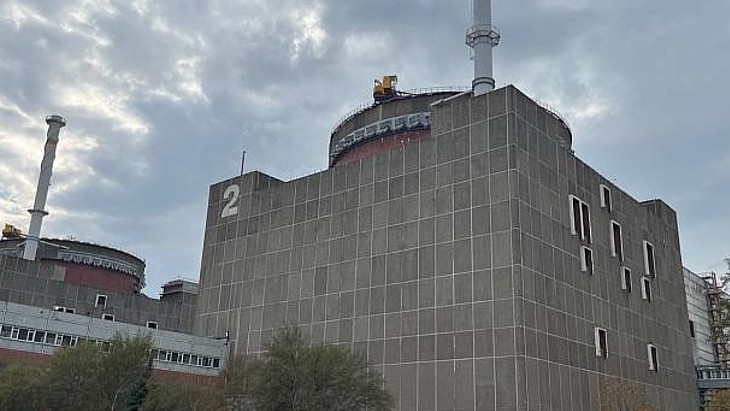
Russia's state nuclear corporation Rosatom said that obtaining the licence "confirms that the power unit's equipment, safety systems, and personnel qualifications fully comply with the strict requirements of Russian nuclear energy standards and regulations".
It added that Rostekhnadzor's backing of the operational safety of the unit "paves the way for the future development of nuclear power generation in the region".
Alexey Likhachev, Rosatom Director General, said that "all necessary work, maintenance, and scheduled preventive maintenance are carried out in strict accordance with schedules and at a high professional level. Our goal remains unchanged - to prepare all units for future generation".
An application has been submitted to Rostekhnadzor for an operating licence for Unit 6 and Rosatom aims to submit similar applications by the end of 2026 for units 3, 4, and 5.
The six-unit Zaporizhzhia nuclear power plant has the largest capacity of any nuclear power plant in Ukraine, and Europe, but all six units have been shut down since shortly after the start of the war, which is when it came under Russian military control.
Existing licences issued pre-war by the Ukrainian nuclear regulator were temporarily recognised, and extended where necessary, by Russia pending its regulator issuing licences.
Since September 2022 there have been teams of International Atomic Energy Agency experts stationed at the plant as part of efforts to ensure nuclear safey and security at a site which is located close to the frontline of Ukrainian and Russian forces.
Ukraine says that the best way to ensure nuclear safety and security is for the plant to return to its control, and regulatory system. Russia says that it aims to restart units at the plant under its legal and regulatory framework, when conditions are right. A Rostekhnadzor licence for Unit 1 was issued in December.
Background
At talks in June last year between IAEA Director General Rafael Mariano Grossi and Likhachev, the issue of potentially restarting the units was discussed. Grossi told a press conference at the time that there was a "common view" that it would be inadvisable to restart the plant in the current military situation, adding: "There are other more technical aspects like, for example, the availability of enough water to cool down the reactors or also the availability of sufficient, stable, external power so you can rest assured that if it's started there will be no blackout and the plant will be able to operate."
Russia's Tass news agency's coverage of those talks reported Likhachev as saying said the plant could only be restarted once there was no military threat, and quoted him as saying "we have already started construction of a floating modular pumping station with a capacity of up to 80,000 cubic metres per hour, which will address all problems related to water supply in the event that the units are brought to their design capacity".
Zaporizhzhia Nuclear Power Plant has six VVER-type reactors which entered commercial operation between 1985 and 1996. The combined operating capacity of the plant is 5.7 GW.
Serbia and Russia discuss nuclear energy cooperation

The minister was speaking after talks - see picture above - with Alexei Likhachev, Director General of the Russian state nuclear corporation Rosatom, about cooperation between the two countries in the field of nuclear energy.
According to the Serbian government's account of the meeting, Đedović Handanović said Serbia's government should approve the formation of the National Nuclear Programme Implementation Organisation by the end of the month. She said Serbia plans "to complete the first and second phases of the nuclear programme by 2032, and in the preparatory phase we are cooperating with the French company EDF".
It reports that Đedović Handanović said that by 2032 "the technology of small modular reactors will be more developed than today and we will be able to consider them as an option. Once we are institutionally, regulatorily and staff-wise equipped, we will be able to choose a partner, a technology carrier, and enter the construction process so that after 2040 we can have a nuclear power plant on the grid".
Rosatom later reported that in meetings on Monday, Likhachev also held talks with Serbian President Aleksandar Vučić "during which they discussed expanding cooperation in nuclear energy, attracting Serbian companies to Rosatom's international projects, and training Serbian applicants in nuclear fields at Russian universities".
It quoted Likhachev as saying: "The Serbian leadership is currently considering the possibility of constructing the country's first nuclear power plant. Rosatom State Corporation is offering its Serbian partners comprehensive cooperation. Nuclear energy offers Serbia an opportunity to ensure energy sovereignty and security for decades to come. Rosatom is the largest player in the foreign nuclear power plant construction market, holding over 90% of the global market share. We are ready to offer Serbia our full range of nuclear energy projects, from small to large-scale".
Background
Serbia had a longstanding law banning the construction of nuclear power plants, but in December 2024 the National Assembly voted through amendments to the energy law ending that 35-year prohibition.
In October 2024 EDF and French engineering consultancy Egis were awarded a contract by Serbia's Ministry of Mining & Energy to conduct a preliminary technical study on the potential use of nuclear power in the country, and the country has previously held talks with Russia's Rosatom about non-energy applications of nuclear technologies. President Aleksandar Vučić has also discussed the option of Serbia acquiring 5 to 10% of Hungary's Paks nuclear power plant.
Vučić said at 2024's multinational Nuclear Energy Summit in Brussels, that the country was seeking support from other countries in terms of know-how and financing to achieve its aim of getting 1,200 MW of capacity from small modular reactors.
Earlier this month Đedović Handanovic held talks with the Agence Française de Développement about cooperation related to the energy transition "especially in the development of nuclear energy applications in Serbia".
Blue Capsule begins building sodium test loop
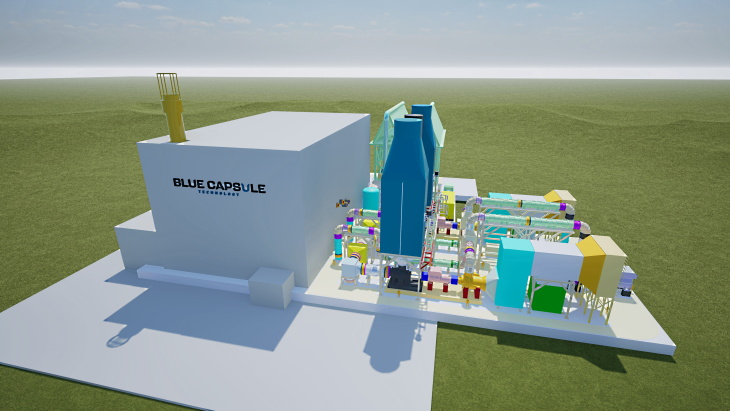
Aix-en-Provence-based Blue Capsule is developing a sodium-cooled, high-temperature SMR which can provide 150 MW of heat at 700°C, steam/vapour to 650°C, and 50 MW of electricity. The company - a spin-off from France's Alternative Energies & Atomic Energy Commission (CEA) - aims to decarbonise sites used for energy-intensive industries such as cement and metal refining, hydrogen production, and chemical production, with subterranean capsules co-located onsite, close to demand. The reactor is designed to operate for 60 years. Blue Capsule is targeting a cost to the end user of USD60 per MWh for industrial heat.
Blue Capsule is planning to build a proof-of-concept sodium loop and a non-nuclear prototype by 2030. ELISE is the first installation on the company's development roadmap and is set to run for several years.
"ELISE will replicate the conditions of the Blue Capsule high-temperature reactor (HTR), with temperatures reaching 750°C," said the company's Technical Director, Domnin Erard. "This full-size installation will stand at nine metres high when completed, and provide valuable data on thermo-hydraulics and the natural circulation of liquid sodium at high temperatures."
Edouard Hourcade, President of Blue Capsule, said the ELISE installation would be the "first of its kind" in France, and will be opened to other players in the field, "either institutional or commercial ... it is important that the broader nuclear energy sector can benefit from ELISE. But it's also a milestone for our company and a sign of steady progress".
Blue Capsule says the sodium-cooled reactor is to use tristructural isotropic - or TRISO - fuel for optimal safety, while the design is also optimised for more favourable economics due to the lower volume of building materials compared with traditional high-temperature gas-cooled reactors.
In November last year, Blue Capsule announced an agreement with Framatome to advance cooperation on TRISO fuel. Blue Capsule aims to deploy low-enriched (less than 5% enriched) TRISO fuel in its reactors, "given the wide use of low-enriched uranium in the industry, and the export potential of reactors that use LEU".
To date, Blue Capsule has announced partnerships with the CEA, Framatome, Egis, CSTI Groupe, DigIntel and Robatel, and key suppliers such as Laborelec and Mersen.
In May last year, Blue Capsule advanced to Phase 2 (the Preparatory Review) of its technical dialogue with the French Nuclear Safety and Radiation Protection Authority.
Construction of a non-nuclear prototype is scheduled to begin in 2027-28, with construction of the first-of-a-kind Blue Capsule reactor expected to begin in 2029-30, with deployment in the early 2030s.
Urenco installs innovative heat network at Dutch site
_94708.jpg)
The company said an internal heat network will provide a contained, thermal energy distribution system, taking residual heat from the cooling of its uranium cylinders. Hot water will be generated and then circulated via insulated pipework throughout multiple buildings on-site to heat them.
The initial phase of the project will see the construction of a heat grid and utility building, with the remaining infrastructure to connect the network across the site being completed at a later date.
Urenco said the project will enable it to significantly reduce its natural gas consumption in Almelo and lower Scope 1 emissions - the result of the direct combustion of fossil fuels by a given company - by about 671 tonnes per year.
The network is expected to be operational by 2029 and is fully aligned with Urenco's 2030 net-zero objectives.
Meanwhile, Urenco said the construction of a new office building at its Almelo site has focused efforts on choosing materials with a lower environmental impact to strengthen overall sustainability. Under Dutch legislation on the Environmental Performance of Buildings (MPG), buildings are given a score reflecting its environmental impact per square meter per year. The use of solar panels, low-carbon concrete, and other sustainable materials resulted in the building being given an MPG score of 0.7 - an improvement of 30% on the legally required score of 1.0 for all new office buildings in the Netherlands.
Furthermore, the building is BREEAM certified, meaning its sustainability has been independently assessed across nine different categories. The building received an Excellent rating, the second-highest possible level in the internationally recognised BREEAM system.
"Together, these measures make the new Almelo office building a leading example of sustainable office design, demonstrating how thoughtful planning, material choice, and construction techniques can significantly reduce environmental impact," Urenco said.
In addition to the Almelo plant, Urenco also operates enrichment facilities in Eunice, New Mexico in the USA, Gronau in Germany, and at Capenhurst in the UK.
Reactor vessel installed at Lufeng 6
_38374.jpg)
"At 08:07 (local time) on 21 February, the reactor pressure vessel of unit 6 of Lufeng nuclear power plant officially began hoisting operations and was precisely positioned on the heavy-duty trolley at 09:12, marking the official start of the installation of the first main nuclear island equipment of the unit," China General Nuclear (CGN) announced.
The reactor pressure vessel is the high strength steel cylinder that will house the reactor core and all associated components, including the reactor vessel internals which support and stabilise the core within the reactor vessel, as well as providing the path for coolant flow and guiding movement of the control rods.
"Its installation quality directly affects the long-term safe and stable operation of the power plant," CGN said. "The successful hoisting of the pressure vessel lays a solid foundation for the subsequent installation of main equipment and the advancement of the project for unit 6 of the Lufeng nuclear power plant."
The construction of Hualong One reactors as units 5 and 6 at the Lufeng plant was approved by the State Council in April 2022. First concrete for unit 5 was poured on 8 September 2022, with that for unit 6 following on 26 August 2023. Units 5 and 6 are expected to be connected to the grid in 2028 and 2029, respectively.
The proposed construction of four 1250 MWe CAP1000 reactors (units 1-4) at the Lufeng site was approved by China's National Development and Reform Commission in September 2014. However, the construction of units 1 and 2 did not receive State Council approval until 19 August 2024. The first safety-related concrete for the nuclear island of unit 1 was poured on 24 February last year, with that of unit 2 following in December. Approval for units 3 and 4 is still pending. The CAP1000 design is the Chinese version of the Westinghouse AP1000.
According to CGN, once all six units are in operation, the Lufeng plant will generate about 52 TWh, which will reduce standard coal consumption by almost 16 million tonnes and reduce carbon dioxide emissions by more than 42 million tonnes.
America’s Nuclear Comeback Is Gaining Momentum
- The Trump administration has committed major funding and regulatory reform to accelerate large-scale reactor construction and SMR deployment.
- Private-sector investment, including from Japanese conglomerates and U.S. tech giants, is providing financial momentum to the nuclear buildout.
- Despite renewed political and financial backing, workforce shortages, supply chain constraints, and historical cost overruns could delay meaningful capacity expansion.
The United States is doubling down on its plans for expanding nuclear power, as one of the few clean energies that President Trump appears to be supporting. Trump has stated ambitious aims for the rapid expansion of the country’s nuclear power capacity, to be supported by both public and private funding. A wide range of projects, from conventional reactor development to the deployment of small modular reactors (SMR), will support this aim. While it will likely take a decade or more to meaningfully grow the nuclear capacity in the U.S., 2026 is looking like the year when the country’s nuclear revival will really take off.
After years of stagnation, the United States is investing heavily in a nuclear renaissance, with the most nuclear projects planned for any decade since the 1970s. In October, the Trump administration committed to a partnership with Westinghouse Electric Company and its co-owners, Brookfield Asset Management and Camec,o to develop a fleet of new, large-scale nuclear reactors with a total value of at least $80 billion.
The funds will go towards the development of Westinghouse’s AP1000 pressurised water reactors, which are capable of generating around 1.1 GW of electricity. This type of reactor is currently being used at the Vogtle Nuclear Plant’s units 3 and 4. Due to previous project delays and the high cost of reactor production, private nuclear companies had been unwilling to commit to investing in new reactors. However, the government financing will support the rollout of several new nuclear reactors, with the hope that Westinghouse has learnt from its previous mistakes and that the development of the new reactors will be more streamlined.
In May last year, President Trump signed four executive orders aimed at accelerating the licensing of new reactors and speeding up development, as well as reforming the country’s Nuclear Regulatory Commission (NRC). Trump also announced the aim of developing 400 GW of nuclear power by 2050 and to have 10 large reactors under construction by 2030. In November, the NRC responded by publishing regulations on how to put Trump’s orders into action, with the planned removal of redundant and duplicative rules.
The SMR industry is also expected to expand development in 2026, after several years of delays due to licensing hold-ups and a lack of access to enriched uranium, following the Russian invasion of Ukraine and subsequent sanctions on Russian energy.
In July, the Japanese government committed to a $550 billion U.S.-Japan trade agreement, which will support nuclear development. The Japanese companies Mitsubishi Heavy Industries, Toshiba Group, and IHI Corp. have pledged up to $100 billion in investment in the U.S. for the construction of both AP1000s and SMRs.
Meanwhile, it appears that Bill Gates' nuclear company, TerraPower, is edging closer to gaining approval for the development of its own fleet of SMRs. The firm hopes to build the Western hemisphere’s first Natrium nuclear reactor in Kemmerer, Wyoming, which would use liquid sodium rather than water to cool the reactor, making it safer and more efficient.
In December, the NRC completed its final safety evaluation, meaning that TerraPower is likely to advance SMR development this year, provided its permit is approved. The firm has already begun to prepare the non-nuclear part of the 44-acre site for development and hopes to be producing between 345 MW and 500 MW of clean power on site by 2030.
In recent months, several tech companies, including Facebook, Instagram, and Meta, have signed contracts with nuclear power companies to supply the firms with new nuclear energy by the 2030s. This will help the tech companies to justify the rollout of their large-scale data centres by powering them with new clean energy. It will also help the tech companies to stay on the path to achieving their climate goals. The high levels of financing pledged by the tech majors will help nuclear energy firms to accelerate the development of new conventional reactors and SMRs, pending NRC approval.
However, to support the acceleration of the nuclear renaissance, staff training will be required to develop the nuclear power workforce, both for construction and the running of nuclear operations. In recent years, there has not been enough work in the sector to provide ongoing employment for trained professionals, meaning that many workers from Vogtle have since transitioned to other energy sectors.
In addition, following the stagnation of the nuclear power sector in recent years, it will likely take several years for the U.S. to once again develop its nuclear plant construction skills, drive down costs, and avoid delays. While other countries have been expanding their nuclear capacity, the U.S. has lost its competitive edge in nuclear development. Therefore, while 2026 may be the most promising year for the United States nuclear revival to date, it will likely still take several years to expand the country’s nuclear power capacity to anywhere near Trump’s aims.
By Felicity Bradstock for Oilprice.com
UK Consortium Proposes Floating Nuclear Plant for U.S. Military
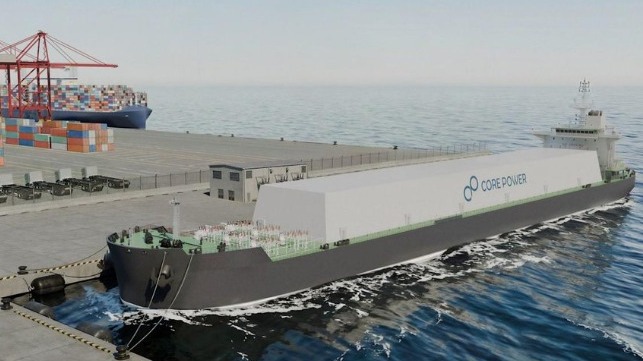
An international consortium headed up by a British firm is pitching a proposal to the Pentagon to build a ship-borne nuclear power station, to be docked at a naval facility.
The concept seeks to exploit the nuclear regulatory environment enjoyed by the department, which has extensive experience of using small nuclear reactors afloat and well-established protocols which would enable a deployment far faster than civilian nuclear power plants can be built in most countries.
The Pentagon has an interest in facilitating such an endeavor, because AI and data centers on which the department depends cannot get access fast enough to the additional power sources needed to power them through the national power grid. The floating power station could be connected directly to a data center from the dockside, or into the national power grid for offtake elsewhere. Once grid supply catches up with local demand in the area being served, then the floating power station could be moved to an alternative location – even in another country in need of a power boost, for example in the aftermath of a natural disaster. So long as the vessel does not transport cargo between U.S. points in the course of its operations, the hull could be built overseas at reduced cost without triggering the requirements of the Jones Act.
The consortium led by Core Power brings together Terrapower, a US mini-rector start-up backed by Bill Gates; Japanese and Korean shipbuilders; and the French parastatal nuclear fuel company Orano, with fit-out to be completed in the United States. The consortium is aiming to use an existing shipborne nuclear reactor design initially, with an output of 300MW.
There should be a range of existing reactors to choose from: Nimitz Class aircraft carriers each have two 550MW reactors, and the output of the Rolls Royce PWR2 submarine design in service is estimated to be 150MW. These reactors are designed to run on weapons-grade uranium, which creates a security challenge for fuel handling and storage. Modern French naval reactor designs run on low-enriched uranium, like typical civilian reactors, and thus have less restrictive security requirements – but they require more frequent refueling, and the technology is subject to stringent export controls.
The Pentagon response to the multinational proposal is unclear. But in May 2025, the White House issued an order requiring the department to deploy an advanced nuclear reactor at military base before the end of the Trump administration’s second term.

No comments:
Post a Comment