Beginning in the 19th and 20th century, during the United States’ reconstruction era that followed the American Civil War, an important debate emerged in this country. It was during the era after slavery was officially abolished — after Union troops arrived in Galveston, Texas on June 19th, 1865 — what we now commemorate as Juneteenth — to spread the word. The debate, that in many ways is still alive and well, went something like this: what is the best way to end class and racial injustice in the United States and what is the role of Black leadership in this?
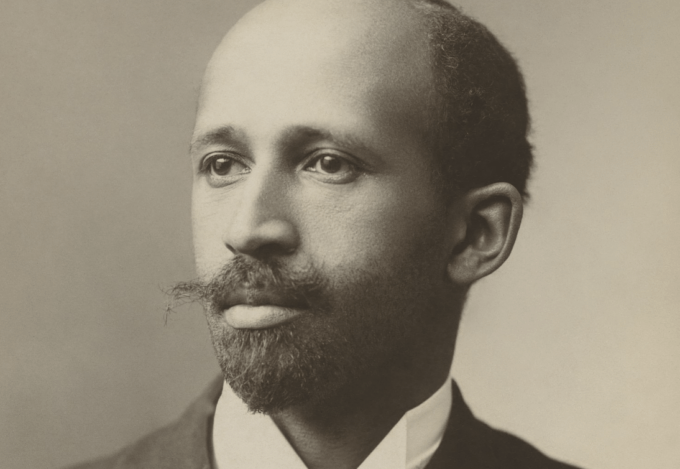
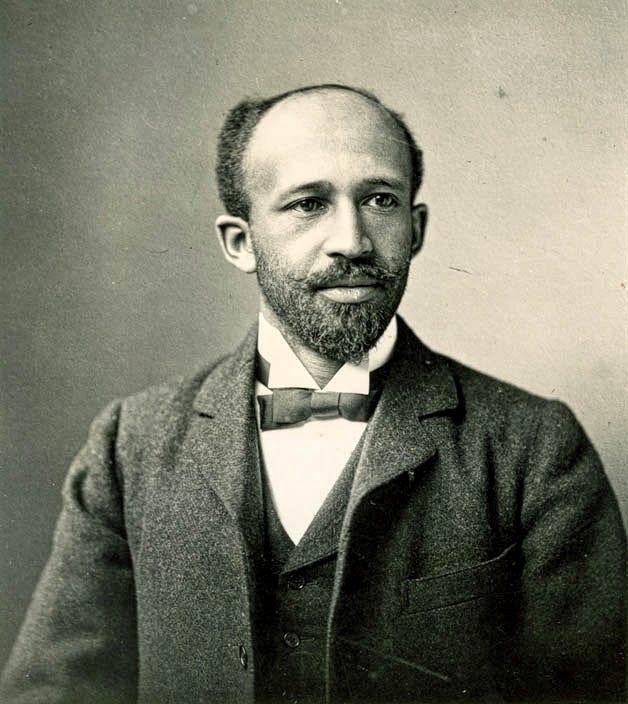
Two leaders of the Black community during this period , W.E.B. Du Bois and Booker T. Washington, can be seen as the two main voices of this debate representing each side.
Booker T. Washington believed that Black people should concentrate on elevating themselves through hard work and material prosperity. His beliefs were very much rooted in a belief of individualism and working within the capitalist system to build Black wealth.
On the other side, W.E.B. Du Bois rejected Washington’s strategy. Instead, he advocated political action and a civil rights agenda — a much more systemic and collective vision of a path forward.
This debate is still very much alive in this country and has been taken up by many individual thinkers and organizations. The bifurcation can largely be seen as a disagreement on whether or not racial justice is achievable under a capitalist system — whether Black capitalism can lead to the liberation of Black people in the United States.
Du Bois’s legacy was picked up by many more radical thinkers in the mid-20th century, such as the Black Panther Fred Hampton, who argued that: “We don’t think you fight fire with fire best; we think you fight fire with water best. We’re going to fight racism not with racism, but we’re going to fight with solidarity. We say we’re not going to fight capitalism with black capitalism, but we’re going to fight it with socialism.”
Another thinker who carries the legacy of Du Bois and Hampton is Francisco Pérez, Executive Director of the Center for Popular Economics, who has recently written a piece that furthers the arguments against Black capitalism and for a more socialistic, solidaristic, and collectivist approach to Black liberation.
In his piece, Pérez argues that there is a broad conflation within our present-day capitalist society between the success of individual members of certain oppressed and marginalized groups and their collective success and liberation. This is particularly true when it comes to Black people and their liberatory struggles. Too often, the successes of individual people — Oprah, or LeBron James, for example — or their rise to certain leadership positions, take Barack Obama — are seen as collective successes, whereas, when it comes to the material conditions of all Black people, these individual successes don’t have a significant impact.
What are the dangers of this conflation between individual and collective success? Can Black liberation be achieved through individual successes within capitalism — through Black capitalism — as Booker T. Washington suggested? Or can true liberation for Black people in the United States only emerge through a collective struggle against racial capitalism?
Francisco Pérez is the Executive Director of the Center for Popular Economics and author of the recent piece in Nonprofit Quarterly, “How Do We Build Black Wealth? Understanding the Limits of Black Capitalism.”
You can listen to the full Upstream Conversation below to dive deeper into this topic and learn about what building real Black wealth could look like.
This article originally appeared on Shareable.net.
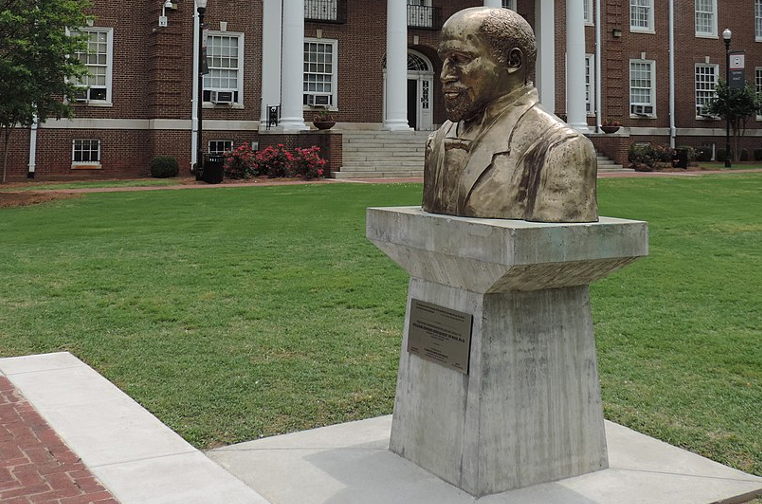
Teaser photo credit: Bust of W. E. B. Du Bois at Clark Atlanta University.
By Hildabast – Own work, CC BY-SA 4.0, https://commons.wikimedia.org/w/index.php?curid=58794420

ERIC EJ905153: The W. E. B. DuBois and Booker T. Washington Debate: Effects upon African American Roles in Engineering and Engineering Technology
https://archive.org/details/ERIC_EJ905153
The messages of Booker T. Washington and W. E. B. DuBois could not have been more diverse. The philosophical rivalry between Washington and DuBois has deep historical roots. To be on the same side fighting for the same purpose, progress, and uplifting of the Black race, these two Black intellectuals harbored radically divergent views on how to assist African Americans to free themselves from their often subhuman conditions. Both men were aware that technological advancement was of foremost importance to the advancement of African Americans. Washington's (1901) "Up From Slavery" and DuBois' (1903) "The Souls of Black Folks" were immediately hailed as classic commentary due to their efforts to address the then "Negro" problem in America. There were a number of Black Americans who made a valiant effort to mitigate poverty, illiteracy, racial discrimination, high mortality rates, and other desolate conditions that plagued many African Americans, particularly at the turn of the century. However, due to their influential appeal among certain constituencies, both Washington and DuBois garnered ample attention from many segments of the American intelligence, many of which were European in ethnic origin. Thus, acknowledgment from the White power structure (this was particularly true in the case of Washington) provided both men a platform to promote their message. In this article, the authors discuss the effects of the debate upon African American roles in engineering and engineering technology. Both Washington and DuBois were aware that the need for African Americans to become technologically literate was paramount. However, whereas Washington advocated a hands-on external approach, DuBois promoted a paternalistic form of advancement of the Black race. Both men's philosophies are still being argued and applied in the technological arena today.
ERIC ED041974: A Syllabus for the Study of Selective Writings by W. E. B. Dubois.
https://archive.org/details/ERIC_ED041974/page/n23/mode/2up
This syllabus or teacher's guide to the life and works of Dr. W.E.B. Dubois has the following organization. An introductory section provides eulogies and tributes from important black and white leaders focusing on his stature as an educator, editor, sociologist, historian, statesman, social prophet, and race leader. The main body of the syllabus details references to writings of major importance, such as his 21 books, Atlanta Studies, editorials, essays, and creative work, and to major topics, such as peace, class struggle, lynching, education, civil rights, race pride, black power, colonialism, and voluntary separation. Aphorisms and short quotations are also included in this section. The address delivered by the Rev. William H. Melish at the Memorial Service of the late Dr. Dubois in Accra, Ghana, on Sunday, September 29, 1963 completes this section. An appendix carries a chronology of Dr. Dubois' life and accomplishments, and a bibliography grouped as books, magazine articles, pamphlets, chapters in anthologies, the 21 books, unpublished works, and biographies. (RJ)



1 Comment
This 80-year-old prophetic inspirational speech of one of our most honorable citizens is still very relevant today. It might sound like a socialist utopia, but it contains many practical ideas that should be considered by the modern Left “reformers” and “revolutionaries”. Unfortunately, articles of this depth and breadth are rarely to find in the popular Left media today.
A Farmer Reflects on Juneteenth
I sunk the saved fingers of turmeric root into the tub of soil back in Winter. I waited weeks—as always.
No growth.
After more weeks a light dusting of white mold ghosts spots on the soil surface above the hidden root—as sometimes happens.
No growth.
I imagine the mold signifies rotting turmeric root below. I waited more weeks—this seems longer than last year.
No growth.
The author at Diaspora Gardens on Madeline Island in Wisconsin. (Diaspora Gardens)
The danger of frost is past, and farm and plants are beginning to grow in Diaspora Gardens up here on Madeline Island off of Lake Superior’s southern shore.
I could use these large containers for something else. I could rehabilitate the soil for garden plantings. The morning I’m about to add “reclaim soil” to my to-do list, there it is: a thin sliver of green.
For a few years I’ve played with growing turmeric and ginger. Each year they surprise and teach me with their timing of life rising after a long below-the-surface rest and internal unfolding.
I consider this teaching as I wrap my soul and thoughts around the Juneteenth holiday and story. It is the story of the last enslaved people of African descent to learn, on June 19, 1865, in Galveston, Texas, of their emancipation—two and a half years after U.S. President Abraham Lincoln proclaimed their freedom.
Today, 161 years later, a range of emotions surfaces around the delayed notification.
There is celebration—celebration that freedom was more lived into. This is perhaps a truer Independence Day, if one adheres to Dr. King’s notion that none of us are free until all of us are free.
There is the grief and anger over living enslaved when one could have been living free … and even over those who died in the delay not ever knowing or living their freedom.
There is the grief and loss of being declared free, but lacking the resources, power, safety or systems to actually exist in what is labelled “freedom.” And there is the gratitude that a national holiday acknowledges Juneteenth’s significance.
But back to the slender turmeric stem. How it rises from what has existed and lived for months without my awareness makes me consider how liberation was in theory existing before it was visible, “enforced,” risen. Existing even prior to the announcement from a human mortal president (or before that a human created constitution) and the Union general in Galveston, Texas, on June 19, 1865.
The drum story presentation I used to offer to school children begins with the heartbeat of freedom, wholeness, and life moving in the universe before life as we know it existed—becoming embedded in each of us. Maybe it is still so in this world of humans and earth trapped by warfare, greed, poverty, addiction and more.
Perhaps liberation, wholeness, life are still moving and maturing where we cannot yet know or see. Perhaps these rise—sometimes explosively, sometimes quietly—in so many small sprigs. These sprigs hint at what could yet rise in more fullness.
My growing and sharing of food and medicine is a constant Juneteenth freedom act. I honor and re-live the liberation resolve of those newly emancipated ones. How they created free lives for themselves with businesses and sustenance grown from their expertise with soil, seed and the natural surroundings.
And my soil life holds the practice of believing in what happens in the unseen hidden places. I also consider the turmeric rhizome/root teaching as I sow new seeds with this deepened dedication to cultivating aspiring growers of healthy food and healthy communities.
For 15 years at our micro-farm life, Diaspora Gardens, we have mentored volunteers, interns and apprentices. As many know, most plants grow stronger and healthier with companion plants and mycelial threads planted and growing around them.
So these seeds (and spores) being started are for a vibrant supportive community of companions to strengthen the roots and growth of Diaspora Gardens. They will be rooted in regenerative land cultivation, business skills, cultural and community connection, low-impact life ways, and a model of fair and ethical work life. We truly believe that when we cultivate, empower, and support healing of our next generations who grow our food and grow our communities, we are rooting the future.
When we do this—especially with those most impacted by racism, marginalization and historical wounds—we reclaim and redeem the soil and seeds for tomorrow’s resilience and flourishing.
Regina M. Laroche is founder of Diaspora Gardens, a Land-Art-Spirit practice rooted in regenerative relationships with land, community and heritage. She engages farming, arts, mentoring and spiritual connection to repair, celebrate, and grow a future of justice and abundance. As the daughter of an Afro-Caribbean refugee and an African American sharecropper, a mother, sibling, and spouse, she is devoted to healing wounds of inequity and strengthening bonds of land, community, and ancestry.