Tanker Damaged by Russian Attack Breaks Towline Prompting SAR Operation
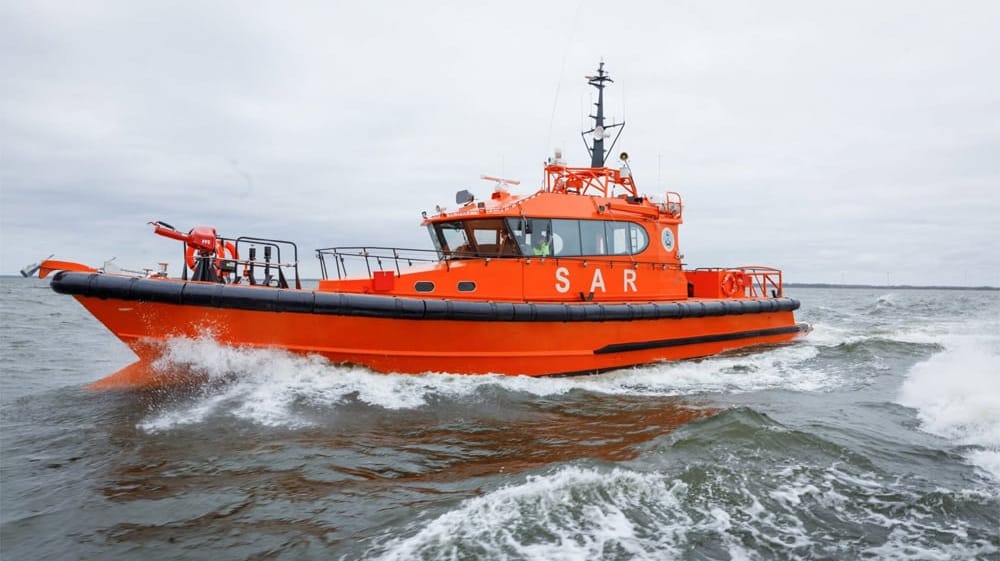
A product tanker damaged in September by a Russian attack has broken free of its tow, prompting a SAR operation and efforts to recapture the drifting vessel. Romanian officials reported the rescue of three crewmembers from one of the towing tugs, while Bulgaria reports it is monitoring the tanker as it drifts in the Black Sea.
The product tanker Mentor (13,000 dwt) was attacked off Odesa on September 24. The Ukrainian master of the vessel was killed in the strike by a Shahed-style drone while Ukraine evacuated the remaining crewmembers. The tanker registered in Antigua and Barbuda had remained at anchor, with reports that its bridge was burnt out from the attack.
Two Turkish tugs, Ramazan Bey (339 gross tons) and Ayaz Bey (317 gross tons), issued a distress call overnight while off the coast of Romania, towing the derelict tanker toward Turkey. According to the reports, the tugs encountered heavy seas during a Black Sea storm, and the towline parted. They reportedly were able to restore the line once, but in the process, the Ayaz Bey hit the tanker and was heavily damaged. Romanian officials said it was in danger of sinking.
The crew of the Ayaz Bey issued the distress call, and Romania dispatched rescue boats. Weather conditions, including heavy wind along with the very rough seas, prevented Romania from launching an aerial rescue. Three crewmembers from the tug were evacuated to a Dutch-flagged tugboat, Odin, which was also operating in the area. The Ministry of Internal Affairs of Romania, however, reports four other crewmembers refused evacuation, saying they did not require assistance. They reportedly brought the damaged tug to an anchorage.
Bulgarian officials, however, report the Mentor is again drifting in the storm and approaching their waters. They ordered the second tug, Ramazan Bey, to stand by the drifting vessel while Bulgarian officials are coordinating a response to the situation.
According to reports from Bulgaria, the abandoned tanker is carrying 11,000 tons of sunflower oil. There is no crew aboard, and it is currently drifting in the Shabla region in northern Bulgaria, near the border with Romania.
Bulgaria Warns of Containers Washing Ashore from Contship Jet
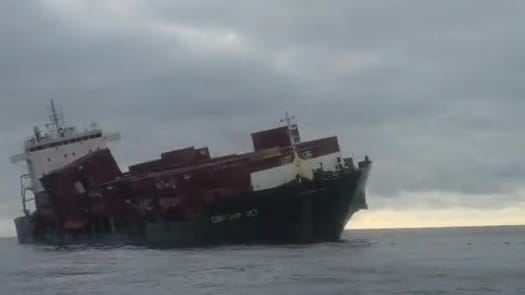
There are increasing reports of debris coming ashore from the Greek-owned containership Contship Jet that was sailing for Zim when it went down last week in the Black Sea. The ship sank approximately 16 nautical miles offshore on October 29, about 12 hours after it was struck by three sea drones.
The vessel was reported to have 421 containers loaded when it was lost. The manifest showed that flammable liquids and gases, non-flammable gases, and lithium-ion batteries were among the listed hazardous cargo. Other reports said there was general cargo, including Christmas merchandise heading to Romania.
The vessel had taken on a heavy list and was drifting to the south in the hours after the attack. Reports said that more than 20 of the containers had fallen overboard. Rough seas were further complicating the situation in the hours before the vessel succumbed and went down overnight.
By Sunday, November 1, reports said that at least four containers were seen drifting in the Black Sea, but conditions made it impossible to retrieve them.
The first of the containers crashed ashore on Sunday and became wedged in the rocks. Media reports say it was harmless, containing Christmas trees. Concerns, however, were raised when a second container frame holding a large tank was spotted drifting offshore. Officials said they suspected the tank was empty, but they increased the warnings when it was driven ashore.
Another red container was spotted half submerged, and then late on Monday another container became stuck in the rocks close to shore at Tsarevo. The Navy said it would attempt to inspect the container on Tuesday, but that it is in shallow waters and with rough seas it was difficult to reach. They were still discussing how to move the container to a safer location.
Government officials are warning of the dangers of the containers from the ship, saying that the rough seas make it impossible to recover any of the containers or tanks. They were hoping to begin towing the containers once the sea conditions improve.
For now, they are cautioning ships while saying it is impossible to predict how many containers will float up.
Concerns were also raised about the fuel still aboard the vessel. Weather conditions, however, have made it impossible to survey the wreck or determine at what depth it lies.
Russia Plans to Sell Part of its Stake in Sovcomflot
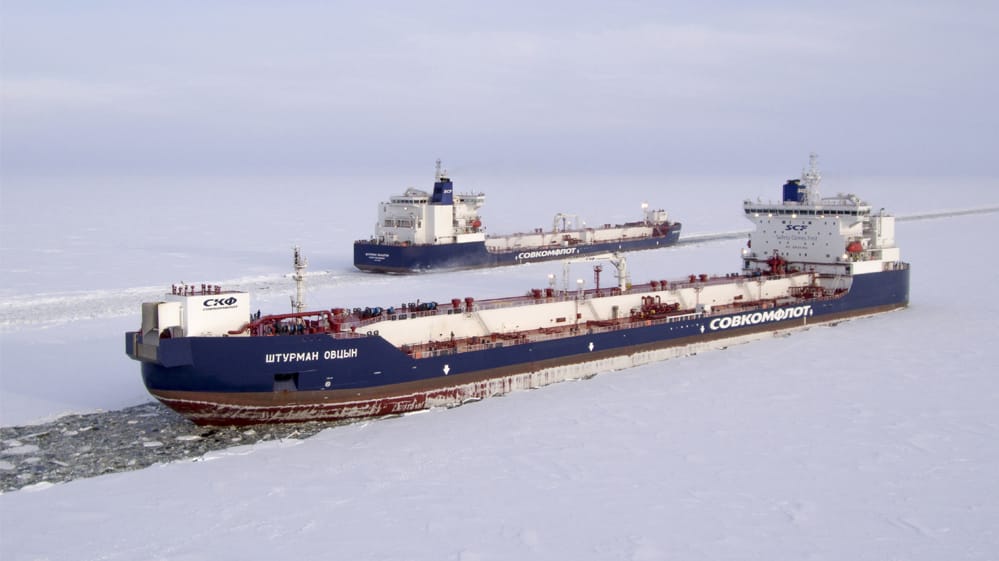
Faced with a need for revenue, the Russian Ministry of Finance is making plans to sell down its stake in Sovcomflot (SCF), a state-owned tanker operator with international reach and a Soviet history.
SCF is under sanctions, so transacting in its shares could be difficult abroad. However, there is no regulatory obstacle to securing private-sector investment within Russia itself. The company is listed on the Moscow Exchange, and at current pricing the sale would bring in about $180 million.
Sovcomflot posted a net loss of about $650 million last year, but returned to profitability in the first half of 2026 on the back of improving tanker rates. The ministry said that the exact timing of the share sale would be determined based on market conditions.
SCF had more than 120 tankers on the eve of the Ukraine conflict, and it still describes itself as one of the largest tanker owners in the world. But after the rollout of Western sanctions on the firm, ownership of many of its vessels has been transferred to other entities overseas. Under new, opaque management structures, many of these vessels continue to serve the Russian oil trade as part of the "shadow fleet" of below-the-radar tanker operations.
The Russian state currently owns about 83 percent of SCF, and the planned sale would shrink its holdings to just over 75 percent, leaving the Kremlin with a strong grip on the company.
Large Russian Military Cargo Convoy Forming Up in the Baltic
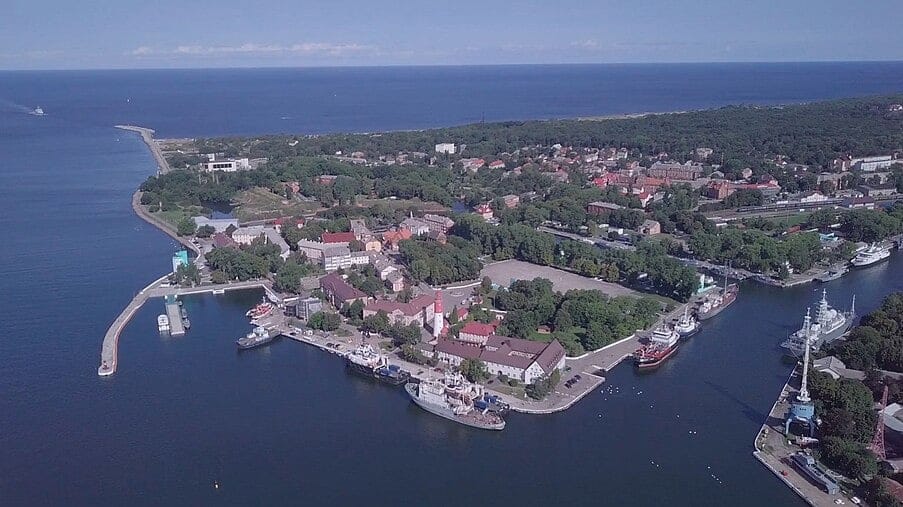
An unusually large convoy of cargo vessels, all sanctioned and with well-established histories of moving military cargo for the Russian Ministry of Defense, appears to be forming up at Baltiysk, in the Russian enclave of Kaliningrad. They appear to be readying to depart.
Baltiysk has often been used as an assembly point for escorted cargo ships heading either for the Mediterranean or for West Africa, usually to support the activities of the state-sponsored mercenary group, the Africa Corps, which supports governments in power facing threats from Islamist militants. These governments are generally military-led, having seized power in coups.
The vessels involved are the Lady R (IMO 9161003), Ascalon (IMO 9198226), Lady D (IMO 9349289), Sparta (IMO 9268710), and Anastasiia (IMO 9349291). All are now in Baltiysk or in the anchorage just outside the port, most having beforehand come south from St. Petersburg. It would appear likely that the vessels have taken on cargo in St. Petersburg and are completing loading at Baltiysk.
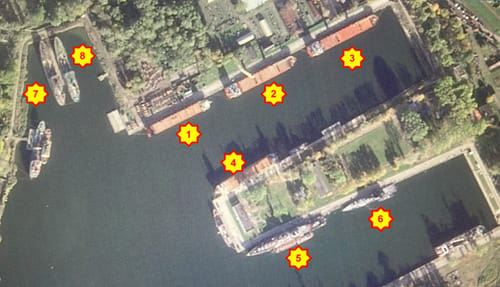
Four military cargo vessels (1-4) loading at Baltiysk in Kaliningrad on October 27 (Sentinel-2)
On October 27, the Sparta (1) was at the dockside loading military vehicles, alongside Anastasiia (2) and the Lady D (3), with the Ascalon (4) on the wharf opposite. By October 30, the Ascalon, Anastasiia, and Sparta had completed loading and had moved to the anchorage just outside the harbor, while the Lady R was approaching Baltiysk from St. Petersburg.
Also in the harbor on October 27 was the Sovremenny class destroyer Nastoychivy (D610) (5), which has been under repair since 2019, flagship of the Baltic Fleet, and not going anywhere soon, but also a Steregushchiy class corvette (6), a class of vessel often used to escort military cargo vessels in the past, and possibly the Stoikiy (F545). Also used for escort duties in the past are vessels from the tank landing Ropucha Class, with the Aleksandr Shabalin (L110) having returned from such a trip to Tobruk in September. Two other vessels (7) and (8) arrived at their jetty, probably for restocking, between October 23 and 27, and could be Ropucha class ships.
[Updated Nov. 1] At least two of the Russian-flagged cargo vessels have been identified sailing together between Rügen and Bornholm, on course for the Langeland Belt, namely the Ascalon (IMO 9198226) and Anastasiia (IMO 9349291). The two sanctioned vessels were being shadowed by the German Coastguard vessel Bamburg (IMO 9830020) and the Danish Coastguard vessel Merkur (MMSI 219167000), a duty then taken over by the Danish naval patrol vessel HDMS Rota (P525).
It remains to be seen if the Russian navy is economizing on the need for escort vessels by sending military cargo vessels all out together, watched over by a single naval warship. In these circumstances, once near the Strait of Gibraltar and past the areas of highest risk for naval interdiction, the cargo vessels could then split and head off in separate directions. It is unlikely that they are either loaded with diesel or all heading for the same destination, unless Russia is planning a major new intervention or is planning to invade somewhere new, with the Africa Corps having won a new contract.
Top photo by Russian Geographical Society - CC BY 3.0

No comments:
Post a Comment