Russia Pressures Royal Navy's Weak Spot
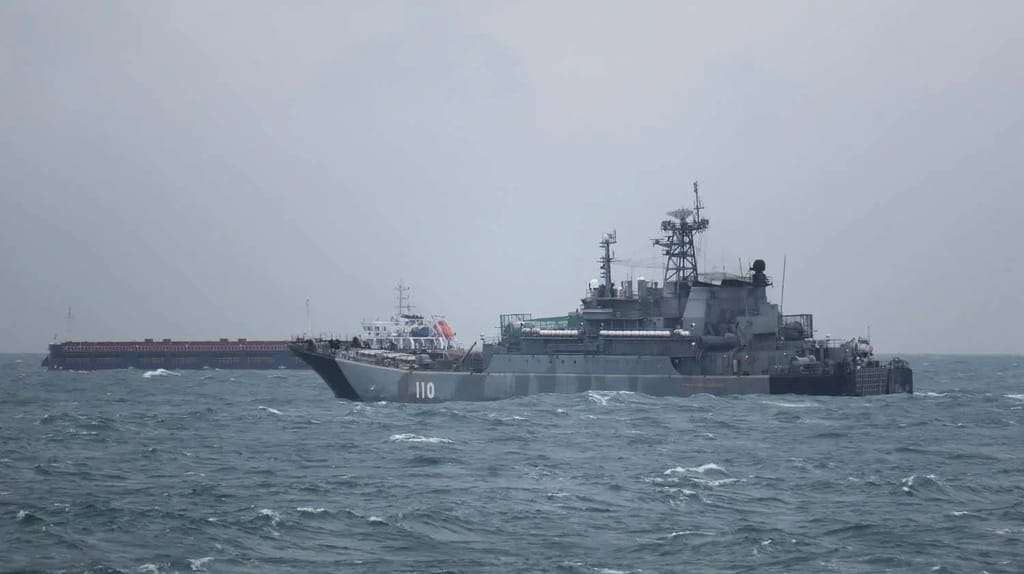
The expansion of Russian hostile activities in British waters in recent months could not have come at a worse time for the Royal Navy, putting pressure on resources in the particular capability areas where the Royal Navy is critically deficient.
The operations in British waters of Russia's GUGI underwater intelligence-collection submarines and vessels (such as the Vishnya-class intelligence-gathering ship Viktor Leonov) and the posting of a permanent picket ship in the North Sea (currently the frigate RFS Neustrashimy) – come on top of the burden of monitoring the movements of Russian dark fleet tankers and sanctioned vessels carrying military cargoes, which are primarily resupplying the state-sponsored mercenary Africa Corps in West and North Africa.
Clearly, the Russians are concerned about the possible interdiction of their vessels in the North Sea. Some vessels are being sent north and west around the British Isles to avoid territorial waters, and the Russians themselves struggle to field suitable naval escorts for those taking the shorter route through the English Channel. But equally, the Royal Navy does not have sufficient frigates to shadow these Russian movements, and it is having to use valuable Type 45 air defense destroyers or lightly armed patrol vessels instead – or, increasingly, to monitor movements only from the air, courtesy of Fleet Air Arm Merlin helicopters and Royal Air Force Protector surveillance drones.
Currently, only five Type 23 frigates are still in service, slated to remain in the fleet until the first of the Type 26 and Type 31 frigates come into service. The first two Type 26 frigates, HMS Glasgow (F88) and HMS Cardiff (F89), are being fitted out, as is the first Type 31, HMS Venturer (F12). But there is a long way to go before the ships will be fit to join the fleet, and it has emerged that insufficient resources have been allocated to the task of certifying the ships as ready for service. Nor has the certification process itself been modernized.
At the same time, two of the remaining Type 23 frigates look as if they are about to be declared unseaworthy because of hull corrosion problems, further jeopardizing frigate availability over the next three years. The perilous state of the frigate fleet poses problems not just for monitoring the increased Russian activity in home waters, but also for the ability of nuclear submarines and the two Queen Elizabeth-class aircraft carriers to operate with proper protection.
The British press has revealed that despite the alarming capability gap, the yards building the new frigates are still working “peacetime” hours, with no night shifts, overtime or weekend work. Whereas the Royal Navy is intensely agitated at its inability to meet its operational tasking, a more relaxed attitude appears to be prevailing in the Ministry of Defence’s procurement organization.
It is not all bad news for the Royal Navy, however. Some of the Type 45 destroyers are coming back into service after performance upgrades, and last week three Vanguard-class nuclear ballistic missile submarines were at sea, as were both aircraft carriers – HMS Queen Elizabeth (R08) in the Atlantic and HMS Prince of Wales (R09) off Gibraltar.
EU Court Upholds Restrictive Measures Imposed on Russian Maritime Register
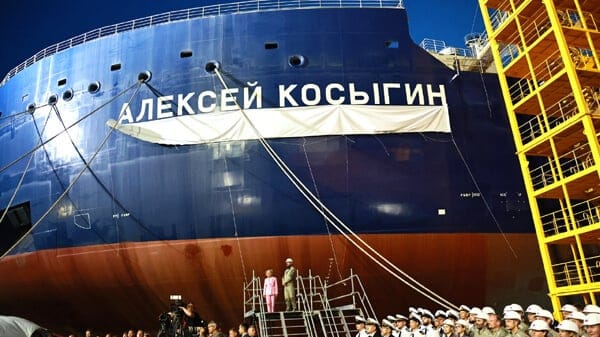
The Court of Justice of the European Union handed down a decision on November 4, upholding most of the restrictive measures the European Council has imposed against the Russian Maritime Register of Shipping. It found that the European Council was acting within its powers to sanction the operator of the registry as part of the Russian state and the efforts to pressure Russia to stop the war in Ukraine.
The case was brought by the Russian Maritime Register of Shipping to challenge the restrictions imposed starting in 2014 and increased after the invasion in 2022. At issue was the authority of the European Council to impose transaction restrictions and bans on the corporation and ships in the registry, as well as its withdrawal of recognition as a classification, inspection, and certification entity for shipping.
The Russian Maritime Register of Shipping had been recognized by the European Union since 1998. It was authorized to conduct inspections, surveys, and certification activities for ships flying either the Russian flag or foreign flags.
The first sanctions were imposed in 2014 after Russia invaded, occupied, and annexed the Crimean Peninsula from Ukraine. Those restrictions were further increased after the invasion of Ukraine in February 2022 and have been extended and expanded over the past four years. The European Council imposed financial restrictions on doing business with the Russian Register, including an investment ban. It also prohibited transactions with the organization, and ships certified by the organization were barred from accessing ports and locks in the European Union. Additionally, the European Council also withdrew its recognition of the Russian Maritime Register of Shipping and required member states to revoke authorizations they had granted to the organization.
The Court of Justice, in its decision, upheld all the bans, but annulled the measure withdrawing recognition of the organization. While the Court believed the European Commission was within its rights to take actions against the register organization as it is owned by the Russian state, it said the measure withdrawing the recognition was disproportionate, since less onerous steps were available.
It found that the European Commission could have had the same effect by suspending the recognition of the register organization. Its reasoning is that the withdrawal means that the recognition cannot be automatically reinstated if the restrictive measures are lifted. The court said the register would have to go through a new recognition procedure and the outcome would be uncertain.
The court, however, dismissed most of the action brought by the Russian Maritime Register of Shipping. It found that the European Council had fulfilled its obligation to state reasons for the action with actual and specific justifications. It was able to understand why the investment ban had been extended to the maritime sector and said the European Union was motivated by the Russian state ownership of the organization. The actions fall within the common foreign and security policy mandate of the Council.
The challenge to the blocking of ships within the registry from accessing EU ports was found to be inadmissible by the court. It said these actions only indirectly affected the legal position of the organization, as they targeted the ships and shipping companies.
The decision was seen as a landmark ruling as it confirmed the authority of the European Council to implement the restrictive measures when clear and justified reasons were established. As of mid-2026, the European Union has sanctioned over 670 ships, largely targeting Russia's "shadow fleet" tankers while also imposing restrictions on other sectors that directly support maritime operations. This has included the Russian Maritime Register of Shipping, as well as restrictions on providing maintenance, repairs, and other services to target shipping and shipbuilding operations.
The European Union asserts the sanctions have a meaningful impact on Russia and its economy. It asserts the sanctions are a key part of the effort to bring an end to the war in Ukraine.

No comments:
Post a Comment