Hijackings off Somalia raise fears that piracy is back on the rise
Reports of multiple hijackings off the coast of Somalia are raising fears that piracy may be reviving after a relative lull over the past decade. Increased traffic round the Horn of Africa amid the war in the Middle East, along with the diversion of naval forces, could be creating more opportunities for pirates to strike.
Issued on: 02/05/2026 - RFI

Somali maritime police patrol in the Gulf of Aden off the coast of Puntland State in Somalia, on 26 November 2023. © AP - Jackson Njehia
By: Anne-Marie Bissada
In the past 10 days, pirates have hijacked at least three boats off the coast of Somalia. The Honour 25 oil tanker was seized on 21 April, followed by a dhow on 25 April and the Sward, a merchant vessel, on 26 April.
According to the Maritime Security Centre Indian Ocean (MSCIO), the European Union Naval Force's tracking service, the three incidents were ongoing as of 29 April.
MSCIO has issued a warning to vessels in the area to "maintain a heightened level of vigilance", particularly within 150 nautical miles of the Somali coast between Mogadishu and Hafun on the Indian Ocean.
Security vacuum
Piracy off the coast of Somalia, concentrated near the semi-autonomous region of Puntland, shot up between 2008 and 2013, before international naval patrols and tighter security on commercial ships helped bring down attacks.
Following a lull, activity picked up again in late 2023 during the Red Sea crisis – when Iran-backed Houthis in Yemen began launching missiles and armed drones at Israel in response to the war in Gaza.
The Houthis also seized or attacked merchant and naval ships they believed to be affiliated with Israel, the US or the UK. By April 2024, some 40 vessels had been targeted.
By: Anne-Marie Bissada
In the past 10 days, pirates have hijacked at least three boats off the coast of Somalia. The Honour 25 oil tanker was seized on 21 April, followed by a dhow on 25 April and the Sward, a merchant vessel, on 26 April.
According to the Maritime Security Centre Indian Ocean (MSCIO), the European Union Naval Force's tracking service, the three incidents were ongoing as of 29 April.
MSCIO has issued a warning to vessels in the area to "maintain a heightened level of vigilance", particularly within 150 nautical miles of the Somali coast between Mogadishu and Hafun on the Indian Ocean.
Security vacuum
Piracy off the coast of Somalia, concentrated near the semi-autonomous region of Puntland, shot up between 2008 and 2013, before international naval patrols and tighter security on commercial ships helped bring down attacks.
Following a lull, activity picked up again in late 2023 during the Red Sea crisis – when Iran-backed Houthis in Yemen began launching missiles and armed drones at Israel in response to the war in Gaza.
The Houthis also seized or attacked merchant and naval ships they believed to be affiliated with Israel, the US or the UK. By April 2024, some 40 vessels had been targeted.
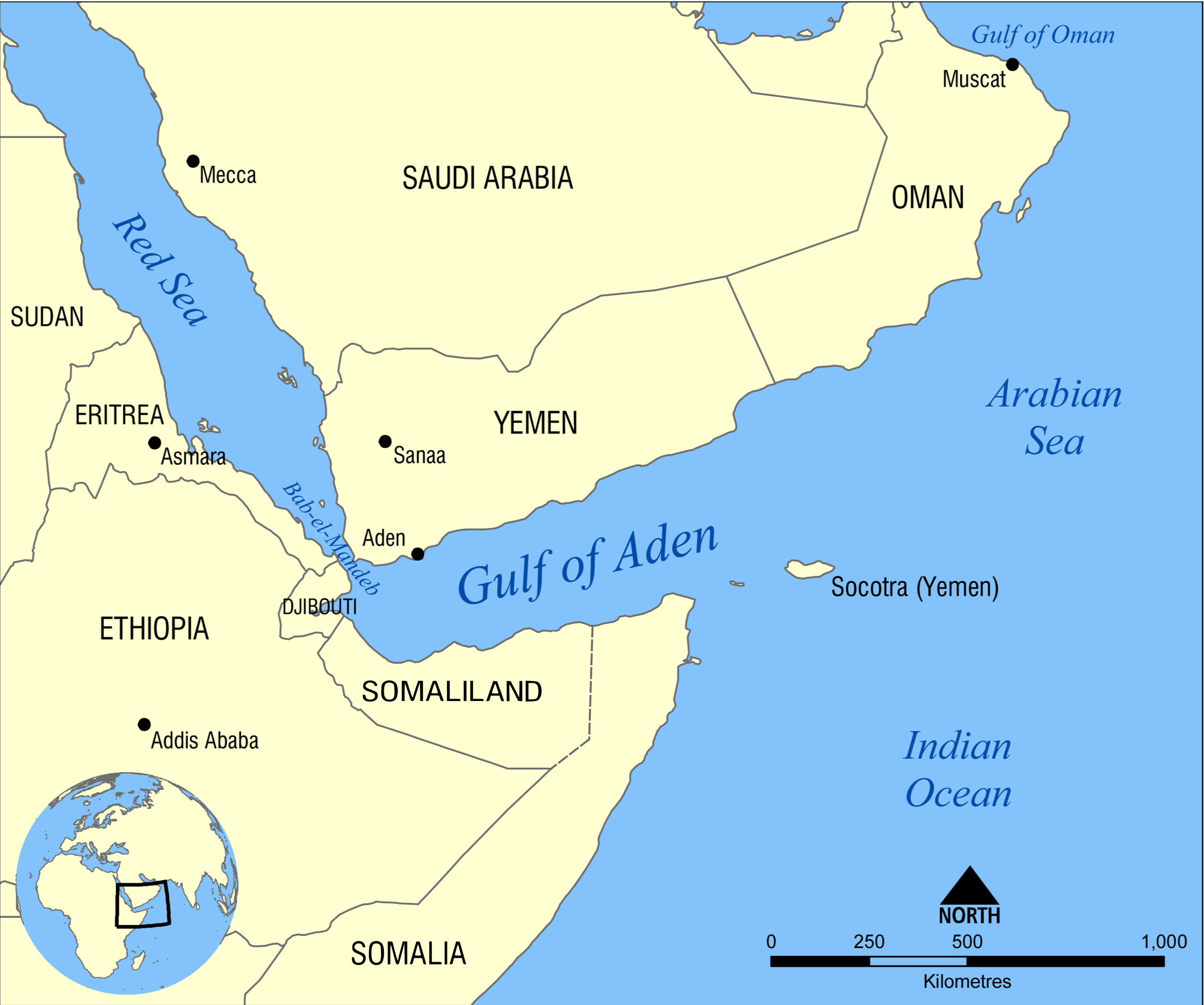
Somalia's coastline spans the Indian Ocean and the Gulf of Aden, near the entrance to the Red Sea and directly across from Yemen. © NormanEinstein, via Wikimedia Commons
In response, local and international naval forces that had been patrolling Somali waters were deployed closer to the Red Sea, says David Willima, a maritime security researcher at the Institute for Security Studies (ISS) in South Africa.
“So that place had a security vacuum, which is when these groups were able to take advantage,” he tells RFI.
Many boats were then forced to take the longer route around Africa, through the Indian Ocean towards South Africa’s Cape of Good Hope, to avoid the Red Sea. For pirates off Somalia, the increase in traffic and reduced naval forces nearby meant more opportunity to hijack ships.
Now, as Iran blockades the Strait of Hormuz in response to US-Israeli strikes, vessels are once more seeking an alternative route around the Horn of Africa. Meanwhile naval patrols are being diverted to the Middle East.
In response, local and international naval forces that had been patrolling Somali waters were deployed closer to the Red Sea, says David Willima, a maritime security researcher at the Institute for Security Studies (ISS) in South Africa.
“So that place had a security vacuum, which is when these groups were able to take advantage,” he tells RFI.
Many boats were then forced to take the longer route around Africa, through the Indian Ocean towards South Africa’s Cape of Good Hope, to avoid the Red Sea. For pirates off Somalia, the increase in traffic and reduced naval forces nearby meant more opportunity to hijack ships.
Now, as Iran blockades the Strait of Hormuz in response to US-Israeli strikes, vessels are once more seeking an alternative route around the Horn of Africa. Meanwhile naval patrols are being diverted to the Middle East.
Widening inequality
Several of the underlying reasons pushing people into piracy have not changed over the years. “Some of it is just pure criminality,” says Willima. “Some of it is connected to a lack of livelihood alternatives.”
Many Somalis living on the coast have traditionally made their livelihoods by fishing. But foreign fleets have increasingly encroached on their waters, whether operating illegally or authorised by questionable licences – such as a 2018 deal that allowed Chinese companies to fish within 24 nautical miles of Somalia's shores for $1 million.
Increased fishing has contributed to a decline in stocks – pushing fishermen further out into deeper and riskier seas, according to Enact, an EU-funded research site on transnational organised crime in Africa.
Faced with dwindling incomes, some fishers resort to illegal activities, says Willima. Some turn to “criminality on land” and others look to piracy, which is seen “as another lucrative avenue to make money”.
The same groups continue to be drawn to piracy, he says. “These are people [who] have looked at the sea as a source of livelihood for generations. Where livelihoods have been eroded, inequalities have deepened.”

No comments:
Post a Comment