Trump-Xi summit sparks Taiwan headlines, but raises doubts over US grasp of bigger picture
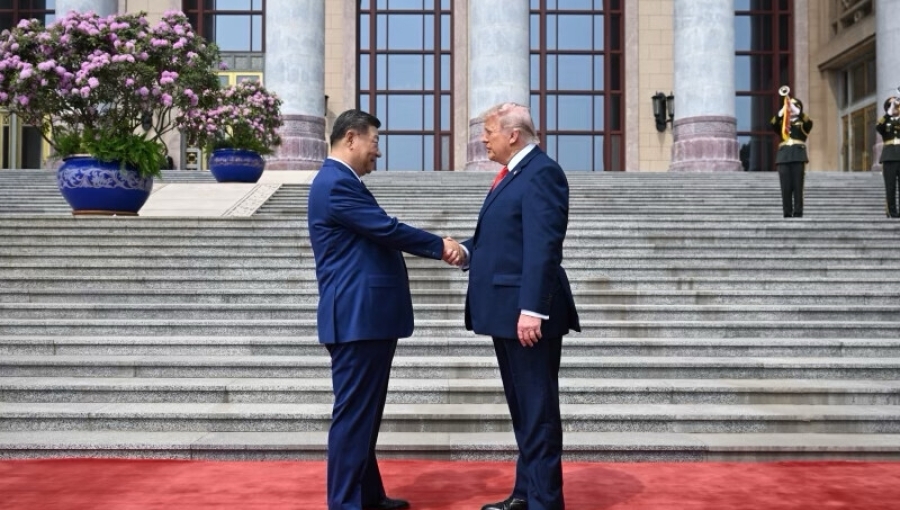
The rhetoric emerging from the May 2026 meeting between Donald Trump and Xi Jinping in the Chinese capital has generated a series of dramatic headlines in Washington. In Asia, it has barely registered.
At issue is a renewed emphasis on Taiwan and the familiar language around independence and whether or not the island of 24mn is pushing in that direction. Yet regional policymakers and analysts see little substance behind the statements made by either Trump or Xi as nothing has materially changed.
For years, US officials have been far more focussed on efforts to constrain China’s military reach, particularly its access to the Northwest Pacific, than Taiwanese moves towards independence.
Official US policy on Taiwan is built around a deliberately ambiguous framework that has remained largely consistent for decades. At its core is the so-called One China policy pushed by Beijing, under which Washington “acknowledges” China’s position that there is one China and that Taiwan is part of it, but the US has never explicitly endorsed that claim, and neither has Donald Trump. Without an act of Congress he couldn’t.
Yet, for all Trump’s bluster in recent days, Washington remains legally committed to maintaining a defensive perimeter that limits Chinese expansion beyond the first island chain – read Taiwan – and into the Western Pacific.
US doctrine has, for decades, relied on a chain of strategic positions — stretching from Japan’s Okinawa islands in the north, through Taiwan and down to the Philippines - what defence planners and think tanks have previously referred to as “unsinkable aircraft carriers”.
This is not a new concept as the US has always sought to deny China uncontested access to the North Pacific. Alongside allies in Tokyo and Manila, Taiwan is one, albeit legally unrecognised, element in that system. Taiwan is not, despite claims to the contrary by Taiwanese governments trying to ingratiate themselves to different US administrations, the objective in itself. At least not for the US. And that distinction is critical — but frequently misunderstood in Washington’s political messaging and for casual observers of the status of Taiwan vis-a-vis its role in the Beijing-Washington relationship.
Face-saving
To this end, the post-meeting statements from both China and the US are little more than the latest performance in a long-played out version of political theatre. For Trump, the optics matter – oftentimes more than the content itself. After a summit that came up woefully short on deals agreed, and yielded few tangible concessions from Beijing, Trump reiterating a hard line on Taiwan offers a domestic narrative of strength and influence.
For Xi, the calculus is similar. Reasserting China’s position on Taiwan - particularly Beijing’s opposition to a declaration of formal independence - comes at little cost, given that Taipei has never actually moved in that direction and shows no sign of doing so.
For both the US and China, this is thus a classic face-saving exercise. Both sides needed something they could present as a win, and talking tough on Taiwan is the easiest way to package that because the status quo is more often than not stable.
Indeed, Taiwan’s own political reality undercuts much of the rhetoric. The ruling Democratic Progressive Party administration in Taipei, in power since 2016, has consistently maintained that it does not need to declare independence. It already operates as a sovereign entity in practice, with its own elections, currency, military and a significant international economic presence.
The main Kuomintang (KMT) opposition party, traditionally more China-friendly, has shown no appetite for a formal declaration although some of its members at least acknowledge the island’s de facto independence.
Against that backdrop, calls to avoid independence by both Trump and Xi ring hollow. They are little more than statements aimed at external audiences, not fully versed on the political realities of East Asia. Such claims do not reflect imminent policy risk.
Goals unchanged
Because of this, what has not changed is US defence policy which continues to prioritise containment of China within the first island chain. Taiwan’s role in that framework is geographic as Trump has indicated, not ideological. It is simply a node in a broader network designed to restrict Chinese access to the Pacific.
As a number of US strategists have said in recent years, if China can break through that line, it would change the balance of power across the entire North Pacific, but while Taiwan is part of that line, the line itself is the point; as clear as it gets on why the question of Taiwan’s formal political status has always been secondary in military planning. Whether or not Taipei declares independence does not alter its geographic importance.
Crucially though, this also explains Beijing’s increased targeting of Taiwan of late. Among the components of the US-aligned chain – Okinawa, Taiwan and the Philippines – Taiwan is perceived as the most vulnerable. Japan’s strength and alliance with the US, and the presence of tens of thousands of US troops make Okinawa effectively untouchable. The Philippines, despite periodic political shifts, also remains closely tied to Washington.
Taiwan sits in between, both geographically and politically exposed even if there are always rumours and 'sightings' of US military ‘advisers’ working alongside Taiwanese forces – a concept that dates back to the mid 1880s when the north of the island was briefly invaded by French forces and at least one US Civil War veteran was recorded as aiding the locals against the invaders.
Long time observers of the region are more than aware that Trump’s approach risks missing this broader context. His emphasis on arms sales and short-term leverage plays well domestically with a populace known for its lack of international awareness, but sits uneasily with the longer-term strategic picture half a world away.
For now therefore, while the US continues to supply Taiwan with weapons, reinforcing Washington’s own defensive capacity. China continues to assert its claims. These dynamics are not new and will continue once Trump is upset by the next imagined Chinese faux pas and plays his arms-to-Taiwan card.
What has changed in the short term at least is the more explicit acknowledgement of each side’s position, without altering the underlying balance.
For some observers, this rightly reinforces doubts about US reliability in the region as was covered by IntelliNews weeks before Trump’s latest visit.
Taiwan the battleground
The core strategic reality then remains stark. In the event of a Chinese push into the Pacific, and subsequent conflict, the US would not be defending Taiwan for its political status. It would be seeking to prevent China from gaining unopposed access to Hawaii and the West coast of the mainland US. Should that happen, Taiwan would be the battleground, not the end goal – a distinction well understood in Beijing and across Asia but less clearly articulated in US political discourse.

No comments:
Post a Comment