Sunday, May 17, 2026

REST IN POWER


Whale Timmy is dead, GPS tracker confirms identity

Timmy the Humpback Whale
Copyright (c) Copyright 2026, dpa (www.dpa.de). Alle Rechte vorbehalten

By Sonja Issel & Sonja Issel
Published on

For days, it remained unclear whether the whale found dead off the Danish coast was Timmy. Authorities have now confirmed that the well-known humpback whale did not survive his journey through the Baltic Sea.

After several days of uncertainty, authorities have confirmed that the dead whale stranded off a Danish island is the humpback whale known as "Timmy".

The confirmation came from Denmark’s Environmental Protection Agency, according to the Ritzau news agency, with broadcaster TV 2 among the first to report it.

Mecklenburg-Western Pomerania’s Environment Minister Till Backhaus has since also confirmed the whale’s death.

Denmark’s nature protection agency, Miljøstyrelsen, said a GPS transmitter was found on the carcass, confirming it was the same humpback whale previously sighted in the Baltic Sea and later stranded off the German coast.

"We can now confirm that the humpback whale stranded off Anholt is the same whale that had previously stranded in Germany," agency head Jane Hansen said in a written statement.

Authorities have so far been unable to recover the GPS device because of poor weather conditions.

The whale had been released just two weeks ago following a dramatic and highly debated rescue operation after repeatedly becoming stranded along Germany’s Baltic Sea coast, authorities said on Saturday.

Timmy was first spotted off the German coast on March 3. It remains unclear why the humpback whale entered the Baltic Sea, a region far outside its natural habitat and poorly suited to the species. Some marine experts believe the animal may have become disoriented while following shoals of herring or during migration.

Sculpting the past: Michelangelo and Rodin mixed and matched in Paris Louvre exhibition


By Nina Borowski & Tokunbo Salako & Amandine Hess with AFP
Published on


A new exhibition at the Louvre in Paris pits Michelangelo and Rodin together to explore "Living Bodies" and the artistic links between the great masters who lived three and half centuries apart.

A summit duel between two great giants of Western sculpture is currently taking place under the Louvre pyramid in Paris.

In one corner stands Michelangelo. In the other Rodin. Between them are around 200 works in various materials ranging from marbles, bronzes, plasters, terracottas, casts and numerous drawings.

Separated by 350 years, the aim of the exhibition is to compare the art of these two geniuses, based on their main subject, the "living body".

"Michelangelo's style is very much a Renaissance style, the precursor of Mannerism, and in that sense his style is quite different from Rodin's, who also, in his own time, really overturned the codes of sculpture," says Chloé Ariot, curator at the Rodin Museum and curator of the exhibition.

"We are coming out of a century in which sculpture oscillated between a very strong tribute to classicism, with a renewed look at Antiquity, a strong inspiration from Antiquity, and at the same time, all the contribution of Romanticism, which is very much in the representation of expressions, of passions," adds Ariot.

The common thread running through the exhibition is the life and inner energy of the body. Beyond their form, the sculptures express a psychic life: thoughts, dreams, suffering.

The Louvre also recently hosted two dance performances, inspired by paintings and sculptures by the two artists and performed by dancers from the Paris Opera.

"When we started thinking about this evening with the director of dance, José Martinez from the Paris Opéra Ballet, we imagined a show devoted to duets," says Luc Bouniol-Laffont, director of the performing arts department.

"This exhibition, in a way, is a duet between two great sculptors, and so it's an evening made up of great duets that are somewhat mythical from the great repertoire of the Paris Opera Ballet, but also with a creation by Yvon Demolle, a dancer from the Paris Opera Ballet, who has imagined a creation that links, echoes and dialogues with the art of Michelangelo and the art of Rodin."

By bringing Michelangelo and Rodin together, the Louvre is offering a cross-disciplinary reading of the history of sculpture.

The exhibition does more than simply compare two artists: it shows how the same question - representing the living - crosses the centuries.

Michelangelo Rodin "Living Bodies" is at the Paris Louvre until 20 July, 2026.


A call to stop the global housing crisis: World Urban Forum, why it matters?

By Nadira Tudor & Saida Rustamova
Published on

More than 40,000 participants are set to gather in Baku for the UN's World Urban Forum as UN-Habitat warns that 3 billion people lack adequate housing and slum populations could triple by 2050.

At least 3 billion people do not have adequate homes, and over 1 billion are living in slums and informal settlements, according to UN-Habitat, which is calling for action in the midst of a "global crisis" in housing.

Most of those suffering reside in Asia and Africa, and the agency is urging decision-makers to recognise that without intervention as many as 3 billion could end up living in slum conditions by 2050 – a threefold jump.

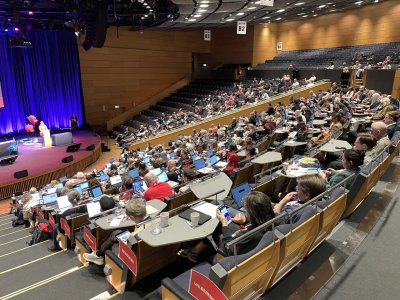
To bring discussions and debates to the fore, more than 40,000 people from 182 countries are expected to gather in Azerbaijan's capital Baku for the 13th session of the World Urban Forum (WUF13), the United Nations’ leading global conference on sustainable urbanisation, to take place between 17 and 22 May.

The event, held every two years and organised by UN-Habitat, is now arguably one of the world’s most significant platforms for discussing the future of cities, housing and urban resilience. The theme this year is “Housing the world: Safe and resilient cities and communities.”

She noted that WUF13 matters because it offers a platform “where governments, mayors, urban planners, academia, businesses, civil society and communities can discuss and exchange practical solutions on how to build safer, more resilient and more inclusive cities.”

The scale of this crisis is increasingly viewed as an economic, political and environmental one, not only a humanitarian predicament.

Soave explained that the benefits for the host country lie in representing “far more than an international event.”

“It places the country at the centre of the global urban agenda at a time of rapid urban transformation and major investment in infrastructure, housing, connectivity, post-conflict reconstruction and territorial development," Soave said.

Why housing has become a global issue

The world reached a turning point in 2009, when urban dwellers made up the majority of the global population.

As a consequence, cities have been facing mounting pressure to better accommodate population growth, migration, climate change and rising living costs.

UN-Habitat has estimated that one in five households globally now spends more than 40% of its income on housing, while housing costs have quadrupled since 2010.

Its figures show that more than 300 million people are homeless worldwide, and over 100 million people are currently displaced by conflict, instability and climate-related crises.

In addition to the reasons mentioned, the COVID-19 pandemic has added to that pressure, reshaping national thinking around housing policy and once again joining the dots between public health, economic resilience and housing.

The UN has responded to these challenges by placing housing and urban development at the centre-stage of its sustainable development agenda – Sustainable Development Goal (SDG) 11 focuses on making cities inclusive, safe, resilient and sustainable.

Why Baku?

Azerbaijan has made significant efforts to promote urban redevelopment and infrastructure modernisation as a long-term strategy.

Hosting WUF13 represents an opportunity for it to engage and position itself within the broader international housing conversation on reconstruction, urban development and redevelopment and sustainability in the sector.

“Baku is a fitting host for WUF13, a city that embodies the opportunities and challenges faced by urban professionals around the world, such as rapid modernisation alongside heritage preservation, and innovation alongside cultural continuity,” said Dr Thomas Kovári, founding partner at the Swiss architecture and urban design company SA partners.

“What makes Azerbaijan particularly compelling is the wealth of experience it has to share. In the Karabakh region, for example, the country is developing genuine expertise in ‘building back better’ by combining sustainability, affordable housing and smart city principles in one of the world’s most ambitious reconstruction projects,” he added.

Kovári said the reconstruction efforts would be discussed during a dedicated WUF13 side event focused on post-conflict urban transformation and sustainable rebuilding models.

Speaking about the experience that Azerbaijan has gained in managing complex international operations and being chosen to host WUF13, CEO of the WUF13 Azerbaijan Operations Company Adil Mammadov said “it shows the level of trust placed in Azerbaijan by international partners such as UN-Habitat and highlights the country’s growing role as a regional hub for large-scale global gatherings."

“In other words, WUF13 brings legacy for future global-scale events that will take place in the country”, Mammadov added.

Solutions-based discussions

This year’s WUF is expected to focus on solutions through practical policy discussions on social housing, land rights, finance, and informal settlements. As cities continue to grow, urban policy is increasingly linked to wider debates around inequality, migration, governance and climate adaptation.

UN-Habitat said more than 41 million people have moved out of slum-like conditions through its programmes between 2020 and 2025, while millions more have gained access to clean water, safe public spaces and secure land tenure rights.

The organisation advocates what it describes as a “twin-track” approach: upgrading existing informal settlements while simultaneously expanding the supply of affordable housing.

Other priorities expected to dominate discussions in Baku include climate resilience, flood protection, digital urban planning, public transport integration and financing models for low-income households.

For many attending WUF13, the challenge facing governments is no longer simply how to build more homes, but how to create cities capable of remaining stable, inclusive and resilient in an era of mounting global pressure.

From Nairobi to Baku

Established by the UN General Assembly in 2001, alongside the creation of UN-Habitat, the World Urban Forum resides in a different city every two years.

The first forum took place in Nairobi in 2002 with around 1,200 participants.

Previous host cities have included Barcelona, Vancouver, Rio de Janeiro, Abu Dhabi, Katowice and Cairo.

Analysts say the focus on housing in 2026 reflects a growing recognition that access to affordable, safe housing is becoming central to long-term economic stability and social cohesion.

WUF13 in Baku is expected to become the largest edition of the forum to date.

GREEN CAPITALI$M

Are solar panel prices about to surge? Why now might be the perfect time to invest

A team of solar installers set up a new rooftop solar system at a home in Manila, Philippines, on May 1, 2026.
Copyright Copyright 2026 The Associated Press. All rights reserved.


By Liam Gilliver
Published on

Geopolitical uncertainty, supply shortages and China’s recent tax reform are threatening to send the prices of solar panels soaring. But, is it really that severe?

Once an extortionate investment reserved for the ‘eco-elite’, solar has rapidly become one of the cheapest electricity sources in the world. But, are the tables about to turn?

Solar photovoltaic (PV) panels, composed of individual solar cells that convert sunlight into electricity, have plummeted in price by a staggering 90 per cent in the last decade. According to Our World In Data, costs have dropped by around 20 per cent every time the global cumulative capacity doubles.

At the same time, the price of solar batteries, which allow households to store electricity during peak times, have also decreased by 90 per cent since 2010 due to advances in battery chemistry and manufacturing.

The EU now describes solar as a “shining star” of Europe’s clean transition, accounting for almost a quarter (23.4 per cent) of its electricity consumption in 2024. In June last year, the sun was the main source of the electricity generated in the EU.

Amid the war on Iran, solar is helping to cushion households from volatile fossil fuel shocks. Recent analysis found that harnessing sunlight for power saved Europe more than €100 million per day throughout March by reducing gas imports.

If prices remain high, due to Iran’s stranglehold on the Strait of Hormuz, experts say these savings could reach €67.5 billion by the end of the year.

The ongoing conflict in the Middle East has also bolstered interest in household electrification, with multiple energy firms across Europe reporting a recent spike in solar panel and solar battery inquiries.

However, as demand for solar panels soars, foreign tax policy, the price of silver and other influences could soon ignite a price surge.

Where does Europe get its solar panels from?

While the EU describes solar as having a “significant role in its transition towards cleaner, more affordable and secure” energy, it remains heavily reliant on countries outside of the bloc to make PV panels.

In 2024, the EU imported €14.6 billion in green energy products, including €11.1 billion worth of solar panels. China was by far the largest supplier of these panels, accounting for 98 per cent of all imports.

According to the International Energy Agency (IEA), China has invested more than $50 billion (€43 billion) in new PV supply capacity – 10 times more than Europe – and created more than 300,000 manufacturing jobs across the solar PV value chain since 2011. Today, the country’s share in all of the manufacturing stages of solar panels exceeds 80 per cent globally.

“Chinese manufacturers have reached scale and cost levels that cannot be matched outside of China,” Jannik Schall of clean tech startup 1KOMMA5° tells Euronews Earth.

“There are factories in other countries, even in Europe, but they only focus on the final assembly of solar panels and cannot compete with China from a cost perspective.”

China’s monopoly on solar panels hasn’t been a clear victory for the country, with tight competition pushing companies to sell below cost. An IEA report from last year found that China-based solar companies had made cumulative net losses of around $5 billion (€4.3 billion) since the beginning of 2024.

This led to China’s Ministry of Finance and State Tax Administration announcing major reform to its generous renewables subsidies, which were originally designed to support foreign trading.

From 1 April 2026, the nine per cent VAT export rebate on solar products was eliminated, while the nine per cent VAT export rebate on battery products was reduced to six per cent. The VAT rebate on battery products will be completely scrapped from 1 January 2027.

Graph detailing China's solar exports.
Graph detailing China's solar exports. Ember

Just before the tax reform came into place, Chinese solar exports skyrocketed as countries scrambled to beat the price hike.

Energy think-tank Ember found that during March 2026, several European countries, including France, Italy, Poland and Romania, hit all-time records for the number of Chinese solar imports.

Will China’s VAT reform increase the cost of solar?

“The elimination of China’s VAT export rebates alone will cause module prices to rise by around 10 per cent,” Schall tells Euronews Earth. Solar modules is the standard-industry term for a single PV unit.

British newspaper The i has warned that one national solar installer has been forced to charge £800 (€918) more for an average rooftop installation.

So is a blanket price rise expected across the board? It’s not that simple.

Experts say that the market does not react this quickly, and the increasing price of solar panels won’t bite straight away.

Analysts do not expect the rise in cost to limit demand for solar, given its competitive pricing, either. However, it does demonstrate that even renewables are not completely shielded from the intricacies of geopolitics – an argument that frequently arises when speaking about fossil fuel shocks.

InfoLink Consulting, a Taipei-based firm that provides market intelligence, price forecasting and supply chain analysis for solar PV, says that while ground-mounted projects (often used in large-scale solar farms) have edged up in recent weeks, high order volumes have constrained any rise in average prices.

Meanwhile, the price of small-scale or ‘distributed’ solar power systems, like those installed directly on rooftops or carports, has continued to fall marginally, InfoLink said earlier this week (13 May).

How silver became solar’s crux

To understand why solar costs fluctuate, it’s important to understand how PV panels are designed.

Solar panels are predominantly made of glass, plastic polymer and aluminum. Silver, which is the most effective metallic conductor of electricity and heat, is also a key material for PV panels.

Despite representing less than five per cent of a total PV panel in terms of weight, silver paste accounts for up to 30 per cent of total solar cell costs, analysts at German technology group Heraeus state.

According to the Silver Institute, around 4,000 tonnes of silver, equivalent to 14 per cent of global silver consumption, were used for PV panel production in 2023 alone. Researchers warn this share is expected to increase to 20 per cent by 2030, a fourfold increase since 2014.

Chinese manufacturers have therefore been boosting efforts to tackle this, by replacing silver with cheaper metals such as copper. Experts predict switching from silver to copper-based metallisation could save the solar industry roughly $15 billion (€12.8 billion) per year globally.

However, the price of copper has also increased in recent years, albeit at a slower pace than silver.

“Driven by geopolitical uncertainty, supply shortages and increasing demand from AI data centres, prices for copper, aluminum and lithium have increased significantly since Q4 of 2025,” Schall explains.

“Silver prices have reached 150+ per cent increases within a few weeks in the beginning of 2026, making silver the biggest cost contributor in solar panels. These cost increases on the raw material side need time to trickle down through the value chain and are expected to reach end consumers this summer

1KOMMA5° forecasts that the additional high raw material costs, alongside China’s VAT elimination, could cause price increases of 15 to 20 per cent for individual components.

Schall adds that while residential customers will be affected by this in the “medium term” those wanting to install PV panels can still benefit from “more favourable prices” right now.

Euronews Earth reached out to two energy firms in Europe to ask whether they intend to raise their solar panel prices following China’s tax reform and the increasing price of silver. Both declined to comment.

Despite uncertainty, experts point out that solar prices are still around 50 per cent down compared to 2023, making it one of the cheapest sources of electricity in the world.


Germany revamps its energy laws, but risks locking itself into decades of costly gas import dependence

Germany revamps its energy laws, but risks locking itself into decades of costly gas import dependence
Germany is revamping its energy laws, but with a bias for gas over batteries risks locking itself into an expensive dependency. / bne IntelliNews
By Ben Aris in Berlin May 14, 2026

Germany risks locking itself into decades of costly gas import dependence unless policymakers give battery storage equal treatment in upcoming power market reforms, energy think-tank Ember has warned.

In a report published on May 13, Ember said Germany’s electricity system was at a “critical inflection point” as lawmakers debated reforms to the country’s renewables support scheme, grid legislation and the long-delayed Electricity Supply Security and Capacity Act, known as StromVKG. The legislation is expected to launch tenders for backup power capacity from September 2026 to secure electricity supplies during periods of low wind and solar generation, known in Germany as “Dunkelflaute”.

The think-tank warned that proposals favouring new gas-fired power plants in those auctions could slow the deployment of battery storage despite rapidly falling technology costs due to the battery revolution and a growing project pipeline.

Germany currently hosts about 25% of the EU’s large-scale battery storage capacity, with more than 2.5GW operational by the end of 2025, according to Ember. That figure has more than doubled from 1.2GW two years earlier. The group said more than 10GW of additional battery projects were in development as of December 2025, including 1.5GW already under construction. However, as IntelliNews reported, due to a battery gap Europe as a whole and Germany in particular, only has 15 minutes of battery storage time at a grid level, not enough to impact peak period prices. It needs to scale up to at least 60 minutes and trails other European countries.

Ember estimated that if Germany’s planned battery pipeline of 10.5GW and 26.3GWh had been operational in 2025, it could have prevented roughly one-third of wind and solar curtailment. Germany curtailed 8TWh of renewable electricity last year, equivalent to 3.4% of total wind and solar output.

The avoided curtailment could have reduced redispatch costs and gas purchases by about €0.8bn, exceeding the estimated annual investment cost of €145mn ($163mn) required over the batteries’ lifetime, the report said.

Germany’s residential battery market is also expanding rapidly. More than two million home battery systems have been installed, with roughly one in six homeowners already using the technology. A survey by the Institute for Demoscopy Allensbach found that 30% of homeowners were considering purchasing a battery within the next five years.

“What is missing is regulatory clarity. The upcoming Electricity Supply Security and Capacity Act and grid package should treat battery storage as a first-order solution for grid stabilization and flexibility – not an afterthought. Preferential pathways for gas in capacity auctions – as envisaged in the current draft bill – would delay the deployment of clean technologies that are already cost-competitive and shovel-ready. What Germany needs is a coherent clean flexibility strategy: a framework that gives equal standing to batteries at all scales, demand-side flexibility (including from electric vehicles and heat pumps) and smarter grid infrastructure, alongside concrete targets for non-fossil flexibility capacity,” Ember said.


Current AI Model Inadequacies: Implications For The Global South – Analysis


May 17, 2026 
Observer Research Foundation
By Prateek Tripathi


The current Artificial Intelligence (AI) revolution was largely driven by the development of the transformer model architecture in 2017 and the subsequent creation of Large Language Models (LLMs). The majority of ensuing progress in AI has largely hinged on LLMs, including generative AI (GenAI), diffusion models, and Agentic AI. The seemingly remarkable progress made by these models has led to a multitude of claims by AI developers and experts, ranging from mass potential layoffs to the supposedly near-term prospect of Artificial General Intelligence (AGI).

On closer inspection, however, most of these arguments seem to fall apart, with AI adoption and automation witnessing widespread failure across multiple domains and use cases. Moreover, the current hyperscaling model of AI development is gradually becoming unsustainable due to ever-increasing energy and resource requirements, further compounded by the massive debts being incurred by AI companies and hyperscalers pursuing it. This should serve as a wake-up call for the Global South, which is in the process of honing and deploying its own sovereign AI capabilities. In the aftermath of the IndiaAI Impact Summit 2026, these issues further necessitate a reassessment of the Global South’s current development model and underscore the need to retain its human-centric roots rather than relying on its increasingly AI-centric propensities.

Identifying Failures in AI Use Cases and Deployment

Since the inception of GenAI, multiple company executives have repeatedly claimed that AI would imminently automate tasks hitherto performed by humans, particularly in areas such as coding and remote labour. However, these claims have been undermined on multiple occasions. According to a randomised controlled trial conducted by Model Evaluation and Threat Research (METR) in 2025, open-source coders utilising AI took 19 percent longer to perform tasks than those operating without AI. The Remote Labour Index, developed by the Foundation for QC Innovation at IISc Bengaluru’s Centre for AI Safety and ScaleAI, found that virtually all frontier AI models remain woefully inadequate at automating remote labour tasks, with the best-performing model (Opus 4.6) achieving an automation rate of just 4.17 percent.

According to MIT’s State of AI in Business 2025 report, 95 percent of GenAI pilot projects have reportedly failed. Examples of failed AI adoption include multiple corporations such as McDonald’s, DPD, Air Canada, Klarna, and Salesforce, some of which fired employees in favour of AI agents only to subsequently re-hire them. Different sectors, such as fintech, healthcare, education, manufacturing, and government, each face their own misgivings regarding AI adoption. For example, multiple studies by the University of Oxford and Stanford University have pointed out the dangers of employing AI chatbots in healthcare. A recent study by the Emergency Care Research Institute (ECRI) identified the misuse of AI chatbots as the top health technology hazard in 2026.


This is further compounded by a deliberate obfuscation of the term “AI” to circumvent scrutiny, using it to describe tasks that do not require AI whatsoever. For instance, Norwegian tech company 1X announced NEO, the world’s first consumer-ready humanoid robot, in 2025. While NEO initially claimed to utilise AI, it was later found to rely on remote employees to perform certain tasks, potentially violating user privacy while claiming to be AI-automated.

Consequently, while AI automation remains in vogue amongst AI developers and enthusiasts, in several cases, it appears to function as a guise for austerity measures. Despite multiple claims to the contrary, the body of peer-reviewed and rigorous research on successful AI use cases is quite limited, with LLMs serving as inadequate replacements for humans in the vast majority of cases while facilitating an actively inhibitory supplementary effect in several others.

The Unsustainable Nature of Current AI Models

In addition to the aforementioned adoption failures, the massive energy requirements of data centres are steadily making the current hyperscaling model of AI development unsustainable, with multiple instancesof widespread blackouts, water shortages, and air pollution prompting numerous community protestsaround the globe. For instance, data centres already account for over 4.4 percent of annual US electricity consumption as of 2023, a figure that has nearly doubled since 2018. Furthermore, AI power bottlenecks have led to widespread delays in multiple data centre projects, with about 11 GW of planned 2026 global capacity remaining “in the announced stage with no signs of construction.”


Figure 1: Global Data Centre Capacity Additions by Operation Date (in Gigawatts)
Source: Axios

On the financial front, most pure-play AI companies and hyperscalers have amassed massive debts due to limited return on investment, leading to increasing claims of circular investments and an imminent burst of the so-called “AI bubble”. For instance, despite over US$ 1.4 trillion in financial commitments, OpenAI registered an annual revenue of only about US$ 20 billion in 2025. The situation is similar for hyperscalers such as CoreWeave, which plans to spend US$30–35 billion in 2026 despite an annual revenue of just over US$ 5 billion in 2025.

While capital misallocation has been a common feature of tech booms such as the “Dot Com Bubble” in the past, the chief difference was that most of the built infrastructure was eventually salvageable even after the bubble burst. In the case of the AI bubble, the massive data centre infrastructure currently being built will have very limited utility once LLMs plateau. However, with Big Tech companies now firmly locked into the lengthy and cost-intensive hyperscaling paradigm, they do not possess the option to course-correct any longer.

Why AI Adoption Fails: The Fundamental Problem with LLMs

One of the primary reasons for the current interest and historic investments in large pre-trained models and the hyperscaling paradigm is the “emergent abilities” of LLMs, particularly when it comes to plausible reasoning, resulting in widespread speculation that they will inevitably evolve into increasingly efficient models, eventually paving the way to achieving the holy grail of AGI. However, there is evidence suggestingthat emergent abilities in LLMs are most likely an artefact of inadequate metrics and benchmarks. Furthermore, the rise in benchmark performance as LLMs scale may be a function of enhanced pattern memorisation rather than reasoning or linguistic abilities and is poised to plateau in the future, especially under more sophisticated benchmarks.

According to a survey conducted by the Association for the Advancement of Artificial Intelligence (AAAI) involving 475 experts, 76 percent of respondents stated that current machine learning paradigms are unlikely to yield AGI. Factuality remains a fundamental limitation in current LLMs and GenAI systems, contributing to issues including hallucinations and biases and undermining AI trustworthiness.

While approaches to improve factuality include reinforcement learning, Retrieval-Augmented Generation, and Chain-of-Thought reasoning, future AI advancement may rely on the development of new or hybrid neural network architectures, such as neuro-symbolic reasoning systems, as well as non-neural architectures such as Information Lattice Learning. However, these alternative paradigms remain at an early stage of development.

This suggests that the current AI paradigm, largely hinging on LLMs, suffers from systemic and structural inadequacies, rendering it unsuitable for mass applicability. Therefore, AI deployment requires enhanced scrutiny, particularly in use cases affecting critical human sectors.

Conclusion: The Case for a Human-Centric Global South Agenda

AI adoption and cooperation in the Global South, particularly in the realm of human and societal development, served as a major theme for the IndiaAI Impact Summit 2026. However, the dangers posed by rushing AI adoption cast this approach into serious doubt. For those claiming to maximise societal benefit, the current risks posed by LLMs far outweigh the benefits accruing from their mass adoption. Far from simply being a matter of hallucinations or fabricated outputs, societal AI applications affect real people and risk having a detrimental impact on their livelihoods.

This is not to say that AI is of no societal benefit. There have been multiple instances of successful AI utility. For instance, India’s deployment of chatbots for language translation through platforms such as Bhashinihas been demonstrably successful. Research tools such as AlphaFold have been highly effective in accelerating scientific innovation to the extent that the Google DeepMind team received a Nobel Prize in Chemistry in 2024. However, it must be emphasised that while AI can serve as a tool for supplementing human capabilities, it is far from replacing them and continues to require substantial human intervention and oversight. Furthermore, the primary reason behind such successful AI use cases is that errant outputs do not carry significant real-world consequences in these contexts. For instance, a hallucinated language translation or ChatGPT response does not pose a serious threat to any individual’s livelihood. On the other hand, even a small proportion of such outputs could have severe ramifications in the case of a healthcare chatbot or a farming assistant.


The global AI adoption narrative has had the unfortunate effect of gradually reducing human utility to the level of inhabiting mere points on a dataset, an antithesis to the decades-long pursuit of the Global South’s human development and inclusion agenda. Fast-tracking AI adoption under global peer pressure or succumbing to the “Fear of Missing Out” can have catastrophic consequences for the Global South, which risks falling victim to clever marketing strategies engineered by a handful of corporations. Consequently, the Global South needs to realign its increasingly AI-focused development agenda, centring it on labour rights and human development rather than merely prioritising AI adoption. It must identify risk-free AI adoption use cases and target sectors where it can have maximum utility while resisting the mass AI adoption narrative, at the very least in critical sectors where it serves to have even a minimal detrimental human impact.


About the author: Prateek Tripathi is an Associate Fellow with the Centre for Security, Strategy and Technology (CSST) at the Observer Research Foundation.

Source: This article was published by the Observer Research Foundation.


Malta offers free ChatGPT Plus access to its citizens through a national AI program

Scenery of Malta
Copyright Canva

By Roselyne Min
Published on


Citizens and residents registered with Malta’s online identity system can apply to get access to ChatGPT Plus after completing a free online course.

OpenAI has signed its first partnership with a national government bringing the paid version of ChatGPT for free to residents of Malta.

OpenAI and the Government of Malta on Saturday announced a deal that will give every citizen free access to the artificial intelligence (AI) chatbot for one year through a government-led AI literacy programme.

Citizens and residents registered with Malta’s online identity system can apply after completing a free online course called AI for All, developed by the University of Malta.

According to the Malta Digital Innovation Authority, the course is designed to help people understand what AI is, what it can and cannot do, and how to use it responsibly at home and at work.

The first phase of the programme will launch in May, according to the announcement.

The Malta Digital Innovation Authority will manage access to the free subscriptions, and it said the programme will grow as more people complete the course.

“By pairing this education with free access to the most advanced digital tools available today, we are turning an unfamiliar concept into practical assistance for our families, students, and workers,” said Silvio Schembri, the country’s minister for economy, enterprise and strategic projects, in an announcement.

The partnership is the first of its kind, according to the announcement.

“Malta is leading the way by showing how countries can empower their citizens to benefit from the transformative potential of AI,” said George Osborne, head of OpenAI for Countries, an initiative by OpenAI “built around local priorities”.

The partnership is part of a growing trend among governments to find practical ways to help people build confidence using AI and apply it to everyday tasks.

Last year, Anthropic announced a project that gives all teachers in Iceland access to Claude, its AI assistant, to help with lesson planning, classroom materials and administrative tasks.

In September 2025, OpenAI announced a partnership with the Greek government to bring its technology to secondary schools and start-ups across the country.

Meanwhile, in February 2025, the UK government signed a memorandum of understanding with Anthropic to improve how people access and interact with government information and services online.


China’s Unitree unveils a rideable, wall-smashing robot straight out of science fiction


By Theo Farrant
Published on

A Chinese robotics company has started selling a giant pilotable robot. It costs €500,000, walks on two legs, and can also smash through walls. Welcome to the future?

For a generation raised on Pacific Rim, Gundam, Alien and Transformers, the fantasy has never really left the imagination: being able to climb into a giant mechanical robot suit and walk away in it.

This week, that fantasy stopped being fiction.

Unitree Robotics - the Chinese company that has quickly become one of the world's most prolific robot manufacturers - unveiled the GD01, which is being billed as the world's first production-ready manned transformable mecha.

It's roughly 2.8 metres tall and lets a human pilot climb up and operate it from an open cockpit in its torso. It can walk upright on two legs in humanoid stance or reconfigure its build to move on four legs for rougher terrain.

Promotional footage even shows it smashing through a wall of cinder blocks.

But it's unlikely most of us will be using these to get from A to B anytime soon. The starting price is 3.9 million yuan, nearly €500,000. And Unitree has not yet publicly disclosed key technical details such as battery life, maximum speed, payload capacity or operating duration.

From robot dogs to giant mechas

Founded in 2016 in Hangzhou by engineer Wang Xingxing, the company began with quadruped “robot dogs” inspired by research platforms like Boston Dynamics’ Spot robot.

Wang reportedly built his first quadruped robot as part of a university thesis before leaving drone giant DJI to start his own company.

A decade on, Unitree controls roughly 70 percent of the global quadruped robot market and in 2025 it shipped more than 5,500 humanoid robots - which is more than any other manufacturer on earth, including Tesla. Its robots even appeared during China's hugely watched Spring Festival Gala television show.

What would a giant robot like this actually be useful for?

This remains the big unanswered question.

Unitree says the GD01 is aimed at "high-value markets" including industrial operations, emergency rescue and for cultural tourism.

In theory, systems like this could eventually be used in disaster zones, collapsed buildings, hazardous industrial sites or environments where wheeled vehicles struggle.

There are also obvious military implications - although Unitree explicitly describes the GD01 as a civilian platform and warned users to operate it in a "friendly and safe manner."

The broader robotics industry has long explored similar ideas. Powered exoskeletons already exist in medicine, logistics and defence

Companies including Sarcos Technology and Robotics Corporation, Hyundai Motor Company and Lockheed Martin have spent years developing wearable robotic systems that enhance lifting strength or reduce worker fatigue.

Humanoid robotics boom

Humanoid robotics is currently going through one of its biggest investment booms in decades. Companies across the US, China and Europe are racing to build general-purpose robots capable of working in warehouses, factories and eventually homes.

Tesla is developing its Optimus humanoid robot. Figure AI has partnered with BMW. Agility Robotics already has warehouse robots operating commercially.

China, meanwhile, is scaling up extremely quickly.

In April, Chinese smartphone company Honor made global headlines when its humanoid robot completed a half marathon in Beijing in 50 minutes and 26 seconds - beating the human world record by nearly seven minutes.

According to research cited by the South China Morning Post, Chinese companies accounted for nearly 90 percent of global humanoid robot sales in 2025.

Official data also show that China had more than 140 humanoid robot manufacturers and over 330 models in 2025.

Accelerating the development of technologies such as humanoid robots was listed a priority in Beijing’s latest five-year plan, which has pledged to “target the frontiers of science and technology”.

The GD01 is undeniably one of the most eye-catching product to emerge from this race so far. But whether it's a glimpse of a genuinely useful future technology, or an elaborate, marketing proof of concept, is a question the industry is still working out how to answer.