Wednesday, May 20, 2026

Mali’s Overreliance On Mercenary Forces Leads To Failure


By

Since inviting Russian mercenaries into Mali in 2021, the country’s ruling junta has focused its attention on subduing northern Tuareg rebels. Analysts believe the decision has let terror groups Jama’at Nusrat al-Islam wal-Muslimin (JNIM) and Islamic State Sahel expand their presence in the country and threaten Mali’s economy with blockades.

Aided by Russia’s Africa Corps, the Malian military’s heavy-handed approach has killed thousands of people suspected of being rebels or terrorists simply because of their ethnicity. Those killings — many of them summary executions — have, in turn, helped those same groups recruit new members.

“While they were concentrating their efforts against the rebels in small towns in the desert, JNIM was getting stronger and stronger around Bamako,” analyst Wassim Nasr told ADF in an interview. “They thought it would be a good idea to take back the north and feed propaganda. It backfired.”

The junta reopened hostilities against the Tuaregs in January 2024 when it abandoned the 2015 Algiers Accords, a peace agreement between Mali’s then-democratically elected government and what became the Azawad Liberation Front (FLA). Months before, in November 2023, the Malian military had retaken the Tuareg stronghold of Kidal with the help of mercenaries from Russia’s Wagner Group.

The campaign against Tuaregs and other groups in the north came even as terrorists with al-Qaida-backed JNIM and Islamic State Sahel gained ground in the central part of the country, ultimately surrounding the capital and blockading truck traffic entering from Senegal and Côte d’Ivoire.

The Malian junta invited Russian mercenaries into the country after ending Mali’s relationship with France, whose Barkhane and Serval counterterrorism operations lasted for more than a decade. Operation Barkhane had helped the government reestablish control over the northern provinces, laying the foundation for the Algiers Accords.

The junta also expelled a United Nations peacekeeper mission, MINUSMA, at the end of 2023. In its place, Russian mercenaries and Malian Soldiers launched brutal campaigns against suspected terrorists. The most high-profile of these was a three-day attack against the central Malian community of Moura, where Wagner Group fighters executed hundreds of Fulani men.

The Moura massacre and subsequent attacks on communities suspected of harboring terrorists turned the civilian population against both the junta and the Wagner Group, pushing more people to join JNIM, Islamic State Sahel and the FLA. Meanwhile, the junta is doing nothing to gain the public’s trust, Nasr said.

“They haven’t built a school,” he added. “They haven’t built a road. The sole project they have is ‘We hate France. We hate the West.’”

Wagner’s campaign of brutality ended in the northern community of Tinzouatin in July 2024, when Tuareg fighters ambushed a joint Malian-Wagner force, driving them into territory controlled by JNIM, who also attacked them. In the end, nearly 50 soldiers and more than 80 mercenaries were dead.

“This is when Wagner stopped being Wagner and the label changed,” Nasr said. In the weeks that followed, Wagner announced it was leaving Mali. The new Africa Corps, staffed by many Wagner veterans, took its place.

“While the long-term goals of FLA and JNIM are unclear, the partnership is, for now, effectively further weakening the government,” analysts with the Soufan Center wrote recently.

Mali continues to pay Africa Corps an estimated $10 million a month for its services. Those services, however, have become more limited. Africa Corps prefers to remain within its bases, operating drones in support of Malian patrols.

“They go out still, but they are less confident,” Nasr said.

In late April, when Africa Corps joined Malian soldiers in an attempt to hold Kidal against a joint JNIM-FLA assault, the mercenaries fled, leaving Kidal in the hands of the FLA. A separate assault on the same day killed Mali’s defense minister.

Facing defeat on the battleground, Africa Corps has shifted its primary purpose to protecting the junta as JNIM expands its control beyond Bamako, according to Nasr. That includes protecting Bamako’s international airport and getting fuel and other resources through JNIM’s blockades. The junta shows no signs of negotiating with JNIM or FLA. Instead, Mali’s leaders depend on mercenaries for their survival, Nasr noted.

“They don’t have a choice. They are at odds with everybody. They are cornered,” Nasr said. “They keep paying because Africa Corps is their life insurance.”


The Chance To Break ASEAN’s Glass Ceiling – OpEd


By

The next nomination for Association of Southeast Asian Nations (ASEAN) secretary-general in 2028 could determine whether the bloc remains strategically relevant—or continues drifting into institutional inertia.

For the first time in decades, Indonesia will be shaping how ASEAN responds to rising geopolitical rivalry, internal divisions, and declining public confidence. The question is not whether the nominee should be male or female, but what kind of leadership ASEAN now needs.

ASEAN is entering one of the most uncertain periods in its history. Rivalry between the United States and China continues to intensify, while regional tensions test the organization’s cohesion. At the same time, ASEAN faces a quieter challenge: growing doubts about its relevance among its own citizens.

Jakarta’s decision in 2028 must be understood in this context. A conventional appointment drawn from familiar diplomatic circles may preserve internal balance, but it will do little to address ASEAN’s deeper weaknesses.

The next secretary-general must offer more than administrative competence. The role now requires strategic vision, crisis management skills, and the ability to communicate ASEAN’s relevance to a wider public. The organization can no longer rely only on consensus to manage increasingly complex challenges.

Recent experience highlights the problem. Beyond its widely criticized handling of Myanmar, ASEAN has struggled to present a unified position on the South China Sea. Divisions among member states have repeatedly blocked strong joint responses to incidents involving Chinese vessels and Southeast Asian claimants. Negotiations with China on a binding Code of Conduct have dragged on for years with limited progress.

Economic integration has also moved unevenly. Despite the ASEAN Economic Community framework, implementation gaps and competing national priorities continue to slow deeper coordination. This shows ASEAN’s difficulty in turning plans into action.

These challenges are not new. Past secretaries-general, including Surin Pitsuwan, Le Luong Minh, and Lim Jock Hoi, helped raise ASEAN’s international profile and expand its partnerships. But their tenures also reflected the organization’s limits: constrained authority, dependence on consensus, and cautious diplomacy.

Those limits remain, but the environment has changed. ASEAN now faces pressures that demand more adaptive and visible leadership. This is why Indonesia’s 2028 nomination matters. It is a chance to redefine what ASEAN leadership should look like in the future.

Indonesia often presents itself as ASEAN’s natural leader—the region’s largest economy, its most populous democracy, and a central diplomatic actor. But leadership claims bring expectations. If Jakarta defaults to a safe, conventional nominee, it risks reinforcing the view that ASEAN’s talk of reform and inclusion lacks substance.

A more forward-looking approach would recognize that competence and institutional change are not mutually exclusive. For nearly six decades, ASEAN has never been led by a woman. That pattern now looks structural rather than accidental. Breaking it would carry strategic weight, not just symbolic value.

A qualified female secretary-general would meet the demands of merit-based selection while signaling that ASEAN can evolve with the societies it represents. Such a decision would strengthen the organization’s credibility on inclusion and project a more modern identity.

Indonesia does not lack capable candidates. Across diplomacy, government, and international organizations, Indonesian women have the experience needed for the role. The constraint is not capacity, but political will.

The next secretary-general will also inherit a region under strain. ASEAN’s difficulty responding to political crises, managing major power rivalry, and maintaining unity has exposed the limits of its traditional approach. Restoring confidence will require leadership that is diplomatic, visible and engaged.

ASEAN’s long-standing disconnect from its citizens makes this even more urgent. For many Southeast Asians, the organization remains distant and technocratic. A secretary-general who can engage younger generations, civil society, and the private sector could help change that perception.

Indonesia’s choice in 2028 will send a clear signal. A cautious nomination would suggest ASEAN remains comfortable with incremental change. A more ambitious choice would show a willingness to adapt.

The country has a rare opportunity to redefine ASEAN leadership—making it more inclusive, more strategic, and more responsive. Choosing a secretary-general who represents both professional excellence and institutional renewal would not just mark a historic first. It would show that ASEAN is capable of evolving instead of just enduring.


Robert Reich: Has Trump’s Republican Party Become A Criminal Enterprise? – OpEd


By

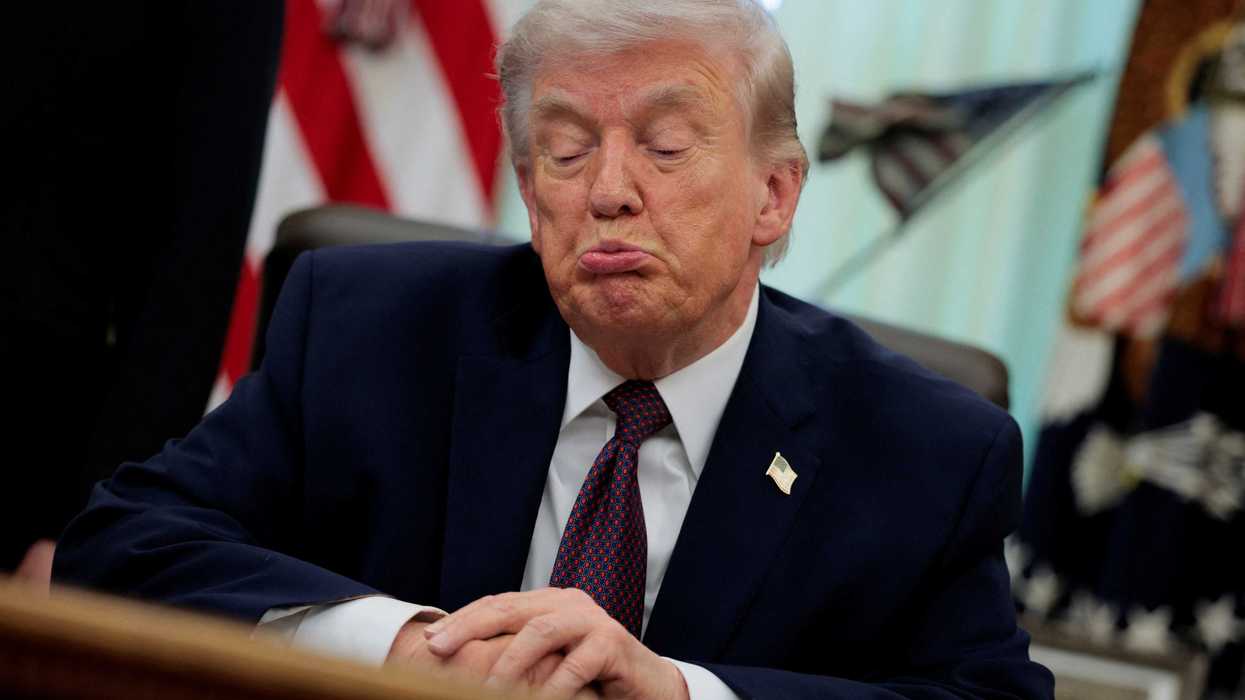
On Saturday, Trump took revenge on Louisiana senator Bill Cassidy for Cassidy’s vote five years ago to convict Trump, in his second impeachment, for instigating an attack on the U.S. Capitol. 

Cassidy thereby became the first GOP senator defeated by a Trump-endorsed candidate in a Republican primary. (Other Republican senators who have stood up to Trump — such as North Carolina’s Thom Tillis and Utah’s Mitt Romney — saw the writing on the wall and didn’t seek reelection.)

Trump’s purge of Cassidy comes in the wake of Trump’s purges of House Republicans who stood up to him, such as Wyoming’s Liz Cheney. 

Trump’s next Republican target in the House is Kentucky representative Thomas Massie, who had the guts to oppose U.S. military involvement in Iran, demand release of the Epstein files, and criticize Trump’s spending bills for adding to the national debt. Massie appears likely to be defeated by a Trump-backed opponent in Tuesday’s Kentucky primary. 

Trump is marshaling the full force of his MAGA machine — spending more than $30 million on a House Republican primary — to purge another of his political enemies from the Republican House. Even Secretary of “War” Pete Hegseth is flying to Kentucky today to campaign for Massie’s challenger. It’s all seen as an investment in intimidating and disciplining Republican office-holders who might otherwise think of straying.

Trump has also purged state legislators who have refused to do his bidding, such as the seven Indiana Republicans who refused to redistrict the state as Trump demanded they do, and who Trump insured were defeated in their recent primaries. 

The message is clear to every current or aspiring Republican politician: Be a toady to Trump, or you’re out. 

In his concession speech Friday night, Cassidy stated the obvious reference to Trump:

“Our country is not about one individual. It is about the welfare of all Americans, and it is about our Constitution. And if someone doesn’t understand that and attempts to control others through using the levers of power, they’re about serving themselves. They’re not about serving us. And that person is not qualified to be a leader.”

Nicely put but sadly irrelevant because Trump — who’s clearly serving himself rather than the American public — now possesses all levers of power in the official Republican Party. 

As Republican senator Lindsey Graham said on Meet the Press, “There’s no room in this party to destroy [Trump’s] agenda.”

Former generations of Republican politicians had principles, beliefs, ideals. They thought the federal government too large. Or believed it spent too much money. Or was too lenient on criminals. Or was too eager to support the civil rights of Black people. Or any number of issues with which Democrats disagreed. 

Today’s Republican Party no longer has any purpose other than achieving whatever Trump wants, which is mainly to make Trump richer and more powerful. The GOP is now Trump’s; it is no longer America’s. 

Today’s Republican voters, by contrast, are showing increasing frustration with Trump. Those who think of themselves as traditional Republicans don’t like Trump’s expansive use of federal power. Those who are fiscally conservative, like Thomas Massie, are upset by Trump’s wanton spending, tax cuts, and soaring debt. “America-first” Republican voters are concerned about Trump’s intrusions into Iran, Venezuela, Cuba, and elsewhere. And they want the rest of the Epstein files released. 

Yet for elected Republicans, survival now depends on personal loyalty to Trump. 

All of which raises a fundamental question: Has the official Republican Party — now nearly purged of anyone willing to reflect the concerns of Republican voters rather than Trump’s will — become complicit in Trump’s criminality? Is it aiding and abetting Trump’s lawlessness?

A case can be made that the official Republican Party is indeed complicit.

For Trump, the first and most basic sign of loyalty to him — and therefore survival as a politician in Trump’s Republican Party — is a willingness to publicly proclaim as truth what we know to be two big lies: that Trump won the 2020 election, and that he did not seek to overturn its results by illegal means. As a result, almost all congressional Republicans are now election deniers.

Trump has also made it clear that loyalty to him bars any criticism of his unlawful immigration dragnet, which has so far resulted in the murders of three U.S. citizens by ICE agents and the detention and deportation, without a hearing, of people suspected of being in the U.S. illegally. 

To Trump, loyalty requires full support of his foreign policy — including the abduction of a foreign leader, an undeclared war with Iran, and the killing on the high seas of people only suspected of smuggling drugs, in violation of international law.

Loyalty also demands unquestioned support for other of his lawless acts — using the Justice Department to prosecute his political opponents, building a mammoth White House ballroom, issuing no-bid contracts to his friends, promoting his family’s businesses and implementing policies favorable to them, accepting gifts from foreign powers, and defying court orders. 

Is it fair to conclude from all of this that today’s official Republican Party — the people who are in office because Trump has put them there, or who maintain their office because they back whatever Trump wants — has in effect become a criminal organization, analogous to the mafia or a drug cartel, whose members are blindly loyal to their criminal bosses?

Mirrors Of Greed: Elon Musk, OpenAI And The Tech Brat Battle – OpEd


By

They are a disagreeable bunch, with disagreeable ideas to match.  The querulous brats behind the drive for technological servility and plugged in stupidity were always going to scrap over which dystopian vision they most prefer.  Elon Musk thought he was onto something hounding OpenAI and its current CEO Sam Altman for supposedly betraying one of those visions.  In his $150 billion legal action, Musk alleged that Altman and OpenAI president Greg Brockman deceived him into investing in the company in its initial stages when salad green altruism was modish and humanity mattered.  The litigation was a prong in a broader strategy to unseat Altman from OpenAI, sabotage the company’s $852 billion restructuring into a public benefit corporation and direct $134 billion to OpenAI’s non-profit foundation.

The deception centred on maintaining OpenAI as a non-profit entity and pursuing artificial intelligence (AI) ventures in ways beneficial to humanity. (When the tech brats have a stab at humour, they go in hard.)  According to Musk, OpenAI had effectively stolen a charity.  (Between 2015 and 2017, he had personally put $44 million into OpenAI, funds, he argues, that were essentially misappropriated when the company sloughed its non-profit skin.)  In an introductory overview of the company from December 2015, the company badges itself a “non-profit artificial intelligence research company” with the object of advancing “digital intelligence in a way that is most likely to benefit humanity as a whole, unconstrained by a need to generate financial return.  Since our research is free from financial obligations, we can better focus on a positive human impact.”

How things change.  On May 18, a mere two hours was needed for a nine-jury member in Oakland, California to unanimously find against Musk, basing their decision on that most technical of grounds: the statute of limitations.  This left two civil claims – breach of charitable trust and unjust enrichment – untested.  Having left OpenAI’s board in 2018, Musk dithered till February 2024 to file suit.  Musk claimed to have only discovered the company’s abandonment of its non-profit mission in 2022, when Microsoft showed its interest with an investment of $10 billion.  OpenAI’s legal team argued that the pertinent events – the creation of a for-profit subsidiary in 2019 for instance and Microsoft’s initial injection of $1 billion that same year, were already matters of common knowledge.  Time on the statute of limitations was running well before 2022.  US District Judge Yvonne Gonzalez Rogers of the Northern District of California saw no reason to question the jury’s conclusion.  “There’s substantial amount of evidence to support the jury’s finding, which is why I was prepared to dismiss on the spot.”

The trial was impressively ugly and amounted to an insult to the stout intelligence of the public whose welfare both parties claim to be protecting.  The legal representatives from both sides jousted over respective views on AI and the credibility of the disputants.  Musk’s lawyer, Steven Molo, pressed jurors to consider that several witnesses, including former OpenAI chief scientist Ilya Sutskever, doubted Altman’s candour, going so far as to find him mendacious.  Altman had also conceded under cross-examination that he “told the occasional lie”.  “Sam Altman’s credibility is directly at issue,” Molo crowed.  “If you don’t believe him, they cannot win.”

OpenAI, Musk accusingly asserted, had wrongfully attempted to enrich investors and insiders at the expense of the non-profit.  Along the way, it had failed to make AI safety a matter central to its operations.  Microsoft, he further argued, had always known that OpenAI cared more about money than altruism.  A personal journal entry penned by Brockman in November 2017 was also instructive, baldly revealing that OpenAI could not assert fidelity to its non-profit status if it intended becoming a benefit corporation months later.  So it came to pass that Altman, Brockman and OpenAI were accused of the very same temptations, frailties and indifference to safety that could be found in Musk’s own conduct.  

On the issue of safety and welfare, Musk’s own xAI, acquired by space and rocket company SpaceX, also part of the South African’s fiefdom of misrule, has drawn the attention of the European Commission and UK watchdog Ofcom over Grok, a product that has been used to create sexualised images.  The combine arising from xAI and SpaceX could lead to an initial public offering that would surpass OpenAI in size, which sinks the scurrilous suggestion of altruism.  Provided things go smoothly, the world’s first trillionaire might arise.

OpenAI was hardly going to leave Musk’s feeling of tech purity unchallenged.  It was he, not OpenAI, who saw the shimmering dollar signs.  Going back to 2017, he had floated the idea of a for-profit subsidiary with one caveat: he would have exclusive control.  Failing this, he left the board in a huff.  OpenAI’s attorney William Savitt suggested that Musk, having failed to “get his way at OpenAI”, filed his lawsuit only after establishing his own competing AI company in 2023.  But most saliently, he waited too long to claim breaches of the founding agreement regarding the building of safe artificial intelligence for the benefit of humanity. “Mr Musk may have the Midas touch in some areas, but not in AI,” claimed Savitt.

OpenAI’s predatory reflexes will be boosted by the decision.  The non-profit status in this field has been found wanting, and the scramble for profits given much encouragement in this most unprincipled of frontiers.  “The decision is likely to reassure investors and the broader AI sector,” opines Sarah Kreps of the Tech Policy Institute at Cornell University, “because it avoids a potentially chaotic outcome that could have challenged OpenAI’s commercial structure, Microsoft partnership, and future fund-raising plans.” 

This was by no means the first time Musk had taken to throwing a brief of anger against OpenAI.  In March 2024, showing that intelligence can be authentically artificial, he filed a lawsuit citing a contract violation of a contract that did not exist.  Using the misguided legal offices of Irell & Manella – the same firm that erroneously claimed on behalf of PETA that a monkey could hold copyright – Musk pursued what Techdirt’s Mike Masnick appropriately called a “vibes based” action.  “Elon doesn’t have a contract with OpenAI which the company could have breached.  And that’s kinda a problem in a breach of contract lawsuit.”  This insuperable logic led Musk to abandon the lawsuit in June that year.  

For Musk, the wells of indignation run deep.  This is a man in the habit of losing or settling claims, be it with former Twitter executives and employees of the social platform now known as X, losing to investors in that same company for misleading public statements made during his untidy, often chaotic takeover, or having his lawsuit promptly dismissed against advertisers that exited that troubled platform. While such behaviour should draw scorn, those drawing benefit from his litigious pathologies – lawyers, in the main – can only be grateful.  “In a lot of ways, he is just another businessperson asserting his rights,” says a credulous Shubha Ghosh, lawyer and law academic at Syracuse University.  “I don’t think he’s abusing the legal system.  Whether he uses it effectively, I’m not sure.”  Wrong, certainly, on the first count.

Russia’s Nuclear Drills In The Arctic: The New Geopolitics Of The Polar North – OpEd

From Moscow’s perspective, the Arctic is no longer a neutral frontier but a heavily contested military zone.


File photo of Russian Arctic Brigade soldiers riding a snowmobile. Photo Credit. Mil.ru


May 19, 2026 

By K.M. Seethi


Russia’s latest strategic nuclear exercise in the Arctic has once again drawn global attention to a region that was once seen mainly as a frozen frontier of scientific cooperation and controlled rivalry. From 19 to 21 May 2026, Moscow will carry out one of its largest nuclear exercises since the collapse of the Soviet Union. The drills involve more than 64,000 troops, around 200 missile systems, 73 naval vessels, 13 submarines, and long-range strategic bombers. Russia’s Northern Fleet, Strategic Missile Forces, and Pacific Fleet all will participate in the operation.

The exercise gets underway against the backdrop of the Ukraine war, rising NATO-Russia tensions, and growing competition in the Arctic. It also indicates how the polar region is steadily becoming one of the world’s most important geopolitical theatres.

The Arctic has always carried military significance. During the Cold War, the shortest route between the Soviet Union and the United States passed over the North Pole. Nuclear submarines operated beneath Arctic ice. Strategic bombers crossed polar routes. Radar stations, missile defence systems, and naval bases became central to deterrence strategies on both sides. But despite these tensions, the Arctic also remained an unusual zone of limited cooperation. Scientific exchanges, fisheries management, maritime coordination, and environmental agreements continued even during periods of deep hostility. That balance has gradually weakened.

The Ukraine war accelerated a major transformation in Arctic politics. Finland joined NATO in 2023. Sweden followed later. This changed the military map of northern Europe dramatically. Almost all Arctic Council member states, except Russia, are now NATO members. Moscow increasingly views this as strategic encirclement.

Russian officials argue that NATO has steadily militarised the Baltic and Arctic regions through expanded troop deployments, new military bases, large-scale exercises, and the integration of Finland and Sweden into NATO command structures. Russian Ambassador to Norway Nikolay Korchunov recently accused the alliance of shifting the region onto a “war footing” through initiatives such as Baltic Sentry, Eastern Sentry, and Arctic Sentry.


From Moscow’s perspective, the Arctic is no longer a neutral frontier but a heavily contested military zone.

Russia therefore presents its latest nuclear drills as a defensive response. Russian officials say the exercises were designed to rehearse the “preparation and use of nuclear forces under conditions of aggression.” Russian military analysts argue that Western statements about defeating Russia strategically, combined with NATO’s expanding military infrastructure near Russian borders, forced Moscow to demonstrate the credibility of its deterrence posture.

Colonel Levon Arzanov of the Officers of Russia organisation claimed that Russia is facing “unprecedented pressure” from the collective West and that nuclear exercises are an “appropriate response” to perceived invasion threats.

Russia also links these developments to its larger military modernisation programme. President Vladimir Putin stated in 2025 that nearly 95 percent of Russia’s nuclear forces had been modernised. The current exercise involved all three branches of the nuclear triad: land-based intercontinental ballistic missiles, submarine-launched ballistic missiles, and strategic bombers.

Particularly significant was the Arctic dimension of the operation. Several exclusion zones were imposed in the Barents Sea and around the Kola Peninsula. A Delta IV-class nuclear submarine, the Bryansk, launched a Sineva ballistic missile from Arctic waters. The Kola Peninsula remains one of Russia’s most strategic military regions because it hosts a large part of Moscow’s sea-based nuclear deterrent.

For Ukraine, however, these drills represent something far more dangerous. Kyiv argues that Russia’s deployment of tactical nuclear weapons in Belarus and joint nuclear exercises with Minsk weaken the global non-proliferation regime. Ukraine claims these actions contradict the spirit and provisions of the Nuclear Non-Proliferation Treaty (NPT), particularly provisions that prohibit the transfer of nuclear weapons and related control systems to non-nuclear states.

Ukraine also sees Russia’s nuclear posture as part of a larger strategy of intimidation aimed at NATO and Europe. Kyiv has called for stronger sanctions, greater military support, and expanded NATO deployments along the alliance’s eastern flank.

Western governments share these concerns. NATO countries increasingly see Russia’s Arctic military infrastructure as part of a bigger strategic challenge. Russian bases across the Arctic coast, new missile systems, submarine patrols, air defence networks, and military airfields are viewed in Europe and North America as indicators of long-term strategic preparation rather than temporary wartime signalling.

However, Arctic geopolitics is no longer influences by Russia and NATO alone. China has emerged as an important actor in the region. Beijing calls itself a “near-Arctic state” and has expanded investments in Arctic shipping routes, energy projects, scientific research, and infrastructure. Russia and China have strengthened cooperation in the polar region after Western sanctions isolated Moscow economically. This growing partnership has created fresh anxieties in Washington, Ottawa, and Nordic capitals.

The Arctic is becoming increasingly attractive because of climate change. Melting ice is opening new shipping lanes and access to untapped reserves of oil, gas, rare earth minerals, and fisheries. According to various geological estimates, the Arctic may hold around 13 percent of the world’s undiscovered oil and nearly 30 percent of its undiscovered natural gas reserves. These figures continue to influence strategic thinking among major powers.

The Northern Sea Route, which runs along Russia’s Arctic coast, has become especially important for Moscow. Russia sees it as a future commercial artery linking Europe and Asia while reducing dependence on traditional maritime chokepoints.

This explains why the Arctic occupies a central place in Russia’s national security doctrine.


Meanwhile, the region’s future became even more uncertain after Donald Trump renewed discussions about Greenland during his political comeback. Trump had earlier floated the idea of acquiring Greenland during his first presidency. His later remarks about strategic control over the island revived debates about great power rivalry in the Arctic.

Greenland matters because of its location, military value, mineral resources, and access to Arctic Sea routes. The island already hosts the American Pituffik Space Base, formerly known as Thule Air Base, which plays a major role in missile warning and Arctic surveillance.

Trump’s rhetoric generated strong reactions from Denmark and other European allies. It also reflected a deeper reality: the Arctic is no longer viewed as a distant frozen zone but as a core arena of future global competition.

The Arctic Council itself has weakened since the Ukraine war. Established in 1996, the council once symbolised cooperation among Arctic states on environmental, scientific, and indigenous issues. But after Russia’s invasion of Ukraine, Western members suspended many forms of engagement with Moscow. The council’s consensus-based structure now faces serious strain because Russia remains geographically central to the Arctic.

This institutional crisis may carry long-term consequences. Without functioning diplomatic mechanisms, military signalling may gradually replace political dialogue. The Arctic’s growing strategic importance increases the possibility of miscalculation, especially when nuclear forces, submarines, missile systems, and NATO deployments operate in close proximity.

The region therefore signals a larger transformation in global politics. The post-Cold War period created hopes that strategic rivalry in the Arctic could remain limited. That phase appears to be disappearing. The Ukraine war, NATO expansion, Russia’s military posture, China’s polar ambitions, and American strategic concerns have all pushed the Arctic back into the centre of global power politics.

Still, the situation remains more complex than a simple return to Cold War divisions. Russia insists its Arctic posture is defensive. NATO states argue they are responding to Russian aggression. Nordic countries point to security vulnerabilities after the Ukraine war. Ukraine sees Russian nuclear deployments as coercive diplomacy. China presents its Arctic involvement as economic and scientific cooperation. The United States increasingly frames the Arctic within broader competition with both Russia and China. These overlapping perspectives impact a region that is becoming strategically congested.


The Arctic’s future may therefore influence the global balance of power in the coming decades. It is a region where nuclear deterrence, energy competition, maritime access, climate change, technological rivalry, and military strategy now crisscross simultaneously.