Tuesday, March 18, 2025

AMERIKA

HHS Website Removes Advisory Declaring Gun Violence a Public Health Crisis


The HHS web page that once featured the former surgeon general’s advisory on gun violence now reads “Page Not Found.”

THE ONLY AMENDMENT TRUMP BELIEVES IN IS THE SECOND


March 18, 2025

Peter Dazeley / The Image Bank / Getty Images


Support justice-driven, accurate and transparent news — make a quick donation to Truthout today!

The Department of Health and Human Services (HHS) has apparently removed a page on its website describing gun violence in the U.S. as a public health crisis.

The department made that designation in June 2024, when former U.S. Surgeon General Vivek Murthy stated, “Firearm violence is an urgent public health crisis that has led to loss of life, unimaginable pain, and profound grief for far too many Americans.”

“U.S. Surgeon General Dr. Vivek Murthy has issued a landmark Surgeon General’s Advisory on Firearm Violence, declaring firearm violence in America to be a public health crisis,” the website used to read. At least 10 prominent medical organizations wrote in support of Murthy’s advisory.

As of Tuesday, however, the HHS page that included Murthy’s public health crisis declaration appears to have been deleted.

The URL that once led to that advisory currently leads to a “Page Not Found” message. “The page may have been moved, it no longer exists, or the address may have been typed incorrectly,” the site states.
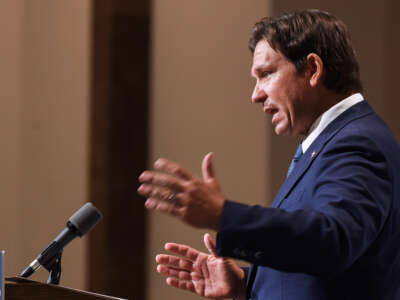

Ron DeSantis Proposes “Gun Sales Tax Holiday” as Part of Next FL State Budget
The “holiday” would take place during a time of year when mass shootings and gun violence are at their highest. By Chris Walker , Truthout February 3, 2025


An archived version of the page shows that the website URL is correct. A search of the terms “guns” and “public health” at HHS.gov does lead users to a PDF result that reads “Firearm Violence: A Public Health Crisis in America.” However, upon clicking that link, the same “Page Not Found” message appears.

It’s probable that the department removed the page following an executive order issued by President Donald Trump in early February, which called on all executive branch agencies to review Biden administration actions that “purport[ed] to promote safety but may have impinged on the Second Amendment rights of law-abiding citizens.”

A recent analysis of gun violence data reviewed by the Pew Research Center shows that close to “47,000 people died of gun-related injuries in the United States” in 2023, the most recent year for which statistics from the Center for Disease Control and Prevention (CDC) are available.

“While the number of gun deaths in the U.S. fell for the second consecutive year, it remained among the highest annual totals on record,” the report stated.

Nearly 4 in 10 gun-related deaths were homicides, while just under 6 in 10 were deemed death by suicide. About 3 percent were killings by law enforcement, accidental deaths or deaths due to “undetermined circumstances,” according to the report.

For the past few years, gun violence has been the leading cause of death for kids between the ages of 1 and 17 in the U.S.

“The United States has by far the highest rate of child and teen firearm mortality among peer nations,” a report published in 2023 by KFF stated. “In no other similarly large, wealthy country are firearms in the top four causes of death for children and teens, let alone the number one cause.”

Organizations advocating for stricter gun laws in the U.S. criticized the HHS’s decision to remove Murthy’s advisory from the department’s website.

“Gun violence is a public health crisis and must be treated as such,” wrote the account for GIFFORDS on X. “Instead, the Trump administration is removing lifesaving resources from the Surgeon General’s website. Trump has made his priorities clear, and it’s NOT keeping our children safe.”

“The Trump Administration just removed the HHS report declaring gun violence a public health crisis. Let’s be clear: Taking down a report won’t change the fact that our country has a gun homicide rate 26x that of peer nations, or that guns are the #1 killer of our kids,” Everytown for Gun Safety wrote on its Bluesky account.


'Already happening': Outrage as seniors claim Trump is already 'stealing' benefits

March 16, 2025


"DOGE is a disaster of incompetence."

That's how one political scientist responded to Saturday reporting about a Washington state man fighting for his Social Security benefits as U.S. President Donald Trump and the head of his Department of Government Efficiency (DOGE), billionaire Elon Musk, attack the federal bureaucracy, including the agency that administers payements to seniors like Leonard "Ned" Johnson.

Seattle Times columnist Danny Westneat shared the story of 82-year-old Johnson. In February, his wife received a notification from their bank that the Social Security Administration (SSA) requested a return for benefits paid out after the supposed death of her husband. She figured it was a scam—as Johnson was alive—but the request was real and $5,201 was pulled from their account.

As Westneat detailed, after making multiple calls to SSA, during which Johnson was "put on hold and then eventually disconnected," and securing an appointment that was ultimately rescheduled for next week, "he went to the office on the ninth floor of the Henry Jackson Federal Building downtown," one of several sites across the United States that DOGE wants to shut down.

According to the columnist:
After waiting for four hours, Johnson admits he jumped the line: "I saw an opening and I kind of rushed up and told them I was listed as dead. That seemed to get their attention."

Once in front of a human, Johnson said he was able to quickly prove he was alive, using his passport and his gift of gab. They pledged to fix his predicament, and on Thursday this past week, the bank called to say it had returned the deducted deposits to his account. As of Friday morning he hadn't received February or March's benefits payments.

"When I was in that line, I was thinking that if I was living solely off Social Security, I could be close to dumpster diving about now," he said.

Author Jeff Nesbit, the public affairs chief for five federal agencies or departments—including SSA—under four presidents, shared the article on the Musk-owned social media site X, saying: "So incredibly sad that Musk/DOGE are now preying on people like this. I hope older Americans understand the assault underway against Social Security right now."

Progressive political consultant Matt Herdman similarly said: "Elon Musk and Donald Trump are stealing seniors' hard-earned benefits. It's already happening, and it'll get worse if they go through with closing branch offices and cutting staff."

Johnson isn't the only senior who has had to fight for his Social Security since Trump returned to office in January and installed various billionaires to key positions in the federal government. James McCaffrey, a 66-year-old retiree in Oklahoma City, told his story to NBC affiliate KFOR earlier this week.

McCaffrey learned that his Social Security benefits were suspended when he received a notice saying that he needed to pay $740 or he was going to lose Medicare, health insurance for seniors. After multiple phone calls and hours on hold, he finally got through. He then quickly received the missing payment, but never got an explanation—and SSA refused to give one to the news station.

However, McCaffrey believes his trouble may stem from the fact that he was born on a U.S. military base in Germany—and Musk's recent Fox Business appearance, during which he claimed that undocumented immigrants are receiving benefits. That came shortly after a podcast interview, during which a billionaire called Social Security a "Ponzi scheme."

McCaffrey is now concerned about other seniors facing similar issues. As KFOR reported:
He worries about people who may not have the time and resources he had to get to the bottom of what happened and get his benefits back.

"I’ve been a diligent Boy Scout type, I prepared," he said. "But, no, I shouldn't have to."

He also worries about people who may not share the same savings or the same financial cushion [that] he had to fall back on. "And you interrupt that for seven days, two weeks or even longer, and they're in bad trouble," he said. "They could be out of the house. They could be out of food. I don't know."

In response McCaffrey's experience, Ashley Schapitl, a public relations professional who previously worked for Senate Democrats and the U.S. Treasury Department, said, "Picture thousands of Social Security beneficiaries having their benefits canceled with no explanation and limited recourse to get them reinstated."Trump and Musk's recent moves and remarks have fueled fears that they are working to privatize Social Security.

U.S. Sen. Sheldon Whitehouse (D-R.I.) laid out a potential GOP "attack plan" for the program on X Friday:

One: Trump and his vassals tell lies that there's no plan to cut Social Security.

Two: Trump and Musk lie loudly about imaginary Social Security "fraud" to lower public confidence in the program.

Three: Musk sends his nasty Musk-rats in to Social Security to damage administration of the fund, leading to "interruption in benefits."

Four: Trump then declares emergency and hands administration of Social Security to private equity and tech bros to fix problem they created.

Five: Republicans declare victory that they "saved Social Security" by handing it to private equity/tech bros, and put Trump's name on checks.

The advocacy group Social Security Works took note of Whitehouse's thread and said: "Everyone needs to read this. Musk and Trump are breaking Social Security so they can turn it over to Wall Street."


As DOGE Mauls Social Security, Profit-Hungry Private Equity Is Swooping In

Three private equity veterans are weaseling their way in, reportedly on the orders of the presumptive SSA commissioner.


By Tyler Walicek , 
March 16, 2025

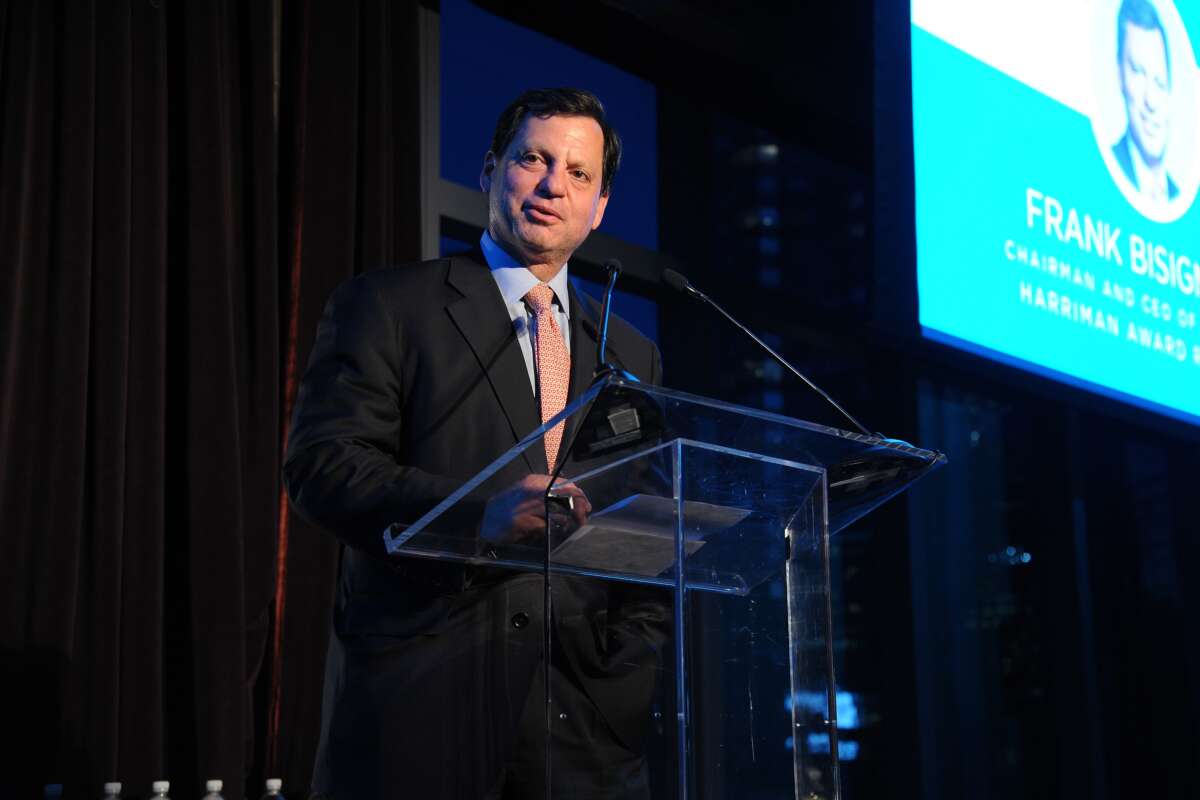
Presumptive incoming Social Security Administration Commissioner Frank Bisignano speaks at the BCNY Annual Awards Dinner on May 20, 2019, in New York City.
Owen Hoffmann / Patrick McMullan via Getty Images

The Social Security Administration (SSA), an irreplaceable lifeline for 73 million people, is only the latest venerable U.S. institution to be hit with a campaign of media falsehoods and startling internal sabotage efforts, all on the orders of Trump and the reactionary right. This has taken its most visibly outrageous form in the bureaucratic pillaging committed by Elon Musk’s self-proclaimed “Department of Government Efficiency” (DOGE), the widely loathed advisory body with a meme-derived name as juvenile as its staffers.

But this week, a still-more ominous threat appears to be circling. Bloomberg reports that three individuals representing private equity concerns — firms in an insidious financial industry intent on harvesting anything that can rake in a profit for the ultrarich — have now shown up, alongside DOGE, to meddle in the life-sustaining work of the SSA.

This should be of grave concern to all, but the public at large is not widely aware of these threats. Private equity is just that: private, and opaque by design. These firms’ grotesque amassment of wealth has enabled them to cannibalize huge reaches of the economy; estimates vary, but the industry’s combined assets run, at minimum, into the several trillions.

Predatory firms have made startling headway at acquiring, exploiting and flipping companies “across every imaginable sector, from housing and hospitals, to fossil fuels and retail, to pet shops and music catalogs,” as Derek Seidman writes for Truthout. “Private equity has a reputation for being perhaps the most ruthless arm of Wall Street.”

Most infamous are its firms’ parasitic takeovers: buying out a corporation, saddling it with debt to enrich themselves, then brutally cutting costs, often starting by firing many workers and squeezing the rest for every cent and second. Eventually, they strip the whole thing to a husk and sell off whatever assets remain. Despite the astonishing extent of private equity’s incursions into civil society, our sense of the scale, and the damage involved, has lagged behind this industry’s aggressive pace.


Trump’s Choice for Social Security Admin Leads to Fears of Austerity and Cuts
The Social Security Administration’s incoming head is a Wall Street insider who may help the right slash benefits. By Tyler Walicek , Truthout  December 22, 2024


And now, private equity’s sights are turning to the Social Security Administration. Privatization of the retirement market has been a long-standing goal of capital. If the SSA really were dismantled, a vast retirement market — over a trillion dollars — would open up, into which could be shoved all sorts of new corporate profit models and plans. Yet the social results, at least for those who aren’t wealthy investors, are easy to imagine if you’ve had the essential U.S. experience of grappling with health insurance. There would be the familiar labyrinths of complexity, deception and usurious charges — but the harms inflicted could easily multiply, as the market for retirement programs is, of course, retirees: older people, disabled people and those in deepest need. Privatization for profit would target the savings and last hopes of all these communities.
Storming the Bastion of the New Deal

Social Security, everyone likes to say, is the political “third rail.” Millions depend on it, and so targeting it is career-ending, according to conventional wisdom. Unfortunately, upending conventional wisdom and conventional decency alike come naturally to the current president and his allies, and they have a particular talent for goading people to vote against their own interests.

This Trump administration’s increasingly brazen seizures of power, civil rights violations and sprees of civic destruction have been streaming forth at what has felt like an impossible rate. The SSA was more or less raided; it was an invasion of the self-appointed “fraud investigators” of DOGE. Turmoil followed. Already understaffed and overworked, the SSA has now been beset by mass firings, funding cuts and the invasive and capricious changes dictated by DOGE.

Meanwhile, a media smear campaign against SSA has been taken up eagerly by the president himself, aided by unctuous crony Musk. Despite promising that SSA won’t be cut, Trump has declared the Social Security Administration riddled with fraud. Musk, too, has touted several falsehoods, including that the SSA is essentially “a Ponzi scheme,” in need of rescue from the world’s richest government handout recipient.


Bloomberg reports that three individuals representing private equity concerns have now shown up, alongside DOGE, to meddle in the life-sustaining work of the SSA.

The frontline work of Musk’s DOGE is to press for ways to tear apart public systems from within their own offices. At the SSA, DOGE, trying to get in through a side door of sorts, found an ally in a mid-level anti-fraud manager, Leland Dudek, who corresponded with them officially — an inappropriate assumption of authority that won Dudek an investigation and administrative leave. However, soon after that, the acting interim commissioner, Michelle King, refused to disseminate citizen data to DOGE and resigned. Then Dudek would experience quite the reversal of fortune. To reward his unthinking loyalty, Trump named the bumbling Dudek the interim head of the entire Social Security Administration. In turn, under Dudek’s watch, DOGE has been entrusted, inexplicably, with some extremely valuable data.

Nancy Altman, a policy and legal expert and president of the major SSA advocacy nonprofit Social Security Works, spoke with Truthout and shared her expert insights into what she feels are some extraordinary and outrageous developments.

DOGE, Altman said, demanded “total access to everything, including the source codes.” The SSA’s collaborating experts had never been granted “the kind of access [DOGE] wanted.” SSA data, she explained, is very securely protected — it contains the Social Security numbers, identities, financial and personal information, immigration status, etc. for 70 million people. It is the ultimate scammer’s treasure trove. Yet DOGE staffers insisted on being allowed to freely view and copy this data and take it off-site. The neophytes of the “anti-fraud” task force have quickly become the most likely vectors of SSA data theft, scams and fraud. And they’ve now had every chance to tamper with or copy data themselves.

DOGE can certainly report that it has successfully “disrupted” the SSA. According to a transcript of sworn testimony by a 30-year veteran who was forced out, DOGE’s ignorance about the most basic functions of the SSA was immediately apparent.

After the first culling of senior leaders (who took with them “literally … a thousand years of collective leadership and knowledge,” Altman said with chagrin), the understaffed SSA now intends to fire another 7,000 of its 57,000 workers — as the thinning workforce reached a 50-year low.

DOGE staffers “created complete chaos,” Altman said. “In the guise of efficiency, they’ve created so much inefficiency. They got rid of probationary workers who had just been trained for 11 and a half months.… They’ve been closing field offices, they’ve been getting rid of regional offices.”

“People are out of a job — goodbye, you’re gone — and told they were fired for performance, which is a lie,” she went on. “But [an employer citing that cause] keeps [an employee] from being able to get employment insurance.”

Since the mass firings, the arms of the SSA that now answer to the Trump administration’s whims have helped the president explore even lower lows of cruelty and pettiness — though, at least in these two cases, they immediately backtracked when challenged.
Bad Omens

The presumptive incoming SSA commissioner, pending Senate confirmation, is Frank Bisignano, on whose appointment Truthout previously reported. He is known as a Wall Street “fixer” — a cost-cutter, profit-booster and workforce-slimmer. His inexperience in the field, his pugnacious style and his billion dollars made him a baffling pick, unless slashing everything is the goal. It seems that the SSA is receiving unsolicited help from quite a few such “fixers,” who are so intent on “fixing” things that are not broken.

Dudek will remain a largely disempowered figurehead until Bisignano’s appointment. Then, during his tenure, Bisignano may well usher in private equity in full force. Altman also said she knows him to be receptive to dubious ongoing proposals to replace workers with AI chatbots — another looming threat to SSA employees, many of whom staff roles that are premised on the nuanced use of human communication and understanding, claims adjusters chief among them.

Again, per Bloomberg, private equity has just gained a “beachhead” in the SSA. An infiltrating “team of veterans” — for now, limited to Antonio Gracias, founder of Valor Equity Partners; Scott Coulter, formerly of Lone Pine Capital; and Michael Russo, formerly of Shift4 — will execute their mission. Russo has stepped right up into the role of agency chief information officer. According to Altman, Russo is operating on the direct orders of Bisignano. Apart from that, it’s not yet clear what the trio’s full roles will entail — but it’s certainly worth noting that Gracias was an early investor and close collaborator in Tesla and SpaceX, as well as a private equity resource whom Musk has called upon: another “fixer.”


These firms’ grotesque amassment of wealth has enabled them to cannibalize huge reaches of the economy.

Altman, citing knowledge of the matter, remarked that Bisignano may be jumping the gun more than a little when it comes to giving orders in advance of his prospective appointment. She said Dudek has admitted as much in a private meeting: He takes all his marching orders from the not-yet-commissioner.

As Altman said, “They’re trying to make it look like [Bisignano’s] got clean hands, but he’s conferring with the acting commissioner [Dudek] five times a day.… [Bisignano’s] the guy calling the shots.” A commendable start to a new job: sent in a goon squad to ransack his own agency, then hid from responsibility — a “fixer” indeed.
A Monstrous Entity

Private equity, in addition to swallowing up and digesting the aforementioned family homeshospitals, daycares, beloved publications and cultural institutions, and plenty more of the decent things in life — is, of course, just as happy to profit from the nefarious ones too. The industry invests heavily in private prisons, prison services and police (including Atlanta’s Cop City), alongside defense, oil and gas, and other extractive and exploitative systems. Private equity firms are certainly not above finding ways to help themselves to the public coffers, either: siphoning profit, to give just one quite recent example, from affordable housing assistance funds.

It’s not for nothing that the private equity acquisitions are often considered hostile takeovers. One example (also noted by Derek Seidman in Truthout), is the infamous dissection of Toys “R” Us by top firms KKR and Bain Capital. A rapacious and ethics-optional seeker of profit above all, private equity can seem like one of the purest distillations of the inhumane logic of capital.

Right now, sensing favorable conditions, private equity interests are making plans to further enter 401(k)s and get into defined contribution pension plans. “How can we not give investors more access to that asset class?” one CEO mused aloud at a conference. That arrangement has already been a disaster for retirement — many public pension funds were pressed to bet on risky assets and lost. But the firms collect their massive fees either way.

To capital, perhaps Social Security appears like nothing but wastefulness, wasted opportunity. In truth it’s not wasteful — far from it. In fact, Altman noted, not only is real fraud so rare as to be totally negligible (0.00002 percent), the SSA is also exceptional in that “less than a penny of every dollar spent is spent on administration. You can’t find that level of efficiency in the private sector.”

In the U.S., facing a retirement without Social Security would resemble the experience of our current health insurance system: paying top dollar for inferior outcomes, all while contesting with frustrating, indifferent or outright malicious corporations.

We’ve seen what vulture capitalists have done to hospice, retail, medicine and nursing homes — in the latter, brutal cost-cutting under private equity ownership has resulted in 20,000 premature deaths. Figures like this — which would ultimately be far, far more numerous if Social Security were lost, to say nothing of the poverty and homelessness that would ensue — help drive home the true stakes of this struggle. Our present condition is one of class warfare — as unsubtly literalized by the pawns of billionaires, swarming the major bulwark of U.S. social welfare.

“These people are really destroying everything that’s been built — that is there to support all of us.… This is the reason we have a government,” Altman said. “It’s time for the pendulum to swing back.”

 WHITE WASHING  

Army erases WWII vet Medgar Evers from Arlington National Cemetery website


Photo by Chad Stembridge on Unsplash

Jerry Mitchell
March 18, 2025

World War II veteran Medgar Evers, whom President Trump called “a great American hero,” has been erased from the Arlington National Cemetery website, which featured a section honoring Black Americans who fought in the nation’s wars.

The U.S. Army purged the section that had lauded the late Army sergeant and civil rights leader, who was assassinated by a white supremacist in Jackson in 1963. The decision to erase Evers came after an executive order by Trump to eliminate all Diversity, Equality and Inclusion programs.

Former Mississippi Supreme Court Justice Reuben Anderson, who gave Trump a 2017 tour of the Mississippi Civil Rights Museum, said he can’t imagine the president would want Evers removed. “That’s got to be a mistake,” he said. “That involves a great American who served in the military and was one of the most courageous Americans of all time.”

The White House could not be reached for comment.

Evers is far from the only war veteran whose name has been struck from the website. So was Army Maj. Gen. Charles Calvin Rogers, who was awarded the Medal of Honor in the Vietnam War.

“He got shot three times in Vietnam and survived,” said U.S. Rep. Bennie Thompson. “History has not been kind to minorities, whether women, people of color or religious groups. Part of what we do in the greatest democracy known to man is to correct the record.”

The Mississippi Democrat said if the Trump administration truly cared about veterans, it wouldn’t have fired 80,000 people from the Department of Veterans’ Affairs. “You think it’s hard to get a medical appointment now?” he asked. “You take 80,000 out of that system, and it’s not going to work.”

In 2013, Arlington National Cemetery held a service honoring Evers and his family on the 50th anniversary of his assassination, where Evers drew praise from Republicans and Democrats.

Mississippi’s entire congressional delegation pushed for Evers to posthumously receive a Presidential Medal of Freedom, which his family accepted last year.

President Donald Trump gets a tour of the newly-opened Mississippi Civil Rights Museum in Jackson on Saturday. Housing and Urban Development Secretary Ben Carson, left, joins the president on the tour.

President Trump came to Mississippi for the opening of the Civil Rights Museum in 2017 and spent much of his time praising Evers.

“He fought in Normandy in the Second World War,” Trump said, “and when he came back home to Mississippi, he kept fighting for the same rights and freedom that he had defended in the war. Mr. Evers became a civil rights leader in his community.

“He helped fellow African Americans register to vote, organized boycotts, and investigated grave injustices against very innocent people. For his courageous leadership in the Civil Rights movement, Mr. Evers was assassinated by a member of the KKK in the driveway of his own home.”

Trump recalled how “Sgt. Evers was laid to rest in Arlington National Cemetery with full military honors. In Arlington, he lies beside men and women of all races, backgrounds, and walks of life who have served and sacrificed for our country. Their headstones do not mark the color of their skin, but immortalize the courage of their deeds.

“Their memories are carved in stone as American heroes. That is what Medgar Evers was. He was a great American hero. That is what the others honored in this museum were: true American heroes.”

He called Evers an inspiration for everyone. “We want our country to be a place where every child, from every background, can grow up free from fear, innocent of hatred, and surrounded by love, opportunity, and hope,” he said. “Today, we pay solemn tribute to our heroes of the past and dedicate ourselves to building a future of freedom, equality, justice, and peace.”

Each summer, Civil War historian Kevin M. Levin takes teachers to visit the grave of Medgar Evers. “It’s impossible to talk about his accomplishments in the field of civil rights without mentioning his service in World War II,” he said. “There’s a straight line from his service to trying to expand voting rights and desegregate the University of Mississippi law school.”

It’s impossible to understand the sacrifices of his service in the civil rights movement without understanding the sacrifices of his service in the Army, he said. “Any attempt to minimize this history is being incredibly dishonest.”

This article first appeared on Mississippi Today and is republished here under a Creative Commons license
'An earthquake': Mysterious recusal could shake up pivotal Supreme Court religion case


Win McNamee/Pool via REUTERS
WASHINGTON, DC - MARCH 04: U.S. Supreme Court Associate Justice Amy Coney Barrett, Justice Brett Kavanaugh and retired Justice Anthony Kennedy attend U.S. President Donald Trump's address to a joint session of Congress at the U.S. Capitol on March 04, 2025 in Washington, DC.

March 18, 2025
ALTERNET

This story first appeared at The 74, a nonprofit news site covering education.

This story was co-published with The Guardian.


In 2020, when Amy Coney Barrett came before the Senate for confirmation to the U.S. Supreme Court, one of her closest friends told a story on TV about their year together working as law clerks in the nation’s capital.
“That last day when you leave the court, you think, ‘Wow, that’s about the coolest thing that’s ever going to happen to me,’” said Nicole Stelle Garnett. She assisted Justice Clarence Thomas during the 1998 term, the same year Barrett worked under Justice Antonin Scalia. “Now, to see my friend testifying before the Senate Judiciary Committee, to walk back up the steps 21 years later is really, really something.”

Fast forward another five years. Garnett, now a law professor at the University of Notre Dame, is about to have her own Supreme Court moment.

On April 30, the court will consider a legal question that has defined her career: Can explicitly religious organizations operate charter schools? At the center of the dispute is St. Isidore of Seville Catholic Virtual School, an online school in Oklahoma that planned to serve about 200 students this year before the state supreme court ruled the decision to approve it violated the constitutional provision separating church and state.

“This could be an earthquake for American public education,” said Samuel Abrams, who directs the International Partnership for the Study of Educational Privatization at the University of Colorado, Boulder. As the country experiences a rise in Christian nationalism, a favorable ruling could invite the encroachment of religion not only into education but other areas of civic life that have traditionally been non-sectarian. “If the Supreme Court rules in favor of overturning that decision, the church-stage cleavage will disappear. That’s a dramatic development for the First Amendment.”

In a sign of the case’s gravity, the Trump administration filed a brief in support of St. Isidore last week, arguing that “a state may not put schools, parents or students to the choice of forgoing religious exercise or forgoing government funds.”

But Barrett, who handed President Donald Trump a conservative 6-3 supermajority when she was confirmed to the court, won’t be on the bench to hear it. She recused herself, leaving no explanation for sitting out what could be the most significant legal decision to affect schools in decades.

Observers believe the reason is her friendship with Garnett, who was an early legal adviser to the school. While she’s not officially on the case and hasn’t joined any legal briefs in support of it, Nicole and her husband Richard Garnett, also a Notre Dame law professor, are both faculty fellows with the university’s Religious Liberty Clinic, which represents St. Isidore.

In a deep irony, the longtime friendship between the two women, forged in Catholic faith and a conservative approach to jurisprudence, now threatens to tip the scales away from a cause Garnett has spent her career defending,

The recusal increases the chances that the vote could end in a 4-4 tie, which would leave the Oklahoma court’s decision intact. That outcome would prohibit St. Isidore from receiving public funds and likely send proponents of religious charters looking for a new test case.

Justices typically do not offer reasons for recusing themselves. A spokesperson for the Supreme Court said Barrett had no comment on the matter.

“I feel bad for Nicole,” said Josh Blackman, an associate professor at the South Texas College of Law in Houston. “This is her life’s work, and it might go to a 4-4 decision.”

Blackman, a proponent of religious charter schools, has known the Garnetts for years. “Amy knows what Nicole did for this case,” he said. “The case is so significant because it’s an application of both [the Garnetts’] Catholic faith and their views on constitutional law.”

‘A heady experience’

The friendship between Garnett and Barrett developed long before the legal clash over St. Isidore. When Trump nominated Barrett to replace Justice Ruth Bader Ginsberg, Garnett relayed how the two first met at a coffee shop the spring before they became high court clerks in the late 1990s.

“I walked away thinking I had just met a remarkable woman,” she wrote in a commentary for USA Today.

There weren’t too many high-profile cases that year, Garnett said. But one stands out — a complaint that a Chicago ordinance against gang loitering violated members’ due process rights. The court ruled against the city, but Barrett and Garnett performed research for dissenters Scalia and Thomas. Thomas said the local law allowed police officers to do their jobs and Scalia called it a “small price to pay” to keep the streets safe.


“It’s a heady experience and really hard work,” Garnett told The 74. “But we all liked each other. We socialized together.”

When Trump nominated Barrett in 2017 to serve on the U.S. Court of Appeals for the Seventh Circuit, all 34 clerks from the Supreme Court class of ‘99 — Democrats, Republicans and independents — wrote a letter of support to the Senate judiciary committee.

But none knew Barrett like Garnett. Their personal and professional lives have been intertwined for more than two decades.

When Garnett was pregnant with her first child during their year as clerks, Barrett and the other young attorneys threw her a baby shower in the court’s dining room for justices’ spouses. Barrett is godmother to the Garnetts’ third child. After their clerkship, Richard Garnett helped recruit Barrett to the boutique Washington law firm where he worked. (He later recruited Justice Ketanji Brown Jackson, one of the court’s three liberals, to the same firm.)


Before Barrett cast her vote for the majority in the 2022 decision that struck down Roe v. Wade, the New Yorker published a profile that described the newest justice as a “product of a Christian legal movement” shifting the court further to the right. The article irked Garnett’s daughter, Maggie, who said it dismissed “a mentor and maternal figure in my life” as a “cold, impenetrable” mouthpiece for conservatives. In a robust defense, she wrote that the article portrayed Barrett as “an almost robotic product of her male mentors … rather than as an accomplished and talented jurist in her own right.”

At Notre Dame, Garnett and Barrett overlapped as faculty members for roughly 17 years. Aside from her focus on religious liberty and education, Garnett also teaches property law. Barrett’s courses focused on constitutional law and the federal courts.

“She became a lifelong friend,” Garnett said. “She lived around the corner from us and we raised our kids together.”

And when Trump introduced the mother of seven to the nation, Garnett was seated in the Rose Garden along with senators, White House officials and other dignitaries.

Given their intersecting interests, it’s very likely that school vouchers came up in conversation. Until 2017, Barrett served as a trustee at Trinity School at Greenlawn, a classical Christian academy in South Bend, Indiana, that participates in the state’s private school choice program.

Garnett, meanwhile, was honing legal arguments in favor of expanding such programs. Before joining the faculty at Notre Dame, she worked as a staff attorney for the Institute for Justice, a right-leaning law firm that has led efforts to open school choice programs to religious schools. In one case, the Wisconsin Supreme Court upheld the expansion of Milwaukee’s voucher program to include faith-based schools.

While at the institute, Garnett also worked on Bagley v. Raymond, which challenged Maine’s exclusion of religious schools from a private school choice program. The state won that case, but lost when a subsequent case about the program, Carson v. Makin, came before the Supreme Court. In Carson, Barrett joined the other five conservative justices in ruling that it was unconstitutional to keep those schools out.

Garnett, who didn’t work on Carson, said she cried when the family at its center won.

But even with this victory, Garnett viewed aspects of school choice as unfriendly to religious freedom. She found it troubling that to keep their doors open, many Catholic schools in Indiana were converting to charters, which required them to remove all evidence of their faith.

“Religion has been stripped from the schools’ curricula and religious iconography from their walls,” she wrote in a 2012 paper. “There is little doubt that the declining enrollments in Catholic schools are at least partially attributable to the rise of charter schools.”

Her convictions on the role of religion in public life are both personal and professional. She sent her children to Catholic schools in South Bend and views their mission to serve low-income children as vital to urban communities. She captured her years of scholarship on religious liberty in a line she wrote after Carson: “The Constitution demands government neutrality toward religious believers and institutions. Full stop.”

That view is belied by state laws that prohibit public funds from directly supporting religious schools and that define charters as public schools open to all students. Some critics predict that religious groups running charters would not have to uphold the civil rights protections of LGBTQ students, for example.

Garnett warned that attempts to create religious charters would face litigation for years. But in Oklahoma, Republicans and Catholic church leaders were ready for a fight.

At a time when schools remained shuttered due to COVID, Catholic school leaders in Oklahoma City and Tulsa wanted to expand virtual options and “reach more kids in a big rural state,” she said. A widely-circulated 2020 paper she wrote for the right-wing Manhattan Institute offered a legal path to get there.

“I think that we found each other,” she told The 74. “I didn’t go looking for a client here. It’s very organic how the whole thing unfolded.”
‘Hot ticket’

If other recent school choice cases are any indication, there’s still a good chance the court will overturn the Oklahoma Supreme Court’s opinion. Such a precedent-setting development would have a huge impact on the nation’s educational landscape, said Michael Petrilli, president of the conservative Thomas B. Fordham Institute.

The court could say that “a charter school authorizer can’t turn down an otherwise qualified applicant just because it is religious, or proposes a religious school,” he said. “That would apply immediately to all states with charter laws on the books.”

Garnett dismissed the idea that a victory for St. Isidore will open the floodgates to thousands of religious schools becoming charters. Applicants would still have to meet state criteria for approval, she said.

The ruling “may shed light on other state’s arrangements, but it definitely will not require all states to allow religious charter schools,” she said. “That’s not on the table — and it’s not how the court works.”

But others are not so certain.

“The implications for education and society could be profound,” said Preston Green, a University of Connecticut education professor. “It would mean that the government cannot exclude religious groups from any public benefits program.”

With oral arguments approaching, Notre Dame law students who have worked with Garnett over the past two years have already asked if she can get them a seat in the courtroom for such “a hot ticket,” she said.

She won’t talk about why her friend recused herself from the case, but acknowledged the stakes.

“My hope is that it won’t go to a 4-4,” Garnett said “My hope is that they wouldn’t have granted [a hearing] if they thought it might. But I know you don’t make assumptions about anything.”

Revealed: Trump halted a clean-up that puts hundreds of thousands at risk for poisoning


REUTERS/Shannon Stapleton/File Photo
FILE PHOTO: A woman poses with her smartphone displaying the @realdonaldtrump TikTok page, in Washington, U.S. January 19, 2025.
March 17, 2025

In mid-February, Trump administration leaders received a desperate warning from their diplomats posted in Vietnam, one of the most important American partners in Asia.


Workers were in the middle of cleaning up the site of an enormous chemical spill, the Bien Hoa air base, when Secretary of State Marco Rubio abruptly halted all foreign aid funding. The shutdown left exposed open pits of soil contaminated with dioxin, the deadly byproduct of Agent Orange, which the American military sprayed across large swaths of the country during the Vietnam War. After Rubio’s orders to stop work, the cleanup crews were forced to abandon the site, and, for weeks, all that was covering the contaminated dirt were tarps, which at one point blew off in the wind.

And even more pressing, the officials warned in a Feb. 14 letter obtained by ProPublica, Vietnam is on the verge of its rainy season, when torrential downpours are common. With enough rain, they said, soil contaminated with dioxin could flood into nearby communities, poisoning their food supplies.

Hundreds of thousands of people live around the Bien Hoa air base, and some of their homes abut the site’s perimeter fence, just yards from the contaminated areas. And less than 1,500 feet away is a major river that flows into Ho Chi Minh City, population 9 million.

“Simply put,” the officials added, “we are quickly heading toward an environmental and life-threatening catastrophe.”

They received no response from Washington, according to three people familiar with the situation.

Instead, Rubio and Peter Marocco, another top Trump appointee, have not only ordered the work to stop, but they also have frozen more than $1 million in payments for work already completed by the contractors the U.S. hired. The company overseeing the project is Tetra Tech, a publicly traded consulting and engineering firm based in the U.S., and a Vietnamese construction firm has been tasked with the excavation work.

Then, on Feb. 26, Rubio and Marocco canceled both companies’ contracts altogether before apparently reversing that decision about a week later, agency records show. As of Thursday, the companies had not been paid.

The Trump administration has told the courts repeatedly that its process to dismantle the U.S. Agency for International Development, which manages the project’s funds, has been careful and considered. But the botched situation at Bien Hoa is a stark example of the whiplash, conflicting messages and dire consequences that aid organizations worldwide have faced since early February.

Now, after losing several weeks because of the administration’s orders, the companies are scrambling — at their own expense — to secure the Bien Hoa site before it starts raining, according to documents reviewed by ProPublica and several people familiar with the current situation.

The USAID officials who would typically travel to the air base to provide oversight have been placed on administrative leave or prevented from traveling to check on the work. They’ve also been forbidden from communicating with the Vietnamese government or the companies working at the base, sources say, though they believe that directive was lifted after the contracts were recently reinstated. The confusion has left many at both the embassy and in Washington in the dark about where the situation stands.

To ascertain the current status of the work, ProPublica hired a reporter to visit the air base on Friday.

Workers are laboring in 95 degree heat, surrounded by toxic soil. The site has a skeleton crew of less than half of what they previously had, according to workers and documents reviewed by ProPublica. Some staffers found new jobs during the suspension. People working at the site told the reporter they are worried about completing the work before the rainy season descends and are terrified the U.S. will pause the work again.

Since 2019, the U.S. government has collaborated with Vietnam’s Ministry of Defense to clean up the Bien Hoa air base and agreed to spend more than $430 million for the project. Unlike other foreign aid programs, addressing Agent Orange is more akin to restitution than charity because the U.S. brought the deadly substance there in the first place. “The dioxin remediation program is one of the core reasons why we have an extraordinary relationship with Vietnam today,” a State Department official told ProPublica, “a country that should by all rights hate us.”

With enough contaminated soil to fill about 40,000 dump trucks, the Bien Hoa air base is the largest deposit of postwar pesticides remaining in Vietnam after a decadeslong cleanup campaign. Human rights groups, environmentalists and diplomats consider the cleanup work — along with disability assistance that the U.S. has provided to Agent Orange victims across the country — to be one of the most successful foreign aid initiatives of all time.

All of that was now in peril, the officials wrote in their Feb. 14 letter to USAID officials in Washington. “What immediate actions can be taken to avert a potential life-threatening incident while still maintaining compliance with the Executive Order and the suspension directives?” the officials wrote.

U.S. officials in Vietnam grew increasingly panicked. The ambassador sent a diplomatic cable to Washington, and Congress and USAID’s inspector general each received a whistleblower complaint, multiple people told ProPublica.

“Halting a project like that in the middle of the work, that’s an environmental crime,” said Jan Haemers, CEO of another organization that previously worked in Vietnam to clean up Agent Orange in the soil. “If you stop in the middle, it’s worse than if you never started.”

The State Department said in a statement that the contracts at Bien Hoa are “active and running” but did not respond to detailed follow-up questions. Tetra Tech and the Vietnamese construction firm did not respond to questions for this story. The Vietnamese Embassy and Ministry of Defense did not return requests for comment. But the Vietnamese Ministry of Foreign Affairs made a statement on Feb. 13 that it was “deeply concerned” about USAID program suspensions, specifically mentioning the Bien Hoa project.

Trump’s aides, including billionaire Elon Musk, began dismantling the U.S. foreign assistance system almost immediately after the inauguration. They dismissed USAID staff en masse, issued sweeping stop-work orders, froze funds and eventually canceled most of the agency’s contracts with aid organizations around the world, leaving countless children, refugees and other desperately vulnerable people without critical services.

On Monday, Rubio boasted on X that they had cut 83% of USAID’s programs because they didn’t align with Trump’s agenda.

After terminating the contracts, Rubio, Musk and Marocco reversed several of their decisions in Vietnam, designating the Bien Hoa project as one of the few programs to survive, at least for now.

Every president since George W. Bush — including Trump — has made good on the American promise to repair relations with Vietnam by cleaning up Agent Orange and helping those sick or disabled from dioxin poisoning. In 2017, Trump landed at Danang Airport, a prior cleanup site, ahead of a free-trade meeting with Asia-Pacific countries. The U.S. now conducts $160 billion in annual commerce with Vietnam, which has also become a key partner against China’s growing influence in the South China Sea. The Pentagon and Vietnamese military now work together as well, including efforts to locate the remains of soldiers missing in action from the war 50 years ago.

“All of this is underpinned by the cooperation on Agent Orange,” said Charles Bailey, a former Ford Foundation representative in Vietnam who co-wrote a book on the country’s relations with the U.S. in the wake of the war. “It’s like pulling out one or two legs of the stool.”

The Bien Hoa project was formally launched and initial contracts signed during Trump’s first presidency. In another example of the administration’s confusing stance toward the project, Defense Secretary Pete Hegseth told his Vietnamese counterpart on a Feb. 7 phone call that Trump wanted to enhance defense ties by addressing war legacy issues, which include Agent Orange remediation. About half of the project’s funding comes from the Pentagon’s budget, though it’s funneled through USAID, so it was also caught up in the foreign aid freeze.

Environmental consultants, foreign policy experts and government officials said the episode in Bien Hoa shows the administration did not do a thoughtful audit. “One might imagine a less reckless government looking at what we’re doing carefully and then deciding what’s in our interest,” David Shear, a former U.S. ambassador to Vietnam under Barack Obama, told ProPublica.

“But,” he said, “this is government reform by meat cleaver.”

The mixture known as Agent Orange is a combination of two herbicides that the U.S. brought to Vietnam in huge volumes to kill off jungles and mangroves that hid opposition forces during the Vietnam war. The mixture contained dioxin, a deadly substance that not only causes a range of cancers and other illnesses, but is also linked to birth defects for babies exposed in utero. During the war, the U.S. sprayed more than 10 million gallons of the herbicides across vast swaths of the country, exposing U.S. soldiers as well as millions of Vietnamese people and their future children to the deadly toxic substance.

Storage sites like the air bases of Danang and Bien Hoa were heavily contaminated as barrels leaked, broke or were otherwise mishandled. Over the decades, dust has blown the contaminated soil off the bases and abundant rains have pushed the dioxin into waterways and the densely packed surrounding neighborhoods, contaminating fish as well as ducks and chicken that people raise for food. Soil samples at the Bien Hoa base have shown dioxin at levels as high as 800 times the allowed amount in Vietnam.

For decades since the war, and despite extensive documentation of higher rates of cancers and birth defects among people who had been exposed to the chemicals, the U.S. denied the mass toll Agent Orange had taken on Vietnamese people — as well as on American veterans, as ProPublica has previously reported. But starting in the mid-2000s under President George W. Bush, the U.S. began earmarking federal dollars for dioxin remediation in Vietnam to clean up the contamination sites and the two nations’ troubled relationship.

The cleanup work is dangerous and laborious. People hired by the contractors wear extensive protective equipment in the sweltering humidity and must have their blood tested regularly for dioxin. When levels get too high, they are no longer allowed to work at the site. There are supposed to be extensive safety checks in place to ensure the dirt doesn’t poison military officials or the surrounding community.

The plan at Bien Hoa is to excavate a half-million cubic meters of the most contaminated soil and enclose it underground or cook it in an enormous furnace, which hasn’t been built yet, until the dioxin no longer poses a threat. The work requires extensive pumping and management of dioxin-contaminated water. Contractors are halfway through a 10-year project set to happen in stages, and the bulk of the excavation work must be done between December and April when there is less rain.

After Rubio first issued sweeping stop-work orders to aid organizations and contractors around the world in late January, workers from the site were told to stay home for weeks. The companies stopped receiving money to cover payroll and their past invoices. Huge mounds of tarp-covered dirt dotted sections of the base.

USAID and State Department staff scrambled to get the project back online through the State Department’s confusing waiver process and appealed to counterparts in the U.S. A group of Democratic senators sent a letter to Hegseth and Rubio urging them to pay the contractors. “It would be difficult to overstate the damage to the relationship that would result if the U.S were to walk away from these war legacy programs,” they wrote. They got no response.

One of the senators who signed the letter, Jeff Merkley, D-Ore., told ProPublica that abandoning the Bien Hoa cleanup is “a betrayal of the goodwill our two nations built over 30 years” and a “gift to our adversaries.”

Even off-season rains pushed the sites to the brink, two sources said, with water pooling up to the edge of protective aprons, threatening to spill out onto an active military runway after recent rainstorms.

Heavier rains typically start in April before the downpours of the rainy season in May.

The contractors are desperately trying to secure the contaminated dirt and pits before then, according to interviews this week with several people working there. But they are two months behind schedule.

“The problem is that the Trump administration has destroyed USAID, so it’s very unclear how we’re going to complete this project,” said Tim Rieser, a longtime aide to former Sen. Patrick Leahy, D-Vt., who led a bipartisan delegation to break ground in Bien Hoa in 2019. “The people making the decisions probably know the least.”


Alex Mierjeski contributed research.
'He is now the law': Experts say Trump believes he’s 'not constrained by the Constitution'

THAT WOULD BE A CONSTITUTIONAL CRISIS


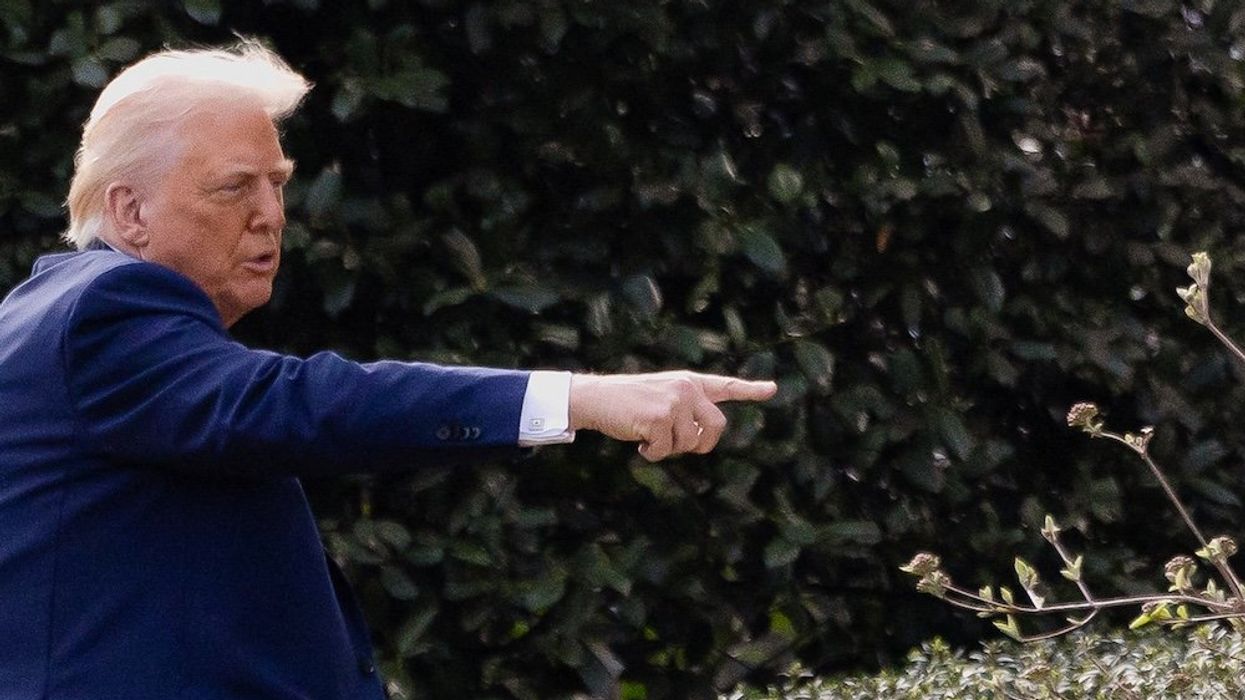
U.S. President Donald Trump points a finger as he returns to the White House after attending a board meeting at the Kennedy Center, in Washington, D.C., U.S., March 17, 2025. REUTERS/Carlos Barria

Carl Gibson
March 18, 2025
ALTERNET

Several top legal experts are now sounding the alarm over the implications of President Donald Trump testing the extent of the federal judiciary's enforcement power.

NBC News reported Monday that Trump's ongoing standoff with the U.S. District Court in the District of Columbia over two recent deportation flights has some in the legal community worried about the health of the United States' system of checks and balances. Kimberly Wehle, who is a law professor at the University of Baltimore, told the network that Americans are now "watching the accumulation of power in one person, which is antithetical to our constitutional democracy."

"He now is the law,” Wehle said. “He decides what’s legal and not legal. He decides winners and losers, and it’s arbitrary.”

Over the weekend, Judge James Boasberg — who was appointed by former President Barack Obama — ruled that Trump did not have the authority under the Alien Enemies Act of 1798 to deport Venezuelan immigrants who the administration alleges are members of a violent gang. Boasberg pointed out that the law the administration invoked had only been used three times in U.S. history, and only against foreign governments. His ruling ordered that the deportation flights be turned back around as alleged gang members were not on the same legal footing as a foreign government.

Boasberg's ruling enraged both Trump and his supporters, with some MAGA-aligned voices — including Rep. Brandon Gill (R-Texas) — calling on Boasberg to be impeached. One unnamed Trump advisor told NBC that they viewed Boasberg as an "activist" judge who was blocking "the mandate we were given."

According to Ilya Somin, who is a law professor at George Mason University's Antonin Scalia Law School, the administration's position in the two deportation flights "seems like more explicit defiance" than previous actions, like refusing to disburse funds already appropriated by Congress.

“If the executive can defy court orders whenever they feel like it, they are essentially not constrained by the Constitution and the laws anymore,” he added. “If they defy court orders and get away with it, they can basically do things that are illegal and there would be no easy way of stopping them.”

Click here to read NBC's report in full.


Trump views himself as 'monarch ordained by a god' — not a 'public servant': analysis


March 17, 2025
ALTERNET

After Donald Trump defeated Democratic nominee Kamala Harris by roughly 1.5 percent in the popular vote in the United States' 2024 presidential race, many far-right white evangelical Christian fundamentalists didn't view the outcome as Trump narrowly winning a close election. Instead, they declared that Trump had a divine "mandate" from God Almighty Himself.

But Trump's critics — from Democrats to right-wing Never Trump conservatives — reminded Christian nationalists and MAGA Republicans that the U.S. Constitution vehemently rejects the "divine right of kings" concept. July 4, 1776, they stressed, was a total rejection of monarchy, not an endorsement of it.

In an op-ed published on March 17, journalist Marcie Bianco (author of the 2023 book "Breaking Free: The Lie of Equality and the Feminist Fight for Freedom") emphasizes that Trump has a radically different view of the presidency than Presidents Barack Obama, Teddy Roosevelt and Harry Truman. While Obama, Roosevelt and Truman described themselves as "public servants," Bianco writes, Trump sees himself as a "monarch ordained by a god."

"From using the White House's South Lawn to shill cars for his biggest campaign donor to demanding taxpayer-funded ads that claim he victoriously closed the southern border," Bianco observes, "President Donald Trump is demonstrating that, as he stated in his first term, he has 'the right to do whatever I want.' That's his twisted interpretation of Article 2 of the Constitution, which describes the power of the president."

Bianco continues, "Yet the president of the United States is not a king. He’s not a monarch ordained by a god….. As mass protests against the Trump Administration take place across the nation, let us remember the historical role and responsibility of the president and what others who've held the office have had to say about the responsibility that comes with the position."

The journalist/author notes that in a May 1918 op-ed for the Kansas City Star, Roosevelt wrote, "The president is merely the most important among a large number of public servants." And in July 1954, Truman said, "I would much rather be an honorable public servant and known as such than to be the richest man in the world."

Then, in a November 2020 appearance on CBS News' "60 Minutes," Obama described the president of the United States' as a "public servant" who needed to represent the public's interest, not their own.

"We, the American people, are responsible to each other to secure the health of our democracy," Bianco argues. "This means we must elect to office presidents who are committed to public service, and if we fail at that, then we must use our First Amendment rights to protest against them."

Marcie Bianco's full MSNBC op-ed is available at this link.
Trump’s trade wars threaten to inflict 'lasting scars' — not unlike the Great Recession: economist


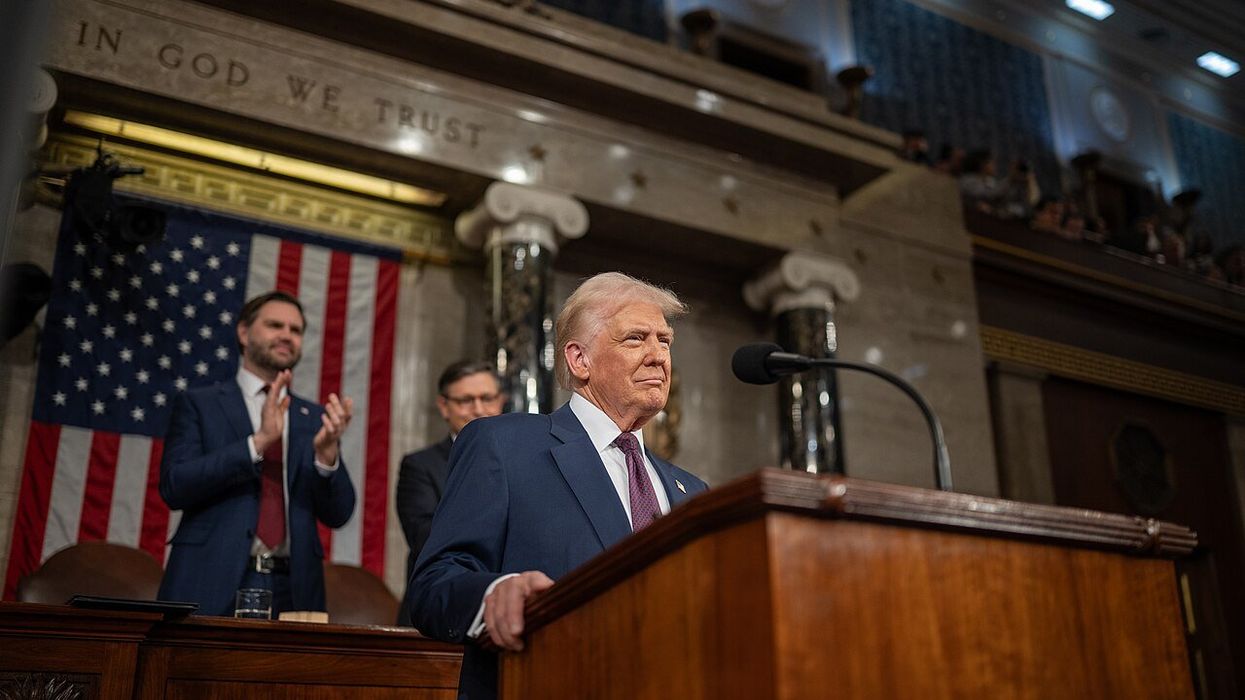
President Donald Trump with Vice President JD Vance and House Speaker Mike Johnson on March 4, 2025
(Wikimedia Commons)

March 18, 2025
ALTERNET

President Donald Trump and other MAGA Republicans are claiming that if his aggressive new tariffs cause any financial discomfort, it will only be short-term — and will be followed by a robust economic boom.

But Roosevelt Institute economist Ali Bustamante, in an op-ed published by MSNBC on March 18, argues that MAGA's pro-tariff claims fail to acknowledge the long-lasting damage that severe economic downturns can inflict.

"His argument? That a recession now will lead to some vague 'golden age' later," Bustamante explains. "But that’s not how economies work. Recessions aren't detox cleanses; they don't flush out inefficiencies and leave you leaner and stronger. They are periods of mass job losses, closed businesses and financial ruin that leave lasting scars on families, workers and entire communities. We know this because we've lived it — and not even that long ago."

Bustamante continues, "The 2008 financial crisis and Great Recession didn't make the U.S. economy more efficient — it wiped out a generation of wealth, particularly for Black and Latino families, and left millions behind. The recession caused by the outbreak of the COVID-19 pandemic deepened inequality and exacerbated housing insecurity, despite the fastest policy response in modern history."

The Roosevelt Institute economist warns that "recessions don’t set the stage for prosperity," but rather, "cause long-term damage that even a decade of growth can't fully undo."

"In reality, recessions kill small businesses while the biggest corporations consolidate power," Bustamente notes. "They drive up unemployment, forcing workers to take worse jobs for lower pay, and they weaken the very public institutions — like schools, health care and infrastructure — that enable long-term economic growth. Even worse, the current slate of proposed policies would actively make the economy more fragile."

According to Bustamente, the Trump Administration's policies are a recipe for economic decline.

"Imposing broad tariffs would raise prices for consumers and manufacturers alike, increasing inflation while slowing down economic activity," Bustamante writes. "Mass layoffs of government workers wouldn't lead to leaner government — it would gut essential public services, hurting businesses that rely on those workers' paychecks. And cutting Medicaid and Social Security wouldn't create a more 'dynamic' workforce; it would push millions into poverty, reduce consumer spending and force older Americans to stay in the workforce longer, crowding out younger workers from job opportunities…. The Trump Administration's vision is clear: force a recession, break the public sector and weaken social protections, all hoping that something better will emerge on the other side. But history has shown us what actually happens — higher inequality, lower wages and an economy rigged even further in favor of the ultrawealthy. Economic downturns don’t just disappear once the pain subsides; they leave behind long-term damage."

Ali Bustamante's full MSNBC op-ed is available at this link.


'Looming trade war': Economist Paul Krugman explains why world is 'a much scarier place now'


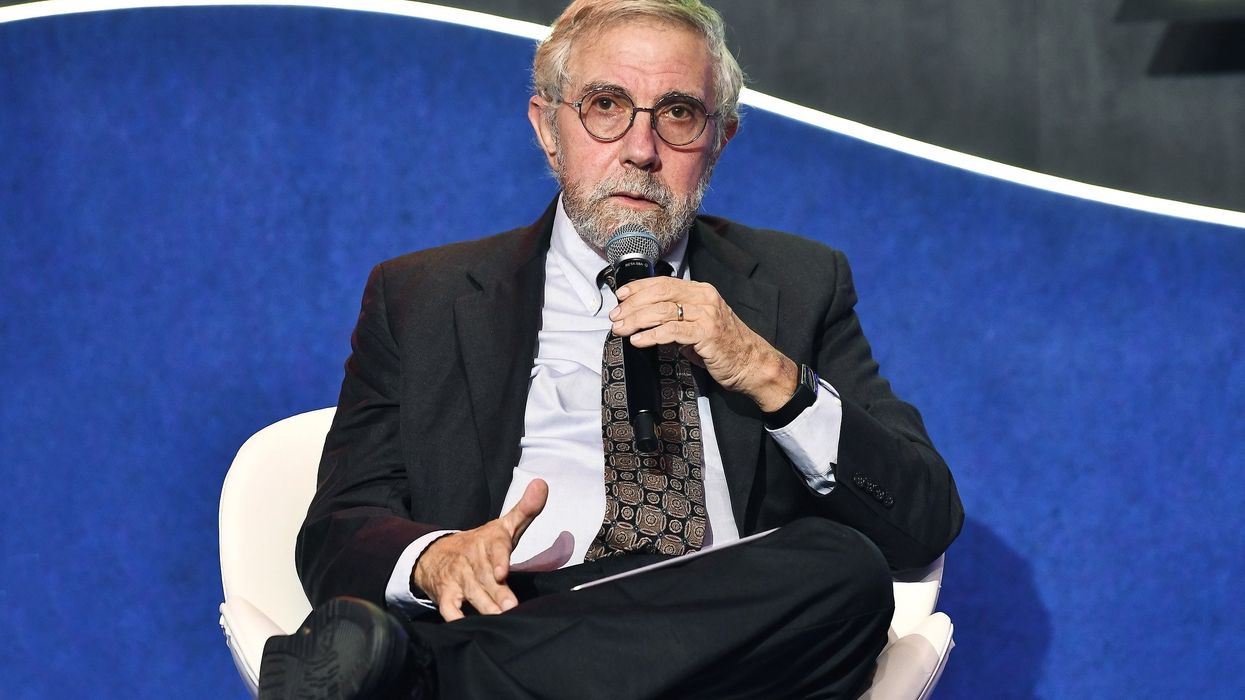
Economist Paul Krugman in Rio de Janeiro, Brazil on September 25, 202
(A. Paes/Shutterstock.com)
March 18, 2025
ALTERNET

Liberal economist and former New York Times columnist Paul Krugman disagrees with the late conservative economist Milton Friedman on many things, but one area where Krugman is very much in agreement with Friedman is on tariffs. Krugman, like Friedman, believes that tariffs are terrible for both businesses and consumers — and he fears that the aggressive new tariffs President Donald Trump is imposing on Canada, Mexico and other longtime allies could help get the U.S. into a bad recession.

No good, Krugman warns, can come from Trump getting the U.S. into all-out trade wars with Canada, Mexico and countries in the European Union (EU).

During an appearance on the "Trade Walks" podcast posted on March 16, Krugman cited trade wars as one of the reasons the world is facing a dangerously unstable period.

Krugman explained, "The world used to be — well, OK, there was the Soviet bloc, but the world's market economies were relatively easy with each other. It was a relatively frictionless world and a world in which disputes tended to be minor. We had trade issues. We had chlorinated chickens and that sort of thing, but not existential issues. And the world is a much scarier place now."

According to Krugman, one possible result of trade wars is the U.S. losing access to technology it badly needs.

The economist argued, "So, even a couple of months ago, I would've said that nobody worries about ASML and the fact that that really high-end chip manufacturing equipment is all in the Netherlands. No one expects the Dutch to engage in an aggressive campaign of conquest. But on the other hand, if we're talking about a looming trade war between the United States and the EU, the United States might suddenly find itself cut off from the equipment that it needs to produce high-end chips."

Krugman added, "So, I would say that we weren't thinking about it. I would have actually said it was inconceivable that we would be in the kind of world that we're now in — so, a failure of imagination."

Listen to Paul Krugman on the full podcast at this link.


Trump’s trade war imperiling 'global economy' — and igniting fears of 'stagflation'


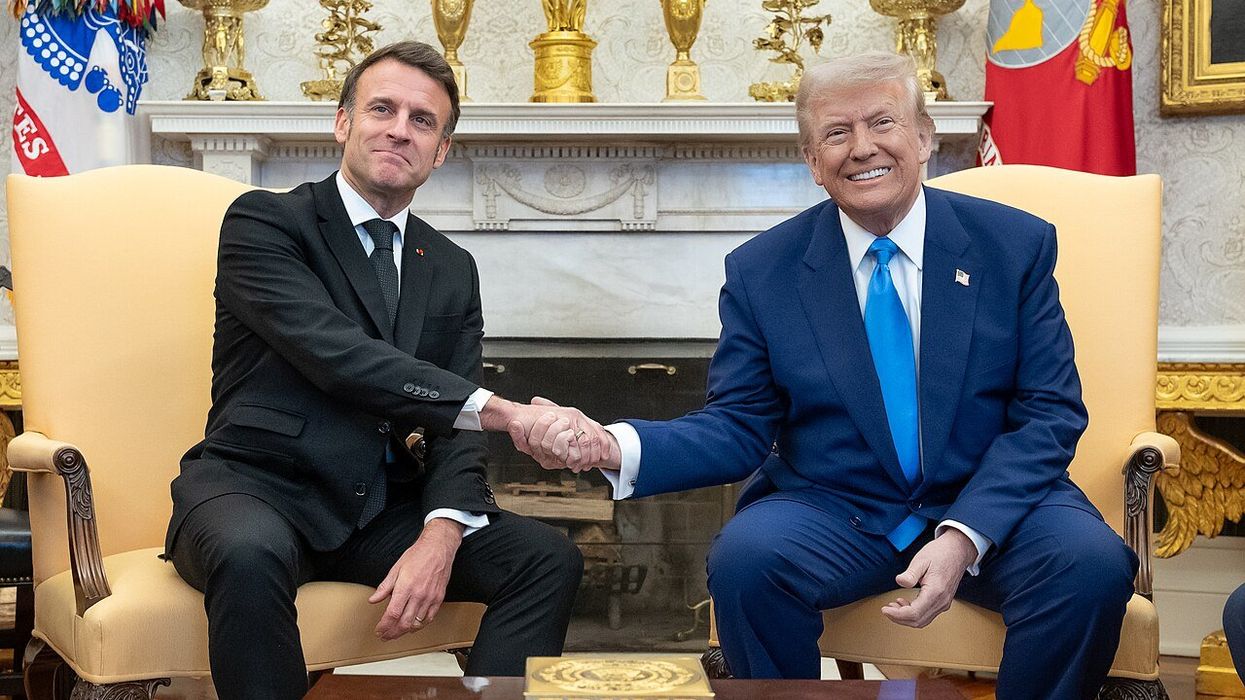
U.S. President Donald Trump meeting with French President Emmanuel Macron in the White House Oval Office on February 24, 2025
(Wikimedia Commons)
March 17, 2025
ALTERNET


President Donald Trump's aggressive new tariffs are igniting trade wars not only with Canada, Mexico and Mainland China, but also, with longtime allies in the European Union (EU). And the tariffs are setting off instability in the stock market, with the Dow Jones Industrial Average taking some major plunges in mid-March.

Washington Post columnist Catherine Rampell examined the state of the U.S. economy during a Monday morning, March 17 appearance on MSNBC — and noted fears of possible "stagflation."


Rampell, now a weekend host on MSNBC, outlined the concerns expressed by the Organization for Economic Co-operation and Development (OECD) in a recent forecast.

READ MORE:'Sounds like Putin': Trump blasted for declaring top news organizations 'illegal'

Rampell told fellow MSNBC host Ana Cabrera, "Relative to just three months ago, they have ratcheted down their forecasts for economic growth and ratcheted up their forecasts for inflation, both in the U.S. and around the world. And so basically, they blame that primarily on rising uncertainty and Trump's trade wars."

When Cabrera asked Rampell, "How bad could it get?," the Post columnist responded, "Well, the numbers so far don't indicate, let's say, a recession. But they do warn that if things escalate — if these trade wars escalate — we will see a…. huge impact on growth and on consumer prices. So, just as an example: a few months ago, right before Trump took office, the OECD was predicting that inflation would fall this year in the United States relative to last year. They're no longer predicting that; they are predicting that inflation will speed up this year in the United States relative to last year."

Rampell added, "Much of the rest of the world, they're also seeing, you know, some increase in consumer prices, but not like what we are expected to see here."

The "general impact" of Trump's trade war, Rampell told Cabrera, "is quite bad" for "the U.S. economy and the global economy."

Rampell noted, "I think this is the first evidence we have — the first official forecast, anyway, that we have — that Trump's trade wars are already dragging on the global economy…. On the one hand, the tariff hikes are likely to raise prices. On the other hand, they're likely to slow growth. And one of those outcomes would nudge the Fed to raise rates, and one of them would nudge the Fed to cut rates. And so, they're kind of stuck in this difficult position of potential stagflation. People who remember the '70s remember that potential outcome. "

Economists used the term "stagflation" to describe a painful combination of high inflation, stagnant economic growth, and rising unemployment. Stagflation was a major problem in the United States in the late 1970s and early 1980s and was a factor in Ronald Reagan's landslide victory over President Jimmy Carter in the 1980 election.

However, Reagan, during his first term, was dogged by economic woes as well, which led to Democrats' blue wave in the 1982 midterms.

Watch the full video below or at this link.