Wednesday, September 10, 2025

A BIG DEAL UPDATE

Anglo American, Teck strike $50B merger in decade’s top deal
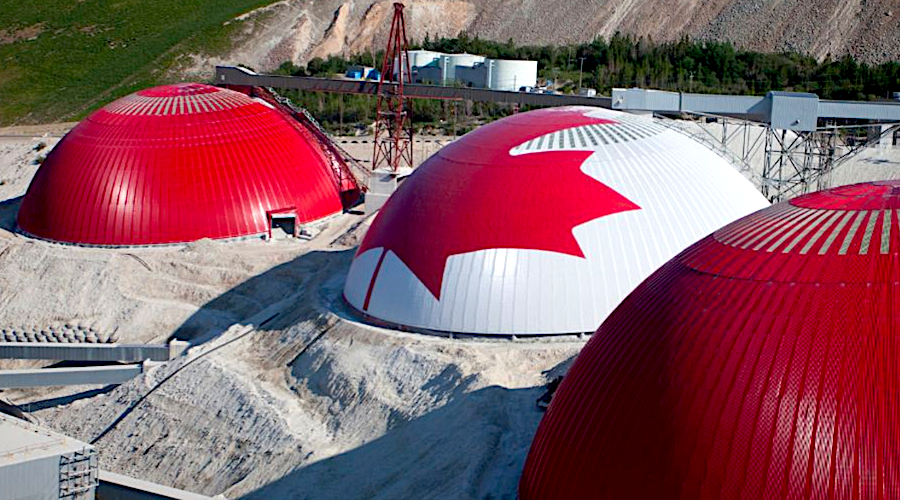

Highland Valley Copper Operations in British Columbia. (Image courtesy of Teck Resources.)

Anglo American (LON: AAL) is acquiring Teck Resources (TSX: TECK.A TECK.B, NYSE: TECK), Canada’s largest diversified miner, in a $50-billion all-share merger that would create the world’s fifth-largest copper producer — if regulators in Canada, the United States and China sign off.

Anglo will exchange 1.3301 shares for each Teck share, a structure it called a “zero-premium” merger. The math tells a different story: the exchange ratio represents a 17% premium on Teck’s closing price Monday, though Anglo will offset it with a $4.5-billion special dividend to its investors, leaving the effective premium at just 1%.

If completed, Anglo shareholders will own 62.4% of the new company, to be named Anglo Teck, while Teck shareholders will hold 37.6%.

Anglo American’s chief executive officer Duncan Wanblad will lead the combined miner, with Teck CEO Jonathan Price as deputy CEO. The headquarters will be in Vancouver, with Anglo’s London office to be “streamlined”. 

Secondary listings are planned for Toronto and Johannesburg, along with a New York float via American Depository Receipts.

It’s all about copper

The deal cements Anglo’s access to Teck’s prized copper assets at a time of surging demand for the metal, crucial to electrification and renewable energy. Central to the strategy is Teck’s Quebrada Blanca (QB) mine in Chile, an operation that has been plagued by cost overruns and operational challenges.

Both miners have been reshaping portfolios to focus on critical minerals. Teck sold most of its coal unit to Glencore (LON: GLEN), while Anglo has been shedding coalplatinum and diamonds.

Teck also recently launched a sweeping operational review, due in October, aimed at boosting performance, with QB singled out as a top priority.

“We have a positive outlook on this merger, as it is expected to deliver significant value and growth,” Gimme Credit’s senior bond analyst, Franck Bekaert, said in a note. “The new company will emerge as one of the world’s leading copper producers, boasting a diversified portfolio of six copper production sites, along with iron ore and zinc operations.”

QB-Collahuasi power play

Teck had already been exploring potential synergies between QB and Collahuasi, a nearby copper mine in northern Chile co-owned by Anglo and Glencore.

The companies estimate annual pretax synergies of $800 million, with up to $1.4 billion in earnings before interest, taxes, depreciation and amortization (EBITDA) gains through shared procurement and operational efficiencies.
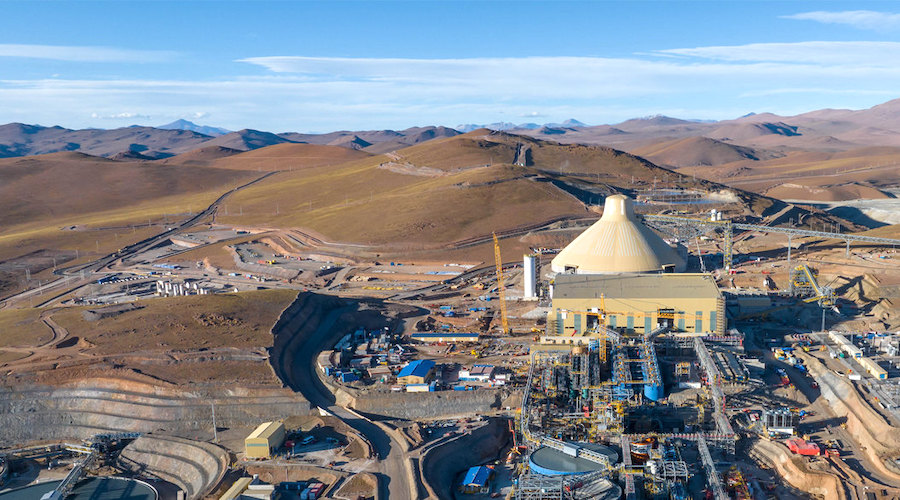
Teck earmarks up to $3.9 billion to boost copper output
Quebrada Blanca, a low-cost, long-life copper mine located in northern Chile. (Image courtesy of Teck.)

“The industrial logic is pretty self-evident,” Wanblad said. “You can see the logic of moving some of the high-grade ore from Collahuassi to the QB plant.”

Glencore was not consulted on the merger but has long argued the two Chilean mines should be combined to cut costs.

A “significant coup”

Duncan Hay, mining analyst at Panmure Liberum, qualified the merger as a “significant coup” for Anglo American. “If they are successful it is a great move as they’re locking up high-quality copper assets that the industry has been coveting,” Hay wrote.

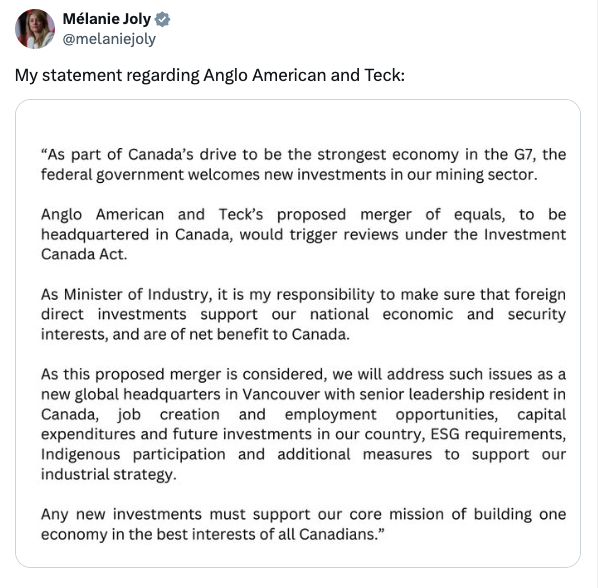
Canada’s Industry Minister Mélanie Joly confirmed the merger will be reviewed under the Investment Canada Act to ensure it delivers a “net benefit” to the country.

“Any new investments must support our core mission of building one economy in the best interests of Canadians,” she posted on X. The review could take up to 18 months.
“The Canada angle raises the bar for any potential gate-crashers,” Camilla Palladino, deputy head of Lex at FT.com wrote. “If they wanted to present a rival bid for Teck, they too would probably need to ship their management teams off to Canada — or provide some adequate alternative inducement. And that is on top of offering Teck shareholders better value.”

That puts pressure on potential and previous suitors such as Rio Tinto or BHP, Palladino said. For once, she added, it looks like the buyer’s shareholders have the stronger hand in a mining deal.

Others believe the announced merger may signal the onset of a bidding war, with US copper giant Freeport McMoRan (NYSE: FCX) and gold miner Agnico Eagle Mines (TSX, NYSE: AEM) potentially stepping in with their own offers. Both companies, particularly Agnico, are currently benefiting from strong stock prices that could facilitate an all-share deal.

“We cannot speculate on that (bidding war), and that is not something we can control. We are focused on getting approval for bringing Anglo and Teck together,” Teck’s Price said.

For those unable to secure Teck, alternative takeover targets may emerge as a strategy to ensure access to critical raw materials, especially copper, in a resource-hungry world.

“It has finally started,” George Cheveley, a portfolio manager at Ninety One UK Ltd., which holds shares in both companies told Bloomberg News. “Do people come in for one or the other, or wait for the two to combine? All of those things are possible. It might be a catalyst for others to pursue different deals and combine elsewhere.”

The Anglo-Teck deal follows a wave of industry consolidation driven by the scramble to secure copper supply. Anglo fended off a $49-billion approach from BHP last year, while Glencore’s 2023 bid for Teck collapsed.

Shares in Anglo rose almost 10% in London to 2,498p, giving it a market cap of £29.4 billion (about $40 billion). Teck stock jumped 17% in New York pre-market trading, last at $40.95, valuing the company at $17.2 billion.


 

Her Majesty Queen Mary Names Denmark’s First Electric Tugboat

Svitzer
HM Queen Mary, flower girl Benedicte Bruun, Kasper Nilaus, Svitzer CEO, Robert Maersk Uggla, CEO of A.P. Moller Holding. Credit: Svitzer

Published Sep 9, 2025 10:14 PM by The Maritime Executive


[By: Svitzer]

The green transition in Denmark’s maritime sector took an important step forward today as Denmark’s – and Svitzer’s – first electric tugboat was named by Her Majesty Queen Mary at a ceremony in Copenhagen.

The new tugboat will carry the name Svitzer Ingrid, as announced by Her Majesty during the naming ceremony, which was attended by more than 100 executives from the Danish maritime industry. Svitzer Ingrid has a battery capacity equivalent to that of 23 modern electric cars and can perform most tasks using electricity, thereby reducing annual CO? emissions by 600 to 900 tonnes.

“At Svitzer, we have an ambition to become climate neutral by 2040, so today marks an important milestone for us. The electrification of our vessels is a key part of achieving this target. Svitzer Ingrid will operate in the Sound with Helsingborg as its home port, and around 90% of all tasks can be completed using electricity,” said Kasper Friis Nilaus, CEO of Svitzer.

Svitzer operates a fleet of over 450 tugboats - assisting large tankers, container ships, and cruise vessels safely in and out of ports. Ingrid is Svitzer’s first fully battery-powered tugboat. A second electric tugboat has been ordered for delivery in 2026, and Svitzer is also in the market for additional four electric tugboats. Since 2016, Svitzer has operated four hybrid tugs in Australia.

“We would like to make a larger share of our fleet battery-powered, but this depends on ports having the necessary charging infrastructure. We are not there yet, although we see positive progress,” added Kasper Friis Nilaus.

“Ultimately, ports will need charging infrastructure similar to that for cars. Shipping companies cannot achieve this on their own. We must work together across our industry, with policymakers and local communities, to develop viable green solutions,” he said.

Svitzer Ingrid will be recharged using renewable energy supply at the Port of Helsingborg.

Facts about Svitzer Ingrid:

  • Hybrid vessel with a 1,808 kWh battery, equal to 23 modern electric cars
  • Also fitted with a conventional diesel engine• Reduces CO? emissions by 600–900 tonnes per year compared to existing Øresund tugs
  • Full charge takes about 3.5 hours; in practice, around one hour of charging is sufficient for operations
  • 90% of tasks can be completed on battery power
  • Length: 25.4 metres, Width: 12.7 metres, Draft: 5.4 metres
  • Bollard pull (BP): 70 tonnes

Svitzer vessels in Scandinavia are named after figures from Nordic mythology, and the Svitzer Ingrid is no exception. The name also carries a royal reference to Queen Ingrid. This is the second time that H.M. Queen Mary has named a Svitzer vessel, having previously named Svitzer Marysville in Melbourne, Australia in 2011.

The products and services herein described in this press release are not endorsed by The Maritime Executive.


Bridging Land and Sea: FMSDI and the Future of Coastal Insight

OGC
Courtesy GNFMS / NOAA

Published Sep 9, 2025 6:03 PM by Dr. Ingo Simonis


Coasts are places of convergence. They are where ships meet ports, where cities meet tides, and where human infrastructure must coexist with dynamic natural forces. They are also where our data systems often fall apart.

On land, survey agencies and municipalities maintain elevation models, cadastral records, and infrastructure maps. At sea, hydrographic offices chart depths, currents, and hazards. Each operates in its own world, with its own standards, coordinate systems, and governance. At the shoreline—the “white ribbon,” as some hydrographers call it—these systems collide. The result is uncertainty precisely where clarity matters most.

For centuries, mariners coped with charts that ended at the low-water mark, while land surveyors mapped shorelines as static boundaries. In the age of climate change and globalized trade, those divisions no longer suffice. Storm surges, rising seas, and shifting coastlines demand integrated models of land and sea. Ports and shipping require seamless data to manage traffic, dredging, and safety. Coastal communities need accurate, shared information to plan resilience.

This is the story of the Federated Marine Spatial Data Infrastructure (FMSDI) initiative: a global effort to connect the worlds of land and sea through shared data, common standards, and federated access.

The White Ribbon Problem

The “white ribbon” is more than a metaphor. It is the literal band on digital maps where land-based elevation models and marine bathymetric charts fail to meet. This happens because each domain uses different vertical reference systems—mean sea level on land, chart datums at sea. Coordinate systems don’t always align. Surveys occur at different times and resolutions.

For a port authority, this might mean not knowing exactly where dredging is needed. For a shipping company, it can mean uncertainty about safe approach depths. For emergency planners, it can mean blind spots in storm surge modeling. For coastal managers, it complicates habitat mapping and climate resilience planning.

In short: fragmented data creates fragmented decisions.

A Federated Approach

Rather than building one massive system, OGC and its partners launched FMSDI in 2021 to test a federated model. The premise is simple: agencies and operators should keep control of their own data but connect them through open standards so they can be discovered, accessed, and integrated in real time.

By Phase 5 in 2024, the initiative had grown into a collaboration among the UK Hydrographic Office, NOAA, the National Geospatial-Intelligence Agency, Natural Resources Canada, Singapore Land Authority and Maritime Port Authority, Esri, Hexagon, TCarta, and others. The pilots aimed to do two things: develop best practices for interoperability at the land–sea interface; and demonstrate live, technical solutions that show how integration can work in practice.

Demonstrations that Made it Real

The pilots produced three compelling technology showcases. Compusult built unified operational pictures that combined terrestrial elevation, bathymetry, and tidal data. In The Solent (UK) and Chesapeake Bay (USA), the system showed how vessels could be routed based on current tidal conditions and combined topographic-bathymetric models. The result: safer, more efficient navigation in dynamic coastal environments.

Pangaea Innovations applied a 4D Discrete Global Grid System (DGGS) to index data across space and time. This approach allowed direct queries across terrestrial and marine datasets without complex harmonization. For port operations, this means infrastructure and navigation data can be analyzed together through a single framework.

TCarta demonstrated satellite-derived shoreline monitoring. By tying vectors to tidal states, they produced near real-time updates of where the coast actually is. This provides a scalable, cost-effective way to keep intertidal models current—a critical need as sea-level rise accelerates shoreline change.

All demonstrations were anchored in OGC APIs and IHO S-100 standards, ensuring that the work could plug into existing GIS and marine information systems.

Why This Matters for the Maritime World

These demonstrations may sound technical, but their implications are far-reaching:

  • Navigation and safety: Accurate land–sea integration reduces risks for vessels in port approaches and congested waters.
  • Port and logistics efficiency: Seamless data improves berth planning, dredging strategies, and overall traffic management.
  • Resilience and climate adaptation: Harmonized vertical datums allow storm surge and flood risk models to extend across the true land–sea continuum.
  • Environmental stewardship: Integrated datasets enable monitoring of coastal habitats, wetlands, and marine protected areas.
  • Security and defense: Cross-border data sharing improves situational awareness in contested or vulnerable intertidal zones.
  • Insurance and finance: Trusted, authoritative datasets underpin risk models that affect insurance premiums and infrastructure investment.

Five Best Practices Emerging from FMSDI

The pilots distilled their lessons into five principles that any maritime nation or organization can adopt:

  1. Unified geospatial reference: Aligning datums across land and sea eliminates discontinuities that undermine models.
  2. FAIR data principles: Ensuring data is Findable, Accessible, Interoperable, and Reusable supports discovery and automation.
  3. Mind the gap: Filling intertidal data voids through targeted surveys or satellite-derived products ensures continuity.
  4. Coordinated governance: Frameworks like IGIF-Hydro clarify responsibilities and reduce duplication across agencies.
  5. Scalable resolution management: Integrating high-resolution data where needed, without losing regional context, balances detail with scale.

International Momentum

FMSDI is not operating in a vacuum. It aligns with global efforts such as:

  • UN-GGIM’s Integrated Geospatial Information Framework (IGIF): A strategic guide developed by the United Nations to help countries strengthen their geospatial information management and infrastructure for sustainable development.
  • IGIF-Hydro: A thematic extension of IGIF focused specifically on water-related geospatial data, supporting integrated water resource management and decision-making across sectors.
  • IHO’s S-100 framework: Modernizing the way marine data is structured and exchanged, from navigation to tides to marine protected areas.
  • Regional initiatives in Europe, Asia, and the Americas: Where federated SDIs are becoming part of digital public infrastructure.

By grounding its work in frameworks like IGIF, IGIF-Hydro, and S-100, FMSDI ensures that the solutions tested locally can scale internationally and contribute directly to global goals for resilience, sustainability, and efficiency.

Looking Ahead

The shoreline is not static, and neither is the FMSDI initiative. The next phases will focus on:

  • Operationalizing vertical datum transformation services.
  • Expanding satellite-based shoreline and bathymetry monitoring.
  • Broader adoption of DGGS indexing for multi-domain integration.
  • Deeper engagement with port authorities, coastal states, and private operators.
  • Integration on different concepts of real-world objects (a lighthouse is an obstacle when in flight, a navigation help when on ship, and possibly a tourist attraction while on land)

The vision is clear: a global fabric of federated marine and terrestrial datasets that can support resilience, efficiency, and innovation.

A Coastline of Possibility

The white ribbon once represented a barrier. Today, it represents an opportunity. By bridging land and sea through federated approaches, we can transform fragmented data into a foundation for smarter navigation, safer coasts, and more resilient communities.

The Federated Marine Spatial Data Infrastructure initiative shows that technical obstacles can be overcome, agencies and companies can collaborate, and open standards can provide the glue. For the maritime sector, this is more than a technical breakthrough. It is a path to greater trust, efficiency, and foresight in a world where the coast is never still.

The Open Geospatial Consortium (OGC) continues to coordinate this work with hydrographic offices, space agencies, research institutions, and industry partners worldwide.

Dr. Ingo Simonis, Ph.D. is CTO of the Open Geospatial Consortium (OGC). To learn more, access pilot results, or explore how your organization can participate in the next phase, visit ogc.org or contact OGC directly to join the dialogue.

The opinions expressed herein are the author's and not necessarily those of The Maritime Executive.

Very Low Sulfur Fuel Oil (VLSFO) 

Warnings of Recent Spike in Off-Spec Marine Fuels Including VLSFO in Europe

bunkering
Concerns are being raised over increases in off-spec fuels including VLSFO (file photo)

Published Sep 9, 2025 6:34 PM by The Maritime Executive


There are renewed quality concerns for the most popular marine fuels, and especially for very low sulfur fuel oil (VLSFO) used by many vessels to meet emission requirements. A range of sediments and impurities raises concerns not only of accelerated wear but also clogs and failures of critical components in the fuel system that can cause unplanned stoppages or blackouts.

“Bunkering with off-spec fuel continues to be a real issue,” says David Fuhlbrügge, Managing Director, CM Technologies, a condition monitoring company. “The transition from traditional fuel oils to VLSFO has created ongoing problems for ship operators, with fuel quality issues becoming a persistent concern across major bunkering hubs since the introduction of the fuel more than ten years ago.”

One market analyst they point out reported in January 2025 that more than 45 percent of the global VLSFO supply does not meet ISO standards. CMT says that independent data in the second quarter showed a further increase, with more than half of all VLSFO samples tested off-spec due to excessive sediment. Issues include poor blending and barge contamination.

Leading independent agencies, Bureau Veritas, VeriFuel, VPS, and FOBAS, have indicated that the problem is especially concerning in Europe. With their reports showing higher than expected levels of catalytic fines, sediments, and or viscosity issues. In Skagen, Norway, for example. 84 percent of samples tested were off-spec, while in Piraeus, Greece, one-in-eight VLSFO deliveries were off-spec. The reports highlight concerns in the busy corridor between Amsterdam, Rotterdam, and Antwerp.

CMT says wax formation when low viscosity VLSFO is stored in temperatures above 21 degrees C is a particular problem.
  
“VLSFO is a persistent problem for ship managers and charterers,” says Fuhlbrügge. “Operators must know exactly what is going into their tanks. Effective monitoring onboard and at the bunkering port is the only way to protect machinery, safeguard operations, and preserve reliability.”

The company highlights that catalytic fines in particular present an immediate threat to critical components, acting like microscopic sandpaper on injectors and pumps. Sediment, sludge, and wax formation increase the risk of clogged filters and purifiers, while abnormally high viscosity disrupts combustion and raises fuel consumption. Inconsistent fuel quality can rapidly undermine even the most carefully planned maintenance schedules and compromise a vessel’s emissions performance.

CMT warns of the consequences of poor or non-existent monitoring. It says on-site testing capabilities are a critical tool for crews that can assess fuel quality before it enters an engine.

Fuel purity is a consistent concern for ship operators. There have been several cases in Houston that raised concern, and a serious situation in Singapore in 2022. More than 200 vessels were impacted when more than $120 million in fuel was found to have impurities. The following year, another 32 vessels reported problems in an incident that started in Houston and spread to Singapore


Netherlands Fights Shadow Fleet's Use of Fake Caribbean Flags

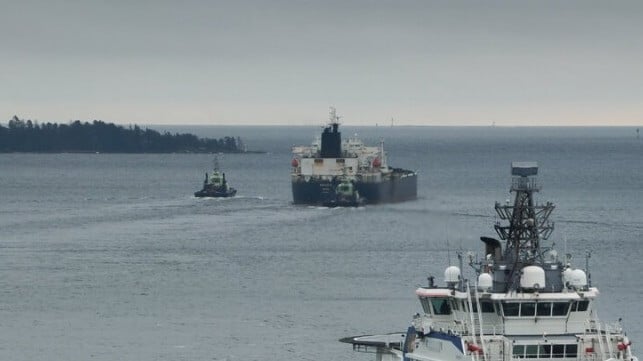
Eagle S

Published Sep 9, 2025 9:17 PM by The Maritime Executive


Dutch authorities are taking steps to challenge "shadow fleet" tankers that pretend to operate under the flags of island states in the Netherlands Antilles. 

According to the Royal Association of Netherlands Shipowners (KVNR), several dozen tankers are flying the flags of Aruba, Sint Maarten and Curacao at any given time, though the roster changes regularly (consistent with the "flag-hopping" practices seen in the shadow fleet). 

Aruba and Sint Maarten show up often on the AIS broadcasts and paperwork of shadow fleet ships, but in reality these small nations do not operate registries at all. And Curacao, which does have a shipping registry, has not registered any of the shadow fleet tankers.

"The KVNR considers the flying of fraudulent flags to be very damaging to the reputation of the Netherlands and Curaçao," said the KVNR in a recent statement. 

KVNR called for Dutch authorities to enforce the rules within Dutch waters, since shadow fleet tankers pass by the Netherlands all the time. It also went a step further: it noted that international law "seems to allow for action even on the high seas against stateless ships" - a category that includes any Aruban- or Sint Maarten-flagged ship. Coastal and port states could take similar steps to enforce the law aboard stateless vessels. 

In Curacao, officials have called for foreign port state control officials to take action against tankers flying the Curacao flag, and to pursue criminal charges, according to the local Curacao Chronicle. The outlet reports that the Dutch government is taking the matter seriously and challenging fraudulently-registered vessels wherever possible. Dutch coast guard assets intercepted two vessels flying Aruban flags through the Dutch EEZ in August, but did not board them. Inspections of false Antilles-flagged tankers are expected when such vessels are at anchor in Dutch waters, the Chronicle reported. 

The shadow fleet has expanded rapidly amidst tightening Western sanctions on Russia, and it has shifted towards the use of less-legitimate and nonexistent flag states, as the larger open registries have become wary of the compliance risks of associating with the trade. When including smaller sub-fleets serving Iran and Venezuela, the estimates of the shadow fleet's size range as high as about 900 vessels, per one measure published by S&P Global - up to about 17 percent of all global tanker tonnage, most of it generally aging and underinsured.

Top image: Tanker Eagle S / Finnish Border Guard handout


India Plans to Blacklist 86 Vessels, Ordering Immediate Crew Repatriation

Paradip port India
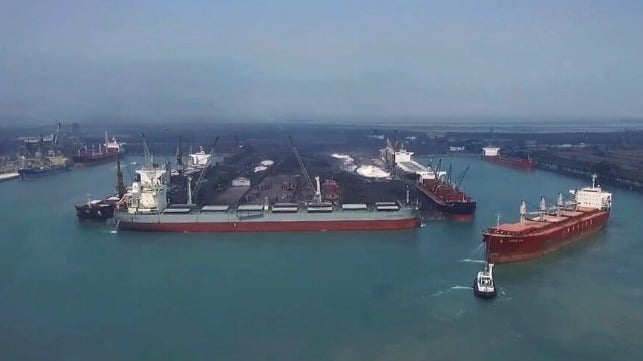
Bulkers navigating in Indian port (Paradip Port Authority)

Published Sep 8, 2025 4:34 PM by The Maritime Executive


India’s Directorate General of Shipping (DGS) published a draft circular outlining steps it plans to take against a group of 86 vessels, which it says have recurrent reports of seafarer abuse, problems with working conditions, have been detained by port authorities, or are operating without proper paperwork. The move comes as the industry has been pushing for increased action after the International Transport Workers’ Federation warned that abandonments are running at a record high level.

The draft circular, which is dated September 5, highlights that the DGS has received repeated complaints and reports of abandonment, detention, or arrest of Indian seafarers on certain vessels. A majority of the vessels, it also asserts, are operating without minimum mandatory documents, including valid P&I insurance. They also report “poor compliance” from recruiting and placement agencies, saying the vessels are operating without proper documentation for the seafarers.

Further, the Indian authority reports that in many cases it has not received responses when approaching the respective flag state or port states for the vessels. Under the maritime labor conventions, states have obligations when owners/operators abandon vessels within their registries.

The cases being cited include non-payment of wages, lack of repatriation, and inhuman and unsafe working conditions. They also report that the vessels have been detained by port authorities and, in some cases, have been involved in cases of cheating and fraud.

A total of 86 vessels have been identified in 2025 based on “the gravity, recurrence, and enforcement challenges.” The DGS reports “show cause” notices have been issued to several crewing agencies linked to the ships.

The list of ships is varied both in type of vessel and flag. One name that immediately stands out is the product tanker Eagle S, which is at the center of the case in Finland, alleging the tanker intentionally dragged its anchor, damaging undersea cables. Three crewmembers, including one Indian national, are currently on trial in Finland. Other vessels listed include general cargo ships, tankers, and a RoPax.

The draft circular directs the recruiting and placement agencies to immediately stop recruiting or engaging Indian seafarers on the blacklisted vessels. Further, they are directed to arrange the prompt sign-off at the earliest possible port for the Indian crewmembers and their safe repatriation to India with wages, health, and welfare entitlements.

The agencies are also required to provide reports within 14 days detailing the seafarers employed on the vessels. They are to detail their repatriation status and wages, and any outstanding pay. Agencies that fail to complete the steps are threatened with suspension or cancellation of their licenses.

The ITF called for new actions, warning in August that the rate of abandonment was seeing a “disturbing surge” in 2025. It reported having recorded 2,648 cases of seafarer abandonment across 259 vessels compared to 3,133 seafarers abandoned in all of 2024. That was up 87 percent from 2023.


Stemming the Tide of War Insurance Costs

Tanker
iStock / HeliRy

Published Sep 9, 2025 7:30 PM by Saleem Khan


War risk insurance costs have soared by up to 60% thanks to recent escalated Middle East tensions. Is this increase surprising? No. Is it substantial? Yes. The increase reflects heightened volatility in regions like the Red Sea and Persian Gulf, particularly around the Strait of Hormuz.

For instance, premiums in the Strait area rose from approximately 0.125% to 0.2–0.4% of a ship’s hull and machinery (H&M) value, translating to hefty increases. Meanwhile, vessels servicing the broader Middle East Gulf have seen premiums climb from 0.2–0.3% up to 0.5%, adding extra daily costs for VLCCs. And, although a recent ceasefire between Israel and Iran eased rates slightly, dropping back to the high 0.35–0.45% range, the volatility persists.

Saleem Khan, Chief Data & Analytics Officer, Pole Star Global provides his view on the strategies that charterers, brokers and shippers should consider as they strive to reduce the impact of war insurance costs on their respective organizations.

Prioritize Reputable and Transparent Counterparties

One critical strategy is to work exclusively with known, transparent entities. In a climate where war risk premiums are heavily influenced by perceptions of geopolitical exposure, not just by voyage routes, partnering with opaque or sanctions-linked firms can cause underwriters to hike premiums or withdraw cover altogether. Misaligned ownership can implicate unwitting funding to watch?listed actors.

Leverage Beneficial Owner Data Tools

The digitization and digitalization of various processes and systems across the maritime sector is increasingly prevalent and powerful. This is providing the sector with valuable data and insights upon which to make better decisions for charterers, brokers, shippers and crew.  For example, by using sophisticated and proven maritime intelligence platforms it is possible for the sector to attain detailed ownership and beneficial owner intelligence. This kind of visibility enables charterers and brokers to verify their vessel source chain, avoid inadvertent support of illicit actors, and gain underwriters’ confidence—potentially securing lower premiums.

Embrace Dynamic Route Management & Risk Intelligence

War risk ratings now shift weekly, even daily in response to geopolitical changes. Leveraging real?time intelligence about these developments and changes – including vessel tracking, GNSS jamming alerts, and regional risk analytics – can help avoid costly detours while vessels travel and further insurance upcharges. 

Opt for Bundled Premiums & Fleet Discounts

Underwriters sometimes offer fleet-based packages or longer?period bundling, reducing the per?voyage cost even in volatile zones. Such arrangements can soften steep premium hikes, especially for operators with multiple vessels. Therefore, it’s worth exploring these options.

Integrate Cyber & War Risk Coverage

The modern maritime threat landscape, marked by AIS spoofing, GNSS jamming, and cyber?based vessel interference, demands integrated insurance policies that combine war risk with cybersecurity cover. This ensures comprehensive protection against evolving maritime threats.

Conclusion

War risk premiums are climbing. They are staying elevated due to both physical route hazards and the shadow of sanctions, watchlists, and intermediary integrity. Charterers and brokers can stem the tide and control their exposure, not just by re-routing their vessels and shipments; but by enhancing transparency, deploying forensic ownership data, and actively managing voyages with intelligence-backed insights and smart underwriting strategies.

Saleem Khan is Chief Data & Analytics Officer at Pole Star Global.

The opinions expressed herein are the author's and not necessarily those of The Maritime Executive.


Breaking the code of sperm motion: Two proteins found to be vital for male fertility


Researchers from The University of Osaka find that CFAP91 and EFCAB5 proteins are crucial for sperm motility, and that loss of function of either of these proteins reduces male fertility in mice


The University of Osaka

Fig. 1 

image: 

Morphology of mouse spermatozoa

view more 

Credit: Masahito Ikawa


Osaka, Japan – There are many potential causes of infertility, and it can be challenging to pin down just what the problem is when a couple is having trouble getting pregnant. Now, researchers show that a few key proteins have a major effect on sperm development, and therefore male fertility.

In a study published this month in Nature Communications, researchers from The University of Osaka have revealed that proteins forming a specialized structure are required for correct sperm function.

Sperm are propelled by flagella, which are like long whips whose motion propel sperm forward. Sperm whose flagella don’t work very well do not travel quickly or efficiently, so they are less likely to result in a successful pregnancy. Thus, anything that affects the function of flagella is likely to cause male infertility.

“The structure of the sperm flagellum is quite complex and includes radial spokes, which are essential for controlling flagellar motion,” says lead author of the study Haoting Wang. “CFAP91 is a radial spike protein and has been implicated in human male infertility, but it is unclear why it has this effect.”

To explore the role of CFAP91 in sperm development and function, the researchers generated mice that did not express this protein and evaluated the shape and movement of their sperm. The researchers re-expressed CFAP91 in the same mice to figure out what other proteins it interacts with. They then used a technique called proximity labeling to identify even more related proteins in fully developed sperm.

“The results were very clear,” explains Haruhiko Miyata, senior author. “Cfap91 knockout mice not only exhibited impaired sperm flagellum formation, but also had male infertility.”

When CFAP91 was re-expressed in the mice, the researchers found that it interacted with known radial spoke proteins. In addition, proximity labeling analysis showed that EFCAB5 is a CFAP91-proximal protein that helps regulate sperm movement.

“Our findings show that CFAP91 affects male fertility because it serves as a scaffold for assembling the radial spokes. In addition, we showed that the nearby protein EFCAB5 is crucial for controlling specialized sperm movement,” says Haoting.

The findings from this study highlight the complexity of sperm structure in humans and how it contributes to male fertility. Understanding how these proteins function helps understand male infertility and could help develop new targets to diagnosis infertility.

###

The article, “Proximity Labeling of Axonemal Protein CFAP91 Identifies EFCAB5 that Regulates Sperm Motility,” will be published in Nature Communications at DOI: https://doi.org/10.1038/s41467-025-63705-7.

About The University of Osaka

The University of Osaka was founded in 1931 as one of the seven imperial universities of Japan and is now one of Japan's leading comprehensive universities with a broad disciplinary spectrum. This strength is coupled with a singular drive for innovation that extends throughout the scientific process, from fundamental research to the creation of applied technology with positive economic impacts. Its commitment to innovation has been recognized in Japan and around the world. Now, The University of Osaka is leveraging its role as a Designated National University Corporation selected by the Ministry of Education, Culture, Sports, Science and Technology to contribute to innovation for human welfare, sustainable development of society, and social transformation.

Website: https://resou.osaka-u.ac.jp/en


Biotin labeling


Traces of moving spermatozoa

Credit

Masahito Ikawa