Friday, January 09, 2026

Trump's exit from climate bodies an act of 'profound cowardice'

The Trump administration's decision this week to pull the United States out of key climate bodies is an act of "profound cowardice" designed to escape accountability for the country's greenhouse gas emissions, says leading French climatologist Valérie Masson-Delmotte.


Issued on: 09/01/2026 
RFI
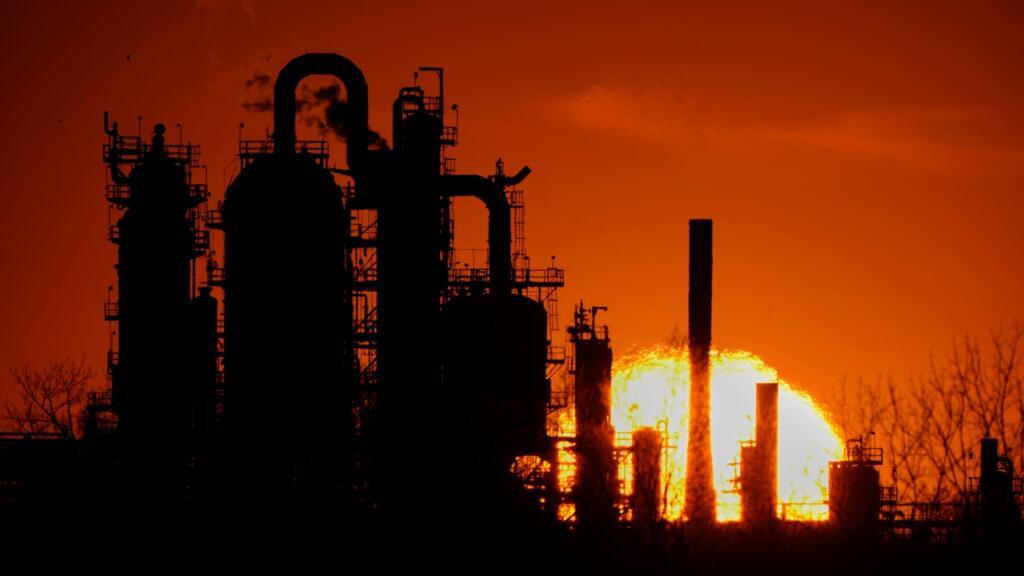
An oil refinery in El Dorado, Kansas. The United States is the world’s largest historical emitter of greenhouse gases and a major producer of fossil fuels. © AP - Charlie Riedel

On Wednesday, President Donald Trump ordered the withdrawal of the US from 66 international organisations – roughly half of them linked to the UN.

Masson-Delmotte, former chair of Working Group 1 of the Intergovernmental Panel on Climate Change (IPCC) and now a climatologist at France's Alternative Energies and Atomic Energy Commission, accuses the White House of "sabotage" aimed at destroying scientific knowledge and keeping it from the American people.

RFI: How do you interpret this latest US attack on global climate diplomacy?

Valérie Masson-Delmotte: Under the Trump administration, the United States is breaking away from multilateralism on climate and biodiversity. It's also breaking away from objective, rigorous and factual scientific assessment work.

This is reflected in the withdrawal from the IPCC, the biodiversity panel IPBES, the United Nations Framework Convention on Climate Change and the International Union for Conservation of Nature.

The move forms part of a policy of brutal attacks against climate science, environmental science and biodiversity science in the US, but also against the place of scientific facts at all levels within the American federal framework and internationally.

RFI: For Donald Trump, these organisations no longer serve American interests. Yet the United States, like other countries in the world, is affected by climate change.

VM-D: Yes, of course. The National Academies of Sciences, Medicine and Engineering have updated their assessment of the state of knowledge on the links between greenhouse gas emissions and harmful impacts on the health and wellbeing of Americans. The state of knowledge on this point is only becoming more refined, showing just how much climate change is a threat to Americans.

And what we can clearly see is that the Trump administration is pursuing a policy of obstructing all environmental regulation, going as far as destroying scientific facts and the production of scientific knowledge.

It's also an attack on academic freedom, which is one of the legacies of the Enlightenment and a key aspect of democratic life.

RFI: Is the United States shooting itself in the foot?

VM-D: I'd call it sabotage. Sabotage aimed at making scientific knowledge inaccessible. At destroying the capacity to produce knowledge by targeting climate research centres, adaptation centres and water research centres.

In fact, the American administration is trying to present itself as powerful and brutal, but it's above all profound cowardice because ultimately, the policies being implemented are designed to avoid any accountability.

The US is the world's largest historical emitter of greenhouse gases and the second-largest emitter today, with highly polluting oil and gas multinationals. I think the goal is simply to escape all responsibility and accountability.

This is an administration whose compass seems to be guided only by fossil fuel interests and nothing else.

The impact of US withdrawal from global climate pacts

Tamsin Walker 
DW with EPD, AFP
01/08/2026

The US has pledged to pull out of dozens of international organizations and treaties established to advance the protection of the planet. But it doesn't spell the end of environmental action.


The Trump administration dismisses climate science despite the evidence of increased extreme weather events connected to the burning of oil, gas and coal
Image: BRYAN R. SMITH/AFP

Described by US nonprofit science advocacy organization, the Union of Concerned Scientists (UCS) as a "new low", Donald Trump is planning to withdraw his country from 66 organizations on the grounds that they no longer serve American interests.

Besides cutting funding and contact with groups including the UN Democracy Fund, UN Women and the Global Forum on Migration and Development, there is a clear anti-climate, anti-environment tone to this latest White House move.

The International Union for Conservation of Nature, the International Renewable Energy Agency and the Intergovernmental Panel on Climate Change are among the environmental bodies on the list of 66. As is the United Nations Framework Convention on Climate Change (UNFCCC), which is based in the German city of Bonn and organizes the annual UN climate conferences.

In 2015, parties to the convention adopted the 2015 Paris Agreement, pledging to prevent runaway heating. Trump, who makes no secret of his support for the oil industry and who has referred to climate change as a "hoax," announced his plans to exit the accord shortly after taking office for his second term.

In a statement issued following Wednesday's White House announcement, Rachel Cleetus, policy director and lead economist for the Climate and Energy Program of the UCS, said Trump's withdrawal from the UNFCCC is "yet another sign that this authoritarian, anti-science administration is determined to sacrifice people's well-being and destabilize global cooperation."

Hawaii's youth forges path out of climate crisis 16:45


Petter Lyden, co-head of the international climate policy division at environmental NGO Germanwatch, said the move is bad news both in terms of missing out on funding that the US has provided in the past, but also because "the substance to agree on international cooperation to address the climate crisis is more difficult when one such big country is missing from the negotiation."

Reactions from Europe

In response to the White House announcement, European Union climate chief Wopke Hoekstra wrote on LinkedIn that the UNFCCC "underpins global climate action," adding that the decision to "retreat from it is regrettable and unfortunate."

But he said Europe would "unequivocally continue to support international climate research, as the foundation of our understanding and work."

German Environment Minister Carsten Schneider said the decision "did not come as a surprise." Referencing the UN climate conference in Brazil at the end of last year, he said it was clear the US was alone in its stand on climate protection.

He cited "numerous new alliances" on international carbon markets, accelerating the phaseout of fossil fuels and even combating fake news about climate issues, as evidence that other countries were committed to taking action.
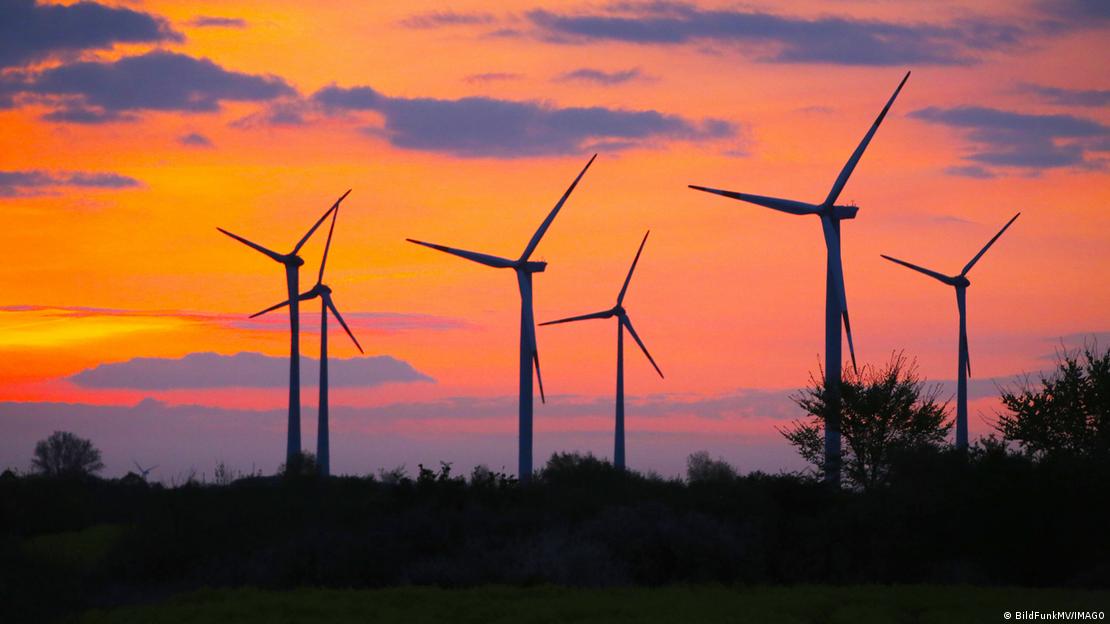
The global uptake in renewable energy sources is higher than ever before
Image: BildFunkMV/IMAGO

Lyden said the US direction of travel would not change the fact that the transition to a low-carbon future is ongoing. "The expansion of renewable energy will continue," he said, adding that countries transitioning to climate-friendly solutions were gaining economic benefits.

Will it slow climate action in the US?


Trump's latest play has met with condemnation from American climate leaders.

Gina McCarthy, the first national climate adviser to the White House under former President Joe Biden and now chair of the climate action coalition America Is All In (AIAI), said pulling out of the UNFCCC was "a shortsighted, embarrassing, and foolish decision."

McCarthy said it would mean forfeiting the "ability to influence trillions of dollars in investments, policies, and decisions that would have advanced our economy and protected us from costly disasters wreaking havoc on our country."

But she added that the AIAI coalition, whose members include local governments, states, businesses, universities and more, remained committed to collaborating at an international level to deliver on the goals of the Paris Agreement.

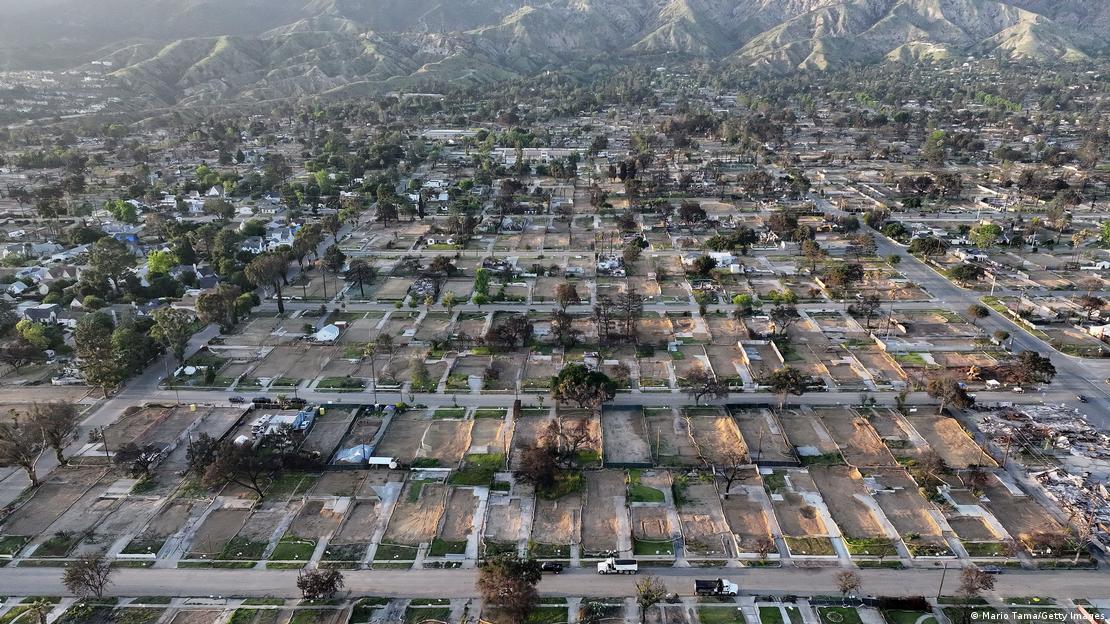
California is prone to drought and fire, but the wildfires that reached LA in January 2025 wiped engine residential areas off the map
Image: Mario Tama/Getty Images

Lyden of Germanwatch believes it would be hard for California or other states to fully fill the gap left by an absent federal government. However, he said there is a lot happening beyond "formal decisions" where "local and regional levels could even have more agency than the federal one."

McCarthy said AIAI will expand its efforts "to work at the local level to build hope and opportunity," and would not allow this administration to deny Americans access to the "huge health, safety, and economic benefits clean energy provides."

Rachel Cleetus also said forward-looking US states and the rest of the world understand the mounting threat of climate change and recognize that "collective global action remains the only viable path to secure a livable future for our children and grandchildren."

Additional reporting from Jeannette Cwienk.

Edited by: Anke Rasper

Tamsin Walker Senior editor with DW's environment team

Oil residues can travel over 5,000 miles on ocean debris, study finds


American Chemical Society
Oil residues can travel over 5,000 miles on ocean debris, study finds 

image: 

In 2020, members of the Friends of Palm Beach found oily plastic and glass (left) and floating rubber chunks (right) on the beach, and researchers traced their origin offshore of Brazil.

view more 

Credit: Adapted from Environmental Science & Technology 2026, DOI: 10.1021/acs.est.5c14571


When oily plastic and glass, as well as rubber, washed onto Florida beaches in 2020, a community group shared the mystery online, attracting scientists’ attention. Working together, they linked the black residue-coated debris to a 2019 oil slick along Brazil’s coastline. Using ocean current models and chemical analysis, the team explains in ACS’ Environmental Science & Technology how some of the oily material managed to travel over 5,200 miles (8,500 kilometers) by clinging to debris.

“The research findings of our study would not have been possible without the dedication of the Friends of Palm Beach,” says Bryan James, lead author of the study and a researcher at Northeastern University. “Their long-term knowledge of the local marine debris enabled them to notice when unique and interesting items like oily plastic comes ashore. If they hadn’t been willing to investigate and share their observations, this discovery would still be lost at sea.”

Although some plastics can drift thousands of miles on ocean currents, crude oil or refined petroleum usually doesn’t. Instead, sunlight and microbes break down oil within a few hundred miles (300 kilometers) of where it entered the water. So, in 2020, the source of oily plastic bottles and glass containers along the shore in Palm Beach, Florida, was curious to the Friends of Palm Beach cleanup group. With no spills reported nearby, the group’s main clues about the oil’s source were the bottle labels in Portuguese, Spanish and English, and large chunks of rubber that had also washed up. The group became community scientists as some members teamed up with international researchers led by James and Christopher Reddy at Woods Hole Oceanographic Institution to find the origin of the oil and plastic pollution.

James, Reddy and their colleagues hypothesized that the oily plastic and rubber littering the beach in Florida could have the same origin as similar pollution found on Brazil’s coast in late 2019. And the source of the oil and rubber might be the SS Rio Grande, a sunken World War II supply ship in the Atlantic Ocean. To test their hypothesis, the researchers conducted computer simulations and oil spill forensic analyses.

  • Origin: Ocean current models traced the plastic bottles backwards in time, predicting origins spanning from the Gulf of Mexico, Central America and Brazil.
  • Travel time: Additional models estimated that the oily debris drifted for 240 days, which is a timeframe consistent with currents carrying material from the 2019 Brazil oil spill to the Florida coast.
  • Chemical analyses: Several of the oily residues collected from the Florida debris showed evidence of refining, and the “chemical fingerprints” of the oily plastic matched those collected from the Brazil oil spill.

Reddy concludes that this work demonstrates an additive contaminant effect where plastic pollution can transport oil pollution far beyond its origin, and it expands on the current understanding of “petroplastic” — a recently recognized form of plastic pollution from humans.

The authors acknowledge collaboration from the Friends of Palm Beach and the Brazilian National Council for Scientific and Technological Development (Conselho Nacional de Desenvolvimento Científico e Tecnológico, CNPq) Research Productivity Fellowship and PQ-1 grant, the Long Term Ecological Research Program-Semi-Arid Coast of Brazil (Programa de Pesquisa Ecológico de Longa Duração Costa Semiárida do Brasil, PELD-CSB), the Alexander Von Humboldt Foundation-CAPES (Coordenação de Aperfeiçoamento de Pessoal de Nível Superior) fellowships, the I-plastics Consortium within the Joint Programming Initiative Healthy and Productive Seas and Oceans Cearense Foundation for Scientific and Technological Development Support (Fundação Cearense de Apoio ao Desenvolvimento Cientifico e Tecnológico, FUNCAP), the Ceará Foundation for Scientific and Technological Development Support (FUNCAP) Chief Scientist Program, the Coordination for the Improvement of Higher Education Personnel within the Ministry of Higher Education in Brazil, the U.S. National Science Foundation, the State of Florida, the Woods Hole Oceanographic Institution’s Independent Research and Development Program, and the Natural Sciences and Engineering Research Council of Canada.

###

The American Chemical Society (ACS) is a nonprofit organization founded in 1876 and chartered by the U.S. Congress. ACS is committed to improving all lives through the transforming power of chemistry. Its mission is to advance scientific knowledge, empower a global community and champion scientific integrity, and its vision is a world built on science. The Society is a global leader in promoting excellence in science education and providing access to chemistry-related information and research through its multiple research solutions, peer-reviewed journals, scientific conferences, e-books and weekly news periodical Chemical & Engineering News. ACS journals are among the most cited, most trusted and most read within the scientific literature; however, ACS itself does not conduct chemical research. As a leader in scientific information solutions, its CAS division partners with global innovators to accelerate breakthroughs by curating, connecting and analyzing the world’s scientific knowledge. ACS’ main offices are in Washington, D.C., and Columbus, Ohio.

Registered journalists can subscribe to the ACS journalist news portal on EurekAlert! to access embargoed and public science press releases. For media inquiries, contact newsroom@acs.org.

Note: ACS does not conduct research but publishes and publicizes peer-reviewed scientific studies.

Follow us: Facebook | LinkedIn | Instagram


With Maduro gone, the US looks to drive Hezbollah out of Venezuela

ANALYSIS


Venezuelan president Nicolas Maduro’s capture also marks an advance towards the US goal of uprooting Lebanese Shiite group Hezbollah from Latin America, where the movement stands accused of criminal activities linked to drug trafficking, arms sales and money laundering. Washington has warned that it will no longer tolerate the presence of Hezbollah or its Iranian backers in Venezuela.


Issued on: 09/01/2026 
FRANCE24
By: Marc DAOU

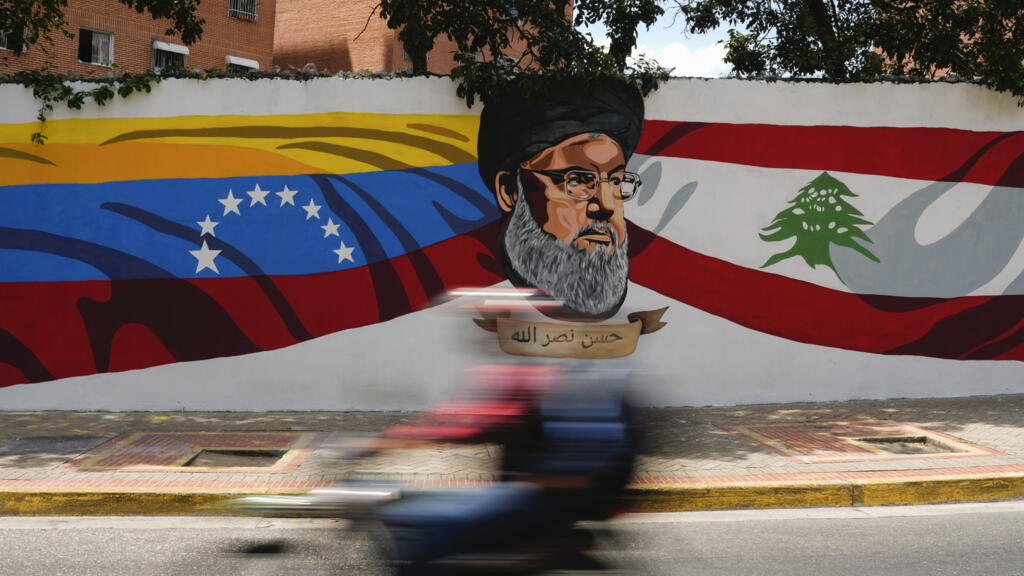
A mural depicting late Hezbollah leader Hassan Nasrallah adorns a wall in Caracas, Venezuela, Wednesday, October 30, 2024. © Ariana Cubillos, AP

The shockwaves unleashed by the deadly US strikes on Caracas and the capture of Venezuelan president Nicolas Maduro were felt all the way to the southern suburbs of Beirut, the stronghold of Lebanese Shiite group Hezbollah

Washington has used Maduro’s abduction to send an unmistakable signal to the militant group’s leadership as well as its Iranian backers, with Secretary of State Marco Rubio directly threatening them the morning after the attack.

“It's very simple,” he told US broadcaster CBS. “In the 21st Century, under the Trump administration, we are not going to have a country like Venezuela in our own hemisphere in the sphere of control and the crossroads for Hezbollah, for Iran and for every other malign influence in the country, in the world. That's just not going to exist.”

Rubio later told NBC News that the new dispensation would mean the outright elimination of any Hezbollah or Iranian presence on Venezuelan soil, where they have been welcomed for the past three decades in the name of a shared antipathy to the United States. The US designated Hezbollah as a foreign terrorist organization in 1997.

Rubio called on the Venezuelan regime – now under the interim leadership of Maduro’s vice president, Delcy Rodriguez – to break with both Iran and Hezbollah. The Islamic Republic, facing mounting protests first triggered by a cost-of-living crisis, has also found itself under pressure, with US President Donald Trump even threatening to intervene if Iranian security forces kill peaceful protesters.

The US has long been monitoring Hezbollah’s activities in the region. The US Drug Enforcement Administration (DEA) has said since 2008 that the movement, then led by Hassan Nasrallah, had been financing itself through drug-trafficking, arms sales and money laundering across Latin America and beyond. According to DEA figures, these activities earned Hezbollah about $1 billion a year.

As for Venezuela in particular, US investigators say that Maduro was even more permissive than his predecessor, Hugo Chavez, and that Venezuela had become a safe haven for the Shiite movement, which reportedly set up command structures in the capital Caracas.

Both Venezuela and Hezbollah have strongly denied these allegations, with the latter insisting that drug trafficking and related activities are “forbidden by Islam”. Despite this, the self-described “Party of God” appeared to have played a key role, alongside Bashar al-Assad’s regime, in trafficking the illicit drug captagon across the Middle East during the Syrian Civil War.

Safe haven

US investigators have long accused Hezbollah of extending its operations into Venezuela in part through the region’s Lebanese and Syrian diaspora.

“In Venezuela, Hezbollah’s support network operates through compartmentalized, familial clan structures that embed into the Maduro regime-controlled illicit economy and the regime’s political apparatus and bureaucracy,” according to a 2020 report by the Washington-based Atlantic Council think tank. “Many of the clans are assimilated within the Venezuelan state and society through the robust Lebanese and Syrian communities that extend to neighboring Colombia.”

Links between Caracas and the Shiite movement “are mutually beneficial, allowing Hezbollah a safe space to conduct its global crime-terror operations and providing the Maduro regime with increased illicit support from the Middle East”, the report says.

Caroline Rose, the director of military and national security priorities at the Washington-based New Lines Institute for Strategy and Policy, said the Latin American drug trade had given Hezbollah access to badly needed financing.

“The relationship that Hezbollah has developed with the Maduro regime and the embedded Cartel de los Soles syndicate (a term used for Venezuelan officials the US accuses of having links to drug trafficking) is extremely nuanced, often simplified by reductionist assertions that Venezuela is a ‘base’ for Hezbollah’s terrorist operations,” she said. “Rather, the picture has been more complex, with the group exploiting Venezuela’s proximity to established drug smuggling routes – just as they have in Western Africa – as a way to diversify alternative revenue streams through the trafficking of drugs, arms, and money laundering schemes.”

Rose said that the sudden death of Chavez in 2013 had only intensified Hezbollah’s activities in Venezuela after his hand-picked successor Maduro took office.

“The relationship has grown since Venezuela’s Chavez era, with reports that Hezbollah has particularly taken advantage of informal ports and smuggling routes off the coast of Venezuela’s Margarita Island,” she said.

This sun-drenched island in the country’s northeast is believed to serve as a key logistics hub for Hezbollah, used for financial activities, espionage and possibly drug trafficking. Margarita Island was described in 2011 during a congressional hearing of the Subcommittee on Counterterrorism and Intelligence as having “eclipsed” the infamous “Triple Frontier” between Paraguay, Brazil and Argentina as the movement’s favored bastion in the Americas. This border region served for decades as one of Hezbollah’s strongholds in Latin America, used by the group as both sanctuary and center of operations.

More recently, former assistant secretary for terrorist financing at the US Treasury Marshall Billingslea told a Senate hearing in October 2025 that “under Hugo Chavez, Venezuela opened its doors to Hezbollah, allowing the group establish a major footprint, including a paramilitary training site, on Margarita Island”.

New world order

Lebanon’s media have made much of the fact that Rubio’s threats come at a tense moment for the Shiite group and its new leader, Naim Qassem, who is under intense US and Israeli pressure to disarm.

Despite having been severely weakened both militarily and politically during its most recent conflict with Israel – losing longtime leader Nasrallah and most of its military leadership, as well as the abrupt collapse of its Assad ally in Syria – Hezbollah has categorically refused to lay down arms.

According to Rose, “2025 has been a transition year for Hezbollah”. And it may now need to consider its remaining options.

“Israel has imposed a severe blow on Hezbollah’s command and control, infrastructure and finances, creating an incentive for the organization to lay low in Lebanon while pursuing alternative revenue-generating schemes, such as drug trafficking, elsewhere,” she said.

“In that same vein, risk-taking behavior from both Israel and the Trump administration – demonstrated through Israeli strikes on Qatar and Iran, as well as the US’s recent capture of Maduro and designation of cartels as terrorist organizations – could also serve as a deterrent against any major Hezbollah entrenchment in Venezuela,” she added.

For Rose, Trump’s attack on Venezuela, and threats of more to come, could well push Hezbollah to redirect its operations to parts of the world less directly menaced by Washington’s military reach.

“The Trump administration’s violation of international law – and brazen impetus to act against actors that could be brandished as ‘narco-terrorists’ – could make South America a more risk-ridden zone for outside players like Hezbollah,” Rose observed.

“I believe that with so much attention and pressure against any organization that engages in illicit smuggling that encompasses an armed component – militarized cartels, terrorist organizations, and mafia networks – Hezbollah will do its best to quiet its activities in South America. Likely, it will turn its attention towards existing enclaves in Western Africa, as well as seek to charter new potential inroads, such as Southeast and Central Asia.”

This article has been adapted from the original in French.


Venezuela frees several high-profile opposition figures and activists


By Sertac Aktan
Published on 

Venezuela released a "significant number" of high-profile opposition figures, activists and journalists in a gesture to seek peace, just days after the capture of Nicolás Maduro.

Venezuela released several imprisoned high-profile opposition figures on Thursday in what Caracas described as a gesture to "seek peace" less than a week after US forces captured Nicolás Maduro in a military operation in Caracas.

In the interview on Fox News on Thursday night, US President Donald Trump praised the government of acting President Delcy Rodríguez, saying: "They've been great ... Everything we've wanted, they've given us."

Jorge Rodríguez, brother of the acting president and head of Venezuela's National Assembly, said they would free a "significant number" of people.

"Consider this a gesture by the (Venezuelan) government, which is broadly intended to seek peace," Jorge Rodríguez announced.

The US government and Venezuela's opposition have long demanded the widespread release of imprisoned politicians, critics and members of civil society, including foreign citizens.

Who was released on Thursday?

As the news of the release broke on Thursday, families of detainees rushed to prisons across the country, seeking information on their loved ones.

Among those released was Biagio Pilieri, an opposition leader who was part of Nobel Peace Prize winner María Corina Machado's 2024 presidential campaign.

Also freed was Enrique Márquez, a former electoral authority and candidate in the 2024 presidential election.

Videos posted by journalists on social media show Márquez and Pilieri embracing people on the streets outside the prison.

Five Spanish citizens, including the prominent Venezuelan-Spanish lawyer and human rights activist Rocío San Miguel, were also released in the afternoon.

Further reports on Thursday night claimed more detainees were freed.

Venezuela's government has typically released political prisoners at times of tension to signal openness to dialogue. However, Caracas insists it does not hold prisoners for political reasons.

As of late Thursday night, it was still unclear how many people had been released or whether more would walk free.


Trump cancels ‘second wave of attacks’


against Venezuela after prisoner release

President Donald Trump on Friday said he ‍cancelled a previously ​expected second wave of attacks ​on Venezuela after the country's transitional authorities cooperated with the US following the capture over the weekend of Nicolas Maduro and released large numbers of political prisoners.


Issued on: 09/01/2026 
By: FRANCE 24


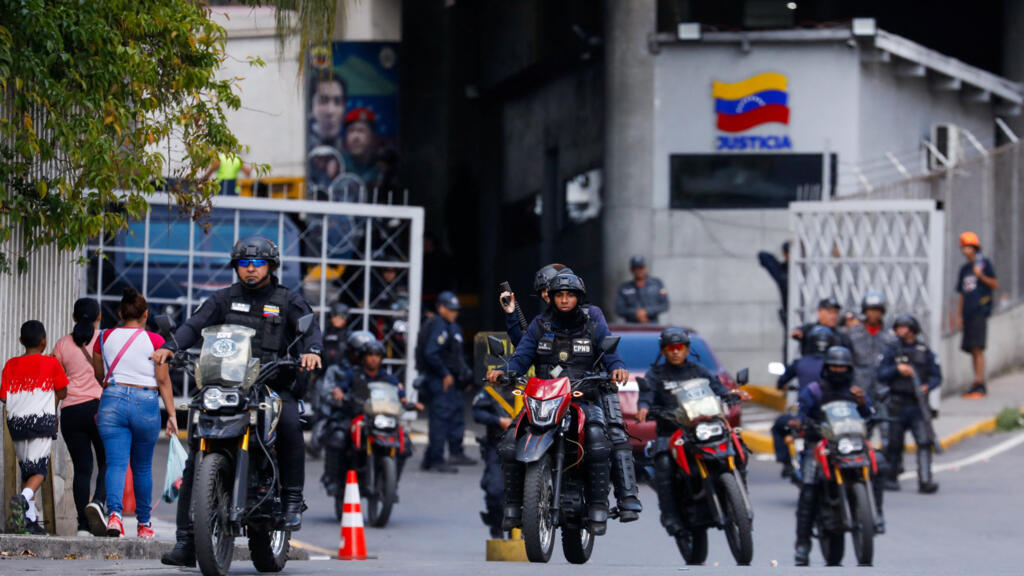
Venezuelan security forces ride motorbikes outside the Helicoide detention centre in Caracas following news of the prisoners' release on January 8, 2026. © Leonardo Fernandez Viloria, Reuters
01:52


US President Donald Trump said Friday he called off a second wave of attacks on Venezuela after securing cooperation with the new leadership, which began releasing prisoners nearly a week after Washington forcibly removed the leftist president.

The United States was quickly forging ahead on Venezuela with Trump meeting oil executives, whom he says he wants to enrich, and US diplomats visiting Caracas to look at reopening the embassy shuttered for years.

Trump suggested he may use force again to get his way in Venezuela, which has the world's largest proven oil reserves.

"Venezuela is releasing large numbers of political prisoners as a sign of 'Seeking Peace,'" Trump wrote on his Truth Social platform.

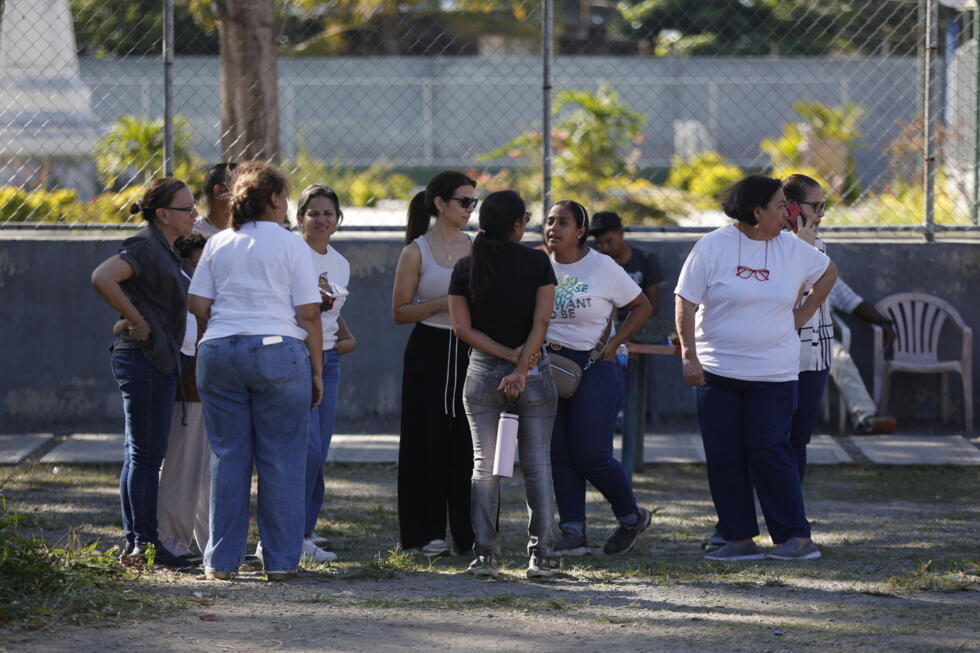
Relatives of prisoners wait in front of El Rodeo jail in Caracas on January 8, 2026. © Pedro Mattey, AFP

"Because of this cooperation, I have cancelled the previously expected second Wave of Attacks," he said.

The United States on Friday also announced that it had seized another tanker near Venezuela as it enforces an oil blockade as Washington ensures it holds undisputed power over the country's key export.

Trump said that oil companies promised to invest $100 billion in Venezuela, whose oil infrastructure is creaky after years of mismanagement and sanctions.
Prisoners' release

Venezuela began releasing prisoners on Thursday in the first such gesture since US forces removed and detained president Nicolas Maduro in a deadly January 3 raid, with his deputy Delcy Rodriguez taking over.

Former Venezuelan opposition candidate Enrique Marquez -- who opposed Maduro in the contested 2024 presidential election -- was among those released Thursday.

Interim leader Rodriguez's brother, parliament speaker Jorge Rodriguez, said "a large number of Venezuelan and foreign nationals" were being immediately freed for the sake of "peaceful coexistence."

Venezuelan rights NGO Foro Penal earlier estimated that more than 800 political prisoners were in the country's jails.

The White House quickly took credit for winning the prisoners' freedom.

Trump had earlier played down democracy as a motivating factor for the attack, despite years of the United States saying that Maduro was illegitimate elections were filled with fraud.

But Trump said he would meet next week with Venezuelan opposition leader Maria Corina Machado, whom he earlier brushed aside as a "very nice woman" who lacked the "respect" to lead Venezuela.

"I understand she's coming in next week sometime, and I look forward to saying hello to her," Trump told Fox News host Sean Hannity in an interview.

Trump had earlier voiced jealousy that Machado won the latest Nobel Peace Prize and he has indicated she might give him her award when they meet.
US diplomats visit

Senior US diplomats visited Caracas on Friday to look at reopening the embassy which was shuttered in March 2019, shortly after the United States and many of its allies declared Maduro to be illegitimate.

John McNamara, the top US diplomat in neighboring Colombia, and other personnel "traveled to Caracas to conduct an initial assessment for a potential phased resumption of operations," a US official said on customary condition of anonymity.

Maduro was seized in a special forces raid accompanied by airstrikes, operations that left 100 people dead, according to Caracas.

US forces took Maduro and his wife Cilia Flores to New York to face trial on drugs charges.

Trump said the United States would "run" the Caribbean country for a transitional period and tap into its oil reserves for years.

Delcy Rodriguez insisted Thursday her country was "not subordinate or subjugated."

"Nobody surrendered. There was fighting for the homeland" when the US forces attacked, she said during a ceremony for the Venezuelans killed.

Trump announced a plan earlier this week for the United States to sell between 30 million and 50 million barrels of Venezuelan crude, with Caracas then using the money to buy US-made products.

On the streets of Caracas, opinions were mixed.

"I feel we'll have more opportunities if the oil is in the hands of the United States than in the hands of the government," said Jose Antonio Blanco, 26.

(FRANCE 24 with AFP)

'Trump does not speak of freedom but fundamentally of oil,' Venezuelan opponent Arria says


Issued on: 08/01/2026 
FRANCE24
Play (12:47 min)
From the show


In an interview with FRANCE 24, veteran Venezuelan opposition figure Diego Arria criticised US President Donald Trump's approach following the capture of President Nicolas Maduro by US special forces on January 3. "I was very concerned that the president does not speak of the recovery of freedom (...) of liberating the political prisoners, but speaks fundamentally of oil," he said.

Speaking to FRANCE 24 from Miami in Florida, Arria also expressed concern about the Trump administration's decision to work with Maduro's vice president, Delcy Rodriguez, who is now the acting president in the Chavist system.

"When I see Miss Rodriguez surrounded by the whole team of Mr Maduro, I begin to be very concerned," he stated.

Asked about opposition leader and Nobel Peace Prize laureate Maria Corina Machado, whom Trump has dismissed as "a very nice woman" but who "doesn't have the support or the respect within the country", Arria countered: "She has the support of more than 70 percent of Venezuelans."


What can Trump offer Big Oil to bring US capital back to Venezuela?


ANALYSIS


US President Donald Trump has openly set his sights on Venezuela’s vast oil reserves, claiming Friday that US oil giants were going to invest upward of $100 billion in the country’s gutted industry. But analysts warn that relaunching Venezuela’s oil production could cost dearly in both time and money – even if the enduring Chavista administration continues to bend under US pressure.


Issued on: 09/01/2026 - RFI
By: Paul MILLAR


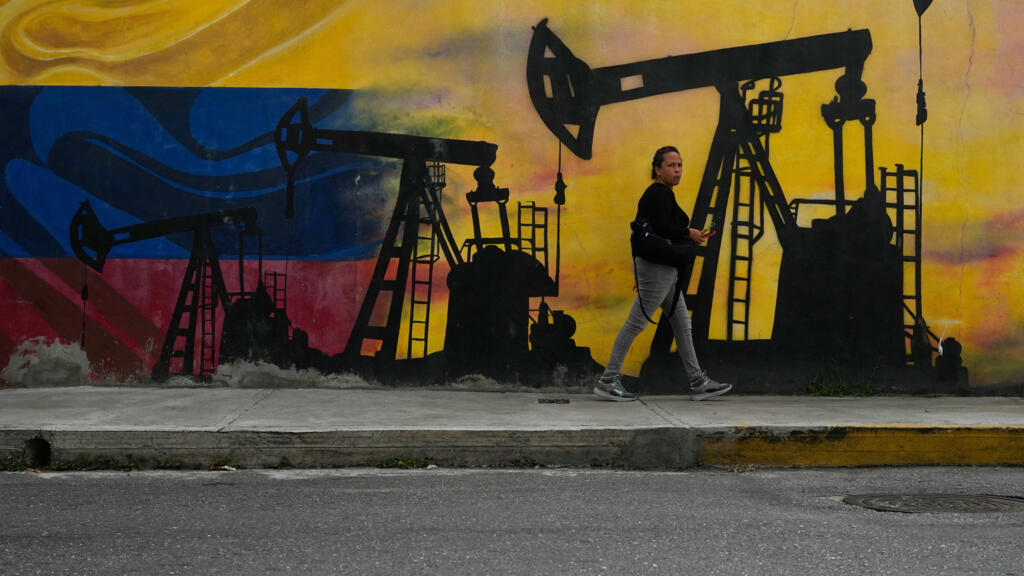
A local walks past a mural featuring oil pumps and wells in Caracas, Venezuela, January 6, 2026. © Matias Delacroix, AP

The dust is settling in Caracas, and the oil must flow. All along the US Gulf Coast, a tangle of towering refineries stands ready to receive boatloads of Venezuelan heavy crude oil.

This is what they were built for: almost three-quarters of US refining capacity, built before the Fracking Revolution of the 2010s ripped open the country’s shale bedrock to unleash untapped domestic oil and gas reserves, is set up to process the kind of thick, sulphurous crude buried under Venezuelan soil.

US President Donald Trump has not been coy about his ambitions for these oil reserves, often described as the largest in the world. On Tuesday, the president announced that the Venezuelan government – led by former oil minister Delcy Rodriguez after the armed seizure of President Nicolas Maduro and his wife by American troops – would deliver up to 50 million barrels of oil to the US, who would sell it.

Trump has claimed that he will personally manage the profits, and that any proceeds that go to Venezuela will have to be spent on US-made products.

Speaking at a Goldman Sachs energy conference in Miami Wednesday, former fracking executive and current US Energy Secretary Chris Wright said that US control of the sale of Venezuela’s oil would continue “indefinitely”.

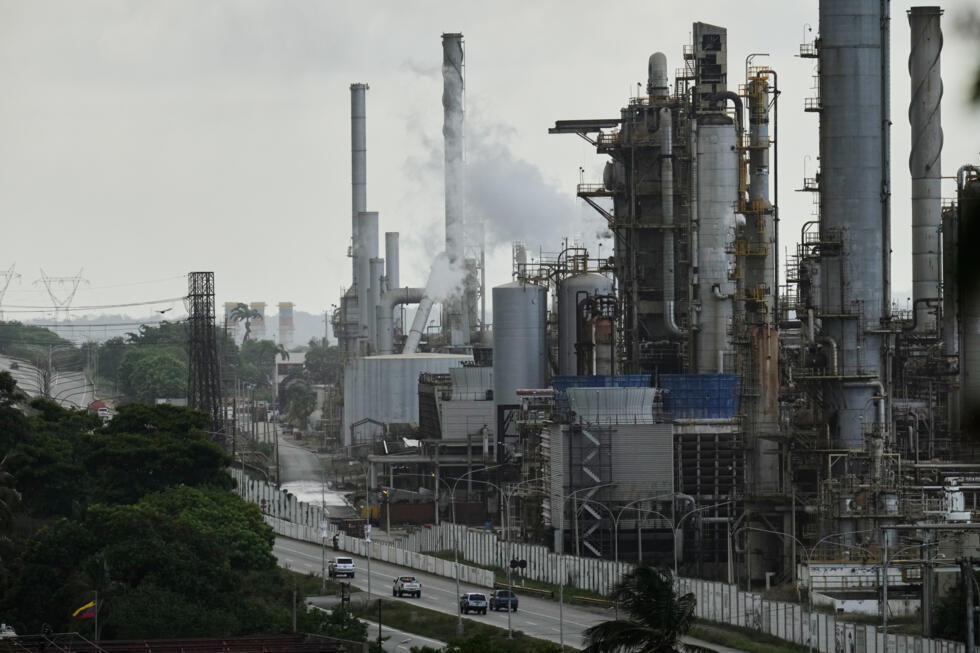
Vehicles drive past the El Palito oil refinery in Puerto Cabello, Venezuela, December 21, 2025. © Matias Delacroix, AP


And why not? The US naval blockade on Venezuela remains firmly in place, with US troops boarding and seizing at least five oil tankers allegedly trying to transport oil from the country. US sanctions that have for years throttled the country’s already struggling oil industry – responsible for 90 percent of Venezuela’s exports – have also not budged.

If Trump is to be believed, using force to reroute millions of barrels of crude oil sitting stagnant in Venezuela’s storage facilities is only the first step.

On Friday, the former real estate mogul is meeting with senior US oil executives in the White House to discuss what it will take to open the country’s broken-down oil industry to American capital.

In a Truth Social post ahead of the meeting, Trump claimed that “at least 100 billion dollars will be invested by Big Oil” in the nation’s struggling sector.

But analysts warn that breathing new life back into Venezuela’s oil industry could cost dearly in both time and money – even if the Chavista administration still in place continues to bend under US pressure.

Decline and fall


Antulio Rosales, assistant professor at York University’s Department of Social Science, Business and Society programme, said that Venezuela’s oil industry has been hollowed out by years of sanctions and under-investment.

“The Venezuelan oil industry in general has been decimated in terms of investment, but also in terms of technical capacity,” he said. “I think it’s very important to highlight that many workers with the technical knowledge of oil extraction and transportation and so on have left the industry – they’ve migrated to other countries.”

Cut off from international markets and finance by US sanctions during the first Trump administration, Venezuelan oil production has slumped to roughly one million barrels a day, down from roughly three times that in the late 1990s.

Even before the sanctions, former president Hugo Chavez’s decision in the 2000s to effectively force foreign oil companies to renegotiate their contracts with the government put many to flight – and turned those who stayed into junior partners with the state-owned oil and gas company PDSVA. Some of the companies whose heads have been summoned to the White House Friday are still owed billions of dollars in compensation from Caracas that was awarded under international arbitration.

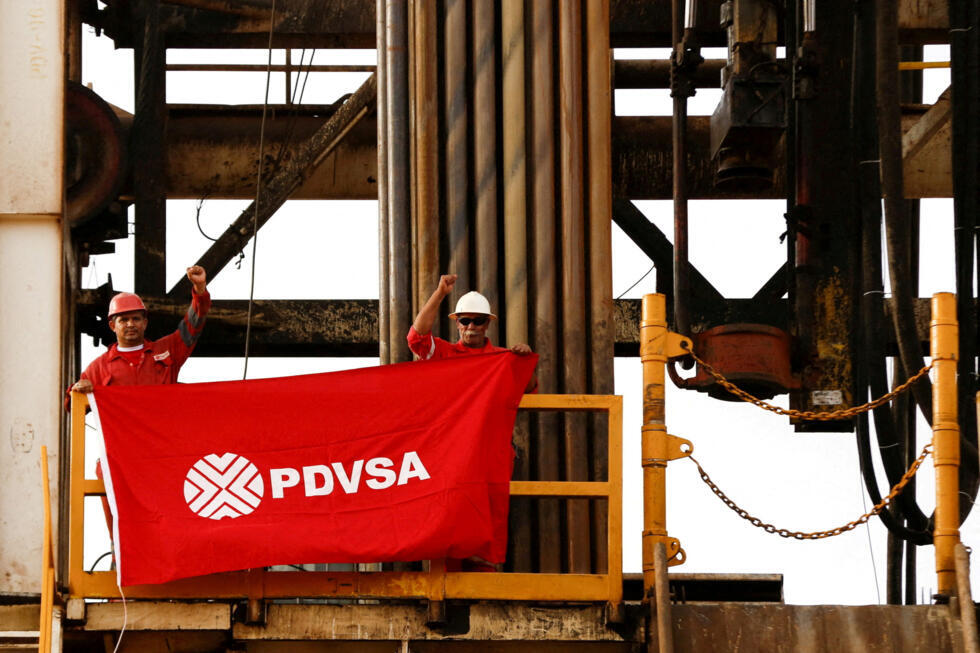
Oilfield workers hold a flag with the corporate logo of Venezuela's state oil company PDVSA on a drilling rig at an oil well operated by them in the Orinoco belt, near Cabrutica, Anzoategui, April 16, 2015. © Carlos Garcia Rawlins, Reuters


Accusations of chronic mismanagement and heavy-handed political interference have dogged the company, and Chavez’s programme of ploughing oil profits into social programmes to lift the population out of poverty came crashing down when oil prices collapsed in 2014.

The country’s oil infrastructure is now in ruins. One estimate by Oslo-based energy research agency Rystad Energy suggested Venezuela would need at least $183 billion worth of investments to restore its oil production to 3 million barrels per day by 2040.

“You cannot just set the incentives right and expect things to work immediately,” Rosales said. “And for that you need not only the lifting of sanctions, but the improvement overall of conditions in Venezuela, and those have to do with infrastructure, with public services and so on.”

Luisa Palacios previously served as chairwoman at Citgo Petroleum Corporation, a Houston-based refiner majority-owned by PDVSA. Now an adjunct senior research scholar at Columbia University’s Centre on Global Energy Policy, Palacios said that major multinationals were unlikely to make long-term investments in the country’s oil industry while the way forward remained murky.

Venezuela's crude concessions: US vows to exert control over world's largest oil reserves
PEOPLE & PROFIT © FRANCE 24
12:32

"You can still attract investments, because in the oil business there are all kinds of companies with all kinds of risk profiles, but my sense is you cannot attract the kind of investments needed for the kind of economic recovery that the country needs," she said.

She said that oil multinationals would likely be seeking assurances from both the US and Venezuelan governments that their investments would be protected.

“The optimism is because there’s a lot of potential – it is the above-the-ground risk that is really very difficult,” she said.

“My sense is that you would need government guarantees so that if something goes wrong, you can go and claim. And the other part of the deal is you need to make sure that there are assurances on the ground. You actually need minimum guarantees of rule of law and improvements in governance.”

Unnamed sources from US oil giants told the New York Times Friday that the companies were discussing the possibility of receiving financial guarantees from the federal government before they committed to Venezuela. It’s unclear what form these guarantees would take, or who would ultimately foot the bill should those investments go under.

The law of the land

Rosales said that the Trump administration’s blunt announcements that the Venezuelan government was firmly under its thumb could be intended to convince major oil companies that the country was ready to be reshaped to their wishes.

“That is perhaps the kind of image that Donald Trump is trying to send at the moment – that he controls the government of Venezuela, that the government of Venezuela will do whatever they want – in a way, to say that they will have carte blanche to extract as much benefits as possible,” he said.

“Of course, it’s quite hard to see the feasibility of it, because the Venezuelan legal framework requires majority stakes with the Venezuelan state ... [Oil companies] would perhaps like to see changes in the legal framework, and I don’t know to what extent the regime will be willing to do that.”

Under Venezuelan law, the state-owned PDSVA takes a majority stake in all joint ventures around oil and gas production. Palacios said that it was hard to imagine foreign multinationals lining up to work alongside the company.

“PDVSA is a company that has defaulted on its debts, that has lost its technical capacity – it’s a politicised company with a heavy military presence,” she said. “It has become a huge liability.”

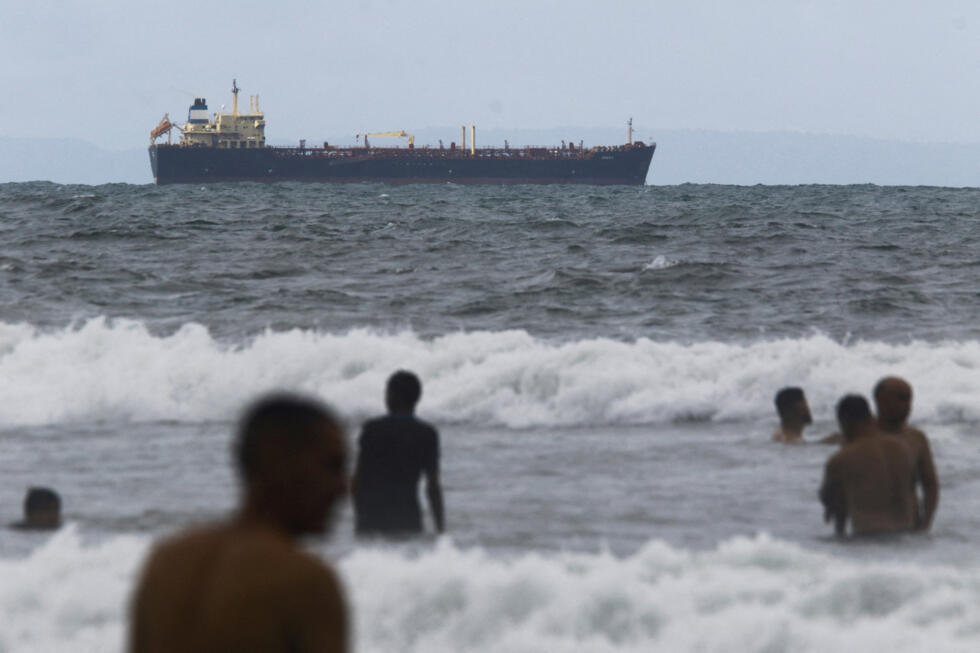
People enjoy the ocean near the Comoros-flagged oil tanker Evana, used to move oil between domestic ports in Venezuela, near El Palito terminal, in Puerto Cabello, Venezuela on December 29, 2025. © Juan Carlos Hernandez, Reuters

Driven into a corner by US sanctions, the Venezuelan government has already shown some willingness to back down from its Bolivarian ideals. Under an Anti-Blockade Law passed in 2020, the executive branch now has broad powers to bypass the country’s National Assembly and secretly sign contracts with foreign corporations on more favourable terms, opening the country up to private investment and paving the way for the privatisation of selected state-owned industries.

Whatever Trump is prepared to promise US oil giants, his administration’s stranglehold on the Venezuelan oil and gas industry could allow for a modest increase in crude oil production in the short term, keeping gasoline prices low as the country’s crucial mid-term elections draw near.

US oil company Chevron continues to pump oil in Venezuela, having been granted a sanctions exemption by the Biden administration after the Ukraine war threw global energy markets into turmoil. Analysts say its now operating well under capacity.

“I do think that you have the ability to bring back some of the oil production that have been lost – I think going back to 1.5 million barrels a day, which is what you had before sanctions, is reasonable,” Palacios said. “They have some capacity to increase oil production without major, big, big changes. Some level of investment is needed, but it’s about brownfield investments – companies on the ground who are going to increase their production.”

READ MOREHow Maduro's capture in Venezuela weakens China in Latin America

Beyond Venezuela’s borders, though, analysts have struggled to make sense of Trump’s single-minded focus on Venezuela’s oilfields. Across the world, demand for oil is still sagging, outstripped by a global glut that threatens to push oil prices below what oil companies need to make large-scale new investments profitable.
Securing their future

And while the US president has made no secret of the fact that falling gas prices would be a welcome sight ahead of the upcoming mid-term elections, heavyweights in the country’s costly oil shale industry – an industry that has turned the US into the world’s leading producer of oil and gas – are worried that a further drop in crude oil prices could be another blow to fracking companies already forced to abandon their less-profitable rigs after failing to break even.

Rosales said that Trump’s desire to give US corporations unrivalled access to Venezuela’s vast reserves could be less about short-term politicking and more about securing resources that companies can pump for decades after the domestic fracking boom has wound down.

“The Trump administration’s view is that Venezuela having the largest oil reserves in the world could mean a way to secure long-term future reserves for American companies,” he said. “Regardless of whatever happens with the global oil market, having long-term certainty of reserves is something that may interest these companies for sure. So that kind of gives them some form of insurance for future oil extraction, regardless of what happens to the demand.”

DRINKING BEER IN A PUB, SMOKING FAGS & THROWING DARTS 

Littler signs reported record £20 million darts deal

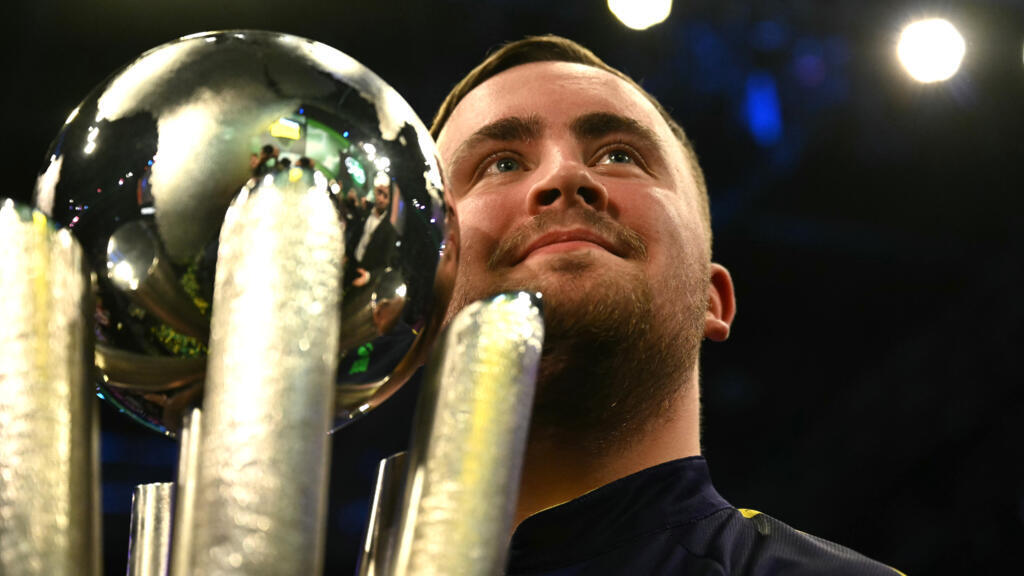
London (AFP) – World champion Luke Littler has agreed the most lucrative sponsorship deal in darts' history, worth a reported £20 million ($27 million).


Issued on: 09/01/2026 - RFI

Luke Littler is a two-time world darts champion © Ben STANSALL / AFP

The 18-year-old Englishman, who earned the sport's first £1 million prize pot after winning a second successive World Championship title at London's Alexandra Palace last weekend, has renewed his contract with manufacturer Target Darts.

According to Britain's Press Association, the new deal -- including potential earnings and bonuses, as well as a percentage of sales of products and equipment -- is worth £20 million over 10 years.

Littler became a break-out star with his debut run to the 2024 World Championship final as a 16-year-old, when he lost to compatriot Luke Humphries, with the teenager's branded darts and magnetic board proving a sales success throughout Britain.

"Target has believed in me from day one and I'm delighted that there are many more years to come," Littler, who is also managed by the company, said in a statement.

"From my playing career to my product range, we've built everything together and I'm really excited to commit to our partnership long-term and see where we can take this next."

Target chairman Garry Plummer added: "I met Luke at the BDO Youth World Championship Qualifier when he was 12, and that day his dad asked if we would sponsor him.

"We'd never taken on someone so young, but I saw something special in him and saying yes was easy.

"Watching him grow since, as both a player and a person, has been a privilege. His achievements on and off the oche have been remarkable, and this new agreement celebrates everything we've built together and the exciting future ahead."

World number one Littler is preparing for the World Series double-header in Bahrain and Saudi Arabia.

© 2026 AFP


Over half of African states subjected to travel bans or visa bonds by US

Of Africa’s 54 countries, 36 are now subject to either travel bans or visa bonds by the United States. African states are the prime target of President Donald Trump's latest round of travel restrictions, which he says are aimed at protecting national security and preventing visitors overstaying.

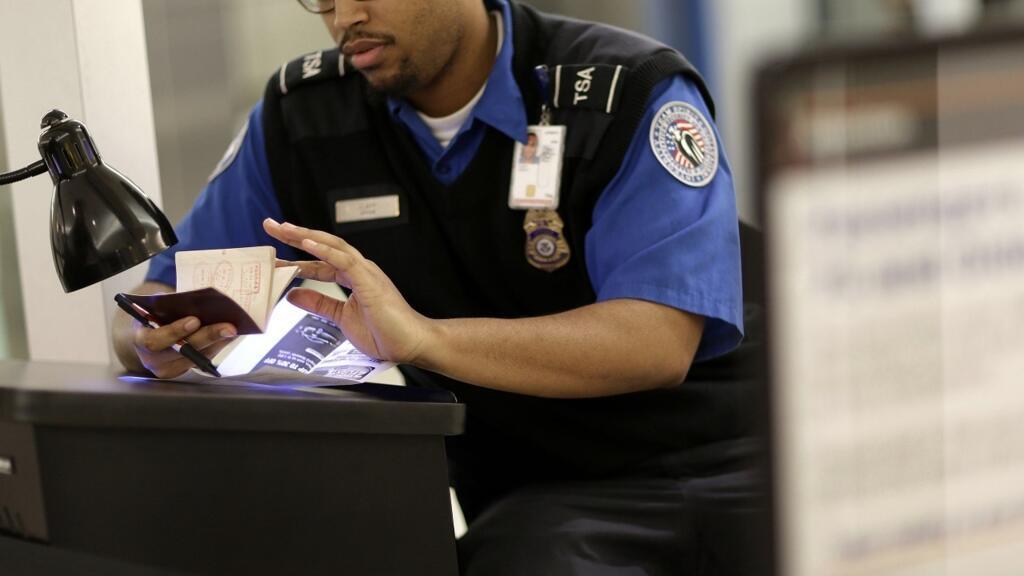
A Transportation Security Administration officer checks a traveller’s passport at Baltimore-Washington International Airport. © AP/Patrick Semansky

By: Zeenat Hansrod
Issued on: 09/01/2026 - RFI

The US State Department this week added several more African countries – including Algeria, Côte d'Ivoire, Nigeria, Senegal, Uganda and Zimbabwe – to its list of states whose passport holders will be required to post bonds when applying for a visa.

Nationals from these countries will now have to pay either $5,000, $10,000 or $15,000 when applying for a US visa, with the amount determined at the time of an interview.

Of 38 countries required to post visa bonds, 24 are in Africa.

Another 12 African countries are subject to outright travel bans, after Trump extended entry restrictions in December.

Since then, nationals of Burkina Faso, Mali, Niger, Sierra Leone and South Sudan have been barred from the US. That is in addition to people from Chad, Republic of the Congo, Equatorial Guinea, Eritrea, Libya, Somalia and Sudan, who have been banned since June.

African Union condemns Trump travel ban amid strained Africa-US relations


Prohibitively expensive

The latest visa restrictions will come into effect on 21 January.

US authorities say the bonds are meant to reduce the number of foreigners who overstay the authorised period of lawful admission in the country.

They will be refunded if travellers do not breach its terms, or if they are denied entry to the US.

For many in Africa, the cost of a visa bond will make travel prohibitively expensive.

In Zimbabwe, where most of the population lives on less than $4 a day, the new restrictions are not welcome. "Zimbabweans see this as part of a US domestic and foreign policy invigoration," journalist Dumisani Muleya told RFI.

"The US is pursuing a dual strategy of internal fortification through restrictive border and immigration policies, while also maintaining an assertive, outward-projecting diplomatic and military posture," said Muleya, the editor-in-chief of news website NewsHawks.

How Trump’s 'deportation campaign' is reshaping ties with Africa


Tightened conditions

Waivers to the US travel bans can be granted on a case-by-case basis, according to the State Department, for example to individuals who “would serve the US national interest”.

Waivers also apply to participants in major sporting events. The US is co-hosting the Fifa World Cup in June and July 2026.

The restrictions on African travellers come as the US tightens entry conditions across the board.

Travellers of any nationality applying for a US visa are now required to list all social media platforms and usernames they have used in the past five years. They are also obliged to provide a list of all the countries they have visited in the past.

In November last year, the State Department instructed its overseas consular services to apply health criteria while screening visa applicants.

Applicants with health conditions, including mental illness, obesity, diabetes or cancer may face rejection because they could be considered a “public charge”. The policy targets anyone who could potentially drain US resources due to their health issues or age.