Wednesday, January 28, 2026

WWIII

UPDATE: US President Trump warns Iran with armada deployment, Iran says "open to dialogue"

UPDATE: US President Trump warns Iran with armada deployment, Iran says
US President Trump warns Iran with armada deployment, threatens military action / bne IntelliNews
By bnm Gulf bureau January 28, 2026

US President Donald Trump warned Iran on January 28 that a "massive armada" is heading to the country and urged Tehran to negotiate a nuclear deal, threatening military action if diplomacy fails.

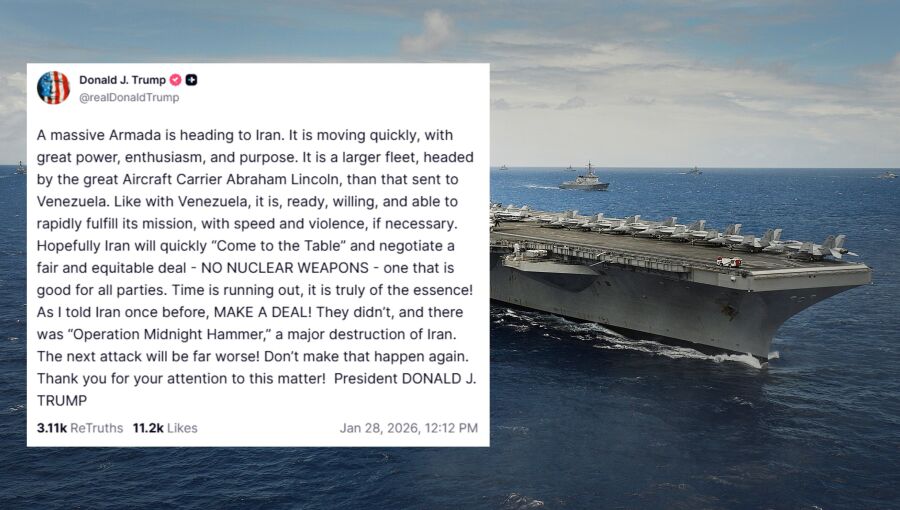
"A massive Armada is heading to Iran. It is moving quickly, with great power, enthusiasm, and purpose," Trump said in a post on Truth Social on January 28.

The fleet, headed by the aircraft carrier USS Abraham Lincoln, is larger than the one Trump sent to Venezuela, according to the president. "Like with Venezuela, it is, ready, willing, and able to rapidly fulfill its mission, with speed and violence, if necessary," Trump said.

Trump called on Iran to "Come to the Table" and negotiate a fair and equitable deal on nuclear weapons that is "good for all parties", warning that "time is running out, it is truly of the essence".

The president referenced a previous military operation against Iran. "As I told Iran once before, MAKE A DEAL! They didn't, and there was 'Operation Midnight Hammer,' a major destruction of Iran. The next attack will be far worse! Don't make that happen again," Trump said.

The warning follows several weeks of deadly mass protests in Iran. The US-based Human Rights Activists News Agency said on January 27 that more than 6,000 people were killed in demonstrations across the country, including the capital Tehran.

The group verifies each death with a network of activists on the ground in Iran and its data goes through "multiple internal checks". Iran's government put the official death toll at 3,117 last week. IntelliNews could not independently verify either figure.

Following Trump's message, Iran said it is ready for dialogue with the US based on mutual respect and interests, but will defend itself and respond "like never before" if pushed, Iran's permanent mission to the United Nations said on January 28.

"Last time the U.S. blundered into wars in Afghanistan and Iraq, it squandered over $7trn and lost more than 7,000 American lives. Iran stands ready for dialogue based on mutual respect and interests—BUT IF PUSHED, IT WILL DEFEND ITSELF AND RESPOND LIKE NEVER BEFORE!" the mission said in a post on X on January 28.

Iranian Foreign Minister Abbas Araghchi held a phone conversation with Turkish Foreign Minister Hakan Fidan on January 28 to discuss efforts to reduce tensions following recent developments in the region, Turkish state broadcaster state broadcaster TRT reported, citing a source at Turkey's Foreign Ministry.

Fidan previously said during the current tensions created by the United States and Israel in the region that attacking Iran would not be the right action.

"Tehran is ready for renewed negotiations and I advise Washington to resolve its issues with Iran step by step," Fidan said in an interview with Al Jazeera.

The US has been building up its military in the region following the deadly clashes between government forces and the people.

Trump pulled the US out of the nuclear deal with Iran during his first term in office in 2018, three years after Iran agreed to halt its pursuit of nuclear weapons and allow international checks on its facilities in exchange for sanctions relief.

Last updated 14:52 GMT


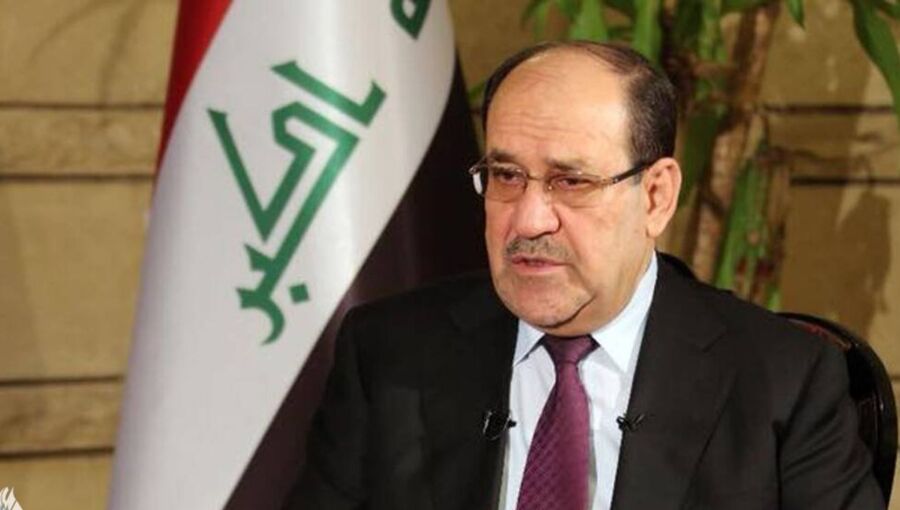
Iraq’s al-Maliki rejects US ‘interference’ after Trump warning

Iraq’s al-Maliki rejects US ‘interference’ after Trump warning
/ bne IntelliNews
By bna Cairo bureau January 28, 2026

Nouri al-Maliki, head of the State of Law Coalition and the Coordination Framework’s nominee for Iraq’s premiership, rejected what he described as US interference in Iraq’s internal affairs, after President Donald Trump warned that Washington would halt support for Iraq if Maliki returned to power, Al Sharaq Al Awsat reported on January 28.

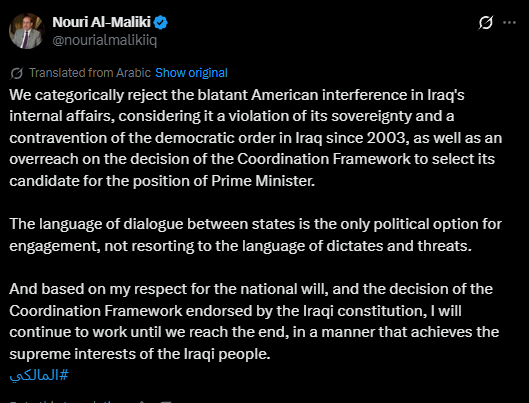
Writing on X, Maliki said, “We categorically reject the blatant American interference in Iraq’s internal affairs and consider it a violation of its sovereignty and contrary to the democratic system in Iraq after 2003, and an infringement on the decision of the Coordination Framework to choose its candidate for the post of prime minister.”

“The language of dialogue between states is the only political option in dealing with one another, not resorting to the language of dictates and threats. Out of respect for the national will and the decision of the Coordination Framework guaranteed by the Iraqi constitution, I will continue working until we reach the end, in a way that serves the supreme interests of the Iraqi people,” Al-Maliki added.

Trump issued the warning on January 27, saying the United States would stop backing Iraq if Maliki who is supported by Shiite parties close to Iran were to regain office.

Posting on his Truth Social platform, Trump said, “Because of his crazy policies and ideologies, if he is elected, the United States of America will not provide any assistance to Iraq in the future.”

Trump criticised close-to-Iran al-Maliki's previous tenure from 2006 to 2014, claiming Iraq "descended into poverty and total chaos" under his leadership, which was one of the bloodiest periods in Iraq's recent history and comes at a critical juncture as Tehran faces off again against Washington and Tel Aviv.

Al-Maliki, who leads the State of Law Coalition, served as prime minister from 2006 to 2014 and was the first head of government elected after the 2003 US-led invasion. He remains one of Iraq’s most controversial political figures due to the policies pursued during his time in office.


India–EU trade deal set to unlock textile export surge, create 7mn jobs

India–EU trade deal set to unlock textile export surge, create 7mn jobs
/ Kushali Bhagat - Unsplash
By bno - Mumbai Office January 28, 2026

India’s free trade agreement with the European Union is expected to generate close to 7mn jobs in the textile sector alone, while sharply expanding the country’s footprint in one of the world’s largest apparel and fabric markets, PTI reported.

Following the signing of the agreement on January 27, the Indian commerce minister Piyush Goyal said the deal would give Indian textile and garment exporters preferential access to the EU’s textile market, estimated at around $250bn. At present, India accounts for only about $7bn of textile and clothing exports to the bloc, despite the sector being one of the country’s largest employers. With duty barriers removed under the FTA, exports to the EU are projected to rise to as much as $40bn over the coming years.

The EU market is currently dominated by Bangladesh, which exports roughly $30bn worth of textiles and garments annually, benefiting from zero-duty access as a least developed country. Indian exporters, by contrast, have faced tariffs of up to 12%, limiting their competitiveness. The removal of these duties is expected to significantly narrow the gap and improve India’s standing against other major suppliers such as Turkey, Vietnam and China.

Textiles remain India’s second-largest source of employment after agriculture, supporting around 40mn jobs across spinning, weaving, processing and garment manufacturing. The anticipated export expansion under the FTA is expected to drive fresh hiring across the value chain, particularly in labour-intensive segments such as ready-made garments and home textiles.

Industry bodies have welcomed the agreement as a turning point for the sector. The Southern India Mills’ Association described the India–EU FTA as a landmark achievement that could fundamentally alter the growth trajectory of Indian textiles and clothing, ANI reported.

The agreement is also expected to address long-standing structural challenges in the sector. Industry representatives have pointed to parallel government measures aimed at improving competitiveness, including changes in duties and taxes on man-made fibres and filaments, streamlined export incentive schemes, interest subvention and faster conclusion of trade agreements with key markets. Together, these steps are expected to support capacity utilisation and stabilise an industry that has faced prolonged pressure in recent years, ANI added.

Southern India, and Tamil Nadu in particular, is seen as a major beneficiary. The state accounts for nearly 29% of India’s textile exports to the EU, valued at around $2.3bn. Key clusters such as Tiruppur and Karur, which supply knitted garments and home textiles to global brands, are expected to see strong growth, supported by both the India–EU and India–UK trade agreements.

Beyond exports, the FTA is also expected to support technology upgrades and value addition. Indian manufacturers import between $2.6bn and $3bn worth of textile machinery annually from EU countries, and easier trade terms could improve access to advanced weaving, processing and technical textile equipment, strengthening long-term competitiveness.

Industry bodies have urged swift implementation of the agreement, stressing that early operationalisation will be critical to reviving investment, restoring capacity utilisation and generating employment across the textile value chain. The FTA is also seen as central to India’s broader ambition of expanding the textile industry to $250bn in size and lifting exports to $100bn by 2030, while creating millions of new jobs, particularly in rural areas and among women.


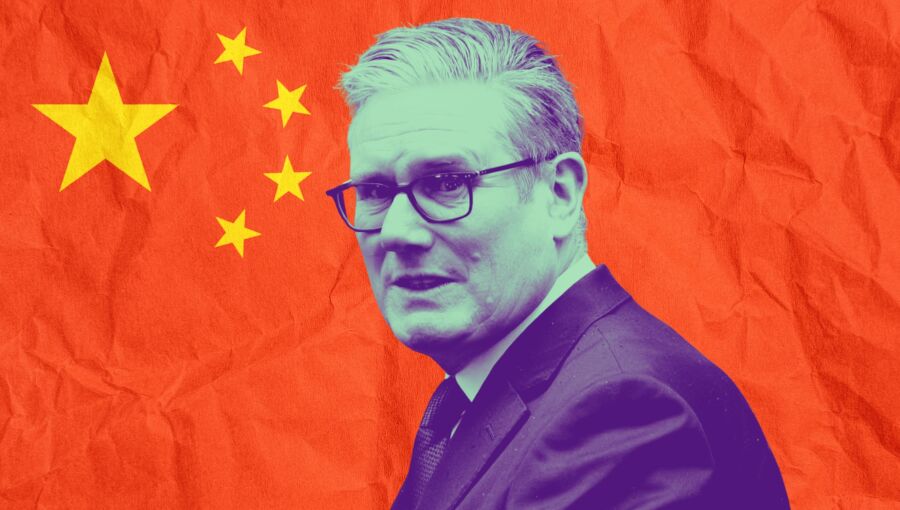
British PM Starmer arrives in China on historic visit

British PM Starmer arrives in China on historic visit
British PM Starmer arrives in China on historic visit / bne IntelliNews
By bnm Gulf bureau & bno Taipei office January 28, 2026

British Prime Minister Keir Starmer arrived in China on January 28 for the first visit by a UK prime minister in eight years, accompanied by a delegation of almost 60 representatives from British businesses and cultural institutions.

During the visit, which runs until January 31, President Xi Jinping will meet Starmer, Premier Li Qiang will hold talks with him and top legislator Zhao Leji will also meet the prime minister. The two sides will exchange views on bilateral relations and issues of common interest.

The British prime minister’s visit comes only days after Xi Jinping's purge of senior military leaders in the country, according to foreign sources previously reported by IntelliNews.

Speaking to reporters on the flight to Beijing, Starmer said the presence of numerous chief executives on the flight demonstrated that economic opportunities exist between Britain and China.

"The evidence that there are opportunities is the fact that we've got so many CEOs with us on this flight, that we've got 60 coming out to explore those opportunities," he said, according to the UK's Press Association.

Foreign Ministry spokesperson Guo Jiakun said that maintaining communication and strengthening cooperation between China and Britain, both permanent members of the UN Security Council, serve the common interests of both peoples and contribute to global peace, stability and development.

China wishes to use this visit as an opportunity to enhance political mutual trust with Britain, deepen practical cooperation and jointly open a new chapter of healthy and stable development in bilateral relations, Xinhua reported on January 27.

The visit comes as the British prime minister faces domestic pressure to raise human rights issues with Chinese officials, including the imprisonment of British national and Hong Kong pro-democracy activist Jimmy Lai and the treatment of the Uyghur Muslim Turkic minority in the country's far west, close to the borders of Central Asia.

However, the prime minister declined to specify which issues he would raise ahead of his meetings with the Chinese leadership.

"In the past, on all the trips I've done, I've always raised issues that need to be raised, but I don't want to get ahead of myself on the specifics until I've had the opportunity," Starmer said, PA Media reported.

The head of MI5, Ken McCallum, has warned that "Chinese state actors" present a national security threat to the UK "every day", with intelligence chiefs cautioning that Beijing seeks to carry out online espionage, interfere in UK public life and harass dissidents in the UK.

Starmer said he would "never compromise national security" whilst pursuing economic opportunities with China. The prime minister said he wanted "a comprehensive and consistent approach to China", rather than veering "from golden age to ice age", as under the previous Conservative government.

The visit also comes as the British government launches a new scheme to upskill its national workforce, according to a previous report by IntelliNews

Every adult in the UK can now access free AI training courses through the government's AI Skills Hub, with participants receiving a virtual AI foundations badge upon completion. The courses, which take as little as 20 minutes, teach workers to use AI tools for tasks including drafting text, creating content and completing administrative work.

85 SECONDS TO MIDNIGHT

New START treaty set to expire in February as US–Russia renewal talks stall

New START treaty set to expire in February as US–Russia renewal talks stall
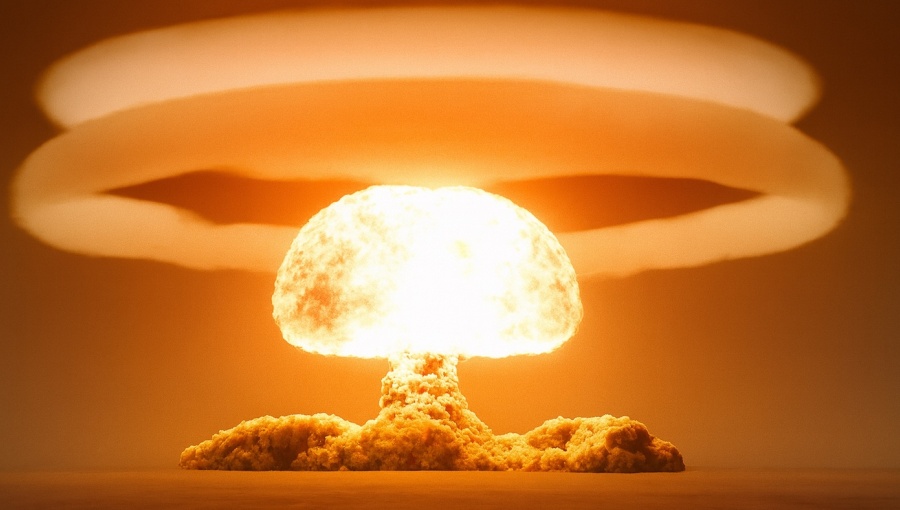
The START missile deal is about to expire, the last of the Cold War-era security arrangements to stop nuclear proliferation. If it is not renewed, it opens the way for a new nuclear arms race. / bne IntelliNews
By Ben Aris in Berlin January 28, 2026

The New START arms control treaty between the US and Russia is due to expire on February 5, the last remaining Cold War-era bilateral agreement limiting the world’s two largest nuclear arsenals.

Negotiations have been ongoing between the White House, and the Kremlin renewed the deal in the first week of US President Joe Biden re-election in 2021, but talks with the Trump administration have gone nowhere, despite the US president’s insistence that he wants to reduce the number of nuclear missiles in the world.

The original START treaty (START I) was first signed on July 31, 1991, by US President George H. W. Bush and Soviet President Mikhail Gorbachev. It was negotiated during the 1980s and was part of the broader arms control efforts of the Cold War era. In the post-Soviet-era it was then renewed in Prague in 2010 by then-US President Barack Obama and Russian President Dmitry Medvedev to much fanfare..

The treaty limits each country to no more than 1,550 deployed strategic nuclear warheads and 700 deployed missiles and bombers. It also allows for mutual on-site inspections and data exchanges to verify compliance — measures that arms control experts say are vital for maintaining transparency and reducing the risk of miscalculation.

The agreement was extended for five years by Biden, who has also long been a proponent for restarting the arms controls. Notably, Biden opposed former president George W Bush’s decision to cancel the ABM treaty (Anti-Ballistic Missile Treaty) in 2002, which kicked off the dismantling of the international security architecture and has in effect launched a new low-watt arms race that is now starting to gather momentum.

However the Biden-Putin START treaty extension is now reaching its end amid heightened tensions between Washington and Moscow over the war in Ukraine, nuclear posturing and deepening mistrust.

“Without a replacement or extension, for the first time since 1972, there will be no limits on the US and Russian nuclear arsenals,” said Daryl Kimball, executive director of the Arms Control Association in a statement on January 25, referring to the beginning of the arms control deals that were signed by Richard Nixon and Mao in 1972, starting with the ABM treaty.

Efforts to begin negotiations on a follow-on agreement have faltered. The Kremlin suspended, but did not cancel, the deal in December 2022 after the invasion of Ukraine, in effect holding the door open for the deal to be revived.

The Trump administration has blown hot and cold on the idea of restarting talks. The US State Department said in December that it remained open to “discussions without preconditions,” but Moscow has signalled that talks cannot proceed while it is still in a proxy war with Nato, as the Kremlin sees it.

The Kremlin jumped at the opportunity to renew the START treaty in 2021 and immediately suggested reviving the Intermediate-Range Nuclear Forces Treaty (INS Treaty) that was unilaterally cancelled by the US in 2019 during Trump’s first term in office.

Reportedly reviving the Cold War-era missile agreements was one of the items discussed by Putin and Trump at the Alaska summit on August 15, and the Kremlin has made it plain that it would like to return to the Cold War set up. But as the East-West clash continues, both sides are becoming increasingly intransigent. As a result, experts have just moved the second hand on the Doomsday Clock a little closer to midnight as the world sleepwalks towards a cataclysmic disaster.

Russian Deputy Foreign Minister Sergei Ryabkov stated earlier this month that “constructive dialogue is hardly possible while the US continues its confrontational policies.”

Inspections under the treaty were suspended in 2020 due to the COVID-19 pandemic and have not resumed. Russia formally suspended its participation in the treaty due to Western support for Ukraine and alleging that Washington was using the treaty to “gain unilateral advantages.” The US has accused Moscow of violating the terms by refusing to allow inspections.

The New START treaty is the last survivor of a series of arms control agreements that once defined US–Soviet and later US–Russian relations. Previous treaties, including the Intermediate-Range Nuclear Forces Treaty and the ABM Treaty, have all collapsed in recent years amid allegations of non-compliance and strategic divergence.

Biden administration officials were openly keen to revive the deals, warning that the absence of constraints could spark a new arms race. “Even at the height of the Cold War, the US and the Soviet Union recognised the value of limits on nuclear weapons,” said Bonnie Jenkins, Under Secretary of State for Arms Control and International Security, during a speech in Geneva in November.

Russia is also keen but insists that any deal must include the involvement of other nuclear powers such as China and the UK. The US, while acknowledging the need for broader multilateral engagement in the long term, insists on only bilateral limits between just Russia and the US.

As bne IntelliNews has argued, the Kremlin’s desire to revive the Cold War security structures represent leverage the West could use in the ongoing Ukraine ceasefire discussions, but one that has not been utilised. One of the unintended consequences of the war in Ukraine is it is likely to promote nuclear proliferation as Nato’s reluctance to engage directly with Russian forces in Ukraine and to stringently stick to its “escalation management” strategy of supplying Ukraine with “some, but not enough” money and materiel has made it clear to the rest of the world that the only way to ensure the West will not use military force against you is to have the bomb.

This is a lesson that has not been lost on North Korean leader Kim Jong Un in particular who is now receiving Russian nuclear technology as part of a new security deal signed with Russia last year as part of the developing CRINK (China, Russia, Iran, and North Korea) military-industrial alliance. Iranian parliamentarians have also called for Tehran to build a bomb.

With the expiration date approaching, analysts say the lack of dialogue raises the risk of a complete breakdown in strategic stability. “The world is entering a dangerous new phase without verifiable constraints on nuclear arsenals,” said Kimball.


‘Extraordinary’ trove of ancient species found in China quarry


By AFP
January 28, 2026


The Chinese team uncovered more than 150 different species between 2021 and 2024 - Copyright AFP Han Zeng


Daniel Lawler

Almost a hundred new animal species that survived a mass extinction event half a billion years ago have been discovered in a small quarry in China, scientists revealed Wednesday.

The treasure trove of fossils offers a rare glimpse into a cataclysmic event that brought a sudden end to the greatest explosion of life in our planet’s history.

The site where the fossils were found in the southern Chinese province of Hunan was “extraordinary,” Han Zeng of the Chinese Academy of Sciences told AFP.

“We have collected over 50,000 fossil specimens from a single quarry that is 12 metres high, 30 metres long and eight metres wide,” added the lead author of a new study in the journal Nature.

In this small space, the Chinese team uncovered more than 150 different species — 91 of them new to science — between 2021 and 2024.

Han described “wonderful experiences when we realised that those animals were right there on the rock.”

“Many fossils show soft parts including gills, guts, eyes and even nerves,” he added.

Among the species discovered were ancient relatives of worms, sponges and jellyfish.

They also found many arthropods — a family that includes modern-day crabs and insects — including spiny, stalk-eyed creatures called radiodonts which were the apex predator of the time.

The discovery is particularly exciting for scientists because of the period when these strange animals lived.


– Evolution’s big bang –


Life first emerged on Earth more than 3.5 billion years ago — but was little more than a layer of slime for most of our planet’s history.

Then came the Cambrian explosion, known as evolution’s “big bang”, roughly 540 million years ago.

Suddenly, most of the major groups of animals alive today — including vertebrates which would eventually include humans — evolved and started populating the world’s oceans.

This burst of life is thought to have been driven by a rise in oxygen in Earth’s atmosphere.

However it came to a sudden end when up to half of all animals died off 513  million years ago.

This mass extinction, known as the Sinsk event, is thought to have been caused by declining oxygen levels.

The animals in the Chinese quarry, which were dated to around 512 million years ago, represent the first major discovery of soft-bodied fossils that lived directly after the Sinsk event, Han explained.

This means the fossils — dubbed the Huayuan biota after the county where they were found — “open a new window into what happened,” he added.


– Safety in the cellar –


Michael Lee, an evolutionary biologist at the South Australian Museum not involved in the research, said “the new fossils from China demonstrate that the Sinsk event affected shallow water forms most severely”.

A deep-water fish called coelacanth similarly survived the mass extinction that wiped out all the dinosaurs that did not evolve into birds, he pointed out.

“The deep ocean is one of the most stable environments through geological time, in a similar way to how the cellar of a house is buffered from daily and seasonal changes and has less temperature fluctuations than the attic,” Lee told AFP.

Han said his team was also surprised that some of the animals in the quarry had also been found at Canada’s Burgess Shale site, which dates from an early period of the Cambrian explosion.

This suggests that these animals were already able to travel halfway across the world at this early stage, he added.

The Sinsk event is not considered among the best-known “big five” mass extinctions in our planet’s history.

However Han said there is evidence of 18 or more mass extinctions over the last 540 million years, calling for more attention to be paid to the immensely destructive events.

Scientists have warned that Earth is currently going through another mass extinction — this one caused by humans.
CRIMINAL CAPITALI$M
Deutsche Bank offices searched in money laundering probe


By AFP
January 28, 2026


Deutsche Bank headquarters in Frankfurt where German prosecutors and police conducted a search in an investigation over suspected money laundering offences - Copyright AFP Kirill KUDRYAVTSEV

German prosecutors and police on Wednesday searched Deutsche Bank’s headquarters in Frankfurt and its office in Berlin in an investigation over suspected money laundering offences, officials said.

According to the Sueddeutsche Zeitung daily, the probe is connected to suspected offences in the bank’s dealings with companies linked to Russian billionaire businessman Roman Abramovich.

Prosecutors confirmed the raids at the premises of Germany’s biggest bank but did not say who was being targeted.

The Frankfurt prosecutors’ office said it was carrying out an “investigation into unknown responsible parties and employees of Deutsche Bank on suspicion of money laundering… and related additional allegations under the Anti-Money Laundering Act”.

“In the past, Deutsche Bank maintained business relationships with foreign companies that… are themselves suspected of having been used for the purpose of money laundering,” a spokesman for the office said in a statement to AFP.

It said the investigation was being carried out by a specialist economic crime unit along with the federal police.

A spokesman for Deutsche Bank confirmed the searches, and the bank said it was “cooperating fully with prosecutors” but refused to comment further.

According to financial sources, the probe relates to alleged offences committed between 2013 and 2018.

The raids come on the eve of the publication of the bank’s results for the fourth quarter of 2025.


– Legal scrutiny –


Abramovich has been sanctioned by the EU following Russia’s invasion of Ukraine.

Sueddeutsche Zeitung said Deutsche Bank was being investigated on suspicion of failing to report possible money laundering in a timely manner.

The daily reported that the investigation involves both payments that Deutsche Bank received via a Russian correspondent account and the bank’s previous dealings with Abramovich’s own companies.

According to news site Der Spiegel the search in Frankfurt involved around 30 plainclothes investigators.

Deutsche Bank has faced scrutiny on several occasions in recent years over suspicious transactions.

In 2022 its offices were raided over “suspicious activity reports filed by the bank”, again in relation to money laundering.

Media reports at the time said that the investigation centred on a transaction involving Rifaat al-Assad, the uncle of Syria’s then leader Bashar al-Assad.

The Frankfurt-based group also came under scrutiny for its role as a correspondence bank that handled foreign transactions for Danske Bank’s Estonian branch, at the centre of a 200-billion-euro ($212-billion) money-laundering affair between 2007 and 2015.

Deutsche Bank subsequently agreed to pay a fine of 13.5 million euros for failing to report suspicious activity quickly enough, after an investigation by Frankfurt prosecutors.


South Korea’s ex-first lady jailed for 20 months for taking bribes

By AFP
January 28, 2026


A man walks past a banner showing a picture of South Korea's former impeached president Yoon Suk Yeol and his wife Kim Keon Hee - Copyright AFP Olivier MORIN


Claire LEE

A South Korean judge handed the country’s former first lady Kim Keon Hee 20 months in jail on Wednesday for accepting lavish gifts from a cult-like church, but acquitted her of alleged stock manipulation and other charges.

Controversy has long followed 53-year-old Kim, while accusations of graft, influence peddling and even academic fraud have dominated her husband Yoon Suk Yeol’s time in office.

Both are now in custody — Yoon for actions taken during his disastrous declaration of martial law in December 2024 and Kim for corruption.

On Wednesday, Judge Woo In-sung of the Seoul Central District Court found Kim guilty of corruption and sentenced her to 20 months in prison.

She was found to have accepted lavish bribes from the cult-like Unification Church — including a Chanel bag and a Graff necklace.

Prosecutors requested 15 years, but Kim was acquitted of stock manipulation and violations of campaign financing laws on Wednesday, and received a far lighter sentence.

Woo said that Kim’s close proximity to the president had given her “significant influence” that she had taken advantage of.

“One’s position must never become a means of pursuing private gain,” he added.

The former first lady sat in court as the sentence was read out, wearing a black suit, a white face mask and glasses.

Kim later released a statement apologising for “the concern” she may have caused, saying that she “accepted the court’s stern criticism”.

Her lawyers told AFP Kim had not decided whether she would appeal against the decision.

Prosecutors at Kim’s final hearing in December said she had “stood above the law” and colluded with the Unification Church to undermine “the constitutionally mandated separation of religion and state”.

Min Joong-ki, a Prosecutor on the case, said at the time that South Korea’s institutions were “severely undermined by abuses of power” committed by Kim.

On Wednesday, prosecutors called the ruling “hard to accept” and said they would appeal.

The former first lady previously denied all charges against her, claiming the allegations were “deeply unjust” in her final testimony last month.

She still faces two additional trials on bribery and Political Parties Act violations over allegations that she arranged the mass enrolment of more than 2,400 Unification Church followers into Yoon’s conservative People Power Party.


– Dogged by scandal –


A self-professed animal lover known internationally for her work campaigning for South Korea to ban dog meat, Kim’s scandals frequently overshadowed her husband’s domestic political agenda.

In 2023, hidden camera footage appeared to show Kim accepting a $2,200 luxury handbag in what was later dubbed the “Dior bag scandal”, further dragging down Yoon’s already dismal approval ratings.

The scandal contributed to a stinging defeat for Yoon’s party in the general elections in April 2024, as it failed to win back a parliamentary majority.

Yoon vetoed three opposition-backed bills to investigate allegations against Kim, including the Dior bag case, with the last veto in November 2024.

A week later, he declared martial law.

Kim’s sentencing came days after former prime minister Han Duck-soo was handed 23 years in prison for aiding and abetting Yoon’s suspension of civilian rule.

And this month Yoon was sentenced to five years for obstructing justice and other crimes in the first of a number of trials linked to that declaration.

The probe into Kim also led to the arrest of Han Hak-ja, leader of the Unification Church, which claims 10 million followers worldwide and runs a vast business empire.

Also on Wednesday, the Seoul Central District Court sentenced Yun Young-ho, a former Unification Church official, to 14 months in prison for offering luxury gifts to the former first lady and providing illegal political funds to a lawmaker.

Opposition lawmaker Kweon Seong-dong, an ally of ex-president Yoon, was also jailed for two years for receiving 100 million won ($70,000) from the controversial sect.
Amazon to cut 16,000 jobs worldwide

WHITE, BLUE, PINK THE COLOR OF YOUR COLLAR DOESN'T MATTER, WE ARE ALL PROLETARIANS NOW

By AFP
January 28, 2026


The Amazon layoffs are in line with a trend to trim white-collar management jobs across big tech - Copyright AFP/File Patrick T. Fallon

US online retail and cloud computing giant Amazon said Wednesday that it would be cutting 16,000 jobs worldwide as part of a restructuring, as it focuses spending on artificial intelligence.

The job cuts, which follow already flagged plans to cut its workforce by 14,000 posts, are aimed at “reducing layers, increasing ownership, and removing bureaucracy,” senior vice president Beth Galetti said in a statement.

Media reports from October had said the roughly 30,000 job cuts planned in total would impact nearly 10 percent of the 350,000 office jobs at Amazon, without affecting the distribution and warehouse workers that make up the bulk of its 1.5 million employees.

At the time the company refused to comment on the reports, which said they came amid increased investments in artificial intelligence.

Amazon did not give any breakdown of the latest job cuts on Wednesday, saying only that “every team will continue to evaluate the ownership, speed, and capacity to invent for customers, and make adjustments as appropriate.”

The company will release its full-year 2025 results on February 5. In its last quarterly earnings statement in October, the company said it spent $1.8 billion on severance costs tied to planned job cuts.

Amazon said that new positions will be offered to employees where possible, without giving further details on which divisions will be affected by the cuts.

The layoffs are in line with a trend to trim white-collar management jobs across big tech. Microsoft in July said it had slashed a little less than four percent of its global workforce, about 15,000 jobs.

Facebook owner Meta has also cut jobs over the past year, in a move intended to remove organizational bloat following aggressive hiring during the pandemic.

Dutch tech giant ASML on Wednesday said it would cut cut hundreds of management jobs to improve internal organisation, with HP and Oracle also announcing recent layoffs.

Like other tech giants, Amazon is making massive investments to grab a slice of the AI revolution pie.

It is particularly banking on the performance of its subsidiary Amazon Web Services (AWS), the world’s leading cloud provider, which is engaged in a race against its fast-growing rivals, Microsoft Azure and Google Cloud.

And spending on developing new AI-based chips and services is growing exponentially. In December, Amazon announced that it would invest more than $35 billion in India
The top target for U.S. anti-abortion groups in 2026

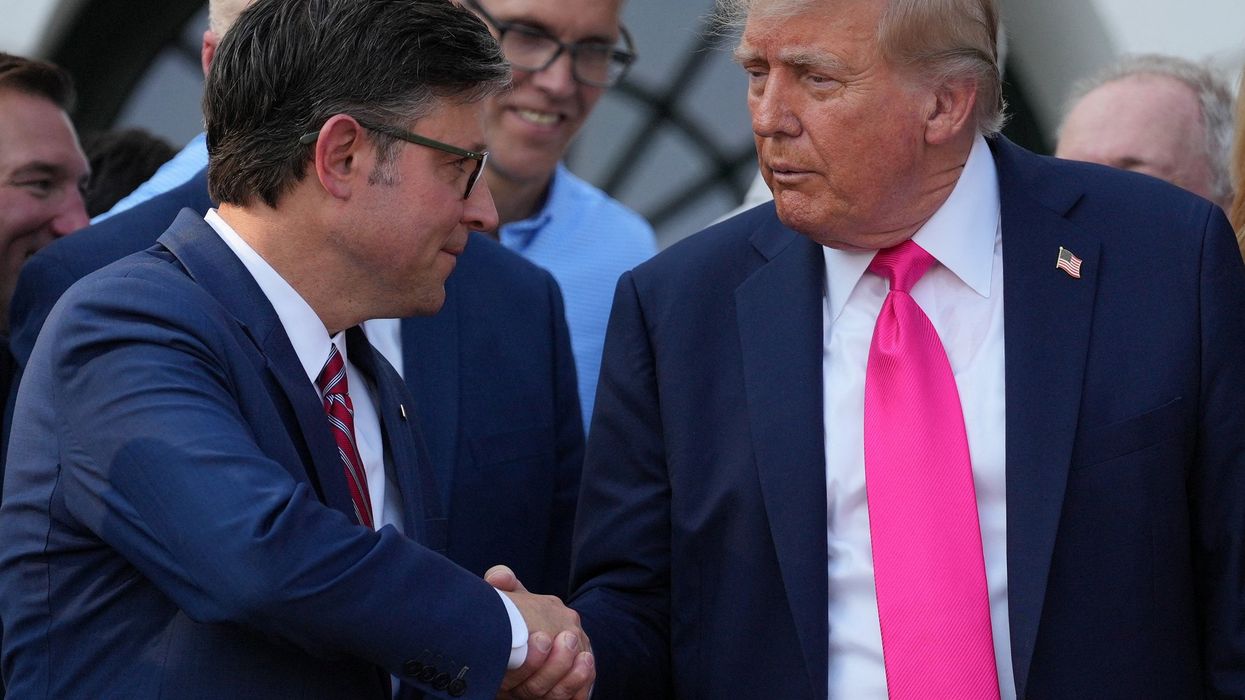
U.S. House of Representatives Speaker Mike Johnson shakes hands with U.S. President Donald Trump after Trump signed the sweeping spending and tax legislation, known as the "One Big Beautiful Bill Act," at the White House in Washington, D.C., U.S., July 4, 2025. REUTERS/Leah Millis
January 24, 2026 | 

This week would have marked the 53rd anniversary of Roe v. Wade, the 1973 Supreme Court decision that legalized abortion nationwide — that is, until 2022, when the court overturned it. Since then, abortion has been banned in 13 states and severely limited in 10 others.

Yet anti-abortion activists remain frustrated, in some cases even more so than before Roe was overturned.

Why? Because despite the new legal restrictions, abortions have not stopped taking place, not even in states with complete bans. In fact, the number of abortions has not dropped at all, according to the latest statistics.

“Indeed, abortions have tragically increased in Louisiana and other pro-life states,” Liz Murrill, Louisiana’s attorney general, said at a Senate Health, Education, Labor, and Pensions Committee hearing this month.

That’s due in large part to the easier availability of medication abortion, which uses a combination of the drugs mifepristone and misoprostol, and particularly to the pills’ availability via mail after a telehealth visit with a licensed health professional.


Allowing telehealth access was a major change originally made on a temporary basis during the covid pandemic, when visits to a doctor’s office were largely unavailable. Before that, unlike most medications, mifepristone could be dispensed only directly, and only by a medical professional individually certified by the Food and Drug Administration.

The Biden administration later permanently eliminated the requirement for an in-person visit — a change the second Trump administration has not undone.

While the percentage of abortions using medication had been growing every year since 2000, when the FDA first approved mifepristone for pregnancy termination, the Biden administration’s decision to drop the in-person dispensing requirement supercharged its use. More than 60% of all abortions were done using medication rather than a procedure in 2023, the most recent year for which statistics are available. More than a quarter of all abortions that year were managed via telehealth.

Separately, President Donald Trump’s FDA in October approved a second generic version of mifepristone, angering abortion opponents. FDA officials said at the time that they had no choice — that as long as the original drug remains approved, federal law requires them to OK copies that are “bioequivalent” to the approved drug.

It’s clear that reining in, if not canceling, the approval of pregnancy-terminating medication is a top priority for abortion opponents. This month, Susan B. Anthony Pro-Life America called abortion drugs “America’s New Public Health Crisis,” referencing their growing use in ending pregnancies as well as claims of safety concerns — such as the risk a woman could be given the drugs unknowingly or suffer serious complications. Decades of research and experience show medication abortion is safe and complications are rare.

Another group, Students for Life, has been trying to make the case that the biological waste from the use of mifepristone is contaminating the nation’s water supply, though environmental scientists refute that claim.

Yet the groups are most frustrated not with supporters of abortion rights but with the Trump administration. The object of most of their ire is the FDA, which they say is dragging its feet on a promised review of the abortion pill and the Biden administration’s loosened requirements around its availability.

President Joe Biden’s covid-era policy allowing abortion drugs to be sent via mail ”should’ve been rescinded on day one of the administration,” SBA Pro-Life America’s president, Marjorie Dannenfelser, said in a recent statement. Instead, almost a year later, she continued, “pro-life states are being completely undermined in their ability to enforce the laws that they passed.”

Lawmakers who oppose abortion access are also pressing the administration. “At an absolute minimum, the previous in-person safeguards must be restored immediately,” Senate HELP Committee Chairman Bill Cassidy said during the hearing with Murrill and other witnesses who want to see abortion pill availability curtailed.

Sen. Jim Banks (R-Ind.) said at the hearing that he hoped “the rumors are false” that “the agency is intentionally slow-walking its study on mifepristone’s health risks.”


The White House and spokespeople at the Department of Health and Human Services have denied the review is being purposely delayed.

“The FDA’s scientific review process is thorough and takes the time necessary to ensure decisions are grounded in gold-standard science,” HHS spokesperson Emily Hilliard said in an emailed response to KFF Health News. “Dr. Makary is upholding that standard as part of the Department’s commitment to rigorous, evidence-based review.” That’s a reference to Marty Makary, the FDA commissioner.

Revoking abortion pill access may not be as easy as advocates hoped when Trump moved back into the White House. While the president delivered on many of the goals of his anti-abortion backers during his first term, especially the confirmation of Supreme Court justices who made overturning Roe possible, he has been far less doctrinaire in his second go-round.

Earlier this month, Trump unnerved some of his supporters by advising House Republicans that lawmakers “have to be a little flexible” on the Hyde Amendment to appeal to voters, referring to a decades-old appropriations rule that bans most federal abortion funding and that some Republicans have been pushing to enforce more broadly.

And while the anniversary of Trump’s inauguration has many analysts noting how much of the Heritage Foundation’s Project 2025 blueprint has been realized, the most headline-grabbing portions on reproductive health have yet to be enacted. The Trump administration has not, for example, revoked the approval of mifepristone for pregnancy termination, nor has it invoked the 1873 Comstock Act, which could effectively ban abortion nationwide by stopping not just the mailing of abortion pills but also anything else used in providing abortions.

Still, abortion opponents have decades of practice at remaining hopeful — and playing a long game.

HealthBent, a regular feature of KFF Health News, offers insight into and analysis of policies and politics from KFF Health News chief Washington correspondent Julie Rovner, who has covered health care for more than 30 years.

KFF Health News is a national newsroom that produces in-depth journalism about health issues and is one of the core operating programs at KFF—an independent source of health policy research, polling, and journalism. Learn more about KFF.

This article first appeared on KFF Health News and is republished here under a Creative Commons Attribution-NoDerivatives 4.0 International License
.