Friday, February 13, 2026

How Can We Reverse Biodiversity Loss?

February 13, 2026 
By Eurasia Review


The most effective conservation strategies for protecting vertebrates on a global scale are those aimed at mitigating the effects of overexploitation, habitat loss and climate change, which are the most widespread threats with the greatest impact across the planet. This is one of the main conclusions of an article led by researchers Pol Capdevila, from the Faculty of Biology and the Biodiversity Research Institute (IRBio) at the University of Barcelona, and Duncan O’Brien, from the University of Bristol (United Kingdom).

The study, published in the journal Science Advances, highlights the importance of climate policies in reversing biodiversity loss across the planet, and points to amphibians as the group of vertebrates particularly affected by the combined effects of multiple threats.

Interestingly, the study points out that populations affected solely by habitat loss or exploitation do not show the most pronounced declines. “The decline in vertebrate populations is much faster when they face several simultaneous threats (disease, invasive species, pollution or climate change, etc.) than when they are exposed to just one,” says Pol Capdevila, lead author of the article and member of the Department of Evolutionary Biology, Ecology and Environmental Sciences at the UB.

“However, in the study we also show that to shift biodiversity trends from negative to positive, conservation strategies must address multiple threats simultaneously,” says the author.
A paradigm shift from the more traditional view

The study is based on the analysis of 3,129 time series of vertebrate populations distributed across all continents and across the three systems (freshwater, marine and terrestrial). The conclusions indicate that these threats generally add to each other’s impact, rather than multiplying it.

This study represents a turning point from the traditional perspective on threats to vertebrates, particularly in three main aspects. “Firstly, the most frequent threats (habitat loss and overexploitation) are not those that cause the most rapid declines,” says Capdevila.

“Traditionally, habitat loss and exploitation have been considered the main causes of the biodiversity crisis because they are the most prevalent. However, our results indicate that biological invasions, diseases, pollution and climate change are associated with faster population declines than these more classic threats.”

The study also shows that interactions between threats are more decisive than spatial or temporal variability. “We also demonstrate that the combination of several pressures contributes more to population decline than other factors such as spatial or temporal autocorrelation, reinforcing the idea that multiple impacts are essential in the current loss of biodiversity.”

Furthermore, conservation focused on a single threat is insufficient. “The results also show that focusing efforts on reducing a single threat would not reverse the global decline of vertebrates. Only the simultaneous mitigation of multiple threats can bring population trends to non-negative values,” concludes the researcher.


Sustainable Soy: When Collaborating To Protect The Amazon Backfires – Analysis

February 13, 2026 
By SwissInfo


Commodity firms working together to source deforestation-free soy in Brazil are being investigated under anti-cartel laws. They also risk losing tax benefits due to pressure from powerful farming lobbies.


By Anand Chandrasekhar

Businesses selling prostheses, gas water-heaters, electricity meters, cement and even tech giants like Apple and Meta have recently come under fire from Brazil’s competition watchdog, the Administrative Council for Economic Defense (CADE), for anti-competitive practices. Also among the alleged offenders targeted by CADE are “do gooding” commodity giants that have signed the Amazon soy moratorium.
Financial software

The moratorium, which has been implemented since 2008, is a promise not to source soy from the Amazon following a 2006 Greenpeace campaign that linked soybean cultivation with deforestation. Switzerland is the European trading hub of the biggest commodity firms like Cargill, ADM, Bunge, Louis Dreyfus Company and COFCO that have signed up to the soy moratorium.

According to Greenpeace, the moratorium has brought the share of new soy cultivation in logged areas down from 30% before the agreement to 4% as of July 2025 even though Brazil has tripled its soy production during this period. Given the results, Greenpeace calls the Amazon soy moratorium as “the world’s single most successful zero-deforestation policy”.

However, this moratorium is now under pressure due to the investigation of commodity firms by CADE after a complaint was filed last year by the Agriculture, Livestock, Supply, and Rural Development Committee (CAPADR) of Brazil’s lower house of parliament, the Chamber of Deputies. The committee’s president, Rodolfo Nogueira, is a cattle rancher himself. Nogueira and the three other members of CAPADR are all pro-agribusiness and belong to the ruralist political bloc that favours the expansion of agriculture.

According to CADE, the fact that competing firms were working together to establish conditions for the purchase of soy in Brazil is anticompetitive and harms the nation’s soy exports. In 2020, Brazil exported almost 83 million metric tonnes of soy. In 2024, exports totalled roughly 98.8 million metric tonnes, mainly fuelled by demand from China.

In August 2025, CADE issued an interim measure against the moratorium’s Soy Working Group to stop all audits of soy sourcing, cease publication of reports and remove any documents on the soy moratorium from the website. An appeal was filed against the measure and Brazil’s supreme court has granted a stay while it assesses the accusation against the commodity companies.

“Currently, CADE’s administrative proceeding is suspended due to a decision by the Brazilian Supreme Federal Court (STF), which will ultimately determine whether the conducts by the soy moratorium are antitrust violations,” says Débora Alvares, spokesperson for CADE.

If CADE succeeds in convincing Brazil’s supreme court, commodity firms will no longer be able to work together to prevent deforestation at a landscape level. Each company will be reduced to preventing deforestation in its own soy supply chain risking a doubling of effort and covering a much smaller area. Environmental lobby groups like Greenpeace claim that applying anti-cartel regulations against commodity firms in this manner could jeopardise progress made in reducing deforestation of the Amazon for agriculture.

“Greenpeace warns that the various attacks against the soy moratorium put at risk the gains achieved by this agreement over nearly two decades. Ambitious voluntary environmental commitments like the moratorium have proven an essential complement to public policies aimed at preventing deforestation,” says Lis Cunha, a campaigner at Greenpeace International.

Greenpeace Brazil is participating in the case before Brazil’s supreme court in an advisory capacity (amicus curiae), presenting legal and technical arguments to demonstrate the risks of dismantling the moratorium and to help support the court’s final assessment of the matter.

Soy farmers complain of overreach

Among the soy moratorium’s detractors is the powerful Brazilian Association of Soybean Producers (Aprosoja Brasil), a lobby representing 16 state associates located in the main soybean producing states of the country.

Aprosoja argues that the soy moratorium was an interim measure to protect Brazil’s forests in the absence of a specific law against deforestation. According to the industry association, the introduction of the Forest Code law in 2012 should have spelled the end of the moratorium. The Forest Code requires farmers in forest areas to set aside 80% of their land for native vegetation cover.

“The Soy Moratorium no longer has a reason to exist. Almost 20 years later, it remains thanks to the institutional support of the ministry of the environment, which uses it according to its whims,” Pedro Lupion, a Federal Deputy and President of the Parliamentary Agricultural Front wrote on the Aprosoja website.

Aprosoja’s branch in the western state of Mato Grosso, where soy accounts for half of GDP, had also filed a complaint to CADE in 2024 against the soy moratorium. According to the complaint, the moratorium had cost Mato Grosso state about 20 billion reals ($3.8 billion, CHF3 billion) in lost income.

Tax benefits at risk

The state of Mato Grosso also launched another line of attack against commodity firms’ efforts to source sustainable soy from Brazil. In 2024, the state’s lawmakers introduced a law that strips tax benefits of companies that participate in voluntary environmental agreements that go beyond national legislation like the Amazon soy moratorium. Politicians and soy producers argued that even though soy farmers were adhering to Brazilian environmental law, they were being unfairly punished by private, foreign‑influenced standards. Aprosoja’s Mato Grosso branch estimated that soy from 4,000 rural properties, or 3.5% of all farms in the state, was being excluded by commodity firms that had signed up to the soy moratorium.

It is estimated that these commodity traders had received tax incentives worth about 4.7 billion reais ($890 million) between 2019 and 2024 with ADM and Bunge the largest beneficiaries, receiving roughly 1.5 billion reais each.

The new law applies from 2026 and has succeeded in scaring away commodity firms. The Brazilian Association of Vegetable Oil Industries, known as ABIOVE, announced in December 2025 that it was withdrawing from the soy moratorium. Among ABIOVE’s members are Cargill, ADM, Bunge, Louis Dreyfus Company and COFCO International.

This is a U-turn from ABIOVE whose president, André Nassar, had defended the soy moratorium at a public hearing on the moratorium in July 2024 held at the behest of parliamentarians opposed to it at the Agriculture, Livestock, Supply and Rural Development Committee of the Chamber of Deputies.

Nassar had tried to get soy producers on board by offering Aprosoja a seat on the soy moratorium’s working group. He had even warned that the end of the soy moratorium could lead to a boycott of Brazilian soybeans abroad.

The opportunity cost to commodity firms from the soy moratorium has not been quantified. However, a study estimates that surplus land legally available to soy producers in the Amazon since the Forest Code was introduced in 2012 is below 50,000 hectares. This represents about 1% of the area already under soy cultivation in the Amazon. The authors of the study claim that the financial benefits of transforming these forested areas into soy farms are low when compared to the export markets for sustainable soy.

According to Greenpeace, ABIOVE’s decision was based on political and economic incentives rather than a legal obligation. “This was a business choice, not a legal necessity, and it is ABIOVE and its members who must take responsibility for the environmental and reputational consequences of that choice,” says Cunha of Greenpeace.

ABIOVE underlined that even though it was withdrawing from the soy moratorium, Brazil’s supreme court still recognises the legality of the voluntary agreement. Along with Forest Code and the September 2025 National Environment Council (CONAMA) Resolution (which laid down the ground rules for clearing native vegetation in rural Brazil), Brazilian soy will continue to maintain its high socio-environmental standards.

“The legacy of monitoring and expertise acquired over almost 20 years will not be lost. Individually, the strict demands of global markets will be met, while also relying on Brazilian authorities to fully implement a new regulatory framework,” said the ABIOVE statement.
Domino effect?

The combination of the anti-cartel investigation and removal of tax benefits could also threaten another sustainable soy sourcing initiative by ABIOVE that is hosted in Switzerland by the Geneva-based World Business Council for Sustainable Development. The Soft Commodity Forum (SCF) comprising Cargill, ADM, Bunge, Louis Dreyfus Company and COFCO International is a pilot project to source soy without deforestation in the Cerrado.

The Cerrado is a tropical savanna that occupies a little over 20% of Brazil’s landmass and is South America’s second-largest biome after the Amazon. The region also accounts for half of all soy grown in Brazil. The SCF started out as a pilot project in 2018 to trace soy sourced from 25 municipalities in the Cerrado biome. By the end of 2025, the collaboration has expanded traceability to 93%-99% of the soy sourced by members from the Cerrado, representing monitoring of over 200 million hectares.

According to SCF senior manager Matt Inbusch, the partnership is about getting the five commodity firms to align on a common deforestation and land conversion reporting methodology.

“SCF membership does not imply any collective sourcing agreements or cutoffs,” he says.

While CADE does not yet have the SCF in its sights, it doesn’t rule out the possibility of an anti-cartel investigation in the future.

“Thus far, CADE has not ultimately decided whether the alignment of transparency standards and metrics among companies, such as the ones conducted in the Soft Commodity Forum, can be defined as antitrust violations or not, since every assessment depends on the actual analysis of the conduct and its potential competition effects,” says Alvares of CADE.


SwissInfo

swissinfo is an enterprise of the Swiss Broadcasting Corporation (SBC). Its role is to inform Swiss living abroad about events in their homeland and to raise awareness of Switzerland in other countries. swissinfo achieves this through its nine-language internet news and information platform.


David Edwards
February 13, 2026 
RAW STORY


President Donald Trump vowed to bomb "the dust" remaining at Iran's nuclear sites if he attacks the country again.

During a Friday gaggle, one reporter pointed out that Trump had previously claimed the nuclear sites had been "obliterated" before threatening another strike.

"You said inside the Iranian nuclear sites have been totally obliterated," the reporter said. "What's left to go after?"

"Well, you could get whatever the dust is down there," Trump replied. "That's really the least of the mission. If we do it, that would be the least of the mission. But we, you know, probably grab whatever's left."

"It has been obliterated, as you know," he added.


The Pricer estimated that Trump's 2025 bombing of Iran's nuclear sites cost over $500 milllion.


By 


As the Iranian regime attempts to mark the 47th anniversary of the 1979 revolution on February 11, the atmosphere in Iran is not one of celebration for the ruling clerics, but of open rebellion. The streets of Iran have once again turned crimson, fueled by the blood of a galaxy of martyrs from the recent January 2026 uprising.

While the mullahs try to claim the legacy of the anti-monarchical revolution, the true spirit of that movement—the demand for freedom and the rejection of dictatorship—is alive only in the rebellious youth who are shaking the foundations of the theocracy today.

The recent uprising, which began in late December 2025 and extended into January 2026, has proven that the countdown to the clerical regime’s overthrow has begun. The spell of appeasement has been shattered, and the world can no longer ignore a resistance that has fought unceasingly for decades against two dictatorships: the Shah and the mullahs.

The stolen revolution of 1979

To understand the present, one must look at the truth of 1979. The revolution against the Shah was a genuine national movement driven by a desire for democracy and an end the corrupt rule of the shah dictatorship. Between 1971 and 1978, groups like the People’s Mojahedin Organization of Iran (PMOI/MEK) and Fedayeen paved the way for this moment through immense sacrifice. However, the Shah’s secret police, SAVAK, had imprisoned the true leaders of the movement, including PMOI founders, until the final days of the monarchy.

This leadership vacuum allowed Ruhollah Khomeini to hijack the revolution. While the people demanded a democratic republic, Khomeini, who had deceptively promised freedom in the comfort of his headquarters in France, imposed the absolute rule of the clergy (Velayat-e Faqih) once in power. The goals of the 1979 revolution were freedom, independence, and social justice—ideals that Khomeini immediately betrayed by suppressing women through mandatory hijab and executing the very youth and revolutionaries who had paid the true price of the revolution.


January 2026: The spark that became a fire

However, while the mullahs have managed to rule with an iron fist, they have not managed to kill the spirit of the 1979 revolution. The continuity of this struggle was vividly demonstrated in the uprising that erupted on December 28, 2025. What began as an economic protest by bazaar shopkeepers in Tehran over the rial’s sharp plunge and inflation quickly transformed into a nationwide political movement.

As crowds grew, chants shifted from economic grievances to explicitly anti-regime slogans, signaling a rejection of the entire rule of the mullahs. The unrest spread geographically from Tehran to hundreds of locations across multiple provinces, and socially from merchants to university students and workers. The regime responded with brutal repression, murdering thousands of protesters. Yet, this heavy price has only solidified the people’s resolve.

Rejecting the Shah and the mullahs

Today, Iran stands at a critical juncture with similarities to the 1979 revolution. The main battle has two sides: the people and their organized resistance fighting for freedom on one side and the repressive clerical regime on the other. And like in 1979, a third party is trying to hijack the people’s sacrifices again: the remnants of the Shah’s dictatorship.

Slogans favoring the monarchy serve only to divide the protest movement and provide ammunition to Khamenei’s suppression machinery. The Iranian people, having experienced both the Shah’s SAVAK and the mullahs’ IRGC, have no desire to return to the past. Their unifying slogan remains: “Down with the oppressor, be it the Shah or the mullahs.” This slogan rejects all forms of dictatorship and affirms a future based on freedom and independence.

Also like the shah in 1979, the mullahs are trying to project power by organizing large pro-regime rallies on the anniversary of the revolution. But at the same time, the people continue their resistance with anti-regime chants.

A democratic republic: The only path forward

The main difference with the 1979 revolution is that this time, the Iranian people have an organized resistance movement on their side that is determined to prevent their revolution from being hijacked. The National Council of Resistance of Iran (NCRI) has outlined a roadmap for a future Iran that is a democratic republic, respecting the separation of religion and state, gender equality, and the autonomy of nationalities.


The NCRI’s program calls for the formation of a Constituent Assembly within six months of the regime’s overthrow to draft a new constitution. This ensures that the sovereignty of the people, stolen in 1979, is finally restored.

The revolution of 1979 did not die; it has matured into a powerful resistance movement that will inevitably triumph.

Farid Mahoutchi writes for the PMOI/MEK.

Third Leader Charged In Multi-State Forced Labor Conspiracy Involving Kingdom Of God Global Church


David Taylor, of Kingdom of God Global Church, formerly Joshua Media Ministries. Photo Credit: David E. Taylor / Facebook


February 13, 2026 
By Eurasia Review

A federal grand jury in the Eastern District of Michigan returned a superseding indictment Wednesday against a third defendant for her alleged role in a forced labor conspiracy that victimized individuals in Michigan, Florida, Texas, and Missouri.

“This case reflects the gravity of forced labor schemes that strip victims of their basic human rights and subject them to physical and brutal psychological abuse,” said Assistant Attorney General A. Tysen Duva of the Justice Department’s Criminal Division. “Combating human trafficking is a top priority for the Department of Justice. We will relentlessly pursue those who facilitate and profit from forced labor and fight to obtain justice for survivors.”

“We will follow the evidence and meticulously build the case,” said U.S. Attorney Jerome F. Gorgon Jr. for the Eastern District of Michigan “We thank our federal partners for their dogged pursuit of human traffickers.”

“Forced labor is a direct assault on human freedom,” said Special Agent in Charge Jennifer Runyan of the FBI Detroit Field Office. “It strips victims of their dignity, their autonomy, and their basic right to control their own lives. Anyone who conspires to exploit and enslave others for profit will be held fully accountable under the law. This case demonstrates the strength of our federal, state, and local partnerships in dismantling a multi-state forced labor operation. We will not stop until these criminal networks are shut down and justice is delivered.”

“IRS Criminal Investigation (IRS-CI) is dedicated to fighting human trafficking to ensure the safety of all communities we serve,” said Special Agent in Charge Karen Wingerd of the IRS-CI Detroit Field Office. “Working together with our federal and local partners and leveraging IRS-CI’s unique investigative talents, we are able to disrupt suspected trafficking operations, keeping the vulnerable safe from becoming another victim.”


According to court documents, Kathleen Klein, also known as Prophetess, 53, was a leader and executive of Kingdom of God Global Church (KOGGC), formerly known as Joshua Media Ministries International (JMMI). According to the indictment, Klein and co-defendants David Taylor and Michelle Brannon, ran a network of call centers across multiple states that used forced labor to solicit donations for KOGGC. Victims were forced to work grueling hours at the call centers without pay and pressured to hit impossible fundraising targets. When victims fell short of leaders’ goals or dared to push back, the punishment was severe: public humiliation, sleep deprivation, physical violence, withholding of food and shelter, forced repentance rituals, and threats of eternal damnation. Klein and her co-defendants allegedly controlled virtually every aspect of their victims’ lives. During the more than decade-long conspiracy, KOGGC collected roughly $50 million in donations, which leaders used to pay for personal real estate, vehicles, travel, and luxury goods.

In addition to adding Kathleen Klein as a defendant, the superseding indictment includes additional allegations including that Taylor frequently requested and received sexually explicit photographs and videos from KOGGC workers.

Klein is charged with conspiracy to commit forced labor, which carries a maximum penalty of 20 years in prison. Taylor and Brannon were first indicted on July 23, 2025, for conspiracy to commit forced labor, forced labor, and conspiracy to commit money laundering. If convicted, Taylor and Brannon face a maximum penalty of 20 years in prison for each count.

The FBI and IRS-CI are investigating the case.

The Problem With America First Global Health – OpEd

February 13, 2026
By Roger Bate


The US government is now committing tens of billions of dollars to global health through a growing web of bilateral agreements branded as the “America First Global Health Strategy.” These deals are pitched as a way to protect Americans from infectious disease threats by strengthening surveillance and outbreak response overseas.

As of early 2026, the State Department reports that 16 bilateral global health memoranda of understanding have already been signed representing more than $11 billion in US commitments, with officials signaling that dozens more agreements are planned—a scale that makes the absence of a clearly articulated strategy increasingly hard to justify.

To understand what is happening, and why it persists even as US health care at home remains deeply dysfunctional, it helps to separate two questions that are usually blurred together: what this strategy actually is, and why the United States continues to pursue it.

Start with the “what.” The America First Global Health Strategy is an operating model that emerged after the United States withdrew from the World Health Organization and needed a way to remain active internationally without WHO governance.

Instead of working primarily through multilateral institutions, the US is now signing five-year bilateral health memoranda with dozens of low- and middle-income countries, overwhelmingly in sub-Saharan Africa. These agreements bundle longstanding programs on HIV/AIDS, malaria, tuberculosis, and surveillance into large government-to-government compacts, often involving hundreds of millions—or billions—of dollars.


In substance, this is continuity more than rupture; what has changed is the structure. NGOs and multilateral intermediaries are being sidelined. Funding is routed more directly to partner governments. Co-investment and “self-reliance” are emphasized rhetorically. And the whole enterprise is framed as national self-protection: stopping outbreaks abroad before they reach American shores.

As an administrative response to WHO withdrawal, this makes sense. The United States still wants access to disease intelligence, laboratory capacity, and early warning signals. It still wants influence over procurement markets and health ministries in strategically important countries. Bilateral agreements are the simplest way to preserve those channels without returning to Geneva.

What is missing is strategy in the proper sense of the word. There is no public prioritization of threats. No explanation of which pathogens matter most to Americans. No ranking of countries by risk rather than need. No serious comparison between overseas spending and alternative investments in domestic surveillance, ports-of-entry screening, or health system resilience. Instead, almost any global health expenditure can be justified after the fact as “protecting Americans.”

That brings us to the “why.” Why does Washington keep expanding global health spending when US health care at home is such a mess?

The first answer is political economy. Fixing US health care means confronting powerful domestic interests: hospitals, insurers, pharmaceutical pricing, state licensing regimes, professional guilds, and entitlement politics. Every lever is contested. Every reform produces visible losers. Global health spending, by contrast, sits largely outside domestic distributional fights. It is appropriated quietly, administered bureaucratically, and justified as either humanitarian or security spending. Politically, it is easier money.

Second, US global health programs function as foreign policy tools as much as health interventions. For decades, HIV/AIDS and malaria funding has anchored diplomatic relationships, sustained US presence in fragile states, and shaped procurement and regulatory norms. That logic did not disappear when the US left the WHO. It simply moved into bilateral form. Health MOUs now serve as instruments of influence in regions where Washington does not want to cede ground to China, the EU, or Gulf donors.

Third, overseas health spending allows US officials to externalize risk rather than reform institutions. It is easier to claim that outbreaks should be stopped “over there” than to fix domestic surveillance failures, regulatory paralysis, or hospital capacity constraints. Investing abroad feels preventative and technocratic. Domestic reform feels political, slow, and blame-laden. One is framed as foresight; the other as failure.

Fourth, the America First rebranding reflects bureaucratic adaptation, not ideological clarity. Once the US exited WHO governance, agencies still needed access to data, pathogens, norms, and partners. Rather than openly negotiate selective technical engagement, they rebuilt parallel arrangements bilaterally. The result is today’s sprawling network of agreements—less a coherent strategy than a workaround designed to keep existing programs running under new constraints.

Finally, failure abroad is politically invisible in a way domestic failure is not. If a US-funded malaria program underperforms in Malawi, the costs are diffuse and accountability is weak. If domestic health policy fails, voters notice immediately. The incentives are asymmetric.

None of this means that global health spending is irrational or immoral. Some of it saves lives at relatively low marginal cost. Some of it reduces real risks. But it does mean that the persistence of large overseas health commitments alongside domestic dysfunction is not a paradox. It is the predictable outcome of two entirely different political economies.

The real problem with the America First Global Health Strategy is not that the US is engaged abroad. It is that Washington has wrapped a sprawling, path-dependent set of programs in a nationalist label without doing the hard work that strategy requires: defining priorities, making tradeoffs, publishing metrics, and explaining why these investments beat plausible alternatives.

Until that happens, “America First Global Health” will remain what it currently is: a slogan attached to large checks, sustained by institutional inertia, and insulated from the scrutiny that domestic health policy can never escape.

This article was published by Brownstone Institute


Roger Bate

Roger Bate is a Brownstone Fellow, Senior Fellow at the International Center for Law and Economics (Jan 2023-present), Board member of Africa Fighting Malaria (September 2000-present), and Fellow at the Institute of Economic Affairs (January 2000-present).
Understanding The BRAVE Burma Act: Beyond Names And Games – OpEd


February 13, 2026
By James Shwe


The recent op‑ed, ”Myanmar Will Always Be Burma To The US Congress” by Mr. Adam Dick appears to have been written without a clear understanding of the history and politics behind the names “Burma” and “Myanmar,” or of how people inside the country view current U.S. legislation. Its timing is also hard to ignore to many in the resistance, it looks like an attempt to mislead and influence the U.S. Senate just as the BRAVE Burma Act is coming up for consideration. From a realist perspective, this matters because it frames a strategically significant bill in ways that obscure both U.S. interests and the preferences of those who have been fighting the junta for five years and the system of military hegemony for over seventy years..

In English, the country was officially known as “Burma” from independence in 1948 until 1989, when the military regime that had just crushed the 1988 uprising unilaterally changed the English name to “Union of Myanmar.” Both “Burma” and “Myanmar” derive from the same Burmese root word; the difference is political, not geographic. The coup regime—without public consent—imposed “Myanmar” in English as part of a broader project of asserting its authority and recasting national identity and also to make the country less conspicuous to the international community which was severely criticizing and taking action against the atrocious ways that the military rulers squashed the 1988 uprising and subsequent election irregularities. Many in the democratic opposition, including long‑standing exile communities, continued to use “Burma” in English to signal that they did not recognize the junta’s right to rename the country. At the same time, many ethnic minorities have pointed out that both “Burma” and “Myanmar” are based on the name of the Bamar majority and do not by themselves solve deeper questions of equality and federalism among nationalities.

International practice has reflected this complexity. Some governments, including the United States, retained “Burma” as an official term for many years precisely to avoid legitimizing a military decree. Others shifted toward “Myanmar,” sometimes using both names together to acknowledge the dispute. Over time, people inside the country have adapted pragmatically: younger generations and many urban communities routinely say “Myanmar” in English, while still understanding why older opposition circles prefer “Burma.” In all cases, the real issues are power, legitimacy, and the structure of the state, not the spelling on a map.

Mr. Dick’s op‑ed largely ignores this background. By presenting Congress’s use of “Burma” in the BRAVE Burma Act as a simple “linguistic game” to delegitimize “the government of the country” and justify “adversarial action,” it collapses a long history of contested naming into a flat story of American manipulation. That narrative fails to recognize that “Burma” in U.S. law is not an invention of this bill, but a legacy term tied to prior legislation, sanctions regimes, and a long‑standing refusal to rubber‑stamp military decrees. A realist assessment should start from those facts: the name choice signals continuity of policy and a position on the junta’s legitimacy, not a new propaganda trick.

Equally important is what the op‑ed omits about timing and context. The BRAVE Burma Act comes forward at a moment when the junta is under real pressure from a nationwide resistance—ethnic armed organizations and new people’s defense forces—that have been fighting for five years to roll back the coup. In that period, the military which has become more dependent on support from China and Russia, has explored relationships with other isolated regimes, and has presided over the expansion of scam‑center complexes and other criminal economies that traffic people and run large‑scale online fraud operations targeting victims in the United States and globally. For Washington, this is a strategic problem: a regime that offers rival powers access and leverage in a critical corridor and tolerates transnational crime that reaches into American homes and financial systems.

From the resistance’s perspective, the BRAVE Burma Act is a modest but welcome attempt to change those incentives. Most people who oppose the junta do not expect the United States to send troops or impose a political blueprint. What they have asked for, repeatedly, are measures that hit the military’s money, aviation fuel, and criminal networks, and that make it harder for foreign governments and businesses to treat the junta as a normal partner. The Act’s focus on targeted sanctions, enhanced reporting on military‑linked entities, and a dedicated diplomatic channel fits that request: it raises the cost of supporting the junta without committing the United States to an open‑ended war or occupation. In that sense, it serves both local aspirations and concrete U.S. interests.

It is also worth recognizing, from within the country, that introducing and backing such legislation carries political risk for the US representatives involved. In a polarized environment where many voters are weary of foreign entanglements, taking a visible stand on Burma can invite criticism from both those who want no involvement and those who demand far more. Yet members of Congress moved ahead anyway, accepting that risk to maintain pressure on a coup regime and to respond to appeals from Burmese communities and their diaspora. Whatever one’s view of the best policy mix, that willingness to act—within the constraints of a democracy and under domestic scrutiny—reflects a degree of commitment that deserves acknowledgment, not caricature.

Seen from this angle, the timing and framing of Mr. Dick’s op‑ed are troubling. As the BRAVE Burma Act moves from the House toward the Senate, a piece that portrays the bill as little more than word games and “bossing people around” sends a signal to skeptical senators and staff that any pressure on the junta is illegitimate. To many in the resistance, it looks like an attempt—however small—to influence U.S. debate in ways that lower the political cost of doing nothing. By focusing on terminology and analogies to other countries, while saying almost nothing about how the junta benefits China and Russia, how scam centers harm Americans, or how five years of resistance have changed the strategic map, the article ends up shielding the generals more than it scrutinizes Washington.

A realist critique of U.S. policy in Burma is not only legitimate; it is necessary. It should ask whether the specific measures in the BRAVE Burma Act are likely to work, how they can be calibrated to minimize harm to ordinary people, what clear outcomes are being sought, and under what conditions sanctions should be tightened, adjusted, or lifted. It should weigh the risks of overreach against the risks of allowing a coup regime—backed by rival powers and criminal markets—to consolidate its position. What it should not do is ignore the country’s history, misstate the meaning of its names, or reduce a limited, interest‑driven bill to a punchline about American language games.

From both a realist and a Burmese resistance perspective, the central question is not whether outsiders should care what the country is called, but whether they are willing to use narrowly tailored, reversible tools to constrain a military that has already stolen one future and is trying to secure another with help from China, Russia, Iran, and organized crime. On that question, the BRAVE Burma Act is a cautious step, not a crusade—and it deserves to be debated on those grounds, rather than dismissed in ways that, intentionally or not, make it easier for the junta to endure.
Like what your read?


James Shwe

James Shwe is a Burmese American Engineer residing in Los Angeles, California, USA. He was born in Yangon, Myanmar in 1954 and has been residing in the US since 1984. He is a Registered Professional Mechanical Engineer in California. He owns and operates a consulting engineering firm in Los Angeles.


Russia Targets Africa’s Fish As Funding Source


February 13, 
By Africa Defense Forum


Several ships left a port in Kaliningrad, a Russian enclave between Lithuania and Poland, in August 2024 and sailed off on a mission called “The Great African Expedition.” Launched by Russia’s Federal Agency for Fisheries (Rosrybolovstvo), it was touted as a scientific expedition ordered by Russian President Vladimir Putin to map depleted fish stocks alongside African researchers.

Analysts, however, say the expedition is part of Russia’s broader strategy of influence and resource capture. The Kremlin does not want simply to count fish; it wants to catch them in African exclusive economic zones (EEZs). This is important to Moscow, as it has been heavily sanctioned since it invaded Ukraine in early 2022 and needs money to sustain the war.

According to the IUU Fishing Risk Index, Russia consistently has been ranked one of the world’s worst illegal fishing offenders, typically trailing only China.

“As we’ve seen with gold and other minerals, diamonds, and to some extent oil and gas, Russia sees an opportunity to expand its fishing in African Exclusive Economic Zones,” Joseph Siegle, senior researcher at the University of Maryland at College Park and a specialist on Russian influence in Africa, told Bloomberg magazine. “It is clearly ramping up its interest in Africa.”

Two of the vessels that left Kaliningrad in 2024 sailed to Morocco and Sierra Leone, where officials signed agreements or held discreet negotiations.

In Morocco, Russian scientists observed healthy mackerel and sardine populations, paving the way for exploitation along the entire Atlantic coast, Bloomberg reported. In December 2025, Russia renewed its fishing agreement with Morocco for four years. Morocco loses about $500 million annually to IUU fishing.

Under the previous four-year agreement, Russia was allowed to have 10 of its trawlers access Morocco’s waters to fish 140,000 metric tons of small pelagic species, such as sardines, mackerel and anchovies, Seafood Source magazine reported. In exchange, Russia paid Morocco $7 million annually, and the owners of each trawler paid 17.5% of the total value of their catch to Moroccan authorities. Annual quotas of the new deal have not been publicized.

In Sierra Leone, which loses about $50 million annually to illegal fishing, Russia obtained access to 40,000 metric tons of fish per year and plans to deploy up to 20 vessels, while investing in ports and local infrastructure — a tactic similar to China’s. According to russiaspivottoasia.com, Sierra Leone also is interested in cooperating with Russia to modernize its fishing fleet, attract Russian investments to create onshore refrigeration facilities, produce fishing gear and develop aquaculture activities, among other things.

Analysts say Russia’s interest in African fish likely will further threaten the continent’s marine resources. According to the Food and Agriculture Organization of the United Nations, more than half the stocks from the Strait of Gibraltar to the mouth of the Democratic Republic of the Congo’s Congo River are biologically unsustainable, and Russian trawlers will operate in areas lacking adequate surveillance.

“The Russian fleet has never been particularly disciplined anywhere it operates,” Steve Trent, chief executive officer of the Environmental Justice Foundation, told Bloomberg. “It tends to work in the shadows, with very little reporting on its activities.”

Besides Morocco and Sierra Leone, Russian trawlers operate in Angola, Guinea, Guinea-Bissau, Mauritania, Namibia, Nigeria and Senegal. Beyond Africa, the Kremlin’s fleet is known to operate illegally in Alaska, Antarctica, the Arctic Ocean, Japan and South Korea.

Like Chinese vessels, Russian trawlers are known to launder their illegal catch, commit illegal transshipments of fish at sea, turn off their automated identification systems while fishing, overfish threatened species and fly “flags of convenience,” which places foreign-owned and -operated fishing vessels onto local registries.


Financial software

The Kremlin’s interest in African fish coincides with the suspension of Russian fishing efforts in the Black Sea and Azov Sea due to restrictions on Moscow’s aging distant-water fishing (DWF) fleet, which it seeks to modernize. According to the Intelligence Service of Ukraine, Russia has 820 to 830 DWF vessels, 65% of which are more than 30 years old and 13% of which are older than 40. By 2030, 533 vessels in the fleet will be more than 40 years old.

“The vast majority of the current fishing fleet, even with major modernization, will not be able to operate fully,” the service said in a September 2025 news release.


Africa Defense Forum

The Africa Defense Forum (ADF) magazine is a security affairs journal that focuses on all issues affecting peace, stability, and good governance in Africa. ADF is published by the U.S. Africa Command.

Measles cases are dropping, but is Europe out of danger?


By Alessio Dell'Anna & video by Léa Becquet
Published on 

At least eight European countries have reported a steep increase in cases, despite a general downward trend.

Measles cases dropped significantly in Europe and Eurasia in 2025, according to a new report by the World Health Organization (WHO).

The agency announced a 75% decline, with cases reducing to 34,000 from nearly 130,000 in 2024.

It put the decrease down to stronger outbreak response measures and a gradual reduction in the number of people susceptible to the infection.

Kyrgyzstan had the highest incidence rate in the WHO Europe region (1,167 cases per million people, which caused a total of 11 deaths), followed by Romania with 222.

Despite Romania having the second-highest number of measles cases in the region, it still recorded a significant decrease from 2024, when it stood at more than 1,600.

Belgium was the only other EU country among the 10 hardest hit, with an incidence rate of 33 cases per million people.

Where did measles cases increase and where did they drop?

Despite the reduced numbers across Europe, the WHO warned that the risk is far from over.

The 2025 numbers remain higher than in most years since 2000, and many countries reported more cases in 2025 than in 2024, including Ukraine (+988), the Netherlands (+449), France (+393), Spain (+185), Georgia (+175) and Israel (+120).

The Czech Republic, Estonia and Latvia reported marginal increases in cases, all under 10 each.

Romania reported the largest overall drop in cases across the WHO Europe region, around 26,500, followed by Kazakhstan, with almost 24,000, and Russia, with more than 15,500.

Stronger vaccination campaigns needed in Europe

"The risk of outbreaks remains", said the WHO. "Over 200,000 people in our region fell ill with measles in the past three years."

"Unless every community reaches 95% vaccination coverage, closes immunity gaps across all ages, and strengthens disease surveillance and ensures timely outbreak response, this highly contagious virus will keep spreading".

Measles vaccination averted nearly 59 million deaths between 2000 and 2024, the agency said.

Following a steep increase in cases in 2024, Armenia, Austria, Azerbaijan, Spain, the UK, and Uzbekistan lost their measles-free status.

When should children get vaccinated for measles?

Measles is an airborne virus that spreads easily through coughing and sneezing.

It's one of the most contagious infectious diseases, roughly 12 times more contagious than influenza. For every one person who has measles, up to 18 other unvaccinated people could be infected.

Children typically receive the first vaccine dose between 12 and 15 months, followed by a second dose between four and six years of age.

Early symptoms, usually lasting up to seven days, include a running nose, cough, red and watery eyes, and small white spots inside the cheeks.

Complications, however, can cause severe breathing problems, including pneumonia, as well as blindness, ear infections and encephalitis, which can potentially lead to brain damage.


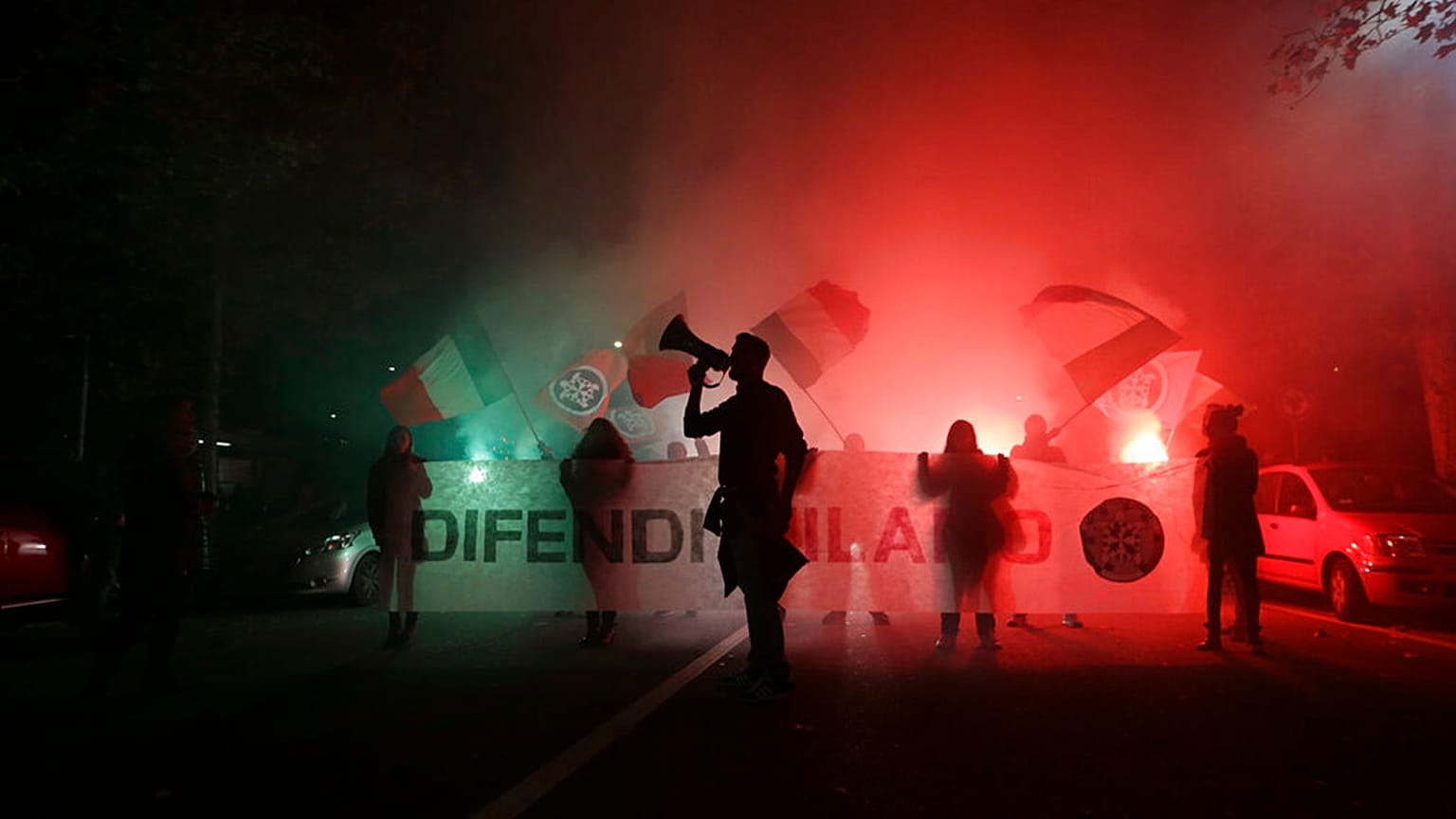
Italian court convicts 12 CasaPound members for attempting to revive fascist party

FILE: CasaPound activists demonstrate outside the former Montello barracks, where migrants are being transferred by Milan's prefecture, in Milan, 31 October 2016
Copyright AP Photo

By Ilaria Cicinelli & Euronews
Published on 

CasaPound takes its name from Ezra Pound, the US modernist poet who collaborated with Fascist Italy during World War II. The group was founded in December 2003 when activists occupied a state-owned building in Rome's Esquilino district.

A court in Bari convicted 12 members of Italy's neo-fascist CasaPound group on Thursday for attempting to reorganise the banned Fascist Party in the first judicial ruling to recognise the movement's fascist nature.

Five defendants received 18 months in prison, and seven others were sentenced to two years and six months after also being convicted of assault, according to the court. All 12 were barred from holding political office for five years.

The case stems from an attack on 21 September 2018 in Bari's Libertà neighbourhood, when CasaPound members assaulted anti-fascist demonstrators returning from a protest against Matteo Salvini, then interior minister and leader of the far-right Lega or League party.

The court cited violations of Articles 1 and 5 of the 1952 Scelba law, which prohibit the reorganisation of the dissolved Fascist Party and ban fascist demonstrations.

The ruling specifically cited participation in "usual fascist demonstrations" and the use of "squadrista (blackshirts) methods as a tool for political participation".

The opposition has largely welcomed the move, with Democratic Party (PD) leader Elly Schlein calling on Prime Minister Giorgia Meloni's government to dissolve CasaPound.

"Now that there's a ruling that establishes it, the government has no choice but to do what we've been asking of it for a long time: dissolve CasaPound, dissolve neo-fascist organisations as laid out in the constitution," Schlein said.

The opposition parties including the Five Star Movement (M5S) and Greens-Left Alliance have demanded Interior Minister Matteo Piantedosi provide an urgent briefing to parliament and order the eviction of CasaPound's occupied headquarters in Rome.

The defendants were also ordered to compensate victims of the attack, including former MEP Eleonora Forenza and her assistant Antonio Perillo, as well as Giacomo Petrelli and Claudio Riccio.

Others, including the National Association of Italian Partisans and the Communist Refoundation Party, will also receive compensation.

Named after a poet

CasaPound takes its name from Ezra Pound, the US modernist poet who collaborated with Fascist Italy during World War II. The group was founded in December 2003 when activists occupied a state-owned building in Rome's Esquilino district.

The organisation took part in the 2013 and 2018 parliamentary elections, receiving less than 1% of the vote in both contests. It subsequently ceased electoral participation and now operates as a social movement.

In January 2024, Interior Minister Piantedosi condemned fascist salutes at a CasaPound rally in Rome as "contrary to our democratic culture". However, he stated at the time that dissolving such groups was complicated, noting the law permits this only in very limited circumstances.

CasaPound spokesman Luca Marsella said the group was awaiting the court's written reasoning, noting: "It's a first-instance ruling".

Defence lawyers have announced they will appeal. The court will file its written reasoning within 90 days.


SOCIAL CREDIT BY EZRA POUND
THE POLITICAL WRITINGS
https://archive.org/details/PoundEzraWestonLoomisTheLetters/mode/2up