Sunday, April 05, 2026

In Lebanon, more than 50 medics have been killed by Israel. Some say they're targeted

April 5, 2026
NPR
Heard on Weekend Edition Sunday

By  
Lauren Frayer
Jawad Rizkallah
Claire Harbage


Mourners hold a portrait of Youssef Assaf, a Lebanese Red Cross volunteer paramedic who was killed during a rescue mission in southern Lebanon, at his funeral in Tyre on March 11.Kawnat Haju/AFP via Getty Images

BEIRUT, Lebanon — Dozens of paramedics in bright red uniforms shuffle around a coffin. The victim is one of their own.

Youssef Assaf, a volunteer paramedic with the Lebanese Red Cross, was killed by an Israeli airstrike on March 9, while on a rescue mission in Majdal Zoun, southern Lebanon. His funeral drew hundreds of first responders, marching in a seaside procession in the Mediterranean city of Tyre, his mother's cries heard over the shuffle.

Lebanon's government says at least 54 health workers are among more than 1,400 people killed by Israel during the current invasion. Some human rights groups say first responders are being targeted — something Israel denies.

Notifying Israel

Whenever Red Cross ambulances rush to the scene of any attack, they send their coordinates to United Nations peacekeepers, who then notify Israel.

They followed that protocol on March 9, when Assaf got out of his ambulance at the scene of an airstrike to assist the wounded — and was hit by another attack. After his killing, the Red Cross' director of emergency medical services, Alexy Nehme, says he sent a message back through that same mechanism to Israel, "as a complaint and a question. Why? Why us?"


Red Cross director of emergency medical services Alexy Nehme has asked United Nations peacekeepers and Israeli officials why volunteer paramedic Assaf was killed.Claire Harbage/NPR

Nehme says he never got a reply.

The Israeli military tells NPR it targeted a "Hezbollah military-use building" that day, and that "some people" arrived in the area "in the seconds between when the munitions were fired and the moment of impact," but were not intentionally targeted. Israeli troops "were unaware of the presence of Red Cross personnel in the area and certainly did not intend to strike them," the military said.

But Lebanese officials and human rights groups say this is a pattern.
A pattern of attacks on medics

"It's very clear that there is targeting of healthcare personnel, first responders and healthcare facilities," Dr. Firass Abiad, Lebanon's former minister of public health, tells NPR's Morning Edition. "When you have 10 first responders killed within a period of almost 24 hours, it's very difficult to say this is an accident."

On the weekend of March 28-29, 10 health workers were killed in a 24-hour period by Israeli attacks on Lebanon, according to the Lebanese government and the World Health Organization. Lebanon's current minister of public health, Rakan Nassereddine, said he has initiated the process of filing a complaint to the U.N. Security Council.

Human Rights Watch says it's too soon to draw conclusions about the current war. But HRW researcher Ramzi Kaiss says Israel has intentionally targeted health workers in the past, in Gaza and Lebanon. In 2024, his group documented three attacks: on paramedics at a civil defense center in Beirut, and on an ambulance and a hospital in southern Lebanon, killing 14 paramedics.

"We found that these attacks amount to apparent war crimes," Kaiss says. "Health workers are protected under the laws of war. In the attacks we investigated, we did not find evidence that the facilities and ambulances were being used for military purposes."

Amnesty International also says Israel is using the "same deadly playbook" to carry out "unlawful attacks on health facilities and health workers" without "any accountability or redress."

The World Health Organization's Director-General Dr. Tedros Adhanom Ghebreyesus says "attacks on health facilities must cease immediately."

"This cannot become the norm," he posted on social media.

What Israel says


A truck and ambulance burn after Israeli airstrikes hit a group of paramedics outside a hospital in Marjayoun, southern Lebanon on Oct. 4, 2024.AP

The Israeli military told NPR it abides by the law, but revokes legal protections for health workers when "misuse" occurs. Israel accuses Hezbollah of exploiting medical teams and facilities, transporting weapons in ambulances, as part of a broader pattern of "systematic exploitation of civilian infrastructure," it said.

The majority of first responders killed in this war have been with units run by Islamic political groups, including Hezbollah, which has its own ambulance service. Unlike the Red Cross, it does not notify Israel of its movements.

In an interview at the site of a Beirut building felled by a recent Israeli airstrike, Mohammed Farhat, operations director for the Islamic Health Authority, which includes Hezbollah's ambulance service, described working under the threat of so-called "double-tap" strikes. He says Israel will often strike a Hezbollah operative, then wait for Hezbollah's own first responders to arrive on the scene, and then hit them too.


Mohammed Farhat is the operations director for the Islamic Health Authority, which includes Hezbollah's ambulance service. He stands at the site of an Israeli strike in a central part of Beirut.Claire Harbage/NPR

The Israeli military denies any such policy. But it told NPR it does sometimes conduct an additional strike "when the objective of the initial strike was not achieved.

Farhat says first responders have changed their behavior. "We wait a bit," he says. But it's hard.

"You have the mind and the heart. When you hear someone crying or screaming — especially children — you don't really think. You just run towards them," Farhat says. "But we try to work in a way that doesn't increase the risk to the team. Instead of sending in 10 or 20 people into the heart of a targeted building in the first four or five minutes, we send three or four to get close, go in, and assess."

He denies transporting weapons, and says he's lost many colleagues, whom he says deserved legal protection as a health workers, regardless of their political affiliation.

Dispatching colleagues into harm's way


George Ghafary is the lead ambulance dispatcher for the Red Cross in southern Beirut.Claire Harbage/NPR

At the Lebanese Red Cross' control room in southern Beirut, ambulance dispatchers field some 1,500 calls a day. Some of them are gripping.

"After a recent airstrike, a woman called, saying she and her children were injured. They were clearly suffering from severe trauma," recalls George Ghafary, the lead dispatcher. "We stayed on the phone with them the whole time, until the ambulance reached them."

They survived, he says.

Calls like that weigh on him, Ghafary says. So does this war's toll on his profession. "These are my colleagues, my friends," he says. "I can't show the team my worry and anxiety, but deep down, it's there."

When he dispatches colleagues out into harm's way, he tracks them by GPS and stays on the line with them as well, by phone and walkie-talkie.

He hopes the line doesn't fall silent.


People work at the Red Cross dispatch center in southern Beirut.Claire Harbage/NPR
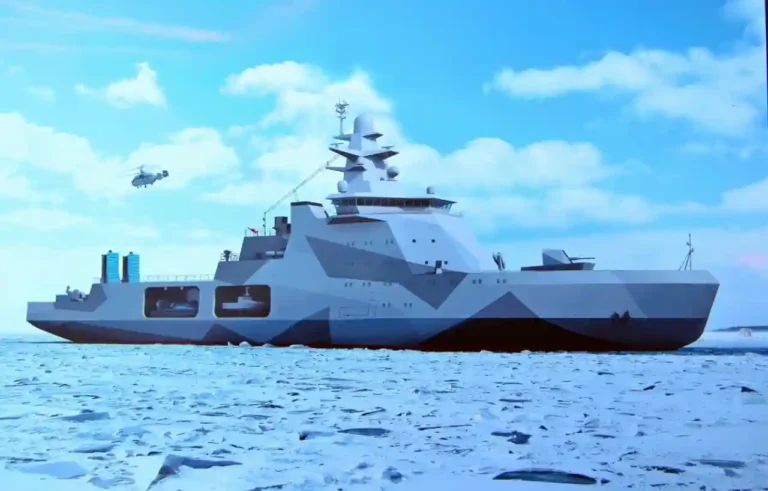
Canada launches advanced icebreaker to bolster its control in the Arctic

Canada strengthens its economic security in the Arctic


Last updated: 05/04/2026 
Medhat Elsheikh- News Editor


Advanced icebreaker (Photo/Archive)

Ottawa, Canada – Canada has begun developing a new, state-of-the-art icebreaker to bolster its maritime capabilities in the Arctic, a move aimed at supporting safe navigation and protecting the country’s economic and environmental interests.

The Canadian Department of National Defence stated that the new icebreaker features advanced technologies that allow it to operate in harsh icy conditions, while reducing fuel consumption and increasing operational efficiency. This will enhance Canada’s ability to monitor shipping lanes and respond to emergencies in the Arctic.

Officials explained that the project is part of a broader Canadian strategy to modernize its maritime fleet, including research and rescue vessels, to keep pace with climate change and the ever-increasing volume of shipping traffic through the Northern Sea Route.

This development comes at a time of growing international interest in Arctic marine resources, as major powers seek to strengthen their presence to secure their economic and security interests in the region.
US investor with ties to Trump family looks to Murmansk

Texas businessman Gentry Beach says he has signed an agreement to use a movable liquefied natural gas (LNG) plant currently under construction in Russia’s Murmansk region

The plan is to deploy the plant on Alaska’s North Slope, one of the world’s most gas-rich regions.


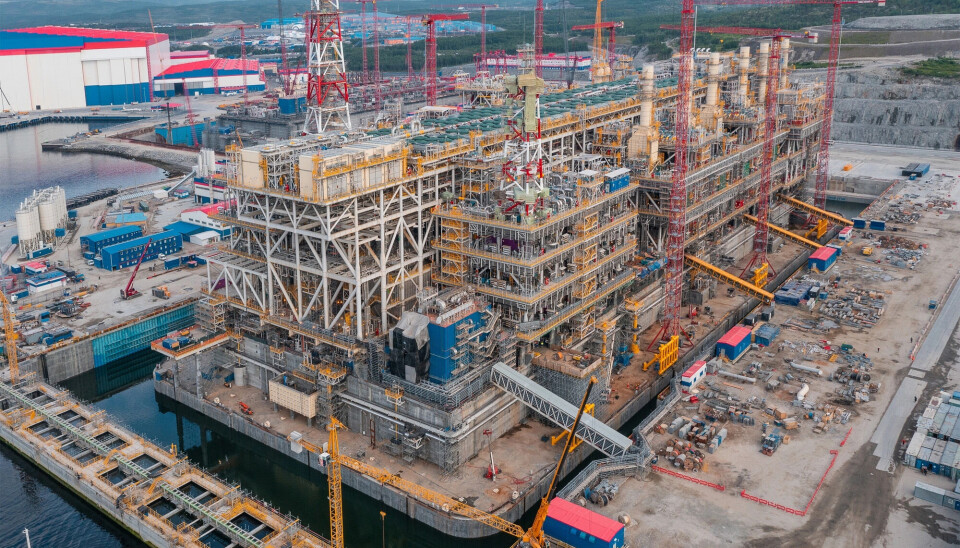
The LNG Construction Centre in Belokamenka builds so-called gravity-based structures. Photo: vk.com/belokamenka51
.
Atle Staalesen
23 February 2026 
THE BARENTS OBSERVER


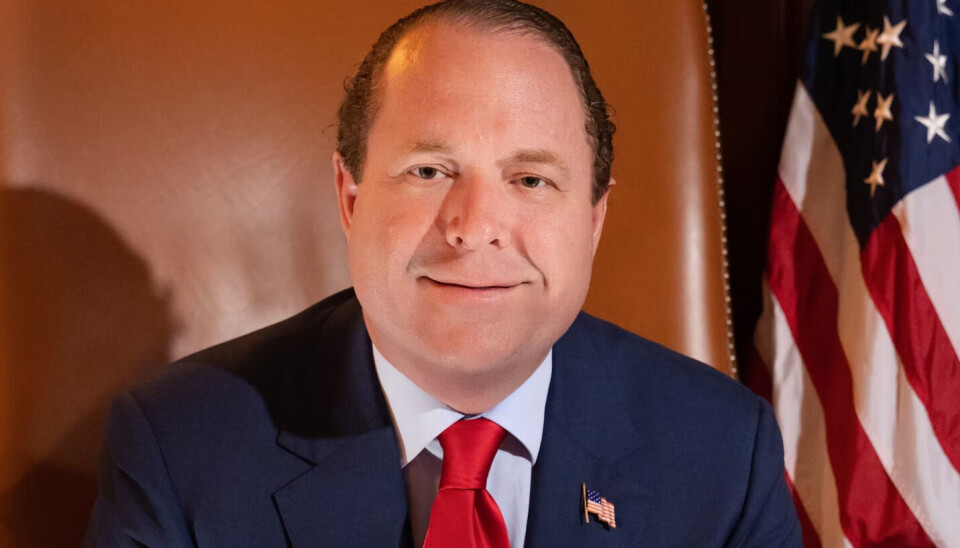
Beach, who is reported to be a friend of President Donald Trump’s eldest son, told the New York Times that he had signed a cooperation agreement with Russian gas producer Novatek. The deal envisages using a movable LNG plant being built at Novatek’s construction centre in the Murmansk region.


The plan is to deploy the plant on Alaska’s North Slope, one of the world’s most gas-rich regions.

The agreement comes as the Trump administration continues to cosy up with leading representatives of the Kremlin dictatorship.


Gentry Beach is a US investor with links to the Trump family. 
Photo: Americafirstglobal.com

According to Beach, the deal was negotiated with Novatek CEO and co-owner Leonid Mikhelson during meetings in Dubai and Europe last fall.

Beach stressed that his relationship with the Trump family played no role in securing the agreement, but acknowledged to the New York Times that “this project is known about at the highest levels” in both Moscow and Washington.

“It’s time for all of us to work together,” Beach told the newspaper. He described Mikhelson as “very pro-American.”

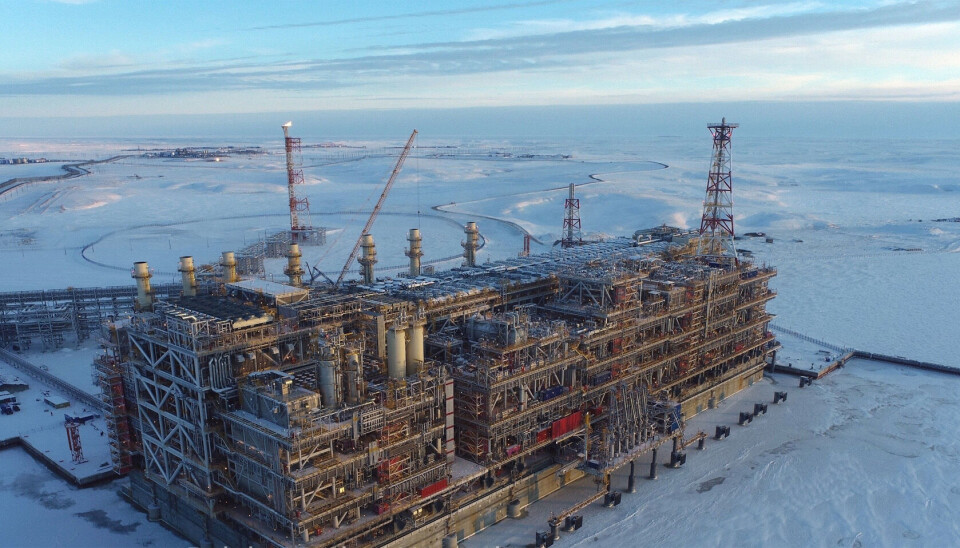
Novatek has several years of experience building so-called gravity-based structures — massive movable platforms designed for LNG production at remote sites.

Two such structures were built at the company’s LNG Construction Centre in Belokamenka, across the Kola Bay from Murmansk. Both were later towed to Utrenny on the Gydan Peninsula, where Novatek is developing its Arctic LNG 2 project.


Novatek has two floating production units in Gydan as part of its Arctic LNG 2 project. Photo: Belokamenka51 on VK

Construction of a third structure was launched but later halted as international sanctions against Novatek’s subsidiaries intensified.

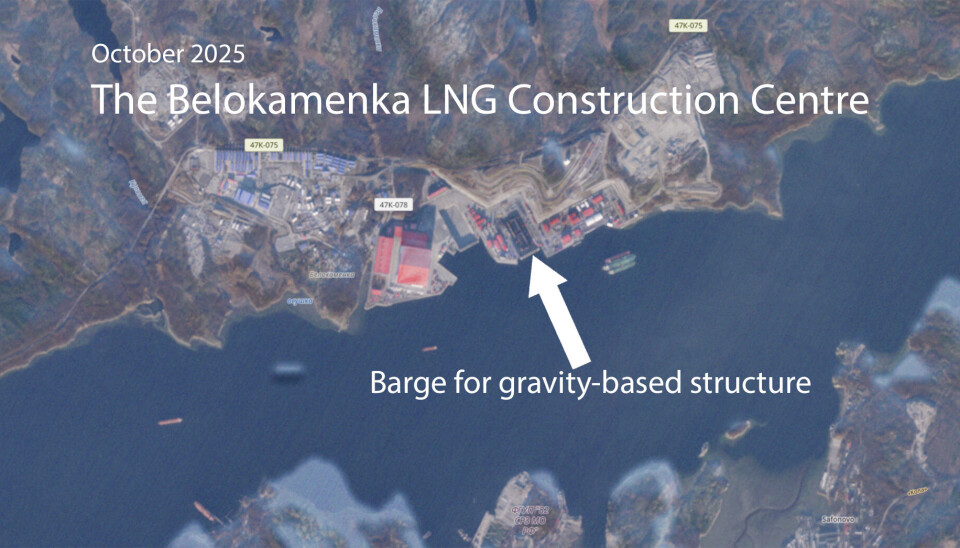
This is most likely the movable LNG plant referred to by Beach. Its current stage of completion is unclear, but satellite images from October 2025 show the barge in one of the two dry docks at the Belokamenka facility.


Satellite image from October 2025 of the LNG Construction Centre in Belokamenka, Kola Peninsula. Map by Barents Observer/Copernicus Sentitel 2

Virtually all entities involved in the Arctic LNG 2 project are under sanctions imposed by the United States, the United Kingdom and several other countries. These include the Arctic LNG 2 operating company, Novatek Murmansk, as well as many of the vessels involved in transportation of LNG.

The United States has been a leading force behind sanctions targeting Russia’s energy sector.

In November 2023, the US Treasury imposed sanctions on the Arctic LNG 2 project. Earlier, the Saam, a 400-meter-long vessel intended to serve as a transshipment hub, had also been sanctioned. In May 2024, the Treasury expanded its measures to include several heavy-lift carriers essential for transporting key project components.

The measures were intended to “limit Russia’s future energy revenues and impede Russia’s development of future energy projects,” the Treasury said at the time.

Two years later, the tone from Washington toward Moscow has shifted radically. The sanctions, however, remain in place — for now.
“They decided to come after us. Almost like in 1937”

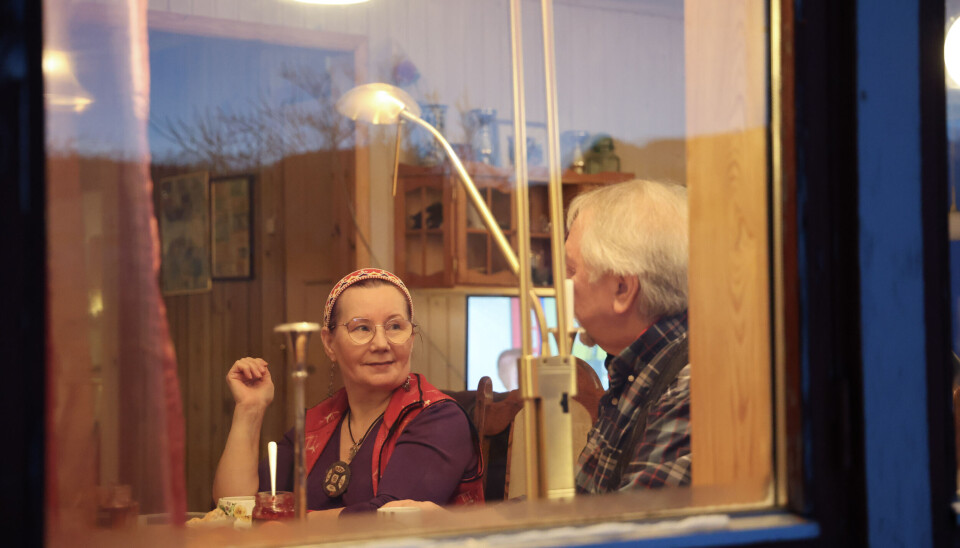
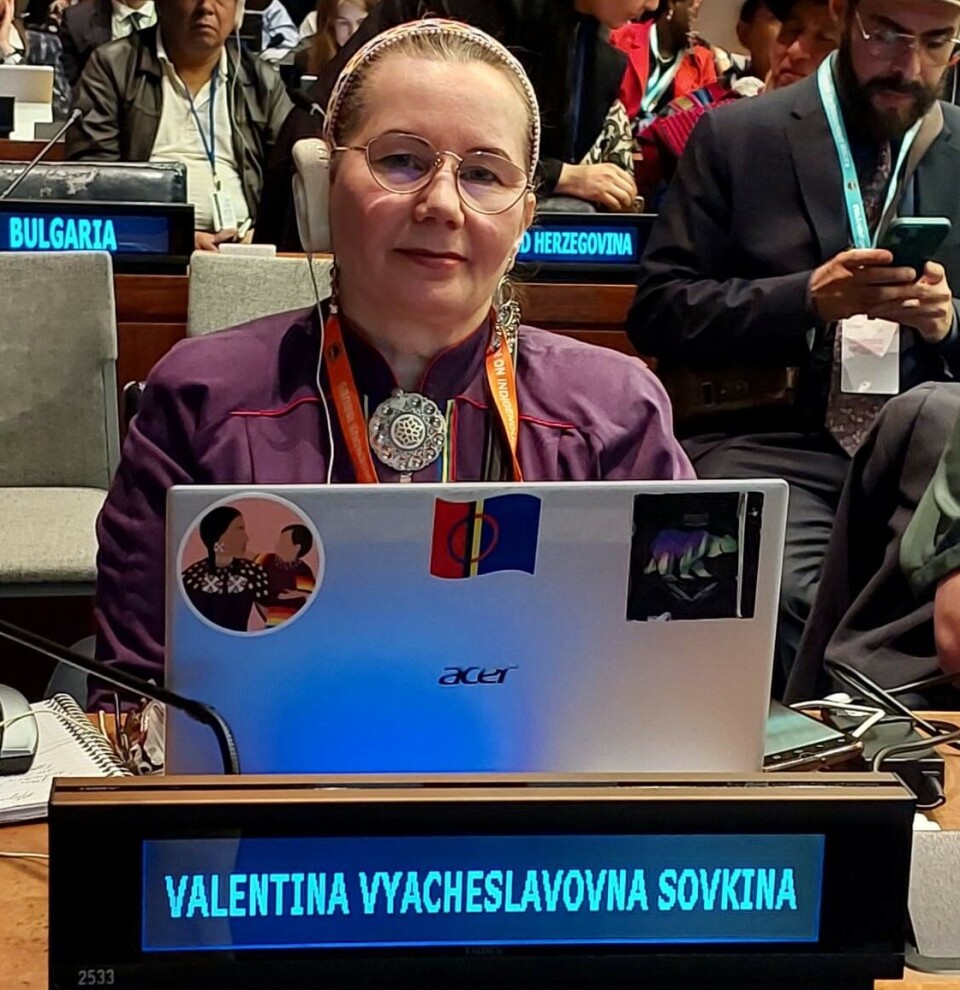
Sámi activist Valentina Sovkina, originally from the town of Lovozero in Russia’s Murmansk region, was forced to leave the country after a wave of searches targeting indigenous rights activists.


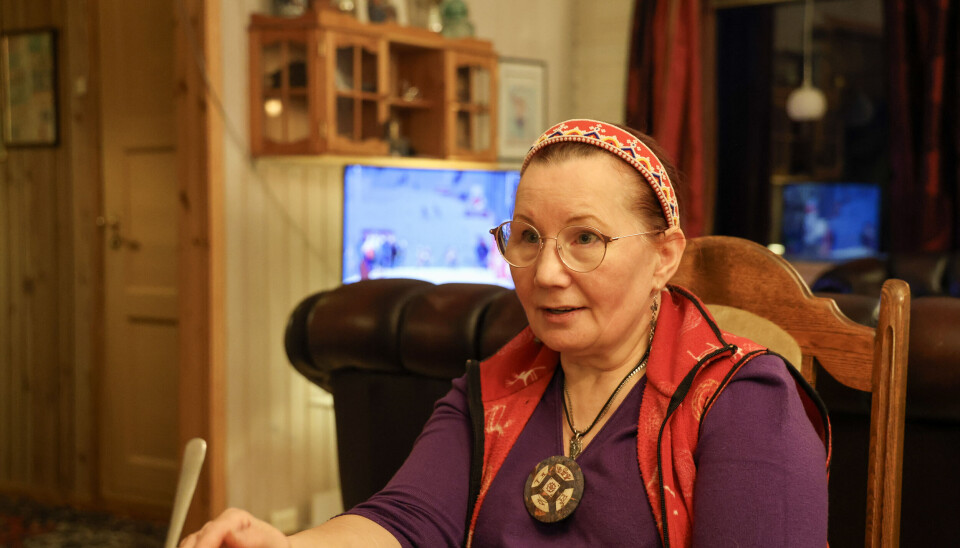
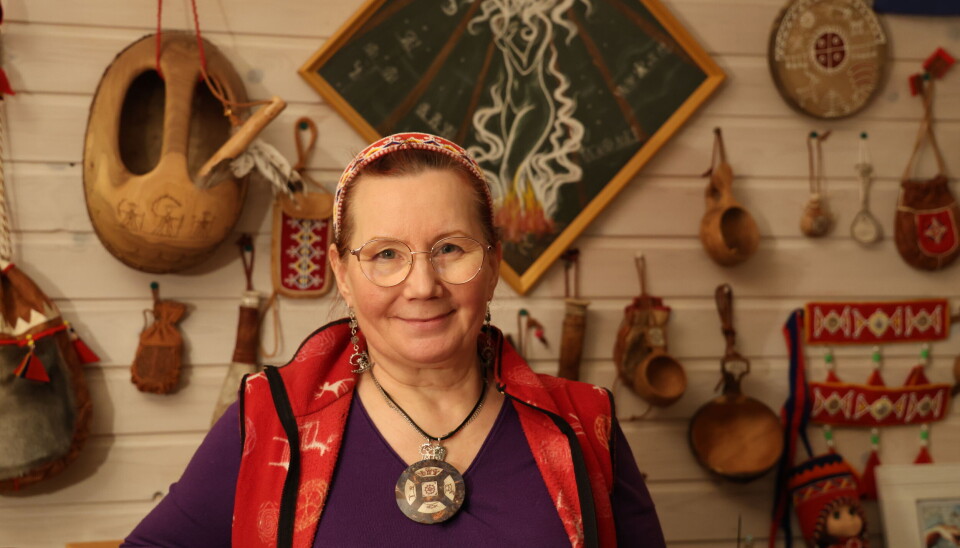
Sámi activist in exile. Valentina Sovkina had to flee from the Kola Peninsula. 
Photo: Sebastian Lerpold


LONG READ


Olesia Krivtsova journalist
Sebastian Lerpold journalist
11 March 2026 - 
THE BARENTS OBSERVER

Because of her work defending the rights of her people, Sovkina has faced bans on events, sustained harassment on social media, discrimination and even physical violence. The Barents Observer tells the story of her life — and her struggle to defend the right to be Sámi in Russia today.

A “search operation”

On December 19, 2025, the 62-year-old crossed the familiar border between Russia and Norway for what she believes may be the last time.

This time it did not feel like one of her usual trips abroad. There were no plans to meet relatives, no conferences on indigenous rights to attend. Sovkina was leaving Russia for the foreseeable future.

Two days earlier, on December 17, officers from Russian security services arrived at her flat in Lovozero. On the same day, the Federal Security Service (FSB) carried out searches at the homes of at least sixteen other people.

Security officers were looking for activists linked to the Aborigen Forum, a network of experts, civic leaders and organisations representing indigenous peoples of the North, Siberia and the Far East.

Sovkina woke up to a knock on the door and at first assumed it was her son, who had forgotten his keys. Instead, armed security officers forced their way into the apartment.

“I asked them several times directly: ‘Is this a search?’” she recalls. “They replied: ‘No, it’s an inspection as part of a search operation.’”


Fled to Norway. Valentina relocated to the Norwegian East Finnmark region. Photo: Sebastian Lerpold

They explained that if it had been an official search, it would have looked very different.

“They said: ‘We would have burst in, thrown you to the floor, put you in handcuffs and turned everything upside down.’”

For four hours one officer carefully recorded the serial numbers of electronic devices, while another repeatedly demanded the passwords to her phone and computer.

Sovkina refused.

“So you have something to hide?” one of the officers asked.

“Yes,” she replied. “Photos of me in lingerie that I send to my husband.”

She remembers one of the officers commenting that her husband was “quite elderly”.

“Well, I’m not exactly young either,” she answered. “Do you think people stop having a life when they get older?”

During the visit she tried to unsettle the officers by speaking about omens and shamanism. On one officer’s wrist she noticed a bracelet made of shungite, a mineral often believed to promote physical well-being.

“You won’t have good health,” she told him, pointing at the supposed talisman.

That same day similar visits took place at the homes of other activists. Indigenous rights defender Daria Yegerova was later arrested by the Basmanny Court in Moscow and accused of involvement in the Aborigen Forum, which Russian authorities have designated a “terrorist organisation”.
Treated as “second-class”

Valentina Sovkina was born and raised in Lovozero, a Sámi town in the Murmansk region.

Much of her story revolves around the tundra and family life — and her childhood in a boarding school for disadvantaged children, which profoundly shaped her life.

She was sent there because of instability at home. Her parents struggled with alcohol.

“I don’t judge them,” she says. “Everything that brought them to that point was rooted in hardship. They simply weren’t needed by society.”

“What does a dysfunctional family mean? It means there are no separate beds, no desks, no school supplies. Everything is shared. We all slept in one bed — if there was a bed. Often we slept on skins.”

Their extended family lived together. Her grandparents spent much of their time in the tundra.

It was in the boarding school that she first experienced discrimination.

“The staff and visitors often treated us Sámi as if we were dirty,” she recalls.

They would say we smelled bad and look at us with disgust. They treated us like second-class people, as if we were somehow unworthy.”

Her family’s diet consisted largely of reindeer meat, fish and berries.

“That was simply the food we knew. Our homes smelled of the stove, of skins and of work. When you sew leather, scrape hides — there’s a specific smell, and it stays in the house.”

At the same time, that upbringing shaped her identity.


Valentina Sovkina. Photo: Sebastian Lerpold

“That’s when I began to understand who I was. We had our own food, our own way of life. Reindeer stood nearby, our grandfather would arrive and we would ride them. We wore traditional clothing, the malitsa.”

She remembers waking up to her grandmother singing luvvts — traditional improvised songs.

“My tundra, my tundra, how I miss you.”
“Waving the flag”


Valentina Sovkina began researching her family roots in the early 1990s, when she found herself in hospital. In the ward with her was another woman from Lovozero who unexpectedly said: “Did you know we are related?”

Sovkina recalls how she began sketching out a family tree by hand — drawing little squares, names and connections.

“That sheet of paper became the starting point of my journey back to myself,” she says.

Later, when she entered politics, people began referring to her as someone who was always “waving the flag”.

“I had the flag everywhere,” she says. “On my computer, on my phone, a badge on my cap. I was constantly showing it — saying: here I am, I’m here, I exist.”
“They came to our land”

For many years Sovkina represented the Sámi — an indigenous people of the Kola Peninsula — in dialogue with government authorities, industrial companies and international institutions.

In 2022 she was appointed a member of the UN Permanent Forum on Indigenous Issues, an advisory body to the United Nations.

Much of her advocacy has focused on opposing industrial projects affecting traditional Sámi lands.


Sovkina is a member of the UN Permanent Forum on Indigenous Issues. Photo: private

She has also criticised what she calls the “decorativisation” of the Sámi — when authorities and tourism projects use Sámi culture as a picturesque backdrop while ignoring the real problems faced by communities.

Many of her speeches have addressed the rapid industrial development of northern territories.

In the Murmansk region a key actor is the mining giant Norilsk Nickel, whose subsidiaries operate across the Kola Peninsula.

According to activists, industrial expansion is destroying lands traditionally used by Sámi communities.

In recent years the Kola Peninsula has also become one of Russia’s key sites for the extraction of rare earth metals. Alongside nickel and palladium, attention has increasingly turned to lithium.


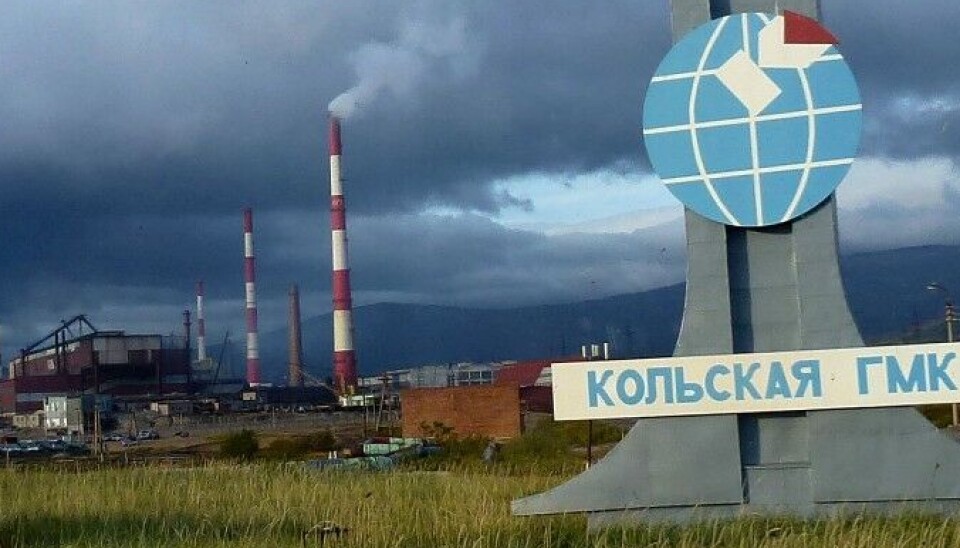
The Kola MMC is a regional subsidiary of Norilsk Nickel. 
Photo: Atle Staalesen

The Kolmozerskoye deposit, located near Sámi settlements and reindeer pastures in the Lovozero district, is considered Russia’s largest lithium project and a cornerstone of future battery production.

Expanding mining activity is pushing out traditional reindeer herding.

Compensation payments offered by companies, Sámi representatives say, fail to offset the long-term losses suffered by communities.

“I oppose Norilsk Nickel,” Sovkina says.

They came to our home. They want to take our land — the land where our reindeer graze. My grandfather is buried there, on an island in Lake Kolmozero.

“I understand the country needs lithium and other resources. But there are other places where extraction could happen. I don’t want them coming to our territory.”

According to Sovkina, state interests and corporate interests consistently override indigenous rights.

She points to the Association of Kola Sámi, which signed a cooperation agreement with Norilsk Nickel and receives funding from the company.

“Local indigenous leaders are often appointed from above and do not represent their communities,” she says.

“They are forced into partnerships with major corporations, which makes them dependent.”

In 2022, while crossing the border, Russian border guards took her aside for questioning.

FSB officers asked about her views on the Russian state, US policy — and finally about Norilsk Nickel.

“Ah, so that’s what this is about,” she replied. “You should have started with that.”
"To attack someone who wouldn't hurt a fly"

In 2014 Sovkina was travelling from Lovozero to the Norwegian town of Kirkenes, where she was due to catch a flight to New York for the World Conference on Indigenous Peoples.

That morning they discovered the tyres of their car had been slashed.

After finding another vehicle they set off, but police stopped them repeatedly along the road, searching the car and delaying them without formal documentation.


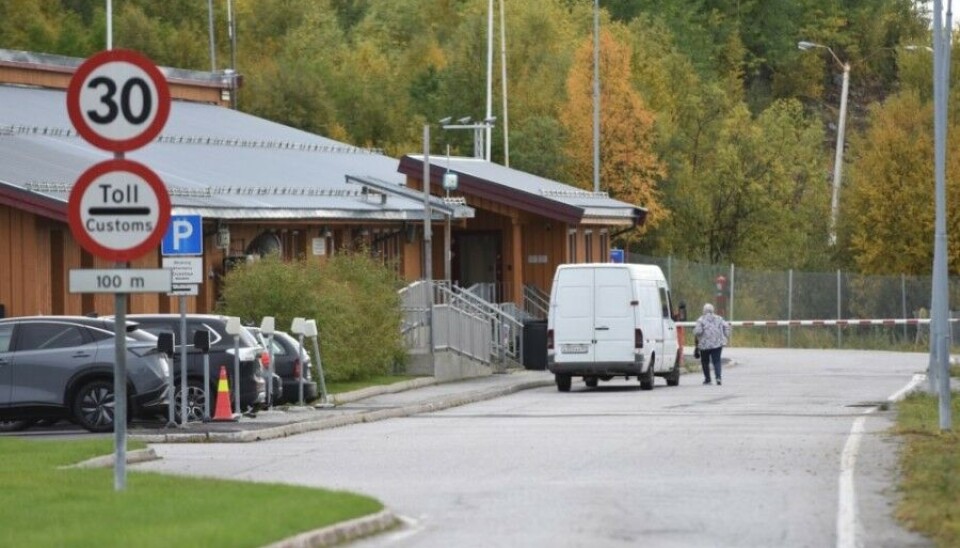
Border-crossing. Storskog is the only border-crossing point between Norway and Russia. Photo: Thomas Nilsen

“The reasons kept changing,” Sovkina recalls.

“At first they said it was a routine check. Then they said it was because of Ukraine — maybe we were transporting weapons.”

Near the town of Zapolyarny the car was stopped again.

As Sovkina spoke on the phone about what to do, a young man suddenly appeared and tried to snatch her bag containing documents and her phone.

“He started pulling at the bag. I held on — he pulled harder. Then he knocked me down and began dragging me.”

She fought back, kicking and shouting.

Meanwhile the driver was being held inside a police vehicle.

When he ran out to intervene, the police detained him — not the attacker.

“They grabbed the driver, not the attacker. The man simply ran away,” she says.

“It looked like a staged performance. A circus.”

The case was never properly investigated.

During later interrogations, one investigator suggested the officers had merely been following orders.

“I asked: whose orders? He said nothing. And I realised — even if they had killed me, it would still have been an order.”

It was after this, says Sovkina, that her attitude towards the state changed completely.

Now I am absolutely certain that I am not safe. You have shown that you can attack someone who wouldn't hurt a fly. You have completely changed my inner compass. I believed that the state was capable of protecting me."

She did fly to New York after all — a day late. She still has her passport. Other Russian participants in the conference were less fortunate: some of them were unable to leave, and some had their documents confiscated at the airports.
“The authorities don’t want us to be independent”

Pressure on Sámi activists long preceded the recent criminal cases under “extremism” and “terrorism” laws.

Sovkina says the first signs appeared when authorities began systematically obstructing attempts to organise meetings.

Whenever she arranged seminars or discussions in Lovozero, venues suddenly became unavailable.


Valentina Sovkina in Norway. Photo: Sebastian Lerpold

“They would say there were fire safety problems, or a burst pipe — always something.”

Eventually she concluded it was pointless to request space in public buildings.

“People who wanted to help were warned they might face consequences — that they could lose subsidies.”

She is convinced the FSB was behind the pressure.

Sovkina recalls how an unknown man came to an open event in Lovozero and asked permission to participate. He introduced himself as a ‘physical education teacher,’ but, as Valentina says, ‘it was immediately clear from his bearing that he was a security officer.’

"I told him, 'Sit down. We have no secrets. You can write everything down. We won't even speak in Sámi — we'll speak in Russian so that you can understand everything."

For two days, climate and oceanography experts discussed climate change, risks to the territory, long-term and short-term planning for Lovozero, and measures to be taken by the administration in the event of avalanche danger and other threats. After the meeting, the ‘physical education teacher’ approached Sovkina and asked a question:

"I still don't understand — what are you doing here that's so dangerous?"
Fighting the governor

Until 2010, Sámi Day, celebrated on February 6, was marked by the raising of the flag near the Murmansk regional administration building. However, activists later began to encounter problems.

Sovkina recalls how, in 2010, activists planned to raise the flag at the administration building. The governor did not appreciate the idea. "They went so far as to cut down the flagpoles so that we couldn't raise the flag near the building," says Sovkina, "so that there would be no topic for discussion. It turns out that even the government discussed it...

"How can we allow the flag to be raised? What if LGBT people come and demand the same thing?"

The Sámi responded with a protest: they came to the Murmansk administration building with drums and horns. Valentina was offered a compromise: "You raise the flag for half an hour, then take it down." She agreed, and the flag hung for a whole week.

It is not in their interest for us to be independent, it is not in their interest for us to be financially secure. We always talk about our territories, about the ancestral nature of these territories. We do not live in four districts. We live throughout the Murmansk region and have always lived here."

In the autumn of 2024, the authorities added the Free Nations of Postrussia Forum to the list of “terrorist structures" and declared 172 other initiatives to be its ‘structural subdivisions.’ The list included anti-war and decolonial projects, as well as movements for regional autonomy.

In addition, the Ministry of Justice recognised the ‘Anti-Russian Separatist Movement’ as extremist — an organisation that the ministry essentially invented itself by analogy with the ‘International LGBT Movement’ and the ‘International Satanist Movement.’
"This story is as old as the world itself"

Since 18 December 2025, Daria Yegereva, whose home was searched at the same time as Sovkina's, has been in custody. The indigenous rights activist and representative of the Selkup people is accused of ‘aiding terrorist activities.’

Sovkina condemned the persecution of activists.

"It is particularly outrageous that the Russian authorities are accusing activists of terrorism, for which people who have not committed and never called for violence are now being given monstrous prison sentences of 15 or 20 years in Russia. These sentences are not intended to “combat terrorism” but to intimidate. They have targeted those who have led and continue to lead a traditional way of life for centuries, herding reindeer, fishing, hunting and gathering wild plants on their own land. They preserve their knowledge, their knowledge of nature, bit by bit."

We must call a spade a spade: this is not a fight against terrorism, it is political revenge."

This is direct punishment by the state for the fact that representatives of Indigenous Peoples dare to appeal to the UN, speak about violations of their rights, participate in the work of international bodies and tell the truth about what is happening in Russia. The Russian authorities are deliberately criminalising the very idea of cooperation with the United Nations.

"This story is as old as the world itself — accusations of separatism, unwillingness to allow indigenous peoples to participate in decision-making, and the desire to maintain control over territories. This is exactly how colonial policy manifests itself," says Valentina's husband, Bjarne Store-Jacobsen.

Bjarne remembers the day of the search at Sovkina's house well — he watched what was happening from his home in the municipality of Nesseby, 100 kilometres from Kirkenes. Barents Observer journalists met with Valentina there.


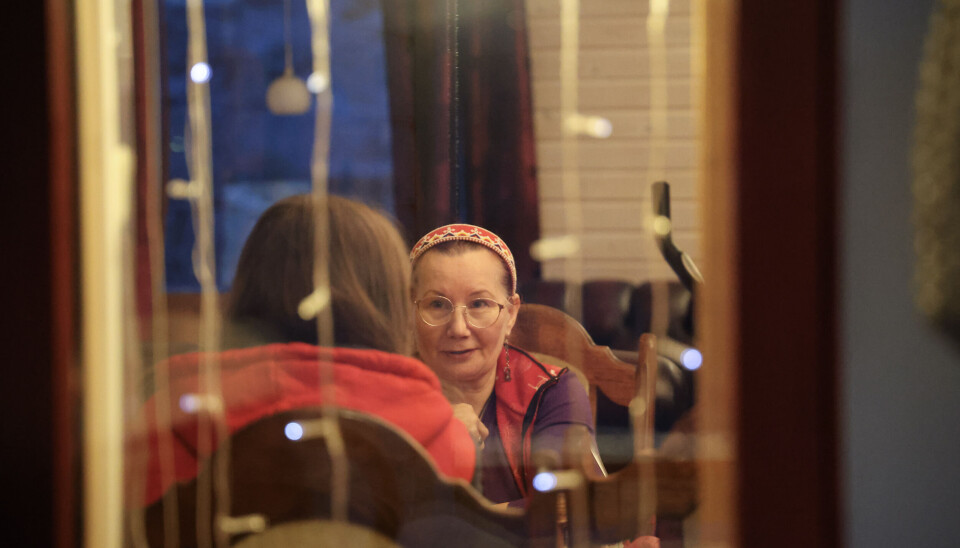
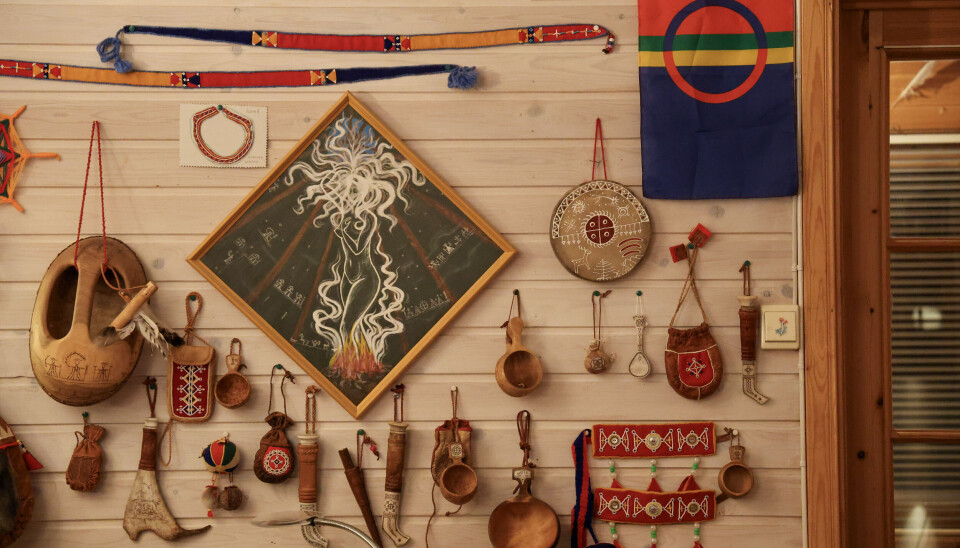
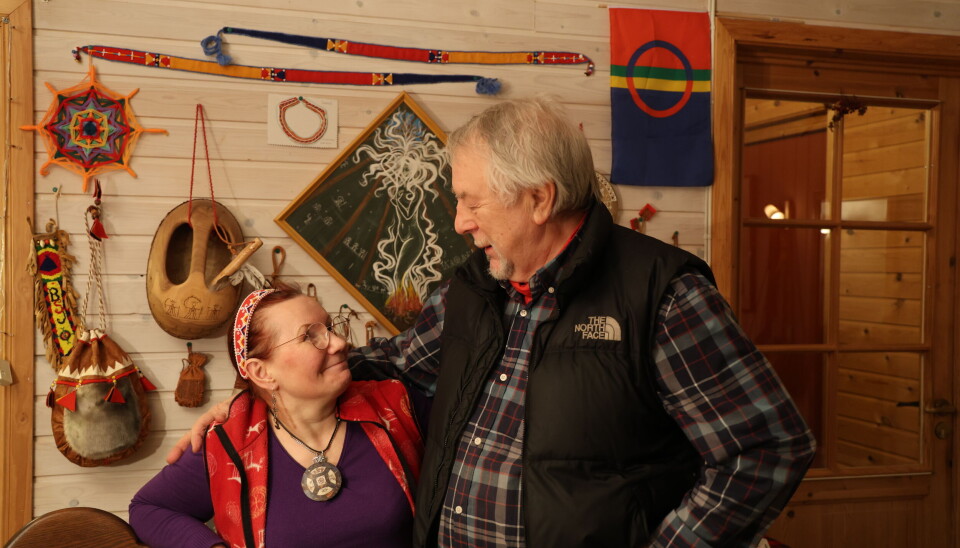
The atmosphere at Valentina's home in Nesseby, Norway. Some of the work was done by her students. Photo: Sebastian Lerpold

Like Sovkina, Store-Jakobsen is a well-known Sámi activist. At the beginning of his political career, he became one of the key figures in the Sámi rights movement, in particular opposing the construction of a hydroelectric power plant in Alta, northern Norway.

Despite their similar political backgrounds on opposite sides of the Russian-Norwegian border, the activists did not meet until they were older. In Norway, Store-Jakobsen worked as a journalist throughout the 1980s and 1990s, and in 2005 he was elected to the Sámi Parliament of Norway. Three years after returning to politics, the parliament sent him to represent the Sámi in international Arctic cross-border cooperation.

The council was established in 1993. Thirty years later, in 2023, Russia was removed from participation in this cooperation after launching a full-scale invasion of Ukraine. Despite living on different sides of the border, Sovkina and Store-Jakobsen maintained their relationship, meeting regularly. In 2020, they got married.

"She had a few days to leave the country. Otherwise, she would have been arrested," believes Bjarne Store-Jakobsen.


Valentina Sovkina and Bjarne Store-Jakobsen married in 2020. Photo: Sebastian Lerpold

The decision to leave Russia was difficult for Valentina, and she sometimes thinks about returning. But the possibility of ‘terrorism’ charges and the concern of her loved ones pushed her to take this step.

"It seems that my departure is an escape. But that's not in my nature. Sometimes I think I'm ready to drop everything and go back — and let everything burn. I want to know what's going on in my family. But if I'm deprived of the opportunity to speak, it won't do anyone any good."

Sovkina is currently awaiting a decision from the Norwegian Directorate of Immigration (UDI), to which she has applied for a residence permit on the grounds of family reunification. The UDI documents hang on the wall of her office.

Despite the fact that she now lives a normal life, Sovkina cannot shake the thought of returning to Russia. Even the understanding of the possible consequences — including imprisonment — does not deter her.
Echoes of Stalin’s terror

Today Sovkina draws a direct historical line between the repression of indigenous activists and events remembered by the Sámi as the “Sámi conspiracy”.

During Stalin’s purges in 1937–1938, Soviet authorities accused Sámi intellectuals and community leaders of forming a “counter-revolutionary nationalist organisation.”

They were charged with espionage, ties to Norway and Finland, and plans to separate the Kola Peninsula from the Soviet Union.

Among those arrested was Vasily Alymov, director of the Murmansk Regional Museum of Local History. About thirty other people were also repressed along with him. Most of them did not return: 15 people were shot, and 13 were sentenced to 10 years in prison.

When asked how often she herself was accused of separatism, Sovkina replies, ‘Practically all the time.’ After one of her speeches at the UN, a pro-government media outlet published an article in which accusations of separatism appeared on every other line.

"I read it and thought: my God, it's 1937 all over again. Another “conspiracy”, another search for enemies where people are simply talking about their rights."

"In essence, they have now decided to take us “under their wing”. The “Sámi conspiracy” involved doctors and scientists. And all because they were preserving their knowledge. What power that must be! That's why I have no moral right to give up."

"But I have an inner feeling that this will all end quickly. I believe in that."

Top four on Forbes Russia billionaires list made their fortunes in the Arctic

The number of Russian billionaires is growing for the fourth year in a row despite the war and international sanctions. Only five of the 155 people on the Forbes Russia list are women.


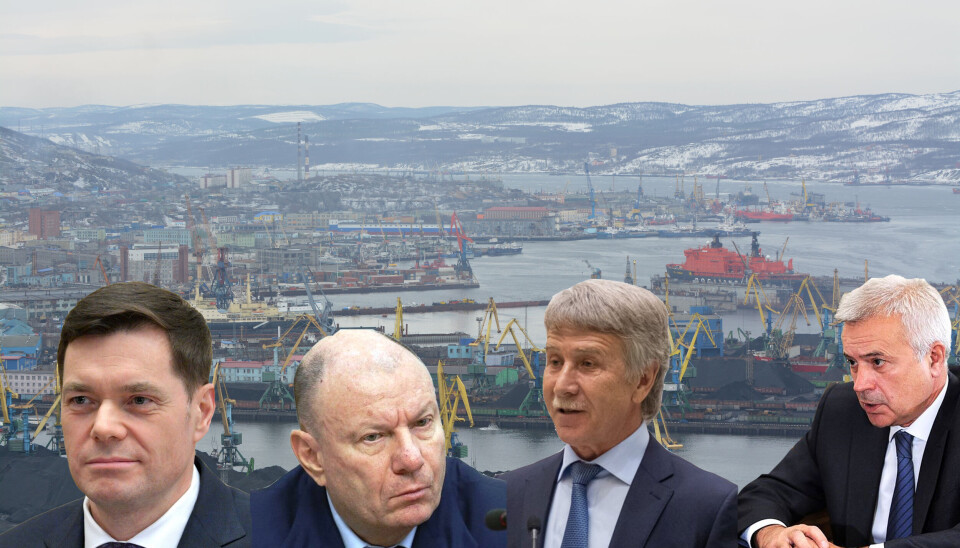
The Murmansk region and its Arctic shipping hub are important for Russia's billionaires. From the left: Alexey Mordashov, Vladimir Potanin, Leonid Mikhelson and Vagit Alekperov. Photos: Thomas Nilsen / the Kremlin / Federation Council

Thomas Nilsen
11 March 2026 - 
THE BARENTS OBSERVER

If the Forbes list published on Wednesday is any indication of how businesses are developing in Russia’s Arctic region, the outlook is not entirely bleak. The reality is, of course, more complex, but the list nevertheless highlights how vital Arctic resources remain to the country’s economy.

Steel tycoon Aleksey Mordashov and his family top the ranking for 2026, with a net worth of $37 billion — up $8.4 billion from 2025. Mordashov is co-owner of Severstal, Russia’s leading steel and iron-ore mining company. The Olenegorsk Mining and Processing Plant (Olkon) on the Kola Peninsula produces iron-ore concentrate for Severstal’s steel operations.

According to Forbes, Mordashov became the first Russian billionaire whose fortune exceeded $30 billion.

In February–March 2022, the European Union and the United Kingdom added Mordashov to their sanctions lists. In June 2022, the businessman and members of his family were also sanctioned by the United States.

Number two on the list is well known to readers of the Barents Observer: mega-polluter Vladimir Potanin.

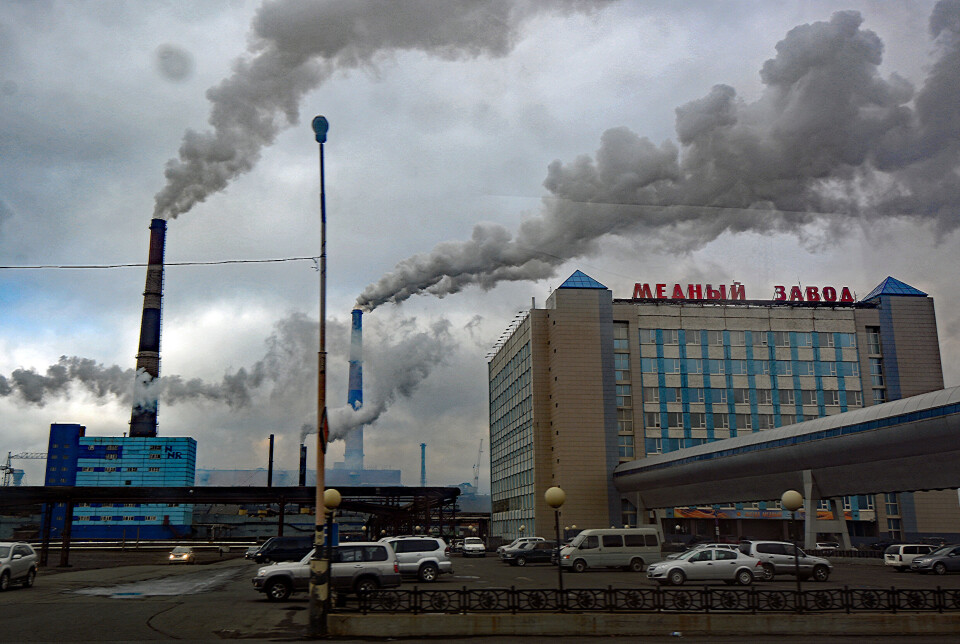
Potanin built his wealth by operating the Norilsk Nickel mining and metallurgical combine, a company with operations in Zapolyarny and Monchegorsk on the Kola Peninsula as well as in Talnakh and Norilsk on the Taymyr Peninsula in Siberia. The factories are the biggest air polluters in the Arctic, with massive emissions of sulphur dioxide and heavy metals over the fragile taiga and tundra environment.

By the start of 2026, Vladimir Potanin had a net worth of $29.7 billion, up $5.5 billion from last year. The increase alone means his wealth grew by about $627,854 every hour throughout the year.

Potanin has been sanctioned by the United Kingdom, the United States, Canada and Australia. In 2024, the Barents Observer reported that Potanin planned to move part of his copper smelting operation from Norilsk to China in order to circumvent sanctions.


The Medny Zavod (Copper Plant) is a major metallurgical enterprise in Norilsk. Photo:Thomas Nilsen

Vagit Alekperov ranks third on the Forbes Russia list with a net worth of $29.5 billion. Alekperov founded what later became Russia’s largest private oil company, Lukoil. However, he resigned as president of Lukoil only a few days after the United Kingdom imposed sanctions on him in 2022.

In the Arctic, Lukoil operates several oil fields on the tundra in the Nenets Autonomous Okrug and the Komi Republic, including the oil refinery in Ukhta that was hit by Ukrainian drones in mid-February.

Fourth on the list are Leonid Mikhelson and his family. He owns about 25 per cent of Russia’s largest private natural gas producer, Novatek. The company operates Yamal LNG, supplying liquefied natural gas to global markets with tankers sailing both east and west along the Northern Sea Route.

Novatek has also built the Kola Yard north of Murmansk, a huge barge construction site aimed at supplying the company’s Arctic LNG projects in Gydan on the coast of the Taymyr Peninsula. However, the plant stopped production after the United States imposed sanctions on it in November 2024.

Seventy-year-old Mikhelson and his family have a net worth of $28.3 billion.

Several other people among Russia’s 155 billionaires have also earned large portions of their wealth from businesses in the Arctic.

Gennady Timchenko also holds a stake in Novatek, as well as in other oil and gas producers. Timchenko is listed as number seven with a net worth of $24.2 billion, up $1 billion from 2025.

Number eight on the Forbes Russia list is Andrey Melnichenko and his family. Melnichenko owns coal mines, infrastructure and mineral fertiliser plants in the Arctic. His company EuroChem operates the mine and processing plant in Kovdor on the Kola Peninsula.

This oligarch is considered one of the most influential businesspeople in Vladimir Putin’s circle and was sanctioned by the European Union in 2022. His company, however, continues to trade with international partners, including some in the EU.

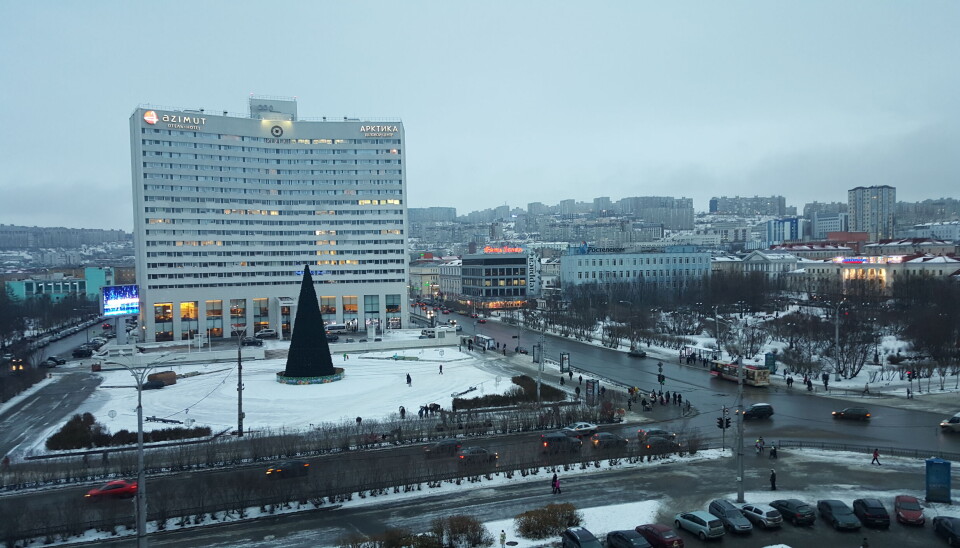
Melnichenko is also known as the owner of the world’s largest sailing yacht, the eight-deck “A”. The yacht’s masts are taller than the Hotel Azimut (Arktika), the tallest building in Murmansk. The yacht, though, is no longer in available for him since Italian police confiscated the vessel in 2022 as part of the Western crackdown on wealthy oligarchs linked to dictator Vladimir Putin’s invasion of Ukraine.


Hotel Azimut (Arktika) is the tallest building in Murmansk. The 19-floor hotel is 72 metres high, 19 metres shorter than the 91-metre-tall mid-mast on board the sailing yacht “A”. Photo: Thomas Nilsen

The combined net worth of all 155 Russian billionaires was estimated by Forbes at $695.5 billion. Only five on the list are women:

Tatyana Kim – founder of the Wildberries e-commerce platform; the richest woman in Russia with several billion dollars.

Elena Baturina – founder of Inteco, She was for a long time the richest Russian woman.

Lyudmila Kogan – shareholder in Uralsib bank.

Ekaterina Fedun – shareholder connected to the oil company Lukoil.

Tatiana Volodina – owner of cosmetics retailer networks L’Etoile and Podruka.
Barents Observer journalist fined over alleged “LGBT propaganda” in Russia

A Russian court has fined Barents Observer journalist Olesya Krivtsova 200,000 roubles, accusing her of promoting LGBT issues via the media or online platforms. However, authorities have not specified which of her actions led to the penalty.


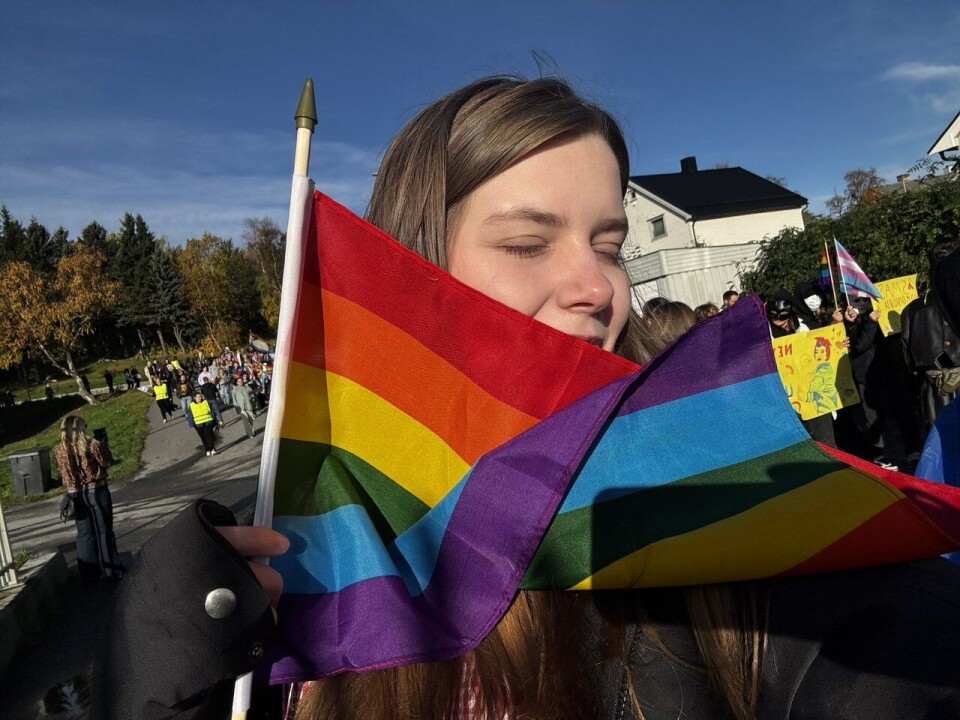
Olesia Krivtsova at Barents Pride 2023. Photo: Selfie

Georgii Chentemirov
27 March 2026 - 
THE BARENTS OBESERVER 

The ruling was issued by a magistrates’ court in Belgorod on 16 March. The decision has not been published, and Krivtsova says she has not been informed of the precise grounds for the case against her.

The charges may be linked to Krivtsova’s reporting for Barents Observer. Her work has included coverage of the trial of Ekaterina Filippova, who was prosecuted over a cross-shaped lamp, reporting from the Barents Pride event, and an article on Finland’s refusal to grant asylum to a Russian same-sex couple.

Allegations that Krivtsova was “promoting” LGBT issues were also outlined in a document from Russia’s Ministry of Justice. The statement was submitted in response to a request to remove her designation as a “foreign agent”. It claimed that Krivtsova “creates and publishes articles on behalf of residents of Arkhangelsk in support of LGBT supporters”, and that she “actively supports pro-choice movements” while making “negative statements” about the Russian Orthodox Church.

Responding to the fine, Krivtsova said:

I’m glad the authorities are spending some of their resources on me rather than on war or persecuting people inside Russia. In return, I want to wish freedom to all queer political prisoners — and to those who today are forced to hide, to live in fear, and to deny who they are just to survive. To those who are forbidden from being themselves and from loving. I do not intend to pay this fine.”

Krivtsova is currently facing, or has already faced, five administrative cases. In addition to the “LGBT propaganda” charge, she has been accused of violating Russia’s “foreign agents” legislation, for which she has already been fined 45,000 and 35,000 roubles.

She has also been placed on Russia’s wanted list and arrested in absentia. In 2022, criminal proceedings were launched against her on charges of “justifying terrorism” and “discrediting the army”. In 2023, Krivtsova fled Russia, reportedly evading security services while under house arrest.

All three Russian-language journalists working for Barents Observer have been designated as “foreign agents” by the Russian authorities. The publication itself has been labelled an “undesirable organisation” and is blocked within Russia.


Moscow court jails investigative journalist in absentia

A Moscow court has sentenced investigative journalist Andrei Soldatov in absentia to four years’ imprisonment for allegedly violating Russia’s “foreign agent” law.


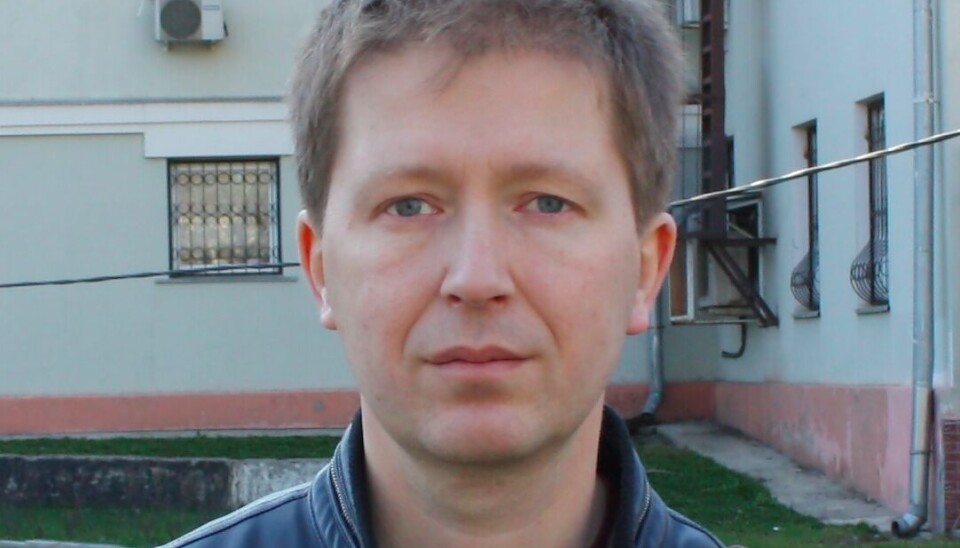
Andrei Soldatov. Photo: Wikipedia


Thomas Nilsen
1 April 2026 - 
THE BARENTS OBSERVER


Soldatov, who has authored several books on Russia’s security services, responded to the ruling by saying: “They are trying to silence me, but I will continue my work.”

The sentence was handed down on Monday by the Basmanny District Court. Soldatov, who was designated a “foreign agent” in 2023, shared news of the verdict on Facebook.

The ruling cannot currently be enforced, as Soldatov resides outside Russia. He left the country in 2020 and is now based in London. Since 2022, he has been on Russia’s wanted list, accused of spreading “false information” about the armed forces.

Charges of disseminating “fake news” about the military are frequently used against journalists and critics. In practice, the offence can amount to something as simple as referring to Russia’s actions in Ukraine as a war.

The crackdown on independent journalism has been a central feature of Vladimir Putin’s rule since the early 2000s. However, it intensified sharply following the full-scale invasion of Ukraine in 2022 and has since reached unprecedented levels.

Few journalists are as familiar with the inner workings of Russia’s security services as Soldatov. For more than two decades, he has studied the FSB alongside fellow journalist Irina Borogan. Together, they have published several books examining the agency and other security institutions.

Soldatov is co-founder and editor for the website Agentura.ru.

He has previously worked as a journalist and contributed commentary on terrorism and intelligence matters to a range of Russian media outlets, including Echo of Moscow, Vedomosti, and The Moscow Times.

In addition to the prison sentence, the court has barred Soldatov from administering websites or engaging in any online activity for four years.

In an interview with El País following the ruling, Soldatov said: “This sentence is a clear attempt to silence me and force me to stop working as a journalist. I will continue to do so, no matter what.”
37 years on, no signs of leakage from plutonium warheads

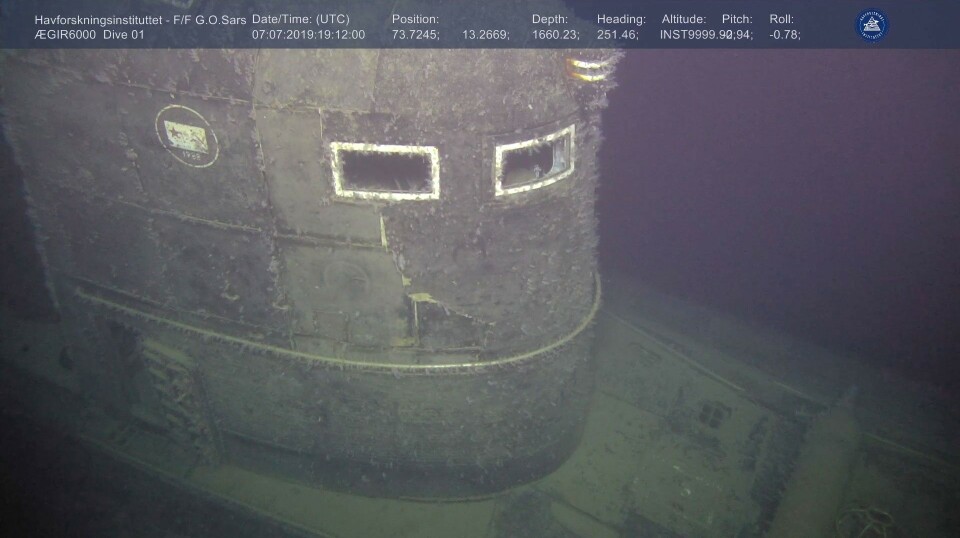
Results from two new studies of seabed sediments near the sunken nuclear-powered submarine Komsomolets (K-278) in the Norwegian Sea show no plutonium contamination above natural background levels.


The wrecked Northern Fleet submarine Komsomolets rests on the seabed at a depth of 1,680 metres (5,510 ft). Photo: Norwegian Radiation and Nuclear Safety Authority


Thomas Nilsen
5 April 2026 - 
THE BARENTS OBSERVER

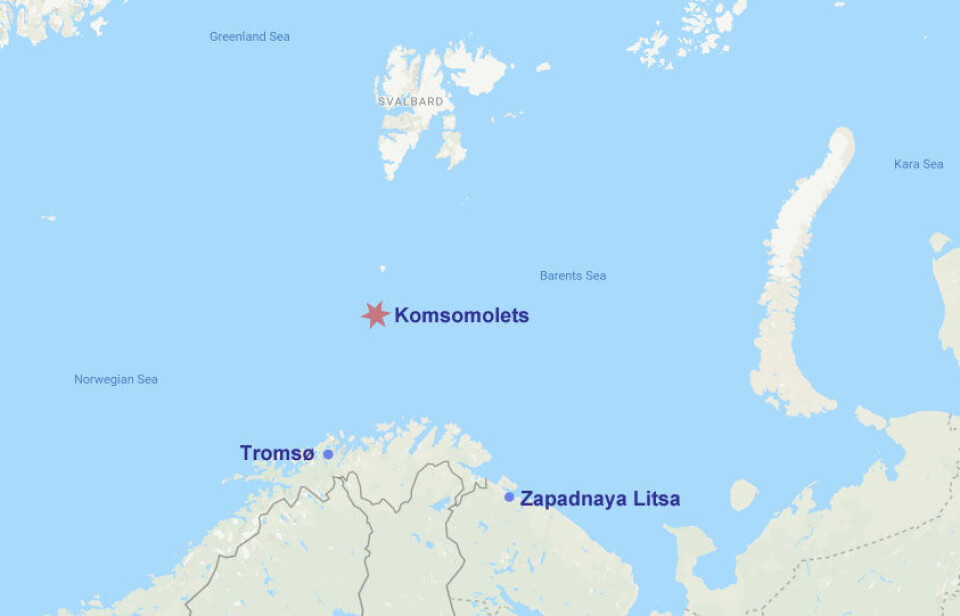
The submarine, which contains one nuclear reactor and two plutonium warheads, lies on the seafloor approximately 250 kilometres southwest of Bear Island. Since its sinking on 7 April 1989, there have been concerns that radioactive leakage could affect the marine environment.

The Norwegian and Barents Seas are among the world’s most productive marine ecosystems and support some of the largest fish stocks on the planet.

However, two recent studies - one Russian and one Norwegian - found no evidence of weapons-grade plutonium in sediments or seawater near the wreck.

The Russian study, conducted by scientists from the Russian Academy of Sciences, is based on samples collected during the 68th expedition of the research vessel Akademik Mstislav Keldysh. The vessel has visited the wreck site multiple times since the early 1990s.

“The activity of plutonium isotopes ²³⁹⁺²⁴⁰Pu and ²³⁸Pu in bottom sediments at the site corresponds to background levels for the Arctic. This indicates that the submarine’s hull is currently effectively containing hazardous materials,” said Artyom Paraskiv of the A.O. Kovalevsky Institute of Biology of the Southern Seas. The findings were published this week in the journal Marine Pollution Bulletin.

Previous joint Norwegian–Russian studies have detected releases of radionuclides from the reactor via a ventilation pipe, but the two plutonium warheads are believed to remain intact. This is despite significant damage to the submarine’s forward section, including both the outer hull and the inner pressure hull, particularly around the torpedo compartment.

The warheads are mounted on torpedoes.

A Norwegian study, published in March and based on earlier expeditions to the Komsomolets, reached a similar conclusion:

No evidence was found of plutonium in the surrounding environment near the damaged forward section of the submarine originating from the nuclear warheads.”

Leakage of caesium-137 and strontium-90 from the nuclear reactor has been confirmed, but there is no evidence that these isotopes are accumulating in the marine environment.

The highest levels recorded were around 800 becquerels per litre of seawater inside the wreck’s pipe systems. By comparison, typical levels in the Norwegian Sea today are around 0.001 becquerels per litre—meaning the measured samples were approximately 800,000 times higher than normal.

Despite more than 30 years of releases from the reactor, there is little evidence of any build-up of radionuclides in the surrounding environment, as they appear to be rapidly diluted in seawater," according to the Norwegian report.

These findings have previously been reported by the Barents Observer.


The Komsomolets was on a training mission to the waters where the shallow Barents Sea meets the deeper Norwegian Sea when it on April 7, 1989, sank after a fire. The submarine had Zapadnaya Litsa on the Kola Peninsula as home port. Map: Google Map / Barents Observer

The Russian expedition to the wreck site formed part of a broader study of plutonium contamination on the Arctic seabed. In total, sediment samples from 22 sites across the Norwegian and Barents Seas were collected and analysed.

The highest plutonium levels were found north of Novaya Zemlya in the Russian Arctic, originating from global fallout from nuclear testing in the 1950s and 1960s.

Putin’s Destructive ‘Deathonomics’ Doomed to Failure, Lea and Taskin Argue

Paul Goble

Sunday, April 5, 2026


            Staunton, April 2 – The term “deathonomics,” introduced by Vladislav Inozemtsev to describe the way in which Putin has used monetary payments to get Russians to die for him in Ukraine not only is far more pernicious than many assume but is doomed to failure, according to Aaron Lea and Borukh Taskin.

            The two Israeli analysts of Russian background say that Putin’s deathonomics is “rooted in the GULAG and not merely as a metaphor but through an actual economic genealogy. The GULAG was the core of the Stalinist economy, a system in which death was embedded within the production plan as depreciation (kasparovru.com/material.php?id=69CE4433B2723).

“Stalin, at least, feigned the construction of a civilization—canals, factories, mines,” the two analysts argue; but “Putin creates nothing save for the short-term consumption of the payouts issued for death. Operating within the Russian Federation today is the GULAG motto: ‘You die today; I’ll die tomorrow.’"

This represents the quintessence of an ethics of survival at the expense of others—a mindset in which the present feeds upon the future. Varlam Shalamov understood that the Gulag’s primary product was the elimination of the "inner witness"; for a person who survives through complicity or silence loses the capacity to bear witness against the system.”

In Putin’s Russia, they point out, “a family which accepts a death payout has effectively silenced not only its own voice but also the very question of meaning; the "coffin money" has purchased their consent, rendering their conscience an inconvenient burden.” But this transaction does more than that.

“When death becomes a private contractual arrangement between the state and a contractor, the very space of shared existence—what the ancient Greeks termed the polis—is abolished. Deathonomics supplants political will with a market transaction, thereby rendering collective refusal structurally impossible while engaging in an act of demographic cannibalism.”

As economists have shown, Lea and Taskin observe, this process costs “the economy 30 to 40 years of potential labor, tax revenue, and innovation for every person killed—replacing long-term human capital with short-term inflationary demand, and effectively transforming into a financial pyramid scheme where the interest is paid in the lives of those yet unborn.”

But as it does that, it also dooms the Putin system because that system “rests on a temporal arbitrage as the Kremlin pays more for death than a life is worth. Yet this reosurce is finite, the labor market is overheated, and wages on the home front are rising even as the pool of individuals for whom contract payouts exceed lifetime earning potential falls.”

And that means, the analysts say that “Putin has fallen into the trap of escalating subsidies: lower the payouts, and recruitment collapses; raise them, and budgetary ruin accelerates. The true civilizational tragedy lies not in the fact that this pyramid scheme will eventually collapse, however, but in what will be left in its wake.”

Russian society, of course, “will survive deathonomics, but it will continue with a rewritten moral code, one in which the price of a human life having been established, ‘the inner witness,’ the moral compass within [that survivors of the GULAG talked about] has been abolished.”

“Consequently,” Lea and Taskin argue, the era of "Post-Putinism" will not usher in a new, democratic Putin figure; rather, it will entail the absolute dominion of the security services over a population that has unlearned how to be human.” But even that is not the most serious consequence of Putin’s innovation.

Whatever some think, “deathonomics is not the cause of the economic catastrophe” now facing Russia. Rather I is the very embodiment of the maxim, ‘you die today and I’ll die to tomorrow,’ an invoice for centuries of the systemic devaluation of the individual, now being presented for settlement which generations yet unborn will be obligated to pay.”

Choirs seek to protect a musical tradition little changed since Queen Elizabeth I

A campaign is underway to protect England's choral music tradition, which has thrived for nearly 500 years


By DANICA KIRKA 
Associated Press
April 4, 2026, 

LONDON -- On a gray afternoon in the days before Easter, a dozen or so schoolchildren straggled into a side building at Rochester Cathedral and began their transformation.

Off went the jackets and backpacks, on came burgundy cassocks and white surplices. Then they trooped into the cathedral, opened their mouths and sang as one. The youthful gaggle had become a choir, giving voice to a tradition of choral music in the Church of England that has survived largely unchanged for almost 500 years.

“I think for me, it’s one of the sounds of our country,’’ said Adrian Bawtree, the choir’s music director. “All of our cathedrals are beautiful, sacred spaces where you can come and just sit and be and you can be immersed, bathed, nourished, sent out back into the world transformed by an experience in 30 minutes.”

The epitome of that tradition is Choral Evensong, an evening service of hymns, psalms and prayers laid out by Archbishop Thomas Cranmer, the first Protestant archbishop of the Church of England, in 1549. The service is performed by the choir, with the congregation participating simply by listening.

But that tradition is under threat as the demands of modern life, declining church attendance and tight funding make it harder to find and train the next generation of choristers.

Enthusiasts are trying to reverse that, launching a campaign for the government to recognize English choral services as an important part of Britain’s culture under a U.N. program that seeks to protect “intangible cultural heritage,” as well as historic buildings and natural wonders.

The U.K. government is seeking nominations for a nationwide inventory of cultural traditions — from Morris dancing to the craft of building dry stone walls — that should be preserved. Protecting such traditions is crucial to strengthen community identity and bolster the U.K. economy as heritage tourism generates billions of pounds in annual spending, the government says.

While many people have been introduced to English choral services through the angelic voices of the choristers in flowing robes and Elizabethan ruffs who sing at royal weddings and carol services, choirs perform every day in much more humble settings.

And many are struggling, according to the Cathedral Music Trust, which was founded in 1956 to stem the decline of church music after World War II. Last year it gave 500,000 pounds ($661,000) to 28 cathedrals and churches around the country.

It can be a lot. Rochester, for example, spends about 250,000 pounds ($330,000) a year on music, a substantial outlay for a provincial cathedral but less than some.

The trust hopes recognition of the English choral tradition will bring attention and much-needed funding to choirs, which it says are an important training ground for the musicians of tomorrow, both religious and secular.

“Whilst it happens every day, it is actually quite fragile,” trust CEO Jonathan Mayes said. “It takes an awful lot of work and it takes a lot of funding to actually make it happen and that doesn’t come without effort.’’

Preserving Evensong is important historically because the service was instrumental in the development and spread of the modern English language, said Diarmaid MacCulloch, an expert on Christianity and an emeritus professor at the University of Oxford.

The service is based on the Book of Common Prayer, compiled by Cranmer to make English the language of the Church of England after it broke away from the Latin-dominated Catholic Church during the Protestant Reformation.

The idea was to create services everyone could be part of.

“It is very much a drama, and it is a drama which has been performed by the people of England from 1549 through to the present day,” MacCulloch said. “It’s far more a vehicle of public consciousness performance than any play of Shakespeare.’’

And while a growing number of choirs including Rochester now take girls as well as boys, in other respects it hasn't changed much since then.

“The service would be really quite recognizable to Queen Elizabeth I as much as Queen Elizabeth II," MacCulloch said. "And that’s quite remarkable.”

Bawtree, the music director at Rochester Cathedral, is one of those working to preserve the tradition as he oversees the youngest singers, aged 9-13, known as choristers, as well as a youth choir for older children. All are backed by professional adult singers.

Bawtree said he was captured by church music the first time he heard an organ play and a choir sing when he was about 9 years old. Now he wants people to know that services like Evensong make it possible for anyone to turn up and listen to beautiful choral music, regardless of their beliefs.

“When I heard it, it was like big octopus arms came and grabbed me and said, ‘You’ve got to be part of this.’ So I think I am trying to speak to that 9-year-old child and saying actually this is something that could speak to most people, if not everyone.

“And because I had that experience, I would like to share that with future generations and be passionate about that," he said. "We talk in the world of mindfulness and the power of music to transform lives. This is an extraordinary arena where that can happen.”

___

Associated Press religion coverage receives support through the AP’s collaboration with The Conversation US, with funding from Lilly Endowment Inc. The AP is solely responsible for this content.
'Mysterious glowing object' seen streaking through Indonesian skies

It's the remains of a Chinese rocket, according to the country's National Research and Innovation Agency


Residents in Indonesia's Lampung and Banten reported seeing a "mysterious glowing object" on Saturday (April 4) night).
PHOTO: Social media

PUBLISHED ONApril 05, 2026 
BYSean Ler
ASIA ONE

Residents in Indonesia's Lampung and Banten on Saturday (April 4) reported seeing a "mysterious glowing object" streaking across the skies, with some speculating that it may have been a meteor shower.

The video of the object with trailing flames went viral on social media.

Some expressed concern, fearing that the object could be a missile or military projectile due to the accompanying loud, rambling sound.

In a statement published on Sunday, the Indonesian National Police (INP) said the National Research and Innovation Agency (BRIN) has confirmed that it was space debris re-entering the atmosphere and not a natural celestial body or military munitions.

"The bright object witnessed by residents, which appeared to break into several pieces, was the remains of a Chinese CZ-3B rocket," Indonesian news agency Antara quoted BRIN astronomy professor Thomson Djamaluddin as saying.

Professor Thomas said that orbit analysis showed the debris was part of China's Long March 3B (CZ-3B) rocket, moving from the direction of India towards the Indian Ocean.


Explaining the phenomenon, he added: "As the object entered the dense atmosphere, it continued moving while burning and breaking apart."

In its statement, the police also assured the public that such re-entries are monitored, adding that it serves a reminder of the increasing density of space junk in low Earth orbit.

According to the National Aeronautics and Space Administration's (Nasa) Orbital Debris Programme Office, debris left in orbits below 600km normally fall back to Earth within several years, while those at altitudes of 800km may take centuries.

In a set of frequently asked questions, Nasa's programme office said that most of the debris do not survive the severe heat that occurs during re-entry.

"Components which do survive are most likely to fall into the oceans or other bodies of water or onto sparsely populated regions like the Canadian Tundra, the Australian Outback or Siberia.

"During the last 50 years an average of one catalogued piece of debris fell back to Earth each day. No serious injury or significant property damage caused by re-entering debris has been confirmed," it added.