Wednesday, April 29, 2026


Transatlantic consortium unveils €50bn AI data centre project in Croatia

Transatlantic consortium unveils €50bn AI data centre project in Croatia
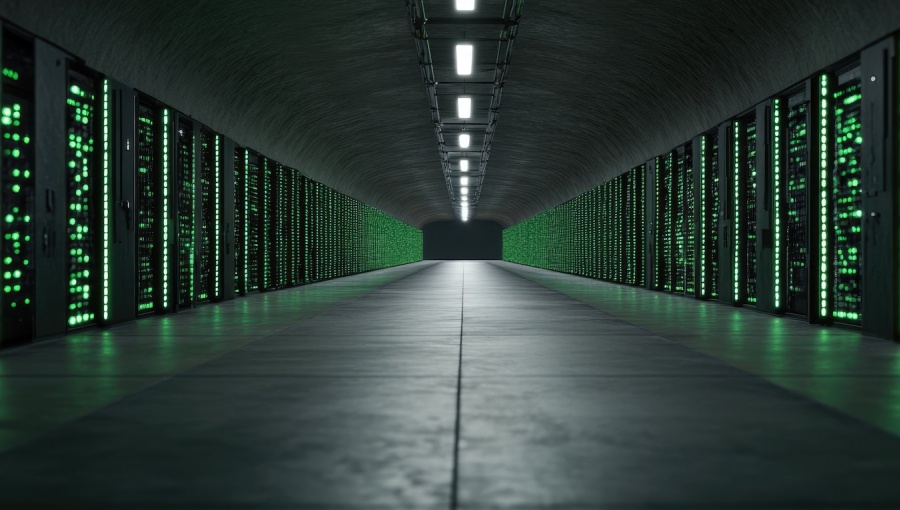
Investment aims to position Croatia as a regional hub for digital infrastructure amid surging demand for AI computing capacity. / Image by kp yamu Jayanath from PixabayFacebook
By bne IntelliNews April 28, 2026

A transatlantic investment consortium on April 28 announced plans to build a €50bn artificial intelligence (AI)-focused data centre and innovation campus in Croatia, in what it described as the largest investment in the country’s history and one of the biggest private US investments in Europe.

Pantheon Atlas LLC said the project, branded Pantheon AI, would be located in Topusko, about 45 minutes from the capital Zagreb, and aims to position Croatia as a regional hub for digital infrastructure amid surging demand for AI computing capacity.

The announcement was made at the Three Seas Initiative Summit in Dubrovnik. The campus will be designed in line with NVIDIA’s gigawatt-scale AI factory standards and is expected to reach 1 gigawatt (GW) of total capacity, with 800 megawatts (MW) of usable IT load, the company said.

“Pantheon AI is a signal to the world that Croatia is open for the highest-caliber investment,” said Jako Andabak, founding partner at PantheonAI. “This project is the culmination of years of work to bring world-class digital infrastructure to Croatia, and we have assembled the deep local expertise, grid relationships, and regulatory groundwork required to meet demand for data centre capacity.”

The project was announced at a time when Europe faces a shortage of data centre capacity driven by the rapid growth of artificial intelligence, with vacancy rates in established hubs falling below 8% and grid connection delays slowing expansion.

Pantheon Atlas said its development would address what it called a “structural capacity gap” in Europe by combining US capital with local expertise and pre-secured access to power and grid infrastructure in Croatia.

“We have assembled a transatlantic partnership to solve one of the most pressing challenges in global digital infrastructure: enabling hyperscale operators to meet AI-driven demand at scale,” said Ryan Rich, managing partner of PantheonAI. 

“We have lined up the power, fibre, regulatory stability, and institutional support to solve that problem in Europe, and we will establish Croatia and Central Europe as a premier destination for world-class digital infrastructure.”

Central and Eastern Europe is expected to see data centre electricity demand grow three- to four-fold by 2035, yet currently lacks a gigawatt-scale, AI-optimised facility, the company said.

At the same time, European Union data sovereignty rules are pushing major technology companies to store data within the bloc, increasing the need for domestic infrastructure.

The Pantheon AI campus will include four independent fibre routes across three major EU corridors, with a subsea cable link expected to extend connectivity to Milan by 2028.

The developers said the project would be fully powered by renewable energy, including a planned on-site 500 MW solar plant and 8,000 megawatt-hours of battery storage. It is also expected to enable the integration of up to 5.2 GW of renewable energy into Croatia’s national grid through new transmission infrastructure.

Construction of the initial €12bn campus is due to begin in early 2027, with full operations targeted for the first quarter of 2029. Total investment is projected to exceed €50bn as tenants install equipment and scale up operations.

The project is expected to create around 1,500 permanent jobs and a further 3,000 roles during the construction phase.

US officials welcomed the initiative as a sign of deepening transatlantic cooperation in critical infrastructure.

“The race to lead in artificial intelligence is global, and we are pleased to see American capital and investment expertise like Pantheon AI anchoring that leadership in allied, democratic nations,” said Joshua Volz, special envoy for Global Energy Integration at the US Department of Energy. 

“Critical infrastructure of this scale, built by the private sector responding to real market demand, is exactly how US interests and European security advance together.”

The investment vehicle behind the project includes US institutional investors and high-net-worth individuals, while European renewable energy developer Greenvolt International Power, majority owned by global investment firm KKR, has signed a letter of intent to build the solar and battery systems.

Other partners include advisory firm Eastdil Secured, Croatian engineering companies Končar Group and Dalekovod Projekt, and Zagreb-based Parsec Lab, which is leading data centre design.

Legal and financial advisory services are being provided by Latham & Watkins, Hodgson Russ, PwC and KPMG.

Local authorities in Sisak-Moslavina County have formally recognised the project as being of special regional importance and signed a cooperation agreement to support its development.

Pantheon Atlas said the campus would be built on a 310-acre site, expandable to 450 acres, and designed to minimise disruption to surrounding communities while delivering resilience levels above Tier IV, the highest standard for data centre availability.

The company did not disclose potential tenants but said the facility is intended for hyperscale technology operators seeking large-scale AI infrastructure within EU and NATO territory.


Which country in Europe has the most data centres driving the AI boom?


By Servet Yanatma
Published on 

The US is the clear global leader of data centres, with more than double the EU total. Germany and the UK rank ahead of China. Euronews Next takes a closer look at the number of data centres and the factors driving investment.

Data centres are the backbone of artificial intelligence and power everything from AI chatbot queries, streamed video, and cloud-stored files.

They are large facilities that house servers, storage systems and networking equipment used to store, process, and distribute data. The more data centres, the more AI. But they use large amounts of energy and require a lot of land.

Data centres are “where compute is housed”, according to the AI Index Report 2026, published by Stanford Institute for Human-Centered Artificial Intelligence. The report emphasises that “their capacity, geographic distribution, and underlying supply chains shape what AI systems can be built and where.”

Which countries host the most data centres worldwide? How many are located in Europe? And how does Europe compare in the global distribution of data centres?

US leads by a wide margin


Most of the world’s data centre infrastructure is concentrated in a small number of countries. According to Cloudscene, which the report also uses, the United States (US) leads by a wide margin with 5,427 data centres in 2025. This is more than ten times the number in any other country, showing the scale of US leadership.

Germany and UK ahead of China

Two major European economies, Germany (529) and the United Kingdom (523), follow behind the US. It is striking that they rank ahead of China, which hosts 449 data centres, despite its strength as a technology and innovation power.

Canada (337), France (322) and Australia (314) are other countries with over 300 data centres. The Netherlands is also close to that level with 298 centres.

Most of the remaining countries each have fewer than 300 facilities.

Russia (251) and Japan (222) complete the top 10 in the number of data centres. Brazil and Mexico also host between 150 and 200 centres.

EU’s total is less than half of the US

EU countries together host 2,269 data centres. This is 42% of the US total. When the UK is included, the figure rises to around 51% of the US level. This emphasises the strong position of the US again.

Distribution of data centres across Europe

Following the strong positions of Germany, the UK, France and the Netherlands, only a few other European countries host more than 100 data centres. These are Italy (168), Spain (144), Poland (144) and Switzerland (121).

Sweden (95), Belgium (81), Austria (68), Ukraine (58), Ireland (55) and Denmark (50) host between 50-100 data centres.

Regional patterns are clear in the distribution of data centres in Europe. Western Europe dominates, while Northern Europe is smaller but strategically important. Central and Eastern Europe are more fragmented and less developed.

Several EU countries have fewer than 35 data centres. Among the EU candidate countries, Turkey leads with 35.\

FLAP-D markets

Europe’s data centre industry is centred around a familiar group of cities: Frankfurt, London, Amsterdam, Paris and Dublin, the so-called FLAP-D markets. They attract most investment, infrastructure and operator activity according to Atlas Edge.

These locations dominate because they combine major internet exchange points, strong demand from finance and tech sectors, excellent connectivity, a strong cloud presence, and stable regulatory and business environments.

While the FLAP countries rank among the top across Europe, including the EU, candidate countries, the European Free Trade Association (EFTA) and the UK, Ireland lags behind in the total number of data centres.

Capacity matters

These figures reflect only the number of data centres. “The U.S. may show a clear lead, but the other country rankings should be assessed with the understanding that data centre counts do not capture differences in facility size, computing capacity, or utilisation,” the report notes.

According to the World Bank’s “Advancing Cloud and Data Infrastructure Markets” report, four factors determine cloud and data infrastructure investment decisions:

  • reliable and affordable energy,
  • resilient broadband connectivity,
  • favourable geography and access to land,
  • and a stable political and business environment.

“Low- and middle-income countries face challenges in attracting investments in data centre infrastructure because of weaknesses in power and broadband infrastructure, and in the strength of their business environments,” the report finds.

Qatar pushes ahead with North Field expansion despite LNG disruptions

QatarEnergy is pushing ahead with a major expansion of its North Field gas project.
Copyright AP Photo

By Mohamed Elashi
Published on 

Qatar is moving ahead with its North Field gas expansion after awarding a key contract, even as regional tensions continue to disrupt LNG output and exports.

Qatar is moving ahead with a major expansion of its North Field gas project even as disruptions to LNG output and exports highlight the growing impact of regional tensions on global energy supply.

US-based Baker Hughes has secured a “major” contract from QatarEnergy for the North Field West (NFW) project, according to its first-quarter 2026 results.

The award covers critical equipment for two LNG “mega trains”, including six gas turbines, 12 centrifugal compressors and integrated power systems, which are central to gas liquefaction.

The deal highlights continued investment in large-scale LNG infrastructure despite short-term disruptions.

Expansion plans


The North Field West project forms part of Qatar’s broader strategy to increase LNG production capacity from 77 million tonnes per year to 142 million tonnes per year once all expansion phases are completed.

The NFW phase alone is expected to add around 16 million tonnes per year through two new production lines.

QatarEnergy has already awarded engineering, procurement and construction (EPC) contracts for the project to an international consortium, with first output previously expected towards the end of the decade.

A Baker Hughes centrifugal compressor used in liquefied natural gas processing. Baker Hughes


The Baker Hughes contract also includes equipment for a carbon capture and transport facility capable of handling up to 4.1 million tonnes of carbon dioxide per year, reflecting efforts to integrate emissions-reduction technologies into new energy infrastructure.

Disruptions and tensions

The expansion push comes as Qatar’s gas output and exports face disruptions linked to escalating tensions in the Strait of Hormuz.

Data and industry estimates point to a decline in production and a sharp drop in LNG exports in recent months, with part of the country’s export capacity affected.

Recovery is likely to take time due to the complexity of repairs and long lead times for specialised equipment.

The disruptions have raised concerns over supply flows from the Gulf, a key source of global LNG.

Long-term strategy

Despite these challenges, Qatar is maintaining its long-term LNG expansion strategy as global demand for gas remains strong and energy security concerns intensify.

Baker Hughes reported total orders of $8.2 billion (€7bn) in the first quarter, driven in part by strong demand for LNG and gas infrastructure, reflecting continued investment momentum in the sector.

The North Field, the world’s largest non-associated gas field, remains central to Qatar’s ambitions to cement its position as a leading global LNG exporter.


How the Iran war boosted profits at BP and Barclays

FILE - This is a Tuesday, 1 March 2016 file photo of the sign on a branch of Barclays Bank in London.
Copyright AP Photo/Kirsty Wigglesworth, File

By Doloresz Katanich
Published on 

Barclays' profits rose, but loan losses weighed on its first-quarter results. At the same time, oil giant BP’s earnings jumped, largely driven by an exceptional oil trading boom linked to the Iran war.

British multinational oil and gas company BP’s first-quarter results were boosted by sharp swings in oil prices during the Iran war, which began on 28 February 2026

The company said that underlying replacement cost profit more than doubled to $3.2 billion (€2.7bn) in the first three months of 2026.

“Underlying RC profit for the quarter was $3.2 billion, compared with $1.5 billion for the previous quarter,” the company said in a statement, adding that “compared with the fourth quarter of 2025, the underlying result reflects an exceptional oil trading contribution and stronger midstream performance.”

BP's oil trading operation posted strong profits as energy market turmoil intensified during the Iran war.

Brent crude prices rose from just above $70 per barrel in early February to over $120 per barrel in late March, before settling at around $110 per barrel in April.

Oil production and operations remained steady compared with the previous quarter, with upstream production resilient at around 2.3 million barrels of oil equivalent per day.

The company also highlighted its exposure to the Middle East, with approximately 411,000 barrels of oil equivalent per day of upstream production in the region. This includes operations in Abu Dhabi, Oman and Iraq.

BP’s share price was up by more than 2% in afternoon trading in Europe.

Barclays earnings up as trading offsets loan losses

At the same time, British bank Barclays reported steady first-quarter growth, as trading volatility linked to the Iran war boosted income, though concerns over its loan portfolio weighed on sentiment.

Shares fell around 2% by early afternoon trading in Europe.

Total income rose 6% to £8.2bn (€9.5bn), while profit before tax increased to £2.8bn (€3.2bn), up from £2.7bn (€3.1bn) a year earlier.

However, its key profitability metric — return on tangible equity (RoTE) — slipped to 13.5%, from 14.0% last year.

Rising loan losses offset some of the strong performance. Barclays booked a £228m (€264m) charge linked to the collapse of UK mortgage lender Market Financial Solutions (MFS).

Chief executive C.S. Venkatakrishnan said the bank would scale back complex lending and reduce exposure to highly leveraged companies following the hit from MFS.

In a statement, he said growth was driven by broad-based performance across the business, highlighting the strength of the investment bank. Income there exceeded £4bn (€4.6bn) for the first time in a quarter, supported by strong trading and advisory activity.

Will Howlett, financial analyst at Quilter Cheviot, said the performance was driven by equities trading amid heightened volatility since the onset of the Iran war. He noted this led to growth of 16% year on year, or 23% in US dollar terms, alongside a 17% rise in investment banking fees.

Barclays also announced a £500m (€580m) share buyback, bringing total buybacks this year to £1.5bn (€1.74bn). The bank reiterated its financial targets, citing a strong and supportive capital position.

Russ Mould, investment director at AJ Bell, described the quarter as “another bumper performance” for Barclays’ investment bank, potentially marking its strongest quarterly profit this decade.

However, he added that investors are now assessing whether recent loan losses were isolated or point to weaker lending standards.


Iran war will trigger largest energy price surge since 2022, World Bank warns

An IRGC speedboat approaches the cargo ship Epaminondas during what state media described as the seizure of one of two vessels in the Strait of Hormuz, 21 April 2026
Copyright Meysam Mirzadeh/Tasnim News Agency via AP


By Quirino Mealha
Published on 


The World Bank’s latest Commodity Markets Outlook report predicts a 24% surge in energy prices this year as the Iran war delivers a historic shock to global supply chains.

The World Bank’s latest Commodity Markets Outlook, published on Tuesday, predicts a 24% surge in energy prices this year as the Iran war and the consequent blockade of the Strait of Hormuz deliver a historic shock to global markets.

This projected increase represents the most significant energy price spike since Russia's full-scale invasion of Ukraine in 2022, threatening to entrench high inflation and stall economic progress in developing nations.

According to the report, global commodity markets face their most volatile period in four years, with energy and fertiliser prices expected to lead a broad 16% rise in overall commodity costs during 2026.

The regional instability has already resulted in the largest oil supply disruption on record, with global production falling by over 10 million barrels per day during the crisis.

While some prices have moderated from their initial peaks, the study shows that the lingering effects of infrastructure attacks and shipping bottlenecks in the Strait of Hormuz will keep energy costs at elevated levels for the foreseeable future.

Analysts suggest that the current turmoil has effectively reversed the downward trend in commodity prices that had been observed throughout the previous year, creating an environment of stagflation and making it difficult for central banks to manage rates.

Ayhan Kose, the World Bank’s deputy chief economist, further stated that governments must resist the temptation of broad and untargeted fiscal support that could distort markets and instead focus on temporary aid for the most vulnerable households to navigate the coming months of economic uncertainty.

The sun rises behind a tanker anchored in the Strait of Hormuz off the coast of Qeshm Island, Iran, 18 April 2026
The sun rises behind a tanker anchored in the Strait of Hormuz off the coast of Qeshm Island, Iran, 18 April 2026 AP Photo/Asghar Besharati

Oil and gas markets in the eye of the storm

The primary driver of the current market instability is the unprecedented disruption to shipping routes in the Middle East.

The Strait of Hormuz, a critical maritime passage that handles approximately 20% of the world’s seaborne crude oil trade, has seen effectively a halt on traffic during the war.

According to the World Bank, Brent crude oil is now forecast to average $86 a barrel throughout 2026, which marks a sharp increase from the $69 average recorded in 2025.

This forecast rests on the assumption that the most severe disruptions will begin to ease by May and that shipping volumes will gradually return to pre-war levels by the end of the year.

At the time of writing, US benchmark crude, WTI, is above $102 a barrel, while Brent crude, the international standard, is over $110 for the first time in three weeks.

The UAE also announced on Tuesday that it is leaving OPEC and OPEC+ effective on 1 May, with the UAE energy minister citing a restructuring of the country's energy strategy "to help meet changing demand" and promising a "gradual boost to oil production".

It remains to be seen whether the added supply will contribute to lowering prices or if less coordination among major oil suppliers will actually be disadvantageous amid the crisis.

The World Bank warns that if the conflict proves more protracted or spreads to involve more regional actors, the pressure on prices will only intensify. Even under the current baseline, the shock has already caused significant ripples through other energy sectors.

The study shows that the volatility in the oil market has direct consequences for natural gas and liquefied natural gas (LNG) benchmarks, as countries scramble to secure alternative energy supplies.

The European Union has already spent over €27 billion in additional costs for fossil fuel imports since the Iran war began. The IEA is also already calling the situation the biggest energy security threat in history.

This heightened cost of fuel is expected to dampen global growth, with serious implications for job creation and industrial development across both emerging and advanced economies.

This month, the IMF cut its 2026 global growth forecast to 3.1%, down 0.2% from its previous projection, and lowered its estimate for the eurozone to 1.1% from 1.4%

The war also drove the IMF's global inflation expectations up to 4.4%, and if energy volatility persists into 2027, the fund warns of a "severe scenario" where global growth could plummet to 2%.

Geopolitical volatility and the ripple effect

A special focus section of the World Bank report highlights the disproportionate impact of geopolitical risk on market stability. The analysis finds that oil price volatility during periods of rising conflict is roughly twice as high as during calmer periods.

Specifically, the study indicates that a geopolitically driven 1% decline in global oil production typically pushes prices up by an average of 11.5%.

These shocks have a powerful "spillover" effect, with the impact on other commodity markets being about 50% larger than under normal conditions.

According to the report, a 10% increase in oil prices triggered by a geopolitical shock leads to natural gas prices peaking 7% higher and fertiliser prices rising by more than 5% approximately one year later.

These lagging effects mean that even if the conflict in the Middle East resolves in the near term, the global economy will likely continue to feel the inflationary pressure well into next year.


Meryl Streep: ‘Would we have fashion without gay people?’

Meryl Streep: ‘Would we have fashion without gay people?’
Copyright AP Photo

By David Mouriquand
Published on 

The award-winning actress, who has long been an LGBTQ+ ally, returns to her iconic role of Miranda Priestly in the upcoming 'The Devil Wears Prada 2'.

Acting royalty Meryl Streep is returning as sharp-tongued fashion editor Miranda Priestly in the upcoming The Devil Wears Prada 2, which hits cinemas worldwide next week.

During the press tour for the sequel to the 2006 film, Streep commented on the popularity of The Devil Wears Prada with the LGBTQ+ community.

“It makes me so happy! Would we have fashion without gay people?” she told Out magazine. “Forgive me, would we have anything? I wouldn’t know how to put together anything. It’s a joy to have made it with [the LGBTQ+] community in mind. Top of mind.”

She added that the new film has been well received by people from a wide variety of backgrounds, saying: “It’s cross culture. We’ve just been around the world with this. The reaction is the same in Mexico City as Tokyo, as Seoul, as Shanghai... I honestly was surprised. I really was surprised by the universality of the response and from so many different kinds of people.”

Meryl Streep as Miranda Priestly, the editor-in-chief of Runway Magazine, in The Devil Wears Prada 20th Century Fox

The Devil Wears Prada 2 sees Streep joined by returning cast members, including Anne Hathaway, Emily Blunt and Stanley Tucci.

Streep said of her cast members: “I feel so lucky to be able to come back to something we did 20 years ago. Who gets to do that? We've had a whole lifetime. Look at Stanley Tucci! He's blossomed! [Emily Blunt] blossomed at birth.”


Meryl Streep, Emily Blunt, Stanley Tucci and Anne Hathaway at the New York world premiere of 'The Devil Wears Prada 2' - 20 April 2026 AP Photo


Meryl Streep, Anne Hathaway, Stanley Tucci, and Emily Blunt at the London premiere of the film 'The Devil Wears Prada 2' - 22 April 2026 AP Photo


Streep has long been an LGBTQ+ ally, expressing support for the queer community on numerous occasions.

In 2004, during her Golden Globes acceptance speech for Angels in America, she spoke out in support of marriage equality, condemning then-president George W. Bush for his anti-gay marriage stance.

In 2017, the Human Rights Campaign honoured her with its Ally for Equality Award, saying she had used her voice throughout her career to support LGBTQ+ people. In her speech, she took aim at anyone threatening to disrupt the progress women, people of colour and the accomplishments of the LGBTQ+ community.

“We should not be surprised that fundamentalists, of every stripe, are exercised and fuming,” she said. “We should not be surprised that these profound changes come at a steeper cost than we originally thought. We should not be surprised that not everyone is actually cool with it.”

Streep also memorably ended her speech by saying: “There is a prohibition against the establishment of a state religion in our Constitution, and we have the right to choose with whom we live, whom we love and who and what gets to interfere with our bodies. As Americans, men, women, people, gay, straight, L, G, B, T, Q, all of us have the human right to life, liberty and the pursuit of happiness. And if you think people got mad when they thought the government was coming after their guns, wait till they come and try to take away our happiness!"


Why is ‘The Devil Wears Prada 2’ facing backlash and calls for boycott?

Why is ‘The Devil Wears Prada 2’ facing backlash and calls for boycott?
Copyright AP Photo - 20th Century Studios / YouTube screenshot

By David Mouriquand
Published on 

'The Devil Wears Prada 2' - out this week - is facing a boycott in Asia after a social media clip released before the film hits cinemas presents a character deemed to be an offensive stereotype.

The hotly anticipated sequel to 2006’s The Devil Wears Prada hits theatres this week, and a 38-second clip from the film has already sparked backlash online.

The extract shows “the former assistant’s new assistant” Jin Chao, played by Chinese-American actress Helen J Shen. She introduces herself to Anne Hathaway’s Andy Sachs, who is back at work at the fictional Runway magazine.

During their interaction, Chao displays the characteristics of social awkwardness, is eager to please, dressed in unflattering clothing, and proceeds to list her academic achievements...

“If you don’t want me, you can interview someone else, I don’t mind,” she tells Hathaway’s character. “I did go to Yale, 3.86 GPA, lead soprano of the Whiffenpoofs and my ACT score was 36 on the very first try.”

This clip has been viewed over 26 million times and has been blasted online for being guilty of caricaturing Asian behaviour and leaning on dated stereotypes, with accusations of “blatant anti-Asian racism”.

“Hollywood is so out of touch it’s embarrassing. It’s 2026 and THIS is your Asian rep? The name, styling, whole look. Lazy stereotypes,” wrote one X user, while another commented: “Child-like dress, glasses, overqualified, Ivy League credentials and at top of her game yet obsequious and insecure of her competency: these are not Asian American stereotypes, they’re white women’s fantasies.”

Other social media posts have also highlighted that the character’s name sounds like a racist slur.

Racist slur called out
Racist slur called out X

One Japanese post, which has been viewed over a million times on X, states:

“The Devil Wears Prada 2

・Asian (Chinese)

・Name is Chinchon

・Glasses

・Nerdy bookworm

・Even if they graduated from a prestigious school, they’re uncool

Hits us with the most blatant racial stereotype racism in 2026 and it gives me chills. Did they use this scene in the promo because it’s “funny”? #BoycottTheDevilWearsPrada2″

On the Reddit forum r/asianamerican, one commenter said the name “is what a white person thinks a Chinese name should sound like”, before drawing comparisons to Cho Chang - the name of the Asian student at Hogwarts in the Harry Potter series.

Helen J. Shen attends 'The Devil Wears Prada 2' world premiere in New York - Monday 20 April 2026
Helen J. Shen attends 'The Devil Wears Prada 2' world premiere in New York - Monday 20 April 2026 AP Photo

The Devil Wears Prada 2 sees Hathaway joined by returning cast members Meryl Streep, Emily Blunt and Stanley Tucci.

The Devil Wears Prada grossed $326 million globally and became a streaming hit.

The Devil Wears Prada 2 is out on 30 April in China and on 1 May worldwide.