Vietnam vets tear apart Trump in court over 'disrespectful' DC arch
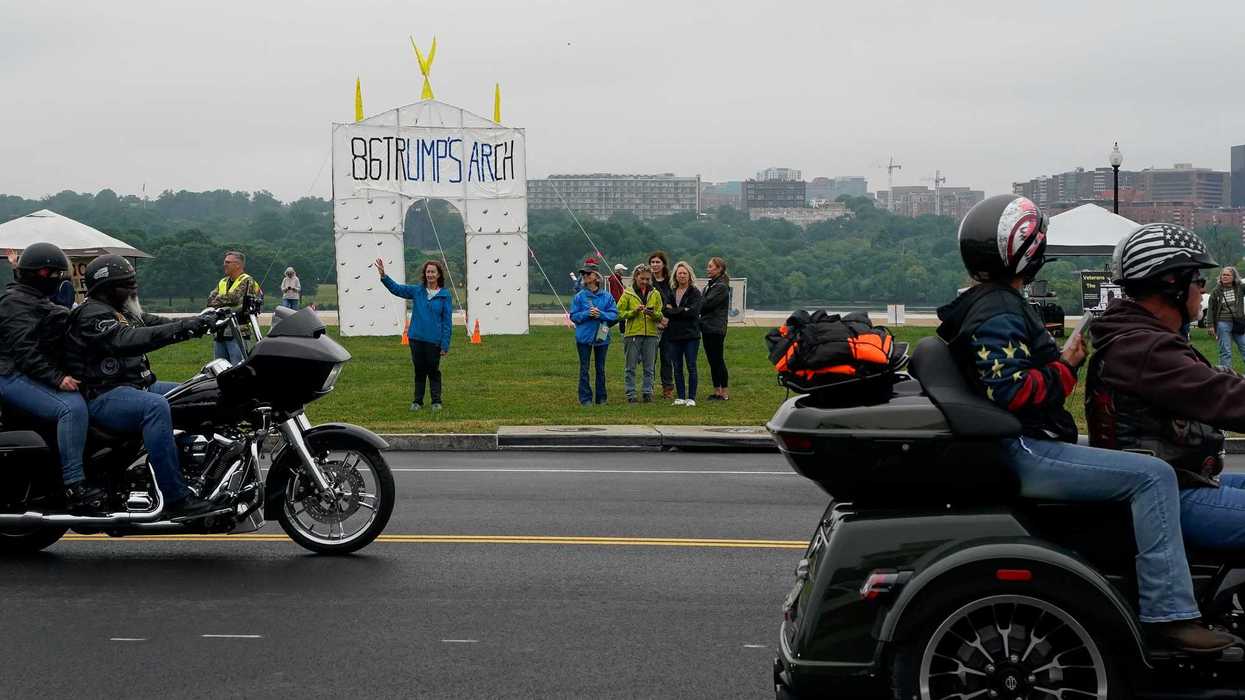
Demonstrators protesting against U.S. President Donald Trump's proposed 250-foot 'Triumphal Arch' near the Arlington Memorial Bridge in Washington, D.C., U.S., May 24, 2026. REUTERS/Elizabeth Frantz
May 25, 2026
ALTERNET
On Thursday, May 21, the U.S. Commission on Fine Arts approved the "triumphal arch" that President Donald Trump is proposing for Arlington, Virginia across the Potomac River from Washington, DC. The arch would appear at one end of the Arlington Memorial Bridge next to Arlington National Cemetery. But a group of Vietnam War veterans, according to CBS News, are voicing their opposition to the project.
Vietnam vets Shaun Byrnes and Jon Gundersen, along with other opponents of the arch, filed a lawsuit in February in the hope of preventing it from being constructed. And they are still expressing the reasons for their opposition.
CBS News reporters Arden Farhi and Jacob Rosen explain, "They argue the project has been rushed and the administration hasn't gotten proper congressional approval. The arch, they say, would disrupt the symbolic connection between the Lincoln Memorial and the Robert E. Lee Memorial — a carefully considered sightline meant to convey unity after the Civil War. According to recent renderings, the arch would be more than double the height of the Lincoln Memorial."
Gundersen, a retired U.S. Army Special Forces officer who is now 81, views the arch as disrespectful to the many veterans buried in Arlington National Cemetery — which was opened in 1864 during the American Civil War.
Gundersen told CBS News, "I think what we're doing is being loyal to the country, and loyalty can be measured in different ways."
The 83-year-old Byrnes, a U.S. Navy veteran who served two tours of duty in Vietnam, told CBS News, "It's more about the duty I feel towards my colleagues and friends who did not come home to stand up against this project, regardless of who's in charge."
Byrnes, a Navy veteran who served two tours in Vietnam, said, "I think it's just disrespectful to those that I served with who didn't come back, and then, of course, to all those who are lying in Arlington National Cemetery."
Farhi and Rosen note that Gundersen and Byrnes "view the arch not as a commemoration of America's 250th birthday, but as a monument to one man: Mr. Trump."
Gundersen told CBS News, "We know how authoritarian dictatorships work. There's no rule of law, there's no consent of the governed, and there's monuments for the leaders there…. Even if you took private donations, is that how we want to build monuments? To the oligarchs who give money for favors? We have fought for our country. We believe in this country, and we're going to continue to the end — and I think we can change things."
On Thursday, May 21, the U.S. Commission on Fine Arts approved the "triumphal arch" that President Donald Trump is proposing for Arlington, Virginia across the Potomac River from Washington, DC. The arch would appear at one end of the Arlington Memorial Bridge next to Arlington National Cemetery. But a group of Vietnam War veterans, according to CBS News, are voicing their opposition to the project.
Vietnam vets Shaun Byrnes and Jon Gundersen, along with other opponents of the arch, filed a lawsuit in February in the hope of preventing it from being constructed. And they are still expressing the reasons for their opposition.
CBS News reporters Arden Farhi and Jacob Rosen explain, "They argue the project has been rushed and the administration hasn't gotten proper congressional approval. The arch, they say, would disrupt the symbolic connection between the Lincoln Memorial and the Robert E. Lee Memorial — a carefully considered sightline meant to convey unity after the Civil War. According to recent renderings, the arch would be more than double the height of the Lincoln Memorial."
Gundersen, a retired U.S. Army Special Forces officer who is now 81, views the arch as disrespectful to the many veterans buried in Arlington National Cemetery — which was opened in 1864 during the American Civil War.
Gundersen told CBS News, "I think what we're doing is being loyal to the country, and loyalty can be measured in different ways."
The 83-year-old Byrnes, a U.S. Navy veteran who served two tours of duty in Vietnam, told CBS News, "It's more about the duty I feel towards my colleagues and friends who did not come home to stand up against this project, regardless of who's in charge."
Byrnes, a Navy veteran who served two tours in Vietnam, said, "I think it's just disrespectful to those that I served with who didn't come back, and then, of course, to all those who are lying in Arlington National Cemetery."
Farhi and Rosen note that Gundersen and Byrnes "view the arch not as a commemoration of America's 250th birthday, but as a monument to one man: Mr. Trump."
Gundersen told CBS News, "We know how authoritarian dictatorships work. There's no rule of law, there's no consent of the governed, and there's monuments for the leaders there…. Even if you took private donations, is that how we want to build monuments? To the oligarchs who give money for favors? We have fought for our country. We believe in this country, and we're going to continue to the end — and I think we can change things."
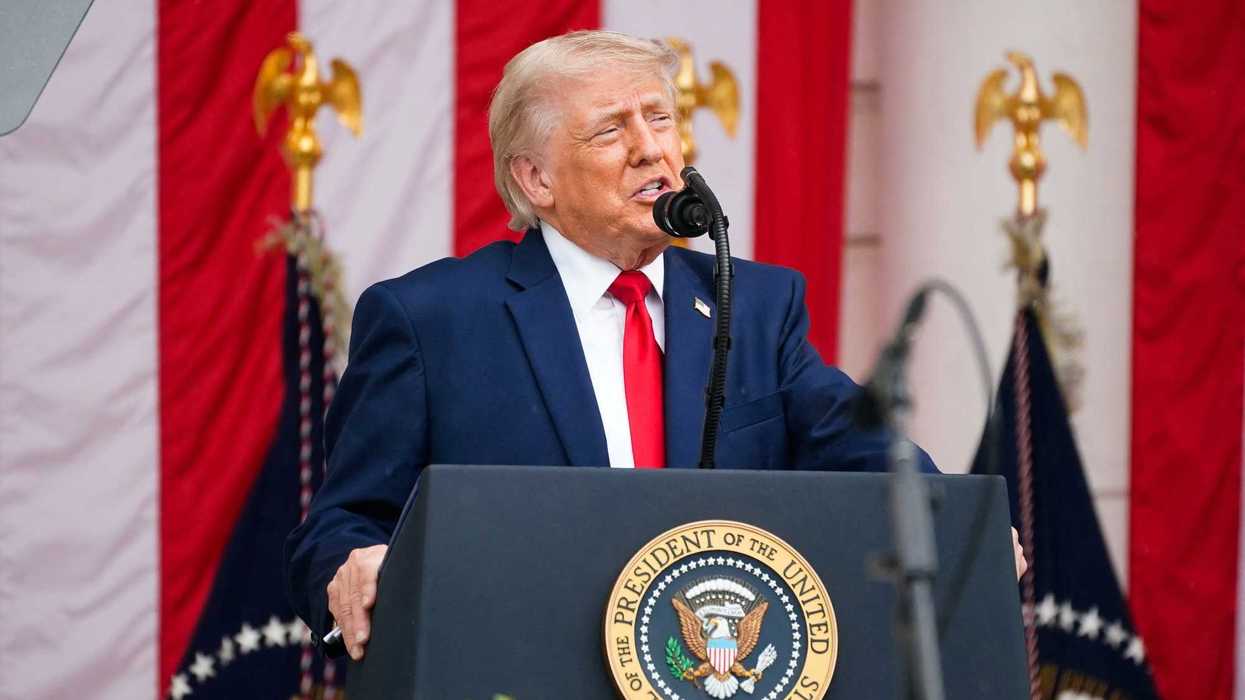
U.S. President Donald Trump during a Memorial Day event at Arlington National Cemetery, Arlington, Virginia, U.S., May 25, 2026. REUTERS/Nathan Howard
May 25, 2026
ALTERNET
Early Monday morning, on Memorial Day 2026, President Donald Trump sent out a series of social media posts via his Truth Social platform — including one that used the holiday to attack Democrats. And some military veterans are calling out the attack as wildly inappropriate for Memorial Day.
Trump posted, "Happy Memorial Day to all, including the Dumocrats, who disrespect our Military and all of the tremendous success that it has had over the last year. God Bless those that have made the ultimate sacrifice. I love you all! President DONALD J. TRUMP."
One of the vets is Naveed Shah, who served in the U.S. Army during Operation Iraqi Freedom and is director of group Common Defense.
Shah didn't mince words, telling the Daily Beast that Trump has no business attacking his political opponents as unpatriotic in light of offensive things he said about veterans in the past.
Shah told the Daily Beast, "Trump has demonstrated over and over again that he hates the troops…. From calling the troops who died in WWI 'suckers and losers,' to mocking (Sen.) John McCain's five years as a POW, to attacking the Gold Star Khan family, all the way back to 2016 when he lied about donating to veterans' groups. He has never missed a chance to dishonor the people he was never brave enough to stand beside."
The Daily Beast's Leigh Kimmins notes that Trump, now 79, went to great lengths to avoid military service during the Vietnam War — only to insult McCain's military record during that conflict. The late Vietnam veteran McCain was tortured and abused by the Viet Cong during his time as a prisoner of war.
Kimmins explains, "Trump, who received five military deferments during the 1960s, four for academic reasons and one for bone spurs, started the national holiday by airing personal grievances, rather than issuing a heartfelt tribute to the nation's fallen…. During the 2016 presidential campaign, Trump drew immediate condemnation when he dismissed Sen. John McCain’s five-and-a-half years as a prisoner of war in Vietnam. 'He’s not a war hero,' Trump said. 'He's a war hero because he was captured. I like people who weren't captured.' Veterans' groups responded with fury."
The Daily Beast reporter continues, "That same campaign season, Trump attacked Khizr and Ghazala Khan — the Gold Star parents of U.S. Army Captain Humayun Khan, who was killed in Iraq in 2004 — after they criticized him at the Democratic National Convention. Trump publicly questioned why Ghazala Khan had remained silent during her husband’s speech, suggesting she had not been 'allowed' to speak. The backlash crossed party lines, with Republican senators and veterans' organizations among those condemning the remarks."
A Minute of Silence Isn’t Enough to Reflect on the US’s Death and Destruction
Let’s stop lying to ourselves on Memorial Day and instead try exploring the full truth about war in all its evil.
By Rory Fanning ,

One U.S. soldier was killed in combat operations in Bosnia-Herzegovina in 1996; 2 U.S. soldiers died in Kosovo in 1999; 3,923 U.S. troops were killed and 20,700 were wounded in Afghanistan since 2001; 36,395 were killed or wounded in the Iraq War; and 13 are said to have been killed (plus another 400+ wounded) in Donald Trump’s war on Iran (although many dispute these numbers).
Moreover, an untold number of Special Operation soldiers and CIA operatives died in clandestine occupations overthrowing governments or sabotaging this or that. The government won’t acknowledge these deaths. But we know they happen all the time.
By some estimates, U.S. is approaching 1.4 million soldiers killed and at least 1.5 million wounded in its 250-year history. That’s a total of 2.5 million U.S. soldiers killed or wounded, or 10,000 casualties a year on average over 250 years. Or, to put it another way, 500,000 fewer than the 3 million Vietnamese people who died — many of whom were burned alive by napalm — during the U.S. war on Vietnam. It’s also worth adding for context, that only 20 of this country’s 250-year history have been peaceful. Although, that number seems off too given the regularity of covert U.S. military operations and the frequency of drone strikes that occur without any media attention or official government acknowledgement. That’s a lot of death and destruction to reflect on during a minute of silence.
Can we “memorialize” death and destruction on such a scale? Numbers will never capture the horrors of war. Saying the words “ultimate sacrifice” over and over will not even remotely convey what it is like to die or be injured in war. What if we begin asking more specific questions about the wars and the nature of these deaths each Memorial Day?
For instance, how many soldiers died heroes saving their fellow soldiers’ lives, maybe jumping on a grenade? (There have been 3,552 Medal of Honor recipients, if that’s helpful.) How many soldiers died running out of or cowering in a trench in WWI? How many of the soldiers we are memorializing were burned alive by flame throwers? Shall we take a few minutes to think about the process of being burned alive? Aaron Bushnell, the U.S. servicemember who strongly opposed the genocide in Gaza, provided a window into the agony of such a death.
How many died begging for water, or for their mothers, with their guts hanging out after being struck by a bayonet in Korea? Up to 3 million Koreans were slaughtered by the U.S. between 1950 and 1953, if anyone is interested. How many U.S. soldiers were shot out of the sky in helicopters while in the process of killing civilians in Vietnam? Two million of the 3 million killed in Vietnam were civilians. Are we supposed to memorialize soldiers that died killing children in the same way?
How many officers were shot in the back by their own men during the invasion and occupation of the Philippines? How many died helping liberate Nazi death camps in WWII? How many soldiers were torn to shreds by cannonballs while defending slavery or fighting to abolish it in the Civil War? How many Black soldiers lost their lives fighting for the U.S. only to be buried in a segregated cemetery back home? How many died in acts of “friendly fire” — or worse, had their deaths covered up at the highest levels of government, as the Bush administration did with former NFL player Pat Tillman? How many soldiers lay dying while feelings of betrayal flooded their minds, knowing that they were taking their last breath to control Iraq’s oil in the service of making billionaires even richer? Surely at least a few soldiers had to consider that, given the blatant illegality of the war in Iraq. How many soldiers died looking up in the sky in Grenada, Haiti, the Dominican Republic, or El Salvador knowing they were meddling in the affairs of countries they had no business being in?
Consider Tomas Young’s death, which came a decade after he was shot and paralyzed in Iraq in April 2004. Does the military update official records when someone succumbs to their injuries years later? And does the U.S. count deaths by suicide years after the given war ends in its official military death toll records? Why aren’t soldiers who died of suicide after returning from Vietnam etched in the Vietnam Memorial wall? Should we memorialize U.S. servicemembers who participate in a genocide?
What about the drone operators in Las Vegas who end up killing themselves because their jobs involve eliminating civilians and soldiers alike on a mass scale in places like Yemen and Pakistan? Are drone operators soldiers, too? Either way, when they die of suicide, they are casualties of war. How many people across the country make space in their Memorial Day moment of silence to think about these questions?
There is clearly much to reflect on and memorialize — certainly way more than a minute of silence can bear. If these reflections hold any value, they depend on us being honest about the full implications of the U.S.’s imperialist wars. Otherwise, these reflections, regardless of the intention, can be perceived as an insult to the memory of those who died.
Memorial Day 2026 will help mark the 250th birthday of the United States. The government-sponsored “reflections” on the death of all those who lost their lives will carry a heightened sense of solemnity. Gary Sinise will be hosting a Memorial Day Parade in Washington, D.C. Baseball teams will be wearing camouflage hats adorned with a red poppy to commemorate the fallen. VFW halls across the country will be raising flags by the hundreds of thousands. Many stories will be told honoring those that lost their lives for the U.S. empire. Furthermore, the corporate media and the government will be exploiting all this “patriotism” to move Americans to support the troops who have helped damage or destroy 763 schools and 316 health care facilities, according to Iranian Red Crescent Society figures, in the current war in Iran.
Will space be made for veterans who are willing to share their bloody experiences of loss and destruction this Memorial Day? What about historians who study the impact of war — will they be given time at parades this Memorial Day to communicate the true cost of war? What about the innocent victims of U.S. military adventurism — will they be able to share their experiences with war?
“You can tell a true war story by its absolute and uncompromising allegiance to obscenity and evil,” Tim O’Brien, award-winning author of The Things They Carried, reminds us.
Memorializing certainly hasn’t prevented war, given that the U.S. does plenty of memorializing while U.S. leaders dream up new wars to enter before they end the ones that are ongoing. Let’s stop lying to ourselves on Memorial Day and instead try exploring the full truth about war in all its obscenity and evil. If we can’t figure out how to end the performative and hollow acknowledgement of the 1.4 million U.S. servicemembers who died, many for less-than-noble reasons, let’s just follow the lead of the kids in Lafayette Park and start calling it “Jump in the Pool Day.” At least that feels much more honest.
This article is licensed under Creative Commons (CC BY-NC-ND 4.0), and you are free to share and republish under the terms of the license.

Rory Fanning
Rory Fanning walked across the United States for the Pat Tillman Foundation in 2008–2009, following two deployments to Afghanistan with the 2nd Army Ranger Battalion. He is the author of Worth Fighting For: An Army Ranger’s Journey Out of the Military and Across America, and co-author with Craig Hodges of Long Shot: The Triumphs and Struggles of an NBA Freedom Fighter. He regularly speaks at high schools and universities about his walk across the U.S. and his experience as a war resister. Follow him on Twitter: @RTFanning.
Let’s stop lying to ourselves on Memorial Day and instead try exploring the full truth about war in all its evil.
By Rory Fanning ,
May 25, 2026
Members of the "Young Marines" youth program carry a large American flag during the National Memorial Day Parade on Constitution Avenue in Washington, D.C., on May 25, 2026.Brendan SMIALOWSKI / AFP via Getty Images
Thirty years ago, school kids touring Lafayette Park in Washington, D.C. were asked what Memorial Day meant to them. “That’s the day the pools open!” they responded, as if in a chorus. Their response rippled across the U.S. and created a bit of a moral panic among the patriotic and civil-minded. The following Memorial Day, Congress sought to put the “memorial” back into the holiday. “Taps,” a 24-note bugle call adopted by the U.S. military in the late 1800s for funerals, was played on radios and televisions throughout the United States at 3:00 pm. Those celebrating the day off paused, perhaps mid-hot dog bite, to reflect on fallen U.S. soldiers. After a minute of silence, Americans resumed their fun.
What does it mean to reflect on the soldiers who died while fighting in U.S. wars? Is such a thing possible? If it is, maybe we should start with the raw numbers.
Around 25,000 U.S. soldiers died in the War for Independence; roughly 5,600 soldiers died or were wounded as they ethnically cleansed Indigenous tribes between 1785 and 1898; approximately 20,000 died in the War of 1812, mostly of disease; 625,000 died on both sides of the Civil War; 2,446 died in the Spanish-American War; 4,200 U.S. soldiers died “annexing” the Philippines; 95 died in the Boxer Rebellion; 22 died and 70 were wounded in the Mexican Revolution; at least 86 died in the occupation of Haiti from 1915-1934; nearly 117,000 were killed in World War I; 424 U.S. troops died fighting the Bolsheviks in Russia from 1918-1920; 15,000 U.S. servicemembers lost their lives in the Mexican-American War; 405,000 were killed in World War II; more than 52,000 were killed in the Korean War; more than 58,000 were killed while committing what some call a genocide in Vietnam.
We’re a little less than halfway done with this list. It feels strange packing all this death into a single paragraph, so I imagine it feels strange reading through it quickly, too. Consider standing up and walking around for a few minutes before continuing. Or at least pausing for a minute to make an effort to “memorialize” the people behind these numbers, as the government would like us to on Memorial Day, if you believe such a thing is possible.
Fifteen U.S. soldiers were killed in Lebanon in 1958; four were killed in the Bay of Pigs invasion; eight were killed in Iran in 1980; 15 U.S. soldiers died in El Salvador’s Civil War from 1980 to 1992; 265 died in Beirut between 1982 and 1984; 39 died escorting oil tankers through the Persian Gulf and Strait of Hormuz from 1987-1988; 19 were killed in Grenada; two died in a bombing at the LaBelle Club in West Berlin in 1986; 1,231 were killed or wounded in first Gulf War from 1990 to 1991; 19 were killed aiding Kurdish refugees fleeing Iraq in 1991 in what was known as Operation Provide Comfort; 30 soldiers were killed in Somalia from 1992-1993; four died in Haiti between 1994 and 1995.
We’re almost done. Just 30 more years of American war history left.
Thirty years ago, school kids touring Lafayette Park in Washington, D.C. were asked what Memorial Day meant to them. “That’s the day the pools open!” they responded, as if in a chorus. Their response rippled across the U.S. and created a bit of a moral panic among the patriotic and civil-minded. The following Memorial Day, Congress sought to put the “memorial” back into the holiday. “Taps,” a 24-note bugle call adopted by the U.S. military in the late 1800s for funerals, was played on radios and televisions throughout the United States at 3:00 pm. Those celebrating the day off paused, perhaps mid-hot dog bite, to reflect on fallen U.S. soldiers. After a minute of silence, Americans resumed their fun.
What does it mean to reflect on the soldiers who died while fighting in U.S. wars? Is such a thing possible? If it is, maybe we should start with the raw numbers.
Around 25,000 U.S. soldiers died in the War for Independence; roughly 5,600 soldiers died or were wounded as they ethnically cleansed Indigenous tribes between 1785 and 1898; approximately 20,000 died in the War of 1812, mostly of disease; 625,000 died on both sides of the Civil War; 2,446 died in the Spanish-American War; 4,200 U.S. soldiers died “annexing” the Philippines; 95 died in the Boxer Rebellion; 22 died and 70 were wounded in the Mexican Revolution; at least 86 died in the occupation of Haiti from 1915-1934; nearly 117,000 were killed in World War I; 424 U.S. troops died fighting the Bolsheviks in Russia from 1918-1920; 15,000 U.S. servicemembers lost their lives in the Mexican-American War; 405,000 were killed in World War II; more than 52,000 were killed in the Korean War; more than 58,000 were killed while committing what some call a genocide in Vietnam.
We’re a little less than halfway done with this list. It feels strange packing all this death into a single paragraph, so I imagine it feels strange reading through it quickly, too. Consider standing up and walking around for a few minutes before continuing. Or at least pausing for a minute to make an effort to “memorialize” the people behind these numbers, as the government would like us to on Memorial Day, if you believe such a thing is possible.
Fifteen U.S. soldiers were killed in Lebanon in 1958; four were killed in the Bay of Pigs invasion; eight were killed in Iran in 1980; 15 U.S. soldiers died in El Salvador’s Civil War from 1980 to 1992; 265 died in Beirut between 1982 and 1984; 39 died escorting oil tankers through the Persian Gulf and Strait of Hormuz from 1987-1988; 19 were killed in Grenada; two died in a bombing at the LaBelle Club in West Berlin in 1986; 1,231 were killed or wounded in first Gulf War from 1990 to 1991; 19 were killed aiding Kurdish refugees fleeing Iraq in 1991 in what was known as Operation Provide Comfort; 30 soldiers were killed in Somalia from 1992-1993; four died in Haiti between 1994 and 1995.
We’re almost done. Just 30 more years of American war history left.
One U.S. soldier was killed in combat operations in Bosnia-Herzegovina in 1996; 2 U.S. soldiers died in Kosovo in 1999; 3,923 U.S. troops were killed and 20,700 were wounded in Afghanistan since 2001; 36,395 were killed or wounded in the Iraq War; and 13 are said to have been killed (plus another 400+ wounded) in Donald Trump’s war on Iran (although many dispute these numbers).
Moreover, an untold number of Special Operation soldiers and CIA operatives died in clandestine occupations overthrowing governments or sabotaging this or that. The government won’t acknowledge these deaths. But we know they happen all the time.
By some estimates, U.S. is approaching 1.4 million soldiers killed and at least 1.5 million wounded in its 250-year history. That’s a total of 2.5 million U.S. soldiers killed or wounded, or 10,000 casualties a year on average over 250 years. Or, to put it another way, 500,000 fewer than the 3 million Vietnamese people who died — many of whom were burned alive by napalm — during the U.S. war on Vietnam. It’s also worth adding for context, that only 20 of this country’s 250-year history have been peaceful. Although, that number seems off too given the regularity of covert U.S. military operations and the frequency of drone strikes that occur without any media attention or official government acknowledgement. That’s a lot of death and destruction to reflect on during a minute of silence.
Can we “memorialize” death and destruction on such a scale? Numbers will never capture the horrors of war. Saying the words “ultimate sacrifice” over and over will not even remotely convey what it is like to die or be injured in war. What if we begin asking more specific questions about the wars and the nature of these deaths each Memorial Day?
For instance, how many soldiers died heroes saving their fellow soldiers’ lives, maybe jumping on a grenade? (There have been 3,552 Medal of Honor recipients, if that’s helpful.) How many soldiers died running out of or cowering in a trench in WWI? How many of the soldiers we are memorializing were burned alive by flame throwers? Shall we take a few minutes to think about the process of being burned alive? Aaron Bushnell, the U.S. servicemember who strongly opposed the genocide in Gaza, provided a window into the agony of such a death.
How many died begging for water, or for their mothers, with their guts hanging out after being struck by a bayonet in Korea? Up to 3 million Koreans were slaughtered by the U.S. between 1950 and 1953, if anyone is interested. How many U.S. soldiers were shot out of the sky in helicopters while in the process of killing civilians in Vietnam? Two million of the 3 million killed in Vietnam were civilians. Are we supposed to memorialize soldiers that died killing children in the same way?
How many officers were shot in the back by their own men during the invasion and occupation of the Philippines? How many died helping liberate Nazi death camps in WWII? How many soldiers were torn to shreds by cannonballs while defending slavery or fighting to abolish it in the Civil War? How many Black soldiers lost their lives fighting for the U.S. only to be buried in a segregated cemetery back home? How many died in acts of “friendly fire” — or worse, had their deaths covered up at the highest levels of government, as the Bush administration did with former NFL player Pat Tillman? How many soldiers lay dying while feelings of betrayal flooded their minds, knowing that they were taking their last breath to control Iraq’s oil in the service of making billionaires even richer? Surely at least a few soldiers had to consider that, given the blatant illegality of the war in Iraq. How many soldiers died looking up in the sky in Grenada, Haiti, the Dominican Republic, or El Salvador knowing they were meddling in the affairs of countries they had no business being in?
Consider Tomas Young’s death, which came a decade after he was shot and paralyzed in Iraq in April 2004. Does the military update official records when someone succumbs to their injuries years later? And does the U.S. count deaths by suicide years after the given war ends in its official military death toll records? Why aren’t soldiers who died of suicide after returning from Vietnam etched in the Vietnam Memorial wall? Should we memorialize U.S. servicemembers who participate in a genocide?
What about the drone operators in Las Vegas who end up killing themselves because their jobs involve eliminating civilians and soldiers alike on a mass scale in places like Yemen and Pakistan? Are drone operators soldiers, too? Either way, when they die of suicide, they are casualties of war. How many people across the country make space in their Memorial Day moment of silence to think about these questions?
There is clearly much to reflect on and memorialize — certainly way more than a minute of silence can bear. If these reflections hold any value, they depend on us being honest about the full implications of the U.S.’s imperialist wars. Otherwise, these reflections, regardless of the intention, can be perceived as an insult to the memory of those who died.
Memorial Day 2026 will help mark the 250th birthday of the United States. The government-sponsored “reflections” on the death of all those who lost their lives will carry a heightened sense of solemnity. Gary Sinise will be hosting a Memorial Day Parade in Washington, D.C. Baseball teams will be wearing camouflage hats adorned with a red poppy to commemorate the fallen. VFW halls across the country will be raising flags by the hundreds of thousands. Many stories will be told honoring those that lost their lives for the U.S. empire. Furthermore, the corporate media and the government will be exploiting all this “patriotism” to move Americans to support the troops who have helped damage or destroy 763 schools and 316 health care facilities, according to Iranian Red Crescent Society figures, in the current war in Iran.
Will space be made for veterans who are willing to share their bloody experiences of loss and destruction this Memorial Day? What about historians who study the impact of war — will they be given time at parades this Memorial Day to communicate the true cost of war? What about the innocent victims of U.S. military adventurism — will they be able to share their experiences with war?
“You can tell a true war story by its absolute and uncompromising allegiance to obscenity and evil,” Tim O’Brien, award-winning author of The Things They Carried, reminds us.
Memorializing certainly hasn’t prevented war, given that the U.S. does plenty of memorializing while U.S. leaders dream up new wars to enter before they end the ones that are ongoing. Let’s stop lying to ourselves on Memorial Day and instead try exploring the full truth about war in all its obscenity and evil. If we can’t figure out how to end the performative and hollow acknowledgement of the 1.4 million U.S. servicemembers who died, many for less-than-noble reasons, let’s just follow the lead of the kids in Lafayette Park and start calling it “Jump in the Pool Day.” At least that feels much more honest.
This article is licensed under Creative Commons (CC BY-NC-ND 4.0), and you are free to share and republish under the terms of the license.
Rory Fanning
Rory Fanning walked across the United States for the Pat Tillman Foundation in 2008–2009, following two deployments to Afghanistan with the 2nd Army Ranger Battalion. He is the author of Worth Fighting For: An Army Ranger’s Journey Out of the Military and Across America, and co-author with Craig Hodges of Long Shot: The Triumphs and Struggles of an NBA Freedom Fighter. He regularly speaks at high schools and universities about his walk across the U.S. and his experience as a war resister. Follow him on Twitter: @RTFanning.
Trump Says He “Gets a Kick” Out of Criticisms He Receives for US Military Deaths
There have been nearly 400 US military casualties in Operation Epic Fury so far.
By Chris Walker ,
There have been nearly 400 US military casualties in Operation Epic Fury so far.
By Chris Walker ,
May 22, 2026
President Donald Trump speaks to reporters after stepping off Air Force One at Joint Base Andrews, Maryland on May 20, 2026.Kent Nishimura / AFP via Getty Images
Less than a week before Memorial Day weekend — a federal holiday that aims to recognize members of the U.S. military who have died in combat zones — President Donald Trump sought to downplay the U.S. casualties of his ill-defined and unauthorized war on Iran.
Speaking to reporters at Joint Base Andrews on Wednesday, Trump was asked about servicemembers’ deaths.
“We lost 13 people. … In other wars, you lost hundreds of thousands of people,” Trump said, seemingly complaining about any criticism of the war that involves discussing military deaths or casualties.
Trump further claimed that any president other than himself would have lost “a hundred thousand people” if tasked with the same military goals he’s had in Venezuela and Iran.
“I get a kick when I look at somebody on television, and they say, ‘he’s lost 13 people,'” Trump elaborated.
Trump’s comments come as the war on Iran is soon to enter its fourth month. Almost one month ago, Trump announced an indefinite ceasefire with the country, a condition of the war he claims is continuing despite ongoing skirmishes. Blockades by both sides also continue within the Strait of Hormuz. Under international law, blockades are considered acts of war.
Trump’s diminishing of those who have died in the war so far ignores the larger official U.S. casualty count. While 13 servicemembers have died, another 381 have been injured, according to the most recent numbers from CENTCOM.
Casualty reports have been infrequent, however, and it’s possible the numbers may be much higher. Indeed, a Congressional Research Service report suggests the U.S. has had as many as 42 aerial vehicles damaged during the war, indicating that damage to American military bases and war resources is more serious than the White House is letting on, and that the Trump administration isn’t being forthright about the war in general.
Earlier this year, The Intercept also reported on a “cover-up” of U.S. military casualties across the Middle East, including the omission from its official count of soldiers known to have died in Operation Epic Fury.
The news organization noted that it’s “impossible to know how many other casualties have been kept under wraps,” citing past statements by Trump, including one instance where he pushed “a complete fiction to the public.”
That incident featured an Iranian missile attack on Al-Asad Air Base in Iraq in January 2020 — itself a response to the Trump-ordered assassination of Iranian Gen. Qasem Soleimani. Trump had claimed that “No Americans were harmed” in that attack, and that the U.S. “suffered no casualties.” In fact, at least 110 U.S. troops suffered traumatic brain injuries, a condition Trump later downplayed as being just “headaches.”
Trump’s downplaying of U.S. casualties and deaths from the Iran War comes just ahead of Monday’s Memorial Day holiday. According to the Department of Veterans Affairs website, the holiday is “the nation’s foremost annual day to mourn and honor its deceased service men and women.”
In addition to the hundreds of casualties the U.S. has suffered, nearly 3,500 Iranians, mostly civilians, have been killed in the war, with at least another 26,500 injured.
Michael T. McPhearson, executive director for Veterans for Peace, excoriated Trump for his comments earlier in the week on troop deaths.
Trump’s “flippant attitude as he talks about the deaths is disgusting and disrespectful to the families and the service members’ sacrifices,” McPhearson said in comments to Truthout.
Describing the decision to attack Iran as a clear “war of choice,” McPhearson also said the public “is tired of the U.S.’s endless wars” in general.
“President Trump’s response and demeanor confirm what I’ve known for a long time: he is a self-centered president who cares nothing about military service members, their families, and the American people,” McPhearson added.
Public support for the war on Iran is incredibly low. An Economist/YouGov poll published on Tuesday found that only 30 percent of Americans support the war on Iran, with 60 percent saying they are opposed. On his handling of the war, 31 percent say they approve of how Trump has managed things, while 59 percent say they disapprove.
Less than a week before Memorial Day weekend — a federal holiday that aims to recognize members of the U.S. military who have died in combat zones — President Donald Trump sought to downplay the U.S. casualties of his ill-defined and unauthorized war on Iran.
Speaking to reporters at Joint Base Andrews on Wednesday, Trump was asked about servicemembers’ deaths.
“We lost 13 people. … In other wars, you lost hundreds of thousands of people,” Trump said, seemingly complaining about any criticism of the war that involves discussing military deaths or casualties.
Trump further claimed that any president other than himself would have lost “a hundred thousand people” if tasked with the same military goals he’s had in Venezuela and Iran.
“I get a kick when I look at somebody on television, and they say, ‘he’s lost 13 people,'” Trump elaborated.
Trump’s comments come as the war on Iran is soon to enter its fourth month. Almost one month ago, Trump announced an indefinite ceasefire with the country, a condition of the war he claims is continuing despite ongoing skirmishes. Blockades by both sides also continue within the Strait of Hormuz. Under international law, blockades are considered acts of war.
Trump’s diminishing of those who have died in the war so far ignores the larger official U.S. casualty count. While 13 servicemembers have died, another 381 have been injured, according to the most recent numbers from CENTCOM.
Casualty reports have been infrequent, however, and it’s possible the numbers may be much higher. Indeed, a Congressional Research Service report suggests the U.S. has had as many as 42 aerial vehicles damaged during the war, indicating that damage to American military bases and war resources is more serious than the White House is letting on, and that the Trump administration isn’t being forthright about the war in general.
Earlier this year, The Intercept also reported on a “cover-up” of U.S. military casualties across the Middle East, including the omission from its official count of soldiers known to have died in Operation Epic Fury.
The news organization noted that it’s “impossible to know how many other casualties have been kept under wraps,” citing past statements by Trump, including one instance where he pushed “a complete fiction to the public.”
That incident featured an Iranian missile attack on Al-Asad Air Base in Iraq in January 2020 — itself a response to the Trump-ordered assassination of Iranian Gen. Qasem Soleimani. Trump had claimed that “No Americans were harmed” in that attack, and that the U.S. “suffered no casualties.” In fact, at least 110 U.S. troops suffered traumatic brain injuries, a condition Trump later downplayed as being just “headaches.”
Trump’s downplaying of U.S. casualties and deaths from the Iran War comes just ahead of Monday’s Memorial Day holiday. According to the Department of Veterans Affairs website, the holiday is “the nation’s foremost annual day to mourn and honor its deceased service men and women.”
In addition to the hundreds of casualties the U.S. has suffered, nearly 3,500 Iranians, mostly civilians, have been killed in the war, with at least another 26,500 injured.
Michael T. McPhearson, executive director for Veterans for Peace, excoriated Trump for his comments earlier in the week on troop deaths.
Trump’s “flippant attitude as he talks about the deaths is disgusting and disrespectful to the families and the service members’ sacrifices,” McPhearson said in comments to Truthout.
Describing the decision to attack Iran as a clear “war of choice,” McPhearson also said the public “is tired of the U.S.’s endless wars” in general.
“President Trump’s response and demeanor confirm what I’ve known for a long time: he is a self-centered president who cares nothing about military service members, their families, and the American people,” McPhearson added.
Public support for the war on Iran is incredibly low. An Economist/YouGov poll published on Tuesday found that only 30 percent of Americans support the war on Iran, with 60 percent saying they are opposed. On his handling of the war, 31 percent say they approve of how Trump has managed things, while 59 percent say they disapprove.