Sunday, May 03, 2026

Quelling the Polycrisis 

(Video, Part 3)

Source: Originally published by Z. Feel free to share widely.

Whatever happened to the “polycrisis”?

A couple of years ago it was the buzzword of the world, describing a concatenation of interacting crises that aggravated each other and made solutions appear impossible. In the year since the inauguration of Donald Trump his words and actions have so dominated world events that discussion of the polycrisis has atrophied. But the polycrisis is alive and well and massively aggravated by Trump’s aggressive and erratic behavior.

This commentary, and the previous two, trace the development of the polycrisis in the Trump era, examine the intensification of its dynamics, look at its possible outcomes, and give a preliminary perspective on how it might eventually be quelled.

Watch Part 1 here.
Watch Part 2 here.

Credits:

avatar

Jeremy Brecher is a historian, author, and co-founder of the Labor Network for Sustainability. He has been active in peace, labor, environmental, and other social movements for more than half a century. Brecher is the author of more than a dozen books on labor and social movements, including Strike! and Global Village or Global Pillage and the winner of five regional Emmy awards for his documentary movie work.


Source: All That's Left Podcast

The United States is strangling Cuba. 

Since February, President Trump has blocked all oil heading to the island, and threatened to impose tariffs on countries that attempt to circumvent the embargo. The move comes in the context of Trump’s attacks on Venezuela and takeover of the country’s energy sector — Venezuela was Cuba’s main oil supplier, shipping roughly 30,000 barrels a day. 

The consequences of Trump’s actions, and the toll of this embargo, have been devastating. In addition to rolling blackouts, basic services, including sanitation, have ground to a halt in some parts. The embargo is also affecting the water supply, which relies on electricity for its pumps, and preventing farmers from harvesting and transporting produce.

And the situation has been devastating for public health: hospitals are having to ration power and even postpone medical procedures. 

What’s happening in Cuba is just the latest chapter in over six decades of imperialist attacks. The U.S. first imposed a trade embargo on Cuba in 1962 in response to the 1959 Cuban Revolution, and the expropriation of national and foreign capital. Since then, both Democratic and Republican presidents have maintained the blockade and at times tightened it, as Democratic president Bill Clinton did with the Helms-Burton Act of 1996.  

In February, Trump began tightening the screws even more. This is part of his “Donroe Doctrine”: reasserting U.S. dominance across the Western Hemisphere, and strengthening the country’s imperialist grip on Latin America. 

The goal is clear, as it has been since the start of the blockade: regime change, paving the way for capitalist restoration, allowing in foreign capital, and rolling back the gains of the Cuban Revolution. For the Trump administration, including Secretary of State Marco Rubio, Cuba’s heroic legacy of anti-imperialist defiance and socialization of private property must be erased.

On this episode of the podcast, sociology professor Remo Erdosain explains the history of the embargo on Cuba, including its origins as a response to the Cuban Revolution, and the motivations behind Trump’s aggressive moves. Remo also describes the devastating human toll of the last six decades. 

We also discuss the role of the so-called “progressive” governments of Latin America, like Claudia Sheinbaum in Mexico and Lula in Brazil — leaders who talk big game when it comes to solidarity with Cuba, but ultimately haven’t challenged the U.S.-imposed strangulation of the island. 

To defend Cuba against these imperialist attacks, we must show our strongest solidarity with the Cuban working class, who must lead this fight. Importantly, we must do this without supporting the political program of the Diaz-Canel administration, which has taken a repressive turn and implemented measures of capitalist restoration already, at the expense of the working masses. 

The most urgent task is to break the oil blockade, and a mass movement of students and workers could force the hands of Sheinbaum and Lula in particular. In the U.S., we need an anti-imperialist movement that rejects the oil blockade and takes actions like strikes, and mobilizations to denounce the attacks on Cuba.

The struggle of the Cuban people isn’t some isolated event. It’s the struggle of the global working class, and it’s deeply connected to Trump’s other attacks, both domestically and abroad. 

As we always say, an injury to one is an injury to all, and the Cuban people need our solidarity against U.S. imperialism.

This article was originally published by All That's Left Podcast; please consider supporting the original publication, and read the original version at the link above.

 Nations move fossil fuel debate from pledges to strategies in Colombia


The world’s first conference on phasing out fossil fuels has ended in Colombia with delegates from 56 countries declaring that the global debate has shifted from whether to stop using oil, gas and coal to how to do it. Debt and financing remain major obstacles.


Issued on: 30/04/2026 - 

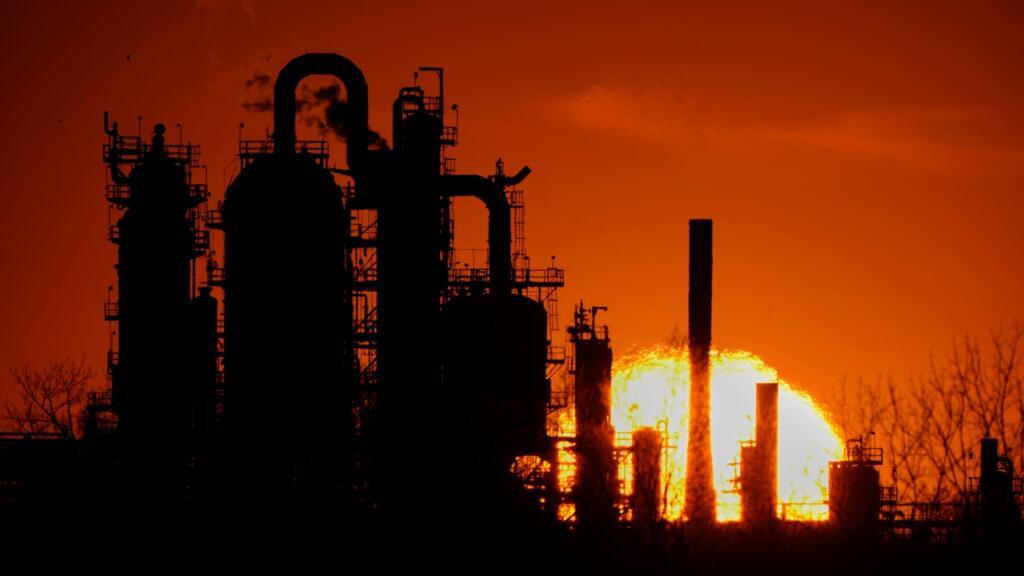
An oil refinery in El Dorado, Kansas. Fossil fuels remained at the centre of global climate talks in Colombia as countries debated how to move away from oil, gas and coal. 
© AP - Charlie Riedel


Participants gathered for several days in Santa Marta, a coal port on Colombia’s Caribbean coast, for talks focused directly on winding down fossil fuel production rather than only cutting emissions.

While the meeting produced no binding commitments by the time it wrapped up on Wednesday, it launched working groups on financing and labour transitions, plans for continued cooperation and momentum toward future negotiations.

"Cops are more formal, negotiators have their lines and they will not cross them – it’s so different here," said former Irish president Mary Robinson, now a climate justice advocate, referring to UN climate conferences.

Participants "have felt more human together", she said.

Debt and limited resources were among the biggest barriers for developing countries.

"Many of them are in bad need of debt relief to even begin a transition," Robinson told the conference. Those countries are "trapped in debt".

Colombia conference aims for 'more honest conversation' to speed fossil fuel exit


Who pays?

Financing emerged as the biggest immediate challenge, with developing countries facing high borrowing costs and limited access to money.

"The financing is key, this is an investment issue," said Nick Robins, senior director for finance and private sector at the World Resources Institute.

Debt pressure is also pushing some countries deeper into fossil fuel expansion.

"What we’re hearing is that they would like to stop expanding fossil fuel production, but they’re being forced into new oil and gas and coal projects just to feed their debt," said Tzeporah Berman, founder and chair of the Fossil Fuel Non-Proliferation Treaty Initiative.

"This conference is actually the first time in 30 years of climate negotiations where countries are gathering to talk about how to ensure a fossil fuel phase-out."

The financing challenge was also central to talks ahead of last year's Cop30 in Brazil, where fiscal pressures were repeatedly raised as a major obstacle.

"We need for finance ministers to help us on finding solutions on how to deal with the fiscal challenges of transition," Ana Toni, Cop30 chief executive, told the conference.


Roadmaps and bans


France drew attention on the conference’s opening day by publishing what it called a roadmap to eliminate fossil fuel use for energy by 2050, though some participants noted it largely repackaged existing pledges.

A new Scientific Panel for the Global Energy Transition was also launched to help governments, cities and regions design pathways away from fossil fuels.

"It will provide all the solutions – to implement them, and to finance them," Brazilian climate scientist Carlos Nobre told the French news agency AFP.

Colombia banned fossil fuel and mineral extraction in its Amazon region last year "to stop the expansion of the extractive frontier", said Colombia’s Environment Minister Irene VĂ©lez Torres.

Tuvalu, one of the countries most threatened by rising sea levels, will host the next conference in 2027 with Ireland as co-host.

"If we are to address the climate change issue, we have to address the root cause, and the root cause is the fossil fuel industry," Tuvalu Climate Minister Maina Talia told the Associated Press.

"We don’t want just a free and flexible outcome. We want something concrete. We want steps, solutions on the table."

(with newswires)
Source: Counterpunch

Not much good comes from war.  Qualifying exceptions, however, can be found. The United Nations, tarnished, libelled and mocked for being simultaneously ineffectual and intrusive, was the mediating entity for international relations that grew from the calamities of the Second World War.  Without that somewhat frail body, it is hard to imagine how the patchwork of human rights, however uneven, could have been stitched.  The Iran War, and the consequential choking of the Strait of Hormuz by Tehran and Washington respectively have also had an unintended, meliorating effect.  If the pressing dangers of climate change cannot push fossil fuel exporters and consumers to wean themselves off their diet of extraction and carbon emission, the panic caused by economic shock may well do the trick.

Despite the pageantry that circles around the now familiar Conferences of the Parties (COPs) to the United Nations Framework Convention on Climate Change (UNFCCC), progress on limiting the rise of global temperature remains tardy and constipated.  The annual COP talks have become ceremonies of fatigue and inanition, often influenced by petrostates and avid fossil fuel lobbyists.  The COP30 talks held in Brazil last November typified the mood.  The final COP 30 agreement, entitled “Global MutirĂŁo: Uniting humanity in a global mobilization against climate change”, failed to even mention the role of fossil fuels.  (The same can be said of the 2015 Paris Agreement.)  Fossil fuels – that devil in the detail – only debuts in the 2023 COP28 conference, with the call to transition “away from fossil fuels in energy systems, in a just, orderly and equitable manner, accelerating action in this critical decade, so as to achieve net zero by 2050 in keeping with the science”.

The insipid outcome of COP30 was enough to spur Colombia and the Netherlands to announce their co-hosting of the First International Conference on the Just Transition Away from Fossil Fuels, a step as part of the BelĂ©m Declaration on the Transition Away from Fossil Fuels.  “This will be,” explained  Irene VĂ©lez Torres, Colombia’s Minister for Environment and Sustainable Development, “a broad intergovernmental, multisectoral platform complementary to the UNFCCC [United Nations Framework Convention on Climate Change] designed to identify legal, economic, and social pathways that are necessary to make the phasing out of fossil fuels.”

The talks that began on April 24 at the coastal town of Santa Marta, Colombia, are the genesis of that promise.  While the list of attendees has conspicuous omissions – the United States, China and India are not among their number – a number of prominent fossil fuel states are.  Such absentees as the US did not trouble Torres.  “We knew they weren’t going to be here.  We weren’t expecting them to be here because their energy policy and their economic policy is to ‘drill, baby, drill.’”  Not only would the conference not be for them, Torres could express her relief that no one would be “boycotting” the endeavour.

Among the 60 states, we find Australia, Canada and Nigeria.  Likewise Brazil, the United Kingdom and the European Union.  Countries heavily dependent on such commodities – Pakistan and the Philippines, for instance – are also on the list of participants.

The format of the conference purposely departs from the clumsy, ungainly model of the COP talks.  The gathering is smaller and winnowed of any potential saboteurs and fossil fuel touters. It  comprises an academic conference, a people’s summit and two days of more formal engagements between government officials.  Individuals from the private sector have also been invited, but only those sympathetic to the conference’s principles and aims.

The eventual report produced by the co-hosts will take into account discussions and deliberations  premised on three pillars.  The first deals with economic dependence on fossil fuels, a particularly critical matter for poorer states unable or challenged in achieving an energy transition.  The second focuses on how best to deal with the supply and demand of fossil fuels, a problem aggravated by the current energy crisis.  The third pillar is built around “international cooperation and climate diplomacy” which can cover such matters as the problematic investor-state dispute settlement (ISDS) system.  ISDS has offered much security and succour to fossil fuel companies keen to protect their investments against the perceived predations of climate change policies.

Wopke Hoekstra, the EU’s climate commissioner, explained the importance of the gathering to Politico: “It is hugely important that the Colombians and the Dutch and others have set this up, because we all see how wrecked the COP process is, how vulnerable it is to naysayers and those who want to derail it.”  The unifying theme here was “the need to find an alternative.   And if anything, world events of the last six weeks have proven them right.”

The scientists are sticking, understandably, to the message of environmental danger.   “Breaking through 1.5°C means we enter a far more dangerous world – with more frequent and intense droughts, floods, fires and heatwaves – and we are already approaching critical tipping points in major Earth systems,” says the consistently gloomy Johan Rockströmm, director of the Potsdam Institute for Climate Change.  But the energy supply crisis produced by the Iran War may well reinvigorate what seemed to be an expiring patient.

This article was originally published by Counterpunch; please consider supporting the original publication, and read the original version at the link above.Email

Binoy Kampmark was a Commonwealth Scholar at Selwyn College, Cambridge. He lectures at RMIT University, Melbourne.