The Last Stand for King Coal

- The Trump administration has introduced sweeping measures to boost coal production, reduce royalties, and delay plant closures under its “energy dominance” strategy.
- Market dynamics - including cheaper natural gas, renewables, and battery storage - have eroded coal’s economic competitiveness.
- Decades of plant retirements, shrinking workforce numbers, and global export competition make a sustained U.S. coal revival improbable.
United States President Trump has been pushing for a return to fossil fuels, after the Biden administration spent several years increasing the country’s renewable energy capacity. Trump has signed several executive orders since his inauguration last January aimed at reversing the country’s most far-reaching climate policy, the Inflation Reduction Act, while making it easier for fossil fuel companies to increase the production of oil and gas. However, as Trump encourages coal firms to delay closures and continue producing coal, experts speculate that it may be too late for a total U-turn.
In September, officials from the Departments of Energy and the Interior, along with the Environmental Protection Agency (EPA), introduced several policies aimed at reinvigorating coal mining and delaying coal plant closures across the U.S. They said the move reflected the aims of Trump’s “energy dominance” agenda. Interior Secretary Doug Burgum announced the opening of over 13 million acres of public land for coal projects. Wells Griffith from the Department of Energy also unveiled $625 million in funding to increase the U.S. coal fleet, including $350 million to restart or refit existing plants.
Meanwhile, President Trump’s One Big Beautiful Bill Act reduced coal royalties from 12.5 percent to 7 percent, for new and existing leases, aiming to boost mining by making it more profitable. “President Trump promised to put American energy workers first, and today we’re delivering,” Secretary of the Interior Doug Burgum said in September. “By reducing the royalty rate for coal, increasing coal acres available for leasing, and unlocking critical minerals from mine waste, we are strengthening our economy, protecting national security, and ensuring that communities from Montana to Alabama benefit from good-paying jobs. Washington doesn’t build prosperity, American workers and entrepreneurs do, and we’re giving them the tools to succeed,” Burgum added.
The Trump administration has justified its support for coal by saying it will help the U.S. win the “AI arms race” against China. “AI is going to change … every job, every company, every industry,” Burgum stated. “None of that happens without electricity. “We have to have a strong, powerful coal industry — not for five years, not for 10 years. It’s got to be here for decades.”
In January, the EPA announced a proposed rule that would allow 11 coal plants to dump toxic coal ash into unlined pits until 2031, a decade longer than stated in existing federal rules. This could lead to several coal plants – which would otherwise be forced to close under the current rules – to remain open for several more years. These 11 facilities have already exceeded the 2021 deadline to close following an extension introduced during Trump’s first term in office in 2020.
However, many energy experts believe it is simply too late for the United States to make a U-turn on its plans to curb coal production. After several years of demonizing the coal industry for producing the “dirtiest fossil fuel” and significant investment in the expansion of the country’s renewable energy capacity, there are currently no new U.S. coal plants under development.
The rise of cheaper and cleaner alternatives, such as wind energy, has forced a decline in investment in the coal sector in recent years. U.S. utilities are increasingly favouring cleaner energy additions, such as battery storage, gas, and nuclear power to new coal-fired capacity due to the lower cost and greater efficiency of such projects.
In addition, the U.S. coal industry has lost its competitive edge in recent years, with several Asian and Australian coal plant operators now capable of producing much cheaper coal than their U.S. counterparts. This means that U.S. coal producers appear increasingly less attractive to foreign importers. While Asian buyers account for more than half of all U.S. thermal coal shipments, growing this market share would be challenging as alternative exporters, such as Indonesia, now offer faster shipping times at a lower cost.
Around six times more coal power plants have been retired than constructed in the U.S. this century, totalling around 166,000 MW compared to 26,000 MW of capacity, demonstrating the movement away from the fossil fuel. This means that the strong coal workforce that once existed has dwindled in recent decades, from around 91,600 in 2011 to 45,500 in 2023, suggesting that a revival of the industry would need a new generation of workers to be train
ed to support the expansion of a dying industry.
Despite Trump’s many attempts to increase U.S. coal production, the industry does not appear to be biting. While some coal plants may remain open for longer than previously planned, adding new capacity is unlikely to be viewed as economically viable given the falling prices and increasing efficiency of both natural gas and renewable alternatives.
By Felicity Bradstock for Oilprice.com


- The Trump administration has introduced sweeping measures to boost coal production, reduce royalties, and delay plant closures under its “energy dominance” strategy.
- Market dynamics - including cheaper natural gas, renewables, and battery storage - have eroded coal’s economic competitiveness.
- Decades of plant retirements, shrinking workforce numbers, and global export competition make a sustained U.S. coal revival improbable.
United States President Trump has been pushing for a return to fossil fuels, after the Biden administration spent several years increasing the country’s renewable energy capacity. Trump has signed several executive orders since his inauguration last January aimed at reversing the country’s most far-reaching climate policy, the Inflation Reduction Act, while making it easier for fossil fuel companies to increase the production of oil and gas. However, as Trump encourages coal firms to delay closures and continue producing coal, experts speculate that it may be too late for a total U-turn.
In September, officials from the Departments of Energy and the Interior, along with the Environmental Protection Agency (EPA), introduced several policies aimed at reinvigorating coal mining and delaying coal plant closures across the U.S. They said the move reflected the aims of Trump’s “energy dominance” agenda. Interior Secretary Doug Burgum announced the opening of over 13 million acres of public land for coal projects. Wells Griffith from the Department of Energy also unveiled $625 million in funding to increase the U.S. coal fleet, including $350 million to restart or refit existing plants.
Meanwhile, President Trump’s One Big Beautiful Bill Act reduced coal royalties from 12.5 percent to 7 percent, for new and existing leases, aiming to boost mining by making it more profitable. “President Trump promised to put American energy workers first, and today we’re delivering,” Secretary of the Interior Doug Burgum said in September. “By reducing the royalty rate for coal, increasing coal acres available for leasing, and unlocking critical minerals from mine waste, we are strengthening our economy, protecting national security, and ensuring that communities from Montana to Alabama benefit from good-paying jobs. Washington doesn’t build prosperity, American workers and entrepreneurs do, and we’re giving them the tools to succeed,” Burgum added.
The Trump administration has justified its support for coal by saying it will help the U.S. win the “AI arms race” against China. “AI is going to change … every job, every company, every industry,” Burgum stated. “None of that happens without electricity. “We have to have a strong, powerful coal industry — not for five years, not for 10 years. It’s got to be here for decades.”
In January, the EPA announced a proposed rule that would allow 11 coal plants to dump toxic coal ash into unlined pits until 2031, a decade longer than stated in existing federal rules. This could lead to several coal plants – which would otherwise be forced to close under the current rules – to remain open for several more years. These 11 facilities have already exceeded the 2021 deadline to close following an extension introduced during Trump’s first term in office in 2020.
However, many energy experts believe it is simply too late for the United States to make a U-turn on its plans to curb coal production. After several years of demonizing the coal industry for producing the “dirtiest fossil fuel” and significant investment in the expansion of the country’s renewable energy capacity, there are currently no new U.S. coal plants under development.
The rise of cheaper and cleaner alternatives, such as wind energy, has forced a decline in investment in the coal sector in recent years. U.S. utilities are increasingly favouring cleaner energy additions, such as battery storage, gas, and nuclear power to new coal-fired capacity due to the lower cost and greater efficiency of such projects.
In addition, the U.S. coal industry has lost its competitive edge in recent years, with several Asian and Australian coal plant operators now capable of producing much cheaper coal than their U.S. counterparts. This means that U.S. coal producers appear increasingly less attractive to foreign importers. While Asian buyers account for more than half of all U.S. thermal coal shipments, growing this market share would be challenging as alternative exporters, such as Indonesia, now offer faster shipping times at a lower cost.
Around six times more coal power plants have been retired than constructed in the U.S. this century, totalling around 166,000 MW compared to 26,000 MW of capacity, demonstrating the movement away from the fossil fuel. This means that the strong coal workforce that once existed has dwindled in recent decades, from around 91,600 in 2011 to 45,500 in 2023, suggesting that a revival of the industry would need a new generation of workers to be train
ed to support the expansion of a dying industry.
Despite Trump’s many attempts to increase U.S. coal production, the industry does not appear to be biting. While some coal plants may remain open for longer than previously planned, adding new capacity is unlikely to be viewed as economically viable given the falling prices and increasing efficiency of both natural gas and renewable alternatives.
By Felicity Bradstock for Oilprice.com

Trump eases mercury rules for power plants in bid to boost coal
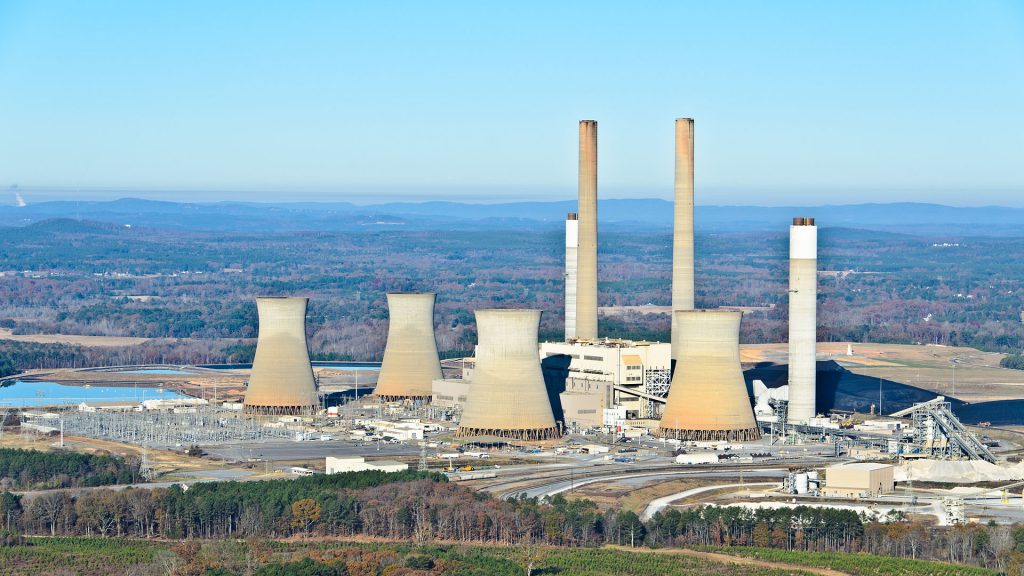
The Environmental Protection Agency on Friday rolled back regulations limiting mercury and other toxic air pollution from power plants, the latest in a series of moves by President Donald Trump’s administration designed to boost the nation’s shrinking coal sector.

The 2012 Mercury and Air Toxics Standards for power plants rule — called MATS for short — requires the facilities to reduce emissions of mercury and other metal air pollutants, such as arsenic and lead, which have been linked to heart attacks, cancer and developmental delays in children.
President Joe Biden’s administration strengthened the rule in 2024. Now Trump’s EPA is undoing those changes, claiming that they put an undue burden on coal plants in particular.
“The Biden-Harris administration’s anti-coal regulations sought to regulate out of existence this vital sector of our energy economy,” said EPA Administrator Lee Zeldin. “The Trump EPA knows that we can grow the economy, enhance baseload power, and protect human health and the environment all at the same time.”
Coal- and oil-fired power plants will no longer have to comply with a 2027 deadline set under Biden to install technology on smoke stacks for continuous monitoring of soot, or what’s called filterable particulate matter. A stricter mercury emissions standard for certain coal plants, finalized in 2024, is also being replaced with the original 2012 standard.
Former EPA officials and environmental advocates criticized the rulemaking, saying it gives power plants a pass to pollute more. Ending the requirement for monitoring “means Americans will not be able to see when power plants are violating pollution limits and emitting excessive amounts of cancer-causing pollution,” said John Walke, a senior attorney at the Natural Resources Defense Council who used to work at the EPA.
The Edison Electric Institute, which represents investor-owned US power companies, provided a muted response. “While we are reviewing the final details of this action, we appreciate Administrator Zeldin and his team’s focus on advancing consistent regulatory policies that account for impacts to reliability and customer bills,” said Brian Reil, an EEI spokesperson.
Months before the Trump administration announced its intention to unwind MATS, the EPA encouraged power plant companies to apply for two-year waivers to the Biden-era rules, authorized by Trump. Roughly 70 power plants ultimately received the presidential exemptions.
Since then, the administration has taken many steps to boost the nation’s coal sector, including earmarking more than half a billion dollars to help upgrade existing plants, using emergency powers to keep older facilities from retiring and allowing coal plants to access the Energy Department’s loan program, which has hundreds of billions of dollars in financing authority.
Even so, it’s unclear whether the president’s initiatives will be enough to dramatically shift the domestic landscape for coal, which has declined for years in the face of competition from lower-cost natural gas and renewable power, as well as growing environmental regulations and climate change concerns.
The EPA says the new MATS rule could save $670 million starting in 2028 through 2037. In the final rule, the agency acknowledged that it did not quantify the human health effects resulting from changes in emissions of small particulate matter called PM2.5, nitrogen oxides, or NOx, and volatile organic compounds, or VOCs. The Biden EPA had estimated its strengthened rules would yield $300 million in health benefits and an additional $130 million in climate benefits.
The policy change comes days after the agency scrapped a scientific determination that climate change poses a threat to human health, and with it, greenhouse-gas standards for vehicles.
Since the MATS rule first took effect under President Barack Obama, every subsequent administration has attempted to change it. The EPA during Trump’s first term tried watering it down, and then the Biden administration undid those changes and further strengthened the rule.
Biden EPA officials found that the vast majority of coal plants were not just meeting but exceeding federal standards for toxic soot, said Walke. Because most plants were well below the threshold, the agency decided to lower it, a push that would force a small number of facilities to make new pollution control upgrades to meet the standards, he said.
Similarly, the EPA found power plants that had already adopted continuous monitoring for soot had lower pollution, and required it for all plants going forward.
“If there’s technology that people can use to achieve a certain level of reductions, then that’s what we should expect from everybody, and that’s what people who live all around the country should expect,” said Janet McCabe, who served as EPA deputy administrator under Biden.
With the stricter MATS rules rolled back, she said, a person may be exposed to more pollution than they otherwise would have “because the company they live next to has chosen not to install available cost-effective technology.”
(By Zahra Hirji)


No comments:
Post a Comment