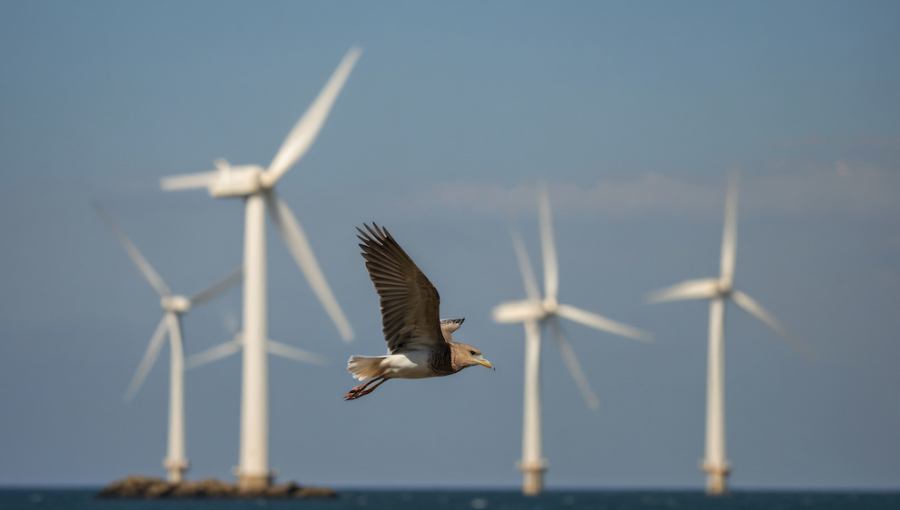
Latvian telecoms firm LMT and energy utility Latvenergo launched a joint research project to create a system for automatically detecting and identifying birds near wind turbines, the Latvian investment promotion agency, said on March 17.
The initiative aims to reduce bird mortality while supporting the expansion of wind energy in line with environmental standards. It is a notable step for local innovation, with developers describing the technology as unprecedented in Latvia and the wider Baltic region.
The project centres on combining radar with high-resolution cameras – two technologies not previously integrated in this context – to enable real-time monitoring of bird movement. The system is designed to identify species, track flight paths and assess collision risk. If danger is detected, turbines could be temporarily halted to prevent impact.
Focus will be placed on large soaring birds, including storks, eagles, cranes and swans, which are particularly vulnerable around wind farms.
“Latvia’s innovation ecosystem is growing stronger, and this project is an excellent example of how technology can help protect nature while promoting sustainable energy production. We are proud that the LMT Group, together with Latvenergo, is creating a solution of significance on both a Latvian and European scale. Similar existing solutions involve only video integration, therefore, this new approach may have significant export potential,” said Juris Binde, president of the LMT Group.
Artificial intelligence will play a central role, analysing combined radar and video data to ensure accurate monitoring even in low visibility or poor weather. The system is expected to reduce reliance on manual observation while helping developers meet EU and national environmental requirements. Species detection will be adaptable, based on expert input.
Martiņs Cakste, chairman of Latvenergo, said balancing energy development with biodiversity remains essential. “…This is an opportunity for Latvian-born innovation to protect birds and ensure the sustainability of wind farms both in our country and on an international scale.”
The project began in October 2025 and is scheduled for completion in the second half of 2027. Its budget exceeds €400,000, with partial funding from the EU Recovery Fund.


No comments:
Post a Comment