Chernobyl at 40
Funding pledge and tributes paid at Chernobyl anniversary
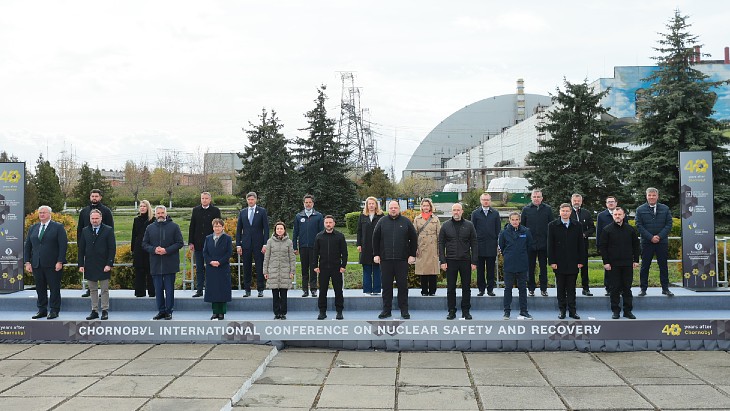
The memorial events and the International Conference on Nuclear Safety and Recovery were attended by people including Ukraine's President Volodymyr Zelenskyy, International Atomic Energy Agency Director General Rafael Mariano Grossi and European Bank for Reconstruction and Development (EBRD) President Odile Renaud-Basso.
As many as 600,000 people, known as liquidators, were involved in tackling the aftermath of the accident.
In his address to the conference, President Zelenskyy said: "Forty years ago, a terrible catastrophe occurred in Chornobyl (Chornobyl is the preferred Ukrainian spelling) - a catastrophe that had global significance and global consequences. Today, everything is already known about the causes of that catastrophe - the entire chain of decisions and mistakes that led to the accident and the explosion at the fourth power unit of the Chornobyl Nuclear Power Plant. People remember the heroism of our firefighters, who saved the plant and saved people. Today, I had the honour of awarding some of these truly heroic individuals who worked - or are working - here today. I want to thank you on behalf of all Ukrainians and all our guests. We thank you for your extremely difficult and high-level work, for your service to our state."
During the event, an agreement was signed with the EBRD for EUR30 million (USD35 million) of funding for the initial phase of restoration work on the giant arch-shaped New Safe Confinement shelter, which covers the initial shelter, which was hastily built in 1986 and encases the wreckage of unit 4.
Chernobyl at 40 - in-depth coverage
The accident, its impact and how it changed the world's nuclear energy industry
Chernobyl at 40: Wildlife and science in the exclusion zone
Chernobyl at 40: The decommissioning challenge
The New Safe Confinement, the world's largest man-made movable structure, was completed and moved into position in 2019, with a design life of 100 years. It is intended to allow the making safe of the earlier shelter (also known as the sarcophagus) and the material from the wrecked reactor within it.
However, it was damaged by a drone strike in February last year during the ongoing Russia-Ukraine war, and assessments have put the cost of restoring it to its full design function at about EUR500 million.
In a joint statement, the conference attendees said: "We honour the courage, sacrifice and selfless dedication of the liquidators of the Chornobyl disaster, whose actions were instrumental in mitigating its consequences and protecting millions of lives."
In the statement they also "reaffirm our shared commitment to nuclear safety, environmental protection and international cooperation".
Ukraine's Energy Minister Denys Shmyhal said: "We thank everyone who took part in the liquidation of the consequences of the Chornobyl explosion 40 years ago, as well as their families, for their heroic deeds. I am extremely grateful to the EBRD for its leadership in mobilising financial resources."
In her address to the conference, the EBRD's Renaud-Basso said: "It is deeply moving to participate in the ceremony marking the 40th anniversary of the Chornobyl catastrophe, and to remember and pay tribute to the brave men and women who led the immediate response to the disaster. The immense personal sacrifice and heroism of those individuals cannot be overstated. Many put their own lives at grave risk, and countless others paid a lasting price to protect communities far beyond the reactor site. Their courage, resilience and sense of duty in the face of unimaginable danger continue to command our respect and gratitude, reminding us of both the human cost of disaster and the extraordinary capacity for selflessness in times of crisis."
She said that she welcomed the allocation of EUR30 million for the initial phase of repairs on the New Safe Confinement but said "we must be frank: the resources currently available are not sufficient … we welcome substantial additional pledges in 2026 to move beyond emergency measures and preparatory work to full implementation".
The IAEA’s Grossi, posting on X about the conference, said "safety can never be taken for granted" and recalled "how the accident led to global cooperation and a safety culture that defines the nuclear field today. Chornobyl is not history, It is a living responsibility". Forty years after the accident, "it is a moment to remember, to reflect and to strengthen our commitment to nuclear safety".
Chernobyl at 40
The impact of the 1986 accident and how it changed the world's nuclear energy industry
Part One: What happened?
In April 1986 Chernobyl unit 4 was due to undergo a scheduled shutdown for routine maintenance. While this was happening, a test was also to take place to determine how long the power generation turbines would spin and supply power to the main circulating pumps following a loss of main electrical power supply. The scheduled shutdown process began on 25 April, with the reactor's power level gradually being lowered from its full operating power of 3200 MWt. (MWt is short for megawatts thermal - a measure of the plant's thermal power output, MWe - megawatts electrical - is a measure of its electrical output).
At 01:00 on 26 April - with the reactor power down to about 200 MWt - preparations began for the turbogenerator rundown test. Just after 01:23, with the reactor parameters stabilised, the unit shift supervisors gave the go-ahead to start the test by closing down the turbine feed valves so that the turbines could start coasting. And for the next 30 seconds, the parameters of the unit remained within expected limits. Then the plant's operator pressed a button that should have stopped the reactor - even now, it's not entirely clear why the button was pressed, but it seems that this was because the turbogenerator rundown test had finished, or to begin the next stage of the reactor shutdown process. But - partly due to the design of the reactor itself, and partly because of the way it had been operated in the hours leading up to the test - this didn't happen. Instead, the reactor power increased rapidly. The sudden increase in heat production ruptured part of the fuel, ultimately leading to a steam explosion which destroyed the reactor core and released fission products into the atmosphere, followed by a second explosion three seconds later.
The accident caused the largest uncontrolled radioactive release into the environment ever recorded for any civilian operation. Large quantities of radioactive substances were released into the air for about 10 days.
Why did this happen?
The International Nuclear Safety Advisory Group is an expert group convened by the International Atomic Energy Agency (IAEA) to provide authoritative advice and recommendations on nuclear and radiation safety. The group produced two definitive reports on the accident: Summary Report on the Post-accident Review Meeting on the Chernobyl Accident (INSAG-1) was published in 1986 following a review meeting which included a "frank and open" presentation from Soviet scientists and engineers who gave their account of the accident sequence, and more besides. This was updated in 1992 in the light of further information and published as INSAG-7, The Chernobyl Accident: Updating of INSAG-1.
INSAG-7 concluded that several major factors came together to cause the accident: certain physical characteristics of the reactor; specific design features of the reactor control elements; and the fact that the reactor had been brought to a state outside the specifications of operating procedures. And "most importantly", said the report, "the physical characteristics of the reactor made possible its unstable behaviour".
What was it about the reactor design?
First, a little background on nuclear reactors. There are some components that all reactors have: nuclear fuel - usually based on pellets of uranium oxide which are arranged in fuel assemblies; a moderator, which slows down the neutrons released from fission so that they cause more fission, keeping the nuclear chain reaction going; control rods made of a neutron-absorbing material, that can be inserted or withdrawn from the core to control the rate of reaction, or to halt it; and a coolant, which circulates through the core to transfer the heat from it.
The four units at Chernobyl were Soviet-designed RBMK reactors (RBMK is from reaktor bolshoy moshchnosty kanalny, which translates as 'high-power channel reactor'). Designed in the mid-1960s, the RBMK is a water-cooled reactor with individual fuel channels, using graphite as its moderator and is sometimes referred to as a light-water graphite reactor. RBMKs are unique amongst power reactors in having this combination of coolant and moderator (see graphic below from OECD NEA).
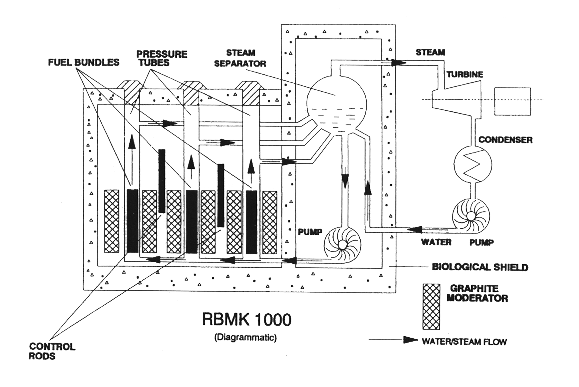
Reactors cooled by boiling water will contain a certain amount of steam in the core. Water is a more efficient coolant and a more effective neutron absorber than steam, so an increase in these steam bubbles - or "voids" - will lead to a change in reactivity. In a reactor where the same water circuit acts as both moderator and coolant, an increase in these steam bubbles (voids) will mean the cooling is less efficient, but will also mean that fewer neutrons are slowed down. And because neutrons need to be slowed down in order to sustain the nuclear chain reaction, this leads to a reduction in power. This is known as a negative void coefficient of reactivity, or just a negative void coefficient, and it's a phenomenon that is a basic safety feature of most water-cooled reactors in operation today.
If the moderator and coolant are of different materials - like in the RBMK - an excess of steam in the core will reduce the cooling of the reactor, but as the moderator remains intact, the nuclear chain reaction continues. But in the RBMK, the neutron-absorbing properties of the coolant water are also an important part of the reactor's operating characteristics. Increased steam production means that fewer neutrons are absorbed, and this enhances the chain reaction, leading to an increase in the reactivity of the system. This is a positive void coefficient - and a positive void coefficient means that a coolant failure could lead to a strong increase in power output from the fission process.
Although there are other components that contribute to overall reactivity, at the time of the accident, the positive void coefficient in the reactor - which may have been generated in part from measures taken by operators to stabilise the reactor in preparation for the test - became large enough to overwhelm all other influences.
The design of the RBMK emergency protection system control rods may also have been a factor contributing to positive reactivity in parts of the core during an emergency shutdown - a positive scram effect.
Human factors
So much for the physical characteristics of the reactor.
The INSAG reports also found human factors to be a major element in causing the accident, particularly the actions of the reactor operators in the run-up to the test process. For example, too many control rods had already been removed from the reactor core by the time the test took place (only eight control rods were inserted in the reactor core, far below the minimum of 15 that, according to the operating policy, should have been in the core at all times), and the reactor had been operated for a time at a lower power than it should have been. These factors contributed, amongst other things, to a build-up of positive voids.
Why did the operators take those actions? Although INSAG-1 cited "a remarkable range of human errors and violations of operating rules" as the causes of the accident, by the time INSAG-7 was published, it had become clear that - far from recklessness or incompetence - the actions taken by the operators were symptomatic of the prevailing safety culture in the USSR at that time.
"INSAG judges that factors leading to the accident are to be found in the safety features of the design, the actions of the operators, and the general safety and regulatory framework."
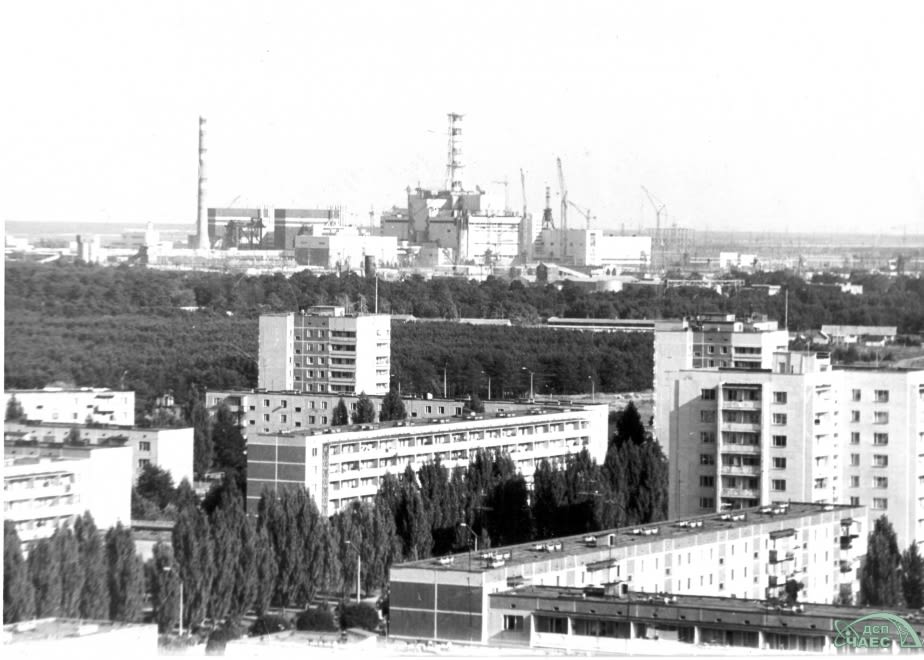
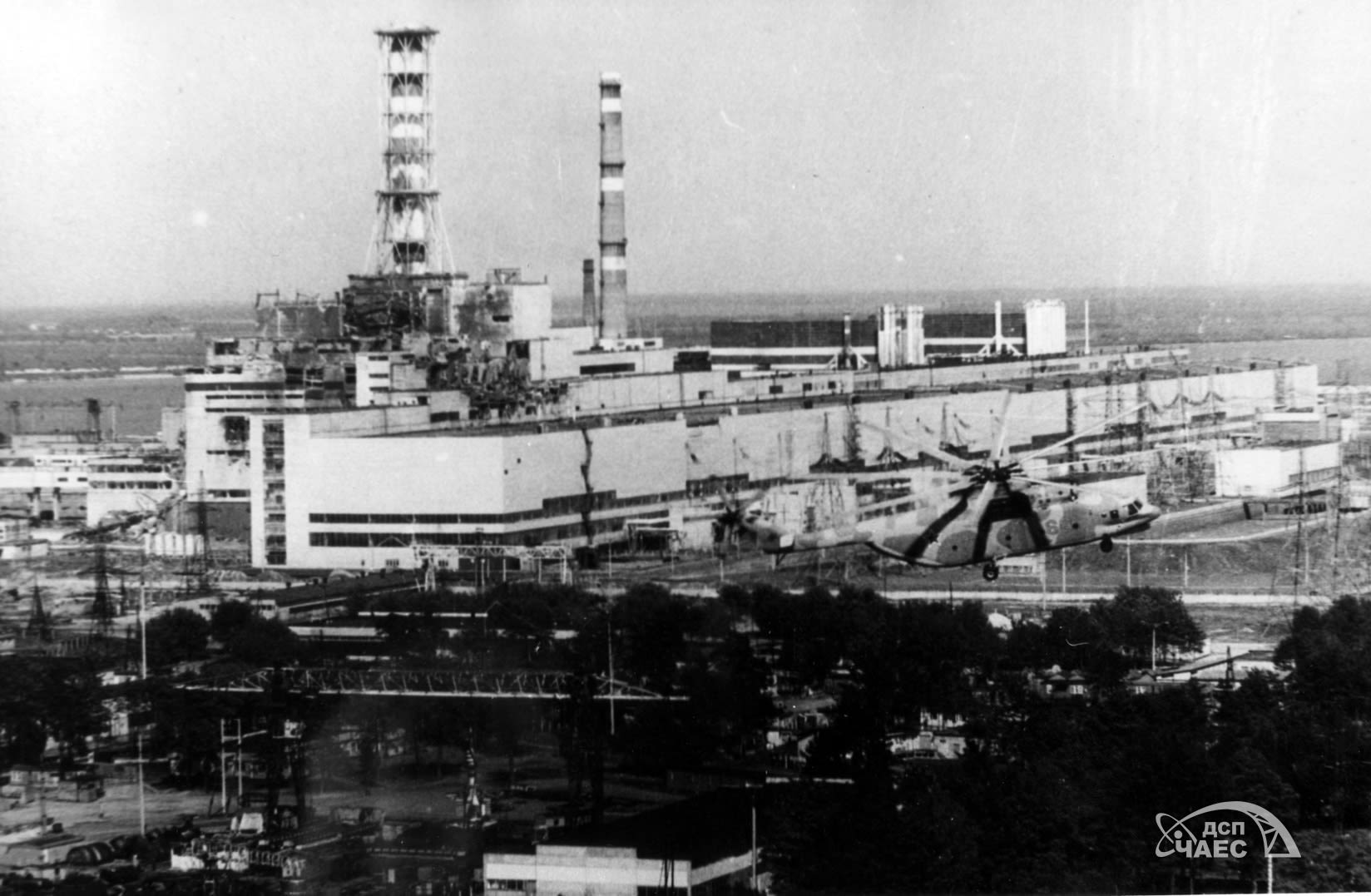
An aerial view of the Chernobyl plant before the accident. (Image: ChNPP)
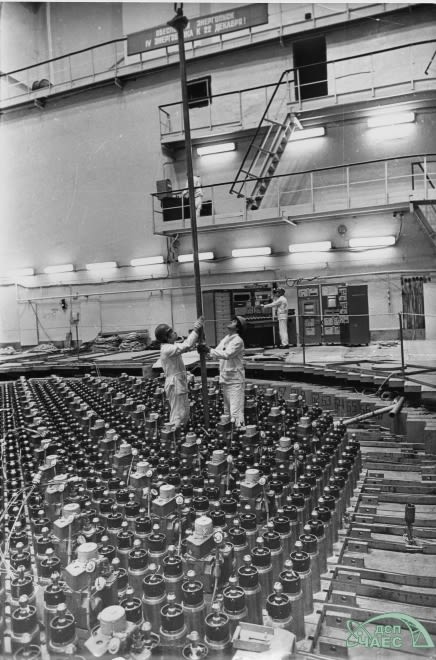
The inside of Chernobyl unit 4's reactor hall in 1983 (Image: ChNPP)
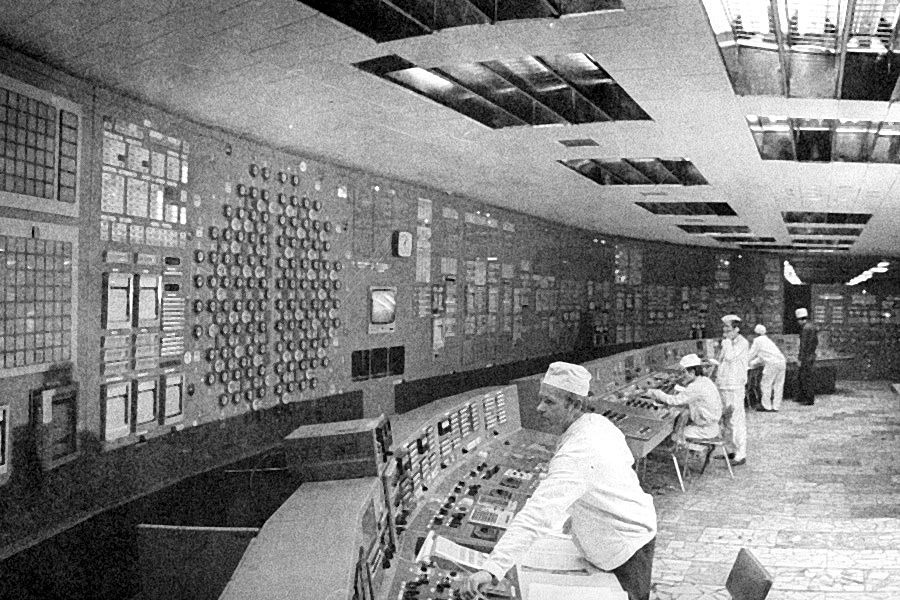
A control room at Chernobyl from around 1977 (Image: EBRD)
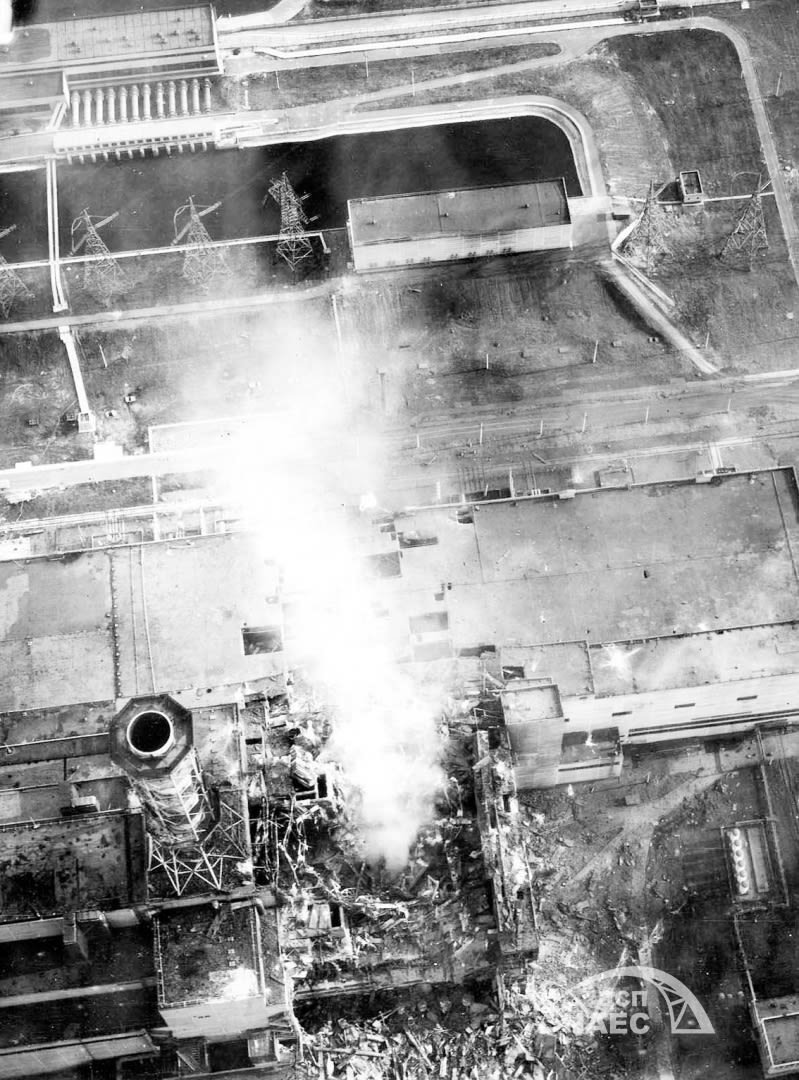
(Image: SSE Chornobyl NPP)
Raising the alarm
Mass media in 1986 was very different to today. With no 24/7 online news, or social media, everyone got their news from traditional print media or broadcast news services. And in the Soviet Union, the media was controlled by the Kremlin.
Despite the scale of the accident it took several days for word of the events at Chernobyl to become known outside of the USSR - and it was at a nuclear power plant in Sweden, more than 1000 km from the site of the accident, that the story began to emerge.
On the morning of Monday 28 April, Clifford Robinson, who worked as a measurement engineer in a chemistry lab at the Forsmark nuclear power plant, was about to begin his shift. He'd commuted from nearby Uppsala and arrived at work early. Passing through a radiation measuring station on his way into the controlled area of the nuclear power plant, an alarm sounded - which was strange, because Robinson had not yet been inside the controlled area.
At first, this was put down to an issue with the measuring device - perhaps an alarm level needed to be adjusted. "Completely wrong of us," Robinson said in a 2024 interview with Henrik Ekblom Ystén, published in Vi.
There was soon a long line of employees at the monitoring station.
"No one came out. The monitor was constantly beeping," Robinson said.
There was nothing to suggest a malfunction at any of Forsmark's three boiling water reactors - no abnormal radiation levels were observed inside the reactor buildings or from the stacks - but an alert was declared, with all personnel not required for the immediate operation of the plant evacuated. The local radio station was informed of the observations and the measures that were being taken at the plant.
Robinson asked to borrow a colleague's shoes, which he checked in the lab. "I discovered a lot of radioactivity and traces of substances that we normally don't have in Forsmark's reactors … whatever the emissions were, they didn't come from Forsmark."
As the day went on, Robinson recalled, more reports began coming in of elevated levels from other locations in Sweden, Norway and Finland, and the suspicion of an accident somewhere in the Soviet Union began to grow.
Confirming the source
In 1986, the Swedish Radiation Protection Institute (SSI, from its Swedish name) was responsible for planning for radiological emergencies outside Swedish nuclear power plants and for advising and instructing local authorities, including in the event of an accident.
The first reports of increased radiation levels at Forsmark reached SSI at around 10:00 on 28 April, and an emergency task force was convened immediately. Over the next few hours, SSI started to receive information about abnormal radiation levels at the Studsvik research centre, some 200 km from Forsmark, and at Sweden's other nuclear power plants. Research centres in Finland and Denmark confirmed to the SSI that increased background radiation and airborne contamination had been registered in both countries.
Sweden had a widespread radiation monitoring network, initially set up in the 1950s to monitor fallout from atmospheric nuclear weapons testing. At 12:15pm, the Swedish National Defence Research Institute - which operated the national air sampling stations - was notified of what was at that point still assumed to be a release from Forsmark. It analysed a sample that had just been collected in Stockholm: from the radionuclide ratios it was clear that a reactor accident had happened somewhere. But meteorological data showed that the air flowing over Stockholm that morning had come from Latvia, Lithuania, Belarus and Ukraine - at that time, all part of the Soviet Union. By 13:00, the SSI had been notified that all Swedish reactors could be excluded: several plant sites in the USSR (Ignalina, Rovno, Chernobyl, Kursk and Novovoronezh) were emerging as the likely candidates.
That afternoon, Swedish diplomats had reached out to contacts in Moscow to try to find out more information about any accident - but were told their Soviet contacts had no information. Sweden then contacted the International Atomic Energy Agency to request its help in finding out about the location -and extent - of the accident it was now clear had taken place.
Back in the Soviet Union, authorities were conducting emergency fire-fighting and response operations, although there had not yet been any announcements to the public. The first - brief - official report of the emergency came via the TASS official news agency later in the evening of 28 April. Five sentences, read out on the Вре́мя TV programme, stating that an accident had occurred at the Chernobyl nuclear power plant. Here's a report (link opens in a new window) from America's ABC News on 28 April, 1986:
The report said only that one of the nuclear reactors had been damaged; that the effects of the accident were being dealt with, assistance was being provided for those affected, and a commission had been set up to investigate the incident.
It was not until 14 May that President Mikhail Gorbachev acknowledged the accident in a televised address. Here's a report (link opens in a new window) from America's ABC News from that evening:
The official announcements to the Soviet people may have been a long time coming, but inside the Soviet Union, awareness of the accident had been growing. Radio Free Europe/Radio Liberty's Ukrainian Service made its first announcement of the news on 29 April.
Part 2: The Impact
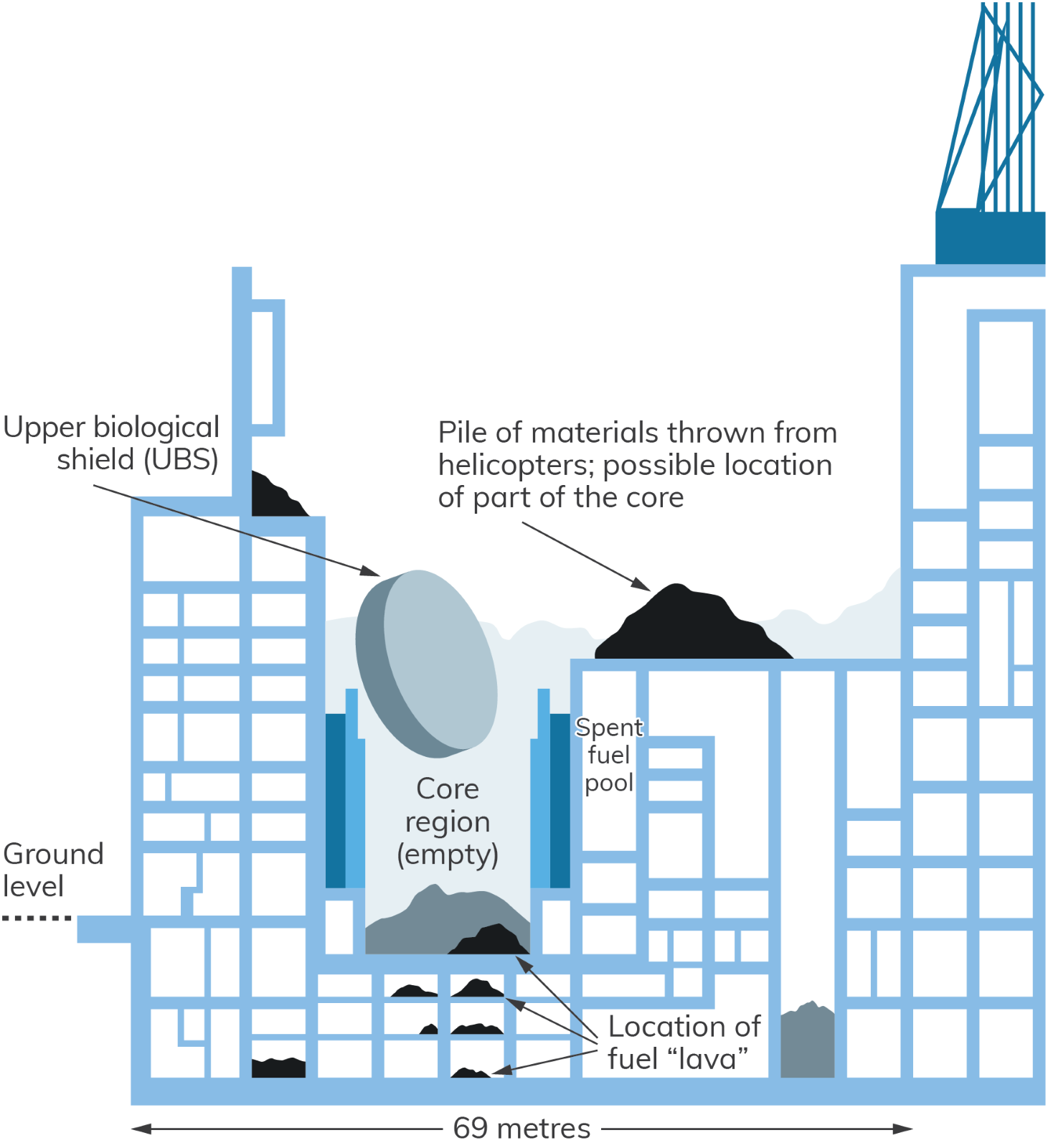
The first of the two explosions that rocked unit 4 at the Chernobyl plant in the early hours of 26 April 1986 is now known to have been a steam explosion which blew open the reactor and blew the roof off the reactor building, releasing fission products to the atmosphere. Moments later, the second explosion - likely caused by the production of hydrogen from zirconium-steam reactions (nuclear fuel rods are clad in zirconium alloy) - threw out fragments from the fuel channels as well as hot graphite. The plume of smoke, radioactive fission products and debris rose about 1 km into the air. Here's a World Nuclear Association graphic showing the rough layout of the reactor after the accident:
Fires started in what was left of the Reactor 4 building and other parts of the site, releasing clouds of steam and dust - most of these fires had been put out within a few hours. But a serious fire which involved the reactor's graphite moderator burned for days, finally being extinguished by 9 May.
The most significant radioactive releases from Chernobyl actually occurred over a period of about 10 days. There was an initial large release following the explosion - principally made up of the more volatile radionuclides such as noble gases (for example, the reactor's entire inventory of xenon-33 was released during the accident), iodine and compounds of elements such as caesium and tellurium. The radioactive release rate fell quickly, but about a week later, as the graphite fire continued, emissions again began to rise and there was another period of intense emissions - this time, involving some of the less volatile elements such as cerium, zirconium and lanthanides embedded in fuel particles.
Those radioactive particles ejected into the atmosphere must eventually come back down - and where they come down is influenced by things like the size of the particles themselves (larger, heavier particles are deposited closer to the accident site, while smaller particles will be more widely dispersed). The weather conditions also play a part - and in the ten days or so after the accident, when the significant releases occurred, the meteorological conditions were changing frequently.
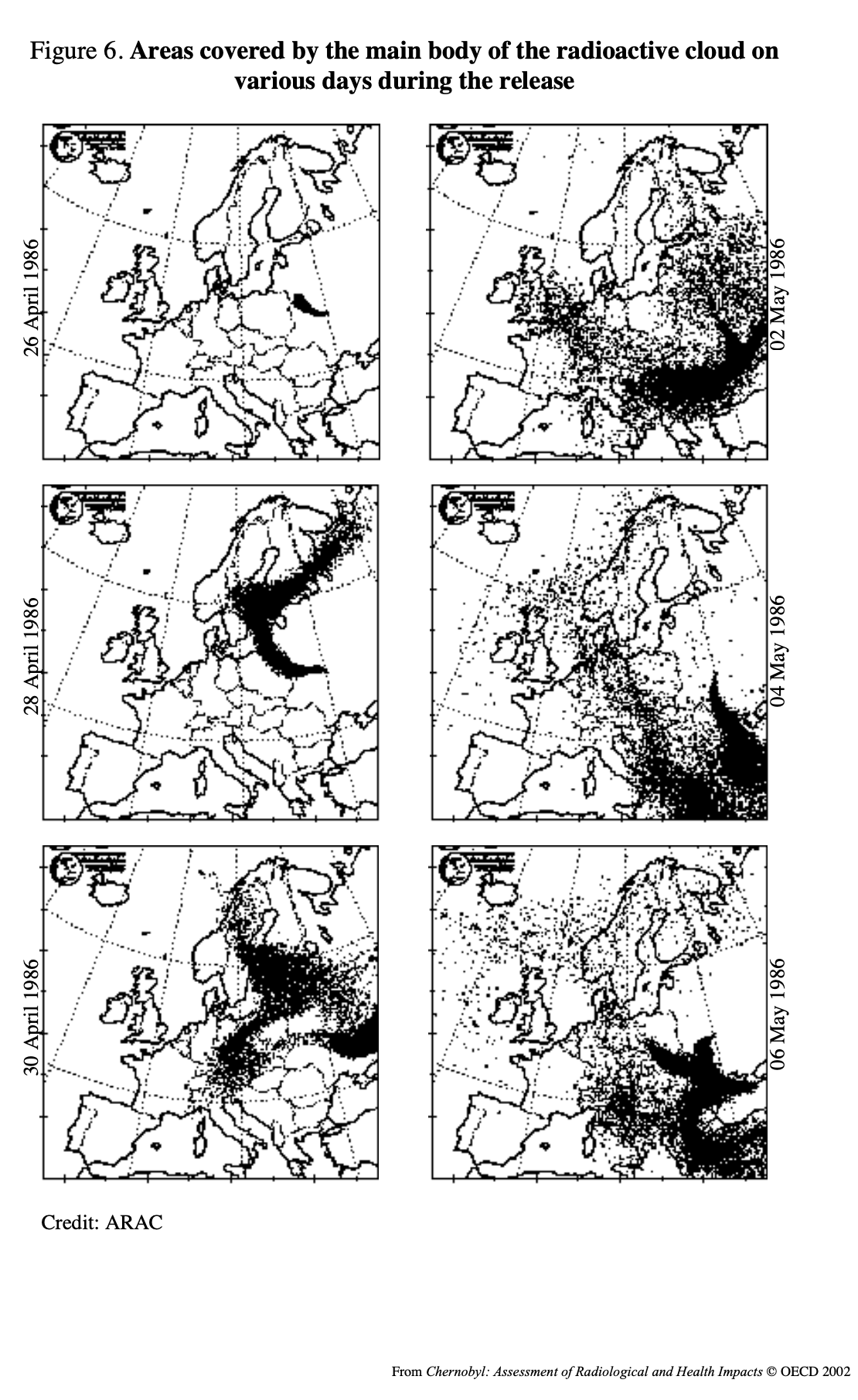
The initial radioactive plume - the one that was detected in Sweden - was tracked as it moved over the Soviet Union and Europe, with north-westerly winds initially taking it towards Scandinavia, the Netherlands, Belgium and the UK. Later, as the winds shifted, the plume moved to the south. All that time, the composition and characteristics of the radioactive materials in the plume were changing, for example due to radioactive decay, chemical transformations, and changes in particle size. The pattern of deposition was also irregular: rainfall caused a significant increase in deposition.
The plume spread far and wide - activity from Chernobyl was detected as far away as Canada, Japan and the USA - but only certain territories in the former Soviet Union, and a few parts of Europe, experienced significant contamination.
Close to home
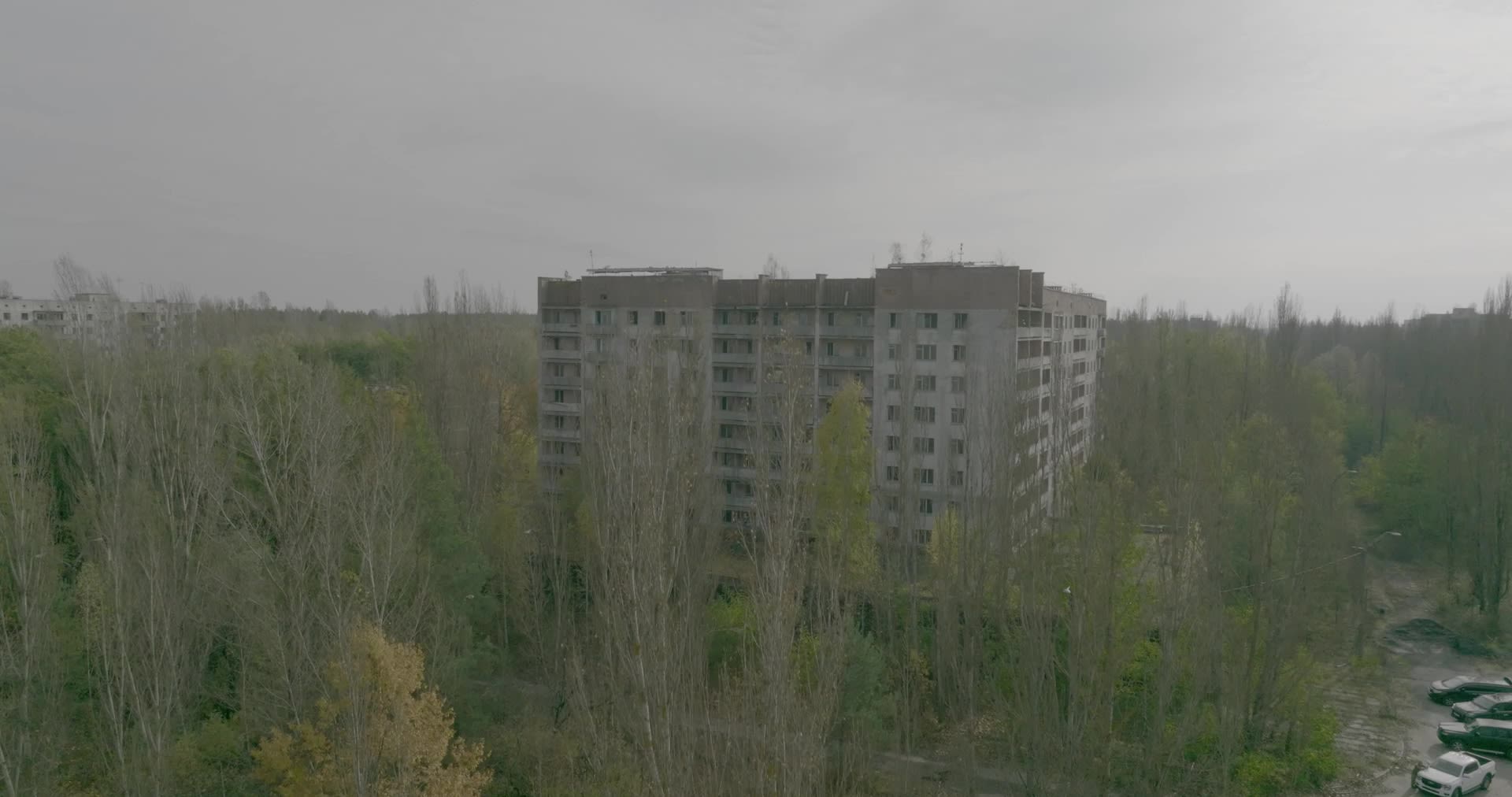
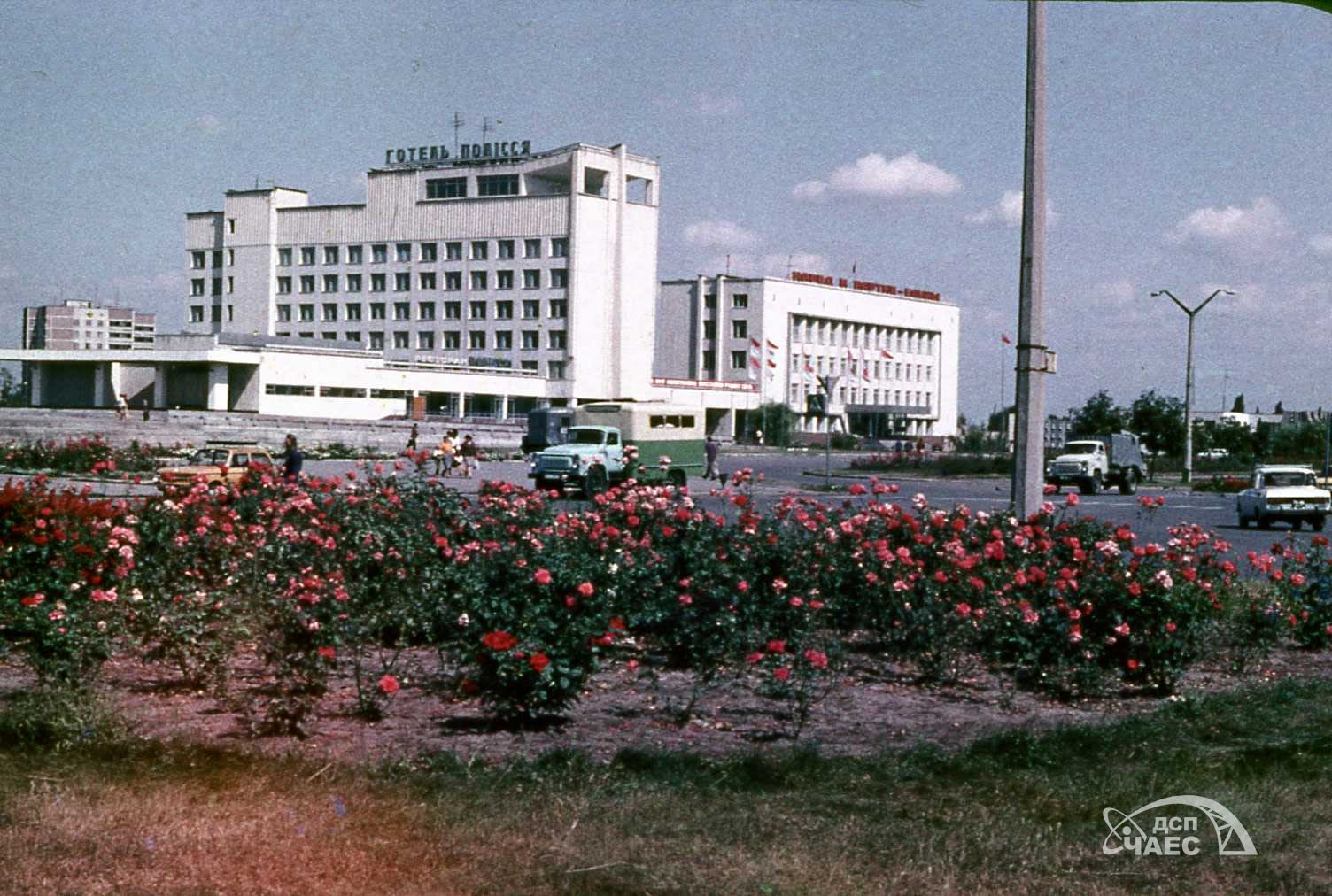
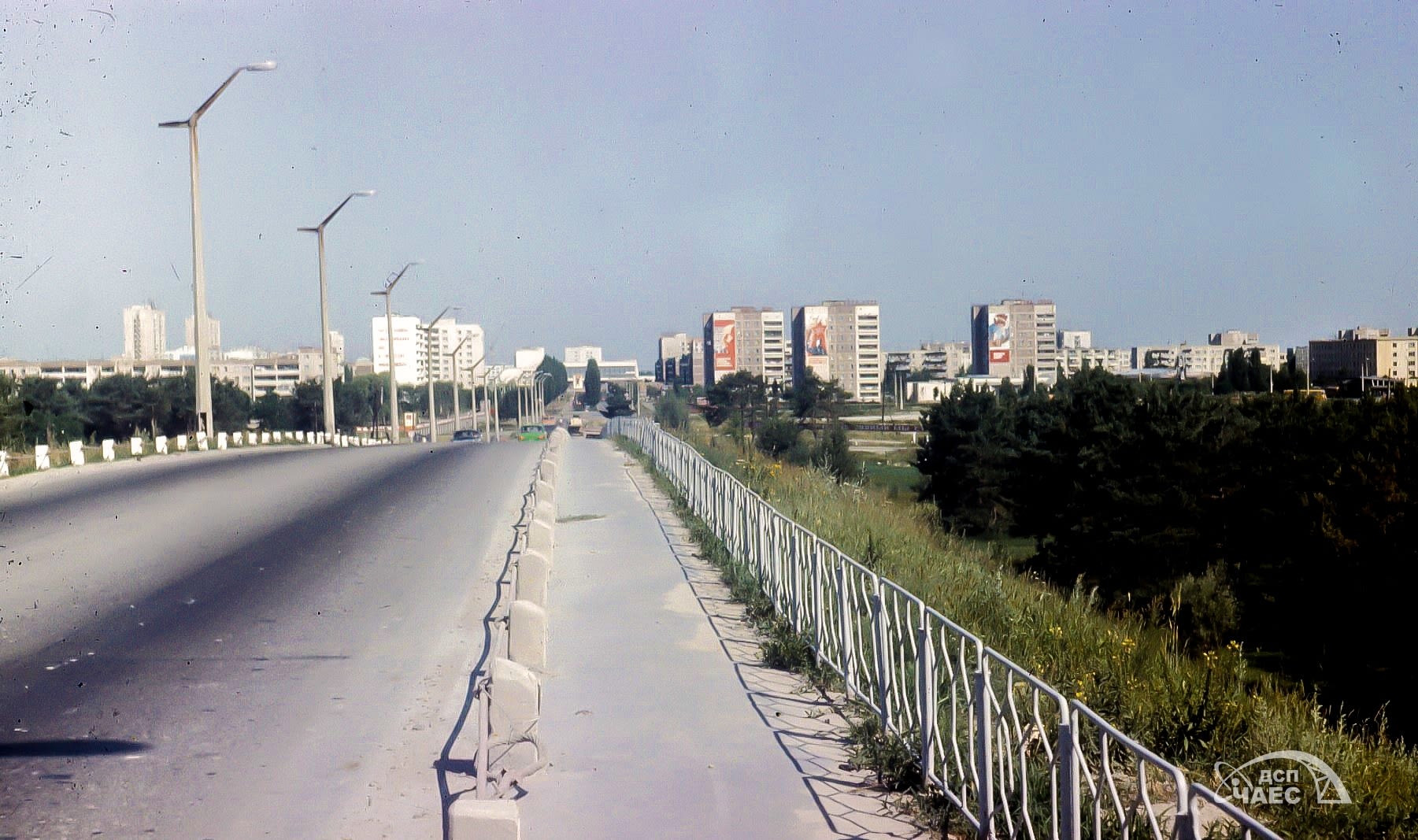
With four reactors in operation in 1986, two more RBMK units already under construction, and plans for a second phase of six further reactors, Chernobyl had looked set to become the largest nuclear power plant in the world. The town of Pripyat, about 3 kilometres from the plant, was founded in 1970 as a showpiece city to house the Chernobyl workforce. In an article published in February 1986 - just two months before the accident - the town's mayor, Vladimir Voloshko, enthused about a town with a population drawn from all over the Soviet Union, with streets abounding in flowers, apartment blocks standing in pine groves, schools, libraries, shops, sports facilities and playgrounds conveniently close to each residential area. The average age of the population was just 26. These photos, courtesy of Chornobyl Nuclear Power Plant SSE (Chornobyl is Ukraine's preferred spelling), give a good idea of how it looked before being abandoned:
The decision to evacuate Pripyat was not taken until late on 26 April. An announcement was issued at 11:00 the next day, with evacuation beginning at 14:00 that afternoon - around 36 hours after the explosion. Residents were told to take their documents, vital personal belongings and some food, "just in case" - and to make sure they had turned off the lights, electrical equipment and water, and shut the windows before leaving. The evacuation was to be temporary. According to the OECD Nuclear Energy Agency's report issued ten years after the accident, the evacuation was completed in about two and a half hours. The residents never returned.
In early May, an exclusion zone with a radius of 30 kilometres from the Chernobyl plant was declared, leading to more evacuations. The zone was subsequently expanded to include some highly contaminated areas further out from the plant.
As well as Pripyat's 49,000 residents, the old town of Chernobyl, with a population of 12,500, lay about 15 kilometres to the south-east of the power plant. Between 115,000 and 135,000 people are thought to have lived within the 30 kilometre radius of the plant. Setting up the exclusion zone meant the evacuation of more than 100,000 people from Belarus, Ukraine and Russia.
Meanwhile, at the plant itself, work went on to tackle the fires and attempt to bring the situation under control. There were about 600 emergency workers on site at Chernobyl during the night of the accident: they received the highest doses of radiation, according to UNSCEAR. (UNSCEAR is the United Nations Scientific Commission on the Effects of Atomic Radiation, the UN body with a mandate from the General Assembly to assess and report levels and health effects of exposure to ionising radiation.)
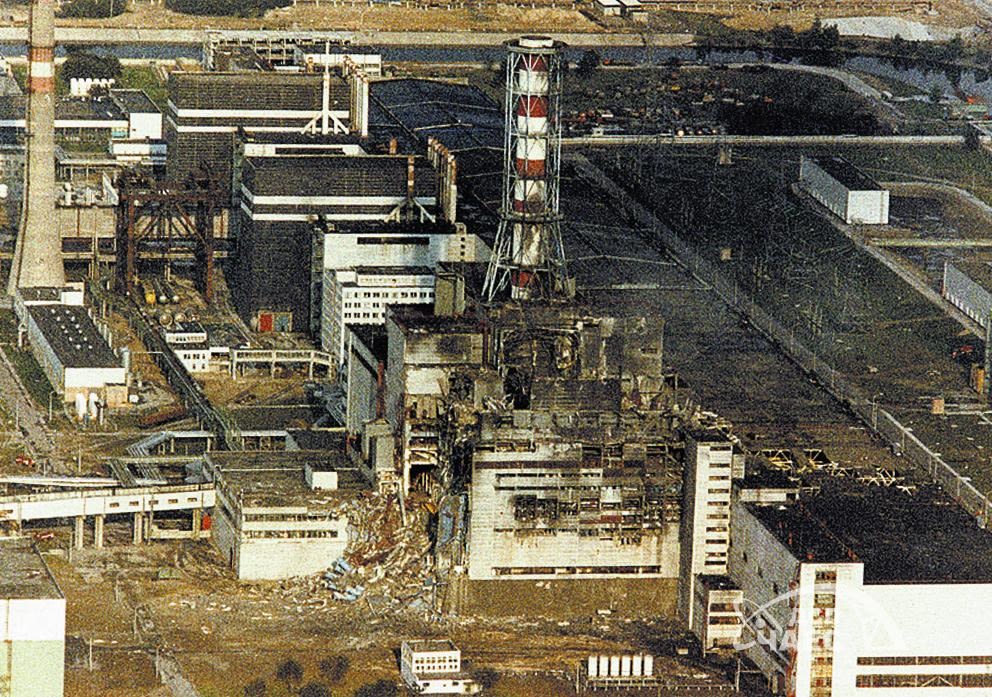
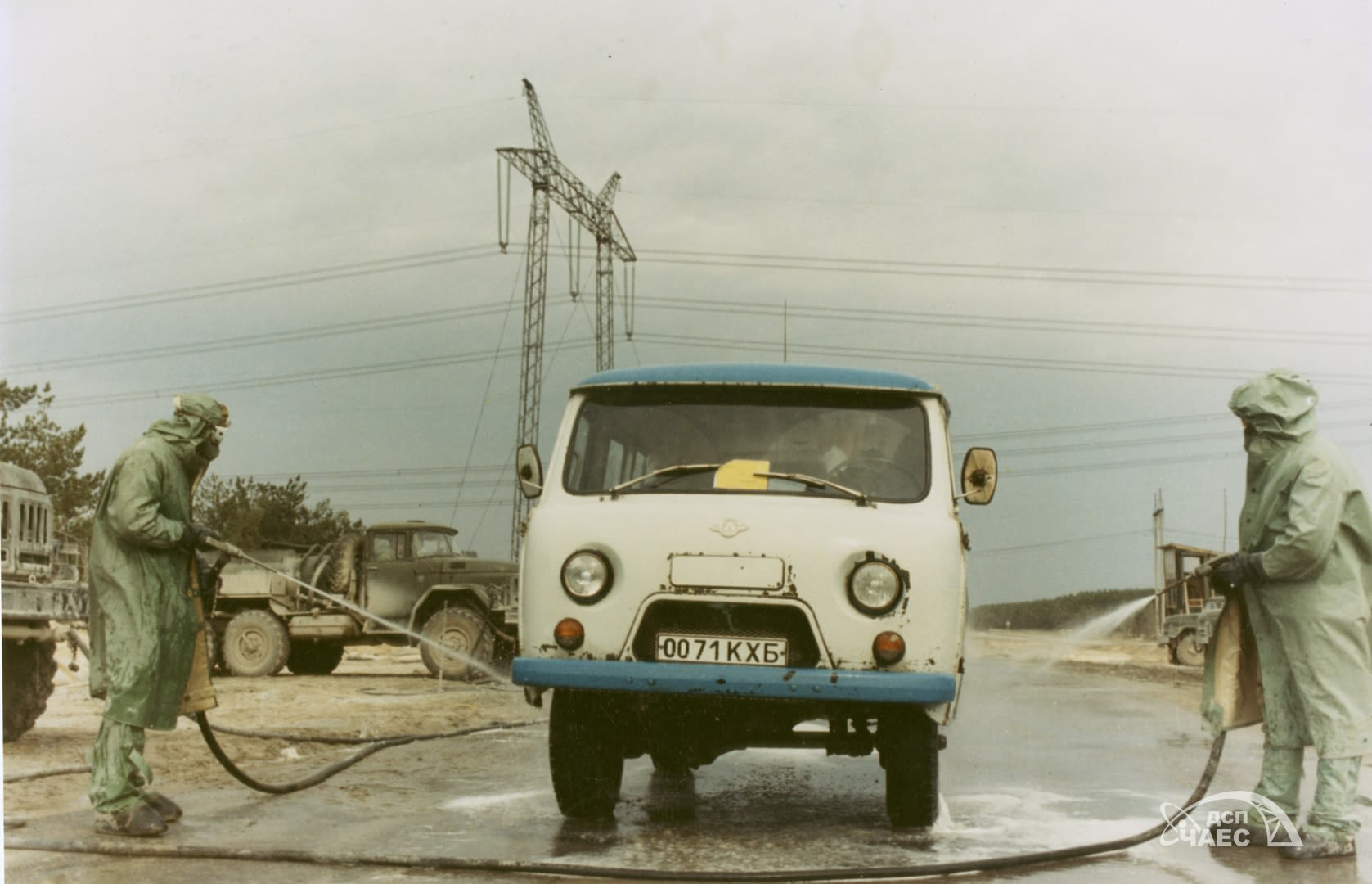
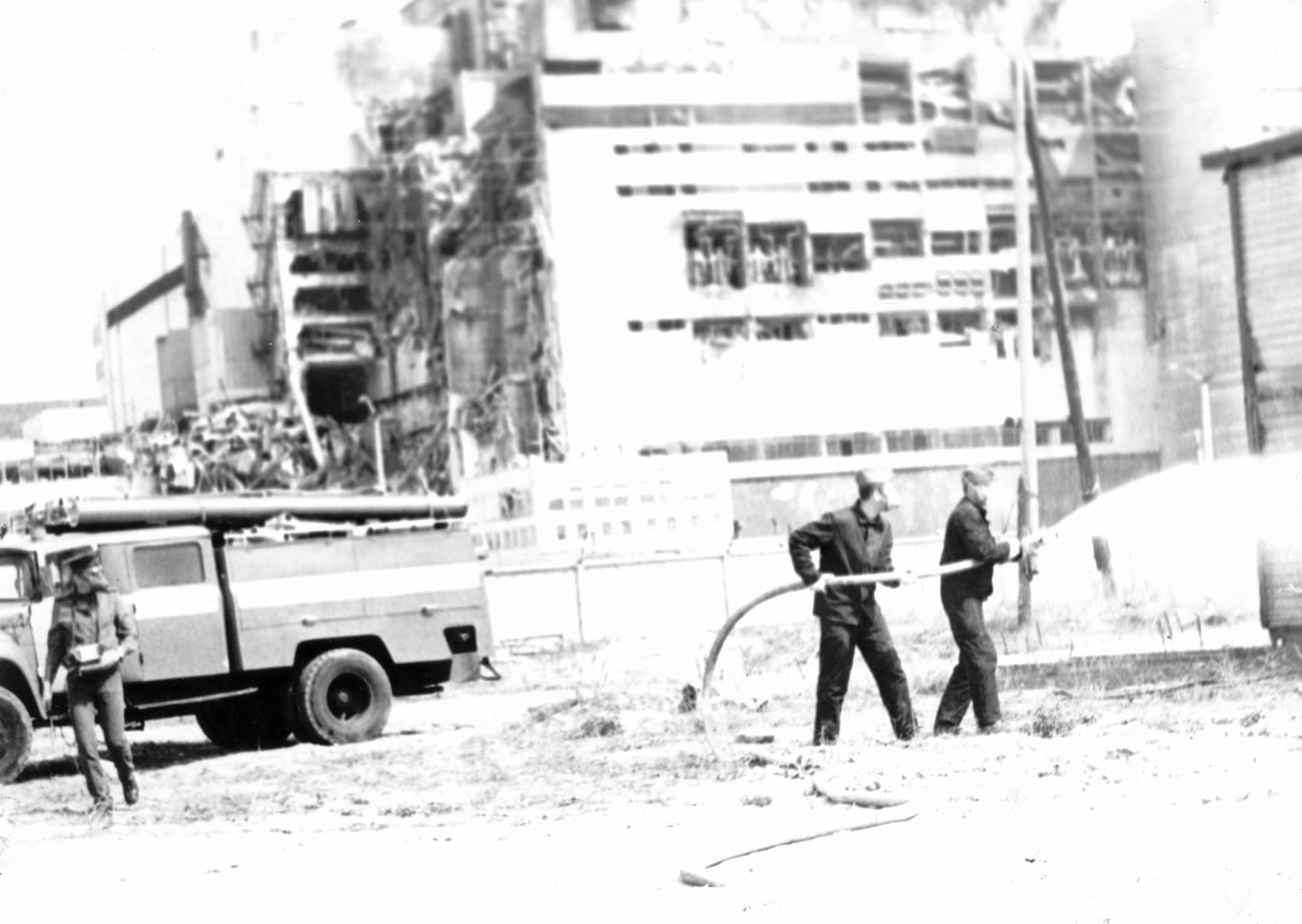
(Images: EBRD)
Acute radiation sickness was confirmed in 134 of the emergency workers: 93 of those received higher doses and had more severe acute radiation sickness. Twenty-eight of those died over the next days and weeks. In addition to the deaths from radiation sickness, three further deaths were immediately associated with the accident: one person was killed by the explosion itself, and another suffered a coronary thrombosis. A third person died early on the morning of the accident from thermal burns.
Nineteen of the 106 emergency workers who survived acute radiation sickness died of various causes within 15 years or so of the accident - but these deaths were not necessarily a direct result of radiation from the accident.
About 600,000 people (including about 240,000 military servicemen) received special certificates confirming their status as recovery operation workers under laws passed in Belarus, the Russian Federation and Ukraine. Over the next few years, these workers - known as "liquidators" - carried out tasks such as decontamination of the reactor block, reactor site and roads, as well as construction of the "sarcophagus" to cover the damaged reactor, a town for reactor personnel and waste repositories.
Broader horizons
Even as the emergency teams continued their efforts to bring the situation at the plant under control, radioactive material emitted as a result of the accident was starting to be detected around Europe.
Here's just one example.
In 1986, David Drury had recently begun working at the Heysham 2 project in north-west England, which was still in commissioning. He remembers arriving at work on 28 April to be met by operators complaining of intermittent, and seemingly spurious, alarms from the whole-body monitoring systems that had begun the previous day.
They had already confirmed that nothing had happened at the plant - or its sister plant next door, Heysham 1 - to cause the alarms.
"And so this was kind of a bit baffling, but then we started to get reports of potential fallout coming across in the atmosphere from Eastern Europe and from Ukraine, from the Chernobyl nuclear accident," Drury recalled to World Nuclear News.
"I can remember really clearly listening to the commentary on the radio... And certainly for us as nuclear workers, nuclear professionals, it was kind of almost a sense of, let's say, disbelief, but also wonder, that we could be experiencing some consequence thousands of miles away as a result of an accident that happened or an event on one of the nuclear power stations in Eastern Europe."
Isotopes and impacts
The explosions at Chernobyl unit 4 released more than 100 radioactive elements into the atmosphere.
When it comes to considering the effects of that radiation, it's not just the amount of radioactivity released that is important, but also its distribution over time, and the chemical and physical forms of the radionuclides released. The types and amounts of radioactive or hazardous material released to the environment following a nuclear accident is known as the "source term". For Chernobyl, the source term was initially estimated from air sampling and ground deposition within the former Soviet Union.
As time passed, more information continued to become available from deposition data measured around world, and from analyses on core debris and material deposited in the reactor building itself. By the time the OECD Nuclear Energy Agency (NEA) reviewed the radiological and health impacts of the accident in 1996 - benefiting from ten years of refinements to those initial evaluations - there was what the agency described as a "fairly accurate estimate" of the total radioactivity released from the accident. And in an update published 15 years later, in 2022, the NEA said those estimations remained valid.
Radioactive elements including plutonium, iodine, strontium and caesium were released during the accident. Two of those - iodine-131 (I-131) and caesium-137 (Cs-137) - are of particular importance, because they are responsible for most of the radiation exposure received by the general population.
Iodine-131 has a short radioactive half-life (eight days), but it can be transferred to humans relatively rapidly from the air and through consumption of contaminated milk (milk becomes contaminated when cows and goats graze on grass on which the isotope has been deposited) and leafy vegetables. Iodine becomes concentrated in the thyroid gland, so I-131 is of particular significance in infants and children because of their intake of milk and dairy products. But its short half-life means that I-131 is not a long-term environmental issue.
Caesium is longer-lived, with a half-life of 30 years. Deposited on soil, it migrates downwards, and contamination levels in soils decrease only slowly as it is taken up through the roots of plants. And when taken up by plants, it enters the food chain. Here's an International Atomic Energy Agency graphic outlining possible exposure pathways:
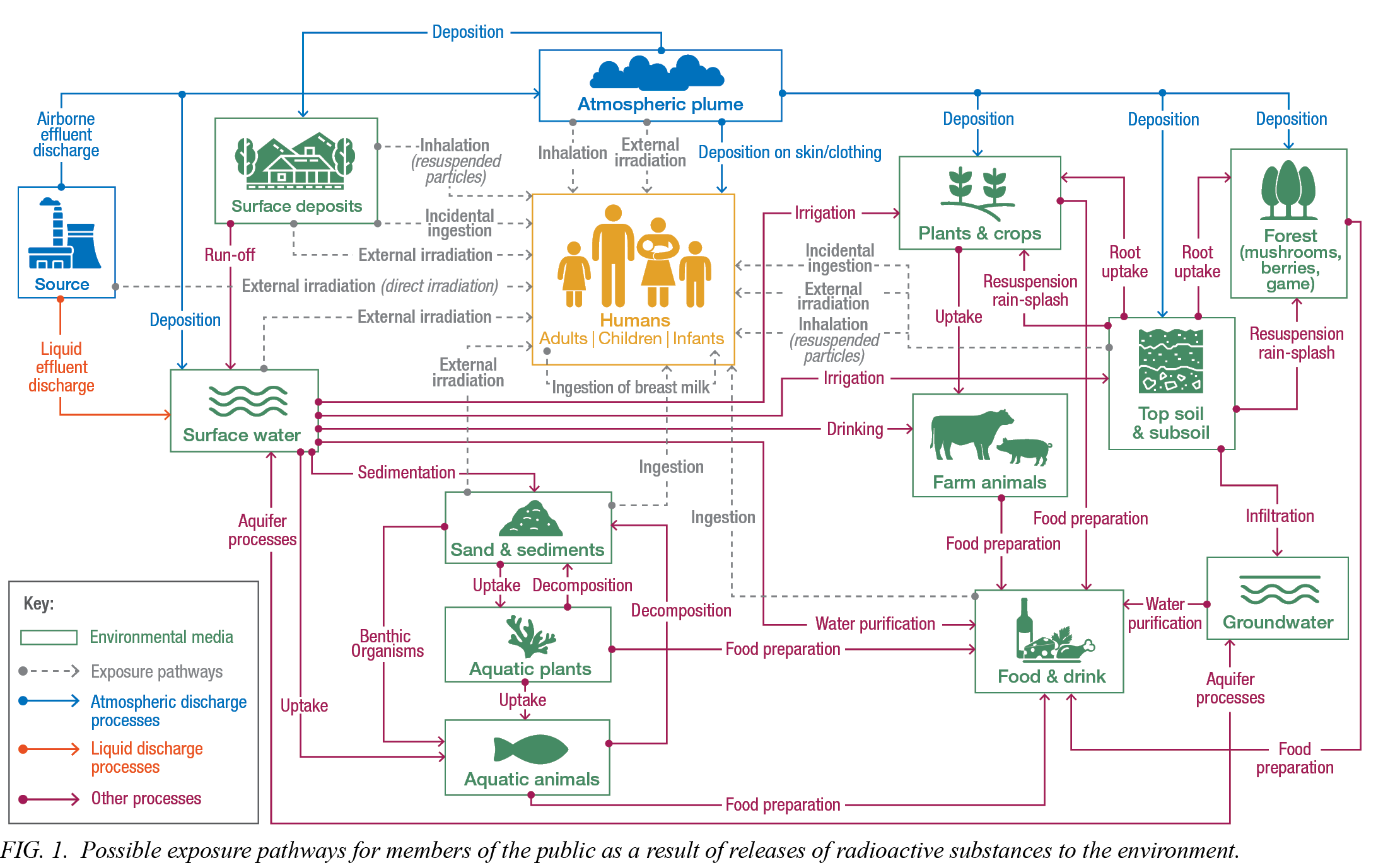
The impact on agricultural practices, food production and use and other aspects of the environment was widespread, with large areas of agricultural land in the then Soviet Union excluded from use, or food production subjected to strict controls and restrictions of distribution and use. The impact was also felt in some other European countries, especially in some parts of the UK and Nordic countries where restrictions on the movement or slaughter of some animals, particularly sheep and, in the Nordic countries, reindeer, was controlled for many years after the accident. It wasn't until 26 years later - 2012 - that the UK's Food Standards Agency lifted the last restrictions on movement of sheep from affected farms in north-west England and Wales.
The wider health impacts from the accident
No members of the general public suffered the kinds of radiation sickness and radiation-related acute health effects that occurred among the plant personnel and the people who were involved in the early stages of the response to the accident.
And according to UNSCEAR, two decades on from the accident no scientific evidence of any major public health impacts attributable to radiation exposure had emerged - with one exception. By 2005, more than 6,000 thyroid cancer cases had been diagnosed in those who were children and adolescents in the most affected regions of Belarus, Ukraine and Russia at the time of the accident, and drank milk with high levels of radioactive iodine. By 2016 - thirty years after the accident - the World Health Organization's International Agency for Research on Cancer (IARC) reported that more than 11,000 thyroid cancer cases had been diagnosed in people who were children or adolescents in April 1986.
UNSCEAR recognised that a large fraction of these thyroid cancers was most likely attributable to radioiodine intake, although Ausrele Kesminiene, Deputy Head of the IARC, in 2016 also noted that long-term increases in incidence are difficult to quantify, because the risk of spontaneous thyroid cancer increases with age as the study population gets older. But the prognosis for most of those patients has been good: according to the World Health Organization, the survival rate amongst such cancer victims from Belarus was found to be 99%.
Video: Experts talk about the health effects of Chernobyl (Recorded 2011)
Psychosocial effects
The Chernobyl Forum report found that the psychosocial impacts from the accident were devastating, with psychological issues representing the largest public health impact from the accident.
Evacuating thousands of people may have helped to reduce the collective dose of radiation, but the resettlement was deeply traumatic for those involved. Exposed populations were found to have anxiety levels twice as high as normal, with a greater incidence of depression and stress symptoms.
The Chernobyl Forum report concluded: "Psychological effects are real and represent the biggest public health impact of the accident."
Part 3: How Chernobyl made today's plants safer
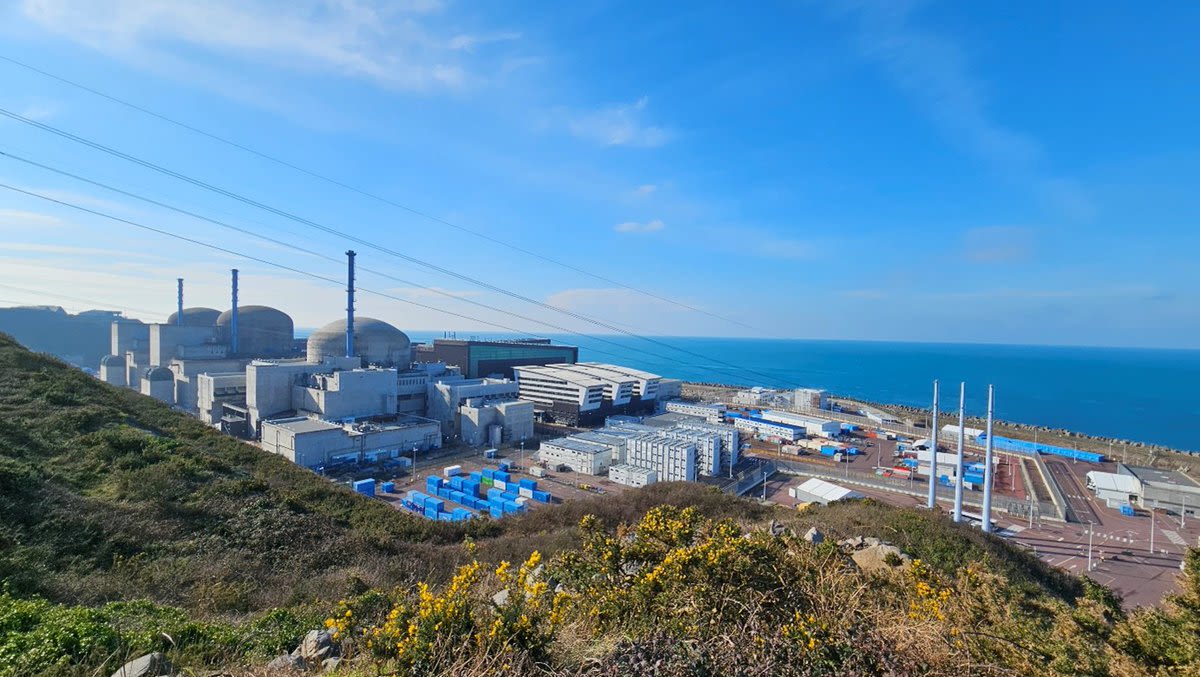
Flamanville Nuclear Power Plant in France (Image: EDF)
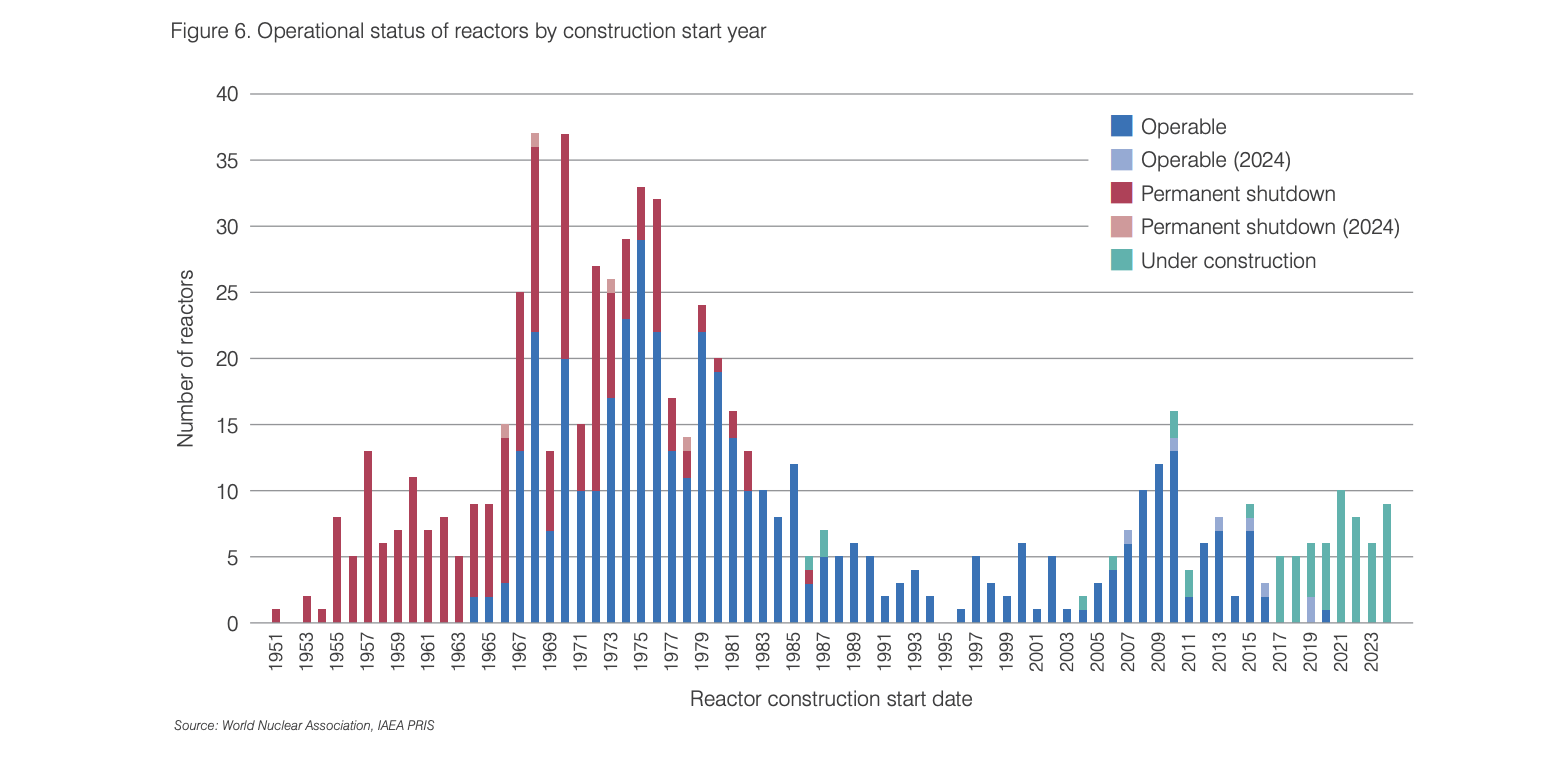
The impact of the Chernobyl nuclear accident of 1986 on the world's nuclear energy industry was huge. It led to years when in many parts of the world people turned away from new nuclear. It also led to a raft of new safety measures and a global safety culture where operators shared their expertise and insights - all underpinned by the first-hand experience that an accident at any nuclear power plant was going to have an impact on all plants.
This graphic shows the decline and low level of construction starts for nuclear energy projects over the following 20 years, before renewed growth up to the Fukushima earthquake and tsunami in 2011.
The lessons of the Chernobyl accident began with modifications to all operating RBMK reactors to make a repetition impossible. According to World Nuclear Association's Chernobyl Accident information paper, in RBMK reactors "originally the nuclear chain reaction and power output could increase if cooling water were lost or turned to steam, in contrast to most Western designs. It was this effect which led to the uncontrolled power surge that led to the destruction of Chernobyl 4. All of the RBMK reactors have now been modified by changes in the control rods, adding neutron absorbers and consequently increasing the fuel enrichment from 1.8 to 2.4% U-235, making them very much more stable at low power. Automatic shut-down mechanisms now operate faster, and other safety mechanisms have been improved. Automated inspection equipment has also been installed".
In addition to the practical changes and checks to all reactor designs, the accident led to a number of international safety initiatives to share expertise and knowledge, most notably with the formation of the World Association of Nuclear Operators, a body which counts nearly all operating commercial nuclear energy reactors as its members. Here's an edited Q&A with WANO, as World Association of Nuclear Operators is known.
How did the idea of WANO emerge?
"The Chernobyl accident in 1986 underscored that nuclear safety is interdependent across borders, countries and regions, as an event anywhere affects confidence everywhere. After the accident, senior leaders from nuclear operating companies worldwide concluded that an independent, non‑political, operator‑to‑operator body was needed to hard‑wire mutual support, transparency and learning across borders.
"Building on the successful Institute of Nuclear Power Operators model which was created after Three Mile Island (the US plant which had an accident in 1979), they founded the World Association of Nuclear Operators in 1989 to raise safety and reliability globally, not just nationally. WANO's mission today remains the same as when it was founded - to maximise the safety and reliability of nuclear power plants and facilities worldwide.
"In its early years, WANO prioritised trust‑building across former geopolitical divides, establishing four regional centres (Atlanta, Moscow, Paris and Tokyo) and a coordinating office in London. The emphasis was on practical mechanisms that operators would use: confidential exchange of operating experience, early plant visits, and the development of common Performance Objectives & Criteria (PO&Cs). The PO&Cs set out the highest global standards of excellence in nuclear safety and reliability for nuclear power stations and facilities worldwide. They are the international 'gold standard' for the commercial nuclear power industry. Pilot peer reviews in the early 1990s evolved into a systematic global programme covering every member station on a regular cycle.
"This operator‑led, non‑regulatory approach was deliberately designed to complement national regulators: WANO's focus is on how plants are run day‑to‑day, creating a safe space for frank performance feedback and rapid assistance when gaps are found. Whereas national regulators review against their minimum regulatory standards, WANO delivers its peer reviews by using its PO&Cs to compare each station against the best practices in the world - with the aim to drive the industry towards excellence.
"Over time, the scope expanded to include corporate peer reviews, pre‑startup peer reviews for new units, targeted member support missions, and global performance indicators that let leaders benchmark progress and identify emerging risks."
How does WANO reduce the risk of future accidents?
"WANO's premise is simple: operators learn best from other operators, and the fastest way to reduce risk is to (1) look deeply and independently at how plants are actually run, (2) share lessons quickly and candidly, and (3) help each other close gaps. That logic is embedded in four reinforcing pillars:Peer Review: Multidisciplinary teams of experienced practitioners benchmark stations and corporate functions against WANO PO&Cs, probing safety culture, maintenance and work management, operations fundamentals, human performance, and leadership. Findings include strengths, areas for improvement, and required corrective actions, with follow‑up to verify closure.
Operating Experience: Members submit and receive event reports and Significant Operating Experience Reports that distil root causes and explicit 'must‑do' actions, reducing repeat events worldwide.
Trends and Performance Analysis: Global indicators (eg: scrams, equipment reliability, industrial safety) reveal trends, outliers and systemic issues, guiding peer focus and member support. Enhanced Performance Monitoring helps WANO track how nuclear plants are performing and spot future trends more effectively.
Member Support & Development: Targeted missions and workshops transfer good practices, while leadership programmes and assistance during challenging conditions strengthen organisational defences.
"By creating structured, confidential, and routine peer scrutiny at plant startup and throughout operational life, WANO works with members to identify performance gaps and supports them in taking action to address them early, thereby enabling them to drive performance upwards - maximising safety and reliability."
What about the impact of geopolitics?
"WANO is non‑governmental, non‑regulatory and strictly non‑political. Membership is open to every commercial nuclear operator; nearly all operating units worldwide participate. Governance is by utility CEOs, with regional centres in Atlanta, Moscow, Paris and Tokyo ensuring cultural and linguistic inclusivity, and a London office coordinating global standards and consistency.
"Crucially, WANO's work is confidential and technical. Peer reviews and Operating Experience exchanges focus on operational facts and performance - not national policy - enabling candid dialogue even during periods of geopolitical tension. Common methodologies, shared PO&Cs, and multilingual processes support comparability and fairness. The 'no borders' ethos means that where possible, assistance flows based on need and expertise, regardless of geography.
"After Fukushima Daiichi in 2011, WANO purposefully strengthened its universality, expanding peer reviews to every unit and corporate headquarters, enhancing pre‑startup reviews for new builds, and intensifying Operating Experience on severe accident management and beyond‑design‑basis events. This reinforced a global safety net that operates independently of politics."
How communication across units and borders helps
"Events are rarely unique. Timely, high‑quality sharing of 'what happened, why, and what to change' prevents repetition elsewhere. WANO's Operating Experience system, Significant Operating Experience Reports and Event Notifications transform plant‑specific issues into global lessons with actionable steps to ensure that lessons are learned to drive the industry towards excellence.
"Peer reviews amplify this by turning tacit good practices into explicit standards that others can adopt. Common performance indicators enable apples‑to‑apples benchmarking, so leaders can spot weak signals before they become incidents. Cross‑border workshops, targeted member support missions and manager‑to‑manager networks accelerate the spread of proven practices in areas such as outage excellence, operator fundamentals, fire protection, and emergency preparedness, among others.
"The result is a virtuous cycle: more transparent reporting results in stronger cross‑checks producing faster corrective action and fewer repeats and lower risk. Over decades, WANO's indicators show sustained improvements in key measures of operational safety and reliability across the global fleet, reflecting the cumulative impact of open communication and shared accountability."
What about the future?
"Leadership expectations, a questioning attitude, and conservative decision‑making are the backbone of every strong station. WANO weaves culture into every peer review and Significant Operating Experience Report, reinforcing that hardware defences must be matched by human and organisational reliability. Second, continuity of peer reviews, routine Operating Experience implementation, and corporate governance helps ensure improvements are not eroded under commercial pressure or staff turnover.
"It is also important to note complementarity: WANO does not replace regulators; it complements them by creating a candid, peer‑to‑peer space where operators can go beyond compliance and aim for excellence. Since WANO was established, nuclear operators worldwide have learned valuable lessons, supported each other and shared best practices, and are now able to continuously improve to achieve the highest levels of performance.
"WANO continues to enhance its services to support members in achieving operational excellence. Enhanced Performance Monitoring helps WANO track how nuclear plants are performing and spot future trends more effectively. Harnessing WANO's expertise along with AI and machine learning, this new approach represents a major improvement in how WANO supports the operators of more than 400 nuclear units worldwide. The system helps members detect early signs of declining performance and take action quickly. It also helps WANO identify which plants need the most support, so resources can be directed where they are needed most.
"Looking ahead, WANO is applying these same principles to long‑term operation, new builds and first‑of‑a‑kind units, ensuring lessons flow quickly to emerging programmes. The message since 1989 remains clear: nuclear safety has no borders, nor does the responsibility to help each other."
The industry has also grown its global collaboration and networking through World Nuclear Association, with senior figures and subject specialists able to meet and share experiences at annual conferences and in its topic-focused working groups. World Nuclear Association Director General Sama Bilbao y León said: "Today, nuclear power has one of the strongest safety records of any major industrial activity. That record was forged, in part, by confronting the hardest lessons of Chernobyl honestly and collectively.
"Those lessons matter today because energy security is not just about supply - it is about trust. In a world facing renewed geopolitical shocks, nuclear can play a vital role with a safety culture that continues to underpin public confidence and social licence."
And, of course, the International Atomic Energy Agency continues to play its vital role with its oversight, advice and programme of inspections, including in efforts to avoid accidents related to wars, such as the one which has directly affected Chernobyl since Russian military forces temporarily occupied it in 2022.
Nuclear energy is currently enjoying growing public and political support, with its ability to provide carbon-free, secure and 24/7 energy increasingly appreciated. Nuclear-generated energy is on the rise year-on-year and there is now a widely supported goal of at least tripling nuclear power capacity by 2050. This current positive outlook reflects the safe operation of more than 400 nuclear power reactors over many years. And for that, the lessons learned from Chernobyl have been crucial.
But let us give the last word to the current operators and regulators for the Chernobyl plant, speaking at an International Atomic Energy Agency event held in the run-up to the April anniversary.
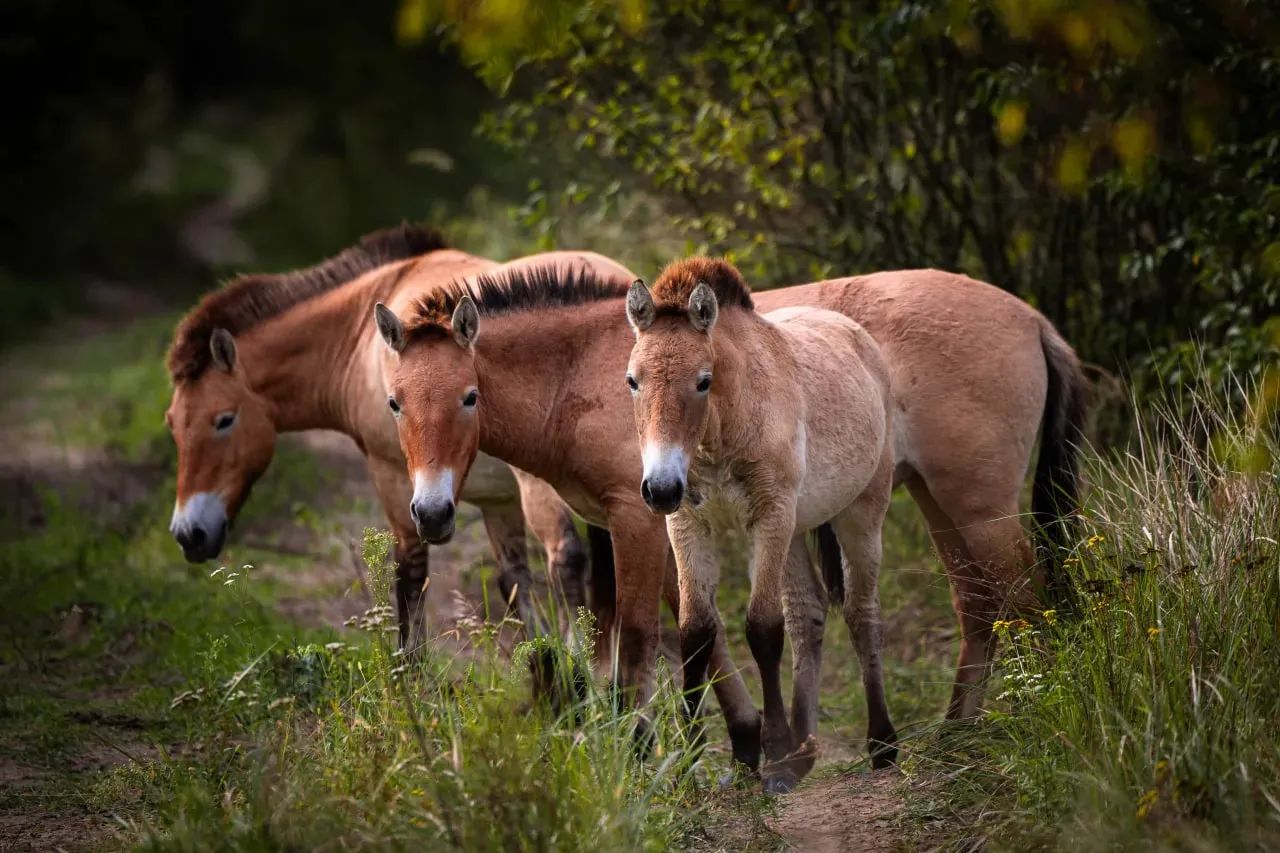
Przewalski's horses (Image: State Agency of Ukraine for Exclusion Zone Management)
A large expanse of land covering parts of northern Ukraine and southern Belarus was declared out of bounds when the exclusion zone was set up following the 1986 accident at Chernobyl. But life goes on: while some parts remain a no-go area, people work in and visit the zone on a daily basis. And some choose to live there.
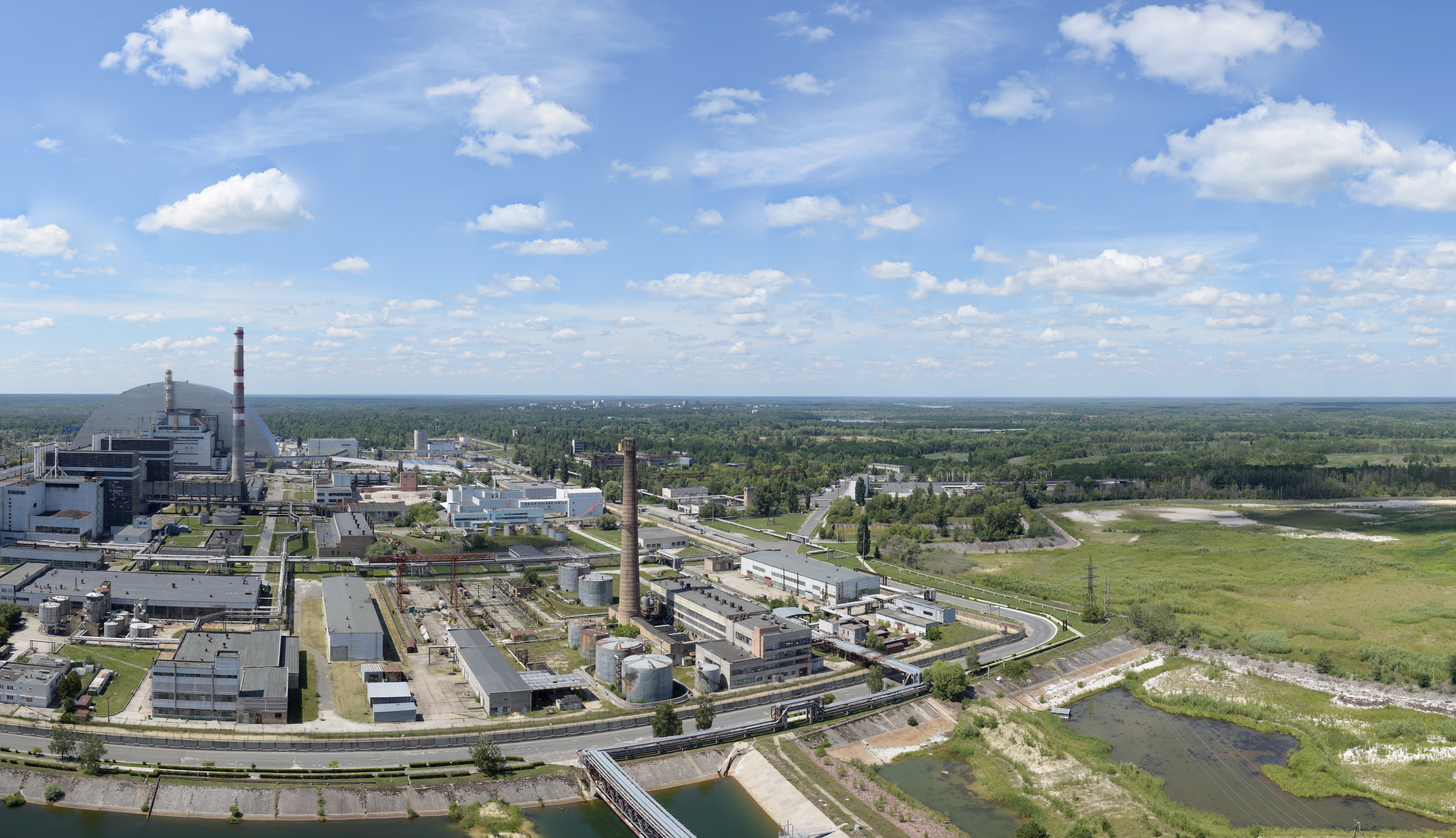
An aerial view of the plant showing the large uninhabited area around it (Image: SSE ChNPP)
It is important to remember that even in 1986 after the accident people were working hard inside the very heart of the exclusion zone. As well as the liquidators - the thousands of people from all over the Soviet Union who were involved in the recovery and clean-up operations, receiving high radiation doses in the process - a workforce was still needed to operate the nuclear power plant. Chernobyl's three undamaged reactors were to continue supplying electricity to the grid for many years, the final operating unit did not finally close down until the end of 2000.
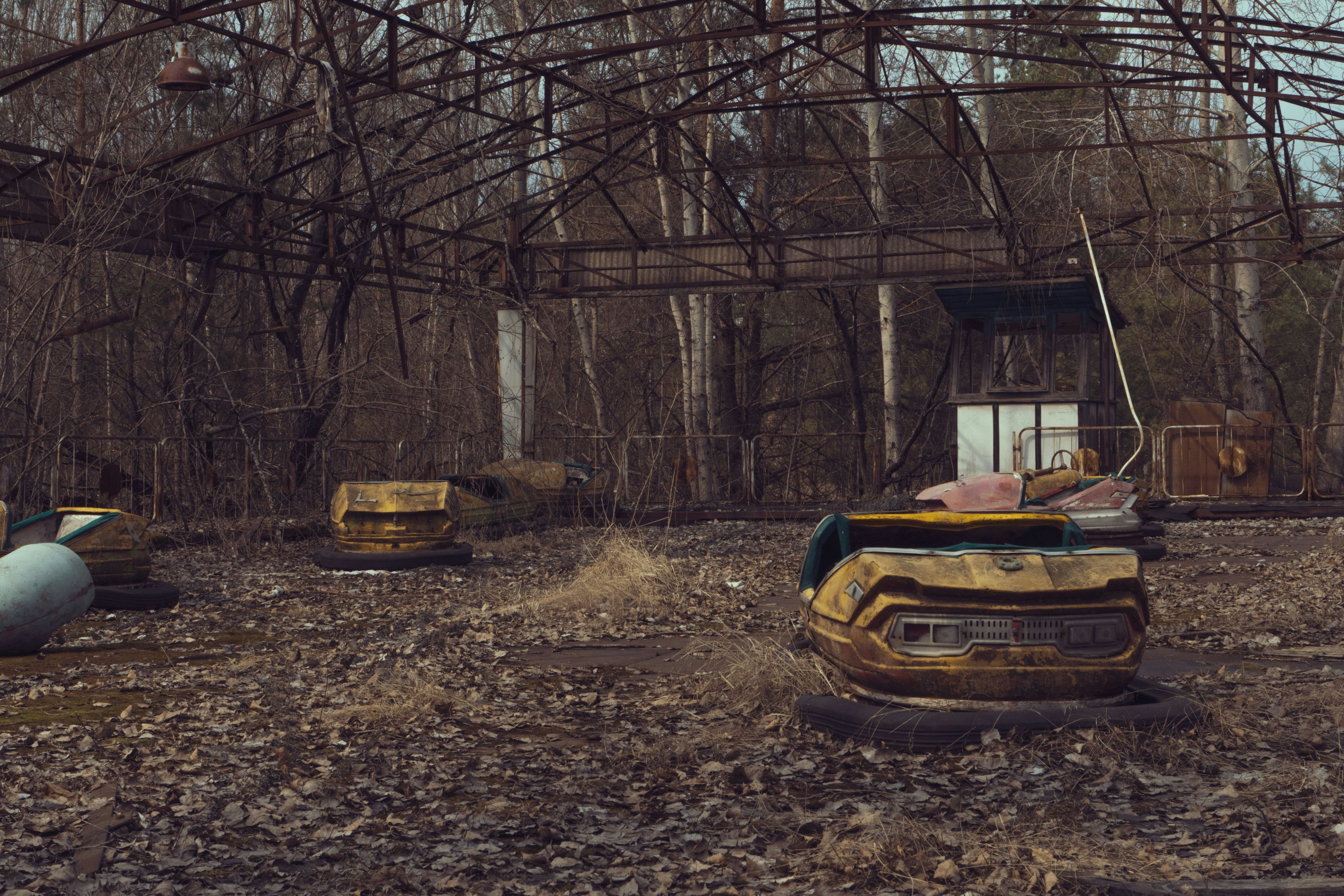
Photo by Kato Blackmore 🇺🇦 on Unsplash
During that period, almost 6,000 people worked at the plant every day. A new town - Slavutych - was built just outside the exclusion zone, about 45km from the plant itself, to accommodate the plant workers and their families who had been evacuated from the town of Pripyat. Envisaged as a town for 30,000, Slavutych was designed and built by the former Soviet republics of Ukraine, Azerbaijan, Armenia, Georgia, Estonia, Latvia, Lithuania, and Russia, giving each of its eight districts a distinct style and atmosphere. The first residents moved in to the new town in October 1988: today, its population is around 25,000.
Destination Chernobyl
Large areas of the Belarusian and Ukrainian exclusion zones are now designated as protected wildlife reserves, together creating one of the largest nature reserves in mainland Europe. The Polesie State Ecological Reserve was established in the Belarusian sector in 1988, while the Chernobyl Radiation and Ecological Biosphere Reserve was formally established in the Ukrainian part of the zone in 2016.
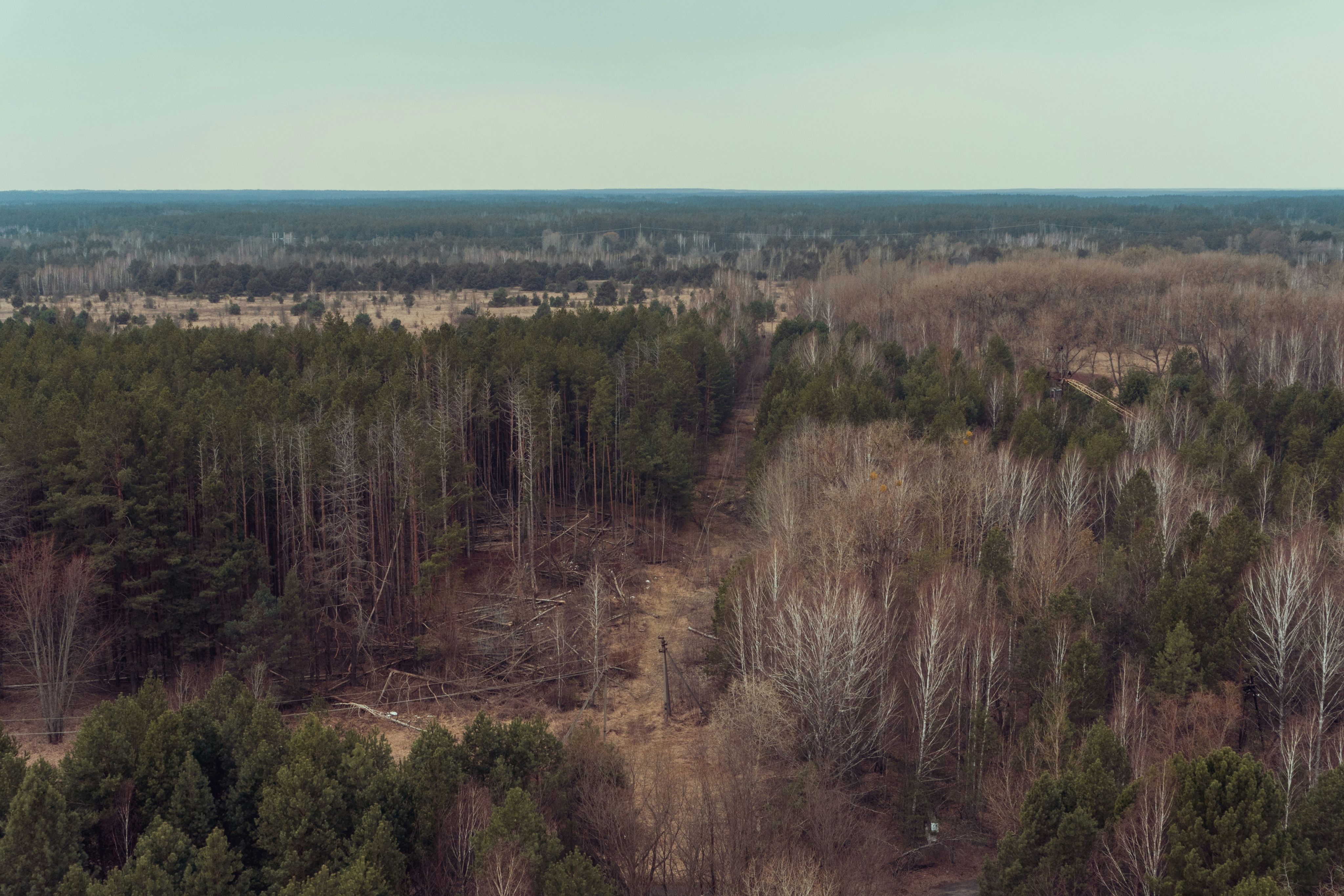
(Image: Kato Blackmore 🇺🇦 on Unsplash)
The reserves have been a regular destination for scientists and researchers - as well as being an important site for radioecological studies, the exclusion zone has been described by the United Nations Development Programme (UNDP) as the biggest rewilding experiment in Europe. And it has also been possible to visit the zone as a tourist - although the current geopolitical situation means it is off most tourists' itineraries for the time being.
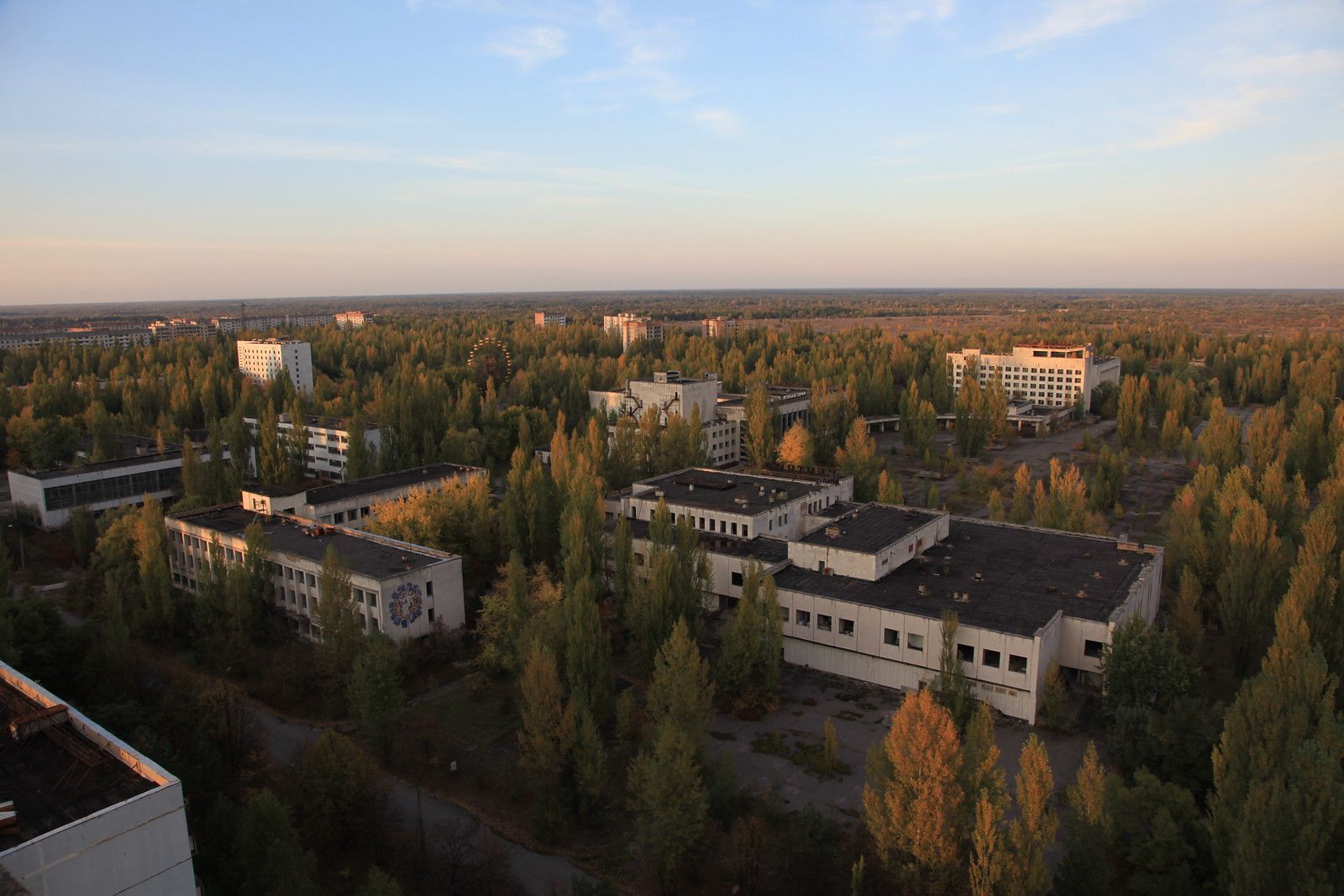
An overview of Pripyat taken in 2010, including the ferris wheel (left) and buildings in Lenin Square (right) (Image: Dana Sacchetti/IAEA)
Belarus opened the Polesie State Ecological Reserve, which is managed by the country's Ministry of Natural Resources and Environmental Protection, to organised tourist groups in late 2018, offering the chance to visit "a range of unique attractions including bee and horse farms, bison feeding grounds, as well as abandoned villages". In 2021 alone, more than 50 tour groups visited the exclusion zone's tourist routes, according to the reserve's website.
Ukraine had also been working to develop exclusion zone tourism before the war with Russia began in 2022 but following the declaration of martial law after Russia's invasion, it imposed restrictions on visits for "educational" purposes (some accredited media, foreign delegations, scientists, ecologists and others who are implementing approved projects are still able to arrange visits). Last year the Chornobyl Nuclear Power Plant (Chornobyl is the preferred Ukrainian spelling) and the Slavutych City authorities signed a memorandum of cooperation with the goal of developing local tourism as part of the post-war revival of the region.
Heading back
Areas of Belarus and Ukraine outside the exclusion zone were also seriously affected: according to one United Nations Development Programme report, 23% of Belarus's territory was contaminated, leading to USD13.7 billion in lost economic opportunities, as people were resettled into less contaminated areas. Since 2006, the United Nations Development Programme has been responsible for coordinating the UN's Chernobyl-related activities in Belarus to support the renewal of those communities.
Research by the UK's University of Portsmouth and the Ukrainian Institute of Agricultural Radiology, published last year in the Journal of Environmental Radioactivity, supported suggestions that crops can now be grown safely in many areas of the zone. Studies at a 100-hectare test site in the Zhytomyr region confirmed the effective radiation dose to agricultural workers was well below Ukraine's national safety threshold and was significantly lower than background radiation levels experienced naturally all over the world. With careful implementation and community involvement, the researchers said, Ukraine could safely reclaim up to 20,000 hectares of agricultural land, contributing to food security and rural development.
And while there are indeed areas of high radioactivity in the exclusion zone, the past 16 years or so have seen the start of resettlement of some of the evacuated areas, particularly in Belarus, with some areas now having fewer restrictions on resettlement, and studies to examine the feasibility of agriculture in areas with low contamination.
Forestry work - including conservation, fire prevention, and forest protection measures aimed at preventing the transfer of radionuclides - carried out by the Polesie State Radiation and Ecological Reserve's Forestry and Protection Department, sees around 35,000 cubic metres of "marketable" timber that meets nationally permissible radiation levels harvested every year from within the reserve, including 14,000 cubic metres of commercial timber.
And some returned - albeit unofficially - to the zone decades ago. Known as "samosjoly", it's thought that around 1,200 of these "self-settlers" who were resettled outside the zone in 1986 came back to live in their former homes in the years following the accident. Technically, this is still illegal, although the Ukrainian authorities have been tolerant to the returners, mostly older people who had lived in the rural areas up to 1986. In 2018, according to the BBC, their numbers had fallen to around 130-150, mostly women who were by then in their 70s and 80s but continued to live and farm on the same properties as their ancestors before them. The stories of some of them wer told in a 2015 feature film, The Babushkas of Chernobyl, directed by Holly Morris and Anne Bogart.
Unintended benefits for nature and science
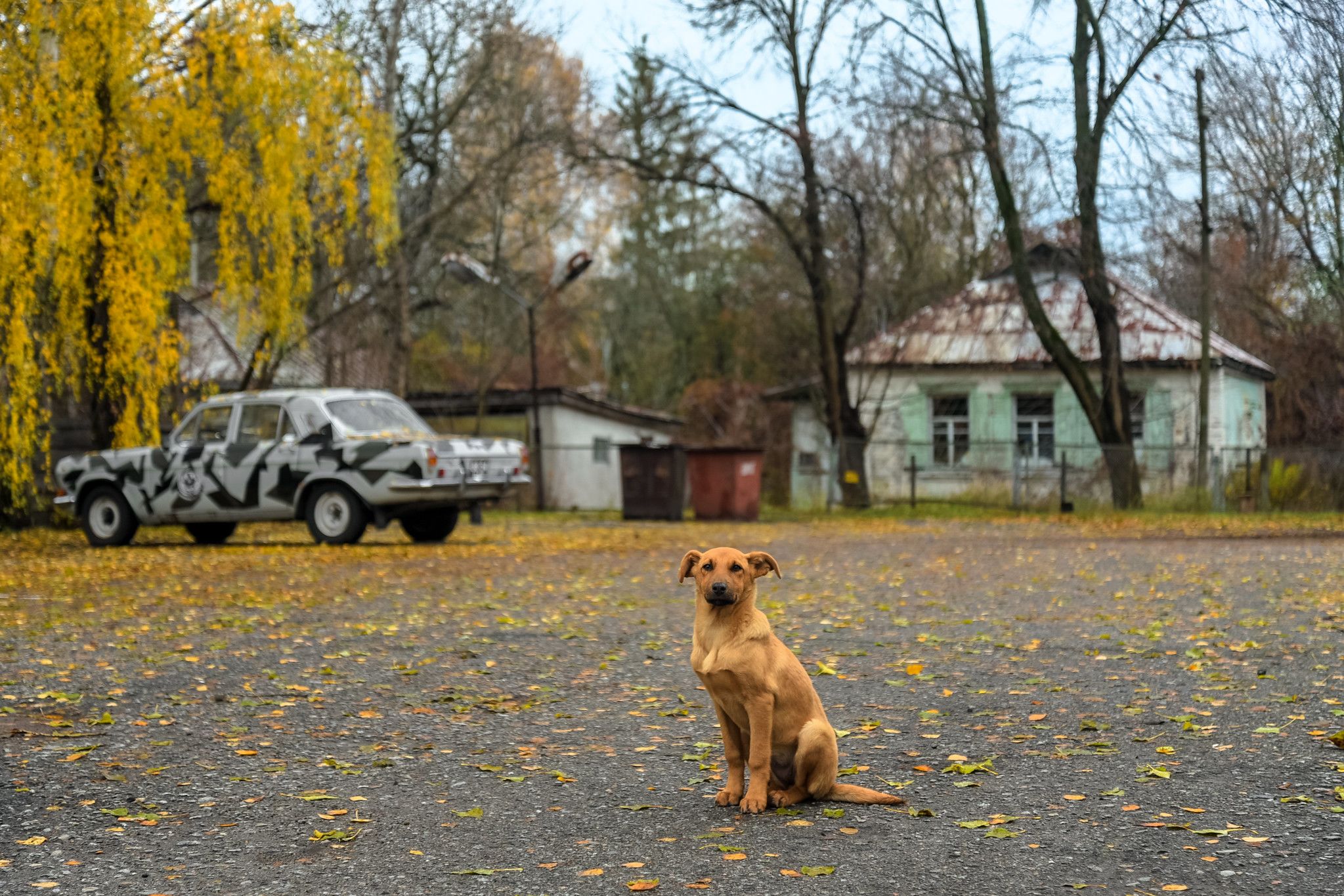
“Chernobyl” by Jorge Franganillo, CC BY 2.0
An estimated 135,000 people were evacuated from a 30 kilometre zone around the reactor complex in the days following the accident. The Chernobyl Exclusion Zone was later expanded to include other areas based on radiological measurements. It encompasses parts of Belarus as well as Ukraine and included more than 100 villages and farms as well as the towns of Pripyat and Chernobyl.
The area has been described as one of the most radioactively contaminated sites in the world, with radionuclides including caesium-137, strontium-90, americium-241 and isotopes of plutonium. Largely off-limits to humans for four decades, it has become an important site for radioecological studies - and has also become a haven for wildlife in what has been described by some as an iconic experiment in rewilding.
Some areas of the exclusion zone are more radioactively contaminated than others, but most of the radioactivity released from the reactor decayed rapidly. And the absence of humans has created an opportunity for species to thrive.
Today, both the Belarusian and Ukrainian exclusion zones - which include forests, wetlands, flowing and standing waters, as well as abandoned farmland, deserted villages and urban areas - are largely designated as protected wildlife reserves, and together create one of the largest nature reserves in mainland Europe.
The Polesie State Ecological Reserve was established in the Belarusian sector in 1988, with the aim of implementing a set of measures to prevent the release of radionuclides beyond its territory, studying the state of natural plant complexes and wildlife, conducting radiation and environmental monitoring, and conducting radiobiological research. In 2016 - on the 30th anniversary of the accident - the Chernobyl Radiation and Ecological Biosphere Reserve was established in the Ukrainian part of the zone.
Today, the exclusion zone is home to hundreds of species, including many that appear on endangered Red Lists. Species including Eurasian lynx, brown bear, black storks, European bison, boar, elk and roe deer - not to mention wolves - have returned to, or multiplied, in the area.
Back from extinction
One species that can be seen in the exclusion zone is the Przewalski's horse. This rare and endangered species is often described as the last remaining species of true wild horses: although horses and ponies can be found living wild in many places throughout the world, these are more correctly feral horses which once belonged to domestic populations rather than truly indigenous species.
The Przewalski's horse was once extinct in the wild, but successful captive breeding programmes have led to a reintroduction programme which began in Mongolia in the early 1990s.
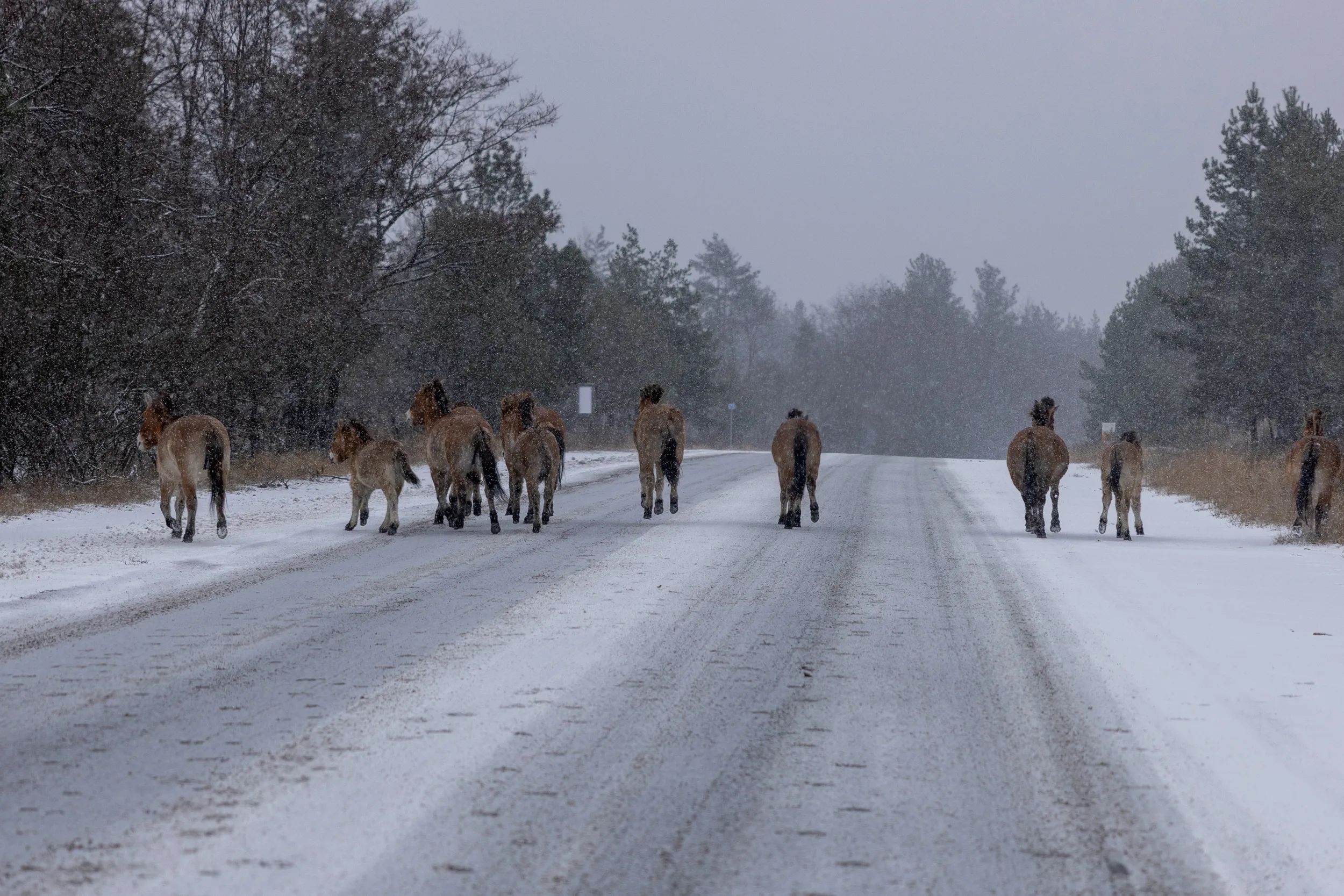
Przewalskis on the road in the snow, Dec 2025 (Image: State Agency of Ukraine for Exclusion Zone Management)
In 1998, as part of a programme aimed at restoring the original faunal complex and biodiversity of the region, more than two dozen Przewalski's horses were brought to the exclusion zone from the Askania-Nova Reserve. After a year of acclimatisation in a special centre, the animals were released into the wild and by the end of 1999, two herds had become established in the zone, near the deserted villages of Kopachi and Korogod. According to State Agency of Ukraine on Exclusion Zone Management, there are now estimated to be more than 120 Przewalski's horses living in the zone.
By 2018, a research team from the University of Georgia in the USA had even captured footage of the rare horses using abandoned buildings for shelter in the winter and as a refuge from insects in the summer. The team also detected other mid- to large-size mammals using the abandoned structures during summer: brown hare, red deer, moose, wild boar, red fox, raccoon dogs, Eurasian lynx and wolves, as well as several avian and bat species.
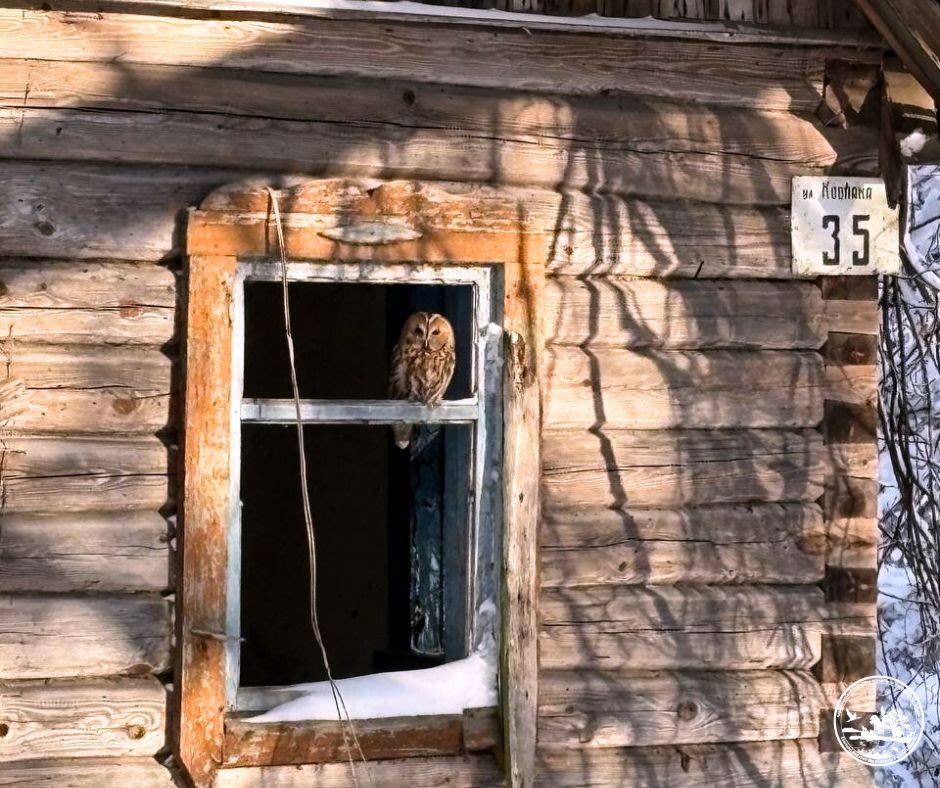
(Image: Olena Grishchenko - Chernobyl Radiation and Ecological Biosphere Reserve)
The dogs of Chernobyl
When the 49,000 residents of the town of Pripyat, only 3 km from the Chernobyl plant, were evacuated in the space of just a few hours the day after the accident at the power plant, they thought they would only be away for a short while. They were told to take with them only a few essential personal belongings. Pets had to be left behind - as were any strays. As it turned out, the residents of Pripyat were never to return to collect their pets.
After the evacuation of Pripyat and the wider Exclusion Zone - including Chernobyl City, a much smaller town than Pripyat about 15 km from the power plant - the Soviet Army was tasked with culling the animals left behind. The size and nature of the exclusion zone, with its many small villages, made this task all but impossible. Many animals escaped the cull.
Driven out of the wider exclusion zone by predators such as wolves towards the abandoned settlements and the Chernobyl plant itself, the animals started to be fed and cared for by the workers at the power plant (the final operating unit at Chernobyl generated electricity until December 2000), or by the teams undertaking remediation work, and by visitors (including tourists) to the zone.
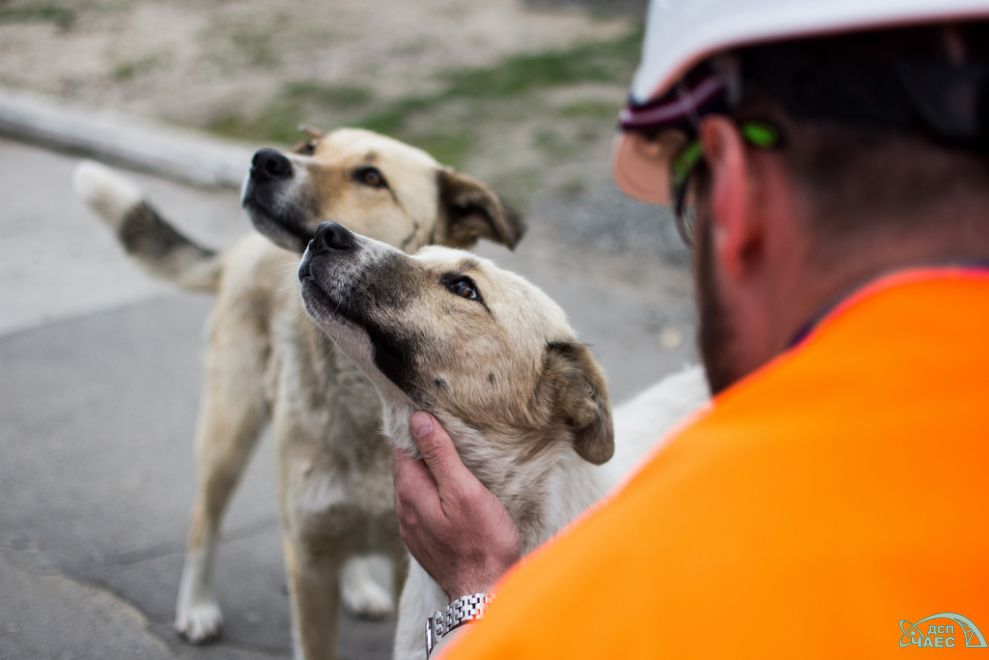
The population of feral dogs - and cats - continued to grow. But the Chernobyl dogs can be malnourished, and risk being exposed to rabies by wild predators in the zone, and many have been in need of medical attention. The Dogs of Chernobyl programme was started up by the non-profit humanitarian aid organisation Clean Futures Fund in 2017, in response to a substantial increase in the feral dog population size, which was estimated at one time to exceed 800 individuals.
The programme set up a spay, neuter and vaccination programme to reduce the stray dog population to both improve the animals' welfare and provide safer conditions for workers at the site, many of who have cared for the animals over the years. In 2022, it reported that its programme had helped to stem the population increase, with no puppies being born at the Chernobyl nuclear plant site in the seven months to June of that year.
The US-based organisation continues to deliver food and medical care, and organise sterilisation clinics for dogs and cats at the nuclear power plant, Chernobyl Town, Pripyat and elsewhere in the zone.
But what about radiation in the exclusion zone?
Radioecology is the study of the behaviour and effects of radioactive elements in the environment. It's hardly surprising that the past 40 years have seen many studies on the effects of radiation on the flora and fauna in the exclusion zone.
Within the zone itself, contamination is highly heterogeneous. Following the 1986 accident, an area of about 4-6 square kilometres of coniferous forest was killed by high levels of radiation. This area - which became known as the 'Red Forest' because the needles of the trees turned red prior to their death - is likely the most anthropogenically contaminated radioactive terrestrial ecosystem on Earth, according to the independent research institute the UK Centre for Ecology & Hydrology (UKCEH). But it has also regenerated - to some extent - with deciduous trees (which are less sensitive to radiation than coniferous species) and understorey vegetation.
The area is also prone to wildfires, which happen frequently. In July 2016 a severe fire saw about 80% of the Red Forest burnt down, leading to concerns that radioactive material deposited on the soil, such as caesium-137, might be released back into the air through smoke. Studies found the radiological risks to firefighters from smoke inhalation during the fires to be insignificant, but called for further research into potential impacts on human and animal health . Military action in the zone - Russian forces occupied and then left Chernobyl in 2022 - has caused further soil disturbances.
While many studies have found no substantial effects of radiation on wildlife in the zone, some have also documented increased mutation rates, chromosomal aberrations, reduced reproductive success, and developmental abnormalities in various species including in voles - which have been found to have higher rates of cataracts - birds, and amphibians.
However, researchers have also found evidence of adaptation and resilience in the face of the radiological conditions: the wolf population in the zone is seven times denser than wolf populations in other nearby wildlife reserves. Researchers based at Princeton University in the USA have suggested that this may be related to the natural selection of cancer-resistant or cancer-resilient genes in the animals, as well as the lack of humans in the area.
In the 1990s, thanks to the discovery of a black mould growing inside the ruins of the destroyed power plant, researchers discovered that not only do some species of fungi thrive in the presence of high levels of ionising radiation - they may even be able to use the radiation as an energy source, a phenomenon that is now called radiotropism. Ukrainian researcher Nelli Zhdanova observed that the mould was actually growing towards the radiation.
The phenomenon appears to be related to the pigment melanin: the same pigment that is found in skin and hair. Zhdanova and her colleagues went on to discover that species of fungi growing in and around the heavily contaminated sites around the damaged reactor were dominated by melanin-containing species: melanin-based pigmentation is known to offer protection against different forms of radiation. And as well as creating attention-grabbing headlines, "radiation-eating" fungus could one day have practical applications - for example in helping to clean up radioactive contamination, or even to shield against radiation in space.
Melanin also appears to be playing a part in adaptations in vertebrates. Tree frogs living in the exclusion zone have been observed to be significantly darker in colour than their counterparts in comparable areas outside, and it's thought that exposure to high levels of radiation in the years following the accident may have facilitated the selection and maintenance of dark colouration in the frogs.
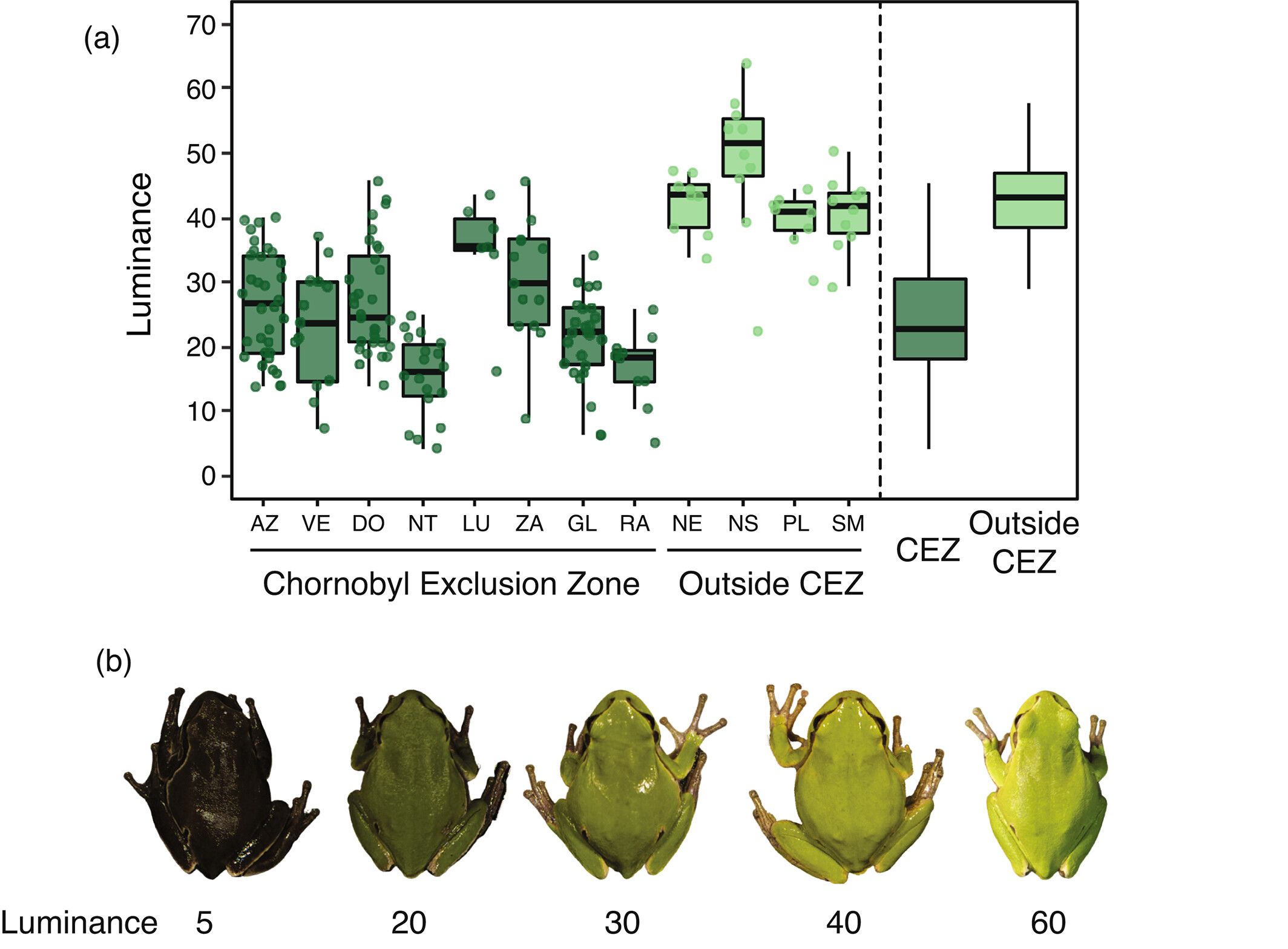
Ionizing radiation and melanism in Chornobyl tree frogs - Pablo Burraco + Germán Orizaola
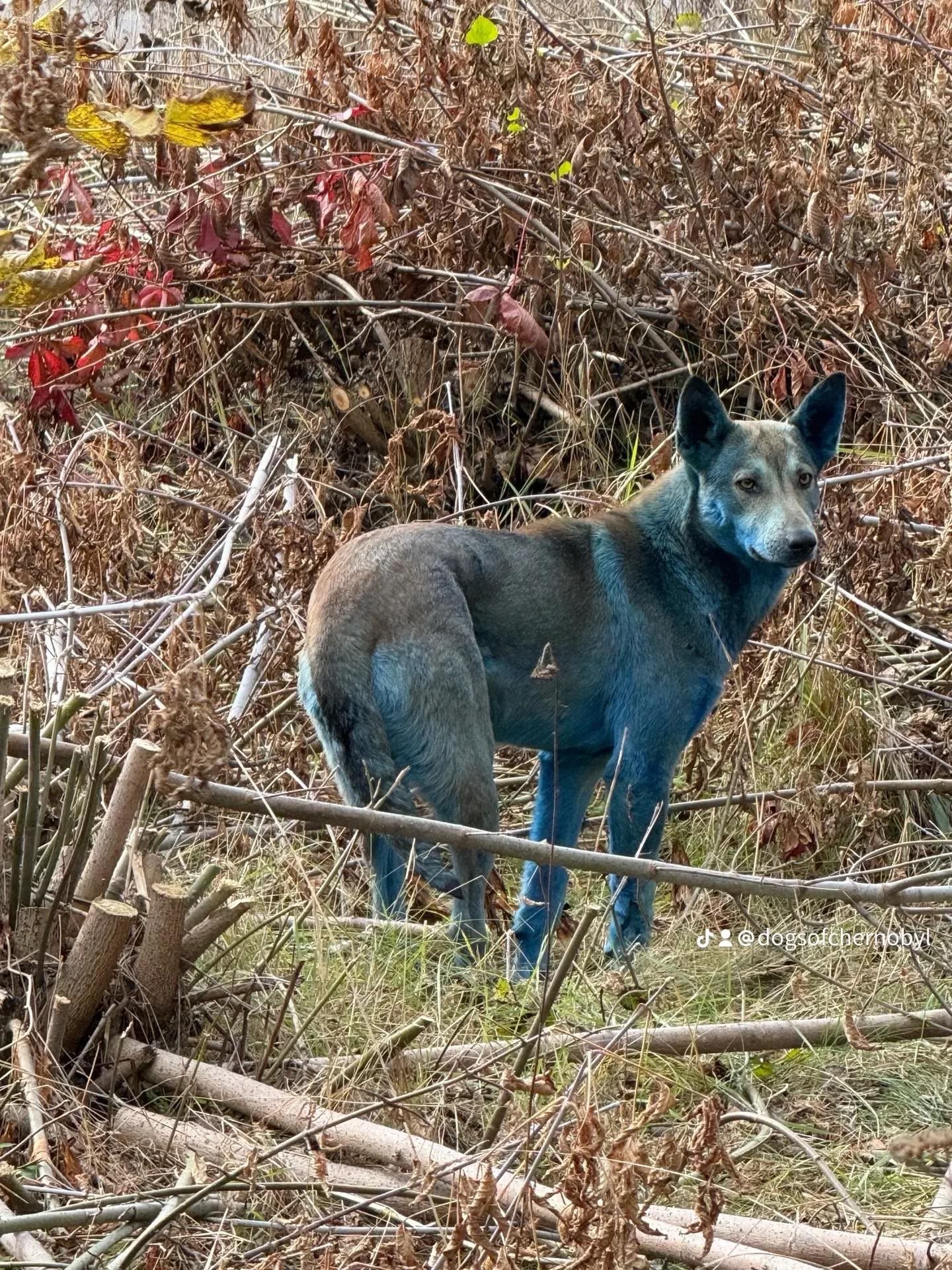
Melanin doesn't, however, appear to have had any part in observations in the autumn of 2025 of dogs in the Chernobyl exclusion zone whose fur had turned blue.
(Image: Clean Futures Fund)
Despite the dramatic photographs circulating on the internet, it turned out the otherwise healthy animals had simply "got into some blue stuff" - probably from a leaking chemical toilet, or "Porta Potty", according to Clean Futures Fund.
Research by the UKCEH, the University of Salford and the Chornobyl Center for Nuclear Safety published in 2022 concluded that radiation levels in the zone were having no direct impact on soil biological activity three decades after the accident.
"Radiation doses in some areas of the zone are still high enough to have a negative impact on some animals, including birds, mammals and bees. However, soil organisms play an essential role supporting other wildlife, so the research … provides further important evidence that the most radioactively contaminated ecosystem on Earth is in a good position to continue to recover following the 1986 disaster," UKCEH said at the time.
Chernobyl in popular culture

Screenshot of Google Image search results for 'Chernobyl HBO'
Chernobyl, like Pompeii, is the name of a place which needs no further explanation. And even before the award-winning HBO miniseries Chernobyl hit television screens in 2019, the plant had found itself represented in popular culture in many, many different formats and genres.
Search Amazon Books for Chernobyl and you will find more than a thousand titles across a wide range of genres. There are narratives, memoirs, analyses, tourist guides (prior to the military action between Russia and Ukraine in early 2022, the Chernobyl Exclusion Zone had been a top destination for so-called "dark tourism", and even in 2025 local authorities are looking towards the development of tourism as part of the region's post-war revival).
There are children's books. There are graphic novels. Then there is the fiction.
Amazon lists more than 100 books featuring Chernobyl in the "literary and fiction" category, and a skim through its offerings shows how the premise of the Chernobyl accident and its aftermath have fired the imaginations of authors around the world. Perhaps not surprisingly, much of this fiction is, according to Amazon, in the science fiction and fantasy genre (50 results). Authors of crime, thrillers and mystery also seem to have been inspired to set their stories against a Chernobyl backdrop (29 results). It's also worth noting that Amazon lists 12 books featuring "Chernobyl" in their titles in its "romance" section.
One of the earliest novelisations featuring events in Ukraine in 1986 must surely be Chernobyl - A Novel, by US sci-fi author Frederik George Pohl published on 1 August 1987, which tells the story of the accident through fictitious characters - primarily officials and workers at the plant - while tracing events as documented in the Soviet press and the accounts of the accident from Soviet scientists and engineers given at the International Atomic Energy Agency's review meeting held in late August 1986.
There are the prize-winning books: Serhii Plokhy's Chernobyl: History of a Tragedy won the Baillie Gifford Prize - a prestigious and long-established award recognising the best non-fiction writing published in the UK - in 2018. Plokhy, who is Mykhailo Hrushevsky Professor of Ukrainian History at Harvard in the USA, was to return to Chernobyl as the subject with Chernobyl Roulette: A War Story, published in 2024, which tells the story of the 35-day Russian military occupation of the plant and surrounding areas following its invasion of Ukraine in February 2022.
In 1997, the first edition of Svetlana Alexievich's Chernobyl Prayer: Voices from Chernobyl was published. An oral history, based on testimonies gathered by the Ukrainian-born Belarusian journalist from clean-up workers, residents, firefighters, resettlers, widows, orphans and others, Voices from Chernobyl was also adapted for the stage and has been cited as part of the inspiration for the HBO miniseries. Alexievich was awarded the Nobel Prize for Literature in 2015, "for her polyphonic writings, a monument to suffering and courage in our time". According to The Nobel Prize Organisation, "with her 'documentary novels', Alexievich … moves in the boundary between reporting and fiction."
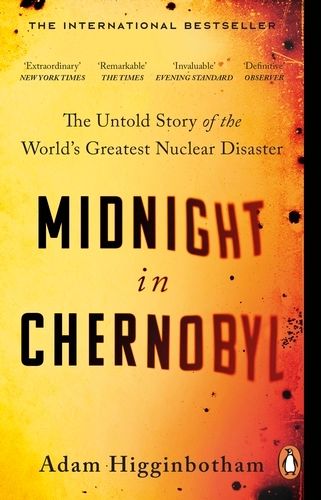
Adam Higginbotham's international bestseller Midnight in Chernobyl: The Untold Story of the World's Greatest Nuclear Disaster, published in 2019, was the winner of the 2020 Andrew Carnegie Medal for Excellence in Nonfiction.
Stage and screen
Voices from Chernobyl was not the only instance of Chernobyl being featured on the stage. Vladimir Gubarev's drama Sarcophagus - written after the Pravda science editor visited the still-burning reactor in May 1986 with the first group of Soviet journalists allowed near Chernobyl - premiered in the Russian city of Tambov that November. The following year, the play, which has been described as a tragic satire, was performed in the UK, USA and Vienna. The Royal Shakespeare Company's April 1987 production was nominated for Play of the Year in the prestigious Olivier Awards.
When it comes to film, the release of HBO's five-part dramatisation in 2019 saw a new generation interested in the subject and led to a large increase in web traffic to World Nuclear Association's definitive Chernobyl information paper. Even now, the miniseries created by Craig Mazin features in IMDB's top 10 TV shows. The show has been praised for its portrayal of place and time - although it has also drawn criticism for misrepresenting or sensationalising some of the scientific aspects.
It's also interesting to notice how Chernobyl has become part of the popular culture psyche. As far back as 1997, in the opening sequence of the James Bond movie Tomorrow Never Dies, a Russian liaison officer, Major General Bukharin, describes "enough plutonium to make Chernobyl look like a picnic". And let's not forget the fifth Die Hard movie, A Good Day to Die Hard (2013), which sees Bruce Willis's character John McClane and his undercover CIA operative son Jack entering the exclusion zone to thwart attempts to steal weapons-grade uranium from a vault at the plant. The movie, largely filmed in Hungary (where an old Soviet air force base stood in for Chernobyl), is, according to IMDB, not noted by critics for its scientific or technical accuracy.
No stand-in locations were used by the producers of the BBC's Top Gear in 2014, when presenters Jeremy Clarkson, Richard Hammond and James May took part in a road-trip around the Crimean peninsula before being challenged to drive north to Kiev and then finally to Chernobyl itself.
Gameplay and music
Gaming has come a long way since 1986 when, according to Wikipedia, Nintendo's 8-bit Family Computer/Nintendo Entertainment System was the top-selling home game console, followed by the Commodore 64 computer. Of course, Chernobyl has found its way into the gaming culture too.
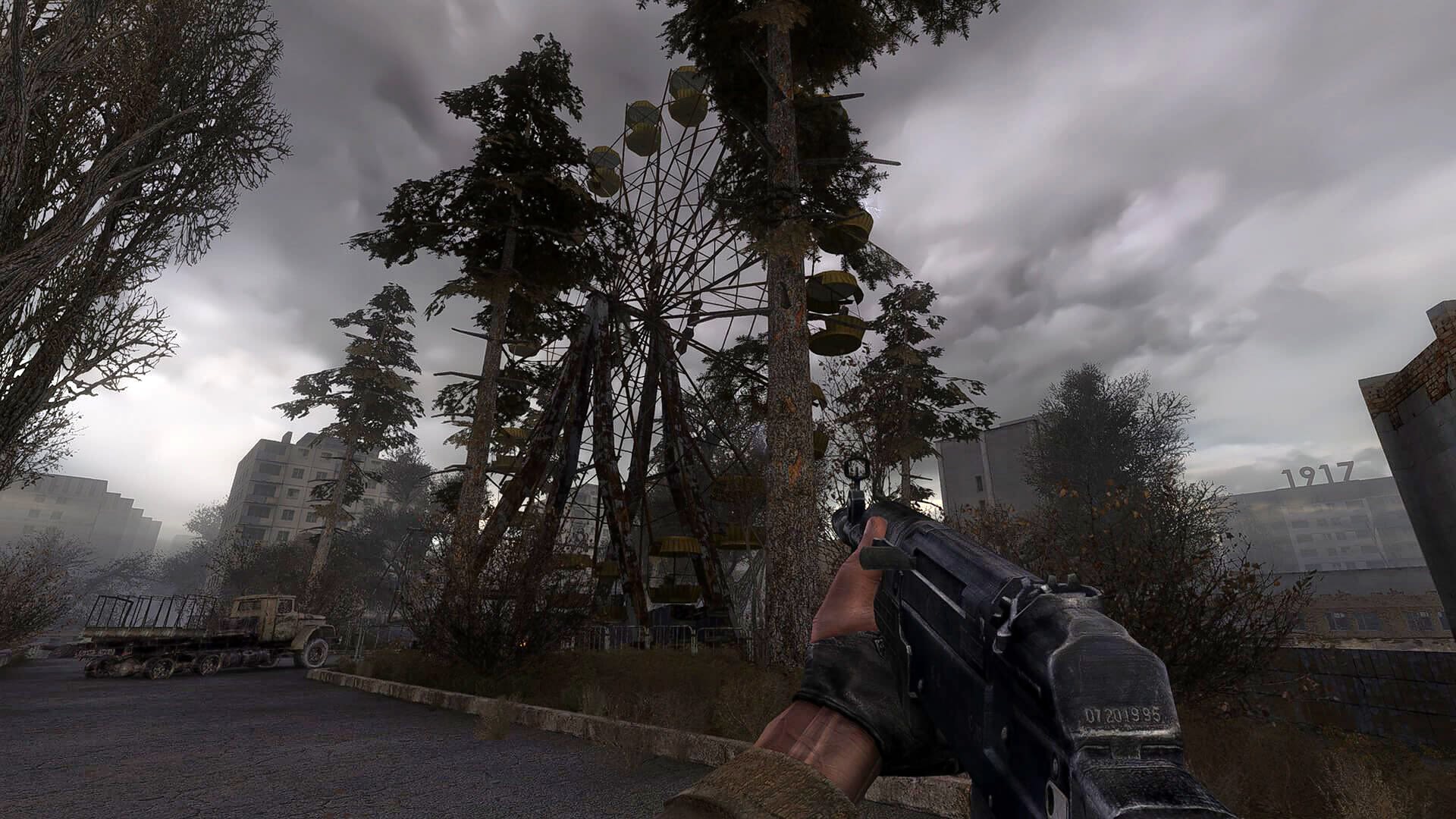
S.T.A.L.K.E.R 2: Heart of Chornobyl (Image: GSC Game World)
In 2007, Ukrainian game development studio GSC Game World released the first offering in its S.T.A.L.K.E.R. first-person shooter survival horror video game franchise. S.T.A.L.K.E.R.: Shadow of Chernobyl, set in a "near-future Chernobyl exclusion zone", was released worldwide. According to GSC, in the former USSR states alone, the game sold more than half a million copies in the first two weeks of its release. Worldwide sales of the S.T.A.L.K.E.R. game series are now approaching five million copies.
And a search on lyrics.com for "Chernobyl" finds 983 lyrics that match. Top of the list is Kraftwerk's Radioactivity: the German electronic band initially released the song in 1976 but re-recorded it in 1991, incorporating references to Chernobyl.
Forty years on the Chernobyl accident continues to grab the public imagination, with popular culture helping new generations learn about what happened and why. With the wildlife and scientific discoveries in the exclusion zone, it is literally living history. And, as will be covered in the final part of Chernobyl at 40, the decommissioning process is likely to take many more decades, so expect more stories, films and gaming to come.
Work to eliminate the consequences of the accident at Chernobyl unit 4, on 26 April 1986, began within hours. It is expected to continue for up to 100 years.
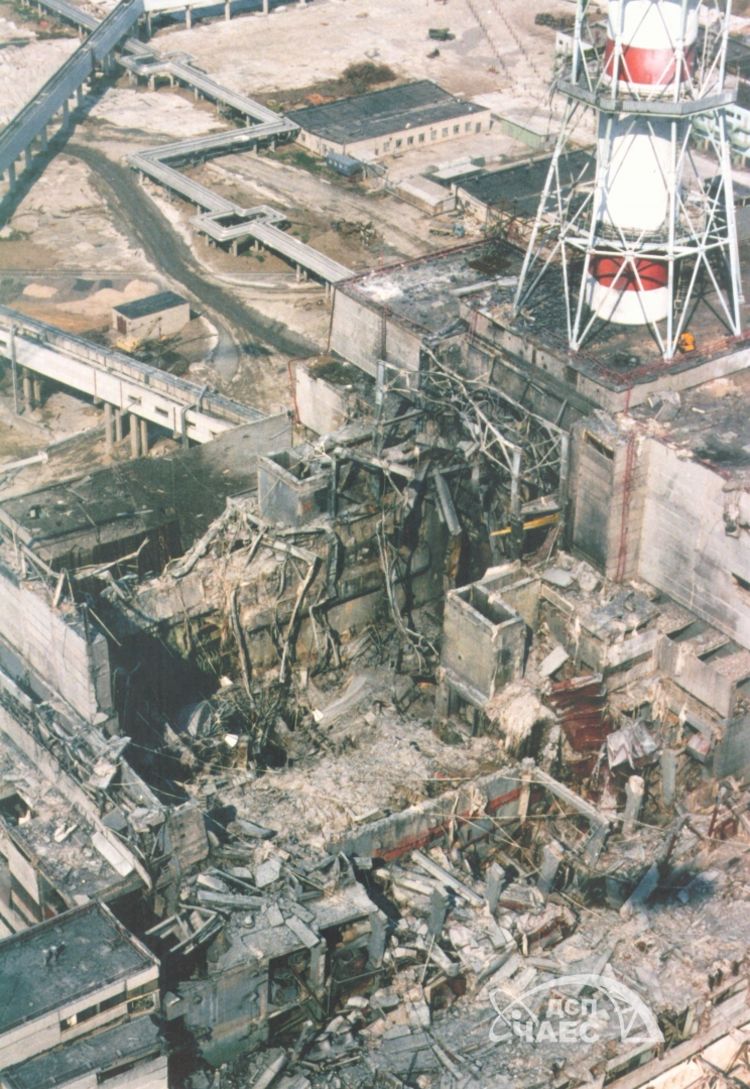
For full details of the cause of the accident, see the first part of our Chernobyl at 40 series, here's a reminder of how the reactor looked after the accident:
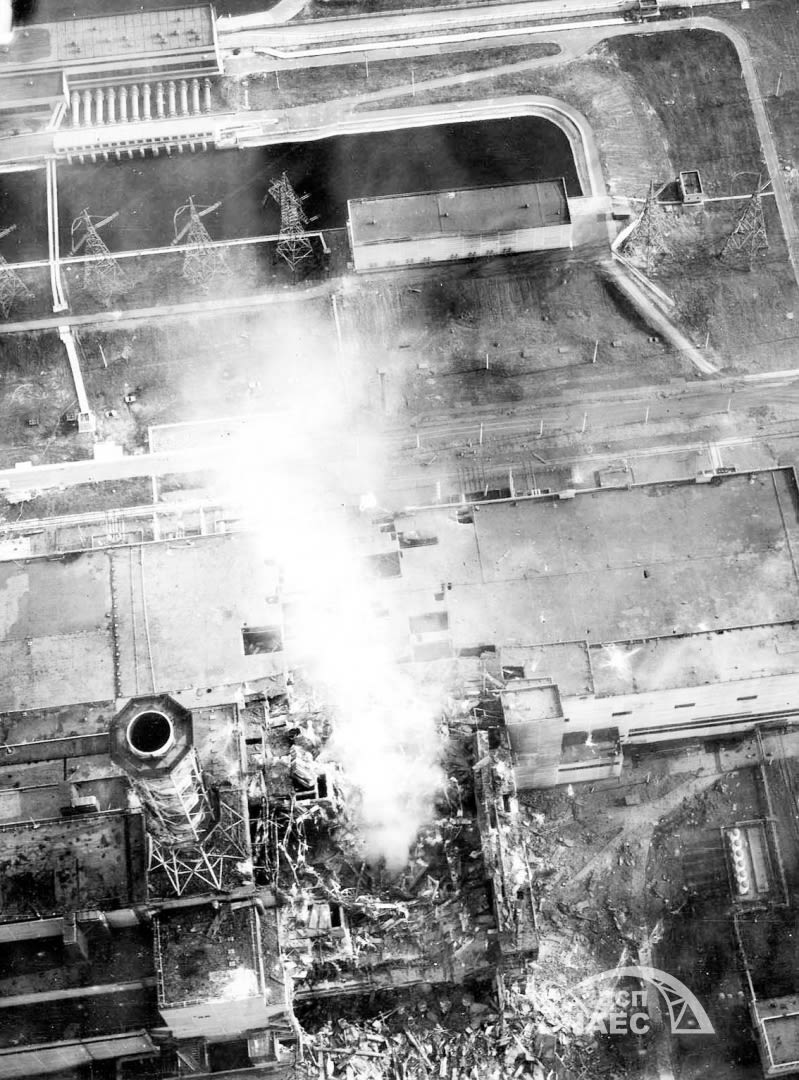
(Image: ChNPP)
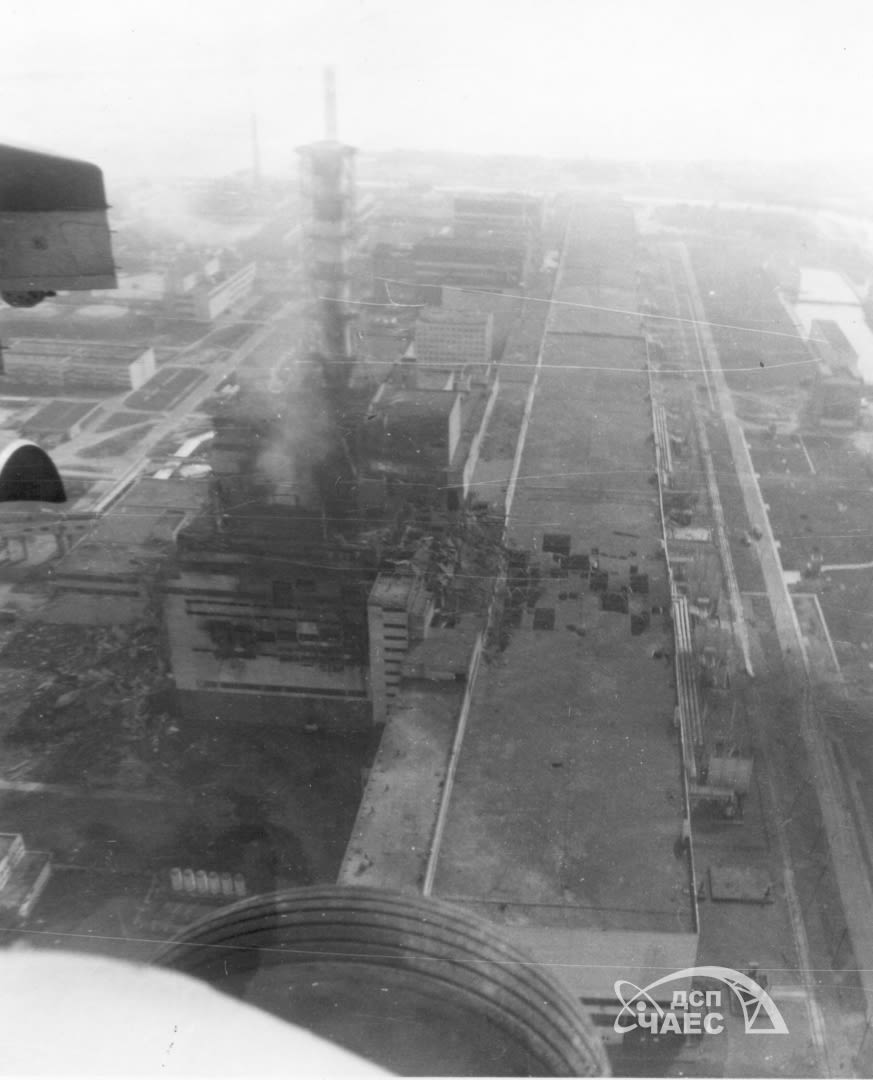
(Image: ChNPP)
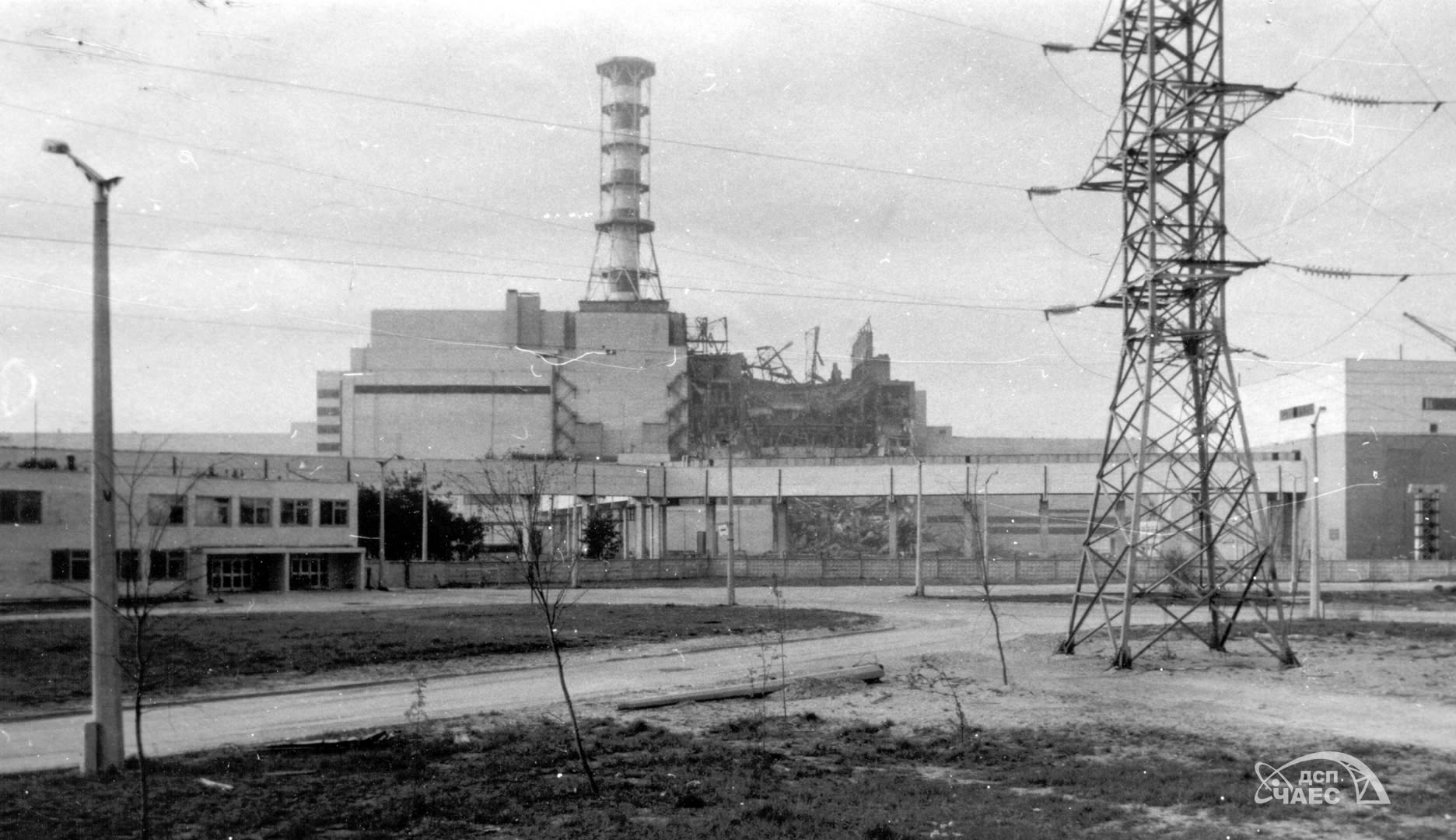
(Image: ChNPP)
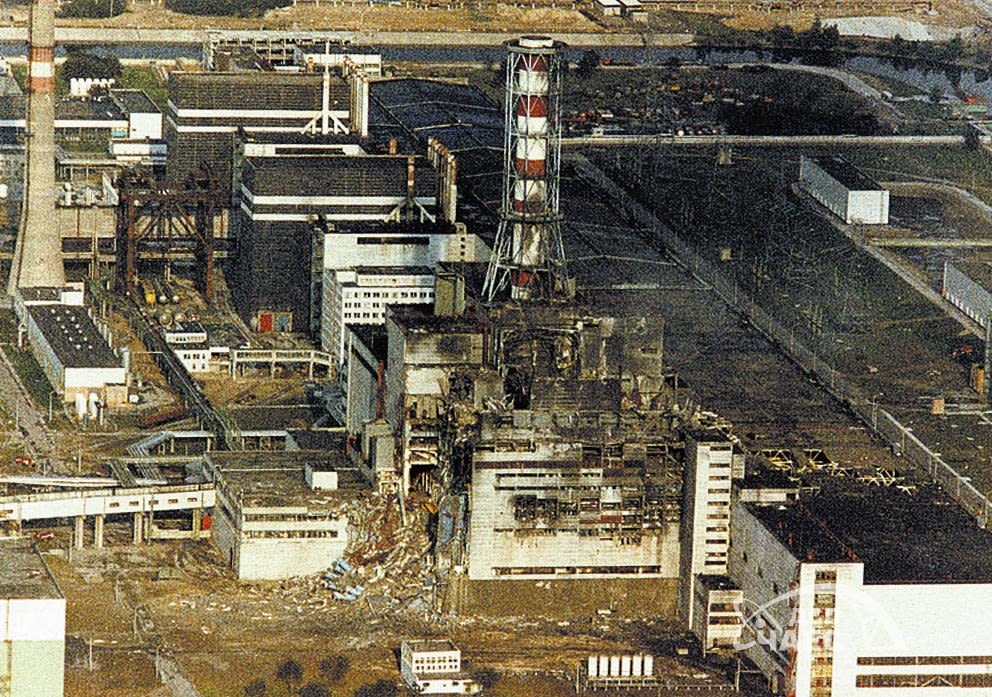
(Image: ChNPP)
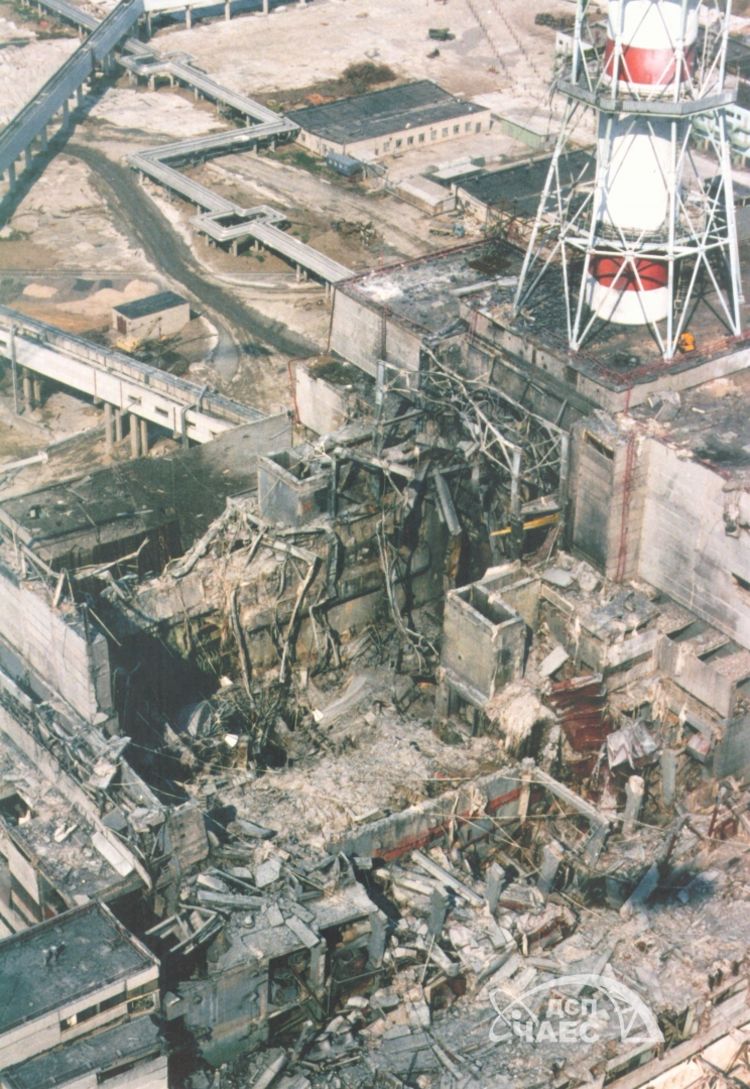
(Image: ChNPP)
And here's a World Nuclear Association graphic of the reactor post-accident:
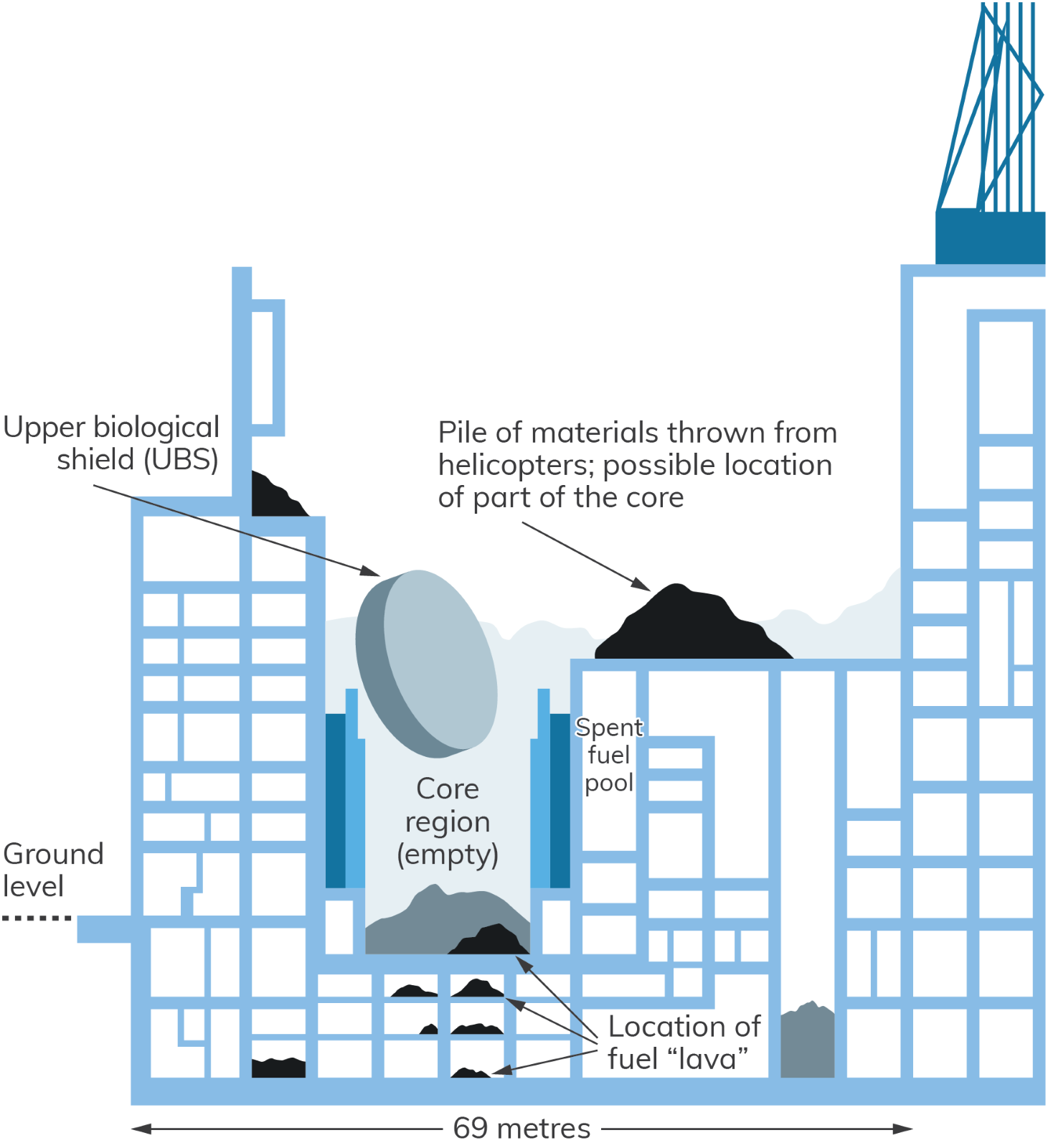
The first task was to put out fires on the roof of the turbine building. The firefighters and others who took part are among the many who have been recognised since, and at every anniversary, for their heroism.
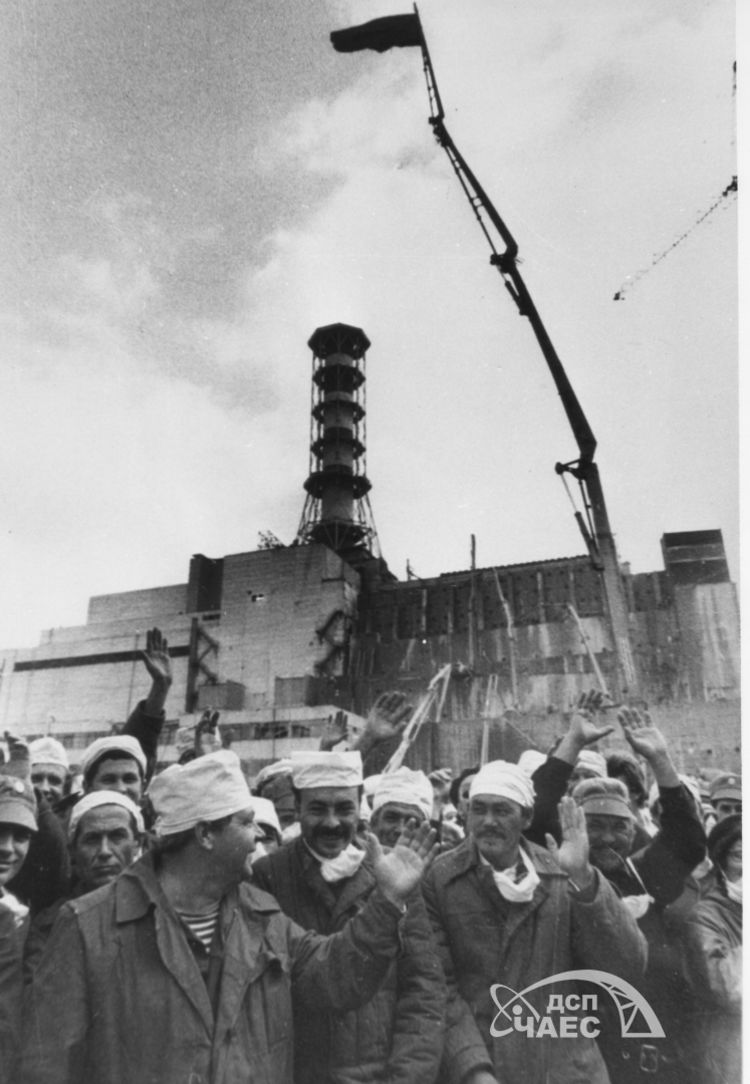
In total, about 200,000 people - known as liquidators - were involved in the recovery and clean-up during 1986 and 1987, with that number eventually increasing to 600,000. The urgent work included building a structure around the wreckage of unit 4 to provide a shield from further radioactive release. This also allowed the other three operating units at Chernobyl to operate - it can often surprise people to find out that the last unit did not shut down until 14 years later, in 2000.
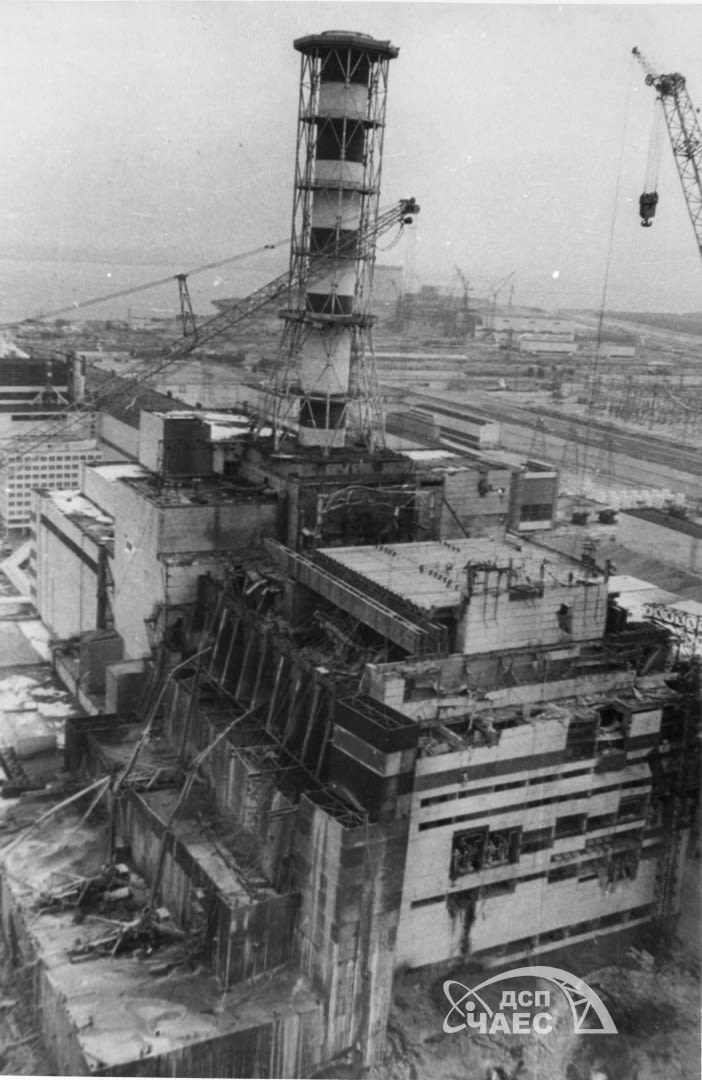
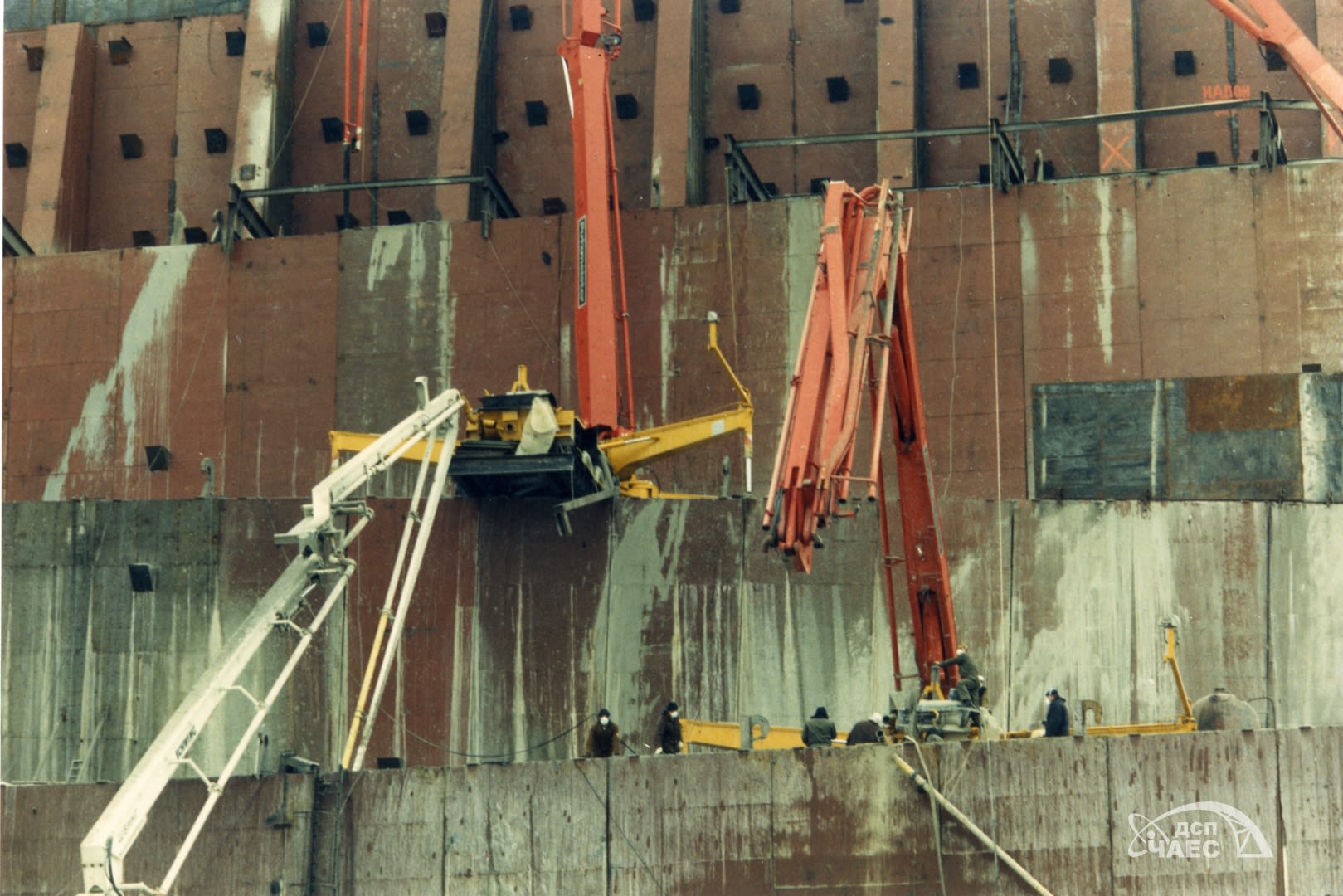
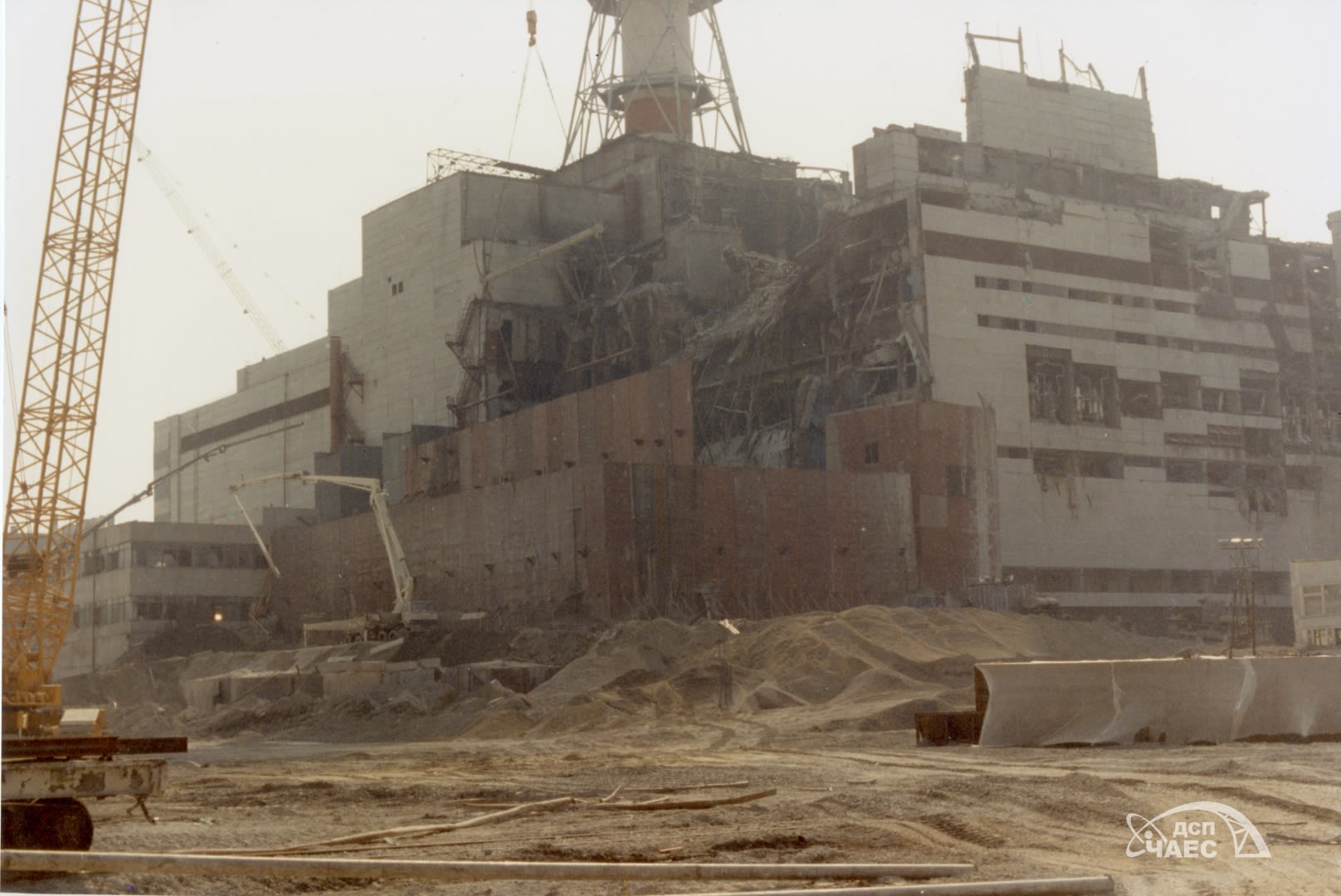
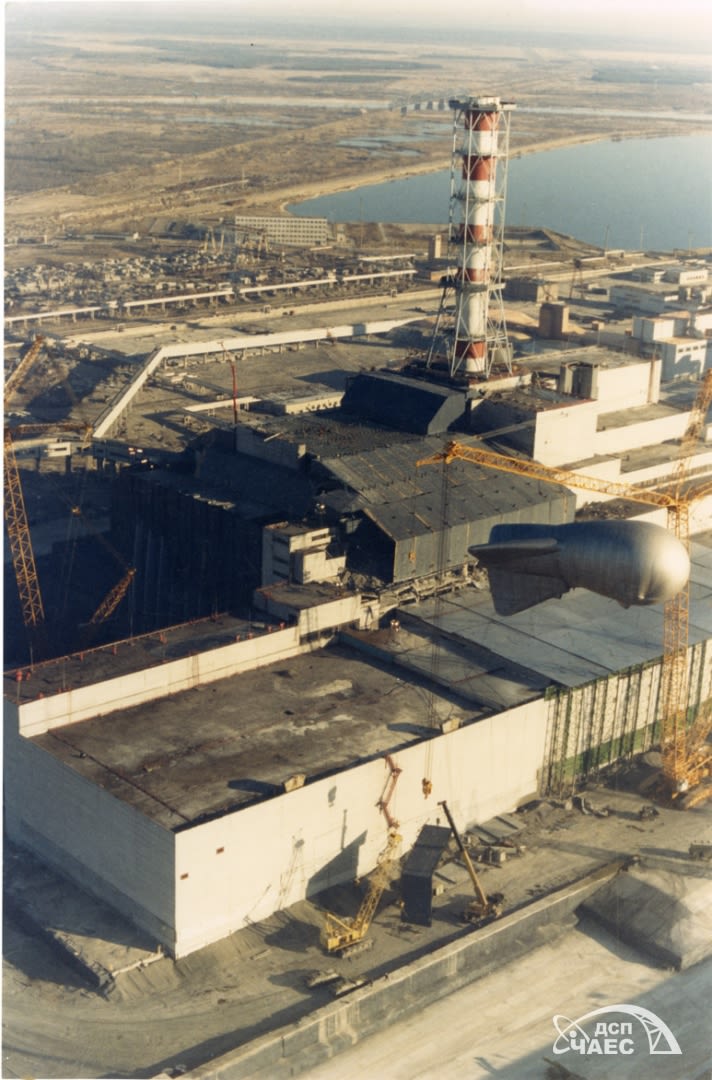
The shelter structure that was built is also known as the sarcophagus, and it was completed in just 206 days. It contains the molten core of the reactor and an estimated 200 tonnes of highly radioactive material. Here's a series of pictures of the work being carried out, courtesy of SSE Chornobyl Nuclear Power Plant:
(Image: ChNPP)
(Image: ChNPP)
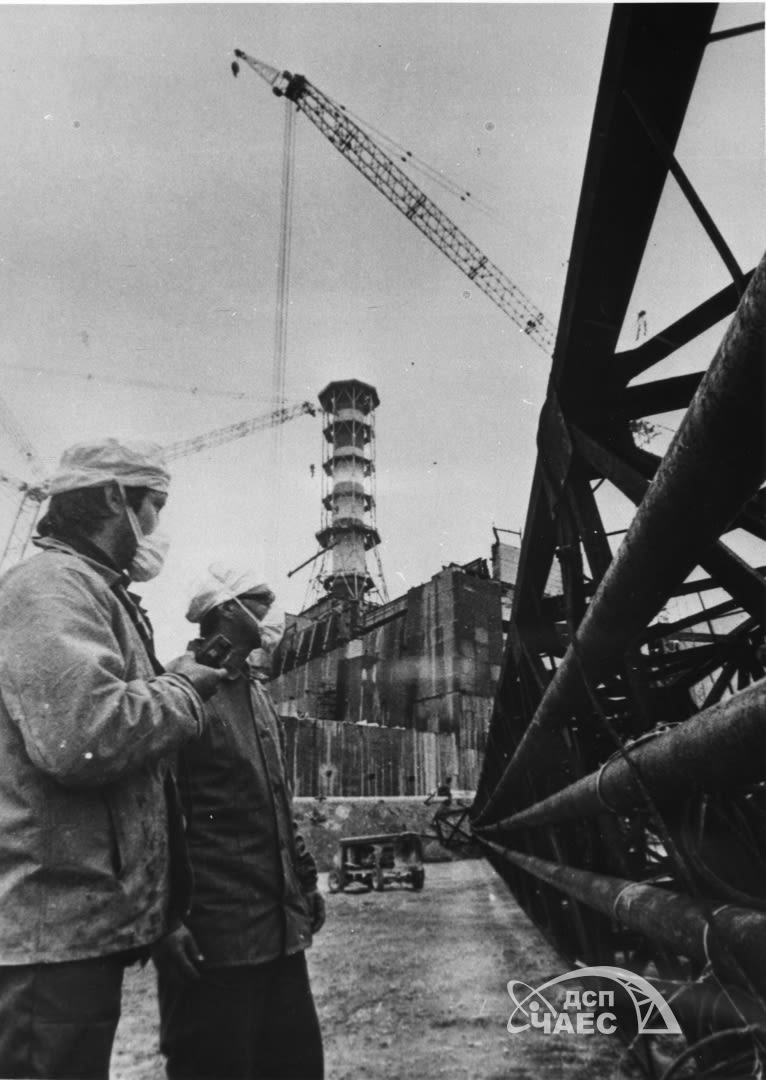
(Image: ChNPP)
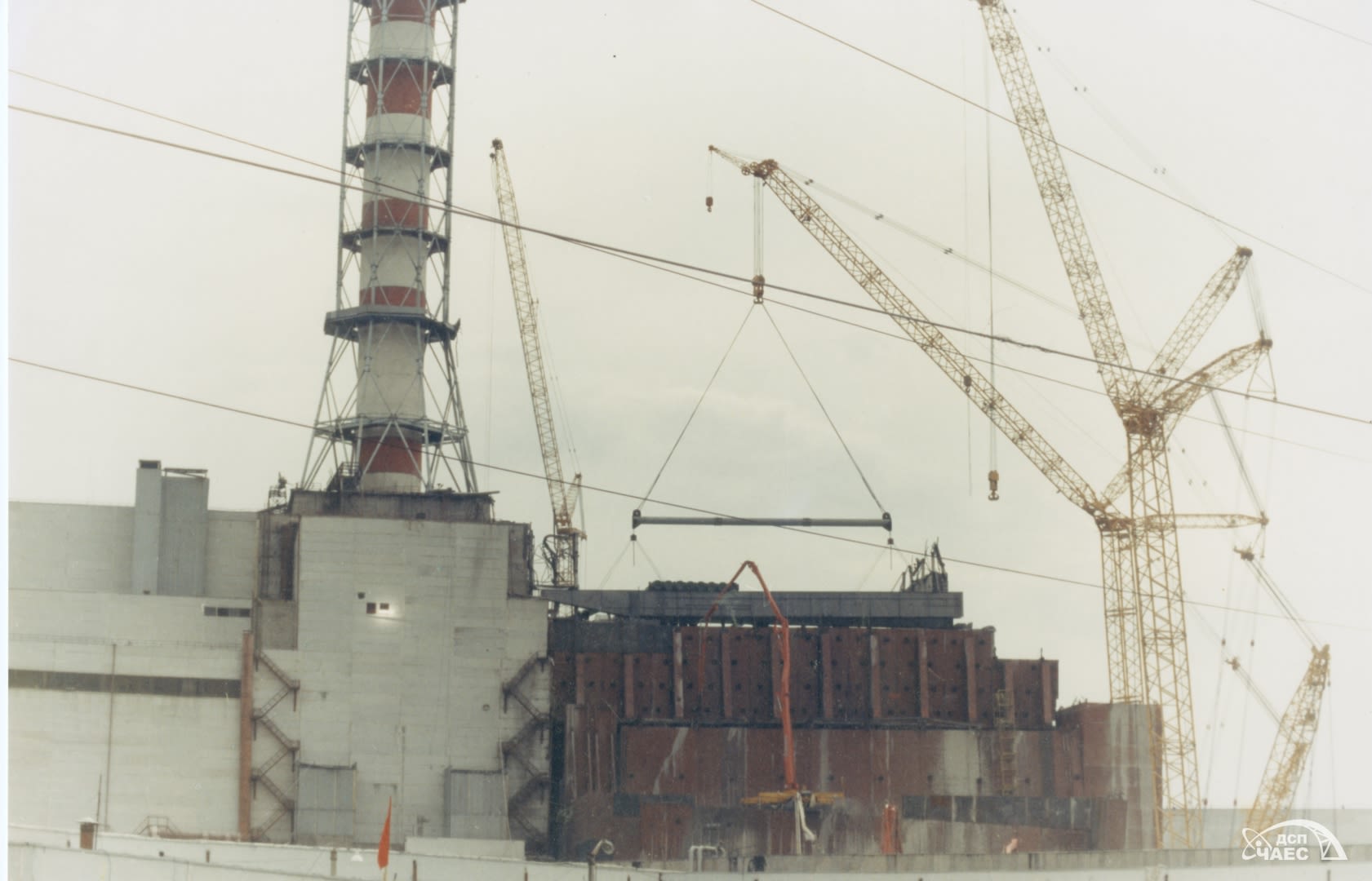
(Image: ChNPP)
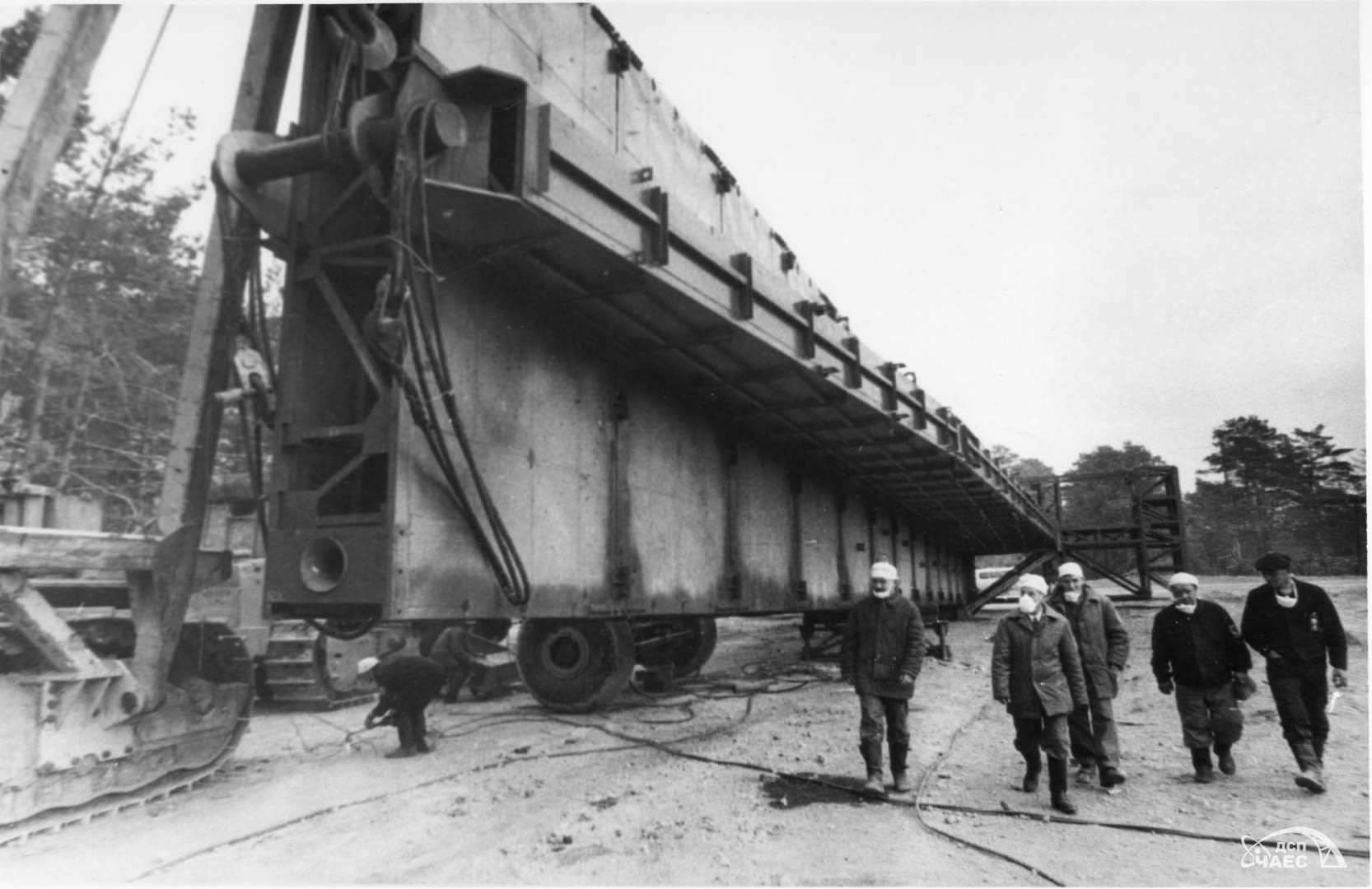
(Image: ChNPP)
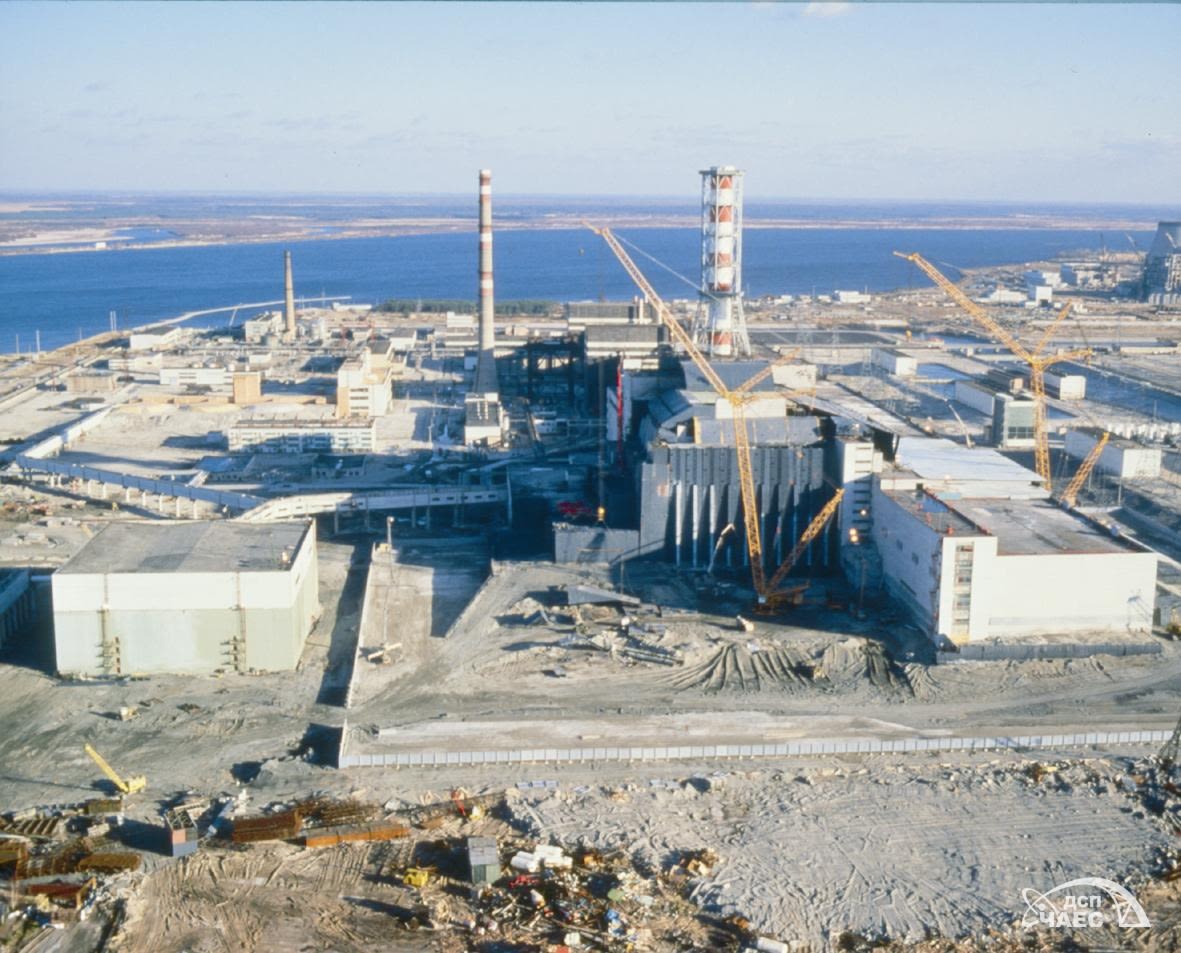
(Image: ChNPP)
(Image: ChNPP)
(Image: ChNPP)
(Image: ChNPP)
(Image: ChNPP)
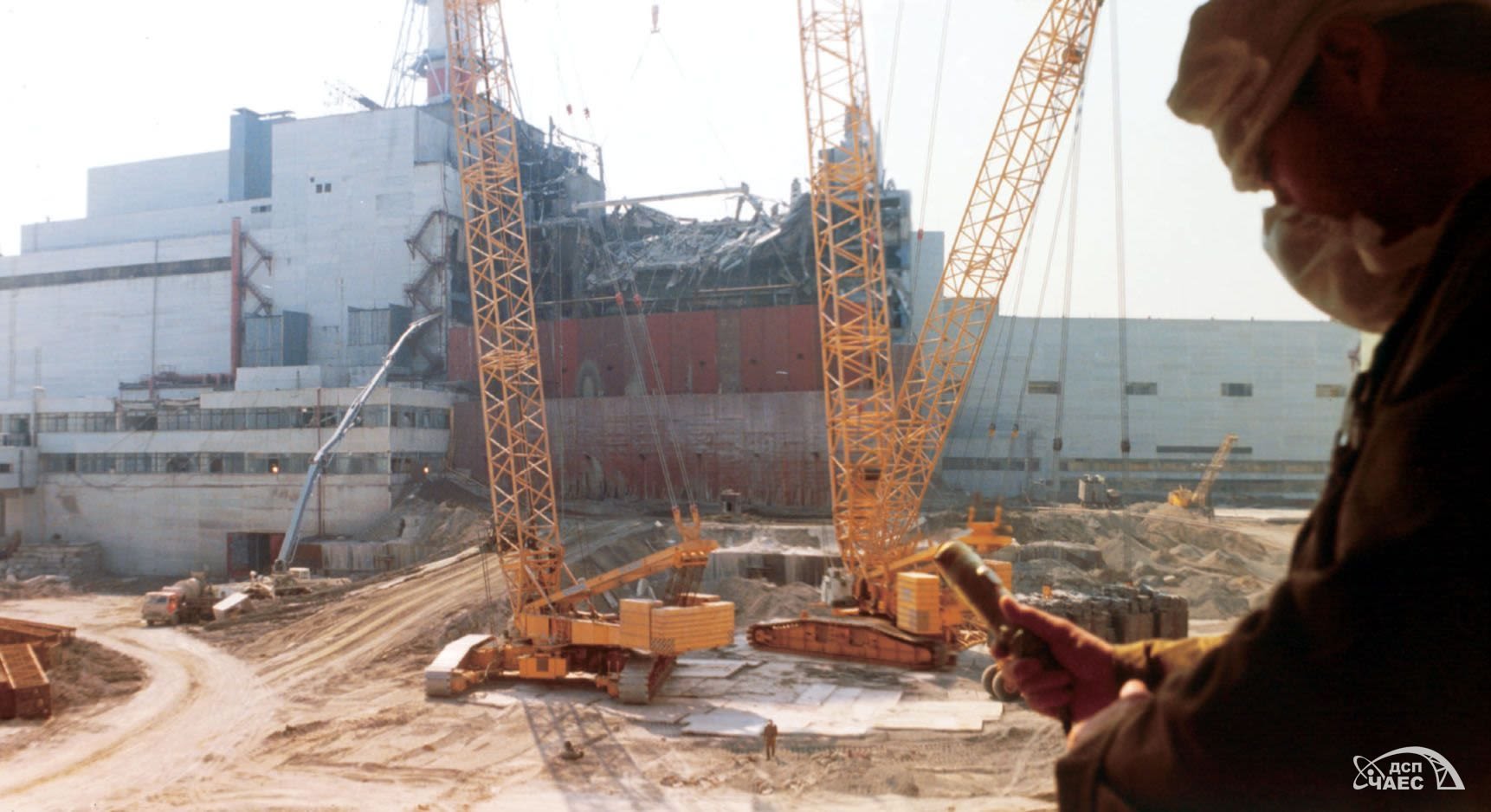
(Image: ChNPP)
The original shelter, a hugely impressive achievement in the circumstances, was never intended to be a long-term solution. And work was carried out from 2004 to 2008 to stabilise it which gave it a design life to 2023.
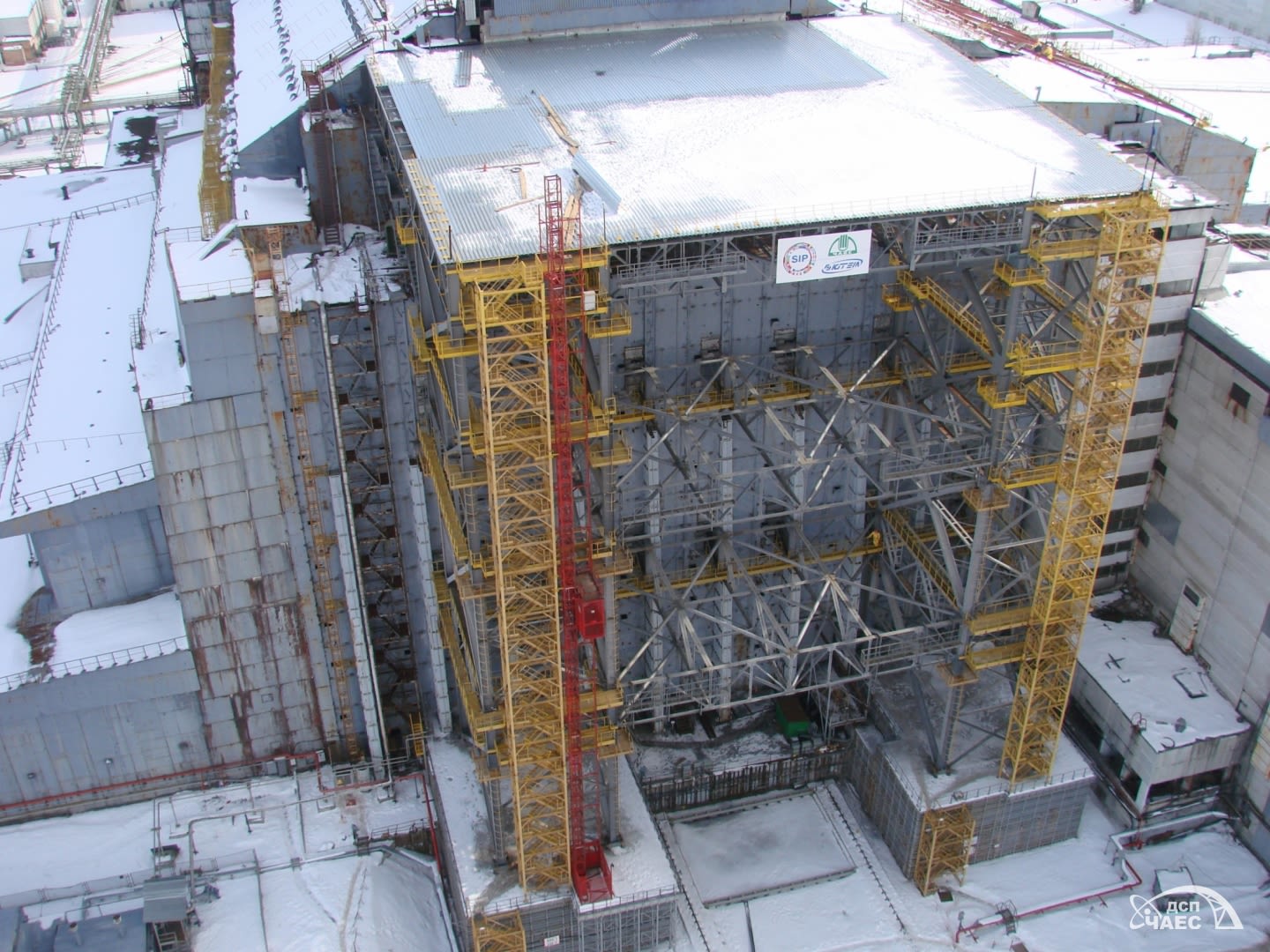
The shelter with reinforcement (Image: ChNPP)
The licence for the storage of radioactive waste within the shelter - which is now enclosed within the giant New Safe Confinement shelter - was extended two years ago, until 2029, with a then 2025 deadline for the development of a new design for the dismantling of "unstable structures with an unacceptably high probability of collapse".
The New Safe Confinement
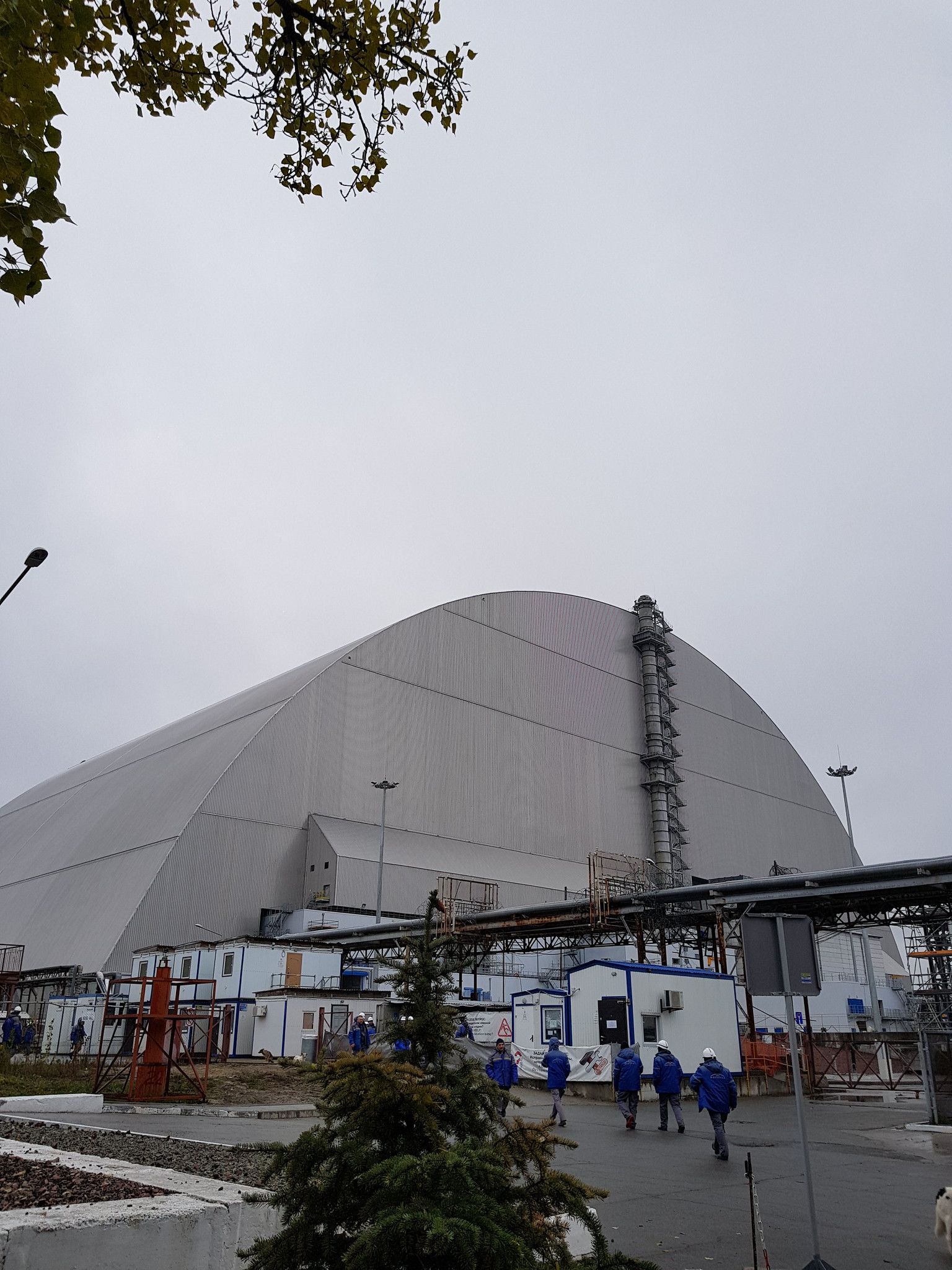
(Image: EBRD)
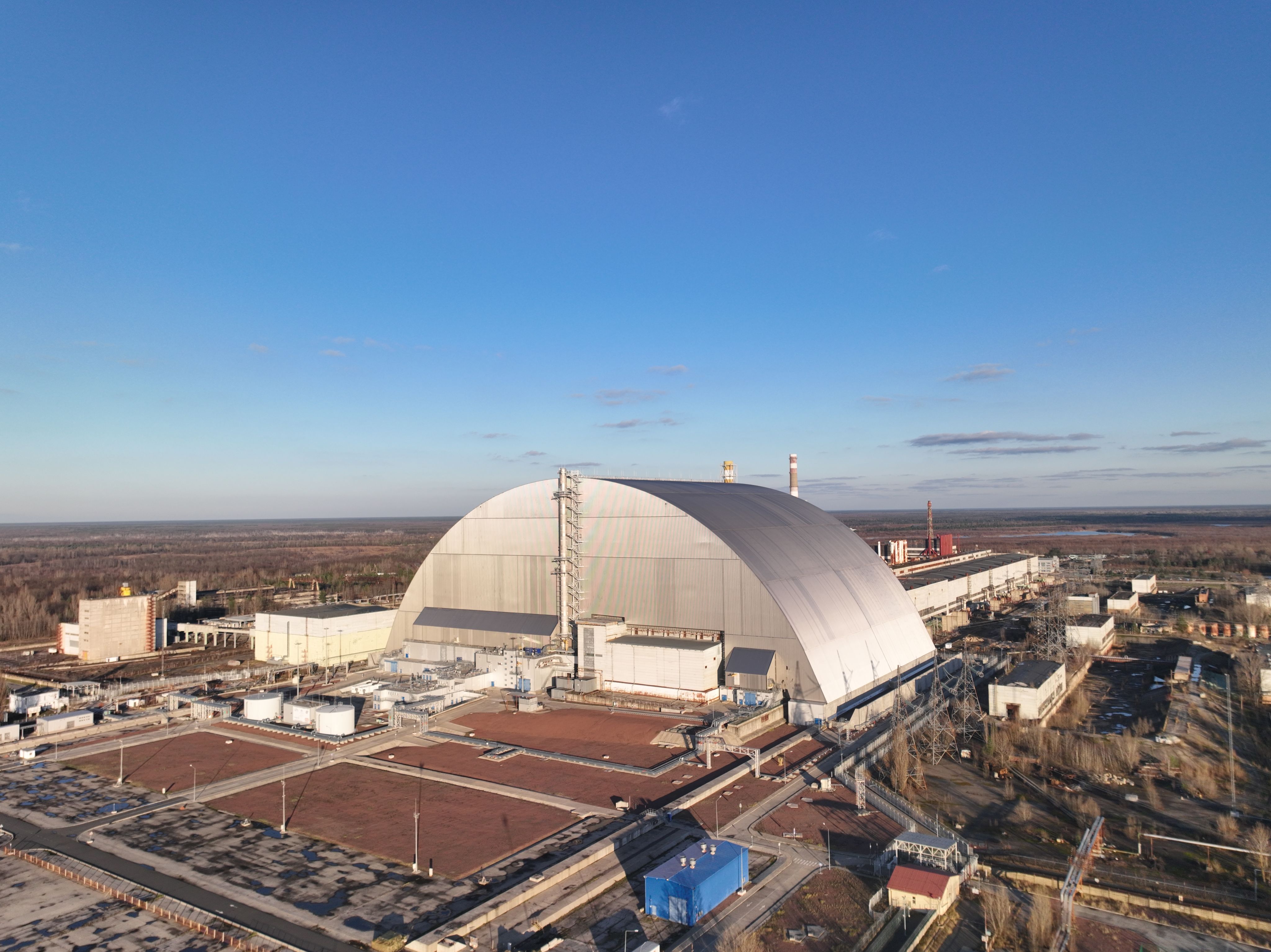
The New Safe Confinement, the giant arch-shaped structure pictured above, is the largest moveable land-based structure built - with a span of 257 metres, a length of 162 metres, a height of 108 metres and a total weight of 36,000 tonnes equipped. It was constructed near the reactor and then moved into position along tracks. It hermetically seals the old shelter within it, and is intended to allow stabilisation and eventual dismantling of the old shelter without risk of further releases of radiation to the environment.
It has a design lifetime of 100 years, to allow for the eventual dismantling of the ageing makeshift shelter from 1986 and the management of radioactive waste. It was designed to withstand temperatures ranging from -43°C to +45°C, a class-three tornado, and an earthquake with a magnitude of 6 on the Richter scale.
However a drone strike on 14 February 2025 made a hole in the giant shelter (about 30-50 metres from the original shelter within it) with smouldering fires causing further damage over a period of weeks before being extinguished. Work is on-going on a plan to restore the New Safe Confinement to its pre-drone strike condition.
The European Bank for Reconstruction and Development (EBRD) has helped to mobilise and manage funding for the Chernobyl Shelter Fund and the International Chernobyl Cooperation Account.
Here is a Q&A with Steven J White, Associate Director of the EBRD's Nuclear Safety Department, on the situation at Chernobyl.
How would you describe the current state of Chernobyl Unit 4 in terms of safety?
"The situation today is fundamentally different from 1986.
"Immediately after the accident, the destroyed reactor was exposed, structurally unstable and releasing radioactive material into the environment. Today, the remains of Unit 4 are enclosed within the original Shelter structure and the New Safe Confinement (NSC), a large, engineered arch designed to prevent the release of radioactive material and to allow dismantling work to proceed safely.
"The site is no longer in an emergency condition. Radiation levels are continuously monitored, the structure is under constant surveillance, and systems are in place to manage environmental conditions inside the confinement.
"However, the reactor has not yet been dismantled. Significant radioactive materials remain inside, and long-term hazard reduction is still under way."
What has been the EBRD's role?
"The European Bank for Reconstruction and Development has acted as the administrator of international donor funds created to address the consequences of the accident.
"It managed the Chernobyl Shelter Fund, which financed the design and construction of the New Safe Confinement (NSC). That was a major international achievement involving more than 40 donor countries.
"Now that the NSC is in place, the focus has shifted from construction to dismantling and risk reduction inside the structure. This phase is supported through the International Chernobyl Cooperation Account.
"This account is critically important because it finances:
• Dismantling of unstable structures inside the Shelter
• Stabilisation works
• Safety upgrades and monitoring
• Urgent response measures, including those required following recent security-related damage
"In simple terms, the New Safe Confinement provides the protective envelope. The ICCA provides the resources to actually reduce the hazard inside it."
What has been done so far and who is paying?
"Since 1986, major steps have included: Construction of the original Shelter (sarcophagus); stabilisation of collapsing structures; construction and commissioning of the New Safe Confinement in 2019; installation of specialised remote dismantling equipment; and development of radioactive waste treatment and storage facilities
"These efforts have been funded largely by the international community, with the European Union, G7 countries, and many others contributing billions of euros.
"Going forward, dismantling and waste management will require continued international support. Ukraine alone cannot carry the full financial burden of what is a global nuclear safety responsibility."
How has the New Safe Confinement been affected by the drone strike?
"The drone strike caused damage to parts of the external cladding of the NSC. Importantly, there was no radiological release and no immediate threat to nuclear safety.
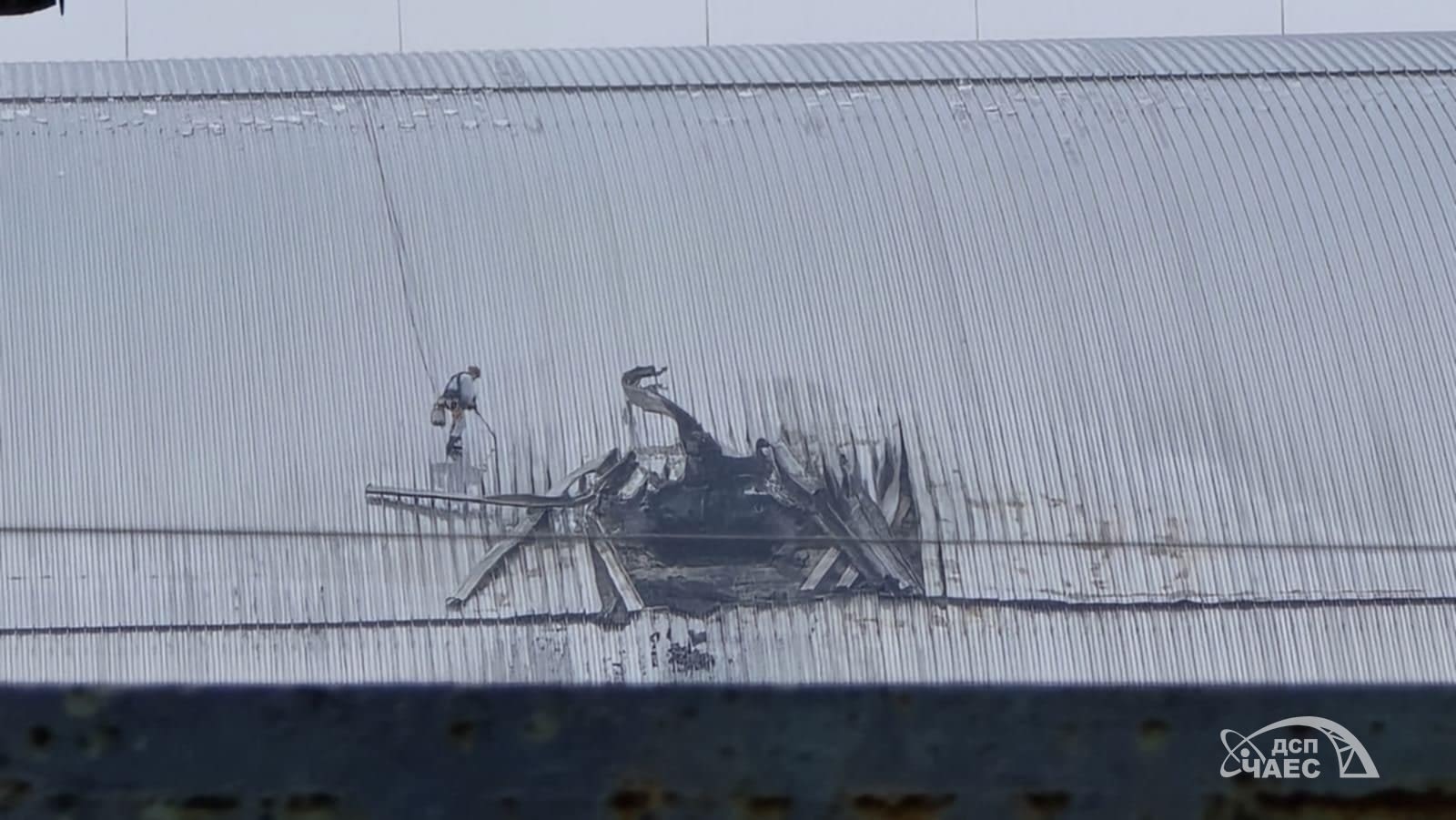
(Image: ChNPP)
"The structure remains stable. However, the integrity of the outer envelope is essential to protect against corrosion and maintain controlled environmental conditions inside. Repair work is technically complex and costly.
"This incident underscores why contingency funding and sustained donor engagement, through mechanisms like ICCA, remain essential."
What are the immediate priorities?
• Restoring and maintaining the full integrity of the NSC
• Preventing corrosion and structural degradation inside
• Ensuring continuous monitoring and physical protection
"All of these require stable, predictable funding over many years.
"Work is already ongoing to identify technical repair solutions and to estimate the costs of such repairs. Temporary engineering solutions have also been undertaken, and continue to be implemented, to provide temporary sealing of the external cladding to minimise water ingress until the final engineered solutions are implemented."
What are the greatest challenges ahead?
"The next planned phase, prior to the 2025 drone strike, was the removal of unstable structures and then the subsequent dismantling of the remains of the reactor, work that is technically unprecedented.
"Challenges include: Extremely high radiation levels; the complex and unstable condition of fuel-containing materials; the need for specialised remote technologies; long-term waste management solutions; and operating in a difficult security environment.
"This is not a short-term project. It is a multi-decade undertaking.
"However, since the drone strike the focus has shifted to the urgent works to fully restore the NSC to its original operational functions."
Have lessons been shared internationally?
"Yes. The experience at Chernobyl has shaped global nuclear safety practices, accident response frameworks and decommissioning strategies.
"After the Fukushima Daiichi nuclear disaster, technical exchanges drew directly on the experience of managing damaged reactors under confinement.
"The international funding and governance model - administered by the EBRD - has also become an example of how the global community can cooperate to address complex nuclear risks."
What will happen to the radioactive debris?
"Materials removed during dismantling will be carefully characterised, packaged and placed in engineered storage facilities. Some will require long-term monitored storage for decades before final disposal solutions are available.
"Safe waste management is one of the most resource-intensive aspects of the programme."
How long will dismantling take and what will it cost?
"The New Safe Confinement was designed for a 100-year lifespan, reflecting the expectation that dismantling and waste management will extend across much of this century.
"While billions of euros have already been invested, significant additional funding will be required over the coming decades. Precise figures depend on technical choices, security conditions and regulatory requirements.
"What is clear is that this remains one of the most complex and expensive nuclear remediation projects in the world."
How long will the exclusion zone remain, and what about the future?
"The exclusion zone will remain in some form for decades due to residual contamination. Some areas can support controlled industrial and scientific activity, but large-scale residential return to heavily contaminated areas is unlikely in the near term.
"The EBRD's current role is focused on nuclear safety and risk reduction. Any broader economic revitalisation would depend on Ukrainian government policy and future international support frameworks."
How important is continued donor support?
"Chernobyl is not simply a national issue - it is a legacy of global significance. The progress made over the past three decades demonstrates what coordinated international action can achieve.
"However, the most technically challenging phase - dismantling the reactor remains and managing highly radioactive materials - is still ahead.
"Continued donor funding through mechanisms such as the ICCA is essential to:
• Maintain safety gains already achieved
• Prevent degradation of critical infrastructure
• Reduce long-term environmental risk
• Protect both Ukraine and the wider European region
"Without sustained and predictable financial support, progress slows and risk accumulates. With it, the international community can complete the long process of turning a catastrophic accident site into a stable, controlled environment."
Here's a film EBRD has put together: Making Chornobyl Safe
What about the future?
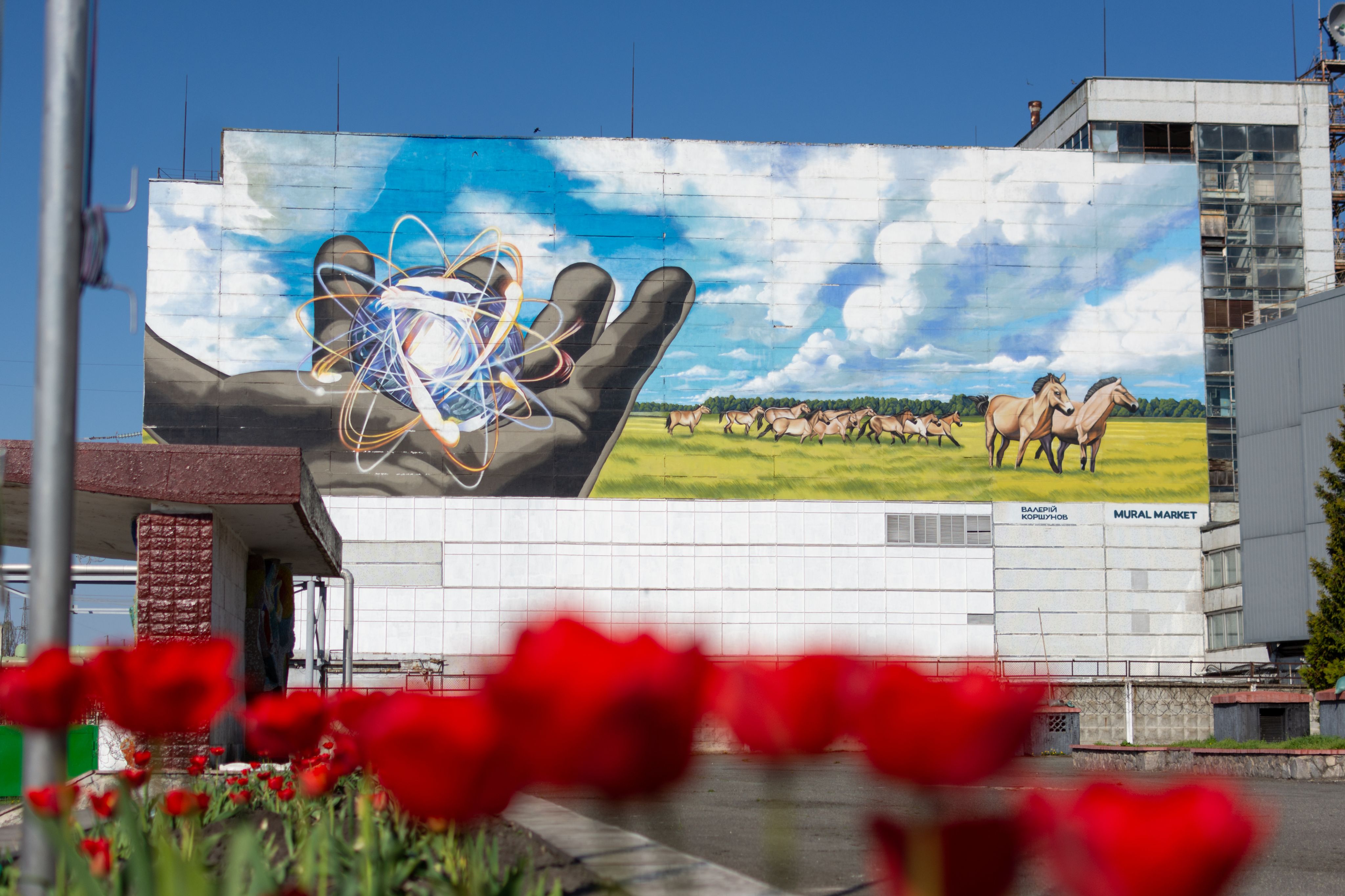
(Image: ChNPP)
The drone strike, and the on-going war with Russia - one which saw Russian military forces occupying Chernobyl for a few weeks in 2022 - has brought extra challenges to those running the plant, the exclusion zone, and trying to plan for the future.
Temporary fixes to the New Safe Confinement were put in place to protect it from the weather during the winter. But a full report on the potential cost of restoring it to its full design function recently put the estimated cost at EUR500 million (USD577 million).
The assessment identifies the restoration of full NSC functionality by 2030 as a key objective, to limit the risk of corrosion of the steel arch structure and maintain long-term safety. However, it says that this timeline would only be met if site access and security conditions allow works to proceed, and if construction activities begin by around the end of 2027. The assessment stresses that the schedule remains subject to significant uncertainty and would need to be refined once detailed designs, regulatory approvals, and procurement strategies are defined.
Serhii Tarakanov, Director General of SSE Chornobyl NPP, said: "It is very important to restore the function of containing radioactive substances within the NSC, as well as active anti-corrosion protection to ensure the functioning of the Confinement for the designed 100 years. After completing the comprehensive repair work within the specified time frame (by 2030), we will be able to move on to the implementation of the main task for which the New Safe Confinement was built - dismantling the unstable structures of the Shelter Object and transforming it into an environmentally safe system."
Prior to the war, tourism had been on the increase to the area, and there are on-going discussions about how to develop the area as a tourist destination once the war is over. According to the Statre Agency of Ukraine for Exclusion Zone Management there were 124,000 visitors in 2019 (the last year pre-COVID and war).
The agency says the flora of the nature reserve includes 1,256 species of vascular plants, 120 species of lichens and 20 species of mosses, with 46 species of flora listed in the Red Book of Ukraine (which records rare, threatened, and endangered species of flora and fauna). Seventy-five species of vertebrates are also listed, while "a significant number of bird species are protected by the [UN-backed] Convention on the Conservation of Migratory Species of Wild Animals".
The exclusion zone is also an area of land where new forms of energy generation are planned. Both solar, and also new nuclear energy - with sites already earmarked for potential small modular reactors.
Radiation measurements have also been taking place which may clear the way to a reduction in the size of the exclusion zone.
And at the plant itself there are decades to come of work to sort and clean up the waste from the wreckage of unit 4. It will be pioneering work, with lessons to be learned at every stage - as has been the case with nearly everything to do with the accident in the early hours of 26 April 1986.
Words: Claire Maden, Warwick Pipe and Alex Hunt
Editor: Alex Hunt
Cover video: Courtesy of EBRD
A World Nuclear News digital production.



No comments:
Post a Comment