.jpg)
May 19, 2026
By UN News
A day after the World Health Organization (WHO) declared the new Ebola outbreak in eastern Democratic Republic of the Congo an international emergency, top global disease transmission experts stressed that the chances of another global pandemic similar to the 2019 coronavirus emergency are increasing all the time.
“The world is not safer from pandemics”, said experts from the Global Preparedness Monitoring Board (GPMB) on Monday, who underscored how the world’s vulnerability was exposed by an Ebola outbreak a decade ago and then by the “global catastrophe” of COVID-19.
“As infectious disease outbreaks become more frequent they are also becoming more damaging, with widening health, economic, political and social impacts, and less capacity to recover from them,” the experts said, in a new report.
Ebola update
Ebola disease is a severe, often fatal illness affecting humans and other primates.
As of Saturday 16 May, health authorities had recorded eight laboratory-confirmed cases, 246 suspected cases and 80 suspected deaths in Ituri province in eastern DRC.
On Sunday, unconfirmed reports indicated that an individual had tested positive for Ebola in the rebel-held city of Goma, capital of North Kivu province and home to one million people.
The confirmed case is believed to be the wife of a man who died after contracting Ebola in Bunia, capital of Ituri province. Another individual who had travelled from Bunia to Beni in North Kivu also tested positive for Ebola.
Cases have also been confirmed in the DR Congo capital, Kinshasa, and across the border in Uganda, where two infected individuals travelled from DRC and were admitted to intensive care. The Ugandan capital, Kampala, is also impacted, WHO said.
News reports late on Monday citing a medical missionary NGO in DRC said a doctor from the US had a confirmed case, with at least six US citizens exposed during the new outbreak, according to reports.
The agency is supporting the Government-led response with 42 health professionals on the ground and supplies already deployed.
The agency has warned that the outbreak is likely larger than currently detected, pointing to clusters of unexplained deaths, a high positivity rate among tested samples and limited understanding of transmission patterns. At least four deaths among healthcare workers have raised concerns over infection prevention measures in health facilities.
In a statement, the UN agency noted that there is no approved therapy or vaccine to treat the Bundibugyo virus which is responsible for the current outbreak.
“The ongoing insecurity, humanitarian crisis, high population mobility, the urban or semi-urban nature of the current hotspot and the large network of informal healthcare facilities further compound the risk of spread, as was witnessed during the large Ebola virus disease epidemic in North Kivu and Ituri provinces in 2018-19,” WHO said.
‘We know how to control Ebola’
“Ebola is a very serious disease, but it is one that we know how to control,” Mohamed Janabi, WHO’s Director for Africa, told UN News.
Dr. Janabi, a cardiologist, explained that the UN health agency has classified it as a public health emergency of international concern, which helps to bring international attention, mobilize resources more quickly and ensure countries work together in a coordinated way.
“But it does not mean people should panic. It means the global system is working as it should be, detecting and responding very decisively,” he added, calling on the media to disseminate correct information
“Fear by itself is an outbreak,” he concluded.
AI boon or bust
Highlighting the potential for AI to improve preparedness and monitor pandemic threats, the Global Preparedness Monitoring Board (GPMB) emphasized that without effective governance and safeguards, technological innovations could actually reduce health security and widen the healthcare access gaps that defined COVID-19.
The Global Preparedness Monitoring Board (GPMB) is an independent monitoring and accountability body established in 2018 by WHO and the World Bank – formally a specialized UN agency – to strengthen preparedness for global health crises.
The board highlights that that national leadership will be tested this year as governments work to finalize the WHO Pandemic Agreement – and work to agree “a meaningful UN political declaration on pandemic prevention, preparedness and response”.
Congo Ebola outbreak: WHO ‘deeply concerned about the scale and speed of the epidemic’
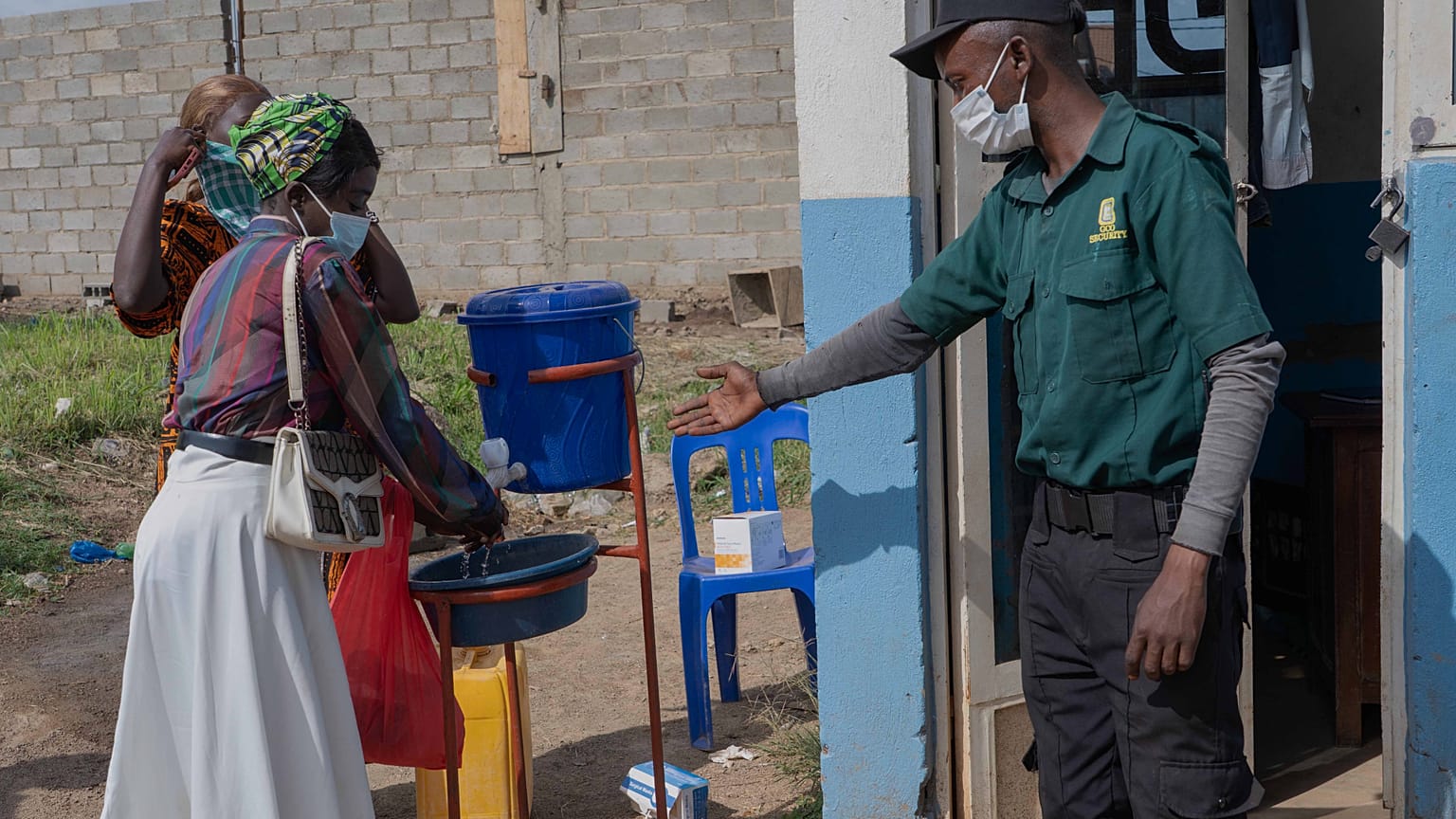
Congolese authorities say at least 131 deaths and 500 cases have been recorded in Congo Ebola outbreak.
The Emergency Committee of the World Health Organization (WHO) will convene today to advise on temporary measures to tackle Congo’s new Ebola outbreak.
The outbreak in Congo and Uganda has been declared a public health emergency of international concern by the WHO.
“I did it in accordance with Article 12 of the International Health Regulations, after consulting the Ministers of Health of both countries, and because I am deeply concerned about the scale and speed of the epidemic,” Dr Tedros Adhanom Ghebreyesus, WHO's Director-General, said during the World Health Assembly in Geneva on Tuesday.
The outbreak, centred in the eastern province of Ituri, has caused at least 131 deaths and 500 cases, according to Congolese authorities.
Two cases, including one death, have also been reported in neighbouring Uganda among two people travelling from Congo.
“There are several factors that make us concerned about the potential for further spread and further deaths,” said Tedros.
First, he said, beyond the confirmed cases is the large number of suspected cases and deaths.
“These numbers will change as field operations are scaling up, including strengthening surveillance, contact tracing, and laboratory testing,” added Tedros.
Second, cases have been reported in densely populated urban areas, including Kampala and the city of Goma in the DRC, and third, deaths have been reported among health workers, indicating healthcare-associated transmission.
All of these factors, Tedros noted, are conditioned by significant population movements in the area.
The international health agency said that the outbreak does not meet the criteria of a pandemic emergency like COVID-19, and advised against the closure of international borders.
What is the Bundibugyo Ebola virus?
The Bundibugyo virus, which is causing the outbreak, is less common than other Ebola viruses, which is complicating the response because there are no specific treatments or vaccines.
“There’s nothing even close to ready for clinical trials," said Dr Celine Gounder, an infectious disease specialist and epidemiologist who treated patients in West Africa during the 2014-2016 Ebola epidemic.
“And so that means responders, healthcare workers, and other aid workers are really back to the basics."
The virus is spread in the same ways as other Ebola viruses: through close contact with sick or deceased patients' bodily fluids, such as sweat, blood, faeces, or vomit. Healthcare workers and family members caring for sick patients face the highest risk, experts said.
“In the absence of a vaccine, there are many other measures countries can take to stop the spread of the virus and save lives, even without medical countermeasures, including risk communication and community engagement,” said Tedros.
Outbreak control relies on a range of interventions, such as clinical care, surveillance and contact tracing, laboratory services, infection prevention and control in health facilities, safe and dignified burials, vaccination where possible, and social mobilisation.
Congo outbreak killed 50 before it was detected
Africa Centres for Disease Control and Prevention Director-General Dr Jean Kaseya said that slow detection delayed the response and gave the virus time to spread.
“This outbreak started in April. So far, we don’t know the index case. It means we don’t know how far is the magnitude of this outbreak,” he said, using a term for the first detectable case of an epidemic.
The earliest known suspected case, a 59-year-old man, developed symptoms on 24 April and died at a hospital in Ituri on 27 April.
By the time health authorities were first alerted to the outbreak on social media on 5 May, 50 deaths had already been recorded, the Africa CDC said.
WHO said at least four deaths have been reported among healthcare workers who showed Ebola symptoms.
INTERVIEW
DRC Ebola outbreak: 'Nobody has a grip on the numbers,’ top expert warns
An Ebola outbreak in the Democratic Republic of Congo has killed dozens and spread beyond the country’s borders, with Jean-Jacques Muyembe – the Congolese scientist who co-discovered the virus nearly 50 years ago – telling RFI that health authorities may have detected the epidemic too late and still do not know how far it has spread.
Issued on: 18/05/2026 - RFI

The outbreak, caused by the Bundibugyo strain of Ebola, has already spread into neighbouring Uganda and prompted the World Health Organization to declare a “public health emergency of international concern” on Sunday.
Health officials say there is no approved vaccine or specific treatment for the strain, while aid agencies warn that conflict, displacement and weak infrastructure are making it harder to trace contacts and isolate cases.
The Africa Centres for Disease Control and Prevention reported 336 suspected cases and 88 deaths over the weekend, although only a small number of cases have so far been confirmed through laboratory testing.
'Uncertainties'
The WHO has warned there are still “significant uncertainties” about the true number of infections and how widely the virus may have spread. A case has also been reported in the eastern city of Goma, according to M23 rebels who control the city.
Medical charity Doctors Without Borders has described the spread of the outbreak as “extremely concerning” and said it is preparing a large-scale response.
Emergency stocks of protective equipment had already been depleted in Kinshasa, with additional supplies being flown in from Kenya, the WHO said.
Meanwhile the International Rescue Committee warned that cuts in international donor funding had weakened disease surveillance in the region.
Armed conflict
The outbreak began in northeastern DR Congo near the borders with Uganda and South Sudan, in a region long affected by armed conflict and population displacement.
Health officials say the delayed detection of the outbreak may have allowed the virus to spread more widely before emergency teams were deployed.
WHO head Tedros Adhanom Ghebreyesus said the organisation first learned of suspected cases on 5 May, but laboratory confirmation only came nin days later.
The latest outbreak is the 17th recorded in DR Congo.
During the deadly 2018-2020 Ebola epidemic in the east of the country, health workers and treatment centres were repeatedly attacked by armed groups, while aid agencies struggled to gain the trust of local communities.
Muyembe, who now heads Kinshasa’s National Institute of Biomedical Research (INRB), played a central role in managing that outbreak. He said local staff would again be essential because communities in affected areas were often suspicious of outsiders arriving from the capital, Kinshasa.

How do you manage an Ebola outbreak in a region controlled by armed groups and affected by conflict?
Jean-Jacques Muyembe: We had this experience between 2018 and 2020, when we managed the outbreak in Mangina, Beni and Butembo. It was an enormous challenge – the greatest challenge of my life, working in an area filled with armed groups. But we always managed to find solutions so the work could continue under the best possible conditions.
During the outbreak in Beni and Mangina, we lost a WHO doctor who was killed. We also lost a nurse in Biakato after armed groups attacked the dormitory where our staff were sleeping in the middle of the night. Many people were killed or injured. It is extremely dangerous.
When I travelled there myself, I used an armoured vehicle because the road between Beni and Butembo was the most dangerous road in the world. You needed either an armoured vehicle or helicopters equipped with machine guns. That was during the Monusco period. Now I do not know how we will manage, but I think the minister will give instructions to use local staff.
Instead of bringing people from Kinshasa, where logistics are very complicated, it is better to work with local personnel so that communities trust us. Even we, coming from Kinshasa, were called foreigners.
So I changed strategy and recruited local young people and local staff to build trust with the population and work together with confidence.
RFI: There are concerns the outbreak could spread to Kinshasa because of air links with Bunia. A suspected case was reported there earlier in the outbreak. How worried are you about the risk of transmission to the capital?
JJM: The person who came from Bunia had travelled there for his father’s funeral. When news of the outbreak began to spread, he came voluntarily to the INRB to be tested. The test was negative. He remains under observation.
RFI: Given the spread of the outbreak and what is already known, what urgent action is needed to limit its progression?
JJM: Frankly, at this point nobody can give a figure. Nobody has a grip on the numbers. We cannot say how many cases there are, how many contacts, or how many deaths from Ebola. The teams are still working on it.
We are going to draw up a full list of all suspected cases and trace whether there are links between them. Then we will know exactly what the scale of the problem is. But right now there is panic because people are saying this is a new strain. In fact, it is not that new and it is not the deadliest strain.
International organisations need to avoid jumping to conclusions and wait for the first investigations to establish exactly when the outbreak began, how many cases there are and who the contacts are. Then we will begin to understand the true scale of the outbreak.
RFI: Despite the uncertainty surrounding the outbreak, you still believe it can be brought under control. What gives you confidence?
JJM: We have experience. We have faced this before. It will take time, but we will win.
This interview has been adapted from the original version in French and edited for clarity

No comments:
Post a Comment