Columbia Is Now The Front Line in Trump’s Unconstitutional Assault on Higher Ed
If Columbia—with its $14 billion endowment—folds, it’s hard to imagine others won’t follow.
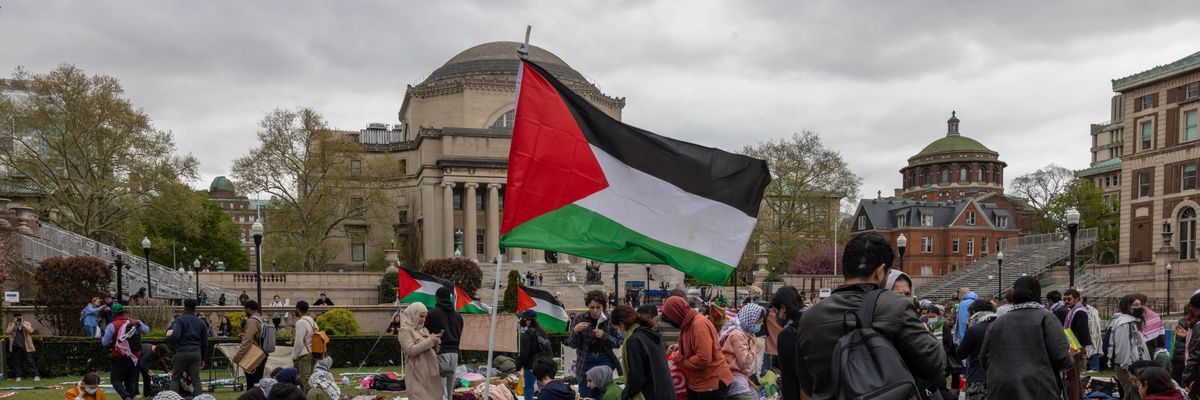
Students occupy the campus ground of Columbia University in support of Palestinians, in New York City, on April 19, 2024.
(Photo: Alex Kent / AFP via Getty Images)
If Columbia—with its $14 billion endowment—folds, it’s hard to imagine others won’t follow.
Students occupy the campus ground of Columbia University in support of Palestinians, in New York City, on April 19, 2024.
(Photo: Alex Kent / AFP via Getty Images)
Joseph Pace
Mar 18, 2025
Mar 18, 2025
Common Dreams
U.S. President Donald Trump has never been coy about his desire to bend universities to his will. Last week, Columbia University became the testing ground to see how far he can push that agenda.
On March 7, the Administration announced it was cancelling $400 million in federal funding from Columbia, alleging that the university violated Title VI by failing to redress the “persistent harassment of Jewish students.” Last Thursday, it issued a list of demands that Columbia must fulfill before any talks on reinstating funds can even begin.
Among them: Place the Middle Eastern, South Asian, and African Studies department “under academic receivership;” devise a plan to “hold all student groups accountable” for violating university policies; and empower law enforcement to “arrest and remove” students who “foster an unsafe or hostile work or study environment.”
The question is whether Columbia will fight or whether it will sacrifice the free speech rights of its faculty and students to appease the Trump administration.
But there’s one demand that gives the others their bite: Columbia must adopt a new definition of antisemitism. This definition matters because it will determine what speech gets muzzled in the departments under receivership, and what speech results in discipline, removal from campus, and expulsion.
While the letter stops short of explicitly mandating a specific definition, it unsubtly reminds the reader of the Trump administration’s embrace of the so-called IHRA definition, which declares it antisemitic to hold Israel to a “double standard,” “deny the Jewish people their right to self-determination, e.g., by claiming that the existence of a State of Israel is a racist endeavor,” or compare its policies to those of the Nazis.
The implication here is clear: Adopt IHRA or kiss a half billion dollars goodbye.
The purported interest in protecting Jewish students from antisemitism is a transparent pretext. The Trump administration is a den of antisemites. Robert F. Kennedy Jr. has claimed that Covid-19 was “ethnically targeted” to spare Ashkenazi Jews. The Pentagon’s deputy press secretary is an avid spreader of antisemitic conspiracy theories. And let’s not forget about Elon Musk, who turned X into a safe space for white supremacists, promoted tweets downplaying the Holocaust and blaming Jews for the “great replacement,” gave two Hitler salutes at a rally, and then jetted off to a right-wing convention in Germany where he opined that Germany’s real problem was “too much focus on past guilt.”
If Elon Musk were the president of Columbia, the university would have lost its Title VI funding long ago.
Nor is the right-wing’s love affair with IHRA rooted in its solicitude for Jews. IHRA is their definition of choice because, unlike other working definitions of antisemitism, IHRA is broad enough and vague enough to sweep up virtually any criticism of Israel. Pro-Israel litigants have invoked IHRA to argue that it is inherently antisemitic—and creates a hostile environment for Jewish students—to criticize Israel for supporting “Jewish supremacy,” notwithstanding Israeli Prime Minister Benjamin Netanyahu’s declaration that Israel is a “state, not of all its citizens, but only of the Jewish people.” Or to suggest that Israel is maintaining an apartheid in the occupied territories, even though Israeli’s third-largest newspaper, its human rights NGOs, and the International Court of Justice agree with that assessment. Or to accuse Israel of committing ethnic cleansing, even though Israel’s former defense minister came to the same conclusion and Israeli officials openly advocate mass expulsions. Even calling for Palestinians and Jews to have equal immigration rights has been labeled antisemitic on the grounds that the influx of Palestinians would make Jews a minority and “obliterate the Jewish people’s right to self-determination.”
There’s a malign genius to the administration’s approach. Trump and his enablers know they can't directly muzzle students or faculty without facing First Amendment lawsuits. To be clear, that doesn’t mean the administration won’t try. ICE has already begun arresting foreign student activists, and DOJ has signaled plans to charge protestors under federal counterterrorism laws. But the administration surely understands that most of those actions will be thwarted in the courts.
As a private institution, however, Columbia is unconstrained by the First Amendment. There’s no redress in the courts if Columbia starts expelling students for criticizing Israel. So the trick is to find a way of outsourcing the censorship to university administrators. And that’s where the funding cuts come in. As explained by one of the strategy’s architects, the threat of defunding is designed to create an “existential terror” that will “discipline [universities] in a way that you could not get through administrative oversight with 150 extra Department of Ed bureaucrats.”
To be clear, this tactic is also blatantly illegal. The Executive cannot withdraw Title VI funding without making findings of fact, providing an opportunity to be heard, and submitting a written report to Congress—none of which has happened here. And the Executive can only defund the specific programs that are found to be out of compliance. The law doesn’t allow the sort of blanket cuts that have been imposed.
And even if the administration complied with these requirements, the First Amendment bars the government from conscripting universities into their efforts to censor protected speech. It likewise bars the government from leveraging public funds to force a university to endorse a state-sanctioned view on a matter of public concern (i.e., whether criticism of Israel is antisemitic). In a 2013 case, Agency for International Development v. Alliance for Open Society International, the Supreme Court struck down a law requiring an NGO to have “a policy explicitly opposing prostitution and sex trafficking” before it could receive grant money to help combat the spread of HIV. Writing for a 6-2 majority, Chief Justice John Roberts acknowledged that the NGOs (like Columbia) were free to turn down the funding, but held that the government could not force the NGO to choose between its First Amendment rights and federal largess: “If there is any fixed star in our constitutional constellation, it is that no official, high or petty, can prescribe what shall be orthodox in politics, nationalism, religion, or other matters of opinion or force citizens to confess by word or act their faith therein.”
The question is whether Columbia will fight or whether it will sacrifice the free speech rights of its faculty and students to appease the Trump administration.
The Trump Administration is clearly counting on the latter, and not without cause. Columbia has been a case study in preemptive acquiescence: In recent weeks, university administrators have threatened disciplinary measures against students for writing op-eds calling for divestment from Israel, for sharing social media posts in support of the protests, and for co-hosting an art exhibition in a private building about the occupation of a campus building. After two students—one a recent IDF soldier—showered protesters with a foul-smelling spray, Columbia responded by forcing into retirement a professor who expressed concern about Israeli students coming to Columbia “right out of their military service,” and then paid a $400,000 settlement to the students who sprayed the chemical.
This is not going to end with Columbia: the Department of Education has sent similar letters to 60 other universities. And the assault on academic freedom is not going to be limited to discourse about Israel. This battle is, in a real sense, the front lines. If Columbia—with its $14 billion endowment—folds, it’s hard to imagine others won’t follow. If Columbia’s administrators cannot find the backbone to protect free speech on its campus, students and faculty will have to defend their constitutional rights themselves, in court.
Our work is licensed under Creative Commons (CC BY-NC-ND 3.0). Feel free to republish and share widely.
Joseph Pace is an appellate attorney specializing in civil rights law. He is the founder and manager of J. Pace Law, PLLC.
Full Bio >
U.S. President Donald Trump has never been coy about his desire to bend universities to his will. Last week, Columbia University became the testing ground to see how far he can push that agenda.
On March 7, the Administration announced it was cancelling $400 million in federal funding from Columbia, alleging that the university violated Title VI by failing to redress the “persistent harassment of Jewish students.” Last Thursday, it issued a list of demands that Columbia must fulfill before any talks on reinstating funds can even begin.
Among them: Place the Middle Eastern, South Asian, and African Studies department “under academic receivership;” devise a plan to “hold all student groups accountable” for violating university policies; and empower law enforcement to “arrest and remove” students who “foster an unsafe or hostile work or study environment.”
The question is whether Columbia will fight or whether it will sacrifice the free speech rights of its faculty and students to appease the Trump administration.
But there’s one demand that gives the others their bite: Columbia must adopt a new definition of antisemitism. This definition matters because it will determine what speech gets muzzled in the departments under receivership, and what speech results in discipline, removal from campus, and expulsion.
While the letter stops short of explicitly mandating a specific definition, it unsubtly reminds the reader of the Trump administration’s embrace of the so-called IHRA definition, which declares it antisemitic to hold Israel to a “double standard,” “deny the Jewish people their right to self-determination, e.g., by claiming that the existence of a State of Israel is a racist endeavor,” or compare its policies to those of the Nazis.
The implication here is clear: Adopt IHRA or kiss a half billion dollars goodbye.
The purported interest in protecting Jewish students from antisemitism is a transparent pretext. The Trump administration is a den of antisemites. Robert F. Kennedy Jr. has claimed that Covid-19 was “ethnically targeted” to spare Ashkenazi Jews. The Pentagon’s deputy press secretary is an avid spreader of antisemitic conspiracy theories. And let’s not forget about Elon Musk, who turned X into a safe space for white supremacists, promoted tweets downplaying the Holocaust and blaming Jews for the “great replacement,” gave two Hitler salutes at a rally, and then jetted off to a right-wing convention in Germany where he opined that Germany’s real problem was “too much focus on past guilt.”
If Elon Musk were the president of Columbia, the university would have lost its Title VI funding long ago.
Nor is the right-wing’s love affair with IHRA rooted in its solicitude for Jews. IHRA is their definition of choice because, unlike other working definitions of antisemitism, IHRA is broad enough and vague enough to sweep up virtually any criticism of Israel. Pro-Israel litigants have invoked IHRA to argue that it is inherently antisemitic—and creates a hostile environment for Jewish students—to criticize Israel for supporting “Jewish supremacy,” notwithstanding Israeli Prime Minister Benjamin Netanyahu’s declaration that Israel is a “state, not of all its citizens, but only of the Jewish people.” Or to suggest that Israel is maintaining an apartheid in the occupied territories, even though Israeli’s third-largest newspaper, its human rights NGOs, and the International Court of Justice agree with that assessment. Or to accuse Israel of committing ethnic cleansing, even though Israel’s former defense minister came to the same conclusion and Israeli officials openly advocate mass expulsions. Even calling for Palestinians and Jews to have equal immigration rights has been labeled antisemitic on the grounds that the influx of Palestinians would make Jews a minority and “obliterate the Jewish people’s right to self-determination.”
There’s a malign genius to the administration’s approach. Trump and his enablers know they can't directly muzzle students or faculty without facing First Amendment lawsuits. To be clear, that doesn’t mean the administration won’t try. ICE has already begun arresting foreign student activists, and DOJ has signaled plans to charge protestors under federal counterterrorism laws. But the administration surely understands that most of those actions will be thwarted in the courts.
As a private institution, however, Columbia is unconstrained by the First Amendment. There’s no redress in the courts if Columbia starts expelling students for criticizing Israel. So the trick is to find a way of outsourcing the censorship to university administrators. And that’s where the funding cuts come in. As explained by one of the strategy’s architects, the threat of defunding is designed to create an “existential terror” that will “discipline [universities] in a way that you could not get through administrative oversight with 150 extra Department of Ed bureaucrats.”
To be clear, this tactic is also blatantly illegal. The Executive cannot withdraw Title VI funding without making findings of fact, providing an opportunity to be heard, and submitting a written report to Congress—none of which has happened here. And the Executive can only defund the specific programs that are found to be out of compliance. The law doesn’t allow the sort of blanket cuts that have been imposed.
And even if the administration complied with these requirements, the First Amendment bars the government from conscripting universities into their efforts to censor protected speech. It likewise bars the government from leveraging public funds to force a university to endorse a state-sanctioned view on a matter of public concern (i.e., whether criticism of Israel is antisemitic). In a 2013 case, Agency for International Development v. Alliance for Open Society International, the Supreme Court struck down a law requiring an NGO to have “a policy explicitly opposing prostitution and sex trafficking” before it could receive grant money to help combat the spread of HIV. Writing for a 6-2 majority, Chief Justice John Roberts acknowledged that the NGOs (like Columbia) were free to turn down the funding, but held that the government could not force the NGO to choose between its First Amendment rights and federal largess: “If there is any fixed star in our constitutional constellation, it is that no official, high or petty, can prescribe what shall be orthodox in politics, nationalism, religion, or other matters of opinion or force citizens to confess by word or act their faith therein.”
The question is whether Columbia will fight or whether it will sacrifice the free speech rights of its faculty and students to appease the Trump administration.
The Trump Administration is clearly counting on the latter, and not without cause. Columbia has been a case study in preemptive acquiescence: In recent weeks, university administrators have threatened disciplinary measures against students for writing op-eds calling for divestment from Israel, for sharing social media posts in support of the protests, and for co-hosting an art exhibition in a private building about the occupation of a campus building. After two students—one a recent IDF soldier—showered protesters with a foul-smelling spray, Columbia responded by forcing into retirement a professor who expressed concern about Israeli students coming to Columbia “right out of their military service,” and then paid a $400,000 settlement to the students who sprayed the chemical.
This is not going to end with Columbia: the Department of Education has sent similar letters to 60 other universities. And the assault on academic freedom is not going to be limited to discourse about Israel. This battle is, in a real sense, the front lines. If Columbia—with its $14 billion endowment—folds, it’s hard to imagine others won’t follow. If Columbia’s administrators cannot find the backbone to protect free speech on its campus, students and faculty will have to defend their constitutional rights themselves, in court.
Our work is licensed under Creative Commons (CC BY-NC-ND 3.0). Feel free to republish and share widely.
Joseph Pace is an appellate attorney specializing in civil rights law. He is the founder and manager of J. Pace Law, PLLC.
Full Bio >
By AFP
March 18, 2025

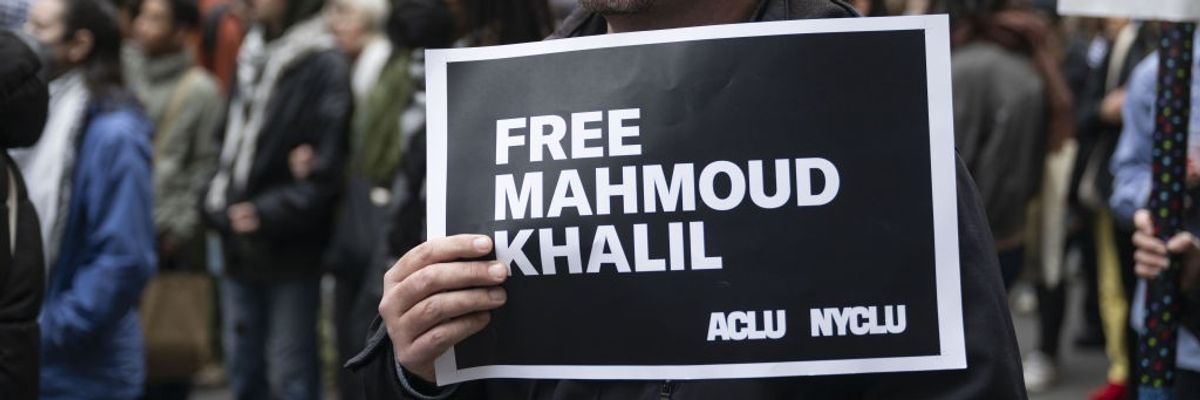
Protesters at Columbia University demand the release of student activist Mahmoud Khalil
- Copyright AFP CHARLY TRIBALLEAU
Shahzad ABDUL
Hit by massive funding cuts and a crackdown on student protesters, Columbia University is under fire from US President Donald Trump, putting the world of higher education on tenterhooks.
The arrest of student activist Mahmoud Khalil has crystallized concerns over freedom of speech under the Republican leader’s administration — and fueled warnings that Trump is out to quell dissent.
Khalil, a US permanent resident with Palestinian roots, recently earned a graduate degree from the prestigious Ivy League school in New York.
But he was detained in early March by plainclothes immigration agents over his role in the student movement protesting Israel’s war on Gaza.
Trump has vowed Khalil’s detention is the first in a line of arrests to come.
Columbia’s student movement has been at the vanguard of protests that have exposed deep rifts over the war.
Activists call them a show of support for the Palestinian people. Trump condemns them as anti-Semitic, and says they must end.
The president has cut $400 million in federal funding from Columbia — including research grants and other contracts — on the questionable grounds that the institution has not adequately protected Jewish students from harassment.
Experts say the move aims to send a message to other universities: fall in line or face the consequences.
“Columbia has been placed in an impossible position,” Lynn Pasquerella, president of the American Association of Colleges and Universities, told AFP.
“We can be sure that the other 60 higher education institutions that have been targeted for a perceived failure to comply with federal mandates are paying close attention to Columbia’s response.”
– ‘Critical moment’ –
Columbia’s interim president, Katrina Armstrong, acknowledged the “critical moment for higher education” in a recent statement.
US universities are still reeling from a furor over pro-Palestinian protests that has felled several institutions’ presidents since the Gaza war began, including at Harvard, the University of Pennsylvania and Columbia itself.
“The stakes are high not only for Columbia, but for every college and university in this country,” Armstrong said, vowing a commitment to “open dialogue and free debate” as well as “efforts to combat hate and discrimination on campus.”
Beyond that cautious official position — which has come under criticism from various sides — Columbia is making moves.
Entry to campus is barricaded, though immigration officers have entered for surprise searches, and the university gave police the green light to remove pro-Palestinian activists last spring.
Last week, the private university announced a battery of disciplinary measures — including suspensions, temporary degree revocations and expulsions — aimed at student protesters who occupied a campus building last year.
Still, in a letter sent to Columbia last week, the Trump administration gave the university one week to agree to a series of drastic reforms if it wants to open negotiations to recover the $400 million.
The letter demands Columbia codify a definition of anti-Semitism that includes a focus on anti-Zionism, and insists the Middle Eastern, South Asian, and African Studies departments be put under “academic receivership.”
That rare step puts an academic department under outside administrative oversight, and is generally only used to reset — or axe — a department in crisis.
– ‘Existential threat’ –
Pasquerella said Trump’s moves put core principles of higher education at risk, seeking to control the curriculum and “impose a particular definition of anti-Semitism on the university by ostensibly conflating any pro-Palestinian sentiment and activity with unlawful activity.”
The administration’s demands “threaten to undermine the democratic purposes of higher education by impeding academic freedom,” she said.
For Jameel Jaffer, who directs the free speech-focused Knight First Amendment Institute at Columbia, the White House’s bid to control university policies poses an “existential threat to academic life itself.”
The undertone of the letter is clear, he said: “It basically says, ‘We’ll destroy Columbia unless you destroy it first.'”
“The subjugation of universities to official power is a hallmark of autocracy. No one should be under any illusions about what’s going on here,” Jaffer told AFP.
Trump’s pressure has also given new life to pro-Palestinian protests, which are again happening virtually every day throughout New York — including a recent one at Trump Tower in Manhattan.
But that engagement in the streets is not undoing the damage already done at academic institutions across the nation, Pasquerella said.
“Many institutions are already engaging in anticipatory or preemptive compliance with requests by the current administration, even if they are not legally required, in order to avoid being targeted,” she said.
“The real losers in all of this are the students.”
Shahzad ABDUL
Hit by massive funding cuts and a crackdown on student protesters, Columbia University is under fire from US President Donald Trump, putting the world of higher education on tenterhooks.
The arrest of student activist Mahmoud Khalil has crystallized concerns over freedom of speech under the Republican leader’s administration — and fueled warnings that Trump is out to quell dissent.
Khalil, a US permanent resident with Palestinian roots, recently earned a graduate degree from the prestigious Ivy League school in New York.
But he was detained in early March by plainclothes immigration agents over his role in the student movement protesting Israel’s war on Gaza.
Trump has vowed Khalil’s detention is the first in a line of arrests to come.
Columbia’s student movement has been at the vanguard of protests that have exposed deep rifts over the war.
Activists call them a show of support for the Palestinian people. Trump condemns them as anti-Semitic, and says they must end.
The president has cut $400 million in federal funding from Columbia — including research grants and other contracts — on the questionable grounds that the institution has not adequately protected Jewish students from harassment.
Experts say the move aims to send a message to other universities: fall in line or face the consequences.
“Columbia has been placed in an impossible position,” Lynn Pasquerella, president of the American Association of Colleges and Universities, told AFP.
“We can be sure that the other 60 higher education institutions that have been targeted for a perceived failure to comply with federal mandates are paying close attention to Columbia’s response.”
– ‘Critical moment’ –
Columbia’s interim president, Katrina Armstrong, acknowledged the “critical moment for higher education” in a recent statement.
US universities are still reeling from a furor over pro-Palestinian protests that has felled several institutions’ presidents since the Gaza war began, including at Harvard, the University of Pennsylvania and Columbia itself.
“The stakes are high not only for Columbia, but for every college and university in this country,” Armstrong said, vowing a commitment to “open dialogue and free debate” as well as “efforts to combat hate and discrimination on campus.”
Beyond that cautious official position — which has come under criticism from various sides — Columbia is making moves.
Entry to campus is barricaded, though immigration officers have entered for surprise searches, and the university gave police the green light to remove pro-Palestinian activists last spring.
Last week, the private university announced a battery of disciplinary measures — including suspensions, temporary degree revocations and expulsions — aimed at student protesters who occupied a campus building last year.
Still, in a letter sent to Columbia last week, the Trump administration gave the university one week to agree to a series of drastic reforms if it wants to open negotiations to recover the $400 million.
The letter demands Columbia codify a definition of anti-Semitism that includes a focus on anti-Zionism, and insists the Middle Eastern, South Asian, and African Studies departments be put under “academic receivership.”
That rare step puts an academic department under outside administrative oversight, and is generally only used to reset — or axe — a department in crisis.
– ‘Existential threat’ –
Pasquerella said Trump’s moves put core principles of higher education at risk, seeking to control the curriculum and “impose a particular definition of anti-Semitism on the university by ostensibly conflating any pro-Palestinian sentiment and activity with unlawful activity.”
The administration’s demands “threaten to undermine the democratic purposes of higher education by impeding academic freedom,” she said.
For Jameel Jaffer, who directs the free speech-focused Knight First Amendment Institute at Columbia, the White House’s bid to control university policies poses an “existential threat to academic life itself.”
The undertone of the letter is clear, he said: “It basically says, ‘We’ll destroy Columbia unless you destroy it first.'”
“The subjugation of universities to official power is a hallmark of autocracy. No one should be under any illusions about what’s going on here,” Jaffer told AFP.
Trump’s pressure has also given new life to pro-Palestinian protests, which are again happening virtually every day throughout New York — including a recent one at Trump Tower in Manhattan.
But that engagement in the streets is not undoing the damage already done at academic institutions across the nation, Pasquerella said.
“Many institutions are already engaging in anticipatory or preemptive compliance with requests by the current administration, even if they are not legally required, in order to avoid being targeted,” she said.
“The real losers in all of this are the students.”


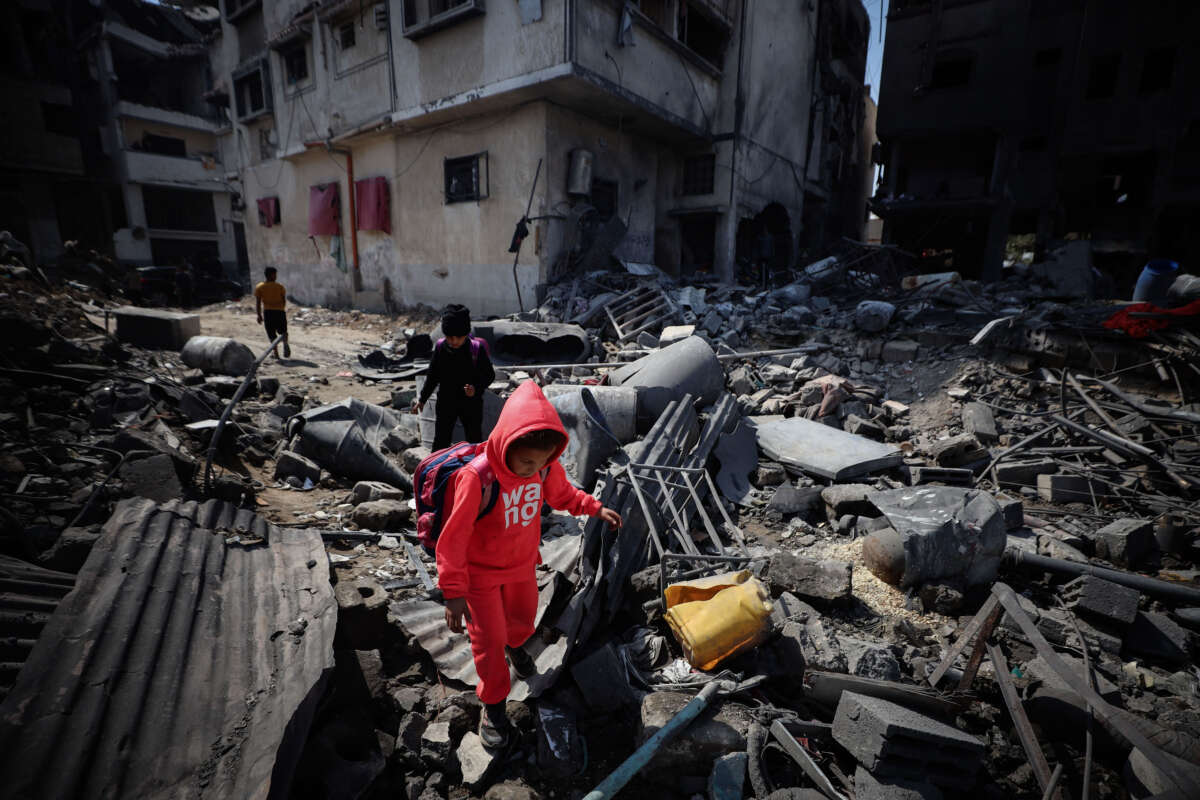
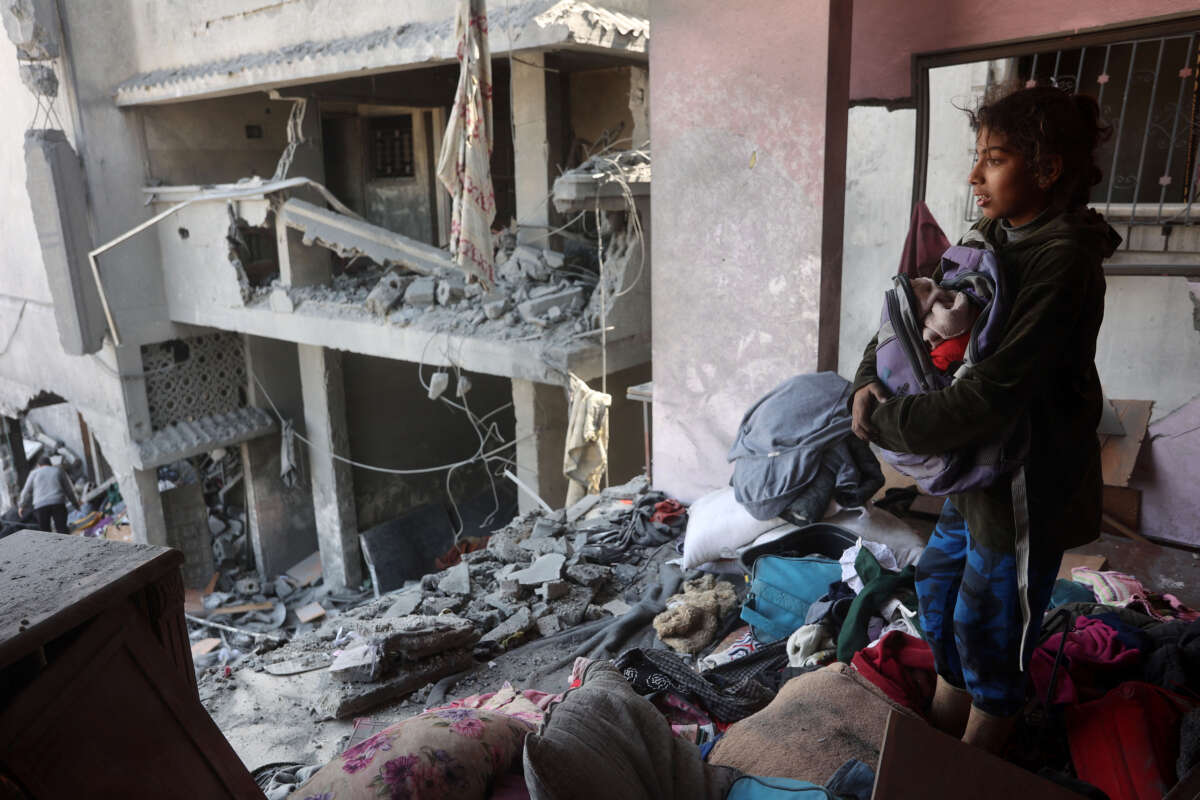
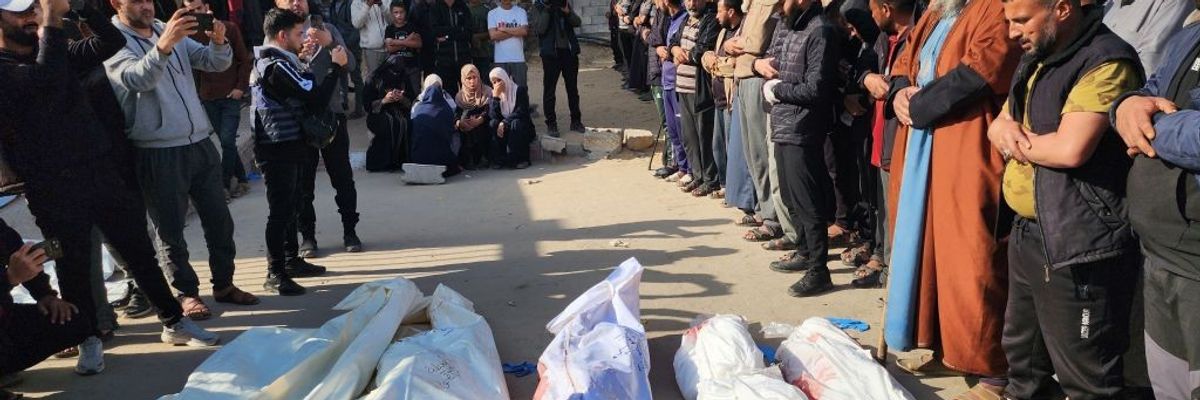
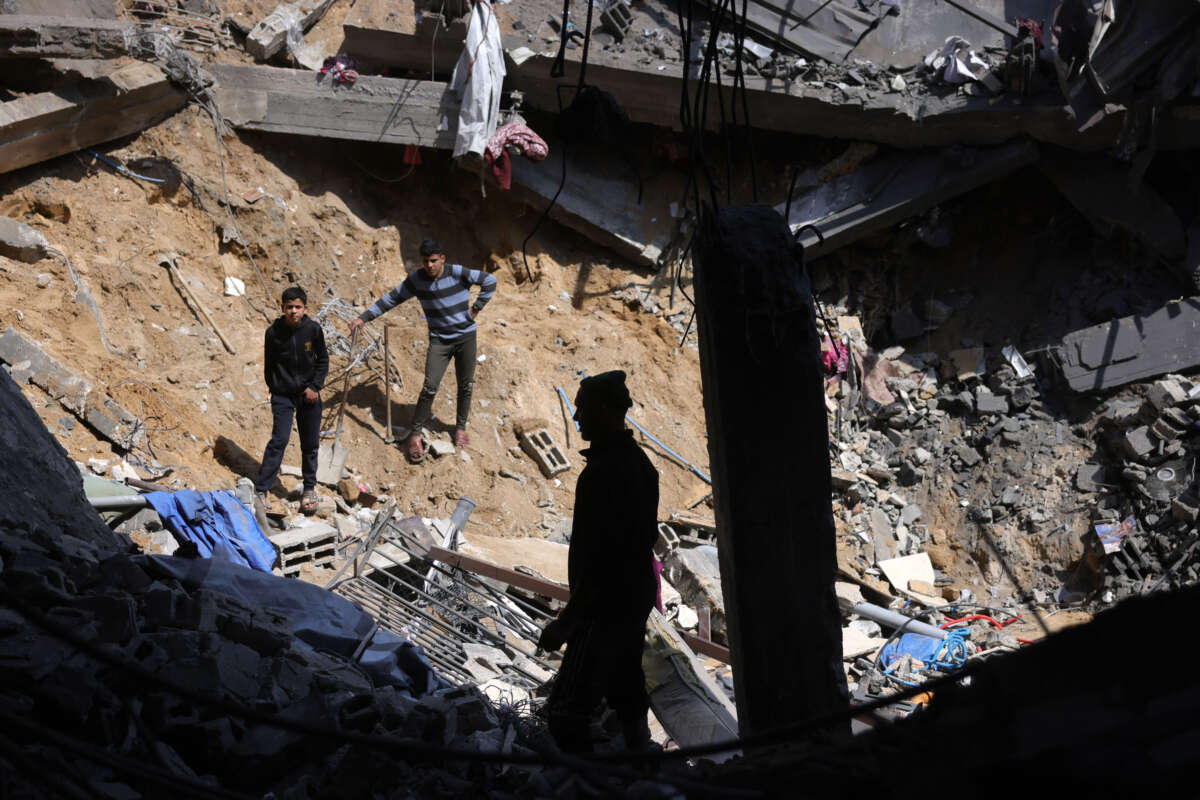

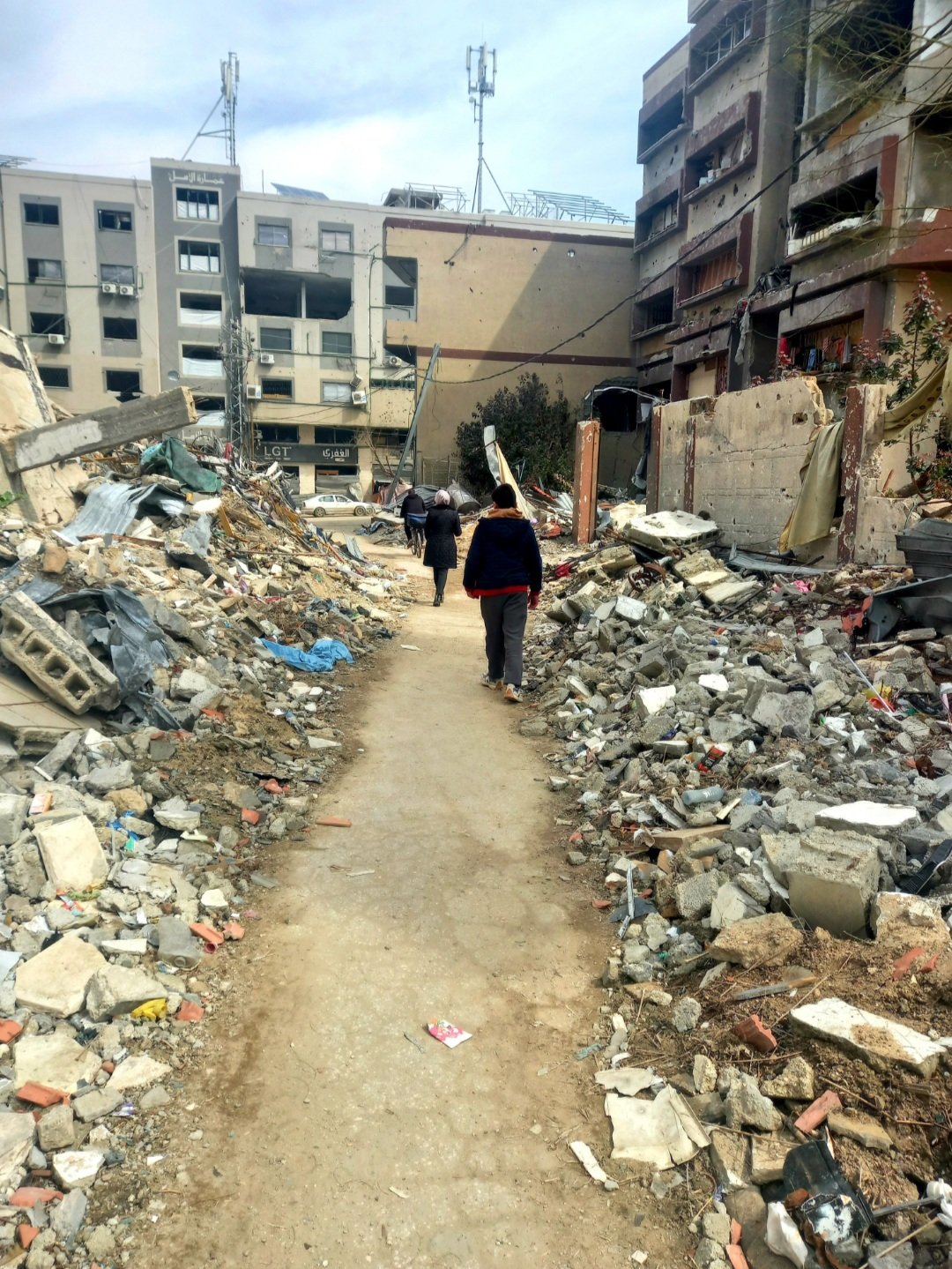 Even before last night’s bombardment, parts of the Rimal neighborhood of Gaza were already reduced to rubble. The author took this photo on March 17, 2025, before the latest bombings.Dalia Abu Ramadan