Wednesday, September 10, 2025


UC Irvine poll: Californians support stricter tech regulations for children


Statewide survey reveals backing for school smartphone restrictions, social media bans


University of California - Irvine


new poll of 2,143 California adults conducted by University of California, Irvine researchers reveals overwhelming bipartisan support for stricter regulations on children's use of digital technology, including school smartphone restrictions and social media age limits.

“There are very few issues with this level of bipartisan support in today’s polarized policy environment, but the message from parents and other adults in our poll was clear and crossed party lines. Adults are worried about the impacts of smartphones and social media on children’s learning and mental health,” said the survey’s authors, Kelli Dickerson, research scientist and lead investigator of the study; Gillian Hayes, the Kleist Professor of informatics; and Candice Odgers, Chancellor’s Professor of psychology.

The study found that 82 percent of Californians support the Phone-Free Schools Act, which requires public schools to adopt policies to restrict student smartphone use during school hours by July 2026. Support crossed party lines, with 84 percent of Republicans, 81 percent of Democrats, and 80 percent of Independents backing the measure.

Other findings include: 

  • 73 percent of Californians surveyed support banning social media for children under 16, with supporters citing youth safety, well-being and the need to encourage more offline activities. 
  • While support for a social media ban was high, many Californians may not fully realize which platforms a ban may affect. For example, nearly half of Californians did not consider YouTube a form of social media, despite it being the most widely used platform among youth.
  • 61 percent favor allowing generative AI in schools with clear guardrails. However, fewer than half of Californians expressed moderate to complete trust in local, state or federal government, or in technology companies, to make decisions about children and artificial intelligence.

“This research reveals a clear mandate from California families for stronger digital safeguards for children,” Dickerson said. “However, the findings also highlight critical challenges ahead – from confusion about what platforms would actually be regulated to a troubling lack of trust in any institution to effectively oversee these technologies. Policymakers need to address these gaps if they want regulations that are both effective and enforceable.”

The poll revealed some variation in support based on demographics. Parents of minors showed slightly less support for school smartphone restrictions (74 percent) compared to non-parents (87 percent), and support increased with education and income levels. However, backing for social media age restrictions remained consistent across all demographic groups. 

The majority (88 percent) of those who supported school smartphone restrictions cited reducing classroom distractions as the main reason driving their support. For social media age restrictions, over 70 percent of supporters cited concerns about excessive technology use and encouraged offline activities, improving mental health and reducing exposure to harmful content.

Those who opposed school smartphone restrictions primarily cited the need to maintain parent-child communication, with 81 percent of opponents wanting to ensure children can reach parents during emergencies. Most opponents (71 percent) of social media age restrictions believed that parents should decide whether their child uses social media.

The research comes as California continues to lead national conversations about technology regulation. The Phone-Free Schools Act is set to take effect in 2026, and legislative discussions continue about social media age verification and AI oversight in educational settings. 

While the study found broad support across the political spectrum for regulation, Hayes said it also uncovered a significant trust deficit in who should be charged with regulatory oversight. 

“Young people spend much of their time in digital spaces not designed for them, and there’s growing recognition of the need for stronger safeguards,” Hayes said. “However, effective regulation will require not only clearer communication and transparency but also trusted institutions to lead these efforts in partnership with caregivers, educators and young people.” 

The study was produced by CERES (Connecting the EdTech Research EcoSystem) and UC Irvine’s School of Social Ecology


About CERES: The CERES network is advancing dynamic, collaborative, and innovative research with real-world impact. CERES leverages strategic partnerships and cutting-edge methodologies to drive meaningful solutions that improve outcomes for children. CERES uses technology-driven solutions to ensure all children, regardless of socioeconomic background, have the resources and support they need to thrive. Learn more at ceres.uci.edu.

About the University of California, Irvine: Founded in 1965, UC Irvine is a member of the prestigious Association of American Universities and is ranked among the nation’s top 10 public universities by U.S. News & World Report. The campus has produced five Nobel laureates and is known for its academic achievement, premier research, innovation and anteater mascot. Led by Chancellor Howard Gillman, UC Irvine has more than 36,000 students and offers 224 degree programs. It’s located in one of the world’s safest and most economically vibrant communities and is Orange County’s second-largest employer, contributing $7 billion annually to the local economy and $8 billion statewide. For more on UC Irvine, visit www.uci.edu.


“Want to, but can’t”: A new model to explain the gap in waste separation behavior


Incorporating external factors and heterogeneous moderators into the Theory of Planned Behavior to explain discrepancies in household waste separation


Sophia University

The expanded Theory of Planned Behavior + External influences + Heterogeneity (TPB + E + H) framework 

image: 

 The expanded TPB + E + H framework has greater explanatory power to understand waste separation behavior, and can be flexibly applied in a variety of geographic and cultural contexts.

view more 

Credit: Jiarong Hu and Xuepeng Qian from Sophia University, Japan


Household waste constitutes 30–40% of municipal solid waste globally. Separating waste at the household level into compostable, recyclable, and non-recyclable is a crucial first step for local governments to process solid waste effectively. However, large gaps between a person’s willingness to separate waste and actually separating waste have been seen across the world. Understanding the factors that affect people’s intention and behavior of separating household waste can help create more effective policies regarding household-level waste separation.


However, existing theoretical frameworks, such as the Theory of Planned Behavior (TPB), do not fully account for external factors that affect waste separation behavior. Drawing from the existing research, a team of researchers led by Professor Xuepeng Qian from the Graduate School of Global Environmental Studies (GENV) at Sophia University in Tokyo, Japan, has developed a new behavioral model for waste separation. Other collaborators on the team were Assistant Prof. Nkweauseh Reginald Longfor and Jiarong Hu, also from GENV, and Prof. Liang Dong from the Department of Public and International Affairs and the School of Energy and Environment, City University of Hong Kong. Their work was made available online on July 14, 2025, and will be published on January 1, 2026 in Volume 116 of the journal Environmental Impact Assessment Review.


According to the authors of this paper, “Researchers have no clear guidance on which external variables should be prioritized when extending TPB, and policymakers are unclear which levers are likely to yield the greatest behavioral gains,” and hence the team was motivated to conduct their study.


In their study, Prof. Qian’s team analyzed 46 papers on waste separation covering 30,250 participants in various geographies. The team drew from two other behavioral frameworks to understand differences in intrinsic characteristics not covered by TPB. They also looked at the effect of external factors such as waste collection infrastructure, consequence awareness, publicity and education programs, and previous recycling habits.


The team found that some intrinsic characteristics, such as a person’s belief that they will be able to successfully separate waste for collection, have a large effect on their behavior. They also found that heterogeneous demographic variables, such as age, gender, and socioeconomic status, moderate the impact of intrinsic characteristics on the intention to separate waste.


Based on these findings, Prof. Qian’s team has developed an expanded framework that they call the Theory of Planned Behavior + External influences + Heterogeneity or TPB + E + H. Incorporating the effects of external factors along with the three internal factors of the original TPB, increases the framework’s explanatory power with regards to waste separation. They also account for the influence of heterogeneous demographic variables on the effect size of the internal factors. As a result, this is not a one-size-fits-all framework and the impact of each individual factor will vary based on local contexts.


As concluded in this research, “The proposed TPB + E + H framework provides a flexible platform for the integration of intention, external factors, and social contexts, allowing future studies to systematically incorporate policy-level and institutional variables into behavioral models… and to facilitate meaningful behavioral change,”  According to the team, the TPB + E + H model can guide policymakers on specific interventions that will ease and encourage greater participation in household waste separation. “Future studies can move toward more actionable, context-sensitive, and intervention-oriented models of sustainable behavior,” the team describes.


Looking forward, Prof. Qian notes that a lot of the current research on waste separation behavior is from developing countries with newly established environmental policies. “Future research should actively incorporate evidence from underrepresented developed regions to build a more balanced and inclusive understanding of global waste separation behavior,” the team shares.


The framework provides a flexible platform for the integration of intention, external factors, and social contexts

Credit

Jiarong Hu and Xuepeng Qian from Sophia University, Japan


■Reference

Title of original paper:

Beyond theory of planned behavior: A meta-analysis of psychological and contextual determinants of household waste separation

Journal

Environmental Impact Assessment Review

DOI:

https://doi.org/10.1016/j.eiar.2025.108087

Authors

Jiarong Hu1, Nkweauseh Reginald Longfor1, Liang Dong2, and Xuepeng Qian1

Affiliations:

1Graduate School of Global Environmental Studies, Sophia University, 2Department of Public and International Affairs (PIA), and, School of Energy and Environment (SEE), City University of Hong Kong


About Sophia University

Established as a private Jesuit affiliated university in 1913, Sophia University is one of the most prestigious universities located in the heart of Tokyo, Japan.  Imparting education through 29 departments in 9 faculties and 25 majors in 10 graduate schools, Sophia hosts more than 13,000 students from around the world.

Conceived with the spirit of “For Others, With Others,” Sophia University truly values internationality and neighborliness, and believes in education and research that go beyond national, linguistic, and academic boundaries. Sophia emphasizes on the need for multidisciplinary and fusion research to find solutions for the most pressing global issues like climate change, poverty, conflict, and violence. Over the course of the last century, Sophia has made dedicated efforts to hone future-ready graduates who can contribute their talents and learnings for the benefit of others, and pave the way for a sustainable future while “Bringing the World Together.”

Website: https://www.sophia.ac.jp/eng/


About Professor Xuepeng Qian from Sophia University

Xuepeng Qian has served as a Professor at the Graduate School of Global Environmental Studies at Sophia University, Japan, since 2021. He completed his PhD in Engineering from Ritsumeikan University in 2007 and has published 95 papers to date. In 2022, he was awarded the Plutus Consulting Research Excellence Award by the Japan Finance Association & Pacific-Basin Finance Journal. Prof. Qian’s research focuses on urban environmental planning, urban development, transportation, resource sustainability, water, energy, and lowering carbon emissions through interdisciplinary and systems approaches.

OPINION

'Unsustainable': Farmer issues new dire warning about 'Trump chaos' in scathing rebuke


Photo by Heather Gill on Unsplash

September 09, 2025 | 


In 1979, I bought my first parcel of farmland. It was near Tribune, and I was a proud new landowner. As I recall, the purchase price was $350 per acre. Today, that land is probably worth somewhere in the $2,000-per-acre range. That mirrors trends in farmland values in other parts of the United States.

In the years since that initial purchase, I have seen many changes in the agricultural sector. They include a decline in planted wheat acres in Kansas from about 12.1 million in 1979 to 7.6 million for the 2024 crop (according to the National Agricultural Statistics Service). Corn, soybeans and milo have filled much of the gap. Other examples are the decline in the number of farms from about 75,000 in 1980 to about 55,500 in 2024.

Macro trends that have affected U.S. agriculture in the past two decades include the following:The advent of large-scale corn-based ethanol production, which went from virtually nothing to over 5 billion bushels of corn used for that purpose by 2021.
Greater use of technology in the forms of improved varieties of seeds, precision application of crop inputs and crop monitoring from the sky.
The addition of about 398 million acres of cropland since the turn of this century, notably in Brazil and India, but also in other regions.
Declining population growth trends in major importers of U.S. crops, especially China.

For me, the backdrop for all of these trends is my experience going through the farm crisis of the 1980s. Some of those memories will stay with me for all of my life. When I think about the current status of agriculture in America, and especially in Kansas, I have deep concerns. The health of the Kansas economy is highly dependent on the viability of the farm sector, and I see a combination of factors — the likes of which we have not faced in my lifetime — that are disturbing.

The chaos of the Trump administration is undermining agriculture in Kansas and across the nation. We are seeing traditional importers of U.S. grains, notably China, go elsewhere. The tariffs imposed by our government are doing far more harm than good for farmers who are being hit hard on the cost side of the equation.

Take your pick — wheat, corn, soybeans, milo — not a single crop shows a positive cash flow. That’s before considering the opportunity cost of the capital used for the inputs, let alone any land debt service. When I refer to opportunity cost, I simply mean that that same capital could be invested in a safe financial instrument, such as a CD, where it would earn interest at a rate above 4% annually.

In recent weeks, I have spoken with bankers in Kansas and nearby states that have heavy concentrations of agricultural loans. All of them told me that they are dreading “renewal season,” which is the time when farmers renew operating loans for the 2026 season. There will be some very difficult conversations, because in some instances the farmer borrower will have little choice but to sell some land to improve his or her financial situation.

Other borrowers will see unpaid balances on this year’s operating loans termed out in the hopes that, over time, they can be repaid. In other words, the can will be kicked down the road. Land equity does not pay the fertilizer bill; it takes cash flow to do that.

All of this raises the question: What will happen to farmland values?

In the past decade, it seemed few things could get in the way of increases. A significant amount of outside capital was invested in farmland. The land was sometimes referred to by investors as gold with a coupon. While farmers continue to be the primary buyers, there is no doubt that this outside capital provided some support for land values. That capital is now looking at less-volatile assets.


I have had conversations with investors who have put hundreds of millions of dollars in U.S. farmland. Their mood now reflects the concerns that investors have when uncertainties come into the picture. Those uncertainties are in large part the result of the Trump chaos factor.

Recently, I was approached by a farmer who wanted me to team up with him to buy some land to expand his operation. He and I share the same emotional attachment to the land that is a cornerstone value for most farmers. But both he and I are struggling with buying an asset in a market that is headed one way — south. When you cut through all of the chatter, there is one word that defines the agriculture sector today.

That word, whether in Kansas or South Carolina, is unsustainable.

All of this has big consequences for the small towns that undergird Kansas. When farmers tighten their belts, fewer dollars flow into those communities, and that only hastens the depopulation so apparent in many areas of the Great Plains. A way of life is at risk. If the current administration has its way, America will be remade into an island, isolated from the rest of the world. That is not a viable business or social strategy.


The result is that our competitors will gladly fill the void. They are already doing so.

Some observers have suggested that the current situation in U.S. agriculture is different than in the ’80s. That is true in respect to interest rates. There are also fundamental factors at work not present in the 80s. They include the items that I have noted above, along with a troubling trend towards isolationism. Kansas farmers and their peers produce way more grain than can ever be consumed in the United States in a given year. Without reliable export markets, the results cannot be good.

I have heard all of the arguments in favor of higher land values, such as: “They aren’t making any more of it, “Everything will work out” and so forth. Folks, things are not going to work out if the present approach continues. And, yes, as noted above, “they” are adding more land in other countries.

I love the land, and I have great admiration for those who produce our food and fiber. For all of us who are in the ag sector, silence is not an option in light of the fact that we have a looming crisis on our hands. Inaction will have serious consequences on land values for Kansas farmers as well for the state as a whole.


Ben Palen is a Kansas native and a fifth-generation farmer and agriculture consultant in Colorado and Kansas.

Kansas Reflector is part of States Newsroom, a nonprofit news network supported by grants and a coalition of donors as a 501c(3) public charity. Kansas Reflector maintains editorial independence. Contact Editor Sherman Smith for questions: info@kansasreflector.com.
'Deranged psychopath': Experts sound alarm over Trump's 'green light' of domestic violence


President Donald Trump speaking at the Museum of the Bible on September 8, 2025 (Image: Screengrab via @atrupar / X)
September 08, 2025 
ALTERNET

In President Donald Trump's latest public appearance, he appeared to minimize domestic violence while speaking at the Museum of the Bible, where he was said to be defending his administration's "defense of religious liberty."

Speaking about crime in Washington D.C., which he claimed is "virtually nothing" after flooding the city with National Guard who are largely planting mulch and blowing leavesTrump weighed in on domestic violence, saying: "Things that take place in the home they call crime ... If a man has a little fight with the wife, they say this is a crime." He then pivoted to saying he wanted to "bring back religion in America."

Trump was immediately schooled on social media over the seriousness of domestic violence. Arizona Attorney General Kris Mayes (D) chimed in, saying on X, "Yes, Mr. President, domestic violence is a crime."

Politico senior columnist Jonathan Martin offered his own Biblical take on Trump's address, writing on X, "Coming spin: Look he was on the Old Testament section of the speech."

"Flashing a green light to all those MAGA guys filled with anger who take it out on their wives," wrote journalist John Harwood on X.

Progressive influencer JoJoFromJerz added, "The dude who bragged about sexual assault and was found liable of sexual abuse says domestic violence isn’t really a crime, does he?"

Attorney John Oleske weighed in on the shocking statement, saying, "The way he talks about DV victims wrecking his stats makes it sound like he thinks they deserve another round when he gets home. The President of the United States is a deranged psychopath."

Author Shannon Watts pointed out Trump's past alleged issues with first wife Ivana, saying, "Man accused of raping his first wife says domestic violence shouldn’t be considered a crime."

Watch the video of Trump's comments below, or by clicking this link.


WAIT, WHAT?!
White House: Domestic Violence Crimes Are ‘Made Up’ to Undermine Trump


 September 9, 2025
By David Badash
THE NEW CIVIL RIGHTS MOVEMENT


White House Press Secretary Karoline Leavitt addressed President Donald Trump’s controversial remarks about domestic violence, saying that domestic violence crimes are not crimes but “made-up” statistics to undermine his work.

Leavitt was asked, “what crimes was the president referring to?” when Trump said: “If a man has a little fight with the wife, they say, ‘This was a crime,’ see?”

She responded that the President “wasn’t referring to crimes.”

“That’s exactly the point he was making,” she continued, “but the president is saying, and that is that these crimes will be made up and reported as a crime to undermine the great work that the federal task force is doing to reduce crime in Washington, D.C.”

“I think the president has every reason to believe that, given the efforts of many reporters in this room, who actively seek to undermine the president and what he’s doing in our nation’s capital,” Leavitt claimed.

“We all know that deep inside, you all agree with this,” she added, apparently referring to federal troops occupying Washington, D.C. “because you all live here, and I’m sure you are very grateful for the administration’s efforts to make the city, which we all reside in, much safer for ourselves and our families.”

Trump’s full remarks included this statement:

“Things that take place in the home, they call crime, you know, they’ll do anything they can to find something,” he said on Monday at a meeting of his Religious Liberty Commission. “If a man has a little fight with the wife, they say, ‘This was a crime,’ see?”


Calling Trump’s comment “alarming,” HuffPost on Tuesday reported that Trump was “suggesting that officials in the city were unfairly manipulating crime statistics to make him look bad.”

On Monday, former U.S. Attorney Joyce Vance, now a professor of law and MSNBC/NBC News legal analyst, responded to the President’s comment:

“Domestic abuse is a crime. Marital assault and marital rape are both criminal conduct and anyone who commits them should be prosecuted. Full stop.”

Watch the video below or at this link.


'You own it': White House slammed for blaming dismal economic data on everything but Trump


White House Press Secretary Karoline Leavitt. REUTERS/Evelyn Hockstein
September 09, 2025
ALTERNET


The White House's reaction to a staggering downward revision in U.S. jobs data has drawn backlash, with critics calling it deflection and politicization of essential economic statistics.

The Bureau of Labor Statistics (BLS) said Tuesday the U.S. created 911,000 fewer jobs between April 2024 and March 2025 than previously estimated — the largest revision on record. This unexpected adjustment has intensified scrutiny of both the data itself and the political narrative surrounding it, given a recent move by the president.

Last month, President Donald Trump abruptly fired BLS Commissioner Erika McEntarfer, who had been confirmed in 2024, after a dismal jobs report and steep downward revisions to May and June figures.

Trump accused the BLS of having “rigged" the data, though economists underscored that such revisions are routine as more complete information arrives, raising concerns about politicization of economic reporting.

Meanwhile, the White House seized on Tuesday's revised data to lash out at multiple targets. Press Secretary Karoline Leavitt claimed it proved “that President Trump was right: Biden’s economy was a disaster and the BLS is broken”, calling for new leadership at the statistical agency.

The administration also revived calls for the Federal Reserve, led by Jerome Powell, to cut interest rates, branding him “Too Late” for not acting sooner to shore up the economy.

Reacting to the White House's statement, journalist Jin Roberts wrote on the social platform X: "You own it, dude."

Podcaster Jim Stewartson wrote: "Trump gets a bad jobs report. Fires the BLS commissioner. BLS immediately revises Biden’s last year down by 911,000 jobs. lol."

Writer Andy Ostroy said in a post on X: "I’m no conspiracy theorist, but if I was… Trump fires the BLS commissioner last month after he didn’t like the job numbers…then put in his own commissioner…and now Biden‘s final year numbers get the largest downward revision in history?"

Reporter Roger Sollenberger wrote: "Missing context: This annual revision comes after Trump’s political firing of the head of BLS."

'Won't work much longer': WSJ editors warn Trump's running out of economic excuses

Matthew Chapman
September 9, 2025 
RAW STORY


FILE PHOTO: U.S. President Donald Trump speaks in the Oval Office at the White House in Washington, D.C., U.S., August 6, 2025. REUTERS/Jonathan Ernst/File Photo

President Donald Trump's ability to blame his predecessor for the deteriorating economic conditions in the United States is running out, the Wall Street Journal editorial board wrote on Tuesday.

This follows a major revision by the Bureau of Labor Statistics of the period from April 2024 to March 2025, deleting nearly 1 million jobs that were believed to have been created, which mostly covered the final year of former President Joe Biden's administration but also two months of Trump's second term. It also comes after Trump fired the BLS director in a fit of rage about the most recent monthly jobs numbers being sluggish.

"Mr. Trump has good reason to be frustrated with the reliability of the monthly surveys, though there’s no evidence they were 'rigged,' as he has claimed," wrote the board, which, despite its conservative slant, has come down hard on the president in recent months amid frustration over his tariff policies. "As we’ve pointed out, BLS has overestimated job growth in recent years owing to declining survey response rates. Only 43% of employers respond to the survey, down from 60% before the pandemic."
As for the latest numbers, the Trump administration claims they inherited an economy "even weaker than we thought" — however, the board wrote, "blaming Joe Biden for bad economic news won’t work as an excuse for much longer."

The reason Americans elected Trump, the board continued, is "To lift real wages as he did during his first term with tax cuts and deregulation. His border taxes and deportations are doing the opposite. Job growth stalled this summer amid his tariff barrage. The BLS establishment survey showed that an average of 27,000 jobs were created over the last four months. The number of Americans not in the labor force has increased by 1.2 million since April, more than half of whom said they want a job. The share of teens who are employed has fallen 2.1 percentage points since April, and they are usually the first let go when employers do layoffs."

The upshot, the board concluded, is that "the President could do far more to help businesses, workers and consumers by dropping his anti-growth policies. He may have inherited a weak economy, but he’s in charge now."

Trump faces 'real problems' as data shows US 'might be due' for recession: NYT journalist


Robert Davis
September 9, 2025 
RAW STORY


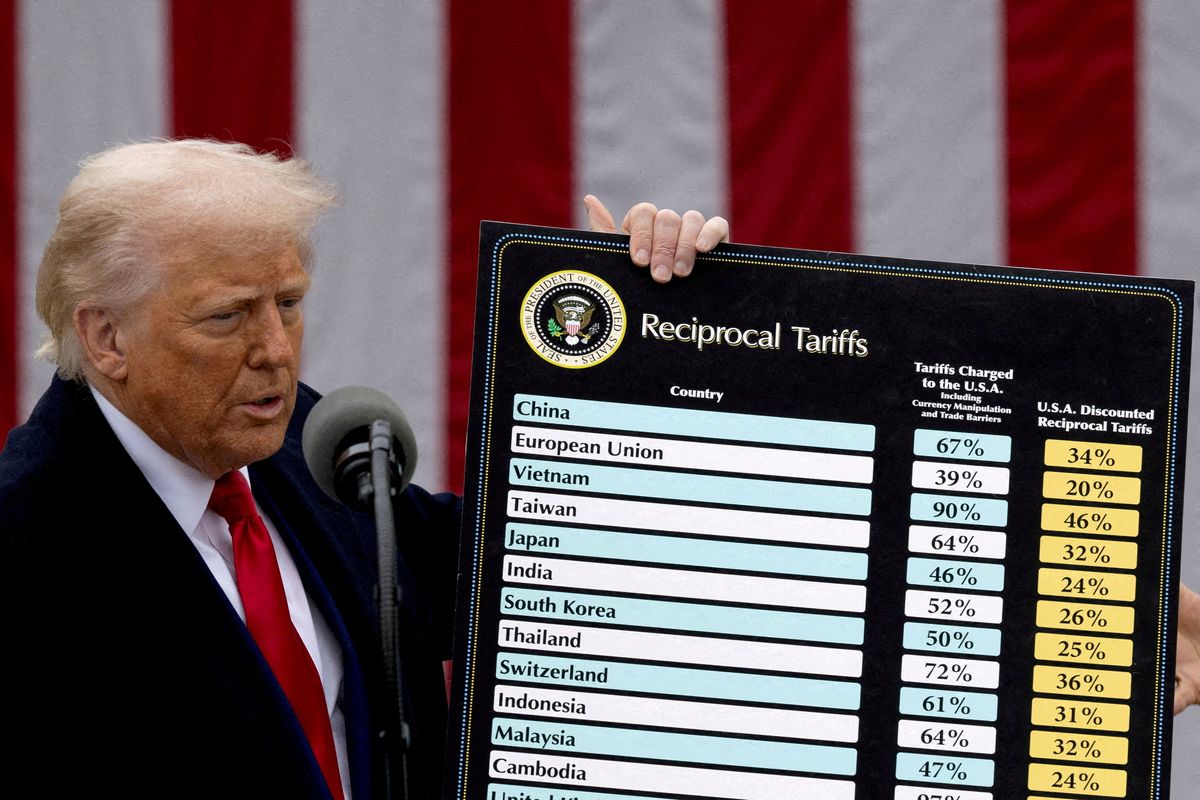
FILE PHOTO: U.S. President Donald Trump delivers remarks on tariffs in the Rose Garden at the White House in Washington, D.C., U.S., April 2, 2025. REUTERS/Carlos Barria/File Photo

CNN contributor and New York Times podcast host Lulu Garcia-Navarro warned on Tuesday that President Donald Trump is taking a "double-edged" sword to the economy, as evidenced by the latest job numbers.

The Department of Labor published data on Tuesday that revised the previous quarter's job numbers downward by 900,000, which was the largest downward revision in the agency's history. The revision came about a month after Trump removed the Bureau of Labor Statistics commissioner because the agency published what he described as unreliable data.

Garcia-Navarro said the data BLS published shows there are "real problems" surfacing in Trump's economy.

"To me, what's most interesting about these numbers is manufacturing," Garcia-Navarro said. "There are some real problems in manufacturing."

Trump has made it a goal of his second administration to re-establish America's manufacturing base. To that end, he has implemented numerous tariffs that seek to protect American manufacturers from foreign competition.

"This whole idea that somehow manufacturing is going to be resurgent, I think, is showing a lot of weakness," Garcia-Navarro said.

The data also adds to the growing skepticism about the state of the U.S. economy. Trump has repeatedly said the U.S. economy is in good health, although some experts like J.P. Morgan CEO Jamie Dimon have their doubts.

“I think the economy is weakening,” Dimon told CNBC on Tuesday. “Whether it’s on the way to recession or just weakening, I don’t know.”

Garcia-Navarro said part of the economic weakness is being driven by decreased federal spending.

"You're seeing a double-edged sword here, where they are actually limiting the economy in two different ways that are showing," she added. "I think the word recession is a word that we haven't seen in a while, but we might be due for it."


Polling Shows 'American Families Are Trapped in a Cycle of Debt'

"As Americans plead for their government to help with soaring costs," one expert said, "Trump is not just ignoring their struggles, he's actively making them worse with reckless policies that drive up prices on essentials."


A customer prepares to check out at a grocery store on January 15, 2025 in Chicago, Illinois.
(Photo by Scott Olson/Getty Images)


Jessica Corbett
Sep 09, 2025
COMMON DREAMS


Yet another poll exposes the pain that working-class Americans are enduring thanks to US President Donald Trump's policies, the economic justice advocates behind the new survey said Tuesday.

Polling released in recent months has highlighted how most Americans don't believe that merely working hard is enough to get ahead, a majority blames Trump for the country's economic woes, and large shares are concerned about the price of groceries, housing, and unexpected medical expenses.

The new survey—conducted by Data for Progress less than two weeks ago for Groundwork Collaborative and Protect Borrowers—shows that "American families are trapped in a cycle of debt," the groups said.

Specifically, the Data for Progress found that 55% of likely voters have at least some credit card debt, and another 18% said that they "had this type of debt in the past, but not anymore." Additionally, over half have or previously had car loan or medical debt, more than 40% have or had student debt, and over 35% are or used to be behind on utility payments.

More than two-thirds of respondents said that the federal government's resumption of student loan collections had an impact on their family's finances, and almost a quarter said they would need a one-time infusion of cash, "such as from inheritance, lottery, government assistance, etc.," to be able to pay off all of their debt.

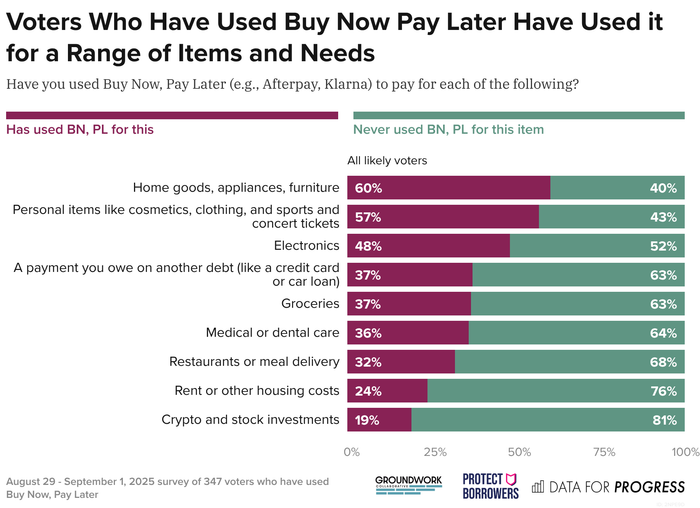
The pollsters also found nearly 30% have or had "buy now, pay later" debt. Nearly 1-in-3 said they had taken out this type of loan—through options such as Afterpay or Klarna—in the past year to pay for basic needs and monthly expenses.


"Today's poll reveals a troubling rise in families relying on buy now, pay later loans just to stay afloat, trapping hardworking Americans in a cycle of debt that some fear will take years to climb out of," said Groundwork's executive director, Lindsay Owens. "As Americans plead for their government to help with soaring costs, President Trump is not just ignoring their struggles, he's actively making them worse with reckless policies that drive up prices on essentials like food and energy."

Trump's legally dubious tariffs—which are headed to the US Supreme Court after another legal loss last month—have negatively impacted Americans' wallets by elevating the costs of basics while also failing to deliver on his campaign promise to turn the United States back into a "manufacturing powerhouse."

"Today's poll exposes a startling new reality in Donald Trump's economy: As prices climb and money gets tight, Americans are going into debt to buy groceries, make rent, get healthcare, and even make payments on other debt," said Protect Borrowers executive director Mike Pierce. "Driving families into debt is a policy choice—voters across party lines are demanding lawmakers act now to deliver debt relief and help working families make ends meet."

The GOP controls both chambers of Congress and the White House. This summer, Republicans on Capitol Hill passed and Trump signed their so-called One Big Beautiful Bill Act, which is expected to further imperil working-class families by kicking millions of people off their healthcare and federal food assistance to give more tax cuts to the ultrarich.

To combat that agenda, "fight for families in debt, and hold corporations and corrupt politicians accountable," Protect Borrowers officially relaunched on Tuesday, rebranding from the Student Borrower Protection Center, which focused on educational debt.


"As the Trump administration turns its back on working-class families," said Pierce, "Protect Borrowers will fight back—exposing the greedy financial companies cutting backroom deals with regulators, taking corrupt government officials and corporations to court, and advancing new laws to hold the system accountable to working people."

Protect Borrowers announced 17 new members of its advisory board, including people who previously served in the Consumer Financial Protection Bureau (CFPB), Federal Trade Commission, National Labor Relations Board, and White House.

The group is also backed by US Sen. Elizabeth Warren (D-Mass.), a bankruptcy expert and the mastermind behind the CFPB.

"With wages flat and costs skyrocketing, families are drowning in debt—mortgages, credit cards, student loans, buy now, pay later, you name it," Warren said in a statement to Politico. "Protect Borrowers is exposing how rigged our economy is, and how the Trump administration is making it worse. I'm glad to stand with them in this fight."

U.S. Container Imports Are Projecte to Decline for the Remainder of 2025


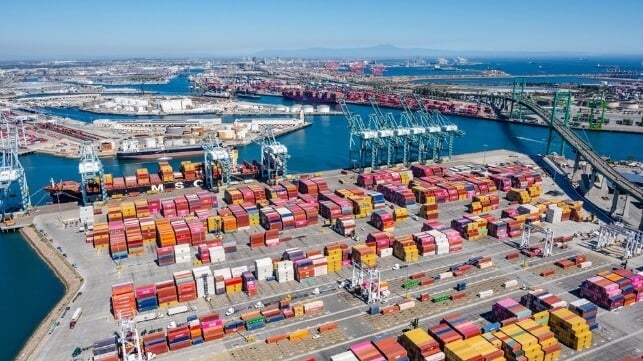
container in port yard Port of Los Angeles
Forecasts expect container volumes to start a steady decline through the last months of 2025 and into 2026 (Port of Los Angeles)

Published Sep 9, 2025 7:35 PM by The Maritime Executive


The start of the U.S.’s reciprocal tariffs and the continued uncertainty over longer-term trade policies have begun to weigh on imports, report both the National Retail Federation and Descartes Systems Group, a software provider for logistics-intensive industries. The latest monthly forecasts highlight a peak in July with a steady decline forecasted for monthly import volumes in the remainder of 2025. 

“Retailers have stocked up as much as they can ahead of tariff increases, but the uncertainty of U.S. trade policy is making it impossible to make the long-term plans that are critical to future business success,” explains Jonathan Gold, the NRF’s Vice President for Supply Chain and Customs Policy. “These tariffs and disruptions to the supply chain are adding costs that will ultimately lead to higher prices for American consumers.”

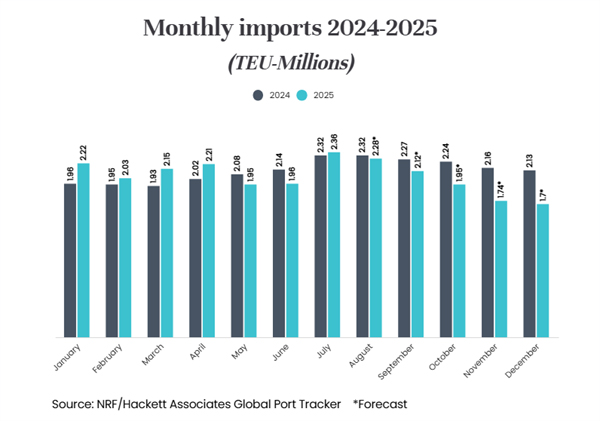
The NRF, in its monthly Global Port Tracker, reports August volumes were likely down about 1.7 percent from a year ago and at a projected final total of 2.28 million TEU, off nearly 3.4 percent from the 2.38 million TEU in July. They note that July was up 20 percent over June, making it the second-busiest month on record as retailers brought merchandise in ahead of the August start of reciprocal tariffs and a looming deadline for tariffs on China.

Total container imports at U.S. seaports measured by Descartes were at 2.52 million TEU in August, which it says was up 1.6 percent year-over-year. However, it points to a nearly 4 percent year-over-year decline, highlighting the impact of “fast-shifting trade policy.”

The biggest year-over-year drops came in aluminum, apparel, and footwear, reports Descartes. It notes that furniture, toys, and electrical machinery imports also fell in August. It warns that “policy remains the wildcard.”


Imports are uncertain after Trump doubled the tariffs on India to a total of 50 percent at the end of August. Further, while the deadline for a trade deal with China was pushed back a further 90 days to November 10, it looms over imports.

With the delay coming as retailers head into the busiest season of the year, the NRF actually raised its forecast slightly from last month. The forecast for September calls for the strongest increase, with NRF forecasting 2.12 million TEU, up from its prior forecast of 1.83 million TEU. However, it sees an accelerating month decline as imports move into the fourth quarter of 2025. It expects volumes will level off at just over 1.7 million TEU per month in November and December.

For the full year, the NRF forecasts imports of 24.7 million TEU, which would be down 3.4 percent from 2024. It, however, will still be the fourth-highest year on record, following the peaks during the pandemic and in 2024.

The retailers also released their first forecast for 2026, projecting that January will be at 1.8 million TEU. They expect the new year to start at a level 19 percent below January 2025.


Trump's bid to oust Fed official hits major snag with new court order

Daniel Hampton
September 9, 2025 
RAW STORY


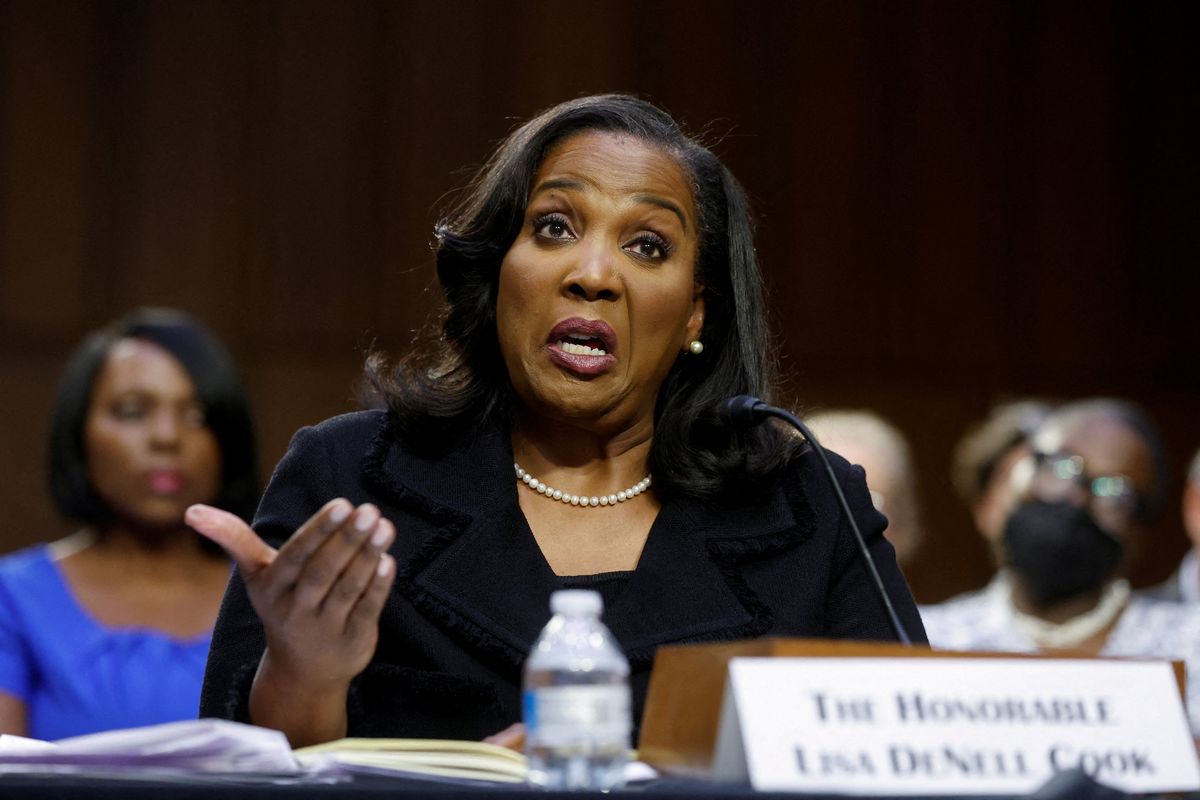
FILE PHOTO: Lisa Cook testifies before a Senate Banking Committee hearing on her nomination to be a member of the Federal Reserve Board of Governors (for a second term), on Capitol Hill in Washington, U.S., June 21, 2023. REUTERS/Jonathan Ernst/File Photo

President Donald Trump's unprecedented firing of Federal Reserve Governor Lisa Cook just hit a snag, as a judge temporarily blocked her ouster.

Last month, Trump tried to fire Cook, citing allegations of mortgage fraud as the reason for her dismissal. Cook and her attorney immediately contested the legality of the move, insisting Trump didn't have the power to oust a Fed governor except “for cause.”

On Tuesday night, U.S. District Judge Jia Cobb dealt Trump a temporary blow in the case, finding that the Federal Reserve Act only allows a president to remove a Fed governor "for cause." Cobb noted this was the first such attempt to do so in the Fed's 111-year history.

The court ruled that Cook made a "strong showing" that her removal was done in "violation" of the "for cause" provision.

"The best reading of the 'for cause' provision is that the bases for removal of a member of the Board of Governors are limited to grounds concerning a Governor's behavior in office and whether they have been faithfully and effectively executing their statutory duties," wrote Cobb. "'For cause' thus does not contemplate removing an individual purely for conduct that occurred before they began in office."

Cobb said the removal likely violated Cook's rights to due process as well, and said she demonstrated "irreparable harm."

"Finally, the public interest and the balance of the equities also favor Cook," the judge concluded.


Judges split in key lawsuit challenging Trump's mass federal layoffs


Matthew Chapman
September 9, 2025 
RAW STORY

A federal appeals court issued a divided decision on Tuesday, instructing a lower-court judge in Maryland to throw out a lawsuit brought by Democratic state attorneys general against the Trump administration for mass layoffs of federal employees.

According to The Washington Post, the three judge panel for the Court of Appeals for the Fourth Circuit "had been asked by the federal government to weigh the appropriateness of a preliminary injunction issued in April by U.S. District Judge James K. Bredar that instructed the Trump administration to rehire the fired probationary workers and proceed with their terminations only if they are done legally — including abiding by a federal procedure that requires states affected by mass layoffs to receive a 60-day warning, which the Trump administration did not initially give."

In the 2-1 ruling decided by a Reagan-appointed and Trump-appointed judge, respectively, the court found the attorneys general lack the standing to bring the lawsuit.

“We acknowledge that the abrupt and indiscriminate dismissal of the probationary employees here exacted all-too-human costs upon those affected,” wrote Judge Harvie Wilkinson. “But this real impact on the employees, who are not parties here, cannot govern our review.”

The ruling instructs Bredar to dismiss the case outright, unless the states appeal the case further. Per the report, "It’s unclear what impact the ruling would have on the administration’s efforts to fully carry out its plan to downsize the federal government by eliminating thousands of jobs."

This is not the only case challenging Trump's ability to ignore the 60-day notice requirement for mass layoffs; another lawsuit over this is still being litigated in California.

Chief Justice John Roberts unilaterally halts aid in Trump’s emergency Supreme Court fight


Sarah K. Burris
September 9, 2025
RAW STORY

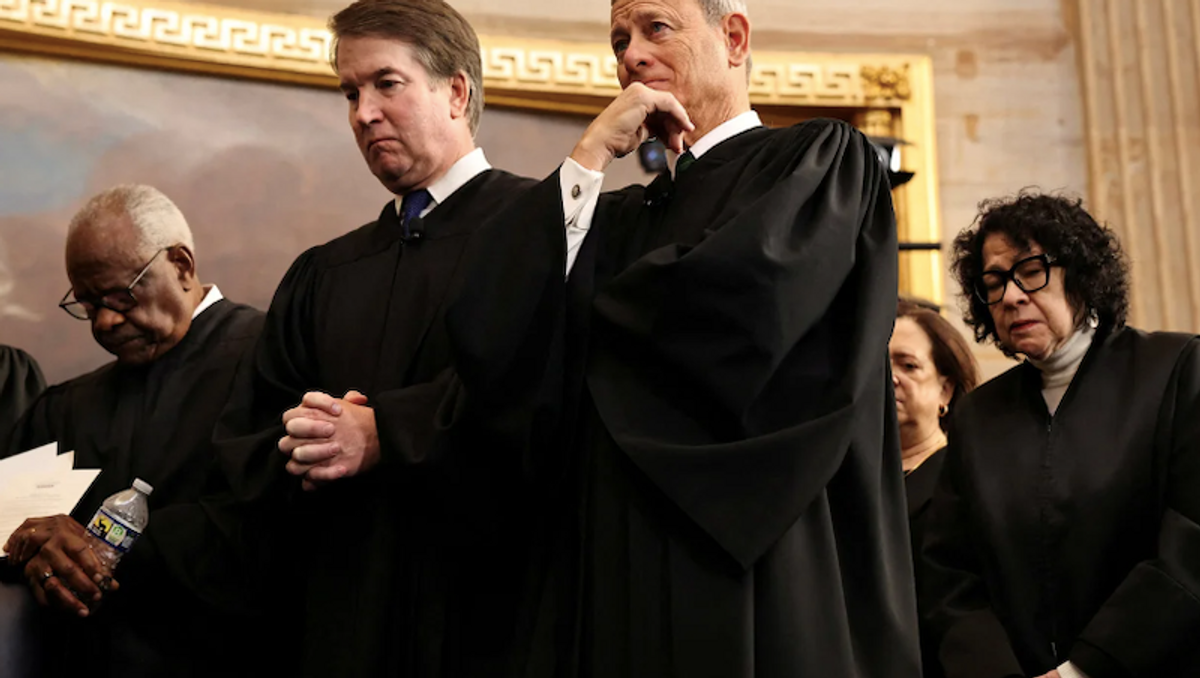
FILE PHOTO: WASHINGTON, DC - JANUARY 20: (L-R) U.S. Associate Supreme Court Justices Clarence Thomas and Brett Kavanaugh, U.S. Supreme Court Chief Justice John Roberts and U.S. Supreme Court Associate Justice Sonia Sotomayor bow their heads during inauguration ceremonies in the Rotunda of the U.S. Capitol on January 20, 2025 in Washington, DC. Chip Somodevilla/Pool via REUTERS/File Photo

Billions in foreign aid will be frozen again after Chief Justice John Roberts intervened to stop a lower-court decision to continue the funding until the case is fully adjudicated.

President Donald Trump begged the court in an emergency to stop a ruling from last week by Judge Amir Ali, who said only Congress could decide whether to withhold funding that had already been allocated to them, The Associated Press reported Tuesday.

“This case raises questions of immense legal and practical importance, including whether there is any avenue to test the executive branch’s decision not to spend congressionally appropriated funds,” Ali wrote.

Last month, the U.S. Court of Appeals for the District of Columbia Circuit threw out Ali's injunction, but it didn't weigh in on the lawsuit as a whole.

The nearly $5 billion in aid goes to help stop famine, the spread of HIV-AIDS, refugees, health and education for women and girls, and efforts to combat illicit drugs, the Better World Campaign described on its website.