Saturday, October 18, 2025

Military aid for Ukraine falls despite new Nato PURL initiative – Statista
Military aid for Ukraine falls despite new Nato PURL initiative – Statista
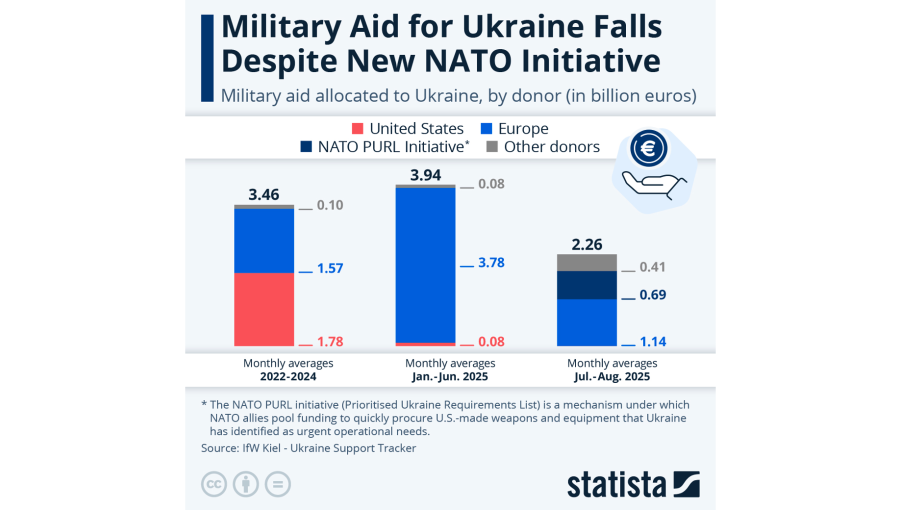
Despite the inauguration of the PURL (Prioritized Ukraine Requirements List) initiative, weapon deliveries to Ukraine fell sharply in recently months and those from the US have fallen to zero. Despite the inauguration of PURL (Prioritized Ukraine Requirements List) initiative, weapon deliverie / bne IntelliNews
By Felix Richter of Statistia October 16, 2025

As European policy makers and defence industry leaders came together on October 13 to discuss current and upcoming challenges at the fifth European Defence & Security Conference in Brussels, the Kiel Institute for the World Economy published the latest update of its Ukraine Support Tracker, Statista reports.

The researchers, who have been tracking aid to Ukraine since Russia’s invasion in February 2022, found that military aid to Ukraine dropped sharply in July and August compared to previous months, despite the implementation of the Nato PURL (Prioritized Ukraine Requirements List) initiative.

The program, devised by Nato Secretary General Mark Rutte and US President Donald Trump in July, enables Nato allies to fund the acquisition of “ready-to-use” weapons from US stockpiles for Ukraine, potentially fast-tracking the supply of urgently needed military equipment to the country. By August, eight Nato countries, namely Belgium, Canada, Denmark, Germany, Latvia, the Netherlands and Sweden had made use of the new mechanism, providing a total of €1.9bn in funding. And yet, total military aid to Ukraine declined significantly in July and August, falling 43% compared to the monthly average in the first six months of 2025.

In the first half of 2025, Europe had ramped up its contributions significantly to make up for the suspension of US military aid. This momentum didn’t carry into July and August, however, when European aid fell more than 50%, even when accounting for Europe’s contributions to the Nato PURL program. “The decline in military aid in July and August is surprising,” Christoph Trebesch, head of the Ukraine Support Tracker and Research Director at the Kiel Institute, said in a statement. “The overall level of financial and humanitarian support has remained comparatively stable – even in the absence of US contributions,” Trebesch noted. “It is now crucial that this stability extends to military support as well, as Ukraine relies on it to sustain its defence efforts on the ground.”
No Tomahawks for Ukraine, Trump to meet Putin in Hungary

No Tomahawks for Ukraine, Trump to meet Putin in Hungary
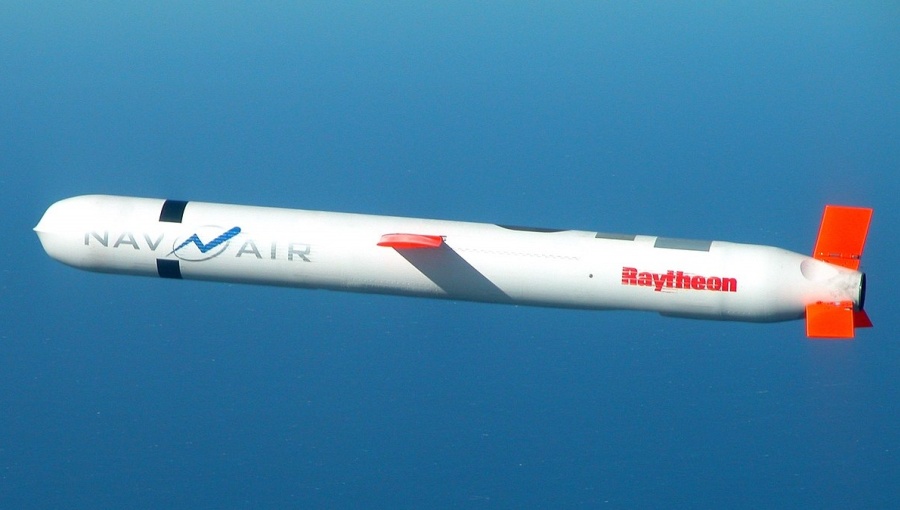
In a blow to Kyiv's hopes for help, US president Trump killed off talk of sending the powerful long-range Tomahawk missiles to Ukraine, saying that the US needs them for itself. / bne IntelliNews
By Ben Aris in Berlin October 17, 2025

The US cannot deplete its own stockpile of Tomahawk cruise missiles by supplying them to Ukraine, President Donald Trump said at a press conference on October 16 following a phone conversation with Russian President Vladimir Putin.

"We need Tomahawks for the US too. We have a lot of them, but we need them," he said, reports TASS.

"I mean, we can't deplete our country. So, you know, they're very vital, they're very powerful, they're very accurate, they're very good, but we need them too, so I don't know what we can do about that," Trump added.

He also confirmed that he would meet with Putin in Budapest next week for a second face-to-face meeting.

The remarks come amid renewed pressure from Ukrainian President Volodymyr Zelenskiy for Washington to authorise the transfer of Tomahawk missiles and boost deliveries of air defence munitions including Patriot air defence systems. Trump, however, indicated that any such decision would require further consultation with Moscow.

“I did actually say, “Would you mind if I gave a couple of 1,000 Tomahawks to your opposition?” I did say that to him. I said it just that way,” Trump said sarcastically when asked whether Putin had objected to the potential transfer. “What do you think he's going to say? “Please sell Tomahawks”?”

Trump described the missiles as “a vicious, offensive, incredibly destructive weapon,” adding: “Nobody wants Tomahawk shot at him.”

Putin, for his part, has warned that the deployment of Tomahawks in Ukraine would mark a dangerous escalation.

“They cannot be used without the direct involvement of US military personnel,” he said, according to TASS, cautioning that such a move would represent “a qualitatively new phase of escalation, including in relations between Russia and the United States.”

The Kremlin has gone further, stating that any launch of a Tomahawk missile toward Russian territory would be treated as a potential nuclear first strike, given that the cruise missiles are capable of carrying nuclear warheads and it would be “impossible to determine” the payload in flight. Kremlin spokesman Dmitry Peskov said Russia would respond “accordingly” if such missiles were supplied to Ukraine.

Trump also signalled a pause in the imposition of new sanctions on Russia at the press conference. Although legislation to target Russian energy exports and other key sectors has been drafted and awaits Senate approval, the president indicated it would not move forward in the immediate term.

"I'm not against anything. I'm just saying, it may not be perfect timing," Trump said.

Despite repeatedly stating he would increase pressure on the Kremlin, Trump has yet to authorise any new sanctions in Russia since taking office. At the same time the US has sent no money and the delivery of US weapons to Ukraine has fallen to nothing in the last few months.

Ukraine shifts tactics amid aid uncertainty

Over the last months Ukraine has changed tactics and has been targeting Russian refineries, reducing production by between 10%-30% according to analyst estimates and causing a fuel crisis in Russia.

Ukraine has been using its improved long-range drones and has developed its own Flamingo cruise missile but is desperate for more and more powerful missiles to increase the damage.

“In fact, our strikes have had a greater impact than the sanctions. That's just mathematical truth,” said Kyrylo Budanov, head of Ukraine’s Defence Intelligence, speaking at the Kyiv International Economic Forum on October 16.

“We have inflicted far more direct damage to the Russian Federation's profits than any economic measures imposed so far.” Budanov said Ukraine’s long-range capabilities now rely almost entirely on domestic production, adding: “Of course, we always want more, but it exists. It's our domestic production that has allowed us to use our forces and means in the way we see fit.”

The fall in oil revenues has already impacted the Russian budget and sent the budget deficit soaring, but as bne IntelliNews reported, Ukraine’s budget is in equal trouble as Europe scrambles to find some $65bn to finance Ukraine’s war through to 2026.

However, Budanov warned that without further sanctions or external pressure, Moscow can sustain its war effort “for quite a long time.”

Trump and Putin plan talks in Hungary

Trump also announced plans to meet Vladimir Putin in Budapest, Hungary, to discuss efforts to end the war in Ukraine, a second meeting following the Alaska summit on August 15.

“At the conclusion of the call, we agreed that there will be a meeting of our High Level Advisors, next week,” Trump posted on Truth Social. “A meeting location is to be determined. President Putin and I will then meet in an agreed upon location, Budapest, Hungary, to see if we can bring this “inglorious” war, between Russia and Ukraine, to an end.” Trump said that Secretary of State Marco Rubio would lead the initial US delegation.

Hungary, a Nato member led by Prime Minister Viktor Orbán, has drawn criticism from EU allies for its stance on Russia and democratic backsliding. Orbán is seen as a key ally of Trump and a possible host for the proposed summit.

Both the Kremlin and the Trump administration have admitted that the two presidents discussed more than just the war in Ukraine during their meeting in Anchorage. bne IntelliNews sources in Washington say that various business deals are on the table and Trump has made it clear from the start that he is interested in doing business with Russia.

The details of the various deals remains unclear, but is known to include allowing ExxonMobil back into the Sakhalin-1 oil project and the joint exploration and exploitation of various critical minerals and rare earth metals (REMs) deposits. The possibility of lifting some aviation sanctions was also discussed that would allow Boeing to restart the sale of parts for the Russian fleet to resume in return for giving the US access to Russia’s virtual monopoly over titanium production – an essential input for plane-makers.

Indeed, as bne IntelliNews reported, Trump’s entire foreign policy is driven by a minerals diplomacy  where he has attempted to tie access to minerals to almost all the peace deals he has cut in the last nine months in an attempt to break China’s monopoly over the sector. In this drive, Russia is the big prize as it is home to a cornucopia of raw materials, second only to those found in China.

Trump confirmed that he would also meet President Zelenskiy at the White House on October 17. “President Zelenskiy and I will be meeting tomorrow, in the Oval Office, where we will discuss my conversation with President Putin, and much more,” he said. “I believe great progress was made with today’s telephone conversation.”

Trump downplays hopes he will supply Ukraine with Tomahawks in talks with Zelensky

US President Donald Trump said Friday it was likely too soon to send Tomahawk missiles to Ukraine, suggesting the war with Russia could end without them, as he met President Volodymyr Zelensky at the White House a day after agreeing to a new summit with Vladimir Putin.


Issued on: 17/10/2025
By:
FRANCE 24
Video by:
Monte FRANCIS
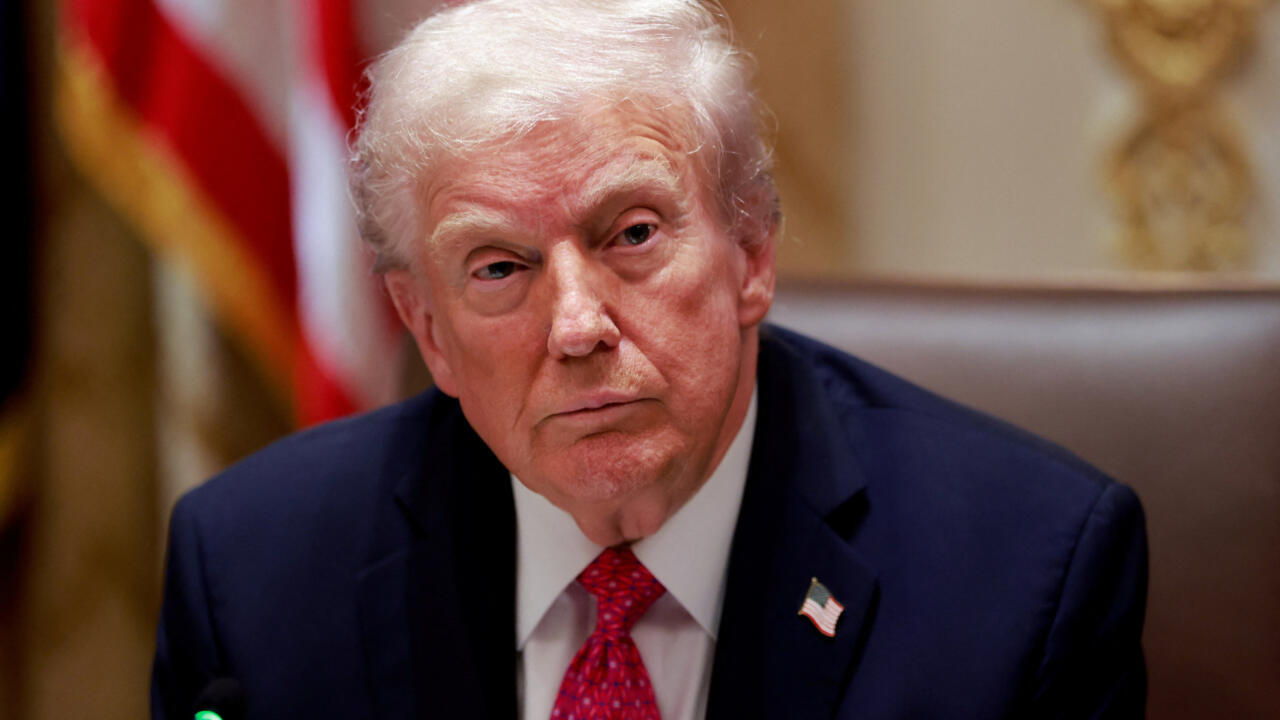


US President Donald Trump meets with Ukraine's President Volodymyr Zelenskiy (not pictured) over lunch in the Cabinet Room at the White House in Washington, DC, US, October 17, 2025. © Jonathan Ernst, Reuters
01:44


US President Donald Trump suggested Friday it would be premature to give Tomahawk missiles to Ukraine, saying as he hosted Volodymyr Zelensky that the war with Russia could probably be ended without them.

Zelensky, who came to the White House to push for the long-range US-made weapons, said however that he would be ready to swap "thousands" of Ukrainian drones in exchange for Tomahawks.

The US president's reluctant stance came a day after he and Russian President Vladimir Putin agreed in a call to hold a new summit in the Hungarian capital Budapest.


"Hopefully we'll be able to get the war over with without thinking about Tomahawks," Trump told journalists including an AFP reporter as the two leaders met at the White House.

Supplying Ukraine with the powerful missiles despite Putin's warnings against doing so "could mean big escalation. It could mean a lot of bad things can happen."

Trump added that he believed Putin, whom he met in Alaska in August in a summit that failed to produce a breakthrough, "wants to end the war".

Tomahawks for Ukraine: Game changing weapon or leverage over Moscow?
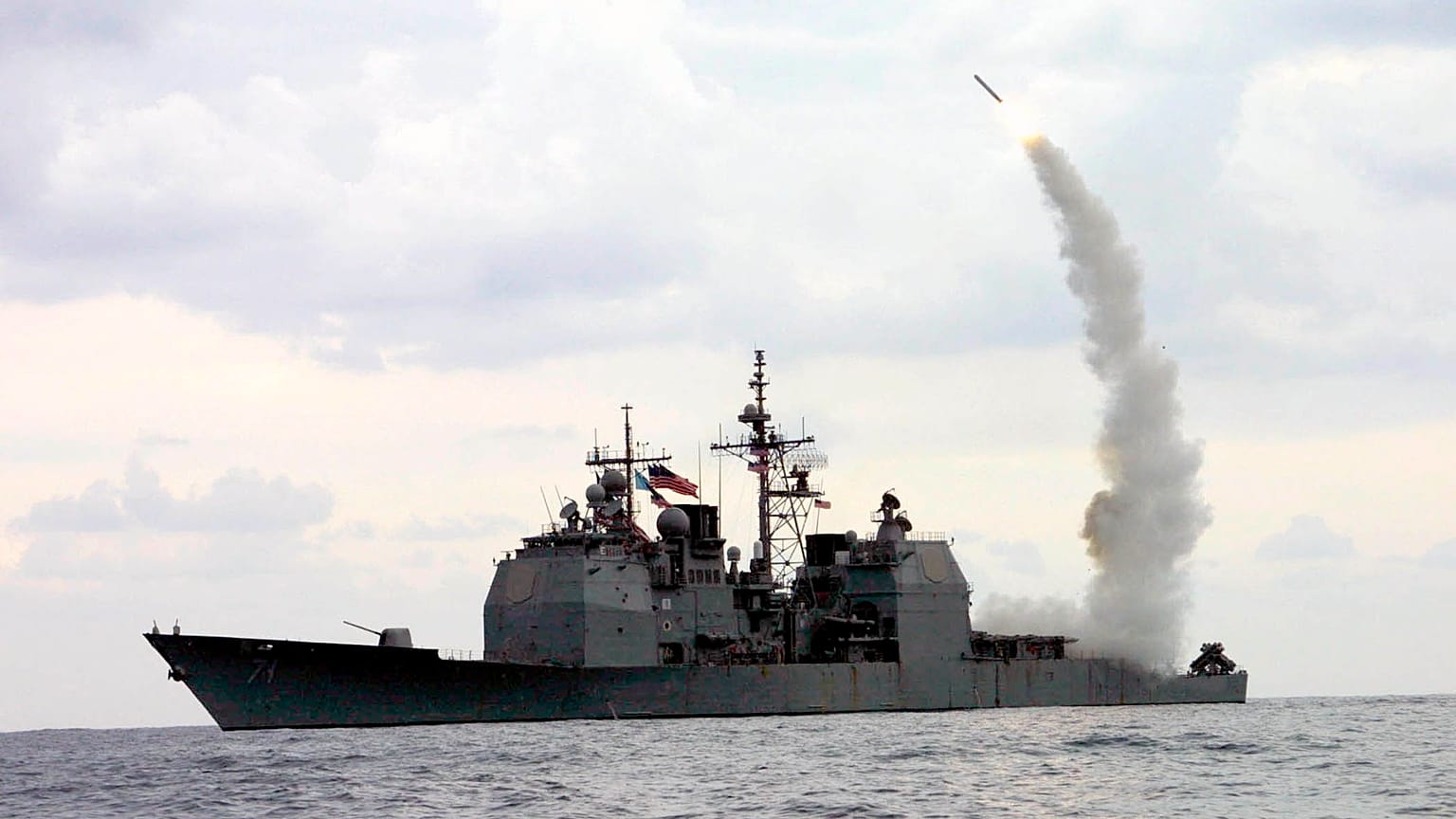
FILE - A Tomahawk Land Attack Missile (TLAM) launches from the guided missile cruiser USS Cape St. George (CG 71), in operation in the Mediterranean Sea, on March 23, 2003
Copyright Kenneth Moll/Copyright 2003 The AP. All rights reserved.

By Sasha Vakulina
Published on 

Fresh off the Gaza ceasefire deal, Donald Trump is about to meet with Volodymyr Zelenskyy to discuss the possibility of selling Tomahawk missiles to Ukraine. Both Washington and Kyiv believe it may bring Vladimir Putin to the negotiating table.

Russia has again ramped up its attacks on Ukraine’s energy grid as the weather became noticeably colder, just as Moscow did every autumn since its full-scale invasion in February 2022.

Although Ukraine’s air defence has improved significantly and is now capable of intercepting most of the deadly drones Russia launches daily in droves, Kyiv is hoping for something beyond the additional support it requested from partners.

Ukraine has asked for something strategically crucial to its goals: long-range missiles to strike Russia’s launching pads instead of remaining limited to intercepting hundreds of drones and tens of missiles once they already reach Ukrainian skies.

Fresh off the Gaza ceasefire deal, US President Donald Trump suggested on Tuesday that he might allow the sale of Tomahawk missiles to Ukraine. They would give Kyiv the ability to hit deeper into Russia’s rear and make those strikes more powerful and precise.
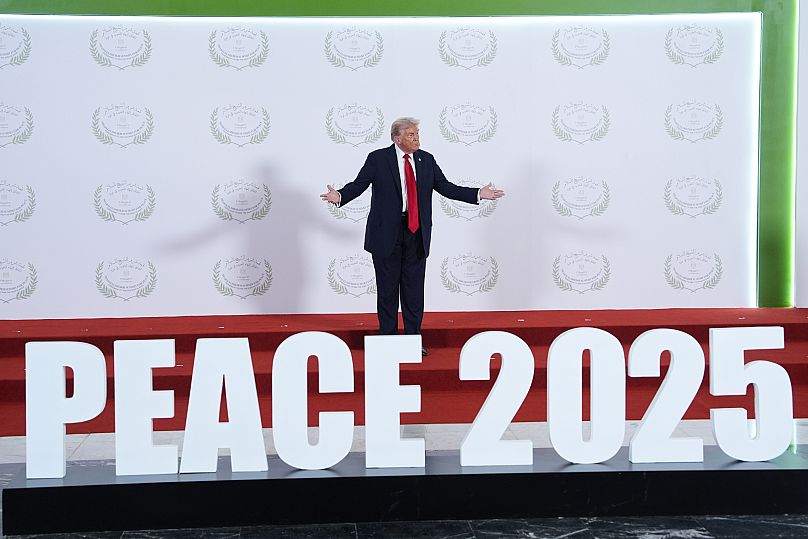

Donald Trump waits to greet leaders Israel-Hamas ceasefire in Gaza, Oct. 13, 2025, in Sharm El Sheikh, Egypt. AP Photo

A key part of the US arsenal, Tomahawk missiles have an operational range of 1,600 to 2,500 kilometres and a powerful warhead weighing 400 to 450 kilograms. For the moment, Ukraine relies on Western-supplied missiles, such as Storm Shadow, which have a limited range of about 250 kilometres.

For anything beyond this, Kyiv is utilising its domestically produced drones and drone-like missiles, such as the Palianytsia, but their warhead payload is restricted to 50-100 kilograms.

As Trump and his Ukrainian counterpart Volodymyr Zelenskyy prepare to meet in Washington on Friday, the issue of Tomahawks is high on the agenda, if not at the top.

“He would like to have Tomahawks,” Trump said of Zelenskyy. “We have a lot of Tomahawks.”

Euronews sources among Ukrainian officials said Kyiv is doing its best to outline to Washington why it needs Tomahawk missiles, what long-range weapons the country already has, and what Ukraine is lacking, and that this will be discussed at the White House on Friday.
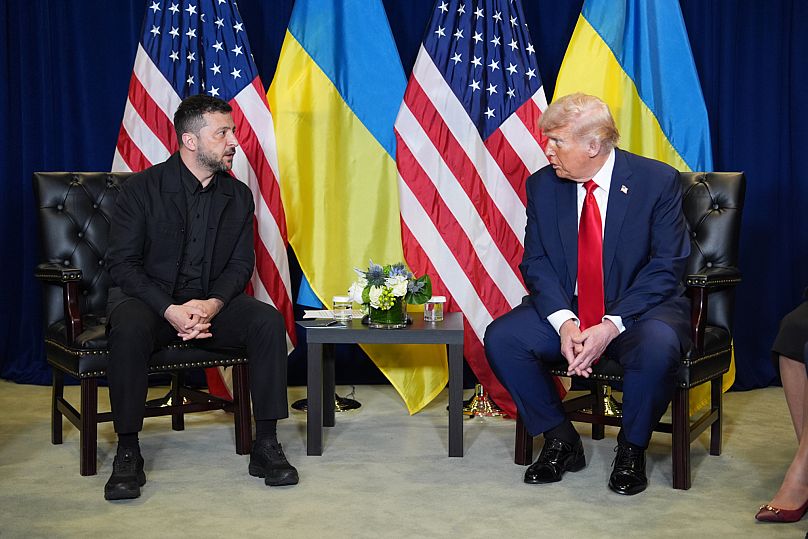
President Donald Trump meets with Ukrainian President Volodymyr Zelenskyy during the United Nations General Assembly, Tuesday, Sept. 23, 2025, in New York. AP Photo

'Their tech is saving lives'

The Ukrainian delegation is already in the US ahead of the Trump-Zelenskyy meeting.

Head of Zelenskyy’s office, Andriy Yermak, together with the Prime Minister, Yulia Svyrydenko, and other Ukrainian officials, has met the US defence companies Lockheed Martin and Raytheon.

Raytheon is the producer of Tomahawk missiles.

“Their tech is saving lives: F-16s and advanced air defence systems are shielding Ukrainian skies”, Yermak said in a post on X. "Their offensive solutions strongly support our forces on the frontline,” he added.

Without mentioning Tomahawk missiles, Yermak said this cooperation with Ukraine keeps growing.

“Each downed Russian missile or destroyed enemy command post proves the quality of US weapons and the professionalism of our troops,” he explained.

The US-based Institute for the Study of War think tank (ISW) has assessed that there are at least 1,945 Russian military facilities within range of the 2,500-kilometre variant Tomahawk and at least 1,655 within range of the 1,600-kilometre variant.

“Ukraine likely can significantly degrade Russia’s frontline battlefield performance by targeting a vulnerable subset of rear support areas that sustain and support Russia’s frontline operations,” the ISW analysis said.

Trump’s leverage over Moscow

The possibility of Ukraine getting Tomahawk missiles triggered worry and sabre-rattling from Moscow.

The Kremlin said it is causing “extreme concern” in Russia, adding that the war is entering what spokeseperson Dmitry Peskov called a “dramatic moment in terms of the fact that tensions are escalating from all sides.”

Former Russian President Dmitry Medvedev threatened the US and Trump personally with a nuclear response.

“It’s been said a hundred times, in a manner understandable even to the star-spangled man, that it’s impossible to distinguish a nuclear Tomahawk missile from a conventional one in flight," Medvedev said.

“The delivery of these missiles could end badly for everyone. And most of all, for Trump himself.”

But for Trump, there is one more critical aspect regarding the possibility of sending Tomahawk missiles to Ukraine.

Euronews sources among Ukrainian officials confirmed that Kyiv's argument to convince the White House to send Tomahawk missiles is that they remain game changers and among the most important levers of influence on Russian President Vladimir Putin.

The US president suggested over the past several days that the mere threat of this could force Putin to the negotiating table. Trump also said he planned to talk directly with the Russian president about the subject.

“If this war doesn’t get settled, I may send Tomahawks,” Trump said.

“A Tomahawk is an incredible weapon. And Russia does not need that. If the war is not settled, we may do it. We may not. But we may do it.”

Drones for Tomahawks?

Zelensky congratulated Trump on his recent Middle East peace deal in Gaza and said he hoped he would do the same for Ukraine. "I hope that President Trump can manage it," he said.

Ukraine has been lobbying Washington for Tomahawks for weeks, arguing that the missiles could help put pressure on Russia to end its brutal three-and-a-half year invasion.

Zelensky, meeting Trump in Washington for the third time since the US president's return to power, suggested that "the United States has Tomahawks and other missiles, very strong missiles, but they can have our 1,000s of drones."

Kyiv has made extensive use of drones since Russia invaded in February 2022.

On the eve of Zelensky's visit, Putin warned Trump in their call against delivering the weapons, saying it could escalate the war and jeopardise peace talks.

Trump said the United States had to be careful to not "deplete" its own supplies of Tomahawks, which have a range of over 1,600 kilometres (1,000 miles).

Diplomatic talks on ending Russia's invasion have stalled since the Alaska summit.

The Kremlin said Friday that "many questions" needed resolving before Putin and Trump could meet, including who would be on each negotiating team.

But it brushed off suggestions Putin would have difficulty flying over European airspace.

Hungary said it would ensure Putin could enter and "hold successful talks" with the US despite an International Criminal Court (ICC) arrest warrant against him for alleged war crimes.
Trump frustrations

Since the start of his second term, Trump's position on the Ukraine war has shifted dramatically back and forth.

Initially Trump and Putin reached out to each other as the US leader derided Zelensky as a "dictator without elections".

Tensions came to a head in February, when Trump accused his Ukrainian counterpart of "not having the cards" in a rancorous televised meeting at the Oval Office.

Relations between the two have since warmed as Trump has expressed growing frustration with Putin.

But Trump has kept a channel of dialogue open with Putin, saying that they "get along".

The US leader has repeatedly changed his position on sanctions and other steps against Russia following calls with the Russian president.

Putin ordered a full-scale invasion of Ukraine in February 2022, describing it as a "special military operation" to demilitarise the country and prevent the expansion of NATO.

Kyiv and its European allies say the war is an illegal land grab that has resulted in tens of thousands of civilian and military casualties and widespread destruction.

Russia now occupies around a fifth of Ukrainian territory – much of it ravaged by fighting. On Friday the Russian defence ministry announced it had captured three villages in Ukraine's Dnipropetrovsk and Kharkiv regions.

(FRANCE 24 with AFP)


American Missiles And Russian Dachas: Tomahawk And The Future Of Stability And Deterrence In Europe – Analysis
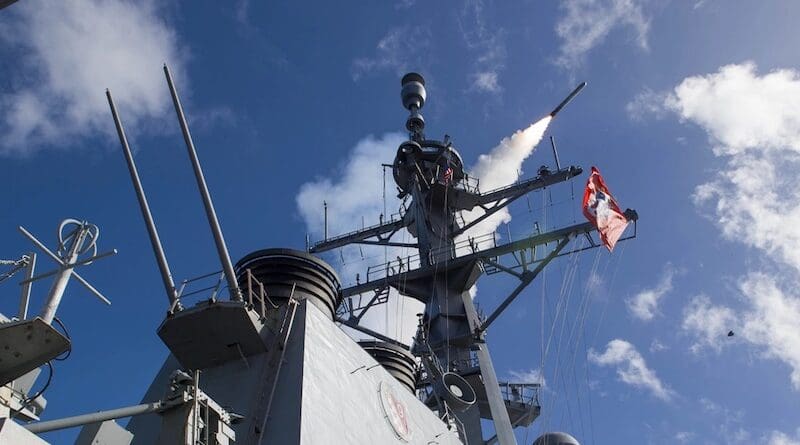

A tomahawk cruise missile launches from the Arleigh Burke-class guided-missile destroyer USS Shoup. 

(U.S. Navy photo by Mass Communication Specialist 2nd Class William Collins III) 

October 18, 2025 
Published by the Foreign Policy Research Institute
By Aaron Stein and Sam Lair


(FPRI) — The Tomahawk cruise missile is a near perfect machine. Its development followed advances in guidance and turbofan engine technology in the 1970s. It has been tested for decades. And it has been upgraded and augmented for the same amount of time. The missile’s accuracy has always been a source of concern in Moscow, where its deployment in Europe in a ground-launched variant in the 1980s helped spur agreement on the elimination of this class of weapons, only for the erosion of arms control to once again be deployed within ground launch range of Russian targets.

A former Soviet Premier put it best in the days before the Cuban Missile Crisis. In response to the deployment of Jupiter missiles in Turkey, Nikita Khrushchev complained on a trip to the Black Sea that “[He] could see US missiles in Turkey aimed at [his] dacha.”

Soviet and then Russian fears about American encirclement are as old as the missile age. The major concern, as Khrushchev so elegantly put it, is that the United States can put a missile through the window of a Russian dacha in 10 minutes or less. These concerns were first centered on fears of a nuclear first strike, but with changes to both US doctrine and technology over the past 40-years, are now centered on American conventional overmatch: the idea that a US first strike could be aimed at the Russian leadership and, with continued advances in missile defense and precision strike, could eventually be used to negate Russia’s nuclear deterrent.

President Vladimir Putin cautioned against such missile deployments before his invasion of Ukraine in 2022. In November 2021, he warned “If some kind of strike systems appear on the territory of Ukraine, the flight time to Moscow will be 7-10 minutes …” If this sounds familiar, it is because it is the same argument Khrushchev made more than four decades ago. And it is the same argument Russian leaders are now making about the potential introduction of Tomahawk cruise missiles into Ukraine.

There are ample reasons for the United States to provide Ukraine with longer-range weapons. Russia is using its advantage in these longer-range systems to punish Kyiv and Ukrainian infrastructure. Ukraine is not winning the war. It is in a defensive position along the front and, therefore, lacks leverage over Moscow in any future negotiation for a favorable ceasefire. However, it would be unwise to summarily dismiss Russian concerns about Tomahawk or to assume, as President Donald Trump has suggested, that Moscow is a “paper tiger.

It is not. The Russian leadership has probed NATO’s eastern defenses with drones to some tactical success. It has the capability to strike targets anywhere in Europe. It has chosen not to because it has been deterred. Regardless, it is worth taking Russian leaders at their word about concerns over decapitation strikes. We think they really are afraid. While the risk of conflict spilling over the border remains low, any such move that crosses a stated Russian red line requires some deliberation. It also requires thinking how Moscow may react, and then doing things proactively to defend NATO’s exposed and porous eastern front from an inevitable Russian reaction to the introduction of Tomahawk.

A good way to think about this is to revisit the 1980s. There was a time when the United States had Tomahawk in Europe, and used the deployment of this weapon and others to reach agreement with the Soviet Union on their elimination.

Revisiting Euromissiles and Ground Launched Missiles in Europe

Russian opposition to the deployment of ground-launched Tomahawk missiles in Europe has deep roots, grounded in the fear of decapitation strikes against leadership. During the Euromissile crisis of the late 1970s and early 1980s, the deployment of nuclear-armed American Pershing-II ballistic missile and the Gryphon ground-launched variant of the Tomahawk caused profound consternation among Soviet leadership who worried about the short flight times in the European theater. The Pershing-II was a particular problem. It could reach Moscow in a handful of minutes. Soviet strategists also were concerned by the Gryphon’s mobility, difficulty of detection, and accuracy—a combination that made it ideal for a first strike weapon. While the Tomahawk was removed from the continent by the 1987 Intermediate-Range Nuclear Forces (INF) Treaty, the missile continued to generate fear and uncertainty for Russian leaders. It can be launched from submarines and aircraft, preserving a key American advantage in fires that Moscow never really liked.

The issue of ground-launched Tomahawks reemerged during the Obama administration. It was part of the controversy over the European Phased Adaptive Approach (EPAA), a missile defense concept designed to defend European allies from a future long-range Iranian missile threat, beginning with deployments of Aegis guided-missile destroyers in the Mediterranean and culminating with the construction of Aegis Ashore missile defense sites in Romania and Poland. The MK-41 launch system is designed for multiple different missiles, including the Tomahawk. This makes perfect sense. The space on ships is limited. Therefore, you want a one size-fits-all approach to launching weapons. The EPAA simply moved much of that system ashore, MK-41 launcher and all.

Perhaps in an act of projection, Russian leaders have repeatedly suggested the United States could covertly redeploy long-range cruise missiles to Europe by arming the Aegis Ashore sites with Tomahawks. The MK-41 vertical launch system that the Aegis Ashore site would use to store and launch SM-3 interceptors could theoretically house Tomahawks, as both the SM-3 and the Tomahawk are launched out of the strike variant of the VLS launcher. However, the Aegis Ashore system lacks the requisite software, fire control hardware, and support equipment to plan and launch Tomahawk strikes. In 2022 the United States reportedly offered to allow Russia the opportunity to inspect Aegis Ashore sites to verify the absence of Tomahawks in the launchers.

Russia has always had an issue with the range restrictions in the INF Treaty. The agreement eliminated the missiles Moscow had once allotted to strike targets in Europe. Russia, in turn, sought ways to—at first—circumvent the agreement by testing the RS-26 to a range to comply with both the INF and New START treaties. It did so with a light payload. After declaring the road-mobile missile as New START compliant, Moscow swapped out the payload, decreasing the range, and giving its leaders the option to deploy what was (and is) a medium-range missile for targets in Europe. It is now using this missile, rechristened as Oreshnik, to strike Ukraine and to signal to Europe that it can use it to strike anywhere on the continent with either nuclear or conventional payloads.

The Russian military also just simply violated the INF treaty. They developed the SSC-8 Screwdriver/9M729 for the Iskander system. This is a ground-launched cruise missile, most probably modelled on the Kalibr missiles they deploy on both naval and long-range aviation platforms. Throughout this period, however, the Russian leadership remained preoccupied with the Aegis Ashore sites in Europe. Indeed, the ideal weapons to strike these sites in Europe is a medium-range missile.

The tensions over these missiles reached a crescendo in 2019. After years of hints and leaked reports about Russian INF violation, the United States began indicating it would withdraw from the INF treaty. In response, Putin gave a speech in which he stated the Aegis Ashore sites were “fit” for deploying Tomahawks that could reach Moscow in 10-12 minutes. Deputy Foreign Minister Sergei Ryabkov echoed those concerns about short flight times of INF-range cruise missiles in an interview. While the stationary Aegis Ashore sites mean such a capability wouldn’t be mobile, these comments indicate Russian leadership now saw the shorter flight times of cruise missiles launched from eastern Europe as an issue, exacerbating the longstanding Russian and Soviet concerns about the Tomahawk’s accuracy and ability to evade detection.

Moscow has sought to obscure their part in the INF treaty’s collapse. They intermittently offer to enter again into negotiations for a deployment moratorium, albeit without ever acknowledging that it was their decision-making that killed the agreement. This is a decision that they may come to regret. And it also raises a serious set of broader questions about strategic stability in Europe, which may become more salient if the Trump administration does indeed export Tomahawk to Ukraine and deploys similar systems in Europe (and in Asia with ranges that can hold targets in Russia at risk).

Russian Regret

Since the Russian invasion of Ukraine in February 2022, the specter of the Gryphon has returned for the Russian strategic planners. It has come in two forms, both carrying conventional warheads—a key difference from the Cold War.

The first is the US Army’s Typhon missile system. When the United States finally decided to abrogate the INF treaty in August of 2019, they did so by launching a Tomahawk from a MK-41 VLS cell on a trailer. This launcher was not originally a rigorously developed weapon system. The duct tape used to help strap the launcher on the trailer for the first test launch was clearly visible in photos released by the Department of Defense. Despite its rugged beginnings, the Army has built on the concept and produced Typhon—four MK-41 vertical launch cells carried in a 40-foot ISO container that launch the Tomahawk and the SM-6 ballistic missile. The mobile Typhon is also called the Mid-Range Capability and has been deployed for training exercises with American allies in the Philippines and Australia. The United States has decided to station an Army Multi-Domain Task Force in Wiesbaden, Germany. Starting in 2026, this will feature periodic deployments of a long-range fires capability, such as the Typhon system. Second, Ukrainian President Volodymyr Zelenskyy has asked the United States for transfers of Tomahawk missiles to help repel the Russian invasion, a decision Trump is considering, according to Vice President J.D. Vance.

While the precise range of the Tomahawk depends on the variant and the flight path, such a transfer would give the Ukrainians a long-range precision strike option with enough range to target Moscow and much of the rest of European Russia. Keith Kellogg, the US special envoy to Ukraine, suggested that with the Tomahawk’s ability to hit deep into Russia, “There are no such things as sanctuaries,” hinting they could threaten leadership. Beyond the deployment of “destabilizing missile capabilities” which pose a “strategic threat” to their backyard, it is clear the Russians continue to worry INF range systems, including Tomahawks, could be used for decapitating strikes.

The Russian leadership may even see the conventional nature of the missiles being deployed to Germany and potentially Ukraine as lowering the threshold for such strikes. Nevertheless, it seems ground-launched Tomahawks are returning to Europe, carrying with them a host of dangers for the Russians. The deployment of US-operated missiles in Germany and, potentially, a different Tomahawk ground launcher in Ukraine is deeply ironic. Russia violated the INF treaty to gain advantages for prosecuting a hypothetical war in Europe. Those violations, however, eventually prompted a withdrawal and ushered in this new reality for the leadership in Moscow. The implications for strategic stability are a bit more difficult to discern. In some respects, the United States and NATO are simply matching a capability Moscow has developed and deployed. Yet, the potential to push that capability to the Russian border would be an outcome Moscow has sought to stop and dissuade for the duration of the war.

How might Russia respond? Various Russian officials have suggested a myriad of responses, ranging from increased hybrid attacks to striking the Polish airport where arms deliveries to Ukraine are collected for distribution. For much of the war, Russian threats have been empty. However, this red line may be one step too far. A direct attack on NATO is unlikely. Russia does not appear to have the appetite for conflict with a more powerful foe. The reality, of course, is that European NATO members—and the United States—have no appetite for war either. This is why Russia’s so-called “hybrid war” tactics can be so effective. They are provocative, yes, but not that provocative. They can prompt concern and anxiety in Europe. And Russia could then try and leverage fear to extract concessions, or split consensus about the future of Ukraine in Europe and North America.

It would be prudent to pair any such deployment with increased vigilance on NATO’s eastern front, perhaps increasing the capabilities of air and naval assets deployed as part of Baltic Sentry. Thinking beyond tactics, the return of missiles is certain to prompt anxiety in Russia. Deterrence has worked thus far in the conflict and is probably going to prevent direct confrontation between the world’s largest nuclear power and the world’s only nuclear-armed alliance. However, Tomahawk and missiles on Russian borders have always been a major irritant for the leadership in Moscow, so there are ample reasons to believe that any such deployment will ignite the Russian leadership’s anxiety about dying, prompting moves to make Europe pay a price for making Moscow’s elite uncomfortable.

About the authors:

Aaron Stein is the President of the Foreign Policy Research Institute (FPRI).
Sam Lair is a Fellow in the National Security Program at the Foreign Policy Research Institute (FPRI) and a Research Associate on the Open-Source Intelligence Team at the Center for Nonproliferation Studies.

Source: This article was published at FPRI

Published by the Foreign Policy Research Institute

Founded in 1955, FPRI (http://www.fpri.org/) is a 501(c)(3) non-profit organization devoted to bringing the insights of scholarship to bear on the development of policies that advance U.S. national interests and seeks to add perspective to events by fitting them into the larger historical and cultural context of internation


THE 'STANS

Ukraine Seizes Diplomatic Opportunity with Central Asian States


  • Central Asian states, particularly Kazakhstan and Uzbekistan, are moving away from strict neutrality in the Russia-Ukraine war by engaging more openly with Ukrainian leaders.

  • This shift is evident in recent high-level meetings between Kazakh and Uzbek officials and their Ukrainian counterparts, signaling a desire for more independent foreign policy.

  • While not abandoning neutrality, these engagements suggest a potential role for Kazakhstan in facilitating peace talks and a broader effort by Ukraine to strengthen ties with Central Asian nations.

Central Asian neutrality in the Russia-Ukraine war is undergoing a not-so-subtle shift. Neutrality for Central Asian states during the first three-plus years of the conflict meant keeping Russia happy by keeping Kyiv at arm’s length. But now, Kazakhstan and Uzbekistan are showing greater willingness to openly engage with Ukrainian leaders.

On September 23 at the UN General Assembly, Kazakh President Kassym-Jomart Tokayev became the first Central Asian leader since the start of the war in 2022 to meet with Ukrainian President Volodymyr Zelensky. 

Three days later, also in New York, Uzbek Foreign Minister Bakhtiyor Saidov met with his Ukrainian counterpart Andrii Sybiha. The countries’ top diplomats last met it 2021.

“All of this speaks to the fact that, if we take Uzbekistan for example, it is striving to express a more firmly independent position regardless of the very serious pressure applied by Russia,” said Farhod Tolipov, the director of Knowledge Caravan, a Tashkent-based think tank.

At the same time, the meetings bear no indications Kazakhstan and Uzbekistan plan to abandon neutrality or openly defy the Kremlin. 

Some experts believe Tokayev may be trying to position Kazakhstan as a facilitator of peace talks between Russian and Ukrainian officials. “This meeting might be a turning point for Kazakhstan as a visible negotiator at the global level,” Nurbolat Nyshanbayev, a foreign policy expert at TuranUniversity in Almaty, said, referring to the Tokayev-Zelensky meeting.

In a Fox News interview after meeting Tokayev, Zelensky said he would be open to talks with Putin in various countries, including Kazakhstan.

“Though not a mediator, Kazakhstan nonetheless would be ready, if the need arose, to provide friendly services as a place for negotiations and meetings on all levels,” Tokayev said in response to Zelensky’s statements, Kazakhstan’s Tengri news reported.

Tokayev’s discussions with Zelensky, per the official Akorda readout, focused on economic and humanitarian cooperation. Zelensky “shared his view” on the situation in Ukraine, and Tokayev told the Ukrainian leader that “diplomatic work must continue to search for paths toward an end to the conflict,” according to the Kazakh readout.

The Ukrainian side went further in its account of the meeting, saying in a readout that the pair discussed peace efforts “in depth” and that “Tokayev assured of Kazakhstan’s full support for Ukraine and stressed the importance of achieving peace as soon as possible.”

Nyshanbayev also believes the two leaders talked about Ukrainian drone attacks on Caspian Pipeline Consortium infrastructure in Russia. The CPC route carries 80 percent of Kazakh oil to Europe. A Ukrainian drone strike on September 24 caused damage to CPC facilities at Novorossiysk, a key oil export terminal. 

Since the start of the conflict, Tokayev has been perhaps the Central Asian leader most willing to pursue neutral policies that displease the Kremlin. For example, in June 2022, the Kazakh president asserted that Astana would not recognize the Moscow-backed separatists in the Donbas region of Ukraine. Even so, Kazakhstan has come under suspicion in the past for serving as a back door for sanctions-busting imports by Russia.

Officials and observers in Uzbekistan have been a bit more candid about Tashkent’s stepped up engagement with Ukraine. Uzbekistan is always looking to maximize trade and investment opportunities, Saidov, the Uzbek foreign minister, stated on his Telegram channel.

Uzbekistan and other Central Asian states’ neutral stance on the war, like their abstentions or absences in UN votes, has been criticized as tilting toward Moscow, said Tolipov, the think-tank expert.

“To smooth out a little this slant … we probably needed to create this image or this message with the New York meeting,” he told Eurasianet.

Uzbekistan has distanced itself from Russia in other ways. In recent months, Tashkent has cracked down on Uzbek mercenaries who have signed up to fight for Russia in Ukraine. In the most recent prosecution, a man convicted of mercenary activity and another offense received a three-year prison sentence in mid-October. Meanwhile a crackdown on Central Asian labor migrants by Russian authorities and repeated incidents of violence and xenophobia against Uzbeks in Russia has emerged as a major point of tension in Uzbek-Russian relations.

Meanwhile, Ukraine is intent on seizing the diplomatic opportunity to improve ties with Central Asian states, underscored by the establishment of a new section devoted to the region within Ministry of Foreign Affairs.

“[The war] should create stronger relations between Central Asia and Ukraine,” Nyshanbayev said. “There [were] historical relations ‘post-Soviet states’ style, but I think now is the time for just state-to-state sovereign relations between Ukraine and other countries with a new vision.”

By Alexander Thompson via Eurasianet.org


Russia's Fuel Crisis Spills into Central Asia

  • Russia is experiencing fuel shortages and price increases due to Ukrainian attacks on its oil refineries, leading to export restrictions on gasoline and diesel.

  • Central Asian countries, particularly Tajikistan and Kyrgyzstan, are heavily impacted by these restrictions, facing higher prices and supply delays due to their reliance on Russian energy.

  • In response to the disruptions, Uzbekistan is diversifying its fuel suppliers, while Kazakhstan and Turkmenistan, with their significant energy reserves, remain largely self-sufficient or insulated from the immediate effects, with plans to increase their own exports.

Russia is grappling with fuel shortages and price hikes after a string of Ukrainian attacks on its oil refineries.

To protect supplies in Russia, where long lines at gas stations have been reported in some regions, Moscow has banned or restricted the export of gasoline and diesel.

The move has triggered fuel shortages and price rises in some of the former Soviet republics of Central Asia, which are heavily reliant on Russian energy.

Tajikistan Among Hardest Hit

Tajikistan, which imports almost all its fuel -- mostly from Russia, has been among the hardest hit.

A strategic partner and close ally of Moscow, Tajikistan still receives Russian fuel under bilateral import agreements.

But prices in Central Asia’s poorest country have increased sharply since Russia first imposed restrictions on energy exports during the summer. A liter of regular gasoline in Tajikistan currently costs up to $1.30, the highest in the region.

Uncertainty over Russia’s exports has forced Tajikistan to diversify its energy consumption model. Many taxis and public transportation vehicles in Dushanbe have switched to liquefied natural gas or electric power, moving away from gasoline.

Still, Dushanbe says its annual gasoline imports from Russia by the end of the year will reach 500,000 tons, a significant rise from 451,000 tons in 2024.

Kyrgyzstan Is Vulnerable

Kyrgyzstan imports more than 90 percent of the gasoline and diesel it consumes from Russia.

As a member of the Moscow-led Eurasian Economic Union, Kyrgyzstan has been shielded from Russia’s export ban.

Even so, Kyrgyzstan has faced price hikes, supply delays, and temporary fuel shortages since the summer.

Experts say Kyrgyzstan is vulnerable because of its almost complete dependence on Russian imports.

“There are few real alternatives to Russian supplies in the short term,” economist Nurgul Akimova told RFE/RL’s Kyrgyz Service. “All these alternatives will require significant investment in infrastructure and will be more expensive than current Russian supplies.”

Uzbekistan Turns To Other Suppliers

Uzbekistan still imports Russian gasoline and diesel as part of government-brokered contracts with Russian companies.

But wary of its overreliance on Russia, Central Asia’s most populous country has increased its fuel imports from Kazakhstan and Turkmenistan -- Central Asia’s two largest exporters.

Uzbekistan has large oil reserves but lacks the infrastructure to boost production. In 2024, its output was only around 63,000 barrels per day.

Tashkent is planning to boost its oil production by upgrading its aging energy infrastructure and attracting foreign investment.

Kazakhstan Largely Self-Sufficient

Unlike many of its neighbors, Kazakhstan is mostly self-sufficient in energy. The country has large energy reserves and possesses the technology to refine its oil.

Kazakhstan annually produces about 14 million tons of petroleum products -- the most in Central Asia -- and imports another 1.2 million tons from Russia every year.

But the country has still been affected by disruptions in Russia’s refining network.

In May, Astana imposed a six-month ban on exports of petroleum products and cracked down on cross-border fuel smuggling.

The moves were aimed at preventing shortages in Kazakhstan. The restrictions are due to expire in November.

The Kazakh government has said it plans to boost fuel exports to other Central Asian countries as well as China and India by 2040.

Turkmenistan Remains Largely Insulated

Turkmenistan’s vast oil and gas reserves, as well as the government’s strict control over production, have kept the country’s domestic market relatively stable.

Subsidized domestic prices mean Turkmen consumers have been largely protected from external disruptions.

“Turkmenistan is the only country in the region that has a surplus of all types of energy resources,” economist Marat Musuraliev told the Kyrgyz Service.

On October 3, the country said it had exceeded its gasoline and diesel production targets during the first nine months of 2025, a claim that RFE/RL could not independently verify.

Turkmenistan produces around 275,000 barrels per day of crude oil and liquid fuels.

Like neighboring Kazakhstan, the country has benefited from the shifting energy landscape -- exporting more petroleum products to markets in the region.

Media reports suggest that Ashgabat is increasing exports to neighboring Uzbekistan and Afghanistan.

By RFE/RL 


Mehdiyev Arrest Points To Lingering Azerbaijani-Russian Tension – Analysis


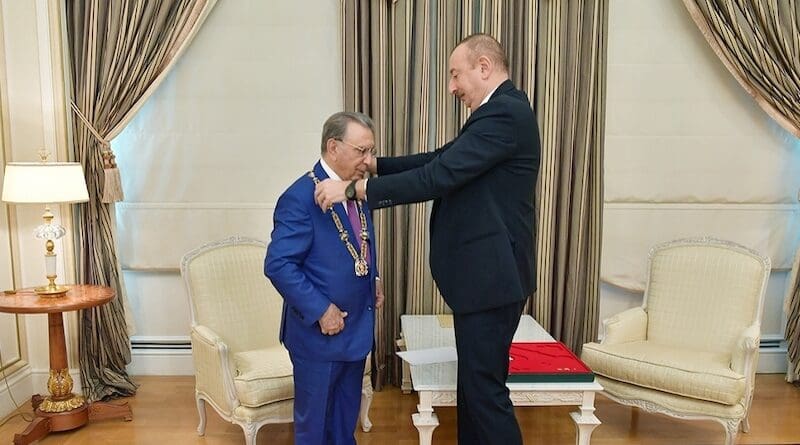
Ramiz Mehdiyev (left), a longtime Aliyev family lieutenant seen here receiving the prestigious Heydar Aliyev award from Ilham Aliyev in 2019, was arrested in October 2025 on charges that include engaging in “acts aimed at seizing state power.”
 (Photo: president.az)

October 18, 2025 
By Eurasianet


(Eurasianet) — Azerbaijani leader Ilham Aliyev appeared to bury the hatchet with his Kremlin counterpart Vladimir Putin during a meeting in Dushanbe earlier in October.

Or did he?

The arrest of a longtime Aliyev family lieutenant on treason charges raises fresh questions about Baku’s relationship with Russia.


Azerbaijani-Russian ties took a nosedive following the accidental shootdown of a civilian jetliner last December. Aliyev’s anger with Russia, and his willingness to plunge Azerbaijani-Russian relations into a deep freeze, stemmed from Putin’s reluctance to take responsibility for the tragedy, which resulted in the deaths of 38 passengers and crew aboard the Azerbaijani jet. Putin during the October meeting with Aliyev finally acknowledged that a Russian anti-aircraft missile brought down the jet, but did not offer an explicit apology, telling Aliyev only that relatives of the victims would receive due compensation.

Aliyev thanked Putin at the time, indicating that bilateral relations could start to thaw.

Yet the treason charges leveled against Ramiz Mehdiyev raise questions about whether bilateral relations are back on an even keel.

Mehdiyev is accused of engaging in “acts aimed at seizing state power” and of obtaining property via illegal means. A Baku court ordered him confined to house arrest for four months while prosecutors continue their investigation. He is currently 87 years old, and if he ends up being prosecuted, he cannot be given a life sentence under Azerbaijani law. Mehdiyev also faces the prospect of being stripped of all his state awards and titles.

According to a October 16 report published by the government-funded APA news agency, Mehdiyev approached Russian contacts at some point amid the Azerbaijani-Russian chill earlier in 2025 with a plan to oust Aliyev, replacing him with a provisional state council that Mehdiyev himself would lead. The Russian leadership was allegedly initially receptive to the plan but ultimately concluded it did not have any chance of success, the report indicated. Ultimately, Putin informed the Azerbaijani leader of the plot during their October tête-à-tête in Dushanbe.

Mehdiyev was a member of the Aliyev family’s inner circle for decades, pre-dating the collapse of the Soviet Union. He held the post of presidential chief of staff for roughly 25 years starting in 1995, serving not only Ilham Aliyev, but also the incumbent’s father, Heydar. In the early 2000s, following the elder Aliyev’s death, Mehdiyev acted as then-inexperienced Ilham Aliyev’s political tutor, smoothing the dynastic transition of power. From 2019-2022, he served as President of the National Academy of Sciences. At the time of his arrest, he was a member of the National Security Council.

Throughout his time in the halls of power, Mehdiyev – a product of the Soviet system and the holder of many senior Communist Party posts before the independence era – had the reputation of someone with a friendly disposition towards Moscow. “Even going back to Soviet times, he was known as a member of the Moscow agency network,” the APA report commented.

But there are hints in the official account of Mehdiyev’s downfall that suggest lots of behind-the-scenes intrigue about this episode still has not come to light. Most intriguingly, the APA report states that Mehdiyev gave Russia a list of other members of the proposed provisional state council that was to replace Aliyev. But as of October 17, no new names have been publicly revealed, and no additional arrests have been made in connection with the alleged plot.

In addition, the official version states that Mehdiyev approached Russian contacts with the coup idea. But some long-time Azerbaijan watchers wonder whether if it was Moscow that approached Mehdiyev first, and Russian officials later decided to betray him after determining that a coup couldn’t succeed.

Putin’s exposure of the plot to Aliyev is framed in the official account as a friendly move. But the Kremlin leader’s gesture carried menacing undertones, indicating that Aliyev’s regime is not as stable as it thinks it may be, and that even the closest of allies can become a turncoat. It may well have been Putin’s way of telling Aliyev; don’t stray too far from Russia and your regime will be protected.

Aliyev, though he seemed to score a political win in his faceoff with Putin over the shootdown tragedy, now seems to be on the defensive with Russia. At the height of his feud with Putin earlier in 2025, Aliyev acted at times like he held all the cards. Putin seems to have proved to him that is not the case. Accordingly, it bears watching how Baku moves forward with efforts to make peace with Armenia and expand the Middle Corridor trade route. The Kremlin is no fan of the Washington-brokered peace plan.

Mehdiyev’s arrest shows that bilateral Azerbaijani-Russian relations, though nominally back on track, are anything but normalized.


Eurasianet
Originally published at Eurasianet. Eurasianet is an independent news organization that covers news from and about the South Caucasus and Central Asia, providing on-the-ground reporting and critical perspectives on the most important developments in the region. A tax-exempt [501(c)3] organization, Eurasianet is based at Columbia University’s Harriman Institute, one of the leading centers in North America of scholarship on Eurasia. Read more at eurasianet.org.
Geʽez And The Politics Of Cultural Erasure In Contemporary Ethiopia – Analysis


A verse from the book of Psalms written in Geʽez. 
Credit: The National Library of Israel Collection, Wikipedia Commons

LONG READ 


October 18, 2025 
By Girma Berhanu


In recent public discourse, a prominent Ethiopian figure dismissed the ancient Semitic language Geʽez as “dead” and irrelevant to modern Ethiopian society. This statement not only misrepresents the linguistic and cultural significance of Geʽez but also reflects a broader governmental agenda that seeks to undermine Ethiopia’s northern Semitic heritage.

This paper examines the implications of such rhetoric, arguing that it constitutes a deliberate attempt to erase indigenous cultural identities and replace them with foreign constructs falsely presented as local. This paper challenges the classification of Geʽez as a “dead language,” arguing instead that it remains vital within Ethiopian society through its ongoing use in liturgy, legal traditions, scholarship, and cultural identity. By tracing the historical evolution of Geʽez from a vernacular language to a sacred and scholarly medium, this study illustrates the broader phenomenon of ancient languages that persist beyond everyday speech. Geʽez serves as a powerful case study of how language can function as a living archive—preserving religious doctrine, ethical frameworks, historical knowledge, and cultural memory across generations.

Introduction

Geʽez, an ancient South Semitic language, holds a central place in Ethiopia’s historical and cultural identity. It served as the language of the Aksumite kingdom and remains the liturgical language of the Ethiopian Orthodox Tewahedo Church, Eritrean Orthodox Tewahedo Church, Ethiopian Catholic Church, Eritrean Catholic Church, and the Beta Israel Jewish community. Despite its enduring significance, recent statements from Ethiopian officials suggest a growing disregard for Geʽez, portraying it as obsolete and irrelevant to contemporary Ethiopian society. Geʽez, a Pillar of Ethiopian Identity is not merely a historical artifact but a living testament to Ethiopia’s rich cultural and religious heritage. It is the foundation of modern Ethiopian languages such as Amharic and Tigrinya. Moreover, Geʽez script is utilized in the writing systems of several Ethiopian languages, including Mesqan, Harari, Siltʼe, Chaha, and Inor . The language’s liturgical use ensures its continued relevance in religious practices and cultural rituals.

An attempt to marginalise Geʽez undermines the foundation of Ethiopian identity. It erodes the connection between contemporary Ethiopians and their historical and cultural roots, leading to a loss of cultural continuity and cohesion. Furthermore, such policies foster divisions within Ethiopian society by promoting a singular, homogenized cultural narrative that disregards the country’s rich linguistic and cultural diversity.

In these turbulent times, both in the United States and in Ethiopia, we are increasingly confronted with ideas that are unscientific, irrational, and antihuman. Yet the discourse emerging from the Ethiopian establishment and its affiliates remains particularly disconcerting. Recent public statements concerning the status and relevance of Ethiopia’s ancient language, Geʽez, exemplify this troubling trend.

A prominent individual recently asserted that Geʽez is a “dead” language, devoid of contemporary significance. While individual opinions may not ordinarily warrant engagement, this assertion cannot be dismissed lightly. It reflects a broader ideological tendency within certain state and intellectual circles—one that seeks to marginalize and ultimately erase the northern Semitic linguistic and cultural heritage of Ethiopia.


Such rhetoric signals more than mere ignorance; it reveals a systematic effort to delegitimize and replace an indigenous historical legacy with artificial and ‘foreign constructs’, falsely presented as authentically local. This phenomenon illustrates a deeper, and arguably more pernicious, intent: the cultural and historical dismantling of a foundational Ethiopian civilization through policies and narratives rooted in misinformation and the erasure of others’ existence.
The Enduring Relevance of Geʽez: Language, Identity, and Cultural Memory in Ethiopia and The Dangers of Cultural Erasure

The dismissal of Geʽez as irrelevant reflects a broader trend of cultural erasure. This rhetorical and political strategy seeks to delegitimize indigenous identities by supplanting them with alien constructs that are falsely presented as native. In the Ethiopian context, this is evident in efforts to marginalize Geʽez—long the liturgical and scholarly language of the Ethiopian Orthodox Tewahedo Church—in favor of more “modern” or “globalized” languages and epistemologies. Such moves not only sever connections to Ethiopia’s intellectual and spiritual heritage but also promote a version of national identity that obscures the indigenous origins of Ethiopia’s classical traditions.

Processes of so-called “indigenization” often involve the selective appropriation and rebranding of external cultural elements—rhetorics of modernity, development, or secular nationalism—as if they emerged organically from local traditions. For example, certain educational and political discourses position Western-derived models of knowledge and governance as normative, while framing indigenous systems—like the Geʽez-based church education—as outdated or backward.

This phenomenon is not unique to Ethiopia. Globally, similar patterns can be observed. In post-colonial Africa, colonial languages such as English and French continue to dominate official discourse, often at the expense of indigenous languages and knowledge systems. In North America, Native American spiritual practices and languages have been systematically suppressed or appropriated, while being superficially repackaged through “New Age” frameworks. In India, colonial-era dismissals of Sanskrit and indigenous philosophies were part of broader strategies to assert Western intellectual superiority.

Such practices constitute a form of cultural domination, wherein dominant political or epistemological systems aim not merely to displace, but to replace indigenous knowledge with sanitized or rebranded alternatives. In the Ethiopian context, the marginalization of Geʽez must be understood not simply as a linguistic transition, but as part of a broader politics of cultural erasure and epistemic injustice. These dynamics are closely tied to current state policies that have institutionalized a form of ethnolinguistic hegemony, elevating Oromo culture, language, and selectively constructed narratives as emblematic of indigenous identity, often at the expense of historically established cultures, languages, and peoples.

In this framework, the Amharic language, long the lingua franca of Ethiopia and a carrier of shared national discourse, is increasingly targeted for displacement by Afaan Oromo. This shift is not occurring solely through organic sociolinguistic change, but rather through top-down political directives, language policy reforms, and symbolic state practices that seek to redefine national identity. The privileging of one ethnolinguistic identity over others risks deepening divisions and undermining the country’s multiethnic heritage—particularly when it is accompanied by efforts to recast dominant narratives, erase historical continuities, and delegitimize alternative cultural traditions.

In the Ethiopian context, the recent denigration of Geʽez is not an isolated incident but part of a deliberate strategy to marginalize Ethiopia’s northern Semitic heritage. This trend reflects a wider agenda that attempts to rewrite historical narratives, suppress linguistic diversity, and weaken cultural continuity. It is therefore imperative for Ethiopians to critically engage with their linguistic and cultural heritage, recognizing the intrinsic value of preserving indigenous languages such as Geʽez. Doing so is essential not only for cultural preservation but also for fostering national unity and resilience through diversity.

Geʽez is an ancient African language with roots dating back to the first millennium BCE in what is now southern Eritrea and northern Ethiopia. It has served as a scholarly and liturgical language since at least the sixth century CE and remains in use today within the Ethiopian and Eritrean Orthodox Churches. Thousands of texts in history, theology, philosophy, and literature have been composed in Geʽez, including the earliest known versions of the Book of Enoch and the Book of Jubilees. These texts offer unparalleled insight into the religious, intellectual, and cultural life of the region.

Ancient languages are often labeled “dead” because they are no longer used as the vernacular of a community. However, this term can be misleading. Languages such as Geʽez continue to live in profound ways—through institutions, rituals, texts, and scholarly practices. Far from being obsolete, Geʽez remains a vibrant part of Ethiopia’s cultural and intellectual landscape.

Religious and Liturgical Influence: Geʽez functions as the liturgical language of the Ethiopian Orthodox Tewahedo Church. Church services, chants, and scriptural readings are conducted in Geʽez, forming a central part of religious life. Monastic scholars actively study, compose, and teach in Geʽez, thereby sustaining a centuries-old tradition of ecclesiastical scholarship.

Law and Philosophy: Foundational legal texts such as the Fetha Nagast (“Law of the Kings”) were written in Geʽez and influenced Ethiopian jurisprudence well into the twentieth century. Philosophical and ethical discourses, preserved in Geʽez manuscripts, continue to be studied by theologians, historians, and legal scholars.

Science and Medicine: Traditional Ethiopian medical knowledge, including healing prayers, diagnostic treatises, and herbal remedies, was often recorded in Geʽez. Early astronomical and astrological texts also attest to the language’s role in the transmission of scientific thought.

Linguistics and Education: Geʽez is taught in theological seminaries and academic institutions in Ethiopia, Eritrea, and internationally—including at the University of Hamburg, Uppsala University, and numerous universities in the United States. Linguists study Geʽez to trace the historical development of Ethiopian Semitic languages such as Amharic and Tigrinya.

Cultural Identity and Continuity: Manuscripts, oral traditions, liturgical poetry, and festival texts written in Geʽez represent a cultural archive that continues to inform Ethiopian identity. For diasporic communities in particular, Geʽez serves as a powerful symbol of spiritual and cultural continuity.

While no longer a spoken vernacular, Geʽez remains a living language—transformed rather than extinct. The term “dead language” suggests irrelevance, yet Geʽez is actively used in prayer, scholarship, and ceremony. It also continues to influence the modern lexicon of Amharic and Tigrinya. In this sense, Geʽez is not a relic of the past but a dynamic medium that bridges past and present.

This broader phenomenon is not unique to Ethiopia. Languages such as Sanskrit, Latin, Classical Arabic, and Hebrew—once thought obsolete—continue to inform contemporary disciplines including law, medicine, and theology. These languages also function as repositories of collective memory, shaping rituals, identities, and knowledge systems across time.

Thus, Geʽez exemplifies how ancient languages are not fossilized but transformed. They serve as living archives of wisdom, cultural memory, and identity. In Ethiopia, Geʽez represents not just a sacred language but a testament to the country’s enduring intellectual and spiritual traditions. It embodies the principle that languages can evolve from everyday use to ceremonial reverence while remaining deeply embedded in a nation’s cultural legacy.
The Living Legacy of Geʽez in Ethiopian Culture and Thought

When we hear the term “dead language,” our minds might turn to Latin inscriptions on cathedral walls or ancient Egyptian hieroglyphs etched into stone. Yet many so-called “dead” languages are anything but lifeless. They continue to shape law, medicine, religion, and culture in profound and lasting ways. Geʽez is one such language—an ancient linguistic tradition that still breathes through the rituals, rhythms, and written culture of millions today.

Geʽez in Religion and Ritual: Geʽez serves as the liturgical language of the Ethiopian and Eritrean Orthodox Tewahedo Churches, as well as the Beta Israel (Ethiopian Jewish) community. Much like Latin continued to live on in Catholic liturgy long after it ceased to be a spoken vernacular, Geʽez echoes daily through church services, monasteries, and religious schools. It is to Ethiopia what Latin is to the Western world: not merely a language of the past, but a language of sacred continuity.

Though Geʽez has not been a spoken language for centuries, it remains the linguistic foundation of Ethiopia’s major Semitic languages—Amharic, Tigrinya, and Tigre. Church services, hymns, chants, and biblical readings are still conducted in Geʽez. In theological seminaries, students memorize texts and engage in the interpretation of centuries-old scriptures. For many, studying Geʽez is more than an academic pursuit—it is a spiritual journey, a way to connect with divine truths and ancestral wisdom.
Law, Ethics, and Philosophical Thought

Beyond its liturgical role, Geʽez has played a central role in shaping Ethiopia’s legal and ethical systems. The most renowned example is the Fetha Nagast (“Law of the Kings”), a 13th-century legal code written in Geʽez. For centuries, this text served as Ethiopia’s foundational legal document, blending religious doctrine with imperial authority and moral philosophy. Even into the 20th century, it influenced governance, legal practice, and social norms.

Today, scholars and theologians continue to study the Fetha Nagast and other Geʽez texts as windows into Ethiopia’s rich intellectual and cultural traditions.

Science, Medicine, and Traditional Knowledge: The legacy of Geʽez also extends into science and traditional medicine. Manuscripts written in Geʽez contain centuries of accumulated knowledge in astronomy, herbal medicine, and spiritual healing. Priests and traditional healers still consult Geʽez texts for healing prayers, rituals of purification, and diagnostic insights that reflect a worldview in which the body, soul, and cosmos are interconnected. These texts demonstrate how Geʽez served not only as a sacred language but also as a repository for empirical and metaphysical knowledge—where science, spirituality, and language were inseparable.

Cultural Memory and National Identity: For many Ethiopians, Geʽez is far more than a liturgical medium—it is a symbol of national identity and cultural resilience. Over centuries, it has remained a thread connecting moments of resistance, renaissance, and renewal. Cultural festivals, oral traditions, and poetic forms often draw upon Geʽez vocabulary and structure. Even modern Amharic—the national language of Ethiopia—bears the grammatical and lexical imprint of Geʽez. Among diaspora communities, Geʽez continues to be studied and preserved as a vital part of Ethiopian heritage. It provides a link to homeland, history, and faith—a way to remain rooted while navigating new worlds.

Why Geʽez Still Matters: Geʽez reminds us that languages do not need to be spoken in everyday conversation to be alive. They can live through ritual, study, identity, and tradition. Like Sanskrit in Hinduism, Latin in Catholicism, or Classical Arabic in Islamic theology, Geʽez continues to serve as a vessel of sacred meaning and cultural continuity. In an age of rapid technological and cultural change, such ancient languages offer something vital: they anchor us to long-standing human pursuits—truth, justice, healing, and transcendence.

Language as Living Memory: To dismiss Geʽez as a “dead language” is to fundamentally misunderstand its role and power. While it may no longer be heard in daily conversation, it lives on in the solemn chant of the priest, the handwritten notes of a student monk, and the whispered prayers of the faithful. Geʽez has not died—it has transformed. It survives not as a fossil, but as a living archive of Ethiopia’s spiritual, intellectual, and cultural heritage. And as long as people continue to seek connection with their history, their faith, and their ancestors, languages like Geʽez will never truly die.
The Enduring Cognitive and Cultural Value of Geʽez Education in Ethiopia

This paper argues for the continued relevance and intellectual value of traditional Geʽez-based church education in Ethiopia. Drawing on decades of pedagogical observation and comparative historical evidence, the paper suggests that early education in Geʽez contributes to advanced cognitive development, academic achievement, and cultural identity. Despite the lack of extensive experimental research, observational and anecdotal data strongly indicate that mastery of this ancient liturgical language offers multifaceted benefits—linguistic, intellectual, spiritual, and professional—that extend well beyond the confines of religious practice.

In the Ethiopian context, traditional church education, conducted in the classical language Geʽez, has long played a foundational role in shaping the intellectual elite. Many of Ethiopia’s most successful and influential individuals have passed through this system. These students, often referred to as Yekolo Temari, undergo a rigorous and immersive education beginning at an early age. This traditional mode of learning is not only spiritually and culturally rich but also intellectually demanding, involving extensive memorization, chanting, and the analysis of ancient texts.

This paper explores the hypothesis that early education in Geʽez provides cognitive and developmental advantages comparable to those observed in other classical-language traditions, such as Latin in Europe or Sanskrit in South Asia. While there remains a shortage of systematic empirical studies, decades of observation in both educational and professional contexts lend support to the assertion that Geʽez education enhances cognitive flexibility, academic achievement, and cultural literacy.
Cognitive and Linguistic Advantages

Children educated in Geʽez often exhibit exceptional cognitive receptivity. Anecdotal evidence and pedagogical experience suggest that they are more likely to accelerate through modern formal education systems, frequently skipping grades or mastering new material with minimal effort. This aligns with research on classical language education more broadly, which associates the study of morphologically rich and syntactically complex languages with improved executive function, memory retention, and problem-solving skills.

Furthermore, given that a significant portion of Amharic vocabulary is derived from Geʽez, students proficient in the language demonstrate heightened metalinguistic awareness, which enhances their ability to engage with complex texts and fosters advanced literacy, particularly in technical and professional fields such as law, medicine, and the sciences.

While learning any language contributes to cognitive development, ancient languages like Geʽez present a distinct set of intellectual challenges. Unlike modern languages, which tend to evolve toward greater simplicity and efficiency, ancient languages are often characterized by complex grammatical systems, unique scripts, and nuanced vocabularies. These features demand intensive mental engagement, effectively serving as a form of cognitive training. Learning Geʽez, in this sense, is akin to solving a multilayered puzzle—each linguistic element encountered requires deep analysis, thereby stimulating neural development andstrengthening mental agility. This cognitive “workout” is one of the most compelling, though often underrecognized, benefits of traditional Geʽez education.
Academic and Professional Relevance

The relevance of Geʽez is particularly evident in disciplines such as history, philology, theology, archaeology, and linguistics, where access to primary source material requires a command of the original language. Beyond academia, Geʽez provides valuable skills for professionals in museum curation, manuscript preservation, religious leadership, translation, and cultural diplomacy. Additionally, the grammatical structures of Geʽez, which involve intricate patterns and rules, appear to cultivate analytical and logical reasoning skills, contributing to a learner’s ability to engage in abstract thought—an essential attribute across numerous intellectual domains.
Cultural and Spiritual Significance

Beyond cognitive benefits, Geʽez plays a crucial role in fostering cultural continuity and spiritual depth. It serves as a linguistic bridge to Ethiopia’s ancient heritage, allowing students to engage directly with foundational texts of the Ethiopian Orthodox tradition and other historical documents. This access facilitates not only scholarly inquiry but also a profound connection to identity, heritage, and national pride.

Learning texts in their original linguistic form also offers deeper spiritual insight, enabling more nuanced theological interpretation and religious experience. As such, Geʽez serves not only as an intellectual tool but as a vehicle of cultural memory and spiritual formation.
Comparative Perspectives

The observed benefits of Geʽez education resonate with findings from other traditions of classical language learning. Numerous studies have highlighted the cognitive benefits of learning Latin, Ancient Greek, Sanskrit, and Classical Chinese, among others. These languages are increasingly viewed not as academic relics, but as powerful instruments of intellectual training. They function as forms of “mental gymnastics,” developing memory, attention, and creativity in ways that modern language instruction does not always achieve.

In sum, Geʽez should not be regarded as a “dead language” but rather as a living repository of Ethiopia’s intellectual, spiritual, and cultural legacy. The traditional church education system, far from being outdated, offers profound and measurable advantages for learners. These include cognitive development, enhanced linguistic capacity, professional utility, and cultural rootedness. As educational policymakers and scholars seek innovative ways to improve outcomes and foster identity among youth, revisiting the pedagogical value of classical language education—particularly Geʽez in the Ethiopian context—may prove both timely and transformative. Ancient languages such as Geʽez serve as windows into cultures, philosophies, and worldviews that are markedly different from those of the contemporary world. Studying these languages goes beyond acquiring a means of communication; it involves engaging with alternative systems of thought, values, and expression. This process fosters cognitive flexibility and encourages learners to adopt multiple perspectives, thereby enhancing mental adaptability and promoting a broader, more nuanced understanding of human knowledge and experience.

Bibliography

1, Kaplan, S. (1992). The Beta Israel (Falasha) in Ethiopia: From Earliest Times to the Twentieth Century. NYU Press.
2, Levine, D. N. (1974). Greater Ethiopia: The Evolution of a Multiethnic Society. University of Chicago Press.
3, Pankhurst, R. (1990). A Social History of Ethiopia. Addis Ababa University Press.
4, Kassaye, K. D., Amberbir, A., Getachew, B., & Mussema, Y. (2006). A historical overview of traditional medicine practices and policy in Ethiopia. Ethiopian Journal of Health Development, 20(2), 127-134.
5, Crystal, D. (2000). Language Death. Cambridge University Press.


Girma Berhanu Department of Education and Special Education (Professor), University of Gothenburg

US Sanctions Terrorist Haitian Viv Ansanm Affiliates

Viv Ansanm was designated by the U.S. Department of State as a Specially Designated Global Terrorist (SDGT) and Foreign Terrorist Organization on May 2, 2025.  

A Haitian police officer keeps watch while patrolling the streets of Port-au-Prince in an armoured vehcile. Photo Credit: © UNOCHA/Giles Clarke


By 

The U.S. Department of the Treasury’s Office of Foreign Assets Control (OFAC) Friday sanctioned Dimitri Herard (Herard) for his support to the Haitian gang coalition, Viv Ansanm.  Also designated is Kempes Sanon (Sanon), leader of the Bel Air gang, one of the constituent gangs in the Viv Ansanm alliance.  Viv Ansanm contributes to the violence and instability within Haiti. 

“Today’s action underscores the critical role of gang leaders and facilitators like Herard and Sanon, whose support enables Viv Ansanm’s campaign of violence, extortion, and terrorism in Haiti,” said Director of the Office of Foreign Assets Control Bradley T. Smith.  “The United States is committed to holding accountable the violent terrorist gangs that endanger the Haitian people.”

Viv Ansanm was designated by the U.S. Department of State as a Specially Designated Global Terrorist (SDGT) and Foreign Terrorist Organization on May 2, 2025.  OFAC is taking today’s action pursuant to Executive Order (E.O.) 13224, as amended, which targets terrorist groups, their supporters, and those who aid acts of terrorism. 

Herard is a former Haitian police officer who was connected to, and later imprisoned by Haitian authorities for, the assassination of former President Jovenel Moïse in 2021. Since his escape from prison in 2024, Herard has colluded with the Viv Ansanm alliance and provided support to many of the gang leaders with training and firearms.  Herard’s support directly backs the Viv Ansanm’s coordinated attacks against State institutions.

Sanon is the leader of the Bel Air gang, one of the constituent gangs in the Viv Ansanm alliance, and has played a significant role in the consolidation of power of Viv Ansanm. Sanon and his gang have been involved in indiscriminate civilian killings, extortion, illicit taxation, and kidnappings in Haiti.

Herard and Sanon are being sanctioned pursuant to E.O. 13224, as amended, for having materially assisted, sponsored, or provided financial, material, or technological support for, or goods or services to or in support of Viv Ansanm, an entity whose property and interests in property are blocked pursuant to E.O. 13224, as amended.