Wednesday, January 28, 2026


Renewed Clash Between China and Australia Over Port of Darwin

Darwin Australia
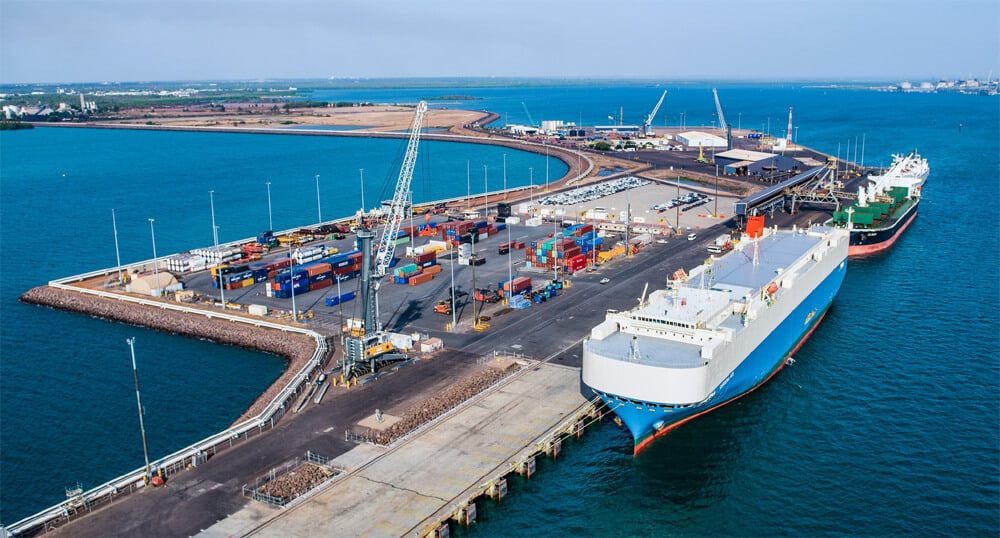
China says Australia could impact trade if it retakes Darwin port concession (Port of Darwin file photo)

Published Jan 28, 2026 3:34 PM by The Maritime Executive


China’s Ambassador to Australia, Xiao Qian, renewed the public debate over control of the Port of Darwin during his New Year Media Briefing and Gathering. The issue had emerged during the 2025 elections in Australia, with both parties vowing to regain control of the port from a Chinese company, which prompted the Ambassador to say it could jeopardize China’s strong investments in Australia.

Ambassador Xiao alleged Australia’s interest in retaking control of the port only came after a Chinese company, Landbridge, made significant investments in the Port of Darwin and made the port operation profitable again. Landbridge paid A$506 million in 2015 for a 99-year lease on the port. According to the briefing, last year, the company made a profit of A$9.6 million versus a loss of A$37 million. 

Located on the northern coast of Australia, while a smaller port, Darwin has a strategic location. The U.S. military has used the port as part of its efforts to enhance its base operations, and that promoted then President Barack Obama to speak out against the Chinese deal. 

A simmering issue in Australian politics, the issue of port control came to the forefront when the opposition party vowed during last year’s elections to reclaim the port. Prime Minister Anthony Albanese committed to also reclaim the port, saying they could force a sale or cancel the lease. Australian media points out that the issue had been out of the limelight for eight months since the election.

Discussing a broad range of issues, the Ambassador, during his press event, said any efforts to retake the port “risked impacting China’s substantive investment” in Australia. Media reports highlighted that the response questioned the motives behind the government's efforts to reclaim the port. He said the actions were “not the way to do business.”

The Australian Broadcasting Corporation quotes the Ambassador as saying, “Starting from last year, Darwin Port stopped losing money and started to make money. It was at this juncture that suddenly we hear the government of Australia wants to take [it] back … so I really question the ethical value."

It was revealed that there are ongoing commercial negotiations regarding the port and its lease. Australia previously asserted that Landbridge, which was experiencing financial problems in other operations, had failed to make the required investment in the Port of Darwin.

Asked about the Ambassador’s remarks, Prime Minister Albanese said the port should be in Australian hands. He repeated the claims that it was in Australia’s national interest and security concerns.

Australia has a strong trading relationship with China. Media reports highlighted that it is the country’s largest two-way trade partner. China is reported to account for nearly a quarter (24 percent) of all goods and services trade with Australia.

The Ambassador told reporters that China was “watching very closely” developments concerning the Port of Darwin. He said the Chinese government has an obligation to protect the legitimate interests of Chinese companies.


Containership Demolition Hits 20-Year Low as Orderbook Continues to Grow

ship recycling
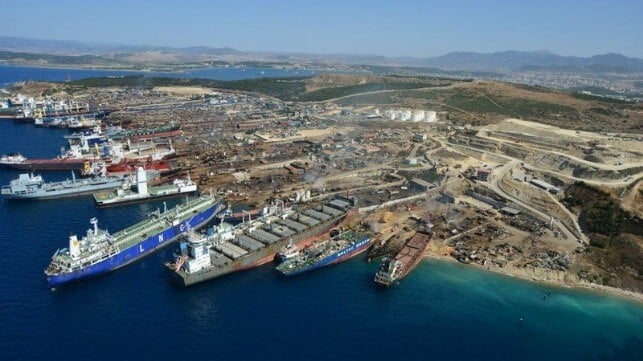
Containership recycling is at record lows despite the expectation that older ships are due for retirement (Recycler Association of Turkey file photo)

Published Jan 28, 2026 6:40 PM by The Maritime Executive


The disposal of container ships during 2025 remained at record low levels as the industry sought to maintain capacity in part due to the continued diversion from the Red Sea. In a new report, Alphaliner highlights that demolitions are now at 20-year lows.

“The healthy container shipping market, with a high demand for tonnage and robust charter rates throughout the year have explained in great part shipowners' reluctance to dispose of their older tonnage, preferring instead to make the most of the lucrative trading environment,” reports Alphaliner.

Analyzing the sales, it reports that only 12 ships, with a total capacity of just 8,172 TEU, were scrapped in 2025, while three more ships have been sold but are yet to be demolished. Alhpaliner’s data compared the low of 2025 with the 95,607 TEU of capacity sold for recycling in 2024 and a record of 655,000 TEU sold in 2016. These sales come from an industry which Alphaliner reports now consists of more than 7,500 active vessels and a total capacity nearing 34 million TEU.

Further, it highlights that the vessels being sold for recycling are among the oldest and smallest in the sector. The ages ranged between 20 and 45 years, with an average of 30 years. Ten of the 12 ships were below a capacity of 1,000 TEU, with the largest ship being the 45-year-old Horizon Enterprise (ex. Austal Puritan), which had a capacity of 2,400 TEU. 

The low levels of recycling continue despite the expectations from analysts that carriers will start to dispose of their oldest and smallest tonnage, in part due to the need for efficiency and emerging environmental regulations.

The industry trade group BIMCO recently reported that it included recycling of 750,000 TEU capacity in its supply forecast for 2026-2027. “We estimate that a recycling overhang of 1.8 million TEU exists due to recycling during the past five years reaching only 272,000 TEU,” wrote BIMCO’s Chief Shipping Analyst, Niels Rasmussen. “If recycling ends lower than our forecast, we expect that the shortfall will add to oversupply of capacity in the market.”

Fueling the concerns for oversupply are the continued surge in newbuilding orders coming from many of the leading carriers and the anticipation that the Suez Canal – Red Sea corridor will reopen, releasing some of the capacity being used to offset the longer travel times around South Africa. 

Linerlytica calculated as of the end of 2025 that the orderbook was at 1,267 vessels. They set the total capacity on order at just over 11.7 million TEU, representing a 35 percent orderbook to fleet ratio. It said orders were up 36 percent year-over-year in 2025. Last year, 671 containerships were ordered, they report.

The pace of new orders has not slowed in the first month of 2026. Today, Evergreen Marine reported it has placed orders for 23 vessels, which could cost as much as $1.5 billion. Its focus is on the feeder ship segment, ordering ships between 3,100 and 5,900 TEU. In 2025, the carrier ordered 14 LNG dual-fuel 1,400 TEU ships and 11 ultra-large vessels with a capacity of 24,000 TEU. It followed news this month of orders linked to other major carriers, including MSC Mediterranean Shipping Company. 


MSC Assessed $22.67M in Civil Penalties by FMC for Shipping Act Violations

containerships docking
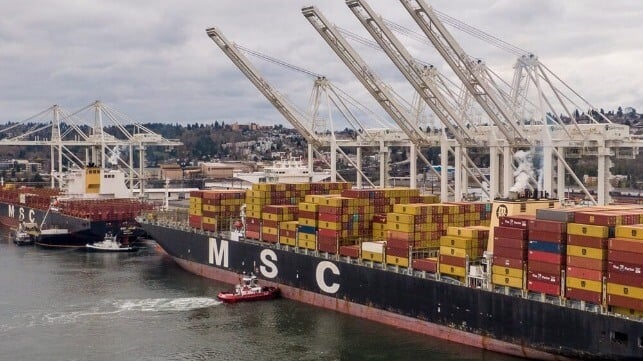
FMC imposed civil penalities against MSC for billing practices related to late fees (Port of Seattle file photo)

Published Jan 28, 2026 5:43 PM by The Maritime Executive


MSC Mediterranean Shipping Company was fined a total of $22.67 million in civil penalties for a series of Shipping Act violations, the Federal Maritime Commission reported. It is part of the FMC’s increased efforts at enforcement and a wave of new complaints it has received after the surge in shipping volumes during and after the COVID-19 pandemic, and the Shipping Act was updated by the U.S. Congress.

The Commission’s Bureau of Enforcement, Investigations, and Compliance (BEIC), through its Offices of Investigation and Enforcement, investigated and prosecuted the matter. The investigations began in August 2023, with the notices being filed earlier this month and upheld or revised by the FMC in three matters relating to fees charged to shippers.

The largest portion of the fine came from a decision that said MSC had overcharged its customers demurrage and detention (D&D) fees as it related to non-operational reefers. The investigation found the practice was in place for all of 2021, leading the Commission to conclude it was an “unreasonable practice” as opposed to a mistake in the billing system. The Commission held that MSC overcharged customers in about 23 percent of all the bills related to non-operating reefers in 2021. It assessed a penalty of $5,000 per violation, which totaled $13,145,000.

A second violation was also related to non-operating reefers. The FMC said MSC failed to include in its published tariffs from 2021 to 2023 the fees related to these boxes. The Commission agreed with the Administrative Law Judge’s initial finding that the omission started in 2021 and amended the finding, calling the practice “knowing and willful violations” from March 2022 to 2023. The total civil penalty for these violations was $9,460,00

A third violation occurred from 2018 to 2020 related to MSC’s billing of customs agents as “notify parties” for demurrage and detention charges (late fees) through the “merchant clause” found in its bills of lading, even though such parties were not involved in moving the cargo. The Commission affirmed the initial decision of the Administrative Law Judge that MSC’s use of its “merchant clause” with assessed civil penalties for these violations totaled $65,000.

The FMC reports it has experienced a significant increase in the number and complexity of cases filed with its Administrative Law Judges, with many involving disputes emanating from the pandemic-era supply chain disruption. As of January 26, the FMC reported it has added on a temporary basis two additional Administrative Law Judges, who will work for the FMC through the end of the fiscal year (September 2026). Judge Jamie Mendelson and Judge Debra Tesh have been detailed from the U.S. Department of Health and Human Services to the Federal Maritime Commission’s Office of Administrative Law Judges to help in addressing the increased case load the office is managing.

MARINE NEO COLONIALISM

Race to patent plankton genes raises concerns over control of ocean’s riches

Companies around the world are racing to patent the genetic building blocks of plankton – microscopic ocean life that produces much of the oxygen humans breathe – as a long-awaited United Nations treaty on the high seas aims to limit private control of marine resources.


Issued on: 24/01/2026 - RFI

Radiolaria, a type of ocean plankton, pictured in symbiosis with microalgae. Plankton’s genetic makeup is drawing growing scientific and commercial interest. AFP - HANDOU

The treaty, which took effect a week ago, aims to protect biodiversity in international waters and prevent the takeover of marine life, which belongs to everyone.

Among its key concerns are plankton, tiny organisms that drift through the ocean and play a central role in sustaining life on Earth.

The first living organisms to appear on the planet, plankton gave rise to all other forms of life. They play a central role in regulating the Earth’s climate by absorbing carbon dioxide and releasing oxygen into the atmosphere.

Despite this, most plankton species remain invisible to the naked eye and are still poorly understood.

Over the past decade, scientists have identified nearly 150 billion new plankton genes.

These discoveries have fuelled growing interest from industry, which hopes to extract molecules that could be used in future medicines.

Almost all patents linked to marine genetic resources are held by companies in the world’s 10 richest countries. Together, those states account for 98 percent of all such patents.

Life beneath the surface

Off France's southern coast near Nice, marine scientists have been working to better understand plankton and protect it.

In Villefranche-sur-Mer, researchers head out to sea aboard a scientific vessel operated by the Institut de la mer de Villefranche (Villefranche Sea Institute).

With the help of the ship’s mechanic, engineer Margaux Gras lowers an ultra-fine net to a depth of almost 80 metres. A winch then hauls it back on to the deck. “This is the phytoplankton net. We collect seawater to retrieve the samples inside the collector,” she says.

Gras then rushes to the onboard laboratory, where she joins research director Lionel Guidi to filter the samples and freeze them in liquid nitrogen. Their DNA will be analysed later, back on land.

Plankton includes hundreds of thousands of different species. Guidi shows samples of phytoplankton and explains what they contain.

“These are micro-algae smaller than 20 microns, collected with the net we deployed at the back,” he says. “The other net is for zooplankton. These are larger organisms that feed on phytoplankton."

Algae and animals invisible to the naked eye, along with marine bacteria and viruses, plankton form a vast and largely unknown living world.

“A large part of what we don’t know lies in the genes present in these organisms,” Guidi says.

“When we take a sample in the bay, around 50 percent of the genetic signal we detect is unknown. It’s so vast, so diverse and still very poorly understood that there is enormous potential for discovery.”

'Marine neocolonialism'


That potential is not just attracting scientists. It is also drawing intense interest from industry, raising concerns about who will benefit from future discoveries.

“Over the past 20 years, there has been a sharp acceleration in the registration of patents linked to marine genes,” according to Vincent Domeizel, an adviser to the United Nations.

“There are now close to 30,000 of them. Half are held by BASF, the German global leader in the chemical industry.”

This concentration of ownership is deeply concerning.

“It means there is a form of predation by the private sector in developed countries, because marine plankton obviously belongs to the whole world,” Domeizel says. “We are seeing a kind of neocolonialism of marine resources.”

Innovations derived from plankton could range from anti-cancer drugs and superfoods to cosmetics and construction materials. Domeizel argues that these advances must benefit everyone.

Sharing the benefits

That principle lies at the heart of the High Seas Treaty. One of its key goals is to ensure that profits generated from marine genetic resources are shared more fairly.

“The treaty on the high seas aims to share the profits generated by marine genes,” Domeizel says. “This redistribution must be done by financing training and infrastructure in emerging countries.”

He stressed that studying and developing plankton-based innovations requires major investment. “To research, discover and innovate using plankton, you need to fund infrastructure, high-tech equipment and training for young researchers."

Countries that have signed the treaty must now agree on how to apply these measures in practice, a challenge in an already tense geopolitical environment.

This story was adapted from the original version in French by Jeanne Richard.
French expedition sets sail to preserve Antarctica's 'invisible wealth'

French explorer Jean-Louis Etienne and his crew of eight scientists this week began an expedition to the remote waters of Antarctica, where they hope to gather a wealth of data to demonstrate the benefits of creating protected areas in the icy continent's rich seas.


Issued on: 24/01/2026 - RFI

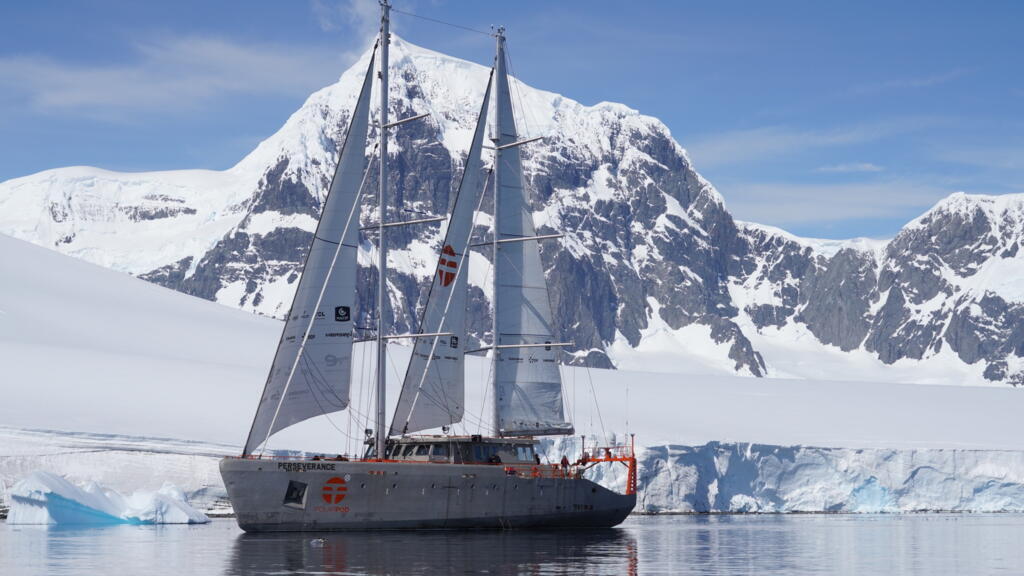
The ice-going vessel Perseverance in the waters of Antarctica, on a mission led by French doctor and explorer Jean-Louis Etienne in 2023. He set off on 20 January 2026 for a new mission to collect data on the Marine Protected Area in the Ross Sea. © 7C_Francis Latreille
01:57


Video by: Ollia Horton

Setting sail from Christchurch, New Zealand, on 20 January and wrapping up in Hobart, Australia, on 15 March, Etienne's Polar Pod / Perseverance crew will spend their time collecting all kinds of data from the sea, the sky, the air and the ice, using special onboard equipment.

Their main goal is to study the breeding patterns of local fauna to provide evidence for the efficacy of the marine protected area (MPA) in the Ross Sea off Antarctica, now a decade old.

Perseverance is an appropriate name for the mission – one that suggests the same patience, determination and faith that have driven Etienne's ambitious projects over the years.

At 79, the doctor and explorer has kept his spirit of adventure. It all began as a child growing up in the Tarn region of southern France, inland from the ocean, dreaming of remote snowscapes and the deep, dark waters of the Poles.

“It's another planet. There's no sign of humanity apart from the scientific stations that are there,” Etienne told RFI. “And I need deserts sometimes, even here in Paris. I need to get away from the hustle and bustle of the world for a while.”

His thirst for challenges saw him become first person to trek solo across the Arctic to the North Pole in 1986. In 1989-1990, he led an international group across Antarctica on dog sleds.

Measuring crucial krill

The Perseverance mission will focus on measuring the quantity of krill and their reproduction levels to see if they are compatible with international fishing quotas.

Krill – tiny crustaceans resembling prawns – are key to the local food chain. If they disappear, so will the species that depend on them, including penguins, seals, whales and birds.
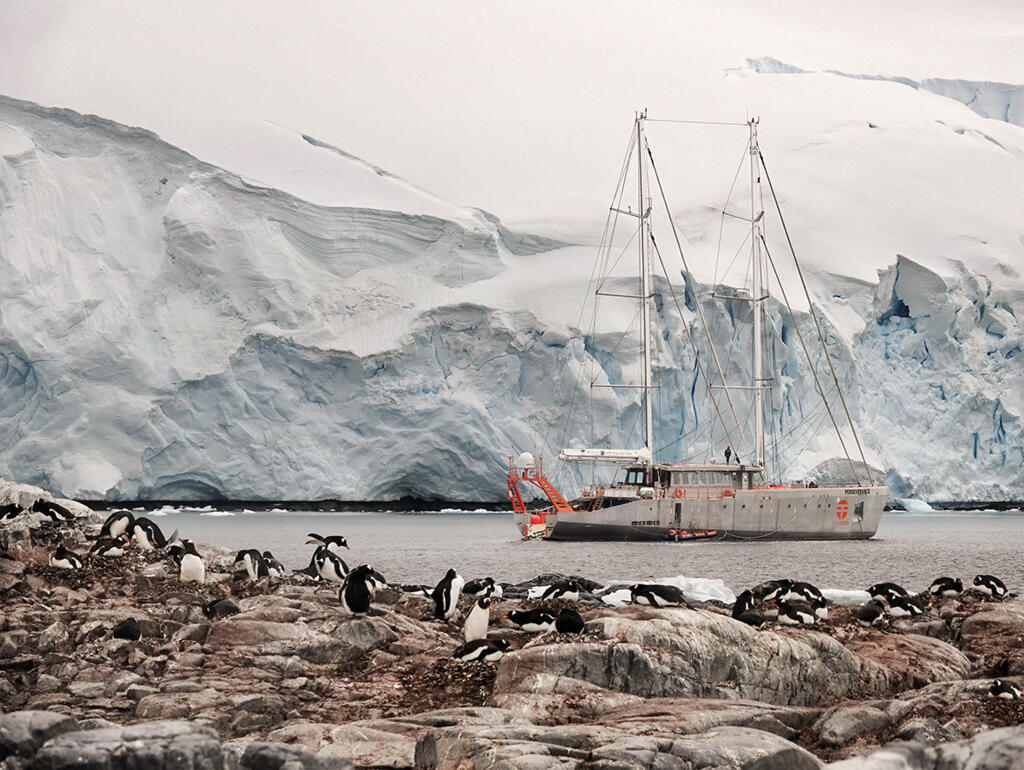
The ice-going vessel Perseverance in the waters of Antarctica in 2023. © 7C / Ferial


Norway, Russia and China all have vested interests in harvesting krill for use in intensive fish farming, dietary supplements and other consumer goods in high demand.

The data collected during the expedition will form the basis of a report for the Convention for the Conservation of Antarctic Marine Living Resources (CCAMLR) – the international body in charge of regulating fishing access in the region.

The expedition’s comprehensive report will also inform negotiations within the CCAMLR to create several new MPAs, notably off the eastern coast of Antarctica in the Dumont d’Urville Sea – a project supported by France, Australia and Monaco.

Antarctica: how geopolitics plays out at the end of the Earth

For Etienne, the Southern Ocean and Antarctica represent vast “invisible wealth” – inestimable resources and incredible biodiversity, in need of protection from overfishing and the ravages of climate change.

The objective is not to outlaw fishing all together, he says, but rather to come up with a way of respecting the natural “quotas” of krill based on reproduction levels, which fluctuate from year to year.

“We don't need big scientific programmes, it's just common sense to create marine protected areas opposite breeding grounds,” he said, referring to the large colonies of penguins that live on shrinking coastal areas.


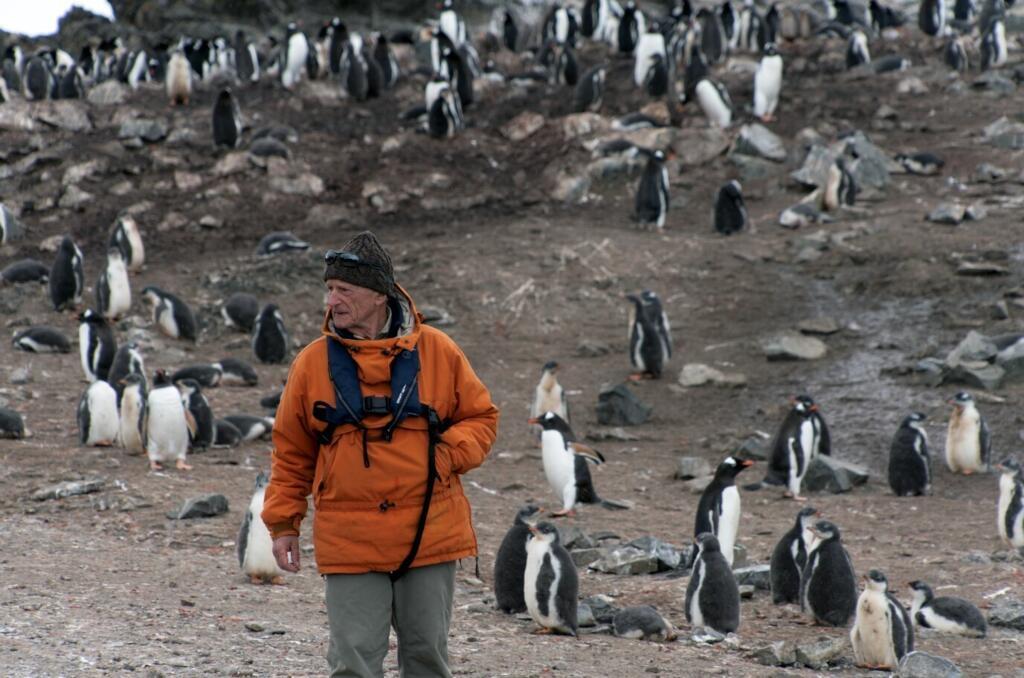
Jean-Louis Etienne in Antarctica in 2023. © 7C / Francis Latreille

Stories from 'another world'

With tears in her eyes, Sophie Colin, special advisor for marine and polar affairs at France’s Ministry of Ecology, recounts the example of the Adelie penguins, which lost a whole generation of chicks in one season when an iceberg collided with the Mertz Glacier in East Antarctica in 2010.

A large chunk of the glacier broke off, forcing penguins to travel further to hunt. As a result, the adult penguins couldn’t get food back quickly enough to feed their young.

Colin says it’s important to translate raw data into stories that people of all ages can relate to, showing that the project goes beyond science.

“We're in another world in Antarctica; we feel a bit like explorers. There's a huge amount of new knowledge that we acquire every year. So, in fact, it's truly fascinating and engaging,” she told RFI.

“That's why education is so important; it is the children who will become the first defenders of tomorrow and will know these species, these ecosystems and their importance better.”

Ice core vault preserving climate history opens in Antarctica

Etienne agrees it’s not just about science – it’s also about wonderment, learning and sharing a passion for this continent, one of the last remaining wild spots on the globe.

The “Polarpodibus” is a van that drives around France in parallel with his expeditions, visiting schoolchildren to spread the word about scientific discoveries and monitoring in Antarctica.

“Our polar oceans are truly the air conditioning, the climate control system of our planet,” said Clément Le Potier, who leads the educational programme. “We must protect these polar regions, but to do that, we must first understand them better.”

Not making an effort to protect the area would be like “leaving the refrigerator door of our planet wide open,” he told RFI, quoting Etienne.

From research to action


Etienne’s latest expedition is just the tip of a new iceberg.

During the voyage, he will try out one of his new inventions, the Tipod – a floating platform used to collect samples and measure information from the ocean.

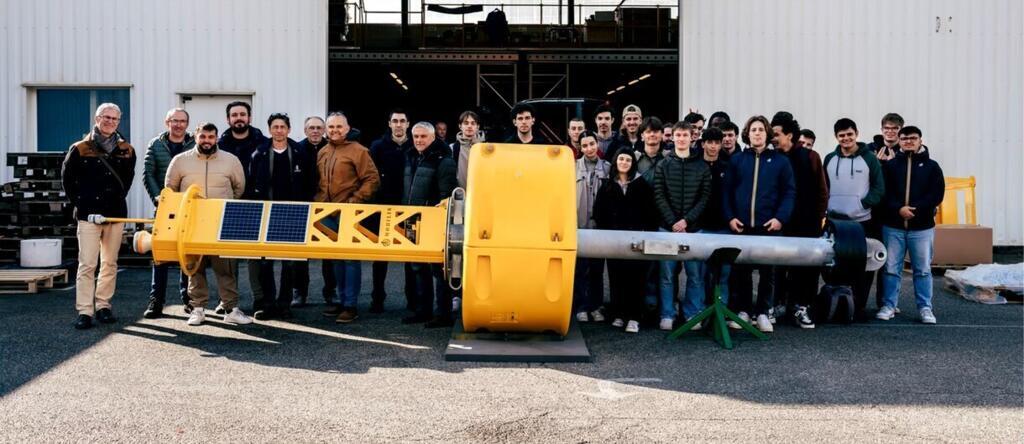
An ocean buoy called the Tipod, made for the Polar Pod expedition by high school students of the Louis Rascol technical college in Albi, France, 2025. © Polar Pod / Perseverance / Jean-Louis Etienne

Developed in tandem with technical high school students in Albi, southern France, it’s a mini version of his next big project: the Polar Pod, a floating research station powered by wind turbines that he hopes to launch in the Antarctic Ocean in 2029.

Plunging into these projects, in a part of the world most people will never see, is the way Etienne finds the hope to carry on for future generations.

“We cannot protect what we do not know,” he says. “This mission is a link between scientific exploration and international political action.”
OceanXplorer: a 'one-stop shop' for marine research

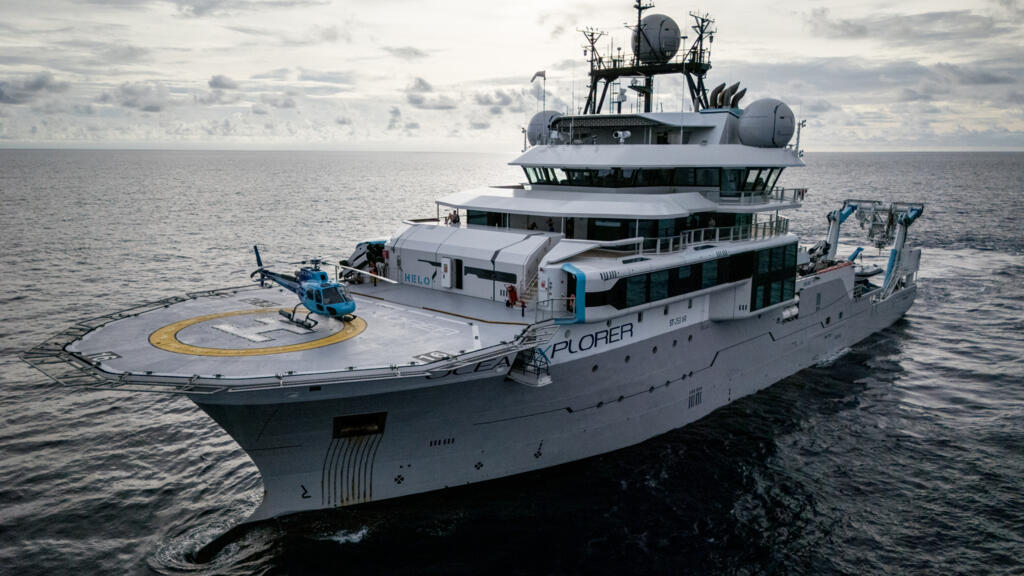
Aboard Oceanxplorer (Indonesia) (AFP) – This month, AFP reported from OceanXplorer, a high-tech marine research vessel owned by billionaire-backed non-profit OceanX, as it studied seamounts off Indonesia.


Issued on: 26/01/2026 - FRANCE24


AFP reported from OceanXplorer, a high-tech marine research vessel owned by billionaire-backed non-profit OceanX © YASUYOSHI CHIBA / AFP

The ship pairs advanced scientific research with high-end media content to make marine biology and conservation accessible.

A one-stop shop

A former oil exploration ship, OceanXplorer belongs to OceanX, which was founded by wealthy investor Ray Dalio and his son Mark.

There are two submersibles -- one with 8K cameras and a science vessel equipped to collect samples © Sara HUSSEIN / AFP

It was retrofitted with everything from laboratories for genetic sequencing to helicopters for aerial surveys.

It is a "researcher's dream", according to Sekar Mira, a cetacean specialist on board from Indonesia's National Research and Innovation Agency (BRIN).

"It is essentially a one-stop shop for ocean science," said mission lead Andrew Craig. "There's nothing else like it in the world."
Rotating science teams

OceanXplorer has been at sea almost continuously since 2021. AFP joined as it surveyed biodiversity on a deep-sea mountain chain off Sulawesi island.
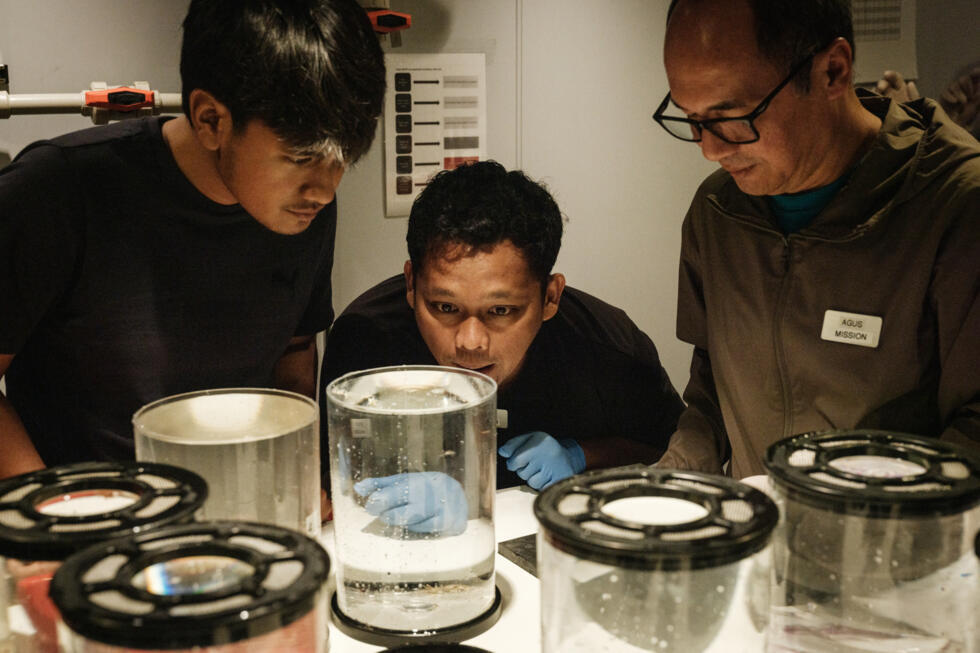
Each mission brings in local government and research institutions, and a new team of local scientists © YASUYOSHI CHIBA / AFP

This time they include "megafauna" specialist Sekar, researching whales and dolphins, and genetics and molecular biotechnology expert Husna Nugrahapraja, who is "bioprospecting" compounds for new medicines.

"We will extract the DNA and then we want to do what is called metagenomic sequencing... and then we try to mine the data," said Husna, an assistant professor at Institut Teknologi Bandung.

Being able to do all that on board is "really impressive," he added.

BRIN marine biologist Nur Fitriah Afianti scrutinises plastic waste from thousands of metres below the surface for helpful microbes.

"Maybe the microbes can digest the plastic waste. Maybe, I hope," she said.
eDNA work

The visiting scientists are supported by OceanX experts like Larissa Fruehe, a specialist in environmental DNA (eDNA).
Every organism is releasing their DNA into their respective environment -- filtering those paints a picture of what has passed through © Sara HUSSEIN / AFP

She calls it "the coolest thing ever" because of its potential to detect species long after they have left an environment.

"Every organism is releasing their DNA into their respective environment" in the form of feathers, hair, scales, mucus or even faeces, Fruehe said.

Filtering those traces from soil, air or water paints a picture of what has passed through.

OceanXplorer can "run a whole eDNA workflow in its entirety, from sampling to actual bioinformatic analysis", Fruehe said.

Among those working with eDNA on board is coelacanth specialist Alex Masengi.

He is hunting for signs of the ancient fish at 900 metres, far below its known range.
Hollywood touches

OceanX brought in Hollywood designers to make the ship telegenic, with a futuristic "mission control" and customisable lighting for optimal filming conditions.
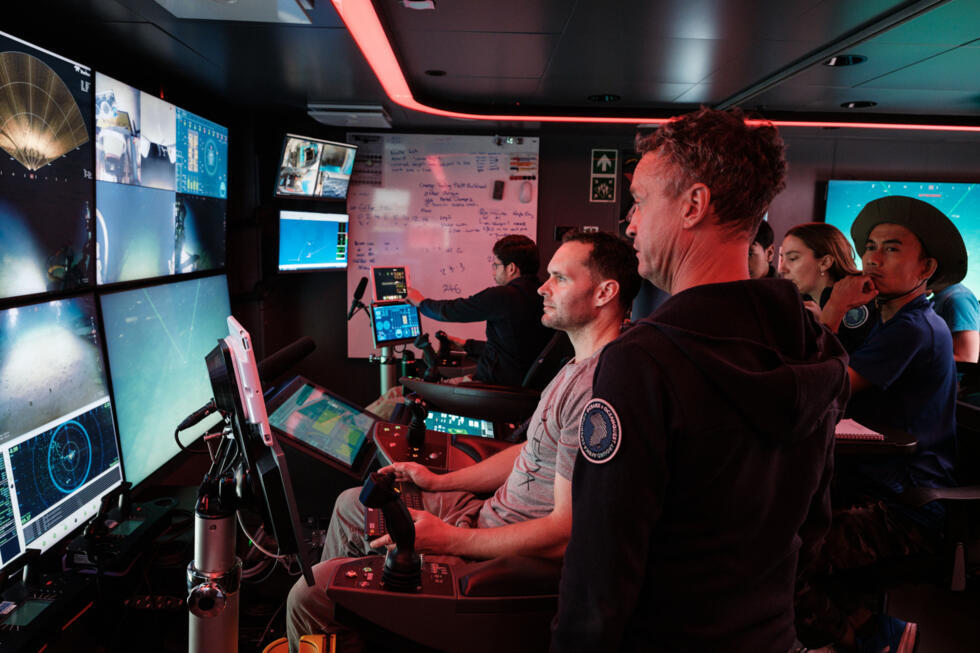
OceanX brought in Hollywood designers to make the ship telegenic, with a futuristic "mission control" and customisable lighting for optimal filming conditions © YASUYOSHI CHIBA / AFP

It is a deliberate attempt to make marine science compelling for a mass audience, including OceanX's four million TikTok followers.

OceanX does not advertise the ship's cost or its operating budget, but its parent body's 2024 US tax filing reported over $44 million in expenses.

Much of that comes from the Dalio family, though outside grants help fund missions too.

Privately funded science can be controversial, but OceanX notes that its research is all publicly accessible, and it partners with government and institutions often unable to expend their limited resources on marine science.
Research and filming firsts

OceanXplorer trips have generated dozens of scientific papers, on everything from deep-sea shark behaviour in the Red Sea to whales and dolphins off Indonesia.
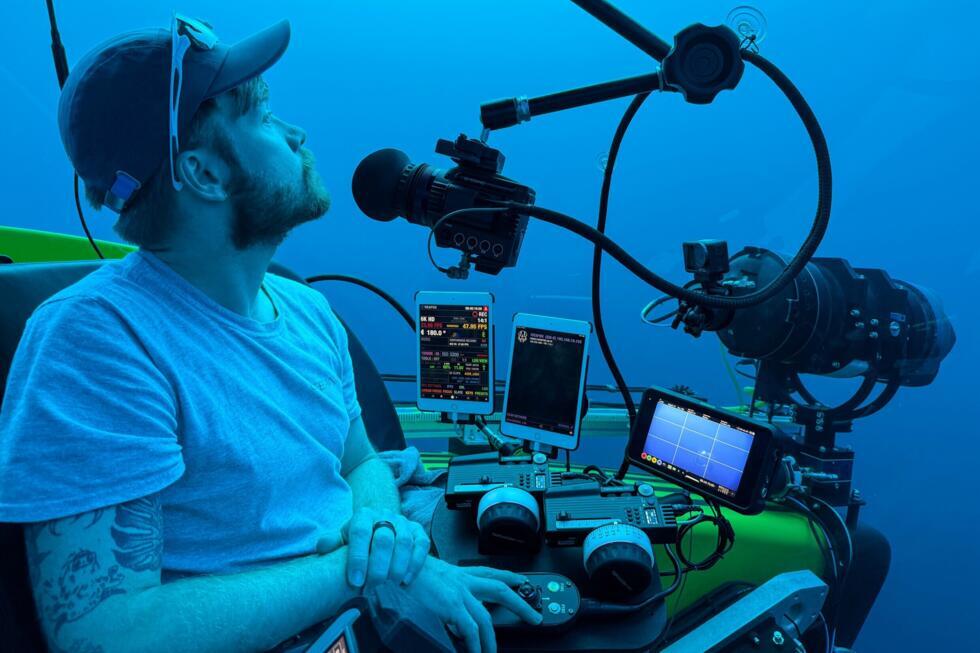
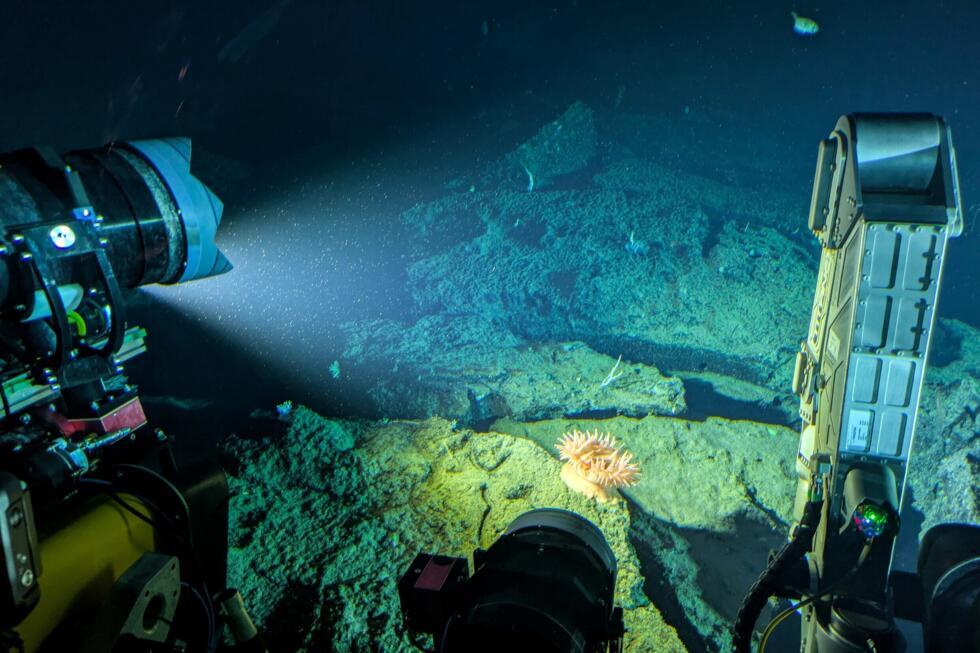
Its cameras have filmed rare footage of groups of coelacanths near Indonesia, and observed newly discovered brine pools in the Red Sea © Sara HUSSEIN / AFP

Its cameras have filmed rare footage of groups of coelacanths near Indonesia, and observed newly discovered brine pools in the Red Sea.

In between missions, students are invited on board as part of OceanX's education mission.

"It's about conservation, it's about education and it's about exploration," said Craig.

"They want to go to new places, they want to explore, and they want to bring back that knowledge and make it available to the public."

© 2026 AFP

'So little we know': in submersibles revealing the deep sea

Aboard Oceanxplorer (Indonesia) (AFP) – A dome-fronted submersible sinks beneath the waves off Indonesia, heading down nearly 1,000 metres in search of new species, plastic-eating microbes and compounds that could one day make medicines.


Issued on: 26/01/2026 - FRANCE24
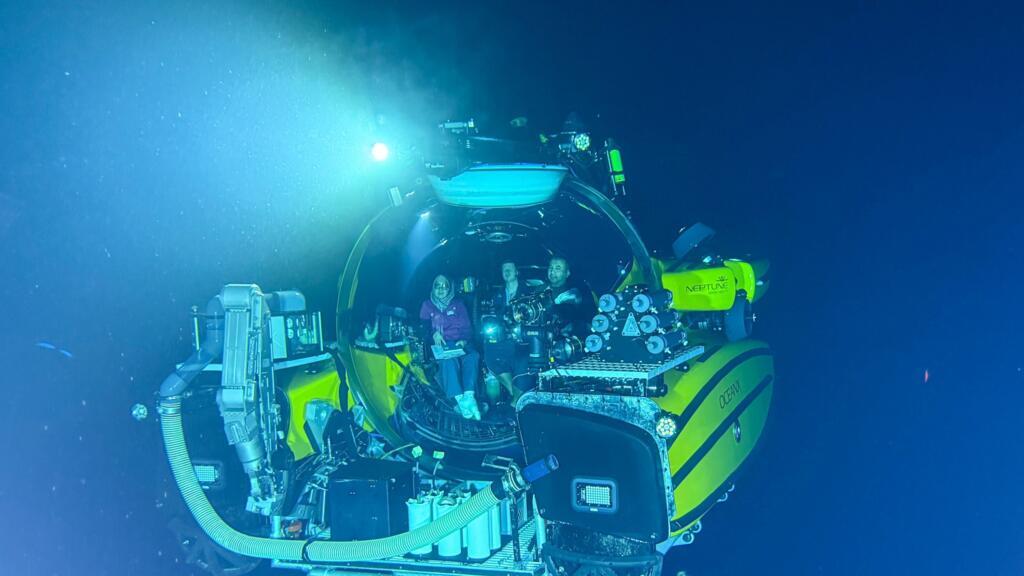
The vessel's powerful light beams can be used to elicit the display of light called bioluminescence that many deep-sea animals produce © Sara HUSSEIN / AFP

This month, AFP boarded one of two submersibles belonging to OceanX, a non-profit backed by billionaire Ray Dalio and his son that brings scientists onto its OceanXplorer ship to study the marine world.

The ship boasts labs for genetic sequencing, a helicopter for aerial surveys and a remotely operated vehicle (ROV) capable of descending up to 6,000 metres (19,700 feet) under the ocean surface.

Its two submersibles have everything from hydraulic collection arms and suction tubes to high-definition cameras, allowing them to uncover the improbable life found in some of the harshest conditions on Earth.

The ship's latest mission focuses on a seamount chain off Indonesia's Sulawesi island that scientists on board mapped last year.
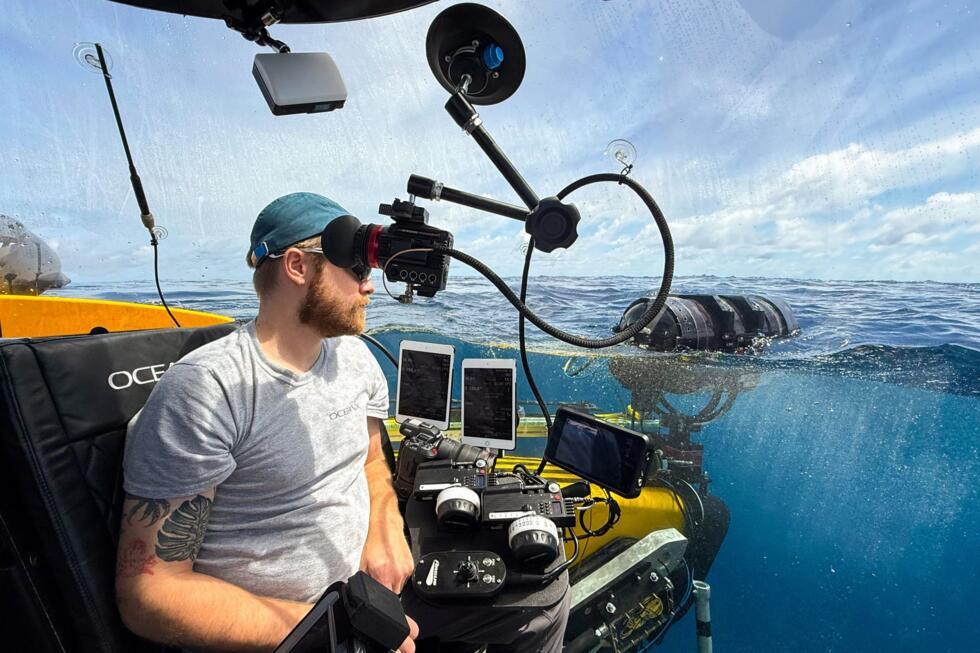


A dome-fronted submersible sinks beneath the waves off Indonesia, heading down nearly 1,000 metres in search of new species © Sara HUSSEIN / AFP

A new team of Indonesian scientists is now surveying its biodiversity, including with submersible dives that put the researchers right into the environment they are studying.

As the sub dropped below 200 metres, the last traces of light disappeared, and indigo faded into total darkness.

Husna Nugrahapraja, an Indonesian scientist on the mission, admitted feeling "a little bit nervous and anxious" as he descended on his first submersible trip.

It is a "very lonely" environment at first, the assistant professor at Institut Teknologi Bandung told AFP.

The craft's lights offered the only illumination, revealing drifts of "marine snow" -- a shower of debris, including decomposing animals, that falls continuously into the depths and creates the impression of an old television stuck between stations.
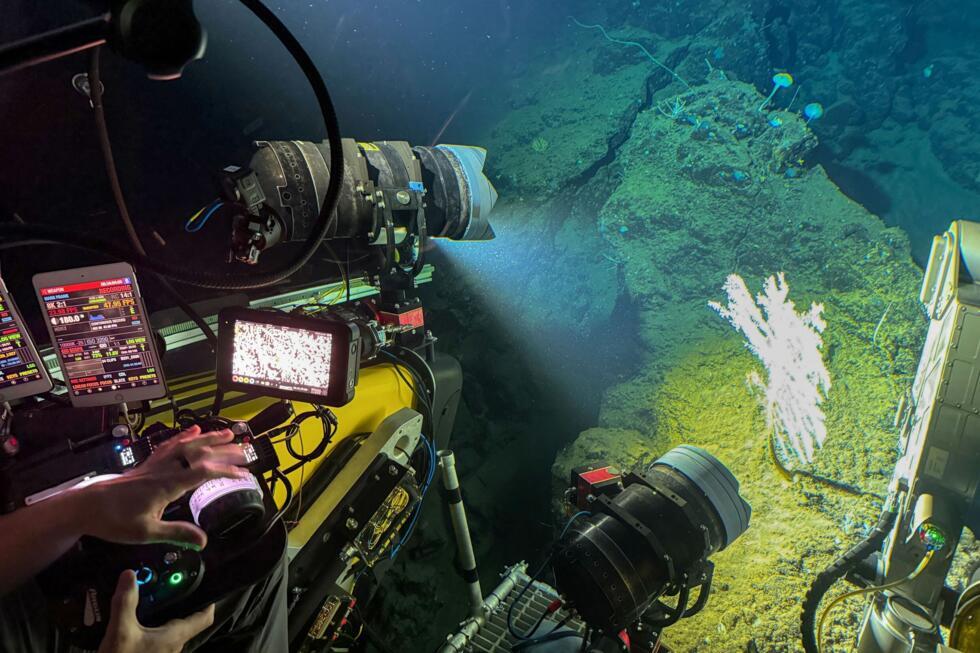
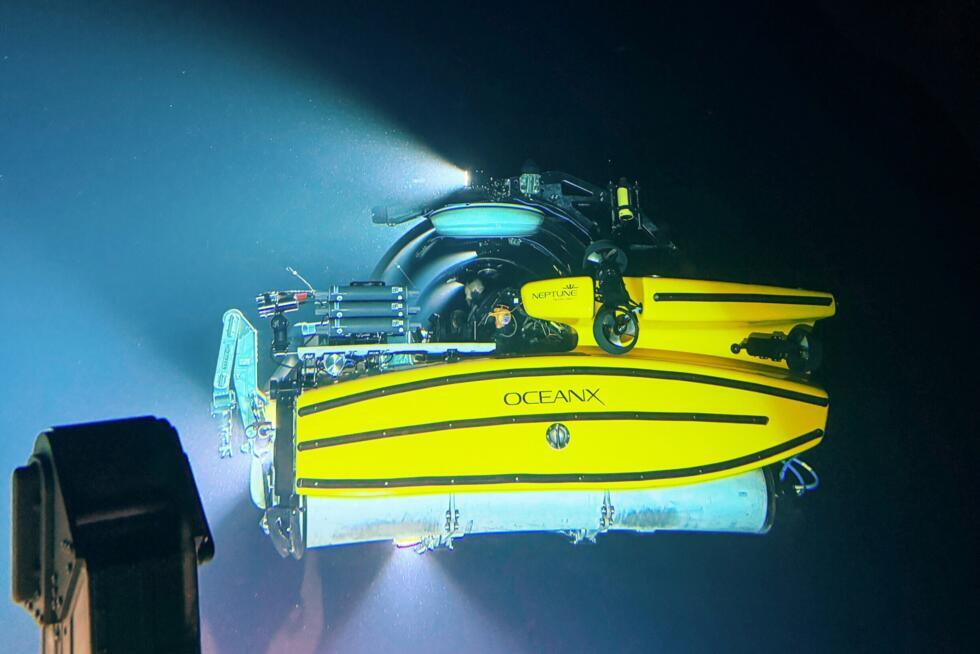
OceanXplorer's Nadir submersible is designed for high-end media content © Sara HUSSEIN / AFP


Marine life that most people never see floated into view, including delicate comb jellies with pulsing fairy-light illuminations along their sides.

Siphonophores -- largely translucent creatures in fanciful shapes resembling toddlers' drawings -- glowed as they drifted by, and silver, fingernail-sized fish skittered out of the sub's wake.

Finally, Husna said, "we arrive on the sea bed... (where) we can see many unique organisms", from delicate sea stars to fronded soft corals.
'Quite different'

OceanXplorer's Neptune submersible is designed for scientific collection and observation, while its Nadir vessel has high-end cameras and lights for media content.
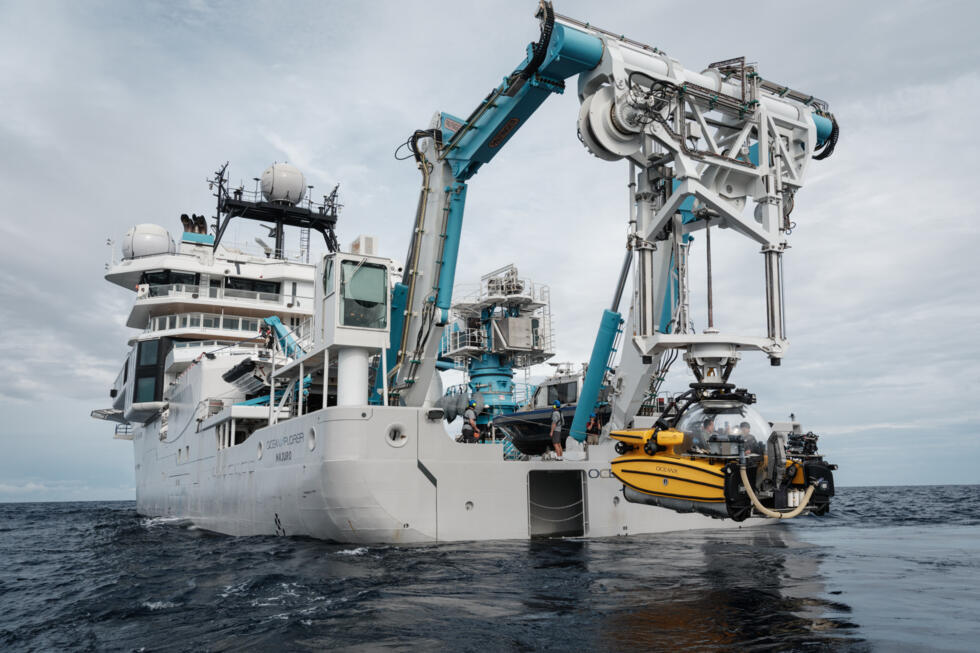

The ship boasts labs for genetic sequencing, a helicopter for aerial surveys and a remotely operated vehicle © YASUYOSHI CHIBA / AFP


That reflects OceanX's view that compelling images make research more accessible and impactful.

"We get a lot of scientists come on who are very sceptical about subs," he told AFP.

"Pretty much without fail every sceptical scientist that comes on board who gets to go on a dive changes their opinion."

The nearly 360-degree view gives them "a totally different perspective" to the flat video fed up to the ship by the ROV.

"It's quite different when you see it yourself," Husna said.

The submersibles also offer unique experiences, including the flashes of light called bioluminescence that many deep-sea animals produce to communicate, for defence, or to attract mates.

The vessel's powerful light beams can be used to elicit the display.

First, all the lights are switched off. Even the internal control board is covered, plunging the craft's occupants into total darkness.
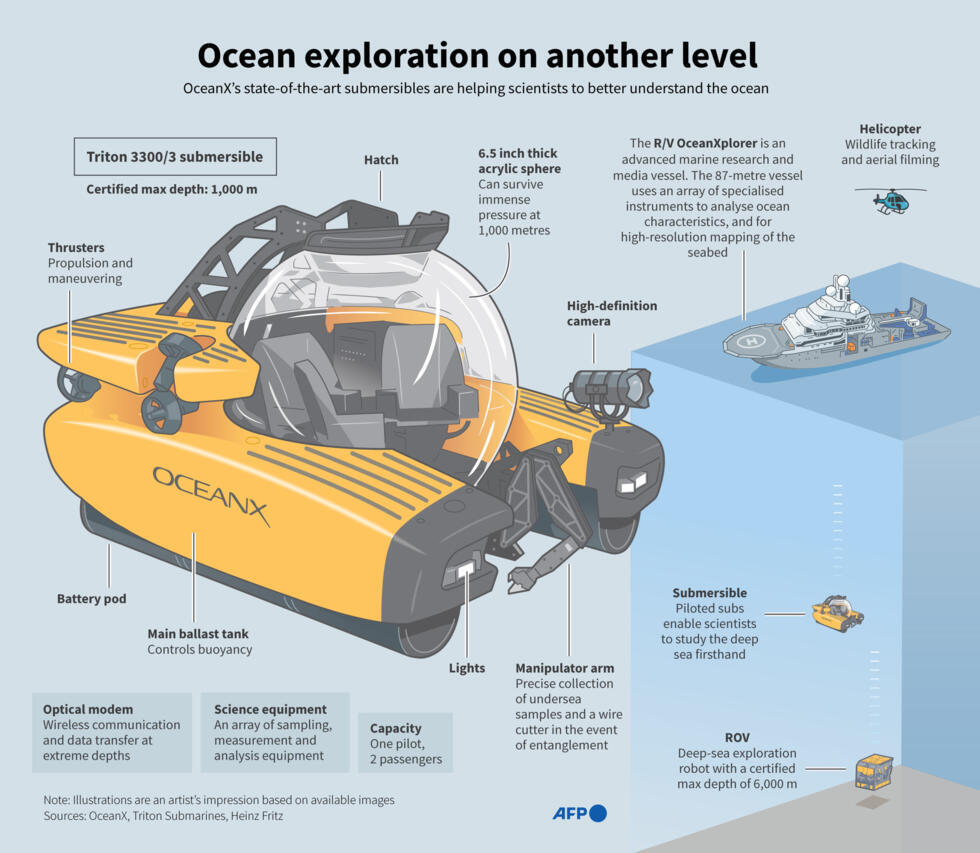

Ocean exploration on another level © Nicholas SHEARMAN / AFP


Then the sub flashes its lights several times while those on board close their eyes.

When they open them, a seascape galaxy of stars appears -- the bluish-white flashes of creatures from plankton and jellyfish to shrimp and fish responding to the sub lights.

Pollock, who has spent hundreds of hours diving in submersibles, counts some of the more spectacular "flashback bioluminescence" events as among the most memorable moments in his career.

Submersibles are used in many fields, but many now associate them with the 2023 underwater implosion of the Titan, which killed five people on a trip to explore the Titanic wreck.

Pollock stressed that, unlike Titan, OceanXplorer's vehicles are designed, manufactured and inspected regularly in accordance with industry body DNV.

"The subs are designed safe" and equipped with back-up systems including four days of emergency life support, he said.
'So little we know'

For deeper exploration, the scientists rely on OceanX's ROV, operated from a futuristic-looking "mission control" where two crew members sit in gamer-style armchairs.
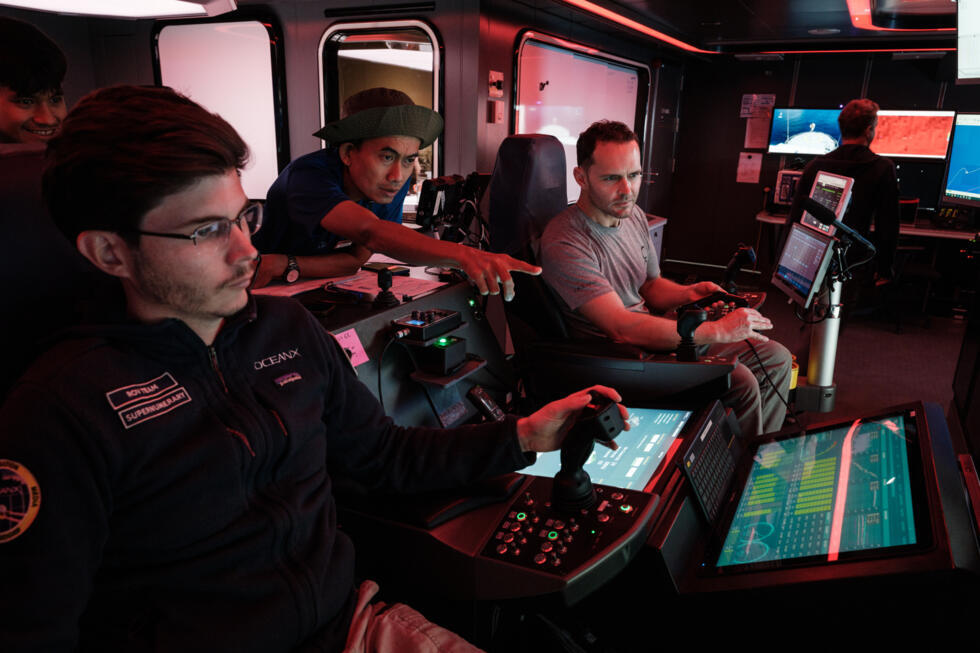
For deeper exploration, scientists steer a remotely operated vehicle from a futuristic-looking 'mission control' © YASUYOSHI CHIBA / AFP


A bank of screens shows the largely barren seabed, as an operator uses a multi-jointed joystick to operate the robot's hydraulic arm from thousands of metres above.

It resembles a space mission, with an intrepid rover traversing desolate distant terrain. But here there are aliens.

At least that is how some of the species encountered appear to the untrained eye.

There's a bone-white lobster, suctioned up for examination at the surface, and a horned sea cucumber whose mast-like spikes collapse into black spaghetti when it arrives on the ship.

And there's a deep-sea hermit crab, living not inside a shell, but a sea star the team can't immediately identify. The crab has laid lurid orange eggs inside its long-dead host.

Not every collection is a success: a delicate red-orange shrimp daintily eludes the suction tube, swirling its long antenna as it swims almost triumphantly beyond reach.

When the ROV returns, there is an excited dash for the samples including seawater, sediment and a forearm-length sea lily coated with dripping orange goo.

Crustacean specialist Pipit Pitriana from Indonesia's National Research and Innovation Agency is fascinated by the captured lobster, as well as some pearl-sized barnacles she thinks may be new to science.

Large parts of the ocean, particularly the deep sea floor, are not even mapped, let alone explored.
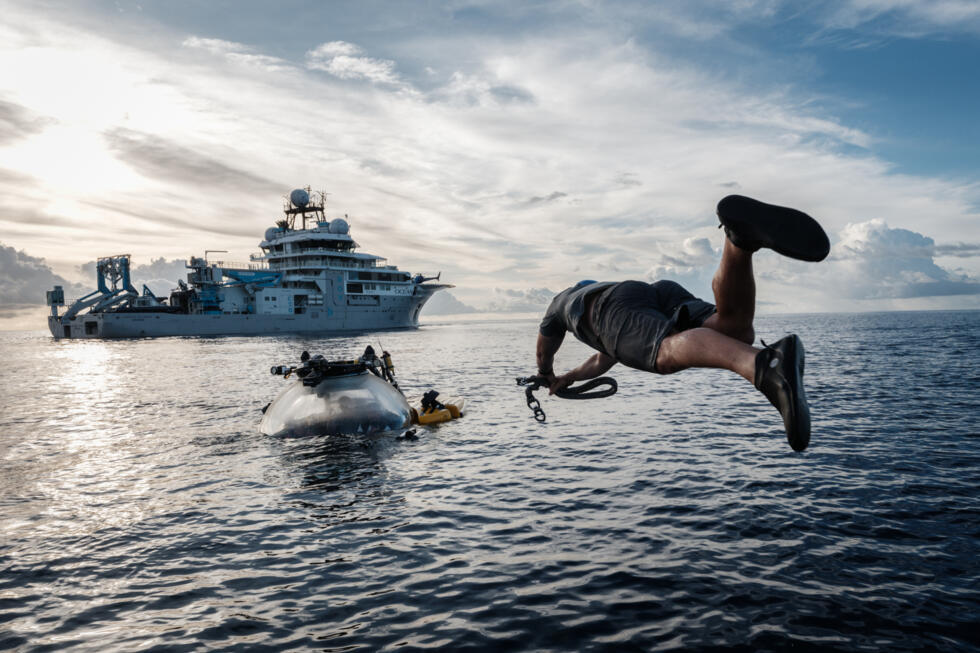
Large parts of the ocean, particularly the deep sea floor, are not even mapped, let alone explored © YASUYOSHI CHIBA / AFP

And while a new treaty to protect international waters entered into force this month, the ocean faces threats from plastic pollution and rising temperatures to acidification.

"Our Earth, our sea, is mostly deep sea," Pipit said.

"But... there is so little we know about the biodiversity of the deep sea."

© 2026 AFP
The Bright Side: Brazil declares açai berry a national fruit to ward off 'biopiracy'

Brazil has declared açai a national fruit to shield the popular Amazon berry from so-called "biopiracy", the use of a country's genetic resources without sharing benefits with the communities that learned how to harvest and process them.


Issued on: 28/01/2026 
By: FRANCE 24

The craze for an açai bowl topped with granola has shone a light on biopiracy. 
© Pablo Porciuncula, AFP

Brazil has declared the açai berry a national fruit, a move to stamp its ownership on the popular "superfood" as concerns grow about foreign companies staking claims to the Amazon's biological riches.

Açai has been a savory staple in the Amazon for centuries, eaten as a thick paste alongside fish and manioc flour.

The dark purple berry went global in the early 2000s after it was reinvented as a sweet sorbet, often topped with granola and fruit, and marketed for its antioxidant-rich properties.

Açai's active ingredients piqued the interest of food and cosmetic companies worldwide.


A street vendor sells açai berry juice at Copacabana beach in Rio de Janeiro. © Pablo Porciuncula, AFP


In one case cited in parliamentary debates, a Japanese company trademarked the use of the name açai in 2003. It took Brazil four years to cancel the registration.

Cases like these drove the law declaring açai a national fruit, first introduced in 2011 and signed earlier this month.

Brazil's agriculture ministry told AFP the measure helps showcase açai as a "genuinely Brazilian product" that generates income for thousands of Amazonian families.

However, experts say the law is largely symbolic and aimed at highlighting the challenge of growing international interest in a wide range of fruits native to the Amazon.

Brazil is one of several countries increasingly concerned about so-called "biopiracy," the use of genetic resources without permission or benefit-sharing.

The law "helps prioritize the issue on the public agenda," said Bruno Kato, founder of Horta da Terra, a company that develops and markets Amazonian ingredients.
'Enormous' risk

Sheila de Souza Correa de Melo, an intellectual property analyst at Brazil's Agricultural Research Corporation, Embrapa, who works in the Amazon, told AFP the law was "primarily symbolic and culturally affirming."

Brazil is one of the most biodiverse nations in the world, and a wide range of fruits with unique properties are at "enormous" risk of being used in new products developed and patented abroad, said de Melo.

Kato cited the "emblematic" case of the creamy fruit, cupuacu, which is related to cocoa and used in desserts and cosmetics.

Açai went global in the early 2000s, amid a booming obsession with wellness and antioxidant-rich foods. © Cindy Ord, Getty Images North America, AFP file photo

Cupuacu was registered as a trademark by another Japanese company in the late 1990s, which demanded the payment of $10,000 in royalties for any product mentioning "cupuacu" on the label.

It took two decades to overturn the trademark.

Several patents have been filed abroad for specifically developed uses of açai's active ingredients in food and cosmetics, said de Melo.
'Clear rules'

Ana Costa, vice president of sustainability at Brazilian eco-conscious cosmetics giant Natura – known for its use of Amazonian ingredients such as açai – told AFP that the law showed the need for "clear rules that guarantee the fair sharing of benefits."

Brazil is a signatory to the 2014 Nagoya Protocol, an international treaty on sharing benefits from genetic resources.

© Evaristo Sa, AFP file photo


The treaty has run into a major loophole as genetic data has become digitized, and researchers can now merely download a DNA sequence and use it to develop medicine or cosmetics, without physically collecting plants or seeds.

De Melo said the main challenge for Brazil was that raw materials such as acai pulp were often exported to countries which then carry out the research needed to create high-value products.

She said Brazil should focus on investing in research and technological development in the Amazon to generate wealth locally.

(FRANCE 24 with AFP)
Hamas says ready to transfer Gaza governance to Palestinian technocratic committee

Hamas is ready for a "complete transfer of governance" to a technocratic committee in the Gaza Strip, a spokesman for the militant group told AFP on Wednesday, adding that the critical Rafah border crossing with Egypt must be opened in both directions, "without any Israeli obstacles".


Issued on: 28/01/2026 
By: FRANCE 24

A Hamas police officer directs traffic in Gaza City on January 28, 2026. © Reuters stringer

Hamas said Wednesday it was ready to transfer the governance of Gaza to a Palestinian technocratic committee, while insisting the key Rafah border crossing be fully reopened within days.

"Protocols are prepared, files are complete, and committees are in place to oversee the handover, ensuring a complete transfer of governance in the Gaza Strip across all sectors to the technocratic committee," Hamas spokesman Hazem Qassem told AFP.

The 15-member National Committee for the Administration of Gaza (NCAG) is a team of Palestinian technocrats created as part of the US-sponsored ceasefire agreement which came into effect on October 10.

It is charged with managing the day-to-day governance of post-war Gaza and will work under the supervision of the "Board of Peace", which US President Donald Trump will chair.

The NCAG, headed by former Palestinian Authority deputy minister Ali Shaath, is expected to enter the Gaza Strip once the territory's Rafah crossing, on its border with Egypt, reopens.

Hamas spokesman Qassem added that the Rafah crossing "must be opened in both directions, with full freedom of exit and entry to the Gaza Strip, without any Israeli obstacles".

Rafah is Gaza's only gateway to the outside world that does not lead to Israel and is a key entry point for both people and goods.

It has been closed since Israeli forces took control of it in May 2024, except for a limited reopening in early 2025, and other bids to reopen have failed to materialise.

NCAG head Shaath announced last week that Rafah would reopen in both directions the following week.

Qassem told AFP the "independent national committee's announcement of the opening of the Rafah crossing is important".

"What is more important is that we monitor this committee's handling of citizens' departures and entries in full freedom in accordance with the agreement, and not according to Israeli conditions," he added.

Israel has said it would only allow pedestrians to travel through the crossing as part of its "limited reopening" once it had recovered the remains of the last hostage, Ran Gvili.

Israeli forces brought back Gvili's remains on Monday and his funeral was held in the southern town of Meitar on Wednesday.

READ MOREWhat's next for the Gaza ceasefire deal now that the last israeli hostage is back?

Qassem said Wednesday that "it is clear that Hamas is committed to the agreement to stop the war on the Gaza Strip", which began after the militant group's deadly attack on southern Israel on October 7, 2023.

"It has carried out everything required of it in the first phase and is ready to enter all tracks of the second phase," he added.

With the technocratic committee's creation and the last hostage held in Gaza returned to Israel, the ceasefire deal's next important milestones will be Hamas's disarmament and Israel's withdrawal from Gaza.

Though Hamas said the return of Gvili's body showed its commitment to the ceasefire deal, it has so far not surrendered its weapons.

The group has repeatedly said disarmament is a red line, but it has also suggested it would be open to handing over its weapons to a Palestinian governing authority.

Neither Israel nor Hamas have committed to a clear date or strategy for withdrawal or disarmament.

(FRANCE 24 with AFP)
‘We are just not stopping’: How Minnesotans turned the tables on ICE

ANALYSIS

US President Donald Trump’s mass deportation programme has given rise to a social media spectacle of shaved and shackled detainees being rounded up by force. But on the streets of Minneapolis and Saint Paul, thousands of locals have launched their own campaign to document ICE’s often-violent operations, filming masked immigration agents wherever they go.


Issued on: 27/01/2026 - 
FRANCE24
By: Paul MILLAR

Protesters chant and bang on trash cans as they stand behind a makeshift barricade during a protest in response to the death of 37-year-old Alex Pretti, who was fatally shot by a US Border Patrol officer earlier in the day on January 24, 2026, in Minneapolis. © Adam Gray, AP

On the streets of the Twin Cities, Minnesotans have turned the surveillance state inside out. As thousands of masked, armed and armoured Immigration and Customs Enforcement (ICE) agents continue to seize and detain people accused of lacking the legal status to live and work in the US, they find themselves followed and filmed at every turn by thousands of volunteers monitoring their every move.

Bound by the hope that the weight of public scrutiny will keep their neighbours safe from harm, these observers have taken to the streets to record and document the massive ICE deployment dubbed “Operation Metro Surge”, a weeks-long action that has sent some 3,000 federal agents to the North Star state.

Since December, these officers have arrested around 3,400 people through traffic stops as well as militarised raids on homes and workplaces. Many of those taken have been sent to an overcrowded detention centre on the other side of the country in Texas.

By holding these faceless agents fixed in a smartphone’s unflinching eye, many of those mobilising on the streets of Minneapolis and Saint Paul hope to one day hold their agencies accountable for their actions.

WATCH MOREAbove the law? Outrage over ICE killings in Minneapolis

These observers are only the most visible sign of a surge in non-violent resistance to ICE’s operations that has brought community and faith-based organisations, trade unions and centres for immigrant workers together in response to the raids.

As workers stay home for fear of being stopped by ICE during their commute and schools switch to remote learning as parents pull their children from class, many of these groups have set up mutual aid networks to deliver groceries and supplies straight to their doors.

Chelsie Glaubitz Gabiou, the president of the Minneapolis Regional Labor Federation that brings together unions representing some 80,000 workers, said that Minnesotans’ readiness to turn out in force has its roots in the widespread demonstrations that followed the 2020 police killing of an unarmed black man, George Floyd.

“This isn't the first time Minneapolis has had to respond in a powerful way under the watchful eye of the entire nation,” she said. “We're coming up on six years now, almost, of the murder of George Floyd in our communities, and we were just getting back to vibrancy and feeling like we had rebuilt from that crisis."

Glaubitz Gabiou said the aftermath of Floyd's murder laid the groundwork for how Minnesota residents would organise in the future.

In the years since, "our community groups, our unions have never ceased to continue to try to work together and create inflection points", she explained. "So we have a high level of trust. We don't all agree on everything that we're working on together here, but we know we cannot be fractured – and that we have to do this together.”

Somewhere between 50,000 and 100,000 people took part on Friday in what some organisers – though not the unions, many of whom have “no-strike” clauses in their collective bargaining agreements – dubbed a general strike following the fatal shooting of poet and mother Renee Good. Some 700 hundred businesses also closed their doors for the day of action.

Truth as a weapon

ICE agent Jonathan Ross shot Good three times as she drove away from a traffic stop – a shooting that quickly spread across social media, filmed from several different angles.

As the ICE operation drags on, unions and community organisations continue to organise regular trainings on nonviolent direct action, as well as “constitutional observer” trainings that encourage participants to document law enforcement interactions – without, the trainers stress, obstructing or escalating the situation.

A federal immigration agent questions a woman holding a child on Tuesday, January 27, 2026, in Minneapolis. © Adam Gray, AP




Glaubitz Gabiou said that the urgency of recording what was happening on the streets was hammered home during the starkly partisan coverage of the protests that followed Floyd’s killing.

“There have been a lot of untruths, even going back to George Floyd and a lot of things that have happened in our community without the cameras rolling,” she said. “And so now that the cameras are rolling … this is about people telling the truth. People are making up lies … they're trying to make you not believe what you’re seeing with your own eyes – and it cost a life. But we need to tell people, ‘Believe what you are seeing. This is what is happening.’ And that person should still be here with us today.”

That person, of course, is Alex Pretti. Pretti, a registered intensive care nurse at the Minneapolis Veterans Affairs hospital and a member of the American Federation of Government Employees union, was shot dead by a federal Border Patrol officer on Saturday while filming ICE agents with his phone.

After standing between a woman and the agent that pushed her down, Pretti was dragged to the ground, disarmed of the handgun he was legally entitled to carry and shot 10 times.

“Our union members and our workers are a part of this amazing, beautiful constitutional observer network that is out filming what is happening in our communities – and it got one of our union members killed on Saturday,” Glaubitz Gabiou said.

Video evidence of Alex Pretti's killing contradicts Trump administration's account

TRUTH OR FAKE © FRANCE 24
05:43


In the wake of Pretti’s killing, senior figures within the Trump administration insisted the agents had been acting in self-defence. Department of Homeland Security Secretary Kristi Noem and White House deputy chief of staff Stephen Miller, a staunch advocate for militarised mass deportations, both accused Pretti of being a “domestic terrorist” without offering any evidence to support their claims.

Then commander-at-large for the US Border Patrol, Gregory Bovino, accused Petti of attempting to “massacre” the ICE agents. As more and more footage of the shooting made its way onto social media, these claims quickly fell apart. Bovino was later transferred from Minneapolis.

READ MOREStephen Miller: how an anti-immigrant crusade is remaking US policy

Stephanie Schwartz, assistant professor of international relations at the London School of Economics and Political Science, said that on-the-ground efforts to record ICE’s often brutal encounters with the public might not necessarily find the audience they needed.

“I think we need to be mindful of what we see, what is algorithmically put on my feed and other’s feeds, and how we already know – and there's been reporting – on how some of those images have been altered.

Not only are today's algorithms highly personalised, she notes, but fake images made with AI are more prevalent than ever.

"So we don't necessarily know what different audiences are seeing,” she said.

“There is an effort from folks on the ground in Minnesota – and this is so exceptionally important – to provide that kind of ... truth of images and description of what is actually happening, contrary to some of the distorted images that have been circulated, including by government accounts.”
Consolidating executive power

The footage of federal immigration agents shooting two people dead seems to have fuelled more significant opposition to Trump’s agenda. Senate Democrats have said they will not vote for a spending bill this week that would further fund the Department of Homeland Security, which oversees both ICE and CBP.

Blocking the package would lead to a partial government shutdown – although both agencies would likely continue operating, with last year’s "One Big Beautiful Act" having already allocated $170 billion over four years for immigration enforcement.

A drawing of Alex Pretti is displayed at the scene where 37-year-old Pretti was fatally shot by a US Border Patrol officer over the weekend, Tuesday, January 27, 2026, in Minneapolis. © Julia Demaree Nikhinson, AP


Schwartz said that despite the deepening public backlash to Trump’s high-profile campaign of mass deportations, the administration's continued efforts to swell the ranks and budget of ICE was not just about cracking down on undocumented migrants.

“The question of whether that spectacle is backfiring for the administration – I don't think so,” she said. “I think that if we take a step back and look at what the goals are here, it’s to consolidate executive power. And they've consolidated executive power in a number of other ways that are unrelated to immigration. But what immigration does through organisations or arms of the federal government, like Customs and Border Protection and ICE, is give them coercive power and the threat of the use of force.”

She cited a letter from Attorney General Pam Bondi to Minnesota Governor Tim Walz, urging him to allow the Department of Justice access to the state’s voter rolls in return for putting an end to ICE’s crackdown. Critics say voter data could be used to cast doubt on future election results or disenfranchise certain voters.

While resisting at the grassroots level is important, Schwartz said, more action is needed among the political class.

“What we need is leadership to attenuate the broader structure of how the executive is using ICE and immigration enforcement to consolidate power,” Schwartz said. “So, for example, that starts with funding for ICE and an evaluation of ICE’s mission. I wouldn't say that [the public response in Minnesota] is not an important counterweight – it’s an absolute necessity. But it is not sufficient with these broader patterns in mind.”

In the Twin Cities, the struggle continues. Glaubitz Gabiou said that Pretti’s killing had only galvanised a public already set on holding ICE to account for a crackdown that has now claimed the lives of at least two Minnesotans.

“It's having the opposite of a chilling effect,” she said. “After the murder of Renee Good, the desire for our non-violent direct-action trainings and our constitutional observer trainings went through the roof. We are training thousands of people across this community every day, and as quickly as we can get the trainings up and staffed and posted, they are filling up."

The momentum is on the side of the protesters, she said.

“I think this is why you're starting to see some of the cracks in the administration now – because we just are not stopping.”

Killing of US citizens in Minneapolis 'a turning point', former US border chief says


Issued on: 28/01/2026 - 
Play (11:30 min)


Gil Kerlikowske, who served as US Customs and Border Protection commissioner from 2014 to 2017 under President Barack Obama, told FRANCE 24 in an interview that the killing of protesters Renee Good and Alex Pretti by federal agents in Minneapolis marks "a turning point" for the United States.


Kerlikowske, a former police chief in Seattle and Buffalo, said US Border Patrol agents were being thrust into operations they aren't trained for. "They're poorly trained and most importantly, they're being poorly led and poorly directed," he warned.

READ MORE‘We are just not stopping’: How Minnesotans turned the tables on ICE

"The Border Patrol works best on the border, or very close to the border. Parachuting them into urban areas with diverse populations (...) is a huge mistake."

Immigration protesters force climbdown in Sundance documentary

Park City (United States) (AFP) – When immigration officials came to arrest two men targeted for deportation, a community sprang into action to protest what they said was a brutal policy by an inhumane government.


Issued on: 28/01/2026 - FRANCE24

Protesters on Kenmure Street surrounded an Immigration Enforcement van to stop it from leaving, in a large, organic action that was eventually successful © Andy Buchanan / AFP

With little more than cellphones and a righteous sense of injustice, a handful of people spread the word that they needed to take a stand.

Dozens, then hundreds, then thousands more arrived to confront the authorities to stop their neighbors being taken away.

But this was not Minneapolis in 2026 -- it was Scotland's Glasgow in 2021. The community effort worked; the men were released.

"Everybody to Kenmure Street" was perhaps the most timely documentary at this year's Sundance Film Festival.

Director Felipe Bustos Sierra pieced together the events using cellphone footage from some of the estimated 2,500 people who answered the call from WhatsApp groups, book club text message circles or Facebook livestreams.

What emerged was an uplifting portrait of a spontaneous, organic and leaderless protest in Pollockshields, an ethnically diverse suburb of Glasgow.
'Drip, drip, drip'

Tabassum Niamat had been up all night preparing a family feast for Eid al-Fitr, the celebration that marks the end of the Muslim holy month of Ramadan.

"Suddenly, I got these text messages," she told AFP. "I made my way to Kenmure Street, and lo and behold, what was in front of me was a big immigration van."

A dawn raid on the first day of Eid by a team from Britain's Home Office (interior ministry) seemed designed to inflame tensions in an area with a large South Asian population.

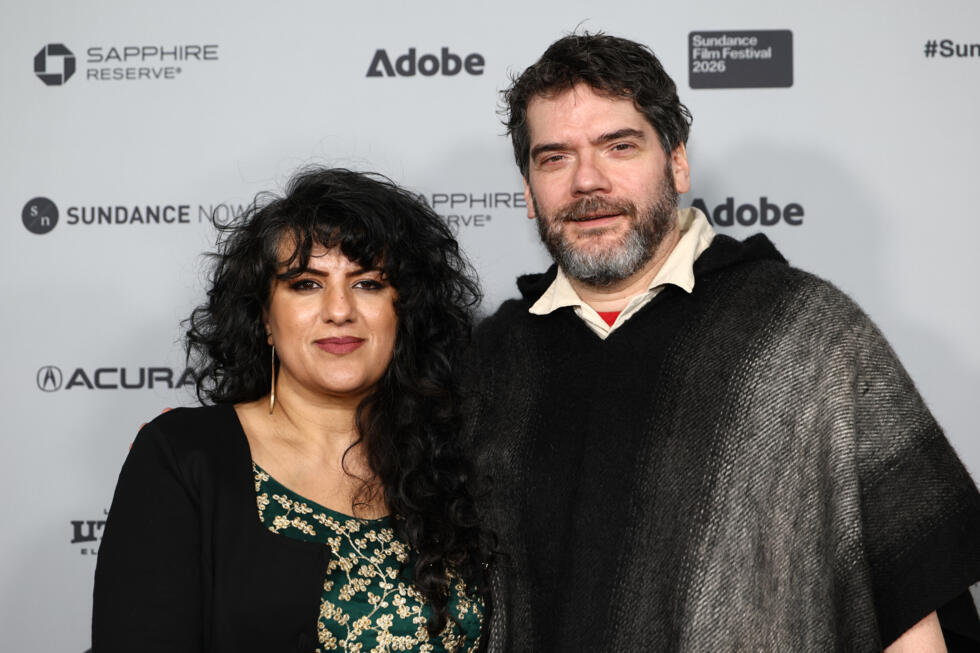
Tabassum Niamat and Felipe Bustos Sierra spoke to AFP at the Sundance Film Festival where "Everybody To Kenmure Street" premiered © Arturo Holmes / GETTY IMAGES NORTH AMERICA/AFP

One quick-thinking campaigner crawled underneath the van as the arrests were happening inside a home -- a place he would remain for over eight hours to prevent the van moving.

"It was just maybe five of us at that point. And soon after, there was 10, then it was 20...just like drip, drip, drip, until there were so many of us I couldn't see one end of Kenmure Street to the other," said Niamat.

A growing police presence did not deter the protesters, who set up a makeshift pantry in a bus stop offering food and drinks.

The local mosque also threw open its doors to allow anyone -- police officers or protesters -- to use the toilets.

"What do you do when guests arrive at your doorstep? You feed them, you look after them," Niamat said.

As news of the protest spread, a local human rights lawyer arrived and was able to negotiate the detainees' unconditional release. No one was seriously injured in the spontaneous protest.
Van man

Many of the locals who told the story of the protest appeared on camera, but some key characters did not.

Among them was the figure dubbed simply "Van Man," whose name was not revealed, but whose words were spoken by actress Emma Thompson, appearing to be lying under a van.

Partly, explained Bustos Sierra, this was to safeguard a person who became something of a legend around Glasgow after the protest.

But it was also an effort to emphasize that this protest was a collective action, and a victory for everyone.

"Van Man had the opportunity," Bustos Sierra told AFP.

"Anybody could have done this. Anybody should do this. It's the only way we move forward."

The documentary premiered at Sundance two days before 37-year-old protester Alex Pretti was shot dead by US federal agents in Minneapolis as he demonstrated against a military-style immigration crackdown in the city.

While the context was different -- UK police are not routinely armed, and there were no signs in the film that pepper spray or batons were used on protesters -- Niamat saw parallels with Minnesota.

"If you come out for your fellow man, if you come out for the sake of humanity, if you come out because you believe what's happening is wrong, you're instantly going to feel connected, and you'll want to stand together."

The Sundance Film Festival runs until February 1.

© 2026 AFPd, and you'll want to stand together."