It’s possible that I shall make an ass of myself. But in that case one can always get out of it with a little dialectic. I have, of course, so worded my proposition as to be right either way (K.Marx, Letter to F.Engels on the Indian Mutiny)
Friday, May 01, 2026
About 20 per cent of Gen Z and millennial Canadians still spank their kids. Is that even legal?
The study is the first to provide a national detailed picture of spanking.
Story by Sharon Kirkey
Fifteen per cent of the nearly 4,000 adults surveyed for a new Canadian study agreed with a statement that spanking is necessary to properly raise a child.
Spanking isn’t a bygone, outmoded form of parenting in Canada, according to a new study that finds a sizeable proportion of millennial and gen Z parents are spanking their kids.
When asked whether they have ever spanked their child or children on their bottom with their hand, about 20 per cent of younger parents aged 18 to 27 (gen Zs) and millennial parents (ages 28 to 42) said “yes.”
“Having a history of being spanked as a child was associated with increasing odds of spanking one’s own child,” the researchers report in the Canadian Journal of Public Health.
When the team explored beliefs around spanking, 15 per cent of the nearly 4,000 adults surveyed agreed with a statement that spanking is necessary to properly raise a child.
Overall, “the prevalence of spanking history among Canadian adults is high,” with more than half (55.6 per cent) of respondents saying they were spanked at least three times during childhood, the researchers reported.
Nearly a quarter said the spanking left a mark or bruise “or caused lasting physical pain.”
The findings support abolishing a section of the Criminal Code that makes it legal for parents to spank children ages two to 12, the researchers said.
Not only has mounting literature linked spanking with the same harms as physical abuse, “no research has ever found that spanking is related to beneficial outcomes for children’s health and development,” the team wrote.
“There are no arguments to keep (the law) and there is no argument to hit children,” said first author Tracie Afifi, a University of Manitoba professor and Canada Research Chair in child adversity and resilience. “All the science is against it.”
The study is the first to provide a national detailed picture of spanking.
While the data suggest a downward trend, the prevalence of spanking remains high, Afifi said. “We’re moving in the right direction, but not nearly quickly enough.
“That means there are still a lot of children who are exposed to this type of physical discipline.”
At least 70 countries or states have legally abolished all corporal punishment of children. When Afifi talks to global audiences, “people are shocked that Canada isn’t a leader in this area. They say, ‘I don’t understand. Are you sure Canada still has a law that allows this?'”
There have been more than a dozen private members’ bills and legislative attempts over the years to repeal Section 43 of the Criminal Code, a contentious passage that reads that every parent or person standing in the place of a parent “is justified in using force by way of correction” toward a child if that force doesn’t “exceed what is reasonable under the circumstances.”
While upholding the provision in 2004, the Supreme Court clarified that parents and caregivers can’t spank a child younger than two or older than 12. They can’t use objects like rulers or belts. The spanking can’t involve slaps or blows to the head, or anywhere on the body so hard as to leave a mark.
Parents also can’t be motivated by “anger,” “frustration” or an “abusive personality.”
“I would like to know who is hitting their child if they’re not angry,” Afifi said.
The amendments have not had any impact on protecting children, and most parents don’t know the rules, she said. “Even if those rules were followed, that doesn’t protect the children in any way.”
There are multiple arguments supporting repeal, Afifi and her co-authors said, including that the law infringes on a child’s fundamental rights to live free from violence.
Parents who spank aren’t necessarily bad parents, she stressed. “They’re just using old, outdated information, old parenting advice that we gave 40 years ago.” Spanking is also ingrained in some cultures and religions, and through generations. “Older generations would encourage new parenting generations, ‘This is how you raise children,'” Afifi said, influences that can be hard to move away from.
Most parents who spank “are probably very loving parents,” Afifi said. “But we need to educate them that this is actually harmful. It has high risks and no rewards.” Studies have associated spanking with risks of physical injury to the child, risks of escalating violence, risks of developmental, behavioural and mental health problems, substance use, fractured parent/child relationships, higher levels of anti-social behaviour in children and lower executive functioning.
“In some cases, light hitting becomes more aggressive, because that’s what the parent thinks: ‘I need to hit the child harder or more often in order for this to work,'” Afifi said. While it might work in the short term, and in the moment, spanking doesn’t correct behaviour in the long term, she said, “and smaller taps can turn into more severe physical violence.”
Arguments that parents will be thrown in jail if the law is repealed haven’t been borne out in the experience of other countries. Sweden was the first country in the world to ban all physical punishment against children in 1979, and other countries have since followed. “We have decades of data,” Afifi said. “People think that, “Oh, now, if I spank my child I’m going to jail.’ And that’s not what happens.'”
The intention is to change the culture, educate and intervene earlier with families experiencing more stress who need more resources, she said.
Her team used data collected from all Canadian provinces from a 2024 research study. The sample included 3,767 people aged 18 to 49.
For the generation X cohort (people aged 43 to 49 at the time data were collected), 45 per cent said they have spanked their own child.
Fewer millennial (22 per cent) and gen Z parents (18 per cent) said they have spanked their kids. While the numbers have fallen, “they’re still high, and there’s no real difference between gen Z and millennials,” Afifi said.
“They’re probably having their parents — the children’s grandparents — encouraging them to do it. ‘This is what you have to do’ and making them feel they’re doing the right thing.”
Nearly one quarter of those who reported being spanked as a child said it left a mark or caused pain, suggesting that, even with the limits in the law, people are going beyond those limits. Of those who were spanked, mostly mothers and fathers (75 per cent) did the spanking, followed by grandmothers (12 per cent).
Overall, 28 per cent of parents of all ages in the survey reported spanking their kids — two per cent reported spanking daily, eight per cent weekly, seven monthly and 78 per cent less than monthly. The remaining said they didn’t know.
More than half of the parents in the survey had a household income of $100,000 or more; 40 per cent had a university degree.
Many people who are pro-spanking are rooted in old ways of thinking, Afifi said. “They may have spanked their own children and think there’s nothing wrong with it. ‘My children turned out great.’ It’s hard to change their way of thinking no matter how much evidence or data you provide.”
Canada could invest in more positive parenting programs that teach parents less harmful and more effective ways of disciplining children that doesn’t include hitting, Afifi said.
“It’s not that there are no rules — there are rules and expectations and part of that is communicating what your expectations are and if they violate that or if they make decisions that are really poor decisions, it’s important they understand what they did is wrong, and why, and what they should have done differently. And if consequences are required, that’s OK. That’s life. There should be consequences, but the consequences shouldn’t include hitting or physical force,” Afifi said.
“But we need to let kids make mistakes and learn what is OK and not OK without being physically hit.”
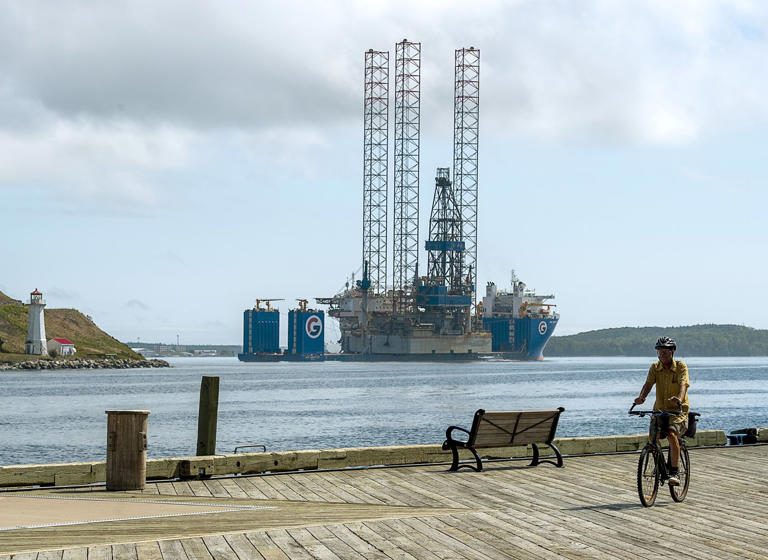
HALIFAX — A joint federal-provincial regulator says a U.K. company has won the rights to explore for oil and gas in the water off Nova Scotia.
The Canada-Nova Scotia Offshore Energy Regulator says Inceptio Oil and Gas Ltd. has committed $210 million for exploration activities such as seismic testing and drilling.
However, the company will only get an exploration licence after approval from the federal and provincial governments.
And further authorizations will still be required before Inceptio Oil and Gas can actually start seismic testing.
Premier Tim Houston says the successful bid means Nova Scotia is back in the offshore oil and gas business.
Nova Scotia’s once active offshore energy sector vanished after the closure of two major gas fields in 2018.
ExxonMobil’s Sable Offshore Energy Project and Encana’s Deep Panuke Project reflected the industry's potential in the province, Houston said.
“We proved we can build, operate and responsibly manage offshore energy at scale. That was not the peak. It was a preview,” the premier said in a statement Thursday.
"Across our entire offshore margin, we believe there is the potential for 148 trillion cubic feet of natural gas and 49 billion barrels of oil.”
In 2023, the provincial and federal governments vetoed a winning bid by Inceptio to explore for oil and gas in Nova Scotia's waters, following a call for bids by the joint energy regulator.
This report by The Canadian Press was first published April 30, 2026.
The Canadian Press
Lake Huron's 'fish city' is a sign of trouble at nuclear plant, says Ontario First Nation
Story by CBC/Radio-Canada • 1d •
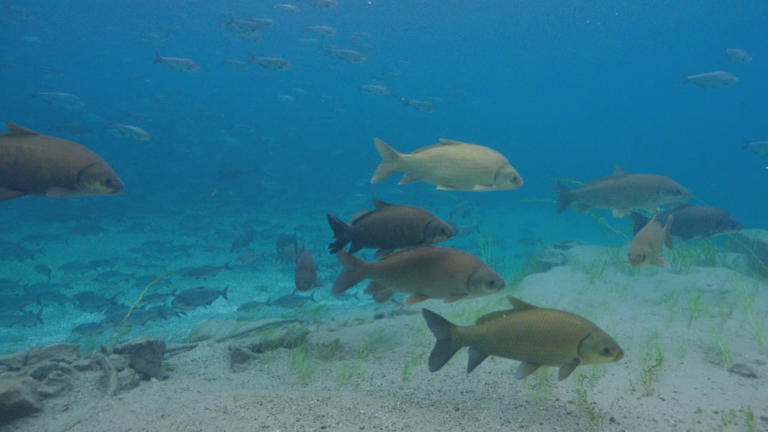
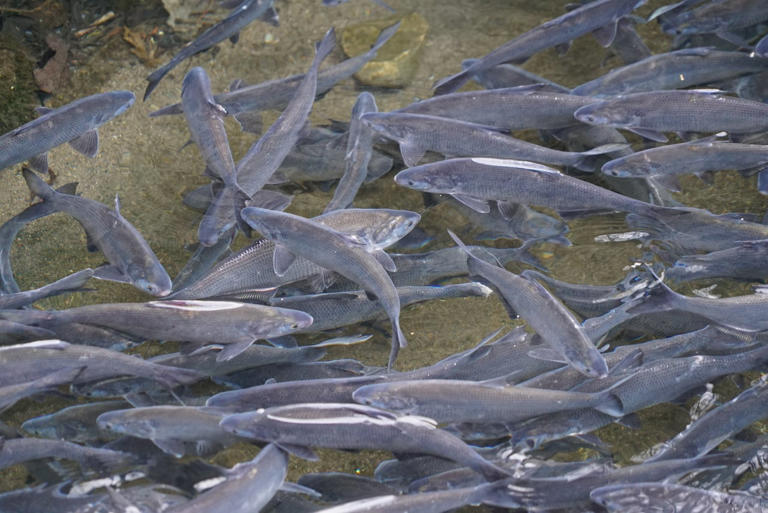
The dazzling underwater footage from Lake Huron appears to show such abundance that a documentary crew dubbed a zone "fish city" and showcased it for Earth Day.
But Saugeen Ojibway Nation (SON) is challenging that narrative of fish crowding in the warm-water outflow of Bruce Nuclear Generating Station — saying the site functions instead as a "fish trap."
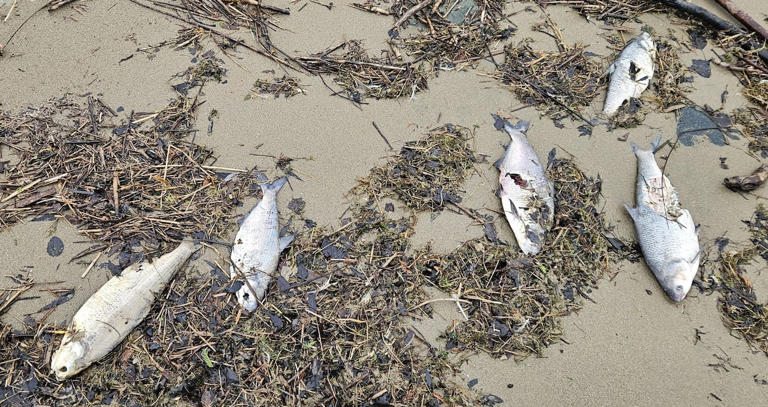
The mass die-off occurred when enough fish entered the station to clog cooling water intake systems and force a proactive shutdown of Bruce A Unit 2 by the utility.
SON also says several lake sturgeon — a species at risk, considered culturally important in Anishnaabe teachings — became stranded in a forebay pond at the plant. One was rescued in November by Bruce Power and SON, while three remain.
The clash over "fish city" is about more than imagery. It raises questions about how Bruce Power manages ecological risk as it seeks permission from regulators to increase plant limits in order to run reactors at a higher output to produce more electricity.
(Submitted by Saugeen Ojibway Nation) SON says warm water is 'bait'
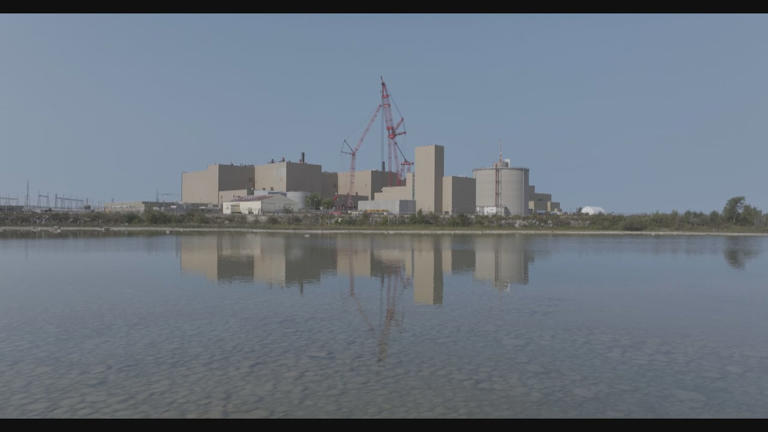
Bruce station is North America's largest nuclear plant and releases water as part of its reactor cooling system that is warmer than the surrounding lake. While it's clear fish gather there, regulators didn't cite the plant as the cause of the die-off.
However, Ryan Lauzon, a biologist with SON and an adjunct professor at the University of Toronto who authored a 136-page study on the 2025 fish kill paid for by the First Nation, said the site operates in two stages: attraction and entrapment.
A lake sturgeon, a species at risk and culturally revered by many Indigenous nations, including Saugeen Ojibway Nation, is seen in June 2024 in a forebay pond at Bruce Nuclear Generating Station. (Submitted by Saugeen Ojibway Nation)
"You have this thermal effluent, which is the bait," he said.
Lured by the warm waters and higher food availability within, Lauzon said the fish can, depending on conditions, be pulled into the plant's forebay — a channel inside the plant's water intake system that feeds cooling water to station equipment — once there, larger fish often have no way out.
"There's no real access for them to exit the plant," he said. "Just the fact there's all these fish swimming around outside the nuclear plant doesn't necessarily mean health."
"These fish are actually at risk." Bruce Power disputes claim
Bruce Power disputed claims the plant caused the 2025 die-off, saying unusual environmental conditions, such as high shad numbers and harsh winter conditions, played a a major role.
"This combination led to a broad, population-level die off observed across the region," the utility said in an email.
(Bruce Power)
Bruce Power said it also added nets, acoustic and strobe-light deterrents as well as sonar and camera monitoring and expanded its lake research to keep fish out of its system, following the 2025 die-off incident.
The Canadian Nuclear Safety Commission said staff visited the plant three times in March and February of 2025 to confirm the measures had been put in place and said it would continue to monitor their effectiveness.
Seeking increased power limits
In August 2025, Bruce Power asked regulators for permission to generate more electricity from its existing reactors, saying the plant could increase output by about 11 per cent by 2030, from roughly 6,300 to 7,000 megawatts, without building a new reactor.
A final hearing on the matter is scheduled for July 2026.
Maggie Tieman, the director of community and external affairs at Bruce Power wrote in an email to CBC News that the requested increase is needed to help meet rising provincial electricity demand and can be made safely, while staying within environmental limits.
"Due to improvements in pump flow, the reactor power increase requested will not increase temperature differences outside of regulated limits," she wrote. "No operational changes can be implemented without regulator assessment and approval." No benchmark for fish deaths
At the same time, the company acknowledged in a 2024 report, the year before the mass die-off and reactor shutdown, regulators had no clear benchmarks for judging how many fish deaths are unacceptable when fish are pinned to intake screens or drawn into plant systems.
Bigmouth buffalo swim among other species in a dense 'fish city' near the Bruce nuclear plant, part of a shifting mix of fish in Lake Huron. (Inspired Planet)
"No benchmarks for fish impingement or entrainment are available from federal or provincial authorities that can be used to assess the environmental risk. Effect thresholds are dependent on sufficient knowledge of the population including natural variability," the report said.
It means that while Bruce Power does operate under strict regulatory rules, there is no clear threshold for when fish losses become unacceptable. Shad play role in lake health
Paul Jones, a retired fisherman who spent roughly two decades working Lake Huron and is now a councillor with the Chippewas of the Nawash Unceded First Nation, part of Saugeen Ojibway Nation, said that while many people dismiss gizzard shad as junk fish, the mass die-off removed an important food source from the lake ecosystem that affected other species.
"You take out all that kind of nourishment out of the lake, it's going to have some sort of effect," he said, noting many people in his community view fish as a gift.
Gizzard shad are extremely sensitive to water temperature and will often seek out warm water effluents as a refuge against winter. These shad, seen in the Thames River in London, Ont., in 2021 gathered in the warmth from storm sewer runoff. (Colin Butler/CBC News)
"We always say that fish give up its life so that we could utilize it, so that we could sustain ourselves."
Jones said the fish deaths matter both ecologically and culturally: shad provide food in the lake, while fish are treated with respect in Ansihnaabe teachings. It underscores why he believes celebratory "fish city" portrayals "missed the mark."
"If you do that, you don't really have to fix anything."
Why a salary of $115K isn't enough to purchase a house in some parts of Canada
Story by CBC/Radio-Canada
Across 23 countries with available OECD data, Canada experienced the sharpest rise in the home price-to-income ratio, up more than 80 per cent over the past two decades.
Ron Butler says that when he started in the mortgage business 30 years ago, it was quite easy for a grocery store produce manager or part-time nurse to find the five per cent down payment needed to buy a home.
"Those days are gone," Butler said recently at a parliamentary finance committee hearing looking into household debt in Canada.
Asked how long it would take someone with a solid, full-time job to save up the minimum down payment on a home today, Butler said that when it comes to the Greater Toronto Area, "the reality is they never could."
"If you're running about $110,000, $115,000 income, you have to pay rent, you have to eat, you have to live. You pay taxes," Butler said. "You could not possibly accumulate a satisfactory down payment for a house price that's still sort of just under a million dollars."
In Ontario before 2015, a family making $115,000 a year "had a shot" at home ownership, Butler said. They would have to go to places like Ajax, Burlington, Hamilton or the Niagara region to find a single-family home, but they would be able to find something to buy.
"Today, a $115,000 income earner, they really can't buy anything."
According to March 2026 figures from the Canadian Real Estate Association (CREA), the national average sale price for a home in Canada was $673,084. That means the minimum down payment required would be just over $42,000.
But in the Greater Toronto Area, the average price was $1,017,796, while in Greater Vancouver, it was $1,201,123. In those cases, the minimum down payment would be about about $76,000 and $95,000, respectively.
It's not just in parts of Toronto and Vancouver where a single income in the $100,000 range is insufficient to be able to buy a home.
"Over the last few years, it's spread to other locations," said Mike Moffatt, founding director of the University of Ottawa's Missing Middle Initiative (MMI) and a researcher into Canada's housing supply and affordability crisis.
For example, CBC calculated that by using CREA's March 2026 median house prices and assuming a mortgage rate of 4.39 per cent amortized over 25 years, a person would need to make $122,300 to afford a 10 per cent down payment, a $4,000 annual tax bill and to pay $150 monthly in heating for a home in Calgary.
In Montreal, one would need to make $127,800, and in Ottawa $132,100 to do the same.
A report published in February this year by MMI found that across 23 Canadian metropolitan areas, newly built family-sized starter homes are now more than twice as expensive relative to median income as they were in 2004. According to the report, in the last two decades, new home prices at the lower end of the market have risen by 265 per cent on average, while young dual-earner incomes grew just 76 per cent.
Another MMI report published in November found that across 23 countries with available OECD data, Canada experienced the sharpest rise in the home price-to-income ratio, up more than 80 per cent since 2004.
A home that cost three years’ income in 2004 now costs nearly 5½ years' income today, the report found.
"A combination of skyrocketing home prices and stagnant wage growth has left Canadian households far worse off than their peers abroad," the report said.
Help from Mom and Dad
The people buying houses, at least in Ontario and British Columbia, are almost consistently in the top 10 or 15 per cent of earners in the country, Butler said.
Either that or people are getting massive assistance from their parents, who are using some of the accumulated equity in their own homes to assist their kids in buying a place, Butler said.
He gave the example of a semi-detached home in most of the GTA and most of Greater Vancouver, which would cost just under $800,000.
"That's not a nice one. That's not a great neighbourhood," he said. Still, if you're making $115,000, "that's seven times your income. You can't get a mortgage even with 20 per cent down."
Butler said it's "thin on the ground" in terms of Canadian locales where the lower part of middle-income earners can afford a home.
Moffatt said some parts of Quebec, northern Alberta, Saskatchewan, and some areas of Manitoba, Atlantic Canada and northern Ontario have homes that are priced relatively low compared to incomes.
When asked for advice on where someone would have to go to find an affordable house, "it's largely to look for places where people don't live as much," he said.
"But that list of places is shrinking."
The wage dilemma
He said this housing dysfunction, which 20 years ago was basically just a Toronto and Vancouver problem, has spread across the country, for the main reason that people moved.
In fact, Moffatt said the place where home prices have increased the most in Canada over a 10-year period was Tillsonburg, Ont., which is outside of London.
"And the reason for that is just that it was one of the cheapest places in the country to live, and families started moving there."
The challenge with housing affordability is that the costs of homebuilding have not gone down. Moffatt said one of the risks is an extended period where new homes aren't being built.
"Because right now, if you want a home, it's hard to build something new that can compete with the prices on the resale market," he said.
And if wages increased without more homes being built, that would just lead to more money chasing the same number of homes.
But wage growth is part of the solution, he said.
"That's how we're going to get affordability. It's not just the prices of homes falling, but you need wages to rise, rise faster than housing prices."
Trump signs order authorizing Bridger's Canada-Wyoming crude pipeline
Story by CBC/Radio-Canada
April 30, 2026.
U.S. President Donald Trump on Thursday signed an order authorizing a proposed project to transport Canadian oil across the border as part of an effort to revive parts of the cancelled Keystone XL pipeline.
South Bow, the Canadian pipeline company behind the cancelled Keystone XL pipeline, is partnering with U.S. company Bridger Pipeline on the proposed project.
South Bow is considering reviving some of the already built line in Alberta and Saskatchewan.
Bridger Pipeline is pursuing construction of a potential 1,038-kilometre pipeline beginning near the U.S.-Canada border in Phillips County, Mont., and transiting to Guernsey, Wyo.
As Trump signed the order, White House Staff Secretary Will Scharf told the president, "This is a trans-border pipeline similar to the old Keystone XL pipeline."
Trump responded: "A lot of jobs, too. A lot of jobs. OK, very good."
(Kyle Bakx/CBC)
New proposal revives part of Keystone XL route
The pipeline could increase Canada's crude exports to the U.S. by more than 12 per cent if it goes ahead.
The new proposal involves a different route through the U.S. than the previous Keystone XL project, which was cancelled by former U.S. president Joe Biden in 2021 after years of Indigenous and environmental opposition.\
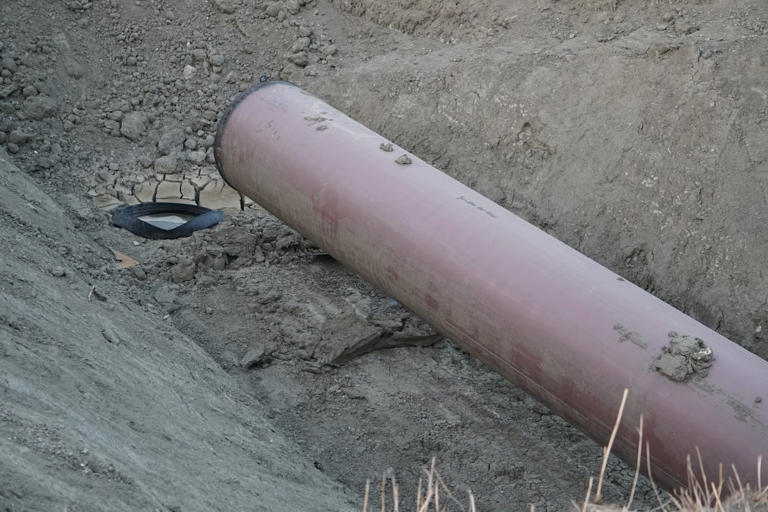
However, it would use some of the previously built pipe on the Canadian side, where the Keystone XL line is already fully permitted. In 2021, about 150 kilometres of pipe were installed in Alberta.
"South Bow continues to evaluate the Prairie Connector project, a potential expansion of its Canadian asset base that would leverage existing infrastructure and permitted corridors to improve market access for Canadian crude oil," South Bow spokesperson Solomiya Martoiu said in an emailed statement.
"The Prairie Connector project remains in early stages and is subject to ongoing commercial, stakeholder and rightsholder discussions, regulatory processes and evaluation," Martoiu said.
South Bow was created in 2024, when former Keystone XL proponent TC Energy spun off its oil pipeline business.
"One reason we see it keep coming back is that there are some market realities that make a lot of sense," James Coleman, an energy law professor at the University of Minnesota, said in an interview with CBC News.
"There are continued increases in oil production in Canada. We are seeing right now the biggest threats to waterborne traffic of oil that we've ever seen in the world," he said.
North America is uniquely well positioned to deal with the energy crisis caused by the U.S. war in Iran because of the continent's mix of heavy oil, light oil, refining capacity and natural gas, Coleman said.
Still, Coleman warned there could be legal challenges to this proposal, similar to the lawsuits against Keystone XL. Keystone revival resurfaces during trade talks
The pipeline could transport about 550,000 barrels of Canadian crude per day to the U.S.
"Canada has benefited for decades from having fully integrated infrastructure tied to the United States, the largest oil and gas consuming market on the planet," Lisa Baiton, CEO of the Canadian Association of Petroleum Producers, said in an emailed statement.
Baiton said the association supports "any new capacity that is commercially viable and can move Canadian energy reliably."
State regulatory permits will still be required for the project to proceed.
"We are aware of the issuance of permits to Bridger Pipeline. The Government of Canada remains focused on strengthening Canada’s position as an energy superpower, supporting North American and global energy security, and advancing the diversification of our trade partnerships," Charlotte Power, a spokesperson for natural resources minister Tim Hodgson, said in an emailed statement.
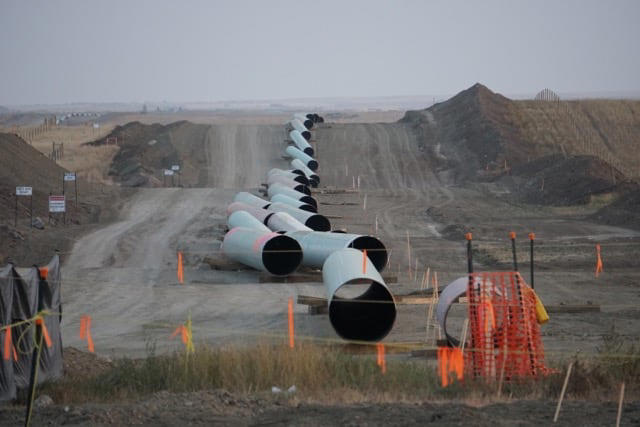
Pipe ready to be used for the construction of the Canadian leg of the Keystone XL pipeline in Alberta in September 2020. (Kyle Bakx/CBC)
The presidential permit comes at a time when Canada and the U.S. are facing an ongoing trade war and will soon begin negotiations on a new North American trade agreement.
During the construction of the Canadian leg of the Keystone XL pipeline, about 1,000 workers were based in the town of Oyen, located 300 kilometres east of Calgary.
The 1,897-kilometre Keystone XL pipeline was first announced in 2005 and designed to carry 830,000 barrels of crude a day from Hardisty, Alta., to Nebraska. It would then connect with the original Keystone pipeline, which runs to U.S. Gulf Coast refineries.
In 2024, TC Energy lost its bid to recoup $15 billion US from the U.S. government after claiming it was treated unfairly and inequitably.
Carney says there is 'one negotiator for Canada' after Conservative MPs descend on Washington
Story by Stephanie Taylor
April 30, 2026.
Prime Minister Mark Carney walks with Anita Anand, Minister of Foreign Affairs at Oakville's IUOE Local 793, Thursday April 30, 2026.
OTTAWA — Prime Minister Mark Carney said Thursday that politicians travelling to Washington who are not part of his government often return home not having learned “anything new” about Canada-U.S. trade.
He added that the same can be said when it comes to gleaning information about the state of ongoing discussions and the status of negotiations.
“In the end, there’s one negotiator for Canada, and that is the Government of Canada,” Carney said, speaking at an unrelated announcement in Oakville, Ont.
“Our interlocutors in the United States are generous people. They’re generous with their time, and it’s good of them to meet a host of Canadians coming down. But in the end, they know, and we know that we’re the negotiators.”
Carney’s comments come after Conservative MP Jamil Jivani, along with some of the party’s other MPs, including its foreign affairs critic Michael Chong, went to Washington to participate in a networking event hosted by the American Chamber of Commerce in Canada, which saw them meet with U.S. Trade Representative Jamieson Greer and included other federal and provincial officials.
Citing unnamed sources, The Canadian Press reported Thursday that Greer told those in attendance the “America First” policy ushered in under U.S President Donald Trump was unmovable and that the U.S. was interested in working with Canada on energy issues. National Post has not independently confirmed the contents of what was said.
“It has not been our experience that people have gone to Washington and have learned anything new, nor has it been that they have learned everything that is either being discussed on the table or where the negotiations are in the end,” Carney said on Thursday.
This trip marks the second Jivani has taken since February, where he went to the White House to meet with Vice-President JD Vance, whom he has been friends with since attending Yale Law School together, along with other Trump officials, saying at the time he wanted to extend a hand to the Carney government to help in navigating the Canada-U.S. relationship.
Opposition Conservative Leader Pierre Poilievre said on Wednesday that dozens of Conservative MPs have travelled to Washington in recent years to fight for “tariff- free trade” and underscored how the party stands ready to fight for Canadian workers.
Ontario MP Shelby Kramp-Neuman, who serves as the party’s critic in Parliament on Canada-U.S. trade, told reporters on Wednesday that she intends to travel to Washington in the coming weeks.
Poilievre, who travelled to the U.S. last month, stopping in Texas, Michigan and New York, has not travelled to Washington himself since becoming party leader back in 2022. He has said he takes the approach of letting the U.S. administration deal with “one prime minister at a time.”
The Conservative leader recently told reporters that his intention was to brief Carney on his trip. During an appearance on The Joe Rogan Experience, aired last month, he told the mega-popular host that he was texting with the prime minister, whom he would not criticize while on foreign soil.
Poilievre’s Conservatives have criticized Carney’s government for not yet having secured any kind of trade deal with Trump that would see existing tariffs, such as the 50 per cent levies on steel and aluminum lowered or lessened.
The party’s MPs have also called on the government to be more transparent about its plans to manage the relationship with the U.S., given the upcoming July 1 deadline to begin the scheduled review of the Canada-U.S.-Mexico Agreement.
Carney has characterized Canada’s trade deal with the U.S. as being an envy of its other trading partners, given that goods covered by the trilateral deal continue to be exempt, telling CBC in an interview that aired this week that he did not want to rush into striking a deal with Trump that “disadvantages us.”
National Post
Our website is the place for the latest breaking news, exclusive scoops, longreads and provocative commentary. Please bookmark nationalpost.com and sign up for our politics newsletter, First Reading, here.
First reading: Denmark to procure state-of-the-art Canadian assault rifle before Canada does
Opinion by Tristin Hopper NATIONAL POST
Variants of the Modular Rail Rifle, also known as the C8.
Despite the Department of Defence touting its new “fast-tracked” procurement strategy, a new Canadian-made assault rifle is already equipping Danish soldiers months before a Canadian will ever see one.
The C8 Modular Rail Rifle, first unveiled at an Ottawa military trade show in 2024, is lighter, more accurate and stealthier than the C7 assault rifle currently in Canadian Armed Forces service.
Although it’s made in Kitchener, Ont., the tiny Danish military has managed to secure the rifles first, in larger quantities, and on a faster timeline.
It was last August that the Danish Ministry of Defence Acquisition first announced a contract with Colt Canada to buy 26,000 of the rifles, which Danes are calling the Gevaer M/25.
In February, the order was then expanded to 50,000, with the additional rifles to be delivered by 2027.
As of press time, the rifles are already in Danish service. In January, the Danish government published photos of large crates of the guns, shrouded in bubble wrap, arriving from Canada.
The Government of Canada, by contrast, inked its contract to buy the C8 just last month. On March 19, the newly formed Defence Investment Agency first announced its deal with Colt Canada to “replace current Canadian Armed Forces assault rifles.”
The contract shows that Canada will be buying fewer rifles to start, and will be taking more time to phase them in. Although the eventual plan is to buy 65,402 assault rifles, the initial commitment is for 10,000 rifles per year for three years.
While Canada, which has 22,500 active personnel in its army, is purchasing its first tranche of 30,000 C8 rifles on a timeline of at least three years.
This is all happening as Canadian troops happen to be serving alongside Danish ones as part of the NATO Multinational Brigade in Latvia. Which means that the first glimpse Canadians get of their next assault rifle could be in the hands of Danes deployed to the Baltic.
In tandem with the Carney government’s massive expansion in military spending has been a promise to speed up the Department of Defence’s infamously slow procurement process.
As the Prime Minister’s Office said in a February statement , “Canada’s defence procurement has long been too complicated, too slow, and too reliant on international suppliers, limiting the growth of our defence industries.”
The glacial pace of Canadian defence procurement was best illustrated by its decades-long odyssey to replace the Browning Hi-Power, a pistol that had been in Canadian service since the Second World War.
Despite the fact that the 74-year-old pistols were so worn out they were constantly jamming, it took a 13-year process for the Department of Defence to eventually swap them out with the German-designed Sig Sauer P320.
The delay was ultimately so long that the Canadian military had to set up an “ Army Interim Pistol Program ” just to cover for the fact that units were running out of functioning pistols.
Compare this with the experience of the British Army, who in 2010 faced the exact same process of phasing out a war-era Browning-made pistol as its official sidearm. In a process lasting no longer than two years, the U.K. Ministry of Defence tested the available substitutes, and then put in an order to buy 25,000 pistols from Austria’s Glock Inc.
The process to acquire the C8 rifle has been much the same.
Denmark simply empowered its Ministry of Defence Acquisition to buy the best available rifle, while Canada launched into a years-long bureaucratic review process.
It was six years ago that the Canadian Army first officially announced its plans to acquire a “Canadian Modular Assault Rifle,” submitting its plans to the Independent Review Panel for Defence Acquisitions in July 2020.
Prior Canadian procurement odysseys have often been sidelined by political intervention, particularly over the issue of foreign-made equipment.
Canada’s acquisition of a replacement to its CF-18 fighter jets, for instance, remains in a limbo that has now stretched to 10 years, with recent delays being influenced by Ottawa’s hesitance to buy the U.S.-designed F-35.
Assault rifles, however, are one of the very few military technologies that Canada has no problem manufacturing in-house.
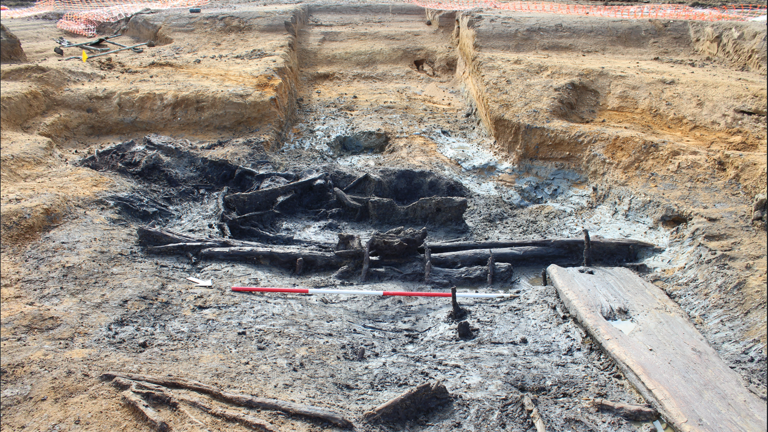
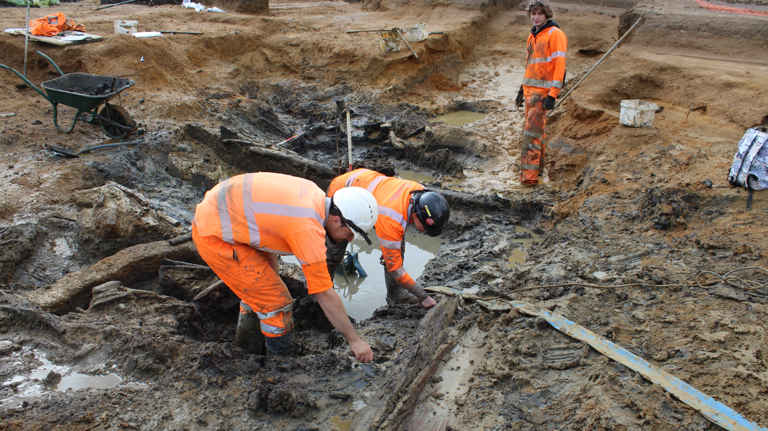
What first appeared to be bits of wood in the ground has now been revealed to be a rare glimpse into life during the middle Bronze Age.
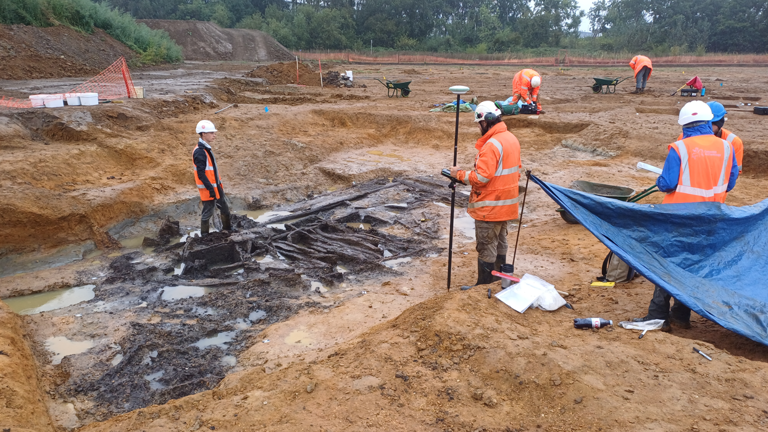
Archaeologists discovered the remarkably well-preserved timber structure, built more than 3,500 years ago for collecting water, near Gloucester.
Paolo Guarino, a post-excavation manager with Cotswold Archaeology, said the discovery stood out due to the rare preservation of organic material.
"It's not quite that often that we find wood," he explained. "Water-logged conditions are some of the best for the preservation of organic matter like timber."
The discovery was made during a routine archaeological excavation carried out ahead of a proposed housing development, just south of Gloucester, in an area where Roman and Anglo-Saxon finds have also been made.
Archaeologists identified the well has an upper platform made of "planks and roundwood", which connects to a log ladde descending into a lower chamber.
"One of the things we do wonder is why we have such a feature in an area that is now rich in streams and rivers," added Guarino.
"We know from pollen analysis that during the Middle Bronze Age there was a period of weather-warming. The fact we're finding more of these water holes suggests communities were digging them to access water near their settlements."
He added it is perhaps ironic that high water levels over time are what likely contributed to the well's preservation.
Workers across the world march for peace and better pay in May Day rallies
May Day rallies across the world brought workers out in force on Friday to protest rising energy prices caused by the US-Israeli war on Iran, with Turkish police arresting dozens of demonstrators trying to march to Taksim Square. Here's everything you need to know about the demonstrations taking place from Islamabad to Istanbul.
Workers across the world will march in May Day rallies Friday, calling for peace, higher wages and better working conditions as they grapple with rising energy costs and shrinking purchasing power tied to the Iran war.
The day is a public holiday in many countries, and demonstrations, some of which have turned violent in the past, are expected in many of the world's major cities.
“Working people refuse to pay the price for Donald Trump’s war in the Middle East,” the European Trade Union Confederation, which represents 93 trade union organisations in 41 European countries, said. “Today’s rallies show working people will not stand by and see their jobs and living standards destroyed.”
In the United States, activists opposing US President Donald Trump’s policies are planning marches and boycotts.
Here’s what to know about May Day.
Workers' unions traditionally use May Day to rally around wages, pensions, inequality and broader political issues.
Protests are planned from Seoul, Jakarta and Istanbul to most European Union capitals and cities across the United States.
Rising living costs linked to the conflict in the Middle East are expected to be a key theme in Friday's rallies.
In the Philippines' capital of Manila, protest organisers said they expect big crowds of workers.
“There will be a louder call for higher wages and economic relief because of the unprecedented spikes in fuel prices,” said Renato Reyes, a leader of the left-wing political group Bayan.
“Every Filipino worker now is aware that the situation here is deeply connected to the global crisis,” said Josua Mata, leader of the SENTRO umbrella group of labour federations.
In Indonesia, labour unions have warned against worsening economic pressures at home.
“Workers are already living paycheck to paycheck,” said Said Iqbal, president of the Indonesian Trade Union Confederation.
In Pakistan, May Day is a public holiday marked by rallies, but many daily wage earners cannot afford to take time off.
“How will I bring vegetables and other necessities home if I don’t work?” said Mohammad Maskeen, a 55-year-old construction worker near Islamabad.
Rising oil prices have fuelled inflation, which the government estimates at about 16 percent, in a country heavily reliant on financial support from the International Monetary Fund and allied nations.
Turkish police fired tear gas and arrested dozens of people holding May Day demonstrations in Istanbul.
Two groups were specially singled out in the city's European side after signalling their intention to march to Taksim square – the scene of several anti-government protests in the past – which was sealed off overnight by police.
In the Mecidiyekoy district, police were seen by AFP using tear gas on the crowd, which included members of a Marxist party, the HKP, who tried to push through while chanting "USA murderer, (Turkey's ruling party) AKP accomplice".
Police encircling the Besiktas neighbourhood stepped in – sometimes violently – whenever a chant was taken up by the demonstrators. AFP journalists reported seeing several protesters thrown to the ground.
Turkish media, including the opposition website Bir Gun, counted at least 57 arrests.
May 1 sees a major police deployment in Turkey every year, with a large area in the heart of Istanbul around Taksim Square sealed off.
Last year, protests moved to the Kadikoy area of the city and more than 400 people were arrested.
In Italy, the government approved nearly 1 billion euros in job incentives this week, aiming to promote stable employment and curb labour abuses ahead of May Day. The measures extend tax breaks to encourage hiring young people and disadvantaged women, and seek to address exploitation tied to platform-based work. Opposition parties dismissed the package as “pure propaganda”.
In Portugal, proposed labour law changes by the centre-right government sparked a general strike and street protests last year. There is still no deal after nine months of negotiations with unions and employers. Unions say the proposals would weaken workers’ rights, including by expanding overtime limits and reducing some benefits.
May Day carries special meaning this year in France after a heated debate about whether employees should be allowed to work on the country’s most protected public holiday – the only day when most employees have a mandatory paid day off.
Almost all businesses, shops and malls are closed, and only essential sectors such as hospitals, transport and hotels are exempt.
A recent parliamentary proposal to expand work on the day prompted major outcry from unions and left-wing politicians.
“Don’t touch May Day,” workers' unions said in a joint statement.
Faced with the controversy, the government this week introduced a bill meant to allow people staffing bakeries and florists to work on the holiday. It is customary in France to give lily of the valley flowers on May Day as a symbol of good luck.
“May 1 is not just any day,” Small and Medium-sized Businesses Minister Serge Papin said. “It symbolises social gains stemming from a century of building social rules that have led to the labour code we know in France. It is indeed a special day.”
Activists and labour unions are organising street protests and boycotts across the United States, where May Day is not a federal holiday.
May Day Strong, a coalition of activist groups and labour unions, has called on people to protest under the banner of “workers over billionaires”.
Voicing strong opposition to Trump's policies, organisers listed thousands of May Day actions across the country and are seeking an economic blackout through “no school, no work, no shopping”.
Demands include taxing the rich and putting an end to the Trump administration’s immigration crackdown.
While labour and immigrant rights are historically intertwined, the focus of May Day rallies in the US shifted to immigration in 2006. That’s when roughly 1 million people, including nearly half a million in Chicago alone, took to the streets to protest federal legislation that would have made living in the US without legal permission a felony.
May Day, or International Workers’ Day, dates back more than a century to a pivotal period in US labour history.
In the 1880s, unions pushed for an eight-hour workday through strikes and demonstrations. In May 1886, a Chicago rally protesting the police killing of two striking workers the day before also turned deadly when a bomb was thrown at police, who fired into the crowd in response.
Several labour activists – most of them immigrants and staunch anarchists – were convicted of conspiracy and other charges, despite the fact that the bomber had not been identified; four were executed.
Unions later designated May 1 to honour workers. A monument in Chicago’s Haymarket Square commemorates them with the inscription: “Dedicated to all workers of the world.”
May Day is now observed in much of the world from Europe to Latin America, Africa and Asia.
(FRANCE 24 with AP with AFP)
French unions rally on Labour Day to defend paid holiday rights
French unions are mobilising for Labour Day on Friday, defending the status of 1 May as a paid day off, as the government pushes to allow some businesses to open. The battle comes as inflation and fuel costs stoke calls for salary increases.
Issued on: 01/05/2026 - RFI
Unions are planning to protest to protect the sanctity of the Labour Day holiday on Friday. REUTERS - ERIC GAILLARD
Labour Day on 1 May holds a unique status in France as the only public holiday that is "férié et chômé" – non-working and paid for almost everyone.
Rooted in the labour movement, Labour Day was declared internationally in 1889 after Chicago's Haymarket riot, when a bomb killed several people during a strike for an eight-hour working day.
The holiday symbolises respect for workers, and unions view any erosion of it as a threat to broader protections.
This year’s controversy concerns artisan bakers and florists, some of whom open to sell bread and bouquets of lily of the valley flowers – traditionally given to friends and family on 1 May in France to celebrate the arrival of spring and as a symbol of good luck.
Those who open risk fines from labour inspectors, as current French law permits work on Labour Day only for indispensable activities, such as in hospitals or continuous production.
Courts have rejected automatic exemptions to the mandatory closures for bakers and florists since 2006.
The government wants to clarify this grey area for this year's holiday without fully rewriting the rules, ahead of introducing a law in 2027 setting formal branch agreements on consent and pay.
It proposes protecting these artisans from penalties in 2026 if staff working on 1 May have volunteered to do so and are paid double time.
When Labour Minister Jean-Pierre Farandou presented a bill on Wednesday concerning the 2027 law, he called for “collective wisdom” the it came to skipping fines this year.
France's five biggest trade unions, however, reject the bill outright and are demanding strict enforcement of the holiday closure for all but essential services.
On Friday, union leaders including the CGT’s Sophie Binet, the FO’s Frédéric Souillot and the CFDT’s Marylise Léon will lead the traditional May Day marches in Paris, protesting the long-term decline in manufacturing jobs and calling for higher wages.
According to business information portal Altares, in 2025 some 70,000 French businesses failed, affecting 267,000 jobs.
France’s lower income groups are under mounting pressures from a sluggish economy, with growth projected at just 1 percent for 2026 amid geopolitical strain and rising public debt.
Inflation rose to 1.7 percent in March, driven by energy costs soaring by 7.4 percent due to the Middle East conflict. This has hit low-income households hard as costs rise for essentials such as fuel and food.
(with newswires)
German trade unions to protest job and budget cuts on May Day
01.05.2026 dpa
Photo: Sebastian Willnow/dpa
Germany's trade unions plan to stage several hundred rallies across the country on Friday, the international labour day holiday known as May Day, to protest against job cuts and cuts to social benefits
"Our jobs first, your profits second" is the slogan for this year's events.
The main demands are the preservation of the eight-hour workday, social benefits and a secure state pension, as well as the introduction of higher taxes on large fortunes.
According to the trade unions, companies should only receive state funding if they also invest in Germany. Secure jobs and social security must take precedence over employers’ profit interests.
The main rally, featuring DGB trade union federation President Yasmin Fahimi, will take place in Nuremberg this year.
The Social Democrats' dual leadership will also be appearing, specifically in North Rhine-Westphalia: Finance Minister Lars Klingbeil is due to speak in Bergkamen, and Labour Minister Bärbel Bas in Duisburg, both in western Germany.
(c) 2026 dpa Deutsche Presse Agentur GmbH
Several detained in attempted Workers' Day march on Istanbul’s Taksim
01.05.2026 dpa
Turkish police on Friday clashed with demonstrators attempting to march toward Istanbul’s iconic Taksim Square to mark International Workers' Day, after authorities had banned gatherings in the area, local media reported.
Riot police used tear gas and water cannon to disperse demonstrators, blocking roads leading to Taksim as part of heavy security measures, the Cumhuriyet daily wrote.
Footage broadcast by opposition Halk TV showed several people being forced into police vehicles. The Progressive Lawyers Association (CHD), a local lawyers' union, put the number of detained at more than 300, a figure which couldn't immediately be independently verified.
The Istanbul governor’s office had earlier announced that demonstrations and marches around Taksim Square and nearby areas would not be permitted, citing public order and security concerns.
Authorities also closed some metro stations and major roads in some parts of the city ahead of planned Workers' Day rallies, allocating two sites for celebrations on Istanbul's Asian side.
May Day rallies on Taksim, a symbolic site for Turkey’s labour movement and the scene of the 2013 Gezi Park protests, have effectively been banned since 2012.
(c) 2026 dpa Deutsche Presse Agentur GmbH
Turkish police fire tear gas, arrest hundreds at Istanbul May Day rallies
Istanbul (AFP) – Turkish police on Friday fired tear gas and arrested hundreds of people holding May Day demonstrations in Istanbul, as thousands rallied nationwide.
According to the CHD Lawyers' Association, at least 370 people were arrested in Istanbul, where police fired tear gas from riot-control vehicles into the crowd, AFP journalists observed.
Images aired on the opposition channel HALK TV also showed the president of the Turkish Workers’ Party, Erkan Bas, engulfed in pepper spray.
"Those in power already speak 365 days a year, so let workers talk about the hardships they face at least one day a year," he said.
Two groups were specially singled out in the city's European side after signalling their intention to march to Taksim square -- the scene of several anti-government protests in the past -- which was sealed off overnight by police.
A union official, Basaran Aksu, was arrested just after he had denounced the Taksim lockdown.
"You can't close off a square to the workers of Turkey. Everyone uses Taksim, for official ceremonies, for celebrations. Only the labourers, the workers, the poor find the square closed to them," he fumed. Police lines
May Day, which celebrates workers and the working classes, sees a major police deployment in Turkey every year, with a large area in the heart of Istanbul around Taksim Square sealed off.
Last year, protests moved to the Kadikoy area of the city and more than 400 people were arrested.
The number of arrests this year appeared to be approaching that level.
The CHD lawyers' group, which was present at the rallies, said on a post on X that, at 1100 GMT "according to our information, the number of people in custody stands at 370".
On Friday, a large deployment of police, many in riot gear, and metal barricades were seen choking access to central neighbourhoods of Istanbul.
In the Mecidiyekoy district, police were seen by AFP using tear gas on the crowd, which included members of a Marxist party, the HKP, who tried to push through while chanting "USA murderer, AKP (Turkey's ruling party) accomplice".
Police encircling the Besiktas neighbourhood stepped in -- sometimes violently -- whenever a chant was taken up by the demonstrators. AFP saw several protesters thrown to the ground.
Unions and civil society associations had called for the May 1 demonstrations under the slogan "Bread. Peace. Freedom".
Inflation in Turkey is officially pegged at 30 percent but is closer to 40, according to independent estimates.
In Ankara, about 100 coal miners who had staged a nine-day hunger strike to demand wage arrears were cheered as they joined the May Day march, which was notably large and youthful and monitored by a significant police presence, an AFP journalist said.
Earlier this week, Turkish authorities issued arrest and search warrants against 62 people, of whom they deemed 46 -- including journalists, trade unionists and opposition figures -- were "likely to carry out attacks".
The European Parliament voted for a consent-based definition of rape. But what constitutes rape under criminal law still varies significantly across the bloc.
After decades of arguing, the European Parliament agreed on a common definition of rape
About half of all women in the European Union have been sexually harassed at least once since their 15th birthday, according to the European Council.
In response, the EU has launched several measures to better protect women and girls from sexual assault. On October 1, 2023, it acceded to the Istanbul Convention, the world's most comprehensive set of rules for combating gender-based violence. In 2024, the bloc adopted a directive that criminalizes sexual harassment in the workplace, cyberstalking, and the non-consensual distribution of intimate images across the EU.
The new EU Gender Equality Strategy specifically targets cyberviolence, deepfakes, and digital violence against women. European countries invest hundreds of millions of euros annually in projects focused on violence prevention and victim protection.
Swedish parliamentarians led the initiative to accept "only yes means yes" as common European definition
Image: Panama Pictures/IMAGO
Cross-party initiative in the European Parliament
However, when it comes to defining what actually constitutes rape under criminal law, the 27 EU member states have been unable to reach a consensus for decades. A cross-party initiative in European Parliament aimed to push the European Commission to redefine the legal framework for this.
"The legislative initiative aims to create a uniform EU-wide regulation that ensures that in sexual relationships, only 'yes' truly means 'yes' and that all rape laws in the EU are based on the principle of consent," Evin Incir, a member of the European Parliament representing the Swedish Social Democratic Party and one of the initiators of the latest push, told DW.
In future, Incir added, the decisive factor should be "the absence of consent" and "not the fact that women have to fight back or show bruises to prove they said 'no!'"
The document also calls for alignment with international standards and stronger support for victims across all member states, including access to justice, specialized services, and healthcare.
On Tuesday, April 28, 2026, it was approved by a large majority of 447 to 160 votes in the European Parliament.
Criminal law differences within the EU
Currently, criminal law definitions of what is considered rape vary considerably across Europe.
Their legal models can be broadly divided into three categories. In several EU countries, an act is only considered rape if the perpetrator uses or threatens to use physical force. In other countries, including Germany, Austria, and Poland, the so-called "no means no" model applies: Rape is considered a crime if the act is committed against the victim's recognizable will, meaning they actively refuses to consent.
The "only yes means yes" model, on the other hand, means that any sex without explicit, voluntary consent is defined as rape. This model was first introduced in Sweden but is also in effect in numerous other EU countries such as Belgium, Denmark, Croatia, Greece, Spain and the Netherlands. France joined in November 2025, in the wake of the Gisele Pelicot case, which shocked the entire country. The introduction of this law is also currently being discussed in the Czech Republic.
Convictions at court remain low as rapes are often not reported
Image: Suvee Subyen/COLOURBOX
Sweden pioneers legislation to stop rape
The prosecution rate for rape cases remains extremely low. Only a fraction of rape crimes is reported at all, and trials often pit one person's word against another's word. Also, clear evidence of rape is difficult to establish. Some estimates suggest that across Europe, only a low single-digit percentage of actual rapists are actually convicted.
In Sweden, the EU country that was the first to introduce the "only yes means yes" rule in 2018, the number of convicted rapists has risen significantly. This is likely also due Stockholm simultaneously introducing the criminal offense of "grossly negligent rape." Under this provision, perpetrators can now be convicted if they did not ensure beforehand that their partner is voluntarily participating in the sexual act.
Nevertheless, proving a rape case in court remains difficult, and the overall conviction rate remains low. Human rights organizations such as Amnesty International recognize the transition to the "only yes means yes" rule as an important step, also in terms of social change.
More European nations adopt similar rape laws
The "only yes means yes" rule was proposed for the second time as a Europe-wide standard. An earlier initiative failed in 2024 — in part due to France and Germany's obstruction in the European Council. The issue was less about a substantive rejection of the consensus principle and more about formal legal concerns.
Because rape is not explicitly listed in the EU treaties as a criminal offense with a cross-border dimension, countries have argued the EU lacks authority to establish a Europe-wide definition. Criminal law is considered one of the core areas of national sovereignty.
Germany and France expressed fears the European Commission would overstep its authority and that a corresponding directive could be overturned by the European Court of Justice.
"A lot has happened since 2024, when we first called for legislation on persistent rape," Swedish MEP Evin Incir told DW, highlighting that not only France has changed its position at the national level, but also Italy is currently working on a corresponding law.



 Related video: 9 financial realities Canadians are quietly adjusting to (Canadian Essence)