It’s possible that I shall make an ass of myself. But in that case one can always get out of it with a little dialectic. I have, of course, so worded my proposition as to be right either way (K.Marx, Letter to F.Engels on the Indian Mutiny)
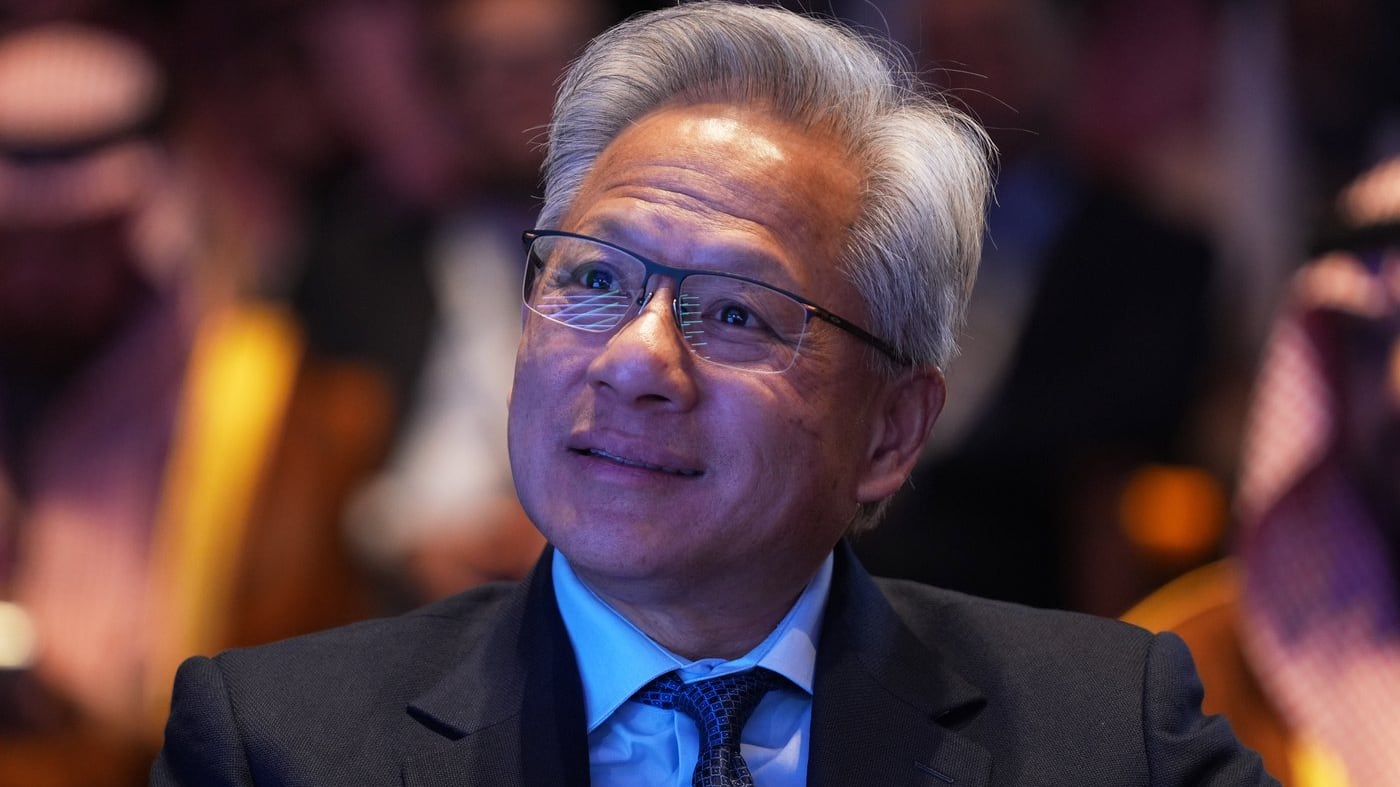
Nvidia CEO Jensen Huang listens as President Donald Trump speaks during the Saudi Investment Forum at the Kennedy Center, Wednesday, Nov. 19, 2025, in Washington.
The most prominent figures in artificial intelligence are stepping back from dire predictions about mass unemployment, as the industry faces growing public hostility over AI’s promised transformation of the workplace.
Nvidia chief executive Jensen Huang and OpenAI CEO Sam Altman, whose comments have stoked anxiety about AI’s potential effects on society, are now arguing that doom-laden warnings were overblown or, in some cases, disingenuous.
Speaking to Channel News Asia on Monday, Huang took direct aim at fellow executives who have publicly blamed AI for workforce reductions.
“The narrative that connects AI to job loss, for many of the CEOs that are doing it -- it is just too lazy,” he said.
“AI has just arrived. How is it possible they’re already losing jobs?”
Huang, who has long argued that AI will create as many jobs as it displaces, pushed back against the doom-and-gloom forecasts of some industry insiders, saying that the recent wave of corporate layoffs was not driven by AI.
“How is it possible that AI became productive and useful only six months ago, and they were somehow laying people off two years ago because of AI? It doesn’t make any sense,” he said.
“It was just a way for them to sound smart, and I really hate that. I think we’re scaring people and that’s irresponsible,” he said.
Altman’s mea culpa
Last week, British bank Standard Chartered announced plans to axe thousands of jobs by 2030 as artificial intelligence replaces employees in a range of administrative roles.
The tech firm behind social network Snapchat cut 1,000 jobs last month, saying AI is boosting efficiency as it pushes towards profitability.
Altman, meanwhile, offered a mea culpa.
Speaking at the Commonwealth Bank of Australia’s Accelerate AI Conference in Sydney, he said rapid AI development would not produce the “jobs apocalypse that some of the companies in our space advocate or talk about” -- including his own.
“I thought there would have been more impact on entry-level white-collar jobs being eliminated by now than has actually happened,” he told the conference on Tuesday, as reported by The Australian.
“I think I understand more about why that wasn’t done -- obviously gratefully -- but that is an area where my intuitions were just off.”
Anthropic boss Dario Amodei has also softened his tone, predicting recently that even if 90 percent of jobs are automated, the remaining 10 percent would be handled by human workers who would be vastly more productive.
Amodei has long drawn criticism from fellow industry figures who regard him as an AI doomer, even as Anthropic has become a highly successful company, with Huang saying last year he “pretty much disagrees with almost everything he says.”
The reversals from rivals Altman and Amodei come as their companies -- OpenAI and Anthropic -- are expected to embark on high-profile IPOs that will require broad buy-in from investors to succeed.
But earlier doom-laden statements have now come to haunt the AI industry as the public, notably in the United States, voices serious discontent in polling over the disruption that tech companies and political leaders predict from AI.
Most economic institutions, most recently the European Central Bank, say that artificial intelligence has had only minor effects on employment so far.
From the future of gig work to sovereignty: Canadian tech leaders opine
Toronto Tech Week has drawn thousands to the city to participate in 600 events featuring business leaders, politicians and startups.
The buzziest event came Wednesday, when event organizers hosted Homecoming, a one-day conference featuring talks from some of the industry’s biggest names.
Here’s what some of the speakers had to say:
Andrew Macdonald, Uber’s president and chief operating officer
The executive says technology, like artificial intelligence, will create demand for new jobs people haven’t even thought of today.
But he admitted that revolution could endanger some of the work Uber drivers and couriers are already carrying out.
“I can’t specifically tell you what the 10.5 million people who earn money on Uber today are going to be doing in 15 years, because I think for some period of time there will be more demand for gig economy workers,” Macdonald said.
“But at some point in time, they will decrease, at least the types of jobs being done today and I can’t tell you where all those folks will go.”
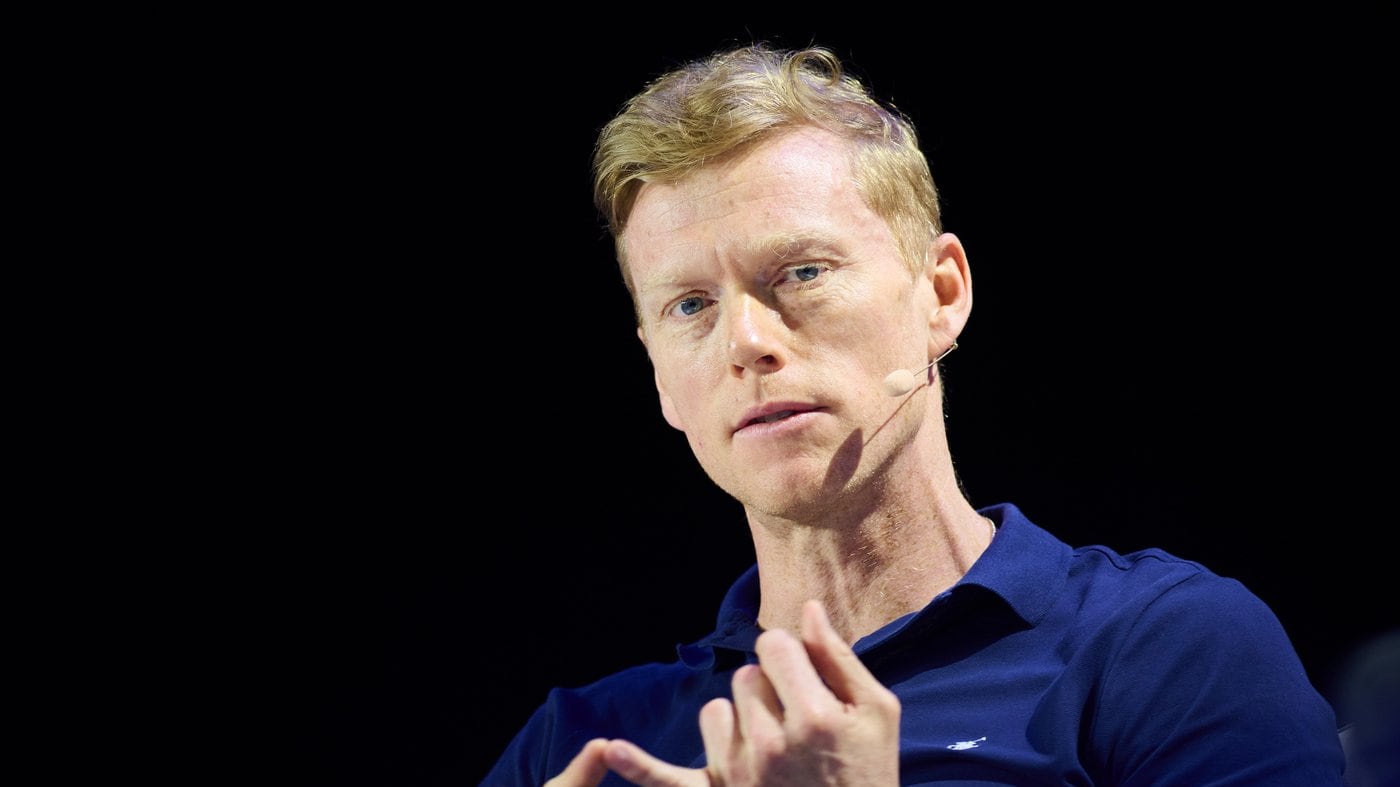
Uber president and chief operating officer Andrew Macdonald speaks at the 2026 Toronto Tech Week Homecoming conference in Toronto, on Wednesday, May 27, 2026. THE CANADIAN PRESS/Sammy Kogan
The job security of Uber drivers and couriers is particularly at risk because they work for — but are not employed by — ride-hailing companies, who are heavily investing in autonomous driving startups. Uber, for example, has invested in self-driving truck business Waabi, which is based in Toronto.
Asked Wednesday how soon self-driving vehicles could be on the Uber platform in Canada, Macdonald said “soon ... but I don’t have a specific date.”
Tobi Lütke, co-founder and chief executive of Shopify Inc.
The head of the e-commerce software firm says people are worried about what work will look like in the future.
He finds that “funny because it’s such a misunderstanding of how humans work that people think that there’s not going to be enough jobs here.”
“The shape of companies is going to change, absolutely. Companies will be smaller, but there will be vastly more of them, which is amazing,” Lütke said.
Up until now he said, very few companies could afford to hire enough engineers to pursue every idea staff had but that’s changing with AI and other tech.
Shopify co-founder and CEO Tobi Lütke speaks at the 2026 Toronto Tech Week Homecoming conference in Toronto, on Wednesday, May 27, 2026. THE CANADIAN PRESS/Sammy Kogan
“Now everyone has a seven out of 10 engineer on their phone right now for $200 a month and that’ll be $20 or $2 a month very soon ... so I think the amount of creativity that can be brought in the world is just so vastly higher,” he said.
The ease of building a business with that technology has some buzzing that a one-person company could generate $1 billion but Lütke says he thinks the concept is “bullshit.”
“Why ... would you not spend some of that money to have someone else around?” he said.
Nick Frosst, co-founder of Cohere
The artificial intelligence leader said there’s “no way” for Cohere to build its enterprise technology without raising a huge amount of money outside of Canada, but that doesn’t mean the company isn’t patriotic.
“We have had to go all over the world to raise the capital that we need to train models, but I don’t think that makes us any less sovereign,” he said.
“In many ways, that has given us roots into the rest of the world.”
Cohere has long been front and centre in sovereignty conversations because it was born in Canada, remains headquartered in Toronto and last year, signed an agreement to help the federal government build an AI ecosystem and services for the country.
The company announced in April it would merge with German rival Aleph Alpha. The new company will use the Cohere name and be “anchored in” Germany and Canada, if Aleph Alpha shareholders approve the deal.
---
Tara Deschamps, The Canadian Press
This report by The Canadian Press was first published May 27, 2026.
Uber president calls on federal government to speed up policy, program work
Uber president and chief operating officer Andrew Macdonald speaks at the 2026 Toronto Tech Week Homecoming conference in Toronto, on Wednesday, May 27, 2026. THE CANADIAN PRESS/Sammy Kogan
TORONTO — Uber’s president wants the federal government to act faster on policies and programs that will help Canadian companies build.
Andrew Macdonald says he thinks the country needs to move more quickly from announcements to progress.
As an example of how the government could speed up, he pointed to the major projects office Prime Minister Mark Carney launched last summer to fast-track the development of ports, railways, energy corridors and more.
Macdonald says the idea of a six-month target for getting project approvals is admirable, but he wonders why it can’t be something shorter, like six weeks.
By comparison, he says Germany approved new liquefied natural gas terminals in a matter of days, when war broke out between Ukraine and Russia.
Macdonald’s remarks came at one of 600 events running during Toronto Tech Week, which wraps up Friday.
This report by The Canadian Press was first published May 27, 2026.
Tara Deschamps, The Canadian Press
Meta launches subscription push to ease investor concerns over soaring AI costs
Meta on Wednesday launched paid subscription plans for its flagship apps, marking a major push by the tech giant to diversify beyond its long-standing reliance on advertising revenue.
Meta launched a new wave of paid subscriptions globally across Instagram, Facebook and WhatsApp, while also testing premium offerings aimed at businesses, creators and users of its AI products.
Meta’s head of product, Naomi Gleit, announced the move in a video posted on Instagram, saying the company was rolling out Facebook Plus, Instagram Plus and WhatsApp Plus globally, with additional plans for businesses, creators and artificial intelligence products in development.
The company said it is also beginning tests of separate subscription offerings aimed at creators, businesses and Meta AI users, signalling a broader push beyond consumer-facing app subscriptions.
These offerings "come together under a new name: Meta One," the post said.
Meta confirmed earlier this year that it was planning subscription offerings as it seeks to diversify beyond advertising and offset growing costs linked to its AI expansion.
The company has projected capital expenditure of between $125 billion (€115 billion) and $145 billion (€133 billion) this year, largely tied to AI data centres.
Ben Barringer, head of technology research at Quilter Cheviot, said: “It is unlikely to be a major driver when it launches, but if Meta gets it right, it could provide a useful boost.”
He added: “Perhaps more significant is the involvement of AI models in the offering, which suggests Meta is looking for ways to monetise its substantial capital expenditure.”
According to AFP, citing media reports, Instagram Plus and Facebook Plus will cost $3.99 (€3.70) per month, while WhatsApp Plus will be priced at $2.99 (€2.77) per month
Meta shares rose 3.7% following the announcement.
Instagram Plus and Facebook Plus will offer additional features, including enhanced analytics, story rewatch statistics, expanded audience reach and profile customisation options.
Relate
WhatsApp Plus will focus on personalisation, including premium stickers, custom ringtones and app themes.
Meta said future subscription tests for creators, businesses and AI users will be grouped under a new umbrella brand called “Meta One”, which is expected to become the company’s main hub for subscription products going forward.
CNBC reported that subscription plans for the service will start at $7.99 (€7.40) a month and could cost as much as $19.99 (€18.50) per month for Meta One Premium. According to the news outlet, the new subscription service will first be tested in Singapore, Guatemala and Bolivia starting next month.
In 2023, Meta launched paid ad-free versions of Facebook and Instagram in Europe to comply with EU data privacy rules, giving users the option to choose between a free ad-supported experience and a paid ad-free subscription.
Better than AI slop and piracy: Spotify co-CEO’s stance on new AI-generated music feature
Spotify’s latest move to allow AI-generated music on its platform has led to widespread concerns about human artists being pushed out and royalty dilution.
The co-CEO of music streaming platform Spotify, Alex Norström, has continued to claim that the company’s decision to move to AI-generated music is a better option than AI slop and piracy.
The company recently unveiled a new feature which will allow premium users to make their own, AI-generated song covers and remixes with music from other artists who choose to take part.
This new paid add-on is part of a deal with Universal Music Group and will be available on Spotify’sapp. According to the platform, the tool could create an additional income stream for songwriters and artists, on top of royalties.
However, it is unknown which artists will take part in this licensing deal at the moment, with Universal Music also representing major artists like Arianda Grande, Taylor Swift and Billie Eilish.
“Solving hard problems for music is what Spotify does, and fan-made covers and remixes are next,” Norström said in a statement. “What we’re building is grounded in consent, credit, and compensation for the artists and songwriters that take part.
“Through each technological transformation, we have worked together with Sir Lucian [Grainge, Chairman and CEO of Universal Music Group] and his team to evolve the music ecosystem into a richer, more beneficial experience for fans and a more rewarding outcome for artists and songwriters.”
However, exact details about how this new service will work, such as whether AI remixes will be private or shareable, are yet to be revealed. Another concern is how Spotify could label shareable user-generated AI content.
“The most valuable innovations in the music business always bring artists and fans closer together,” Grainge said. “That principle is at the heart of this pioneering AI-enabled superfan initiative, which is designed to support human artistry, deepen fan relationships, and create additional revenue opportunities for artists and songwriters.”
Euronews Next has contacted Spotify for comment.
Related
Could Spotify’s new move marginalise human artists?
Despite Norström insisting that Spotify’s new feature is an attempt to distinguish carefully curated AI music from slop, several artists continue to be concerned that human artists may be pushed out of the industry.
One of the biggest concerns is that greater competition from AI-generated music could lead to more and more artists reluctantly taking part in the feature, which may create a vicious cycle of sorts.
“I think if you are going to have AI music, it’s clearly better that you have AI music that is rooted in consent,” Ed Newton-Rex, a composer and campaigner for artists’ copyright said, as reported by The Guardian.
“The big question will be whether fans can share remixes they make for other people to listen to,” he added. “If they can, I think you get into dangerous territory. These AI remixes will flood Spotify and drown out other songs, which will in turn put pressure on more musicians to sign up to the AI remix feature.”
This comes as more listeners appear unconcerned about whether a track is created by a human or generated using AI – so long as they enjoy the music. AI-generated songs have already been topping music charts in the last year, highlighting growing demand.
Major tech companies like OpenAI and Meta have already been sued for allegedly using content from newspapers, books and other copyrighted sources without consent to train AI models.
There are also concerns of AI music diluting royalties, leaving even less income for human artists, as well as impersonation of styles, voices, and likeness without consent.
Currently, Spotify uses a Verified by Spotify badge and internal detection technology to help users distinguish human artists from AI and spam.
NATO Strengthens Relations With Key Cyber Industries
NATO is joining forces with Microsoft, Palo Alto Networks and ESET to enhance resilience to cyber threats and promote free, open, peaceful and secure cyberspace in line with international obligations.
These strategic and non-commercial partnerships were formally announced today [27 May] at the International Conference on Cyber Conflict (CyCon) in Tallinn, Estonia, building new momentum for NATO-industry cyber cooperation. The partnerships will help facilitate dialogue, information sharing, exchange of best practices, as well as coordinated activities to address issues of common interest.
“Deterrence and defence in cyberspace and the digital sphere are not only a matter of reliable hardware and software, but they are also about shared norms and principles,” Jean Charles Ellermann-Kingombe, NATO’s Assistant Secretary General for Cyber and Digital Transformation, said at the Conference. “This is particularly true at a time when critical infrastructure essential for our societies to function is under attack, and malicious actors take advantage of technological developments to rapidly evolve their tactics,” he underlined.
At the 2023 NATO Summit in Vilnius, Allies agreed to expand cooperation with the cyber private sector, recognising the crucial expertise and experience that industry has in preventing, defending against and responding to ever more sophisticated and diverse malicious cyber activities. NATO’s enhanced cooperation with industry partners like Microsoft, Palo Alto Networks and ESET will help make systems more secure, more resilient and quicker to recover from attacks.
The International Conference on Cyber Conflict is an annual event organised by NATO’s Cooperative Cyber Defence Centre of Excellence. The 2026 edition (26-29 May), themed “Securing Tomorrow,” brings together 800 decision-makers, cyber experts, academics and industry representatives from 48 countries.
Google engineer charged in alleged $1.2mn Polymarket insider trading scheme
A Google engineer has been arrested for allegedly using his employer's secret search trend data, as landmark case tests whether prediction markets are subject to the same rules as Wall Street.
Betting on Polymarket is supposed to be a fun, low-intensity gamble whereby you buy 'yes' or 'no' shares for the outcome of a real-world event and hope to correctly predict how it resolves — at which point your winning share pays out $1 and your losing one pays nothing
That is, unless you are an employee at Google and federal prosecutors allege you already know the answers — in which case it could amount to insider trading, one of the most aggressively prosecuted white-collar offences on the books that can carry a maximum prison sentence of 20 years.
According to the US Attorney for the Southern District of New York, Michele Spagnuolo, a staff software engineer at Google, allegedly used his employer's most confidential annual trend data compilation to pocket more than $1.2 million (€1.1mn) on Polymarket. His alias was known as “AlphaRaccoon.”
Spagnuolo has now been charged with commodities fraud, wire fraud and money laundering by federal prosecutors in New York.
The Spagnuolo case is the second high-profile prosecution for insider trading on a prediction market in just over a month, part of a largely unexplored legal frontier as prosecutors grapple with how existing fraud and commodities law applies to platforms like Polymarket, which operate nothing like a traditional stock exchange.
How Google's 'Year in Search' became a trading tip
Every December, Google publishes its "Year in Search" — a splashy, carefully choreographed reveal of the year's top trending searches. It drives traffic, generates significant media coverage and, as the filing notes, serves as a "high-profile vehicle" through which Google demonstrates its reach to advertisers.
The whole point, commercially speaking, is the surprise. Google guards the underlying data closely and even internally, access is restricted to a limited number of employees.
Spagnuolo, who has worked at Google since around 2014, allegedly had access to an internal software tool bearing a banner reading "Google Confidential" that gave him sight of the Year in Search results before anyone outside the company did.
Enter AlphaRaccoon
On the prediction market platform Polymarket, users can bet on the outcome of real-world events such as elections, sports results, and cultural moments using cryptocurrency. In October 2025, Polymarket began offering markets on who would be Google's most-searched person of the year.
Around the same time, a Polymarket account called "AlphaRaccoon" started placing bets.
Between October and December 2025, FBI Special Agent Brandon Racz alleges, Spagnuolo accessed Google's confidential Year in Search data and then, sometimes within hours, placed wagers on Polymarket that reflected exactly what he had seen.
On or about 15 October 2025, Spagnuolo allegedly accessed the internal tool. The following day, the AlphaRaccoon account wagered approximately $403 (€373) on Kendrick Lamar being the number one searched person of 2025 at the implied odds of just 3% and roughly $10,807 (€10,022) against Pope Leo XIV taking the top spot.
He allegedly knew this, according to prosecutors, because the internal data already told him so.
Betting against the crowd
What makes the alleged scheme particularly striking is how it worked in practice. Because Spagnuolo allegedly knew who would not top the rankings, he could bet heavily against the crowd's favourites and collected winnings when popular picks failed to materialise.
The AlphaRaccoon account wagered approximately $937,688 (€869,083) on the "no" side of the question of whether Bianca Censori would be the number one searched person at a time when the market put her odds at around 85%.
It bet roughly $613,587 (€568,628) against Pope Leo XIV at 56% implied probability, and approximately $509,149 (€471,741) against Donald Trump at around 90%.
In total, across roughly 25 bets on Year in Search outcomes, AlphaRaccoon risked approximately $2.75mn (€2.55mn).
When Google published its results on 4 December 2025, confirming its global top five trending people as d4vd, Kendrick Lamar, Jimmy Kimmel, Tyler Robinson and Pope Leo XIV, the account walked away with approximately $1.2mn (€1.11m) in profit.
Relate
The cover-up
Once the markets resolved, roughly $3.9mn (€3.6mn) in USDC.e — a cryptocurrency tied to the value of the US dollar — was released to the AlphaRaccoon account. On 10 December, the account transferred approximately $5mn (€4.6mn) to a linked cryptocurrency wallet.
Polymarket used USDC.e as its main payment currency for trading and settlements on the Polygon blockchain network.
From there, according to the complaint, the funds passed through at least two cryptocurrency swaps before being moved into a service that prosecutors say was designed to make the transactions harder to trace.
Meanwhile, online communities on Discord and X had already begun speculating that AlphaRaccoon was a Google insider. Shortly afterwards, the username was quietly removed from the account, reverting it to an anonymous alphanumeric string.
The FBI traced the wallet anyway.
Prosecutors allege cryptocurrency records linked the AlphaRaccoon account to a wallet that had sent approximately $149,980 (€138,916) to a payment processor account registered in the name of Michele Spagnuolo using an Italian government identification card.
The charges
Spagnuolo faces three charges. The first is commodities fraud, based on allegations that he used material nonpublic information to execute trades on Polymarket, which prosecutors are treating as a platform offering commodity-linked contracts.
The second is wire fraud, relating to the alleged misuse of Google's confidential commercial information for personal gain. The third is money laundering, tied to prosecutors' claims that he took steps after December 2025 to conceal the source and ownership of the proceeds.
The complaint was sworn before US Magistrate Judge Sarah Netburn in the Southern District of New York.
The case follows that of US Army Special Forces Master Sergeant Gannon Ken Van Dyke, who was charged in April with allegedly using classified information about a US military operation targeting Nicolás Maduro to place winning bets on Polymarket.
Prosecutors say Van Dyke turned roughly $33,000 in wagers into more than $400,000 in profit. He has pleaded not guilty.
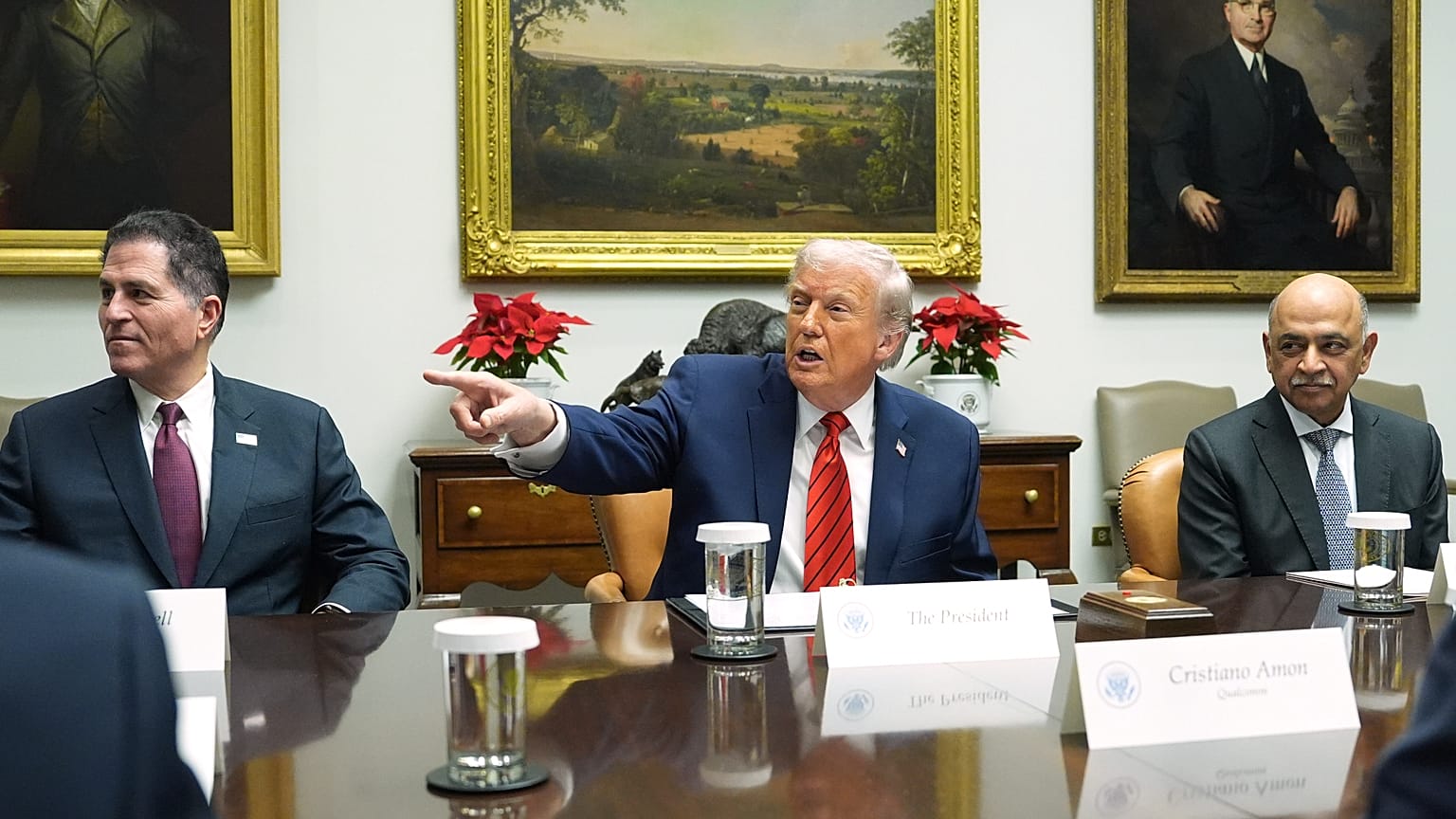
Dell lands $9.7bn Pentagon contract just weeks after Trump said 'go out and buy'
Dell Technologies has secured a $9.7 billion (€8.3bn) defence contract to supply Microsoft software across the entire US military, just weeks after US President Donald Trump publicly endorsed the company at the White House.
On Wednesday, the US Department of War confirmed it had awarded Dell Federal Systems, the government-focused unit of Dell Technologies, a five-year, $9.7 billion (€8.3bn) contract to supply the Pentagon.
As part of the Core Enterprise Technology Agreement (CETA), a Pentagon-wide Microsoft licensing and software procurement framework, the company will provide and manage Microsoft software licences, cloud subscriptions and on-premises software licensing across the US military, intelligence agencies and the US Coast Guard.
Dell Technologies' shares were up around 5% in pre-market to $320 due to the announcement after closing Wednesday's session at roughly $305.
The company is set to report its earnings for the first quarter of this year on Thursday, with analysts from Zacks Investment Research forecasting revenues of approximately $35 billion (€30bn), representing annual growth of about 50%.
According to US DoW Chief Information Officer Kirsten Davies, who briefed reporters at the Pentagon, the CETA is expected to save the department roughly $422 million (€360.9mn) annually by consolidating fragmented technology budgets from across the military services into a single purchasing structure.
Relate
The contract was granted less than three weeks after US President Donald Trump stood at a White House event and urged Americans to "go out and buy a Dell. They're great."
Davies and acting US Navy Chief Information Officer Barry Tanner were both clear that the award followed a competitive process.
"The vendors were all evaluated based on competition, comparison to GSA schedule pricing and overall chain of value to the department," Tanner noted.
Dell holds a long-standing commercial partnership with Microsoft and is one of its major buyers of Windows licences. Nonetheless, the contract arrives at the culmination of a period of visible alignment between CEO Michael Dell and the Trump administration.
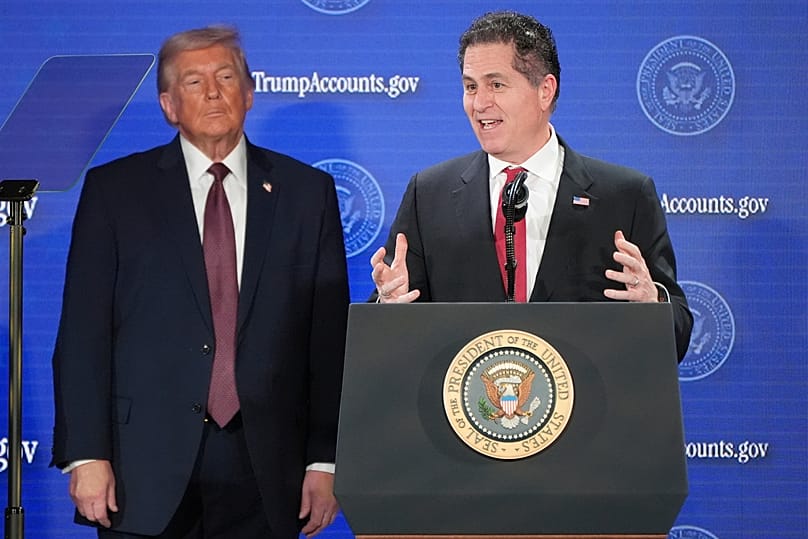
In December 2025, Dell and his wife Susan appeared alongside Trump at the White House to announce a $6.25 billion (€5.3bn) donation to "Trump Accounts," a tax-advantaged investment programme for children created under the "One Big Beautiful Bill".
The pledge will provide $250 (€214) to roughly 25 million American children aged 10 and under from households with a median income below $150,000 (€129,000) and was described by Invest America, the nonprofit organisation spearheading the initiative, as the largest ever private commitment devoted to American children.
Michael Dell speaks during the launch of 'Trump Accounts' in Washington, Jan. 2026AP Photo/Jacquelyn Martin
Michael Dell also sits on Trump's Council of Advisors on Science and Technology, informing public policy regarding the economy, public health, national security, energy and emerging technologies.
The convergence of public presidential endorsements and subsequent federal contract awards is attracting scrutiny beyond Dell.
Financial disclosures released this month by the US Office of Government Ethics showed that investment accounts associated with President Donald Trump held Dell Technologies shares during the first quarter of 2026. The disclosures indicate some purchases were made before Trump publicly praised the company at a White House event.
The Trump Organisation has said the accounts are managed independently by third-party financial institutions and that neither Trump nor his family directs individual trades.
Last week, responding to questions about Trump’s financial disclosures at a White House briefing, Vice President JD Vance said the president’s investments are handled by independent wealth advisers and rejected suggestions that Trump personally directs individual stock trades. “He’s not making these stock trades himself,” Vance said.
Commentators and ethics critics have also pointed to trading activity involving companies such as Intel and Palantir, whose shares have at times moved sharply following public comments by Trump or announcements linked to government technology spending.
The Pentagon has said Dell’s selection followed a competitive procurement process.
Even so, the timing of the award alongside Trump’s public praise of the company and financial disclosures showing investments linked to Dell is likely to draw renewed scrutiny from ethics observers and political critics.
Did the EU-Mercosur trade agreement allow ‘worm-infested’ Brazilian coffee into Europe?
Published on
Posts by French and Polish politicians have falsely connected a rejected shipment of Brazilian coffee to the EU-Mercosur trade deal.
Widely-shared social media posts have falsely linked a rejected shipment of Brazilian coffee in Poland to the EU-Mercosur agreement, claiming that the deal has allowed contaminated products to enter Europe.
The shipment, which inspectors said was halted in Poznań, contained "damaged beans" and "live pests".
Polish far-right MEP Ewa Zajączkowska-Hernik and former French MEP and founder of the Eurosceptic Patriots party, Florian Philippot, both linked the rejected shipment to the EU-Mercosur trade agreement, which began provisional application on 1 May.
According to Zajączkowska-Hernik, the shipment is an example of the trade agreement "in practice", accusing the EU-Mercosur deal of "poisoning people for the sake of German economic interests".
However, official responses and publicly available trade data reviewed by The Cube, Euronews' fact-checking team, show that claims the shipment was linked to the EU-Mercosur trade deal are unsubstantiated.
Green coffee already entered EU tariff-free
Critics of the EU-Mercosur deal, which removes import duties on goods traded between the EU and Mercosur countries, argue that reduced tariffs will flood Europe with agricultural products that do not meet European standards, and place additional pressure on European food inspection systems and farmers.
But publicly available documents show that green coffee — the separated, raw seeds of coffee cherries that are then roasted — already entered the EU tariff-free long before EU-Mercosur's provisional application began.
A report published in 2011 by the International Coffee Organization notes that "non-decaffeinated green coffee can be imported tariff-free into the European Union", while processed coffee incurs a higher tariff.
A separate trade analysis, published in February 2026, by the United States Department of Agriculture also stated that "green coffee beans, which make up 97 percent of Brazil’s coffee exports to the EU, already enter the European market tariff-free".
Did the shipment enter under EU-Mercosur rules?
In response to Euronews, IJHARS said the shipment underwent "standard commercial quality inspection", carried out under existing national rules.
The agency did not say the shipment entered Poland under preferential trade conditions linked to the EU-Mercosur agreement, adding that customs-related matters fall under the responsibility of tax and customs authorities.
IJHARS also said that it's not unusual for it to intercept food products that do not meet standards. The agency issued 95 decisions blocking imported food shipments in 2025 alone, impacting 121 batches of food that were set to enter Poland from non-EU countries.
Brazil's ambassador to the EU, Pedro Miguel da Costa e Silva, rejected claims linking the shipment to the EU-Mercosur agreement.
“Green coffee already entered the EU under a zero tariff rate. Nothing changed,” he told Euronews. He added that Brazil had exported green coffee to Europe “since the 19th century”.
However despite online claims, the available evidence does not show that this specific coffee shipment was in any way connected to the EU-Mercosur trade agreement.