Thursday, May 28, 2026

Witnesses accuse the Israeli army of arbitrary arrests in Syria

The Israeli army has arrested at least 197 men in southern Syria since late 2024. A lawyer confirmed that 43 of them are still being held in what he says is arbitrary detention in Israeli prisons. The Israeli army, for its part, says they are targeting “suspected terrorists”.


Issued on: 27/05/2026
The FRANCE 24 Observers/
Ahmed ALMASSALMAH

These three photos show Israeli soldiers carrying out patrols and manning checkpoints in Quneitra province in southern Syria. © Observers

The place is Beit Jinn, in the countryside to the west of Damascus. It’s the night of November 28, 2025. Israeli soldiers launch a ground offensive. While bombs fall from the sky and artillery is fired at homes, clashes break out between Israeli soldiers and some villagers. A video posted online by the Israeli army shows soldiers arresting brothers Nidal Akasha Akasha and Muhammad Akasha Akasha in the fray. In a statement, the Israeli army claims that Nidal and Muhammad have ties to the Islamist group Al-Jamaa al-Islamiya.

The FRANCE 24 Observers team interviewed a number of Syrians who had been arrested and then detained in an Israeli prison for months before being released. We also spoke to the families of those still detained. We also analysed rare images posted online by the Israeli army, which claims that they have been arresting “suspicious persons” or those “linked to armed groups”. Through our research, we identified three different arrest operations carried out by the Israeli army in 2025.

A total of 13 villagers died, and more than 25 were wounded in the attack on Beit Jinn, according to medical sources. For its part, the Israeli army claims to have "eliminated several terrorists". Six Israeli soldiers were wounded, three seriously.

This is a screenshot taken from a video shared by the Israeli army showing the arrest of two brothers, Nidal Akasha Akasha and Muhammad Akasha Akasha, on November 28, 2025, in the Syrian village of Beit Jinn, located in the countryside to the west of Damascus. The Israeli army said these two men had links with the Islamist group Al-Jamaa al-Islamiya. © Israeli army

‘My father has no links to an armed group’

Alia (not her real name) is the daughter of one of the men arrested during the raid on November 28, 2025. She told us her version of events:

"That night, around 3:30am, we heard someone trying to force open the door. My father got closer to see what was happening, but the Israeli soldiers were already there. They immediately pinned him to the ground. Then, they went upstairs and arrested my uncle. They gathered all of us in the courtyard, including my mother and I, and they pointed their weapons at us. They forced us to our knees.

My father is 52 years old, he’s a farmer. We lived in Lebanon for 12 years when we fled the war in Syria. We’ve only been back for a year. He has no links with any armed groups. That night, they searched everything, broke things, destroyed a door.

Since then, we’ve had almost no information. After several months, an organisation told us that they were being held in Israel, one of them in the Sde Teiman prison, the other in Nafha prison. But other than that, we don’t have any information."

It is not possible for our team to independently verify that the two men who were arrested don’t have any links to armed groups. According to the Israeli army, their brother was part of the group Al-Jamaa al-Islamiya. He was killed during a drone strike, likely carried out by Israel, on September 21, 2023, in Beit Jinn. Al-Jamaa al-Islamiya is a Sunni Islamist organisation with close links to the Muslim Brotherhood. The group, mainly based in Lebanon, blends political, religious and social activities, supports the Palestinian cause and has intermittent links with Hamas. Al-Jamaa al-Islamiya, for its part, denies any link to the activities carried out in Beit Jinn.

The Israeli army did not respond when we asked what charges the brothers were facing. They did not respond to our questions about the charges faced by any person mentioned in this article.
This image was taken from a video posted online by the Israeli army showing the arrest of Nidal Akasha Akasha the night of November 28, 2025, in Beit Jinn, a village located in the countryside to the west of Damascus. © Israeli army


Since the beginning of its operations in Syria in December 2024, Israel has maintained that it is arresting people with links to armed groups.

When we spoke to other families across southern Syria, they described similar scenes to Beit Jinn: arrests carried out in the middle of the night, homes raided and family members threatened or immobilised. And, according to family members and other witnesses, the arrest of people who were not taking part in activities hostile to Israel.


At left, Hiyam, who lives in Ghadir al-Bustan in southern Syria, shows her right arm, which she said was bitten by a dog when Israeli soldiers raided her home. The image at right is a photo taken by the UN mission that went to her home the next day and documented the events. © Facebook

‘The dogs attacked me’

Israeli soldiers raided the home of a woman named Hiyam on February 16 in the village of Ghadir al-Bustan. Hiyam said she was attacked by the soldiers’ dogs and her two sons were arrested:

“It was February 16, 2026, in the village of Ghadir al-Bustan. It was 2:10 in the morning. We were sleeping when they burst into the home. The dogs immediately attacked me. They bit my face and hands. You can still see the marks now.

They took my sons while I was injured. My oldest son, Hamza al-Aryan, is 19. They stripped him and threw him on the ground and a dog was on him. He was screaming for them to get the dog off him. My other son was tied up in another room.

They shut me and my 13-year-old daughter in a room and wouldn’t let us out. They didn’t even treat my wounds. They searched the whole home, broke down the doors, destroyed our belongings. There were perhaps around 50 soldiers and cars parked out in the street. People later told us that there were even drones flying overhead.

I haven’t had any news of my sons since that day. It’s been more than a month. They are students, one of them was studying for his final high school exams. Their father died 10 years ago. They are all I have left. I don’t understand why they took them.

All I want is for them to come back. Nothing else is important.”

Our team spoke to a spokesperson for the United Nations Disengagement Observer Force (FNUOD), the force tasked with maintaining the ceasefire between Israel and Syria in the Golan Heights buffer zone since 1973. She said that when she was alerted by locals, she went to the village "to meet the mukhtar (village leader) and the residents of the home [that had been raided]”. She added that they provided first aid to the residents of the home, who “had injuries on their arms and faces”.

The Israeli army has published photos and videos of police dogs accompanying soldiers during a number of raids carried out in Syria.

The image at left shows a police dog during a raid carried out in September 2025 in southern Syria, according to the Israeli army. The image at right shows a police dog accompanying Israeli soldiers during a raid carried out in southern Syria in July 2025, according to the Israeli army. © Israeli army

The Israeli army installs 10 bases

The Israeli army’s operations are taking place against a specific security backdrop. After the fall of longtime Syrian president Bashar al-Assad’s regime in December 2024, Israel announced the collapse of the 1974 disengagement agreement, which established the buffer zone between the Israeli-occupied Golan Heights and Syria. Since then, the Israeli army has deployed troops in the buffer zone and made an increasing number of incursions into Syrian territory, setting up at least 10 military bases – six in the buffer zone and four on Syrian soil.

The Israeli army has established at least 10 military bases in Syria since the fall of Bashar al-Assad’s regime in December 2024. The largest of the bases is in Jubata Al-Khashab. © FMM graphics studio


We spoke to six men who were arrested and detained by the Israeli army. They said they were initially held in one of the new Israeli military bases built on Syrian soil in the villages of Jubata Al-Khashab, Tel Ahmar or Sirriyeh al-Jazira. Some were held for just a few hours before being released, while others were held for days. Some of them were transferred to Israeli prisons before being released.
The prison central to many of the accounts

We also spoke to seven people who live in the region. One of them, who hails from Kodna, a village near Quneitra, said that he has been arrested three times by the Israeli army, most recently in late April 2026, when he was held for 24 hours. The six others all said that they were taken to Sde Teiman, a prison in the Negev desert in southern Israel, and held there for periods ranging from two to six months. In July 2024, footage circulated showing Palestinian prisoners being mistreated in Sde Teiman, which is located on an Israeli military base nearly 200 kilometres from the Syrian border. Based on our interviews, there are at least 35 Syrians currently being held in this centre.

Abu Kinan al-Sayed, a former detainee, told us his story:


"I was arrested along with my son, my brother and my nephew at my farm in Jubata Al-Khashab, in the Quneitra region.

Right from the start, they take away your humanity. You no longer have a name, just a number. I was held in solitary confinement at Sde Teiman for around 55 days, while they were interrogating me.

They separate the Syrians and the Palestinians right from the start. After a week, they transferred us into group cells, each containing about 15 people. Everyone in my cell was Syrian, though we came from different regions: Ghouta, Beit Jinn, Quneitra and Deraa.

Life in detention was an endless stream of humiliation. They forced us to sleep on our stomachs on the concrete floor, sometimes for an hour at a time, in the middle of the night or during the day. They would enter at 3am or 8pm and set off stun grenades. They would force us to remain on our knees, our heads on the ground, immobile, while they were aiming guns with lasers at us.

I was finally released on January 19, 2026, after 65 days. But I left behind people who had been held there for more than a year. These were civilians, people with families.

During one of the interrogations in Sde Teman, I asked the interrogator why I was there, and they said that they had received information that I had links to Hezbollah and that I was running groups that threatened the security of Israel.”

The Israel Defence Forces (IDF) told our team that "any harm to detainees, whether during their arrest or interrogation, constitutes a violation of the law and IDF regulations and is therefore strictly prohibited".

FNUOD reported that locals regularly contact them about these nighttime operations and arrests, though the UN has not directly observed one take place.
Increasing numbers of arrests and accusations of torture

Lawyer Ahmad al-Moussa, who is based in Germany and working on behalf of a number of these families, says that the number of Syrians detained in Israel has drastically increased since December 2024.


"Before December 2024, there were just four Syrians detained in Israel. At the beginning of May 2026, there were 39, four of whom were minors when they were arrested.

We have contacted a number of international bodies, including the UN Human Rights Council and the UN Committee on Enforced Disappearances, to denounce the arbitrary arrests, conditions in detention and the acts of torture that these detainees have endured. But we are still waiting for a response.

The people we spoke to said that both physical torture and forced confessions were taking place.

Some had already spent five or six years in prison and were only released when the Syrian regime fell. Then, less than a month later, they were arrested by Israel.”

According to the Sijil Centre, a group that works to document the Israeli army’s activities in Syria, at least 197 people have been arrested in less than a year and a half. While most were released after a few days, the centre reported that 43 people are still being held in Israeli prisons, most often in Ofer, Nafha or Sde Teiman.

When questioned by the FRANCE 24 Observers team, the Israeli army responded: “The Israel Defence Forces have apprehended individuals where there was reasonable suspicion of their involvement in terrorist activity against the State of Israel, including activity carried out by Iran and terrorist organisations such as Hezbollah and Hamas operating in Syria. In appropriate cases, continued detention is carried out for preventive security purposes, in accordance with Israeli law and the applicable rules of international law."
Minors amongst the detained

Saddam was arrested on April 25, 2024, when he was just 17 years old. Hassan Ahmad is his father:


"My son was on our farm, like all the other days. But then, soldiers arrived and arrested him. I saw it happen: they blindfolded him and took him by force.

They called me from his phone to ask me to turn myself in and, in exchange, he would be released. I refused because I was afraid. Since then, I’ve only had one visit from the International Committee of the Red Cross. It’s been nearly two years, and I still don’t know where he is or what state he is in.

Saddam is innocent. He was 17 when he was arrested. What could a minor of that age do, other than study and play with his friends?"
At left is Saddam’s identity card, which says he was born in 2007, meaning that he was a minor when he was arrested. At right is a permit for Saddam to enter into the buffer zone in the Golan Heights, where he was arrested on April 25, 2024. Saddam’s father provided us with these documents. © Observers

This is a screengrab taken from a video shared with us by Saddam’s father. The video, filmed by friends, shows when the Israeli army arrested Saddam on April 25, 2024. Saddam was blindfolded with a white bandage. © Observers


Siraj, a group of Syrian investigative journalists, published an investigation in August 2025 that mentions Saddam’s arrest and identifies where the video was filmed.
An ill man detained

According to the Israeli army, forces from the "Alexandroni" brigade, led by the 210th division, carried out a night raid on June 12, 2025, to arrest members of Hamas who were active in the region of Beit Jinn in Syria.

Mohammed Hamada was one of the people arrested during this operation. We contacted his wife, who said that her husband is a farmer who underwent back surgery on November 16, 2024, at the Damascus University Hospital. She showed us a medical report indicating that he was experiencing serious health problems and that the operation led to partial paralysis. She says that a humanitarian organisation in the West Bank informed her several days ago that her husband is being held in Nafha Prison in Jerusalem. She is worried that his health will deteriorate in detention.

At left is an image of the detainee after his operation. At right is a photo of the medical report documenting his poor state of health. © Observers

‘They want to make us leave, but it is our land’

The arrests seem to fall into two main categories: either people are being arrested during violent raids on their homes, often at night, or farmers are being arrested when they are near the ceasefire line. In some cases, civilians were targeted by gunfire.

A resident of Quneitra, who has been arrested three times, told their story:

“Each time, they’ve come at night. They surround the house, blindfold me and accuse me of filming their positions. The next day, they let me go. They want us to leave, but it is our land.”

This article has been translated from the original in French by Brenna Daldorph.
How Norwegian researchers are using satellite images to track tourism’s environmental impact


Issued on: 28/05/2026 -  FRANCE24


Norway’s northern Lofoten Islands are attracting an increasing number of tourists, raising concerns about the environmental impact. To help document these effects, Norwegian researchers have launched a new project that utilises satellite images.

Steep peaks plunging into a turquoise sea…. Instagram is flooded with videos showcasing the beauty of the Lofoten Islands, highlighting "must-do" treks and "hidden gems" throughout the Norwegian archipelago.

Located north of the Arctic Circle, these islands attract over 1 million tourists each year – a number that is rising.


This video, published on Instagram on December 3, 2025, shows the Reinebringen hike, one of the popular tours in the Lofoten Islands.

However, the boom in tourism is also sparking fears about its environmental impact in a country where outdoor access is governed by the “right to roam”.

This concept – which allows anyone to hike or camp wherever they want – has been heavily marketed by the tourism industry, explains Elina Hutton, a tourism researcher at the Lofoten-based firm SALT.

But it also makes managing these natural sites a major challenge. “For example, we can’t have trail counters on every trail because that would be millions of counters around Norway. So we need to find tools.”


‘Tourism impact is already visible from space’

Satellite imagery could offer a solution. It is with this objective in mind that the SALT Trail 2.0 project, funded by the European Space Agency and conducted by SALT, was launched. Hutton, the project leader, explains how the initiative came to life:

“The whole idea started a few years ago. There was a trail in the region where I was working that had appeared just because lots of people went there to take the most Instagrammable photo of the place. And suddenly the trail also appeared on maps. We found out that anyone can add trails on OpenStreetMap, but it also uses satellite imagery to automatically map them. We realised that the impact of tourism is already visible from space.

At that time, it didn't go anywhere further. But then I thought, ‘How could we use this information? How much more can we actually see from space?’

We realised that we are spending a lot of resources trying to understand how many people visit us in nature. We have been using Strava [Editor’s note: an application for sports activity] and other data to try to understand if we don't have counters. But that data doesn't really tell us what the impact of the visitation is. Testing different methods, we realised that these satellite images actually show this damage that we're doing.”

The researchers first conducted tests with individual trails across Scandinavia, comparing images of the same locations captured years apart.

They use filters that measure the state of vegetation health based on how plants reflect light at different wavelengths. This highlights areas where vegetation has been damaged, revealing the appearance of informal paths.


Satellite images from July 15, 2025, showing Kvalvika, a popular site in Lofoten. The green filter measures the vegetation health. Copernicus 2026

The ongoing project is now trying to scale up by using AI and machine learning to analyse the entire Lofoten region and detect where and when new trails are appearing.
‘In the Arctic, nature is really fragile’

The project makes particular sense in the Arctic, Hutton says:


“In southern Scandinavia, there can be a trail that can tolerate thousands of people every year, and it recovers. But in Arctic Europe, trail recovery is really slow, and the nature is really fragile.

In the Arctic, the growth season is very short. There are about 100 days for nature to recover and grow before the season reaches the end of its cycle. That means that our plants adapted to very slow growth. They live very long and can skip bad years if the conditions are too cold. But that also means that when the damage happens, they still continue to grow equally slowly. So they can take decades to recover. For example, if you go to a place where there's no trail and 25 people walk in the same line, then the trail is visible for about 12 months. So the following year might still be there.”

Adding to this is the impact of climate change. “People think that the warmer climate is going to be easier for the vegetation, but it's actually not, because they are used to cold environments, so they can't tolerate so much heat,” Hutton says.

The researcher hopes that documenting this damage will help those who manage the trails identify the hardest-hit areas and those at risk in the future so they can take preventive action. “If something is not documented, it's really hard to prove to decision makers that the problem actually exists and to get money to fix the problem or prevent the problem.”

To watch The Observers’ full report, click on the player above.

BY:
Hungary strikes down another Orban policy with vote to stay in ICC

Hungary's parliament has voted overwhelmingly to cancel the country's withdrawal from the International Criminal Court (ICC), as its new pro-EU government dismantles key policies introduced under longtime nationalist leader Viktor Orban.


Issued on: 28/05/2026 - RFI

The International Criminal Court in The Hague, Netherlands, in June 2024.
 © Peter Dejong / AP

Orban announced Hungary's withdrawal last year, decrying the tribunal as a "political court". It came during a state visit by Israeli Prime Minister Benjamin Netanyahu, a close Orban ally and the subject of an ICC arrest warrant over Israel's war in Gaza.

Prime Minister Peter Magyar, who won a landslide electoral victory in April, vowed he would reverse the exit process before it took effect on 2 June.

After fast-tracking a bill to repeal the legislation taking Hungary out of the ICC, he secured parliament's approval on Wednesday, with MPs voting by 133 to 37 to stay a member of the court.

Magyar has already indicated that Hungary remains committed to executing ICC warrants – including against Netanyahu, who has already accepted an invitation to visit Hungary later this year

Israeli Prime Minister Benjamin Netanyahu, left, and Hungarian Prime Minister Viktor Orban, right, at Buda Castle in Budapest, Hungary, during a state visit on 3 April 2025. © Denes Erdos / AP

Victory for 'international legal order'

The ICC hailed an "important decision". The step is "essential to our shared objective of ensuring accountability for the gravest crimes, strengthening the international legal order, and supporting multilateral institutions", the court's legislative body said after Magyar's government announced last week it would cancel the withdrawal.

It is now up to President Tamas Sulyok, an Orban appointee, to sign the legislation into law.

The ICC issued an arrest warrant for Netanyahu in 2024 over allegations of crimes against humanity and war crimes in Israel's war against Hamas in Gaza.

The move prompted the Israeli government to accuse the court of antisemitism and political interference, while its close ally the United States issued sanctions against top ICC judges and prosecutors.

Leaving the ICC would have made Hungary – one of the founding members of the ICC treaty – the only country in the European Union not to recognise the court's jurisdiction.

To date, only Burundi and the Philippines have withdrawn from the ICC.

Set up in 2002 and backed by 125 member states, the Hague-based tribunal seeks to prosecute individuals responsible for the world's gravest crimes when countries are unwilling or unable to do so themselves.

Since it was founded, the ICC has opened more than 30 cases for alleged war crimes, crimes against humanity, genocide and offences against the administration of justice.

But it has been struggling against a lack of recognition and enforcement power.

Israel, the US, China and Russia are among countries that do not recognise the jurisdiction of the ICC, hampering its ability to investigate their nationals.

Netanyahu is due to visit Hungary for the anniversary of the 1956 Hungarian Uprising in October.

"I believe that if the country is a member of the International Criminal Court, and a person who is wanted by the court enters our territory, then that person must be taken into custody," Magyar told reporters in April.

(with newswires)
Meta accused of restricting sexual health and queer Instagram accounts

Instagram accounts linked to reproductive rights, sexual health and LGBTQIA+ groups have been disabled or restricted, organisations affected by the measures say.


Issued on: 27/05/2026 - RFI
Organisations across Europe say Instagram accounts linked to reproductive rights and LGBTQIA+ issues have been restricted or removed. AP - Tony Avelar

French medical NGO Médecins du Monde (MdM) says two of its field programmes were removed from the social media platform, while campaigners tracking online restrictions report a sharp rise in complaints this year.

The Jasmine account, an MdM programme aimed at fighting violence against sex workers, was disabled by Meta, the parent company of Instagram and Facebook, on 5 May.

“We were suspended without any kind of notification,” Sarah-Marie Maffesoli, a sex work advocacy officer at the organisation, told RFI.

The Jasmine account had already been briefly suspended in late March before being restored. After the account was suspended again, MdM appealed two days later. Meta rejected the appeal and permanently disabled the account on 11 May.

Meta told the NGO that the account would be permanently disabled because its content “still does not comply” with community standards. No further explanation was provided.

Von der Leyen steps up EU child safety crackdown on social media giants
Moderation guesswork

“We don’t even know which content was involved, even though, of course, we are extremely careful,” Maffesoli said.

Trained as a lawyer, she also questioned how the appeal was handled. The process lasted three days and involved no exchanges with the organisation.

“Can this really be considered an appeal?” she asked.

Jasmine had just over 6,000 followers, but MdM insisted the account was far more than a communication tool. It shared information in 10 languages and included an alert system allowing sex workers to report attackers.

“We are losing an operational tool, both for prevention and for contact with sex workers,” Maffesoli warned.

Another MDM programme, Rosela, was then disabled, followed by the account of Grisélidis, a partner association in Toulouse.

Screenshot shared by Médecins du Monde showing a deactivation message for the @jasminemdm Instagram account. © Capture transmise par Médecins du Monde

The Grisélidis account was removed after an uncontroversial post announcing outreach sessions in the region and letting people know they could come to collect condoms and lubricant, Maffesoli said.

Meta’s rules state that discussions about sex workers’ rights and the regulation of sex work are allowed. But the company bans content facilitating sexual encounters or commercial sexual services, as well as pornographic or sexual content.

Recent posts published by Jasmine were not explicit. One explained the origins of names given to programmes dedicated to sex workers, in tribute to murdered sex workers. Another announced the NGO’s attendance at Afravih, an HIV/Aids conference in Lausanne.

The charity said its teams already adapt their language to avoid moderation problems. The word “sex” is blurred or partially hidden, and wording is carefully chosen.

“Every day, it creates an enormous mental burden,” Maffesoli said. “We’ve known for a long time that you can’t post a condom demonstration video. It just doesn’t get through.”

Rise in cases

The uncertainty surrounding moderation decisions has created a growing sense of powerlessness within the organisation.

Using digital tools now means risking seeing years of work “reduced to nothing overnight”, Maffesoli said. “It really feels like living with this sword of Damocles hanging over us all the time.”

MdM later publicly criticised the suspensions on its own Instagram account.

“How far will the censorship go?” it asked, in a post criticising what the organisation called “arbitrary” and “targeted” decisions.

Repro Uncensored, which documents digital censorship affecting sexual and reproductive health, LGBTQIA+ rights and queer communities, says the cases are part of a broader pattern seen across Europe and elsewhere.

“In April alone, we received more than 130 reports,” founder and executive director Martha Dimitratou told RFI.

Most cases concern Instagram, although Facebook, TikTok and other platforms have also been affected.

“We have already had more cases since January than in the whole of last year,” Dimitratou added.

Repro Uncensored documented a previous wave of restrictions in late 2025 affecting more than 50 organisations worldwide – including abortion access groups, queer accounts and reproductive health organisations.

The cases included abortion hotlines blocked in Colombia, and US accounts helping people access abortion pills being restricted.

The organisation says some affected groups reported having accounts removed without explanation, while others were reportedly flagged under categories such as “human exploitation” or “account integrity”, despite being long-established cultural institutions, publications or community organisations.

Not all restrictions involve full account removals.

Repro Uncensored says some groups instead face deleted posts, blocked features or shadowbanning, where content visibility is reduced without the account formally disappearing.

“It’s almost worse because it’s much harder to prove,” Dimitratou said.

My Voice, My Choice, a European campaign advocating safe access to abortion, said it has faced growing problems with Instagram in recent months.

“Many of our posts, especially videos, started being flagged as violating copyright or community rules, even when the posts were clearly educational, political or awareness-raising, and the sources were properly credited,” a campaign representative told RFI.

It also lost access to some features, including the ability to livestream, for more than 300 days. Followers told the campaign they could no longer comment on certain posts, could not see content in their feeds or were unable to find the account through Instagram search.

Earlier this month, several members of the team also suddenly lost access to the account.

European legal test

My Voice, My Choice says it filed a formal complaint with Meta and remains in contact with company representatives. While waiting for the situation to improve, the campaign opened backup channels, including @my_voice_my_choice_org and @nikakolac.

The organisation suspects “coordinated mass reporting by opponents of abortion rights and feminist movements”, although it says Instagram’s moderation systems remain unclear.

Dimitratou pointed to several possible factors behind the increase in reported cases, including algorithms reacting to certain words or images, coordinated reporting campaigns and regulations aimed at protecting younger users that may encourage platforms to overly moderate sexual or potentially sexual content.

April marked the 10th anniversary of the French law criminalising clients of prostitution, a period during which MdM had been especially active online on these issues.

“Maybe we were targeted by mass reporting,” Maffesoli said, while stressing that the organisation could only speculate in the absence of explanations from Meta.

Repro Uncensored, Bits of Freedom, COC Netherlands and several Dutch queer organisations announced on 20 May that they had sent Meta a formal notice citing the European Union’s Digital Services Act (DSA), which regulates online platforms, the General Data Protection Regulation (GDPR), which governs data privacy, and Dutch anti-discrimination law.

The groups say the company may be engaging in “digital discrimination”, applying its rules unevenly and excluding already marginalised communities from digital public spaces.

“Removing queer accounts without reason or warning is a violation of European law,” Minke Gommer, a lawyer at the firm Bureau Brandeis, said in a statement. “Platforms are not allowed to structurally exclude minority groups from public debate.”

Gommer said this was the first case in which the DSA had been used to challenge content moderation by a very large online platform on discrimination grounds.

The DSA, which came into force in 2024, requires platforms to provide a “clear and specific” explanation when suspending or removing accounts. Platforms must also specify which rules were invoked and whether automated systems were used.

Meta told RFI it was examining the Jasmine, Rosela, Grisélidis and My Voice, My Choice accounts and promised an update “as soon as possible”.

“All organisations and all people on our platforms are subject to the same set of rules, and any claim that our decisions are based on group membership or advocacy activity is baseless. We also give users the option to appeal decisions if they believe we have made a mistake,” a Meta spokesperson said.

Meta also told RFI it provides users with a statement of reasons under the DSA when action is taken against content or accounts for violating community standards.

But screenshots shared by MdM regarding the Jasmine account referred only to “community standards” without identifying the post concerned or the exact rule applied.

“I don’t know how much intention there is behind it,” Dimitratou said. “But what is certain is that it is not a priority. We know they have the capacity to do better.”

This article was adapted from the original version in French by Aurore Lartigue.


France votes unanimously to abolish Code Noir, a colonial-era slavery law

French lawmakers voted on Thursday to repeal the Code Noir, a law that regulated slavery in the French colonies that was never formally repealed even after the abolition of slavery in 1848. The vote reopened a debate around reparations in a country that has yet to fully come to terms with its history of colonialism.


Issued on: 28/05/2026 - RFI

A memorial to the abolition of slavery in the French city of Nantes. © LOIC VENANCE / AFP
By:RFI
ADVERTISING


The National Assembly voted 254-0 — a rare show of unanimity — to adopt a bill repealing the "Code Noir" or "Black Code", the 1685 decree King Louis XIV signed to govern slaves across France’s colonies.

The law turned human beings into chattel, allowing them to be worked, beaten, sold, raped and murdered.

The French were the third largest slave traders in Europe, after the British and the Portuguese.

Ships departing from French ports between the 17th and 19th centuries forcibly transported more than one million men, women and children from Africa into slavery, many in plantations in its overseas colonies in the Caribbean, according to expert estimates.

France abolished enslaving humans more than 170 years ago, and in 2001 recognised slavery and the slave trade as "crimes against humanity".

But a series of royal decrees from the 17th and 18th centuries that established the legal status of enslaved people in its colonies were never explicitly overturned.

President Emmanuel Macron, who is stepping down next year after his maximum two terms in office, last week threw his support behind repealing these laws.

Lawmakers in the lower house will on Thursday debate a bill to annul the royal edicts, and the Senate is then to have its say at an undetermined date before the law can pass.

'Denial of humanity'

The decrees ruled over the lives of enslaved people in the colonies.

They declared all enslaved people should be Catholics, and banned owners from making them work on Sundays, according to a copy on the French parliament's website.

But they also referred to them as "moveable goods" who could be inherited, outlined brutal punishment including mutilation of the ear for trying to escape, and condemned the children of enslaved people to the same fate as their parents.

Max Mathiasin, a lawmaker from the former colony turned overseas territory of Guadeloupe who is championing the bill, last week said repealing the decrees would be a "powerful symbolic and political gesture".

The Black Code "organised the denial of the humanity of women, men and children reduced to slavery because of their origin and the colour of their skin", he said.

France ended slavery in 1794 under the French Revolution, but Napoleon Bonaparte ordered troops to be sent to Guadeloupe in 1802 to restore the practice.

France then abolished it again in 1848.

But activists say the legacy of slavery endures through inequalities between mainland France and former colonies that are now overseas territories, as well as racism.

Macron last week said the issue of reparations should be addressed, but warned against making "false promises" and announced no specific measures.

Dieudonne Boutrin, an activist from the overseas territory of Martinique who is descended from enslaved people, said annulling the Black Code should have been done ages ago.

"It changes nothing. Black people are still looked at the same way," he said.

"Now we need to go beyond the symbolic," he said, urging a "real reparations programme", including for example more funds for educational projects to transmit history and help battle systemic racism.

'Lasting harm'

Debate in the chamber turned raw.

Steevy Gustave, a lawmaker descended from enslaved people on the Caribbean island of Martinique, told colleagues the repeal was necessary “but no vote alone can repair centuries of shattered lives.”

“We are not descendants of slaves,” he said, bursting into tears. “We are descendants of human beings born free, then reduced to the worst — reduced to slavery.”

Serge Letchimy, an official from Martinique, in an open letter to Macron earlier this month also demanded reparations.

He urged "a law that clearly establishes the principle that the crimes of trafficking and slavery have caused lasting historical, cultural, social, economic and psychological harm".

He referred to a 10-point plan that Caribbean nations have put to European nations, including international debt cancellation, as well as support for healthcare and illiteracy eradication.

Among France's former colonies, Haiti – the poorest country in the Caribbean – stands out as having particularly suffered.

Haiti became the first independent black nation in the Americas in 1804, after enslaved people rebelled against their French masters in what was then the colony of Saint-Domingue.

In 1825, it accepted to pay France a huge sum in "reparations" in exchange for recognising its independence, but it was forced to take out loans with high interest rates from French bankers in order to pay it.

It only managed to pay off this "double debt" in 1952.

Macron last year said that a joint commission of French and Haitian historians would examine this and issue recommendations.
UK risks a 'lost generation' of jobless young people

London (AFP) – Britain risks creating a "lost generation" as the number of young people out of work and education surges, a government-commissioned review warned Thursday.


Issued on: 28/05/2026 - RFI

The number of 16- to 24-year-olds not in employment, education or training, so-called 'NEETs', topped one million in the first quarter of the year for the first time since 2013 © Adrian Dennis / AFP/File

The number of 16- to 24-year-olds not in employment, education or training, so-called "NEETs", topped one million in the first quarter of the year for the first time since 2013, separate official data showed.

Without action, that figure could rise to 1.25 million, or one in six young people, within five years, the report said.

"We are at risk of a lost generation," said Alan Milburn, a former Labour cabinet minister who led the review and is due to propose solutions later this year.

"It's a warning that far too many young people are reaching adulthood only to find the door to opportunity closed," he told a press conference.


For Shana Fatahali, 23, who has spent the past two years searching for work in England's West Midlands, "young people do want to get out there and have a job".

"A lot of the older generation are stuck in the mindset that you fill your CV out, hand it in and you've got a job just like that. But times have moved on since then," she told AFP.

"There isn't any jobs out that that fit around my responsibilities as a parent," said Fatahali, who has a four-year-old child and holds a diploma in health and social care.

She said she felt trapped, like many young people, in a cycle of being rejected for lacking experience while unable to gain it without an opportunity.
'Very anxious'

Prime Minister Keir Starmer commissioned the review last year to understand the causes of rising youth unemployment.

While 84 percent of NEETs want to be employed or in training, the report found that many young people are struggling to reach "the first rung of the career ladder".

It blamed a "sharp decline" in entry-level roles such as hospitality jobs, weekend jobs and apprenticeships.

"There is no shortage of effort on the part of young people. The shortage is of opportunity and of support," Milburn said.

Faith, a 22-year-old in southwest England, told AFP that she struggled to find even part-time work as she neared the end of her master's degree in criminology.

"I was applying everywhere in town, coffee shops, pubs, but they just ignore you," she said, adding that the process made her feel "very anxious" about the future.

"A lot of people go to university because it's meant to help you get a job, but I haven't seen that personally."
'Multiple barriers'

About a decade ago, Britain had a similar NEET rate to the European Union average. By last year, only Romania recorded a higher rate.

The report found rising mental health problems played a key role in the increase in NEETs in Britain.

"For the first time in perhaps two centuries, changes in health, especially in mental health, are impeding economic growth and causing a contraction in the supply of labour," Milburn said.

The economic cost of the youth unemployment crisis was estimated at around £125 billion ($168 billion) per year, taking into account lost tax revenue and higher health and welfare spending.

"Behind the statistics are real young people facing real and often multiple barriers," said Sarah Yong, deputy chief executive at Youth Futures Foundation.

The British Chambers of Commerce said the issues identified have "long been reported by businesses".

The "report must be a wake-up call for policymakers about the crisis of young people not in employment, education and training", said Shevaun Haviland, BCC director general.

© 2026 AFP


What's left of a €100,000 salary after tax across Europe


By Servet Yanatma
Published on


'Eastern Europe generally offers higher take-home pay on a €100,000 gross salary, whereas Western and Northern Europe tend to show lower net figures at this income level. Tax calculations are complex, and Euronews Business provides approximate estimates.

Tax burdens vary significantly across Europe. Income level is generally the decisive factor. Some countries apply flat tax rates while others use progressive systems, meaning higher earners pay a larger share

Being single or part of a couple, having one or two incomes, and having dependent children all affect net salaries.

So, let's say someone earns €100,000 a year in gross. They are single with no children. How much would they take home? What would net salaries look like across European countries?

Calculations are challenging , these are estimates

The calculation is challenging as it depends on several variables. Tax systems themselves vary with some countries having a straightforward approach while others are more complex.

Euronews Business estimated the take-home pay on a €100,000 gross salary based on the OECD Tax Wedge 2026 report, OECD country files, PwC Worldwide Tax Summaries and national sources.

Tax rates used are for 2025. Non-euro currencies were converted using ECB reference rates on 31 December 2025. This mainly reflects 2025 estimates.

Some variables that could still affect the calculation are not included. No additional income sources are taken into account. These are therefore approximate estimates intended to broadly compare the tax burden across European countries.

Bulgaria leads the rankings

Among 31 European countries (EU member states plus the UK, Switzerland, Norway and Turkey), take-home pay on a €100,000 gross salary ranges from €50,750 in Belgium to €86,930 in Bulgaria.

Bulgaria is the only country where net pay exceeds €85,000. The next highest is Estonia at €74,400. Czechia (€72,800), Malta (€72,500), Switzerland (€70,500) and Cyprus (€70,300) are the countries where workers keep at least €70,000 from a €100,000 gross salary.

UK offers the highest take-home among major economies

In the United Kingdom, workers keep almost 70% of their gross salary at this income level.

Take-home pay is €69,900, the highest among Europe's five largest economies. Spain (€64,200) and France (€63,000) sit in the middle, while Germany (€57,900) and Italy (€56,700) offer the lowest take-home rates among the big five.

Lowest take-home: Belgium, Denmark and Sweden

At the lower end, Belgium (€50,750) ranks last overall, followed by two Nordic countries: Denmark (€51,500) and Sweden (€52,000). Austria (€54,200), Slovenia (€55,060) and Greece (€56,615) are also among the countries where a €100,000 gross salary results in one of the lowest take-home pay in Europe.

Portugal (€57,000) and Romania (€58,500) are also below €60,000 net.

Poland (€60,225), the Netherlands (€60,500), Lithuania (€60,500), Croatia (€61,000) and Luxembourg (€61,500) are slightly above that level.

Among Nordic countries, Norway (€66,900) offers the highest take-home pay, followed by Finland (€62,200). Both are significantly higher than Denmark and Sweden, which sit just above €50,000.

In Ireland (€64,000) and Turkey (€63,200), workers take home less than two-thirds of their €100,000 gross salary. Slovakia (€67,855) and Hungary (€66,500) sit slightly above, with a difference of around €2,000 to €3,000.

Regional trends: Eastern vs Western and Northern Europe

Eastern Europe generally lets workers keep more of a €100,000 gross salary. These countries often have flatter income tax systems, lower top marginal rates or capped social security contributions.

Western and Northern Europe tend to show lower take-home pay at this income level. Countries such as Belgium, Denmark, Germany, Austria, France, Sweden and the Netherlands carry a heavier burden due to progressive income tax, employee social contributions and other levies.

Local and regional taxes can also shift the rankings. Capital cities and regions are used in the estimates.

How does €100,000 compare to average wages?

While €100,000 is a decent gross salary in some countries, it is above average in most of Europe. According to OECD data for 2025, Switzerland is the only European country where the average wage for a single person without children exceeds this level, at €107,487.

Within the EU, Luxembourg has the highest average wage at €77,844. Thirteen of the 22 EU countries in the list have average wages below €50,000, with Slovakia the lowest at €19,590.

Top personal income tax rates

Top personal income tax rates for the highest earners vary widely across Europe and follow regional patterns. Nordic and Western European countries generally have the highest top marginal rates, typically between 45% and 60%. Central and Eastern Europe, including the Balkans, tend to levy lower rates.


Bulgaria leads the rankings

Among 31 European countries (EU member states plus the UK, Switzerland, Norway and Turkey), take-home pay on a €100,000 gross salary ranges from €50,750 in Belgium to €86,930 in Bulgaria.

Bulgaria is the only country where net pay exceeds €85,000. The next highest is Estonia at €74,400. Czechia (€72,800), Malta (€72,500), Switzerland (€70,500) and Cyprus (€70,300) are the countries where workers keep at least €70,000 from a €100,000 gross salary.

UK offers the highest take-home among major economies

In the United Kingdom, workers keep almost 70% of their gross salary at this income level.

Take-home pay is €69,900, the highest among Europe's five largest economies. Spain (€64,200) and France (€63,000) sit in the middle, while Germany (€57,900) and Italy (€56,700) offer the lowest take-home rates among the big five.

Lowest take-home: Belgium, Denmark and Sweden

At the lower end, Belgium (€50,750) ranks last overall, followed by two Nordic countries: Denmark (€51,500) and Sweden (€52,000). Austria (€54,200), Slovenia (€55,060) and Greece (€56,615) are also among the countries where a €100,000 gross salary results in one of the lowest take-home pay in Europe.

Portugal (€57,000) and Romania (€58,500) are also below €60,000 net.

Poland (€60,225), the Netherlands (€60,500), Lithuania (€60,500), Croatia (€61,000) and Luxembourg (€61,500) are slightly above that level.

Among Nordic countries, Norway (€66,900) offers the highest take-home pay, followed by Finland (€62,200). Both are significantly higher than Denmark and Sweden, which sit just above €50,000.

In Ireland (€64,000) and Turkey (€63,200), workers take home less than two-thirds of their €100,000 gross salary. Slovakia (€67,855) and Hungary (€66,500) sit slightly above, with a difference of around €2,000 to €3,000.

Regional trends: Eastern vs Western and Northern Europe

Eastern Europe generally lets workers keep more of a €100,000 gross salary. These countries often have flatter income tax systems, lower top marginal rates or capped social security contributions.

Western and Northern Europe tend to show lower take-home pay at this income level. Countries such as Belgium, Denmark, Germany, Austria, France, Sweden and the Netherlands carry a heavier burden due to progressive income tax, employee social contributions and other levies.

Local and regional taxes can also shift the rankings. Capital cities and regions are used in the estimates.

How does €100,000 compare to average wages?

While €100,000 is a decent gross salary in some countries, it is above average in most of Europe. According to OECD data for 2025, Switzerland is the only European country where the average wage for a single person without children exceeds this level, at €107,487.

Within the EU, Luxembourg has the highest average wage at €77,844. Thirteen of the 22 EU countries in the list have average wages below €50,000, with Slovakia the lowest at €19,590.

Top personal income tax rates

Top personal income tax rates for the highest earners vary widely across Europe and follow regional patterns. Nordic and Western European countries generally have the highest top marginal rates, typically between 45% and 60%. Central and Eastern Europe, including the Balkans, tend to levy lower rates.


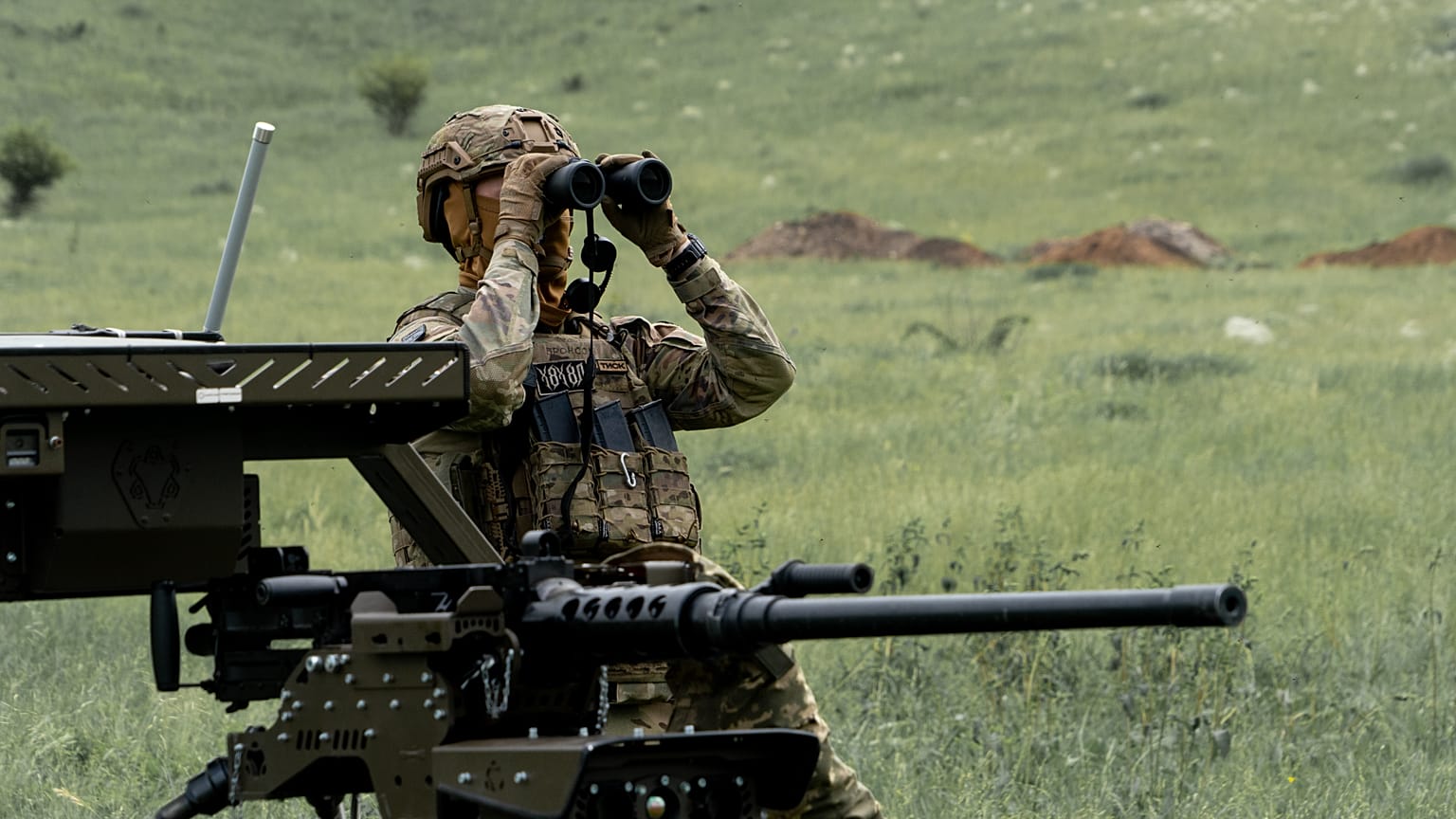
Beretta to unveil its new Livet anti-drone system equipped with eight 'Drone Guardian' shotguns

A Ukrainian soldier during an anti-drone drill in Kharkiv
Copyright AP Photo/Andrii Marienko

By Gabriele Barbati & Nathan Rennolds
Published on

The company says the system is equipped with target auto-tracking and remote engagement capabilities.

Beretta Defense Technologies is set to unveil a new automated weapon station designed to counter drone attacks at the Eurosatory defence show in Paris this summer.

Named the Livet, the new weapon mounts eight Benelli "Drone Guardian" shotguns in a remote-controlled turret that resembles a compact anti-aircraft system.

According to the company, which is part of the Beretta Group, Livet is equipped with target auto-tracking and remote engagement capabilities and offers rapid reaction times, which it says helps support the "protection of strategic assets and critical infrastructures".

The system uses tungsten cartridges and can be equipped with air burst rounds that detonate in midair, which can help neutralise smaller drones by causing fragmentation damage.

The platform’s AI-integrated tracking system allows Livet to identify and lock on to targets autonomously. It can also be integrated with external short-range radar sensors or radio-frequency scanners, from which it can receive real-time coordinates to seek out threats.

Drone warfare has redefined the modern battlefield, with unmanned, often low-cost systems playing a major role in both the war in Ukraine and conflicts in the Middle East.

First-person-view drones, which can be assembled for as little as $300, have been particularly effective in Ukraine, offering Kyiv the ability to carry out precision strikes on Russian forces while reducing the risk to its own soldiers.

Their effectiveness on the battlefield has since forced many nations to accelerate the development of new anti-drone technologies and has fuelled a boom in defence startups across Europe.

The Eurosatory show is scheduled to take place between 15 and 19 June, bringing together key players from the defence industry as well as senior state and military officials. This year's event is due to host talks from figures including General Pierre Schill, the chief of staff of the French Army, and Catherine Vautrin, the French minister of the armed forces.

'We can halt warming – and we must': IPCC scientist on why Europe keeps choosing fossil fuels

Euronews
By Beatrix Asboth & Angela Symons 
Published on

'Budapest will also hit 50°C, the only question is when', predicts Hungarian climate scientist Diána Ürge-Vorsatz, a professor at CEU.

Hungary's election of Péter Magyar’s Tisza Party in April brought hope for a renewed focus on environmental protection and climate targets.

It's already starting to bear fruit: the country established the Ministry for the Living Environment this month, putting environmental protection, nature conservation and animal welfare to the top of the agenda for the first time in 16 years.

"The Hungarian scientific community has welcomed with great enthusiasm the creation of a ministry responsible for the living environment," Hungarian physicist and world-renowned climate researcher Diána Ürge-Vorsatz, a professor at CEU, tells Euronews.

Restoring soil health and wetlands, changing agricultural practices and safeguarding forests are all issues that still await solutions. Ürge-Vorsatz, who also serves as vice-chair of the UN’s Intergovernmental Panel on Climate Change (IPCC), says while environmental experts are optimistic about the future, the success of any measures will also depend on ordinary people.

Europe's energy crisis and the case for renewables

Soaring energy prices linked to geopolitical tensions in Iran have once again exposed Europe's vulnerability to fossil fuel shocks. It's led many countries to double down on efforts to boost homegrown renewable power.

Pointing out that this is the third energy crisis in a decade, following the post-pandemic rebound and Russia's invasion of Ukraine, Ürge-Vorsatz says: "That should be a strong enough signal that it is not worth relying on highly centralised regions for our energy supply when there is an alternative."

Alternatives exist for both oil-based transport and gas-based heating, she says, though industry is more challenging to decarbonise. The deeper problem, however, is how governments respond when crisis hits.

"Every time there is a crisis, instead of stopping to think that it is a serious problem that we are so exposed to these shocks – and that we should finally start laying the foundations to free ourselves from this dependence – we do something else: we adopt quick, temporary crisis measures which in fact lock us even more firmly into this dependency over the longer term."

That pattern plays out consistently, she says: rather than insulating buildings or reducing demand for natural gas, governments focus on securing supplies from elsewhere. Fossil fuel companies, meanwhile, have little incentive to change course.

"When the oil price is very high, it is of course very bad for consumers – but fossil fuel companies make huge profits, so the message they receive is not that they should exit this industry."

And the consequences of inaction are already being felt – not just in energy bills, but in rising temperatures.

Stemming Europe's record temperature rise

New heat records are expected in Budapest again this summer – the direct result of decades of rising emissions. The city's Chief Landscape Architect has previously warned that young trees may not survive the combined stress of heat and water shortage.

Copernicus data shows Europe is the fastest-warming continent on Earth, heating up at twice the global average, with Hungary warming even faster than the European average.

"We have already warmed so much that sooner or later Budapest will also see 50 degrees," Ürge-Vorsatz predicts. "The question is not whether that will happen, but when."

Air-conditioned public spaces, known as climate shelters, are one response being adopted across European cities, but Ürge-Vorsatz says they address the symptom rather than the cause. The real culprit is planet-warming emissions released by the burning of fossil fuels.

This is compounded by the urban heat island effect – a phenomenon that can make cities up to 10 degrees hotter than surrounding green spaces on a warm day.

Trees, Ürge-Vorsatz says, are the most powerful tool available to combat this: they actively cool their surroundings through transpiration in a way nothing else can replicate outdoors. Combined with better architecture and insulation, greening cities could substantially reduce dependence on energy-intensive air conditioning – and buy time against worsening heatwaves.

But adaptation has hard limits. No amount of adjustment will keep pace with warming if emissions continue to rise.

"For a while we can try this and that – plant different crops, irrigate more – but we can already see what serious problems are being caused not only by climate change itself, but also by the way we have managed our water resources, our soils and our forests," says Ürge-Vorsatz.

Adaptation will only work, she warns, alongside serious emissions reductions. "We are not only able to slow them down, we are able to halt them – and we must. If we do not bring emissions down to zero, warming will continue."

Leading change 'requires bravery'

The fossil fuel sector's political influence makes transformation difficult, Ürge-Vorsatz acknowledges. It employs large numbers of people, generates significant tax revenues, and forms a central pillar of many national economies.

"Governments do not easily say that they are going to part ways with this and turn in a completely different direction. That requires a very brave decision."

A gradual transition would be manageable, she says – but political and business cycles work against it. Governments plan over four to five year horizons; companies even shorter. What voters and shareholders want are visible results within a year or two.

"Unless we can square this circle, it will be very difficult not only to protect the environment, but also to carry out the crucial transitions in the energy sector – not because of the climate alone, but because of energy dependence, energy poverty, and economic productivity and competitiveness."

How changing behaviour can drive policy change

Individual behaviour change also matters – not because one person giving up a plastic straw saves the planet, but because collective action sends a signal, Ürge-Vorsatz argues. When enough people change their habits, they communicate to governments, businesses and local authorities that it matters to them.

Despite billionaires jetting around in private planes, sailing on yachts and "holidaying in space", the actions of everyday individuals stack up. According to the Intergovernmental Panel on Climate Change (IPCC), comprehensive shifts in human behaviour – such as adopting plant-based diets, using public transit, and reducing air travel – could theoretically reduce global emissions by up to 70 per cent by 2050.

Getting there would take reevaluation of rising trends. Digital consumption is an under-appreciated driver of energy demand, Ürge-Vorsatz argues – from streaming video to AI-generated content, the energy and water costs of the internet are largely invisible to users and borne collectively.

"We have artificial intelligence generate meaningless, pointless content that consumes enormous amounts of energy and is then stored in the cloud, which also requires huge amounts of energy and water – all this has to be paid for by someone. At the moment it is the average person who pays, but perhaps the bill should instead go to those who choose to express their creativity in this way."

Could El Niño make temperatures even higher?

On top of the long-term warming driven by human emissions, a natural climate pattern could add further pressure in the near term. Scientists are monitoring the possibility of a Super El Niño developing this year – though there is no consensus that it will occur, and the WMO has cautioned that predictive models are less reliable in spring.

A recurring natural phenomenon caused by periodic warming of the Pacific Ocean, El Niño can amplify extreme weather in the short term – bringing stronger heatwaves, worsening droughts and more intense flooding in affected regions – but it is distinct from, and dwarfed in long-term significance by, human-caused climate change.

For Europe, its direct effects are limited. Its most severe impacts fall on monsoon-dependent regions. But the knock-on effects would be felt here too, Ürge-Vorsatz warns – particularly through global food systems. "It may once again push up food inflation and cause supply problems – that is how it could show up in Europe," she says.

The distinction matters. As Dr Friederike Otto, Professor in Climate Science at Imperial College London and co-founder of World Weather Attribution, puts it: "El Niño is a natural phenomenon. It comes and goes. Climate change on the contrary gets worse as long as we do not stop burning fossil fuels. So climate change is the reason to freak out."

University of Pennsylvania climate scientist Michael Mann echoes this framing: while El Niño can boost global temperatures for a year or two, it is ultimately a short-term oscillation – the planet swings back toward La Niña, which temporarily cools things down again. The longer-term, steady warming trend driven by fossil fuel combustion is what matters, and it continues regardless.

In other words, El Niño could make an already difficult summer harder to manage. But it would not cause Europe's warming – and it will not fix it when it passes. The underlying trajectory is set by emissions, and that is where the real decisions lie.