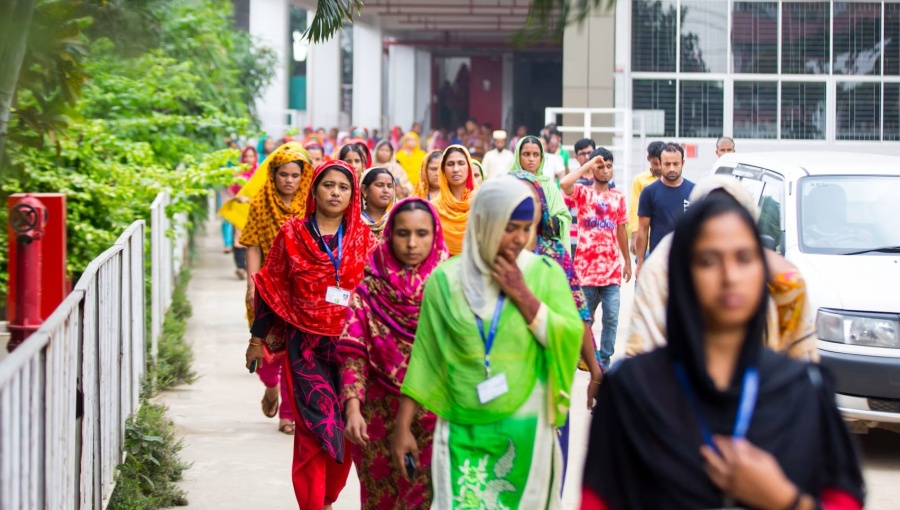
A week of wage strikes that stopped about 690 Bangladeshi garment factories in the peak ordering season has handed India's clothing exporters an opening in Western markets.
Workers walked out on October 31 to demand a monthly minimum wage of BDT30,000 ($241), against the BDT12,500 set in late 2023. Production had halted at about 690 factories by November 2, with industry sources putting the number of workers affected above 1.7mn. The protests carried on even after the government agreed on November 4 to bring in a new pay structure in December.
Buyers have reason to look elsewhere because of the timing. November and December are the months when Western retailers place their heaviest orders, and a factory that misses a delivery slot must either keep the goods or fly them out at a cost that "basically erases any profit margins", a former director of sourcing at Zara told the Indian Express on November 7. India, which grows its own cotton, spins its own yarn and has new trade deals with Europe and the UK, is the obvious beneficiary. Its record suggests it will pick up a slice of the business rather than the prize.
An industry Dhaka cannot afford to lose
Garments brought Bangladesh $38.7bn in the year to June, down 1.64% on Export Promotion Bureau figures, or about four-fifths of all merchandise exports. The EU took $19.06bn of that, the US $7.74bn and the UK $4.39bn. The sector employs more than 4mn people, and every week of lost output feeds through to foreign exchange reserves of $34.85bn and to the taka.
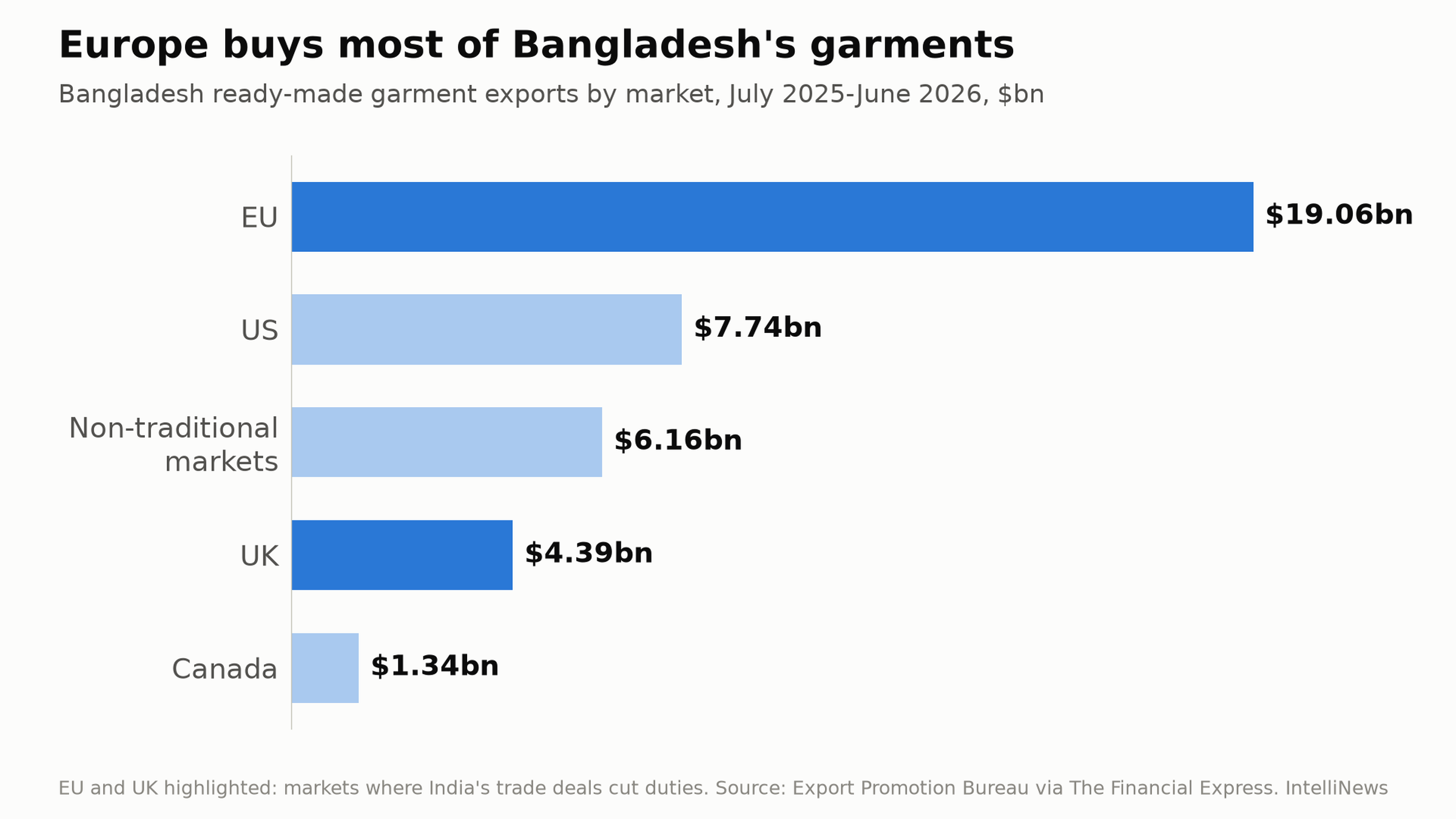
Bangladesh ready-made garment exports by market, July 2025-June 2026, $bn. Source: Export Promotion Bureau via The Financial Express. IntelliNews
Bangladesh was already losing ground before the strike. Its share of EU clothing imports fell to 21.9% in January-April from 24.4% a year earlier on Eurostat data, and China moved back ahead of it among suppliers to the US over January-August. A summer gas shortage cut output by 30-40% in the main industrial districts, and the Bangladesh Garment Manufacturers and Exporters Association (BGMEA) had to ask buyers for shipment extensions.
Higher pay need not cost Bangladesh its edge, according to Selim Raihan, professor of economics at the University of Dhaka. "Treating cheap labour as the industry's permanent competitive strategy would be a mistake," he told Reuters. "They (Bangladesh) need to move increasingly toward productivity, reliability and higher-value products".
Where India has the edge
India's case rests on owning more of the supply chain. Bangladeshi mills buy in much of their yarn, and India is a leading supplier: imports of cotton yarn under bonded facilities rose 39% to 680mn kg in 2024 as Indian yarn undercut local spinners on price.
Trade policy is moving India's way in Europe. The agreement with the UK took effect on July 15, giving Indian clothing duty-free access on the same terms as Bangladesh. The deal with the EU, concluded in January and expected to enter into force in early 2027, will remove duties of up to 12% that Indian exporters pay while Bangladeshi goods enter free. Indian clothing sales to the EU reached a record $4.66bn in the year to March, government data reported by Apparel Resources show, a quarter of what Bangladesh ships there.
Why the gain may stay small
Scale counts against India. Its share of world apparel exports has stayed at about 3% for two decades while Bangladesh's has risen to 9-10%, according to research by 360 One Capital published in July, which named fragmented garment-making as the industry's biggest weakness. Fragmented production leaves Indian suppliers short of the scale needed to win the largest international orders, the research found.
In the US, India's clothing sales fell by more than 25% to $3.07bn in January-September, on US Office of Textiles and Apparel (OTEXA) figures reported by The Financial Express, after authorities raised duties on any items produced in India in August last year. Bangladesh shipped twice as much over the same months, and Vietnam four times as much.
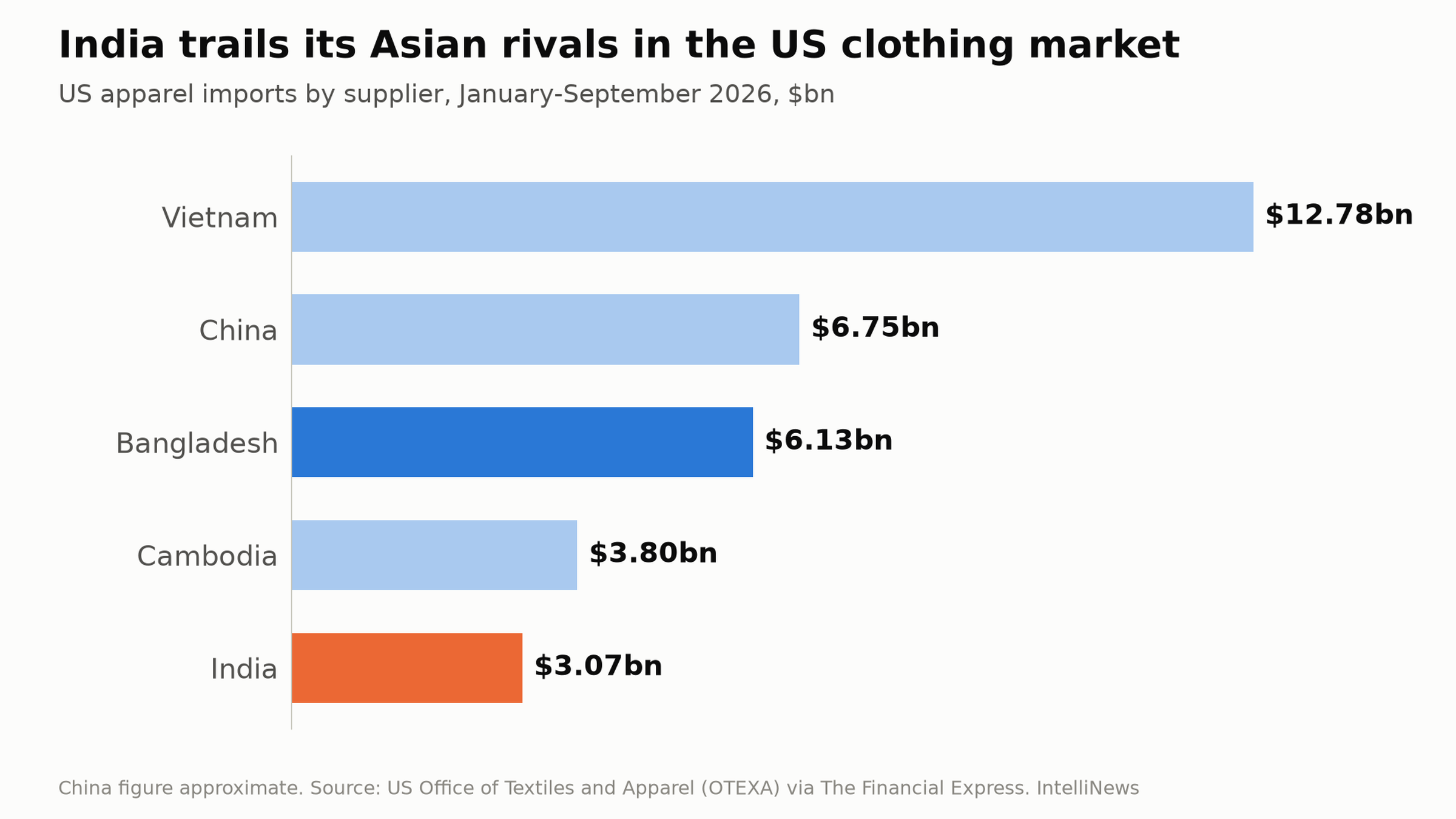
US apparel imports by supplier, January-September 2026, $bn. China figure approximate. Source: US Office of Textiles and Apparel (OTEXA) via The Financial Express. IntelliNews
Bangladesh's duty-free access to Europe rests on its status as a least developed country, which it was due to lose on November 24 this year. The UN General Assembly pushed that back to November 24, 2029, The Financial Express reported on October 30, which leaves the price gap in Dhaka's favour for three more years.
Relations between the neighbours have soured since Sheikh Hasina fled to India in 2024: New Delhi ended a transshipment facility for Bangladeshi cargo in April 2025 and restricted imports of Bangladeshi garments to two seaports a month later. Home Minister Salahuddin Ahmed blamed the banned Awami League and said some were trying to destabilise the country "at the behest of forces across the border". Indian External Affairs Ministry spokesman Randhir Jaiswal kept to a single line: "We have been following the situation in Bangladesh."
A rival's loss is also a customer's loss for India. Indian spinning mills that sell yarn to Bangladeshi factories gain nothing from idle Bangladeshi looms, and Vietnam, with a faster supply chain, is just as well placed to take the urgent orders.
The strike is the latest in a run of shocks to Bangladesh's biggest industry, from the wage board formed under pressure on November 1 to the gas shortage and the slide in Europe and the US, and each has sent buyers to test the alternatives. India can expect a hearing from those buyers. Turning it into orders depends on garment capacity it is only now building, and on a European deal that has yet to enter into force.

No comments:
Post a Comment