With AUKUS Risks and Aging Fleet, Australia Eyes Japanese Subs as Backup
[By Richard Gray]
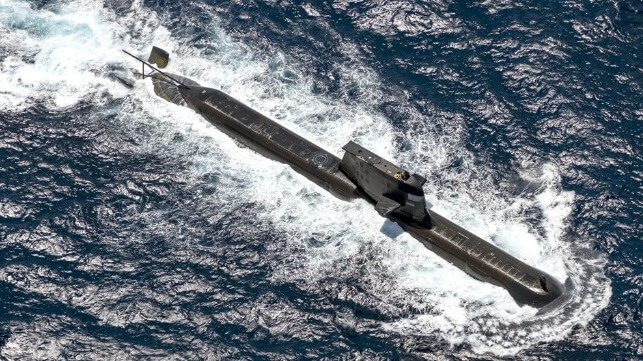
The reduced Collins-class submarine Life-of-Type Extension (LOTE) program, announced on 19 May, will cost more than previously expected and deliver less capability. The government’s decision to cut back the scope of the work also increases the risk to Australia’s possession of a modern, crewed submarine capability in the next decade.
AUKUS remains the best partnership for Australia to acquire the nuclear-propelled submarines necessary for Australia to manage the most dangerous era since World War II. But the now elevated risk of losing adequate conventional submarine capability in the meantime strengthens the case for preparing a Japanese fallback option.
Canberra should approach Tokyo to see how it could buy or lease Japanese submarines should they be required in the 2030s.
The Collins-class LOTE program as originally planned was always highly risky, so cutting back what will be done to the six submarines to keep them going is an understandable and responsible move. Instead of a more extensive LOTE, equipment on the submarines will be repaired and replaced as judged necessary for each boat. Sensors and weapons will be replaced where possible. The focus will be on maintenance and safety rather than enhanced capability. Replacement of the diesel engines and generators will be done only if judged to be critical.
The cost of the reduced LOTE is estimated at around A$11 billion, double what had been estimated for the full LOTE. This is likely not just because the previous costs were probably greatly underestimated but also because old equipment on the submarines will be increasingly expensive to maintain. Critical elements such as the hulls and in some cases the propulsion systems will be approaching or possibly exceeding 40 years of service by the end of the next decade, increasing the risks to safety and likely requiring intensive monitoring and maintenance.
This raises the question of value for money. Even if all goes according to the new plan, Australia will pay around A$1.8 billion per boat to keep roughly its current level of conventional submarine capability, at best. In all capability aspects this does not compare favourably with new, modern conventional submarines. For example, Japan’s Taigei?class submarines cost about A$600 million to A$700 million each. If further reductions to the scope of the LOTE occur – and the announcement yesterday leaves this prospect open, pending further engineering studies – a future government might decide that the running cost of an increasingly fragile and shrinking capability is not worth it and cut its losses. This could mean rapid retirement of older Collins-class vessels and even deciding not to extend the lives of some units, leaving a smaller and rapidly ageing submarine force until the arrival of nuclear boats.
The government plans that at any time three Collinses will be in deep maintenance, which will include life-extension work. Two of the remaining three are to be available for operations. Even assuming this can be achieved in what’s still likely to be a risky and technically challenging program, the life-extended submarines will possibly be less stealthy and probably have less endurance than previously planned. They will progressively fall behind newer regional competitors and probably be less able to undertake the full suite of required missions.
The reduction in planned submarine capability as a result of the de-scoped LOTE program increases the importance of achieving the remaining two key steps of the AUKUS Optimal Pathway, delivery to the Royal Australian Navy of US Virginia-class nuclear attack submarines (SSNs) and local construction of the follow-on Anglo-Australian SSN-AUKUS class.
The Virginias are due to arrive in the early 2030s, almost certainly not before 2032. But there is a significant risk that deliveries could be delayed – or even withheld if the US judges that it has too few SSNs for its own requirements. Since the Collins class is losing its competitiveness with age, delays to the Virginias and SSN-AUKUS could leave Australia without a modern crewed submarine capability for a decade or more – hence the need to get ready now for the Japanese fallback option.
As the ASPI report Hedging our Bets recommends, it is more than prudent to prepare now for the future contingency of rapidly buying or leasing conventional submarines from Japan (or even another partner) should these risks to Australia’s submarine capability emerge. The reduction in the LOTE program and resulting reduction in planned capability is a clear reminder that such risks are very real.
Richard Gray is a resident senior fellow at ASPI.
The opinions expressed herein are the author's and not necessarily those of The Maritime Executive.
By AFP
May 21, 2026

Private Chinese company Landbridge acquired a 99 year lease to Darwin Port in 2015, prompting criticism of Australia from then-US President Barack Obama
Australia’s defence minister Richard Marles said Thursday that Canberra was “disappointed” the Chinese leaseholder of the strategic Darwin Port was challenging efforts to return it to local ownership.
Private Chinese company Landbridge acquired a 99 year lease to Darwin Port in 2015, prompting criticism of Australia from then-US president Barack Obama.
Prime Minister Anthony Albanese pledged last year to return the northern port — which sits across the harbour from a defence base hosting 2,000 US Marines annually and tarmacs upgraded for US bomber aircraft — to Australian ownership.
In April, Landbridge’s billionaire owner Ye Cheng lodged a complaint in the World Bank’s tribunal for investment disputes, alleging Australia’s push for the company to sell the port had breached its free trade agreement with China and was taking a discriminatory approach.
“We’re committed to putting the Port of Darwin back into Australian hands,” Marles told reporters Thursday on a visit to Darwin.
“We’re disappointed about the steps that have been taken to put this toward the place of an international tribunal. Obviously, we will do everything in our power to defend that matter,” he said.
Marles also noted the US military was committed to “doing more from Darwin”.
Darwin is Australia’s closest port to Asia, and cargo shipments of commodities including iron ore and liquefied natural gas to China have dominated trade ties.
In January, China’s ambassador to Australia Xiao Qian warned if Landbridge were forced to leave the port it could impact wider trade and investment between China and Australia.
Australian Police Intercept a Diesel Generator Filled With Multiple Drugs
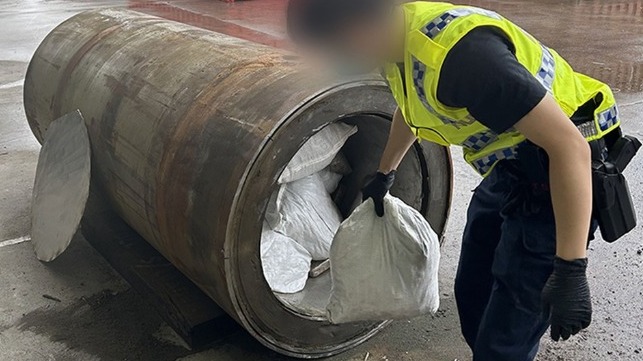
The Australian Federal Police are calling on diesel repair specialists to help with a rare technical problem: the agency has confiscated a used diesel generator that someone packed full with nearly every kind of illegal stimulant on the market, and it needs to find the people responsible for the shipment.
Early this year, Australian Border Force inspectors at Port Botany were conducting routine X-ray inspections of imported cargoes when they noticed something off about a heavy-duty diesel generator, which had arrived from Mexico by way of Malaysia.
This generator was special: it appeared to have packages inside. The ABF contacted the AFP, who brought in specialists to have a closer look. Over the course of three days, they disassembled the generator and found a total of about 370 kilos of drugs inside; photos suggest the consignment was stashed in a cylinder bore.
Unusually, the shipment was very diverse. Large-scale imports typically have just one or two drug classes, but this one had about 120 kilos of cocaine, 250 kilos of methamphetamine, three kilos of MDMA and 800 grams of 2CB ("pink cocaine"), a lab-made club drug with stimulant and psychedelic effects.
"This mixed bag of illicit drugs was likely destined for several different criminal groups, to be sold into a range of communities. Despite the elaborate attempt to conceal such a large quantity of drugs, the coordinated efforts of law enforcement ensured these substances never reached Australian streets," said Detective Acting Superintendent Stuart Kimbell in a statement.
Kimbell said that the AFP is looking for tips from the public - particularly from anyone who might have been approached about storage space for a generator, or spare parts vendors or diesel engine technicians who may have fielded inquiries about repairs. (The make and model of the engine were not released.)
According to ABF, this intercept ranked high on the list for technical complexity and detection difficulty. "ABF officers are highly skilled at identifying anomalies across all forms of incoming cargo, no matter how elaborate the concealment," said ABF Superintendent Jared Leighton.
Separately, the AFP announced that it had busted the alleged ringleader of an insider smuggling network at Port Botany. The 29-year-old suspect stands accused of organizing multiple drug pickup attempts at the port, including a 500-kilo shipment last year. The organizer allegedly paid a competitive wage to entice co-conspirators, up to US$140,000 per person per pickup - nearly three years of earnings for a typical Australian worker.
Australia is the world's leading per-capita consumer market for cocaine and methamphetamine, and import prices are accordingly high. While wholesale prices fluctuate with availability, cocaine typically attracts more than US$100,000 per kilo on the Australian market.

No comments:
Post a Comment