A Seriously Unwell Trump Is Losing Iran War for All the World to See
What makes the US president so pathetic is also what makes this moment in history so incredibly dangerous.
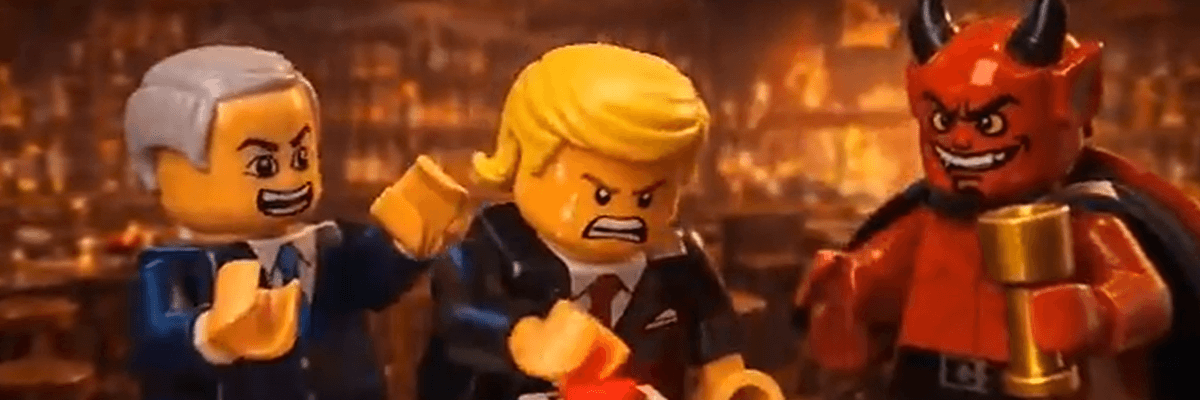
A Lego-style animated video posted by the Iranian company Explosive Media mocks US President Donald Trump and Israeli Prime Minister Benjamin Netanyahu on March 7, 2026.
(Image: Screenshot / Explosive Media)
Robert Reich
May 07, 2026
What makes the US president so pathetic is also what makes this moment in history so incredibly dangerous.
A Lego-style animated video posted by the Iranian company Explosive Media mocks US President Donald Trump and Israeli Prime Minister Benjamin Netanyahu on March 7, 2026.
(Image: Screenshot / Explosive Media)
Robert Reich
May 07, 2026
Inequality Media
We are witnessing what happens to a person who is consumed with the need to dominate but cannot.
Iran is unlikely to give in. It can withstand the economic pressure of a blockade better than Trump can withstand the political pressure that comes with rising gas prices (now nearly $4.50 a gallon, on average), soon followed by rising food prices.
His looming failure in Iran is not just a serious geopolitical defeat for the United States; it’s a personal crisis for Trump.
Those rising prices coupled with an increasingly unpopular war have increased the likelihood that Democrats will take back control of the House and even possibly the Senate in the upcoming midterms.
Here again, not just a political defeat for the Republican Party but a personal crisis for Trump.
His ego cannot accept a humiliating loss, as we saw after the 2020 election. His need to bully, dominate, and gain submission is so hardwired inside his insecure head that the defeats he’s now facing — to Iran and to Democrats — are already setting off explosions.
He’s posting more wildly than ever — attacking, insulting, ridiculing, threatening.
On Sunday, Trump posted that Democrats had “RIGGED the 2020 Presidential Election. GET TOUGH REPUBLICANS—THEY’RE COMING, AND THEY’RE COMING FAST! They’re no good for our Country, they almost destroyed it, and we don’t want to let that happen again!” He demanded that Republicans “approve all of the necessary Safeguards we need for Elections to protect the American Public during the upcoming Midterms.”
More of his posts are bizarre AI-generated paeans to himself, his godlike powers, his wished-for physique, and his self-image of omnipotence. On Friday night, he posted an AI-image of himself, JD Vance, Marco Rubio, and Doug Burgum, all shirtless and with young physiques, standing in the reflecting pool in front of the Lincoln Memorial, along with an unidentifiable woman in a bikini. Minutes later he posted an image of House Minority Leader Hakeem Jeffries holding a baseball bat, with a caption calling Jeffries “low IQ,” “a THUG,” and “a danger to our Country.” On Tuesday, he posted AI-images of Joe Biden on one knee with the caption “COWARDS KNEEL,” Barack Obama with the caption “TRAITORS BOW,” and himself with his fist raised and the caption “LEADERS LEAD.”
His mouth — never in control — is now in diarrheic mode. He’s even back to attacking the pope, accusing him of “endangering a lot of Catholics and a lot of people,” adding, “but I guess if it’s up to the pope, he thinks it’s just fine for Iran to have a nuclear weapon.”
His thin-skinned vindictiveness is beyond anything we’ve seen before, which is saying a lot. Last week, after German chancellor Friedrich Merz said the U.S. was “being humiliated by the Iranian leadership,” Trump repeatedly attacked and ridiculed Merz. The Defense Department then said it was pulling 5,000 troops out of Germany, and Trump said he was increasing tariffs on European cars and trucks to 25 percent (from 15 percent).
He’s becoming ever more obsessed with monuments to himself — his ballroom, his arch, his so-called “garden of heroes,” his Trump-embossed passports, his image on 24-karat gold commemorative coins, and his name plastered or etched all over Washington. His plans for self-monuments are becoming larger by the day, more grotesque, more grandiose, and more expensive. Senate Republicans just proposed $1 billion more for Trump’s ballroom, which, recall, was supposed to “cost taxpayers nothing.”
He has even directed the Treasury to announce that his own signature — yes, the same one that appears in a book of birthday greetings for Jeffrey Epstein — will replace the Treasurer’s on all new U.S. paper currency. This will be the first time in American history that a sitting president’s name will appear on circulating cash money.
His thirst for vengeance is exploding, too. Last week the Department of Justice launched another criminal case against former director of the FBI James Comey (whose earlier indictment was quashed by the courts) for posting a picture of seashells spelling out “86 47” on Instagram a year ago. Trump is also insisting that the Justice Department restart its criminal investigation of Jerome Powell and double-down against former Joint Chiefs of Staff Chair Mark Milley and others he considers “enemies.”
Facing the two monumental failures of Iran and control over Congress, Trump is fanatically seeking other ways to assert dominance. On Tuesday, his Education Department announced a civil rights investigation into Smith College over enrolling transgender students. Expect more of this.
Regardless of what happens in Iran, he’ll claim victory. That will be difficult to do convincingly when gas prices remain over $4 a gallon, but he’ll undoubtedly try.
What if Democrats win control of one or both chambers of Congress in the midterms and he claims they lost or cheated? The nation barely survived the last time Trump’s fragile ego faced a major loss.
We’ll also have to cope with Trump as a lame-duck president who can no longer dominate and gain submission as he did before. Will he try to remain president beyond his second term to avoid this?
The man is unwell. Seriously unwell. Lame-duck presidents fade away, but injured dictators can be dangerous.
© 2025 Robert Reich
Robert Reich
Robert Reich is professor emeritus of public policy at Berkeley and former US secretary of labor. His latest book is the No. 1 New York Times best-seller, "Coming Up Short."
Full Bio >
We are witnessing what happens to a person who is consumed with the need to dominate but cannot.
Iran is unlikely to give in. It can withstand the economic pressure of a blockade better than Trump can withstand the political pressure that comes with rising gas prices (now nearly $4.50 a gallon, on average), soon followed by rising food prices.
His looming failure in Iran is not just a serious geopolitical defeat for the United States; it’s a personal crisis for Trump.
Those rising prices coupled with an increasingly unpopular war have increased the likelihood that Democrats will take back control of the House and even possibly the Senate in the upcoming midterms.
Here again, not just a political defeat for the Republican Party but a personal crisis for Trump.
His ego cannot accept a humiliating loss, as we saw after the 2020 election. His need to bully, dominate, and gain submission is so hardwired inside his insecure head that the defeats he’s now facing — to Iran and to Democrats — are already setting off explosions.
He’s posting more wildly than ever — attacking, insulting, ridiculing, threatening.
On Sunday, Trump posted that Democrats had “RIGGED the 2020 Presidential Election. GET TOUGH REPUBLICANS—THEY’RE COMING, AND THEY’RE COMING FAST! They’re no good for our Country, they almost destroyed it, and we don’t want to let that happen again!” He demanded that Republicans “approve all of the necessary Safeguards we need for Elections to protect the American Public during the upcoming Midterms.”
More of his posts are bizarre AI-generated paeans to himself, his godlike powers, his wished-for physique, and his self-image of omnipotence. On Friday night, he posted an AI-image of himself, JD Vance, Marco Rubio, and Doug Burgum, all shirtless and with young physiques, standing in the reflecting pool in front of the Lincoln Memorial, along with an unidentifiable woman in a bikini. Minutes later he posted an image of House Minority Leader Hakeem Jeffries holding a baseball bat, with a caption calling Jeffries “low IQ,” “a THUG,” and “a danger to our Country.” On Tuesday, he posted AI-images of Joe Biden on one knee with the caption “COWARDS KNEEL,” Barack Obama with the caption “TRAITORS BOW,” and himself with his fist raised and the caption “LEADERS LEAD.”
His mouth — never in control — is now in diarrheic mode. He’s even back to attacking the pope, accusing him of “endangering a lot of Catholics and a lot of people,” adding, “but I guess if it’s up to the pope, he thinks it’s just fine for Iran to have a nuclear weapon.”
His thin-skinned vindictiveness is beyond anything we’ve seen before, which is saying a lot. Last week, after German chancellor Friedrich Merz said the U.S. was “being humiliated by the Iranian leadership,” Trump repeatedly attacked and ridiculed Merz. The Defense Department then said it was pulling 5,000 troops out of Germany, and Trump said he was increasing tariffs on European cars and trucks to 25 percent (from 15 percent).
He’s becoming ever more obsessed with monuments to himself — his ballroom, his arch, his so-called “garden of heroes,” his Trump-embossed passports, his image on 24-karat gold commemorative coins, and his name plastered or etched all over Washington. His plans for self-monuments are becoming larger by the day, more grotesque, more grandiose, and more expensive. Senate Republicans just proposed $1 billion more for Trump’s ballroom, which, recall, was supposed to “cost taxpayers nothing.”
He has even directed the Treasury to announce that his own signature — yes, the same one that appears in a book of birthday greetings for Jeffrey Epstein — will replace the Treasurer’s on all new U.S. paper currency. This will be the first time in American history that a sitting president’s name will appear on circulating cash money.
His thirst for vengeance is exploding, too. Last week the Department of Justice launched another criminal case against former director of the FBI James Comey (whose earlier indictment was quashed by the courts) for posting a picture of seashells spelling out “86 47” on Instagram a year ago. Trump is also insisting that the Justice Department restart its criminal investigation of Jerome Powell and double-down against former Joint Chiefs of Staff Chair Mark Milley and others he considers “enemies.”
Facing the two monumental failures of Iran and control over Congress, Trump is fanatically seeking other ways to assert dominance. On Tuesday, his Education Department announced a civil rights investigation into Smith College over enrolling transgender students. Expect more of this.
Regardless of what happens in Iran, he’ll claim victory. That will be difficult to do convincingly when gas prices remain over $4 a gallon, but he’ll undoubtedly try.
What if Democrats win control of one or both chambers of Congress in the midterms and he claims they lost or cheated? The nation barely survived the last time Trump’s fragile ego faced a major loss.
We’ll also have to cope with Trump as a lame-duck president who can no longer dominate and gain submission as he did before. Will he try to remain president beyond his second term to avoid this?
The man is unwell. Seriously unwell. Lame-duck presidents fade away, but injured dictators can be dangerous.
© 2025 Robert Reich
Robert Reich
Robert Reich is professor emeritus of public policy at Berkeley and former US secretary of labor. His latest book is the No. 1 New York Times best-seller, "Coming Up Short."
Full Bio >
Tom Boggioni
May 7, 2026
RAW STORY
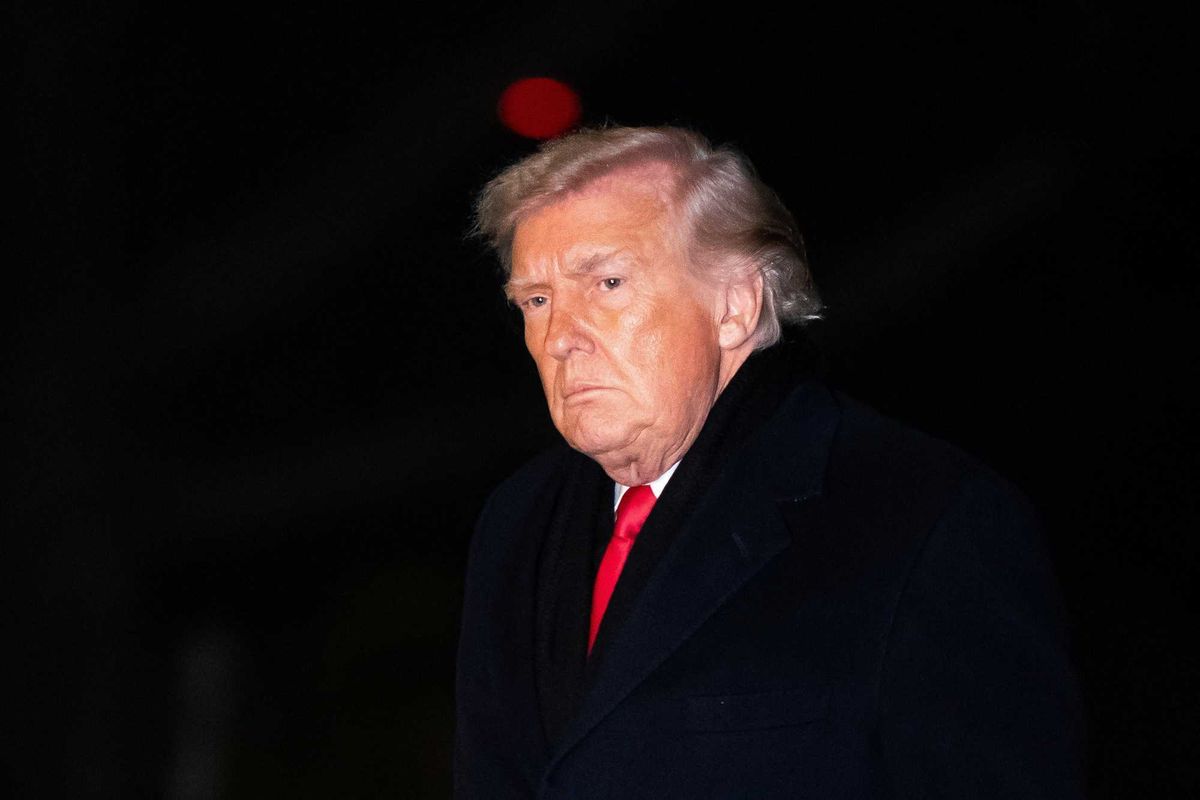
Donald Trump walks from Marine One to the White House. REUTERS/Elizabeth Frantz
According to MS NOW national security analyst David Rohde, what is known about the rumored one-page memorandum of understanding between the US and Iran to halt the war is less than being advertised and the advantages still lie with the war-torn country.
Appearing on “Morning Joe,” Rohde praised the work of the negotiators but also claimed that the increasingly desperate American president is backing off many of his earlier demands which plays into the hands of Iran’s leadership.
Addressing questions from co-host Jonathan Lemire, Rohde explained, “I just think flat out this: I just want to call it a 30-day, one page agreement is a win for Iran. It's a huge win. They have stood up to the United States. And we can talk about that in more detail.”
“I keep getting told that the Iranian and Israeli officials are saying there's deep divides inside the Iranian government, but American officials are telling me that that's not true, that the Islamic Revolutionary Guard Corps (IRGC) is in firm control, firmer control than they were before the war. And one congressional official just called it a military dictatorship. And I fear that this pursuit of somehow moderates or other people is not really there, that they're being told these things [and] the administration, they believe it.”
“And lastly, this one-page agreement is not a peace deal,” he asserted and then repeated, “This is not a peace deal. This is an extension of a ceasefire that several weeks ago, the president said there was no end of the ceasefire. The president keeps capitulating. He said before, you know, this is like several weeks ago, he's like, ‘You know, we're going to have a ceasefire for two weeks.’ And when that ends, he's like, ‘Actually, the ceasefire will continue with no end date.’ And then the pinnacle, pivotal thing was this: this Project Freedom to open the Strait of Hormuz by force. That was the most aggressive, I think, and the most effective move by the U.S. military; it worked. And then he calls it off after 24 hours. And so that's again, a huge win for Iran.”
Donald Trump walks from Marine One to the White House. REUTERS/Elizabeth Frantz
According to MS NOW national security analyst David Rohde, what is known about the rumored one-page memorandum of understanding between the US and Iran to halt the war is less than being advertised and the advantages still lie with the war-torn country.
Appearing on “Morning Joe,” Rohde praised the work of the negotiators but also claimed that the increasingly desperate American president is backing off many of his earlier demands which plays into the hands of Iran’s leadership.
Addressing questions from co-host Jonathan Lemire, Rohde explained, “I just think flat out this: I just want to call it a 30-day, one page agreement is a win for Iran. It's a huge win. They have stood up to the United States. And we can talk about that in more detail.”
“I keep getting told that the Iranian and Israeli officials are saying there's deep divides inside the Iranian government, but American officials are telling me that that's not true, that the Islamic Revolutionary Guard Corps (IRGC) is in firm control, firmer control than they were before the war. And one congressional official just called it a military dictatorship. And I fear that this pursuit of somehow moderates or other people is not really there, that they're being told these things [and] the administration, they believe it.”
“And lastly, this one-page agreement is not a peace deal,” he asserted and then repeated, “This is not a peace deal. This is an extension of a ceasefire that several weeks ago, the president said there was no end of the ceasefire. The president keeps capitulating. He said before, you know, this is like several weeks ago, he's like, ‘You know, we're going to have a ceasefire for two weeks.’ And when that ends, he's like, ‘Actually, the ceasefire will continue with no end date.’ And then the pinnacle, pivotal thing was this: this Project Freedom to open the Strait of Hormuz by force. That was the most aggressive, I think, and the most effective move by the U.S. military; it worked. And then he calls it off after 24 hours. And so that's again, a huge win for Iran.”

No comments:
Post a Comment