Georgia Garden Connects Cherokee Nation to Its Roots

He began planting the garden in 2013. It is on the route of the Trail of Tears, along which, in the 1830s, President Andrew Jackson force-marched tens of thousands of Cherokees and members of other southeastern tribes from their homelands to Oklahoma, which the federal government had designated Indian Country. The tribes’ ancestral lands were then opened to settlers.
The trek to Oklahoma was deadly and disruptive. Half of the tribal members marched there died along the way. The starvation and stress of the journey were exacerbated by the massive dislocation of their lives and the inability to access the plants and food that were central to their traditional medicine and culture. “They might as well have been going to the surface of the moon,” Harris says.
In 2015, the National Park Service named the Cherokee Garden at Green Meadows Preserve an interpretative site of the Trail of Tears National Historic Trail. The garden lies within a Marietta public park that includes walking trails, organic community gardens, an historic home and more.
Annually, according to Tony Harris’s wife, Carra Harris, about 500 people from garden clubs and other civic groups take organized tours of the Cherokee garden (that’s in addition to the 1,400 schoolkids). Another 15,000 of the yearly visitors to the park as a whole drop by the garden as well; they look at plants, especially those that are blooming or fruiting, and ask questions of the garden volunteers at work.
Through its educational mission and its preservation of Cherokee plant knowledge, the garden has an active role in re-establishing Cherokees’ connection to the earth. The reconnection fills an emotional and cultural need, Carra says, calling this a healing.
In pursuit of that idea, in April 2025 the garden welcomed middle schoolers from the Cherokee Immersion School, in Tahlequah, Oklahoma, the capital of the Cherokee Nation. “We wanted to capture video and pictures of plants we don’t have here in Oklahoma but are part of our heritage,” says their teacher Victoria Bangle. She was pleased to include the students in that process. “Plants are the center of our language,” Bangle says.
According to Bangle, the middle-schoolers took lots of pictures and are now working on giving each plant its Cherokee name, presented in the Cherokee syllabary. This writing system uses symbols based on syllables rather than on phonemes, or small units of sound, as in English.
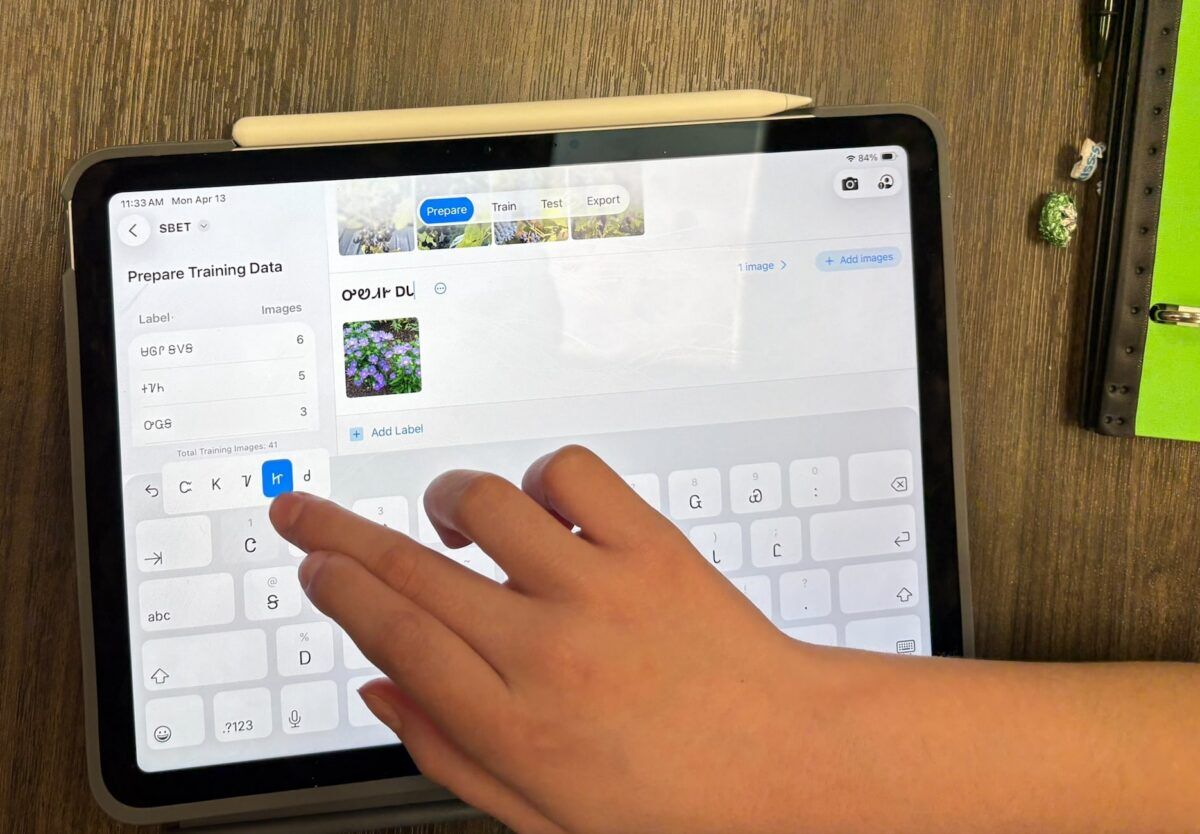
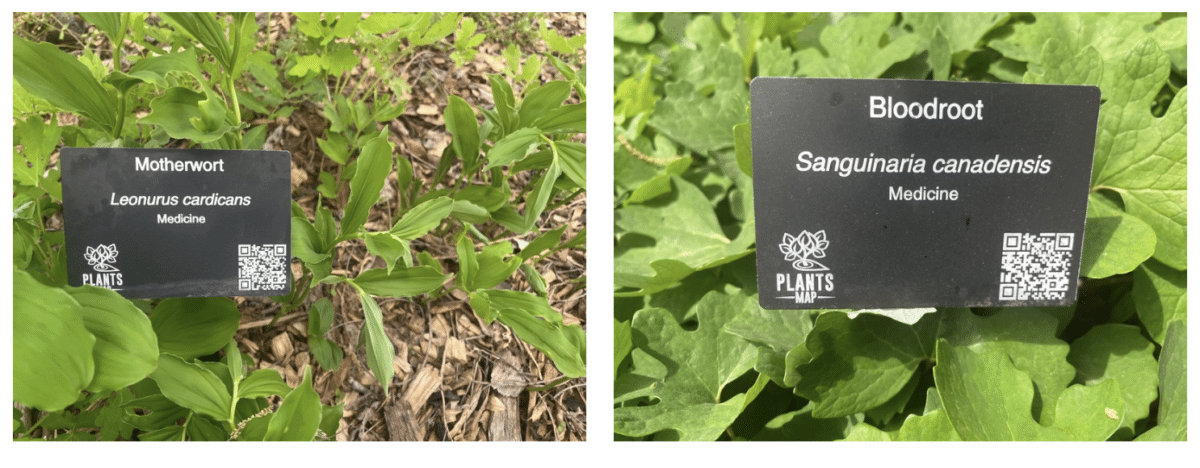
The students are also creating an app that will help other Cherokees use this information to grow and use the plants, she says. For example, the students learned that black cohosh is used for fevers and snake bites, and wild ginger is for coughs, colds and headaches. Bloodroot’s sap treats poison ivy and repels insects, and its roots produce a red dye for crafts and regalia. The tall and durable trunks of tulip poplar trees can become canoes and timbers for log cabins, while its blooms are made into a salve for skin ailments.
Tony gave the students bloodroot, wild ginger and other plants to bring back to Oklahoma and put in their school garden. Each year, the growing season starts with a planting ceremony, and the children work in the garden until harvest time, says Bangle. “We go down once a week, check on the garden, pull any weeds.”
Cherishing knowledge
“You can’t understand Cherokee history and culture unless you understand our relationship to the land and to plants,” Tony says. He learned plants’ uses, including their medicinal function, over the course of his upbringing on the Cherokee Nation’s reservation. During his childhood there, his mother dosed him with teas and other medicaments. “I gotta tell you,” he jests, “some things taste better than others.”
In his early years, he says, this understanding was an important aspect of life—something that was always present and, it seemed, always would be. In his adult years, he began to fear that this knowledge, which is passed down orally, was slipping away. Without the continual and dedicated involvement of older Cherokees teaching youngsters, he worried it was within a generation of being lost.
One driver of this problem, Carra explains, was the fact that many Cherokees had to leave the reservation for greater access to higher education and good jobs. Tony left, too. In 1978, he went to Houston to start work with an international manufacturer of household products; four years later, the company transferred him to Georgia in a prominent executive role.
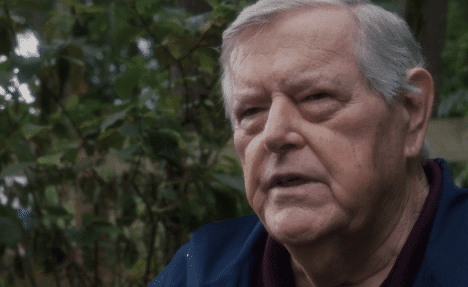
In Georgia, he immediately felt at home and became determined to safeguard his tribe’s plant expertise in its original homeland. When he retired in 2004, he had time to pursue this heart-felt interest. In 2011, to bolster their knowledge as horticulturalists, both Harrises earned credentials as Master Gardeners through the University of Georgia Extension Service. When Tony told fellow Master Gardeners about the garden he hoped to set up, they were so enthusiastic, says Carra. They introduced him to people in the county government, helped him secure a site for the plot and still, to this day, help out weekly.
The Cherokee Nation also has a traditional-plants garden, the Cherokee Heritage Garden in Tahlequah. But, as Bangle notes above, some traditionally used Cherokee plants are not found naturally in Oklahoma. So Tony fills in the gaps. For over a decade, he and Carra have taken herbaceous plants, shrubs and trees from Georgia and donated them to the Nation’s garden. They thrive there, he says, pointing out that the two regions’ USDA hardiness zones are similar.
With one caveat, adds Carra: the Georgia plants can require extra watering once they’re in the ground in Oklahoma. Georgia is blessed with lots of water, whereas Oklahoma is drier, she says.
The Cherokee Nation’s garden has provided Tony with plants to bring back to Georgia. “We have a good working relationship,” he says. He also gets seeds from the tribal seedbank. Established in 2006, it collects seeds of traditional crops and other plants and disburses them free to tribal members, according to the tribe’s Natural Resources Office.
In 2019, the Cherokee Nation honored Tony for his work preserving tribal history and culture. His efforts and concerns are in line with those of tribes throughout the United States. Their loss of access to beloved plants was, and continues to be, disastrous—punching a hole in tribal culture and wellbeing. This is a consequence of the hundreds of treaties tribal nations signed with the federal government during the 18th and 19th centuries. Under these agreements, tribes typically transferred land to the government in return for education, health care and other services.
The diminished tribal homelands were then subjected to continual and often violent federal efforts to further decrease Native landholdings—by forcing them to relocate to unfamiliar areas, as the Cherokees were, or by simply breaking the treaty’s promises. Every single treaty was broken in some fashion. The gardening, gathering, hunting, fishing and other activities with which tribal members had cared for each other since time immemorial were severely restricted or entirely demolished.
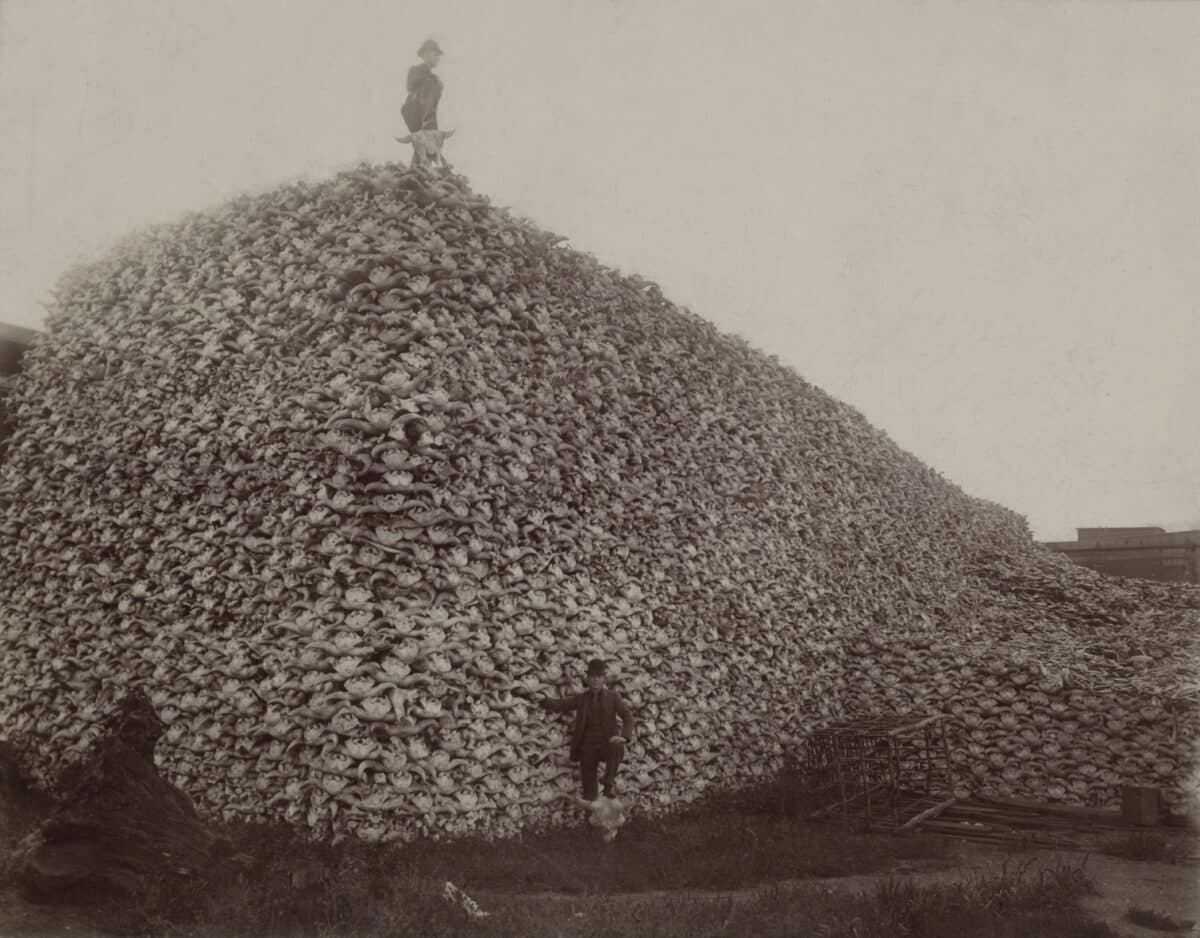
The United States also purposely destroyed critical food sources, such as the huge buffalo herds that once roamed the country. During the late 19th century, military and civilian hunters shot as many as 100,000 per day. The nation’s population of tens of millions of buffalo was soon reduced to a few hundred.
Error message
In 1916, Georgia made a well-meaning but regrettable effort to romanticize the Trail of Tears. It named as its state flower a rose that legends held had appeared wherever Cherokee tears fell along their arduous journey to Oklahoma. Dubbed the Cherokee Rose, the plant is in fact an Asian cultivar brought to the U.S. in the 1700s as a decorative landscape feature. It has become so invasive that the Georgia Invasive Species Council recently declared it a threat to the state’s native plants.
Since 2024, the Georgia Native Plant Society, of which Tony is a member, has led an effort to change the state flower to an actual native plant. The group supports honoring the sweetbay magnolia, a white-flowering tree that Cherokees use for medicinal and ceremonial purposes. In March, the Georgia Senate unanimously approved a bill that would make this change; the legislation now awaits approval by the Georgia House and, if this happens, the governor’s signature.
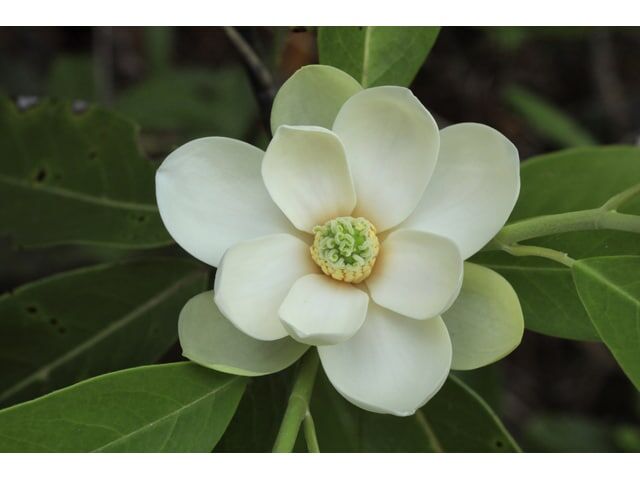
The sweetbay magnolia is an ecological anchor, providing a home for butterflies and food for birds, squirrels, deer, cattle and other creatures. Georgia Native Plant Society board chair Michael Cowan told the Georgia Recorder that the society’s support for the change raises awareness of the ecological and economic benefits of native plants.
Fans far and wide
Viewers from 37 countries have visited Tony’s blog, mycherokeegarden.com. When he started it, he had no idea of the internet’s reach, he confesses. One of his first posts, in 2013, was about sunchokes, also called Jerusalem artichokes, and how the Cherokees used the tubers as food. An hour later, a chef in Hanoi requested additional information about Cherokee food plants. A veterinarian in Montreal wanted to know about dosing sick animals with plant medicine. It was all “mind-boggling,” he says.
The Cherokee Garden at Green Meadows Preserve has enthusiastic local support. Tony has worked regularly with area developers, who give him permission to visit building sites before digging starts and rescue Cherokee plants he and his garden volunteers find there. Organizations including Bank of America and Kennesaw State University offer teams of employees and students, respectively, to weed, mulch, transplant and more.
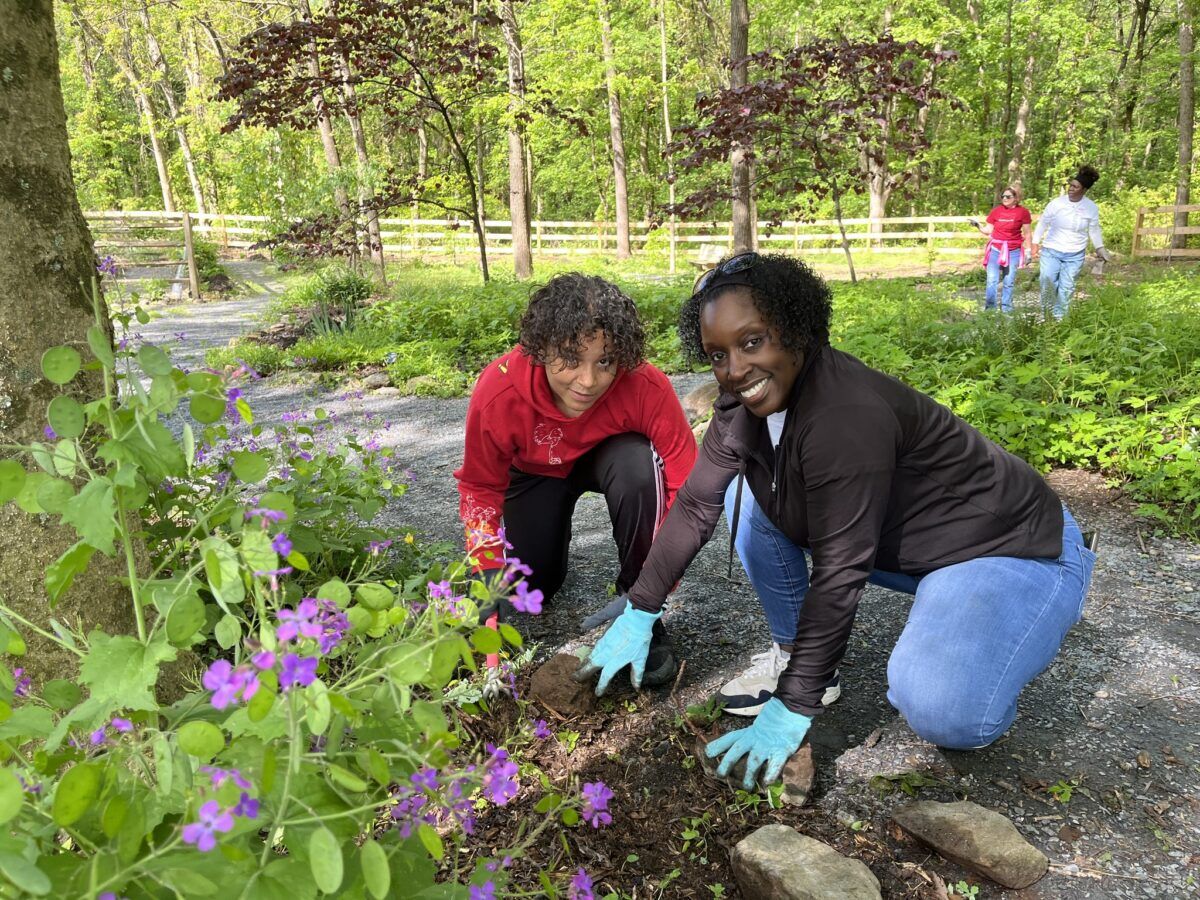
Some of the thousands of annual visitors return as garden helpers. A friend invited neighborhood resident Sue Marini to work in the garden, which she has made a weekly event. When Marini learned about the Trail of Tears, she was horrified at what had been done to the Cherokees. “To preserve their history became very important to me,” she says.
Cherokee schoolchildren will continue to make the trip from Oklahoma to Georgia to visit the garden. Bangle looks forward to teaching them in their ancestral homeland about their forebears’ accomplishments. Wyman Kirk, administrator of the Cherokee Immersion School, adds, “For a lot of the kids, it was their first chance to connect with that type of knowledge—with the sites out in the east and the knowledge that we have.”
When the Cherokee children asked Tony if they could please come back, he responded, “You sure can.”

No comments:
Post a Comment