Saturday, October 16, 2021

WV EXPORTS NAT GAS NOT COAL
Joe Manchin fumes after Bernie Sanders Op-Ed in West Virginia paper calls out obstruction of Biden agenda
MANCHIN HEADS THE SENATE ENERGY CMTTE
Brett Wilkins, Common Dreams
October 16, 2021

Joe Manchin (Screen Grab)

Senator Joe Manchin of West Virginia lashed out Friday after a major newspaper in his home state published an op-ed by Sen. Bernie Sanders that called out Manchin's obstruction of his own party's Build Back Better reconciliation package.

"Congress should proceed with caution on any additional spending and I will not vote for a reckless expansion of government programs," Manchin said in a statement shared on social media.

"No op-ed from a self-declared Independent socialist is going to change that," he added.

At issue is an op-ed by Vermont Sen. Sanders—an Independent who caucuses with the Democrats—published in the Charleston Gazette-Mail in which he calls the proposed reconciliation bill "an unprecedented effort to finally address the long-neglected crises facing working families and demand that the wealthiest people and largest corporations in the country start paying their fair share of taxes."

Sanders details how the proposal would take action to tackle the climate emergency and make sweeping investments in Americans' wellbeing including through lowering prescription drug prices, expanding Medicare, continuing cash payments to working class parents, and making community college tuition-free.

"Poll after poll shows overwhelming support for this legislation," wrote Sanders. "Yet," he continued, "the political problem we face is that in a 50-50 Senate we need every Democratic senator to vote 'yes.' We now have only 48. Two Democratic senators remain in opposition, including Sen. Joe Manchin." The other is Sen. Kyrsten Sinema of Arizona.

"This is a pivotal moment in modern American history," Sanders continued. "We now have a historic opportunity to support the working families of West Virginia, Vermont, and the entire country and create policy which works for all, not just the few."

The op-ed was published the same day the New York Times and CNN reported that Manchin's opposition to the Clean Electricity Performance Program—dubbed "the most impactful climate investment under consideration in Congress"—would likely mean it's left out of the budget package.
The Velvet Underground and Frank Zappa Was the Original East Coast/West Coast Musical Feud

The Velvet Underground documentary director Todd Haynes discusses how heroin chic East Coast rockers clashed with the healthy hippies rolling in the West Coast sun.
October 15, 2021|
Photo: Apple TV+

In The Velvet Underground, director Todd Haynes expertly captures the outsider quality of the titular band. While much of the youth of the Aquarius age wanted to let the sunshine in, the band preferred to close the door, so they’d never have to see the day again. This disconnect is glaringly featured in a segment about the band’s first trip to California.

When The Velvet Underground were playing Los Angeles in 1966 as part of Andy Warhol’s art collective, The Exploding Plastic Inevitable, they ran afoul Frank Zappa and the Mothers of Invention.

“This comes from them, this doesn’t come from me,” Todd Haynes tells Den of Geek. “But this is entirely the history, this is well documented.”

The feud might not make sense on the surface. Frank Zappa and the Mothers of Invention had more in common with the Velvet Underground than other California bands. Both bands had serious musicians with classical backgrounds. Lou Reed’s songs were populated by society’s outsiders, John Cale and Zappa both drank from the well of the Avant Garde sounds of music concrete, and John Cage. But it makes sense to Haynes.

“Even if they are both bands and artists who are experimenting and drawing from all kinds of unorthodox traditions and music, and trying to fold that into what’s possible in rock and roll,” he says.

The documentary briefly, but fervently, touches on the battle of the bands, but it exposes a larger gap between the Atlantic and Pacific. “Musically, the West Coast was an organized force trying to predominate in the pop scene,”guitarist Sterling Morrison is heard saying in The Velvet Underground. “It was odd, the way it struck us, everybody was very healthy,” Reed remembers in an interview. In an archival clip, Bill Graham, the famed promoter who booked the Velvet Underground at The Fillmore West, says young people flock to the city of Los Angeles “because people are very nice here. There’s a joie, an esprit, which doesn’t exist in New York, Chicago, Detroit, where everything is pretty nailsy, tar.”

Graham was ready to feather the Velvets before they even hit the stage, pairing the band with Frank Zappa and the Mothers of Invention at the last minute. “They were hippies,” Warhol Factory actress Mary Woronov says in the film. “We hated hippies. You know, flower power, burning bras, what the fuck is wrong with you? We become anti a lot of things that other people aren’t anti.”

While Velvet’s drummer Maureen Tucker believes Graham was jealous of the multimedia aspect of the band’s performances, the local scene seemed to band together to hate on the Velvets. The critics panned The Velvet Underground show, Cher said the band would replace nothing besides suicide. “This love/piece crap, we hated that, get real,” Tucker says in the documentary. “Free love, everybody’s wonderful and everybody loves everybody, aren’t I wonderful? You cannot change minds by handing flowers to some bozo who wants to shoot you.”

The specific feud began when Zappa made a sarcastic comment when The Mothers opened for The Velvet Underground at the Trip on May 3, 1966, but there was also a rivalry within both band’s label MGM, where Zappa was most promoted alternative act. Reed continued to hold the grudge well into his post-Velvet career, saying he enjoyed his shows at London’s Rainbow Theater because that’s where Zappa fell down twenty feet into the orchestra pit. As it turns out, Frank was less offended by the band’s music than their aura of heroin chic.

“When they clashed with the West Coast, I think they realized the degree to which their genius was a form of depravity, and they knew that,” Haynes says. “But I think they couldn’t literally stand up and say, ‘Yeah, this is who we are, and we find the rest of the counterculture to be kind of bourgeois and uptight and sort of conformist by comparison.’”

Reed and Zappa apparently settled whatever differences they had on a personal level, away from public scrutiny. Reed told Mojo magazine (per Rolling Stone) that Zappa gave him the idea of playing a cantaloupe for the White Light/White Heat album. “‘You’ll get a better sound if you do it this way,’” Reed recalled. “And then he says, ‘You know, I’m really surprised by how much I like your album.’”

Join our mailing list

Get the best of Den of Geek delivered right to your inbox!

Subscribe

Reed also inducted Zappa at the 1995 Rock & Roll Hall of Fame Induction Ceremony.

“Whether writing symphonies, satirical broadsides, or casting a caustic glow across the frontier of madness that makes up the American political landscape; whether testifying before Congress to put the PMRC in its rightful lowly place, or acting as a cultural conduit for President Vaclav Havel and the Czech government, Frank was a force for reason and honesty in the business deficient in those areas,” Reed said. “As we reward some with money for the amusement they supply to the cultural masses, I think the induction of Frank Zappa in the Rock and Roll Hall of Fame distinguishes the Hall as well as the inductee.

The Velvet Underground will be available in theaters and on Apple TV+ on Friday, Oct. 15.


Written by
Tony Sokol | @tsokol
Culture Editor Tony Sokol is a writer, playwright and musician. He contributed to Altvariety, Chiseler, Smashpipe, and other magazines. He is the TV Editor at Entertainment…
Analysis: How Judge Bitar’s probe shook Lebanon leaders

Experts say judge leading investigation into last year’s explosion at Beirut’s port rattled the country simply by challenging systemic impunity.

Supporters of Lebanese groups Hezbollah and Amal take part in a protest against Tarek Bitar, the lead judge of the port blast investigation 
[File: Mohamed Azakir/Reuters]

SOURCE: AL JAZEERA
By Kareem Chehayeb
16 Oct 2021

Beirut, Lebanon – When the Lebanese government announced more than a year ago that the probe into the devastating explosion in Beirut’s port would be conducted domestically, few expected that senior officials would be charged.

But even fewer expected that the lead investigator, Judge Tarek Bitar, could rattle the country’s entrenched leadership, which for decades has reigned with impunity and routinely quashed legal investigations that may hold it accountable.

More than 200 people were killed and some 6,500 wounded when hundreds of tonnes of highly explosive ammonium nitrate fertiliser stored in the port for years ignited on August 4, 2020. The explosion wrecked large parts of Beirut and continues to haunt Lebanon, as the country struggles with an economic meltdown that plunged three-quarters of its population into poverty. No officials have been convicted yet.

Bitar’s persistence to pursue senior political and security officials, despite their attempts to delegitimise and remove him, has put the country on notice.

“Judge Bitar is giving the Lebanese hope in the domestic judiciary after many people have totally given up on justice and accountability locally,” Aya Majzoub, Human Rights Watch Lebanon researcher, told Al Jazeera. “He is single-handedly facing off with the entire political establishment that is implicated in the Beirut blast.”

On Thursday, a protest in Beirut by Hezbollah and Amal supporters calling for Bitar’s removal turned into a bloodbath when unidentified snipers fired at the crowd from rooftops, triggering a gun battle that last for more than four hours. Seven civilians and combatants died.

Families of the explosion victims, activists and human rights organisations continue to back Bitar. However, several political and religious leaders from across the country’s sectarian spectrum continue to call for his removal and accuse him of bias, accusations dismissed by legal experts and rights groups.

Bitar was appointed to lead the investigation in February following the dismissal of his predecessor, Judge Fadi Sawan, who had shockingly charged former ministers Ali Hasan Khalil, Ghazi Zeiter, Youssef Finianos, and Lebanon’s then-caretaker Prime Minister Hassan Diab with criminal negligence.

Over the past seven months, Bitar has continued to pursue the same individuals and also charged former minister Nohad Machnouk. He has also repeatedly requested to summon two senior security officials, General Security chief Major-General Abbas Ibrahim and State Security head Major-General Tony Saliba – but the Ministry of Interior and Higher Defence Council would reject the requests.

The charged politicians have declined to show up to the interrogations. They have also continuously tried to remove the judge by filing legal complaints, which have sometimes temporarily suspended the investigation. Though the judiciary has so far dismissed these complaints, legal experts say this has been a tactic to stall the investigation, while major political parties have now also begun calling for Bitar’s removal.

The most vociferous has been Hezbollah, even though Bitar has not charged anyone from the party. Just three days before Thursday’s clashes, Hezbollah leader Sayyed Hassan Nasrallah accused the judge of politically targeting officials and called for an “honest and transparent judge”. Last month, a senior Hezbollah security official reportedly threatened Judge Bitar in his office.

“It’s clear that Bitar has hit too close to home, but we don’t know why Hezbollah, in particular, is leading this campaign against him,” Majzoub said. “They keep saying they’re singled out, but none of the officials Bitar has called for investigation are Hezbollah officials.”

Lebanon’s troubled history is littered with conflict, including a vicious 15-year civil war that ended in 1990, followed by decades of assassinations and sporadic armed clashes. But the perpetrators of even the gravest crimes were never held to account. Many say this is an extension of rampant corruption in Lebanon, where the judiciary is not independent of the government.

Now, political leaders have accused Bitar and the judiciary of being politicised.

Families and experts told Al Jazeera that Bitar set a new precedent in the port explosion investigation and shocked Lebanon’s leadership.

Bachar El-Halabi, a political analyst, said Bitar “decided to go as far as possible”.

“Sawan’s removal also shocked [the public] and garnered support in the public sphere which transcended sectarian fault lines,” El-Halabi noted. “It’s not just about ending the impunity that continues to reign supreme in Lebanon, but a fear of any kind of repercussion of change that could come through the judiciary.”

Two years ago, mass nationwide protests demanded accountability for rampant corruption and financial mismanagement, as well as an end to decades of rule at the hands of the country’s sectarian leadership. A common call among protesters at the time was an independent judiciary to investigate corrupt politicians and business people.

“Bitar has also started a wider discussion around the country around [legal] immunities, and the really corrupt political and legal system that essentially shields these high-level officials from accountability,” Majzoub said.

“He brought this issue to the forefront of public debate in Lebanon, and put a lot of pressure to reform this system designed by the powerful to protect the powerful.”


How an investigation into Beirut's port explosion is rattling Lebanon's elite, stirring memories of civil war

Analysis by Tamara Qiblawi, CNN
Sat October 16, 2021

(CNN)For many in Lebanon, Thursday's scenes from central Beirut brought a sense of deja vu.

Snipers shot people from rooftops. Masked gunmen fired back with rocket-propelled grenades and B7 rockets. Terrified schoolchildren took cover in corridors. And to top it all off, the violence was all playing out along the capital's former "Green Line," a major battle front that divided Beirut's Christian east from the predominantly Muslim west during the 15-year civil war that ended in 1990.

It was enough to send shivers down the spine of a people still reeling from collective traumas both fresh -- such as last summer's Beirut port blast -- and old. The wounds of the civil war continue to fester, and to watch smoke billowing from buildings covered in pockmarks from battles long past was almost too much for ordinary people to bear.
Yet for all the harrowingly familiar optics of Thursday's fighting, the political environment is new. The violence did not pit Muslim against Christian. Nor are the motivations sectarian. Instead, the violence has emerged from a fault-line that is divorced from those terrible realities.

Men help evacuate an elderly woman after gunfire erupted, in Beirut, Lebanon October 14, 2021.

The probe into the port explosion that killed more than 200 people is at the heart of Thursday's tumult. The investigation -- the biggest ever legal challenge to Lebanon's ruling elite, who are also a holdover from the civil war -- is widely seen as a potential milestone, a tool through which the country can begin to shed its blood-drenched past.
Neither the masked gunmen who emerged from a Hezbollah-organized protest against the port probe, nor the unknown snipers who appeared to be posturing as defenders of the investigation, have a vested interest in Lebanon moving forward or finding answers from the devastation of August 2020. Hezbollah and its ally Amal have accused the Christian right-wing party and former militia, the Lebanese Forces (LF), of being behind the sniping -- an allegation the LF has rejected.

Thursday's fighters appear keen to keep the tiny Mediterranean country stuck in the past, just when the population has overwhelmingly voiced support for a better future. The judge leading the investigation into the probe, Tarek Bitar, has emerged as a champion of those people. Hezbollah, on the other hand, has positioned itself as Bitar's most vociferous opponent.

People of all religious stripes were casualties of the August 2020 explosion. Across Lebanon's religious spectrum, people want justice. In that same vein, Hezbollah — which has not been prosecuted in the probe so far — has led a political offensive on behalf of a multi-religious elite.

Bitar has sought to question top officials across the board, and has recently issued arrest warrants against three former ministers — a Sunni Muslim, a Shia Muslim and a Maronite Christian.

The divisions therefore do not play out along Lebanon's age-old confessional lines. Instead some say observers ought to be looking at the implications of the probe itself. The investigation into the Beirut blast has rattled the political elite in a way that the blast itself, one of the largest non-nuclear explosions in history, could not.

The ruling class appears to be shaking in its boots, after having unsuccessfully petitioned to remove Bitar from his position. This is the same elite that survived a civil war, thanks to an amnesty law that marked the end of the conflict, and was largely unfazed by the October 2019 nationwide popular uprising and the devastating economic catastrophe that followed.

The ramifications of the probe could extend beyond Lebanon and to the Arab world at large. This is a region well-known for brazenly undermining its judiciary, even as the appetite for accountability among an increasingly frustrated Arab youth continues to grow.

If, against all odds, Bitar can see his investigation through, then he could be setting a precedent for the entire region. Arab leaders should take note.


A man runs for cover as gunfire breaks out at a protest in Beirut, Lebanon, on Thursday, October 14.
The law that prompted a school administrator to call for an 'opposing' perspective on the Holocaust is causing confusion across Texas

Brian Lopez, The Texas Tribune
October 16, 2021
THE OPPOSING PERSPECTIVE 


A new Texas law designed to limit how race-related subjects are taught in public schools comes with so little guidance, the on-the-ground application is already tying educators up in semantic knots as they try to follow the Legislature's intent.

In the most striking instance so far, a North Texas administrator informed teachers last week at a training session on House Bill 3979 that they had to provide materials that presented an “opposing" perspective of the Holocaust. A recording of the Oct. 8 training at Carroll Independent School District in Southlake, obtained by NBC News, has reignited the debate over the so-called “critical race theory law."

“Just try to remember the concepts of [House Bill] 3979," Gina Peddy, Carroll ISD 's executive director of curriculum and instruction, is heard telling teachers on that recording. “And make sure that if you have a book on the Holocaust, that you have one that has an opposing — that has other perspectives."

It's not the first time the Carroll school district in Southlake — the affluent suburb that sits between Fort Worth and Dallas — has made news with its interpretation of the new law, which is an attempt to keep critical race theory, or CRT, an academic discipline usually taught at the university level, out of schools. Critical race theory's central idea is that racism is not something restricted to individuals. Instead, the theory contends that bias is something embedded in policies and legal systems.

Two weeks ago, the Carroll school board voted 3-2 to reprimand a fourth grade teacher who had an anti-racist book in her classroom after a parent complained about it last year. And Southlake's earlier struggles with a school diversity and inclusion plan — as well as how parents opposed to the plan started a political movement there — were the subject of a seven-part NBC podcast released earlier this year.

The Texas law states a teacher cannot "require or make part of a course" a series of race-related concepts, including the ideas that “one race or sex is inherently superior to another race or sex," or that someone is “inherently racist, sexist, or oppressive" based on their race or sex.

Since Texas Gov. Greg Abbott signed the anti-critical race theory bill into law June 15, reports of schools struggling to comply with it have surfaced, most notably in Southlake.


Since then, one Carroll teacher covered a classroom library with yellow “DO NOT ENTER" tape. Last week, NBC reported that teachers there have been given scoring tools known as rubrics. Those scoring sheets, also obtained by The Texas Tribune, ask teachers to move through a complicated chart to evaluate library offerings to make sure they are in compliance with the new state law.


A classroom library selection rubric from the Carroll Independent School District. Credit: Obtained by The Texas Tribune

The cards ask teachers to consider whether an author of each book has provided multiple perspectives. If an author “provides balanced information by providing multiple perspectives," the book is given a maximum of two points. A book may get zero points if the “author perspective/bias distorts content, making the material inappropriate for use with students."

In one email sent to teachers, also obtained by the Tribune, Carroll ISD administrators told teachers that classroom libraries could not be used until they have been vetted, using the rubrics.

“We want your staff to know that the classroom libraries will continue to be available for students, but we will continue to vet the material in those libraries for the remainder of the semester," an email sent to teachers read.


After news surfaced this week about Southlake's Holocaust guidance to teachers, state Sen. José Menéndez, D-San Antonio, wrote a letter Thursday to Mike Morath, the Texas Education Agency commissioner, requesting a review of how school districts are implementing the law to “refute hateful and racist rhetoric in our Texas public schools."

“When this bill passed legislators warned that racist attacks would occur. It is our job to take every step possible to ensure an open and diverse forum, without subjecting our children to racism and hateful rhetoric," Menéndez wrote.

State Sen. Kelly Hancock, R-North Richland Hills, tweeted Thursday simply that “Southlake just got it wrong."


He added, “School administrators should know the difference between factual historical events and fiction. ... No legislation is suggesting the action this administrator is promoting."

Paul Tapp, attorney with the Association of Texas Professional Educators, said his organization has received questions from teachers because they don't know what they can teach. A biology teacher asked if they should give equal time to creationism and evolution.

“These are two good examples of what the dangers of this kind of law are," Tapp said. “The point of public education is to introduce the world to students. It's not there to protect students from the world."


Carroll ISD Superintendent Lane Ledbetter quickly clarified late Thursday that the comments made in the training “were in no way to convey that the Holocaust was anything less than a terrible event in history."

“As we continue to work through implementation of HB3979, we also understand this bill does not require an opposing viewpoint on historical facts," Ledbetter said.

Still, Carroll is not the only district in the state struggling with how to conform to the new law.


In Katy Independent School District earlier this month, administrators postponed an event by critically acclaimed author Jerry Craft after parents claimed his books "New Kid" and "Class Act" promoted critical race theory. The district removed the books, reversed itself and rescheduled the author event after a review committee deemed the books did not contain offensive material.

Katy ISD did not respond to an interview request.

In June, in what seemed to be the first application of HB 3979, McKinney school officials ended their students' participation in the nationwide Youth and Government class. A McKinney social studies curriculum coordinator wrote to educators that “in light of" the new law's ban on political activism and policy advocacy, “we will no longer be allowed [to] offer Youth & Government as an elective course for credit."


The cancellation of the elective course appeared to be a misapplication and one of the first instances that resulted in educators trying hard to understand the new law. So far, the law only applies to required social studies classes, not electives like the McKinney class. State Rep. Steve Toth, R-The Woodlands, the bill's author, said in June that the Youth and Government elective “doesn't have anything to do with lobbying members, so there is no reason [McKinney] would have to cancel it."

Following the Legislature's intent may get even more complicated for schools, teachers and parents in the coming months. This December, Senate Bill 3, authored by state Sen. Bryan Hughes, R-Mineola, and passed in the state's second special session in August, will place more restrictions on a school's curriculum.

SB 3 says that at least one teacher and one campus administrator at each school must undergo a civics training program. Also, it says teachers cannot be forced to discuss current controversial topics in the classroom, regardless of whether in a social studies class or not. If they do, they must not show any political bias, the law says.


“What I would hope most of all is that school districts will actually read the law, and apply the law as written and not go beyond what the law actually requires them to do," Tapp said. “As soon as I read the bills, I expected that this would be the result of it, and I don't think we've heard the last of it."

Disclosure: The Association of Texas Professional Educators has been a financial supporter of The Texas Tribune, a nonprofit, nonpartisan news organization that is funded in part by donations from members, foundations and corporate sponsors. Financial supporters play no role in the Tribune's journalism. Find a complete list of them here.

This article originally appeared in The Texas Tribune at https://www.texastribune.org/2021/10/15/Texas-critical-race-theory-law-confuses-educators/.

The Texas Tribune is a member-supported, nonpartisan newsroom informing and engaging Texans on state politics and policy. Learn more at texastribune.org.


'Dangerous': Inside Greg Abbott’s crazy Lone Star rebellion

Terry H. Schwadron, DCReport @ RawStory
October 16, 2021

Screengrab.

Apparently, the Republican argument suggests, we should just forget about the coronavirus and ignore a disease that has killed 700,000 Americans, variously overrun our hospitals, interrupted jobs, businesses, and lives, and has spurred a strong political resistance movement.

Even as some courts have already endorsed the idea of government mandates for masks and protections against contagion, Texas Gov. Greg Abbott is challenging the right of President Joe Biden to act for public health as "yet another instance of federal overreach."

It's apparently okay for Abbott to mandate against mandates not only for the state's employees but for its private businesses as well. But, by contrast, it's not okay for the federal government to tell Texas, Florida, or any state what to do about a pandemic that knows no bounds, or for companies with more than 100 employees.

That Texas is only now beginning to emerge from two months or more of spiraling covid cases, hospitalizations and deaths is not the focus of this dust-up over the rules. Rather, it's a bald political showdown.

Frankly, it's disgusting, no matter what one's politics are. No, this drawdown borders on insanity. Why do we have time, energy, and money available for endless court battles over who's really in charge?

Has Abbott not heard of the telephone, to simply call Biden and engage in some debate if they disagree?

In any event, airlines based in Texas are moving ahead with mandates anyway, guaranteeing more tumult, not less.

Why It's Strange

It is such a strange battlefield that we need to look at it for what underscores this continuing Texas rebellion, especially since it spreads so quickly to other Republican-led states. Several things that question our general understanding are coming to the surface simultaneously.

Discussion about countering a pandemic seems futile. Whenever one side of our cultural divide talks about medicine, the other is talking about rights, including the right to be as sick as one chooses and the right to infect others. We've passed the time of legitimate discussion about immediate health effects of vaccines; that is not even on the table in these moves by Abbott, who has been vaccinated and who has undergone a mild form of covid. The anti-vax position has become nearly fully a political one. By all medical standards, having had covid is no guarantee about carrying the contagion further or even to protection beyond some undetermined but finite time.

Blame for covid under anti-vax is limited now only to the also endless debate over its origin from nature or from a man-made process in a China laboratory, either as the result or by-product of some National Health Institute grant over a study of interspecies transmission. There is no acknowledgment that keeping more than 30% of adult Americans unvaccinated is a problem that manifests as a continuing public petri dish of mutation. Meanwhile, the Right is actively blaming Biden for high gas taxes, for a messy withdrawal from Afghanistan, clogged supply lines and sagging international dominance—because they all are happening on Biden's watch.

Spending zillions of dollars on treatments for those who already have covid may blunt hospitalizations but does nothing to halt the spread of an airborne contagion. Yet, we're seeing tons of support across the political spectrum to spend $2,000 a dose for antibody treatments now emerging, even in pill form, rather than a $20 vaccine. For those who also argue against Biden's big-spending proposals as wasteful, this position seems, well, incongruous.

The legal arguments here are arcane, as well as, frankly, ludicrous to you and me and our jobs. Is this more about state power versus federal power in a constitutional republic than about a chance to jack up Biden and ignore a public health menace? The force of law seems to favor the federal government acting in an emergency. The practical concerns for businesses like American Airlines based in Dallas pulled among conflicting mandates from the feds, the state and demands of consumers are simply not as important to this governor as a political principle.

By all accounts from all political viewpoints, telling businesses what they cannot do is seen as antithetical to a "conservative" view that wants government restraint.
If It Quacks. . .

It is much more understandable to see the Texas challenge over covid mandates right alongside the Texas challenge over abortion, over voting rights, over the environment and even over issues of immigration.

That is, Texas politics demand that Abbott, running at least for reelection if not for president, must protect himself from absolutists even more right-wing than he himself believes. This week, we saw hardliner Republican candidate Allen West continuing to tweet from his covid hospital bed against vaccine mandates and for expensive alternative treatments. Don Huffines, a former Texas state senator who is challenging Abbott, tweeted that "Greg Abbott is a political windsock and today proves it, He knows conservative Republican voters are tired of the vaccine mandates and tired of him being a failed leader." Apparently, in response to a Huffines criticism that a state website to help teen suicide might be fostering trans discussions, Abbott had the site pulled.

About 15 million Texans have been fully vaccinated, or just over half, lagging the national average.

Why kowtowing to a minority of voters in hopes of reelection is a bit of a mystery to me. But the reason for anyone to run for governor or president should be to solve problems.


It's hard to see what problem this governor is solving other than his own political dreams.


Texas GOP advances new maps that would tighten slipping grip

- In this Tuesday, June 30, 2009 file photo, The south side of the Capitol and its surrounding grounds are shown in Austin, Texas. TTexas Republicans are set to approve redrawn U.S. House maps that would shore up their eroding dominance as voters peel away from the GOP in the state’s booming suburbs. The Texas House on Saturday Oct. 16, 2021 is expected to send the maps to Republican Gov. Greg Abbott.
 (AP Photo/Harry Cabluck, File)

AUSTIN, Texas (AP) — Texas Republicans on Saturday night closed in on redrawn U.S. House maps that would shore up their eroding dominance as voters peel away from the GOP in the state’s booming suburbs.

In a key late-night vote in the Texas House, Republicans gave early sign-off to new congressional boundaries that would give them more breathing room after some close calls in 2018 and 2020, while also opening a new path for the GOP along the border with Mexico.

But in a preview of legal challenges to come, Democrats spent hours blasting the maps as discriminatory and all but blind to the state’s surging number of Latino residents, who made up more than half of the nearly 4 million new Texans over the past decade. Many live around Dallas and Houston, where under the GOP-engineered maps, there would be no new districts that give Latinos a majority.

Republican state Rep. Todd Hunter, who has presided over the redrawn maps in the House, defended the changes and said they comply with the law.

The maps will still need final negotiations in the coming days between the House and Senate before being sent to Republican Gov. Greg Abbott, who is expected to sign them.

The redrawn congressional districts would make make it easier for many incumbents to hold their seats, but critics say they also threaten Black and Hispanic communities’ political influence, even as those voters drive Texas’ growth. The new lines, the product of a once-in-a-decade redistricting process, create two new districts and make several less competitive for Republican lawmakers.

Texas was the only state to gain two congressional seats following the 2020 census, which showed that people of color accounted for more than 9 of 10 new residents in Texas.

“Race is clearly the factor here,” Democratic state Rep. Rafael Anchia said of how the maps were drawn. “Not partisanship, but rather race.”

One revision by the Texas House during hours of debate Saturday would increase the number of Hispanic voters in two districts, but those changes must still make it through another round of approval.

Democrats and voting rights advocates are preparing to challenge the maps in court in what would be yet another high-profile, high-stakes legal battle over Texas politics — already the epicenter of disputes over abortion and voting rights.

Republicans who control both chambers of the Legislature have nearly complete control of the mapmaking process. They are working from maps that experts and courts have already declared as gerrymandered in their favor, and the state has had to defend their maps in court after every redistricting process since the Voting Rights Act took effect in 1965.

But legal challenges face new hurdles this round — the first since the U.S. Supreme Court ruled in 2013 that Texas and other states with a history of racial discrimination no longer need to have the Justice Department scrutinize the maps before they are approved. Plaintiffs must now wait to file claims and must show that maps were intentionally meant to discriminate by race. Drawing maps to engineer a political advantage is not unconstitutional.

Republican state Sen. Joan Huffman, who authored the maps and leads the Senate Redistricting Committee, has told lawmakers they were “drawn blind to race.” She said her legal team ensured the proposal followed the Voting Rights Act.

The proposal would make 24 of the state’s 38 congressional districts safe Republican districts, with an opportunity to pick up at least one additional newly redrawn Democratic stronghold on the border with Mexico, according to an analysis by The Associated Press of data from last year’s election collected by the Texas Legislative Council. Currently, Republicans hold 23 of the state’s 36 seats.

Republicans with newly fortified advantages include Rep. Van Taylor, whose district in Dallas’ exurbs went for President Donald Trump by a single percentage point last year. Under the new maps, Trump would have won the district by double-digits.

Rep. Michael McCaul, who Democrats aggressively targeted the last two cycles, would now represent a solidly pro-Trump district under lines that exclude Houston’s suburbs and liberal parts of Austin.

And a long, vertically drawn district stretching from the Rio Grande Valley to San Antonio that President Joe Biden won by just over 2 percentage points would now slightly tilt toward Trump voters.

In a late-night win for Democrats, U.S. Rep. Sheila Jackson Lee, a Democrat who is serving her 14th term, had her home drawn back into her Houston district, which was restored nearly entirely to its former shape. So, too, was the nearby district of U.S. Rep. Al Green after both had seen longtime constituents of minority communities drawn out of their districts.

Texas lawmakers are also redrawing the maps for their own districts, with Republicans following a similar plan that would keep their party in power in the state House and Senate. Those proposals are also expected to be sent to Abbott by next week.

___

Associated Press writer Paul J. Weber contributed to this report. Coronado is a corps member for the Associated Press/Report for America Statehouse News Initiative. Report for America is a nonprofit national service program that places journalists in local newsrooms to report on undercovered issues.

Thousands of frustrated visa lottery winners sued the US government. They won

2021/10/16 
© The Sacramento Bee
Nearly 10,000 winners of the visa lottery, frustrated by their failure to obtain consular interviews to process their U.S. immigrant visas on time, won a court battle this week. - Dreamstime/Dreamstime/TNS

Nearly 10,000 winners of the FY 2020 Diversity Visa Program, better known as the visa lottery, who were frustrated by their failure to obtain consular interviews to process their U.S. immigrant visas on time, won a court battle this week.

The U.S. District Court for the District of Columbia ruled on Wednesday that the U.S. Department of State, which administers the immigration program, must process 9,905 visas that were allocated in the DV-2020 lottery.

U.S. District Judge Amit P. Mehta ordered the Department to “commence processing the 9,905 DV-2020 visas as soon as is feasible and to conclude such processing no later than the end of the 2022 Fiscal Year, or September 30, 2022,” according to court documents.

The visa lottery allocates up to 55,000 permanent resident cards, known as green cards, for immigrants with historically low rates of immigration to the U.S. The winners are drawn from random selection by computer from among qualified entries.

The annual program’s guidelines stipulate that all winners, including family members or derivatives, must be issued immigrant visas by Sept. 30 of the program’s fiscal year, which in this case was Sept. 30, 2020.

But chronic delays at American embassies and consulates around the world, stemming in large part from the coronavirus pandemic, among other causes, did not allow the qualified winners to complete the mandatory consular processing for the visa issuance.

In light of these unintended mishaps, diversity visas winners have filed several class-action lawsuits against the Department of State, both under the Trump and Biden administrations.

In a statement released Wednesday, the foreign policy agency said it was aware of the various court orders pertaining not only to the DV-2020 lottery visa, but also to the DV-2021 edition of the program, whose visas many foreigners were also unable to obtain on time.

“We will publish public guidance on this website regarding the Department’s plan for complying with these orders as it becomes available,” officials said.

In the class action lawsuit Gomez v. Biden, the D.C. district court had already instructed in August that the Department was required to process the 9,905 reserved diversity visas in a random order, but it did not established a time frame for processing them.

With this week’s order, the cards are finally laid out, and the visas on the horizon for the lucky winners, who will be able to immigrate to the United States legally and permanently with a green card.

“The court understands that waiting up to another full year will disappoint Gomez class members who hope to secure a reserved DV-2020 visa,” Judge Metha wrote in his court order.

“However, this court must balance the interests of the class with the resource constraints of the State Department, along with the interests of thousands of others who are patiently waiting for their immigrant and nonimmigrant visas to be adjudicated and issued by consular offices,” he concluded.
ONTARIO

'Doesn't make sense:' Kemptville residents question plan to build a huge jail in the middle of a small town

The preferred site is on 178 acres of heritage land formerly owned by a college, about one kilometre from the community's quaint downtown.

Author of the article: Aedan Helmer
Publishing date: Oct 16, 2021 • 
Local residents opposed to the plan to build the Greater Ottawa Correctional Complex in Kemptville gathered at the proposed location in early October. 
PHOTO BY TONY CALDWELL /Postmedia
Article content

It’s a nonsensical place for a jail, opponents say.

The grassroots movement to stop the construction of a provincial institution slated to be built on a pristine parcel of Kemptville farmland has been bolstered in recent months by a chorus of academics, advocates and arm’s-length agencies. They all question the logic of placing a 235-bed correctional institution in a community with no access to public transit and a lack of support services for prisoners.

“It should be communities — the local municipalities and the residents who live there — who make the critical decisions about infrastructure that’s going to profoundly affect the future of that community. And that simply didn’t happen here,” said Colleen Lynas, who leads the local Coalition Against the Proposed Prison (CAPP).


Documents obtained by opposition groups last year through access to information laws show the Ministry of the Solicitor General considered 38 properties before narrowing its shortlist down to five potential sites for the new Eastern Ontario Correctional Complex (EOCC).

The government’s preferred site for the jail, on 72 hectares (178 acres) of heritage land formerly owned by Kemptville College, about one kilometre from the community’s quaint downtown, was deemed the best choice despite scoring the lowest of those five properties when it came to proximity to Ottawa’s city centre.

Situated 60 kilometres away from the Ottawa-Carleton Detention Centre, and a 54-minute drive from the city core, Kemptville is more than twice the distance of the other four properties the province considered.


The shortlist included a 138-acre rural property on Rideau Road that was already conditionally sold, 40 acres on Uplands Drive about 18 km from OCDC, two properties on Leathem Drive near the RCMP headquarters that could potentially be combined to a 98-acre plot, and a 40-acre property on Walkley Road that was eliminated due to its proximity to the railway, and the potential for adjacent lands “impeding operations,” among other factors.

The Kemptville site scored a red ‘X’ when it came to transit access, according to a ministry report outlining each of the five potential sites, which was first circulated internally in 2019 and was released in a heavily-redacted version last fall.


Lynas said Kemptville should have been disqualified as an option due to the distance and 

There is likewise a lack of community support services for inmates and their families in Kemptville, she said, and there remain concerns the new jail could strain local infrastructure and overburden the local hospital and other town resources.

Hundreds of “No Prison” lawn signs have popped up in town and around the rural community (with a population of 4,000 as of 2016 and a taxpayer base of about 7,400 in North Grenville).

Opposition groups staged a demonstration outside MPP Steve Clark’s office in Brockville on Friday.

“First of all we do not need another prison — that’s the bottom line,” said Bryonie Baxter, former executive director of the Elizabeth Fry Society who resides in North Grenville and sits as a member of the Kemptville Hospital board. Baxter noted she was speaking as a resident and not on behalf of either organization in her opposition to the jail.

“We have a broken prison system that needs to be fixed — we don’t need another jail. And if we did, we would definitely need a (host) community that has access to supports for the individuals who are incarcerated, and for the families who visit them, and for the people and agencies who help them with rehabilitation and readjustment into the community.”


A map from a government document showing the location of the new proposed Kemptville jail from Ottawa. jpg

The lack of access to public transit in Kemptville is one of the biggest issues that opponents of the plan fear will fall to the taxpayers of North Grenville. But it presents other obstacles — to those outside and inside the jail — that Baxter said the government must consider.

“The reality is, the state does have an obligation to get the person who has been incarcerated back to their home community, and there is no way to do that here. People will simply have the doors thrown open and be left to fend for themselves, and often that can involve returning to some sort of desperate measure to cope with that situation.

“If prison is supposed to be about rehabilitation, then we need the supports, otherwise it’s just a revolving door of incarceration over and over again,” Baxter said.

“We also have an obligation for family reunification. And we know from multiple studies that the success of that reintegration into the community depends on their social supports and their family supports.”

Families will often make “superhuman effort” to stay connected with loved ones in jail, Baxter said, “And we cannot assume that everybody has a car, or access to a car.”

That would leave families resorting to “virtual visits” through videoconference, Baxter said.

“All of us who have been through this pandemic can now appreciate, when you’re trying to connect with a loved one, how inappropriate and difficult that can be.”

While larger urban centres such as Ottawa have the Salvation Army, John Howard Society, Elizabeth Fry Society and other advocacy groups, “Out here in Kemptville, we do not have those,” Baxter said.

“And we do not have Indigenous supports out here, when we know Indigenous people are disproportionately represented in jails with between 30 and 40 per cent of the prison population.

“We have a small hospital and we do not have the infrastructure or the experience in place to deal with the medical needs of the population we will now be serving,” she said. “We’re a small farming community and we do not have those supports in place.”

Critics are taking a “wait-and-see” approach to the province’s recent commitments to finance infrastructure upgrades and pay all costs of policing associated with the jail, said University of Ottawa professor Justin Piché, who co-founded the Criminalization and Punishment Education Project along with his Carleton University counterpart Aaron Doyle.

Piché and Doyle questioned the government’s rationale for building new prison spaces after collecting data through the pandemic showing Ontario’s prisoner population decreased from about 8,300 pre-pandemic to about 5,800 inmates by June. That was largely due to the efforts of defence lawyers, Crown attorneys and judges, Piché said, opting for alternatives to incarceration during the bail phase.
A government document ranking the options for a replacement to the Ottawa Carleton Detention Centre. jpg

“For years we’ve been told that those kinds of reductions were not possible,” Piché said. “And if they invest more money into community re-entry supports that population could be reduced even further. So this idea that we need to go and blow hundreds of millions of dollars to build new jails and new jail spaces because of a crowding issue — that doesn’t pass. We do have alternatives that are more effective, less costly and more just.”

If a new provincial jail is to be built, making the case for Kemptville is a tough sell, Piché said.

“Kemptville has a small hospital, there’s no volunteer base in Kemptville, no community agencies that work with criminalized people, there’s no public transportation to get visitors to the prison… there’s no transportation to get released prisoners back to their home communities, no re-entry supports.

“This really doesn’t make sense in a lot of different ways.”

The Ministry of the Solicitor General said in a lengthy statement their “modernization strategy” for the region, which includes the new jail in Kemptville, “will play an important role for the safety and wellbeing of those in custody and our staff.”

The EOCC will “help address capacity pressures throughout the eastern region, create additional space for programming and expand our supports for inmates with mental health issues,” said Stephen Warner, press secretary and spokesperson for Solicitor General Sylvia Jones. “It also will provide frontline correctional services staff with a facility, work environment and supports they need to do their jobs safely and effectively and will ensure appropriate supervision and care for those in provincial custody.”

Warner said the government considered numerous sites in eastern Ontario and reviewed government-owned land, but none of the candidates “met the project requirements, such as municipal servicing, size, site configuration and conserving natural heritage. The ministry also considered privately-owned sites, however, they were not viable because of market conditions or did not offer adequate proximity and highway access for services such as police, fire and emergency medical services.”

Deputy Solicitor General Deborah Richardson confirmed to North Grenville council in a letter in June the ministry’s commitment “to fully pay for the necessary infrastructure, including servicing the land for water and sewer, and any related road upgrades that would be required.”

Steve Clark, MPP for Leeds-Grenville-Thousand Islands and Rideau Lakes, said he is working with the Solicitor General and with the municipality of North Grenville “to ensure the proposed Kemptville correctional facility delivers the best outcomes for the community and support the local economy.”

Clark said in an email the site’s proximity to Highway 416 and other “key attributes” make the former Kemptville college lands “a practical location” for the jail.

Clark said the province has committed — at his request — to allow North Grenville to retain any surplus lands and existing buildings on the site that the facility will not need.

Clark said that will allow the municipality to use the land surrounding the jail “for locally-driven opportunities like agriculture, equine, and horticulture initiatives that are what make Kemptville such a thriving, prosperous community.”

North Grenville Mayor Nancy Peckford issued a statement in June saying the province has been “responsive and engaged” and Clark said the government will continue with public consultations.

“I’ve heard a lot of support for this project,” Clark said, “especially from small businesses who see the benefit of having new customers come to the area.”

But critics believe the government’s promise of economic spinoff is “overstated” and “overblown.”

According to Piché, the Solicitor General has stated that a number of staff destined for the Kemptville jail would be transferred from existing provincial facilities like OCDC.

And in an earlier presentation, Piché said, the government showed what it called a “heat map” of current correctional staff, which indicated a significant number already living within Kemptville’s radius.

“So this idea that this jail is going to generate this kind of economic boom activity is definitely overblown,” said Piché. “And the contracts to design, build and maintain these facilities typically go to large conglomerates — not the local companies — so the real economic benefits are going to these big construction companies with head offices elsewhere.”


The government’s talking points have shifted lately, according to opposition groups, from the idea of local job creation to the prospect of other economic stimulus.

“We believe very strongly there will be a reluctance to invest, particularly in downtown Kemptville, where the municipality has really had a focus on revitalizing,” Lynas said. “The municipality has also been putting a priority on tourism, and we believe the prison would actually be a deterrent to people wanting to invest in downtown.

Protestors at Clark’s constituency office in Brockville demanded the government release more information on the site selection process, said Kirk Albert, who leads another local opposition group.

“We want the process suspended until there is actual regional public consultation,” Albert said. “And failing that, we want this selection process started over, this time identifying that Kemptville has no access to public transit, it exceeds their 40-kilometre boundary criteria… it currently has no municipal servicing and it has adjacent rural residential and light industrial activities of concern.”

One of those concerns, as critics have noted, is that a child care centre, an elementary school and a high school, among other services, are located on a neighbouring property at the former Kemptville College campus.

“My objection is that, first, we don’t need a new prison,” Baxter said. “And this is entirely the wrong location.”
Satanic panic 2021: Heavy-metal-loving Ontario principal can stay despite parents petitioning for her removal

Worried parents complained that rocker's Instagram posts 'blatantly showed Satanic symbols and allegiance to Satanic practices'

Author of the article:Adrian Humphreys
Publishing date:Oct 15, 2021 • 

Parents at Eden High School in St. Catharines, Ont. created a petition to remove Principal Sharon Burns (right) due to her unabashed fandom of Iron Maiden.
 PHOTO BY CHANGE.ORG

While schools like to make a mark and small cities love international attention, it isn’t always appreciated when it comes. Take for instance the odd tempest over an Ontario high school principal whose enthusiasm for a heavy metal rock band angered parents of “impressionable children.”

A public campaign to oust the head of Eden High School in St. Catharines after Instagram photos revealed her fondness for the dark imagery of Iron Maiden — followed by an outpouring of support — spun into a world-wide phenomenon this week, rekindling the Satanic panic of the 1980s.

“I’m surprised it blew up in the way it did,” said St. Catharines city councillor Karrie Porter. “It is funny, silly and frustrating all at the same time.”

It didn’t take long for the dispute to travel from the Niagara region across social media, talk radio, newspapers and beyond, from New York to Kuala Lumpur, and shared by politicians and rock bands.
Sharon Burns PRINCIPAL at Eden High School. 
PHOTO BY INSTAGRAM / EDEN HIGH SCHOOL

It began, as it does these days, with social media.

Sharon Burns, principal of Eden, posted two photos on her Instagram account showing her fandom for the legendary British heavy metal band that’s almost as famous for its imagery as for its music.

One photo shows her with Iron Maiden regalia and a personalized licence plate reading “IRNMADEN,” enthusiastically giving the horns-up hand sign of metal fans.

Another shows a doll of Eddie, the band’s skeletal mascot, with a hand-drawn sign of a heart around “666,” a number biblically associated with the devil that is used by the band in its marketing.

That was too much for some who wanted Burns cast out of Eden.


“As concerned parents with impressionable children at Eden High School,” began an online petition for her ouster, “we are deeply disturbed that the principal assigned to the school blatantly showed Satanic symbols and her allegiance to Satanic practices on her public social media platforms where all the students can see them.”

She has made Eden a safe space for so many people. She spreads nothing but love and kindness

COUNTER-PETITION

A counter-petition — called We Need Mrs. Burns — was soon posted in response.

“It is ridiculous that a couple of parents only judge her role as a principal only based on an instagram post,” the retort says. “She has made Eden a safe space for so many people. She spreads nothing but love and kindness.”

Public support quashed the call for Burns’ ouster.

The petition against her garnered 553 supporters while the petition of support zoomed well passed 20,000 after wide calls from students and fans of music and free speech.

Apparently feeling heat from the backlash, the creator of the original petition added a defence before removing it altogether.

“Sharon knows full well what she did was simply inappropriate, unnecessary and not professional but has yet to publicly admit so and is willing to allow people to believe a completely different story, making very real concerns seem petty,” it said.

Burns declined an interview, forwarding a request from National Post to the school board’s spokeswoman, who called the international attention a “unique experience.”

“As you can imagine, Principal Burns, like all of us, is quite surprised by how her Instagram post led to two petitions and grew to be a topic of interest around the world,” said Kim Sweeney, chief communications officer for the District School Board of Niagara.

“We know Ms. Burns as a passionate and dedicated educator who is happiest when she can focus on and connect with her students.”

Taste in music is subjective and we support that both students and staff enjoy a wide variety of genres
DISTRICT SCHOOL BOARD OF NIAGARA

After the complaints were aired, the board spoke with Burns and the parents who published them, and the issue is over as far as the board is concerned, Sweeney said. No disciplinary action or policy changes were needed.

“Our belief is that taste in music is subjective and we support that both students and staff enjoy a wide variety of genres,” Sweeney said.

Even so, the two posts were removed.

Porter, the city councillor, said the dispute at Eden may be about more than Iron Maiden’s imagery.

Burns doesn’t look like every school principal. Some photos show her with purple hair, fluffed up in a fauxhawk style. And Eden doesn’t have the same history as every school.

As the name suggests, Eden’s root are in the Christian movement. Started as a Bible school by the Mennonite Brethren in the 1930s, it then became a private Christian school.
Eden High School in St. Catharines PHOTO BY GOOGLE STREET VIEW

In 1988, it became a public school but retained the wearing of school uniforms. It still hosts privately funded afterschool Christian activities.

“I think that’s why this happened at this particular school,” said Porter.

“It’s now publicly funded and probably still some lingering tensions around the fact that the community is changing, and the school is changing. This is probably feeding into this issue.”

Popular music has long been a concern for some parents.

There is a long history of Satanic panic over emerging music, back to the blues, jazz and rock ‘n’ roll each being decried as “the devil’s music.” Heavy metal bands, producing hard, guitar-heavy rock, embraced that reputation in the 1980s.

They wore it on their sleeve — record sleeves, in this case — featuring ghoulish images of re-animated corpses, fiery hellscapes and overt devil imagery.

Fuelled by conservative mothers, ministers and televangelists worried about the Satanic influence on young minds, there were campaigns against heavy metal, as each new album looked like a darker, scarier vision of an elaborate Halloween display.

https://www.instagram.com/p/CTaVt2XsT8_


Iron Maiden was one of the best in the genre.

They released a series of platinum-selling albums, including their third, with the title The Number of the Beast, which sparked particular controversy, including public record burnings.

The panic subsided as heavy metal’s popularity waned and consternation moved on to rap music.

Burns’ interest in rock remains and has not been fully muted. She recently retweeted a U.S. university marching band’s tribute to Canadian rock band Rush, alongside her tweets on school sports results and a cat meme about photo day.

Her Twitter bio still includes: “Fueled by metal & ska.”


And her Instagram account, where the brouhaha began, remains, minus the controversial photos. Her other posts remain, such as photos of Eden’s student athletes, artists and musicians — those without umlauts or hellscapes.

As for Iron Maiden, the renewed Satanic panic came just as they release a new album, Shenjutsu (image above) their first in six years. It must seem like old times.


• Email: ahumphreys@postmedia.com | Twitter: AD_Humphreys
PURGE FLATTEN, REPLACE WITH WOMEN LEADERSHIP
General who replaced senior officer accused of sex assault is now himself under investigation for sexual misconduct

Canadian military has been rocked by allegations of sexual misconduct by senior leaders over the past 10 months.

Author of the article:David Pugliese • Ottawa Citizen
Publishing date:Oct 15, 2021 • 10 hours ago • 3 minute read
Lt. Gen. Steven Whelan is under investigation for sexual misconduct, the Canadian Forces announced Friday.
 PHOTO BY DEPARTMENT OF NATIONAL DEFENCE /Supplied photo
Article content

A general brought in to replace another senior officer accused of sexual assault is now himself under police investigation for sexual misconduct.

The Canadian Forces National Investigation Service received an allegation of sexual misconduct against Lt.-Gen. Steven Whelan, the Canadian Forces confirmed Friday night. “The investigation is ongoing and no further information can be released,” it added in a statement.

Whelan is chief of military personnel and had been brought into that job earlier this year to take over from Vice-Adm. Haydn Edmundson. Edmundson went on leave in March after military police started an investigation into an allegation from a former sailor that the naval officer had sexually assaulted her.

Defence Minister Harjit Sajjan and Acting Chief of the Defence Staff Gen. Wayne Eyre were informed on June 2 that Whelan was being investigated. The decision was made to keep the lieutenant general on the job.

It was only after the Globe and Mail newspaper asked questions about Whelan on Friday that it was announced he would be put on leave.

Both Eyre and Sajjan have faced criticism from survivors about failing to deal with sexual misconduct in the senior ranks.

“Given recent developments, after discussing with the Vice-Chief of the Defence Staff, Lt.-Gen Whelan agrees he must step aside as the Commander, Military Personnel, effective immediately,” the Canadian Forces said in its statement.

Earlier this week this newspaper revealed Lt.-Gen. Trevor Cadieu, who was to take command of the Canadian Army, is now under police investigation after allegations were raised about sexual misconduct. Cadieu has denied any wrongdoing.

The Canadian Forces has faced criticism about its decisions to hide investigations about alleged sexual misconduct by senior leaders.


The military personnel command that Whelan led was in charge of eliminating “harmful and inappropriate behaviour” in the Canadian Forces as well as recruiting.

Over the last 10 months, the military has been rocked with allegations of sexual misconduct by senior leaders.

Retired chief of the defence staff Gen. Jon Vance faced a number of sexual misconduct allegations and in July was charged with one count of obstruction of justice.

In August, Maj.-Gen. Dany Fortin was charged with sexual assault.

Military police are still investigating Vice Admiral Haydn Edmundson after a former member of the navy alleged she was sexually assaulted.

Maj.-Gen. Peter Dawe was put on paid leave since early May after it was revealed he wrote a positive character reference to try to influence the sentencing of an officer convicted of sexual assault.

The senior military leadership quietly brought Dawe back to defence headquarters in September to work on sexual misconduct review files. But defence sources, who questioned the ethics of putting Dawe in such a new role, tipped off this newspaper. The resulting anger for sexual assault victims forced the Canadian Forces to temporarily remove Dawe from his new job and raising new questions about whether the senior leadership was serious about dealing with sexual misconduct.

The Liberal government has not yet decided what to do with Adm. Art McDonald, who is still technically chief of the defence staff, although he only served in that job for a couple of weeks. McDonald temporarily stepped aside Feb. 25 after military police launched an investigation into allegations of sexual misconduct.

In August, police stated their investigation did not find evidence to support laying charges. Shortly after McDonald’s lawyers released a statement noting the officer was coming back to his job even as the federal government pointed out it still hadn’t decided his future.

The Liberal government responded by sending McDonald and leave and promoting Eyre to full general. McDonald has claimed that he has the “moral authority” to lead the military.
SHIA MUSLIM MINORITY
Fearful of Taliban, targeted by ISIS, persecuted Hazaras flee Afghanistan
  

By Stewart Bell & Jeff Semple Global News
October 16, 2021


When the Taliban took control of Afghanistan two months ago, they vowed to respect women and girls, despite a history of oppressing them. But human rights groups, as well as Afghans who have fled the country, paint a far gloomier picture of the future. Jeff Semple reports from Islamabad, Pakistan.


Down a narrow street in Bhara Kahu, on the northeast edge of Islamabad, a smiling man named Mustafa guided a reporter through a stairwell to a second-floor apartment.

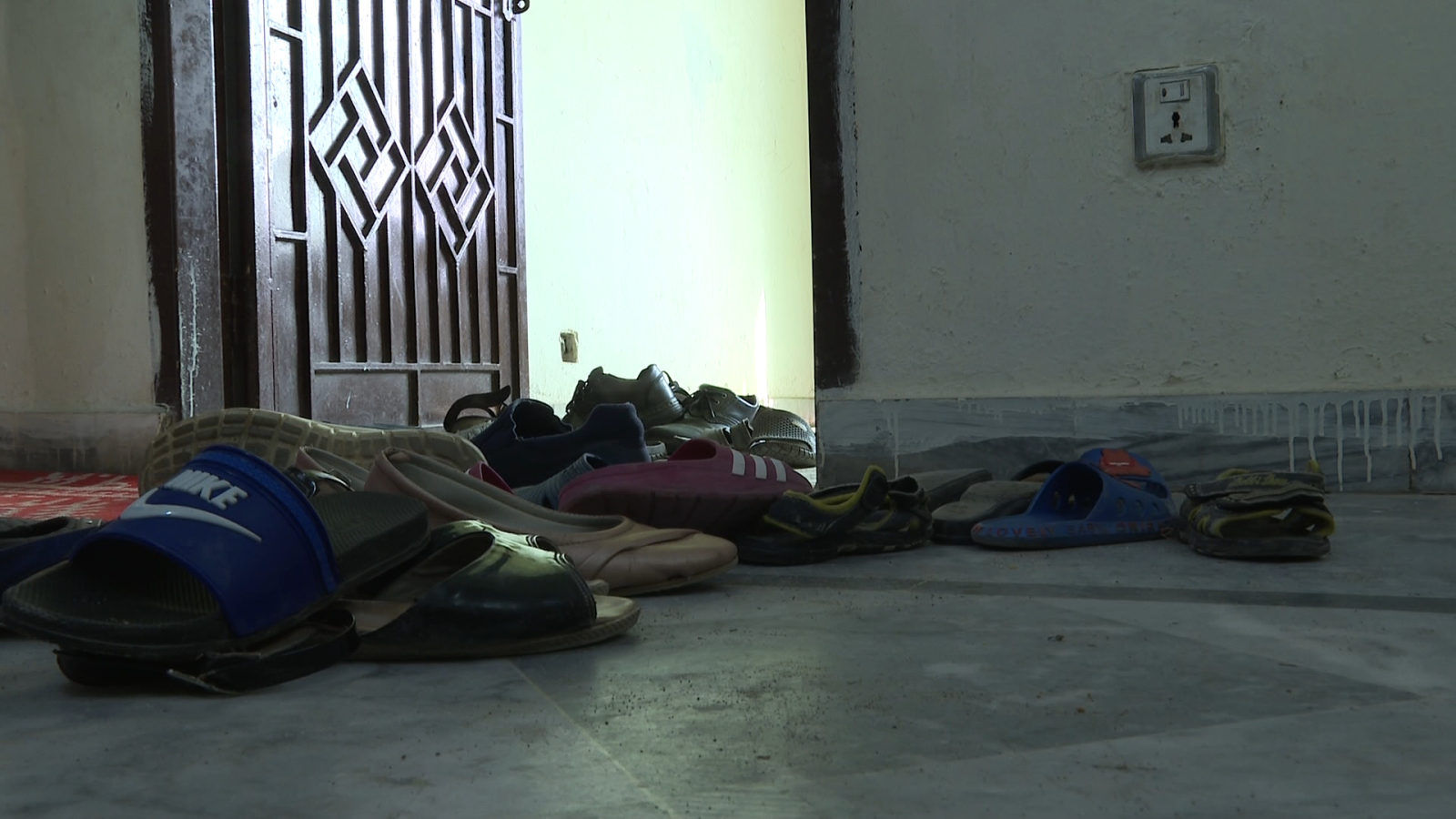
The shoes amassed at the front door were the first sign it was a crowded place.

Inside, there was little in the way of furniture, only pillows, and eight families of refugees with the distinctive features of Afghan Hazaras.

Sacks of donated flour and rice leaned against a wall. A ceiling fan whirled, battling the afternoon heat.

Mohammad Ishaq sat on the carpet with his legs crossed, bandaging his left wrist with white gauze.

A girl living at an apartment filled with Hazara refugees from Afghanistan. Jeff Semple/Global News

He said it was broken by the Taliban when they came to his house in Kabul, asking for his daughters.

He tried to bluff them, claiming he had no children. But the Taliban saw all the shoes by the door. They accused him of lying and attacked him, he said.

After they left, the family fled for the Pakistan border.

The cramped apartment Ishaq now shares with other poor families in the Pakistani capital has become a makeshift refugee camp for Afghans.

All are ethnic Hazaras, who make up almost a tenth of Afghanistan’s population but are a persecuted minority.

READ MORE:  At an Islamabad hotel, Afghans who worked for Canada’s military await a new life

The return of the Taliban to power in August has stoked fears among Hazaras, who have long been mistreated for their ethnicity and Shia faith.

The last time the Taliban ruled Afghanistan, it declared “jihad” against Hazaras, and abuses and mass killings followed.

After the attacks of Sept. 11, 2001, Hazaras were part of the U.S.-backed North Alliance that ousted the Taliban, and they were represented in the new government.

But they have continued to face repression, as well as horrific violence – much of it recently attributed to the Islamic State faction in Afghanistan, ISIS-K.

The terror group claimed responsibility for bombing a Shia mosque in Kunduz on Oct. 8, and a similar attack that killed more than 40 in Kandahar on Friday.

Suicide bomber kills 46 at Afghanistan mosque, wounds more than 140 – Oct 8, 2021

The Taliban’s official spokesperson denounced the latest bombing on Twitter, calling it a crime, and said security forces had been ordered to arrest those behind it.

A baby on her lap, Marzia said her husband, a driver, was killed in a bombing in the Hazara district of Kabul three-and-a-half months ago.

She did not know who was responsible, but several attacks occurred in the Hazara neighborhood Dasht-e-Barchi around that time. The bombing of a girls’ school in May killed almost 100.

Widowed and broke, Marzia said she sold everything she had and crossed into Pakistan. She said she was afraid of the Taliban and didn’t want to go back to Afghanistan.

“I came here because I don’t have anybody,” she said.

Islamabad’s Bhara Kahu neighborhood. Jeff Semple/Global News

Supported by locals who donate food and put them up in vacant rooms, the apartment residents have asked the United Nations refugee agency to resettle them in other countries.

But they face challenges in Pakistan while they wait.


A 2018 report by Pakistan’s National Commission for Human Rights lamented a “sharp increase in sectarian violence” between Shia Hazaras and the country’s Sunni majority.

“Hazaras have consistently been targeted by terrorists and religious fanatics since 1999 through suicide bombings and targeted killings, with more than 2,000 having reportedly been killed in the last 14 years,” it said.

The Canadian government has vowed to resettle 40,000 Afghans, notably those who worked for Canada’s military, but also vulnerable groups such as persecuted minorities.


Global National’s Jeff Semple films Hazara refugees at an Islamabad apartment,.
 Stewart Bell/Global News

Asked how many Hazaras were being resettled through the program, Immigration, Refugees and Citizenship Canada did not answer.

A spokesperson said 2,400 Afghans had arrived so far.

“We will continue to do everything we can to support Afghan refugees and show Canadian leadership in the face of this humanitarian crisis,” Peter Liang said.

But the Canadian Hazara Humanitarian Service said thousands of Hazaras were “either prisoners inside the Taliban’s lair or refugees in despair across neighbouring borders.”

The non-profit group has been fundraising to bring more Hazaras to Canada.

“Our non-profit organization has been flooded with messages and cries for help by Hazaras in Afghanistan as well as Hazara-Canadians that have loved ones stranded back home,” the group said on its Go Fund Me page.


Shoes at the entrance to an Islamabad apartment where Hazara refugees wait to be resettled. Jeff Semple/Global News

At the house for Hazara refugees, a man hobbled into a room on crutches carrying an X-ray. He said he was running away from an explosion in Kabul when he fell and broke his leg.

His son worked as a truck driver for the International Security Assistance Force in Bagram, he said. The family feared retribution from the Taliban and fled to Pakistan.

On the day they left, they saw the Taliban breaking into homes, looking for people, he said.

Leila, another resident of the refugee house, said she believed Hazara women would be forced to marry Taliban men.

For Hazaras, life was already hard before the Taliban took over the country, Leila said. Their schools, hospitals and mosques were under attack.

Now the Taliban is back in power, she said there was no hope.

Stewart.Bell@globalnews.ca