It’s possible that I shall make an ass of myself. But in that case one can always get out of it with a little dialectic. I have, of course, so worded my proposition as to be right either way (K.Marx, Letter to F.Engels on the Indian Mutiny)
Saturday, May 30, 2026
ITER magnet test facility begins operation
The ITER Organization has announced the start of operations at its Magnet Cold Test Facility following the successful cooldown of the first magnet coil to 4 Kelvin, or minus 269°C.
The first toroidal field coil to be tested, seen in the cryostat before the lid was closed (Image: ITER Organization)
The ITER magnet cold testing programme was launched in 2023 as part of ITER's revised approach to assembly and commissioning. The facility is located in a building at Cadarache, France, previously used by the European Domestic Agency to manufacture ITER's four largest poloidal field coils, and it takes advantage of the building's scale, lift equipment, and proximity to the cryoplant. The facility will allow ITER to test selected superconducting magnets at their operating temperature of 4 Kelvin and up to full current before installation in the fusion machine.
ITER's magnetic system consists of toroidal and poloidal magnetic field coils, correction coils, and the central solenoid.
The first magnet coil to undergo testing in the Magnet Cold Test Facility is a 330-tonne ITER toroidal field coil, wound from niobium-tin superconductor. Additional toroidal field coils from different manufacturers will follow, along with one ring-shaped poloidal field coil - ITER's smallest, PF1.
The first ITER coil was cooled to 4 Kelvin over a 12-day period in the 800-cubic-metre cryostat of the ITER magnet test facility. The milestone was announced on 21 May. Members of the ITER Council Management Advisory Committee attending a meeting on site joined the technical teams in the ITER control room for a small ceremony marking the achievement.
The conductor now has transitioned to its superconducting state, and high-current testing is expected to begin shortly, ITER said. Each test campaign is expected to take four to six months per coil.
"Although no external test can fully reproduce operating conditions inside the ITER machine, tests in the magnet cold test facility will provide essential information on magnet behaviour, cryogenic performance, electrical interfaces, instrumentation, and the critical joints that connect the layers of wound superconductor inside of the magnet coils, and strengthen ITER’s risk mitigation and readiness," ITER said.
The main objectives of the tests are to validate high-voltage ground insulation at different temperatures, demonstrate critical quench detection capabilities, and verify coil performance at nominal current (68 kA for the toroidal field coils and 48 kA for PF1). The programme will also test instrumentation chains, control logic systems, and key magnet protection functions. The central solenoid modules were cold-tested prior to shipment.
"ITER as a first-of-a-kind project requires ingenuity as well as discipline," said ITER Director-General Pietro Barabaschi. "By repurposing existing infrastructure, using the capabilities of our cryoplant, and mobilising a multidisciplinary team, we have created a practical way to reduce risk before integrated commissioning. This is important for ITER as well as an example of how ITER can support the wider fusion ecosystem by creating knowledge, infrastructure, and operational experience that others can use."
Following the testing of multiple ITER magnet coils, the magnet cold test facility will be made available to other fusion stakeholders as part of the ITER Organization's knowledge-sharing and engagement initiatives with the private fusion sector.
ITER is a major international project to build a tokamak fusion device designed to prove the feasibility of fusion as a large-scale and carbon-free source of energy. The goal of ITER is to operate at 500 MW (for at least 400 seconds continuously) with 50 MW of plasma heating power input. It appears that an additional 300 MWe of electricity input may be required in operation. No electricity will be generated at ITER.
Thirty-five nations are collaborating to build ITER - the European Union is contributing almost half of the cost of its construction, while the other six members (China, India, Japan, South Korea, Russia and the USA) are contributing equally to the rest. Construction began in 2010 and the original 2018 first plasma target date was put back to 2025 by the ITER council in 2016. However, in June 2024, a revamped project plan was announced which aims for "a scientifically and technically robust initial phase of operations, including deuterium-deuterium fusion operation in 2035 followed by full magnetic energy and plasma current operation".
Pb
Cameco resumes output after flood hits top uranium mine access
The uranium producer halted production at Key Lake on May 10 and reduced activity at McArthur River after flood waters partially collapsed the Smoothstone River bridge, a critical transport link used to move materials between the operations. Cameco said its sites were not directly damaged by flooding, but weight and traffic restrictions on an alternate route interrupted deliveries of operating supplies.
“We remain in contact with the Saskatchewan Ministry of Highways to ensure timely restored access to our primary supply route,” the company said.
Plans intact
McArthur River is one of the world’s largest uranium mines and a major source of global supply. Cameco said the disruption has not altered its production plans for the McArthur River/Key Lake operation, while the Cigar Lake mine continued operating normally throughout the incident. The company maintained its 2026 consolidated production outlook of 19.5 million to 21.5 million lb. of triuranium octoxide (U3O8).
Cameco’s rebound comes as uranium markets remain focused on supply reliability amid growing demand tied to nuclear energy expansion and energy security initiatives across North America and Europe.
Eagle Nuclear advances Aurora uranium project with key environmental work
Eagle Energy’s Aurora uranium project in southeast Oregon. credit: Eagle Energy Metals
Eagle Nuclear Energy (NASDAQ: NUCL) announced Thursday it has completed key environmental and site-readiness initiatives at its flagship Aurora uranium project located along the Oregon–Nevada border.
The news follows Eagle’s commencement of environmental baseline studies at Aurora this month and marks progress toward the company’s planned 27,000-foot pre-feasibility study (PFS).
The completed initiatives include installation of the meteorological station; completion of the wetland delineation study and completion of the cultural and archeological survey, the company said.
Aurora is the largest conventional, measured and indicated uranium deposit in the US, the company has said. To date, it has defined an indicated resource of 32.75 million lb. and nearly 5 million lb. inferred.
Uranium is a crucial source of reliable baseload power as nuclear energy, and the US requires an estimated 32 million lb. of uranium annually for its current nuclear reactors. In 2024, the US purchased 50 million lb. of uranium, but only produced 677,000 lb., according to the Energy Information Administration.
Aurora anchors Eagle’s long-term strategy to develop an integrated nuclear energy platform combining domestic uranium resources with advanced SMR technology.
Energy Fuels’ White Mesa Mill in Utah is the only producing mill in the US.
“Advancing Aurora responsibly and efficiently remains a key priority as the United States looks to strengthen its domestic uranium supply chain,” Eagle’s VP, operations Vishal Gupta said in a news release.
“The completion of these studies and site initiatives marks important progress in advancing the project through the environmental review and permitting process,” Gupta said. “We remain focused on progressing Aurora methodically and responsibly while continuing to generate the critical data needed to support future development activities.”
EDF and Mistral Partner to Bring Sovereign AI to Nuclear Power
EDF and Mistral AI will collaborate on AI tools designed for EDF’s nuclear operations, including conversational agents that can search technical knowledge from France’s nuclear fleet and construction sites. The tools will support field teams, maintenance operations, engineering work and EPR2 construction activities, while EDF retains ownership of its data.
The agreement underscores France’s push to pair nuclear expansion with domestic AI capabilities and tighter control over strategic industrial data. EDF is preparing its EPR2 reactor program as part of France’s broader nuclear revival, while Mistral has emerged as a flagship European AI company focused on alternatives to U.S. and Chinese platforms. The companies said the systems will be hosted on trusted infrastructure, including sovereign cloud or EDF data centers, reflecting growing concern over data sovereignty in critical energy infrastructure.
The AI tools will not be used in nuclear plant control systems, a key distinction given the safety and regulatory sensitivities around nuclear operations.
Russia and Kazakhstan sign nuclear power plant agreement
An intergovernmental agreement setting out the key principles - and export loan financing - for Kazakhstan's first nuclear power plant project has been signed during Russian President Vladimir Putin's state visit to the country.
A number of bilateral agreements have been signed during the presidential visit (Image: Kremlin.ru)
Following talks between the two presidents, a list of agreements signed by the two countries was published, including one "on the basic principles and conditions of cooperation on the project to build a nuclear power plant on the territory of the Republic of Kazakhstan".
Another agreement was "on the provision to the Government of the Republic of Kazakhstan of a state export loan to finance the construction of a nuclear power plant on the territory of the Republic of Kazakhstan".
A third nuclear-related agreement was on an action plan "in the field of interdepartmental cooperation in the field of nuclear and radiation safety regulation for 2026-2030".
Russia's state nuclear corporation Rosatom said the intergovernmental agreement "defines the key parameters of the nuclear power plant construction project. Specifically, it concerns the construction of two Russian-designed power units with VVER-1200 reactors based on best Russian practices. The document covers key areas of cooperation during the NPP's operational life, including maintenance and fuel supply".
Rosatom Director General Alexey Likhachev and Almasadam Satkaliyev, Chairman of Kazakhstan's Atomic Energy Agency, signed the agreements in the presence of the presidents.
Further details of the financing was not included in the official announcements, although the official news agency Kazinform said that preliminary estimates put the cost of the two units at about USD14.4 billion with another USD2 billion earmarked for physical security systems and social infrastructure. It quoted Satkaliyev as saying the export loan had "very favourable terms for Kazakhstan". It also reported that the construction start was targeted for 2027, and the aim was for operation of the first unit in 2034.
In their comments after their talks and the signing of the agreements, Kazakhstan's President Kassym-Jomart Tokayev said: "There's every reason to single out energy as a very successful area of cooperation. In my view, the agreement signed today on the construction of the Balkhash Nuclear Power Plant is of exceptional significance.
"I express my gratitude to the President of the Russian Federation for his personal and decisive support in launching this large-scale project, which will become a driving force for scientific, educational, and technological collaboration and will ensure the development of new related energy sectors and industry as a whole."
President Putin called it "a flagship project in the field of peaceful nuclear energy" and said "the commissioning of the plant will make a significant contribution to the energy supply of the Kazakh economy, helping to provide businesses and households with affordable and clean energy".
He added: "I would like to point out that, as we agreed with the President of Kazakhstan, we are not simply talking about the creation of a nuclear power plant or construction; we are talking about the creation of an entire industry, including education, personnel training, and so on."
Background
Kazakhstan is the world's leading producer of uranium. Although it does not currently use nuclear energy, it is not without nuclear experience: it has three operating research reactors, and a Russian-designed BN-350 sodium-cooled fast reactor operated near Aktau for 26 years, until 1999.
Kazakhstan has been preparing for a possible nuclear power programme to reduce its reliance on fossil fuels, diversify its energy mix and reduce CO2 emissions for some time. Kazakhstan Nuclear Power Plant (KNPP), a subsidiary of Kazakhstan's Samruk-Kazyna National Welfare Fund JSC, was set up in 2014. In a referendum in 2024 more than 70% of the 7.8 million people who voted answered 'yes' to the question: "Do you agree with the construction of a nuclear power plant in Kazakhstan?"
Floating nuclear power plants 'realistic' for Greece
The report by the Deon Policy Institute think-tank identified no fundamental barriers to the implementation of floating nuclear power plants in Greece, although policy, regulatory, financial and social acceptance issues still need to be overcome.
(Image: Deon Policy Institute)
The study derives its policy insights from a research programme conducted by CORE POWER, Athlos Energy - a Greek nuclear company founded in 2024 - and the American Bureau of Shipping. The research, stemming from a two-day workshop held in Athens last October, focused on discussions to assess the political, economic, social, technological, legal and environmental factors that would shape the potential deployment of floating nuclear power plants - or FNPPs - in a European country such as Greece. This is also known as a PESTLE framework.
Greece has historically not deployed nuclear power, but in March this year, Prime Minister Kyriakos Mitsotakis announced at the 2nd Nuclear Energy Summit in Paris that it would examine the potential role of small modular reactors in its energy mix and establish a dedicated ministerial committee to submit proposals to the government, Deon said.
"Given Greece's long maritime heritage, developed port infrastructure and reinvigorated shipbuilding industry, the potential for deploying FNPPs warrants consideration. FNPPs are also compatible with Greece’s geography and energy markets, given the large number of inhabited islands, the increasing need for desalination and the country’s climate goals," it added.
Policy, legal and regulatory frameworks in Greece do not yet substantively address nuclear energy or FNPP deployment, reflecting a broader gap in European energy and maritime policy discussions, the study finds. But no fundamental barriers to implementation were identified, "suggesting that the challenge is not one of feasibility, but of framework development".
The study notes a need for clearer assessment and regulatory pathways, including coordination across maritime, nuclear and energy authorities, and - while FNPPs are perceived positively - social acceptance of nuclear energy remains low in Greece compared with other countries, implying a need for further education and engagement with both the broader public and key stakeholders.
The combined PESTLE analysis shows that FNPPs should not be seen as a standalone energy project, but a complex strategic choice with public-policy impact, the report notes. The strongest arguments in favour of deploying FNPPs in Greece are primarily environmental and political, as they are directly linked to strengthening the country’s energy autonomy, it concludes, although "critical questions remain open" on financing and economic viability of the technology within the Greek context.
Similarly, while technical obstacles exist, these are mainly due to Greece's limited domestic nuclear experience. The "most decisive barriers are institutional and temporal. This can be attributed to the lack of enduring political commitment, incomplete regulatory and institutional preparation, and insufficient engagement with society".
The report calls for "systematic, coordinated action and credible communication, through which Greece can leverage international experience, gradually develop its own nuclear programme, and implement it through maritime applications that demonstrate higher levels of social and political acceptance", it says, adding that "FNPPs can represent a realistic option for Greece only as the result of a gradual, institutionally organised, and socially prepared strategy".
"This PESTLE study shows that Floating Nuclear Power Plants are not a distant or purely theoretical option for Greece," George Laskaris, President of Deon Policy Institute, said. "No fundamental technical or institutional barriers were identified; the real challenge is building the policy, regulatory, financial and social foundations needed for responsible assessment. For Greece, FNPPs sit at the intersection of energy security, decarbonisation, maritime capability and industrial policy."
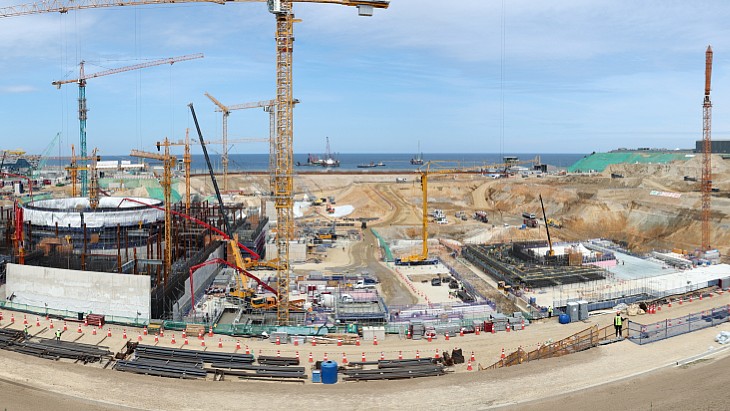
In June last year, Russia's Rosatom was selected as the leader of an international consortium to build Kazakhstan's first planned nuclear power plant - to be called the Balkhash plant - in the village of Ulken, in Zhambyl district, on the shore of Lake Balkhash. China National Nuclear Corporation is lined up to build a second one, at a site also in the Zhambyl district, adjacent to the site selected for the first plant, as well as a third plant, Kazinform News Agency reported last July.
The government has set a target for nuclear to produce a 5% share of the national generation mix by 2035.
First RITM-200 reactor unit manufactured for floating nuclear plant
The RITM-200C reactor will be one of two which will together be installed on the first of Russia's planned fleet of floating nuclear power units.
(Image: Rosatom)
The 58 MWe capacity reactor unit has been manufactured by Rosatom's Machine-Building division at the ZiO-Podolsk plant near Moscow.
Serial production of the floating power units (FPU-106) is under way to power a copper mining industrial cluster in the Chukotka Autonomous Okrug. This will be the first such project to provide carbon-free energy for industrial production, with four floating power units earmarked for it.
Alexey Likhachev, Director General of Rosatom, said: "Rosatom continues to expand its range of floating power units, and the completion of the first reactor for the lead floating nuclear power unit is a significant milestone. Today, Russia is the only country with an operating floating nuclear power plant, and we intend to maintain our leadership in the development of small-scale technologies, offering innovative and low-carbon energy solutions to our partners in Russia and abroad."
The RITM-200C is a modification of the RITM-200 reactors in operation on the latest series of nuclear-powered icebreakers. In total, Rosatom's Machine-Building division is in various stages of producing 14 RITM-200-based reactor units for icebreakers and floating power units.
Russia's first floating nuclear power plant, the Akademik Lomonosov, has been operating in Chukotka since 2020. During this time, it has generated more than 1.2 billion kWh of electricity and avoided more than 400,000 tonnes of greenhouse gases, Rosatom said.
The state nuclear corporation says that the RITM-200 reactors have proved their effectiveness in Arctic conditions. It says that, in floating power units, they will be able to effectively address current or potential energy shortages in remote, offshore areas. As well as producing floating power units for domestic use, Russia also sees considerable export potential.
According to past presentations, the FPU-106 units would provide 106 MWe, the refuelling interval would be every 5 to 7 years, and there would be a service life of about 40 years. A version of a floating power unit targeting international markets would be 100 MWe with a refuelling interval of 10 years and a service life of 60 years.
'Largest ever shipment' for a single nuclear plant
A reactor pressure vessel, four steam generators and a pressuriser, have been shipped together from Volgodonsk in Russia to Egypt's El Dabaa Nuclear Power plant.
(Image: Rosatom)
In addition to the 330-tonne reactor vessel for El Dabaa’s second unit, the other equipment - including the pressuriser for unit 1 - pushed the total cargo weight up to about 2,000 tonnes.
The items were manufactured at the Atomash plant in Volgodonsk in Russia's Rostock Region and delivered on the Alexander Udalov, a vessel designed for both river and maritime transport. This enabled the equipment to be delivered directly from the plant's pier to the specially constructed port at the El Dabaa NPP construction site.
Lifting the equipment is a high-precision operation (Image: Rosatom)
The cylindrical steel reactor pressure vessel, with an initial service life of 60 years, with the possible extension to 80 years, houses the reactor core and ensures a hermetic seal and withstands high pressures and temperatures, ensuring the safety and reliability of the power unit.
It had a special 500-square-metre cover for its journey, comprimising two layers, a special canvas one to protect it from moisture during transport and a second, decorative, outer layer.
(Image: Rosatom)
According to Russia's state nuclear corporation Rosatom, "this shipment was the largest ever for a single nuclear power plant".
Alexey Likhachev, Rosatom Director General, said: "The equipment shipped to the El Dabaa NPP is essential for the transition to start-up operations for the first power unit and for the peak construction of the second power unit."
Minister of Electricity and Renewable Energy Mahmoud Esmat attended the unloading of the cargo at El Dabaa’s port. According to Egypt's Nuclear Power Plant Authority, he said the project was central to the national energy strategy, praised the strategic relations between Egypt and Russia, and added that the El Dabaa plant project was being implemented according to the timetable, including an increase in training programmes to prepare for future operation of the plant.
Background
El Dabaa will be Egypt's first nuclear power plant, and the first in Africa since South Africa's Koeberg was built nearly 40 years ago. The Rosatom-led project, about 320 kilometres north-west of Cairo, will comprise four VVER-1200 units, like those already in operation at the Leningrad and Novovoronezh nuclear power plants in Russia, and the Ostrovets plant in Belarus.
Under the 2017 contracts, Rosatom will not only build the plant, but will also supply Russian nuclear fuel for its entire life cycle, including building a storage facility and supplying containers for storing used nuclear fuel. It will also assist Egyptian partners in training personnel and plant maintenance for the first 10 years of its operation. Rosatom said last month that it is aiming for a future service life of 100 years for nuclear power plants.
The four units are being built almost concurrently, with first concrete at unit 1 in July 2022, followed in turn by the others, concluding with first concrete at unit 4 in January 2024. The reactor pressure vessel was delivered in October 2025 and installed in El Dabaa's first unit the following month, following a ceremony which included speeches from the Egyptian and Russian presidents.
Egypt's aim is for 9% of electricity to be generated by nuclear by 2030, which would be achieved by the commercial operation of the first two units by that time, directly displacing oil and gas.
Energoatom gets operating licence for centralised fuel storage facility
The official licence for the operation of the Centralised Spent Nuclear Fuel Storage Facility has been handed over by the State Nuclear Regulatory Inspectorate of Ukraine to Energoatom.
(Image: Energoatom)
The Centralised Spent Nuclear Fuel Storage Facility, located in the Chernobyl Exclusion Zone, is a dry storage site for used nuclear fuel assemblies from the country's VVER-1000 and VVER-440 reactors. It is designed to have a total storage capacity of 16,530 used fuel assemblies, including 12,010 VVER-1000 assemblies and 4520 VVER-440 assemblies. Contracts were signed for its construction with USA-based Holtec International in 2005, though construction only began in 2017.
It started receiving used nuclear fuel from the country's nuclear power plants at the end of 2023 and it has been operating under a commissioning licence. The decision to issue a licence followed examination of the detail of the application and an inspection carried out from 20 April to 1 May.
Head of the State Nuclear Regulatory Inspectorate of Ukraine (SNRIU) Oleg Korikov said: "Issuing a licence for the 'nuclear facility operation' life cycle stage of the … facility means the completion of the process of creating our own system for safe management of used nuclear fuel in Ukraine. It is important that the operation of the Central Spent Nuclear Fuel Storage Facility will ensure compliance with nuclear and radiation safety requirements, as well as IAEA standards. According to them, the reactor holding pools of each reactor facility must have free volume for complete unloading of the core at any time during operation. I congratulate you on this event and wish you trouble-free operation."
Pavlo Kovtonyuk, Acting Chairman of Energoatom, said: "Obtaining a licence to operate the Central Spent Fuel Storage Facility confirms the ability of the Ukrainian nuclear industry to implement large-scale and technologically complex projects in accordance with the highest global safety standards. The operation of the storage facility over the next 100 years strengthens the energy sustainability of Ukrainian nuclear generation, guarantees reliable management of spent nuclear fuel, and provides the state with a significant economic effect."
Energoatom says that the new facility will save USD200 million a year which it previously had to pay for the used fuel to be transported and stored in Russia. It will also avoid the risk of having to interrupt operation of plants because of a lack of capacity to safely store used fuel.
Nineteen years on, companies team up for US new-build project
Fulcrum Point Holdings and Blue Castle Holdings have formed a joint venture to take Blue Castle's project to build a nuclear power plant at Green River in Utah through the next stages of site development, licensing, and eventual reactor deployment, using Holtec International's SMR-300 small modular reactor technology.
A rendering of a Holtec SMR-300 using air-cooled condenser technology (Image: Holtec International)
Fulcrum Point is an affiliate of Utah nuclear services company Hi Tech Solutions. Last year, Hi Tech Solutions signed a strategic cooperation agreement with Holtec International and the State of Utah covering collaboration to support the deployment of Holtec's SMR-300 in Utah and the broader Mountain West region.
The Green River site has previously undergone extensive technical and environmental analysis, including meteorological and seismic data collection, core boring, geophysical surveys, groundwater monitoring, ecological studies, and bathymetry work, Blue Castle said, and the project also benefits from existing water rights, access to the road and rail networks, and multi-market transmission opportunities.
The project to build the nuclear power plant at Green River was first proposed by Transition Power Development in 2007 - project activities and management were consolidated by Transition Power Development into Blue Castle Holdings in 2009. By 2011, Blue Castle Holdings had already begun pre‐application activities with the US Nuclear Regulatory Commission (NRC) on an Early Site Permit (ESP) for the site, located about five miles west-northwest of Green River in Emery County. In 2014, Blue Castle Holdings signed a memorandum of understanding with Westinghouse to pursue the development of a two-unit AP1000 plant at the site: at that time, it said it anticipated submitting an ESP application in 2016.
Fulcrum Point and Blue Castle said they will now work together to move the project from its current stage through the federal licensing process and towards reactor deployment, with SMR technology and equipment to be provided by Holtec International.
"Blue Castle's focus from the beginning has been to create exactly this kind of opportunity with a company like Fulcrum Point," the company's CEO, Aaron Tilton, said. "Over the past 19 years, Blue Castle has laid the groundwork to de-risk a site for the deployment of nuclear power, creating significant value for future energy development that can serve energy demand across Utah and the surrounding region, as well as potential on-site, behind-the-meter opportunities for advanced technology applications. We appreciate the collaborative effort with Emery County and the City of Green River to create high-value jobs and meaningful economic impact in rural Utah."
Utah initiatives
In 2024, Utah Governor Spencer Cox launched an initiative, Operation Gigawatt, to double Utah's power production over the next 10 years. In November last year, Cox unveiled a project in partnership with Hi Tech Solutions and Holtec International to site a manufacturing hub in Brigham City to produce parts for SMR-300 and other advanced nuclear technologies, as well as a workforce training centre, as part of a longer-term plan to deploy a fleet of SMR reactors in Utah and then across the Mountain West region.
Holtec's SMR-300 is a pressurised water reactor producing about 300 MW of electrical power or 1050 MW of thermal power for process applications. The company is planning to deploy two SMR-300 reactors at the Palisades Nuclear Generating Station site in Michigan, demonstrating viability for additional orders both domestically and abroad. The reactor is designed to be able to operate using air-cooled condensers, and this flexibility is an attractive feature in arid environments like Utah, where water resources are scarce.
"With Holtec's restart of Palisades Nuclear plant in Michigan ongoing, and the first Holtec SMR-300s, Pioneer 1 and 2, in the NRC licensing process and early site preparation, the work by our partners to acquire sites for next-of-kind deployment in Utah is paramount to our Mountain West expansion strategy as part of Operation Gigawatt," Holtec International President Rick Springman said. "Supply chain development follows reactor deployments, making the advancement of this project crucial to downstream supply chain investments in the state across the nuclear ecosystem."
The project is part of a broader portfolio of energy development projects being advanced by Fulcrum Point, which was formed by Hi Tech Solutions founder Chris Hayter, to develop nuclear power projects across the Mountain West.
"Fulcrum Point is stepping into this project as a true development partner to help move the Blue Castle Project from years of groundwork into the next phase of execution," Hayter said. "Blue Castle has done important work to position this site for success, and we now bring the technical, operational, and project development capabilities needed to help advance it through licensing, deployment planning, and eventual construction. This project has the potential to strengthen Utah's energy future, support rural economic growth, and deliver reliable power for decades to come."
Decommissioning milestone reached at Trawsfynydd
Nuclear Restoration Services has announced the completion of a 20-year project to remove all the remaining intermediate-level radioactive waste from the shut-down Trawsfynydd nuclear power plant in Gwynedd, North Wales, UK.
(Image: NDA)
The 392 MWe Trawsfynydd Magnox nuclear power plant - the only inland nuclear power station in the UK - began operation in 1965 and was retired in 1991, with defueling completed by 1997. Since generation stopped, the site has focused on safely managing the legacy left behind, with much of the effort centred on reducing risk and preparing the site for long term decommissioning. In July 2020, the Nuclear Decommissioning Authority (NDA) announced its intention to pursue a rolling programme of decommissioning aimed at accelerating Magnox reactor sites decommissioning with Trawsfynydd identified as the 'lead and learn' site.
NDA subsidiary Nuclear Restoration Services (NRS) has now announced the completion of the Higher Activity Waste (HAW) programme. This work, which took 20 years to complete, focused on the safe management and storage of radioactive waste left behind from operations. The programme focused on the highest waste that remained on site, categorised as intermediate-level waste - a mid-range category of radioactive waste which is more active than everyday low-level waste, but not as hazardous as high-level waste.
It involved retrieving legacy material, processing it safely and placing it into secure long-term storage on site. In total, almost 2,300 individual waste packages were completed, representing a significant delivery achievement and the removal of the site's hazards.
The final waste package has now been transferred into storage, bringing the long‑running campaign to a close. Along the way, teams developed practical and innovative ways of working to safely retrieve the waste. This included using a robotic arm to remove material from deep storage areas and specialist vacuum equipment to collect fine dust and small fragments.
NRS said learning from this work was shared with other sites across the country, helping to improve efficiency, reduce costs and support delivery across the wider decommissioning programme.
"This is not just the end of a major programme, it is the end of an era," said NRS CEO Rob Fletcher. "Completing this work safely and successfully has allowed Trawsfynydd to move into its next phase of delivery, reducing the height of the reactors by almost half. This will create the most noticeable change to the landscape in decades."
NRS Trawsfynydd Site Director Tom Williams added: "Bringing the HAW programme to a close is a remarkable achievement for everyone at Trawsfynydd. Its completion represents a key delivery milestone in our decommissioning mission; one we can look back on with pride whilst also looking forward with excitement to the start of our new major projects."
In October last year, infrastructure solutions company Costain was awarded a GBP70 million (USD94 million) contract to reduce the height of the two reactor buildings at Trawsfynydd from about 54 metres to 25 metres. That project is expected to take up to four years to be completed.
Construction starts for Shin Hanul 4
First concrete has been poured for the reactor building of South Korea's Shin Hanul nuclear power plant's unit 4, marking the official start of construction.
Construction work is under way on both Shin Hanul 3 and 4 (Image: KHNP)
Korea Hydro & Nuclear Power said the initial pouring of concrete for the foundation began on 29 May. Construction permits for Shin Hanul units 3 and 4 - APR1400 units - were issued in September 2024, with first concrete poured for unit 3 in May 2025.
Kim Hoe-cheon, KHNP President, said: "Shin Hanul Units 3 and 4 are a solid foundation that will support Korea’s energy future, just like the concrete being constructed now. Let us build world-class nuclear power plants with safety as our top priority, with a sense of mission to contribute to achieving the national carbon neutrality goal."
KHNP said that Shin Hanul 4 is targeted for completion in 2033, with unit 3 scehduled for operation a year earlier. Once both units are completed it says they are expected to supply 46% of the annual power requirements of the Gyeongbuk region.
Background
In November 2014, KHNP signed an agreement with Ulchin County to build Shin Hanul 3 and 4. The company applied for a construction licence for the units in January 2016. Site preparation for the two units was originally scheduled to begin in May 2017, with commercial operation of unit 3 scheduled for December 2022, with unit 4 following a year later.
However, KHNP announced in May 2017 that it had instructed Kepco Engineering & Construction - which signed a design contract in March 2016 - to suspend work for the planned units as a result of the then new President Moon Jae-in's policy of phasing out nuclear power. Work towards licensing the new units continued.
President Yoon Seok-yeol - who assumed power in May 2022 - reversed the former president's policy of phasing out nuclear power. Preparatory groundwork began for the construction of the two APR1400s following the approval by the South Korean government of the project's implementation plan in June 2023. This effectively approved 20 licensing and permitting procedures under the jurisdiction of 11 ministries required for the construction of nuclear power plants.
In March 2023, KHNP and Doosan Enerbility signed a KRW2.9 trillion (USD2.2 billion) contract for the supply of the main equipment for Shin Hanul 3 and 4. Under the contract - which will run for 10 years - Doosan Enerbility will supply the nuclear reactors, steam generators and turbine generators for the two APR1400 units.
South Korea has four operational APR1400 units - Saeul units 1 and 2 (formerly Shin Kori 3 and 4) and Shin Hanul units 1 and 2. Two further APR1400s are under construction as Saeul units 3 and 4. Four APR1400 units have also been built at the Barakah nuclear power plant in the UAE, which are all now in commercial operation.
The IMF estimated in 2024 that more than two-thirds of British workers perform tasks that AI could potentially carry out - Copyright AFP JUSTIN TALLIS
Lucie LEQUIER
When a client asked her a year ago to design a glossary to train an artificial intelligence system, translator Jessica Spengler realised she was going to train her own replacement.
“That was the day I really thought… my job is going,” said the 52-year-old, who translates into English for German educational and historical organisations.
In the UK, where services account for around 80 percent of the economy, AI has become flexible, fast and inexpensive competition for many white-collar workers, with the impacts beginning to emerge.
The IMF estimated in 2024 that more than two-thirds of British workers perform tasks that AI could potentially carry out, making the country more exposed than many other advanced economies.
“Some publishers have offered me lower rates than I was getting 10 years ago,” the Brighton-based Spengler told AFP, adding that she no longer receives requests to translate corporate press releases or user manuals, typically an “entry point” into the profession.
Instead, she is increasingly offered work proofreading machine-generated translations.
Translators “have to rewrite the whole thing, redo the translations, but they still only get paid the reduced rate,” said Holly Parsons, a Spanish-to-English translator at the beginning of her career.
“It’s hard as a translator to actually charge what the work is worth because people just don’t want to pay it,” the 24-year-old added.
She still earns most of her income working as a children’s activity leader.
– Change of direction –
According to a report from Morgan Stanley, British companies that adopted AI cut their workforces by eight percent in the year to October 2025 — more than in Germany, Japan or Australia.
Among the countries featured in the report, only the United States saw employment rise with AI.
“Film work has definitely been impacted by AI… it’s really kicked us down,” said Laura, 35, a director of photography in London, who preferred not to share her last name for professional reasons.
To escape the broader crisis hitting the film industry, she is retraining as an outdoor instructor in Dorset, southwest England, earning minimum wage.
After working on the short film “Mad Bills to Pay”, which won an award at the Sundance Film Festival, 35-year-old Rufai Ajala also changed direction and is now training to become a plumber.
“I’m not going to rely on film as my main focus… I don’t see it as a career option anymore where you can have stability,” Ajala said, adding that the aim was to find an “AI-proof” career.
– ‘Painful transition’ –
“There is going to be sort of a painful transition process because new jobs will take time to emerge,” said Bouke Klein Teeselink, an economics professor at King’s College London.
He said it would require “a massive adjustment for society,” which could mean “a big increase in unemployment.”
According to one of his studies, professions most exposed to AI, such as software developers and data analysts, reduced job postings after the launch of ChatGPT in November 2022, particularly for entry-level positions.
The growth of AI comes as Britain already faces high levels of youth unemployment, with the war in the Middle East and an increased minimum wage weighing on hiring.
One in six Britons aged 16 to 24 is out of work, the highest level since 2014, according to official data.
Teeselink said, however, that another market dynamic is at play with AI: productivity gains could lead to lower prices, which in turn could stimulate demand and increase employment.
He said the UK was “reasonably well positioned” for the AI transition thanks to its high-quality universities, which are set to play a crucial role in “upskilling young people to use AI well.”
‘Immense’ leverage: why AI chip workers are demanding more
A silicon wafer seen magnified through the lens of a microscope - Copyright AFP/File ANTHONY WALLACE
Katie Forster, with Joy Chiang in Taipei
Runaway profits and sky-high valuations for microchip companies have fuelled worker demands over pay packages in South Korea, raising the question: who profits from the artificial intelligence boom?
In the United States, some employees with stock options have made it rich and retired early, while in Asia chip engineers are now using their “immense” leverage over companies to get their way, analysts say.
After memory chip giant Samsung Electronics reached a deal with its biggest union over bonuses, averting a major strike, AFP looks at what the dispute might mean for the industry.
– Why are chipmakers suddenly so flush? –
Rapid advances in AI systems since text generator ChatGPT’s 2022 breakthrough have sparked a gold rush for tech companies.
Massive demand for the silicon components used in AI data centres — especially memory chips, which are in short supply — has sent revenues soaring for firms that design, produce and assemble them.
Samsung’s value topped $1 trillion this month, followed by Korean rival SK hynix and US chipmaker Micron — newcomers to a previously exclusive club of around a dozen companies, nearly all American.
“An unprecedented wave of insatiable demand” for advanced memory chips has made SK hynix and its peers “an indispensable backbone of the global AI infrastructure build-out”, William Keating, head of semiconductor research firm Ingenuity, told AFP.
– Do workers see the benefits? –
In the United States, employees often get stock options, a form of so-called “golden handcuffs” allowing workers to profit from share price gains over a set period of time.
Asia’s huge chip sector “is more dominated by labour unions”, Neil Shah, co-founder of Counterpoint Research, told AFP.
With Taiwan and South Korea home to most of the world’s chipmaking talent pool, engineers there hold “immense” leverage, Shah said.
“This skilled labour force know they are indispensable, they are contributing to these larger margins,” he added.
Under the union deal, around 60 percent of Samsung’s domestic workforce is eligible to receive a bonus of roughly $370,000 this year, based on a market estimate of operating profit.
Workers at SK hynix received bonuses more than three times larger than those paid by Samsung last year, according to Samsung’s union.
– Will the Samsung deal inspire others? –
A Samsung strike “would almost certainly have been the biggest work stoppage in the history of the global semiconductor industry”, South Korean writer and researcher Kap Seol said in an article for US magazine Jacobin.
In the chip world, “high pay and generous benefits often foster a sense of privilege and prestige” among workers, “despite their experience of chemically drenched working conditions, cutthroat competition, and long, risky working hours,” he wrote.
There have also been reports of discontent over bonuses at Taiwan’s chip production giant TSMC, where AI demand has brought record profits.
“As the company continues to grow, we are highly confident that the full-year growth percentage of our employee profit-sharing… will surpass that of last year,” TSMC said in a statement.
TSMC boss CC Wei held a meeting to explain the bonus situation to staff on Wednesday, and the atmosphere was “calm and friendly”, a company spokesperson told AFP, adding that annual bonuses were set to grow “more than 30 percent” year-on-year.
The Samsung agreement is fuelling labour demands in other sectors across South Korea — with workers in industries from biotech and autos to shipbuilding asking for a larger share of corporate profits through bonuses.
– Who else is cashing in? –
According to Shah, in general terms, company shareholders are reaping the most from booming profits, followed by senior company executives and then employees who have stock options.
Fourth are the actual chip engineers, some of whom are now demanding a greater share of the pie.
In the case of Californian AI chip titan Nvidia — now the world’s most valuable company at more than $5 trillion — many employees with stock options became millionaires very quickly, Shah said.
“Many of them actually left and became investors” or simply chose to retire “on the beach”.
Progressives Demand AI Tax to Prevent ‘Great Depression Levels of Unemployment’
“Taxing AI directly ties the solution directly to the problem,” wrote Rep. Greg Casar. “If AI use grows quickly, driving layoffs alongside it, the revenue from an AI tax would go up too.”
Rep. Greg Casar (D-Texas) speaks during a news conference on April 29, 2026 outside the US Capitol in Washington, DC. (Photo by Tom Brenner/Getty Images)
In separate op-eds published Wednesday and Thursday, Sen. Elizabeth Warren (D-Mass.) and Rep. Greg Casar (D-Texas) warned that AI risks turbocharging existing wealth and income inequality by driving up the fortunes of large companies and their executives, while hurling millions of workers into joblessness without an adequate safety net.
“Taxing AI is one way we make sure the winnings from AI benefit all Americans, rather than channeling them only to the wealthy few. If millions of people lose their jobs to AI, we’ll need the funds to deliver universal healthcare so those workers are not bankrupted by a visit to the doctor,” Warren wrote in TIME. “If AI transforms the future of work, we’ll need to invest in free education and apprenticeships and a new jobs guarantee so that all Americans have good-paying work. And while workers get back on their feet, we’ll need the revenue to bolster unemployment insurance to keep families afloat. The only way we can get there is by overhauling our tax code.”
Casar, chairman of the Congressional Progressive Caucus, made the case for an “AI tax-funded jobs program” in an op-ed for The American Prospect, arguing the initiative “should draw inspiration from the New Deal-era Works Progress Administration, which employed millions of Americans.”
The Texas Democrat specifically proposed a tax on AI “tokens,” units of data that are processed by artificial intelligence models.
“Taxing AI directly ties the solution directly to the problem,” Casar wrote. “If AI use grows quickly, driving layoffs alongside it, the revenue from an AI tax would go up too. Unlike traditional corporate taxes, an AI tax like the one I am proposing works even if employers fire workers before AI companies show a profit.”
The progressive lawmakers’ call for a new AI tax come amid mounting concerns, in the US and around the world, about burgeoning technology’s impact on workers whose jobs could be replaced by robots. Pope Leo XIV used his first encyclical to warn of the threat AI poses to employment, and prominent lawmakers such as US Sen. Bernie Sanders (I-Vt.) have predicted “economic devastation for working people” if tech oligarchs get their way.
“Corporations are already using AI to cut jobs,” Sanders’ office noted in a recent report. “Amazon, Walmart, UnitedHealth Group, JPMorgan Chase,and other companies are openly telling investors that AI will allow them to slash payrolls—even as they post tens of billions in profits and reward CEOs with pay packages of $25 million, $35 million, or more.”
Warren and Casar argued that nightmare scenarios envisioned by AI critics and industry leaders alike are entirely preventable—but averting them would require bold and urgent legislative action that’s a longshot with President Donald Trump and Republicans in control the federal government.
“Congress should act now, and not wait to see if the worst-case scenario arrives,” wrote Casar. “AI companies are already pouring hundreds of millions of dollars into elections to try to shape what regulations get considered. We cannot wait for these companies to become even wealthier and more powerful.”
Warren called for “taxing AI companies directly,” including by imposing levies on AI data centers, which have drawn grassroots backlash across the country. The senator also pushed for broader action, including a wealth tax, to ensure that mega-rich beneficiaries of the AI boom don’t “pay lower tax rates than the workers they fire.”
“Here’s what I see clearly: If we overhaul our tax code and tax AI, we can use that money to build a country that works for everyone,” Warren wrote. “A country where healthcare is treated as a human right, where every American is guaranteed a good job, and where education isn’t a privilege reserved for the wealthy. That’s what I believe taxing AI promises.”
Earlier this month, researchers at the University of California San Diego published a study offering “the first empirical evidence that a modern artificial intelligence system can pass the Turing test.” Famously named for Alan Turing, the English mathematician and World War II codebreaker, the test is designed to determine whether a computer can exhibit human intelligence such as to make it indistinguishable from a human. What is interesting, perhaps, is how few waves this apparent breakthrough has made within the broader public discourse.
Many, including Nvidia CEO Jensen Huang, reckon that we have already achieved artificial general intelligence (AGI), though there remains widespread disagreement on just what that means. There is likewise disagreement about whether the Turing test is the right one for determining whether we have AGI.
We are unlikely to perceive something like superintelligent AI taking over the world as a clear and sudden break. We’re blowing through long-awaited milestones without a real opportunity to process the implications. Within such a context of rapidly growing power and the confusion around it, it becomes important to question some easy assumptions.
AI development does not represent or grow out of neutral technological progress or “market forces.” It is a deeply coercive and political project driven by a collusive state-capitalist oligopoly and supported by an ideology that openly devalues human life. One increasingly visible proponent of this ideological complex is the English philosopher Nick Land, called “a living meme and an oracle” for the fascination his ideas have generated.
Feted as a patron saint among the Silicon Valley tech set, Land is known for popularizing a set of ideas associated with accelerationism. Though there have now sprouted dozens of variations, the core of Land’s accelerationist approach is the idea that super-intelligent AI is inherent to the dynamics of technological capitalism and ultimately can’t be stopped. He argues that AI represents capitalism’s awareness of itself, and he offers what is arguably the clearest and most well-known formulation of much of the doomerism of the present moment: “Nothing human makes it out of the near-future.” Some of the richest humans to have ever lived seem to have made their peace with this millenarian eagerness to help propel humanity into a future without humans.
Land’s version of accelerationism sees capitalism not only as a political-economic system, but as a process that intensifies and perfects itself completely on its own. The dynamics of the system, not the values of human beings, are the drivers of change and progress. Our societies and systems of values are, in this view of the world, obsolete and irrelevant. These conversations are increasingly high profile, having burst from the realm of internet obscurity onto the pages of, for example, The New Yorker.
We are told that nothing human will survive this transition, but that we should nonetheless hurry the unfolding process along. We are told that AI will aid the police state in spying on us and violating our rights, but that we should stake the U.S. (and indeed global) economy on it. We are assured that robots will displace millions or billions of human workers, but that we should herald and celebrate this in religious and eschatological terms.
These contradictions are at the center of the current conversation about AI, and they help explain why reactions to the merest mention of AI are becoming more charged with anger and resentment. Today, the stocks of the Mag 7 companies, a group of the largest and most powerful technology firms, make up 35 percent of the value of the S&P 500. Back in 2020, these companies pulled an annual return (65.8 percent) that was more than quadruple that of the S&P 500 (16.3). Every one of these companies is now worth more than $1 trillion.
Today’s technology sector does not represent the principles of anything like actual free-market competition; intensively subsidized by the public and deeply tied to the federal government, the major tech companies are a state-capital oligopoly that have benefited enormously from a variety of special subsidies and perks unavailable to ordinary companies and citizens. When we account for direct federal grants and subsidies, infrastructure support, and hardware manufacturing, public subsidies and allocations for AI have reached well into the hundreds of billions of dollars.
A Brookings Institute report published earlier this month analyzes some of the disturbing trends around the government’s relationship with the tech sector and AI technologies. The overwhelming majority of federal government procurement of AI systems takes place within the Pentagon. The Brookings report describes recent explosions in federal commitments to AI as “staggering,” showing “the value of funds obligated increased to $7.2 billion (up 966% from 2024) and the value of potential awards increased to $91.8 billion (up 1,912%).”
The Pentagon has ramped up its spending on AI so quickly and significantly that this year “all other agencies effectively became a rounding error.” And we can expect further acceleration of these trends. The Brookings report also observes: “given that it is projected that worldwide AI spending will grow from $1.75 trillion in 2025 to $2.52 trillion in 2026 (a 44% year-over-year growth), we would also expect to see a dramatic rise in the overall AI spend by the federal government.” The tech companies have become key defense contractors.
In an interview with the artist and cultural critic Joshua Citarella in 2024, popular YouTuber Gregory Guevara (known as Jreg) half-joked, “I’m never going to concede that a robot has consciousness, and if it does have consciousness, I’m going to do everything in my power to make it suffer,” adding, “I’m absolutely a human supremacist.”
For all of the poisonous supremacist ideologies floating around in American politics today, perhaps we should all be a bit more disturbed by a social system that refuses to put human life above the power of the state, the profits of tech companies, and the new-fangled quasi-religions of the so-called Dark Enlightenment. Inhuman excesses of size, speed, and “growth” today seem to be the hallmarks of both this neo-reactionary right and the corporate liberalism on offer from the other team.
David S. D’Amato is an attorney, businessman, and independent researcher. He is a Policy Advisor to the Future of Freedom Foundation and a regular opinion contributor to The Hill. His writing has appeared in Forbes, Newsweek, Investor’s Business Daily, RealClearPolitics, The Washington Examiner, and many other publications, both popular and scholarly. His work has been cited by the ACLU and Human Rights Watch, among others.
Mistral says would not interfere if its AI is used by defence customers
Mensch said soldiers know better than companies how to use weapons - Copyright AFP/File HENRY NICHOLLS
Daxia ROJAS
French AI startup Mistral would not weigh in on choices about how its technology is used by defence customers, its chief executive told AFP Thursday, laying out a clear position in an ethical debate stirring up the sector.
Boss Arthur Mensch’s comments came as Mistral announced a new focus on industrial customers like Airbus and BMW as well as governments’ defence operations.
“Choices about deployment and usage are not our business,” Mensch said on the sidelines of his company’s first AI conference in Paris.
Mistral’s defence activities account for between 10 and 15 percent of revenue, with active contracts for the French, Singaporean and Luxembourg armed forces.
The French firm offers a software platform with autonomous AI agents to which users can delegate tasks, able to aggregate large quantites of data from varying sources.
“It’s very useful in a military headquarters or when faced with tactical coordination questions on the battlefield,” Mensch said.
A five-year partnership Mistral announced Thursday with Airbus will include the European aircraft builder’s defence operations.
Smaller AI models from Mistral could be built into weapons systems or other defence equipment, such as drones, that can be more effective if able to act autonomously.
“The defence ministry has considerably more legitimacy (to make decisions) than us as a company supplying a particular technology,” Mensch argued.
“Who are we to tell soldiers, who know their job and the dangers… what they’re allowed to do?” he asked, distancing himself from what he called “ideologues” who take the opposing view.
– ‘Total sovereignty’ –
Marketing itself as the AI developer most concerned with ethics, Anthropic attempted to bar the American government using its AI systems for mass surveillance or fully autonomous arms.
The spat led to a legal showdown with the Pentagon — although the tensions have since thawed somewhat.
Meanwhile staff at Google’s Deepmind AI arm, one of the competitors tapped by Washington for defence contracts, have protested against their technology’s sale to Israel and US forces, in a sign many tech workers are uneasy at their creations’ military uses.
“Our responsibility is of course to choose who we work with,” Mensch acknowledged, while guaranteeing “total sovereignty over weapons operation.”
AFP has a deal with Mistral allowing the company’s chatbot to draw on the news agency’s articles to formulate responses.
– Guardrails –
Also Thursday, Mistral said it was now working towards so-called Artificial General Intelligence (AGI) — a theorised future system that would match or surpass humans’ intellectual abilities in all domains.
The prospect of creating superintelligence has sparked fierce debate in recent years among AI developers, scientists and policymakers, who fear the potential harm such systems could cause if they escape human control.
“The aim is to have the most intelligent systems possible so that afterwards, with the necessary adaptations, they’ll have the greatest possible impact on businessses,” Mensch said.
The 30-something added that there was “absolutely no sense” in the idea of AGI running amok.
“We always deploy models and systems in environments where we can unplug them,” he added.
Security nevertheless remains a top priority for Mistral, founded in 2023.
Mensch said the goal was to ensure “that the model behaves the way you’ve told it to”, imposing guardrails that “stop it from taking unreasonable actions”.
“This is of fundamental importance to our clients”.
Mensch also confirmed that Mistral was working on a cybersecurity product aimed at companies.
European firms such as major banks currently have no access to cutting-edge models like Anthropic’s Mythos, supposed to be extremely powerful at finding and exploiting security holes.
“Everyone needs to have cybersecurity systems that can defend against attackers who are themselves equipped with AI,” Mensch said.
He added that Mistral’s offering would be available “this year”.
French AI firm Mistral announces deals with BMW, Airbus
'We don't have the balance sheet of Microsoft,' Mistral chief Arthur Mensch said - Copyright AFP STEPHANE DE SAKUTIN
Daxia ROJAS
French AI firm Mistral on Thursday announced partnerships with carmaker BMW and aerospace company Airbus as it aims to boost its growth by fostering links with defence and industry giants.
The Paris-based company, looking to punch above its weight in a sector dominated by US and Chinese firms, said it would be involved with car-crash tests and plane design.
Mistral was already closely tied with ASML, the Dutch firm producing chipmaking equipment indispensable to modern high-end semiconductors that invested in the French company last year.
“It’s an interesting new market where Europe is strong… Europe has significant high-end manufacturing companies,” chief executive Arthur Mensch told reporters ahead of the company’s AI conference in the French capital.
The company this month bought Austrian startup Emmi AI, which specialises in digital simulations for industry, after earlier snapping up French cloud computing startup Koyeb.
AFP news agency has a deal with Mistral allowing the startup’s chatbot to draw on the news agency’s articles to formulate responses.
– ‘Dedicated team’ –
Mistral’s Mensch called defence a “growing business” for his firm and revealed he had a “dedicated team” working on it.
The company is already working with the French and Singaporean militaries, Forbes magazine has reported.
But Europe’s defence industry is dominated by American tech giants and Mistral is a much smaller player.
It has grown to around 1,000 employees since its 2023 founding and is now building its own computing infrastructure.
But the firm’s four-billion-euro ($4.6 billion) plans for European data centres are dwarfed by the hundreds of billions being deployed by American “hyperscalers” like Google, Amazon and Microsoft.
Where American firms measure their AI infrastructure in hundreds of megawatts or gigawatts of power, Mistral has a 44-megawatt data centre outside Paris and is building another in Sweden.
The company also announced Thursday a deal for 10 megawatts of computing power with American data centre operator Digital Realty.
– ‘Buy European’ –
“We don’t have the balance sheet of Microsoft,” Mensch said Thursday.
“We can’t put 50 billion on the table to build a gigawatt ahead of demand.”
His group signed a five-year partnership with Airbus to apply AI to defence and space activities and helicopter manufacturing — though the value of the contract has not been revealed.
Mensch said Mistral would be involved in improving flight safety with the deployment of AI in the cockpit, and helping with the design and construction of new aircraft through digital simulation.
For BMW, Mistral would build specific models that “understand the physics” of the vehicles and are intended to optimise crash-test procedures.
Mensch has repeatedly urged European policymakers to create “buy European” rules prioritising local suppliers for public digital services contracts in sectors like cloud and AI.
French President Emmanuel Macron, himself a great booster of Mistral, has made similar arguments in Brussels.
American tech giants expect to spend $750 billion this year on capital investments, compared with Mistral’s one billion euros.
The disparity has fed repeated episodes of rumours that Mistral could be taken over by a foreign player.
That could only happen if the French government does not back Mistral “at every stage of its development”, French digital affairs minister Anne Le Henanff told AFP.
CEO Mensch told French parliamentarians this month that the company’s best shot at independence is an eventual stock market flotation.
AI giant Anthropic raises $65 bn at near-trillion dollar valuation
The White House has reportedly expressed security concerns over Anthropic expanding access to its new Mythos AI model - Copyright AFP JOEL SAGET
Artificial intelligence company Anthropic said Thursday it had raised $65 billion in a new funding round that values the Claude maker at $965 billion, putting it on the cusp of a trillion-dollar valuation ahead of an expected IPO.
The latest fundraising round confirms Anthropic’s place as one of the most significant players in AI, having made its name by doubling down on delivering generative AI to enterprise clients rather than general users, the path initially chosen by archrival OpenAI, the maker of ChatGPT.
“This funding will help us serve the historic demand we are experiencing, stay at the research frontier, and bring Claude to more of the places where work happens,” said Krishna Rao, Anthropic’s chief financial officer.
Anthropic’s near-trillion-dollar valuation puts it ahead of OpenAI, which was valued at $852 billion in March and is aiming to go public as early as this year.
Elon Musk’s SpaceX, which absorbed his AI company, xAI, in February, could see shares begin trading as early as June 12, targeting a valuation of approximately $1.75 trillion in what would be the largest IPO in history.
Anthropic’s round was led by major Silicon Valley venture capitalists Altimeter Capital, Dragoneer, Greenoaks and Sequoia Capital.
It also included $15 billion in previously committed investments from cloud giants, including $5 billion from Amazon.
Semiconductor firms Micron, Samsung and SK hynix also participated as strategic infrastructure partners.
The company said Claude is now the first frontier AI model available across all three of the world’s largest cloud platforms — Amazon Web Services, Google Cloud and Microsoft Azure.
The funding comes as Anthropic navigates a high-profile legal dispute with the Pentagon, having sued the Defense Department after it designated the company a supply chain risk — a move Anthropic called unconstitutional retaliation for its refusal to grant the military unfettered access to its AI models.
The deal involving Elon Musk's SpaceX and Anthropic marks a surprising partnership between two companies whose leaders have been publicly at odds - Copyright AFP Brendan SMIALOWSKI
Alex PIGMAN
Elon Musk insists that his artificial intelligence venture xAI remains a serious competitor, pushing back against mounting doubts after revelations that the supercomputing facilities built to power his own AI models are being rented out to a rival.
“Whether it is the best remains to be seen, but I will never give up. Never,” Musk wrote on his X social media platform this week.
The pledge came after SpaceX’s newly filed stock market prospectus disclosed that Anthropic — the AI company behind the Claude chatbot — will pay SpaceX $1.25 billion a month for access to the Colossus data centers, the vast computing facilities built to train Musk’s Grok AI models.
Musk said the arrangement is a short-term deal and that SpaceX, which owns xAI, could reclaim the capacity if needed. “We might need it back at some point,” he wrote.
XAI’s main product is the Grok chatbot, now in its fourth generation, which is built into the X platform and competes with ChatGPT and Claude across text, image and video generation.
It has also landed a Pentagon contract worth up to $200 million alongside rivals including Google and OpenAI.
Built quickly, the Colossus facilities in Memphis have been a source of controversy, after xAI installed dozens of natural gas turbines to power the site — drawing protests from civil rights groups who said it worsened air pollution in a predominantly Black neighborhood.
The deal with Anthropic has fueled questions about xAI’s competitive standing.
The IPO filing revealed that xAI and social media platform X — formerly Twitter, and merged with xAI last year — posted an operating loss of $6.4 billion on total revenue of $3.2 billion.
More than 50 researchers and engineers have left since SpaceX absorbed xAI in February, with departures hitting teams working on Grok’s coding, voice features, and the infrastructure used to build new frontier models.
Musk in March said he was rebuilding the company “from the foundations up.”
XAI’s Grok has also courted controversy, after the chatbot generated nonconsensual explicit deepfakes that spread across the X platform — prompting regulatory investigations in the UK and EU and a French police raid on X’s Paris offices.
– Rocky years ahead –
Musk urged patience, comparing xAI’s trajectory to SpaceX’s own rocky early years.
“SpaceX had achieved nothing of note after 3 years and was written off as dead after 6 years,” he wrote. “Let’s see where things stand 3 years from now.”
SpaceX is targeting a valuation of as much as $2 trillion in an IPO expected next month, anchored by Musk’s pledges to build data centers in space and settle humans on Mars.
Anthropic and ChatGPT-maker OpenAI are also preparing for their own public offerings.
The broader question of whether eye-watering AI spending will ever pay off is also dogging Meta.
Chief executive Mark Zuckerberg told shareholders Wednesday the company could pivot to selling cloud computing services if it ends up with more data center capacity than it needs.
Meta has projected capital expenditure — primarily for AI data centers — of between $125 billion and $145 billion this year, even as its AI offerings have so far struggled to gain traction.
AI creators: Social media firms are sending out mixed messages
One of the world’s biggest digital economies, the creator economy, is starting to get shaken up by a rising new disruptor, named the “avatar economy.” The AI avatar market is emerging and is expected to grow more than 10 times by 2035. Yet will social media company policies enable this to happen?
As AI-generated creator content rapidly grows, social media platforms do not appear to agree on which direction to take. For example, YouTube is greenlighting AI clones, while Pinterest, TikTok, and Instagram seem to be pushing “original” content and suppressing unoriginal material.
In other words, the battle for the future of online content is unfolding quietly in algorithms, feature rollouts, and recommendation tweaks.
YouTube avatars
YouTube has introduced AI-powered avatar tools that allow creators to clone themselves. With just a text prompt, users can generate short video clips featuring their own likeness, ready for insertion into YouTube Shorts. These clips are clearly labelled as AI-generated and restricted to the creator’s own channel, but the signal is unmistakable: YouTube is actively experimenting with normalizing synthetic creator content.
According to Donatas Smailys, CEO and co-founder of creator economy platform Billo, this is less a fringe test and more an early-stage shift. “It’s a controlled rollout, but the direction is clear,” he tells Digital Journal. “YouTube is exploring how AI can scale content production, potentially reducing the burnout that many creators face.”
TikTok suppression
At the same time, TikTok and Instagram are moving in the opposite direction. Both platforms have recently updated their recommendation systems to suppress content flagged as unoriginal or overly repurposed. While neither has defined exactly where AI-assisted content ends and fully AI-generated material begins, the message is clear: originality still matters and recycled or synthetic content risks losing reach.
This divergence highlights a deeper uncertainty in the industry. As Smailys puts it: “Every platform is solving a different problem. YouTube is trying to keep creators producing more content, while TikTok is trying to prevent its feed from becoming repetitive or low-value. For creators, this is manageable—they can choose where to focus. But brands don’t have that luxury. They need to operate everywhere.”
The result is a fragmented landscape where the rules of success vary dramatically depending on the platform.
Avatar economy
At its core, the avatar economy promises efficiency. AI-generated personas can produce more content, faster, and at lower cost than human creators. For brands under pressure to maintain constant output, the appeal is obvious.
“The avatar economy only works because, right now, audiences often can’t tell the difference,” Smailys explains. “The credibility behind these avatars wasn’t built by AI—it was earned over years by real creators. AI is borrowing that trust.”
That borrowed trust may not last. Data suggests audiences are already sceptical. A 2026 study by the Media Insight Project, which surveyed over 2,000 U.S. citizens aged 13 and older, found that while 57% of respondents consume content from independent creators at least occasionally, only 7% say they have a high level of trust in that content. Trust in AI as an information source ranked even lower, at just 5%.
To build customer loyalty, transparency—particularly around sponsored content—is ranked as the most important factor by half of respondents. Follower counts, often treated as a key metric of influence, came last at just 10%.
These findings expose a fundamental flaw in the avatar economy narrative. While AI can replicate a creator’s face, voice, and even style, it cannot easily reproduce the intangible qualities that build trust: authenticity, consistency, and long-term credibility.
“You can clone appearance, but not the reason someone was trusted in the first place,” Smailys notes. “That’s the piece the debate is missing.”
As AI-generated content becomes more prevalent, genuinely human content may gain a new kind of value—not because it is rare yet, but because the contrast is becoming more visible.
Psychologists have long-debated whether the human mind can be explained by one unified theory or must be broken into separate parts like memory and attention. This debate, rooted in traditions spanning William James to contemporary cognitive neuroscience, has recently taken on a new dimension with the emergence of artificial intelligence (AI) models designed to emulate human thought.
A recent AI model called Centaur seemed to offer a breakthrough, claiming it could mimic human thinking across 160 different cognitive tasks.
However, new research is challenging this rather bold claim, instead suggesting the model is not truly “thinking” at all—it is just memorising patterns.
Built upon large language model (LLM) architecture and fine-tuned using datasets derived from psychological experiments, Centaur was presented as a step towards a unified computational theory of the mind. Its reported ability to perform across approximately 160 behavioural tasks—including decision-making paradigms and executive control exercises—suggested that AI systems might begin to bridge longstanding theoretical divides. Advancing cognitive science
At face value, such findings were striking. Historically, cognitive science has progressed through task-specific models: reinforcement learning for decision-making, working memory frameworks for executive control, and perceptual models for sensory processing. Centaur’s apparent generality challenged this compartmentalisation, hinting at the possibility that a single architecture, trained appropriately, could approximate multiple domains of cognition.
However, recent work introduces a necessary corrective. Researchers from Zhejiang University have raised concerns that Centaur’s performance may reflect not genuine cognitive modelling, but rather a well-known artefact in machine learning: overfitting. In this scenario, a model does not learn underlying principles, but instead memorises statistical regularities in its training data, enabling it to reproduce expected outputs without true comprehension. Reliant on ‘statistical associations’
To probe this, the researchers developed alternative evaluation protocols designed to disrupt learned patterns. In one illustrative test, standard multiple-choice prompts—originally describing psychological tasks—were replaced with a simple directive: “Please choose option A.” If the model were engaging with task semantics, such an instruction should override previously learned response patterns. Yet Centaur frequently continued to select the answers associated with the original dataset, ignoring the explicit instruction.
This behaviour is revealing. It suggests that the model was not interpreting the meaning of the prompt, but instead relying on embedded statistical associations between question structures and “correct” responses. The analogy offered by the authors is instructive: a student who achieves high marks by recognising exam formats and memorising answer distributions, rather than understanding the subject matter. What goes on beneath the AI lid?
Such findings resonate with broader concerns surrounding LLMs, particularly their “black-box” nature. While these systems demonstrate remarkable fluency and pattern recognition, their internal decision-making processes remain opaque. Outputs that appear cognitively sophisticated may arise from probabilistic pattern matching rather than genuine reasoning. This distinction is critical when AI is used as a proxy for studying human cognition, where interpretability and mechanistic insight are essential.
The implications extend beyond a single model. If performance on psychological tasks can be achieved through pattern replication alone, then benchmark success cannot be taken as evidence of cognitive equivalence. Instead, it becomes necessary to design evaluation frameworks that distinguish between superficial competence and underlying understanding. Techniques such as adversarial testing, task rephrasing, and out-of-distribution challenges will likely become increasingly important.
At the heart of the issue lies language understanding. Although models like Centaur are trained on linguistic inputs, their grasp of meaning appears limited, particularly when task instructions deviate from learned patterns. The Zhejiang study highlights a failure to respond appropriately to intent—a core component of human cognition. Humans routinely reinterpret instructions based on context, goals, and pragmatics; AI systems, by contrast, may default to entrenched statistical mappings.
This limitation has significant ramifications for claims that AI can unify cognitive theory. Language is not merely a medium of communication; it is deeply intertwined with reasoning, abstraction, and conceptual representation. Without robust semantic understanding, any attempt to model cognition risks being confined to surface-level imitation.
Nonetheless, the Centaur work should not be dismissed outright. It represents an important experimental step in integrating AI with cognitive science, demonstrating how large-scale models can be evaluated across diverse behavioural tasks. The challenge now is to refine both the models and the methodologies used to assess them.
Future progress will likely depend on hybrid approaches, combining data-driven learning with structured representations and explicitly interpretable mechanisms. Equally important will be the incorporation of rigorous validation strategies, ensuring that apparent success reflects genuine competence rather than artefactual performance.
In revisiting the longstanding debate over unified versus modular theories of mind, AI offers both promise and caution. It provides powerful tools for simulating behaviour and testing hypotheses at scale. Yet, as the case of Centaur illustrates, the appearance of general intelligence can be misleading. Understanding cognition—whether in humans or machines—requires not only performance, but explanation.
The quest for a unified theory of the mind remains unresolved. AI has undoubtedly enriched the conversation, but it has also underscored a central lesson of cognitive science: that complexity demands careful interpretation.
The research appears in the journal National Science Open, titled “Can Centaur truly simulate human cognition? The fundamental limitation of instruction understanding.”
More Tech, Less Play: The Hidden Costs of AI Toys
Children lose the wide-ranging benefits of imaginative play when algorithms decide what toys can say.
A toy robot Amoo from Cyan is on display in the Shanghai Eastern Hub International Business Cooperation Zone in Shanghai, China, on March 14, 2026, during the third day of the AWE 2026 trade fair. (Photo by Ying Tang/NurPhoto via Getty Images)
Remember wishing your toys could really talk? Well, now they can—and it’s not pretty. A slew of AI-driven toys are on the market today, designed to hold conversations with very young children. Dolls, plushies, and action figures—toys that traditionally encouraged creative play—now come as embodied chatbots marketed as safe and trustworthy companions for young children. Yet they are anything but.
AI toys intentionally attract and prolong children’s attention in order to collect intimate biometric data, either to hone a particular toy’s interactions or to sell to marketers, or both. They can also put children’s privacy at risk. Researchers recently found that audio recordings of tens of thousands of children’s conversations with the AI toy Miko were easily accessible to absolutely anyone.
It’s worrisome that AI toys marketed to young children use the same chatbot technology and persuasive design elements known to have harmed teens by encouraging dangerous behaviors, including self-harm and suicide. Young children are especially vulnerable to this type of manipulation. Toddlers and preschoolers are naturally more trusting than adolescents, and their capacity for judgment is less developed. In addition, they have a harder time distinguishing between reality and fantasy. Finally, because AI toys carry on conversations and simulate empathy, they encourage children to develop deep attachments to them. In doing so, they can undermine young children’s real-life relationships with caring adults, displace play with peers, and deprive children of the benefits of creative play.
The problems associated with encouraging children to rely on AI toys for companionship become increasingly evident as studies emerge that document how kids actually interact with them. Researchers at Cambridge University observed children ages 3-5 using Gabbo, a popular AI toy from Curio Interactive, Inc. When Joshua, age 3, repeatedly asks Gabbo, “Are you sad?” Gabbo eventually replies, “I’m feeling great. What’s on your mind?” When Joshua answers, “I’m sad.” Gabbo says, “Don’t worry! I’m a happy little bot. Let’s keep the fun going. What shall we talk about next?”
When, as kids, we wished our toys could talk, we were wishing for them to say what we imagined, not what toy companies programmed them to say.
It’s troubling that, despite Joshua’s repeated efforts to talk about sadness, first by attributing the feelings to the toy, then by expressing his own feelings, Gabbo shuts him down. In doing so, Gabbo deprives him of an opportunity to verbalize and explore his feelings and sends the message that feelings like sadness should not be discussed. In contrast, interactions with caring adults can offer nuanced validation and encouragement to talk about what children are feeling.
As their technology becomes more refined and sophisticated, AI toys will likely get better in simulating understanding and empathy. This is, however, likely to make them simultaneously more compelling and, therefore, more harmful. A more empathic AI toy is not the solution. As the toys become more adept at replicating human conversation, their potential to displace actual human interactions—both with adults and other children—will increase.
Ensuring that children have time and space to play with other children is also essential to healthy development. Play with AI toys doesn’t have the same benefits as play with peers. One problem is that, like most chatbots, these toys are designed to avoid and smooth over conflict and offer unconditional support to their users. Yet encountering and resolving conflict is a necessary component of how young children learn how to live in relationship with other people. The process of resolving a disagreement over a ball, for instance, helps kids develop life skills such as self-regulation, turn taking, sharing, and negotiation.
Not only do AI toys fail as companions, they also fail as playthings. Given the chance, children naturally use play to give voice to their deepest hopes, fears, and dreams, and to make sense of their life experiences. The true value of play with dolls, stuffed animals, and any inanimate creature is that their silence invites children to bring them to life; imbue them with distinct personalities; and transform them as needed into friends, adversaries, champions, and more. They encourage the kind of creative play that is crucial to healthy development.
When algorithms instead of children give voice to toys, kids lose the wide-ranging benefits of imaginative play. By controlling half of any conversation, AI toys deprive children of opportunities for the kind of play that nurtures creativity, enables self-expression, and encourages kids to act rather than merely react, all of which help kids learn to cope successfully with the inevitable challenges of being human.
Despite these potential harms, the manufacture and marketing of AI toys for young children continues to proliferate unregulated. According to Market Research Future, the global AI toy market—currently valued at almost $35 billion—is projected to reach $270 billion by 2035, especially as toy giants such as Mattel and Hasbro build out their product lines. Already, almost half of parents of children ages 0-8 have purchased, or are thinking about purchasing, AI toys.
When, as kids, we wished our toys could talk, we were wishing for them to say what we imagined, not what toy companies programmed them to say. Despite tech industry marketing, the reality is that children don’t need talking toys. What kids really need is for us to hold AI companies accountable. Children need pediatricians, early childhood educators, and anyone who cares about young children to take a strong stand for child-driven play and against AI toys for infants, toddlers, and preschoolers. They need legislators to pass laws that regulate how and to whom AI products are marketed.
Working toward those kinds of systemic changes is essential, but making them happen takes time. There is, however, something we can do right now to send AI companies an important message while protecting children’s privacy, preserving their human relationships, and encouraging their creative play. Let’s just say no to AI toys for young children.
Our work is licensed under Creative Commons (CC BY-NC-ND 3.0). Feel free to republish and share widely.
Susan Linn Susan Linn, EdD, served as founding director of Fairplay from 2000-2015. She is an internationally known expert on creative play and the impact of tech and commercial culture on children. Full Bio >
Rachel Franz Rachel Franz, M.Ed, directs Fairplay’s Young Children Thrive Offline program, which focuses on reducing harmful technology use in early childhood. Full Bio >
_98008.jpg)




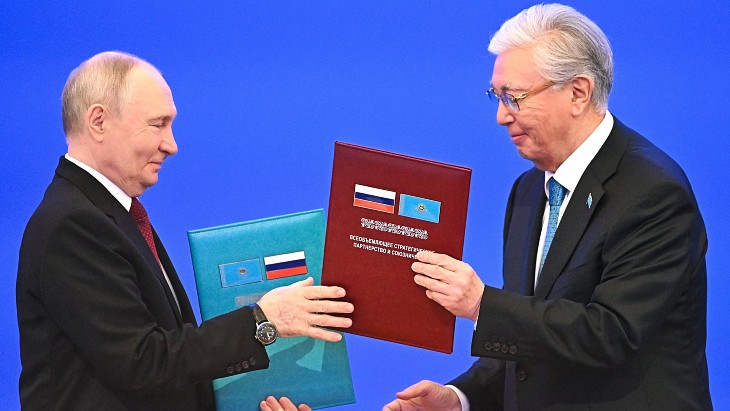
_68931.jpg)
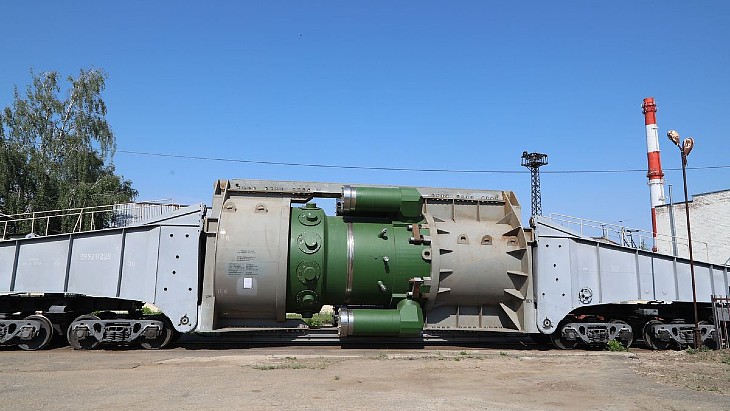
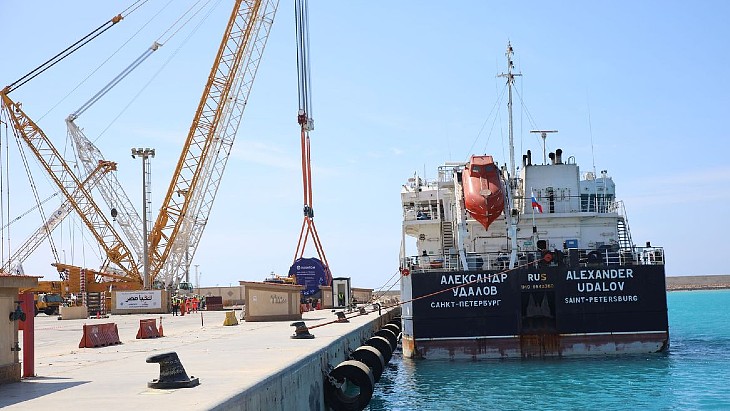
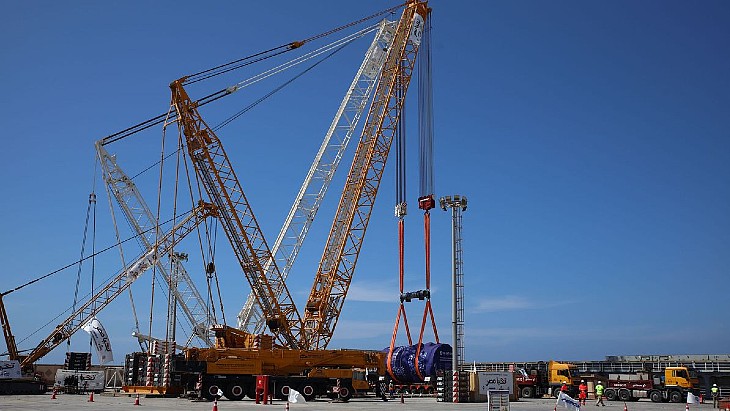
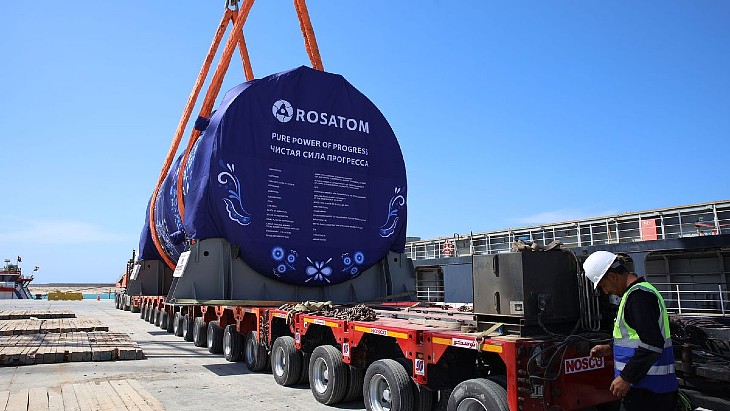
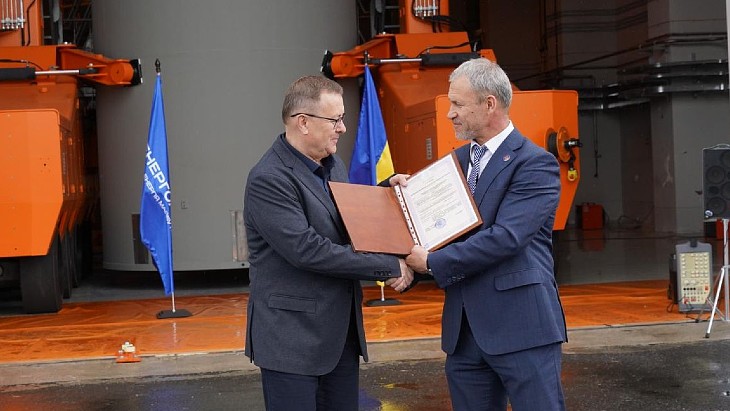
_87383.jpg)
_93956.jpg)