Saturday, July 01, 2023

Ocasio-Cortez slams Alito for ‘corruption’ over student loan decision
Story by Jared Gans • Yesterday 


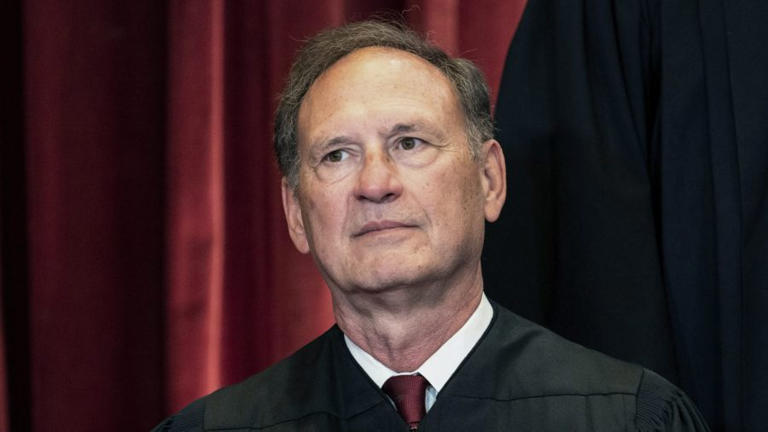
Rep. Alexandria Ocasio-Cortez (D-N.Y.) slammed Supreme Court Justice Samuel Alito for alleged “corruption” following the court’s rulings on President Biden’s student loan forgiveness program.

The court struck down the debt relief plan in a 6-3 ruling Friday, with the majority finding that the Biden administration had not received authorization from Congress to issue the thousands of dollars in loan forgiveness for many borrowers.

Alito has recently faced criticism surrounding an ethical controversy about a flight he took that was paid for by a major Republican donor. Progressives called on Alito to recuse himself from the two cases concerning the loan forgiveness program, as an organization that the donor leads filed an amicus brief supporting the challenges against the program.

“Justice Alito accepted tens of thousands of dollars in lavish vacation gifts from a billionaire who lobbied to cancel the student loan forgiveness,” Ocasio-Cortez said Friday following the ruling. “After the gifts, Alito voted to overturn. This SCOTUS’ corruption undercuts its own legitimacy by putting its rulings up for sale.”
Alito caught in crosshairs of latest Supreme Court scandal

Amid ethical controversies surrounding gifts that Justice Clarence Thomas accepted but did not publicly disclose, ProPublica published a report earlier this month that Alito went on a luxury fishing trip in 2008 with Paul Singer, a billionaire hedge fund leader and GOP donor who has had business before the court.

Alito admitted to accepting a seat on a private jet that Singer paid for and participating in cases in which a subsidiary of Singer’s hedge fund was involved, but he denied any wrongdoing.

Singer is the chairman of the Manhattan Institute, a conservative-leaning think tank that filed a brief along with the Cato Institute in support of the states that were challenging the forgiveness program. Student debt advocates called on Alito to recuse himself from the case as a result.

Democrats have responded to the ethical controversies surrounding Thomas and Alito by calling for new ethics reforms for the members of the court.

Ocasio-Cortez also argued that the court’s ruling does not take away Biden’s ability to pursue student loan forgiveness. She said Biden could use the Higher Education Act of 1965, which allows the education secretary to waive student loan repayment requirements.

“The Biden Admin can use the HEA (Higher Ed Act) – our position from the start – to continue loan forgiveness before payments resume. They should do so ASAP,” the New York lawmaker tweeted.

Biden is set to announce new actions Friday in response to the court’s ruling against his forgiveness program.

Canada forcing Northern communities to 'go back in time,' warns NWT premier

Story by Catherine Cullen • CBC


While many in the Arctic can no longer afford to feed themselves and others leave the North altogether, some federal cabinet ministers are only pretending to listen to the concerns of Northern Canadians, says the premier of the Northwest Territories.

"We're at a critical point. So it's nice to say that you care, but we need action behind those words. It's time for Canada to show they care about the most marginalized people," said Caroline Cochrane in an interview with CBC Radio's The House.

The stakes go beyond the well-being of the people who live in the North, according to the premier. In order for Canada to continue to assert sovereignty over the Arctic, people need to live, and stay, in the region, Cochrane said.

"The price of living in the Northwest Territories has gotten so high because of the supply chain issues that we're seeing. People are leaving," she said.

"We need people to move to the North so that we can ensure that the Arctic is safe … you can't talk sovereignty without having people in the land."

But that's a struggle with the high cost of food and lack of infrastructure such as hospitals, schools, roads and telecommunications.

Cochrane cited conversations she had on a recent trip to an Arctic community.

"They're telling me they can't feed their children, that they don't have enough money to make it, that the opportunities, the food and the stores are too expensive," she said.

"The traditional hunting that we're used to is disappearing because of climate change."

Cochrane has brought those concerns to federal ministers, but says at times "they pretend they listen, but they don't really hear. Then it's more than frustrating."

Cochrane said there's a funding issue, in particular because the Northwest Territories receives federal money based on population. She said that while a community like Grande Prairie, Alta. — with a population of just over 60,000 — will receive funding for a single municipality, her territory — with a population of approximately 45,000 — needs to spread funding across 33 municipalities.

"We are not getting ahead. In fact Canada is actually forcing us to go back in time," she said.

"People are hungry, the cost of living has hit everyone in Canada, and unless there's substantial funding to the North, then I'm worried about what's going to happen to families up there, because we can't afford to be there any longer."

Some of the concerns about the federal government ring true for Natan Obed, leader of Inuit Tapiriit Kanatami, a nonprofit that represents Inuit in Canada.

"There are times when I have seen leadership from the prime minister and ministers of this government all the way down to officials within federal departments who, if they so choose, can move these issues forward," he said.

Related video: Provinces, territories sign on to national climate adaptation strategy (cbc.ca) Duration 2:02 View on Watch

"And then on the other side, you can use bureaucracy to stall and to say that there isn't money there, things aren't possible," he said.

Obed said that while Ottawa has made some progress on issues affecting Inuit in recent years, the work is far from over — and the stakes are high for the country. He called on the government to do more to support housing and infrastructure in Inuit communities.

"What we see in the housing crisis, and what we see with the idea of Arctic sovereignty — Canada is an unfinished space. It is a country that is still growing into itself, and sometimes, for ease, the government of Canada imagines that that process is already complete," he said.

"We are the bedrock of Arctic sovereignty for Canada, and it just never has really sunk in for the government or those who make the decisions in relation to defence."

'We have not done enough,' minister says

The minister for Northern affairs, Dan Vandal, told The House that he is listening to concerns Northerners are raising, but he said the challenges faced by the North will take decades to address.

"We have not done enough. I think if you talk to every minister, every minister will, and every MP will realize we have not done enough," he said.

"But at the same time we've done more than any government in history in investing in northern issues as well as investing in partnership with Indigenous governments and Indigenous peoples all over the north."

Vandal said that when he travels to the region, people most often mention housing, infrastructure and food security as the most pressing issues.


Northern Affairs Minister Dan Vandal said in an interview with The House that addressing issues facing the north, such as a lack of housing, will take decades. (David Gunn/CBC)© Provided by cbc.ca

He added that the government knows meeting those needs will be a challenge, but said Ottawa is up to the task.

"We've been doing everything we possibly can over the last two years, but it's going to take substantial, long-term investments and partnership with Indigenous governments, with territorial governments, with local leaders and local citizens to really turn that corner,"

"It's going to take longer than four or five years. It'll take 20 years, but we are committed to continue doing this work as long as we possibly can."

Mining critical minerals is a potential source of prosperity for the Northwest Territories.

But, Cochrane said, a lack of infrastructure is stifling that opportunity in her territory, which has a long history of mining.

"We don't have road systems to get to those critical minerals," she said.

"If you have to fly everything into the mines, if you can't get the infrastructure, clean energy into the mines, then I'm afraid we're going to be left behind in that as well."

While building the necessary roads will be expensive, Cochrane said it will pay off over the long-term.

"If Canada's talking about reconciliation, if Canada's talking about arctic sovereignty and arctic safety, then they need to make sure that they are doing their part to protect people in the North, to give us the same opportunities as people in the south," she said.

"It's time."


The Intersection of First Nation Treaties and Metis Self-Government
Story by The Canadian Press • 1h ago


(ANNews) – On National Indigenous Peoples Day (NIPD) the Federal Government introduced Bill C-53 or Recognition of Certain Métis Governments in Alberta, Ontario and Saskatchewan and Métis Self-Government Act in the House of Commons. This piece of federal legislation is intended to enshrine recent self-government agreements enacted by various Metis organizations.

The Act utilizes a general application of the inherent right to self-government that exists within the Supreme Court of Canada’s definition of s.35, a right which was born from the outfall of the 1995 Quebec separatist referendum. During that tumultuous time, First Nations in Quebec took opposition to the province’s unilateral claim to their lands and resources. This opposition was strengthened by Quebec’s long-standing contestment of the Constitution Act of 1982, and its claim that they had never entered into Confederation, one of the tools that other provinces have relied upon to undermine Aboriginal title.

With the introduction of Bill C-53, we seem to be poised for another Constitutional conflict in Indian country. Over a number of years, in an attempt to gain further legitimacy and partnership with the Federal government, Metis organizations have been completing self-government processes. These processes involve management of membership outside of Federal determinations of metisness, as well as the ability to enter into claims processes like the problematic Specific Claims Policy imposed upon First Nations.

For First Nations leaders, the Act is seen as another affront to their negotiations regarding long-standing land disputes and past harms. In numerous press releases and statements, First Nations leaders like the Union of British Columbia Indian Chiefs (UBCIC) were clear to state that their opposition of the legislation is not directed towards Metis individuals, but rather what has been coined as “Metis Colonization.” For many, they see these new agreements as another process to carve out lands and resources, as well as allow other governing organizations to add to an already detrimental consultation regime and process.

Related video: Ann's Eye: military members join First Nations for a powwow (cbc.ca)
Duration 2:35  View on Watch


In Alberta, the issue becomes even murkier when one is aware of the background of prominent Treaty arrangements, like Treaty No. 8. It is a little known fact that when the Treaty was entered into in 1899 on the shores of Lesser Slave Lake, scores of what the government described as Metis people were admitted to the Treaty. It was approximately 40 years later that the government attempted to rectify this issue by establishing a commission and removing Metis individuals from Treaty rolls – an action that only added to the confusion and created real legal questions.

These legal questions will continue to make their way through the Court with members of the Wabun Tribal Council filing a judicial review of the Metis Nation of Ontario’s self-government agreement in March of this year – with the next hearing set for August 8 & 9, 2023. However, with Bill C-53 having received its first and second reading, it remains a possibility that the Federal Government passes this legislation before then. If that is the case, there is little doubt that First Nations will continue to push their opposition forward, with the ultimate decision resting with the Supreme Court of Canada.

In any event, the conflict and disagreements at present may also highlight a failure of governments past and present to properly negotiate with Indigenous peoples. It may also signal a failure of the Court to provide the clarifications necessary to ensure obligations outlined in agreements like the numbered Treaties are upheld by all parties. There are serious questions regarding which side of the Treaty people sit on, and who they owe obligations to. Questions which are fundamental to determining exactly what Canada is and whose land is it anyway.

Rob Houle, Local Journalism Initiative Reporter, Alberta Native News
Maine governor vetoes proposal sought by tribes to ensure they benefit from federal laws


AUGUSTA, Maine (AP) — Democratic Gov. Janet Mills delivered a setback to Native American tribes seeking greater sovereignty in Maine, vetoing a proposal on Friday that aimed to ensure many federal laws apply to them despite a state land claims settlement that dates back decades.

The governor said she doesn't want the tribes in Maine to be unfairly excluded from federal benefits enjoyed by other tribes across the country. But she argued that the bill sponsored by Democratic House Speaker Rachel Talbot Ross is vague and confusing — and will lead to protracted litigation.

Expressing distrust of the governor's motives, Penobscot Nation Chief Kirk Francis urged lawmakers to disregard her arguments, some of which he called “disingenuous.”

"I’m confident in our friends and allies to make sure that we continue to work hard to get this over the finish line," Francis told reporters on Friday. Both the Maine House and Senate approved the bill with bipartisan majorities that were big enough to override the governor's veto.

The administration contends the bill could “modify” Maine laws governing public health, safety and welfare on tribal lands. The administration also says just a few federal laws don’t apply to the tribes in Maine — only four or five — but the tribes haven't been interested in engaging with negotiations on a case-by-case basis.

There have been lengthy lawsuits even when the law, in the attorney general’s view, is clearly spelled out under the settlement.

For the tribes, it has been a long, frustrating journey since they traded some rights to the state under an $81.5 million settlement that was signed by President Jimmy Carter in 1980.

The settlement for the Passamaquoddy, Penobscot and Maliseet, along with a 1991 agreement for the Mi’kmaq, stipulates they’re bound by state law and treated like municipalities in many cases.

That means tribes in Maine get some state benefits like education dollars. But they’re treated differently than the other 570 federally recognized tribes across the country that deal directly with the federal government. This has led to disagreements over issues like water rights and environmental issues.

On Thursday, Mills urged the tribes, the attorney general and other parties to work together to craft a better proposal that is “clear, thoroughly vetted, and well understood by all parties.”

Francis, the Penobscot Nation chief, said he thinks the governor wants “to protect an old guard and old mindset” by maintaining the status quo. He predicted she would be Maine's last governor to impede tribal progress.

The tribes received a key endorsement from state Senate President Troy Jackson, who urged fellow lawmakers to think about their legacies and “stay true to the original vote”

“With all due respect to the chief executive, the time has come and passed for us to rectify our laws and honor the inherent sovereignty of the Wabanaki Nations,” he said in a statement. The Wabanaki tribes are the Passamaquoddy, Penobscot, Mi’kmaq and Maliseet in Maine.

To ensure broad support of the legislation, the proposal specifically carved out certain federal laws including the Clean Water Act, Indian Mineral Development Act, Water Quality Act and Indian Gaming Regulatory Act. But the governor contends the bill’s language conflicts with the stated goal of exempting those laws.

Republican Rep. John Andrews said the bill is a “basic liberty issue” and urged Republicans to overturn the veto. Maulian Bryant, president of the Wabanaki Alliance and Penobscot Nation ambassador, noted an outpouring of support and said “Mainers understand fairness and equity.”

In March, tribal leaders in Maine used their first address to the state Legislature in two decades to call for greater autonomy after a broader sovereignty proposal stalled last year.

___

Follow David Sharp on Twitter @David_Sharp_AP

David Sharp, The Associated Press
Canada calls on Israel to reverse thousands of West Bank settlement approvals

Story by CBC/Radio-Canada • Yesterday 

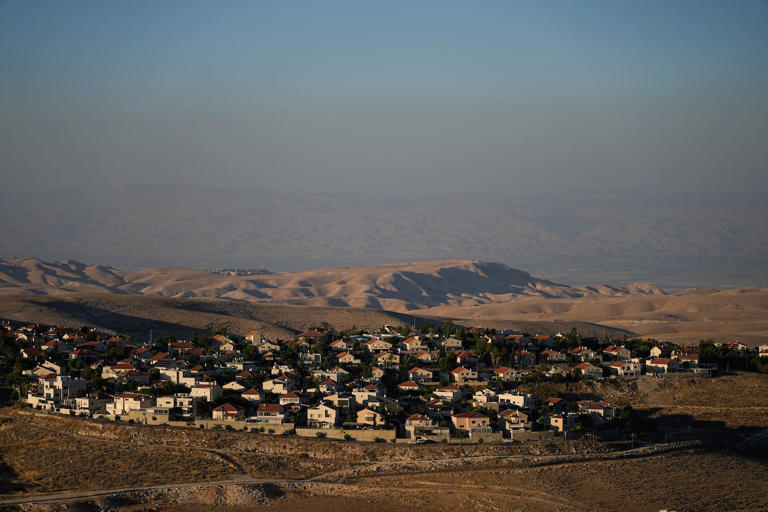
A view of the Israeli settlement of Kedar, in the West Bank, on Monday. Israel's far-right government on Monday approved plans to build thousands of new homes in the occupied West Bank, a move that threatened to worsen increasingly strained relations with the United States.
© Ohad Zwigenberg/The Associated Press

The Canadian government has joined a chorus of allies condemning Israel's approval of more than 5,700 settlement units in the occupied West Bank, a move that comes amid surging violence in the region.

In a joint statement with her Australian and U.K. counterparts Friday, Foreign Affairs Minister Mélanie Joly says she is gravely concerned by the move.

"The continued expansion of settlements is an obstacle to peace and negatively impacts efforts to achieve a negotiated two-state solution," says the statement.

"We call on the government of Israel to reverse these decisions."

On Monday, Prime Minister Benjamin Netanyahu's far-right coalition government approved more than 5,700 new settlement units in the West Bank.

Much of the international community sees the settlements, built on land captured by Israel in the 1967 Middle East war, as illegal and inflammatory.

Their presence is one of the fundamental issues in the ongoing Israeli-Palestinian conflict. The temperature has been on the rise over the past 15 months amid Palestinian street attacks and Israeli settler aggression.

"The cycle of violence in Israel and the West Bank must be broken," said Friday's joint statement.

"We are also deeply troubled by the continued violence and loss of life in Israel and in the West Bank."

The statement says the three countries "unequivocally condemn" the terrorist attack on June 20 in Eli targeting Israeli civilians and the "reprehensible and ongoing settler violence targeting Palestinians."

Earlier this week the U.S. also condemned the new settlements.

Peace talks aimed at establishing a Palestinian state in the West Bank, East Jerusalem and Gaza collapsed in 2014.

Australia, Canada, UK ‘deeply concerned’ over Israeli settlements

The continued expansion of settlements is an obstacle to peace, the three countries said in a joint statement.

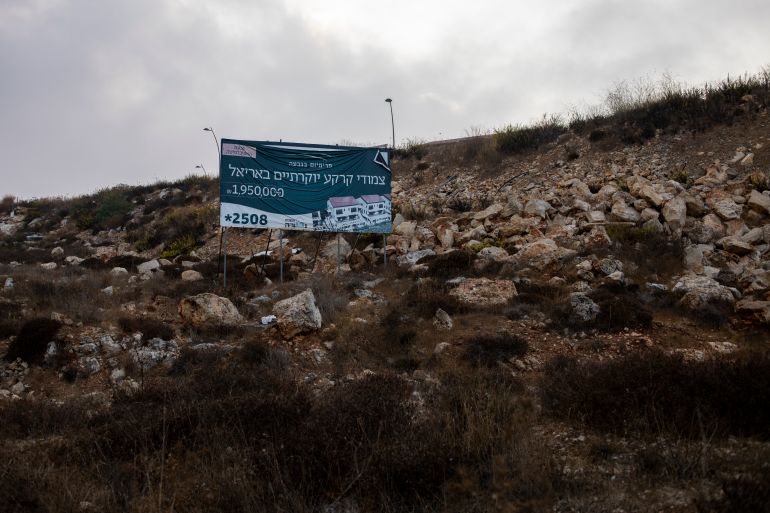
A billboard advertising housing projects hangs on a hill in the West Bank Jewish settlement of Ariel near the Palestinian town of Nablus 
[File: Ariel Schalit/AP Photo]

Published On 1 Jul 2023

The governments of Australia, Canada and the United Kingdom have said they are “deeply concerned” about recent events in the occupied West Bank, including Israel’s decision to expand its illegal settlements there amid rising violence, saying they “further reduce the prospects for peace”.

“The continued expansion of settlements is an obstacle to peace and negatively impacts efforts to achieve a negotiated two-state solution. We call on the Government of Israel to reverse these decisions,” the foreign ministers of the three countries said in a joint statement released on Saturday.

Israel’s defence ministry planning committee that oversees settlement construction approved more than 5,000 new settlement homes on June 26. Settlements are considered illegal under international law.

US ‘deeply troubled’ by major settlement expansion in Israel

The foreign ministers’ statement also expressed concern about the changes to the settlement approval process approved on June 18, in which far-right Finance Minister Bezalel Smotrich was given sweeping powers to expedite their construction, bypassing measures that have been in place for 27 years.

The settlement expansion plans have occurred as violence in the region has intensified in recent weeks.

On June 19, Israeli forces stormed the Jenin refugee camp, deploying the use of helicopter gunships in the occupied West Bank for the first time in 20 years. That raid killed seven Palestinians and injured 91 others.
Palestinian gunmen then targeted Israelis, while Israeli settlers carried out a string of attacks on Palestinian villages.

The Australian, Canadian and British governments condemned violence targeting both Israelis and Palestinians.

They also welcomed the joint statement by Israeli security chiefs equating the Israeli settler attacks to “nationalist terrorism”.

Nearly 750,000 Israelis live in 250 illegal settlements in the occupied West Bank, built on land captured by Israel in the 1967 Six-Day War.


SOURCE: AL JAZEERA AND NEWS AGENCIES
LIKE AN OLD TESTAMENT KING
Ex-aide: John Kelly was disgusted as Trump wondered what it might be like to have sex with Ivanka

Story by Tatyana Tandanpolie • Wednesday

Donald Trump Ivanka Trump 1413601062Bill Tompkins/Getty Images© Provided by Salon

Former President Donald Trump committed acts of "naked sexism" and made lewd comments about women — including his own daughter — working in his administration, according to the former aide who in 2018 anonymously published a scathing op-ed about Trump in The New York Times.

Miles Taylor, a former chief of staff in the Department of Homeland Security, detailed several incidents of the former president's behavior in his forthcoming book "Blowback: A Warning to Save Democracy from the Next Trump," an excerpt of which was obtained by Newsweek.

"Aides said he talked about Ivanka Trump's breasts, her backside, and what it might be like to have sex with her, remarks that once led John Kelly to remind the president that Ivanka was his daughter," Taylor writes in the "Blowback."

"Afterward, Kelly retold that story to me in visible disgust. Trump, he said, was 'a very, very evil man," Taylor added

Related
"It was really bad": Two ex-aides say they witnessed Trump's sexual harassment in the White House

The revelations in Taylor's book follow other former staffers telling media last month that they witnessed and reported Trump's inappropriate behavior toward women while at the White House. Last month a New York jury also found Trump liable of sexually abusing and defaming columnist E. Jean Carroll. Trump has denied any wrongdoing in the case and is appealing the jury's judgement.

"There still are quite a few female leaders from the Trump administration who have held their tongues about the unequal treatment they faced in the administration at best, and the absolute naked sexism they experienced with the hands of Donald Trump at worst," Taylor told Newsweek.

In the book, Taylor described witnessing Trump's "undisguised sexism" toward women of varying ranks in his administration, several instances occurring in meetings with the former president and former Secretary of Homeland Security Kirstjen Nielsen.

"When we were with him, Kirstjen did her best to ignore the president's inappropriate behavior," Taylor writes. "He called her 'sweetie' and 'honey,' and critiqued her makeup and outfits."

In those moments, he claims Nielsen would whisper to him. "Trust me, this is not a healthy workplace for women."

Want a daily wrap-up of all the news and commentary Salon has to offer? Subscribe to our morning newsletter, Crash Course.

He also recounted how Kellyanne Conway, who served as a senior counselor, once characterized Trump as a "misogynistic bully" following a meeting where he berated several female officials of his White House. A source familiar with the March 2019 meeting told Newsweek that Trump had snapped at Nielsen and other staffers about the border.

"That is a lie," another source, who works in Conway's office, told the outlet. "Despite trying to resuscitate the 15 minutes of fame, Miles Taylor should have stayed 'Anonymous.'"

In another instance, Taylor recalled how Trump commented on then-press secretary Sarah Huckabee Sanders' appearance when he mistakenly thought he saw her standing outside the room during an Oval Office meeting.

"Whoops," Trump responded when he realized the person was one of his assistants, according to Taylor. "I was going to say, 'Man, Sarah, you've lost a lot of weight!'"

Trump has a documented history of making what many say are inappropriate comments about his daughter going as far back as the early-to-mid-2000s. In a 2006 appearance on the The View alongside Ivanka Trump, the former president said that "if Ivanka weren't my daughter, perhaps I'd be dating her. Isn't that terrible? How terrible? Is that terrible?"

"She's really something, and what a beauty, that one. If I weren't happily married and, ya know, her father...," he reportedly said in a September 2015 interview with Rolling Stone.

But Ivanka Trump defended her father in a 2016 interview with CBS News, asserting that he is "not a groper," has "total respect for women" and "believes ultimately in merit."

Taylor said he fears Trump, who is the current frontrunner for the GOP nomination, and his behavior could be much worse if elected to a second term.

"He's a pervert, he's difficult to deal with," the source told Newsweek. "This is still the same man and, incredibly, we're considering electing him to the presidency again."
Arizona is running out of water. Big Tech data centers are partly to blame.

Story by insider@insider.com (Alistair Barr) • Yesterday 


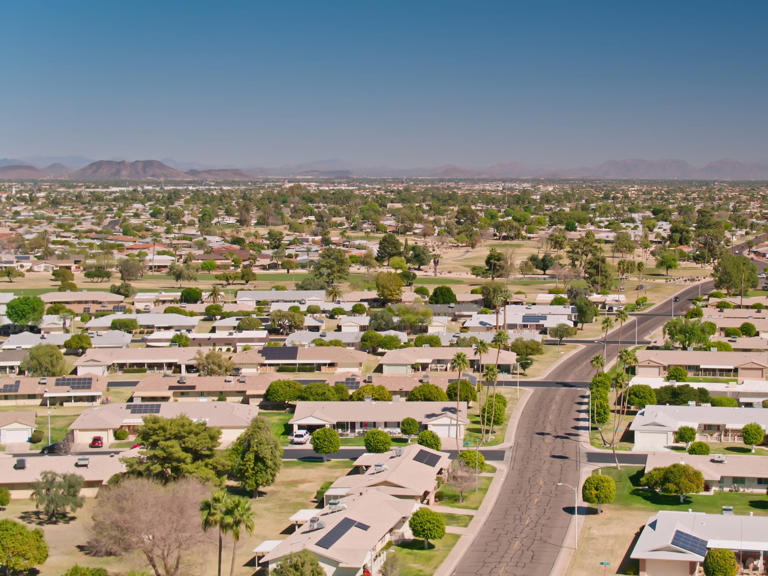
Sun City, Arizona. halbergman/Getty Images© Provided by Business Insider

Arizona is running out of water.

Governor Katie Hobbs plans to limit construction in and around Phoenix due to a lack of groundwater.
The area has several data centers that use lots of water. Google is planning yet another big one.

I fell in love in Arizona in the early 1990s. If I close my eyes, I can still see my girlfriend (now wife) hiking through the Superstition Mountains east of Phoenix wearing a half top.

The other thing I remember is how damn hot and dry it was.

So it surprised me, years later, when I heard Google was planning a massive data center in Mesa, just east of Phoenix. The deal guaranteed Google 1 million gallons of water a day to cool the facility, and up to 4 million gallons a day if it hit project milestones. (That's a lot of water. Arizona residents each use about 146 gallons a day). I was an editor at Bloomberg at the time and we wrote about it here.

Since then, the Phoenix metro area has been dubbed "THE data center destination" by locals. Microsoft opened one in 2021 in Arizona. Meta is expanding its facility in Mesa.

These huge data centers use incredible amounts of water because the computing gear inside gets really hot when it processes all those YouTube videos, Zoom meetings, and mobile app sessions. Water is often used to cool the equipment.

Google has started disclosing data on this. In 2021, all the company's data centers consumed 4.34 billion gallons of water. That's so much, the company tried to put it all in context by comparing itself to that bastion of environmental stewardship: Golf courses. Google noted that 4.34 billion gallons are equivalent to the annual water footprint of 29 golf courses in the southwest US.

This brings us back to Arizona. The state is running out of water. A few weeks ago, the governor unveiled a plan to limit construction in areas around Phoenix after finding that the groundwater can't support the current pace of building.

There are many reasons for this. But these data centers have a part to play in Arizona's water shortage. And that doesn't even include Google's Mesa facility, which hasn't been finished yet. So more water will probably be sucked out of the state soon.

The governor's new limits exclude thousands of already approved developments, so Google will probably get its facility done if it wants it. I asked the company about this and it said the project is still alive. "While we do not have a confirmed timeline for development for the site, we want to ensure we have the option to grow further, should our business demand it," Google stated.

Why do big tech companies build data centers in the middle of a desert? It would be better to place them in colder areas that have more water, right?

Unfortunately, speed often trumps the environment here. Putting data centers close to large populations is more important. The closer you are to users, the faster your internet services respond. Faster means more usage, which means more digital ads and cloud services sold, and higher revenue.

The Phoenix metro area has 5 million residents and has been growing fast, so the data centers follow. Even if there's not enough water.

Google, Microsoft, and Meta are working to find more sustainable ways to cool their data centers. They are also spending real money and effort on water conservation projects. But there's only so much you can do to fight the reality of blisteringly hot, dry Arizona days.

Microsoft said in 2021 that its Arizona data centers would use "zero water" for cooling using adiabatic cooling, which uses outside air instead of water. That only works, though, when temperatures are below 85F. It's going to be 113F in Phoenix this weekend — a little too hot for a hike.
The racist literary origins of Indiana Jones, The Great White Thief

Classics such as King Solomon’s Mines make the hero out to simply be a dashing man of science, even though he's stealing the treasures of indigenous peoples

Author of the article:Gerry Canavan, Washington Post
Published Jul 01, 2023 
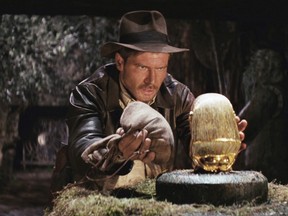
Harrison Ford as Indiana Jones, stealing a valuable relic of indigenous people in the opening scene of Raiders of the Lost Ark, the film that started the franchise. 
PHOTO BY LUCASFILM

To the contemporary viewer, the Indiana Jones franchise feels like a genre unto itself — or at least like the origin of one. By now, our whip-wielding hero’s adventures have inspired countless others, including the tomb-raiding Lara Croft, the Declaration of Independence-stealing Benjamin Franklin Gates in National Treasure, the Mummy franchise, Uncharted and Duck Tales.

Of course, Steven Spielberg, George Lucas and their Indiana Jones collaborators drew heavily on the adventure stories of their childhoods, and those of generations before them, when they created the character. What fragments of literature, history and popular culture came together, in such uneven ways, to make this film series such a massive global phenomenon? Excavating the origins of a genre text like Indiana Jones is dangerous work: Once you’ve torn through all those old libraries, dusty tomes, misleading maps and forgotten, trap-filled labyrinths, are the contents of those cultural tombs worth anything at all?

The most direct antecedents of Indiana Jones are the Flash Gordon and Zorro serials from the 1930s and ’40s, which famously thrilled Lucas as a boy. Organized around cycles of thrilling cliffhangers and daring escapes, they featured a style of storytelling that was already old-fashioned when Lucas was devouring it in matinees growing up in California in the 1950s.

It’s a bit hard to accept that almost as many years separate Raiders of the Lost Ark (1981) from Zorro Rides Again (1937) as separate Raiders from Indiana Jones and the Dial of Destiny, which is fresh in theatres. That Zorro film can be watched in full on YouTube these days, and, while undoubtedly dated, it contains inspired stunts and surprising, Marvel-style moments of action comedy, such as the scene where Zorro cracks his whip to keep a bar full of ruffians at bay (as the lead thug holds his bruised fingers and moans).

Swashbuckling hero

Adventure novels from around the turn of the 20th century, a genre coded as “boys’ entertainment,” are another important antecedent for Indiana Jones. Most notable among them may be the H. Rider Haggard cycle of Allan Quatermain novels (1885-1927) that began with King Solomon’s Mines (1885). These books saw their swashbuckling hero, a master hunter, seeking lost treasures across Africa, Asia and South America, eventually uncovering over the course of the series a hidden world of mystery, magic and danger far exceeding the rationalist, scientistic expectations of mainland Europe.

Quatermain’s first-person narration is funny and gripping, especially coupled with the footnotes from an “Editor” issuing their own corrections and commentary — but it is very hard to ignore the story’s racism, beginning with an extended commentary on racial slurs in the novel’s first chapter. Ngugi wa Thiong’o singles out Haggard for special scorn in Decolonising the Mind as one of the “geniuses of racism,” and the award is not undeserved.

The basic outlines of the adventure genre will be familiar to Indy fans, though its structure is heavily beholden to the colonialist politics of Haggard’s era: A brilliant White man, very often a professor, deploys personal reserves of cleverness, resilience and unrelenting determination in the service of exploration, discovery and resource extraction. That narrative template guides these stories even when the author attempts to push back on their ideological implications. Think, for example, about how the Indiana Jones films use the Nazi menace to distract from the fact that our hero is almost always appropriating the treasures of Indigenous or pre-colonial peoples. It’s as if they felt obliged to remind us that there’s always a worse White man, as a sort of alibi. It makes perfect sense, from this perspective, that Indiana Jones’s least-successful films are the ones that, like Temple of Doom, leave the Nazis out.

As the adventure genre developed, it grew to incorporate what we now call science fiction — and Indiana Jones’s escapades have plenty of overlap with that genre, too.

Indy frequently encounters improbably intricate traps built by pre-industrial cultures that apparently require no maintenance over millennia — and, of course, he once saw a UFO. That also speaks to some of the material in the franchise’s DNA: Similar stories can be found in such novels as Jules Verne’s Journey to the Center of the Earth (1864), Arthur Conan Doyle’s The Lost World (1912), Edgar Rice Burroughs’s Tarzan novels (1912-1966) and Edward Bulwer-Lytton’s Vril, The Power of the Coming Race (1871). The last of those contributed to a feverish and largely apocryphal fascination with Nazi occultism that lingers to this day, thanks in no small part to the way the Indiana Jones franchise picked up on it.

If these influential texts are haunted today by their unavoidable racism, it’s not as if Indy’s creators — who grew up loving these stories — were wholly unaware of the problems with them.

The lonely skeptic

“You and I are very much alike,” taunts his first major doppelgänger, Belloq (Paul Freeman), in Raiders of the Lost Ark, in a speech that has been plagiarized by movie villains ever since. Even the original ’80s films know, on some level, that Jones is a villain in his story. The climax of every Indiana Jones movie, after all, comes only when Indy finally decides to relinquish whatever it was he was trying to get, rather than follow his obsession over a cliff (or down a chasm, or into space); the happy ending is when he gives up and just goes home.

Here, we find the traces of another weird antecedent of the Indiana Jones franchise, distinct from all the others: the religious conversion narrative. A self-obsessed and lonely skeptic, a man of science who has let his career crowd out all other aspects of his life and induced him to make morally questionable decisions in pursuit of fortune and glory, is granted a momentary gift of grace, a glimpse of the divine (or, once, aliens), which changes his life forever (at least until the next movie is greenlit and the whole cycle starts anew). In this way, every Indiana Jones film is really just a genre-swapped version of A Christmas Carol.

Indiana Jones has many children, and the franchise’s influence is so sweeping that even the biggest video game in the world at the moment, The Legend of Zelda: Tears of the Kingdom, bears its mark. But, five movies and 42 years in, we might start to wonder if Indiana Jones does belong in a museum.

The two movies produced in the 2000s, Kingdom of the Crystal Skull (2008) and Dial of Destiny, have each been preoccupied by the concept of Jones growing old. In Dial of Destiny, especially, we find Indy exhausted and bitter as he finally retires from his tenured professorship at Marshall College, with the advertising for the film loudly promising/bemoaning that this time it really is his last adventure (really).

Today, the figure of the Great White Hero feels almost completely used up. In 2023, Marshall College undoubtedly begins its events with a land acknowledgment and has probably scraped Jones’s name off whatever building it was on. It makes perfect sense that the plot of Dial of Destiny sees the character fighting with Nazis (again) over an ancient doohickey that can do time travel. Even those of us who love the character can do so now only by winding back the years.


Gerry Canavan is a professor in the English department at Marquette University and the author of  a biography of SF author; Octavia E. Butler.
University of Waterloo stabbings: We all need to teach 'gender issues' to protect our communities from hate

Story by j wallace skelton, Assistant professor, Faculty of Education, Queer Studies in Education, University of Regina • Yesterday 

A community event takes place on June 29 outside Hagey Hall at the University of Waterloo to focus on supporting one another and making everyone feel safe after an attack at the university earlier in the week.© THE CANADIAN PRESS/Nicole Osborne

At the end of my interview for my current position as assistant professor of queer studies in education at the University of Regina, the hiring committee asked me if I had any questions. My first was: “When they come for me — and they will — what will the university do to protect me?”

I’m not paranoid, I’m a realist, and I’m not alone in asking questions like it. It’s also my attempt to be clear that institutions that make their money and reputation from the work of gender scholars are responsible for our safety.

Institutions need to take action to protect scholars and students whose work is feminist, celebratory of trans and nonbinary folks and inclusive of 2SLGBTQIA+ people, reproductive justice and gender justice.

Those of us doing this work have been shouldering the burden of our own and our students’ safety, individually, and often in isolation from each other. We need the burden to be shared — by our institutions, by our colleagues and by you, dear reader.

Collectively, as a society, we failed University of Waterloo philosophy professor Katy Fulfer and two of her students on June 28.

Fulfer and her students were stabbed while she taught her gender studies class in what the university described as a “hate-motivated attack related to gender expression and gender identity.”

The attack was horrific and unacceptable. The conditions that made it possible — escalation of rhetoric of hate accompanied by hateful and violent actions against 2SLGBTQIA+ people — are deliberate, a manifestation of hate and vitriol that is nurtured by people who feel threatened by this teacher’s and other’s work.

This was not senseless, as in without logic. It unfolded in a climate where a political movement desires to push women, queer, trans and nonbinary people out of public life.

If we only blame the attacker, we fail again because this is not an isolated incident. It is part of a campaign of escalating incidents on university and college campuses, outside public schools, inside and outside school board meetings.


Broad responses needed

Our society’s and universities’ response to this needs to be similarly broad.

First, in keeping with Ring Theory, when a specific incident happens, we provide care in towards the people most impacted, and allow them to share their feelings and needs outward towards those less impacted.

Fulfer and her students need to be at the centre of that care. Also needing care are others across Canada who do similar work, who teach similar material, who study in similar classes. If you have not yet reached out to colleagues or students, do so now.

Let them know you know what happened, that you suspect they may be impacted, offer what you can (support, to be on call if they need something, to talk about security, to support them moving their class online if they feel it is necessary, to co-work, to listen, to advocate for their needs). Offer what is appropriate for your level of knowledge, power and connection.

Creating safe work, learning environments


Next, recognizing that this is not an isolated single incident, we need to think about both how we create safe work and learning environments and how we de-escalate movements of misogyny, homophobia and transphobia. Creating safety takes many forms

Most powerfully, if you are an educator and you are not already teaching intersectional feminist, 2SLGBTQIA+ content in your courses, start doing so now. We all need to be addressing gender issues.

Read more: What is intersectionality? All of who I am

Those that wish to do harm can not target all of us at once. We need to do this because our students are encountering hate in all manner of places, and they need our commitment to create safety for them. They need to know that they are not alone in this.


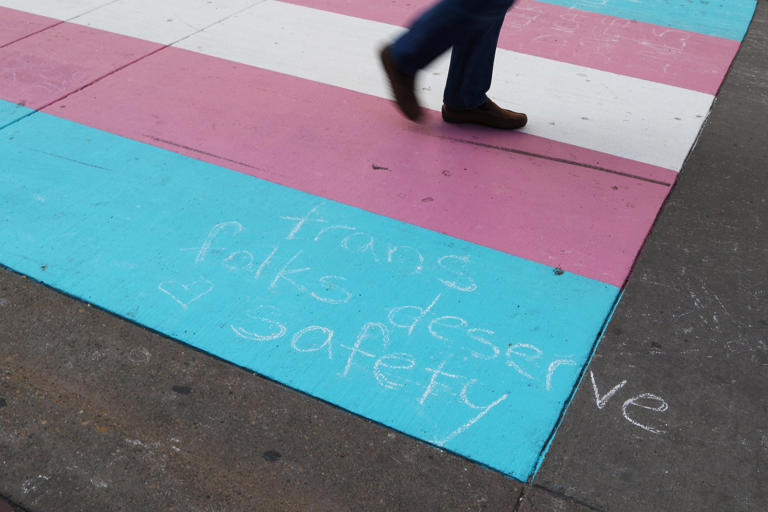
Being public with support means things like writing public letters and policy statements or painting trans Pride crosswalks. A person walks on a trans Pride flag crosswalk in Calgary in 2019.
© THE CANADIAN PRESS/Dave Chidley

Address misogyny, homophobia, transphobia

Within or beyond universities, when we encounter misogyny, homophobia and transphobia we need to address it, and address it with everyone who was impacted. We need our institutions to be public in their support. Yes, this means public letters, policy statements, flying rainbow flags and painting trans Pride crosswalks.

It means engaging those most targeted by the hate, who need to be centred in the planning. It means recognizing that the work we are already doing about our own and our students’ safety is work, and compensating us for it. We should not let only certain professors who are most targeted do additional labour, while those who are not targeted get to use their paid time for research or writing.

Read more: 4 ways white people can be accountable for addressing anti-Black racism at universities

We need both broad institutional responses and specific ones that meet individual needs.

More public conversations


Broadly, our institutions are reflections of our culture. We need a culture shift. We need individual conversations with the people around us, and public conversations in our media, places of worship, businesses and organizations.

We need to make celebration of gender diversity, honouring of women and 2SLGBTQIA+ people the culture. We’ve enshrined this in law, in the Charter and in human rights codes, but our practice does not live up to the goals of our legislation. We need all of us to be in this work. We need to create opportunities for people who have been antithetical towards this work to do better, and to change.

In my own work, I have often felt guided by the words of Supreme Court Justice Beverley McLachlin.

In Chamberlain v. Surrey School District No. 36, a decision that was about whether it was appropriate to read lesbian and gay picture books in kindergarten (yes, it is). McLachlin wrote:

“Exposure to some cognitive dissonance is arguably necessary if children are to be taught what tolerance itself involves. … Children cannot learn this unless they are exposed to views that differ from those they are taught at home.”

OK if it feels uncomfortable

It’s OK if this work is new to you. It’s OK if it feels uncomfortable at first. Do it anyway, and keep doing it and you will get better at it. Figure out your own compelling reasons to do it. Connect with others who are.

As a colleague of mine wrote after reading about the attack, it is OK to be “both afraid and bravely continuing to speak up.”

Universities need to ensure everyone affected is engaged in responses. Black and Indigenous colleagues, some of whom are also 2SLGBTQIA+, have significant expertise at combating hate. As I have learned from them and with them, resisting hate of all forms is all of our work, and if we do it together — in solidarity, community, in ongoing conversation — we will win.

This article is republished from The Conversation, a nonprofit news site dedicated to sharing ideas from academic experts.

Read more:

The long fight against sexual assault and harassment at universities

j wallace skelton is currently working on a SSHRC funded research project researching parent advocates of trans and nonbinary youth. j is the primary consultant at Juxtapose Consulting, but it not taking on further consulting projects at this time.


How weather likely impacted the Battle of Gettysburg's extensive death toll

Story by Randi Mann • 

This Day In Weather History is a daily podcast by Chris Mei from The Weather Network, featuring stories about people, communities and events and how weather impacted them.

--
Between July 1 and 3, 1863, Union and Confederate forces fought in the Battle of Gettysburg. The Battle took place in Gettysburg, Pennsylvania, and is considered a turning point in the American Civil War. It's known to be one of the bloodiest battles on American soil.

Historians report that the Battle resulted in 46,286 causalities and missing soldiers. The Battle was so bloody because of bayonets, muskets, and cannons, but the weather also likely impacted the overall death toll.


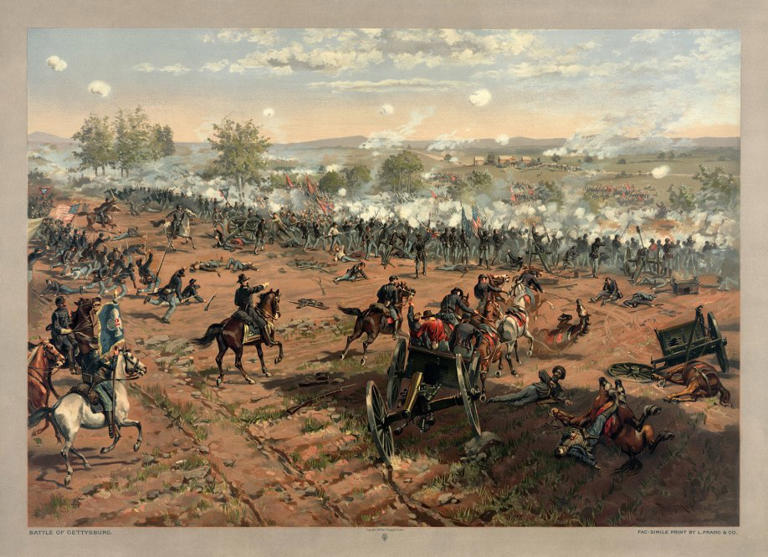
How weather likely impacted the Battle of Gettysburg's extensive death toll© Provided by The Weather Network"L. Prang & Co. print of the painting "Hancock at Gettysburg" by Thure de Thulstrup." Courtesy of Wikipedia

Rev. Dr. Michael Jacobs, a math professor at the University of Pennsylvania (Pennsylvania College at the time), recorded his weather observations during the three-day Battle. Because of his notes, the "Meteorology of the Battle" was published. It outlines specific weather details from the Battle of Gettysburg and potential impacts.


On Wednesday, July 1, 1863, the Battle began. The sky was covered by cumulostratus clouds. It was 76 degrees (24.4 °C) and there was a light breeze.

The second day of the Battle started with similar weather conditions. By the afternoon, the sky was 30 per cent clear and the temperature rose to 81 degrees (27.2 °C).

The third day of the Battle started with significant cloud cover but a lot of it cleared by the afternoon. However, the cloud that didn't clear happened to be the "massive thunder-cloud of summer." At around 6 p.m. EDT, a thunderstorm developed. "The thunder seemed tame, after the artillery firing of the afternoon," wrote Rev. Dr. Jacobs.

The first two days of the Battle were hot and soldiers were dressed in heavy uniforms and weaponry. The soldiers were likely subjected to heatstroke and heat exhaustion.

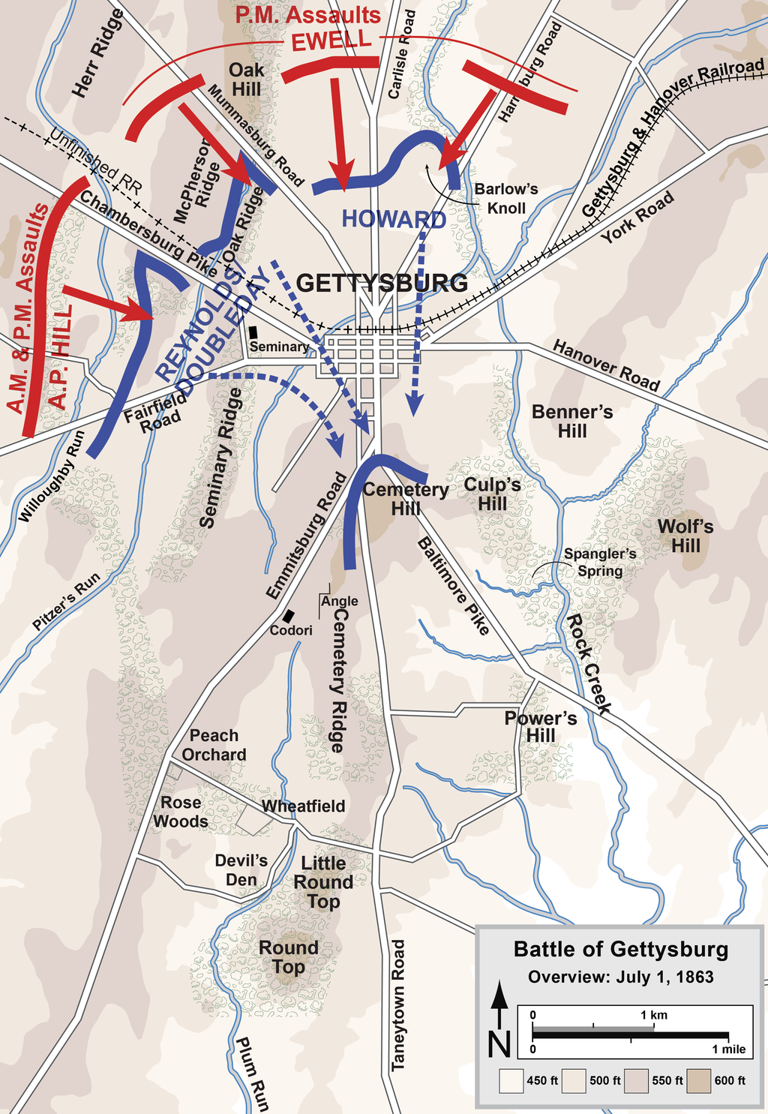
And on the third day of the Battle, many of the wounded were still lying in the field. Those who were laying in areas near the Plum Run Creek drowned. The excessive rain from the storm overflowed the creek's banks and flooded the likely dry hard surface.


How weather likely impacted the Battle of Gettysburg's extensive death toll© Provided by The Weather Network"Overview map of the first day of the Battle of Gettysburg, July 1, 1863." Courtesy of Hal Jespersen/Wikipedia/CC BY 3.0

On July 4, the soldiers had to trek almost 30 km, pulling wagons filled with the wounded. The conditions were rough as the dirt roads started t dissolve. As they tried to head back to Virginia, they couldn't cross the Potomac River. Normally it would be shallow enough to walk across, but the rain caused the water levels to rise and the army was trapped on the north side while the Union forces were in pursuit.

To learn more about the meteorological impacts on the Battle of Gettysburg, listen to today's episode of "This Day In Weather History."