Wednesday, July 05, 2023

‘Double agents’: fossil-fuel lobbyists work for US groups trying to fight climate crisis

Story by Oliver Milman • THE GUARDIAN

More than 1,500 lobbyists in the US are working on behalf of fossil-fuel companies while at the same time representing hundreds of liberal-run cities, universities, technology companies and environmental groups that say they are tackling the climate crisis, the Guardian can reveal.

Lobbyists for oil, gas and coal interests are also employed by a vast sweep of institutions, ranging from the city governments of Los Angeles, Chicago and Philadelphia; tech giants such as Apple and Google; more than 150 universities; some of the country’s leading environmental groups – and even ski resorts seeing their snow melted by global heating.

The breadth of fossil fuel lobbyists’ work for other clients is captured in a new database of their lobbying interests which was published online on Wednesday.

Related: State Farm stopped insuring California homes due to climate risks. But it shares lobbyists with big oil

It shows the reach of state-level fossil fuel lobbyists into almost every aspect of American life, spanning local governments, large corporations, cultural institutions such as museums and film festivals, and advocacy groups, grouping together clients with starkly contradictory aims.

For instance, State Farm, the insurance company that announced in May it would halt new homeowner policies in California due to the “catastrophic” risk of wildfires worsened by the climate crisis, employs lobbyists that also advocate for fossil fuel interests to lawmakers in 18 states.

Meanwhile, Baltimore, which is suing big oil firms for their role in causing climate-related damages, has shared a lobbyist with ExxonMobil, one of the named defendants in the case. Syracuse University, a pioneer in the fossil fuel divestment movement, has a lobbyist with 14 separate oil and gas clients.

When you hire these insider lobbyists, you are basically working with double agents. They are guns for hireTimmons Roberts of Brown University

“It’s incredible that this has gone under the radar for so long, as these lobbyists help the fossil fuel industry wield extraordinary power,” said James Browning, a former Common Cause lobbyist who put together the database for a new venture called F Minus. “Many of these cities and counties face severe costs from climate change and yet elected officials are selling their residents out. It’s extraordinary.

“The worst thing about hiring these lobbyists is that it legitimizes the fossil fuel industry,” Browning added. “They can cloak their radical agenda in respectability when their lobbyists also have clients in the arts, or city government, or with conservation groups. It normalizes something that is very dangerous.”

The searchable database, created by compiling the public disclosure records of lobbyists up to 2022 reveals:

Some of the most progressive-minded cities in the US employ fossil fuel lobbyists. Chicago shares a lobbyist with BP. Philadelphia’s lobbyist also works for the Koch Industries network. Los Angeles has a lobbyist contracted to the gas plant firm Tenaska. Even cities that are suing fossil fuel companies for climate damages, such as Baltimore, have fossil fuel-aligned lobbyists.

Environmental groups that push for action on climate change also, incongruously, use lobbyists employed by the fossil fuel industry. The Environmental Defense Fund shares lobbyists with ExxonMobil, Calpine and Duke Energy, all major gas producers. A lobbyist for the Natural Resources Defense Council Action Fund also works on behalf of the mining company BHP.

Large tech companies have repeatedly touted their climate credentials but many also use fossil fuel-aligned lobbyists. Amazon employs fossil fuel lobbyists in 27 states. Apple shares a lobbyist with the Koch network. Microsoft’s lobbyist also lobbies on behalf of Exxon. Google has a lobbyist who has seven different fossil fuel companies as clients.

More than 150 universities have ties to lobbyists who also push the interests of fossil fuel companies. These include colleges that have vowed to divest from fossil fuels under pressure from students concerned about the climate crisis, such as California State University, the University of Washington, Johns Hopkins University and Syracuse University. Scores of school districts, from Washington state to Florida, have lobbyists who also work for fossil fuel interests.

A constellation of cultural and recreational bodies also use fossil fuel lobbyists, despite in many cases calling for action on the climate crisis. The New Museum in New York City, the Los Angeles County Museum of Art and the Sundance Film Institute in Utah all share lobbyists with fossil fuel interests, as does the Cincinnati Symphony Orchestra and the Florida Aquarium. Even top ski resorts such as Jackson Hole and Vail, which face the prospect of dwindling snow on slopes due to rising temperatures, use fossil fuel lobbyists.

Cities, companies, universities and green groups that use fossil fuel-linked lobbyists said this work didn’t conflict with their own climate goals and in some cases was even beneficial. “It is common for lobbyists to work for a variety of clients,” said a spokesperson for the University of Washington.

A spokesperson for the Los Angeles County Museum of Art said it had retained a lobbyist on the F Minus database “for a period during the pandemic … We are not currently working with the company.”


The Los Angeles County Museum of Art said it no longer works with the lobbying company that F Minus linked to fossil fuel interests. 

A spokesperson for the Environmental Defense Fund said that working for big oil is “not, in itself, an automatic disqualification. In some cases it can actually help us find productive alignment in unexpected places.” Microsoft said despite its lobbying arrangements there is “no ambiguity or doubt about Microsoft’s commitment to the aggressive steps needed to address the world’s carbon crisis”.

But the vast scale of the use of fossil fuel lobbyists by organizations that advocate for climate action underlines the deeply embedded influence of oil, gas and coal interests, according to Timmons Roberts, an environmental sociologist at Brown University.

“The fossil fuel industry is very good at getting what it wants because they get the lobbyists best at playing the game,” Roberts said. “They have the best staff, huge legal departments, and the ability to funnel dark money to lobbying and influence channels.

“This database really makes it apparent that when you hire these insider lobbyists, you are basically working with double agents. They are guns for hire. The information you share with them is probably going to the opposition.”

Roberts said that climate-concerned organizations may get a “short term” benefit by gaining access to politicians close to the fossil fuel lobbyists they use but that the enduring impact is to simply reinforce the status of polluting industries. “It would make a big difference if all of these institutions cut all ties with fossil fuel lobbyists, even if they lose some access to insider decisions,” he said. “It would be taking one more step to removing the social license from an industry that’s making the planet uninhabitable.”

Nearly all states require lobbyists to register and submit periodic disclosure reports, and lobbyists tend not to advocate for both sides of the same piece of legislation. Beyond that, the laws around lobbying are scant. There is no bar to lobbyists working for clients with seemingly diametrically opposing aims, and there are few guardrails to ensure sensitive information isn’t shared with the other side.

This has led to lobbyists with client lists that are jarring in their juxtapositions. Hinman Straub, a New York-based advisory firm, lobbies on behalf of Koch Industries, known for its history of climate denial and muscular efforts to block action to cut emissions, as well as Bard College, one of the most liberal institutions in the US.

Seth McKeel, a former Republican state legislator in Florida, is lobbyist to both Apple, which has vowed to completely decarbonize its supply chain by 2030, and Kinder Morgan, which has more than 140 oil and gas terminals.

Syracuse University’s lobbyist, the Brown & Weinraub outfit, also has 14 fossil fuel clients, including Koch Industries companies, Shell and the American Petroleum Institute, a situation that Alex Scrivner, a Syracuse PhD student and campus climate advocate, described as “disheartening”. The Koch Industries network itself shares lobbyists with a broad range of institutions, from the Pittsburgh Ballet Theatre to Google.

The practice of political lobbying has grown significantly since the 1970s, with the fossil fuel industry among the most prolific users of paid operatives to help shape favourable government policies. A study released in May found that not only is the industry more likely to lobby than others, its lobbying expenditures have jumped when faced with potential climate-linked threats to its business model.

This morass of fossil fuel lobbying now touches all flavours of political persuasion. Lobbying contracts can involve a range of different tasks that do not necessarily directly clash with the stated aims of another client, and some environmental groups feel that having fossil fuel-aligned lobbyists can open up pathways to Republican lawmakers who might otherwise not be amenable to them.

Denis Dison, director of communications for the National Resources Defense Council Action Fund, said the environmental group “as a rule” doesn’t use people who also work with the fossil fuel industry. But he added that “at times we retain vendors that specialize in engagement that can help build support for climate and equity progress across both sides of the aisle”.

Browning said his advice would be to avoid “cynical calculations”. He said: “We got into this mess on climate by groups seeking short-term wins but empowering the fossil fuel industry and giving them credibility.” State capitols can act as a sort of “alternate reality” where existential issues like the climate crisis are overshadowed by the desire to cultivate alliances and bolster influence, he added.

“People just assume there is no alternative to the status quo, but it’s time to take a side. It’s all about who is in the room when decisions are made, and the only way to force change is to get these fossil fuel companies and their lobbyists out of the room.”

Lobbyists, like lawyers, aren’t required to hold the same worldview as their clients, according to Sarah Bryner, director of research at OpenSecrets, a nonprofit that tracks lobbying. “But you could see it would be problematic to represent clients with radically opposed views to other clients,” she said.

“The money thing matters, too. These environmental groups, and even cities, can’t pay lobbyists as much as huge multinational fossil fuel companies can, so there is an imbalance there. Loyalties would be split.”

You shouldn’t be funding the person who is poisoning you
Former Culver City, California, mayor Meghan Sahli-Wells

Meghan Sahli-Wells saw the pressure exerted by fossil fuel lobbying first-hand while she was mayor of Culver City, California, where she spearheaded a move to ban oil drilling near homes and schools. Culver City, part of Los Angeles county, overlaps with the Inglewood oilfield, and the close proximity of oilwells to residences has been blamed for worsening health problems, such as asthma, as well as fueling the climate crisis.

“It takes so much community effort and political lift to pass policies and then these lobbying firms come in and try to undo them overnight,” said Sahli-Wells, who ended her second mayoral term in 2020. Oil and gas interests, which spent $34m across California lobbying lawmakers and state agencies last year, mobilised against the ban, arguing it would be economically harmful and cause gasoline prices to spike.

“There was just a huge push from the fossil fuel industry,” Sahli-Wells said. “It’s not a good look to be funding lobbyists for fossil fuels, especially with public money.

“I hope that many people just don’t know they share lobbyists with fossil fuel companies and that this database will bring transparency and allow leaders to better vet these companies,” she added. “You shouldn’t be funding the person who is poisoning you.”
Automakers' contract negotiations will decide potential EV future for idled Illinois plant


Automakers contract negotiations will decide potential EV future for idled Illinois plant

By Bianca Flowers

BELVIDERE, Illinois (Reuters) - A shuttered Illinois Jeep assembly plant will be at the center of a power struggle between the United Auto Workers union and Detroit's automakers as the manufacturers double down on cutting costs to fund an accelerated transition to electric vehicles.

When the Stellantis factory in the northern Illinois town of Belvidere was idled in February, it left union members in shock as they had not expected the shutdown until June.

"They wanted to reduce us even more which seemed like an impossible feat," Matt Frantzen, the local union president in Belvidere, said of the decision following a prior elimination of two work shifts at the factory. "We were seeing the writing's on the wall."

The threat of more plant closures is just one item on a contentious agenda as negotiators for Detroit's automakers and the UAW formally start negotiations in mid-July to replace an expiring four-year contract.

Legacy automakers face billions of dollars in losses on EVs over the next several years, analysts said, as they replace high-volume combustion vehicles with low-volume EVs powered by expensive batteries.

General Motors, Ford and Stellantis executives have said they must reduce labor costs as they overhaul U.S. factories to build EVs to match Tesla and other non-union manufacturers.

UAW President Shawn Fain has countered there should be no jobs lost because of the shift to EVs. Fain and UAW leaders have used social media and visits to Washington to turn the spotlight on the Detroit automakers' robust profits and hefty pay packages for executives, rather than the cost of the shift to EVs.

Fain has called for substantial pay hikes for workers, and for restoring cost-of-living adjustments and ending lower wages for new workers. His agenda and the combative rhetoric of his campaign to build support have many industry executives and analysts factoring in a strike once contracts expire in September.

The real question is how long will UAW workers stay off the job, said Mark Wakefield, co-head of AlixPartners' automotive practice.

"I am very concerned about it," Wakefield said last week. "It doesn’t look good at the moment. It's very difficult to forecast. Is it a week or two, or three or four months."

GM CEO Mary Barra and Ford CEO Jim Farley have sought to defuse tension with the union. Both have signed off on multibillion-dollar investments in U.S. factories where UAW members build combustion vehicles, and both have said they want to bring workers along as they shift toward EVs.


Automakers contract negotiations will decide potential EV future for idled Illinois plant

'GET TO THE TABLE'

Related video: Vicinity Motor Corp – EV Bus Maker Sees New U.S. Plant Come Online (Benzinga (Video))   Duration 10:53  View on Watch

"It's important that we actually get to the table and we start to problem solve," Barra told CNBC in a recent interview.

In an opinion piece published in the Detroit Free Press last week, Farley said the automaker's management and union workers "share common goals - reaching a new deal that allows us to stay ahead of the changing industry landscape, protecting good-paying jobs in the U.S. and continuing to offer innovative and affordable products to our customers."

Automakers contract negotiations will decide potential EV future for idled Illinois plant

Stellantis CEO Carlos Tavares has warned that more factories could be forced to close as more costly EVs take sales from combustion models. He has so far stuck to his decision to put the Belvidere plant on track for closure in the face of UAW criticism.

In April, Stellantis offered voluntary exit packages to 33,500 U.S. employees in an effort to streamline its restructuring plan toward EVs. Around 1,680 union workers company-wide agreed to take the buyout, according to a union representative.

A spokesperson for Stellantis declined to comment on the number of employees who have accepted buyouts and said the process is still ongoing.

Meanwhile, several hundred of the Belvidere plant's roughly 1,300 laid-off UAW workers are in limbo, either waiting to be transferred or hoping state officials can sway the automaker with generous tax incentives to keep jobs local.

Robert Stacy, 52, who has worked for Stellantis since 2006, said he is concerned that if he is offered a transfer and turns it down, he will lose his health insurance that his disabled wife relies on to supplement costs for hospital visits and prescription medication.

Auston Gore, a 32-year-old assembly operator, left his family behind after struggling to find another job that would pay his current rate of $31.77 an hour. He opted for a voluntary transfer to a Stellantis plant in Toledo, Ohio.

"The situation I was put in, I felt like my arm was being twisted by the company," he said.

Politics could play a role in deciding the Belvidere plant's future, and the broader restructuring of the U.S. auto industry.

During a speech in Chicago last week, President Joe Biden outlined his plan to invest $2 billion from last year's Inflation Reduction Act to accelerate domestic manufacturing of EVs and resuscitate plants that are struggling.

Illinois Governor J.B. Pritzker has also stepped up efforts to salvage the 58-year-old Belvidere plant that once employed 4,500 union workers.

A spokesperson for Stellantis said the state recently purchased 170 acres of land next to the idled plant in Belvidere. The governor has not confirmed the land purchase or whether it is related to tax credits to sway the company to bring in a new product, or repurpose the facility for EVs.

UAW Regional Director Brandon Campbell said the incentive package that Illinois is offering Stellantis is comparable to deals offered in Michigan and Indiana.

"There's a lot of hope and a lot of incentives from the state level."

(Reporting by Bianca Flowers in Belvidere, Illinois; Additonal reporting by Joseph White in Detroit; Editing by Ben Klayman and Matthew Lewis)
AUSTERITY NO MORE!
Edmonton city workers rally for wage increase after five-year freeze

Story by Lauren Boothby • Yesterday 
Edmonton Journal

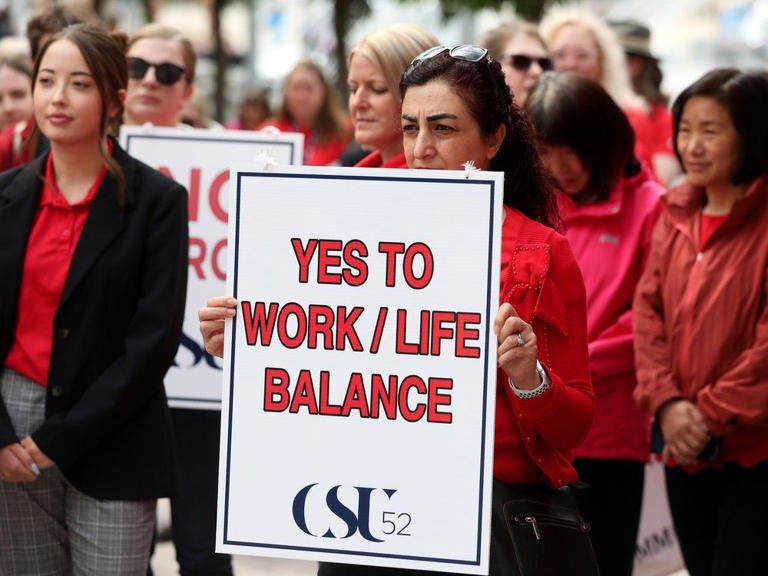
Members of Civic Service Union 52 hold a rally outside Edmonton city hall on Tuesday, July 4, 2023. The rally was in support of workers at the City of Edmonton and Edmonton Public Library with the message that members will not accept zero per cent wage increases in their current contract negotiations. Union members have not had raises since 2018 and have not had contracts since 2020.

Unionized city workers including Edmonton Public Library (EPL) employees say it’s time the city unfreeze their wages after five years without any increases.

More than 100 workers and supporters rallied outside Edmonton city hall over the noon hour Tuesday wearing red shirts, waving Civic Service Union (CSU) flags, and holding signs demanding an end to zero per cent wage increases. CSU 52 members at the City of Edmonton such as 911 dispatchers, office workers and librarians have had wages frozen since 2018 and have been without a contract since 2020.

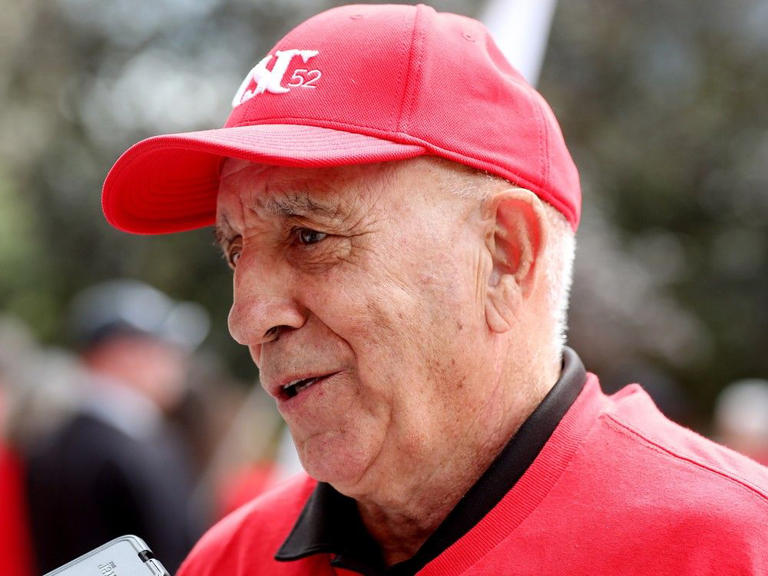
CSU 52 president Lanny Chudyk said workers are struggling with the increasing cost of living and interest rates and their wages are not keeping up despite the work they do to keep the city running.

He said having to come out and rally like this makes them feel a bit unwanted, unappreciated and not respected.

“My members bluntly are struggling with meeting their mortgage payments, meeting their car payments, just putting food on the table every day,” he said. “In a budget where we have $100 million plus for bike lanes, my members find it difficult to believe there are absolutely no dollars for wage increases.”

Chudyk said these employees are some of the lowest-paid city workers including many women, newcomers, and many are the “working poor.”

The city’s unwillingness to budge, particularly after city council gave itself a raise earlier this year, is unfair, he said, adding that the city hasn’t really been bargaining with them.

“It’s interesting council felt 2.4 per cent (increase) was appropriate for them in 2023,” he said. “Obviously city budgets are always tight. It depends then where you decide you want to spend your money, and I would say my members are some of the most important parts of the city’s infrastructure.”


Union president Lanny Chudyk speaks to the media as members of Civic Service Union 52 hold a rally outside Edmonton city hall on Tuesday, July 4, 2023. The rally was in support of workers at the City of Edmonton and Edmonton Public Library with the message that members will not accept zero per cent wage increases in their current contract negotiations. Union members have not had raises since 2018 and have not had contracts since 2020. 
David Bloom/Postmedia© David Bloom

Lori Jeffery-Heaney, a page who has worked for EPL for nearly 15 years, said many library employees work part-time shift work, making it difficult to get additional employment. In one case, she said one employee told her she has only $65 a week to feed herself and her cat.

“That’s not very sustainable,” she told Postmedia. “We need to get something that is a reasonable wage increase.

“We serve the public … We need the public to understand what’s happening in the back for us, and we would love their support going forward … We are taxpayers too, we understand that (argument) too, but we still need to be paid reasonably.”

Tracy Forin, first vice-president for CSU 52 who works at the City of Edmonton, said city council members seem progressive and will tell union representatives that they agree workers deserve competitive wages but then vote against any increases.

“They talk a bit out of both sides of their mouths,” she told Postmedia.

“(Council members) took a raise this year, the city manager took a raise this year, and we haven’t had a raise in five years. It’s disappointing.”

City council members were unavailable for comment Tuesday.


Members of Civic Service Union 52 hold a rally outside Edmonton city hall on Tuesday, July 4, 2023. The rally was in support of workers at the City of Edmonton and Edmonton Public Library with the message that members will not accept zero per cent wage increases in their current contract negotiations. Union members have not had raises since 2018 and have not had contracts since 2020. David Bloom/Postmedia© David Bloom

lboothby@postmedia.com
Teamsters says UPS walks away from negotiations, raising chances of strike

July 5 (Reuters) -

The Teamsters union, which represents roughly 340,000 workers at United Parcel Service, said on Wednesday the parcel delivery firm had "walked away" from negotiations over a new contract, raising the prospect of a strike.

Teamsters said in a tweet UPS presented an offer, which was unanimously rejected by the union's national negotiating committee. The union added that no additional negotiations were scheduled.

"Following marathon negotiations, UPS refused to give the Teamsters a last, best, and final offer, telling the union the company had nothing more to give," the union said.

UPS did not immediately respond to a Reuters request for comment.

The contract covering UPS full- and part-time employees in the United States that deliver packages, load trucks and handle packages expires at midnight on July 31. UPS workers have already authorized a strike, should talks break down.

Both union and company officials have said before that they wanted a deal finalized to prevent a strike, which could put millions of daily deliveries at risk, including vital medicines for treating cancer and other illnesses.

The only national strike at UPS in 1997 lasted 15 days, disrupted the supply of goods, cost the company $850 million and sent some customers to rivals.

"UPS had a choice to make, and they have clearly chosen to go down the wrong road," said Sean O'Brien, general president at Teamsters, which represents U.S. drivers, package handlers and loaders at the company.

UPS sweetened its offer last week, but O'Brien had said it did not go far enough to reward workers who risked their lives to keep packages moving during the early days of the COVID-19 pandemic that fueled big profits for UPS.

The development comes as labor unions are enjoying a higher bargaining power with companies, which have been grappling with labor shortages since the pandemic. (Reporting by Jahnavi Nidumolu, Abhijith Ganapavaram in Bengaluru and Lisa Baertlein in Los Angeles; Editing by Shounak Dasgupta, Krishna Chandra Eluri and Maju Samuel)
Australian Labor Government Approves First Thermal Coal Mine

James Fernyhough
Wed, July 5, 2023 


(Bloomberg) -- Australia has approved its first thermal coal project since Prime Minister Anthony Albanese came to power, drawing criticism from climate groups and the Green party.

The decision, made on Friday, allows Idemitsu Kosan Co. to mine power-station coal at Ensham in Queensland for another nine years. The Japanese company will be producing 4.5 million tons a year of the fuel at the mine, which is equivalent to around 2.5% of Australia’s thermal coal exports in 2022.

The decision shows the tricky environmental and economic balancing act for Albanese’s Labor government. It won last year’s election on a platform of stricter emissions targets and support for renewable energy, but it has also backed the expansion of coal and natural gas production, Australia’s second- and third-biggest export earners.

Albanese’s government approved another mine in Queensland for metallurgical coal, used in steel-making, in May.

The greenlighting of new fossil-fuel projects may complicate Labor’s legislative agenda in the Senate, where it doesn’t hold the balance of power and often needs the support of the Greens.

“Labor’s current climate strategy is to condemn a decade of Liberal inaction in Parliament, whilst hoping you don’t notice their massive expansion of coal & gas at the exact same time,” Greens leader Adam Bandt said on Twitter on Tuesday.

The Ensham decision was made according to existing environmental rules, Environment Minister Tanya Plibersek said in a statement, adding she had blocked three coal mines since coming to office. The government remained committed to rolling out renewable energy, she said.

Climate advocacy group Lock the Gate said the approval would worsen climate change, estimating it would contribute an additional 100 million tons of carbon dioxide to the atmosphere over its lifetime — about a fifth of Australia’s annual emissions.

The coal would be mined after Idemitsu sells the project to a consortium led by South African coal miner Thungela Resources Ltd., in a deal reached earlier this year. Thungela was spun off from Anglo American Plc in 2021.

Growing demand for coal in India and Southeast Asia will underpin an increase in Australia’s exports of the fuel by volume for at least the next three years, according to an Australian government report released this week. The country earned A$113.8 billion ($76 billion) from coal shipments in the year through June 2022, almost a fifth of total export earnings.

McKinsey Adds to Warnings of Clean-Energy Metals Shortages

Lars Mucklejohn
Wed, July 5, 2023 


(Bloomberg) -- McKinsey & Co. joined the growing chorus warning that metals considered key to the clean-energy transition face shortages in coming years, potentially suppressing the adoption of electric cars, wind turbines and solar panels.

These deficits likely will slow global decarbonization efforts by raising supply-chain costs and, consequently, the prices of lower-carbon products, McKinsey said in a report released Wednesday. Trafigura Chief Executive Officer Jeremy Weir and BloombergNEF have expressed similar concerns.

Nickel, necessary for the lithium-ion batteries that power electric vehicles, is expected to face shortages of about 10% to 20% by 2030, while dysprosium, a rare-earth element commonly used in electric motors, may experience deficits of as much as 70%, McKinsey said. Supplies of copper, lithium, cobalt, iridium and tin also may be crimped.

The number of the approximately 500 cobalt, copper, lithium and nickel mines operating today will need to increase by as much as 76% to almost 900 in order to meet demand for batteries, the McKinsey analysts wrote.

The materials shortage would result in an additional 400 million-600 million tons of greenhouse gas emissions in 2030, the report estimates. That would blow through international plans to limit global temperatures as set out in the Paris climate accord.

McKinsey recommends investments in mining, refining and smelting increase to between $3 trillion and $4 trillion by 2030 — a 50% annual increase compared with the previous decade.

--With assistance from Mark Burton.


'Green' Steel Maker Signs €1.5 Billion Deal With German Auto-Industry Supplier

Lars Paulsson
Tue, July 4, 2023 


(Bloomberg) -- H2 Green Steel AB signed a seven-year steel delivery deal with one of the biggest suppliers to the automotive industry worth €1.5 billion ($1.64 billion).

The agreement, one of H2GS’s largest yet, covers a “significant share” of ZF Friedrichshafen AG’s annual steel demand of about 2.5 million tons, according to a statement Tuesday. Deliveries of near zero-emissions steel are due to start in 2026.

The Swedish company is among a new breed of steelmakers seeking to overhaul the way the alloy is manufactured in one of the most polluting industries in the world, replacing coal with green hydrogen made using renewable power. The sector, which has relied largely on the same production techniques for more than a century, accounts for about 7% of global carbon dioxide emissions.

Read more: What It Would Take to Make Steelmaking Greener: QuickTake

The deal is expected to reduce ZF’s CO2 emissions by close to 2.3 million tons compared with traditional steelmaking processes, according to the statement. H2GS will also work together with ZF’s sub-suppliers.

The company last month received a full environmental permit to start building a plant in Boden in northern Sweden. The facility is poised to produce 5 million tons of so-called green steel annually by the end of the decade.

The founder and largest shareholder of H2GS is Vargas Holding AB, which is also co-founder and one of the larger stakeholders in Swedish battery maker Northvolt AB.
BMW bets on hydrogen in battle with Musk’s Tesla

Howard Mustoe
Mon, July 3, 2023 

BMW iX5 Hydrogen runs on the odourless gas and emits only water vapour as a result

Off a backroad and behind a gate near Heathrow Airport stands one of the UK’s handful of hydrogen filling stations.

The familiar canopy, pumps, no smoking signs and other paraphernalia are present, but there are none of the smells or stains of a petrol station as enough fuel to travel hundreds of miles is dispensed in under four minutes in the form of a clear, odourless gas.

BMW is betting on this technology as it seeks to find an alternative to battery-operated electric cars – amid a scramble to dethrone Elon Musk’s Tesla in the battle to rule the future of driving.

The German carmaker believes that hydrogen cars could help four big groups of drivers who are unlikely to go electric.

It intends to market them to customers who do not have home charging, such as those without a garage or driveway; drivers who require high flexibility or travel frequently, for whom even fast charging is too time consuming; buyers in cold climates which kill battery life; and those who tow heavy loads.

The cars drive like an electric vehicle since their fuel cells burn hydrogen, which produces only water, to generate electricity that powers a motor. Fill them with hydrogen made using solar or wind power and they are just as green as a battery-powered car can be.

To prove the concept, BMW has kitted out a small test fleet of X5 SUVs with a hydrogen power plant which can deliver 170 horsepower.

It is paired with a small battery, to gather waste power from braking and offer an acceleration boost, as found in a hybrid petrol car. Together they can deliver more than 400 horsepower and hit 62 miles per hour from a standstill in six seconds.

BMW and Toyota are among a minority of big car makers pressing on with the technology as an option as the industry scrambles to find an answer to Musk.

On Sunday night, Tesla once again proved its leadership credentials in the electric arena by reporting a record number of deliveries in the second quarter of 2023.

The carmaker handed over 466,000 cars in the three months to June after price cuts paid off, beating analyst expectations of 445,000 deliveries.

Shares rose 6.9pc on Wall Street as a result, valuing the business at $877bn (£691bn) – bigger than the next nine largest companies combined.

European rivals have been left playing catch-up, and BMW regards hydrogen as a useful way to stand out.

“Putting all the eggs in one basket is not the right thing to do,” says Jürgen Guldner, general programme manager for hydrogen at BMW.

He also hopes that a company like his can kickstart demand for the gas.

“The transport sector can pay a higher price for hydrogen as a fuel to replace diesel than, for example, a steel factory,” he says.

“This steel factory is replacing either coal or gas. So the transport sector can actually be the catalyst to start out a hydrogen economy because they can pay a higher price in the beginning plus the amount of hydrogen that is needed for the transport sector versus what the heavy industry needs is lower.”

Others are also showing an interest, albeit with a dose of scepticism thrown in.

Last year, Volkswagen filed a patent for a new hydrogen fuel cell system with a 1,243 mile range, using cheaper ceramic components when compared to the polymers used by Toyota and Hyundai.

But in February, Volkswagen brand boss Thomas Schafer said for the next decade at least, hydrogen was not a cost-effective option.

Ford and Stellantis, which owns brands from Vauxhall to Citroen, have focused their hydrogen efforts on vans as a diesel alternative, and for most vehicle makers, the gas is seen as a good bet for heavier vehicles like vans, trucks and heavy goods vehicles.

While hydrogen cars seem like an ideal solution for caravan owners, sales reps and city dwellers, to be carbon-free they must use gas made by renewable electricity, using the current to split water molecules into hydrogen and oxygen.

This extra step means the fuel will always be more expensive than electricity itself, which can be used to directly charge a battery car.

The X5’s 6kg hydrogen tank costs about £120 to fill, offering a range of about 310 miles, for a price today of about 39 pence per mile.

It also puts drivers in competition with industries which have few other options, especially in the near term since green hydrogen is expensive to make and has very limited capacity today.

Steel, cement and glass makers and the aviation industry are all clamouring for the gas since batteries and electricity are either too heavy or do not generate the heat they need.

Sabine Klauke, chief technical officer at Airbus, said in an interview last month that industries which can use batteries should do so, leaving the limited feedstock supplies available for those with no alternative.

In an interview at the Paris Air Show, she said: “There are industries which are really difficult to decarbonize.

“So it would be far more helpful if the ones who can go electric, go electric.”

Others are more optimistic. Blake Scholl, founder of supersonic jet designer Boom Supersonic, is confident that huge demand for sustainable jet fuel, and the hydrogen it’s made from, will mean an explosion of production.

He told a press conference last month: “Over time, as supply increases to catch up with demand, prices will fall. This happens in every market.”

If hydrogen is to play a larger role in British transport access to the fuel will need to improve beyond the dozen stations that exist today - ED ROBINSON

Hydrogen production can soak up excess green energy produced on windy, sunny days that can then be used later on, taking pressure off the electricity grid which already requires billions of pounds of upgrades to cope with the looming demand for millions of electric cars, heat pumps and greener industrial processes.

Unlike sunshine, it can be stored and shipped about on the UK’s natural gas network, which already exists and is being upgraded to accommodate the fuel.

The gas can also be imported from areas with high wind or sun, such as the UK or Saudi Arabia, offering an export for those nations.

BMW’s Guldner was guarded when asked how much its hydrogen-powered car would cost, but acknowledged that it would have to be competitive with electric options.

Fuel cells are getting cheaper, and newer models should only need as much platinum as a typical catalytic converter, which would help drive costs down.

Clare Jackson, chief executive of Hydrogen UK, says the industry is keen to work with all comers.

“In line with Government’s low carbon hydrogen production targets set for 2030, Hydrogen UK encourages both aviation and road transport to decarbonise using hydrogen,” she says.

Only 5pc of the hydrogen being produced in seven years will be needed for aviation fuel, she says, while running 7,5000 trucks would use another 1.6pc – leaving more than 90pc for other industries.

The UK has some catching up to do. With fewer than a dozen filling stations, a flurry of openings will be needed to tempt motorists into using the fuel.

And for BMW, beating Musk with a hydrogen-powered car still looks like a very distant dream.


China's SAIC doubles down on European expansion with EV plant plan

Reuters
Tue, July 4, 2023 

MG Motor Mexico, owned by China's SAIC Motor, launches an electric vehicle

SHANGHAI/BEIJING (Reuters) - China's SAIC Motor is working on the site selection to build a plant in Europe to produce electric vehicles, the company said on Tuesday, as it presses ahead with it expansion in the region.

The Chinese partner of Volkswagen and General Motors, which did not give further details on the plant plans, said it had sold 530,000 units overseas in the first quarter, an increase of 40% from a year earlier. Nearly 70% of those sales came from its MG brand. Sales of MG cars in Europe more than doubled to 115,000 units in the first half, SAIC added.

The state-owned Chinese automaker estimated its overseas sales could exceed 1.2 million units in 2023. It plans to launch more than 10 new models under the MG brand in the next 18 months globally.

Automakers including Tesla, BMW and BYD are ramping up efforts to export China-made vehicles to other markets as auto demand weakened at home, taking advantage of the lower manufacturing and supply chain costs in China.

SAIC was the biggest exporter among all Chinese automakers in the first five months, according to data from China Passenger Car Association. Britain, Mexico, Australia and India were among its largest overseas markets, the data showed.

(Reporting by Zhang Yan, Brenda Goh and Beijing Newsroom; Editing by Muralikumar Anantharaman and Louise Heavens)

China Takes the Trade Fight to Europe, Targeting the Green Transition

Ewa Krukowska, Bryce Baschuk and Richard Bravo
Tue, July 4, 2023

China Takes the Trade Fight to Europe, Targeting the Green Transition

(Bloomberg) -- China’s decision to restrict critical mineral exports will hit key sectors in the European Union’s effort to decarbonize its economy, and demonstrates the limits of western aspirations to shift supply chains beyond the reach of policymakers in Beijing.

China is the largest global producer of the two minerals, gallium and germanium, which will be subject to export restrictions next month and that are crucial to the semiconductor, telecommunications and electric-vehicle industries. The EU gets 71% of its gallium from China and 45% of its germanium.

The move comes weeks after the EU unveiled a new economic security strategy, which seeks oversight of critical technology exports and may curb outbound investments in the name of national security. The proposal is part of a growing push within the bloc to strengthen security tools as countries such as China and Russia increasingly use trade and the control of critical supply lines to advance political and even military goals.

“China’s action is a stark reminder of who has the upper hand in this game,” Simone Tagliapietra, a researcher at the Bruegel think-tank in Brussels, said in an interview. “The harsh reality is that the west will need at least a decade to de-risk from China’s minerals supply chains, so this really is an asymmetric dependency.”

The EU was taught a difficult lesson when Russia invaded Ukraine last year, triggering surging inflation and fears that entire industries might collapse as the bloc rushed to source new supplies of oil and gas. The bloc’s member states were torn over how to respond to Moscow, with some countries overly reliant on cheap Russian crude and gas.

The same dynamic is also playing out with the EU’s policy on China, with certain nations unwilling to put their trade relationship with the world’s second-largest economy at risk.

Reacting to China’s announcement, German Economy Minister Robert Habeck said the government in Berlin must “learn the lesson from recent years in terms of what a certain sovereignty in production, energy and economic security really means.”

“You probably saw today that China is really starting to up the ante regarding two types of metal,” Habeck said at a chemicals industry lobby conference. “If that happens with lithium or something similar then we really have a different kind of problem,” he warned.

China’s $6.8 trillion consumer marketplace is a critical destination for European exports of cars, pharmaceuticals and machinery. German automakers Volkswagen AG, Mercedes-Benz AG and Bayerische Motoren Werke AG have built dozens of factories in China and all three manufacturers now sell more vehicles in China than any other market.

The US has pushed for Europe to take a tough line with Beijing, and European Commission President Ursula von der Leyen has argued that the bloc needs to “de-risk” from China, but short of a full-blown “decoupling.”

The EU launched its Critical Raw Materials Act in March to ease financing and permitting for new mining and refining projects and strike trade alliances to reduce the bloc’s dependence on Chinese suppliers. The US and Europe have also been looking to set up a “buyers’ club” to strike supply deals and investment partnerships with producing nations.

“We have seen a very deliberate hardening of China’s overall strategic posture for some time and it has now been matched by a ratcheting up of increasingly assertive actions,” von der Leyen said in a policy speech earlier this year. “Just as China has been ramping up its military posture, it has also ramped up its policies of disinformation and economic and trade coercion.”

And member states have been taking even stronger measures. The Dutch government announced last week measures that will prevent ASML Holding NV — a company with a near-monopoly on the machines needed to make the most advanced semiconductors — from selling some of its equipment to China.

WTO Complaint

The commission, the EU’s executive arm, could confront China’s new export restrictions via dispute settlement proceedings at the Geneva-based World Trade Organization.

However, such a dispute could take years to wind its way through the WTO’s partially dysfunctional dispute settlement body. Furthermore, China’s claim that the measures are necessary for national security could trigger a WTO loophole that allows governments to take “any action which it considers necessary for the protection of its essential security interests.”

But more immediate for the EU, an escalation of tensions could threaten the bloc’s ability to transform its economy to become more environmentally friendly.

The Chinese move comes as the EU is embarking upon an unprecedented overhaul to eliminate carbon emissions across its entire economy, from energy production to agriculture and transport. The Green Deal, whose target is to make the region climate-neutral by 2050, will require access to massive amounts of critical materials used in everything from solar panels to electric vehicles.

“Europe today largely depends on China for a set of clean technologies and critical components, so an escalation of these tensions might make Europe’s green transition more bumpy for sure,” Tagliapietra said.

--With assistance from Alberto Nardelli and Kamil Kowalcze.


Chinese EVs have yet to succeed in Europe. The Middle East could be different

Rita Liao
Tue, July 4, 2023 


For Chinese electric car manufacturers, Europe has long been a priority destination for international expansion. With its affluence, environmental consciousness, and relatively friendly attitude towards China, the continent has attracted established players like BYD as well as emerging brands like Nio and Xpeng.

Despite their ambitious plans, Chinese EV makers yet to achieve the level of success they had hoped for in Europe. In 2022, BYD held a mere 0.3% market share across 14 major European markets, while Xpeng and Nio, which both entered Europe in 2021, each accounted for 0.1% of the region, according to auto data tracking site EU-EVs. Western carmakers continue to dominate the market, with Tesla enjoying a 15% share, Volkswagen with 11.3%, and BMW with 6.2%.

It's too soon to say if China's ambitious EV makers will ever establish a strong foothold in Europe, but the early tepid performance is driving them to hedge their bets. They are setting their sights on a region halfway between Europe and China -- the Middle East.

As countries around the world accelerate efforts to phase out fossil fuels, the oil-rich countries in the Middle East are also joining the fray to electrify the auto industry. In a controversial move, the United Arab Emirates, a country known for its abundant oil reserves, will host the 2023 United Nations-sponsored climate talks, more commonly known as COP28.

"Oil is relatively cheap [in the Gulf countries] but can be exported for a big profit margin. The money made from export can then go towards subsidizing the domestic EV industry," Emma Meng, an auto influencer with over one million followers on Weibo who is also an EV consultant based mostly in the UAE, explained in an interview with TechCrunch.

Chinese electric vehicle manufacturers are taking note of these developments. The Middle East, with an EV market that is still nascent, offers a wealth of potential for growth. But the same challenges that Chinese EV makers have faced in Europe will arise once again in this land of opportunities.

Pushed to go beyond China


China's EV makers feel an increasing urgency to expand overseas as consumer demand weakens amid an economic slowdown and Tesla's aggressive price cuts heighten domestic competition.

The price war started by the American titan has triggered some 40 Chinese EV brands to slash prices. Even Nio, which prides itself on its premium brand image and pledged not to join the price war, gave in eventually.

"The Chinese market is too cut-throat. EV makers have no choice but to get out," suggested Meng.

The momentum in Europe is driving Chinese EV makers to look elsewhere. Meanwhile, the increasing level of government-level interactions between China and the Middle East is offering reassurance for automakers to invest in the region.

In early December, President Xi Jinping traveled to Saudi Arabia, marking one of his first trips abroad since China closed its borders to control the COVID-19 pandemic. His meeting with Crown Prince Mohammed bin Salman was widely viewed as China's attempt to assert more influence in the region. In June, Saudi Arabia signed a historic $5.6 billion oil deal with China, further solidifying the economic ties between the two countries.

Almost all major Chinese EV makers have now developed plans for expansion into the Middle East, according to Meng. For carmakers already present in Europe, the region represents a natural next step as their European Union homologation makes it much easier for the companies to obtain certification for the Middle East. The Middle East also serves as a nice springboard for expansion into North Africa, which shares similarities in terms of religion, language, and climate, with vast desert landscapes and sparse rainfall, Meng suggested.

Win-win partnership


Having Chinese EVs in the Middle East could potentially create a mutually beneficial situation. To establish the necessary network to power EVs, the oil-rich nations need to seek external know-how. It come down to two options.

"There are only two types of EV companies in the world: Tesla, or Chinese EV makers," said Meng. China's reputation for infrastructure development makes it an ideal candidate to help build facilities like charging stations.

According to one industry report, demand for EVs in the UAE is projected to grow by an annual rate of 30% between 2022 and 2028, with Dubai alone expected to require 70,000 charging points by 2030.

Meng's consulting firm is one of many Chinese businesses tapping the region's thirst for EV expertise. In a joint venture with Shenzhen Bus Group, it won a bid to assist in the electrification of Abu Dhabi's public transport system through the deployment of electric taxis and buses.

Slowed down by red tape

Despite the eagerness of Chinese manufacturers to enter the Middle East, only BYD has managed to open stores in the region thus far. This slow pace is partly attributed to the challenging process of obtaining the Gulf Cooperation Council (GCC) certification, which is partially needed to demonstrate that the cars can withstand the region's harsh weather conditions.

Timing is crucial for getting the approval to sell in the GCC. As Meng pointed out, there is a brief period during the summer when EVs can be tested to show they could perform well in hot weather. If this window is missed, manufacturers would need to wait another year.

Nio recently scored a significant investment of $738.5 million from the Abu Dhabi government. However, there has been no indication of when the company can begin selling in the country.

Like other governments, the Middle East expects foreign firms to play a role in driving the local economy. But setting up, say, production on the foreign land could undermine Chinese manufacturers' competitiveness -- a complete supply chain and affordable labor at home that lead to lower prices.

Chinese EVs exported to Europe and the Middle East are already considerably more expensive than their domestic prices. BYD's popular ATTO3 (known in China as Yuan Plus) model is priced at roughly twice as much in the UAE as in China mostly due to steep logistics and homologation costs, according to Meng.

Wait times for Chinese EVs are also lengthy. Given the relatively small export volume, manufacturers are still prioritizing their domestic models. Long wait times, coupled with the absence of an established brand reputation and less competitive pricing, undercut Chinese EV cars' appeal to their foreign buyers. The upcoming year will be key to determine if the Chinese carmakers will stand a better chance of success in the region.

Abu Dhabi pours $738.5M into China’s Tesla challenger Nio
TORIES LIE

UK
Leaked memo sets out ‘huge challenge’ to meet £11.6bn climate pledge


David Hughes, PA Political Editor
Wed, July 5, 2023 


Rishi Sunak’s promise to meet an £11.6 billion climate and nature pledge looks set be missed, according to a leaked internal memo.

The briefing note to ministers sets out that the international funding commitment would be a “huge challenge” and require backing for other aid projects to be slashed.

The Government insisted it is delivering on the pledge and said suggestions the commitment could be dropped are “false”.

The memo, obtained by the Guardian, says the commitment to provide £11.6 billion between April 2021 and March 2026 was made at a time when the Government was meeting its legally-enshrined target of spending 0.7% of national income on overseas aid.

That commitment was dropped to 0.5% as a result of the impact of Covid-19 on the nation’s finances.

The leaked document said meeting the climate pledge within this spending “would squeeze out room for other commitments such as humanitarian and women and girls”.

The promise was made by Boris Johnson in 2019 but the BBC reported the memo pointed to “subsequent turbulence” in the economy – such as the pandemic – which had “turned a stretching target into a huge challenge”.

Meeting it would require a “reorientation” of the budget on a scale which “has not previously been achieved”.

Ministers including Rishi Sunak have publicly declared the £11.6 billion commitment remains in place.

A Government spokesman said: “Claims that the international climate finance pledge is being dropped are false.


“As the Prime Minister set out at Cop27, the Government remains committed to spending £11.6 billion on international climate finance and we are delivering on that pledge.

“We spent over £1.4 billion on international climate finance over the course of the 2021/22 financial year, supporting developing countries to reduce poverty and respond to the causes and impacts of climate change.

“We will publish the latest annual figures in due course.”

Lord Goldsmith, who raised the issue when he resigned as a minister last week, said failing to meet the promise would be seen as a “betrayal” around the world.

“The PM is insisting he isn’t breaking his promise,” the peer said. “The figures show he is.”

He said the only way the commitment could be met is if the next government, in its first years in office, allocates “over 80% of all UK bilateral aid” to climate funding, at the expense of humanitarian, health and education schemes “which obviously it cannot do”.

“There will be some who welcome this,” Lord Goldsmith said.

“But they should consider the impact on the UK of breaking a promise that Commonwealth allies and countless others prize above all others.

“It will be seen as an act of betrayal on a profound level and will cause us irreparable reputational harm.”

Senior Tory Sir Alok Sharma, president of the Cop26 climate summit, warned against dropping the pledge.

“So hope the government is not planning to drop its climate finance pledge to some of the most climate vulnerable countries in the world,” he said on Twitter.

When Mr Johnson announced the commitment there was “spontaneous applause” and “it was a proud moment for the UK”, Sir Alok said.

Memo reveals pressure on UK climate finance pledge


Justin Rowlatt - climate editor, BBC News
Wed, July 5, 2023 

Prime Minister Rishi Sunak addressing delegates at last year's COP27 in Egypt after initially saying he would not attend the event

The government looks set to break its flagship £11.6bn climate and nature funding pledge for developing countries, an internal government document seen by the BBC says.

The document details how the government has consistently underspent and would now struggle to meet its 2026 target.

Some 83% of the total overseas aid budget would need to be reallocated to climate to catch up, it adds.

The government says it will honour promises made on climate finance.

"The government remains committed to spending £11.6bn on international climate finance and we are delivering on that pledge," a government spokesperson said.

Former Prime Minister Boris Johnson pledged in 2019 to double the amount spent on the UK's international climate finance (ICF) - aid for vulnerable nations to deal with the causes of climate change - to at least £11.6bn between 2021/22 and 2025/26.

But the document says "subsequent turbulence" - referring to economic shocks such as the Covid pandemic - "has turned a stretching target into a huge challenge".

Overall international aid spending has also since been cut to 0.5% of GDP, down from 0.7%.

Civil servants have calculated the government is now so behind on its spending promises it would have to spend 83% of the total foreign aid budget on climate to meet the ICF target by 2026.

That would require a "reorientation" of the budget on a scale which has "not previously been achieved", they say.

Doing so would also mean that there would be no cash left for other priorities such as projects "specifically targeted at helping women and girls", civil servants write.

World's hottest day since records began


A really simple guide to climate change


What does net zero mean?

The revelations follows Tory peer Lord Zac Goldsmith's resignation from Rishi Sunak's government last week over what he described as the prime minister's "apathy" towards climate change.

Lord Goldsmith has told the BBC that in his view, the low levels of expenditure so far combined with the decision to define our spending on Afghan and Ukrainian refugees here in the UK - something he says other countries have not done - means "it is going to be virtually impossible to honour the promise."

"Whoever is in government after the next election", he said, "would have to savagely slash humanitarian, education, health and other funding in order to hit the £11.6bn target."

Lord Goldsmith said he was worried that small island states in particular "will be left feeling utterly betrayed" and said the UK's reputation as a "reliable partner" will "simply be shredded".

That is a view that is echoed by many in the overseas aid community.

"Frankly it is embarrassing", a director of one UK aid agency told the BBC. "The cuts make it supremely difficult to credibly state the UK remains a climate change thought leader."

"There used to a be a huge amount of goodwill across Africa for the UK", he continued. "We were seen as the best in the sector, engaged and effective. This is no longer the case. The UK is now seen as an unreliable partner."

Mr Sunak insisted Lord Goldsmith had quit after being asked to apologise for comments he made about the Privileges Committee inquiry over the conduct of Boris Johnson and whether he had intentionally misled the House of Commons as PM.

But Lord Goldsmith denied this, instead saying his decision to step down had been a "long time coming".

The ICF refers to UK aid given to support vulnerable countries to deal with the causes of climate change, including preventing deforestation and reducing carbon emissions, as well as preparing for its effects.

It forms a part of the global commitment to spend $100bn a year on climate finance for developing countries.