Monday, March 03, 2025


Somalia and Ethiopia Makes Progress on Talks for Port Access

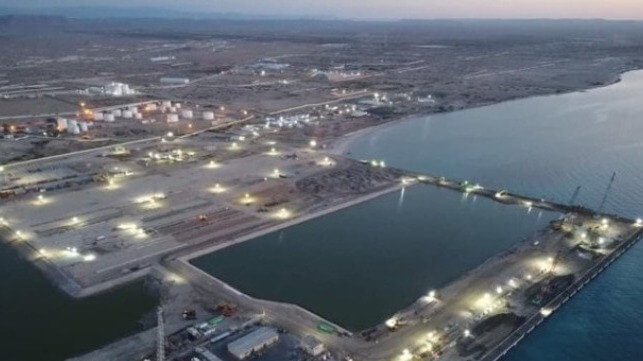
Port of Berbera in the breakaway region of Somaliland (file image courtesy DP World)

Published Mar 2, 2025 6:54 PM by The Maritime Executive


Ethiopia and Somalia are on a path for renewed cooperation after the two sides agreed to end the Somaliland port dispute. Last week, Ethiopian Prime Minister Abiy Ahmed toured Mogadishu and held talks with Somalian President Hassan Sheikh Mohamud. Top on the agenda of the meeting was Horn of Africa security as well as the start of technical negotiations for Ethiopia’s port access, as agreed on in Ankara last December.

With Turkey acting as the mediator, Ethiopia and Somalia agreed to reach a “mutually beneficial commercial arrangement, which ensured Ethiopia gains access to the sea under Somalia’s sovereignty. In an interview with local media last week, Somali foreign affairs minister Ali Mohammed Omar said that talks are ongoing, and he suggested that the aim is to reach a framework agreement by June.

“That framework will determine which type of port to offer, the exact area in the Indian Ocean and the overall cost of it,” said the minister.

This is remarkable progress in finding a long-term solution to Ethiopia’s ambitions for port access. Under the previous deal, Addis Ababa was planning to lease a 12-mile section of Berbera's coastline in the self-governing breakaway region of Somaliland, without Mogadishu's permission. Unfortunately, the decision stoked tension in the already-restive Horn of Africa region.

Ethiopia became landlocked in 1993 after Eritrea gained independence, marking the end of a three-decade war between the two countries. Currently, Ethiopia utilizes Djibouti's ports, through a network of roads and the 752-kilometer Addis Ababa-Djibouti Railway.

However, as one of the largest economies in Sub-Saharan Africa, Ethiopia is pushing to build its own port on the Indian Ocean. The port could also serve as a base for the Ethiopian Shipping and Logistics Services Enterprise (ESLSE), one of the largest African ocean carriers.

Currently, ESLSE has a fleet of ten bulk carriers but has announced plans to add an extra six, as Ethiopia’s import and export needs grow. According to a 2023/2024 performance report, ESLSE handles around 45 percent of Ethiopia’s dry cargo imported through Djiboutian ports.


Charting Key Regulatory Change Across Maritime Law in 2025 and Beyond

Stamatis Fradelos

Published Mar 2, 2025 4:12 PM by Stamatis Fradelos


A tidal wave of new regulations is set to hit the global maritime sector this year, representing fresh, highly-complex compliance challenges. From environmental performance to evolving security and safety standards, the shipping industry faces a raft of new rules intended to ensure safe operations and reduce greenhouse gas (GHG) emissions.

In this article, Stamatis Fradelos, Vice President of Regulatory Affairs at the American Bureau of Shipping, explains what the flood of new regulations really means, and how operators can navigate through the period of change.

A global outlook for regulatory updates

At a global level, the International Maritime Organization (IMO) has been publishing important new regulations for the past five years, with others under consultation, but many critical updates have only just or are expected to become applicable.

They have wide ranging implications that can be broken down into two key areas: first, environmental protection. This relates to international efforts to improve ship design, operational efficiency and reduce the world’s reliance on fossil fuels; therefore, lowering the sector’s environmental impact.

Second, a focus on maritime safety, specifically related to the use of alternative fuels, as well as the importance of robust cybersecurity protocols.

Cyber threats: navigating troubled waters

Cyber protection remains of critical importance for the maritime sector. The recent digitalisation of ships, combined with growing geopolitical tensions, have created the perfect storm.

There were reports of a spike in incidents in 2024 but the true scale of the impact today is yet to be revealed. Official statistics identified at least 64 cyber incidents targeting maritime organizations in 2023, according to the Netherlands’ NHL Stenden University of Applied Sciences. A decade earlier, there were three, and zero in 2003.

According to a 2023 report, on average a cyberattack within the maritime industry costs the target organization approximately USD$550,000 – up from USD$182,000 in 2022. Demands for ransom have increased by more than 350%, with the average ransom payment at USD$3.2m in 2023 – up from USD$3.1m the previous year.

In response to intensifying concerns over safety at sea in a digital world, IMO has published several standards in recent years with the aim of enhancing ship safety standards. These include a focus on improving crew training, implementing new technologies, and ensuring that international regulations keep pace with innovations such as autonomous shipping.

Working towards carbon-free journeys

In July 2023 the IMO adopted the "2023 Revised IMO Strategy on Reduction of GHG Emissions from Ships," which included targets to tackle harmful emissions. The targets are broken down into four key areas:

  1. To lower the carbon intensity of new ships, by strengthening their energy efficiency design requirements.
  2. To reduce CO2 emissions per transport work, as an average across international shipping, by at least 40% by 2030, compared to 2008.
  3. Uptake of zero or near-zero GHG emission technologies, fuels and/or energy sources to represent at least 5%, striving for 10%, of the energy used by international shipping by 2030.
  4. Reduce GHG emissions from international shipping compared to 2008:
  • By 20%, striving for 30% by 2030
  • By 70%, striving for 80% by 2040
  • To net zero by or around 2050.

Short to mid-term measures for environmental protection

The IMO’s Marine Environmental Protection Committee (MEPC) is expected to finalize and approve a series of short to mid-term measures that will underpin these ambitious environmental targets by April 2025, with an anticipated roll-out by 2027.

One element will likely focus on the measurement of the ship’s GHG intensity on a Well-to-Wake (WtW) basis per energy consumed on board — the GHG Fuel Standard (GFS) - combined with a phased reduction of the GHG Fuel Intensity (GFI) over time. This equation will relate to a possible correction factor for ships serving ports of developing countries.

Furthermore, there are plans to attach a price to carbon dioxide (CO2) emissions to incentivize shipowners and operators to reduce emissions by selecting cleaner fuels such as synthetic fuels derived from renewable sources, as well as adopting energy-efficient technologies.

We can also expect an increased governance of the fund under the IMO’s remit. This emphasizes the need for transparency, accountability and good governance of revenue management, and a balanced geographical representativeness of its membership.

Key priorities for the United States

1) Cybersecurity

In-line with the international agenda to safeguard shipping and port companies from bad actors online, The Vessel Cyber Risk Management Work Instruction (CVC-WI-027), which was published in October 2020 and revised in October 2023, provides guidance on the United States Coast Guard's (USCG) approach to assessing cyber risk in commercial vessels.

It outlines expectations for U.S.-flagged vessels and companies to integrate cyber risk management into their Safety Management Systems (SMS). Furthermore, foreign-flagged vessels calling at U.S. ports must have adequately addressed cyber risk management in their SMS.

Additionally, an executive order signed in February 2024 mandates that cyber threats be addressed through updates to Part 6 of Title 33 of the Code of Federal Regulations (CFR), which includes cybersecurity protocol. The executive order defines a "cyber incident" and establishes reporting requirements for them. This reporting requirement also applies to foreign-flagged vessels operating in U.S. waters and ports.

Furthermore, the USCG has taken steps to update its maritime security regulations. This proposed rule would introduce several requirements for owners or operators of U.S.-flagged vessels, facilities and Outer Continental Shelf facilities. It would mandate the implementation of cybersecurity measures aimed at identifying risks, detecting threats and vulnerabilities, protecting critical systems, and facilitating recovery from cyber incidents.

2) Increased environmental protection at sea

October 2024 saw the U.S. Environmental Protection Agency (EPA) publish its final rule under the Vessel Incidental Discharge Act (VIDA). It established federal performance standards for marine pollution control devices applicable to discharges into U.S. waters and the contiguous zone.

The USCG is required to develop corresponding implementation, compliance and enforcement regulations within two years. These regulations may include requirements for the design, construction, testing, approval, installation and use of devices necessary to meet the EPA standards.

The EPA’s rule took effect on 8 November 2024; however, the federal standards will only become enforceable once the USCG finalizes its regulations. Until then, existing requirements from the 2013 Vessel General Permit (VGP) and the USCG’s requirements under section 1101 of the Nonindigenous Aquatic Nuisance Prevention and Control Act (NANPCA) will remain in effect.

Two types of standards have been established under VIDA. The general standards are organized into these three categories:

  • General operation and maintenance
  • Biofouling management
  • Oil management

The specific standards address discharges of 20 different pieces of equipment and systems. The new requirements are at least as stringent as those in the VGP. We can expect these to transition into regulation that reflect national technology-based standards of performance, improve clarity, enhance enforceability and implementation, and incorporate new information and technology.

California Air Resource Board (CARB) 2020 At-Berth Regulation

Vessels visiting California must now report each visit within 30 days of departure and meet opacity requirements. Emissions controls compliance will also take effect. Two years ago, container and refrigerated cargo vessels, as well as passenger cruise vessels were required to comply with these controls, while roll-on/roll-off vessels and tanker vessels that visit the Ports of Los Angeles or Long Beach are now following the requirements as of January 2025, and finally, all remaining tanker vessels must comply by January 2027.

As well as communicating with the regulated terminal at least seven days prior to arrival, the vessels must comply by reducing emissions while at the terminal. This could mean connecting to shore power, employing a CARB-approved Emission Control Strategy (CAECS) or an approved innovative concept within two hours of the vessel arriving at the berth, continuing on until one hour before the pilot boards the vessel for departure.

Building Awareness to Manage Uncertainty

Uncertainty remains as the IMO, and country-specific regulators, work towards finalizing these safety and environmental policies. Maritime and shipping organizations should take a proactive approach to prepare for compliance by building their awareness of new regulations on the horizon. Awareness will help them to steer a smooth course to compliance in the long-term. The ABS Regulatory Trends and Impact report which provides updated guidance to help navigate the regulatory landscape can be downloaded here.

Stamatis Fradelos is Vice President of Regulatory Affairs at the American Bureau of Shipping.

The opinions expressed herein are the author's and not necessarily those of The Maritime Executive.
Sunday, March 02, 2025


Venezuelan Navy Approaches Exxon FPSO Off Guyana

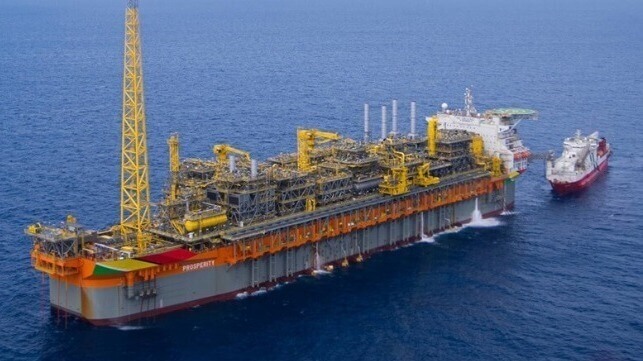
ExxonMobil's FPSO Prosperity on station in the Stabroek Block (ExxonMobil)

Published Mar 2, 2025 11:11 AM by The Maritime Executive


On Saturday, Guyana mobilized its military assets after Venezuelan navy reportedly entered its territorial waters. In a live address, Guyanese President Irfaan Ali said that a Venezuelan Coast Guard patrol ship was positioned within Exxon's Stabroek Block lease area, off the Atlantic coast of Guyana. The patrol ship is said to have approached oil production facilities, including ExxonMobil’s FPSO Prosperity.

The Venezuelan government has denied any wrongdoing, claiming that its patrol ship was operating in what it described as “disputed international waters”. In response to the incident, Guyana has summoned the Venezuelan ambassador to register a formal protest. In addition, Guyana has deployed air patrol and coast guard assets to boost surveillance of territorial waters.

“Guyana’s maritime boundaries are recognized under international law, and this incursion is a matter of grave concern. We will remain in close contact with our partners in protecting Guyana’s interests,” said President Ali.

US State Department’s Bureau of Western Hemisphere Affairs was among foreign partners to stand in solidarity with Guyana. “Venezuelan naval vessels threatening ExxonMobil’s FPSO unit is unacceptable and a clear violation of Guyana’s maritime territory. Further provocation will result in consequences for the Maduro regime,” commented the Bureau.

Guyana and Venezuela have a long-standing territorial dispute, with the matter currently before the International Court of Justice (ICJ). Guyana brought the case before the ICJ in 2018, seeking a final judgement on its internationally recognized boundary.

Venezuela claims the oil-rich Essequibo Region, which is under the control of Guyana. The area is located on the northwestern flank of Guyana, and constitutes nearly 70 percent of the country’s national territory. On several occasions, Venezuela has issued decrees to annex the region. In January, President Maduro went further to announce that Venezuela will conduct gubernatorial elections in Essequibo. This goes against an ICJ order issued back in December 2023. The order restricts Venezuela from interfering with the governance of Essequibo until the court renders a final judgment. The decision is expected by next year.

Venezuela intensified its ownership claims of Essequibo in 2015 after ExxonMobil revealed commercially viable oil reservoirs located offshore from the region. 

Exxon is an American company, and tensions between the regime of Venezuelan President Nicolas Maduro and the White House are elevated at present. The Trump administration announced last week that it would be ending a partial license for Venezuelan oil exports to the U.S. Gulf Coast, cutting off one of the regime's few remaining sources of foreign currency. 


Meta's Waterworth Subsea Cable is About Geopolitics and Geoeconomics

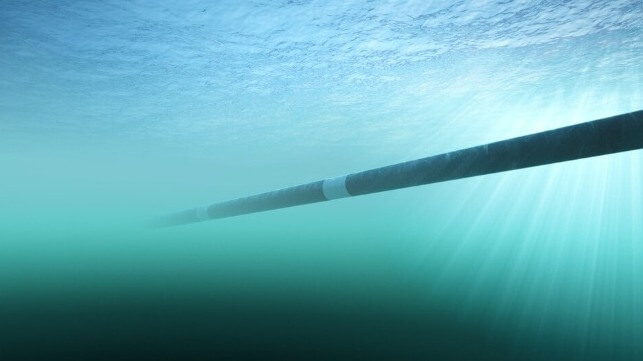
Subsea cable
iStock

Published Mar 2, 2025 2:03 PM by The Strategist


[By Ravi Nayyar]

Announced on 14 February, Meta’s Project Waterworth is not just proposed to be the world’s longest submarine cable but reflects ever-shifting geopolitical and geoeconomic landscapes. It presents a great opportunity for Australia to collaborate more with its regional partners, especially India and the Pacific countries, on technologies keeping us online.

For Meta, this addition to subsea infrastructure is slated to open a chance to monetize accelerating international data flows. In developing and running this cable, Meta also seeks to prioritise its own traffic and minimise latency for its and its partners’ infrastructure and services. No surprises there.

But what is different this time is the clear recognition of intense geostrategic competition featuring both state and non-state actors. Connecting five continents, the proposed route, longer than the circumference of the planet, avoids areas subject to malign influence or control, such as the Baltic, Red and South China seas. Meta plans to lay as much of the cable as possible in deep water, making it harder for malicious actors to spy on or sabotage it.

Perhaps an even bigger takeaway is Meta’s choice of locations for cable landing points: the coastlines of three BRICS countries (India, South Africa and Brazil) and three Quad countries (India, Australia and the United States). With India being in both groupings, the route particularly reflects India’s rise as a digital, geopolitical and economic power. Meta has specifically said the cable will support India’s continued rise in the digital realm. With the world’s largest population, India is both a massive source of data to train Meta’s AI products and an emerging hub for data centres.

More broadly, Meta is seeking to be a bigger player in the submarine cable industry, and thus in geopolitics, competing with fellow US hyperscalers Google, Microsoft and Amazon. Indeed, those three companies and Meta represent about three quarters of active submarine cable capacity worldwide. Meta seeks to go one better by, as it said, ‘opening three new oceanic corridors’ with Project Waterworth.

Meta knows how the geostrategic significance of submarine cables is causing the technology’s politicisation, reflecting an ongoing split between the anti-China and pro-China camps in telecommunications amid the larger Sino-US technological rivalry.

As a US technology company, Meta arguably seeks to reinforce its value as a member of the anti-China camp, alongside Google, Microsoft and Amazon. It would see Project Waterworth as a downpayment on support from Western and partner governments (such as finance, easier regulatory approvals and oversight, and more robust diplomatic and operational support) to help counter Chinese influence in digital infrastructure, especially in the Global South.

In this context, Meta must beware cyber supply-chain risks that can arise from its and its operating partners using: Chinese equipment at any point in the technology stack; and unvetted remote access applications, managed security service providers and managed network service providers.

Rising cyber threats around telecommunications infrastructure underline the importance of such cyber supply chain risk management. In 2022, cybercriminals attacked the servers of the operator of a submarine cable that connected Hawaii with the Pacific. Chinese state-sponsored hackers have compromised US terrestrial telecommunications infrastructure for espionage and pre-positioning malicious capabilities to be deployed during a major security crisis (such as a Taiwan contingency).

Indeed, such are the risks to submarine cables that the US  Federal Communications Commission has proposed reforms to its regulatory regime. These changes relate to: cyber risk management by operators; banning certain hardware or software from regulated cables and their infrastructure; risks from remote access solutions; and cable operators reporting their use of managed network service providers.

While Project Waterworth may seem like just another planned cable by another Big Tech company, Australia should be paying attention because a cable landing point in northern Australia has been proposed. Meta’s plan reinforces the extraordinary significance of the maritime domain for Australia, with more than a dozen submarine cables already connecting us with the world via the Indian and Pacific Oceans. India’s role as a landing site is also important as Australia seeks to continue boosting economic and technology ties with New Delhi.

Project Waterworth also allows for further cyber diplomacy with Pacific partners. The project could bolster Pacific connectivity and cyber resilience through branches to Pacific countries, complementing Google’s efforts through the Pacific Connect Initiative.

The project further offers Australia the opportunity to work with regional partners to tackle regulatory fragmentation and boost operational collaboration on submarine cables. For example, the Australian Communications and Media Authority should engage regional counterparts to identify opportunities to harmonise and expand regulatory regimes, such as for cable repair and by mandating transparency from operators around cable damage (as ASPI’s Jocelinn Kang and Jessie Jacob have recommended). Canberra should work with regional partners to also increase information-sharing on risks around cables traversing exclusive economic zones. The Cable Connectivity and Resilience Centre of the Department of Foreign Affairs and Trade could help mediate such engagement, while the Australian Cyber Security Centre and Cyber and Infrastructure Security Centre could provide expert advice to inform policy on the operational resilience of submarine cable infrastructure

Project Waterworth reflects our brave new world, especially its contested digital and maritime domains, and the opportunity for Australia to collaborate further with regional partners to keep us all online.

Ravi Nayyar is a fellow and research contributor at ASPI, associate fellow at the Social Cyber Institute, and a PhD Scholar at the University of Sydney. This article appears courtesy of The Strategist and may be found in its original form here

The opinions expressed herein are the author's and not necessarily those of The Maritime Executive.
"Detained, Tortured & Starved”: Report Details Abuse of Gaza Doctors & Staff in Israeli Detention
March 1, 2025


We continue to look at Israeli torture of Palestinian detainees with Naji Abbas from Physicians for Human Rights-Israel, which has just released a new report detailing the mistreatment of medical workers from Gaza. Hundreds of doctors, nurses, paramedics and other essential medical staff were arrested by Israeli forces in Gaza since October 2023 and held under brutal conditions, with many describing physical, psychological and sexual abuse, starvation, medical neglect and more. “It’s a whole journey of torture and abuse,” says Abbas, director of PHRI’s Prisoners and Detainees Department.


Transcript

This is a rush transcript. Copy may not be in its final form.

AMY GOODMAN: This is Democracy Now!, democracynow.org. I’m Amy Goodman, as we go now from Gaza to the occupied West Bank, to Ramallah, where we’re joined by Naji Abbas, director of the Prisoners Department at Physicians for Human Rights-Israel, the group’s new report headlined “Unlawfully Detained, Tortured, and Starved: The Plight of Gaza’s Medical Workers in Israeli Custody.”

If you can talk about the scope of your report, Naji Abbas, what you found? And then I want to ask you about Dr. Abu Safiya, as well.

NAJI ABBAS: Good afternoon, Amy, and for Dr. Khaled.

Actually, the address of our report can give you a direct picture to our findings. When we call it “Unlawfully Detained,” we are based on testimonies. And actually, we have testimonies more than we published, that show the same pattern and the same story that Dr. Khaled described just now. All the doctors, and also including Dr. Abu Safiya, are facing the same situation: being brutally arrested, without any cause, from their workplaces because they are doctors, interrogating through torture, beating, violence, sexual abuse, being held without any charges, without any proper legal procedure, in horrific conditions, including torture. We know torture before to get information, but here torture are being used in every day of the detention journey. It’s a whole journey of torture and abuse, using the starvation policies, denial of medical care. So, we tried in the address to give a direct picture to our all findings from all of the testimonies that we got.

AMY GOODMAN: Naji, you assert that the medical workers have been targeted for the very fact of their profession. Explain.

NAJI ABBAS: First of all, there’s the numbers of the healthcare workers who were arrested. We are speaking about hundreds. From the first invasion to Al-Shifa Hospital, and after that, Nasser Hospital, Al-Mamdani Hospital and Kamal Adwan, lately, we saw a pattern of attacking the health system in Gaza. And in every invasion, we heard about dozens of healthcare workers, staff of these hospitals, in these facilities, being taken away by the Israeli soldiers. And we didn’t know — we tried to find out what they are looking for, beside destroying the buildings of the hospitals, why they are taking the whole staff, the medical staff.

And through the testimonies, through our visits, we started to understood that the doctors were arrested mainly for collecting information. When you hear a doctor saying that he was forced to draw a map of the hospital, when he was asked about his colleagues, when he was asked if — you can understand that there’s a pattern of questioning looking, fishing — fishing for information. And they weren’t accused or charged with anything. All of the doctors, more than 100 medical staff who’s still, ’til now, in detention, have the same story of Dr. Khaled. They weren’t charged or accused as individuals with any offense. But all the interrogation were collecting information about their workplace, about their colleagues, about the health system in Gaza. And beside the doctors who were arrested inside the hospitals, we met doctors who were arrested through checkpoints of Israel’s army inside Gaza when they were trying to move with their families. So, if a soldier heard that he’s a doctor, he was arrested. So you can understand that they were targeted directly because of their profession.

AMY GOODMAN: Your report also details incidents of sexual assault, including the insertion of batons into and electric rods into the buttocks, leaving signs of burns or injuries. In fact, Dr. Khaled has talked about treating at least three prisoners when he was in prison with such injuries while they were detained.

NAJI ABBAS: That’s right. That’s right. All the testimonies described, as I said, the horrific conditions, horrific daily beating, the daily beating without any cause, without anything happening before. When you hear more than one doctor, like in Sde Teiman, they all started to know — the detainees, the doctors, started to know the unit names that storm to the section they are being held at — or, it’s not a section. When they call Sde Teiman — through the testimonies, you can see that the doctors are calling it bareksat. Bareksat is something like a stable. It’s not a section. It’s not a prison. It’s a military camp, and there are stables, actually, that people are being held at, including the doctors. So, you hear about the brutal violence of this unit called Unit 100. And actually, some of these units are accused, after that was revealed, that they raped, actually, some of the detainees in the last summer. That was revealed in the media. And this same unit entered every week, every two days, with dogs, beating, making — letting the dogs attack the doctors and the other detainees, without any cause, without any cause, without any logic reason to try to understand what they are looking for through these policies. But you can understand, it’s just a way of torturing people.

AMY GOODMAN: Thirty seconds on Dr. Abu Safiya. We’ve recently seen video of him since — the first time since we did not know where he was. He’s been detained, head of Kamal Adwan. Naji, what do you know?

NAJI ABBAS: We don’t know a lot. We know that Dr. Abu Safiya — Dr. Abu Safiya, in the first month, disappeared, as all the doctors. Dr. Khaled Alser disappeared, actually, for four months. And Dr. Abu Safiya, the same. He disappeared for one month. We didn’t know anything — where he was, in what conditions, why he are being detained. We didn’t know anything.

We know now that he’s in Ofer prison. Just one lawyer managed to visit him. PHR lawyers are not allowed yet to visit him. We know that he was held in isolation, in solitary confinement, for 25 days, with a cell alone, disconnected to the outside world.

And Dr. Abu Safiya, as all the doctors, all of the healthcare workers, nurses and doctors and paramedics, are not accused with anything. But you can see that the Israeli media is, like, interrogating Dr. Abu Safiya on media reports and accusing him with things that, in reality — and in the Israeli media — he wasn’t accused at. He wasn’t accused with an offense that he did. But the Israeli media — this propaganda of the Israeli media and the Israeli authorities is part of the targeting of the medical staff, trying to accuse the whole Gaza healthcare system and take its protections, the protection that the healthcare system and these medical personnels have by the international law, taking this away through media reports.

AMY GOODMAN: Naji Abbas, I want to thank you for being with us. Yes, you see him with helmeted guards through a prison in shackles, appearing exhausted. His family condemned the video broadcast, saying, “We reject any media outlet publishing the video without addressing the psychological terrorism involved and exposing the manipulation of his statements.” Naji Abbas, director of the Prisoners Department at Physicians for Human Rights-Israel. We’ll link to your new report, “Unlawfully Detained, Tortured, and Starved: The Plight of Gaza’s Medical Workers in Israeli Custody.”
The West has Long Demanded of Palestinians what Trump Demanded of Ukraine — and More

March 1, 2025
Source: Informed Comment


David Smith of The Guardian reminds us that Trump is a fan of World Wrestling Federation matches, in attempting to explain the sad spectacle at the White House on Friday.

Trump is demanding that Volodymyr Zelenskiyy, the president of Ukraine, “make peace” with Russia, accusing him of risking plunging the planet into WW III with his stand against the Russian invasion. Trump told Zelenskiyy, “you’re either going to make a deal or we’re out.” He meant by “deal” acquiescing in the Russian annexation of the Donbass and neighboring regions of Ukraine.

Democrats denounced Trump and JD Vance for the clearly rehearsed ambush. Léonie Chao-Fong at The Guardian quoted Senator Amy Klobuchar (D-MN) as saying of Zelenskiyy, “Our country thanks HIM and the Ukrainian patriots who have stood up to a dictator, buried their own & stopped Putin from marching right into the rest of Europe.”

I don’t bring all this up to talk about the rights and wrongs of the Ukraine War. There are military analysts and political scientists who have argued for some time that given Russia’s advantages in size and manpower, an outright Ukrainian victory is unlikely. That said, emboldening Putin in this way is unwise, sort of like letting your rival at the poker table know you don’t have any face cards.

I would like to take the moment to point out that Trump’s demands of Ukraine are no different than the US and Western Europe’s demands of the Palestinians back in the 1990s, and that nowadays the West appears to expect the Palestinians simply to commit mass suicide.

Like Ukraine, Palestine was also invaded — in the latter case by the Zionist settler colonialists, who took possession of it and chased Palestinians out of their homeland. The newly dubbed Israelis expelled 57% of the Palestinian population from what became Israel, stealing their homes and farms and taking them for themselves. They even finished bringing in the crops the Palestinians had planted. Those Palestinian refugees were crowded into Gaza, the West Bank, Jordan and Lebanon in the main. Now the Israelis are coming after these refugees, expelling them once again.

Russia’s invasion of Ukraine has displaced 10.2 million Ukrainians, about 23% of the Ukrainian population as it stood before the war. So Ukrainians have suffered much less displacement than the Palestinians.

Moreover, in 1967 Israel invaded and seized the Gaza Strip and the West Bank, occupying the Palestinians all over again, both the refugees settled there and the Palestinians who had lived in those territories before 1948. There were over 300,000 Palestinians from the West Bank working abroad when the Israeli troops marched in, and Israeli authorities locked them out of their country forever.

Since 2014, Russia has invaded and occupied 19% of Ukraine.

Israel took 78% of Palestine in 1948 by military conquest and through deliberate ethnic cleansing campaigns that included premeditated massacres of Palestinian villagers to spread panic.

So in 1993, the Palestine Liberation Organization did exactly what Trump is demanding Zelenskiyy do. They relinquished any claim on the part of Palestine the immigrant European Jews had grabbed and turned into Israel, accepting 22% of the old colonial British Mandate of Palestine on which to establish a Palestinian state. Israel pledged to withdraw from the territories occupied in 1967, with a deadline of 1997. Benjamin Netanyahu derailed that plan completely, and the Palestinians received less than nothing for having given up so much.

Trump is demanding that Zelenskiyy accept the equivalent of the 1993 Oslo Accords that were acquiesced in by the Palestinians. Zelinskiyy pointed out that Putin might do the deal but then renege, and Trump and Vance shouted him down. But that is exactly what the Israelis did.

Americans who feel that what Trump is asking Ukraine to do is unfair are suffering from a blind spot when it comes to the Palestinians. I don’t know if it is racism — that many Americans code Ukrainians as “White” and Palestinians as “Brown.” But many Americans cannot see the Palestinians, cannot empathize with them, cannot understand them as fellow human beings.

Now Trump is asking Palestinians to leave Gaza, one of the few bits of Palestine on which they still can live. It would be like asking 17 million Ukrainians permanently to pick up and go to Poland and other countries, giving up on Ukraine forever, and allowing Russian colonists to replace them. Even Trump isn’t asking that of the Ukrainians. Yet.


Juan Cole
Juan R. I. Cole is Richard P. Mitchell Collegiate Professor of History at the University of Michigan. For three and a half decades, he has sought to put the relationship of the West and the Muslim world in historical context, and he has written widely about Egypt, Iran, Iraq, and South Asia. His books include Muhammad: Prophet of Peace Amid the Clash of Empires; The New Arabs: How the Millennial Generation is Changing the Middle East; Engaging the Muslim World; and Napoleon’s Egypt: Invading the Middle East.


The Plunder of Ukraine: A Story of Debt, Greed, and Betrayal

As war rages, Ukraine faces a second invasion—one of debt, privatization, and resource plunder. Under the guise of aid, global powers are seizing its land and wealth, threatening its future.
March 1, 2025
Source: The Kucinich Report


The systematic plundering of Ukraine by international financial institutions and governments is underway. As history has shown in countless other countries, predatory terms will cripple Ukraine’s future, a continuation of war, by other means. This is colonization in action—not through military conquest, but through economic enslavement, that will bind Ukraine in perpetual debt and subjugation.

Ukraine is home to some of the world’s richest agricultural land and vast mineral deposits, including critical rare earth elements. Today, it is being sacrificed to the international community, its natural wealth placed on the altar of global capital. Her fertile land, water, and fragile ecosystems stand on the brink of exploitation—viewed not as living, sustaining forces, but as mere “natural resources” for extraction, debt collateral for creditors, and fuel for industrial appetites.

We will hear the familiar rhetoric of “green energy,” “sustainability,” and “digital transformation,” but behind these words lies a brutal reality: a feeding frenzy cloaked in the language of progress. The word we should be screaming is STOP!

Ukraine is at a crossroads, trapped between war, crushing debt, and mounting pressure to privatize its land and resources. Its agricultural wealth and critical minerals make it a prime target for financial and corporate extraction. International predators are circling.

At the center of this crisis is a proposed U.S.-Ukraine rare earth minerals deal worth, we are told, up to $500 billion—a deal that would place a significant share of Ukraine’s resources under U.S. control, under the guise of post-war reconstruction and repaying Ukraine for America’s war-time assistance.

The battle for Ukraine’s sovereignty is not only being fought on the battlefield—it is being waged in boardrooms, debt agreements, and privatization schemes. If this course is not challenged, the lasting economic servitude will compound the war’s physical destruction.

My Personal Connection to Ukraine

Ukraine holds a deep and inexplicable place in my heart, shaped in part by the hauntingly beautiful documentary The Babushkas of Chernobyl. This film tells the story of courageous women who, despite health warnings, returned to their homes inside the Exclusion Zone after the Chernobyl disaster. Their love for the land, their resilience, and their unwavering commitment to life left an indelible mark on me. These women embodied the land itself—bound to it as inextricably as the mycelial networks running through the soil, the women were the very nervous system of the country.

Shortly after the Russian invasion of Ukraine began, one of my closest friends—a highly trained, battle-tested Marine corpsman with multiple tours in the Middle East—felt an unshakable responsibility to protect. Without hesitation, he flew directly to Ukraine to serve and defend.

While we may have differed in our approaches to the war, we each sought to contribute in the ways we knew best to protect and alleviate unnecessary suffering. He, through his actions on the front lines; me, alongside Dennis Kucinich, working to promote diplomatic solutions and prevent further escalation of the conflict. Dennis has been a vocal advocate for peace, urging negotiations to end the war and warning against the dangers of prolonged military engagement.

And yet today, the U.S. is poised to seize control of Ukraine’s vast mineral wealth. It is called a partnership.

The $500 Billion Question

During President Zelenskyy’s scheduled visit to Washington, a deal is set to be signed granting the U.S. access to Ukraine’s critical minerals—titanium, lithium, uranium and graphite —resources essential to aerospace, defense, and renewable energy industries. Framed by President Trump as a form of repayment for U.S. military aid, this agreement raises profound concerns about Ukraine’s economic and ecological future.

Critics warn that the unchecked extraction of these resources by foreign interests could leave Ukraine stripped of its natural wealth while bearing the environmental consequences. With no long-term security guarantees from the U.S. and increasing pressure for Europe to take on Ukraine’s defense, this deal, as presently defined, exposes a deeper, more insidious reality:

Ukraine—arguably Europe’s most resource-rich nation—has been driven into debt and is now being systematically carved up by the international community. War or no war, Ukraine loses.

Geopolitical Chess – Color Revolutions and Western Control

The 2004 Orange Revolution marked a significant shift in Ukraine’s political landscape. Officially framed as a democratic movement, the U.S. provided approximately $65 million in the years leading up to the election to fund opposition groups and civil society initiatives. Though presented as support for free elections, this assistance was designed to move Ukraine away from adjacent Russia and closer to Western institutions like NATO and the European Union.

A decade later, the 2014 Maidan coup, supported by U.S. and European interests, removed a democratically elected president who was pursuing a balanced approach between Russia and the EU.

Since then, Ukraine has been subject to IMF-imposed austerity, agricultural land reform, and energy deregulation—all designed to open national assets to foreign ownership. Ukraine’s vast and fertile land is now in the crosshairs of multinational agribusinesses, financial institutions, and political powers eager to exploit its economic, social and political vulnerability.

The Push for Privatization: A Trojan Horse

Ukraine’s agricultural sector has long been recognized for its fertile black soil (chernozem), which has supported both large-scale grain exports and smallholder farming. In recent years, Ukraine developed a growing organic agriculture sector, exporting high-quality grains and oilseeds, particularly to European markets. However, the push for land privatization threatens to upend this progress, shifting agriculture toward the high-input, industrialized farming which characterizes Western agriculture.

For decades, Ukraine maintained a moratorium on selling agricultural land, protecting small farmers from corporate land grabs. That changed in 2021 when, under pressure from the IMF and World Bank, Ukraine lifted the ban, allowing farmland to be sold to private investors. Framed as modernization, this move has paved the way for land consolidation by foreign agribusinesses and oligarchs, endangering Ukraine’s food sovereignty and ecological balance.

The Debt Trap: A Future of Financial Dependence

The word “mortgage” comes from Old French, literally meaning “death pledge”—a trap that binds borrowers in a cycle of repayment that can last a lifetime. Ukraine’s debt burden has skyrocketed, with billions in loans from the IMF, World Bank, and Western governments.

The BlackRock-led Ukraine Development Fund alone is expected to raise at least $15 billion, adding to an already unsustainable financial load. Reconstruction costs are estimated at over $400 billion—an amount far beyond Ukraine’s revenue capacity. The result? A cycle of perpetual debt, ensuring that Ukraine remains a vassal state to Western financial interests.

The Mortgage Theory of Money Creation and Ukraine’s Financial Crisis

Ukraine operates under a debt-based monetary system where money is created primarily through loans issued by private banks. This is not a new phenomenon; the entire world has been mortgaged in this way. The African continent has been particularly prone to this model, where vast tracts of land have been leveraged as collateral for debt and financial speculation, often under the guise of development and investment.

Similarly, the process of land enclosures in Europe centuries ago set the stage for this system, as land was privatized and used to back the creation of money, disenfranchising local populations and concentrating wealth in the hands of financial elites.

The result is a cycle in which nations must continually borrow to sustain their economies, often at the cost of their sovereignty. Ukraine’s current financial crisis is a direct product of this system.

Rather than addressing the structural flaws of debt-driven money creation, Western financial institutions are using Ukraine’s economic vulnerability as leverage to push for land privatization and resource selloffs. This ensures that wealth continues to flow upward to multinational corporations and financial elites while the Ukrainian people bear the costs.

The Illusion of Aid and the Reality of Exploitation

Despite promises of aid and investment, financial subjugating is being imposed on Ukraine, through privatization of land and resources, increased foreign debt, and forced economic restructuring. None is this is designed to help Ukraine recover. It is designed to extract its wealth and ensure dependence on Western institutions for generations to come.

Countries subjected to IMF-led restructuring programs rarely recover to become independent, self-sustaining economies. Instead, they become locked into cycles of debt repayment, resource extraction, and foreign exploitation.

A Sovereign Path Forward: The NEED Act and Financial Independence

Is it conceivable that Ukraine has a path forward without being subjected to further exploitation tantamount to economic slavery? Yes. A monetary reform bill, presented to Congress more than a decade ago, could hold a key to Ukraine’s economic freedom.

The National Emergency Employment Defense (NEED) Act, originally introduced in the U.S. Congress, presents a compelling alternative to Ukraine’s current financial trajectory. Rooted in sovereign monetary reform, it advocates for a debt-free, publicly controlled money system that eliminates reliance on private banks for money creation.

Applying these principles to Ukraine could allow the country to achieve economic stability without resorting to land privatization or exploitative foreign investment deals. Sovereign money creation would enable Ukraine to fund its own recovery, protect its national assets, and break free from the predatory lending practices of Western financial institutions.

Ukraine’s True Battle: Sovereignty vs. Subjugation

What we are witnessing is colonization. Ukraine is being absorbed into the Western financial empire—not as an equal partner, but as a debt-ridden state forced to surrender its sovereignty in return for economic survival.

If Ukraine, or any nation, is to escape this fate, it must resist external pressures and embrace financial models that prioritize self-reliance and long-term stability. A genuine path to independence lies in rejecting the financial coercion of the West and implementing sovereign economic systems that put national well-being ahead of foreign interests.

At the heart of this plunder is the long-standing system of debt-based monetary reforms, pushed by Western creditors and financial institutions. These so-called “reforms” demand deep austerity, the privatization of essential assets, and, in this case, the opening of Ukraine’s economy to unrestricted foreign control by Ukraine’s “friends.”

History has shown this playbook before, and the results are always the same. From Latin America to Africa to post-Soviet Eastern Europe, nations subjected to these policies have not found prosperity but have instead been trapped in cycles of debt, poverty, and economic dependence. Such policies do not rebuild nations—they strip them bare, reducing them to debt slaves while their natural wealth is siphoned away by foreign interests.

The international community failed to stand for peace when it mattered most, allowing Ukraine to be drawn into war and driven into an ever-deepening financial hole. Now, they must redeem themselves—not by offering more predatory loans, not by coveting and extracting Ukraine’s resources, but by enabling true economic sovereignty for Ukraine. That means canceling odious debts, rejecting privatization schemes that benefit only foreign corporations, and ensuring Ukraine’s vast natural wealth remains in the hands of its own people. Anything less continues the war against Ukraine by other means.
Fascism

Trump, Putin and the war in Ukraine: Europe’s painful awakening to the rise of global Fascism

Thursday 27 February 2025, by Hanna Perekhoda


For the past few weeks, and even more so in recent days, a state of paralysis seems to have gripped the European political landscape. Yet, Trump, Putin, and other far-right leaders have never hidden their ambitions. They have openly stated them for years, without pretense. It must be said plainly: their project is a fascist one.


A fascist regime is taking hold in the United States. In Russia, it has already been in place for three years – a reality that many preferred to deny, clinging to the illusion of a smooth return to normalcy, to a status quo that was seen as only temporarily disrupted by Russia’s war against Ukraine.

The same status quo that allowed the European Union – Germany above all – to continue importing cheap Russian hydrocarbons while exporting high-end products to China and the United States. A world so comfortable that the Ukrainians, in their stubborn resistance, became nothing more than a nuisance. If only they had accepted to live under the occupation of a regime that rapes, kills, and tortures on a massive scale, perhaps we could have continued to prosper indefinitely... An illusion as naïve as it was cynical.

While Western Europe set aside its investments in defense, Russia, on the other hand, used its energy revenues to modernise its military apparatus. The annexation of Crimea in 2014 and its numerous influence operations across Europe – including crimes and assassinations – have gone virtually unpunished. In 2022, when Russia invaded Ukraine, the European system of prosperity and stability, built on moral corruption, collapsed.

Yet, European leaders clung to this illusion, limiting their ability to impose swift and effective sanctions against Russia and delaying aid to Ukraine at a critical moment – when it had the best chance to shift the balance of power on the battlefield. This hesitation allowed Russia to seize territory and strengthen its positions, making Ukraine’s counter offensives significantly more costly.

Having focused all our efforts on shutting our eyes to reality, we now find ourselves stunned by a situation where all our reference points have collapsed within a matter of weeks. J.D. Vance’s speech in Munich is a striking example of this.

J.D. Vance made it abundantly clear: his enemy is not Vladimir Putin, with whom the incoming U.S. administration shares many ideological affinities. His real enemy is in Europe – it is all those who resist the order he seeks to impose. The same man who advocates building walls to keep out migrants also wants to ban "barriers" against the far-right in Europe. As The Guardian aptly described, it was a call to arms for populist right-wing forces to seize power across Europe, with the promise that the "new sheriff in town" would help them do so. Nothing must stand in their triumphant march.

The statements emphasising the urgent need for European countries to radically and rapidly increase their military spending are, unfortunately, correct

Yet, barriers against this assault on Europe do exist. The first line of defense is European civil society, its democratic institutions. But there is another bulwark: the effort of millions of Ukrainians who, for the past three years, have been fighting to halt the rise of Russian fascism.

This barrier could collapse at any moment, while Europe continues to watch, nodding in passive acknowledgment, failing to see that the same murky waters are already seeping in from within.

The crackdown on migrants, the institutionalisation of misogyny and homophobia, the denial of climate change, the ruthless exploitation of both people and nature, the liquidation of Ukraine, the deportation of Palestinians – these are the pillars of the emerging new order, already taking shape. By now, this should be as clear as day: abandoning the victims of military aggression – just as we have done with the Palestinians and are now preparing to do with the Ukrainians – amounts to giving autocrats free rein to impose their rule through brute force.

This is a simple equation that any rational person should be able to grasp. It is all the more perplexing, then, that Donald Trump’s actions and those of his administration have apparently shocked Europeans. After all, he has repeatedly made it clear that this is exactly how he intends to act. What is truly surprising is not Trump himself, but rather the Europeans’ lack of preparation and strategic foresight.

The statements emphasizing the urgent need for European countries to radically and rapidly increase their military spending are, unfortunately, correct. According to The Financial Times, Russia’s military spending has now surpassed the combined defense budgets of all European countries. By 2025, Moscow will allocate even more funds to the war – 7.5% of its GDP, amounting to nearly 40% of the national budget.

This is one of the advantages authoritarian regimes hold over democracies: they can rapidly mobilise human and economic resources for war, imposing coercive measures without fear of mass opposition. An authoritarian state, whose population has been steeped in a late-capitalist ideology of cynicism and individualism – as is the case in Russia – can take this logic even further. Yet Europe seems blind to another fundamental reality of authoritarian regimes: once an autocrat embarks on a war of expansion, he cannot simply stop. The survival of his regime becomes inseparably tied to the war, which eventually consumes the entire structure of power.

European leaders, exemplified by Emmanuel Macron and Olaf Scholz, who now speak of the very real need to strengthen Europe’s defense, are the same ones who paved the way for this crisis. They condemn abuses of power on the international stage while tolerating Darwinian logic within their own societies – sustaining a system where the most powerful continue to dominate the most vulnerable. This contradiction weakens their credibility and fuels growing distrust toward democratic institutions. Such inconsistency creates fertile ground for the rise of fascist movements, which capitalize on these fractures to mobilize a disillusioned electorate.

Widening inequalities, a growing sense of injustice, and the perception of a political elite disconnected from reality weaken their legitimacy. A society that feels abandoned or ignored will struggle to support international commitments, even when they uphold fundamental principles such as the defense of rights and sovereignty.

The crackdown on migrants, the institutionalisation of misogyny and homophobia, the denial of climate change, the ruthless exploitation of both people and nature, the liquidation of Ukraine, the deportation of Palestinians – these are the pillars of the emerging new order, already taking shape

Populists exploit this discontent by fueling the notion that governments are sacrificing national interests in favor of supposedly distant causes, such as supporting Ukraine. Political figures like Jean-Luc Mélenchon in France and Sahra Wagenknecht in Germany denounce social injustice while embracing the law of the strongest on the international stage, justifying the violations committed by authoritarian regimes such as Russia. Their opportunistic positioning, driven by electoral calculations, strips their rhetoric of any credibility. Yet, it is impossible to separate domestic social justice from a country’s international policies. A society that tolerates or even encourages cynicism and domination on the global stage will inevitably normalize these same dynamics in its internal social relations – and vice versa.

A more just and cohesive society is better equipped to support international commitments and defense budgets – whose necessity is now undeniable. Effective and urgent redistribution policies are essential to restoring citizens’ trust. Thus, the assistance that European countries can provide to Ukraine is not limited to military or economic aid; it also hinges on resolving their own internal crisis of legitimacy. However, it must be repeated again and again: the aid that truly matters for every Ukrainian is military aid. It is the single most crucial condition for Ukraine’s survival as a society, as well as for each of its people.

Many, particularly in Germany, express concerns about the influence of the far-right in Ukraine. Yet, nothing fuels extremism more than an unjust "peace agreement" imposed on a victim of aggression against its will. No situation is more radicalizing than military occupation paired with systematic and brutal oppression. If Ukraine is forced to accept a peace dictated by Russia, the accumulated frustration and injustice will serve as fuel for radical movements, which will thrive at the expense of moderate and progressive forces. History is filled with examples of imposed peace agreements that have given rise to monsters – terrorist organisations born from despair and resentment.

Trump openly declares his willingness to negotiate without regard for the Ukrainian government or its people. In doing so, he aligns himself entirely with the Kremlin’s agenda and retroactively legitimises Russian aggression. Worse still, by refusing to call this invasion what it truly is – an illegal war of aggression, accompanied by egregious violations of international law and documented war crimes – he sends a deeply dangerous message. He reinforces the idea that such expansionist policies can not only be tolerated but even rewarded. Taiwan, the Philippines, the Baltic states, Moldova, and Armenia must now prepare to be next on the list. In this context, it is imperative to take a firm and unequivocal stance: no negotiations can take place at the expense of the Ukrainian people, and even less so without their consent.

The time for lamentations is over. The moment to act is now. For one day, when the dust settles and the fog lifts, we will inevitably ask ourselves in horror: how could we have been so passive, so blind, so indifferent in the face of this impending disaster?

voxeurop 23 February 2025

Attached documentstrump-putin-and-the-war-in-ukraine-europe-s-painful_a8872-2.pdf (PDF - 921.3 KiB)
Extraction PDF [->article8872]


Hanna Perekhoda
Hanna Perekhoda, a native of Donetsk, is a student at the University of Lausanne


International Viewpoint is published under the responsibility of the Bureau of the Fourth International. Signed articles do not necessarily reflect editorial policy. Articles can be reprinted with acknowledgement, and a live link if possible.
Women

Betrayed by the System in Brazil

Friday 28 February 2025, by L.M. Bonato


While various human rights reports show that annually between one and four million Brazilian women have abortions, the right to women’s bodily autonomy remains a major battle. Currently the law allows abortion only in the case of rape or to save the woman’s life. This means millons of women are forced to seek underground abortions.


Given the rise of conservative parties following Jair Bolsonaro’s presidency, far-right politicians are seeking to roll back legal abortion even in the case of rape. Congressman Sóstenes Cavalcante has introduced Bill PL 190424, which would criminalize abortion under all circumstances after 22 weeks of pregnancy.

If passed, this legislation would subject rape survivors to unbearable psychological burdens, forcing them to carry pregnancies to term. Meanwhile their aggressors face much lighter penalties.

Impact on Survivors
Due to his role in spreading disinformation, Jair Bolsonaro is currently ineligible for public office. However his influence is felt with the introduction of Bill PL 190424. Largely supported by members of the Congressional evangelical caucus, the bill is an affront to the secular state established in Brazil’s constitution.

Brazil is a predominantly Christian country, a slight majority Catholic but with evangelical congregations growing rapidly. In the face of social inequality they project a deeply conservative “prosperty gospel.”

While many may support the bill from a deeply religious and moralistic viewpoint, it is criminalizing the victims of abuse, not their abusers. Moreover, religious beliefs have no place in public health and policy. Abortion is a human right, recognized by the UN and World Health Organization.

The bill was marked “urgent” through a symbolic vote lasting just 23 seconds. Although this designation has since been revoked due to significant public pressure, the bill remains under congressional review and could still be passed.

This congressional proposal starkly reflects a state that not only fails to protect its citizens but also exacerbates the trauma endured by victims, further penalizing them by forcing them to carry the physical embodiment of their trauma for the rest of their lives.

The bill’s proponents argue that adoption after birth is “an option.” Yet this completely disregards the will and psycological needs of the person, who may face gestational depression, the dangers of younger victims to safely give birth, as well as the bureaucratic inefficiencies of Brazil’s adoption system. Societal prejudices hinder adoption and as a result, post-adoption support is inadequate. Brazil’s adoption system is already overwhelmed.

Judicial delays can take up to 10 years, often leaving children eligible for adoption only in adolescence while most prospective parents, aiming for easier familial integration, prefer infants or toddlers under three.
The “Child Pregnancy Bill”

Those most affected by Bill PL 190424 would be underage girls, and it’s already being referred to as the “Child Pregnancy Bill.”

Children, especially those from marginalized communities, take longer to recognize abuse and seek legal support. The psychological toll of processing the trauma and overcoming the stigma, even from medical and legal professionals, further delays access to legal abortion, often pushing the pregnancy beyond the 22-week limit.

According to a 2022 study by the Brazilian Public Security Forum, the country recorded the highest number of rapes in its history, with 74,930 victims, 75.8% of whom were cases of statutory rape. This alarming figure highlights Brazil’s culture of rape and pedophilia, which the state fails to dismantle — instead, it institutionalizes the crimes through patriarchal structures.

Under this bill, women and girls who terminate pregnancies resulting from rape could face up to 20 years in prison. They would be convicted as murderers and detained in juvenile facilities until they coud be transferred to the adult prison system — punishment that is not only cruel but also disproportionate, as rapists themselves face sentences ranging from six to 12 years, almost half the penalty imposed on the victims. Indeed, how many abusers are ever held accountable?

This dangerous inversion of roles discourages abuse reports, as victims, understandably opting for illegal abortions, would avoid formal complaints to escape such harsh consequences. Considering that most child sexual abuse in Brazil is perpetrated by family members, this is even more concerning. Victims, often coerced by their families into silence, would be denied legal support.
Criminalization and Trauma

For those who experience sexual violence, the trauma does not end with the act itself. Forensic examinations are frequently insensitively handled, meaning that survivors can be exposed to immediate post-trauma humiliation. They not only face the possibility of an unwanted pregnancy, but the questioning of what they may have done to cause their own victimization.

Yet “pro-life” advocates argue that the “unborn child” should not be punished, claiming that one crime does not justify another.

This means they prioritize the “rights” potential life over the rights of the pregnant person. How can one justify coercing a person to risk their health and well-being in order to bring a fetus to term?

The dominant Christianized notion in Brazil posits that “life begins at conception,” as the soul supposedly enters the body, making it sacred before birth. Debates on the nature of life vary. But the right to abortion cannot be restricted to one’s religious belief. It is a public health issue.

Denying this right strips affected women of ownership over their own bodies. Undermining female autonomy insults human dignity, placing a wide range of reproductive rights under the control of the church and state.

Where abortion is a legal right, no person with a uterus should be forced to continue a pregnancy or to undergo an abortion. The far right maintains that abortion, a safe and legal procedure in many countries, is coercive. But that stands the reality on its head — without access to abortion one is condemned to continuing a pregnancy despite the dangers and problems that may entail. By forcing women to carry unwanted pregnancies, the state turns their bodies into sanctuaries for abuse, where trauma solidifies and renews daily.

Criminalizing abortion does not reduce abortion rates — it only makes the procedure less safe. An estimated 70% of abortions in Brazil are performed clandestinely.
The Fight Against Oppression

Women who choose to terminate pregnancies, even when it’s legally prohibited, have resorted to unsafe methods that can result in irreversible consequences. Annually around 200,000 hospitalizations are due to unsafe abortions, predominantly among young and impoverished women.

At the beginning of the 21st century, Brazil’s rate of maternal mortality stood at 45.8 per 100,000. with unsafe abortions the fourth leading cause of death.

Protestors across Brazil have taken to the streets in hundreds of peaceful demonstrations against Bill PL 190424 — the largist being 10,000 marching in São Paulo — and forcing national media coverage. Feminist organizations, social movements, and human rights collectives are mobilizing to resist this proposal and demanding that the government respect women’s rights. Thus the feminist movement is not just demonstrating against this reaction­ary bill, but confronting the entire dismal state of reproductive rights.

Only five years ago Brazil and Argentina had similar restrictive abortion laws, although Argentinian feminists were able to work more openly. At the end of 2020 Argentina’s congress passed a law that made abortion available upon request for the first 14 weeks of pregnancy and guarantees access to abortion services free of charge in both public and private health care facilities. This was the result of a sustained movement that involved massive demonstrations.

Clearly the fight for female freedom and autonomy must be a collective effort, extending to all women confronting patriarchal systems worldwide and opposing every form of gender oppression and restriction of women’s rights. International solidarity can play a crucial role in amplifying resistance beyond South America’s borders.

Against the Current 28 February 2025


Attached documentsbetrayed-by-the-system-in-brazil_a8874-2.pdf (PDF - 912.6 KiB)
Extraction PDF [->article8874]


L.M. Bonato

L.M. Bonato is a Brazilian writer featured in several literary anthologies, including New Beats, Microcontos, Chegámos (Ediotora Persona), Lua Gibosa do Bosque da Solidão (Triumpus), and the first edition of Esparama magazine. Her specialty is book reviews.


International Viewpoint is published under the responsibility of the Bureau of the Fourth International. Signed articles do not necessarily reflect editorial policy. Articles can be reprinted with acknowledgement, and a live link if possible.