Monday, March 03, 2025

Column: Critical minerals take centre stage in world politics

Reuters | February 28, 2025 | 


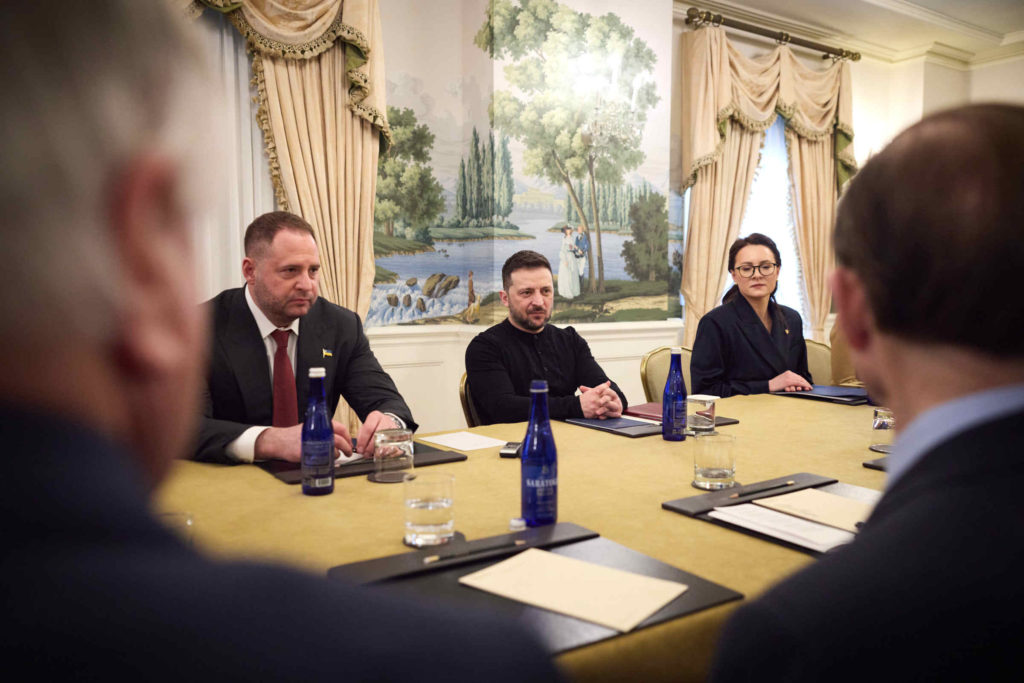
Ukrainian President Volodymyr Zelenskiy in meeting with delegation from the US Senate. Credit: Volodymyr Zelenskiy’s official X account


(The opinions expressed here are those of the author, Andy Home, a columnist for Reuters.)


Ukrainian President Volodymyr Zelenskiy is set to meet with US President Donald Trump today to sign a critical minerals deal as a way of securing continued US backing in the war against Russia.

It initially started as a rare earths deal before someone realized that Ukraine doesn’t actually have too much in the way of these 17 esoteric metals.

The draft text on the proposed Reconstruction Investment Fund therefore simply refers to “deposits of minerals, hydrocarbons, oil and gas”.

Mortgaging Ukrainian security against its mineral wealth comes with a long-dated pay-back.

The clue is in the word “deposits”. Finding mineral deposits is the easy part. Mining them is more difficult. Processing them is more difficult still.


But the deal is a sign that after a century of oil politics we’re now entering a new age of metal politics.
What lies beneath the surface?

If Ukraine has a lot of rare earths, it’s news to the US Geological Survey, which doesn’t include the country in its list of either top producers or largest reserves.

The handful of rare earth deposits that Ukraine hosts haven’t been surveyed since Soviet times.

In mining terms, we don’t even know the size or composition of the resource, let alone whether it could qualify as a reserve deemed economically viable for extraction.

Ukraine does have confirmed reserves of other critical metals such as titanium and lithium but getting them out of the ground is a whole bigger challenge.

Mining requires infrastructure and power, both in short supply in Ukraine after three years of war.

Even assuming any deposits can be mined profitably, there’s the not so little question of how to process raw material into metal.

China dominates so many critical mineral supply chains not because it has the largest ore reserves but because it has mastered the mid-stream part of the production cycle.

It’s also starting to leverage this technical know-how by restricting exports of critical metal processing technology, making it even harder for the West to catch up.

In short, it’s going to be a good while before Ukraine can deliver on its part of the minerals deal by monetizing what is still in the ground.
Metals revolution

China’s dominance is why the United States and Europe are so desperate to secure their own critical mineral supply chains.

But it’s a metallic revolution that is driving that hunger.

A 20th century landline telephone only needed a length of copper wire to work. An Apple iPhone still contains copper but it also needs aluminum, cobalt, gold, lithium, tin, tungsten and a sprinkling of rare earths for you to be able to make a call.

Now consider what goes into a more advanced bit of technology such as an F-35 stealth fighter jet.

Metals are no longer just bits of hard stuff to bang into shape but are used in increasingly complex combinations in what is more akin to inorganic chemistry than traditional metal-working.

The poster-child for modern metallurgy is the lithium-ion battery, which comes in multiple chemistries each using a slightly different combination of metal inputs.

The first commercial battery only appeared in 1991 but the technology has rapidly evolved to become the core driver of the transition to electric vehicles, which is why the West is racing to build out its own battery metals supply chain.

And while Trump may not think much of electric vehicles, he knows how important metals are to the US military. Indeed, it was Trump in his first term who declared critical minerals a national emergency.
Metallic poker

Critical metals have become the new bargaining chip on the geopolitical card table.

Trump has also set his sights on Greenland, which does have accredited reserves, including of rare earths, but which is behind even Ukraine in having the infrastructure to get them out of the ground.

Vladimir Putin has been quick to join the metallic poker game, pointing out that Russia boasts considerably more rare earths than Ukraine if the United States is interested.


He’ll even throw in two million tonnes of primary aluminum a year since he’s heard the United States might be a bit short of the stuff if it goes ahead and puts tariffs on imports from Canada, its largest supplier.

Which rather begs the question of whether Trump may not be better looking closer to home if he’s really that keen on getting rare earths and other critical metals.

Canada has lots of them, is a mining friendly jurisdiction and has extensive metals processing capacity.

But Trump seems to have thrown out the previous administration’s concept of “friend-shoring”. Or maybe it’s the list of friends that has changed.

Either way, the minerals deal with Ukraine is unlikely to be the last of its kind.

As metals become a geopolitical currency, Ukraine is not the only country looking to play the metals card.

The Democratic Republic of Congo is trying and failing to fight back the M23 rebel group, which has seized the two largest cities in the east of the country.

The country’s president Felix Tshisekedi touted a Ukraine-style deal in an interview with the New York Times, offering future supplies of the country’s critical minerals, particularly cobalt, for Western assistance.

Such is the new age of metals diplomacy.

You’re going to be hearing a lot more about a bunch of elements in the periodic table that you’ve never heard of, even though you’re using them every day.

(Editing by Christina Fincher)


As Trump and Zelenskiy clash, Ukraine minerals bonanza remains distant prospect


Reuters | February 28, 2025 |


On snow-covered fields in central Ukraine, where some of the country’s biggest proven lithium deposits are located, a small team of ecological consultants drop sensors into holes in the earth to measure water levels.


The environmental survey, contracted by the small Ukrainian mining company that holds the license, UkrLithiumMining, comes years ahead of any mining operations at the undeveloped site.

It underlines how much work is still to be done before a much-vaunted minerals deal between Ukraine and the United States generates significant revenue for either side.

President Donald Trump sees the minerals deal – which he is due to clinch on Friday with President Volodymyr Zelenskiy in Washington – as America’s way of earning back some of the money it has given to Ukraine in the form of financial aid and weaponry to help fight Russia, which invaded three years ago.


For Denys Alyoshin, chief strategy officer of UkrLithiumMining, the Washington agreement is a step in the right direction because US engagement makes Ukraine less vulnerable to Russian aggression in the longer term, he said.

But without some form of Western security guarantee developing the Polokhivske lithium deposit would be tough, he said. The deposit – one of the largest in Europe – is located just 240 km (149 miles) northwest of the frontline with Russia.

“Before the war broke out, I had a lot of commercial negotiations with … investors who were interested in the project,” Alyoshin told Reuters. “But when the war started … a rational CEO would not go to a country where there is a war, they would go to Zimbabwe, Canada or Africa. There are many places to go where there is no war.”

Despite repeated requests from Zelenskiy, the Trump administration has offered Kyiv no security guarantee. That has raised doubts over the commercial feasibility of developing deposits of rare mineral resources, used in high-tech devices and batteries, given the risks of a return to war even if a ceasefire is agreed with Russia this year.

A draft of the minerals deal, reviewed by Reuters, contained reassuring language but no guarantees of security. It focused instead on the creation of a joint US-Ukraine managed “Reconstruction Investment Fund” to which Kyiv will contribute 50% of revenues of future monetization of state-owned natural resources.

Furthermore, the terms of the deal are broad and further negotiations will be needed to pin down details, four experts told Reuters.

Even if a lasting peace returns to Ukraine, UkrLithiumMining needs to raise $350 million and requires at least 1.5 years to conduct a feasibility study before it can start building a mine and enrichment plant, Alyoshin said.

“It means we will be able to reach steady stage production … it can be 2029.”

The next US presidential elections are due to take place in 2028, and Trump, the champion of minerals cooperation as a means of securing peace, would be constitutionally barred from running again, having served one term already.

However, seven mining executives and industry analysts told Reuters that Alyoshin’s timeline is optimistic. Exploration periods are typically four years; a feasibility study would take another year before the construction of a processing plant can even begin.

“The reality is that most lithium deposits in Ukraine were identified in the Soviet era and we haven’t had any real updates or exploration for many years,” said Federico Gay, analyst at Benchmark Mineral Intelligence (BMI), a London-based specialist information provider for the supply chain of lithium-ion batteries used in electric vehicles.

“Even if everything stacks up, it would take a minimum of eight years for the Polokhivske deposit to be developed to the stage where it is producing usable lithium,” he said.

Moreover, the deposit is deep and may require up to $800 million just to construct the mine and concentrator, said Gay, who added that another $1 billion investment would likely be needed to produce the lithium compounds needed for batteries.

Despite the challenges, Alyoshin said his company eventually planned to produce about 1.5 million tonnes of raw ore a year and process that into 300,000 tonnes of petalite concentrate – a more lithium-rich substance.

With additional investment, Alyoshin added the concentrate could be further refined to produce 22,000 tonnes of battery-grade lithium carbonate.

The specifics of planned production and processing timelines at the Polokhivske deposit have not been reported previously.
Classified reserves

Demand for the minerals is high. Lithium is used in electric vehicle batteries, while rare earths are used in everything from auto motors to wind turbines to advanced military weapons systems.

But turning Ukraine’s reserves of lithium and rare earths into operating mines and constructing processing facilities is a mammoth undertaking, according to more than 10 analysts and mining industry experts.

Ukraine’s economy ministry and the prime minister’s office did not immediately respond to requests for comment for this article.

Ukraine does not produce any rare earths but, according to Ukraine’s Institute of Geology, possesses large deposits of such minerals, including lanthanum, cerium, neodymium and yttrium. Detailed data about those reserves is classified.

Private investors might be wary of a deal in which the US received mined minerals in return for security guarantees, protection from future Russian attacks and aid. The mining industry would normally use royalty deals as a way to get financing from investors in return for a percentage of revenues from sales once production begins.


Any deal by Trump to access Ukraine’s critical minerals won’t get the United States anywhere close to challenging China’s sizeable advantage in those key minerals, while he is in power.

“Yes, it’s a counter to China, but you’ve still got the problem of where the minerals are going to be processed and how long it’s going to take,” said Julian Kettle, vice chair, metals and mining at natural resources consultancy Wood Mackenzie.

“Ukraine produces titanium and it has extensive graphite and lithium deposits. You can expand production at existing mines. But when it comes new frontier development, discovery to delivery of material could take up to 10 years.”

China is already the world’s third-largest lithium producer, after Australia and Chile. It is also the world’s top producer of rare earth elements, which include neodymium used to make strong, light, powerful permanent magnets used in defense equipment.

US Geological Survey (USGS), a government agency, does not provide details of lithium production in the United States. It estimated 45,000 metric tons of rare earth oxides in mineral concentrates were produced last year – which would make the US the second-largest concentrate producer after China.

But the gap is large. According to USGS, China mined 270,000 metric tons of rare earth elements last year or 69% of the global total. And it has an even tighter stranglehold over the processing of rare earths – a complex and polluting process.

Many companies that mine rare earth minerals still have to send their concentrate to China to be processed, meaning Beijing produces more than 90% of the world’s rare earth elements.
More negotiation to be done

Dominic Raab, head of global affairs at Appian Capital Advisory, a private equity firm that invests in mining companies, said he viewed the deal between the US and Ukraine as a positive step forward in helping fund Ukraine’s redevelopment.

“There’s plenty more due diligence and negotiation to be done,” said Raab, who previously served as former deputy prime minister and foreign secretary for the United Kingdom.

Appian would be interested in investing in Ukraine’s minerals projects were there more information on the country’s geological potential, Raab said.

Ukraine has deposits of 22 of the 50 minerals classified as critical by the US government and has significant deposits of lithium, graphite, titanium, uranium used to generate nuclear power, alongside rare earth elements, according to BMI.

“Ukraine hasn’t been mapped in 30 years. There’s so much more to be done before we get to a phase of advanced exploration in Ukraine,” said Gracelin Baskaran, director of the critical minerals security program at the Center for Strategic and International Studies, an American think-tank.

But she said that mining – which consumes around one-fifth of energy globally – required robust electricity infrastructure: “Ukraine has been bombed out. It’s not really a competitor given the state of infrastructure and a huge security risk.”

(By Pratima Desai, Olena Harmash, Thomas Peter and Ernest Scheyder; Editing by Veronica Brown, Mike Collett-White and Daniel Flynn)


Op-Ed: Unpacking Ukraine’s “trillion dollar” rare earths myth

Amanda Marziliano van Dyke | February 26, 2025 |
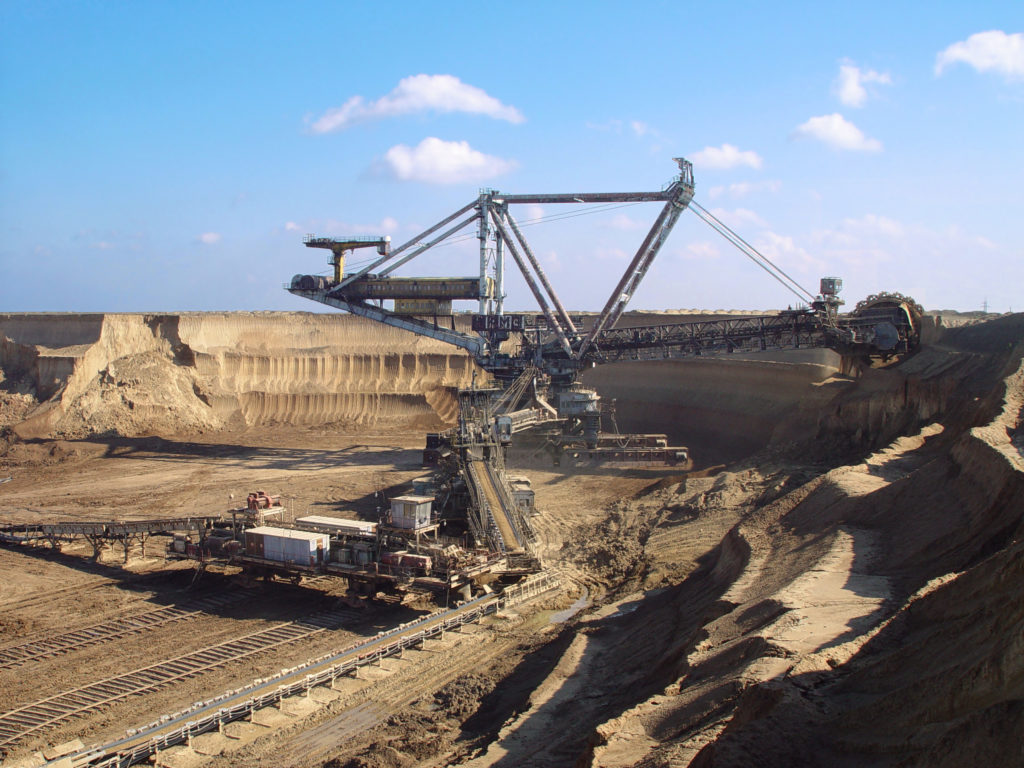

State mining and metallurgical plant in the Ukraine. Image by Khorzhevska, adobe stock.


(The opinions expressed here are solely of the author, Amanda Marziliano van Dyke)


Mark Twain reputedly defined a mine as a hole in the ground with a liar on top. The “Value in the Ground” myth has been around the mining industry for a very long time, and it is repeated whenever disreputable hucksters try to sell overpriced dirt.

When the value in the ground is ultimately proven to be a lie, people trust the mining industry less, rather than the people who were peddling the lie trying to make a buck.

Catherine Philp penned an article titled “Ukraine rejects Trump’s call to give up its rare earth minerals” in The Times on Sunday. Among the many misrepresentations in that article is “Ukraine’s vast steppe hides precious mineral reserves valued at several trillion dollars, from the most highly prized rare earths to the more common titanium and graphite used in modern consumer goods.”

Let me unpack the multiple lies hidden in this one sentence, and explain why they are so dangerous.

Reserves are what you get when you have proven with drilling and an independent audit both what your geological resource in the ground is, and when you have a proven economically viable plan to extract them.

The best authority in the world on resources and reserves is the US Geological Survey (USGS). Ukraine does not have resources (the scientifically confirmed presence of minerals) or reserves (resources that are economically extractable).

To my knowledge, and the knowledge of everyone in the mining industry I have asked, there are no economically relevant large scale drilled out resources or reserves in Ukraine of rare earths, graphite, or titanium.

What they have are old Soviet survey’s that indicate the presence of trace amounts rare earth minerals, and a general line that says the entire region could contain rare earth minerals.

What they have in mining terms is exploration targets. 1/1000 exploration targets ever becomes a mine. To get reserves, which are the only thing that can be valued, 100’s of millions in drilling investment is required. Which is why in economic terms the value of Ukraine’s economic potential is negative right now, it requires highly speculative risky investment to ever be realised.

My understanding is that last November the Ukrainian government, desperate to maintain support found those old soviet surveys and claimed those exploration targets were reserves, did some very bad math, and ascribed a ludicrous value to them.

So the question is, is it possible Ukraine has trillions of dollars of rare earths? It is highly unlikely. Let me show you why.

The Times author is asserting that the value of these minerals in the Ukraine is greater than the entire value of all the mined ore in the world, which in 2024, was a little over than 2 trillion dollars (statista), and 50% of that was coal.

In 2024 the world mined 280,000 tonnes of natural graphite worth approximately $280 million, 9.4m tonnes of titanium mineral concentrate worth approximately 3B, and 390k tonnes of rare earth concentrate worth approximately 15-19.5B, which makes the approximate extracted value of all of them combined, circa 20B dollars, and approximately 1% of the entire value of mineral extracted value in the world.

Which makes the idea that Ukraine even could contain “several” trillions of dollars worth of these minerals preposterous. Realistically, if they did in fact at some point prove up 1,000 times the annual production of rare earth minerals in one spot, that are economically extractable, they would crash the price of rare earth minerals forevermore. (source: USGS and World Mining Data 2024).

By attributing such ludicrous value to exploration targets and resources, all this journalist and Ukraine have done is ensure that nobody will ever invest the money into developing those resources.

When you anchor the idea of “trillions” of dollars, both the government and the people in the area believe they have something they don’t, and no matter how many people explain to them that it was a lie to begin with they will always have this false idea in their head of a value that is completely unachievable, and will never come to a reasonable arrangement with investors to develop whatever assets those people might have.

All they have done is created a delusional fantasy of value that doesn’t exist and ensured that the sustainable economic development of the mining industry of the region they are in never happens.

If in fact the lie there are trillions of dollars worth of rare earth minerals in Ukraine prevails, (and the thousands of hits “trillions” in rare earth minerals in Ukraine has is mind boggling), money will be invested, and lost. And the loser will be the mining industry because it will be blamed.

It is within the interests of every mining industry executive who has any kind of access to the US administration to tell the truth about what has happened here before this goes any further.

This has happened before, the Pentagon suggested there were trillions of dollars in lithium in Afghanistan, which has never been realized.

It’s a cautionary tale one we would be wise to consider.

Workers seek collective bargaining at Rio Tinto Pilbara mine

Reuters | February 27, 2025 | 


Paraburdoo stockyard, Pilbara. Image courtesy of Rio Tinto via Flickr.


Australia’s Mining and Energy Union said on Thursday it would launch a petition at Rio Tinto’s Paraburdoo mine in the Pilbara region that would allow workers to initiate bargaining for a collective agreement for the first time in over 20 years.


Workers are voting on making an agreement that would guarantee annual pay increases as living costs rise, the union added, with additional demands for pay equity and fair and detailed classification to normalize conditions and career progression.

A collective agreement must be in place for workers to utilize “same job, same pay” legislation, which is likely to be the union’s next step.

The step comes as Australian unions test out this legislation, which unions say equalizes pay among labour-hire workers doing similar jobs to company workers, but which companies say blunts the ability for them to pay higher wages for better performance.

Unionized workers filed for “same job same pay” orders covering 1,700 labour-hire workers at three large BHP coal mines in Queensland in June last year.

BHP had earlier opposed the legislation, saying it produces inflationary wage pressures while putting Australian jobs at risk.

The Albanese Labor government enforced the ‘same job, same pay’ changes in November 2024, delivering pay hikes for “more than 3,000 workers”.

Rio Tinto did not immediately respond to a Reuters request for comment on the petition.

(By Shivangi Lahiri and Melanie Burton; Editing by Mrigank Dhaniwala and Rashmi Aich)


Rio Tinto resumes operations at Australia’s Dampier port after cyclone disruption

Reuters | March 2, 2025 

 
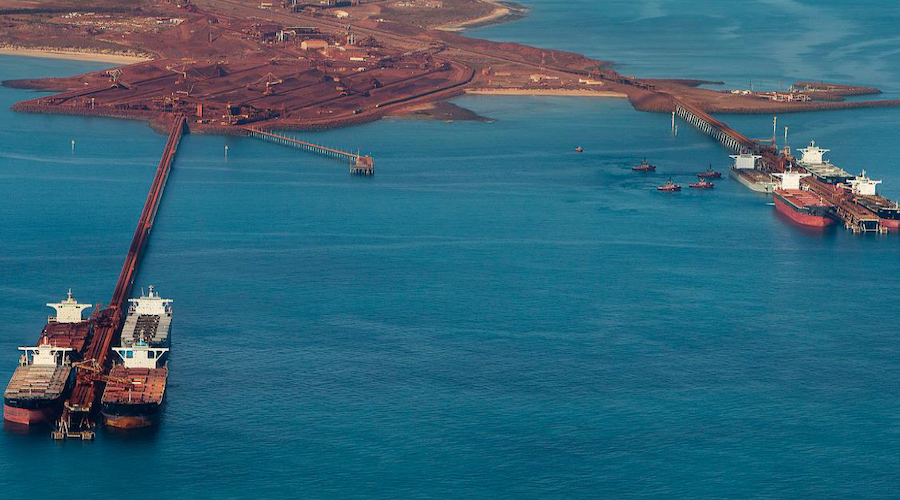
Rio Tinto’s Parker Point and Port Walcott at Dampier, Western Australia. (Image by Rio Tinto).

Rio Tinto said on Monday its East Intercourse Island facility at the Dampier iron ore export port in Western Australia had resumed operations after flooding from Tropical Cyclone Sean.


The miner, one of the world’s biggest iron ore producers, also said it had kept its full-year iron ore shipment guidance from Western Australia for 2025 unchanged at 323 million to 338 million metric tons.

Rio warned in late January that its first-quarter shipments could be affected due to disruptions in rail operations along the state’s Pilbara coastline caused by the cyclone.

The cyclone season in Western Australia usually runs from November to April.

“As the system rebalances and normal operations resume, an update will be provided in the first quarter operations review on 16 April”, Rio said in a statement.

(By Roshan Thomas; Editing by Jamie Freed)

Seaborg 'ready to start licensing activities in South Korea'


Friday, 28 February 2025

Denmark's floating compact molten salt reactor developer Seaborg Technologies has raised DKK200 million (USD28 million) from existing investors and appointed a new chairman, and said it is now planning for its first reactor to be ready in the first half of the 2030s.

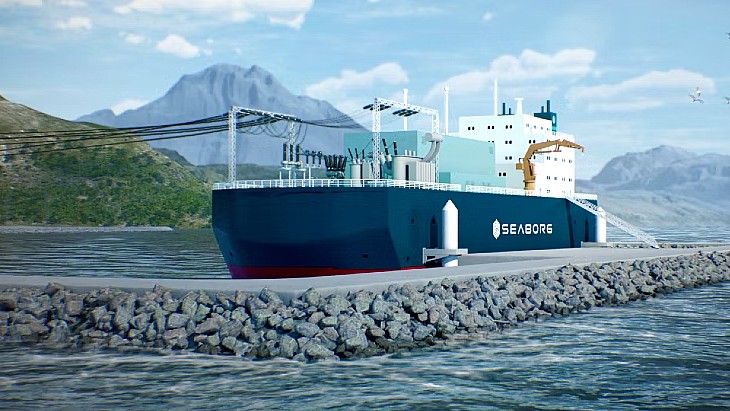
Seaborg 'ready to start licensing activities in South Korea'
(Image: Seaborg)

The company said the funds raised would be used to "accelerate our development" and expand its team in Denmark and Korea "as well as launching several development projects with partners in Europe, the US and Korea".

Niels de Coninck-Smith, a former partner at McKinsey, has been appointed as new chairman. Co-founder and former CEO Troels Schonfeldt is leaving the board.

Andreas Schofield, chief technology officer and co-founder, said: "The design and research basis of our reactor technology has now reached a maturity where we are ready to start licensing activities with the nuclear authorities in South Korea. The next design phase will be focused on scaling up testing and validation in our newly expanded facilities and with external partners in Korea and globally."

Klaus Nyengaard, CEO, said: "Together with our two, strong consortium partners, Samsung Heavy Industries and Korea Hydro and Nuclear Power, we plan for our first reactor to be ready in the first half of the 2030s, followed by series production from the mid-2030s."

The background

Seaborg's design is for modular compact molten salt reactor (CMSR) power barges equipped with between two and eight 100 MWe reactors, with an operational life of 24 years. Instead of having solid fuel rods that need constant cooling, the CMSR's fuel is mixed in a liquid salt that acts as a coolant, which means that it will simply shut down and solidify in case of emergency. In May last year it signed a memorandum of understanding with the Korea Atomic Energy Research Institute "to combine their research and development strengths" to advance nuclear technology.

In 2023 it signed a cooperation agreement with Korea Hydro & Nuclear Power and Samsung Heavy Industries to establish a consortium to develop floating nuclear power plants featuring Seaborg's compact molten salt reactor technology.

Seaborg, which was founded in 2014 and which has had discussions about deployments in various countries including Norway, Indonesia and Vietnam, had previously aimed to produce a commercial prototype in 2026 and Power Barges from 2028.

'Scrub Sad Facts Away': The Yes Men Target LNG Greenwashing With New Satirical Ad

"We are hoping Maritime Executive's readership are reminded that investing in a fuel that will expedite the rapid decline of life on the planet is not a good look (or a good investment)," one spokesperson said.


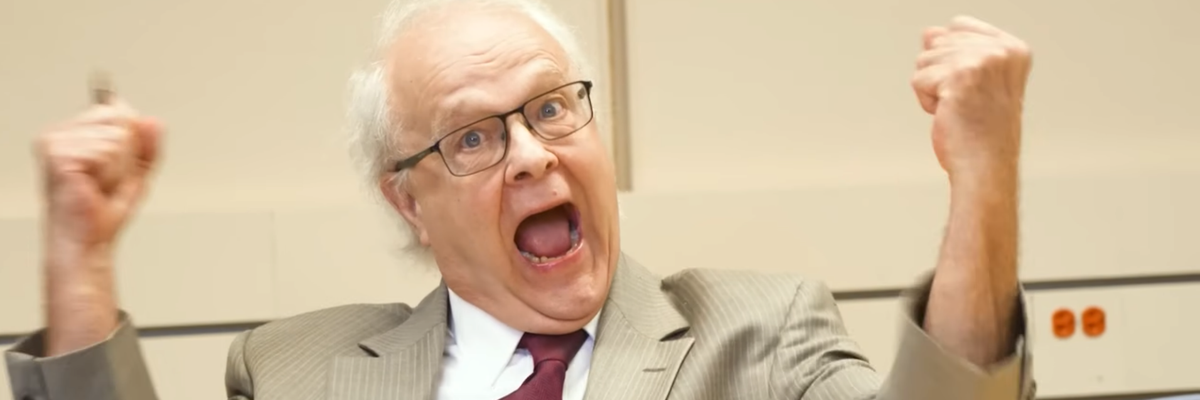
An actor portraying an LNG executive celebrates greenwashing in a satirical ad released by The Yes Men on February 28, 2025.
(Photo: YouTube/Screengrab)

Olivia Rosane
Feb 28, 2025
COMMON DREAMS


When readers of The Maritime Executive peruse the magazine's latest issue on Friday, they will be in for a surprise.

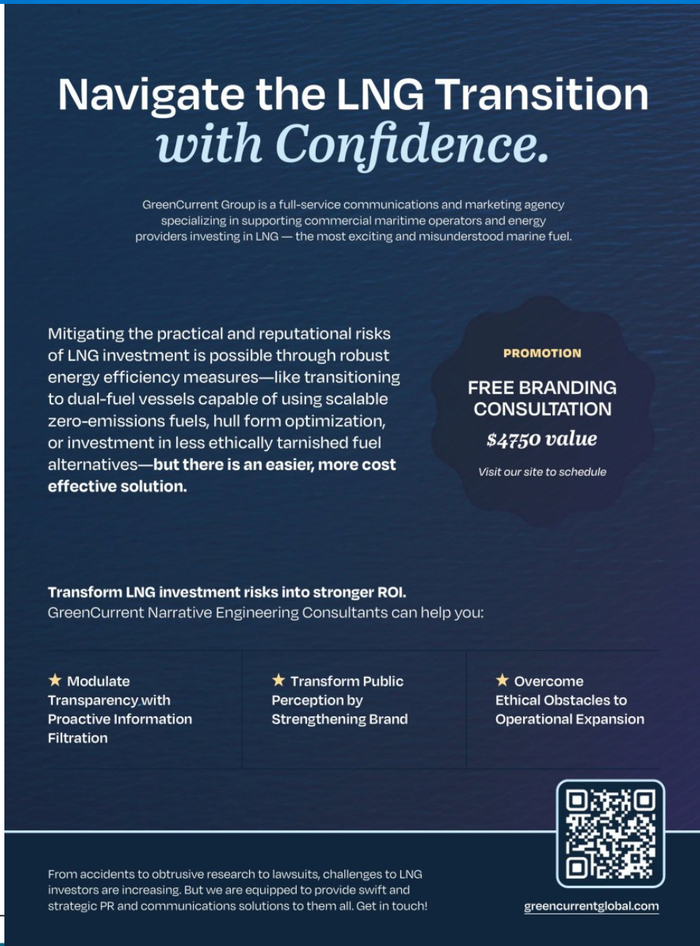
Page 15 of the magazine displays an ad for GreenCurrent Group, which bills itself as a "full service communications and marketing agency specializing in supporting commercial maritime operators and energy providers investing in LNG [liquefied natural gas]—the most exciting and misunderstood marine fuel."


But when curious maritime or energy executives follow the QR code at the bottom-right corner of the ad, they will discover that no such company exists. Instead, they will be directed to a satirical video commercial for "Scrubby Greenwash," a giant anthropomorphic green sponge that promises to "scrub, scrub, scrub sad facts away."


The false ad and video are the latest hijinks from underground activist collective The Yes Men, who have used humor and pranks to target corporate wrong-doing since 1996.

"We are hoping Maritime Executive's readership are reminded that investing in a fuel that will expedite the rapid decline of life on the planet is not a good look (or a good investment)," The Yes Men's Natalie Whiteman told Common Dreams.

The Yes Men first made waves more than three decades ago with a mock World Trade Organization website that got taken seriously enough to win them an invitation to a real-world conference. Since then, they have used creative deceptions to call attention to various social, economic, and political issues from high drug prices to lack of accountability for the Bhopal disaster.

"We need industry leaders, energy producers, and all players across the supply chain to reject LNG as a climate solution."

Many of their past actions have targeted fossil fuel companies and raised awareness about environmental issues such as the climate emergency and corporate greenwashing. Over the past year, they have begun campaigning around LNG specifically.

"We've always been in favor of generally keeping living things still alive, and methane is going to make all of that not happen much faster," Whiteman said. "We thought hey, that's not cool at all."

"LNG is a massive issue," Whiteman continued. "and the industry is pouring enormous resources into convincing the public that LNG is a green fuel when in fact LNG is methane, with a warming capacity 80 times more powerful than CO2, that leaks across practically every step of the supply chain."

To tackle this issue, the group has taken Scrubby Greenwash on tour to major cities around the world.

How did they come up with the character?

"Greenwashing is the process of scrubbing inconvenient facts and science away to protect the reputation of a company," Whiteman explained. "It's a process of sanitizing their image with marketing, and so a delirious looking slimy sponge seems like the sensible choice."

Whiteman said that Scrubby was "building up a rabid fanbase all over the world" while "targeted companies don't seem nearly grateful enough for the services he provides in protecting their image."

The group also crashed the World LNG Summit in Berlin in December under the guise of a Royal Caribbean executive. They managed to hold a few one-on-one meetings and earn a panel invitation before being found out, in an adventure that will be fully shared in a documentary to be released next year.

Their focus on LNG parallels the work of more traditional climate activists, who have been sounding the alarm about its planet-warming potential and urging governments to curb the buildout of new LNG infrastructure.

However, following the election of U.S. President Donald Trump, there has been backsliding on the regulatory end, with Trump declaring an energy emergency to stimulate more fossil fuel extraction and lifting a Biden-era pause on new LNG export approvals. On Wednesday, the European Union also announced a plan to fund new LNG exports, which was interpreted by some as a concession to Trump's pro-fossil fuel agenda.

The Yes Men's latest fake ad targets not governments, but shipping and LNG companies directly.


The false ad placed by The Yes Men in The Maritime Executive.


In the video ad, a table of men in suits sit around a table in "liquefied natural gas headquarters" as a news item announces, "A new investigation has revealed that cruise liners powered by liquefied natural gas produce more global warming than those powered by regular marine fuel. That's because methane leaks at every point in the supply chain, and gas traps 80 times more heat in the atmosphere than carbon dioxide."

The newscaster continues, "That's bad news for everyone, but especially for the luxury cruise lines, like Royal Caribbean, which have been marketing themselves as green," at which point the camera pans over to a Royal Caribbean representative in a captain's uniform. "If the industry doesn't act fast, this information could hurt their bottom line."

It's at this point that the executives pick up the phone to call in the assistance of Scrubby, who comes bursting through a brick wall Kool-Aid style.

Whiteman said The Yes Men chose to target Maritime Executive and Royal Caribbean in particular because "the trade media is complicit in propagating the greenwashing that protects LNG's false reputation as a clean fuel. And the fact that Royal Caribbean is marketing their LNG-powered mega ships as sustainable is a criminal untruth, when they could be investing in zero-emissions alternatives or other efficiency measures.'

Ultimately, Whiteman told Common Dreams, "We need industry leaders, energy producers, and all players across the supply chain to reject LNG as a climate solution. It has proven to be anything but."


EU’s New Clean Industry Deal Includes Push for Alternative Fuels

Ursula von der Leyen
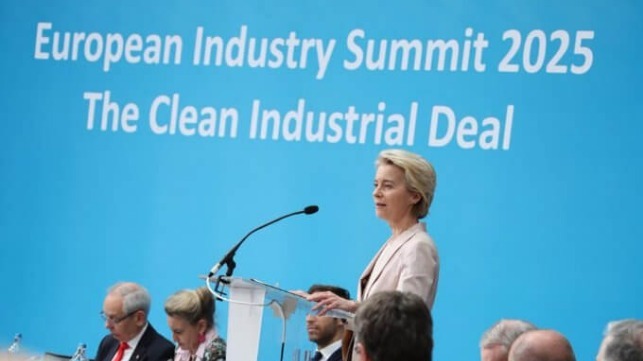
Ursula von der Leyen presenting Clean Industrial Deal (EC)

Published Feb 27, 2025 2:49 PM by The Maritime Executive


The European Commission presented its new Clean Industry Deal as the next ambitious step in a decarbonization strategy. The plan follows on from the FuelEU initiative that aims to reduce carbon emissions saying it will accelerate decarbonization while providing support to secure the future of European industry.

The Commission said it is launching the ambitious new program to make the regulatory environment more efficient. Its goal is to reduce bureaucratic hurdles. The plan focuses mainly on two sectors which they said are closely linked and critical to success for the decarbonization efforts. One focus is on energy-intensive industries which the Commission recognizes face high energy costs, unfair global competition, and complex regulations that are harming competitiveness. The other focus is on advancing clean tech.

“The demand for clean products has slowed down, and some investments have moved to other regions,” said Ursula von der Leyen, President of the European Commission. “We know that too many obstacles still stand in the way of our European companies from high energy prices to excessive regulatory burden. The Clean Industrial Deal is to cut the ties that still hold our companies back and make a clear business case for Europe.”

One of the key debates that shaped the FuelEI Maritime regulations and continue in Europe is the investment and availability of alternative, low-carbon fuels. Production lags and companies have remained slow to make costly investments. Experts have said the supply of the fuel and the competition among industries could be one of the key hurdles to reaching the goals to lower carbon emissions.

“Affordable energy is the foundation of competitiveness,” the Commission said in rolling out its plan. It adopted an Action Plan on Affordable Energy to lower energy bills for industry, businesses, and households. According to the Commission, the new act will speed up the roll-out of clean energy as well as accelerate electrification. It will support the efforts to complete physical interconnects across the internal energy markets while encouraging more efficient use of energy and cutting the dependence on fossil fuels.

The Clean Industrial Deal the European Commission estimates will mobilize over €100 billion to support EU-made clean manufacturing and adopt a new framework for simpler and quicker state aid measures for the roll-out of renewable energy, industrial decarbonization, and manufacturing capacity of clean tech. It is aiming for €100 billion in funding for its Innovation Fund and a proposed Industrial Decarbonization Bank. Amended regulations they also estimate will attract up to €50 billion in private-public investment.

The maritime sector immediately came out in strong support of the plan. The European Sea Ports Organisation (ESPO) welcomed the plan saying it would provide critical support to ports that are vital to the efforts. The ports of Rotterdam and Antwerp-Bruges issued statements in strong support and calling for the immediate implementation of the proposals.

The European Shipowners (ECSA) also announced support saying timing was critical. It welcomed the inclusion of shipping in the focus sectors while emphasizing the need to de-risk investments in fuels for shipping. Danish Shipping also applauded the plans highlighting the focus on increasing and lowering the cost of renewable energy. It said the European Commission is “focusing on exactly the right areas.”

The presentation said the Clean Industrial Deal is a critical framework and provides the basis for tailoring action plans for specific sectors. The Commission reports it will present an Action Plan for the automotive industry in March and an Action Plan on steel and metals in spring. Other tailored actions are also planned.

Canadian Coast Guard battles to secure ship with dangerous cargo
February 28, 2025 


The Canadian Coast Guard was working to secure a container ship that suffered significant breaches to its structure when it ran aground off Newfoundland.

The MSC Baltic III was carrying some materials listed as dangerous goods, the Coast Guard said. The focus is currently on the removal of the vessel’s cargo and fuel. It’s carrying about 1.7 million liters, or just over 10,000 barrels, of heavy fuel oil and diesel as propellant.

The vessel ran aground on Feb. 15 during bad weather in the Gulf of St. Lawrence, west of Lark Harbour, after reporting a loss of power. In the days that followed, a rescue operation was hampered by treacherous conditions at sea, and in its current condition the ship cannot be refloated, the Coast Guard said.

Its cargo included fabrics, food products, metals and polymeric beads. No pollution has been observed from the ship and the main aim of the operation is to prevent any releases into the environment.

The Coast Guard said one option may be to build a road to allow easier access to the vessel. That would help limit the impact of sea conditions on operations.


A spokesperson for MSC Mediterranean Shipping Co., which manages the ship, didn’t immediately respond to a request for comment.

With assistance from Jack Wittels and Julian Lee

Alex Longley, Bloomberg News

©2025 Bloomberg L.P.

Trump’s Foreign Policy Sends Tanker Market Adrift


By Tsvetana Paraskova - Feb 27, 2025, 

Major tanker operators like Hafnia, Norden, and Teekay Tankers highlight the unpredictability of U.S. trade and foreign policies as a key challenge.

Sanctions and tariffs are reshaping global oil flows and tanker demand.

Despite short-term volatility, tanker operators remain optimistic about future growth.


Vessel owners and oil traders are hesitant to enter long-term charter deals for oil tankers amid heightened geopolitical uncertainty since U.S. President Donald Trump took office.

The U.S. tariffs on China, the threat of tariffs on Canada, Mexico, and the European Union, the still uncertain security situation around the Red Sea/Suez Canal route, sanctions on Iran, Russia, and Venezuela, and the talks on peace in Ukraine have increased uncertainties in the oil and the tanker markets.

Tanker owners and operators and commodity trading groups have highlighted the greater uncertainty the oil trade flows and markets face with the foreign policy choices of the United States. Any change to trade flows and new sanctions and restrictions lead to spiking freight rates and raise volatility in the tanker market.

“More Difficult Now to Do Long-Term Deals”

In this situation of greater uncertainty, time-charter deals – which give more certainty due to the fixed hire rates for a fixed period of time – have been more difficult to make, shipowners and shipbrokers tell the Financial Times.


“Oil traders, other shipowners — everybody’s kind of having the same view that it’s probably more difficult now to do long-term deals,” Mikael Skov, CEO at Hafnia, one of the biggest tanker operators worldwide, told FT.

Related: Trafigura: Iran Sanctions Are Biggest Bullish Catalyst On Oil Prices

While time-charter deals give oil traders security that they would pay a fixed rate to use a tanker for a certain period of time, few are willing to commit to such longer-term deals now.

President Trump’s unpredictable policies, from tariffs on trade partners to sanctions on Iran, Venezuela, and Russia, and his push for intervention in the conflicts in Gaza and Ukraine are clouding the outlook for 2025, tanker operators and owners say.

Moreover, despite the improved security situation around Yemen and the Red Sea, tanker traffic in the area remains subdued. The world’s top shipping firms continue to prefer the longer route via the Cape of Good Hope in Africa to avoid skirmishes in Middle Eastern waters.


All these uncertainties piled on top of the severely shrunk availability of tankers to carry Russian oil after the Biden administration’s farewell sanctions on Russia’s oil trade and its shadow fleet.

Cautious Tanker Operators

Earlier this month, tanker operators and owners flagged several key uncertainties for 2025 stemming from the unpredictable U.S. policies.

Denmark’s Norden, operator of tankers and dry-bulk vessels, said in its annual report for 2024 that “Entering 2025, macroeconomics and the geopolitical situation in Ukraine and the Middle East, are still expected to impact the market outlook.”

“In addition, potential disruptions from sanctions and trade wars are adding to even higher uncertainty and volatility compared to 2024,” Klaus Nyborg, Chair of the Board of Directors, and CEO Jan Rindbo, said.


In Freight Services and Trading, Norden expects the margins in the dry cargo activities to continue to improve, but margins in the tanker activities “are likely to decline as a result of weaker tanker rates.”

Norden expects lower profits this year compared to 2024, based on the current market outlook and also as a result of lower sales gains from already signed transactions. The company guides for a full-year 2025 net profit in the wide range of $20 million to $100 million.

NYSE-listed Teekay Tankers last week highlighted “the wide range of potential outcomes from the various current issues impacting global trade, security, and energy.”

Underlying tanker market fundamentals continue to appear supportive for 2025 growth, Teekay Tankers said, but noted that Iranian sanctions, the war in Ukraine, the return of Red Sea transits, and the impact of tariffs will likely have an impact on the direction of the tanker market in the near term.

“Tougher sanctions on Iranian crude oil exports could lead China to import oil from other sources via the compliant fleet, which would be positive for tanker demand,” Teekay Tankers noted, commenting on the impact of President Trump’s ‘maximum pressure campaign’ on the Islamic Republic.


Moreover, “the imposition of any tariffs on U.S. imports of Canadian and Mexican oil could lead to an increase in U.S. seaborne imports from other sources while also pushing more Canadian and Mexican oil to Asia, both of which could be positive for tanker tonne-mile demand,” Teekay Tankers said.

Future tariffs by the U.S. on other countries or economic blocs could also affect seaborne oil trade patterns and the tanker market, the company noted.

Positive Long-Term Fundamentals Remain

While tanker operators and owners flag near-term uncertainties, they continue to be optimistic about the long-term fundamentals for the tanker market—aging fleets and limited available shipyard capacity.

“We continue to see positive underlying tanker fundamentals supporting our segments. Oil demand is expected to increase, and tonne-mile demand is expected to grow as oil production increases disproportionately in the Atlantic and refineries continue to expand primarily in Asia,” Teekay Tankers’ president and CEO Kenneth Hvid said in comments to the Q4 results.


“On the supply side, the global tanker fleet is older than it has been in decades, and the number of vessels currently on order relative to the number of ships reaching age 20 during the same timeframe, suggests low tanker fleet growth over the medium term.”

By Tsvetana Paraskova for Oilprice.com


Danica & Blu Maritime Consultancy to Boost Onboard Healthy Food Management

Danica Crewing Specialists
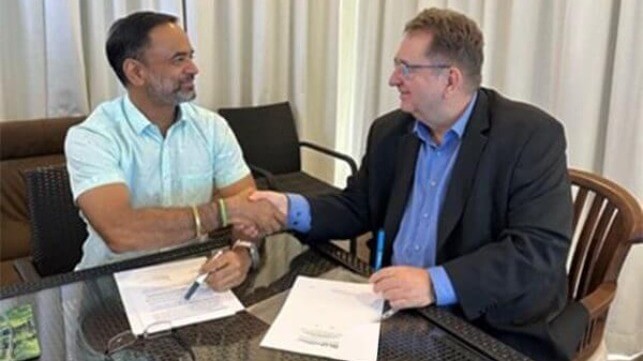
Henrik Jensen, CEO of Danica Crewing Specialists, signs the agreement with Harminder Singh of BLU Maritime Consultancy.

Published Mar 1, 2025 8:05 AM by The Maritime Executive


[By: Danica Crewing Specialists]

As a leading crew supplier, Danica places a high importance on the welfare of our seafarers. We’re thrilled to announce a new partnership between Danica Crewing Specialists and BLU Maritime Consultancy (BMC), experts in sustainable provision management and catering solutions for crew onboard vessels.

This collaboration brings together Danica’s expertise in maritime recruitment and manning services with BLU Maritime’s commitment to providing high-quality, efficient, and sustainable provision management and crew wellness solutions. 

Together, we aim to enhance seafarer welfare, streamline onboard operations, and deliver exceptional value to the crew onboard using technological solutions, such as BLU TEC which gives an overview of live and past fleet performance for the fleet. 

Henrik Jensen, Danica Crewing Services CEO, said: “Healthy food is crucial for seafarer well-being. At the same time, efficient menu planning is important to optimise costs through better use of resources and optimising the control of purchasing and stocks.

“We’re excited to collaborate with BMC to support our Captains and chefs with nutritional advice, recipes, food waste reduction, provision management, and more. This partnership aligns with Danica’s drive to use innovative technology to transform our crewing services.”

BLU TEC provides an app which can be used by chefs and Captains. The schedule of the vessel is entered into the app which then advises in which ports the individual provision items should be purchased, based on provision purchase volume within BMC’s 400+ vessels and on the price experience of each item. Provision supply is tendered with different suppliers to ensure best prices. The expected costs for crew victualing is displayed in the app and an alert raised if the costs are exceeding the budget. BMC monitors and manages orders and deliveries, while Danica’s shipowner clients have full access to the system and can see all orders, costs, menus etc. In addition, nutritional reports can be generated as evidence of healthy crew feeding, in line with TMSA and RightShip good practice.

Singapore-based BMC is a privately-owned company, like Danica, and owner-managed by the family of Harminder Singh, a long time professional in ship victualing. Harminder Singh of BLU Maritime Consultancy commented: “By prioritising the needs of seafarers and leveraging our collective expertise, we’re setting a high standard for our excellence in crew support and vessel management.”

The products and services herein described in this press release are not endorsed by The Maritime Executive.


Ferry Captain and First Officer Convicted in Drowning Death of Passenger

Greek ferry
A late arriving passenger was pushed from the car ramp and drowned as the crew looked on

Published Feb 28, 2025 1:35 PM by The Maritime Executive


A jury in Piraeus, Greece found the captain and first officer of an interisland ferry guilty in a tragic 2023 case where a late arriving passenger was pushed to his death as a ferry departed port. The court rejected claims of a spontaneous action while prosecutors argued nothing was done to save the victim and the ferry kept sailing.

The incident in which a 36-year-old male passenger was pushed from the car ramp on the departing ferry Blue Horizon caused national outrage in Greece after videos began circulating on social media. The stern ramp on the ferry was still down, a violation of maritime protocols, and four crewmembers were standing there as Antonis Kargiotis came running up and jumped onto the ramp. He is in a scuffle with a crewmember as the ferry begins to move. In the video, the crewmember appeared to push Kargiotis who fell into the harbor and was caught in the wake. He drowned while the crew and horrified passengers looked on.

Family members argued that Kargiotis could have purchased a ticket onboard, if he did not have one or that the crewmembers could have taken him into custody and turned him over to the Coast Guard or police. Prosecutors argued that in addition to deliberately pushing the passenger, the crew stood there and made no effort to aid the person in the water.

Charges were brought against the captain of the Blue Horizon, the first officer who was on the ramp and pushed Kargiotis, as well as the second officer and a boatswain who were also at the stern as the vessel departed. The incident took place on September 5, 2023, as the ferry departed at 2100 from Piraeus for Heraklion, Crete. The vessel continued to sail and did not return to the port for approximately 40 minutes until the port authority and coast guard demanded its return to Piraeus.

Defense attorneys for the captain argued there was no intent to cause death while also emphasizing gaps in port security as well as the role of the coast guard and port security. In the video, a person could be seen on the dock after the passenger falls into the water. Attorneys for the first officer argued it was a spontaneous response and there was no intent to cause harm, only to deny boarding to a late arriver. The defense had sought to have the charges changed from intent and manslaughter to negligence.

The jury convicted the first officer of manslaughter and the court handed down a sentence of 12.5 years in prison. The captain was convicted for allowing the ferry to depart after a fatal incident and covering up the crime. The captain was sentenced to 7 years and 5 months. The court noted that the sentences were reduced because of the individuals’ previous lawful conduct.

Lawyers argued for suspended sentences pending appeal. The court denied the request and ordered the captain and first officer sent to prison while their appeals are pending.

The second officer and boatswain were acquitted. They had been charged with complicity in the murder with possible intent, although the video shows one of them standing at the entrance of the garage. The other appeared to also come forward as the scuffle was transpiring.


Crewmember Requires Medical Evacuation as Ships are Robbed off Singapore

chemical tanker underway
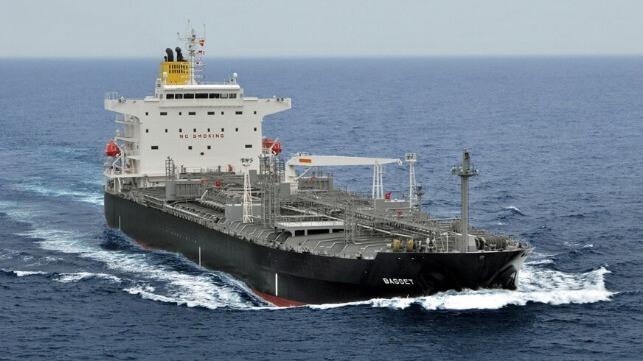
Chemical tanker Basset ws the latest target of boarders in the Singapore Strait (Japan Marine United file photo)

Published Feb 28, 2025 12:16 PM by The Maritime Executive


Authorities in Singapore responded to an “unauthorized boarding” of a chemical tanker in the Singapore Strait friday morning, February 28, and evacuated an injured crewmember. It was the latest in a spike of crimes along the Singapore Strait, but the first this year when a crewmember required medical attention. Later ReCAAP ISC reported there had been two other incidents earlier on Friday with the group warning of a possibility of more assaults on ships.

The Maritime and Port Authority of Singapore (MPA) and the Singapore Civil Defense Force reported that the Singapore-registered chemical tanker Basset (49,875 dwt) was boarded in the early morning hours of Friday, February 28. The incident happened at 0650 local time while the vessel was underway approximately 2 nautical miles outside Singapore’s territorial waters.

The vessel’s AIS signal showed it had departed Tanjung Pelepas, to the west of Singapore in Malaysia, and was transiting the Strait to Pengerang in Malaysia east of Singapore. Built in 2019 at Japan Marine United’s Maizuru Works, the vessel is owned by Grace Ocean and reported to have a service speed of 15 knots, although it is unclear what speed it was traveling at and if it was currently loaded.

The Civil Defense office reportsed it received a request for assistance approximately 20 minutes after the tanker was boarded. Two marine firefighting and rescue vessels were dispatched and met the tanker and escorted it into Singapore’s anchorage. One crewmember only identified as a 29-year-old Indian national was reported to be injured and removed for medical treatment.

The police report they boarded the vessel while it was in the anchorage. They swept the vessel to confirm no perpetrations remained aboard. The crew was accounted for and there were no other injuries reported.


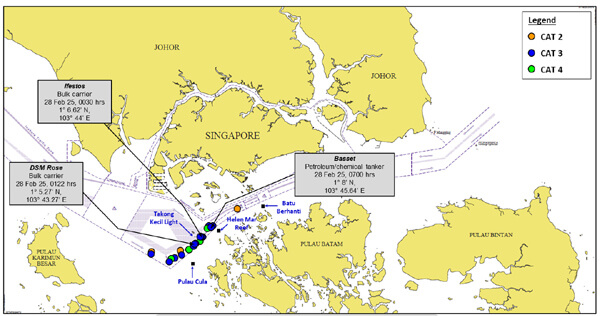
Map highlighting the location of the three incidents on February 28 and the cluster of activity at the western side of the Singapore Strait (ReCAAP)


The incident involving the 182-meter (599-foot) tanker is the latest in the Singapore Strait, which is emerging as a hotspot for armed robberies primarily against bulk carriers and oil tankers. ReCAAP ISC, the monitoring operation for maritime security in the region, later issued an alert warning of the increased number of sea robbery incidents and expressing its renewed concerns. ReCAAP revealed that there had been two other boarding also in the Phillip Channel in the eastbound late of the Singapore Strait this morning between 0030 and 0700 local time.

ReCAAP details that the fist incident took place at 0300 aboard he Greek bulker Ifestos (95,790 dwt). The vessel registered in the Bahamas was underway traveling from Mozambique to China. Nearly an hour later, the general cargo ship DSM Rose (33,540 dwt) managed by a company in Lebanon was also boarded. It was traveling from India to Vietnam. ReCAAP reports engine spares were stolen from one of the ships and nothing was reported missing from the other two involved in today's incidents.

Data by the ReCAAP shows that since the beginning of the year, there have now been a total of 21 incidents counting the three from today. The number of incidents has more than tripled versus last year when just six were reported in the first two months. Most of the crimes have been occurring in the area around the western entrance to the Strait and the Malacca Strait. 

A majority of the incidents are opportunistic crimes according to ReCAAP committed by perpetrators adopting a “hit-and-run” approach, with cases of crew injury or interaction being minimal. In January, however, a bulker was boarded also while it was underway in the Singapore Strait. There were six perpetrators and they tied up at least one crewmember. The perpetrators are mostly stealing ship stores, scrap metal, and engine spares, but ReCAAP has highlighted this year an increase in the times when the boarders are carrying guns or gun-like objects and knives.

ReCAAP has repeated raised concerns about the increase in the number of incidents and is now warning that there is a possibility of yet further incidents. For all of 2024, there were a total of 107 incidents of piracy and armed robbery against ships in Asia. The data shows that 58 percent of the incidents were in or around the Singapore Strait.

Countries in the region are increasing patrols and surveillance while ReCAAP is urging vigilance and responding promptly to incidents reported by ships. They have also called for strengthening the coordination and promoting information sharing on incidents and criminal groups involved to arrest the perpetrators. Ships are also being advised to intensify vigilance and maintain a lookout while transiting these areas.