Monday, May 19, 2025

‘Transition’ To A New World Order Is Beyond Most In The West – OpEd


By 

Even the need for transition – just to be clear – has only just begun to be recognised in the U.S.


For the European leadership however, and for the beneficiaries of financialisation who haughtily lament Trump’s ‘storm’ unwisely unleashed on the world, his base economic theses are ridiculed as bizarre notions completely divorced from economic ‘reality’.

That is completely untrue.

For, as Greek Economist Yanis Varoufakis points out, the reality of the western situation and the need for transition was clearly spelled out by Paul Volcker, former chair of the Federal Reserve, as long ago as 2005.

The harsh ‘fact’ of the liberal globalist economic paradigm was evident even then:

“What holds together the globalist system is a massive and growing flow of capital from abroad, running to more than $2 billion every working day – and growing. There is no sense of strain. As a nation we don’t consciously borrow or beg. We aren’t even offering attractive interest rates, nor do we have to offer our creditors protection against the risk of a declining dollar”.


“It’s all quite comfortable for us. We fill our shops and garages with goods from abroad, and the competition has been a powerful restraint on our internal prices. It’s surely helped keep interest rates exceptionally low despite our vanishing savings and rapid growth”.

“And it’s [been] comfortable for our trading partners too, and for those supplying the capital. Some, such as China [and Europe, particularly Germany], have depended heavily on our expanding domestic markets. And for the most part, the central banks of the emerging world have been willing to hold more and more dollars, which are, after all, the closest thing that world has to a truly international currency”.

The difficulty is that this seemingly comfortable pattern can’t go on indefinitely.

Precisely. And Trump is in the process of blowing up the world trading system so as to re-set it. Those western liberals, who today are gnashing teeth and lamenting the advent of ‘Trumpian economics’, are simply in denial that Trump has at least recognised the most important American reality – ie. that the pattern can’t go on indefinitely, and that debt-led consumerism is way past its sell-by date.

Recall that most participants in the western financial system have known nothing other than Volcker’s ‘comfortable world’ their entire life. No wonder they have difficulty thinking outside their sealed retort.

That does not mean, of course, that Trump’s solution to the problem will work. Possibly, Trump’s particular form of structural rebalancing could make matters actually worse.

Nonetheless, restructuring in some form clearly is inevitable. It comes down otherwise to a choice between bankruptcy slow, or fast and disorderly.

The dollar-led globalist system worked well initially – at least from the U.S. perspective. The U.S. exported its post-WW2 manufacturing over-capacity to a newly dollarized Europe, who consumed the surplus. And Europe too, enjoyed the benefit of having its macroeconomic environment (export-led models, guaranteed by the U.S. market).

The present crisis began however, when the paradigm inverted – when the U.S. entered on its era of unsustainable structural budget deficits, and when financialisation led Wall Street to build its inverted pyramid of derivative ‘assets’, resting upon a tiny pivot of real assets.

The raw fact of the structural imbalance crisis is bad enough. But the western geo-strategic crisis goes much deeper than just the structural contradiction of inward capital flows and a ‘strong’ dollar eating the heart out of the U.S. manufacturing sector. Because it is bound up, too, with the concomitant collapse of core ideologies underpinning liberal globalism.

It is because of this western deep devotion to ideology (as well as to the Volker ‘comfort’ provided by the system) that has triggered such a torrent of anger and outright derision towards Trump’s ‘rebalancing’ plans. Barely a western economist has a good word to say – and yet no plausible alternative framework is offered. Their passion directed at Trump simply underlines that western economic theory is bankrupt, too.

Which is to say that the deeper geo-strategic crisis in the West consists in both a collapse of archetypal ideology AND of a paralytic élite order.

For thirty years, Wall Street sold a fantasy (debt didn’t matter) … and that illusion just shattered.

Yes, some understand that the western economic paradigm of debt-led, hyper-financialised consumerism has run its course and that change is inevitable. But so heavily invested is the West in the ‘Anglo’ economic model that, for the most part, the economists stay paralysed in the spider’s web. There is no Alternative (TINA) is the watch phrase.

The ideological spine to the U.S. economic model lies firstly with Friedrich von Hayek’s The Road to Serfdom, which was understood to mean that any government involvement in the management of the economy was an infringement of ‘liberty’ – and tantamount to socialism. And then secondly, following the Hayekian union with the Chicago School of Monetarism in the person of Milton Friedman who would pen the ‘American edition’ of The Road to Serfdom (which (ironically) came to be called Capitalism and Freedom), the archetype was set.

Economist Philip Pilkington writes that Hayek’s delusion that markets equal ‘freedom’ and were therefore consonant with the deeply embedded American Libertarian current “has become widespread to the point of all discourse being completely saturated”:

“In polite company, and in public, you can certainly be left-wing or right-wing, but you will always be, in some shape or form, neoliberal; otherwise you will simply be not allowed entry to discourse”.

“Each country may have its own peculiarities … but on broad principles they follow a similar pattern: debt-led neoliberalism is, first and foremost, a theory of how to re-engineer the state in order to guarantee the success of markets – and its most important participant: modern corporations”.

So here is the fundamental point: The crisis of liberal globalism is not just a matter of re-balancing a failing structure. Imbalance anyway is inevitable where all economies similarly pursue, all together, all at once, the export-led ‘open’ Anglo-model.

No, the bigger problem is that the archetypal myth of individuals (and oligarchs) pursuing their own separate and individual utility maximisation – thanks to the hidden hand of market magic – is such that in aggregate, their combined efforts will be to the benefit of the community as a whole (Adam Smith) has collapsed too.

Effectively, the ideology to which the West clings so tenaciously – that human motivation is utilitarian (and only utilitarian) is a delusion. As philosophers of science like Hans Albert have pointed out, the theory of utility-maximisation rules out real world mapping, a priori, thus rendering the theory untestable.

Paradoxically, Trump nonetheless, is of course the chief of all utilitarian maximisers! Is he then the prophet of a return to the era of swash-buckling American tycoons of the nineteenth century, or is he the adherent of a more fundamental re-think?

Put plainly, the West cannot transition to an alternate economic structure (such as a ‘closed’, internal-circulation model) precisely because it is so heavily invested ideologically in the philosophical underpinnings to the present one – that to question those roots seems tantamount to a betrayal of European values and of the foundational libertarian values of America (drawn from the French Revolution).

The reality is that today the western vision of its claimed Athenian ‘values’ is as discredited as its economic theory in the rest of the world, as well as amongst a significant slice of its angry and disaffected own populations!

So the bottom line is this: Do not look to the European élites for any coherent view on the emergent World Order. They are in collapse and are pre-occupied by trying to save themselves amidst the crumbling of the western sphere and the fear of retribution from their electorates.

This new era does however also mark the end to ‘old politics’: The Red vs Blue; Right vs Left labels lose relevance. New political identities and groupings are already being formed, even if their contours are not yet defined.


Alastair Crooke

Alastair Crooke is a former British diplomat, founder and director of the Beirut-based Conflicts Forum.

 

Protesters against euro adoption block roads in Bulgaria

Protesters against euro adoption block roads in Bulgaria
President Rumen Radev and rightwing Vazrazhdane have been seeking to block Bulgaria's entry to the Eurozone. / Vazrazhdane
By Denitsa Koseva May 19, 2025

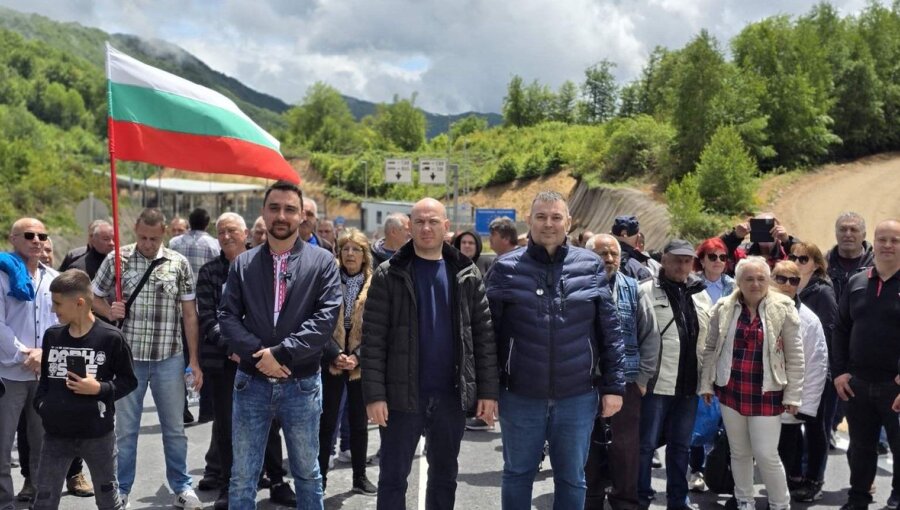
Dozens of Bulgarians protested on May 18 against euro adoption, blocking key roads across the biggest cities.

The far-right, pro-Russian Vazrazhdane party has been calling for a national referendum and vows to resist the country’s planned entry into the eurozone.

Protesters held signs demanding the preservation of the national currency, the lev, and called for the government to resign.

The unrest follows a renewed push by Bulgarian President Rumen Radev to hold a referendum on the euro accession date. Although parliament dismissed the proposal, Radev has pledged to continue efforts for referendum. He is strongly supported by Vazrazhdane.

Radev has said he will refer parliament’s refusal to debate his request for a referendum to constitutional court. It is unclear whether the court would admit the request as it has already ruled once that such a referendum cannot be called.

Bulgaria’s constitution prohibits referendums on matters governed by international treaties, such as EU accession, which includes eurozone membership, prompting the Constitutional Court to reject a similar referendum initiative in 2024.

In addition to road blockades, tensions escalated at a conference titled ‘The Battle for the Lev Is the Final Battle for Bulgaria’, organised by a coalition of nationalist and pro-Russian figures, including former PIK media owner Nedialko Nedyalkov, MEP Petar Volgin, and former MPs Viktor Papazov and Strahil Angelov, Dnevnik news outlet reported on May 16.

Speakers threatened ‘uprisings’, calling for resistance and and claiming that entry to the eurozone would be a ‘national betrayal’.

Kostadin Kostadinov, leader of Vazrazhdane, hailed the conference as “the true National Assembly” and issued a rallying call for 100,000 people to flood the streets of Sofia on May 31.

“It is time to reclaim our freedom and our country,” he said as quoted by Dnevnik.

The protests are timed to coincide with the release of convergence reports by the European Commission and European Central Bank, due on June 4. It is widely expected that the reports will be positive and will allow Bulgaria to join the eurozone on January 1, 2026.


Latin American EV market accelerates threefold in 2024

Latin American EV market accelerates threefold in 2024
"Despite the positive results, challenges remain, such as the high relative cost of vehicles, insufficient charging infrastructure, and limited range, which countries are progressively addressing," Olade said. / unsplash
By bne IntelliNews May 19, 2025

The fleet of light electric vehicles in Latin America and the Caribbean saw a dramatic surge last year, tripling in size from 154,966 registered units at the end of 2023 to 444,071 vehicles by December 2024, according to data released on May 16 by the Latin American Energy Organization (Olade).

This remarkable expansion represents a 187% year-on-year growth in battery electric and plug-in hybrid vehicles across the region. Olade attributes this substantial increase largely to a 78% rise in vehicle integration during the second half of the year compared with the first six months.

Brazil and Mexico have emerged as regional leaders in the development of public charging infrastructure. Brazil expanded its network from 1,876 charging stations in 2023 to 12,700 by the end of 2024, whilst Mexico increased its infrastructure from 1,340 to 3,212 over the same period. Together, these two nations account for approximately 86 % of the region's charging infrastructure, Olade stated in a press release.

Despite this impressive growth, the region's electric vehicle presence remains modest on the global stage. The 2024 figure represents nearly 0.7% of the global electric vehicle fleet and just 0.3% of the total light vehicle fleet in Latin America and the Caribbean.

However, the momentum continues to build. Olade reports that sales have accelerated further in the first quarter of 2025, with all countries in the region posting positive growth in electric vehicle sales. Colombia has demonstrated particularly strong performance, nearly quadrupling its sales of battery-powered vehicles, followed by Uruguay showing the second-highest growth rate.

In absolute sales volume of battery-powered and plug-in hybrid vehicles, Brazil and Mexico, the region's first and second economies, maintain their dominant regional positions.

These advances are unfolding in a global context where China has consolidated its position as the market leader, with more than 49mn electric vehicles in circulation and a 47.9% share of new car sales in 2024. As the main producer and exporter of electric vehicles globally, Beijing’s manufacturing dominance directly influences the Latin American market, with the majority of imported electric vehicles in the region originating from Chinese factories.

"Despite the positive results, challenges remain, such as the high relative cost of vehicles, insufficient charging infrastructure, and limited range, which countries are progressively addressing," Olade said.

Based in Quito, Ecuador, Olade is a pan-regional intergovernmental organisation focused on cooperation, coordination and technical advisory services. Since its establishment in 1973, it has sought to promote the integration, conservation, rational use, commercialisation and defence of the region's energy resources.


Iraq rediscovers its forgotten Somalian refinery after 45 years

Iraq rediscovers its forgotten Somalian refinery after 45 years
Barawa in Sudan now is a long forgotten outpost of Iraq's once international clout. / CC: bne Interlines


By Newsbase MENA syndication May 19, 2025

An Iraqi oil refinery built in Somalia in the 1970s has remained abandoned for nearly 45 years, emerging into public awareness during recent diplomatic talks, Al-Iqtisad News reported on May 19.

Somali President Hassan Sheikh Mohamud requested Iraq's support in renovating the decades-old refinery during the 34th Arab Summit recently hosted in Baghdad.

The facility was constructed by the Iraqi General Company for Oil Projects in 1974 with a capacity of 10,000 barrels per day (bpd) and an annual output of 500,000 tonnes.

Under the original agreement, Iraq financed the construction in foreign currency, while Somalia was to repay 50% of the cost over three years after operations began, at nominal interest.

The refinery operated until oil deliveries from Iraq ceased in 1980 due to the Iran-Iraq war, after which its operations declined significantly, reaching just 6% of capacity by 1989.

Located in the Al-Jazeera (The Islands) area northeast of Barawa, the facility faced multiple challenges after Iraqi oil supplies stopped, including lack of crude oil access and difficulties obtaining maintenance equipment.

The outbreak of civil war in Somalia in the early 1990s led to the collapse of this facility, along with much of the country’s energy infrastructure.

The renewed interest in rehabilitating the facility coincides with Somalia's broader efforts to develop its energy sector. The country has recently signed major exploration agreements with international companies, including Turkish oil firm TPAO, which is conducting 3D seismic surveys that are expected to conclude by late 2025.

Somalia has also secured agreements with the US Liberty Petroleum Corporation for offshore exploration in several areas, demonstrating growing international interest in the country's oil and gas potential.

The world is getting darker, absorbing more sunlight, which is accelerating the Climate Crisis

The world is getting darker, absorbing more sunlight, which is accelerating the Climate Crisis
The world is getting darker as its reflectivity falls. That means it is absorbing a massive increase in the amount of sunlight that is accelerating global warming beyond what any model has been predicting. / bne IntelliNews

By Ben Aris in Berlin May 18, 2025

The world is getting darker as the ice melts and that means it is absorbing more and more sunlight that is accelerating the process.

As the earth warms, the ice melts and we lose reflectivity. Even more heat from the sun is absorbed, creating a positive feedback loop that accelerates global warming beyond what the models used to determine the outlook predicted by the Paris Agreements and the timelines left of action to avoid a climate crisis. Global warming is now accelerating faster than all the models drawn up in 2015 predicted.

This is affecting the Earth’s Energy Imbalance and the world is starting to cook according to recent research; more energy than ever before is coming into the planet as absorbed sunlight than is going out, radiated to space, said the scientists. In a study published in 2021, the EEI was found to have doubled in the 14 years from 2005 to 2019 and the latest result suggest the EEI is only climbing higher.

The measure of reflectivity is known as albedo – the portion in percent of incoming solar radiation that is reflected back to space – and it has been falling steadily over the last 25 years, according to measurements from NASA.

Solar radiation reaching Earth is about 340 W per square metre, averaged over Earth’s surface, so the 0.5% albedo decrease is a 1.7W/ m² increase of absorbed solar energy.

The Earth’s albedo has decreased 0.5%, say climatologists James Hansen and Pushker Kharecha in a paper issued on May 14. “A 1.7 W/m² increase of absorbed solar energy is huge. If it were a climate forcing, it would be equivalent to a CO2 increase of 138 ppm".

“Earth’s albedo (reflectivity) declined over the 25 years of precise satellite data, with the decline so large that this change must be mainly reduced reflection of sunlight by clouds. Part of the cloud change is caused by reduction of human-made atmospheric aerosols, which act as condensation nuclei for cloud formation, but most of the cloud change is cloud feedback that occurs with global warming,” the scientists said.

As bne IntelliNews reported, other recently studies also confirmed that cloud cover has been decreasing dramatically in recent years and that fewer clouds have created a feedback loop that is further reducing the cloud cover.

To put those numbers into context, the total human-caused climate forcing from all greenhouse gases (including CO2, methane, etc) was estimated at around 3.2 W/m² as of 2023. So 1.7 W/m² on its own represents over 50% of the total anthropogenic forcing – a major additional energy imbalance. Even a 0.5 W/m² change is considered climatically significant, accelerating warming, ocean heat uptake and ice melt.

Looking at the same increase in terms of CO2: pre-industrial CO2 levels were around 280 ppm, and current levels are just above 420 ppm – meaning human activities have added ~140 ppm since the 18th century.

So an additional 138 ppm is nearly a doubling of the modern increase – a scenario that could be catastrophic in terms of global warming adding ~2°C or more on top of existing warming and bursting through the 1.5-2C temperature rise maximum set out in the Paris Agreements.

As bne IntelliNews reported, the 1.5C-2C Paris temperature increase maximum target has already been missed and the planet is currently on course to see a catastrophic 2.7C-3.1C temperate increase by 2100 as a best-case scenario.

One of the major changes that have darkened the world and affected the cloud cover and its reflectivity has been the cleaning up of ship fuel to remove the sulphur dioxide (SO2) that is a pollutant, but at the same time has a beneficial effect of increasing the reflectivity of clouds and the atmosphere and so cooling the planet by reflecting more of the sun’s radiation back into space.


China’s growing gap to Paris pledge threatens meeting of climate targets

China’s growing gap to Paris pledge threatens meeting of climate targets
China is introducing new renewable power pricing policies in July that has brought about uncertainties that may hinder its ability to meet its Paris Agreement commitments. / bne IntelliNews
By bne IntelliNews May 18, 2025

The introduction of new Chinese renewable electricity pricing rules in June threaten the country’s ability to meet its Paris Agreement 2030 climate commitments, according to a report by Carbon Brief.

The new policy removes existing price guarantees linked to coal-power rates, requiring new wind and solar projects to negotiate contracts directly with electricity buyers.

“This is likely to lead to lower prices being paid to new wind and solar projects,” Carbon Brief reported on May 16. However, more favourable pricing will still be available via “contracts for difference” for capacity aligned with central government targets.

China has emerged as the global green energy champion and heavy investment into renewables has seen clean energy renewable energy output overtake that of its continued reliance on fossil fuels and coal, resulting in the first reduction in annual CO2 emissions this year, Carbon Brief reported. But despite the progress, China is still not out of the woods yet and remains the world’s biggest emitter of greenhouse gases (GHGs) and is still heavily dependent on coal-fired power plants for the energy required to fuel its fast economic growth.

The immediate effect has been a rush to complete installations ahead of the June deadline. “This rush was already apparent in the latest data: 23 GW of solar and 13 GW of wind was added in March alone, up 80% and 110% from previous records for the month,” the report said.

Industry forecasts point to continued strong additions in 2025, despite the policy shift. The China Wind Energy Association anticipates 105-115 GW of new capacity this year, with the China Electricity Council projecting up to 120 GW. One analyst anticipates a 20% drop in 2026 but from a higher 2025 base of 120-130 GW, meaning 2026 could still exceed 2024’s record.

In solar, the China Photovoltaic Industry Association forecasts an 8-23% drop from last year’s record 278 GW. Even at the low end, this would match 2023 levels, according to Carbon Brief. The China Electricity Council's projection aligns with the association's lower estimate.

“Additional electricity generation from new clean power capacity is expected to remain above last year’s record-breaking levels in both 2025 and 2026,” the analysis noted.

Despite the otherwise positive performance in rolling out renewables – two thirds of all the solar panels in the world are in China – the new policy has injected uncertainty. “The stop-go cycle of a flood of installations in the first half of this year and then a slowdown in the second half... is likely to be a tough time for the industry,” the report said.

Two key concerns are local implementation – where provincial governments retain discretion – and the linkage of favourable pricing to national targets. “The pricing policy ties the availability of more favourable pricing to central government energy targets, after clean-energy growth outpaced those targets by a wide margin in the past few years.”

The National Energy Administration has set a target of “more than 200 GW” of annual clean energy additions, well below the 360 GW added in 2024.

Meanwhile, China’s nuclear programme is also accelerating, with 10 GW of new reactor projects approved in April, matching approvals in the previous two years. These will contribute to emissions reductions closer to 2030.

However, the uncertainty surrounding the renewables expansion affects China’s climate credibility. “After exceptionally slow progress in 2020-23, China is significantly off track for its 2030 commitment to reduce carbon intensity,” Carbon Brief said. Carbon intensity fell 3.4% in 2024, below the pace needed to meet interim and long-term targets.

The 2025 government work plan omitted a carbon intensity target, signalling reduced policy emphasis. “The absence of a carbon intensity target and the lack of emphasis on reducing carbon intensity also signals that meeting the target is not seen as a priority at the moment.”

While “dual-carbon” goals – to peak CO2 before 2030 and achieve neutrality before 2060 – remain in place, they permit rising emissions until the decade’s end. This implies a possible increase in absolute emissions from 2024 levels, even if intensity declines.

Looking ahead, the outcome depends on the next five-year plan and the policy response to economic headwinds, including US tariffs. Short-term effects may lower demand and emissions, but stimulus directed at heavy industry could drive emissions back up.

“The new renewable electricity pricing policy... further increases the importance of target-setting in China’s upcoming 2035 climate targets under the Paris Agreement and in the next 15th five-year plan,” the analysis concluded.


COMMENT: Arabs Inc: The Gulf's Grand Economic Gambit

COMMENT: Arabs Inc: The Gulf's Grand Economic Gambit
As Trump plays the merchant prince in Riyadh, a more consequential shift is reshaping the Middle East's economic map. / bne IntelliNews
By bne Gulf bureau May 19, 2025

Lavish receptions and ceremonial displays marked President Trump's recent tour of the Gulf. Behind the diplomatic pageantry, however, a more significant development has been taking shape: the emergence of an Arab economic bloc with ambitions extending far beyond traditional resource-based cooperation. The Gulf Cooperation Council (GCC) has promised much and delivered modest results for four decades. Now something's changed. The club of six wealthy monarchies – Saudi Arabia, UAE, Qatar, Kuwait, Bahrain and Oman – is getting serious about economic integration, and remarkably, drawing former rivals into its orbit.

What's driving this shift? Economics, naturally. The World Bank projects GCC economies will grow by 4.2% in 2025-26, with non-oil sectors expanding reasonably. But there's something else afoot: a growing recognition that even resource-rich economies must diversify to ensure long-term prosperity.

Regional integration isn't merely sensible; it's increasingly essential for survival in a world where fossil fuels no longer guarantee perpetual wealth. Even the most robust sovereign wealth funds require diversification strategies to sustain growth.

Iraq and Syria offer the most striking examples of this new regional geometry and push for regional calm. Once isolated from its Gulf neighbours, Damascus and Baghdad are now being welcomed into regional economic and political forums.

Saudi Arabia and the UAE recently committed $6bn for development projects. Prime Minister Mohammed al-Sudani has strengthened ties with Riyadh, culminating in this weekend’s Arab League Summit in Baghdad.

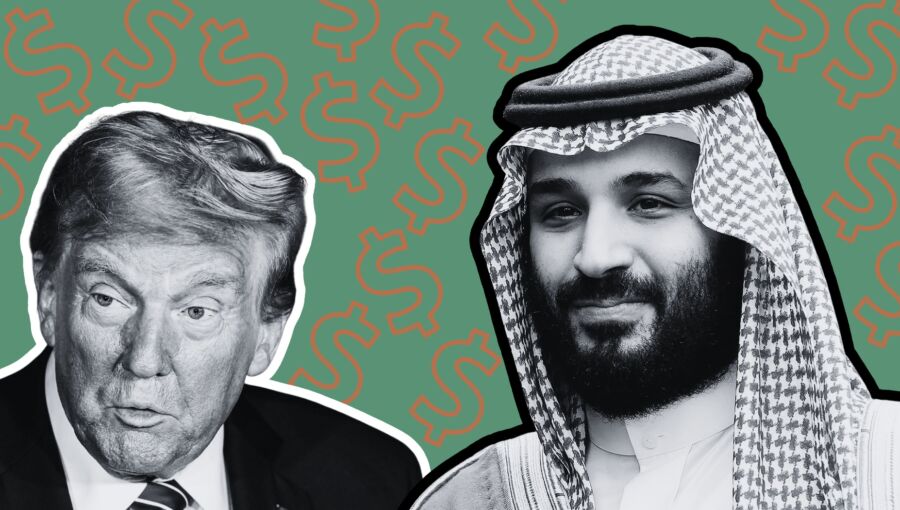
The return of Donald Trump to the White House has accelerated these trends. During his regional visit this month, Trump received extraordinary investment pledges – $600bn from Saudi Arabia alone, while the UAE had earlier promised $1.4 trillion over ten years and Qatar just as much. These figures warrant healthy scepticism. But even if only partially realised, such commitments represent a meaningful shift in regional capital flows.

Trump's transactional diplomacy aligns neatly with Gulf leaders’ priorities. His administration is already revising the Biden-era restrictions on advanced semiconductor exports, potentially accelerating the UAE's artificial intelligence development. This isn't simply deference to American power. By offering substantial investments, Gulf states are purchasing influence over everything from regional security policy to technology access. Economic leverage translates into strategic influence, particularly with an administration that views international relations through a commercial lens.

The emerging bloc's influence stretches well beyond the Gulf's shores. Egypt, Jordan and Iraq have established their own trilateral cooperation mechanism, and have had four leadership summits since 2019. The region's traditional political heavyweights, now facing economic challenges, are seeking closer alignment with Gulf financial centres. For Egypt, once the undisputed cultural and political leader of the Arab world, this reorientation is particularly significant. Despite fiscal constraints, it still commands a population of 110mn – an attractive market for Gulf investors seeking growth opportunities beyond their saturated domestic markets.

More unexpected is the bloc's eastward engagement. Central Asian states are increasingly drawn into cooperation frameworks, with the next GCC-C5 Summit scheduled for Samarkand in 2025. This historic trading hub on the Silk Road offers symbolic resonance for a grouping that spans from the Mediterranean to the doorstep of China.

Perhaps the most remarkable development is the cautious rapprochement with Iran. The 2023 Saudi-Iranian reconciliation, brokered by China (with the United States notably absent), has created space for measured economic engagement. Iranian pilgrims have returned to Mecca, while Emirati businesses have resumed commercial dealings with Iranian counterparts. This pragmatism reflects practical necessities rather than ideological alignment. Saudi Crown Prince Mohammed bin Salman's (MbS) ambitious Vision 2030 diversification programme requires regional stability. Infrastructure projects, from electricity interconnection to water management schemes, benefit from transnational cooperation, but they are limited.

The practical mechanisms of this emerging bloc are less glamorous than diplomatic summits but equally important. The GCC Customs Union has operated since 2015, and members have implemented a 5% value-added tax, transformative for economies previously reliant almost exclusively on resource revenues. Plans for a single currency remain largely aspirational. Announced for 2010, the initiative has produced little beyond establishing a monetary council. Yet the foundation for deeper integration continues to develop, with standardised dispute resolution mechanisms and increasing regulatory harmonisation.

What makes this bloc particularly noteworthy is its strategic independence. Gulf states participate enthusiastically in China's Belt and Road Initiative while maintaining extensive defence cooperation with the United States. Major ports host commercial facilities serving both Western and Eastern partners. This balancing act reflects a multipolar international order where regional powers need not align exclusively with either Washington or Beijing. It's strategic pragmatism that maximises economic opportunity while preserving policy autonomy.

Economic diversification remains a work in progress. When energy prices decline – as they have recently – national budgets feel immediate pressure. The tension between Saudi Arabia's need for relatively high oil prices to fund its economic transformation and Trump's preference for lower fuel costs presents a fundamental challenge.

Nevertheless, the trajectory is clear. The Arab world, with Gulf states as its economic engine, is forging an increasingly integrated economic zone. It won't resemble the European Union, but it represents the most significant effort at regional economic coordination in generations.

 Video

Tenerife protesters demand action on mass tourism impact

Hundreds gathered in Tenerife on Sunday to protest against the effects of mass tourism, calling for more sustainable practices in Spain’s Canary Islands.

The demonstration, led by the group ‘Canary Islands have a limit’, drew attention to growing concerns over rising housing costs, pressure on infrastructure, and environmental harm caused by the high number of visitors.

Organisers say the current tourism model benefits few locals despite welcoming nearly 18 million tourists in 2024.

Protesters are urging authorities to introduce an eco-tax, suspend new tourist accommodation permits, and regulate property purchases by non-residents.

It follows an earlier mass protest in April, signalling deepening frustration among island residents over the long-term viability of tourism-led development.


Indigenous Brazilians protest EU-Mercosur deal in European Parliament

A march of Brazil's indigenous peoples to demand the demarcation of the territories they inhabit
Copyright AP Photo
By Vincenzo Genovese
Published on 

Indigenous peoples' representatives fear that increased trade with Europe will lead to the agricultural exploitation of their territories

Representatives of Brazil's indigenous peoples travelled to Brussels to set out concerns with the trade agreement between the European Union and Mercosur countries at recent meetings with MEPs and European Commission officials.

A key issue is the likely expansion of agriculture and livestock farming in the lands inhabited by native peoples, which predate Portuguese colonisation in the 16th century.

If the agreement is ratified by the European Parliament and EU Member States, many agri-food products will be exported from South America to Europe at zero or reduced duties.

Considering that the EU is already the second largest trading partner of the countries of the Mercosur bloc (Brazil, Argentina, Paraguay, and Uruguay), with an exchange of more than one hundred billion Euros per year, the trade agreement will likely lead to increases in agricultural production.

In Brazil, this is expected to translate into an increase in the cultivation of soya, millet, and sugar cane as well as cattle breeding.

"The agreement will increase deforestation and socio-environmental conflicts. It does not guarantee the rights of indigenous peoples, on the contrary, it creates instability and legal uncertainty for us, as economic interests that want to further exploit indigenous territories will benefit from this agreement", Dinamam Tuxá, coordinator of the Association of Indigenous Peoples of Brazil told Euronews.

He said the trade agreement would benefit large private companies and those who are using criminal methods to take land from the indigenous peoples for agriculture. It will also complicate the implementation of the European law on deforestation, which will come into force in 2026, he claimed.

"We are against this agreement, but the Brazilian government is in favour, because it wants to produce more. And this production will be done on our heads, on our bodies, at the expense of our rivers and the forest," said another indigenous leader, Alessandra Korap, spokesperson for the Amazonian munduruku people.

The law unpalatable to the indigenous people

Both representatives of the indigenous peoples emphasised the combination of the agreement's entry into force and an alleged tendency of the Brazilian parliament to favour the agricultural exploitation of the territories inhabited by natives.

The Brazilian constitution protects the so-called 'demarcated lands', portions of territory guaranteed by the constitution and allocated to the country's more than 300 indigenous peoples, where they decide what to cultivate.


In 2023, however, a much contested law was passed restricting the allocation of these lands.

"Law 14.701, the Temporal Framework Law, relaxes the rights of indigenous peoples to exploit agro-industry within their territories and paralyses the demarcation of indigenous territories," said Dinamam Tuxá.

The legislation only considers as demarcated lands to those territories inhabited or claimed by indigenous peoples up till 1988, when the Brazilian constitution was promulgated. A condition that penalises indigenous communities that have grown up or moved away in the meantime, a situation not uncommon for many of the peoples living in the Amazon rainforest.

"When they block the demarcation of indigenous lands, they do so with the aim of depriving indigenous peoples of their rights to their own territory," Tuxá argued. "The agribusiness lobby in the Brazilian parliament has promoted a package of measures aimed at loosening the rights of indigenous peoples and expanding agricultural production areas to indigenous territories," he claimed.

The EU-Mercosur agreement includes a chapter on sustainability, but the representatives of the indigenous peoples do not believe it could protect them enough. And they fear for their future, as is evident from the words of Alessandra Korap.

"If you visit my region, you will not even feel like you are in the Amazon. You will see warehouses full of tons of soya. The government is favouring its production, which is spreading everywhere in the states of Pará and Mato Grosso."