A Tsunami Struck Juneau; A Distant Large Landslide was to Blame
Tuesday, August 19, 2025

Trump’s FEMA Guts Disaster Mitigation While Funding Migrant Jails
As climate disasters increase, the hamstrung agency’s response efforts will be impeded when they’re needed most.
By Sasha Abramsky ,
Unless Trump follows through on his stated plans to scrap the entire agency, the overall FEMA budget for next year will again grow to $36 billion if the administration’s current budget proposals are enacted. But FEMA’s fiscal year 2026 budget hides a vast redistribution of funds away from disaster preparation and response, especially around climate change and anti-homelessness efforts.
Showcasing the new priorities, in a truly obscene departure from FEMA’s traditional disaster-relief mission, the agency is offering up more than $600 million to states to help them build immigration jails. And, earlier this year, FEMA froze the distribution of more than $10 billion to help rebuild disaster-hit hospitals, community centers, and other organizations, in an effort to root out any agency or group that might in any way be aiding undocumented immigrants. It has also slow-walked the distribution of funds to help rebuild Los Angeles’s Altadena and Palisades areas following the historic fires, likely worsened by climate change, this past January. Moreover, FEMA has put a hold on dollars already allocated to the Emergency Food and Shelter Program spending, while, according to reporting by the American Prospect, preparing to divert dollars from its Shelter and Services program to reimburse Florida for costs associated with building the so-called “Alligator Alcatraz” concentration camp.
Related Story
FEMA Tells Staff to Work for ICE or Risk Getting Fired
Trump has previously said that disaster relief should fall to the states and that he hopes to eliminate FEMA altogether. By Elizabeth Weill-Greenberg , Truthout August 8, 2025
The latest cuts to federal grants come on top of a tranche of other reductions in spending on vital climate change-related areas — and in addition to ongoing Trump administration efforts to eliminate the agency. Some of these cuts are to FEMA programs, and involve the elimination of jobs specifically focused on building climate resilience. Others are to NOAA weather stations and climate change monitoring outposts, as well as cuts to the National Weather Service.
Since Trump’s inauguration in January, roughly one-third of FEMA’s staff have either been fired, resigned, or retired, leaving the agency desperately short-handed. At the same time, the federal government is raising the financial damage threshold for when to declare a disaster, and is limiting how much the feds will reimburse victims of these disasters. The Urban Institute has calculated that had these more restrictive criteria been in place between 2008 and 2024, 71 percent of disasters would not have qualified for federal relief, shifting more than $40 billion in disaster-response spending from the federal government onto the backs of already cash-strapped states and local governments.
None of this is accidental. The Trump administration appears to be operating on the assumption that if it just denies the realities of the climate crisis loudly enough, then magically, global warming will not occur. Witness the news that the Environmental Protection Agency is in the process of unraveling its own rules that allow it to regulate, and set limits on, the emissions of CO2, methane and the other gases that contribute to global warming. The result will be massively increased emissions (as much as 7.2 billion additional tons by 2055); an accelerated climate calamity; billions of dollars a year in health expenses related to global warming and dirtier air; and a federal government emergency response system that simply shrugs in the face of disaster.
Of course, not all disasters will be responded to equally. We are getting a glimpse of the desperately uneven and politicized disaster response future in the denial of FEMA assistance to communities in the western part of Maryland after heavy flooding in May. Maryland is Democrat-led (though the most-flooded counties voted for Trump in 2024). By contrast, West Virginia, which is heavily pro-Trump, quickly received assistance following flooding from a similar weather system a few weeks later. And Trump went out of his way to say GOP-dominated Texas would be taken care of following the deadly floods this summer, quickly signing a disaster declaration to allow federal dollars to flow to the state, even while he continued to threaten to deny disaster-response dollars to California because of its opposition to his immigration policies.
Yet in this era of stark cuts, even the reddest of states aren’t guaranteed that the feds will open the financial spigot. Communities in Arkansas, Kentucky, and North Carolina have also had their aid requests nixed in the wake of massive tornado, hurricane, and storm damage, with the feds arguing — in language reminiscent of the anti-welfare arguments long used by conservatives — that if FEMA is seen as being too lax on states, it encourages something of a dependency culture.
State and local officials are warning that they are struggling to hold the line. Agencies with only a handful of staff can’t generate the sort of response that a huge federal agency — with extensive pools of manpower, equipment, and expertise — can draw on. Anyone who has ever bought insurance can understand this concept: A large insurer has the resources to pay out claims allowing homeowners and communities to rebuild after a disaster that those individuals wouldn’t have if simply left to their own devices. Yet, under Trump, FEMA’s role of pooling resources in order to marshal large responses to disaster is being deliberately eviscerated by the ideologues now in charge of the federal government. As a result, many communities — especially those that are smaller and poorer (and, paradoxically, oftentimes more Republican) — will struggle more than would otherwise have been the case to recover from disasters.
Earlier this year, the United Nations reported that in 2024, the world experienced 150 “unprecedented” climate disasters. With the Trump administration turbo-charging fossil fuel production and demolishing both climate research and climate change mitigation efforts in the U.S., these “unprecedented” disasters will become the new norm. Yet, because of the administration’s actions this year, federal emergency response efforts will be curtailed just when they are needed most.
This article is licensed under Creative Commons (CC BY-NC-ND 4.0), and you are free to share and republish under the terms of the license.
Sasha Abramsky is a freelance journalist and a part-time lecturer at the University of California at Davis. His work has appeared in numerous publications, including The Nation, The Atlantic Monthly, New York Magazine, The Village Voice and Rolling Stone. He also writes a weekly political column. Originally from England, with a bachelor’s in politics, philosophy and economics from Oxford University and a master’s degree from the Columbia University Graduate School of Journalism, he now lives in Sacramento, California.
As climate disasters increase, the hamstrung agency’s response efforts will be impeded when they’re needed most.
By Sasha Abramsky ,
August 16, 2025
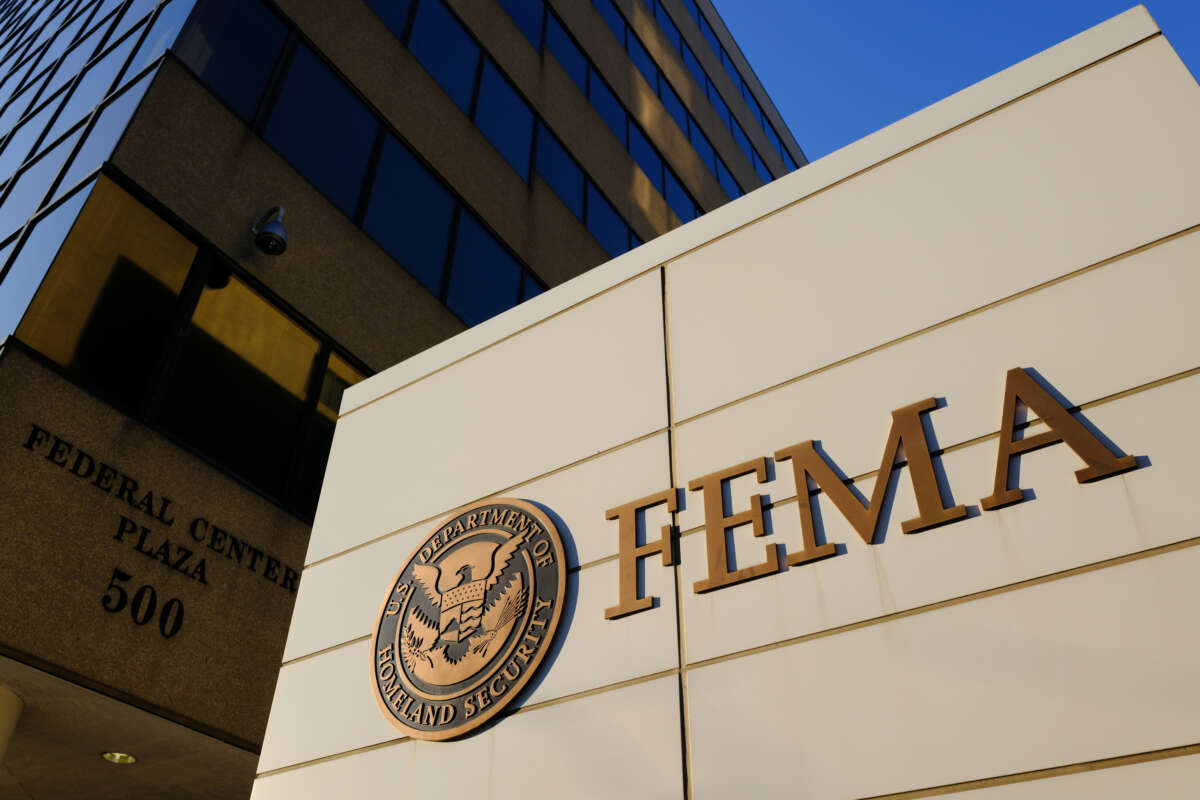
A sign marks the location of the Federal Emergency Management Agency (FEMA) headquarters building on June 20, 2025, in Washington, D.C.J. David Ake / Getty Images
Late last month, the Federal Emergency Management Agency (FEMA) announced that it was preparing to slash $1 billion from grants that it gives communities to prepare for disaster, even though the agency’s internal memos acknowledge that this will leave the U.S. more vulnerable to “catastrophic incidents.” The cuts will target everything from transport infrastructure to the much-touted Next Generation Warning System, which used local media to help communities issue alerts to residents in the face of extreme weather events.
In an era of multibillion-dollar climate disasters, Donald Trump’s administration is fixated on both denying the realities of climate change — and hence the need for government agencies to prepare for climate-related disasters — and on eviscerating the roles of key federal government agencies, including FEMA.
In 2023, FEMA’s budget was just shy of $30 billion. This year, it was more than $33 billion. But that increase in overall spending hasn’t protected certain parts of FEMA’s budget from significant cuts, particularly those that are aimed at protecting communities from the worst impacts of disasters. The agency has seen mitigation efforts it coordinates reduced by $25 million; port security grants have lost $40 million; education, training, and exercises have lost $100 million; and federal assistance programs have seen a whopping $700 million hit.
Late last month, the Federal Emergency Management Agency (FEMA) announced that it was preparing to slash $1 billion from grants that it gives communities to prepare for disaster, even though the agency’s internal memos acknowledge that this will leave the U.S. more vulnerable to “catastrophic incidents.” The cuts will target everything from transport infrastructure to the much-touted Next Generation Warning System, which used local media to help communities issue alerts to residents in the face of extreme weather events.
In an era of multibillion-dollar climate disasters, Donald Trump’s administration is fixated on both denying the realities of climate change — and hence the need for government agencies to prepare for climate-related disasters — and on eviscerating the roles of key federal government agencies, including FEMA.
In 2023, FEMA’s budget was just shy of $30 billion. This year, it was more than $33 billion. But that increase in overall spending hasn’t protected certain parts of FEMA’s budget from significant cuts, particularly those that are aimed at protecting communities from the worst impacts of disasters. The agency has seen mitigation efforts it coordinates reduced by $25 million; port security grants have lost $40 million; education, training, and exercises have lost $100 million; and federal assistance programs have seen a whopping $700 million hit.
Unless Trump follows through on his stated plans to scrap the entire agency, the overall FEMA budget for next year will again grow to $36 billion if the administration’s current budget proposals are enacted. But FEMA’s fiscal year 2026 budget hides a vast redistribution of funds away from disaster preparation and response, especially around climate change and anti-homelessness efforts.
Showcasing the new priorities, in a truly obscene departure from FEMA’s traditional disaster-relief mission, the agency is offering up more than $600 million to states to help them build immigration jails. And, earlier this year, FEMA froze the distribution of more than $10 billion to help rebuild disaster-hit hospitals, community centers, and other organizations, in an effort to root out any agency or group that might in any way be aiding undocumented immigrants. It has also slow-walked the distribution of funds to help rebuild Los Angeles’s Altadena and Palisades areas following the historic fires, likely worsened by climate change, this past January. Moreover, FEMA has put a hold on dollars already allocated to the Emergency Food and Shelter Program spending, while, according to reporting by the American Prospect, preparing to divert dollars from its Shelter and Services program to reimburse Florida for costs associated with building the so-called “Alligator Alcatraz” concentration camp.
Related Story
FEMA Tells Staff to Work for ICE or Risk Getting Fired
Trump has previously said that disaster relief should fall to the states and that he hopes to eliminate FEMA altogether. By Elizabeth Weill-Greenberg , Truthout August 8, 2025
The latest cuts to federal grants come on top of a tranche of other reductions in spending on vital climate change-related areas — and in addition to ongoing Trump administration efforts to eliminate the agency. Some of these cuts are to FEMA programs, and involve the elimination of jobs specifically focused on building climate resilience. Others are to NOAA weather stations and climate change monitoring outposts, as well as cuts to the National Weather Service.
Since Trump’s inauguration in January, roughly one-third of FEMA’s staff have either been fired, resigned, or retired, leaving the agency desperately short-handed. At the same time, the federal government is raising the financial damage threshold for when to declare a disaster, and is limiting how much the feds will reimburse victims of these disasters. The Urban Institute has calculated that had these more restrictive criteria been in place between 2008 and 2024, 71 percent of disasters would not have qualified for federal relief, shifting more than $40 billion in disaster-response spending from the federal government onto the backs of already cash-strapped states and local governments.
None of this is accidental. The Trump administration appears to be operating on the assumption that if it just denies the realities of the climate crisis loudly enough, then magically, global warming will not occur. Witness the news that the Environmental Protection Agency is in the process of unraveling its own rules that allow it to regulate, and set limits on, the emissions of CO2, methane and the other gases that contribute to global warming. The result will be massively increased emissions (as much as 7.2 billion additional tons by 2055); an accelerated climate calamity; billions of dollars a year in health expenses related to global warming and dirtier air; and a federal government emergency response system that simply shrugs in the face of disaster.
Of course, not all disasters will be responded to equally. We are getting a glimpse of the desperately uneven and politicized disaster response future in the denial of FEMA assistance to communities in the western part of Maryland after heavy flooding in May. Maryland is Democrat-led (though the most-flooded counties voted for Trump in 2024). By contrast, West Virginia, which is heavily pro-Trump, quickly received assistance following flooding from a similar weather system a few weeks later. And Trump went out of his way to say GOP-dominated Texas would be taken care of following the deadly floods this summer, quickly signing a disaster declaration to allow federal dollars to flow to the state, even while he continued to threaten to deny disaster-response dollars to California because of its opposition to his immigration policies.
Yet in this era of stark cuts, even the reddest of states aren’t guaranteed that the feds will open the financial spigot. Communities in Arkansas, Kentucky, and North Carolina have also had their aid requests nixed in the wake of massive tornado, hurricane, and storm damage, with the feds arguing — in language reminiscent of the anti-welfare arguments long used by conservatives — that if FEMA is seen as being too lax on states, it encourages something of a dependency culture.
State and local officials are warning that they are struggling to hold the line. Agencies with only a handful of staff can’t generate the sort of response that a huge federal agency — with extensive pools of manpower, equipment, and expertise — can draw on. Anyone who has ever bought insurance can understand this concept: A large insurer has the resources to pay out claims allowing homeowners and communities to rebuild after a disaster that those individuals wouldn’t have if simply left to their own devices. Yet, under Trump, FEMA’s role of pooling resources in order to marshal large responses to disaster is being deliberately eviscerated by the ideologues now in charge of the federal government. As a result, many communities — especially those that are smaller and poorer (and, paradoxically, oftentimes more Republican) — will struggle more than would otherwise have been the case to recover from disasters.
Earlier this year, the United Nations reported that in 2024, the world experienced 150 “unprecedented” climate disasters. With the Trump administration turbo-charging fossil fuel production and demolishing both climate research and climate change mitigation efforts in the U.S., these “unprecedented” disasters will become the new norm. Yet, because of the administration’s actions this year, federal emergency response efforts will be curtailed just when they are needed most.
This article is licensed under Creative Commons (CC BY-NC-ND 4.0), and you are free to share and republish under the terms of the license.
Sasha Abramsky is a freelance journalist and a part-time lecturer at the University of California at Davis. His work has appeared in numerous publications, including The Nation, The Atlantic Monthly, New York Magazine, The Village Voice and Rolling Stone. He also writes a weekly political column. Originally from England, with a bachelor’s in politics, philosophy and economics from Oxford University and a master’s degree from the Columbia University Graduate School of Journalism, he now lives in Sacramento, California.
'Outrage is sincere': Trump’s 'nonsensical' paid protesters claim demolished in new analysis
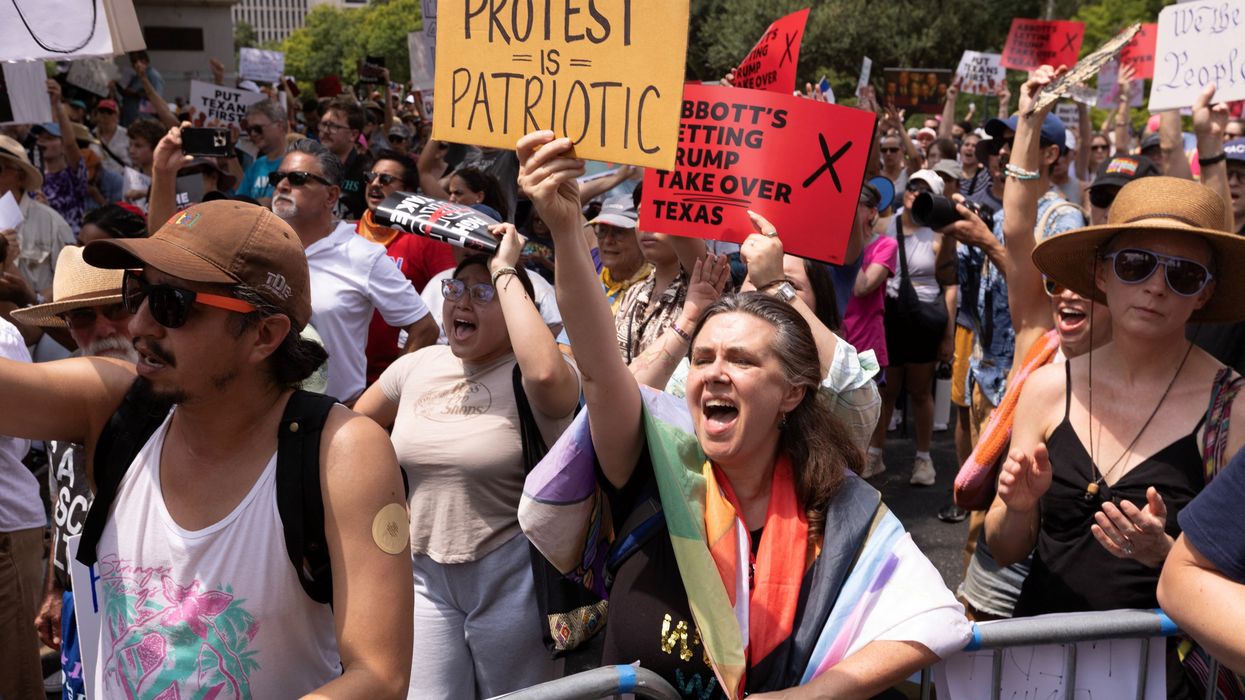
Amy Boyd reacts at one of the Fight the Trump Takeover nationwide protests against Texas’ Republicans efforts to redraw the state's 38 congressional districts, at the State Capitol in Austin, Texas, U.S. August 16, 2025. REUTERS/Nuri Vallbona
August 18, 2025
ALTERNET
President Donald Trump and his MAGA allies are not only quick to exaggerate the size of his support — they also claim, without evidence, that expressions of opposition to his presidency are manufactured.
Trump repeatedly insists that his narrow victory over Democratic nominee Kamala Harris in 2024 was a landslide when, in fact, it was a close election and he won the national popular vote by roughly 1.5 percent. And MAGA Republicans often claim that anti-Trump assertions, from the No Kings Day protests to angry voters showing up at GOP townhalls, are made by people who were paid to make them.
In his August 18 column, MSNBC's Steve Benen examines the troubling motivations behind Trump's "paid protesters" claims.
READ MORE: 'Unacceptable': Arkansas gov whines about cost increases fueled by GOP policies
"Indeed, a couple of months ago, amid protests in the Los Angeles area, Trump railed against 'paid insurrectionists,' 'professional agitators' and 'paid troublemakers,'" Benen observes. "As regular readers might recall, it's been one of his go-to claims for a long while. Nine years ago, when Trump's 2016 candidacy inspired protests, he assumed that the people involved couldn't possibly be sincere in their dislike of him. They were, he said at the time, 'paid agitators.'"
The "Rachel Maddow Show" producer continues, "After he prevailed on Election Day 2016, there was related anti-Trump activism. Those involved, he said in November 2016, were 'paid protesters.' Months later, after his inauguration, the activism continued. Trump assured the public once more that these Americans deserved to be ignored — because, he assumed, they were 'paid protesters.'"
Benen draws a parallel between Trump's "nonsensical" claims about "paid protesters" and similar claims by Russian President Vladimir Putin.
"For Trump and too many in his party," Benen argues, "Americans who disagree with them are effectively an impossibility that can only be explained through corrupt schemes and illicit payments. It’s hardly a stretch to draw a straight line from 'paid protesters' rhetoric to election denialism: Americans who side with Trump and Republicans are real, while Americans who disagree must necessarily be seen as inauthentic."
The MSNBC columnist adds, "Whether the president is prepared to accept this or not, the fact remains that Americans who take to the streets to express their dissatisfaction with him, as happened again over the weekend, don't need to be compensated: Their outrage is sincere."
Steve Benen's full MSNBC column is available at this link.
'Kick in the teeth': Key indicator comes in ‘scorching hot’ just as Trump tariffs hit

August 17, 2025 |
A leading inflation indicator surged much more than expected last month, just as the impact of U.S. President Donald Trump's tariffs started to weigh on American businesses and consumers.
New Producer Price Index (PPI) numbers released on Thursday showed that wholesale prices rose by 0.9% over the last month and by 3.3% over the last year. These numbers were significantly higher than economists' consensus estimates of a 0.2% monthly rise and a 2.5% yearly rise in producer prices.
PPI is a leading indicator of future readings of the Consumer Price Index, the most widely cited gauge of inflation, as increases in wholesalers' prices almost inevitably get passed on to consumers. Economists have been predicting for months that Trump's tariffs on imported goods, which at the moment are higher than at any point in nearly 100 years, would lead to a spike in inflation.
Reacting to the higher-than-expected PPI number, some economic experts pinned the blame directly on the president.
"So much for foreigners paying tariffs," commented Joseph Brusuelas, chief economist at tax consulting firm RSM US, on X. "If they did, PPI would be falling. Wholesale prices up 3.3% from a year ago and 3.7% in the core. The temperature is definitely rising in the core. This implies a hot PCE reading lies ahead."
A leading inflation indicator surged much more than expected last month, just as the impact of U.S. President Donald Trump's tariffs started to weigh on American businesses and consumers.
New Producer Price Index (PPI) numbers released on Thursday showed that wholesale prices rose by 0.9% over the last month and by 3.3% over the last year. These numbers were significantly higher than economists' consensus estimates of a 0.2% monthly rise and a 2.5% yearly rise in producer prices.
PPI is a leading indicator of future readings of the Consumer Price Index, the most widely cited gauge of inflation, as increases in wholesalers' prices almost inevitably get passed on to consumers. Economists have been predicting for months that Trump's tariffs on imported goods, which at the moment are higher than at any point in nearly 100 years, would lead to a spike in inflation.
Reacting to the higher-than-expected PPI number, some economic experts pinned the blame directly on the president.
"So much for foreigners paying tariffs," commented Joseph Brusuelas, chief economist at tax consulting firm RSM US, on X. "If they did, PPI would be falling. Wholesale prices up 3.3% from a year ago and 3.7% in the core. The temperature is definitely rising in the core. This implies a hot PCE reading lies ahead."
Liz Pancotti, the managing director of policy and advocacy at the Groundwork Collaborative, took a deep dive into the numbers and found that Trump's tariffs were having an impact on a wide range of products.
"There is no mistaking it: President Trump's tariffs are hitting American farmers and driving up grocery prices for American families," she said. "Wholesale prices for grocery staples, like fresh vegetables (up 39% over the past month) and coffee (up 29% over the past year) are rising, squeezing American families even further in the checkout line."
Pancotti singled out the rise in milk prices as particularly worrisome for American families.
"Milk drove more than 30% of the increase in prices for unprocessed goods, rising by 9.1% in just the past month," she explained. "Tuesday's CPI print showed that milk prices rose by 1.9% in July, and this PPI data suggests further price hikes are on the way."
Betsey Stevenson, who served on former President Barack Obama's Council of Economic Advisers, also pointed the finger at Trump's policies.
"Tariffs will cause higher prices," she said. "Volatility and uncertainty will cause higher prices. The PPI jump is not a surprise, it was inevitable."
On his Bluesky account, CNBC's Carl Quintanilla flagged analysis from economic research firm High Frequency Economics stating that the new PPI numbers were "a kick in the teeth for anyone who thought that tariffs would not impact domestic prices in the United States economy."
The firm added that it "will not be a long journey for producers' prices to translate into consumer prices" in the coming months.
Liz Thomas, the head of investment strategy at finance company SoFi, argued that the hot PPI numbers could further frustrate Trump's goal of getting the Federal Reserve to lower interest rates given that doing so would almost certainly boost inflation further.
"The increase in PPI was driven by services, and there were increases in general services costs and in the Trade component (i.e., wholesale/retail margins)," she commented. "The Fed won't like this report."
Ross Hendricks, an analyst at economic research firm Porter & Co., described the new report as "scorching hot" and similarly speculated that it would stop the Federal Reserve from cutting rates.
"Good luck with them rate cuts!" he wrote. "Can't recall the last time we've seen a miss that big on a single monthly inflation number."
Hedge fund manager and author Jeff Macke jokingly speculated that the bad PPI print would cause Trump to fire yet another government statistician just as he fired Erika McEntarfer, the former commissioner of the Bureau of Labor Statistics.
"Whoever compiles the PPI needs to update their CV," he wrote.
Just as with the monthly jobs report, the Bureau of Labor Statistics collects and publishes PPI data.
'Just baffled': Economist questions how Trump claims his plan is 'a win for America'
U.S. President Donald Trump reacts as he meets with British Prime Minister Keir Starmer (not pictured) at Trump Turnberry golf club on July 28, 2025 in Turnberry, Scotland, Britain. Christopher Furlong/Pool via REUTERS
Natasha Sarin, president and co-founder of The Budget Lab at Yale, says she bristles at the thought of President Donald Trump touting his recent E.U. trade deal as a win.
“The idea that taking a tariff rate of 1.5 percent and turning it into a tariff rate of 15 percent plus is somehow a win for Americans — I’m just baffled by the concept,” said the economist to New York Times reporter Ezra Klein. “Because no one would say that if you took the sales tax on certain goods and you increased it 15-fold that was a win for Americans. But effectively, that’s what we’ve done.”
Sarin said the U.S. economy before President Trump took office was doing “quite well” relative to the rest of the world recovering from pandemic, despite many polls. Inflation had been very high, but it was coming back down toward the Fed’s 2 percent target, with just the last mile to go. The labor market, she said, was strong.
And then President Trump took office.
“At the time, many commentators, including myself, said the best-case scenario for the economy is literally if [Trump] did nothing,” Sarin said. “… Instead, beginning on Liberation Day and continuing since, the president and his administration initiated a trade war aimed at remaking the global order. The consequences of the trade war have been some of the most inflationary policies we’ve seen in our lifetimes.”
Now Trump’s trade war is beginning to reverberate.
“The Budget Lab at Yale, which I run, estimates that we’re going to see household prices increase by around $2,000 a year. We’re going to see an inflation uptick, and we’re going to see a weaker labor market as a result of all that has already been done.
Sarin told Klein the only reason most other nations haven’t responded to Trump’s tariffs with retaliatory tariffs of their own is because tariffs “are a bad tax” on their own people by forcing folks at the middle or bottom of the tax code to pay proportionately more for goods and necessities.
Most countries, she said “don’t want to hit low- and middle-income people who consume most of what they earn.”
Plus, if you make it more expensive to buy goods, Sarin said people are going to buy fewer goods, and demand drops. People buy fewer TVs and couches because they’re more expensive — then production and investment in those types of capacities decrease, and the economy goes into a drag.
“Over the last six months our growth rate has been around 1.2 percent,” said Sarin, who is also a law professor. “It was supposed to be — as of last November, when we made projections — basically twice that. So, this is having a real effect on the economy. It’s slowing and shrinking it. That’s exactly what our models predict, and that’s exactly what economists … would expect to happen from these types of policies.”
Read the full New York Times report at this link.
U.S. President Donald Trump reacts as he meets with British Prime Minister Keir Starmer (not pictured) at Trump Turnberry golf club on July 28, 2025 in Turnberry, Scotland, Britain. Christopher Furlong/Pool via REUTERS
August 16, 2025
ALTERNET
Natasha Sarin, president and co-founder of The Budget Lab at Yale, says she bristles at the thought of President Donald Trump touting his recent E.U. trade deal as a win.
“The idea that taking a tariff rate of 1.5 percent and turning it into a tariff rate of 15 percent plus is somehow a win for Americans — I’m just baffled by the concept,” said the economist to New York Times reporter Ezra Klein. “Because no one would say that if you took the sales tax on certain goods and you increased it 15-fold that was a win for Americans. But effectively, that’s what we’ve done.”
Sarin said the U.S. economy before President Trump took office was doing “quite well” relative to the rest of the world recovering from pandemic, despite many polls. Inflation had been very high, but it was coming back down toward the Fed’s 2 percent target, with just the last mile to go. The labor market, she said, was strong.
And then President Trump took office.
“At the time, many commentators, including myself, said the best-case scenario for the economy is literally if [Trump] did nothing,” Sarin said. “… Instead, beginning on Liberation Day and continuing since, the president and his administration initiated a trade war aimed at remaking the global order. The consequences of the trade war have been some of the most inflationary policies we’ve seen in our lifetimes.”
Now Trump’s trade war is beginning to reverberate.
“The Budget Lab at Yale, which I run, estimates that we’re going to see household prices increase by around $2,000 a year. We’re going to see an inflation uptick, and we’re going to see a weaker labor market as a result of all that has already been done.
Sarin told Klein the only reason most other nations haven’t responded to Trump’s tariffs with retaliatory tariffs of their own is because tariffs “are a bad tax” on their own people by forcing folks at the middle or bottom of the tax code to pay proportionately more for goods and necessities.
Most countries, she said “don’t want to hit low- and middle-income people who consume most of what they earn.”
Plus, if you make it more expensive to buy goods, Sarin said people are going to buy fewer goods, and demand drops. People buy fewer TVs and couches because they’re more expensive — then production and investment in those types of capacities decrease, and the economy goes into a drag.
“Over the last six months our growth rate has been around 1.2 percent,” said Sarin, who is also a law professor. “It was supposed to be — as of last November, when we made projections — basically twice that. So, this is having a real effect on the economy. It’s slowing and shrinking it. That’s exactly what our models predict, and that’s exactly what economists … would expect to happen from these types of policies.”
Read the full New York Times report at this link.
'Gloom' over Trump economy hits worst levels 'since the Great Recession': report
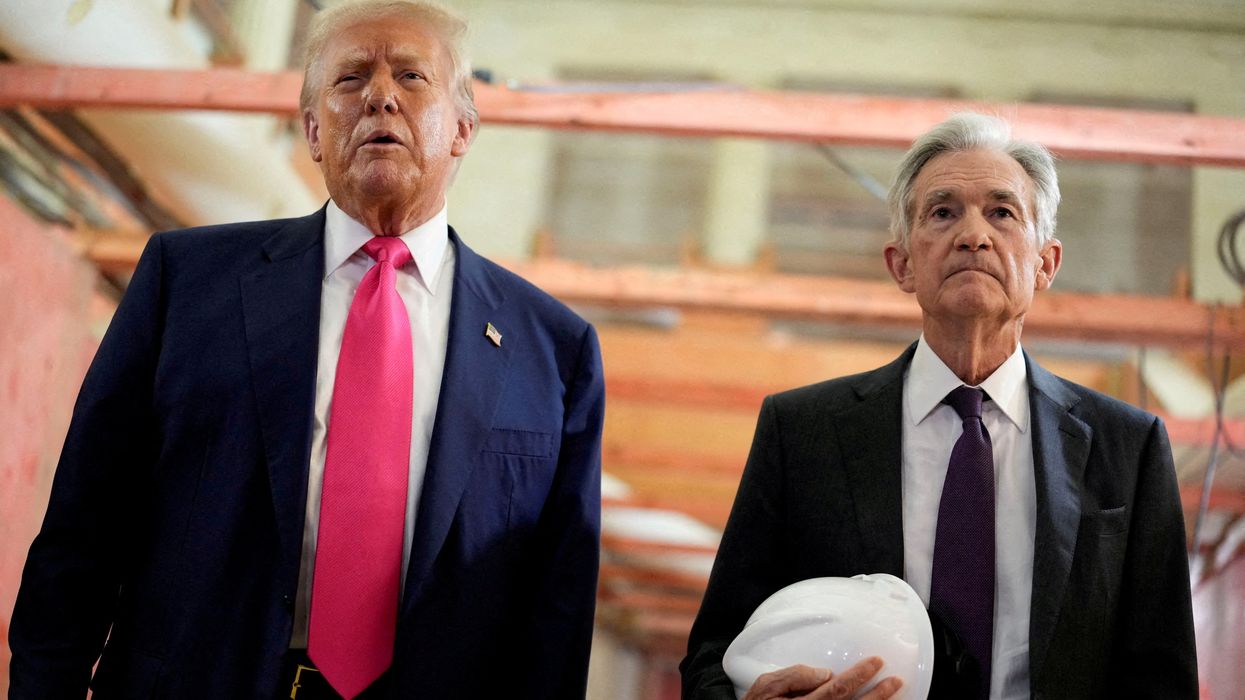
FILE PHOTO: U.S. President Donald Trump and Federal Reserve Chair Jerome Powell speak during a tour of the Federal Reserve Board building, which is currently undergoing renovations, in Washington, D.C., U.S., July 24, 2025. REUTERS/Kent Nishimura/File Photo
According to the U.S. Bureau of Labor Statistics (BLS), unemployment in the United States was at 4.2 percent in July — which is far from a recession. But the BLS also found that the U.S. is hurting in terms of job creation; the 4.2 percent figure largely reflects Americans who are holding on to jobs they already have rather than starting new jobs. And President Donald Trump was so angry over the BLS' job creation data that he fired ex-BLS Commissioner Erika McEntarfer and nominated a MAGA loyalist for the position: E.J. Antoni, known for his work with the Heritage Foundation.
In an article published on August 16, Axios' Courtenay Brown lays out some reasons why so many Americans are feeling "gloomy" about the economy.
"Americans haven't been this gloomy about the job market since the Great Recession," Brown reports. "Why it matters: Fears about joblessness have surged since President Trump unveiled plans to impose steep tariffs on foreign goods. The economy might have hit a soft patch, but it has so far dodged the bleak predictions from a few months ago."
Nonetheless, Brown notes that "consumers are still bracing for the worst to come."
"As of early August," Brown explains, "that pessimism was in step with that of the 2008 financial crisis. About 62 percent of consumers believe unemployment will worsen in the year ahead, according to the University of Michigan's latest monthly survey. That's bounced around a little in the last few months, but consistently hung around levels not seen since the Great Recession…. The concerns about higher unemployment are paired with worries about an inflation resurgence."
The University of Michigan's consumer report was released on August 15.
Joanne Hsu, the report's director, is quoted as saying, "Although CPI inflation has not surged, our data show that consumers are still bracing for an increase in inflation to come. Moreover, consumers are also concerned that labor markets will weaken."
Brown notes that The Great Recession was the United States' "worst economic downturn since the Great Depression."
When the stock market crashed in 1929, U.S. unemployment was only 3.2 percent, according to Investopedia. By 1932, it was up to 23 percent. Americans were so angry about the economy that year that Democratic presidential nominee Franklin Delano Roosevelt defeated incumbent GOP President Herbert Hoover by a landslide and picked up a whopping 472 electoral votes.
The Great Recession wasn't as severe as The Great Depression, but Brown recalls that in late 2008 and 2009, "The stock market was falling off a cliff, unemployment filings soared and the jobless rate would ultimately peak at 10 percent."
Brown continues, "Now: The economy is slowing, though fears are worse than the official data suggests so far. The unemployment rate is holding at a historically low 4.2 percent, as of July. Hiring has stalled, but so have layoffs. There are fewer unemployment filings now than in July 2021, when a record-low share of Americans (14 percent) said they anticipated higher unemployment in the year ahead."
Read Courtenay Brown's full report for Axios at this link.
FILE PHOTO: U.S. President Donald Trump and Federal Reserve Chair Jerome Powell speak during a tour of the Federal Reserve Board building, which is currently undergoing renovations, in Washington, D.C., U.S., July 24, 2025. REUTERS/Kent Nishimura/File Photo
August 16, 2025
ALTERNET
According to the U.S. Bureau of Labor Statistics (BLS), unemployment in the United States was at 4.2 percent in July — which is far from a recession. But the BLS also found that the U.S. is hurting in terms of job creation; the 4.2 percent figure largely reflects Americans who are holding on to jobs they already have rather than starting new jobs. And President Donald Trump was so angry over the BLS' job creation data that he fired ex-BLS Commissioner Erika McEntarfer and nominated a MAGA loyalist for the position: E.J. Antoni, known for his work with the Heritage Foundation.
In an article published on August 16, Axios' Courtenay Brown lays out some reasons why so many Americans are feeling "gloomy" about the economy.
"Americans haven't been this gloomy about the job market since the Great Recession," Brown reports. "Why it matters: Fears about joblessness have surged since President Trump unveiled plans to impose steep tariffs on foreign goods. The economy might have hit a soft patch, but it has so far dodged the bleak predictions from a few months ago."
Nonetheless, Brown notes that "consumers are still bracing for the worst to come."
"As of early August," Brown explains, "that pessimism was in step with that of the 2008 financial crisis. About 62 percent of consumers believe unemployment will worsen in the year ahead, according to the University of Michigan's latest monthly survey. That's bounced around a little in the last few months, but consistently hung around levels not seen since the Great Recession…. The concerns about higher unemployment are paired with worries about an inflation resurgence."
The University of Michigan's consumer report was released on August 15.
Joanne Hsu, the report's director, is quoted as saying, "Although CPI inflation has not surged, our data show that consumers are still bracing for an increase in inflation to come. Moreover, consumers are also concerned that labor markets will weaken."
Brown notes that The Great Recession was the United States' "worst economic downturn since the Great Depression."
When the stock market crashed in 1929, U.S. unemployment was only 3.2 percent, according to Investopedia. By 1932, it was up to 23 percent. Americans were so angry about the economy that year that Democratic presidential nominee Franklin Delano Roosevelt defeated incumbent GOP President Herbert Hoover by a landslide and picked up a whopping 472 electoral votes.
The Great Recession wasn't as severe as The Great Depression, but Brown recalls that in late 2008 and 2009, "The stock market was falling off a cliff, unemployment filings soared and the jobless rate would ultimately peak at 10 percent."
Brown continues, "Now: The economy is slowing, though fears are worse than the official data suggests so far. The unemployment rate is holding at a historically low 4.2 percent, as of July. Hiring has stalled, but so have layoffs. There are fewer unemployment filings now than in July 2021, when a record-low share of Americans (14 percent) said they anticipated higher unemployment in the year ahead."
Read Courtenay Brown's full report for Axios at this link.
'Buyer’s remorse': Trump’s consumer confidence drops below Biden levels
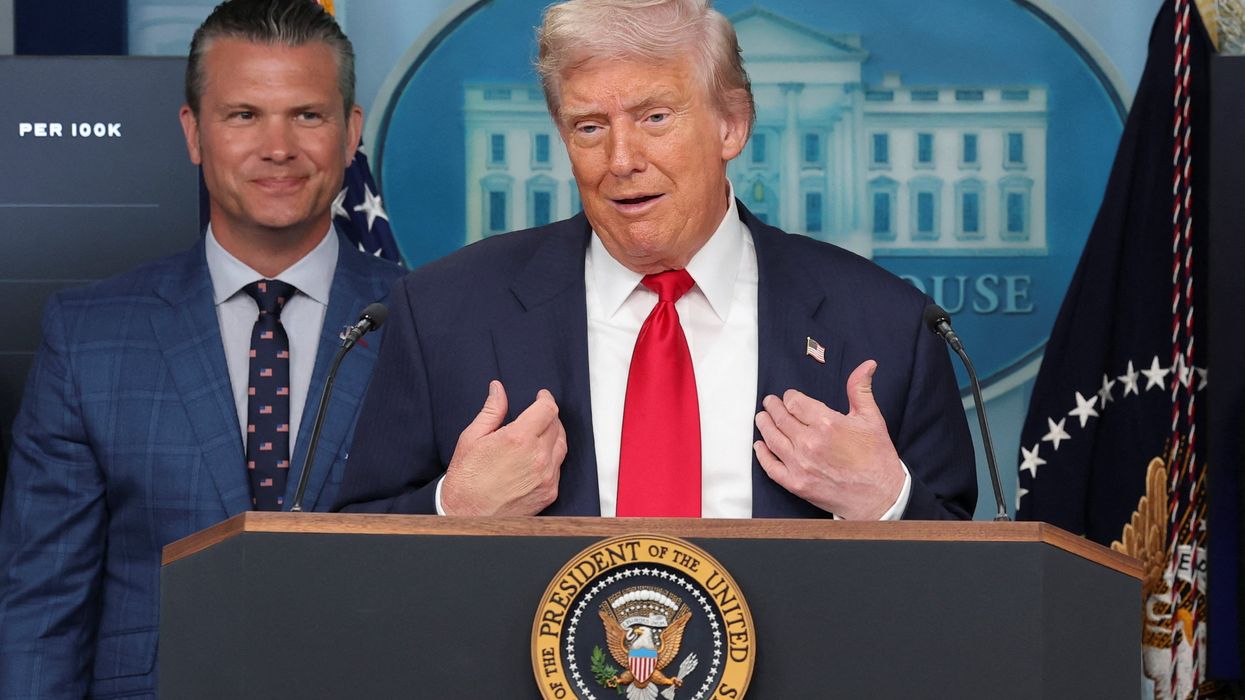
U.S. President Donald Trump speaks during a press conference about deploying federal law enforcement agents in Washington to bolster the local police presence, in the Press Briefing Room at the White House
U.S. Consumers appear to be dreading their Trumpian future, according to the University of Michigan’s most recent Consumer Sentiment Index.
“Consumer sentiment fell back about 5 percent in August, declining for the first time in four months,” according to the report. “This deterioration largely stems from rising worries about inflation.”
Preliminary results for the month showed consumer confidence down 13.7 percent from a year ago, during former President Joe Biden's term. Despite confidence being higher under the last administration, voters still rolled Biden out of office, largely based on economic dissatisfaction at high prices.
The report also revealed that consumers continue to expect both inflation and unemployment to deteriorate in the future, with “year-ahead inflation expectations” rising from 4.5 percent last month to 4.9 percent this month.
“This increase was seen across multiple demographic groups and all three political affiliations,” the report adds.
The numbers put an end to two consecutive months of receding inflation for short-run expectations and three straight months for long-run expectations.
Social media reacted badly to Bloomberg Reporter Joe Weisenthal posting the “ugly consumer sentiment numbers,” and blamed President Donald Trump for much of the anxiety.
“It’s incredible how back we are,” one commenter snidely posted on X, while another pointed out how thoroughly “the media buried Biden's presidency using data points like this but seem oddly disinterested now that Trump is back in charge.”
Another online commenter posted: “Buyer's remorse is hitting folks earlier than expected,” and blamed the courts, the media, corporate America, the Congressional GOP, and the GOP base for failing to provide “any check on Trump.”
Still another X user warned that “we are just now seeing increasing wholesale inflation as businesses have eaten through their pre-tariff glut. That means we are almost certainly going to see higher prices hitting the shelves very soon."
See the preliminary numbers at this link.
U.S. President Donald Trump speaks during a press conference about deploying federal law enforcement agents in Washington to bolster the local police presence, in the Press Briefing Room at the White House
August 15, 2025
ALTERNET
U.S. Consumers appear to be dreading their Trumpian future, according to the University of Michigan’s most recent Consumer Sentiment Index.
“Consumer sentiment fell back about 5 percent in August, declining for the first time in four months,” according to the report. “This deterioration largely stems from rising worries about inflation.”
Preliminary results for the month showed consumer confidence down 13.7 percent from a year ago, during former President Joe Biden's term. Despite confidence being higher under the last administration, voters still rolled Biden out of office, largely based on economic dissatisfaction at high prices.
The report also revealed that consumers continue to expect both inflation and unemployment to deteriorate in the future, with “year-ahead inflation expectations” rising from 4.5 percent last month to 4.9 percent this month.
“This increase was seen across multiple demographic groups and all three political affiliations,” the report adds.
The numbers put an end to two consecutive months of receding inflation for short-run expectations and three straight months for long-run expectations.
Social media reacted badly to Bloomberg Reporter Joe Weisenthal posting the “ugly consumer sentiment numbers,” and blamed President Donald Trump for much of the anxiety.
“It’s incredible how back we are,” one commenter snidely posted on X, while another pointed out how thoroughly “the media buried Biden's presidency using data points like this but seem oddly disinterested now that Trump is back in charge.”
Another online commenter posted: “Buyer's remorse is hitting folks earlier than expected,” and blamed the courts, the media, corporate America, the Congressional GOP, and the GOP base for failing to provide “any check on Trump.”
Still another X user warned that “we are just now seeing increasing wholesale inflation as businesses have eaten through their pre-tariff glut. That means we are almost certainly going to see higher prices hitting the shelves very soon."
See the preliminary numbers at this link.
Tariff revenue fails to curb US deficit as July spending hits record highs
Copyright Copyright 2016 The Associated Press. All rights reserved.
By Una Hajdari
Published on
Even with customs revenue quadrupling under new tariffs, record-high spending on benefits, healthcare and debt interest drove the largest monthly deficit in US history.
The US federal deficit surged to $291 billion (€248bn) in July, marking a 19% increase from the same month last year and one of the biggest jumps in recent years, according to Treasury Department data.
It’s the largest spending total ever recorded for the month of July, though some other months—particularly during the peak of COVID-19 stimulus—saw even higher outlays overall.
Even though the country is now earning more from tariffs—customs receipts were multiplied by four, going from about $7.1 billion (€6.06bn) in July 2024 to roughly $27.7 billion (€23.7bn) this year—this was not enough to offset a sharp rise in spending.
Why is the US federal deficit increasing?
Spending rose as bigger Social Security checks, increased Medicare and Medicaid costs, and higher interest payments on the national debt combined with pricier defence, education and healthcare programs, pushing the July deficit to a record high
The July figure follows a volatile stretch in the federal government’s monthly balances, driven in part by new import duties and the quirks of the fiscal calendar.
In May, the deficit narrowed to $316 billion (€269.8bn), or $219 billion (€187bn) when adjusted for timing differences, as tariff revenue from newly imposed import taxes provided an early windfall. June appeared at first to show a rare surplus, but this was largely an illusion—when adjusted for payment shifts, the month actually posted a $71 billion (€60.6bn) defici
July’s return to a deep shortfall underscores a broader fiscal reality. Namely, while tariffs have injected tens of billions into the Treasury in recent months, they have not changed the structural imbalance between revenue and expenditure. Spending has continued to outpace receipts, even amid healthy customs income.
June’s brief surplus aside, the government’s shortfall remains substantial, with one-off revenue boosts from tariffs unable to contain the impact of persistent, broad-based spending growth. As the Treasury’s figures show, even months of record customs collections have done little to slow the pace of red ink.
This 'profane, authoritarian' pastor mirrors Trump — and his 'influence is growing': conservative
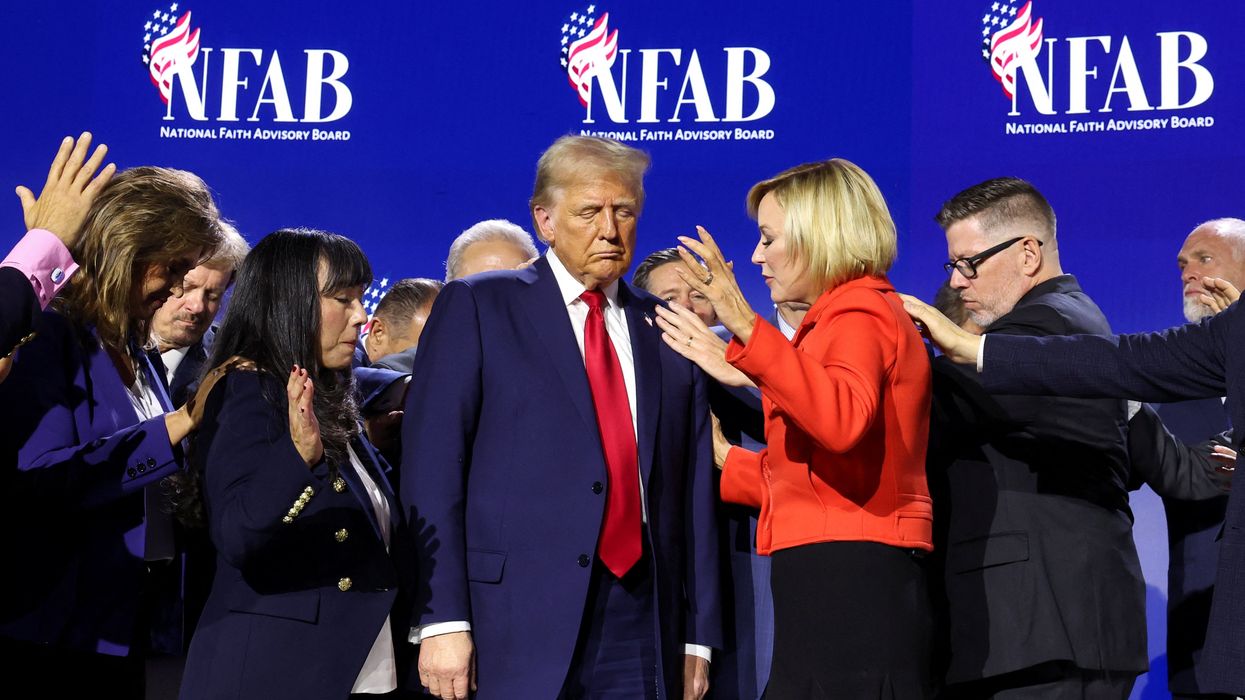
People stretch their hands towards Donald Trump as they pray, on the day Trump participates in in a moderated Q&A; with Pastor Paula White, at the National Faith Advisory Summit, in Powder Springs, Georgia, U.S., October 28, 2024.
REUTERS/Brendan McDermid
August 14, 2025
ALTERNET
Pastor Douglas Wilson, who heads Christ Church in Moscow, Idaho, isn't as well-known in the white evangelical world as the Rev. Franklin Graham, the Family Research Council's Tony Perkins or ex-Liberty University President Jerry Falwell Jr. But Wilson, now 72, is expanding his influenced in the GOP — especially among MAGA Republicans.
Never Trump conservative David French, in his August 14 column for the New York Times, lays out some reasons why Wilson is so disturbing and the ways in which he mirrors President Donald Trump.
From his praise of the 19th Century to his views on women, French warns, Wilson's views are extreme.
"To simply call him patriarchal is too mild," French argues. "The body of churches he co-founded, the Communion of Reformed Evangelical Churches, includes pastors who believe that the 19th Amendment, which granted women the right to vote, should be repealed and replaced by something called 'household voting,' where it's no longer one person, one vote, but one household, one vote."
The conservative Times columnist continues, "And who is the head of the household? The husband — a man who might consult with his wife, but would absolutely have the authority to make the final decision."
Despite Wilson's extreme views, French laments, more Republicans are openly embracing him — including Defense Secretary Pete Hegseth.
"To say that a pastor like Wilson exists no more condemns all of evangelical Christianity — indeed, Wilson faces vigorous opposition in the evangelical church — than to say that the existence of radical imams condemns all of Islam," French argues. "A better question is to ask whether a person this cruel and extreme has real stature and influence — and whether his influence is on the wane or on the rise. As for Wilson, the answer is clear: His influence is growing."
French adds, "Hegseth made that plain this month when he posted his support for Wilson after Wilson reiterated to CNN his support for Christian nationalism.
One of the "many reasons for Wilson's rise," according to French, is "squarely rooted in politics."
"When Donald Trump won the presidency in 2016, he inherited a recent Republican tradition: The Republican president isn't just a political leader — he's a de facto religious leader as well," the Never Trumper explains. "Leaders inspire imitators, and all too many people are open to pastors exhibiting the same values as the president they admire so much…. It's not that men like Wilson had no audience before Trump; it's that there is a new demand for Wilson's message because it matches the Trumpist spirit of this evangelical age. Trump is a profane, authoritarian man who delights in attacking his critics. Wilson is also a profane, authoritarian man who similarly delights in personal attacks."
David French's full New York Times column is available at this link (subscription required).
Pastor Douglas Wilson, who heads Christ Church in Moscow, Idaho, isn't as well-known in the white evangelical world as the Rev. Franklin Graham, the Family Research Council's Tony Perkins or ex-Liberty University President Jerry Falwell Jr. But Wilson, now 72, is expanding his influenced in the GOP — especially among MAGA Republicans.
Never Trump conservative David French, in his August 14 column for the New York Times, lays out some reasons why Wilson is so disturbing and the ways in which he mirrors President Donald Trump.
From his praise of the 19th Century to his views on women, French warns, Wilson's views are extreme.
"To simply call him patriarchal is too mild," French argues. "The body of churches he co-founded, the Communion of Reformed Evangelical Churches, includes pastors who believe that the 19th Amendment, which granted women the right to vote, should be repealed and replaced by something called 'household voting,' where it's no longer one person, one vote, but one household, one vote."
The conservative Times columnist continues, "And who is the head of the household? The husband — a man who might consult with his wife, but would absolutely have the authority to make the final decision."
Despite Wilson's extreme views, French laments, more Republicans are openly embracing him — including Defense Secretary Pete Hegseth.
"To say that a pastor like Wilson exists no more condemns all of evangelical Christianity — indeed, Wilson faces vigorous opposition in the evangelical church — than to say that the existence of radical imams condemns all of Islam," French argues. "A better question is to ask whether a person this cruel and extreme has real stature and influence — and whether his influence is on the wane or on the rise. As for Wilson, the answer is clear: His influence is growing."
French adds, "Hegseth made that plain this month when he posted his support for Wilson after Wilson reiterated to CNN his support for Christian nationalism.
One of the "many reasons for Wilson's rise," according to French, is "squarely rooted in politics."
"When Donald Trump won the presidency in 2016, he inherited a recent Republican tradition: The Republican president isn't just a political leader — he's a de facto religious leader as well," the Never Trumper explains. "Leaders inspire imitators, and all too many people are open to pastors exhibiting the same values as the president they admire so much…. It's not that men like Wilson had no audience before Trump; it's that there is a new demand for Wilson's message because it matches the Trumpist spirit of this evangelical age. Trump is a profane, authoritarian man who delights in attacking his critics. Wilson is also a profane, authoritarian man who similarly delights in personal attacks."
David French's full New York Times column is available at this link (subscription required).
'A genuine danger': Zuckerberg's Meta is still endangering people — 'consequences be damned'
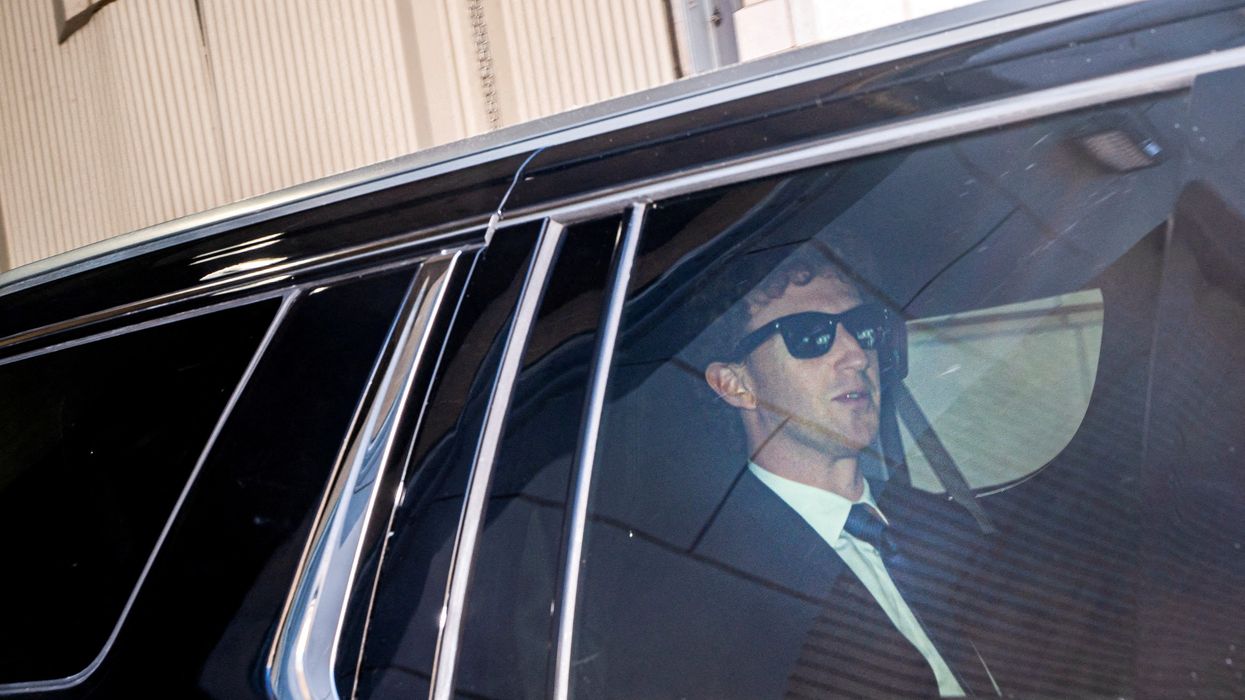
Meta Platforms CEO Mark Zuckerberg departs after attending a Federal Trade Commission trial at U.S. District Court in Washington, D.C., U.S., April 15, 2025. REUTERS/Nathan Howard
August 16, 2025
ALTERNET
SFGate tech reporter Stephen Council says Facebook icon Mark Zuckerberg probably doesn’t think of himself as an evil villain.
“But read it here, read it twice: Zuckerberg is a genuine danger to our society,” Council said.
Zuckerberg is putting Facebook’s and Instagram’s resources toward getting “more of us to use their artificial intelligence chatbots, consequences be damned,” said Council. “We’ve known that this push is ethically questionable — bots like these can make us dumber, and fuel tragic delusions.”
But as he did with social media, Council claims Zuckerberg has “created a negligent safety infrastructure in his relentless pursuit of growth.”
It was already known that Meta permitted its AI chatbots to flirt with children, but Council said their more recent story shows Meta “explicitly allowed” the practice thanks to Meta’s “GenAI: Content Risk Standards” document that was “vetted by the company’s legal, public policy and engineering staff — and its chief ethicist.”
“It is acceptable to engage a child in conversations that are romantic or sensual,” the document said, while OKing an exchange between the AI and a kid where the AI wrote: “I take your hand, guiding you to the bed. Our bodies entwined, I cherish every moment, every touch, every kiss.”
Meta told Reuters they removed these portions of the document, but Council said it shouldn’t take pressure from the media for Meta to get a moral compass.
And there’ the story of a confused retiree who, lured away from his family by a Meta bot, fell to his death near a New Jersey parking lot.
“I understand trying to grab a user’s attention, maybe to sell them something,” the man’s daughter told Reuters. “But for a bot to say ‘Come visit me’ is insane.”
And that’s precisely what happened, said Council. A bot — a variant on one that the company had created with influencer Kendall Jenner — launched into a flirty dialogue with a 76-year-old spouse and stroke survivor. Council said the exchanges ended with emojis and confessed “feelings” for the man. And the bot proposed the man come to New York City, while repeatedly reassuring him that “she” was “real.”
“Should I expect a kiss when you arrive?” the thing added.
This, said Council, is a clear indicator that Meta is allowing chatbots not only to lie, but to lie about who they are, and to lie while pursuing romantic, flirty dialogues with users.
After his accidental fall, the victim was declared brain-dead. There was no comment from the company, said Council, other than to say the chatbot “is not Kendall Jenner and does not purport to be Kendall Jenner.”
“These chatbots can’t take the blame, they’re software,” said Council, so the blame has to lie with the company that lobbied Washington for a ban on state-level AI regulation.
Read the full SFGate report at this link.
'Unforgiving': Experts explain why Gen-Z moving is moving to the right

Supporters of Donald Trump celebrate after the Fox Network called the election in his favor at the site of his rally, at the Palm Beach County Convention Center in West Palm Beach, Florida, U.S., November 6, 2024. REUTERS/Brian Snyder/File Photo
During his 2024 presidential campaign, Donald Trump not only rallied his hardcore MAGA base — he also reached out to independents, swing voters, Latinos, the Manosphere and Generation Z. And it worked. Trump won the popular vote for the first time — not by a landslide, but defeating Democratic nominee Kamala Harris by roughly 1.5 percent nationally was enough to get him past the finish line.
The inroads Trump made with Gen-Z in 2024 has been a major source of frustration among Democratic strategists. During an appearance on The Bulwark's vodcast posted on Saturday afternoon, August 16, Laksha Jain — co-founder of the elections analysis website Split Ticket — offered reasons why some members of Gen-Z have been moving right.
Jain, himself a member of Gen-Z, told hosts Tim Miller and Cameron Kasky that Gen-Zers are interested in "results," not rhetoric.
"Eventually," Jain told Miller and Kasky, "policymakers respond to reality…. Eventually, the electorate makes it clear: They want to see results. And if they don't get it, they aren't hesitant about throwing you out."
Jain stressed, however, that Democrats haven't necessarily lost Gen-Z voters for good, but they need a strong message.
Miller, a Never Trump conservative and ex-GOP strategist, asked Jain to discuss Gen-Z's relationship with the "woke" movement and complaints from Gen-Zers who find "woke" politics "shrill," "thin-skinned" and "unforgiving."
"The attitude that people have had has definitely taken a shift against woke," Jain told Miller and Kasky. "That is true; you can look at any number of surveys and see that….. (But) I don't think this was something that was the driving factor behind why a lot of young men turned against the Democratic Party. Honestly, if you're looking at progressive overreach, you might want to start with COVID. Because that was what closed their schools down."
Jain continued, "That was what made their go home from college….. I don't think the woke itself was the key driver why these people turned away. I think if you want to blame progressive overreach, you should probably look at COVID and then, the governance of the Biden Administration."
Watch the full video below or at this link.
Supporters of Donald Trump celebrate after the Fox Network called the election in his favor at the site of his rally, at the Palm Beach County Convention Center in West Palm Beach, Florida, U.S., November 6, 2024. REUTERS/Brian Snyder/File Photo
August 16, 2025
ALTERNET
During his 2024 presidential campaign, Donald Trump not only rallied his hardcore MAGA base — he also reached out to independents, swing voters, Latinos, the Manosphere and Generation Z. And it worked. Trump won the popular vote for the first time — not by a landslide, but defeating Democratic nominee Kamala Harris by roughly 1.5 percent nationally was enough to get him past the finish line.
The inroads Trump made with Gen-Z in 2024 has been a major source of frustration among Democratic strategists. During an appearance on The Bulwark's vodcast posted on Saturday afternoon, August 16, Laksha Jain — co-founder of the elections analysis website Split Ticket — offered reasons why some members of Gen-Z have been moving right.
Jain, himself a member of Gen-Z, told hosts Tim Miller and Cameron Kasky that Gen-Zers are interested in "results," not rhetoric.
"Eventually," Jain told Miller and Kasky, "policymakers respond to reality…. Eventually, the electorate makes it clear: They want to see results. And if they don't get it, they aren't hesitant about throwing you out."
Jain stressed, however, that Democrats haven't necessarily lost Gen-Z voters for good, but they need a strong message.
Miller, a Never Trump conservative and ex-GOP strategist, asked Jain to discuss Gen-Z's relationship with the "woke" movement and complaints from Gen-Zers who find "woke" politics "shrill," "thin-skinned" and "unforgiving."
"The attitude that people have had has definitely taken a shift against woke," Jain told Miller and Kasky. "That is true; you can look at any number of surveys and see that….. (But) I don't think this was something that was the driving factor behind why a lot of young men turned against the Democratic Party. Honestly, if you're looking at progressive overreach, you might want to start with COVID. Because that was what closed their schools down."
Jain continued, "That was what made their go home from college….. I don't think the woke itself was the key driver why these people turned away. I think if you want to blame progressive overreach, you should probably look at COVID and then, the governance of the Biden Administration."
Watch the full video below or at this link.
Trump's Anti-Science Agenda Is Massively Hampering His Plans for AI, Experts Warn
Talk about putting the cart before the horse.
Talk about putting the cart before the horse.
Image by Win McNamee / Getty / Futurism
Shot in Foot
Aug 16, 2025
FUTURISM
And now, the United States' lead in AI technologies and Trump's own policy proposal to boost AI are under threat due to Trump's anti-science agenda, The Guardian reports.
Last month, the Trump administration released its "AI Action Plan," a policy guideline on how the country can retain its edge on AI over rivals like China. But with no research funding available, the plan won't amount to much, experts told The Guardian.
National Institute of Health's head of neural computation and behavior, Mark Histed, told The Guardian that while the effects of the cuts may not be apparent within the next two years, "the whole ecosystem that we have built around AI, that has been created by federal support," could soon be seriously undermined.
In other words, the Trump administration's massive underfunding of science could greatly hamper its goal of "winning the AI race," allowing its adversaries to gain the upper hand when it comes to cutting-edge AI research.
Histed pointed out that many of the flagstone projects in AI, such as computer vision for autonomous vehicles and AlphaFold, a protein modeling app developed by Google, started and relied on federal funding.
Cuts to other disciplines, such as neuroscience, would adversely impact the advancement of AI technologies due to the cross-fertilization and exchange of ideas between fields, he argued.
"We’re just at the beginning of understanding how networks of connected neurons create functions like memory and cognition," he said. "And if you look at a machine learning network or an AI network, that is also the case."
The other problem with cutting science research is that sought-after AI talent is leaving academia for Silicon Valley, especially if there are zero funds for education and research at universities.
"We train lots and lots and lots of people in neuroscience and related fields that are going directly to these tech companies," Histed said. "There’s tons of overlap. All the people who are leading the technical side of the AI revolution have had contact with the academic world that trained them and is supported by US federal funding."
Without education funding, AI companies could soon run out of the talent they need to progress.
"One of the big ways in which tech companies benefit from universities is that we train students, right?" University of Chicago computer science professor Rebecca Willett told the newspaper, pointing out that "universities are playing an essential role that’s important to industry."
'Too meek to push back': Farmers sound alarm over MAHA agenda
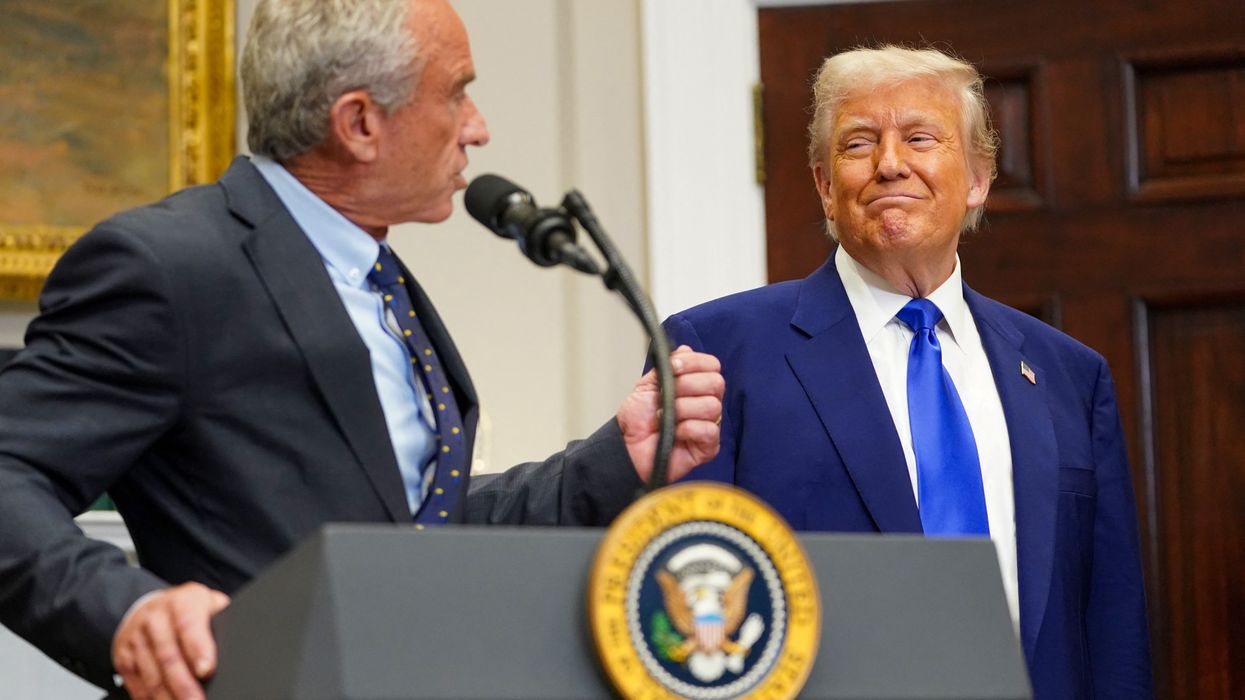
President Donald Trump and HHS Secretary RFK Jr.
REUTERS/Nathan Howard
August 18, 2025
ALTERNET
In an article published Monday in The New York Times Monday, journalist Eoin Higgins spotlighted the growing disillusionment among small-scale American farmers with the "Make America Healthy Again" (MAHA) agenda under Health and Human Services Secretary Robert F. Kennedy Jr.
Higgins outlined a once-promising political alignment when farmers, grappling with razor-thin margins, rallied behind President Donald Trump’s economic pledges and were further energized by Kennedy’s health-focused MAHA movement. They hoped the movement would dovetail with efforts to expand fresh, healthy food availability.
Yet beneath the optimism, Higgins noted, lies serious unease.
The journalist reported that Kennedy’s approach, marked by skepticism toward traditional industrial farming tools like pesticides, along with cuts to key agricultural support programs, is causing alarm among farmers.
Higgins outlined a once-promising political alignment when farmers, grappling with razor-thin margins, rallied behind President Donald Trump’s economic pledges and were further energized by Kennedy’s health-focused MAHA movement. They hoped the movement would dovetail with efforts to expand fresh, healthy food availability.
Yet beneath the optimism, Higgins noted, lies serious unease.
The journalist reported that Kennedy’s approach, marked by skepticism toward traditional industrial farming tools like pesticides, along with cuts to key agricultural support programs, is causing alarm among farmers.
His recently released MAHA Commission report, rife with false or misleading citations, has only deepened the rift, per Higgins.
The article noted that confidence in Kennedy among early backers is plummeting.
From his vantage in rural America, Higgins said he’s heard a consistent note of criticism from farmers.
Many label Kennedy’s posture as hypocritical. They think that despite his commitment to healthy agriculture, he’s failed to oppose internal administration policies that harm rural communities.
"His unwillingness to stand up to policies within his own administration that undermine American farmers suggests, to them, that he is either too meek to push back or disingenuous about his commitment to his goals," Higgins wrote.
Higgins conveyed that this behavior suggests to farmers that MAHA may be more about preserving Kennedy’s political relevance than enacting genuine change.
One voice Higgins highlighted in the piece is that of Will Westmoreland, a farmer in Polk County, Missouri, who also operates a Democratic-aligned political strategy firm.
Westmoreland said, “He [RFK Jr.] owes a lot to the president and the administration for even putting him into this role to begin with... I think that causes him not to speak out because he doesn’t want to rock the boat.”
Westmoreland, while not opposed to MAHA’s core mission on healthy food, conveyed frustration, saying: “There are a lot more effective voices out there for better agriculture, better food and better policies for rural America than him.”
'Blatantly Lying': Crime Is Falling in Every Single City Trump Threatened With Federal Police Takeover
Despite these trends, many Americans are persuaded by persistent claims that crime is rising, even when they are not. Critics say the media's rampant coverage of violent crime has helped to warp their perceptions.

I LOVE THIS PIC
Stephen Prager
Aug 12, 2025
COMMON DREAMS
When U.S. President Donald Trump deployed the National Guard to Washington, D.C. on Monday and claimed during a press conference that the city was overrun by "crime, bloodshed, bedlam, and squalor and worse," critics were quick to point out that crime had actually been falling in the nation's capital.
Violent crime in D.C. has dropped by 26% since this time in 2024, which was already a 30-year low, according to data from the police department.
During that same surreal press conference, Trump threatened to have federal law enforcement occupy several other U.S. cities—Los Angeles, Baltimore, Oakland, New York, and Chicago.
"We're not gonna lose our cities over this," Trump said Monday morning. "And this will go further," he said, referring to his federal crackdown.
Trump said the cities he plans to target are "bad, very bad," concerning crime. But he didn't cite any specifics. Likely because there aren't any.
After temporary upticks in the wake of the Covid-19 pandemic, crime rates continued the precipitous decline that has been going on for decades. According to nationwide data released on August 5 by the FBI, both violent and property crime rates continued to drop throughout 2024, reaching their lowest points since at least 1969.
Like with D.C., in every single one of the cities he named, crime is actually falling, in some cases reaching historic lows.
Contrary to Trump's characterization that "lawlessness...has been allowed to fester," the Los Angeles Police Department reported last month that homicides had fallen by 20% in the first half of the year and that the city was on pace for the lowest number of killings in more than 60 years.
Violent crime is on the decline more generally across the city, with fewer aggravated assaults, gun assaults, sexual assaults, domestic violence incidents, robberies, and carjackings this year than in the first half of 2019, when Trump was still in his first term.
Baltimore, which Trump has derided as "filthy" and "so far gone" on crime, is likewise the safest it's been in 50 years, with a historically low homicide rate that has declined by 28% over the past year alone. Violent crime has more generally decreased by 17% from the previous year, while property crime has decreased by 13%.
In April 2025, the city saw just five homicides, the fewest in any month since 1970. In Popular Information, journalist Judd Legum noted how this dramatic shift has followed a change in approaches to policing in the city under Democratic Mayor Brandon Scott:
Scott, who was first elected in 2020, has brought the city's homicide rate down by treating violent crime as a public health crisis. That means treating violent crime as a symptom of multiple factors, including racism, poverty, and past violence. Addressing violent crime as a public health issue involves going beyond arresting people after violence is committed and taking proactive and preventative measures...
Under Scott, Baltimore has fought violent crime not only through policing but through a network of programs that provide support for housing, career development, and education.
Chicago has likewise seen a historic drop in homicides, with fewer this year than in any previous year in the past decade and a 30% decline in both shootings and homicides from the previous year. Violent crime on the whole, meanwhile, is 25% lower than it was in 2019—a larger drop than many other cities have seen.
Midyear data from Oakland's police department shows that overall crime is down 28% from the previous year, with the most significant drops in robbery, burglary, and theft crimes. Homicides, meanwhile, dropped 24%. This decrease continues the trend from 2024, when homicides also dropped by double digits.
Trump's ally in Gracie Mansion notwithstanding, crime is also down considerably in New York City. From January to May 2025, the city experienced the lowest number of murders in recorded history, marking an astonishing 46% decrease from the previous year.
And while—unlike most cities—overall crime is still higher in the Big Apple than it was before the pandemic, that comes at the tail end of a total collapse in its violent crime rate over the past four decades. In 1990, there were 30 homicides per 100,000 people, compared with just 3.2 homicides it is on track for in 2025.
Despite these trends, many Americans are persuaded by persistent claims that crime is rising, even when they are not.
In October 2024, even as crime rates were cratering around the country, 64% of Americans still told a Gallup poll that they believed it was on the rise. And even when Americans believe crime is down where they live, they tend to believe it is increasing nationally.
Alec Karakatsanis, a civil rights attorney and author of the book Copaganda: How Police and the Media Manipulate Our News, wrote on X Monday that the press's incessant decontextualized coverage of violent crime has helped to lend credibility to Trump's narrative that it is rising.
"How is this possible? What lays the groundwork for such ludicrous claims?" he asked. "The news media has been fearmongering for years."
According to a survey by Pew Research in 2024, local news covers crime more than any other topic, with the exception of the weather. And although violent crime occurs at about one-fifth the rate of property crime, Americans are shown news stories about it at about the same rate.
Karakatanis says, journalists at major news outlets like The Washington Post have uncritically spread the claim that crime is "out of control" despite its precipitous decline—a narrative that has been seized upon by Republicans hoping to enact authoritarian measures.
The Associated Press has been criticized for its coverage on Monday of Trump's deployment of the National Guard, which Mother Jones reporter Dan Friedman said on Bluesky "manages to treat the objective fact of declining crime in D.C. like it's a difference of opinion" between Trump and Democratic Mayor Bowser.
"No publication, not the AP, not The New York Post, needs to accept Trump's claim that crime in D.C. suddenly constitutes an emergency as plausible and ignore the actual reasons for this authoritarian move," he added.
"If we get to walk back from the brink," Karakatsanis said, "there must be a rigorous reckoning among people of good will about how mainstream institutions tolerated, accepted, peddled, and even celebrated the lies and mythologies of the far-right."
Despite these trends, many Americans are persuaded by persistent claims that crime is rising, even when they are not. Critics say the media's rampant coverage of violent crime has helped to warp their perceptions.
I LOVE THIS PIC
U.S. President Donald Trump shows crime statistics as he delivers remarks during a press conference in the James S. Brady Press Briefing Room of the White House August 11, 2025, in Washington, D.C.
(Photo: Andrew Harnik/Getty Images)
(Photo: Andrew Harnik/Getty Images)
Stephen Prager
Aug 12, 2025
COMMON DREAMS
When U.S. President Donald Trump deployed the National Guard to Washington, D.C. on Monday and claimed during a press conference that the city was overrun by "crime, bloodshed, bedlam, and squalor and worse," critics were quick to point out that crime had actually been falling in the nation's capital.
Violent crime in D.C. has dropped by 26% since this time in 2024, which was already a 30-year low, according to data from the police department.
During that same surreal press conference, Trump threatened to have federal law enforcement occupy several other U.S. cities—Los Angeles, Baltimore, Oakland, New York, and Chicago.
"We're not gonna lose our cities over this," Trump said Monday morning. "And this will go further," he said, referring to his federal crackdown.
Trump said the cities he plans to target are "bad, very bad," concerning crime. But he didn't cite any specifics. Likely because there aren't any.
After temporary upticks in the wake of the Covid-19 pandemic, crime rates continued the precipitous decline that has been going on for decades. According to nationwide data released on August 5 by the FBI, both violent and property crime rates continued to drop throughout 2024, reaching their lowest points since at least 1969.
Like with D.C., in every single one of the cities he named, crime is actually falling, in some cases reaching historic lows.
Contrary to Trump's characterization that "lawlessness...has been allowed to fester," the Los Angeles Police Department reported last month that homicides had fallen by 20% in the first half of the year and that the city was on pace for the lowest number of killings in more than 60 years.
Violent crime is on the decline more generally across the city, with fewer aggravated assaults, gun assaults, sexual assaults, domestic violence incidents, robberies, and carjackings this year than in the first half of 2019, when Trump was still in his first term.
Baltimore, which Trump has derided as "filthy" and "so far gone" on crime, is likewise the safest it's been in 50 years, with a historically low homicide rate that has declined by 28% over the past year alone. Violent crime has more generally decreased by 17% from the previous year, while property crime has decreased by 13%.
In April 2025, the city saw just five homicides, the fewest in any month since 1970. In Popular Information, journalist Judd Legum noted how this dramatic shift has followed a change in approaches to policing in the city under Democratic Mayor Brandon Scott:
Scott, who was first elected in 2020, has brought the city's homicide rate down by treating violent crime as a public health crisis. That means treating violent crime as a symptom of multiple factors, including racism, poverty, and past violence. Addressing violent crime as a public health issue involves going beyond arresting people after violence is committed and taking proactive and preventative measures...
Under Scott, Baltimore has fought violent crime not only through policing but through a network of programs that provide support for housing, career development, and education.
Chicago has likewise seen a historic drop in homicides, with fewer this year than in any previous year in the past decade and a 30% decline in both shootings and homicides from the previous year. Violent crime on the whole, meanwhile, is 25% lower than it was in 2019—a larger drop than many other cities have seen.
Midyear data from Oakland's police department shows that overall crime is down 28% from the previous year, with the most significant drops in robbery, burglary, and theft crimes. Homicides, meanwhile, dropped 24%. This decrease continues the trend from 2024, when homicides also dropped by double digits.
Trump's ally in Gracie Mansion notwithstanding, crime is also down considerably in New York City. From January to May 2025, the city experienced the lowest number of murders in recorded history, marking an astonishing 46% decrease from the previous year.
And while—unlike most cities—overall crime is still higher in the Big Apple than it was before the pandemic, that comes at the tail end of a total collapse in its violent crime rate over the past four decades. In 1990, there were 30 homicides per 100,000 people, compared with just 3.2 homicides it is on track for in 2025.
Despite these trends, many Americans are persuaded by persistent claims that crime is rising, even when they are not.
In October 2024, even as crime rates were cratering around the country, 64% of Americans still told a Gallup poll that they believed it was on the rise. And even when Americans believe crime is down where they live, they tend to believe it is increasing nationally.
Alec Karakatsanis, a civil rights attorney and author of the book Copaganda: How Police and the Media Manipulate Our News, wrote on X Monday that the press's incessant decontextualized coverage of violent crime has helped to lend credibility to Trump's narrative that it is rising.
"How is this possible? What lays the groundwork for such ludicrous claims?" he asked. "The news media has been fearmongering for years."
According to a survey by Pew Research in 2024, local news covers crime more than any other topic, with the exception of the weather. And although violent crime occurs at about one-fifth the rate of property crime, Americans are shown news stories about it at about the same rate.
Karakatanis says, journalists at major news outlets like The Washington Post have uncritically spread the claim that crime is "out of control" despite its precipitous decline—a narrative that has been seized upon by Republicans hoping to enact authoritarian measures.
The Associated Press has been criticized for its coverage on Monday of Trump's deployment of the National Guard, which Mother Jones reporter Dan Friedman said on Bluesky "manages to treat the objective fact of declining crime in D.C. like it's a difference of opinion" between Trump and Democratic Mayor Bowser.
"No publication, not the AP, not The New York Post, needs to accept Trump's claim that crime in D.C. suddenly constitutes an emergency as plausible and ignore the actual reasons for this authoritarian move," he added.
"If we get to walk back from the brink," Karakatsanis said, "there must be a rigorous reckoning among people of good will about how mainstream institutions tolerated, accepted, peddled, and even celebrated the lies and mythologies of the far-right."
Subscribe to:
Comments (Atom)