Tuesday, August 19, 2025

AI Hype Is the Product and Everyone’s Buying It


AI’s flaws and dangers are glaring, yet the industry keeps growing, fueled by fantasies and fears of missing out (FOMO)
Truthout/Harper
August 16, 2025

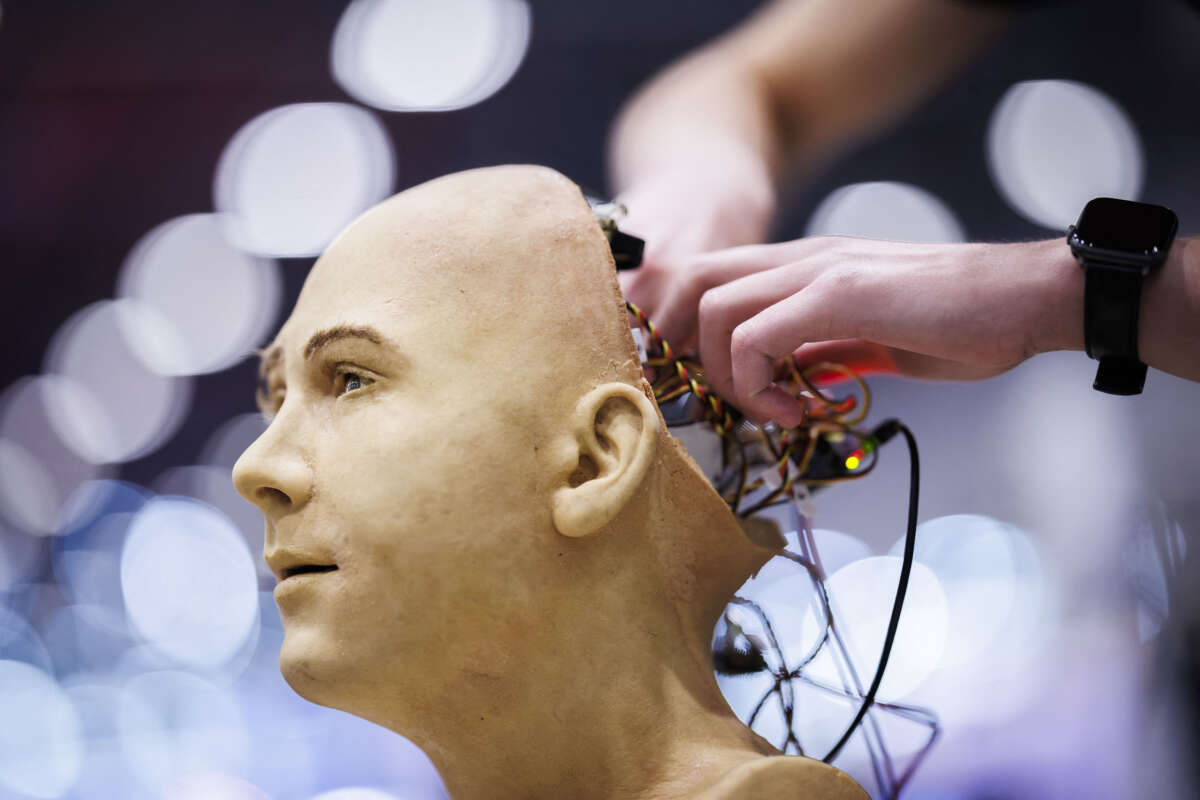
A man works on the electronics of Jules, a humanoid robot from Hanson Robotics that uses artificial intelligence, at a stand during the International Telecommunication Union (ITU) AI for Good Global Summit in Geneva, Switzerland, on July 8, 2025.
VALENTIN FLAURAUD / AFP via Getty Images


Honest, paywall-free news is rare. Please support our boldly independent journalism with a donation of any size.

This article is an excerpt adapted from the book The AI Con: How To Fight Big Tech’s Hype and Create the Future We Want by Emily M. Bender and Alex Hanna (Copyright © 2025 by Emily M. Bender and Alex Hanna). Reprinted courtesy of Harper, an imprint of HarperCollins Publishers.

As long as there’s been research on AI, there’s been AI hype. In the most commonly told narrative about the research field’s development, mathematician John McCarthy and computer scientist Marvin Minsky organized a summer-long workshop in 1956 at Dartmouth College in Hanover, New Hampshire, to discuss a set of methods around “thinking machines”. The term “artificial intelligence” is attributed to McCarthy, who was trying to find a name suitable for a workshop that concerned a diverse set of existing knowledge communities. He was also trying to find a way to exclude Norbert Wiener — the pioneer of a proximate field, cybernetics, a field that has to do with communication and control of machines — due to personal differences.

The way the origin story is told, Minsky and McCarthy convened the two-month working group at Dartmouth, consisting of a group of ten mathematicians, physicists, and engineers, which would make “a significant advance” in this area of research. Just as it is today, the term “artificial intelligence” did not have much coherence. It did include something similar to today’s “neural networks” (also called “neuron nets” or “nerve nets” in those early documents), but also covered topics that included “automatic computers” and human-computer language interfaces (what we would today consider to be “programming languages”).

Fundamentally, the forerunners of this new field were concerned with translating dynamics of power and control into machine-readable formulations. McCarthy, Minsky, Herbert Simon (political scientist, economist, computer scientist, and eventual Nobel laureate), and Frank Rosenblatt (one of the originators of the “neural network” metaphor) were concerned with developing tools that could be used for the guidance of administrative — and ultimately— military systems. In an environment where the battle for American supremacy in the Cold War was being fought on all fronts — military, technological, engineering, and ideological — these men sought to gain favor and funding in the eyes of a defense apparatus trying to edge out the Soviets. They relied on huge claims with little to no empirical support, bad citation practices, and moving goalposts to justify their projects, which found purchase in Cold War America. These are the same set of practices that we see from today’s AI boosters, although they are now primarily chasing market valuations, in addition to government defense contracts.

The first move in the original AI hype playbook was foregrounding the fight with the Soviets. The second was to argue that computers were likely to match human capabilities by arguing that humans weren’t really all that complex. In 1956, Minsky claimed in an influential paper that “[h]uman beings are instances of certain kinds of very complicated machines.” If that were indeed the case, we could use more controllable electronic circuits in place of people in military and industrial contexts.

In the late 1960s, Joseph Weizenbaum, a German émigré, professor at the Massachusetts Institute of Technology, and contemporary of Minsky, was alarmed by how quickly people attributed agency to automated systems. Weizenbaum developed a chatbot called ELIZA, named for the working-class character in George Bernard Shaw’s Pygmalion who learns to mimic upperclass speech. ELIZA was designed to carry on a conversation in the style of a Rogerian psychotherapist; that is, the program primarily repeated what its users said, reframing their thoughts into questions. Weizenbaum used this form for ELIZA, not because he thought it would be useful as a therapist, but rather because it was a convenient setup for the chatbot: this kind of psychotherapy is one of the few conversational situations where it wouldn’t matter if the machine didn’t have access to other data about the world.


Despite its grave limitations, computer scientists used ELIZA to celebrate how thoroughly computers could replace human labor and heralded the entry into the artificial intelligence age. A shocked Weizenbaum spent the rest of his life as a critic of AI, noting that humans were not meat machines, while Minsky went on to found MIT’s AI laboratory and rake in funding from the Pentagon unhindered.
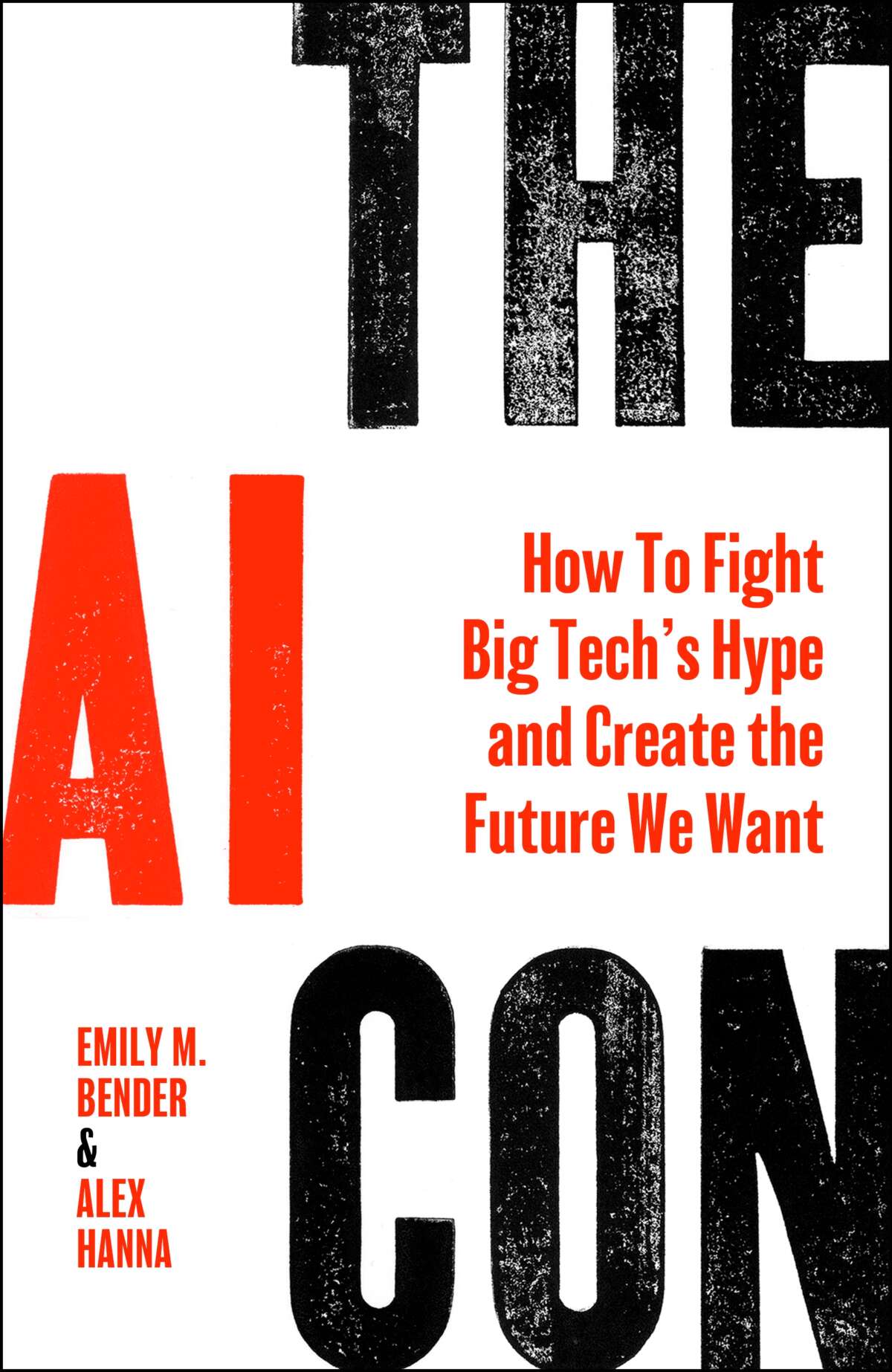
Cover of The AI Con: How to Fight Big Tech’s Hype and Create the Future We Want
Harper

The murky, unethical funding networks — through unfettered weapons manufacturing then, and with the addition of ballooning speculative venture capital investments now — around AI continue to this day. So does the drawing of false equivalences between the human brain and the calculating capabilities of machines. Claiming such false equivalences inspires awe, which, it turns out, can be used to reel in boatloads of money from investors whipped into a FOMO frenzy.

When we say boatloads, think megayachts: in January 2023, Microsoft announced that it intended to invest $10 billion in OpenAI. This is after Mustafa Suleyman (former CEO of DeepMind, made CEO of Microsoft AI in March 2024) and LinkedIn cofounder Reid Hoffman received a cool $1.3 billion from Microsoft and chipmaker Nvidia in a funding round to their young startup, Inflection.AI. OpenAI alums cofounded Anthropic, a company solely focused on creating generative AI tools, and received $580 million in an investment round led by crypto-scammer Sam Bankman-Fried. These startups, and a slew of others, have been chasing a gold mine of investment from venture capitalists and Big Tech companies, frequently without any clear path to robust monetization. By the second quarter of 2024, venture capital was dedicating $27.1 billion, or nearly half of their quarterly investments, to AI and machine learning companies.

The incentives to ride the AI hype train are clear and widespread — dress something up as AI and investments flow. But both the technologies and the hype around them are causing harm in the here and now.
Of Hype and Harm

There are applications of machine learning that are well scoped, well tested, and involve appropriate training data such that they deserve their place among the tools we use on a regular basis. These include such everyday things as spell-checkers (no longer simple dictionary look-ups, but able to flag real words used incorrectly) and other more specialized technologies like image processing used by radiologists to determine which parts of a scan or X-ray require the most scrutiny. But in the cacophony of marketing and startup pitches, these sensible use cases are swamped by promises of machines that can effectively do magic, leading users to rely on them for information, decision-making, or cost savings — often to their detriment or to the detriment of others.

As investor interest pushes AI hype to new heights, tech boosters have been promoting AI “solutions” in nearly every domain of human activity. We’re told that AI can shore up threadbare spots in social services, providing medical care and therapy to those who aren’t fortunate enough to have good access to health care, education to those who don’t live in a wealthy school district, and legal services for people who can’t afford a licensed attorney. We’re told that AI will provide individualized versions of all of these things, flexibly meeting user needs. We’re told that AI will “democratize” creative activity by allowing anyone to become an artist. We’re told that AI is on the verge of doing science for us, finally providing us with answers to urgent problems from medical breakthroughs (discovering a cure for cancer!) to the climate crisis (discovering a solution for global warming!). And self-driving cars are perpetually just around the corner (watch out: that means they’re about to run into you). But as you may have surmised from our snarky tone, these solutions are, by and large, AI hype. There are myriad cases in which AI solutions have been posed but fall short of their stated goals.

In 2017, a Palestinian man was arrested by Israeli authorities over a Facebook post in which he posed next to a bulldozer with the caption (in Arabic) of “good morning.” Facebook’s machine translation software rendered that as “hurt them” in English and “attack them” in Hebrew — and the Israeli authorities just took that at face value, never checking with any Arabic speakers to see if it was correct. Machine translation has also become a weak stopgap in other critical situations, such as in handling asylum cases. Here, the problem to solve is one of communication, between people fleeing violence in their home countries and immigration officials. Machine translation systems, which can work well in cases like translating newspapers written in standard varieties of a handful of dominant languages, can fail drastically in translating asylum claims written or spoken in minority languages or dialects.

In August 2020, thousands of British students, unable to take their A-level exams due to the COVID-19 pandemic, received grades calculated based on an algorithm that took as input, among other things, the grades that other students at their schools received in previous years. After massive public outcry, in which hundreds of students gathered outside the prime minister’s residence at 10 Downing Street in London, chanting “Fuck the algorithm!” the grades were retracted and replaced with grades based on teachers’ assessment of student work. In May 2023, Jared Mumm, a professor at Texas A&M University, suspected his students of cheating by using ChatGPT to write their final essays — so he input the essays into ChatGPT and asked it whether it wrote them. After reading ChatGPT’s affirmative output, he assigned the whole class incomplete grades, and some seniors were (temporarily) denied their diplomas.

On our roads, promises of self-driving cars have led to death and destruction. A Tesla employee died after engaging the so-called “Full Self-Driving” mode in his Tesla Model 3, which ran the car off the road. (We know this partially because his passenger survived the crash.) A few months later, on Thanksgiving Day 2022, Tesla CEO Elon Musk announced the availability of Tesla’s “Full Self-Driving” mode. Hours later, it was involved in an eight-car pileup on the San Francisco–Oakland Bay Bridge.

In 2023, lawyer Steven A. Schwartz, representing a plaintiff in a lawsuit against an airline, submitted a legal brief citing legal precedents that he found by querying ChatGPT. When the lawyers defending the airline said they couldn’t find some of the cases cited and the judge asked Schwartz to submit them, he submitted excerpts, rather than the traditional full opinions. Ultimately, Schwartz had to own up to having trusted the output of ChatGPT to be accurate, and he and his cocounsel were sanctioned and fined by the court.

In November 2022, Meta released Galactica, a large language model trained on scientific text, and promoted it as able to “summarize academic papers, solve math problems, generate Wiki articles, write scientific code, annotate molecules and proteins, and more.” The demo stayed up for all of three days, while the worldwide science community traded examples of how it output pure fabrications, including fake citations, and could easily be prompted into outputting toxic content relayed in academic-looking prose.

What all of these stories have in common is that someone oversold an automated system, people used it based on what they were told it could do, and then they or others got hurt. Not all stories of AI hype fit this mold, but for those that don’t, it’s largely the case that the harm is either diffuse or undocumented. Sometimes, people are able to resist AI hype, think through the possible harms, and choose a different path. And that brings us to our goal in writing this book: preventing the harm from AI hype. When people can spot AI hype, they make better decisions about how and when to use automation, and they are in a better position to advocate for policies that constrain the use of automation by others.

Copyright © 2025 by Emily M. Bender and Alex Hanna



Emily M. Bender

Dr. Emily M. Bender is a professor of linguistics at the University of Washington, where she is also the faculty director of the Computational Linguistics Master of Science program and affiliate faculty in the School of Computer Science and Engineering and the Information School. In 2023, she was included in the inaugural TIME 100 list of the most influential people in AI. She is frequently consulted by policy makers, from municipal officials to the federal government to the United Nations, for insight into how to understand so-called AI technologies.


Alex Hanna

Dr. Alex Hanna is director of research at the Distributed AI Research Institute (DAIR) and a lecturer in the School of Information at the University of California Berkeley. She is an outspoken critic of the tech industry, a proponent of community-based uses of technology, and a highly sought-after speaker and expert who has been featured across the media, including articles in The Washington Post, Financial Times, The Atlantic, and TIME.
Op-Ed: China vs US AI in space – China’s Wukong spacewalk raises the bar for AI performance


By Paul Wallis
August 18, 2025
EDITOR AT LARGE
DIGITAL JOURNAL


Tiangong Space Station in late July 2022, along with June 2022 with Tianhe core module in the middle, Wentian lab module on the left, Tianzhou cargo spacecrafts on right, and Shenzhou-14 crewed spacecraft at nadir. Image dated July 25, 2022. Source - Shujianyang. CC SA 4.0.

For all the talk about “AI dominance”, AI is supposed to be useful. China has just made that point very emphatically with the Wukong spacesuit.

“Wukong” is named after Sun Wukong, also known as the famous Monkey King of Chinese folklore and modern media.

The character Monkey is intelligent and agile. So, apparently, is the spacesuit. The AI system provides guidance and an instant point of information, and any required reference for operational needs.

The inevitable use of AI in space has taken long enough to get started. The Tiangong space station is the ideal platform for testing and assessment. Spacewalks have always been demanding and situationally challenging. It’s asking a lot of a Large Language Model to comprehend and react to this environment.

This is a true test of capability for AI in a much broader context. This sort of work requires more than a scripted chatbot. You can also appreciate that this environment is likely to require fast and appropriate responses in real time.

It’s also a significant contrast with current news about NASA’s AI, which seems largely focused on medical support. NASA does have a wide-ranging AI program, but apparently not yet involved directly in operations.

This is where “AI dominance” doesn’t and can’t even have a definition yet. It’s also why so many pundits and professional techno-cynics don’t buy the hype. Let’s keep it simple.

I must ask AI professionals to tolerate a recital of the obvious:

Chatbot mode is a truly awful, utterly misleading impression of AI capabilities.

Interacting with humans is hardly a definition of efficient communication.

If the outcome of a situation is the difference between a good prompt and a bad prompt, is the AI even able to perform at best, if it’s handicapped by human interactions?

One of the biggest problems with AI is the constant and utterly useless “new toy” mode reportage and terminology. Meaningless expressions like “AI dominance” don’t help, either.

AI is barely at the Proterozoic stage of development. The biggest risk of AI isn’t some terrible alien intelligence. It’s misrepresenting its values on so many levels and “stunting its growth”.

The kind of people who can’t see anything without a dollar sign in front of it or some sort of technological ego fodder can’t manage AI at all. They certainly shouldn’t be directing policy,

AI is a critical tool, like fire and the wheel.

A dysfunctional tool is a total liability.

In space, whether anybody can hear you scream about overrated tech or not, liabilities are not an option. AI in space must prove it can do every job required of it. Functionality and reliability are the only criteria for success.

This is where Wukong, NASA, and future AIs will have to deliver real practical value. There’s a very strong argument for China and the US getting on the same page here.

____________________________________________
Disclaimer
The opinions expressed in this Op-Ed are those of the author. They do not purport to reflect the opinions or views of the Digital Journal or its members.
PRISON NATION U$A

Immigration Detention Has Become a Booming Business for Private Prison Giants


Private prison giants now hold 90 percent of detained immigrants and aim to triple capacity for $1.5 billion in revenue.
Truthout/TheNewPress
August 14, 2025

The CoreCivic, Inc. California City Immigration Processing Center stands in the Kern County desert awaiting reopening as a federal immigrant detention facility under contract with the US Immigration and Customs Enforcement (ICE) in California City, California, on July 10, 2025.
PATRICK T. FALLON / AFP via Getty Images


Support justice-driven, accurate and transparent news — make a quick donation to Truthout today!

Note: This article has been adapted from an excerpt of The Prison Industry: How it Works and Who Profits by Bianca Tylek and Worth Rises. Copyright © 2025. Available from The New Press.

Amid escalating anti-immigrant rhetoric and legislative crackdowns at the state and federal levels, private prison corporations are once again expanding their grip on U.S. detention policy. In fact, today roughly 90 percent of detained immigrants are held in privately operated facilities, the highest share in history.

This industry exists despite years of promises to phase out for-profit incarceration that started in 2016 with President Barack Obama and were renewed by President Joe Biden when he took office. Unfortunately, these promises focused exclusively on the Bureau of Prisons and excluded immigration detention. As such, through their presidencies most federal contracts with private prison corporations remained untouched in the immigration detention space.

Now, with another Trump presidency, the industry is instead preparing for explosive growth. On recent earnings calls, CoreCivic executives announced plans to triple the number of beds in their facilities within a few months. That would mean an additional $1.5 billion in revenue for the corporation, more than doubling its annual earnings.

Meanwhile, growing scrutiny of immigration detention practices has led to reports of abuse, medical neglect, and deaths in custody. Privatization, with the cost-cutting practices that define it, is the structural driver of human rights violations at these facilities.

We discuss this all at length in our recently released book, The Prison Industry: How it Works and Who Profits (The New Press, 2025). But as we also explain, private prisons corporations are just one piece of the sprawling prison industry. The U.S. carceral system is comprised of a vast and deeply entrenched network of public-private partnerships that make billions from incarceration and detention every year.

Commissary corporations mark-up basic hygiene items like toothpaste or tampons by 300 percent or more. Private healthcare providers routinely deny or delay treatment, contributing to suffering and preventable deaths behind bars. Private food vendors serve meals that are frequently expired or nutritionally inadequate, all in the name of cutting costs and maximizing returns.

Cover image for The Prison Industry: How it Works and Who Profits
The New Press

To understand how we arrived at this moment, we must pause and get familiar with the larger machinery that gave rise to it. The private prison industry did not emerge in isolation; it is the product of decades of deliberate policy choices that fused mass incarceration and detention with private profiteering.

Below, we share with Truthout’s readers an excerpt from the book’s chapter on the operations and management of private prisons.
The Emergence and Growth of Private Prisons in the U.S.

The first private prison corporation, CoreCivic (then known as Corrections Corporation of America), was founded in 1983. The founding executives included a former chairman of the Tennessee Republican Party and a former warden of the Ramsey Prison Farm in Texas who had used incarcerated Black men as personal servants on his plantation. The new corporation hastily signed its first contract to build and operate a federal immigration detention center in Texas, but things did not start smoothly. When construction took longer than expected, executives rented a motel, put up barbed wire, and opened the nation’s first private immigration detention center. CoreCivic’s largest competitor, the GEO Group (GEO), then known as Wackenhut, got its start the following year with a federal contract for an immigration detention center in Colorado.

Through the 1990s and 2000s, the industry built up its business by pushing draconian criminal laws that drove incarceration across the country. Until 2010, CoreCivic played a prominent role in the American Legislative Exchange Council (ALEC), a conservative trade organization through which lawmakers and corporate executives work together to draft model legislation. As an active member, and at times even corporate chair of ALEC’s Criminal Justice Task Force in the early 1990s, CoreCivic executives helped draft and champion model legislation for mandatory minimum, “three strikes,” and “truth-in-sentencing” laws.

The notorious 1994 Omnibus Crime Bill codified these and other severe sentencing laws at the federal level, and included billions of dollars in prison construction grants for states that passed similar legislation. Within a year, 25 states passed “truth-in-sentencing” laws, which require people to serve a substantial portion of their sentence before they can be eligible for parole.

In 1995, ALEC members drafted the Private Correctional Facilities Act to expand the use of private prisons state by state and the Prison Industries Act to expand the private sector’s access to prison labor. And the following year, thanks to a proposed amendment and testimony by executives at GEO, the Appropriations Act of 1996 amended the original crime bill, which was silent on private prisons, to authorize states to use federal grants issued under the bill to privatize prisons.

The industry thrived again until 2016, when the Obama administration announced it would phase out private prison contracts with the Bureau of Prisons after a study revealed that privately run facilities were less safe than publicly run facilities. The Department of Homeland Security followed by announcing a review of immigration detention centers [immigration jails], but eventually decided it would continue its use of private prisons, citing a lack of alternative options. Still, overnight, the stock price of the largest two private prison operators, Core- Civic and GEO, tanked 40 percent and 35 percent, respectively.


Panicked executives moved to pay their way to survival. Within days, GEO contributed $250,000 to pro-Trump super political action committees. After Trump’s election, CoreCivic and GEO curried favor with the incoming administration by donating an additional $250,000 each to the Trump inauguration fund. As a further sign of support, GEO also moved its annual meeting to a Trump resort.

This patronage paid off: the Trump administration rescinded the phase-out policy just weeks after taking office, going as far as to instruct Bureau of Prisons officials to identify incarcerated people for transfer to private facilities.

GEO’s donations forced campaign finance watchdogs to sue the Federal Election Committee for allowing the corporation to circumvent the ban on contributions from federal contractors, a claim still being investigated by regulators. But the administration continued its support of the industry with passage of the First Step Act, which while responsible for the release of tens of thousands of people from federal prisons funneled millions into new reentry services provided by private prison operators, among other things.

Then, in January 2021, the new Biden administration issued an executive order reverting back to the Obama-era directive barring new contracts with private prison corporations for the operation of federal prisons. The executive order similarly excluded immigration detention centers. Since then, the number of detained immigrants housed in private facilities has continued to increase.

Despite policy volatility, the industry remains stubbornly entrenched in the federal system today with more than half of its revenues each year coming from federal contracts. But in recent decades, CoreCivic and GEO spent billions diversifying their business lines to ensure their survival.
Private Prison Corporations Maximize Profits at the Expense of Incarcerated People

Compensated for each day a person spends in one of their beds, private prison corporations drive profitability in just two ways: by increasing the number of people in their facilities or cutting costs related to their care. Since their start, these corporations have done both with dire consequences.

For decades now, private prison corporations have spent hundreds of millions of dollars on campaign contributions and lobbying to advance policies that put more people in prison for longer and promote the unregulated use of private prisons. It is a story that has been written about often.

Less known is the way in which they expand their market share by maintaining a revolving door of informal influence with departments of corrections, regularly hiring former correctional administrators into high-paying roles — often just days after leaving their government posts. These new corporate executives use their government experience and relationships to usher in and negotiate lucrative contracts for their new employers.

But these corporations also have even more direct ways to increase prison stays in their facilities or further extract value from incarcerated people, and they exercise them liberally. Disciplinary infractions are just one example. Corrections officers in private prisons, like those in public prisons, can issue disciplinary infractions, hold review hearings, determine guilt or innocence, and hand down punitive sentences. In private prisons, these sentences often involve the loss of good-time credit, lengthening a person’s stay and padding their bottom lines. Unsurprisingly, the rate of guilty findings in disciplinary review hearings is quite high — easily over 95 percent in many private prisons. In one such disciplinary hearing in a CoreCivic facility, a man lost 30 days of good-time credit because he used a broom to sweep the area in front of his cell without permission, which generated an extra $2,000 for the corporation.

Yet, the easiest way that private prison corporations stretch their profit is by lowering operational costs, particularly staff pay, their largest expense. Offering below-market wages and limited benefits, they attract underqualified staff. Making matters worse, they spend, on aver-age, 58 fewer hours training staff than publicly run facilities, and what little training they offer emphasizes use of force — rather than de-escalation — as a response to every situation, including mental health crises. The outcomes are frustrating for officers set up to fail and detrimental for incarcerated people at their whim. At one CoreCivic facility in Tennessee, for instance, poorly trained officers pepper-sprayed a man who had attempted suicide before trying to help him.

Efforts to minimize costs and pad profits also leave facilities to deteriorate. Private prison corporations have little interest in maintaining existing facilities and often let them fall into disrepair. In 2018, MTC was sued by the Southern Poverty Law Center and ACLU for the deplorable conditions in its Mississippi prisons that included incidents of cells with no lights and rats crawling out of toilets.
Privatization Drives Longer Stays and Human Rights Violations in Immigration Jails

The private prison model does not differ much from the corrections system to the immigration detention system. Business is still driven by more bodies, longer stays, and low costs. So, much like it does in the corrections system, the private prison industry pushes for harsh immigration policies intended to drive up immigration detention. And private immigration detention centers suffer from many of the same problems as private prisons and jails, but the people held in them have even fewer rights and thus, at times, can suffer even more abuse.

As they do in their prisons and jails, private prison corporations cut corners on staffing and training in immigration detention centers. In fact, given the lower-risk population, they can drive costs down even more significantly and produce even greater human rights violations. For instance, in 2017, Omar Rivera, an asylum-seeker from El Salvador, led a hunger strike to protest poor conditions at the Adelanto Detention Center run by GEO. In response, staff beat him, pepper-sprayed him, and placed him in solitary confinement for nearly two weeks, according to a lawsuit filed by Rivera and seven others who were detained at the facility. The lawsuit, which was settled for an undisclosed amount, is one of several against GEO involving assaults and deaths at the Adelanto facility.

Importantly, the privatization of the Adelanto facility is itself an impropriety, but a common one in the space. Looking to circumvent rigorous federal procurement procedures, ICE and its private prison contractors often look to intergovernmental service agreements (IGSAs) to indirectly contract through counties. In these agreements, ICE contracts with counties for beds for detained immigrants, and the county in turn subcontracts the operation of its facility to a private prison corporation. The county and private prison corporation then split the per diem ICE pays for each person held in the facility. Interested in seeing more money flow into their districts, county officials have joined the corporations in pushing for harsher immigration laws. IGSAs represent a win, win, win for ICE, counties, and private prison corporations all at the expense of the people detained.

Private prisons are a uniquely U.S. export, which emerged in the 1980s as the perfect encapsulation of the decade’s embrace of Reagan-era privatization and greed. Prisons had always been used to generate revenue, but this was something new: the complete outsourcing of the criminal legal system to the highest bidder. And the corruption of money in politics allowed them to help decimate families in disproportionately Black, brown, and Indigenous communities.

Since then, private prisons have embedded themselves in every facet of the criminal and immigration systems. While people have begun to challenge private prison corporations, there must be vigilant attention paid to the industry’s attempt to change its toxic image and expand into adjacent business lines. After all, whether walls are built out of concrete, wire, or WiFi, a prison is still a prison, and a private prison still needs more bodies to grow. No matter their form, private prison corporations have no place in any system that claims to be about justice.

Copyright © 2025 The New Press.


Bianca Tylek  is the Founder and Executive Director of Worth Rises. She is one the nation’s for most experts on the prison industry and a nationally recognized leader in criminal justice advocacy more broadly. Bianca is best known for her innovative strategies and successful campaigns to secure free prison phone calls and eliminate financial exploitation across the criminal legal system. Bianca’s work has been featured on the TED stage as well as in The New York Times, The Washington Post, and NPR. She is based in New York City.

Worth Rises is a nonprofit organization dedicated to dismantling the prison industry and ending its exploitation of incarcerated people and their families. Through narrative change, policy advocacy, and corporate activism, Worth Rises has successfully influenced legislation and changed industry practices nationwide.
Italian Amazon Workers Strike and Win. Will Unions Elsewhere Follow Suit?


Unions in the US and elsewhere must make huge resource investments to build up the working-class strike muscle.
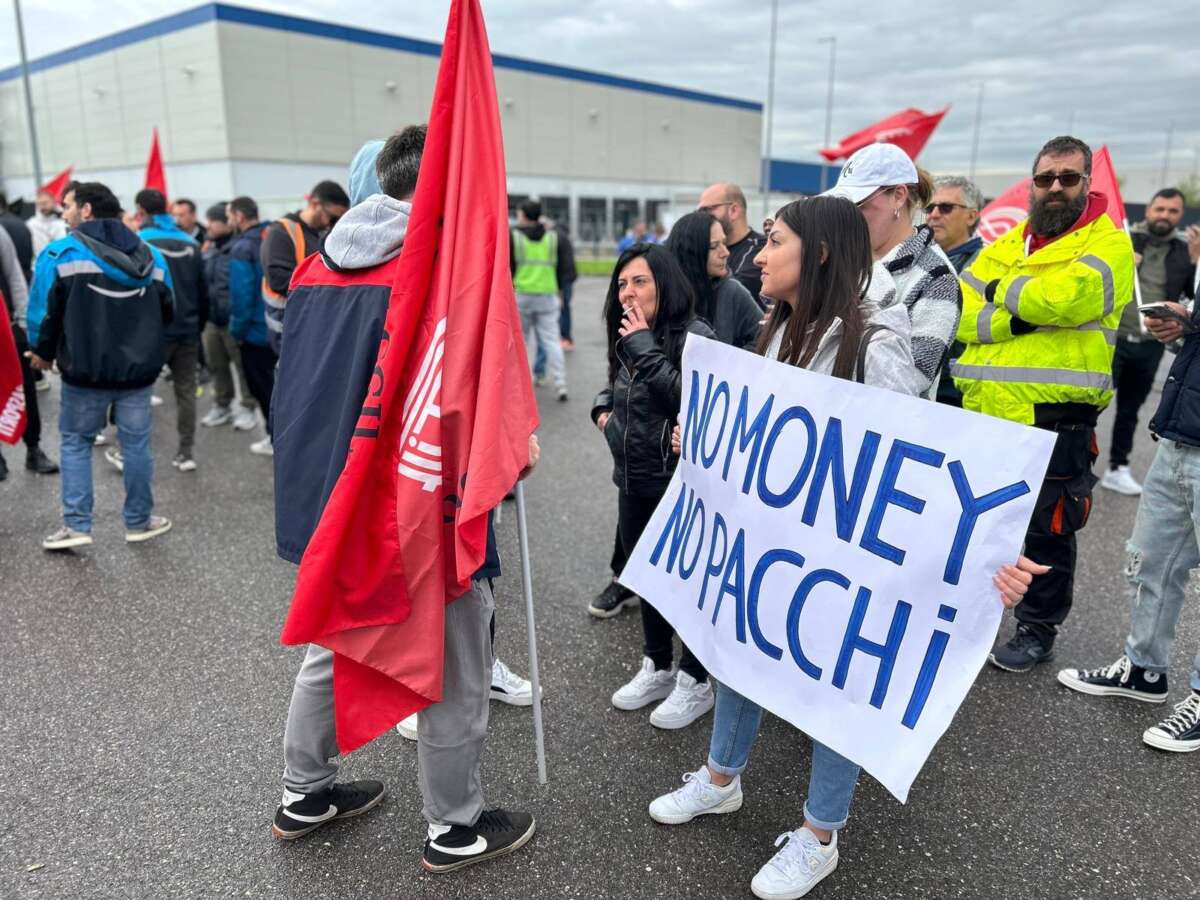
August 14, 2025Amazon drivers strike in Bologna, Italy, on April 18, 2025. The picket sign calls for higher pay and lighter package loads for drivers.Giuseppe Picconetti

Did you know that Truthout is a nonprofit and independently funded by readers like you? If you value what we do, please support our work with a donation.

Amazon may be one of the most powerful corporations in the history of capitalism, but even its executives must bend when confronted with disruptive worker power.

That’s the lesson out of Italy, where Amazon delivery drivers ratified a new agreement in July that improves pay and job rights and will reduce working hours slightly. The agreement, negotiated between three Italian unions and the association of contracted Amazon delivery companies, came in the aftermath of a powerful driver strike on April 18, Good Friday, which shut down the Amazon network throughout the country.

The new terms for drivers augment the Amazon collective bargaining agreement hammered out in 2021 between the company and Italian unions following a national strike of warehouse workers and drivers. That contract secured rights covering health and safety, workload, and working times. It increased pay and bonuses for warehouse workers and drivers, and built on top of the national logistics sector wage agreement that Amazon is signatory to.

This latest agreement will gradually improve driver pay and performance bonuses over the next three years. It will shorten the full-time work week from 42 to 41 hours, though not until 2027. Workers also made modest gains in getting Amazon’s representatives to increase the percentage of workers covered by long-term contracts — those with greater job security under Italian law — from 60 to 65 percent of the workforce, thereby reducing the number of highly exploitative temporary contract positions. Additionally, workers won the right to stop work during floods or excessive heat waves — “red weather alerts,” a more common occurrence nowadays with climate change. And, in the new agreement, work on some holidays will now be voluntary.

The agreement is a step forward, but it’s far from perfect. While ratified overwhelmingly — nearly 90 percent of workers voted in favor — some drivers expressed frustration that the gains are too modest, and that some improvements will not be realized for at least a couple of years, during which time the rising cost of living will reduce earning power. They argued that union leaders should have considered taking additional, more disruptive, strike action. “In my delivery station in Bologna, we almost all voted against this agreement. About seven workers voted ‘yes,’ I and other around 45 colleagues voted ‘no,’” one driver, who asked to remain anonymous to avoid workplace retaliation, told Truthout. “We all thought we could have done another strike, because we wanted more money!”

Related Story

Italy Shows How Amazon Can Be Forced to Bargain: Shut Down Its Distribution
Amazon is huge and powerful, but Italian workers have shown it can be forced to negotiate. Could US workers do the same?  By Laura Montanari & Jonathan Rosenblum , Truthout April 30, 2025

Still, the Italian Amazon workers stand miles ahead of their counterparts around the world in terms of contractual rights. Drivers in the U.S., Japan, and other countries endure crushing workloads; delivery and warehouse workers in India struggle to get breaks in 120-degree heat waves; and workers in the United Kingdom have to put up with so-called “zero-hour” contracts — essentially, nominal employment with no guarantee of paid work. Amazon workers in these and other countries occasionally have engaged in strikes, but none with the scope and impact of that seen in Italy.

Most of the well-publicized Amazon strikes in these and other countries — often timed with Black Friday or other peak sales periods — are smaller affairs, with groups of workers picketing alongside community supporters, while inside the workplace, the package sorting and delivery system continues largely unhindered. These are “demonstration strikes,” actions that garner publicity and may build worker confidence but don’t come close to forcing Amazon to the bargaining table. They can be steppingstones to more meaningful action, but not more than that.

A few Amazon strikes have had more ambition and militancy. Two years ago, workers in Delhi, India, were informed that their warehouse was closing, and they staged a week-long sit-down strike and blockaded the facility. They won improved severance terms, a signal victory for the fledgling Amazon India Workers Union (AIWU).

Workers in Coventry, England, have engaged in a series of strikes over the last two years, totaling 38 days and disrupting operations at the massive BHX4 warehouse. The strikes — led by the GMB union and involving upwards of 1,000 workers out of a workforce of 3,000 — led to pay raises of 28.5 percent, greater than raises given by Amazon in any other country in Europe, according to Tom Vickers, a professor at England’s Nottingham Trent University who has co-authored, along with Amazon workers, a forthcoming book on the Coventry organizing experience.

Striking drivers outside Amazon’s delivery station in Bologna, Italy, on April 18, 2025.Giuseppe Picconetti

Yet even these powerful single-site job actions don’t have the scope of the Italian strikes. The three Italian unions that coordinated the April job action reported that Amazon driver strike participation was at 85 percent nationally, with 100 percent participation in some cities. That built on the 2021 national strike that drew participation from at least 30,000 — more than 70 percent — of Italian Amazon warehouse and delivery station workers and drivers.

Compare those numbers to demonstration strikes elsewhere. Last December’s Teamster-led strikes in the U.S. generated around 10 percent participation (or even less) at most of the eight participating facilities; the highest turnout was around 25 percent at a delivery station in Queens, New York, according to reporter Luis Feliz Leon. In Germany, the trade union ver.di has reported worker strike participation at individual warehouses as high as 20 to 40 percent — impressive numbers, but still a minority.

The Italian Amazon workers are benefiting from strike experience going back to 2017, including powerful job actions such as in 2020, when warehouse workers in the northern city of Piacenza staged a 13-day strike at the outset of the COVID-19 pandemic that forced Amazon to agree to a range of safety measures. This spring, in the aftermath of the most recent drivers’ strike, one of the Amazon contract companies suspended eight union activists. When the workers immediately threatened to strike again, the company promptly rescinded the disciplinary actions. The Italian unionists have shown that the more you exercise the strike muscle, the stronger it becomes.

Italian Amazon workers strike in April with a sign reading, “No money, no parcels.”FILT CGIL di Roma e del Lazio

Now imagine, if instead of striking at just the single warehouse in Coventry, the English GMB union had set forth to mobilize workers at dozens of facilities to strike at once. Imagine if next peak shopping season, instead of staging demonstration strikes at a handful of Amazon’s 1,000-plus U.S. facilities, the Teamsters union put the resources into striking at hundreds of warehouses at once, with majorities of workers on the picket lines. Strikes of that scale, carried out over time, could disrupt the Amazon supply chain and give workers the power to force Amazon to the bargaining table.

What would that take?

First and foremost, unions in the U.S. and elsewhere would have to commit orders of magnitude more resources to the fight than they do currently. In the U.S., the Teamsters union is putting about $10 million a year into organizing at Amazon, a company with a $2.4 trillion market value, nearly $100 billion in cash on hand, and political friends at all levels of government.

That meager organizing investment simply won’t do; you can’t beat the behemoth on the cheap. Currently, U.S. unions combined control about $35 billion in assets, a 225 percent increase since 2010, according to union researcher and activist Chris Bohner. Where is the serious organizing investment?

Second, union leaders must heed workers’ calls for bold demands. Movements are built on transformative demands that inspire people to move beyond inertia, fear, and hopelessness. In recent years, rank-and-file activists at several U.S. Amazon warehouses have demanded a $30/hour minimum wage for the lowest paid warehouse worker, a significant boost over the current Amazon warehouse starting pay, which hovers around $19/hour. U.S. labor leaders would do well to take up the workers’ wage call along with other bold demands. Indeed, a powerful rallying cry for a global Amazon organizing movement could be “a living wage for all Amazon workers!” It’s a sensible demand, considering the company registered $59 billion in profits last year and its founder, Jeff Bezos, has accumulated around $240 billion in wealth from the labor of warehouse workers, drivers, tech workers, and other Amazon employees.
Striking drivers and their personal vehicles block the entrance to Amazon’s delivery station in Bologna, Italy, on April 18, 2025.Giuseppe Picconetti

Some observers of the Italian strike may argue that the lesson isn’t exportable because Italian workers get to operate within a better organizing environment. It is true that the Italian legal system is more favorable for workers compared to many other countries, but only because of Italy’s history of militant anti-fascist struggle before and during World War II, as well as during the 1960s and ‘70s. Those struggles have produced a stronger labor movement: Today, about one in three Italian workers belongs to a union, a union rate more than three times higher than in the United States. But organizing in Italy still is not easy. Prime Minister Giorgia Meloni and her hard-right government are friends of big business, promulgating laws aimed at limiting the effectiveness of strikes and picketing. And many Italian workers feel that union leaders often put the brakes on more militant organizing and bolder demands.

Italian workers have shown the rest of the Amazon organizing world that it’s possible to get Amazon to the bargaining table, but only when you can strike at a level that disrupts the company’s operations.

To replicate this would be a huge lift for unions outside of Italy, especially those in countries that have much lower union densities and fewer legal protections, and that lack the culture of striking that the Italians established over decades. To catch up to the Italians, unions in the U.S. and elsewhere will need to make huge resource investments to build up the working-class strike muscle. The challenge for these unions — the Teamsters in the U.S., ver.di in Germany, the GMB in England, AIWU in India, and others — is to imagine bold campaigns and then commit the resources that can, over time, disrupt Amazon and force the company into bargaining.

This article is licensed under Creative Commons (CC BY-NC-ND 4.0), and you are free to share and republish under the terms of the license.


Laura Montanari
Laura Montanari is a student based in Germany and is part of Precarious Disconnections collective in Italy and of Transnational Social Strike Platform.


Jonathan Rosenblum
Jonathan Rosenblum is a union organizer and a member of the National Writers Union, and is Activist in Residence at the Center for Work and Democracy at Arizona State University.
ICE is Abducting NYC Public School Students as Young as 7


Elected officials and educators are rallying around public school students who have been abducted by ICE.
August 18, 2025


Immigration and Customs Enforcement (ICE) has abducted several New York City public school students since May, sparking outrage among community members and elected officials.

The City reports that on August 12, federal agents abducted and detained a 7-year-old child, her 19-year-old brother, and their mother when they went to an immigration check-in at the Manhattan federal courthouse — marking the first known ICE arrest in New York City of a child under the age of 18, according to The City, which was the first news outlet to report on the case.

The courthouse where the family was abducted, also known by its address, 26 Federal Plaza, has become a symbol of Trump’s mass deportation agenda.

People hold signs as New York City officials speak at a press conference calling for the release of high school student Mamadou Mouctar Diallo on August 14, 2025 in New York City.Michael M. Santiago / Getty Images

Masked agents roam the hallways, abducting people who show up for mandatory immigration appointments or hearings. The 10th floor of the building has been transformed into “hell,” according to one person who was detained there for six days. After the American Civil Liberties Union and others filed suit, a judge ordered ICE to provide people with sleeping mats, period products, towels, and soap, although ICE can still refuse them toothbrushes.

ICE sent the child, a Queens public school student, and her mother to a detention facility in Texas, and her brother to Delaney Hall, an ICE jail in New Jersey run by the private prison company GEO Group.

Related Story

US Abducts, Illegally Deports Mother, Child With Cancer, Suit Says
A new lawsuit accuses the Trump administration of abducting two families and then illegally deporting them. By Elizabeth Weill-Greenberg , Truthout August 1, 2025


The girl’s school principal and elected officials have demanded her release.

“We are fighting to get this family back together and will not stop until they are safely back in their community and home in Queens,” State Assembly Member Catalina Cruz and New York City Councilmember Shekar Krishnan said in a joint statement.

ICE has abducted several students after they attended routine immigration appointments or hearings — a 20-year-old student identified in the press as Dylan, a Venezuelan public school student; Derlis Snaider Chusin Toaquiza, an 11th grader who attends high school in Queens; and Mamadou Diallo, a 20-year-old asylum seeker from Guinea.

On June 8, ICE agents abducted Derlis Snaider Chusin Toaquiza, who was 19 at the time, when he went to a court appearance for his asylum application. He was detained at 26 Federal Plaza for several days and then sent to an ICE jail in Texas. He told his attorneys that while at 26 Federal Plaza, he was only given one meal a day and had to sleep sitting up because it was so crowded.

More than a month later, a Texas immigration judge set his bond at $20,000, which was paid for by the Envision Freedom Fund (formerly the Brooklyn Community Bail Fund) and he was released. On July 18, he finally arrived home on a Greyhound bus; his family greeted him at the Port Authority Bus Terminal in midtown Manhattan.

Community members, educators, and elected officials have rallied around the students and their families.

“Mamadou did the right thing,” City Councilmember Rita Joseph said at a rally demanding his release. “He showed up for his routine check in and he was abducted.”

At least two of his teachers attended the rally.

“He’s a very bright, sweet, respectful young man that was going to a court date that was unjustly taken,” one teacher told CBS News.

Another teacher said, “For me, to be standing here today to advocate for one of my students to be released from ICE, it’s just horrible.”


This article is licensed under Creative Commons (CC BY-NC-ND 4.0), and you are free to share and republish under the terms of the license.

Elizabeth Weill-Greenberg is a reporter based in New Jersey. Follow her on Twitter: @elizabethweill.


Looming Federal Cuts to Public Education Threaten Communities in Every State

Educators say the cuts will hit already vulnerable low-income, unhoused, disabled, migrant and refugee students hardest.
August 15, 2025

A student waves goodbye as he heads to his classroom on the first day of school at Price Elementary School in Anaheim, California, on August 8, 2024.Paul Bersebach / MediaNews Group / Orange County Register via Getty Images

When Barbara Duffield, executive director of SchoolHouse Connection, heard that the federal budget passed by Congress could eventually eliminate funding for the Education for Homeless Children and Youth (EHCY) Program, she immediately worried about how it would impact the unhoused students her organization champions.

The cut could strip money from the liaisons who work in every school district in the U.S. to make sure that unhoused students have everything they need to ensure consistent school attendance — whether that’s clothing, counseling, food, medical care, transportation, tutoring, or a connection to subsidized housing programs.

By all accounts, these are important, life-saving, and far-reaching programs. They also have a proven track record.

The McKinney-Vento Homeless Assistance Act has authorized EHCY since 1987 and presently serves approximately 1.4 million unhoused pre-K to 12th-grade students. The Trump administration has made clear that it hopes to make EHCY part of a block grant allocated to the states to cover 18 separate education programs — a policy shift that has been widely condemned by educators. Moreover, the total amount states receive could drop from $6.5 billion to $2 billion under a proposal that could be voted on by Congress sometime this fall.

“The last time McKinney-Vento was updated by Congress was 2015,” Duffield told Truthout. “We’ve seen great improvements in the decade since because the bill became much more explicit in addressing school stability. It made clear that if a child wants to remain in the same school, even if they are staying in a shelter, living doubled-up with another family, or have moved to another county, they have the right to do so and must be given transportation to make this possible. The bill also explicitly included pre-school children in the provision of services.”

Related Story

Educational AI Risks Becoming an Authoritarian Vehicle for Thought Control
These systems are a dictator’s dream: the perfect infrastructure for the imposition of totalitarianism. By Nicholas Rabb , Truthout August 11, 2025


The results, she said, have been dramatic: Chronic absenteeism has plummeted, and student graduation rates and standardized test scores have risen.

But, she warns, making EHCY part of a block grant could undermine — or even reverse — these gains.

“If states and localities do not have a targeted requirement to make sure unhoused kids remain in school, and get the concrete supports they need, it usually does not happen,” Duffield said. “The McKinney-Vento liaisons have been the open door to school services.”

The so-called Big Beautiful Bill Act and the consolidation of programs into block grants would be disastrous, she said. “If the federal government does not mandate that school districts maintain the outreach and support necessary for this population, many unhoused kids will languish. This is especially cruel because the number of unhoused families with children has been consistently rising throughout the country.”

Joe Willard, the former policy director of HopePHL, a Pennsylvania advocacy group that supports unhoused students in the Keystone state, is now a consultant to the organization. Since 2015, he says, school staff in his state have made great strides in identifying those in need and connecting unhoused families with housing justice organizations. “There’s been better training for counselors, teachers, and principals in how to be effective ‘system navigators’ who can connect people with housing agencies, regardless of whether they’re in rural, urban, or suburban areas,” Willard told Truthout. “They’ve also helped students access transportation to school, sometimes by bus and sometimes by taxi or Uber. Some programs have purchased washers and dryers to ensure that kids have clean clothes. Others have established after-school tutoring programs and safe spaces where kids, whether they’re on their own or living with family members, can hang out. Stigma is a big problem, and unhoused students need a place to talk to one another and just be.”

But now, Willard, like Duffield, worries that these gains could be reversed.

What’s more, Willard says that the unhoused are not the only population at risk of falling through the cracks. New America, a Washington, D.C-based think tank, reports that nearly $350 billion in cuts to public education are currently looming, threatening to “set back our American education system as well as the health and well-being of students, families, and workers.”
Special Education in the Crosshairs

As usual, the devil is in the details. In addition to unhoused students, kids who receive special education services could be adversely impacted by funding shortfalls. New America reports that many of the more than 30 million children who rely on Medicaid receive therapies and access to assistive technologies during the school day, all paid for by Medicaid. Medicaid, the group explains, is the third-largest source of funding for K-12 public schools, providing revenue for about 30 percent of intervention services — including speech, occupational, and physical therapy — that benefit kids in all 50 states, from toddlers to teens.

Food is also in the crosshairs for the 14 million kids whose families receive Supplemental Nutrition Assistance Program (SNAP) benefits. Prior to the budget bill’s passage, children who received SNAP were automatically eligible for free school meals. This is no longer true. Families will now need to complete a written application for no-fee meals at the start of the school year.
The Big Funding Freeze Adds to Financial Precarity

But even before schools open their doors for the 2025-26 year, a nearly $7 billion “freeze” in education funding temporarily left schools scrambling and previewed the possible mayhem that could unfold. Although the money was restored at the end of July, during the three weeks that it was withheld, teacher training, student math and reading supports, after-school tutoring, and programs to benefit English Language Learners (ELL) and migratory populations hung in the balance. Schools had expected to receive the funds on July 1; the money was finally released on July 28.

The National Association of Elementary School Principals called the withheld money an intentional plan by the Trump administration “to flex its fiscal muscles” in an effort to undermine public education.

The toll would have been enormous. New America researchers found that most local school districts stood to lose slightly more than $220,000, but noted that schools in some areas — particularly in California, Florida, Georgia, and West Virginia — could have lost millions. Still, despite the restoration, funding remains precarious.

Dale Lee, president of the West Virginia Education Association, fears that cuts could have the harshest impact on ELL students. “We have a law in West Virginia that requires school staff to be notified by April if their position is being eliminated for the next year, so I don’t anticipate many firings,” he told Truthout. “On the other hand, I expect that teachers who retire or leave for other reasons will not be replaced.”

Lee then names two counties, Berkeley and Hardy, where many of the students come from Africa and Central America. As English Language Learners, they quickly enroll in English as a Second Language (ESL) classes.

“Many of the ELL teachers in these counties are actually retirees who work in what is called an ‘at need’ position. This means that they can teach full-time without it reducing their pensions,” Lee said. “I worry that these positions will be cut since ‘at need’ workers do not have the same protections as regular teachers.” In addition, he adds, 53 percent of the schools in West Virginia are designated as Title I, meaning that at least 40 percent of their students live at or below the federal poverty line; these schools receive extra federal funding to provide ramped-up support services.

Moreover, West Virginia receives funding through the Nita M. Lowey 21st Century Fund to establish after-school learning centers. “We just learned that the funding for this has been eliminated,” Lee told Truthout. “This means that thousands of kids in the state will no longer have access to these essential programs.”
Compounding Educational Inequities

But educators note that even before Donald Trump returned to office, public education was in dire straits.

Margaret, a high school English teacher in Cedar Rapids, Iowa, told Truthout that, like Lee, she is extremely worried that threadbare programs for refugee students will become even less robust. (Margaret asked that her surname be withheld for fear of retaliation by school administrators.) Already, she’s learned that the local agency that helped with refugee resettlement has lost half of its federal funding and has had to curtail many of its programs.

She also said that because Iowa provides universal vouchers to students wishing to leave the public school system — a plan that will become national under Trump’s budget law — Iowa’s public school system is facing a massive loss of revenue. According to the Des Moines Register, 27,866 low-income students enrolled in charter or private schools in the state during the 2024-25 school year. Each received $7,800 in public funds to do so.

Staff and supply shortages in Iowa’s public schools are also widespread. “Last year, a history class in my school had 40 students, and this is not uncommon,” Margaret said.

Nonetheless, Margaret says that her biggest fear is that “public schools will become a shell, and teachers will be forced to rely on the internet” to supplement hands-on instruction. “COVID showed us the value of in-person education, but when we have too many kids in a classroom, we end up having to rely on computers,” she said. “Meanwhile, private schools that cherry-pick who they enroll will be able to provide an interactive education. Every school should be required to educate everyone, but charters and private schools are legally allowed to discriminate against disabled kids, unhoused kids, and English Language Learners.”

Gregory, who also asked that his surname be withheld to avoid professional retaliation, teaches 8th-grade social studies in Indiana. Like Margaret, he is quick to tick off the many ways that underfunded public schools have harmed students, teachers, and communities, and stressed that these are longstanding issues. “We were already restricted in terms of ethnic studies and teaching about race, gender, sexuality, diversity, and equity,” he told Truthout. “But the biggest problem I see is staffing. Teaching shortages are making the job much more challenging.” His school, he says, has been short two special education teachers for the last five years. “Two special ed teachers are doing the jobs of four people. They’re overwhelmed.”

Moreover, “When a teacher is absent and substitutes can’t be found, the kids are forced to sit in the auditorium,” Gregory said. “It is not uncommon for 40 or 50 kids to be there, learning nothing, for several periods a day under the watchful eye of an administrator whose job is to keep order.”

Cierra Kaler-Jones, executive director of Rethinking Schools, a not-for-profit publisher and advocacy organization, agrees with both Margaret and Gregory and says that she sees the proposed cuts as part of a broader attack on public goods and services. “Schools have been underfunded for years, and teachers have been paying out of pocket for supplies and snacks to make it possible for their students to learn,” she told Truthout. “Schools are neighborhood hubs, and when services are cut, it causes ripples that take away from the entire community.”

The fight for public education, she said, will need to be fought at both the federal and state levels, and she expects education activists to oppose block grants for EHCY and simultaneously demand state financial support for necessary classroom services and student protections.

“Public educators have long been in the forefront of efforts to make communities safe, nurturing places for children and teens,” Kaler-Jones said. “They support students in their quest to know their history and understand what is happening in the world. They are doing as much as they possibly can to protect public schools as a public good.”


This article is licensed under Creative Commons (CC BY-NC-ND 4.0), and you are free to share and republish under the terms of the license.


Eleanor J. Bade is a Brooklyn, New York-based freelance writer who focuses on domestic social issues and resistance movements. In addition to Truthout, she writes for The Progressive, Ms. Magazine, Lilith, The Indypendent, New Pages and other progressive blogs and print publications.
Latinx Workers Are Organizing Fierce Resistance to Trump’s Anti-Immigrant Agenda

Media narratives about a Latinx shift to the right obfuscate ongoing anti-Trump insurgencies led by Latinx communities.

By Paul Ortiz
August 18, 2025

People march in support of immigrant rights and against mass deportation on the streets of Los Angeles as part of International Day of Action and Solidarity with Migrants on December 18, 2024.Genaro Molina / Los Angeles Times via Getty Images

Honest, paywall-free news is rare. Please support our boldly independent journalism with a donation of any size.

The recent escalation of Immigration and Customs Enforcement (ICE) and armed state attacks on immigrants in Los Angeles and other cities is in large part a reactionary response to democratic insurgencies led by Latinx workers in the wake of the 2024 presidential election.

From the antebellum period through the Haymarket insurrection of 1886 to the present, immigrant workers have presented grave threats to the rule of capital by engaging in labor internationalism, union organizing, and coalition building with progressive elements of the middle class. While ICE and other federal authorities have used incarceration and deportation as weapons against immigrant organizing campaigns for over two decades, today’s war on workers is a renewed effort by capital and the state to keep Latinx workers in a state of abject terror and powerlessness. The outcome of this struggle will most likely decide the fate of the labor movement as well as the future of the anti-MAGA resistance in the United States.

Foiling media narratives of a “Latino turn to the right,” Latinx workers have led the resistance to Donald Trump’s presidency from early days, helping organize protests against the incoming government’s anti-labor policies in over 100 cities in the weeks after Election Day. These direct actions drew the participation of human rights advocates, small business owners, labor unionists, students, and others to demonstrate against President-elect Trump’s threat to deport upwards of 10 million immigrants from the United States. Understanding that Latinx workers have been in the vanguard of the struggle to save democracy is a necessary step in creating a broad-based freedom movement.

The Latinx working class registered its outrage at the outcome of the 2024 presidential election by engaging in a wide range of protest activities including hunger strikes, boycotts, rallies, teach-ins, and countless “stay at home” actions in the weeks after November 7, 2024.

Today’s war on workers is a renewed effort by capital and the state to keep Latinx workers in a state of abject terror and powerlessness.

The National Day Laborer Organizing Network (NDLON) called for a “Day of Action and Solidarity”on December 18 to overlap with the United Nation’s “International Migrants Day.” Announcing rallies in Atlantic City, New York City, Houston, Trenton, Philadelphia, and other cities, Pablo Alvarado, co-executive director of NDLON, declared:

Our fight is not for dignity. Because we already have enough of that, in abundance. Our fight is for respect and equality. Both friends and adversaries benefit from our labor, but you don’t want to accept our humanity. Our fight is to ultimately remind you of this: if you take our labor, you must respect our rights. You must accept our humanity. And if you ignore it, we will make you see it.

Thousands of Angelenos answered NDLON’s call and organized a march on December 18 from La Placita Olvera near the center of historic downtown Mexican Los Angeles (founded in 1781 by Afro-Mexicans) to the nearby ICE center to register their dissent to Trump’s promised war on the immigrant working class. Marchers carried homemade signs reading, “Protecting immigrants and destroying walls,” “Immigrants’ rights are human rights,” and “Migrant workers do the work.” Teacher and union member Angélica Reyes described herself as an “Indigenous immigrant on this continent.” Reyes asked her students at Santee High School “to reflect on Trump’s election and his threats to separate families.”

Related Story

Local Police Departments Are Enabling ICE’s Deportation Machine
Even in cities where police decline to work with ICE, local law enforcement still bolster Trump’s deportation agenda. By Alex S. Vitale & William D. Lopez , Truthout/EconomicHardshipReportingProject   June 18, 2025


The first Latinx strikes aimed at President-elect Trump’s vows to incarcerate and deport millions of immigrants were announced before Christmas. Sam Ruiz was one of many Latinx activists who deployed social media to register their dissent against the president-elect’s immigration policies. Ruiz used his TikTok platform of more than 146,000 followers to spread messages in Spanish and English calling for a general work stoppage of migrant laborers between January 11 and January 18. Ruiz channeled the Latinx anger surging across social media platforms in the weeks after the election:

When my community speaks, it says it feels like they’re trying to make migrants look like the new modern slaves. So we’re planning a strike 10 days before Trump takes office. A week without work to see if they can turn around and look at our community and how we contribute to this country … We have truckers, construction workers, field workers, restaurant workers, and hospitality workers. In Las Vegas, we’re creating a pretty big movement and it feels bigger than what happened in Florida with Ron DeSantis after SB 1718 was passed.

Over 1,000 people rallied in St. Louis on February 1 carrying picket signs saying, “Immigrants Make America Great.” Latinx workers and their supporters used the rally as a springboard to organize a weeklong strike of Latina/o labor and businesses in the greater St. Louis area between February 11-18.

“Our fight is not for dignity. Because we already have enough of that, in abundance. Our fight is for respect and equality. Both friends and adversaries benefit from our labor, but you don’t want to accept our humanity.”

Businesses participating in the strike included landscaping workers, bakeries, clothing boutiques, markets, and nightclubs, among others, as I documented in my Labor Studies Journal article on “Latino Workers, the 2024 Presidential Election and the Future of the Labor Movement.” Reflecting on the money he would lose during the weeklong strike, Antonio García, owner of La Tejana Mexican Store and Taqueria, said, “No amount of money can replace peace of mind.” García planned to “dip into his business’ emergency funds to pay his workers. ‘We were going to lose some money that week, but we’re going to gain a lot more.’” Reportedly more than 50 St. Louis-area businesses participated in the strike.

The St. Louis actions were part of a national “Day Without Immigrants” demonstration that was held the week of February 3. Latinx workers, their families, and supporters carried signs at rallies and marches held across the country demanding an end to deportation, detentions, and labor exploitation. According to Mike Elk of Payday Report, strikes of Latinx workers and demonstrations were held in at least “120 cities, 40 states, and Puerto Rico…” Grassroots participation was so widespread that many businesses shuttered in solidarity with the protests. In Kent County, Michigan, Mary Martinez, a restaurant proprietor, paid her workers for time off to participate in the protest. In an interview conducted for my scholarly article in Labor Studies Journal, she said: “We are hard workers. We have support in this community. We have a business, we have a house, we have a good family, no bad record, so we are good people in this community … but afraid that this [federal anti-immigrant action] will go to another level.”

A small restaurant owner in Redwood City, California, said: “We stand with our immigrant communities. They are the backbone of the food industry. Without them, it wouldn’t exist.” Workers and small businesses organized protests in small towns, rural areas, and big cities. Carlos Solorzano-Cuadra, CEO of the Hispanic Chambers of Commerce of San Francisco, California, reported that out of “…approximately 11,000 Hispanic/Latino businesses registered in various Hispanic chambers in the Bay Area … We have approximately 65 percent of them closed today in support of the Day Without Immigrants.” Solorzano-Cuadra estimated that nearly half of the 90,000 Latinx-owned businesses in California were closed on February 3 in solidarity with “The Day Without Immigrants.”

In West Chicago, one small business posted a sign in English and Spanish stating, “In support of our immigrant people, on Monday February 3, we will be closed.” The Chicago Tribune reported:

In the shadow of President Donald Trump’s immigration crackdown, some business owners and workers from Elgin to Chicago Heights took action Monday: They closed their businesses and stayed home from work. The goal they said, was to send a message about the contributions immigrants make to their communities and local economies.

David Fernández, a board member of the area Chamber of Commerce said on February 3 that, “18th Street is empty, no foot traffic. I counted 34 closed businesses in a 2-mile drive on 18th Street between Damen and Halstead.”

Latinx resistance had an immediate impact. When Trump targeted sanctuary cities that offered protections to undocumented workers, Tom Homan, Trump’s so-called border czar, complained that mobilizations of workers and their communities in cities like Chicago and Denver were making it difficult for the federal government to incarcerate immigrant workers. “Sanctuary cities are making it very difficult,” Homan noted. “For instance, Chicago … they’ve been educated on how to defy ICE, how to hide from ICE.”

If we are serious about building a “resistance” that can take back the republic, we must join immigrant workers wherever we are and start fighting back.

The Day of Action and Solidarity and the Day Without Immigrants actions constitute part of a long history of Latinx labor and political organizing in the United States, including Gilded Age Mexican American railway strikes, activism in the Industrial Workers of the World and leadership in the International Union of Mine, Mill and Smelter Workers in the 1950s. Latinx communities and their allies organized the historic El Gran Paro Estadounidense, on May 1, 2006, in response to congressional efforts to criminalize immigrant workers. This was the largest general strike in the history of the Americas.

Between 2016 and 2024, Latinx workers contributed to Black Lives Matter protests, and engaged in union organizing campaigns with the Amazon Labor Union, the California Fast Food Workers Union, home health care drives in Florida and many other industries. These emerging freedom movements have also revived a venerable tradition of cross-class solidarity hearkening back to years when support for workers from businesses, students, and the middle class played a critical role in the industrial unionism of the New Deal era as well as in United Farm Workers unionizing drives of the 1960s and later.

Trump’s invasion of Los Angeles, the militarization of ICE, and initiatives like Florida’s “Alligator Alcatraz” seek to stamp out these incipient social movements and to crush democracy wherever it appears. The values that immigrant workers, their communities, and their allies express when they organize together — values such as empathy, mutual aid, and solidarity — threaten the power of ruling class Americans such as Elon Musk, Jeff Bezos, and Stephen Miller. If we are serious about building a “resistance” that can take back the republic, we must join immigrant workers wherever we are and start fighting back.

This article is licensed under Creative Commons (CC BY-NC-ND 4.0), and you are free to share and republish under the terms of the license.

Paul Ortiz  is a professor of labor history at Cornell University. He is the author of An African American and Latinx History of the United States, which has recently been banned by the Department of Defense and a growing number of libraries and school districts. His forthcoming book, A Social Movement History of the United States, will be published by Beacon Press.

A Tsunami Struck Juneau; A Distant Large Landslide was to Blame