Thursday, November 06, 2025


'Real magic'? Coca-Cola's AI-generated Christmas ad sparks widespread backlash (again)

Coca-Cola's Christmas ad is AI-generated (again)
Copyright Coca-Cola - screenshot


By David Mouriquand
Published on 

The soda brand’s nostalgic hits are a thing of the past as Coca-Cola makes AI slop a new festive tradition.

Coca-Cola’s annual Christmas advert is AI-generated this year. Again.

Last year, the company ignited the worst kind of festive furore by leaning into artificial intelligence for its Christmas campaign, with a trio of ads that were blasted as tacky eyesores that clashed with the more wholesome feeling of past commercials.

Clearly unfazed by the backlash, the brand has doubled down this year by releasing more AI ads, featuring gawping anthropomorphic animals gathering around a truck driven by a Santa who makes you want to reach for a three-cylindered flamethrower. To say nothing about an early shot of a fireplace without a chimney opening, which should make for a toasty tragedy for one soon-to-be charred family, and the fact that Coca-Cola have bafflingly failed to recognise the contradiction of its “real magic” tagline.

While the video generation models have made improvements compared to last year’s ads, the visuals are hardly compelling and deeply derivative, considering they are based on the works of artists, used without permission.

The company has also not taken into consideration that more people are moving away from the AI slop served up to them on a daily basis and that viewers are increasingly savvy when it comes to recognising a sense of authenticity.

The overwhelming backlash features recurring terms like “soulless”, “creepy” and “boycott”, with many taking offense at comments made by Pratik Thakar, head of generative AI at Coca-Cola, who defended the decision as a forward-looking experiment.

“We need to keep moving forward and pushing the envelope,” Thakar told The Hollywood Reporter. “The genie is out of the bottle and you’re not going to put it back in.”

This did not go down well.

To make matters worse, Coca-Cola is so chuffed with their monstrous slop that it has posted a strange behind-the-scenes video with what sounds like AI-generated voiceover. That or the two employees were held at gunpoint when they were told to marvel at the fact that “tiny team of five specialists” managed to “churn out and carefully refine” over 70,000 video clips in 30 days.

Check it out below:

This has reignited heated conversation around not hiring talented creatives for their work and privileging cost-cutting at the risk of destroying the value of human labour.

One user on X said: "you’re a multi-BILLION dollar company. pay REAL animators. this is disgusting."

Check out some more reactions below:

What do you think? Nostalgic for the adverts of yore or aligned with Coca-Cola in thinking this is the way forward?


How Kazakhstan’s strategy strengthened its position on global chessboard
Copyright EuronewsBy Galiya KhassenkhanovaPublished on 05/11/2025

Kazakhstan has rapidly transformed into a global chess powerhouse, with record medal hauls, rising stars, and a new generation of grandmasters.

Kazakhstan’s rise in the world of chess has been swift and strategic. In just a few years, the country has gone from regional contender to global force, earning medals on international stages and inspiring a new generation of prodigies.

A combination of fresh leadership, solid funding, and a systematic approach, from introducing chess in schools to supporting professional players, has created a thriving ecosystem. Chess has entered media and community life, becoming a symbol of intellectual ambition and national pride.

Women lead the way, with five Kazakh players in FIDE’s Top 100 Women, inspiring a wave of young talents.

Funding and organisation

Although Kazakhstan has nurtured a strong chess tradition since the Soviet times, a new chapter in its development began in 2023. That year, local fintech entrepreneur and one of the country’s wealthiest businessmen, Timur Turlov, became president of the KazChess Federation, bringing with him both resources and ambition.

“We have a very strong, federation-sponsored programme to support young talent, providing equipment, software and access to the best trainers,” Turlov explained. “We cover their personal training and tournament expenses.”

For Turlov, chess is more than a game; it’s a means of promoting Kazakhstan’s image abroad and investing in the nation’s intellectual capital.

“If we want to have strong and sustainable development in our country and for our business, it's very important to pay attention, especially to these intellectual games, because the development of human capital is extremely important for sustainable growth,” he added.

The funding Turlov has provided has allowed many players to not only train but also compete in major tournaments.

Woman grandmaster Xeniya Balabayeva, who frequently represents Kazakhstan abroad, says that before federation sponsorships, finances were a major obstacle.

“International tournaments are very expensive and it’s really hard to afford, especially when you’re paying on your own. A few years ago, I covered all my expenses myself — it cost a lot.”

While funding has been crucial, experts stress that Kazakhstan’s progress is also the result of a systematic approach.

“The Soviet Union, right up until its collapse, was so far ahead of everyone else because it had an organisational system. Much the same thing is being done now in Kazakhstan. The structure is completely different, but still, there’s a systemic approach,” explained Yevgeniy Vladimirov, grandmaster and Head Coach of Kazakhstan’s Youth Chess Team.

That system now includes introducing chess into schools and clubs, organising amateur and professional tournaments, promoting the sport through media and expanding Kazakhstan’s global presence.

The power of queens

Women’s chess has been central to Kazakhstan’s rise. Five Kazakh players are currently listed among FIDE’s Top 100 Women, a testament to both talent and tradition.

For example, Balabayeva is among 16 female grandmasters in Kazakhstan’s history. She is a world champion in blitz and rapid chess and a member of the national team that won historic silver at the 2024 Budapest Olympiad.

Vladimirov attributes this success to structural factors. “First of all, there’s less competition in women’s chess. That is, if female chess players achieve certain success, that’s already considered a significant milestone,” he noted.

The federation’s growing participation base reflects this success. As of August 2025, the KazChess Federation counts 20,462 registered players, of whom just over 3,000 are women.

A young person’s game

Kazakhstan’s chess scene is increasingly defined by a new generation of prodigies. Advances in technology and modern training methods are helping cultivate a new generation of grandmasters, ready to compete at the highest level.

“If you want to become world champion, you probably need to reach grandmaster level by 14 or 16. The competition is extremely hard, but we see grandmasters younger and younger every year,” Turlov highlighted.

Balabayeva also noted the shift in age. “I’ve heard many stories of kids starting at three or four. It’s easier to achieve something when you start younger, but I also think children should still enjoy their childhood before entering professional sport,” she said.

Among the country’s rising stars is 11-year-old world champion Alimzhan Zhauynbay, who won gold at the Fujairah Global Chess Championships this August. A two-time world school chess champion and silver medallist from the Abu Dhabi International Chess Festival, he represents the new face of Kazakh chess.

“I learned to play during the pandemic. Dad taught me and my brother. I liked it a lot. Later we started professional training with a coach. My main objective right now is to become an international master,” Zhauynbay shared.

Kazakhstan’s modern chess renaissance may still be in its early stages, but the achievements already speak volumes. With systematic support, rising stars and a national commitment to intellectual growth, the country is steadily cementing its place on the world’s chessboard.

PATRIARCHY IN PRACTICE 

Mexico President Sheinbaum presses charges after public groping incident

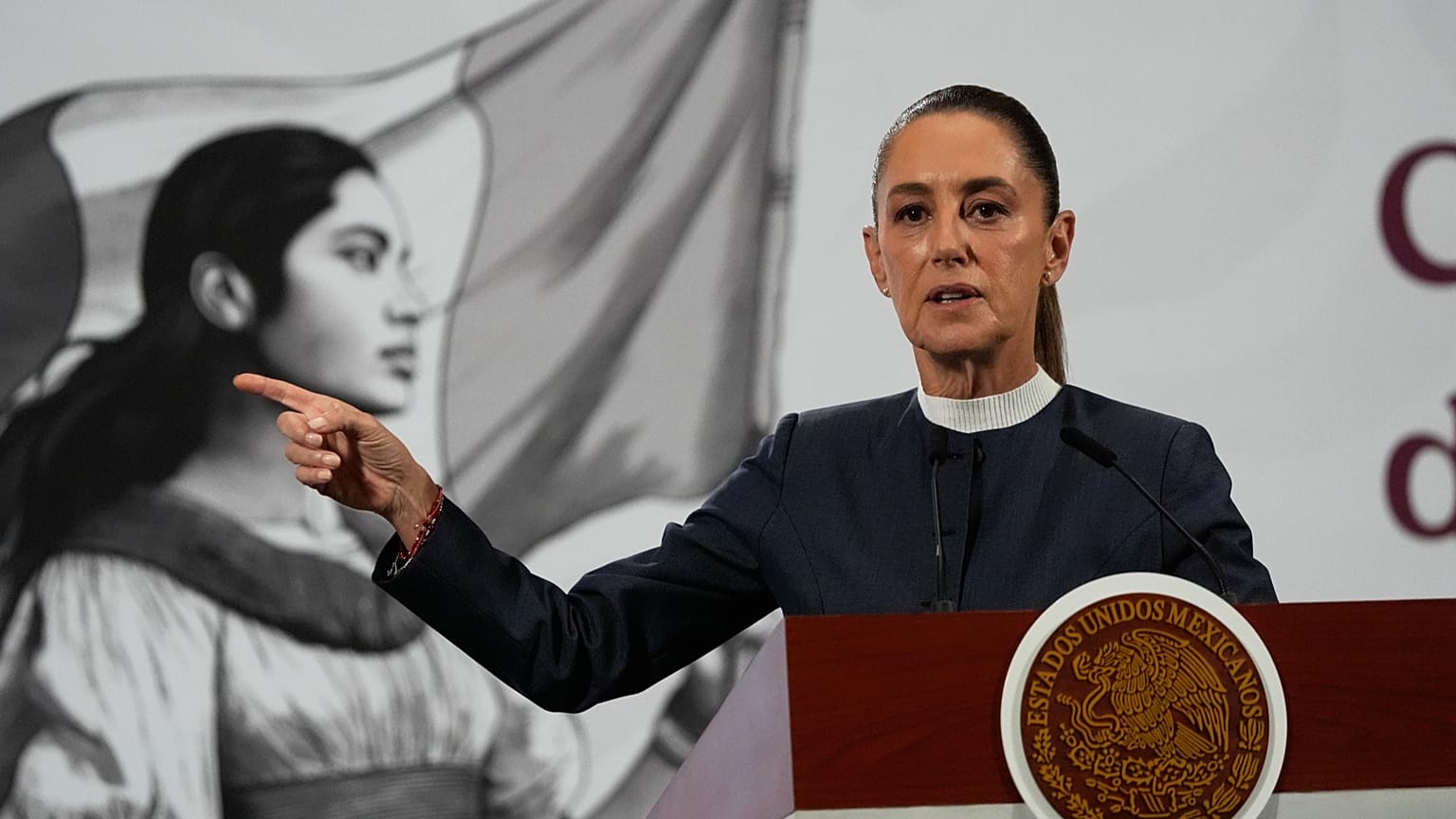
FILE: Mexican President Claudia Sheinbaum gives a morning press conference at the National Palace in Mexico City, 3 November 2025
Copyright AP Photo

By Jerry Fisayo-Bambi with AP
Published on 

Sheinbaum said she felt a responsibility to press charges for all Mexican women, because “If this is done to the president, what is going to happen to all of the young women in our country?”

Mexican President Claudia Sheinbaum on Wednesday called for sexual harassment to be made a crime nationwide, saying she had pressed charges against a man who groped her the day before.

In a video circulating widely on social platforms, a man who appeared to be under the influence of alcohol stepped up and leaned in for a kiss and touched the president’s body with his hands.

Sheinbaum, 63, gently pushed his hands away, maintaining a stiff smile as she turned to face him. She could be heard to say in part, “Don’t worry.”

Sheinbaum said she felt a responsibility to press charges on behalf of all Mexican women. “If this is done to the president, what is going to happen to all of the young women in our country?”

Earlier, Mexico City Mayor Clara Brugada had announced that the man had been arrested overnight.

Brugada emphasised that harassment of any woman, in this case, Mexico’s most powerful, is an assault on all women.

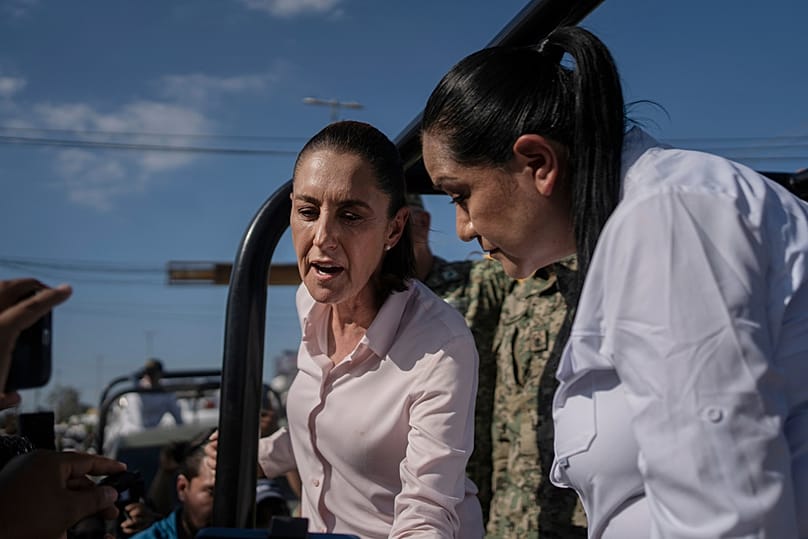
Mexican President Claudia Sheinbaum, left, and Veracruz Gov. Rocío Nahle García survey authorities' aid distribution in Poza Rica, Mexico, Sunday, Oct. 12, 2025 Felix Marquez/Copyright 2025 The AP. All rights reserved

Gender-based violence discussion reignited

Sheinbaum, who is Mexico's first female president, used her daily press briefing to further call on Mexico's states to scrutinise their laws and procedures to make it easier for women to report such assaults.

Mexicans needed to hear a “loud and clear no; women’s personal space must not be violated,” Sheinbaum said.

She said she had experienced similar incidents of harassment when she was 12 years old while using public transportation to get to school.

“I decided to press charges because this is something that I experienced as a woman, but that we as women experience in our country,” she said.

Like her predecessor and political mentor, ex-president Andrés Manuel López Obrador, Sheinbaum tries to maintain a connection with the people, frequently diving into crowds for selfies and handshakes.

Her security detail was not immediately visible in the close-shot video on Tuesday. Sheinbaum dismissed any suggestion that she would increase her security or change how she interacts with people.

According to Sheinbaum, she and her team had decided to walk from the National Palace to the Education Ministry to avoid a 20-minute car ride in city traffic.


Mexico's President Sheinbaum


presses charges over being groped


after video goes viral


Mexican President Claudia Sheinbaum said on Wednesday she had filed a complaint against a man who groped her and tried to kiss her as she walked in a Mexico City street, calling for sexual harassment to be made a crime nationwide. Video of the incident quickly went viral, highlighting the sexism women face in the country as well as raising questions about her security.

Issued on: 06/11/2025 
By: FRANCE 24
Video by: Stella ELGERSMA


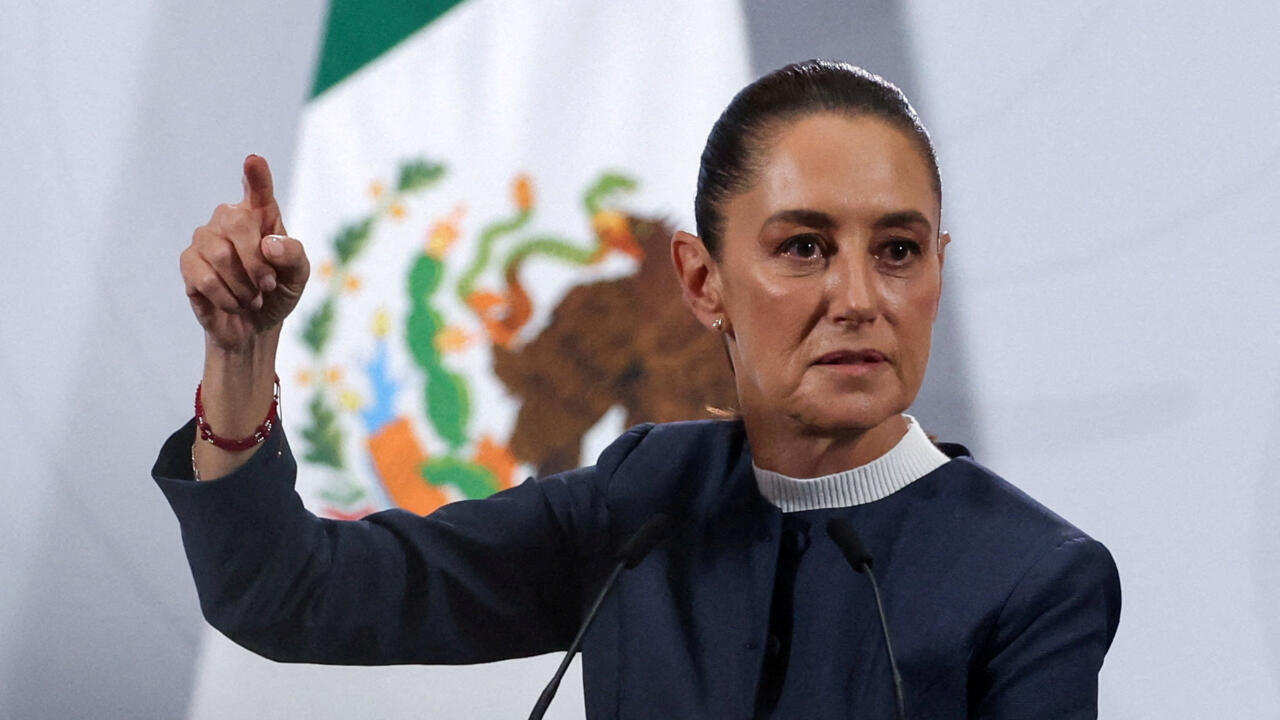
Mexico's President Claudia Sheinbaum speaks during a press conference at the National Palace in Mexico City, Mexico on November 3, 2025. 
© Henry Romero, Reuters
00:24


Mexican President Claudia Sheinbaum said on Wednesday she filed a complaint against a man who groped her and tried to kiss her as she walked between meetings in the capital city, a day after a video of the incident went viral.

"If this happens to the president, where does that leave all the young women in our country?" said Sheinbaum, Mexico's first female president. "No man has the right to abuse women's personal space."

Video of the incident quickly ricocheted across the internet before being taken down by some accounts, underscoring for many in Mexico the insecurity women face in a country steeped in machismo and gender-based violence.

It has also raised questions about Sheinbaum's security detail. Like her predecessor, Andres Manuel Lopez Obrador, Sheinbaum travels with minimal security and makes herself widely available to the public, including wading into crowds of people.

She said on Wednesday that she did not plan to change that practice, saying "we have to be close to the people".

The incident happened on Tuesday in the capital's historic center as Sheinbaum was greeting members of the public while making the short walk from Mexico's national palace to the Ministry of Education.

The video shows a middle-aged man putting his arm around Sheinbaum, touching her chest and attempting to kiss her. She moves his hands away before a member of her staff steps between them. The president's security detail did not appear to be near her in the moment.

Sheinbaum said the man appeared to be drunk.
Re-victimisation

She also blasted Mexican newspaper Reforma for publishing images of the man groping her, saying she considered it a "re-victimisation" and that it crossed an ethical line.

"The use of the image is also a crime," Sheinbaum said, pointing to legislation against digital violence. "I am waiting for an apology from the newspaper."

The federal government's Women's Ministry, created under Sheinbaum, issued a statement on Tuesday encouraging women to report violence against them, but asking media outlets "not to reproduce content that violates the integrity of women".

Still, feminist activists have sharply criticized Sheinbaum in the past for not doing enough to address violence against women. Among other things, they point to lackluster prosecutions and investigations of femicides – the killing of a woman because of her gender.

In 2024, Mexico recorded 821 femicides, according to government data. There have been 501 femicides recorded through September of this year, and many advocates say the numbers are likely far underestimated.
Criminalising harassment

Ana Yeli Perez of the National Citizen Observatory on Femicide said the groping of Sheinbaum puts the issue of violence against women on the national agenda again.

"It's reprehensible, it must be denounced, it must be named, because it's an act of violence, but it's also a significant event and symbolic of what women experience every day," she said.

Sheinbaum said sexual harassment should be a "criminal offence, punishable by law", adding that she has asked Mexico's Women's Ministry to conduct a review of the legal codes in each state.

Sexual harassment is a crime in about half of Mexican states, as well as the capital Mexico City. Local media identified the man who assaulted Sheinbaum as Uriel Rivera and a state security filing showed he was arrested at 9pm on Tuesday night.

(FRANCE 24 with Reuters)


 FAA cancels thousands of flights amid strain from US government shutdown


The Federal Aviation Administration will reduce air traffic by 10% across 40 major markets from Friday to maintain safety, as unpaid air traffic controllers face growing fatigue and staff shortages during the longest government shutdown on record.


Issued on: 06/11/2025 -

By: FRANCE 24

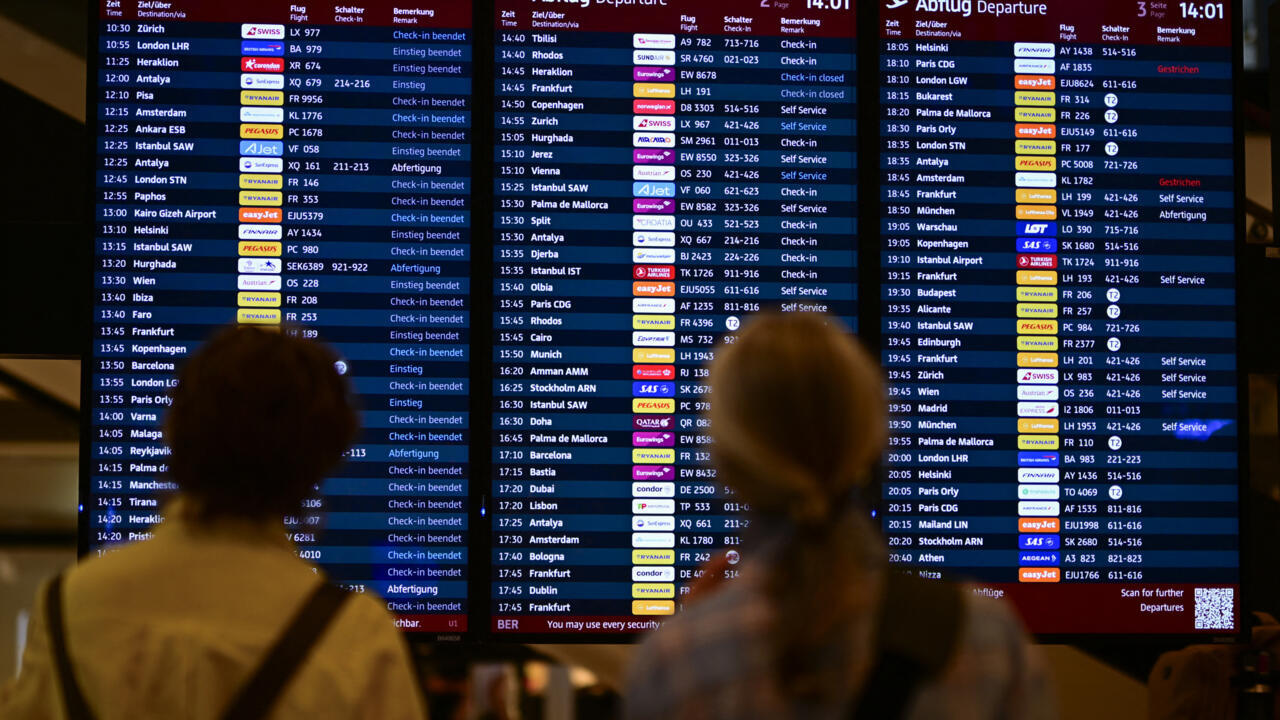
Passengers check a digital display showing flights with completed or uncompleted check-in at Berlin Brandenburg BER airport Willy-Brandt in Schoenefeld. (File Photo) © Tobias Schwarz, AFP

The Federal Aviation Administration said Wednesday that it was taking the extraordinary step of reducing air traffic by 10% across 40 “high-volume” markets beginning Friday morning to maintain travel safety as air traffic controllers exhibit signs of strain during the ongoing government shutdown.

The cutback stands to affect thousands of flights nationwide because the FAA directs more than 44,000 flights daily, including commercial passenger flights, cargo planes and private aircraft. The agency did not immediately identify which airports or cities would be affected but said the restrictions would remain in place as long as necessary.

“I’m not aware in my 35-year history in the aviation market where we’ve had a situation where we’re taking these kinds of measures,” FAA Administrator Bryan Bedford said at a news conference.

Air traffic controllers have been working unpaid since the shutdown began on October 1st, and most have been on duty six days a week while putting in mandatory overtime. With some calling out of work due to frustration, taking second jobs or lacking money for childcare or fuel, staffing shortages during some shifts have led to flight delays at several US airports.


Bedford, citing increased staffing pressures and safety reports indicating growing fatigue among air traffic controllers, said he and US Transportation Secretary Sean Duffy did not want to wait until the situation reached a crisis point.

“We’re not going to wait for a safety problem to truly manifest itself when the early indicators are telling us we can take action today to prevent things from deteriorating,” Bedford said. “The system is extremely safe today and will be extremely safe tomorrow. If the pressures continue to build even after we take these measures, we’ll come back and take additional measures.”

He and Duffy said they would meet with airline executives later Wednesday to determine how to implement the reduction in flights before a list of the selected airports would be released sometime Thursday.

The Associated Press on Wednesday sent requests for comment on the FAA’s decision to major US airlines, including Delta, United and American Airlines.

Calls to customer service hotlines at United and American were answered within a few minutes Wednesday afternoon, suggesting anxious passengers were not swamping the airlines with questions about the status of their upcoming flights.

Southwest Airlines said it was evaluating potential impacts to its flight schedule and would reach out as soon as possible to customers whose travel plans may be affected.

Airline industry analyst Henry Harteveldt, president of Atmosphere Research Group, said he believed the government might have mishandled the announcement by not meeting with airlines first and giving them more time to adjust schedules made months in advance.

“To tell airlines you’ve got 48 hours to rebuild your schedules at 90% of what you’ve got isn’t much time, and it’s going to result in a lot of chaos,” Harteveldt said. He added that the Trump administration might be using aviation safety “to force the two sides in Washington back to the negotiating table to resolve the shutdown.”

AAA spokesperson Aixa Diaz advised travellers to watch for flight updates on airline apps and airport websites. She also recommended allowing plenty of time at the airport before a scheduled flight.

“It’s frustrating for travellers, because there’s not much you can do. At the end of the day, you either fly or you don’t,” she said.

The cuts could represent as many as 1,800 flights and upward of 268,000 seats combined, according to an estimate by aviation analytics firm Cirium. For example, O’Hare International Airport in Chicago could see 121 of its 1,212 flights scheduled for Friday cut if the FAA distributes the reductions equally among affected airports, Cirium said.

The FAA regularly slows down or stops flights from taking off toward an airport for a number of reasons, including weather conditions, equipment failures and technical problems. Staffing shortages may also lead to slowed or halted departures if other personnel cannot fill in or another facility cannot absorb some of the workload.

Last weekend saw some of the worst staffing shortages of the shutdown, which became the longest on record early Wednesday.

From Friday to Sunday evening, at least 39 different air traffic control facilities announced the potential for limited staffing, according to an Associated Press analysis of operations plans sent through the Air Traffic Control System Command Center. The figure, likely an undercount, is well above the average for weekends before the shutdown.

During weekend periods from January 1st to September 30th, the average number of airport towers, regional centres overseeing multiple airports and facilities monitoring traffic at higher altitudes that announced potential staffing issues was 8.3, according to the AP analysis. But during the five weekend periods since the shutdown began on October 1st, the average more than tripled to 26.2 facilities.

Major airlines, aviation unions and the wider travel industry have urged Congress to end the shutdown.

Wednesday’s announcement followed Duffy’s warning a day earlier that there could be chaos in the skies next week if the shutdown drags on long enough for air traffic controllers to miss their second full paycheques next Tuesday.

Duffy said the FAA wanted to take a proactive approach instead of reacting after a disaster. He pointed to all the questions that arose after the deadly mid-air collision in January between a commercial jet and a military helicopter near Ronald Reagan Washington National Airport about why the FAA had not recognised the risks and acted sooner.

“We learned from that. And so now we look at data, and before it would become an issue, we try to assess the pressure and make moves before there could be adverse consequences,” Duffy said. “And that’s what’s happening here today.”

(FRANCE 24 with AP)


US to reduce air traffic by 10% across 40 high-volume airportsover government shutdown

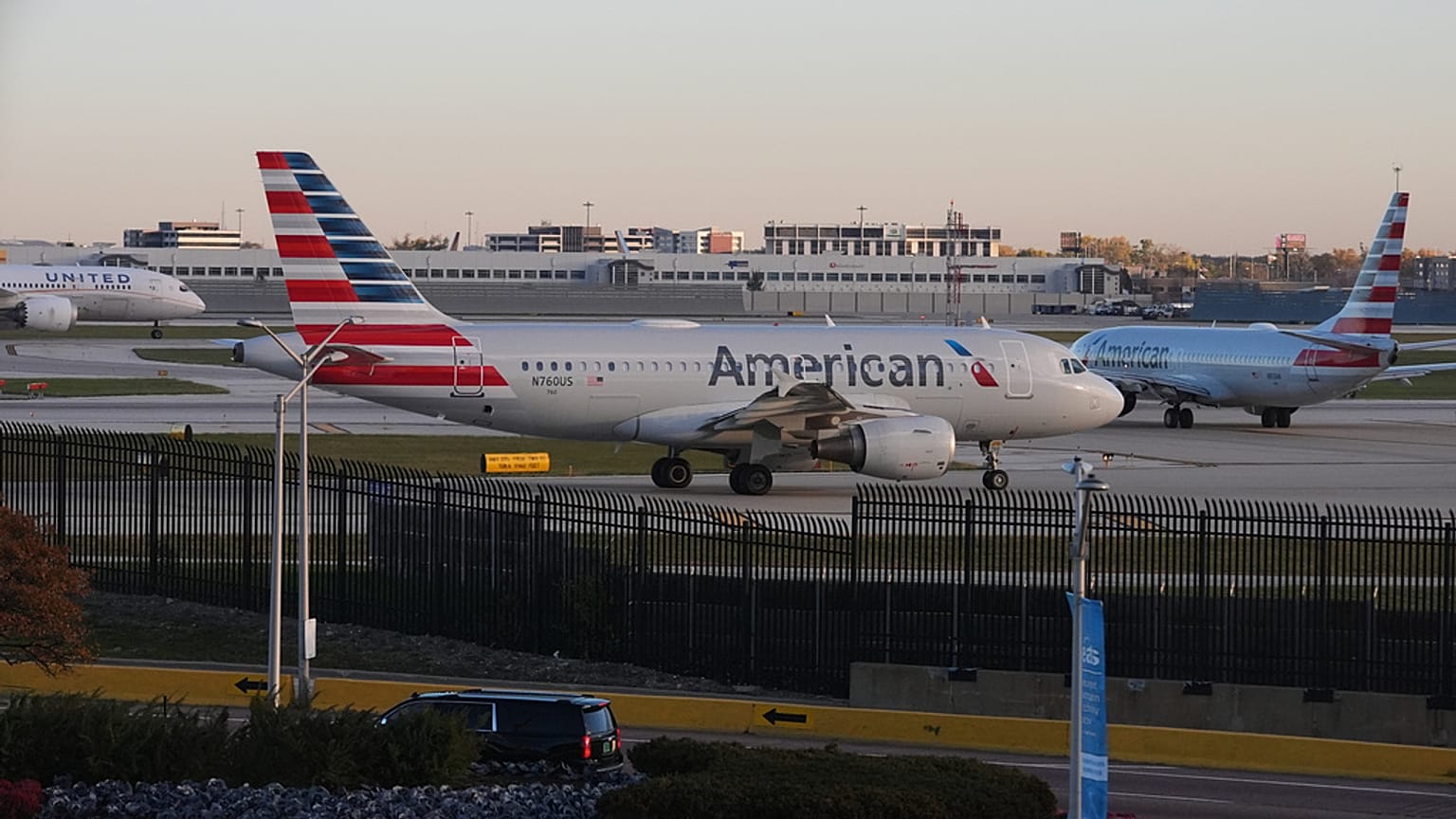
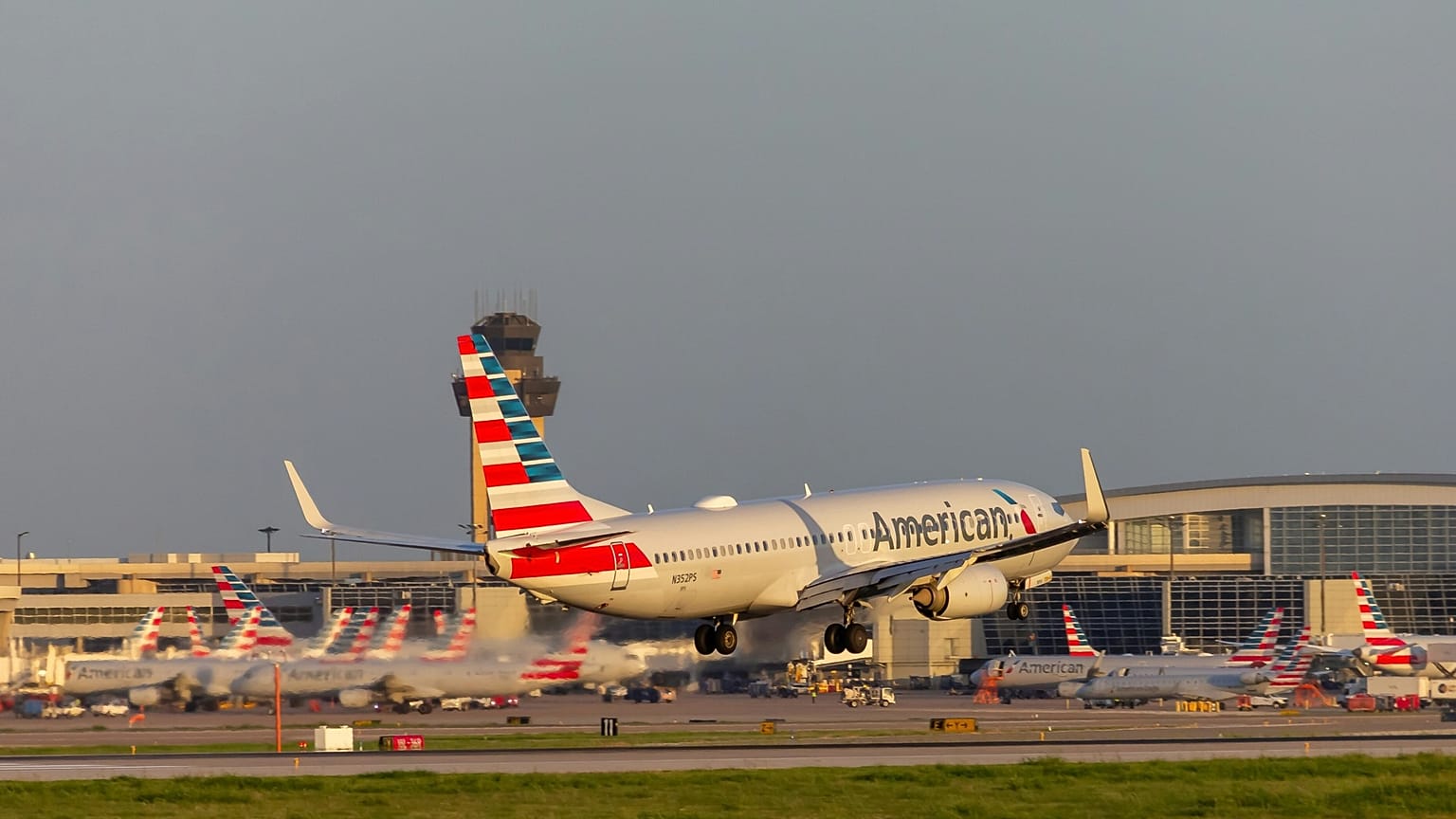
An American Airlines flight arrives at O'Hare International Airport in Chicago, Monday, Nov. 3, 2025. (AP Photo/Nam Y. Huh)
Copyright Nam Y. Huh/Copyright 2025 The AP. All rights reserved.

By Jerry Fisayo-Bambi with AP
Published on 

The cuts could represent as many as 1,800 flights and upward of 268,000 seats combined, according to an estimate by an aviation analytics firm.

US aviation authorities said Wednesday that they were taking the extraordinary step of reducing air traffic by 10% across 40 “high-volume” airports beginning Friday morning as air traffic controllers exhibit signs of strain during the ongoing government shutdown.

According to the Federal Aviation Administration (FAA), the cutback is expected to affect thousands of flights nationwide, as it directs more than 44,000 flights daily, including commercial passenger flights, cargo planes and private aircraft.

The agency did not immediately identify which airports or cities would be affected but said the restrictions would remain in place as long as necessary.

Air traffic controllers have been working unpaid since the shutdown began on 1 October, and most have been on duty six days a week while putting in mandatory overtime.

“I’m not aware of my 35-year history in the aviation market where we’ve had a situation where we’re taking these kinds of measures,” FAA Administrator Bryan Bedford said at a news conference.

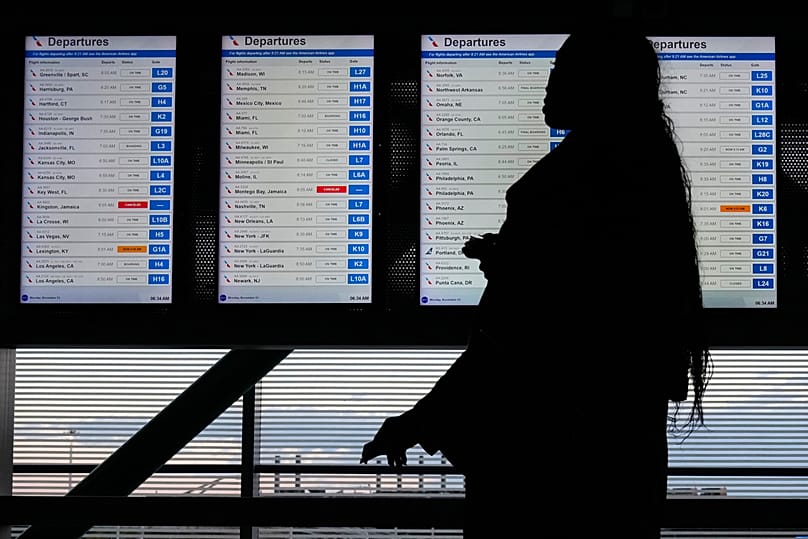
A traveler walks through the skyway leading to terminal 3 at O'Hare International Airport in Chicago, Monday, Nov. 3, 2025. Nam Y. Huh/Copyright 2025 The AP. All rights reserved.

Citing increased staffing pressures and voluntary safety reports from pilots indicating growing fatigue among air traffic controllers, Bedford said he and US Transportation Secretary Sean Duffy did not want to wait until the situation reached a crisis point.

“We’re not going to wait for a safety problem to truly manifest itself when the early indicators are telling us we can take action today to prevent things from deteriorating,” Bedford said.

“The system is extremely safe today and will be extremely safe tomorrow. If the pressures continue to build even after we take these measures, we’ll come back and take additional measures.”

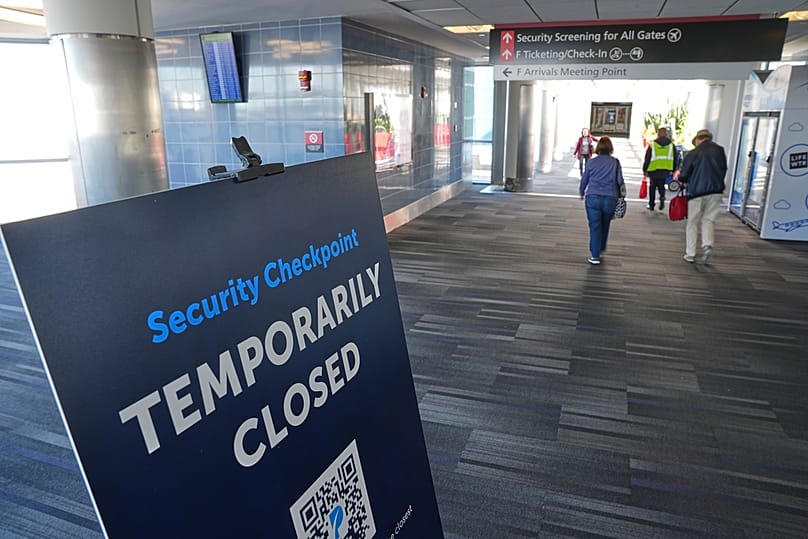
A sign is posted near a TSA screening area at Philadelphia International Airport in Philadelphia, Wednesday, Nov. 5, 2025. (AP Photo/Matt Rourke) Matt Rourke/Copyright 2025 The AP. All rights reserved.

Meanwhile, several airlines, including United, Southwest and American, all said they will try to minimise the impact on consumers as they cut their schedules to comply with the order.

Media reports said calls to United and American Airlines customer service hotlines were answered within a few minutes on Wednesday afternoon, suggesting anxious passengers were not swamping the airlines with questions about the status of their upcoming flights.

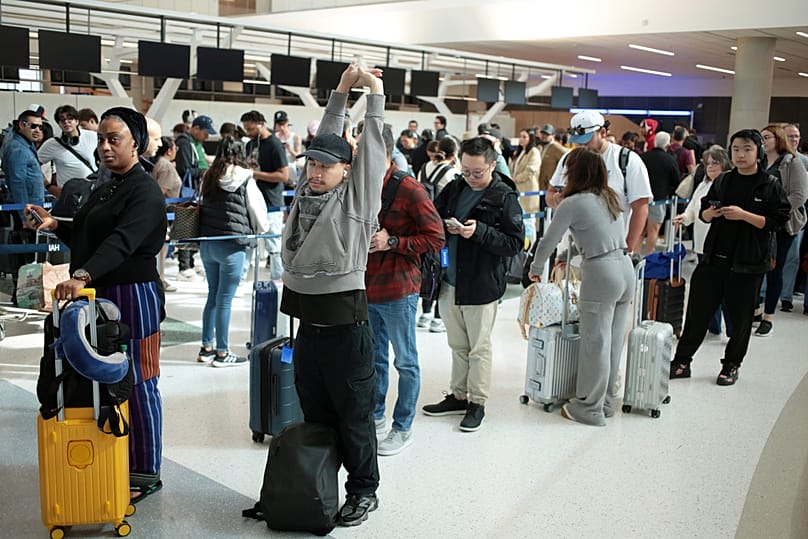
Travelers wait in long security lines at George Bush Intercontinental Airport, Monday, Nov. 3, 2025, in Houston. (AP Photo Lekan Oyekanmi) Lekan Oyekanmi/Copyright 2025 The AP. All rights reserved

According to an estimate by aviation analytics company Cirium, the losses could amount to 1,800 flights and 268,000 seats.

For example, O’Hare International Airport in Chicago could see 121 of its 1,212 flights currently scheduled for Friday cut if the FAA distributes the reductions equally among impacted airports, Cirium said.

Data shows worsening staffing

It is common for the FAA to slow down or stop flights from taking off toward an airport for many reasons, including weather conditions, equipment failures, and technical problems.

Staffing shortages also may lead to slowed or halted departures if there aren’t enough controllers and another facility can’t absorb some of the workload.

Last weekend saw some of the worst staffing shortages of the shutdown.

According to an Associated Press report showing plans issued through the Air Traffic Control System Command Center system, at least 39 distinct air traffic control facilities announced there was some possibility of restricted staffing between Friday and Sunday evening.

The figure, which the report described as likely an undercount, is well above the average for weekends before the shutdown.

Major airlines, aviation unions and the wider travel industry have urged the US Congress to end the shutdown, which became the longest on record early Wednesday.


Flying to or from the US? Here's how a potential airspace closure could affect your trip

The US shutdown hit a record 36 days on Wednesaday
Copyright Izyan Sultanali/Unsplash


By Craig Saueurs & AP News
Published on 

The last time the US closed parts of its air space was in the wake of the 11 September 2001 attacks.

An already chaotic time for travellers in the US could become even worse.

As America’s government shutdown hits a record-breaking 36 days, the fallout is spreading from Washington’s halls of power to airports across the country.

On Tuesday, Transport Secretary Sean Duffy upped the stakes, declaring that parts of US airspace could be closed due to safety concerns if the deadlock continues.

His warning has raised the prospect of unprecedented disruption for millions of passengers entering, leaving or travelling in the country.

“If you bring us to a week from today, Democrats, you will see mass chaos, you will see mass flight delays. You’ll see mass cancellations, and you may see us close certain parts of the airspace, because we just cannot manage it,” Duffy said.

“We will restrict the airspace when we feel it’s unsafe.”

But what would this mean for travellers, and is chaos in the skies really on the horizon?

‘Mass chaos’ looms as unpaid staff walk off the job

The last time the US closed its airspace was in the wake of the 11 September 2001 attacks. With no end to the shutdown in sight, frustration is spilling into the country’s air network and making another closure suddenly seem possible.

Thousands of air traffic controllers and airport security officers are still working without pay. According to aviation insiders, more are beginning to call in sick to find temporary jobs elsewhere to make ends meet.

“I think you’re also seeing people who are just calling in sick because they’re fed up and they’re like, ‘well, I’m going to spend the holiday weekend with my kids for once,’” one air traffic controller told NPR this week.

The Trump administration has said the shutdown has left shortages of up to 3,000 air traffic controllers. Employees of the Federal Aviation Administration (FAA) have already missed one paycheck.

Duffy and the head of the National Air Traffic Controllers Association have warned that the longer it continues, the more the financial pressure on those forced to work without pay will grow.

It is difficult to predict how much worse the situation could get if they miss a second paycheck but the shutdown has already left some passengers facing longer queues, missed connections and hours of waiting in airports or on the tarmac.

What do delays and cancellations look like for US travellers so far?

Normally, airlines strive to have at least 80 per cent of their flights depart and arrive within 15 minutes of when they are scheduled. Aviation analytics firm Cirium said that since the shutdown began on 1 October, the total number of delays overall has not fallen significantly below that goal because most of the disruptions so far have been no worse than what happens when a major thunderstorm moves across an airport.

But on Sunday, only about 56 per cent of Newark's departures were on time, and the Orlando airport reported that only about 70 per cent of its flights were on time, according to Cirium.

Industry groups estimate that more than 3.2 million passengers have already been affected since the shutdown began. On Tuesday alone, nearly 3,000 flights were delayed after shortages hit air hubs such as Phoenix, Houston, Detroit and Denver.

Airlines are also warning that the chaos could soon hit bookings if travellers lose confidence in the system – especially if the safety of American skies takes a PR hit.

“Every single day that this goes on tomorrow is now less safe than today,” Nick Daniels, president of the National Air Traffic Controllers Association, told CNN.

What would airspace closures mean for travellers?

Even a partial closure of US airspace would have widespread consequences because the country’s air traffic control system is highly interconnected.

According to the Federal Aviation Administration, air traffic centres handle flights across multiple regions, meaning delays or restrictions at one facility quickly affect others. Industry analysts, including Airlines for America (A4A), have also warned that staffing shortages in one region can cause “nationwide ripple effects” across the network.

If a major centre limits arrivals or departures, those delays cascade through other airports, creating knock-on cancellations and missed connections far from the original problem. And reroutings and reduced capacity across the US could have a huge impact on international schedules, complicating onward travel to Europe and elsewhere.

While a full closure isn’t yet on the table, the warning highlights how fragile the system has become after more than a month without funding.

At the time of writing, more than 480 flights within, into or out of the United States had already been delayed today, while 57 had been cancelled, according to FlightAware.