It’s possible that I shall make an ass of myself. But in that case one can always get out of it with a little dialectic. I have, of course, so worded my proposition as to be right either way (K.Marx, Letter to F.Engels on the Indian Mutiny)
Saturday, November 08, 2025
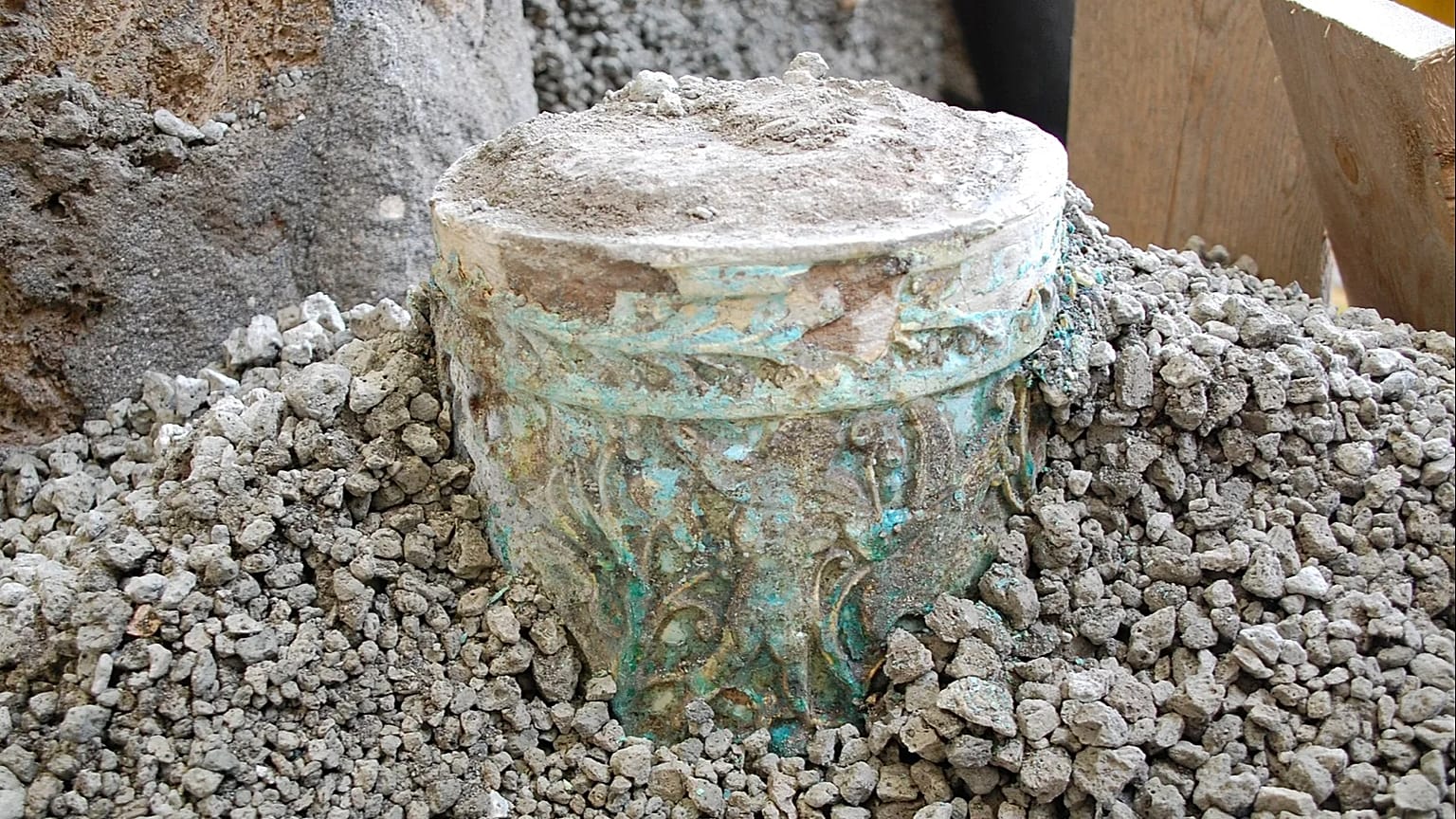
Precious antique Egyptian vase found in Pompeii 'street food' area
Copyright Parco Archeologico di Pompei
By Tokunbo Salako & Euronews Italia Published on 07/11/2025 -
The discovery in the so-called 'street food' area of the ancient city of Vesuvius is evidence of its links with Eastern cultural and religious communities at lower-middle levels of society.
A precious Egyptian vase has re-emerged in the ruins of Pompeii, in the so-called 'street food' area of antiquity, revealing unprecedented cultural and commercial links between the two civilisations.
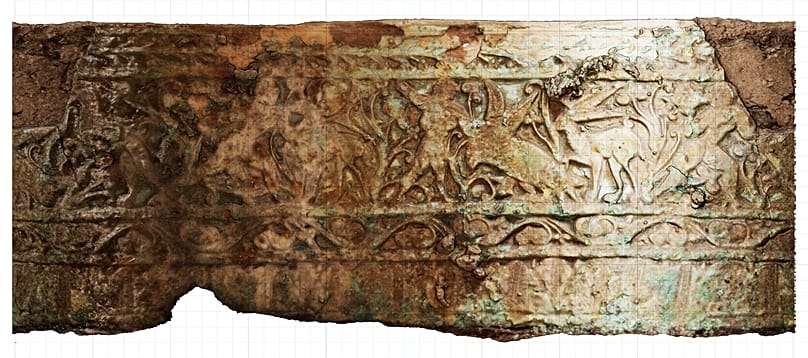
According to the Archaeological Park of Pompeii, "hunting scenes in Egyptian style, produced in Alexandria, Egypt" are depicted on the object discovered in the kitchen of the Thermopolium of Regio V, where it was probably used as a food container.
The vase is seen as proof of the rich mix of cultures that contributed to daily life in Pompeii, before the city was destroyed by the eruption of Vesuvius in AD 79**.**
Detail of the situla (vase) found in the Thermopolium Regio V of the Archaeological Park of Pompeii Technodigit/Parco Archeologico di Pompei
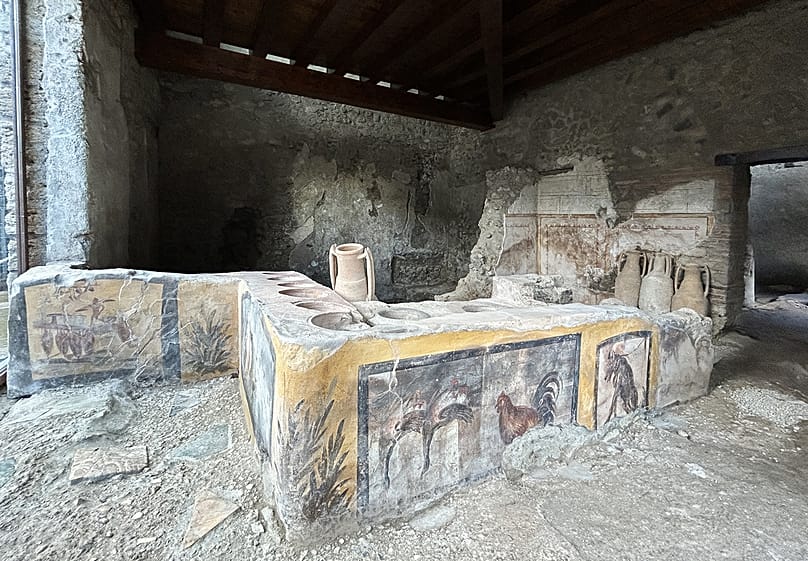
The Thermopolium was a real antique fast food restaurant
The rare artefact re-emerged with the excavations begun in 2023 with the aim of improving the conservation conditions of the rooms of the Thermopolium, known as the 'street food' area of ancient Pompeii.
Drinks and hot food were served here, in a real canteenwhere Pompeians ate their meals outdoors. Over the years, archaeological research has identified at least 80 similar buildings.
The Thermopolium where the Egyptian vase was found resurfaced during excavations in 2020. Here lie the remains of food traces, amphora and flasks for transporting food, while the remaining walls show representations of animals, probably slaughtered and sold on the premises.
"We see here in action a certain creativity in furnishing sacred and profane spaces, that is, the domestic altar and the kitchen, with objects that testify to the permeability and mobility of tastes, styles and probably also of religious ideas in the Roman Empire," explained the director of the Pompeii excavations, Gabriel Zuchtriegel.
Thermopolium Regio V, the so-called 'street food' area of the Pompeii Archaeological Park Parco Archeologico di Pompei
Contacts between different and distant cultures were not the prerogative of the city's elites, the director added, but were also observed in common environments, in this case in "the backroom of a popina, a street food shop in Pompeii, i.e. at alower-middle level oflocalsociety, which nonetheless proves to beessential in the promotion of Eastern cultural and religious forms, including Egyptian cults".
In the Thermopolium, service rooms have also re-emerged, with a kitchen on the ground floor and a small flat on the upper floor where the managers of the business lived. The spaces were organised in a functional manner, with a bathroom next to the entrance and an area used for storing amphora and liquid containers.
Europeans largely skip Latin American summit under Donald Trump's shadow
Top European leadership is set to skip the EU-CELAC summit on Sunday marked by tensions between the United States and Colombia. Donald Trump is also pursuing an aggressive policy on Venezuela, with Nicolás Maduro in focus. Europeans cite low attendance to cancel summit participation.
Donald Trump will not be in the room when European, Latin American and Caribbean leaders gather together on Sunday for a multilateral summit in Santa Marta, Colombia.
But his foreign policy has already left a mark – and is shaping the agenda.
Europe's top brass, from German Chancellor Friedrich Merz and French President Emmanuel Macron to Italian Prime Minister Giorgia Meloni and Commission President Ursula von der Leyen, will skip the EU-CELAC Summit.
They are part of the more than two dozen high-level cancellations from a summit initially billed as an opportunity to further develop the diplomatic and business ties between the European Union and Latin America.
As Trump's tariffs roil the world, the EU has embarked on a global effort to expand its trading partners, focusing on Latin America, a continent rich in natural resources, and reviving partnerships from Mexico to Mercosur.
Still, the European delegation travelling to Colombia this time is mostly restricted to nations with historical links to the continent, like Spain and Portugal. Some of the reasons cited for the wave of no-shows are conflicting schedules with COP30 in Brazil, the passage of Hurricane Melissa and the low-ranking status of attendants.
The 2025 summit was supposed to be Colombia's biggest diplomatic effort in decades, with the participation of more than 60 heads of state. The event has since been downgraded to a single-day ceremony and will see only a handful of leaders in person.
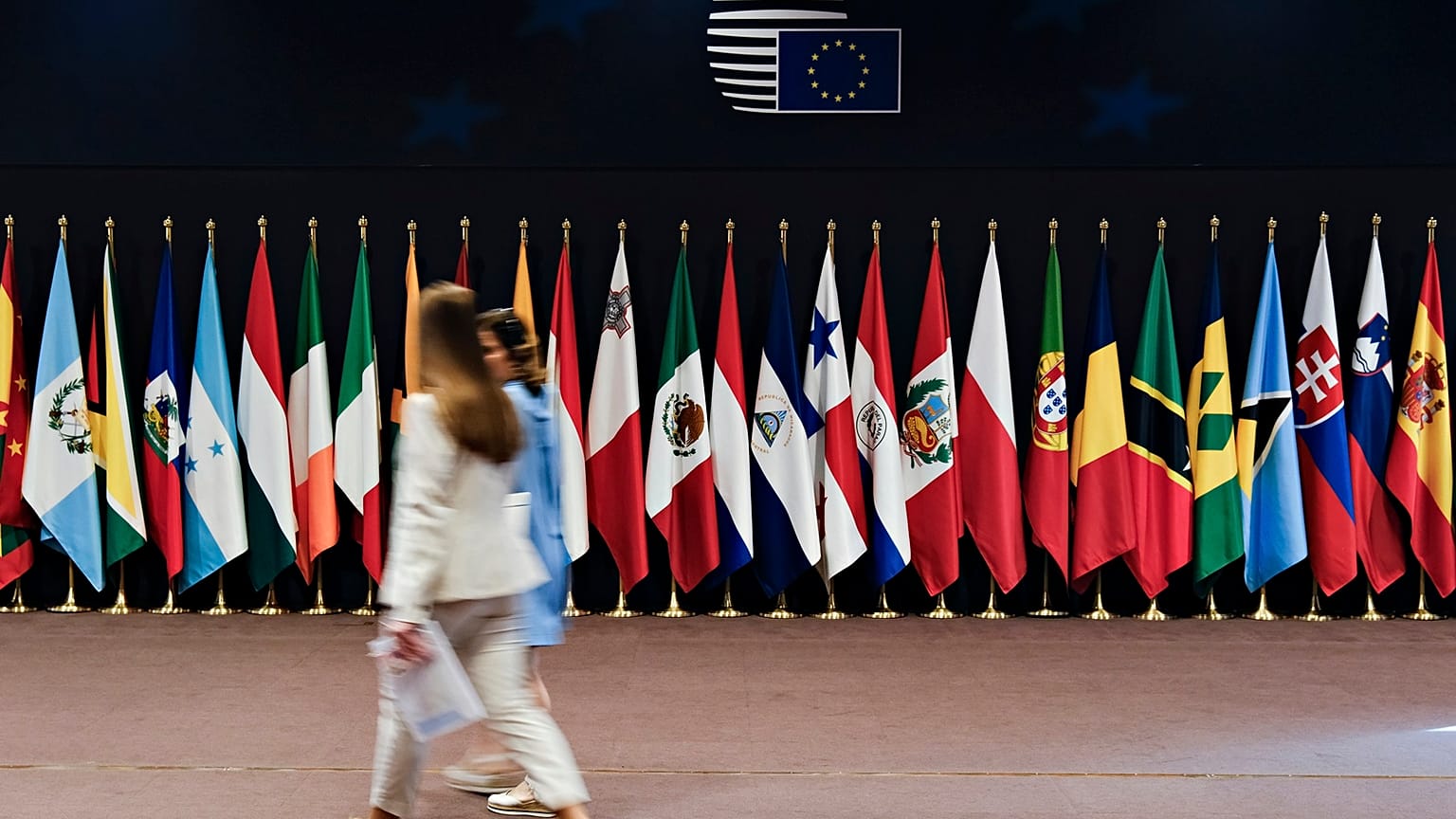
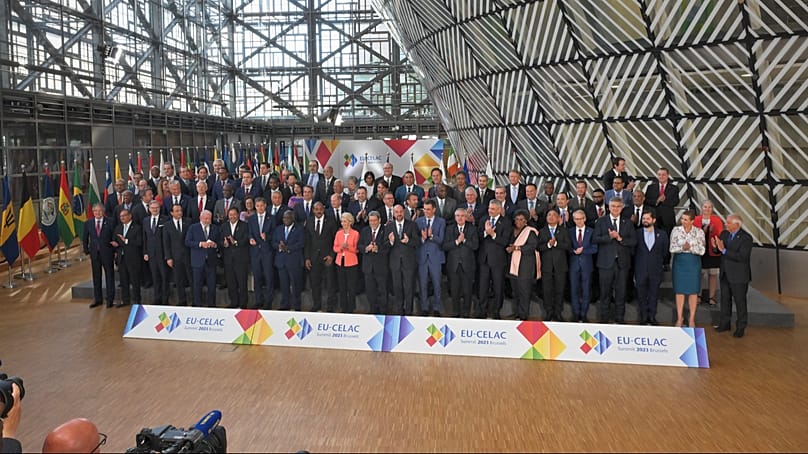
The family group will be a stark contrast to 2023, when the 27 EU heads of state and government and the chiefs of the European Council and the European Commission stood together with their CELAC counterparts at a much-publicised conference in Brussels.
The EU-CELAC summit of 2023 had high attendance on both sides. European Union, 2023.
Beyond logistical problems, the growing tensions between US President Donald Trump and Latin America have likely played a considerable role.
The US administration has dramatically increased the military pressure on Venezuela, striking what it describes as "drug boats" navigating in international waters. The White House argues Venezuela is flooding the US with drugs and dangerous criminals.
It has also accused Venezuelan president Nicolás Maduro, who is accused of usurping office and mass electoral fraud in an election held in 2024, of running a "narco state" and leading an international drug cartel. The US has also deployed an advanced aircraft carrier to the Caribbean Sea capable of hitting targets within Venezuelan soil.
The sequence has prompted speculation that the US could intervene militarily in Venezuela to oust Maduro if he refuses to exit the country. Trump told CBS in an interview that he did not believe an all-out war would break out but did not rule out intervening in the country, arguing that it has treated the "US very badly".
Trump has also clashed with the host country, Colombia, and its left-wing president, Gustavo Petro. Trump claims Colombia is part of a group fueling illegal immigration into the US and trafficking drugs. Petro himself is sanctioned by Washington. Von der Leyen's no-show
The most notable absentee among the Europeans is Ursula von der Leyen, who was expected to land in Colombia over the weekend after making a stop at COP30, where she touted the bloc's climate credentials and met with other leaders.
Von der Leyen has delegated her participation to High Representative Kaja Kallas, who will now represent the Commission on her behalf.
"It's quite simple. Due to the low level of participation of heads of state at the EU-CELAC summit, the president made the decision to not participate," said Olof Gill, the Commission's deputy chief spokesperson on Thursday.
"We want to recall that EU-CELAC relations are very important at a time of geopolitical challenges and divisions. The summit confirms the importance of these relations."
Von der Leyen's no-show has raised eyebrows in Brussels, given her penchant for international fora. In 2023, she praised the CELAC, hailed the bilateral format as a platform for dialogue and promised to attend the meetings every two years.
"This EU-CELAC summit felt like a new beginning between old friends. These are times of great geopolitical change, and like-minded friends like the EU and Latin American and Caribbean partners need to get closer," she said in 2023.
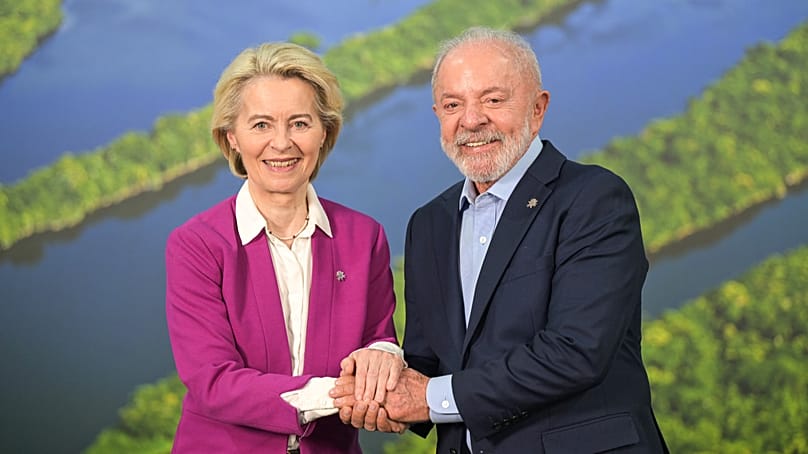
Ursula von der Leyen and Lula da Silva met at COP30. European Union, 2025.
Asked if von der Leyen had cancelled to avoid enraging Trump, with whom she has developed a close relationship, her spokesperson declined to comment any further.
"The president believes she is executing her responsibilities to the letter and faithfully," Gill told reporters.
Von der Leyen's decision mismatches her own priorities.
The EU sees in Latin America a strategic partner to diversify its trade relations and bolster its diplomatic clout in a volatile world dominated by weaponisation, unilateral decision-making and blatant breaches of international norms.
As part of this outreach, Brussels has deployed the Global Gateway, a multi-billion-euro initiative to fund infrastructure projects, deepened cooperation to fight climate change and struck agreements to extract critical raw materials, which China controls with a monopolistic advantage that it manipulates to cripple global supply chains.
The crown jewel is the EU-Mercosur free trade deal, which has been 25 years in the making and is nearing the final stage. If signed, it will create a market of over 700 million consumers and boost bilateral commerce worth €111 billion annually. 'Wrong message'
All these good intentions are now heavily strained by Trump, who often cajoles America's allies into choosing his preferred side to the detriment of the one he dislikes.
Earlier this week, Colombian President Gustavo Petro accused "external forces" of seeking the "failure" of the EU-CELAC summit.
"In this new fossil-based and anti-democratic era of geopolitics, the aim is to prevent the peoples who desire freedom and democracy from coming together," Petro said.
Despite the rarefied atmosphere, a select few will still make the trip to Santa Marta.
Among the minority will be Spanish Prime Minister Pedro Sánchez, Portuguese Prime Minister Luís Montenegro and European Council President António Costa, all of whom attach particular importance to relations with Latin America.
"President Costa remains fully committed to the EU–CELAC strategic partnership, and in this period of volatility and uncertainty, it is vital that the EU continues to act as a reliable and predictable partner," a spokesperson for Costa said in a statement.
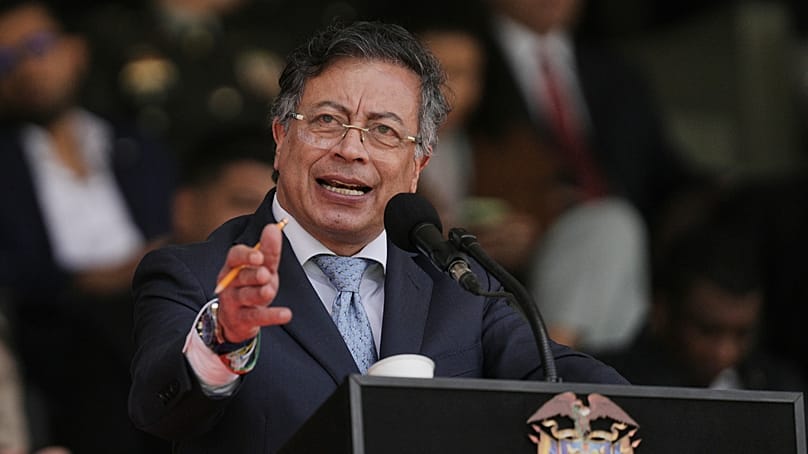
Colombian President Gustavo Petro. Copyright 2025 The Associated Press. All rights reserved
The Europeans will face uncomfortable questions shortly after landing.
Brazilian President Lula da Silva, an influential voice in the region, has said the EU-CELAC summit would "only make sense" if the US military build-up is discussed, suggesting he intends to put the hot-button topic front and centre on the table.
The formal agenda does not mention the US by name but includes a point on "peace, security and prosperity", where pent-up grievances might burst into the open.
The EU has so far trodden carefully regarding the US-Venezuela standoff, simply noting that drug traffic must be combatted in line with international law. By contrast, the UN's human rights chief has said the US attacks amount to "extrajudicial killings".
"The notable absence of both European Commission President Ursula von der Leyen and German Chancellor Friedrich Merz is a clear diplomatic signal, primarily driven by a desire to avoid escalating tensions with US President Donald Trump," said Alberto Rizzi, a policy fellow at the European Council on Foreign Relations (ECFR).
"This sends the wrong message to CELAC nations: instead of serving as a reliable counter-balance to aggressive US policy, the bloc appears to be subordinating its regional partnership to its relationship with Washington."
Amid the sky-high tensions, attendance from the CELAC side will also be reduced. The pan-continental format has struggled with coherence and consistency, as it encompasses mature democracies with one-party regimes.
Shadows Over The Durand Line: South Asia’s Borders On Fire – Analysis
Detail of Durand Line Border Between Afghanistan And Pakistan. Credit: CIA World Factbook
In October, renewed armed clashes erupted between Afghanistan and Pakistan, sparking serious concern both within the region and beyond. This escalation is particularly alarming given that both countries occupy pivotal positions in the political and economic architecture of Eurasia, linking South and Central Asia with the broader Middle East.
In this context, the deterioration of relations between Kabul and Islamabad carries significant implications for regional stability and international security. The emergence of this conflict is rooted in several interrelated factors.
The Terrorism Factor
Pakistan has accused Afghanistan for providing support to the terrorist organization Tehrik-e-Taliban Pakistan (TTP). Kabul, however, has officially rejected these allegations, insisting that it offers no assistance to the group. According to Pakistani sources, TTP militants carried out over hundred terrorist attacks across Pakistan over the past year, resulting in the deaths of approximately 500 civilians, 311 soldiers, and 73 police officers. The organization advocates for the establishment of a religious state, arguing that modern Pakistan, despite its formal status as an Islamic Republic, remains based on the British legal framework and therefore is not fully “Islamic”. Reports indicate that TTP operates primarily in the province of Khyber Pakhtunkhwa, while maintaining bases in the Afghan provinces of Khost, Paktika, Nangarhar, and Kunar. These conditions have fueled recurring border clashes between the two countries. Although similar incidents occurred last year, their frequency and intensity have markedly increased in the current one.
The India Factor
At the onset of the conflict, Afghanistan’s Foreign Minister Amir Khan Muttaqi participated in the “Moscow Format” consultations in the Russian Federation and subsequently paid a six-day official visit to India. It was during this period that the armed clashes began, leading to speculation that Pakistan perceived Kabul’s rapprochement with New Delhi as a direct threat to its strategic interests. During the visit, Indian Foreign Minister Subrahmanyam Jaishankar announced India’s intention to upgrade its current technical mission in Kabul to a full-fledged embassy, while Afghanistan expressed readiness to establish a diplomatic mission in New Delhi. To support the statement, India also confirmed its willingness to officially receive a new Afghan ambassador and his credentials. According to several experts, India has effectively initiated a process toward the formal recognition of the current Afghan government and may become, after Russia, the second major power to do so. Such a development could significantly alter the geopolitical configuration of South Asia, strengthening India’s regional influence while weakening Pakistan’s position. For Islamabad, Afghanistan has long represented a form of “strategic depth” – a geopolitical buffer zone intended to provide support in its enduring rivalry with India. The loss of this depth would markedly complicate Pakistan’s strategic posture. Furthermore, Pakistani officials have alleged that Tehrik-e-Taliban Pakistan receives backing not only from Afghanistan but also from India, which, they claim, uses the group as a tool to exert pressure on Pakistan – accusations New Delhi has categorically denied. Apparently, India is using this situation to its sake. Official New Delhi appears to view the Taliban government as a “spatial structure” that allows it to gain additional leverage over Pakistan’s “strategic depth”. Furthermore, there a still controversaries between New Delhi and Kabul perspectives on state governance and human right, which makes this diplomatic “boost” between countries based on mutual interests rather than shared values.
The U.S. Factor
Shortly before the conflict escalated, US President Donald Trump reportedly demanded access to Bagram Air Base, but Afghan authorities flatly rejected the request. Shortly thereafter, a nationwide internet shutdown occurred in Afghanistan. Following this, Pakistani representatives held an official meeting with the US delegation at the UN General Assembly. These events fueled suspicions among Afghan observers that Washington may be indirectly involved in escalating tensions between Kabul and Islamabad.
The Mutual Respect Factor
Pakistan played a decisive role in bringing the Taliban to power, both during their first rule (1996–2001) and again in 2021. Islamabad therefore expected the current Afghan government to officially recognize the Durand Line as the legitimate border between the two states. However, no Afghan administration – including the present one – has ever recognized this boundary. In response, Pakistan has refrained from granting formal diplomatic recognition to the Taliban government. This mutual non-recognition undermines trust and places both countries in a state of political limbo, heightening the risk of further deterioration in their bilateral relations. Ultimately, the roots of the conflict appear to lie in more abstract notions such as mutual respect and national dignity, rather than solely in material or territorial disputes. Thus, the Taliban is persistently trying to demonstrate that they now rule the country and are independent from Pakistan. However, Pakistan, based on its principles, believes otherwise. Pakistan still views Afghanistan under Taliban rule not as a sovereign actor, but as a controlled movement. This is evidenced by a X post statement by Pakistani Defence Minister Khawaja Asif, in which he stated that Pakistan does not need to use even a small portion of its arsenal to completely destroy the Taliban regime.
Developments on the Ground
The escalation unfolded in a strikingly different manner compared to previous incidents. Whereas Pakistan had earlier confined its strikes to the Afghan border provinces of Khost, Paktika, Nangarhar, and Kunar, this time the attack was directed at Kabul itself – a move laden with political symbolism. Utilizing an F-16 fighter jet, the Pakistani military carried out a precision airstrike on a vehicle traveling through one of the central districts of the Afghan capital. According to intelligence sources, the intended target was Tehrik-e-Taliban Pakistan leader Noor Wali Mehsud. However, Mehsud survived, and subsequent reports suggested that he was later sighted on Pakistani soil.
The direct strike on Kabul represented both a display of Pakistan’s air superiority and a calculated message of deterrence – signalling its readiness to conduct operations anywhere within Afghanistan. It was the most consequential incident since the 2022 elimination of al-Qaeda leader Ayman al-Zawahiri. The operation was evidently premeditated and relied on advanced intelligence and technological capabilities. During the clashes, Pakistani forces seized several border outposts. Official figures reported 23 Pakistani and approximately 200 Afghan fatalities. These developments have deepened the atmosphere of tension and uncertainty across the region. Peace Negotiations
Both sides clearly understood that they were not prepared for a full-scale war and, with the assistance of the international community, agreed to pursue negotiations. On October 19, a bilateral agreement was signed between Afghanistan and Pakistan in Doha. The talks were led by the Ministers of Defense – Mullah Mohammad Yaqoob representing Afghanistan and Khawaja Asif representing Pakistan. This development once again reaffirmed Qatar’s status as a key mediator in resolving Afghan and, more broadly, South Asian conflicts.
In addition to Qatar, Turkiye began to play an increasingly active role in the mediation process, turning the Doha talks into a joint Qatari-Turkish initiative. Turkiye’s involvement in Afghan affairs has a long history: since 2001, it has been part of NATO’s mission in Afghanistan, though it refrained from combat operations, focusing instead on humanitarian assistance, logistical support, and the training of Afghan military personnel. Between 2001 and 2021, Turkiye lost only 14 soldiers, most of them in air accidents. Following the October 19 talks, it was announced that the next meeting would take place in Istanbul – a development that once again positioned the city as an important hub of Afghan mediation diplomacy. Under the terms of the agreement, both sides committed to a ceasefire, pledged to refrain from supporting terrorist organizations, and agreed to establish a joint mechanism for monitoring the implementation of the accords.
Consequences of the Conflict
First, the crisis has intensified the issue of Afghan refugee deportations from Pakistan. At the time of the conflict, approximately four million Afghans were residing in Pakistan, nearly one and a half million of whom had already been expelled. The military escalation accelerated and further tightened this process. Despite the ceasefire, deportations continue, deepening the humanitarian dimension of the crisis.
Second, bilateral economic relations have deteriorated sharply. Trade between the two countries has been effectively suspended, with Pakistan using economic leverage as a tool of political pressure. In response, Afghanistan may consider restricting the flow of transboundary rivers running toward Pakistan – a move that could serve as a countermeasure and a new source of regional tension.
Third, Pakistan recently signed a bilateral military cooperation agreement with Saudi Arabia, providing for mutual support in the event of war. However, despite the conflict with Afghanistan, Riyadh has taken no action, raising doubts about the practical strength of this agreement or suggesting that Saudi Arabia does not regard the Afghan-Pakistani confrontation as a full-fledged war.
Furthermore, the year has seen Pakistan entangled in several high-intensity conflicts – in spring, in Kashmir with India; in summer, in fighting against the Balochistan Liberation Army (BLA); and now, in confrontation with both Afghanistan and Tehrik-e-Taliban Pakistan. This sequence of crises reflects Islamabad’s growing perception of external threats and its increasing tendency to respond through military rather than diplomatic means.
A fourth and highly significant conclusion concerns Afghanistan’s vulnerability in the domain of air defence. Pakistan managed to assert full control over Afghan airspace, underscoring Kabul’s urgent need to strengthen its defensive capabilities. Afghanistan is likely to seek support from Russia, China or other partners to modernize its air defence systems.
Finally, following the Doha negotiations, former U.S. Special Representative for Afghan Reconciliation Zalmay Khalilzad arrived in Kabul for his third visit since the Taliban’s return to power. He met with Afghan Foreign Minister Amir Khan Muttaqi, signalling renewed U.S. engagement with Afghan affairs, likely in connection with the outcomes of the Doha talks. Washington appears intent on rebalancing its relations with both sides and reviving the traditional “Af-Pak” framework of its regional policy.
Meanwhile, Afghanistan’s other partners – China and Iran – have maintained a neutral stance, issuing general calls for peace without taking concrete diplomatic action. Although both maintain cordial relations with Kabul and Islamabad, their restraint suggests a gradual decline in their influence over Afghan foreign policy dynamics. Against this backdrop, the heightened activism of Qatar and Turkiye, along with Khalilzad’s visit, points to the emergence of a new phase in Afghanistan’s foreign policy transformation and a broader reconfiguration of power relations across South Asia.
About the authors:
Islomkhon Gafarov is a Political Analyst at the Center for Progressive Reforms. He is specializing in Central and South Asia, as well as the study of Afghanistan. In 2024, he successfully defended his dissertation for the degree of Doctor of Philosophy (PhD) in Political Science. Before that, he headed the Center for Afghanistan and South Asian Studies at the Institute for Advanced International Studies and taught International Relations Theory and Geopolitics at the University of World Economy and Diplomacy.
Shakhzodbek Makhmudov is a PhD Candidate in International Relations at the University of St Andrews, UK. His broad research interests lie at International Relations Theory, Geopolitics and Regional Politics with the main focus on Central Asia.
Firdavs Azimkulov is an Associated Researcher at the Center for Progressive Reforms, with a specialization in South Asian affairs. He is the author of five scholarly articles and co-founder of the Grand Strategiya UZ platform.
Islomkhon Gafarov is a Political Analyst at the Center for Progressive Reforms. He is specializing in Central and South Asia, as well as the study of Afghanistan. In 2024, he successfully defended his dissertation for the degree of Doctor of Philosophy (PhD) in Political Science. Before that, he headed the Center for Afghanistan and South Asian Studies at the Institute for Advanced International Studies and taught International Relations Theory and Geopolitics at the University of World Economy and Diplomacy.
KUSHNER REALITY INC.
Serbia Adopts Law Fast-Tracking Kushner Development At Bombed Army HQ
Heavily damaged former Yugoslav Army headquarters in Belgrade, Serbia.
Photo Credit: kallerna, Wikipedia Commons
November 8, 2025 Balkan Insight MPs adopted a ‘lex specialis’ to speed up the redevelopment of the former Yugoslav Army headquarters in Belgrade, bombed by NATO in 1999 – an investment project involving Jared Kushner’s company.
By Milica Stojanovic
Serbian MPs on Friday adopted a so-called lex specialis, a special law on redeveloping the former Yugoslav Army General Headquarters in Belgrade, a landmark socialist-era building that was partly destroyed by the NATO bombing of Yugoslavia in 1999.
Out of 171 MPs present at the session, 130 voted in favour of the law, 40 were against, and one MP did not vote.
The law aims to declare the redevelopment – which is already linked to the investment firm of Jared Kushner, US President Donald Trump’s son-in-law – a “project of importance for the Republic of Serbia”.
The building was severely damaged in two NATO air attacks, between April 29 and 30, 1999, and again between May 7 and 8 the same year. Parts of the premises were demolished between 2014 and 2017 for safety reasons.
“Competent authorities are obliged in the procedures carried out for the purpose of realising the project to act as a priority and according to urgent procedure,” the draft law says.
The landmark building, designed by architect Nikola Dobrovic for the Yugoslav Socialist authorities and built in the late 1950s and early 1960s, was listed as a protected cultural monument by the state, described as “a significant work of Serbian and Yugoslav post-WWII architecture”.
The redevelopment project and the lex specialis were heavily criticised by the Serbian opposition and architectural experts.
On Tuesday, opposition MPs queried the need to pass a special law to enable the project to be realised.
“Suddenly, a hotel and a residential building are now of national interest,” MP Radomir Lazovic said. “So much so that a special law is passed … it is not enough that we have our own laws, but now we will pass a special law for two buildings – so you can give them to foreigners and buy them to keep quiet about the crimes you are carrying out here.”
The new law does not mention that the project has been agreed with Jared Kushner’s investment company Affinity Partners. According to the New York Times, the Kushner project in Belgrade will involve a luxury hotel and 1,500 residential units and a museum.
The project had been ongoing for some time but was halted in May by a criminal investigation led by the Special Prosecutor’s Office for Organised Crime, over suspicions that the documentation – stripping the Yugoslav Army General Headquarters complex of protection as a cultural asset – had been forged.
The special laws allow the government to bypass normal procedures, including those about public procurements or construction safety.
Such special laws first came to public attention in Serbia in 2015, when the ruling Progressive Party, SNS, used one to advance a multi-billion-euro deal to develop riverfront land in Belgrade with a United Arab Emirates property developer.
In 2020, the Serbian parliament adopted an overarching lex specialis for all future big infrastructure projects, effectively suspending public procurement rules for them forever.
Balkan Insight
The Balkan Insight (formerly the Balkin Investigative Reporting Network, BIRN) is a close group of editors and trainers that enables journalists in the region to produce in-depth analytical and investigative journalism on complex political, economic and social themes. BIRN emerged from the Balkan programme of the Institute for War & Peace Reporting, IWPR, in 2005. The original IWPR Balkans team was mandated to localise that programme and make it sustainable, in light of changing realities in the region and the maturity of the IWPR intervention. Since then, its work in publishing, media training and public debate activities has become synonymous with quality, reliability and impartiality. A fully-independent and local network, it is now developing as an efficient and self-sustainable regional institution to enhance the capacity for journalism that pushes for public debate on European-oriented political and economic reform.
FRACKING UNSUSTAINABLE
Rapid Declines From US Horizontal Wells Require More Drilling To Sustain Production – Analysis
As U.S. crude oil and natural gas production have increased, so has the volume of production declines from existing wells. To offset the increasing declines, operators today must bring on new wells to sustain or increase production levels.
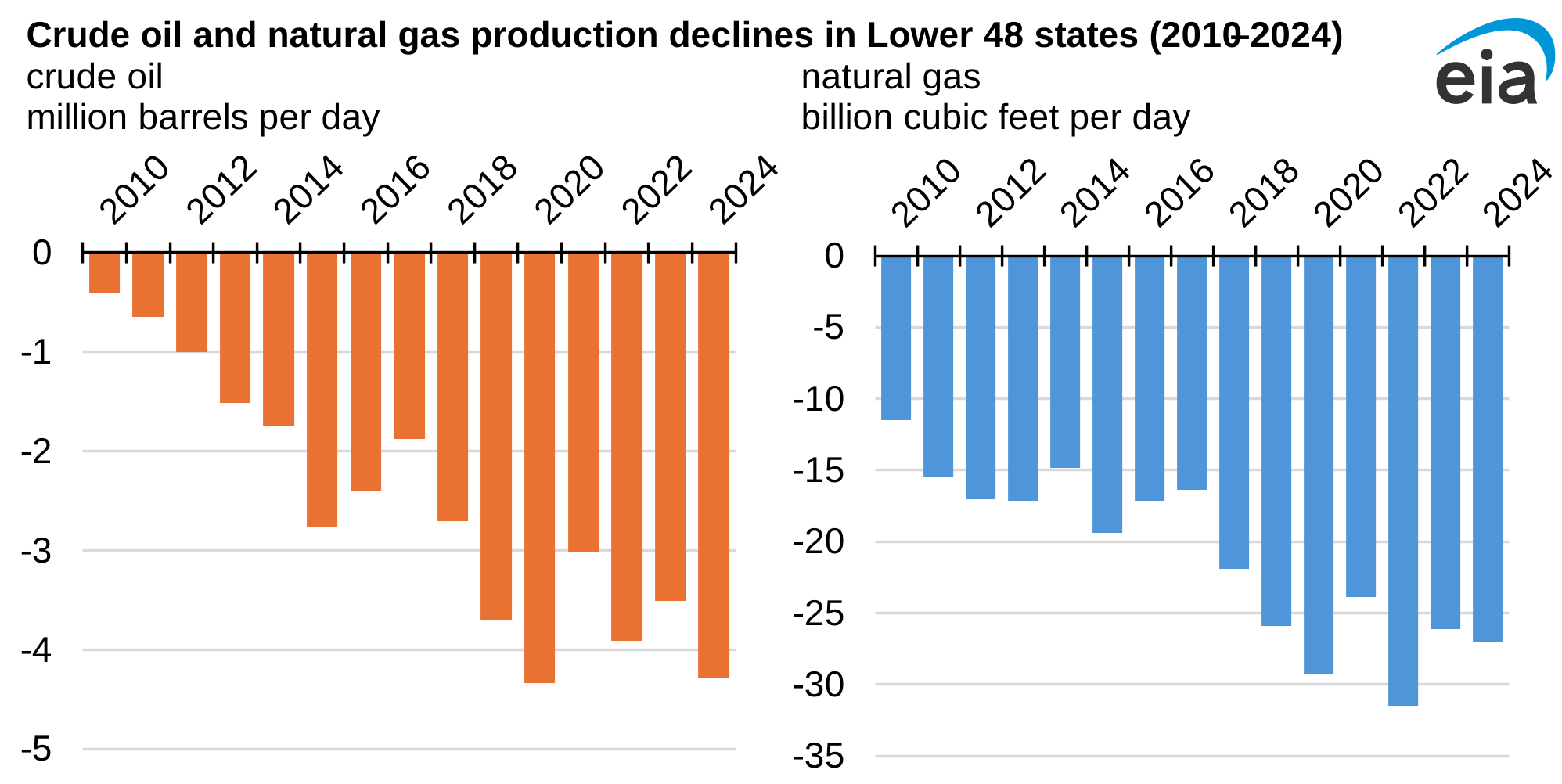
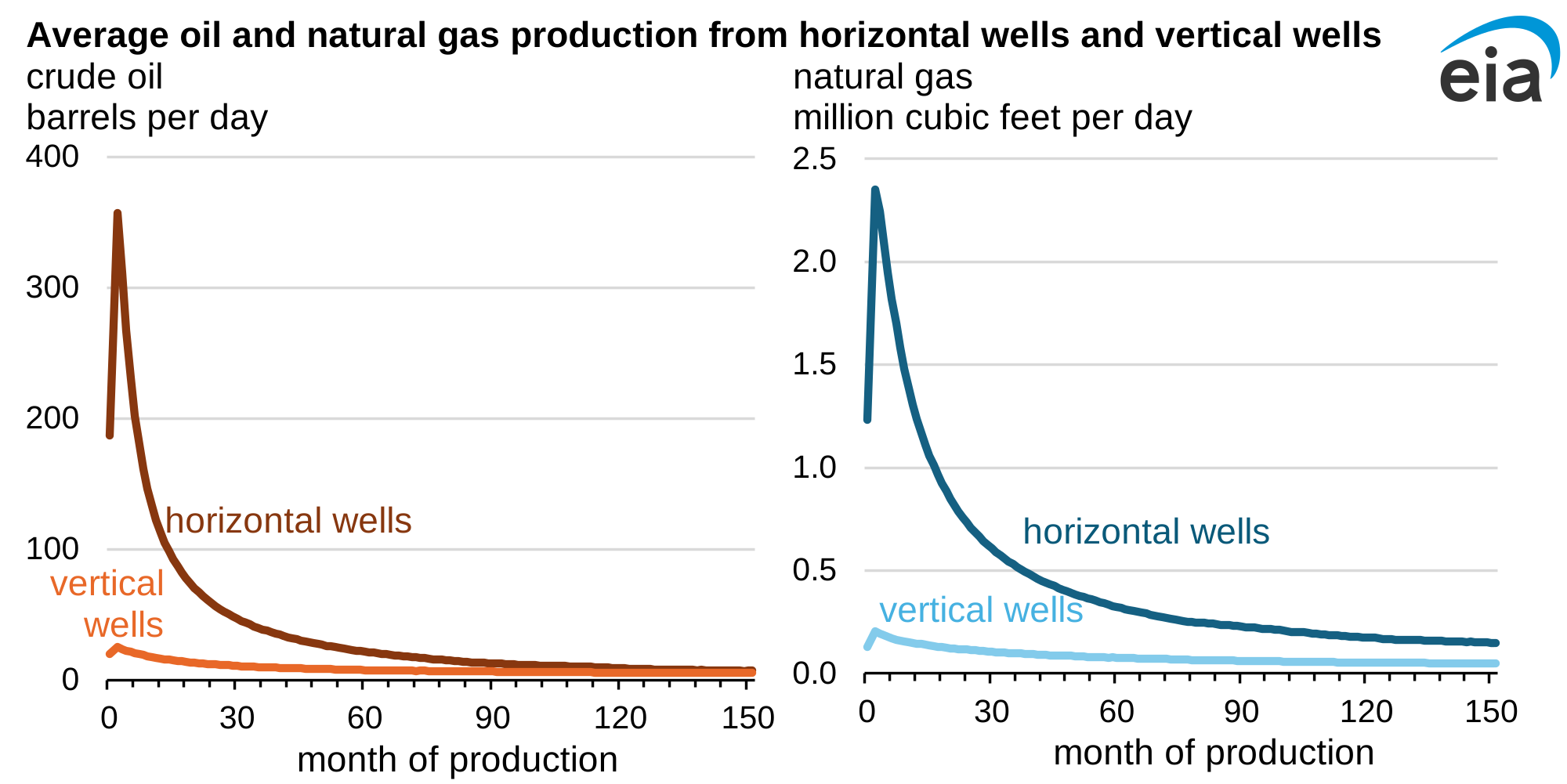
Between 2010 and 2024, hydrocarbon production from new wells in the Lower 48 states (L48) generally offset and exceeded declining production from existing wells. Because production from oil and natural gas wells declines over time as reservoir pressure decreases, new wells are required to maintain the same production level. The increasing number of horizontal wells has contributed to this trend because horizontal wells exhibit higher decline rates than vertical wells.
Crude oil production
In December 2023, L48 crude oil production averaged 11.0 million barrels per day (b/d). Production from wells that came online in 2023 or earlier fell to 6.7 million b/d in December 2024, a decline of 4.3 million b/d. Those declines were offset by the more than 15,000 new wells that were brought online in 2024—about 11,700 of which were horizontal wells. The new wells produced 4.4 million b/d of crude oil, enough to overcome declines from existing wells, bringing L48 crude oil production to 11.2 million b/d in December 2024.
Data source: Enverus
Natural gas production
Between December 2023 and December 2024, natural gas production from wells that came online in 2023 or earlier fell from 115.4 billion cubic feet per day (Bcf/d) to 88.4 Bcf/d, a decline of 27.0 Bcf/d. New wells offset those declines, producing an average of 28.0 Bcf/d of natural gas in December 2024. L48 production for natural gas increased to 116.5 Bcf/d in December 2024. Horizontal wells
In the mid-2000s, operators began to drill more horizontal wells, which allow them to recover more oil and natural gas quickly after initial production begins than from vertical wells. In December 2024, horizontal wells produced 94% of oil and 92% of natural gas in the L48 states. However, horizontal wells have a high initial production rate with a steep decline relative to vertical wells.
Data source: Enverus
The rapid decline rates in horizontal wells are contributing to the trend described above with large numbers of new wells required to maintain or increase production levels.
Principal contributors: Faouzi Aloulou, Olga Popova, Jozef Lieskovsky
EIA The U.S. Energy Information Administration (EIA) collects, analyzes, and disseminates independent and impartial energy information to promote sound policymaking, efficient markets, and public understanding of energy and its interaction with the economy and the environment.
Europe Edges Toward Caspian Clean Power Connection
ENTSO-E included the Black Sea Green Energy Corridor in its 2026 Ten-Year Network Development Plan, paving the way for a detailed cost-benefit analysis.
The project aims to transmit up to 4 GW of renewable electricity from Azerbaijan and Georgia to Romania and Hungary via an undersea cable.
A broader vision links the Black Sea line to a trans-Caspian network spanning Kazakhstan and Uzbekistan, creating a green power bridge from Central Asia to the EU.
A joint green-energy project involving Azerbaijan and Georgia has cleared an initial European hurdle, and its blueprint for exporting electricity from the Caspian Basin to the EU will now undergo a cost-benefit analysis.
The European Network of Transmission System Operators for Electricity (ENTSO-E) opted to include the project, known as the Black Sea Green Energy Corridor, in a group of infrastructure projects under consideration within the framework of a Ten-Year Network Development Plan (TYNDP 2026). “Over the course of 2026, all projects in the TYNDP 2026 portfolio will have their benefits assessed,” read an ENTSO-E statement. The results of the cost-benefit analysis are expected to be published in late 2026.
The Black Sea Green Energy Corridor, which partners Azerbaijan, Georgia, Romania and Hungary, was conceived in 2022 with the four participating countries creating a holding company to manage the project. Concurrent with the EU regulatory approval process, consortium members have commissioned a feasibility study, the Azerbaijani government-connected outlet Caliber.az reported.
If it gets a green light, the project will involve laying a power transmission cable beneath the Black Sea connecting Azerbaijan and Georgia to Romania. The power line is projected to have an annual carrying capacity of up to 4 Gigawatts, most of which would be generated by renewable sources.
In the spring of 2025, the consortium members applied to the EU for the Green Energy Corridor to receive special status, enabling an expedited regulatory approval process.
Azerbaijan envisions linking the Black Sea cable to a trans-Caspian power line that Baku is seeking to build in cooperation with Kazakhstan and Uzbekistan. If that plan comes to fruition, much of the electricity reaching the EU via the Black Sea cable stands to be generated by wind and solar farms in Central Asia.
ENTSO-E operates under an EU mandate. Its membership comprises 40 Transmission Systems Operators from 36 countries, aiming to ensure “the secure and coordinated operation of Europe’s electricity system – the world’s largest interconnected grid,” according to ENTSO-E’s website.
By Eurasianet
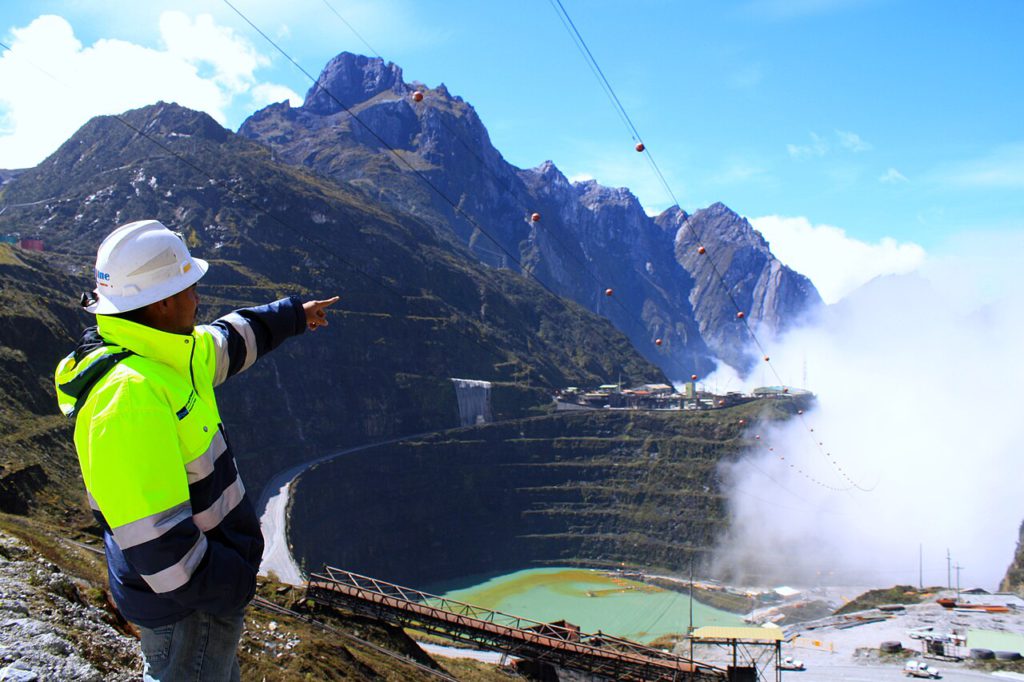
Freeport Indonesia says investigation concluded on Grasberg incident
Freeport Indonesia said on Friday that an investigation into a mud flow that killed workers at its Grasberg copper and gold mine has ended and the company has received improvement recommendations from the government.
Seven workers were killed when around 800,000 metric tons of wet material flooded the Grasberg Block Cave (GBC), one of the mines at the complex, on September 8.
Parent Freeport-McMoRan said in an SEC filing overnight that operations at Big Gossan mine and Deep Mill Level Zone mine at Grasberg have been restarted in late October, as they were unaffected by the mud flow.
It also said it expected a phased restart and ramp-up of Grasberg Block Cave in 2026. The mine represents around 70% of Freeport Indonesia’s previously estimated copper and gold output through 2029.
“PT Freeport Indonesia has received recommendations for improvement from the Ministry of Energy and Mineral Resources and is currently following up on all of these recommendations,” spokesperson Katri Krisnati said in a statement, without providing details of the recommendations.
Separately, deputy mining minister Yuliot Tanjung told reporters the ministry was evaluating the incident, to determine the root cause and whether negligence or any regulatory violations were factors in the disaster.
It was not immediately clear whether the ministry’s evaluation was separate from the investigation conducted by Freeport.
(By Bernadette Christina Munthe and Fransiska Nangoy; Editing by Martin Petty, John Mair and Tomasz Janowski)
Stellantis pulls plug on supply deal with Australia’s Alliance Nickel
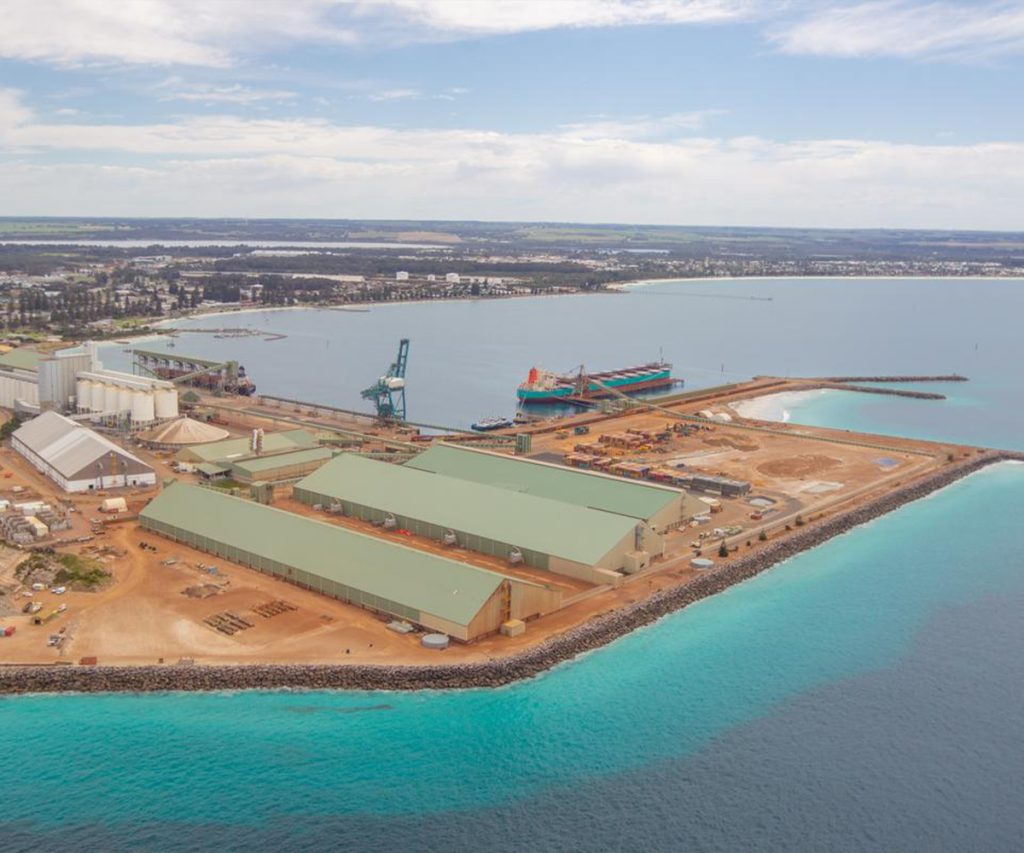
Australia’s Alliance Nickel said on Friday carmaker Stellantis will terminate their supply deal for battery-grade nickel and cobalt from the NiWest project, effective December 3, citing missed milestone deadlines.
The company attributed the delays to challenging conditions in the global nickel market, which have limited opportunities to secure financing. Alliance is the latest Australian producer forced to renegotiate supply agreements with automakers.
The miner said nickel prices have remained under sustained pressure over the past two years, making it difficult to fund new projects.
Alliance said weaker prices have hit its financial position, prompting it to defer other commitments while it works to secure adequate financing for the NiWest project in Western Australia.
Stellantis, the maker of Jeep, Fiat and Chrysler, had expressed willingness to renegotiate the offtake terms, according to Alliance.
“We recognize that this presents a good opportunity for both sides to negotiate on a new agreement that is more reflective of the revised project development timeline and forward strategy,” Alliance managing director Paul Kopejtka said.
Shares of Alliance fell as much as 6.4% in early trade.
In 2023, the two companies signed an agreement to supply 170,000 tons of nickel sulphate and 12,000 tons of cobalt sulphate over an initial five-year period, representing about 40% of NiWest’s forecast annual output.
At the time, the deal underscored Australia’s growing role as a key supplier of battery materials critical to electric vehicle production.
The 2023 agreement had also led to the Italian-French group acquiring an 11.5% stake in the Australian firm.
This was the second supply deal with an Australian company that Stellantis, formed in 2021 through the merger of Fiat Chrysler and Peugeot maker PSA, had scrapped.
Earlier, this week, Stellantis dropped out of a supply agreement with Australian battery materials supplier Novonix, citing an inability to agree on product specifications.
(By Rajasik Mukherjee and Sneha Kumar; Editing by Tasim Zahid and Sherry Jacob-Phillips)
Trump sons back ASPI’s uranium unit QLE in convertible note sale
ASP Isotopes Inc.’s uranium-enriching arm is offering convertible notes in a deal that has drawn the backing of investors including Eric Trump and Donald Trump Jr.
Quantum Leap Energy LLC, wholly owned by ASP Isotopes, is offering the notes in a private placement, and has raised about $64.3 million in an agreement with certain investors, according to the Friday statement. It’s now canvassing additional investors with a view to raising about $100 million in combined proceeds, according to a person familiar with the matter.
The notes are set to value QLE at $400 million prior to the addition of new capital, according to a person familiar with the terms, who asked not to be named discussing non-public information.
The deal has been led by American Ventures, an investment firm with ties to Dominari Holdings Inc., the boutique bank that sits in Trump Tower. President Donald Trump’s two eldest sons, Eric and Donald Jr., advise and invest in Dominari. They contributed capital to the QLE note offering, according to the statement. QLE is also offering the notes to foreign investors. It is building enrichment facilities in South Africa.
The deal is the latest in a string of high-profile investments involving President Donald Trump’s family. 1789 Capital, the investment firm that Trump Jr. joined as a partner last year, has backed American rare earth magnet company Vulcan Elements, and Hadrian, a company that builds factories for aerospace and defense manufacturers. Other ventures backed by the Trump family span drones, blank-check companies and Bitcoin mining.
QLE enriches isotopes primarily for use in nuclear energy production, according to company filings. Its technology can enrich isotopes at a fraction of the cost of traditional facilities, according to its website. The company intends to use the proceeds from the offering to “build and develop laser enrichment production facilities,” it said.
A company majority owned by Dominari was named manager of American Ventures, according to a securities filing.
The offering is expected to close Nov. 10, pending normal closing conditions. Canaccord Genuity Group Inc. has arranged the placement in the US, and Ocean Wall Ltd. served in that role for the foreign transaction. The issuance of the convertible notes will trigger the automatic conversion of promissory notes issued in March and June of 2024, the statement said.
ASP Isotopes said in September, before the US government shutdown, that it was targeting a public listing for the unit in the fourth-quarter. The convertible notes would convert into stock if the company goes public or under certain other events, the Friday statement said.
ASP aims to take QLE public through a direct listing, though the timing is not firm because of the government shutdown. The listing could value the firm higher than the convertible note, the person said.
(By Pablo Mayo Cerqueiro, Swetha Gopinath and Annie Massa)
OP-ED: A strategic metal for a strategic moment – Ukraine’s titanium opportunity
For decades, titanium has been essential to aerospace, defense, and medical manufacturing. It also plays a critical role in the chemical industry. Among the countries involved in this strategic sector, Ukraine stands out for its deep historical expertise and industrial legacy.
Originally the backbone of the Soviet titanium industry, Ukraine was one of the few countries in an exclusive club of titanium sponge producers, who knew the inner workings of the Kroll process. Ukraine was also a country with both chemical processing and metallurgical capabilities, having a whole Institute of Titanium dedicated to the industry and the science behind it. Ukraine was also home to hydrometallurgical facilities that were able to extract zirconium and hafnium.
However, much has changed. The full-scale war launched by Russia has disrupted key industrial sectors in Ukraine and reshaped global markets. Today, titanium metallurgy has become a highly concentrated industry, limited to some active producers.
This consolidation has driven structural shifts across the supply chain — from the rise of cluster-based production and aggressive cost curve management to the dominance of price control and certification bottlenecks. As a result, global supply is increasingly shaped by economies of scale and barriers to entry built around quality assurance and strategic integration.
How did we arrive at the market landscape we see today?
To begin, it is useful to look at the global titanium sponge market. According to data from the U.S. Geological Survey, global titanium sponge production capacity reached 410,000 tons in 2024, with actual output remaining steady at 320,000 tons — unchanged from 2023. China remained the dominant producer, accounting for 68.75% of global output in 2024.
The United States has resumed government stockpiling at a rate of 15,000 tons per year, while importing approximately 40,000 tons of titanium sponge in 2024 — almost matching the record-high level reached in 2023. These represent all-time high import volumes.
Japan, one of the United States’ key strategic suppliers, operated at 84.3% of its titanium sponge capacity in 2024. Saudi Arabia maintained near-full utilization at 96%, while Kazakhstan operated at roughly 54%.
Ukraine, unfortunately, has had to halt titanium sponge production entirely and has reported no output since 2021.
To better illustrate the key market players and underlying dynamics, the following section provides a structured comparison of the main geographic centers of titanium metallurgy and the forces shaping this highly concentrated industry.
Titanium Sponge
China
Japan, Saudi Arabia, Kazakhstan
Russia
Most of it goes to industrial grades (chemicals, marine, plate, pipe) and to China’s own titanium mill products. Exports are minor, but slowly rising. Kroll Process in its cheapest, optimized variation: cheaper electric power, economies of scale,, domestic Mg and Cl2 production, ability to use imported Ti ore/slag at scale. State/local support lowers effective costs. China is capable to run its plants even at loss, due to cluster integration and fiscal stimulation. Also, electricity costs are at their lowest for such production assets. China can drive domestic prices down, feeding the downstream segments and making downstream highly competitive. The business logic is built around economies of scale and a “production first” principle.
Almost all of the production goes straight into aerospace/military/medical streams. The US imported 100% of its sponge in 2024. 97% came from Japan, Saudi Arabia and Kazakhstan. Higher unit cost, especially in the case of Japan. Much tighter quality control. Lower throughput, more scrap. Premium for quality and certification. Margins are supported by quality and long-term contracts. The United States and EU have no other alternative sources at the moment. Premium positioning. Quality and Certification are in priority. The business logic here is built around aerospace, defense and medical certifications.
Titanium sponge flows directly into ingot/billet for Russian defense/aerospace and export. Competitive, especially considering low labor costs and competitive energy inputs. Sanctions and logistics have added significant costs and this has been felt recently. Margins in trouble, move to a 4-day working week. Sanctions are working. Value Chain integration helps the industry stay afloat and helps defend the throughput margins, especially in integration with VAR smelting, forging and aerospace application. The business logic is built on leveraging aerospace certification, and using political pressure in commercial distribution.
Now, titanium sponge has to be converted into titanium ingots or billets and then go into forging. The classical approach to producing ingots/billets is the Vacuum Arc Remelting process, which melts a pre-prepared titanium electrode in a vacuum chamber in a strictly controlled environment at incredibly high temperatures.
Titanium Smelting Products (VAR, etc) like Ingots/Billets
China
USA, EU, Japan, Saudi Arabia, Kazakhstan
Russia
Industrial grade is the issue at the moment for China. The feedstock is domestic. China can leverage economies of scale and can integrate plants with related production assets (sharing costs with TiO2 production lines and with Titanium Sponge manufacturing assets). Highly competitive energy inputs, state funding. Cluster integration and ability to source everything locally. Cash costs are lower.
This is the strategic center of the Western aerospace industry. In the case for USA and EU, titanium sponge is sourced from Japan, Saudi Arabia and Kazakhstan. High energy and labor costs. Melting capacity is smaller. Quality and Certification are in priority. Margins are higher due to premium positioning, and they are more secure in the long-term.
Titanium sponge is the midstream output that flows into downstream production. Everything is integrated and the titanium sponge is sourced locally. Goes directly into forging and actual end-product production. Competitive, but sanctions are increasing costs and creating barriers and pressure. The value chain is fully integrated all the way to the end-product.
What are the key global developments and industry takeaways that could ultimately pave the way for Ukraine to revitalize its titanium metallurgical industry?
First, it is essential to understand that China’s competitive advantage stems from its massive production volumes, economies of scale, and the ability to influence prices through policy and structural levers. However, China remains unprepared to meet the aerospace-grade quality and certification requirements demanded by Western markets.
China currently dominates midstream titanium processing, supported by aggressive financial incentives, low-cost energy inputs, vertically integrated industrial clusters, and reliable access to all critical raw materials and technologies.
As of September, Chinese titanium sponge prices reached 50,000 yuan per ton (approximately $7,000 ex-works), with many contracts executed in the 45,000–47,000 yuan range. Even allowing for the lower-grade nature of Chinese “industrial” sponge, this represents a striking price inversion compared to estimated production costs.
In contrast, Japanese titanium sponge sells for approximately $11,000–13,000 per ton, with Saudi sponge typically priced $500–1,500 lower. Kazakhstani sponge prices fall within a similar range. The price differential — or premium — between Chinese and Japanese–Saudi sponge consistently reaches $4,000–6,000 per ton. The key market barrier justifying this premium remains consistent: quality and certification.
The United States and the European Union are home to high-margin, long-term end-users and hold the key to securing offtake contracts that stabilize margins over time. They also serve as global hubs for quality control and certification, making them the most attractive premium markets.
Japan, Saudi Arabia, and Kazakhstan are now integrated into the US and EU titanium value chains, supplying them with high-quality midstream products. This alignment reinforces the strategic role of these countries in ensuring certified sponge availability for Western aerospace and defense sectors.
Demand for titanium sponge and ingots is expected to grow, driven by market fragmentation and a global trend toward rearmament and strategic stockpiling. In parallel, Western-aligned countries are actively pursuing supply chain diversification and systematically reducing their reliance on Russian titanium. China, meanwhile, is prioritizing domestic industrial development and expanding its own aerospace program. Russia is becoming increasingly isolated, confined to a shrinking number of accessible markets.
Expanding titanium sponge production capacity, however, is a slow and capital-intensive process. Japanese and Saudi producers will require hundreds of millions of dollars in CAPEX and close to a decade to meaningfully scale. A greenfield facility with an annual capacity of 10,000–15,000 tons would cost $400–700 million and take 5–8 years to complete. Even a brownfield expansion of 5,000–10,000 tons would require a 3–5-year horizon.
This creates a clear opportunity for Ukraine to “fill the gap” in the non-Chinese, non-Russian segment of the titanium sponge market — particularly with a view toward the EU, which currently lacks any domestic sponge production.
Ukraine is the only European country with both the mineral base and the industrial legacy to establish certified sponge production and become a strategic supplier to Western markets.
Establishing sponge capacity would also lay the groundwork for developing downstream capabilities, including VAR smelting and ingot/billet production, ideally suited for integration into Western supply chains.
Market-driving and production-driving factors
Global titanium sponge output is expected to grow to 400,000–440,000 tons by 2035. Part of this increase will come from better utilization of existing capacity, while the rest will depend on new production — either through brownfield expansions or greenfield developments.
India and Ukraine are the two markets with the strongest potential for successful re-entry into sponge production. Under a base-case scenario, India could reach 2,000–3,000 tons of annual output by 2035. Ukraine, by contrast, has the industrial foundation to rebuild production capacity to 5,000–10,000 tons per year, with the theoretical potential to scale up to 15,000 tons annually.
This outcome will largely depend on the trajectory of the war and Ukraine’s ability to develop integrated industrial clusters. Equally important will be the country’s capacity to rebuild and modernize its power generation and distribution infrastructure.
A key global driver of titanium metal demand remains the aerospace sector. Growth in aircraft production rates — particularly of the Airbus A320 and Boeing 737 MAX — will be critical. These models are among the most relevant indicators for tracking future titanium consumption.
What are the key success factors for Ukraine’s return to titanium metallurgy?
Ukraine’s historic strength lies in its mineral resource base — particularly the quality, mineralogy, and chemical properties of its ilmenites and natural rutile. To re-enter the titanium metallurgy market, Ukraine must fully leverage its high-grade deposits, especially chloride-oriented ilmenite and natural rutile.
A basic production model based on just one or two local heavy mineral sands deposits could provide sufficient feedstock to sustain 10,000–30,000 tons of high-quality titanium sponge output annually for the next 50 years. A production range of 10,000–15,000 tons per year is both realistic and operationally sustainable for a typical sponge facility.
Competing in today’s market by exporting raw ore concentrates alone is increasingly difficult, as global margins have tightened. At the same time, domestic production costs have surged due to wartime disruptions and rising electricity prices.
Ukraine’s resource base is diverse — it includes both sulphate- and chloride-oriented ilmenites, along with natural rutile. Ideally, this versatility should be strategically utilized. Even lower-grade ilmenite can be upgraded via the titanium slag route. In addition, Ukraine possesses large ilmenite reserves that could support TiO₂ pigment production, creating not only new export revenue streams but also bolstering the EU’s chemical supply chain resilience.
There is a clear need for a new Titanium Cluster in Ukraine, with energy efficiency as a core design principle. Stable and competitively priced electricity is critical for sponge production. The choice of location is also strategic: logistics optimization will be essential to ensure cost-effective operations. Ideally, the cluster would include integrated by-product processing — incorporating zirconium, hafnium, and germanium value chains alongside titanium.
The Kroll process (chloride route) used for sponge production depends heavily on three inputs: magnesium, chlorine, and electricity. Of particular concern is magnesium, where China currently controls 85% of the global primary market. Electricity is another major cost driver, accounting for 20–30% of total production cash costs in typical sponge operations.
Planning for smelting must begin from the outset. Developing VAR-based ingot and billet production would not only improve margins but also enable greater flexibility in responding to market shifts. A value chain that extends beyond sponge production to include smelting offers more robust control over pricing, throughput, and downstream integration — particularly for exports to Western aerospace and defense sectors.
How do you fund this value chain?
Capital expenditure (CAPEX) for Ukraine’s titanium value chain can be partially covered through long-term offtake contracts with advance payments. Strategic investment facilities — such as the U.S.–Ukraine Reconstruction Investment Fund — can play a catalytic role as market-makers, offering both financial stability and investor confidence. Even relatively small equity injections can unlock access to large-scale project financing and attract co-investors, particularly in the critical minerals space.
Titanium — in its metallic form and aerospace-grade applications — represents a strategic “power play” for Ukraine and its Western allies. End-users and downstream processors can participate in consortium-based financing mechanisms to secure long-term supply stability and ensure alignment with their certification and quality requirements.
The objective is to establish full midstream capabilities in Ukraine — progressing from ilmenite or natural rutile to titanium slag (in the case of ilmenite), then to titanium tetrachloride, followed by sponge production, and ultimately smelting into ingots and billets via the VAR process.
Ukraine has the mineral base and technical foundation to develop an integrated value chain built around three core stages:
Mining and ore concentrate production
Titanium sponge production
Smelting and ingot production
Estimated CAPEX for a 10,000 tons per annum titanium sponge facility ranges from $400 million to $500 million, with a projected payback period of 9–10 years. A 15,000-ton facility would require $650–700 million. For downstream smelting, a production capacity of 8,000–10,000 tons per year — focused on aerospace-grade Ti-6Al-4V alloy — would cost approximately $350 million and yield a payback period of 10–14 years. Scaling smelting up to 15,000 tons annually would require CAPEX of over $400 million.
Can it be done?
It is a technically and economically viable path — provided that investment is aligned with long-term offtake, energy resilience, and industrial clustering.
Ukraine has the critical ingredients in place: a high-quality resource base, deep technical expertise, and a well-developed transportation network. While the war continues to pose significant challenges, foundational work can already begin — including geological exploration, mine development, ore concentration, tailings reprocessing, and rare metals extraction. Modular, small-footprint production systems could accelerate early-stage progress even under current constraints.
Ukraine has consistently demonstrated industrial resilience and a capacity for innovation. Given its location, mineral endowment, and the structural bottlenecks facing Europe’s titanium supply chain, Ukraine represents a natural and strategic location for developing a titanium hub for the West.
*Yegor Perelygin is Deputy Minister of Economy, Environment and Agriculture of Ukraine