Saturday, November 08, 2025

Things Are Shitty Because We Are Ruled By People Who Want Things To Be Shitty
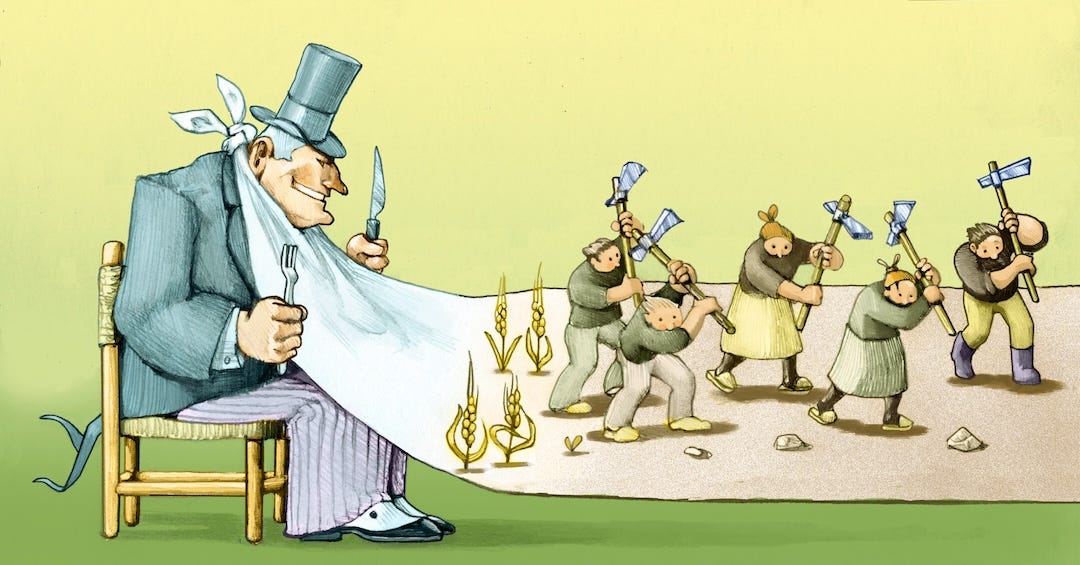


Which sounds more likely: (A) that things are bad because the population keeps organically voting for policies which just so happen to hurt ordinary people while benefitting the rich and powerful, or (B) that things are bad because the rich and powerful want things this way?

Does it seem more likely to you that (A) the democratic process consistently leaves people unable to advance basic human interests because the population always organically splits itself into an exact 50–50 deadlock that leaves everyone unable to get anything done long term, and that this deadlock always just so happens to land on a status quo that serves the interests of the rich and powerful, or (B) that the rich and the powerful artificially created this status quo via manipulation?

You don’t need to know anything at all about politics or parapolitics to see that (B) is the most likely explanation for why things keep getting worse for everyone besides the rich and powerful. Your own basic reasoning and understanding of human behavior will tell you that there’s no way democracy is working as advertised if things keep getting worse and worse for ordinary voters while billionaires and empire managers keep getting everything they want.

Things are shitty because we are ruled by people who want things to be shitty. Once you awaken to this undeniable reality, you will inevitably find yourself growing more and more radicalized.

Our rulers want nonstop war and genocide. Our rulers want obscene levels of inequality. Our rulers want the public to be poor and struggling. Our rulers want people to be getting dumber, sicker, and more miserable. Our rulers want the unrestricted industry that’s killing Earth’s biosphere. Our rulers want us to have vapid, unedifying mainstream culture. This dystopia looks more or less exactly how they want it to look.

Our rulers want war, militarism, and genocide to be the norm because military force is one of the critical ways by which they dominate the planet, control resources and trade routes, and prevent foreign states from trying different systems and establishing a different world order. Waging and preparing to wage war has the added bonus of also being extremely profitable.

The plutocrats want inequality to continue because it’s what allows them to live as modern-day monarchs. When money is power and power is relative, you’re going to see the people with the money making sure they have as much as possible while everyone else has as little as possible, because if everyone is king, then nobody is. They want the public to have just enough spending money to keep the wheels of capitalism turning, without having enough money to do things like fund political campaigns or buy up media influence. The poorer everyone else is, the more powerful they are.

Our rulers want us to be stupid, misinformed, distracted, sick, struggling, and suffering, because if we all had enough time, information, and mental acuity to form an understanding of what’s going on in our world, things would get mighty guillotiney real quick. They have a vested existential interest in keeping us all in a mental fog of propaganda, diversion, ignorance, illiteracy, and psychological dysfunction.

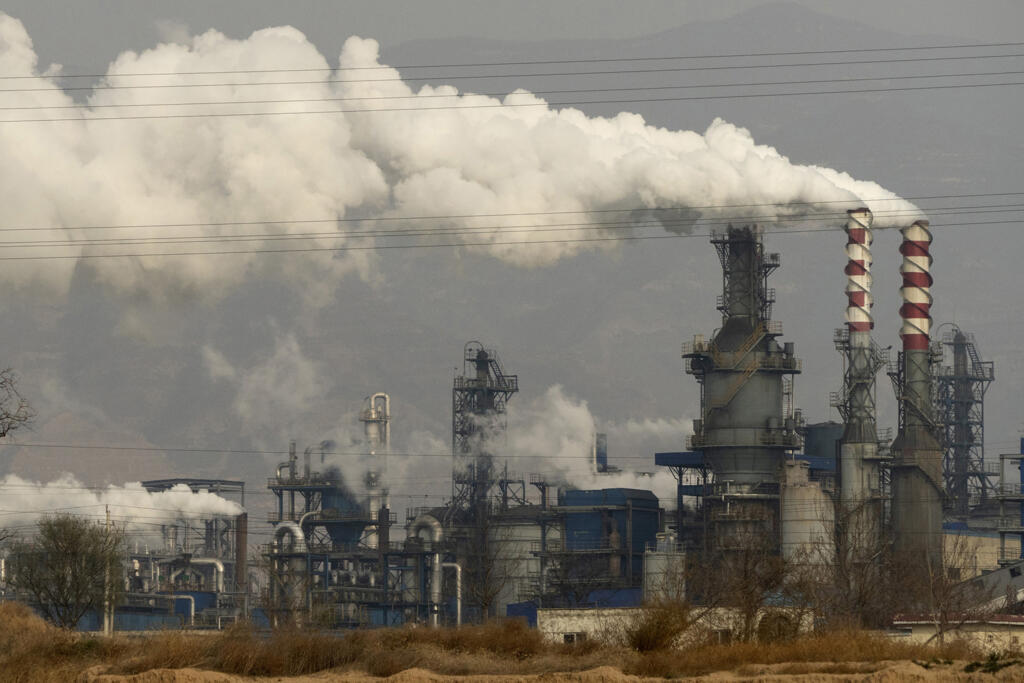
Our rulers want companies to be free to destroy our planet’s ecosystem, because offloading the costs of industry onto the environment is the only way to steadily increase profits. So long as they’re free to fill the air with pollutants, fill the oceans with plastic, clear the rainforests, incinerate biodiversity, and poison people’s drinking water at the expense of other people and other organisms, corporations can continue to grow and to maximize value for shareholders.

An alliance of corporate and state power has emerged to advance these agendas in the service of the few who benefit from them, while the rest of humanity flounders in suffering and toil. They use mass media propaganda, campaign donations, lobbying, and other influence operations to ensure that this remains the case. The more you learn to spot the signs of these dynamics and the more clearly you perceive them, the more urgently you see the need to end this way of being.

Truth and clarity pave the way to real revolutionary change. That’s why our rulers spend so much energy trying to obfuscate truth and clarity via propaganda, censorship, Silicon Valley algorithm manipulation, mainstream culture, AI, garbage education systems, and other forms of perception management. They’re doing everything they can to stop us from following the strings of our society’s ailments to the hands up above that are pulling them.

They want us to be stupid, so we need to get smarter.

They want us to be ignorant, so we need to inform ourselves.

They want us to be uncaring, so we need to become more compassionate.

They want us to be compliant, so we need to become disobedient.

The world is a mess because our rulers want it to be a mess. So we need everything in us to be pushing in the exact opposite direction.

Caitlin Johnstone has a reader-supported Newsletter. All her work is free to bootleg and use in any way, shape or form; republish it, translate it, use it on merchandise; whatever you want. Her work is entirely reader-supported, so if you enjoyed this piece and want to read more you can buy her books. The best way to make sure you see the stuff she publishes is to subscribe to the mailing list on Substack, which will get you an email notification for everything she publishes. All works are co-authored with her husband Tim Foley. Read other articles by Caitlin.
COP30


Despite widespread belief in climate policy, disinformation still seeds doubt ahead of COP30

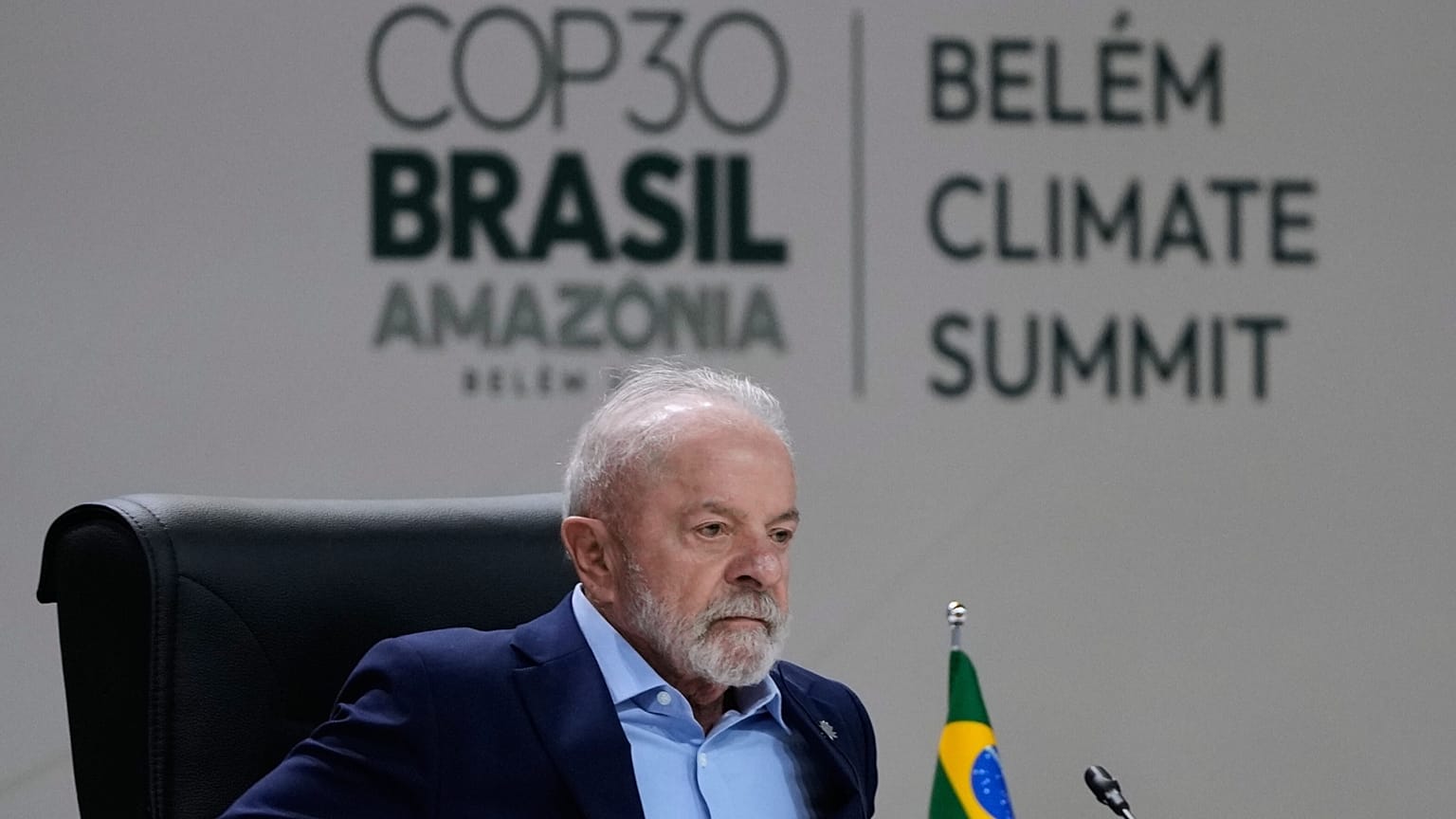
Brazilian President Luiz Inacio Lula da Silva presides over a plenary session of the COP30 U.N. Climate Summit in Belem, Brazil, Thursday, Nov. 6, 2025
Copyright Copyright 2025 The Associated Press. All rights reserved.

By Hannah Docter Loeb
Published on 

A new report looks at the climate disinformation online ecosystem

A majority of the world's population believes in climate change policies. And yet, climate disinformation is still rife, especially online.

A new report from the watchdog Climate Action Against Disinformation (CAAD) has looked at climate disinformation in the lead-up to COP30, and the major players fueling it. It found a massive increase in disinformation related to the UN climate conference.

What does it look like?

87 per cent of the globe supports climate change policies, according to a 2024 survey. According to YouGov, 62 to 76 per cent of Europeans are worried about climate change.

But disinformation can still bring about skepticism.

There is a significant difference between misinformation and disinformation. Misinformation is false or out-of-context information that someone is presenting as fact. Disinformation, on the other hand, is intentionally false and meant to deceive its audience

Earlier this year, CAAD and the Observatory for Information Integrity (OII) found a 267 per cent increase in COP-related disinformation from July to September.

They discovered about 14,000 examples online. One pertinent example was a post, created by generative artificial intelligence, of a reporter standing in a flooded city that resembles Belem, whereCOP30is taking place. The video has on the screen title of “THE TRUTH ABOUT COP30 IN BELÉM IN 2025” to hook viewers. However, the reporter, flood, and even the city were completely fictional.

A recent analysisfrom OII also found that COP30 was a recurring topic in Brazilian Telegram groups devoted to conspiracy theories. OII has identified over 285 mentions of COP30: attacking the conference itself, Belem, and climate solutions in general.

On the global stage, climate disinformation has also been promoted by the United States President Donald Trump. In September, hecalledclimate change the “biggest con job.”

Who is behind climate disinformation?

The new CAAD report looks into major players that contribute to the disinformationecosystem, derailing climate action by seeding doubt in audiences.

Companies that burn fossil fuels for energy and transportation, and large-scale agriculture (deemed Big Carbon) are some of the main perpetrators of climate disinformation.

“Big Carbon’s disinformation is designed to cause ordinary people to underestimate the strength of the scientific consensus on climate change,” the report says. “It is also causing people to underestimate the strength of solidarity in demanding action.”

However, tech companies are also at fault for allowing their messages to propagate without checks. These problems are not new and have plagued climate conferences previously.

A previousreportfrom CAAD found that in anticipation of COP28, fossil fuel companies paid up to $5 million (€4.3 million) for climate disinformation ads that appeared on Facebook. Shell, ExxonMobil, BP and TotalEnergies were the main funders, accounting for 98 per cent of ads.

“Spread rapidly and cheaply via online social media platforms and search engines (Big Tech), this disinformation is undermining policy and sabotaging action,” the new report says.

Climate disinformation discussion at COP

For the first time, this year’s climate conference will feature the Global Initiative for Information Integrity on Climate Change. This is a joint effort from the Brazilian Government, United Nations and UNESCO which is devoted to strengthening research and measures to address disinformation campaigns.

At the Leaders Summit on Nov 6, Brazilian President Luiz Inacio Lula da Silva and French President Emmanuel Macron both warned of the dangers of climate disinformation.

“Extremist forces fabricate fake news to obtain electoral gains and imprison future generations in an outdated model that perpetuates social and economic inequalities and environmental degradation,” said Lula.

This was echoed by Macron.

“Climate disinformation today threatens our democracies, the Paris agenda, and therefore our collective security,” he said. Earlier this year, a report found that French media was spreading climate disinformation, amplifying narratives that discredit climate science and climate solutions.

UN Secretary-General António Guterres also condemned the companies that are profiting from such disinformation.

“Too many corporations are making record profits from climate devastation – with billions spent on lobbying, deceiving the public and obstructing progress,” he said. “Too many leaders remain captive to these entrenched interests.”


Brazil’s Lula Says Spending On Weapons Will Bring About ‘Climate Apocalypse’


Family photo of Climate Summit that brings together leaders from different countries ahead of the 30th United Nations Climate Change Conference (COP30) Photo Credit: Ricardo Stuckert, ABr


November 8, 2025 
ABr
By Pedro Rafael Vilela


Brazilian President Luiz Inácio Lula da Silva said on Friday (Nov. 7) that armed conflicts – such as the war in Ukraine, invaded by Russia almost four years ago – have interrupted a period of reduction in polluting gas emissions into the atmosphere and could lead the planet to environmental collapse.

“The conflict in Ukraine has reversed years of efforts to reduce greenhouse gas emissions and led to the reopening of coal mines. Spending twice as much on weapons as we do on climate action is paving the way for climate apocalypse. There will be no energy security in a world at war,” he said at the opening of the second session of the Climate Summit in the Amazon city of Belém, Pará state.

The Climate Summit, which ends this Friday, is an event that brings together leaders from different countries ahead of the 30th United Nations Climate Change Conference (COP30), which will be held from November 10 to 21, also in the capital of Pará. The goal is to update and reinforce multilateral commitments to address the urgency of the climate crisis.

The event will be attended by Secretary-General of the United Nations (UN) António Guterres and European leaders such as Spanish Prime Minister Pedro Sánchez and European Commission President Ursula von der Leyen.
Fair energy transition

President Lula noted that, despite advances made in the energy matrix, populations living in poor and developing countries are still far from a fair transition.

“It is essential to combat all forms of energy poverty – 2 billion people do not have access to adequate fuels for cooking, 660 million people depend on oil lamps and diesel generators in the outskirts of large cities and in rural communities in Latin America and Africa. And 200 million children attend schools without access to electricity. With no energy, there is also no digital connection, functioning hospitals, or modern agriculture,” he declared.

In the presence of leaders from different nations, the Brazilian president criticized the financial system that fuels the oil sector.

“Last year, the world’s 65 largest banks committed to lending USD 869 billion to the oil and gas sector. Since the adoption of the Paris Agreement, the share of fossil fuels in the global energy mix has only decreased from 83 to 80 percent,” he said.
Fund on oil profits

The president called for action to address the “injustice of unpayable foreign debts” and requirements that discriminate against developing countries. He also announced that he will create a fund to channel profits from the oil and gas sector into investment in renewable energy.

“A fair, orderly, and equitable process of moving away from fossil fuels requires access to technology and financing for countries in the Global South. There is room to explore innovative mechanisms for exchanging debt for financing climate mitigation and energy transition initiatives,” he stated.

“Directing part of the profits from oil exploration toward energy transition remains a valid path for developing countries. Brazil will establish such a fund to finance climate change mitigation and establish climate justice,” he said.

The president ended his speech by calling for the implementation of the COP28 agreement, held in Dubai, to triple renewable energy and double energy efficiency by 2030, in addition to including the elimination of energy poverty in national climate plans and prioritizing the issue of eliminating energy poverty in countries’ national climate goals.

“Scientists have done their part. At this COP, negotiators must seek understanding. And we, the leaders, must decide whether the 21st century will be remembered as the century of climate catastrophe or as the moment of intelligent reconstruction,” he declared.

ABr
Agência Brasil (ABr) is the national public news agency, run by the Brazilian government. It is a part of the public media corporation Empresa Brasil de Comunicação (EBC), created in 2007 to unite two government media enterprises Radiobrás and TVE (Televisão Educativa).


Global Finance Reform Key For Sustainable Development, South Africa Environment Minister Says


South Africa's Minister of Forestry, Fisheries and the Environment, Dr Dion George, at Climate Summit in Brazil. Photo Credit: SA News

November 8, 2025
By SA News


The Minister of Forestry, Fisheries and the Environment, Dr Dion George, has called for urgent reforms to the international financial system so that multilateral banks can provide long-term and affordable capital for sustainable development and climate action.

According to the Global Stocktake, the collective global progress toward the Paris Agreement goals is insufficient.

“The Global Stocktake is clear. Progress is too slow. We must accelerate action on mitigation, adaptation, loss and damage, and the means of implementation.

“The Global Goal on Adaptation must deliver measurable indicators and the finance to achieve them. The Sharm el Sheikh Work Programme must unlock real investment through blended models. The Loss and Damage Fund must be capitalised,” the Minister said on Friday.

He said the Baku to Belém Roadmap must advance 1.3 trillion dollars in grants, concessional finance and fiscal space measures.

The roadmap aims at scaling up climate finance to developing country to support low greenhouse gas emissions and climate-resilient development pathways.

The Minister made these remarks at the United Nations Framework Convention on Climate Change (UNFCCC) COP30 Leader’s Summit, taking place in Belém, Brazil, as part of the 30th meeting of the Conference of the Parties (COP).

“Climate change is the defining crisis of our time. No nation can face it alone. This is a time that demands courage, solidarity and multilateralism in action. World leaders have a moral duty to close the gap between ambition and finance in the fight against climate change.

“South Africa further, reiterates that climate change response measures by developed countries should not impact developing countries’ industrial, trade and socio-economic development goals, in line with international law,” the Minister said.

He emphasised that the unilateral climate response measures should not have spill-over and negative cross-border impacts on developing countries.

“Our firm view is that the unilateral trade measures which aim to achieve unbalanced climate objectives outside of the framework of the multilateral process, or unfairly restrict global trade in green technology, will only serve to hinder our ability to achieve a just transition, and slow the global effort to address climate change,” the Minister said.

In fulfilment of South Africa commitments, under the Paris Agreement to reduce greenhouse gas emissions and adapt to climate change impacts, government has submitted its second Nationally Determined Contributions (NDCs).

They include a new mitigation target for 2035 of between 320 and 380 megatons of carbon dioxide equivalent, showing clear progression from our 2030 range.

“Our updated adaptation communication identifies our support needs for finance, technology and capacity building. South Africa’s expectations for COP30 are clear,” the Minister said.

SA News
Government Communication and Information System (GCIS) established the SA Government News Agency to enable all media locally and abroad to have easy and fast access to fresh government information, news and current affairs at no cost.


World leaders face Amazon reckoning on a decade of climate promises

World leaders arri ve in the Brazilian Amazon on Thursday for a high-stakes test of global climate promises, with vulnerable nations demanding far greater financial support and scientists warning the world is still veering off track.


Issued on: 06/11/2025 - RFI

Mist rises over the Carajas National Forest in Para, Brazil, where the mining industry and rainforest coexist uneasily ahead of Cop30 in the Amazon. REUTERS - Jorge Silva
By:Amanda Morrow


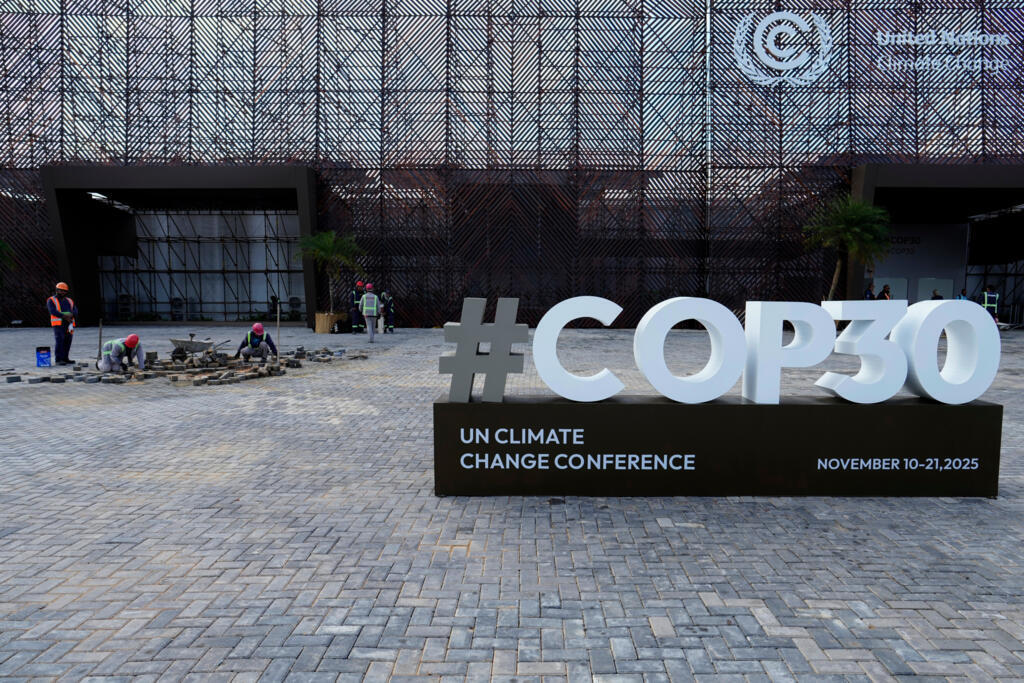
The two-day Belem Climate Summit takes place in the humid port city at the mouth of the Amazon River – a symbolic prelude to the UN’s Cop30 conference that begins there next week. Together they mark 10 years since the Paris Agreement and bring global attention back to the planet’s most vital carbon sink.

For Brazil, it is a moment to show that protecting forests and reducing poverty can go hand in hand. For much of the world, it is a chance to prove that promises made in Paris can still deliver results.

“We have to somehow manage to convey that there is progress on this agenda, because we are facing a phase in which most of the public think that this agenda is losing ground,” Cop30 president Andre Correa do Lago said.

But the talks open amid sobering news. Around two-thirds of the 195 countries that signed the Paris accord missed the February deadline to submit updated climate plans for 2035.

By early November, only about 65 countries had submitted new national climate plans for 2035, and most failed to impress. China’s target fell well below expectations, while India has yet to finalise its pledge.

The European Union agreed on Wednesday to a weakened 2040 climate goal after all-night talks in Brussels, keeping its 90 percent emissions cut headline but allowing countries to offset up to 10 percent of that target through foreign carbon credits and delay key measures.

Environmental groups warned the compromise undermines Europe’s credibility as a climate leader, while several member states argued it was needed to protect industries struggling with high energy costs and competition from cheaper imports.

Europe’s climate progress overshadowed by worsening loss of nature


The billion-dollar gap

The battle over money will dominate both the Belem summit and Cop30, which runs from 10 to 21 November. Wealthy nations are under pressure to explain how they will help poorer ones cope with rising seas, extreme heat and mounting climate losses.

Last year’s Cop29 in Baku ended with developed countries agreeing to provide $300 billion a year in climate finance by 2035 – far below what developing nations say is needed. Governments also set a vaguer goal of mobilising $1.3 trillion a year from public and private sources but offered little detail on how to achieve it.

A UN Adaptation Gap Report last week found the world will need to spend about $310 billion a year by 2035 to prepare for worsening floods, droughts and heatwaves – roughly 12 times current spending levels.

“More than ever, the general public, governments in general, cities in general, want resources for adaptation,” Correa do Lago said.
Belém readies for Cop30, where world leaders will meet in the heart of the Amazon to test whether a decade of climate promises still stand. AP - Eraldo Peres

CARE International, which campaigns for climate justice and humanitarian relief, warned that the shortfall is already leaving millions exposed, especially women and girls.

“The need for adaptation finance is immense, up to $300 billion per year, yet current funding barely scratches the surface,” said Marlene Achoki, CARE’s global climate justice policy lead. “Cop30 will be successful, and truly a people’s Cop, when sufficient adaptation finance is provided to drive real action and implementation on the ground.”

Senior adviser John Nordbo described climate finance as “the fault line of global climate action”, saying many rich countries inflate figures and repackage loans as aid.

“Much of this so-called support comes as loans, not grants, and repayments often flow quietly back to donors,” he said.

Brazil's forest gamble

Holding the leaders’ summit in Belem brings the focus back to the rainforest’s central role in stabilising the planet’s climate.

The Brazilian government will use the event to launch the Tropical Forests Forever Facility – a new global fund that will reward countries with high tropical forest cover for keeping trees standing instead of cutting them down.

The facility aims to raise $25 billion from donor governments and another $100 billion from private investors, with Brazil already pledging $1 billion.

The fund “could be a step forward in protecting tropical forests” if paired with firm commitments to end deforestation by 2030, said Clement Helary, a forests campaigner with Greenpeace.

Tropical primary forest loss hit a record high in 2024 – the equivalent of 18 football fields a minute, driven largely by fires.

Hosting the conference in the Amazon makes it “the perfect opportunity to ramp up action to end deforestation”, the WWF has said, noting that global pledges from Cop26 to halt forest loss by 2030 have stalled.

From talk to action


Cop30 will test whether the world can finally move from ambition to action.

Under the Paris Agreement, countries must strengthen their emissions targets every five years, but the latest round of 2035 plans still falls well short of what is needed to limit warming to 1.5C.

What is needed now is “a step change” – moving from setting targets to delivering them, said the World Resources Institute.

The first global stocktake at Cop28 showed the world is “significantly off track”, while the UN Secretary-General has said overshooting the 1.5C goal is “inevitable” unless countries “change course”.

When the Paris Agreement was signed, the planet was on track for roughly 4C of warming by 2100. Later pledges have cut that to around 3C, and if all net-zero promises were fully met, the rise could fall closer to 1.9C.

Deeper emissions cuts and large-scale ecosystem restoration, scientists say, could still bring temperatures back below 1.5C later this century.

Last year was the first time the 1.5C threshold was breached for an entire year, with extreme weather causing more than $300 billion in damage. Renewable energy and electric vehicles, while already saving lives and creating jobs, is not happening fast enough, experts warn.


Record surge in CO2 puts world on track for more long-term warming

Can trust survive?

Unlike earlier climate summits, Cop30 has no single grand deal in sight.

Organisers are calling it the “Cop of Implementation”, focused on turning words into measurable progress.

“The Brazilian Presidency’s central challenge is to turn promises into real-world action – bridging divides between developed and developing countries, ambition and equity, mitigation and adaptation,” said Karen Silverwood-Cope from WRI Brazil.

The political mood adds to the challenge. US President Donald Trump has dismissed climate change as a “con job” and is sending no senior officials to Belem, deepening fears that global climate diplomacy is losing momentum.

Still, Brazil hopes the Amazon setting can help restore it. President Luiz Inacio Lula da Silva has been in Belem since the weekend, meeting local communities and overseeing preparations ahead of the summit.

He is expected to stay through the opening of Cop30 on Monday, as world leaders gather in the heart of the Amazon – a symbolic setting for a conference that will test whether a decade of promises can finally turn into action.

Two years on from EU deal, violence against migrants in Tunisia remains rife

Tunisia’s migration policy is under scrutiny two years on from a deal with the European Union intended to discourage illegal migration from the North African country, and from a "replacement theory" speech the same year by President Kais Saied on the "dangers" of black migration. A recent Amnesty International report has highlighted widespread human rights violations in the country.


Issued on: 07/11/2025 - 

Sub-Saharan migrants head with their belongings to a bus taking them to a repatriation flight, leaving Tunis for their countries of origin on 4 March, 2023. © AFP/Fethi Belaid

By:Zeenat Hansrod with RFI

“They took each of us one by one, surrounded us, they asked us to lay down, we were handcuffed. They beat us with everything they had: clubs, batons, iron pipes, wooden sticks."

A Cameroonian national identified as Hakim describes how Tunisian officers drove him and others to the Algerian border in January 2025 and abandoned them there.

“They made us chant ‘Tunisia no more, we will never come back’, again and again. They punched us and kicked us, everywhere on our body," he said.

Hakim’s testimony is one of 120 recorded by human rights NGO Amnesty International in a recent report on human rights abuses and racist attacks on migrants – particularly black people – in Tunisia.

Amnesty interviewed refugees from nearly 20 countries in Tunis, Sfax, and Zarzis between February 2023 and June 2025.

“The numerous violations recorded – rape, torture, unlawful detention – are racially motivated,” Safia Ryan, a North Africa researcher at Amnesty International, told RFI.

Driven from camp to camp, Tunisia’s migrants still dream of Europe

Tunisia is a major departure point for tens of thousands of migrants, many from sub-Saharan Africa, attempting to cross the Mediterranean Sea each year in hopes of a better life in Europe.

“The Tunisian authorities have presided over horrific human rights violations, stoking xenophobia, while dealing blow after blow to refugee protection,” said Heba Morayef, regional director for the Middle East and North Africa at Amnesty International.
Legitimised violence

According to author Hatem Nafti, a member of the Tunisian Observatory on Populism, Tunisia’s President Kais Saied quickly adopted "conspiracy theory" as his mode of governing after a power grab in 2021 in which he dissolved parliament, ruled by decree and stepped away from the constitution.

On 21 February, 2023, President Saied accused “hordes of illegal migrants” from sub-Saharan Africa of “violence, crime and unacceptable practices”.

Saied outlined a replacement theory in which sub-Saharan migrants were part of a “criminal plan to change the demographic landscape of Tunisia” and turn it into “just another African country that doesn’t belong to Arab and Islamic nations anymore”.

This speech sparked violence against black people by both police and the public, who felt legitimised in carrying out racist acts: profiling, arrests, a hate campaign on social media, intimidation, eviction, attacks...

Supporters of Tunisia's Saied celebrate his landslide election win

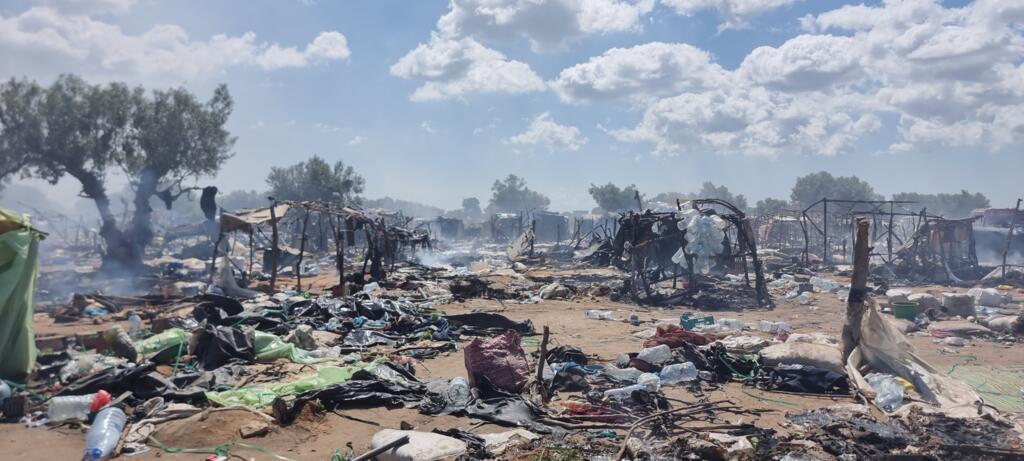
A makeshift camp for migrants dismantled by Tunisian security forces in the El Hamra region, Sfax. © RFI/Lilia Blaise

The African Union condemned what it called “racialised hate speech” by the Tunisian authorities.

Since then, the Tunisian government has suspended a number of rights groups in the country, and arrested journalists and activists.

On 5 October, the authorities suspended the activities of the World Organisation Against Torture in Tunisia for a month. At the end of October, the activities of the Tunisian Association of Democratic Women (ATFD) and the Tunisian Forum for Economic and Social Rights (FTDES) were also suspended for 30 days.

Many of the organisations whose activities have been suspended were helping migrants.

“This has had horrific humanitarian consequences and led to an enormous gap in protection,” reported Amnesty.

Dumped in the desert

From June 2023 onwards, Tunisian authorities have been expelling tens of thousands of refugees and migrants, most of whom are black.

Tunisian security forces have been routinely dumping migrants, asylum seekers and refugees, including children and pregnant women, in remote and desert areas at the country’s borders with Libya and Algeria.

They are abandoned without food or water and usually after having their phones, identification documents and money confiscated.

Tunisian Foreign Minister Mohamed Ali Nafti said on 5 October that all migrants who entered Tunisian territory illegally would be repatriated "with human dignity".

“We documented 14 cases of rape on women and minors by Tunisian security forces,” said Amnesty International's Ryan.

Kais Saied with Dutch Prime Minister Mark Rutte, European Commission President Ursula von der Leyen and Italian Prime Minister Giorgia Meloni at the presidential palace in Carthage, following the signing of the EU-Tunisia migration deal, 16 July, 2023. © AP

EU migration deal

In a move to tackle illegal migration from Tunisia, in 2023 the European Union committed €100 million to border management – with the right of asylum, the rights of refugees and the protection of vulnerable migrants in Tunisia as part of the deal.

Additionally, Tunisia received around €1 billion in loans and financial support for various sectors, including renewable energy, education and economic development.

According to European Commission President Ursula von der Leyen, the EU-Tunisia deal on migration has been a clear success, with 80 percent fewer irregular arrivals in Italy from Tunisia.

Under pressure? EU states on edge over migrant redistribution plan

However, the European Ombudsman in 2024 questioned the European Commission's monitoring of the human rights impact of the deal, “especially in the light of deeply disturbing reports regarding how the Tunisian authorities deal with migrants”.

Amnesty has criticised the EU's silence over what it describes as “horrific abuses”.

“Each day the EU persists in recklessly supporting Tunisia’s dangerous assault on the rights of migrants and refugees and those defending them, while failing to meaningfully review its migration cooperation, European leaders risk becoming complicit,” said Morayef.
Congo-Brazzaville returns to global stock markets after almost 20 years

The Republic of the Congo this week entered the international bond market for the first time since 2007, signalling a new confidence in its economic reforms and fiscal management.


Issued on: 08/11/2025 - RFI

Brazzaville, the capital of the Republic of Congo. Wikimedia/Jomako

After 20 years on the sidelines, Congo-Brazzaville has returned to the international financial stage.

On Wednesday, the country issued its first Eurobond (a debt security issued in a currency different from the issuer's home currency and sold in a foreign market) since 2007 – a $670-million placement on the main market of the London Stock Exchange.


In plain terms, Brazzaville raised the funds to cover maturing debt and ease pressure on public finances.

But the move also acts as a signal that the country’s economic policy is regaining credibility, and years of financial reform may finally be paying off.


Christian Yoka, the Republic of Congo’s finance minister, hailed the return as proof that Brazzaville’s financial house is once again in order.

“We’ve restored budgetary stability, our accounts are solid,” he said. “Our goal is to turn the economic recovery we’re seeing into financial recognition. This reform effort will continue – it’s absolutely central to our strategy for the future.”

The fact that investors beyond the Central African region were willing to buy Congolese debt again is being read as a vote of confidence.

After years of oil-price shocks, recession and restructuring supervised by the International Monetary Fund (IMF), it appears Congo's fiscal reputation is being slowly repaired. The economy has returned to growth, and there is cautious optimism that better days lie ahead.


Finance Minister Christian Yoka says Congo-Brazzaville’s market comeback shows the country’s finances are back on solid ground. © afd.fr

Denis Sassou Nguesso sweeps to victory in Congo's presidential elections


From promises to progress

Brice Mackosso, secretary-general of the Justice and Peace Commission in Pointe-Noire, acknowledged the progress made but warned that transparency must keep pace with it.

“There are still bottlenecks,” he explained. “We need clarity on the real owners of companies operating in the extractive sector. Credibility doesn’t just mean pleasing international markets – it also means being accountable to Congolese citizens who want to understand how the country is being managed.”

The government has pledged to publish a quarterly bulletin of public debt statistics – a move intended to keep both investors and the public informed.

This renewed emphasis on transparency marks a notable shift from just a few years ago. Back in 2021, Congo-Brazzaville was under close scrutiny from the IMF, which demanded stronger public finance controls as a condition for its support.

In response, Brazzaville created the National Commission for Transparency and Accountability in Public Finance (CNTR), tasked with ensuring that the country’s finances complied with the IMF's Fiscal Transparency Code.

However, the CNTR lacked enforcement powers. Its reports went to the justice minister, who alone could decide whether to sanction any wrongdoing.

Critics, including Mackosso, feared the commission was toothless.

“We don’t understand why the government placed it under the Justice Ministry,” he complained at the time. “It’s not the ministry that manages public money – that should fall under the Finance Ministry if it’s to work effectively.”

There were other concerns too – the commission had no female members, and its work was hampered at the start by a lack of funding.

IMF, World Bank hold first meetings in Africa in 50 years


Challenges remain


Four years on, Congo-Brazzaville’s financial landscape looks rather different. The country’s accounts have stabilised, and reforms once confined to paper are gradually being implemented.

Issuing a bond on the London Stock Exchange would have been unthinkable in 2021. Now, it is being presented as proof of the government’s fiscal discipline.

However, the underlying challenges for the country have not vanished. Transparency in the extractive industries – which remain the backbone of Congo’s economy – and the management of public debt continue to draw scrutiny.

For international investors, the question is whether the current reforms are deep and lasting. For Congolese citizens, it is whether they will finally see tangible benefits from the promised accountability.

This article has been adapted from the original version in French.
Social media videos, satellite images capture snapshot of atrocities in Sudan

New analysis of online videos, satellite images and eyewitness accounts has painted a chilling picture of atrocities committed during the capture of El-Fasher, the capital of North Darfur, by Sudan’s Rapid Support Forces. The findings reveal a campaign of violence against civilians that researchers say could constitute war crimes.


Issued on: 07/11/2025 - RFI

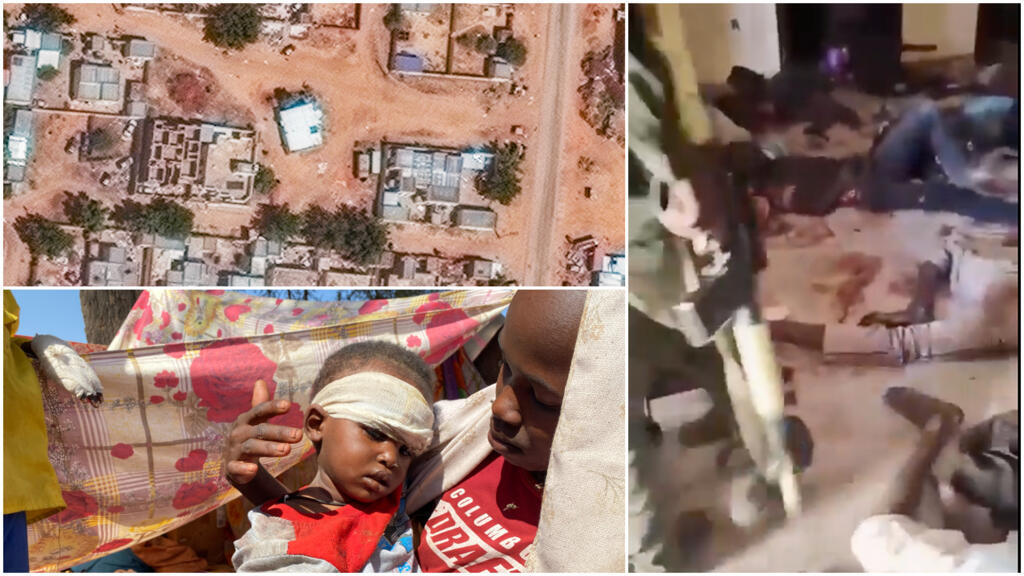
Above, a satellite image showing what experts suspect to be a mass grave dug north of a hospital in El Fasher. Below, a child who fled El Fasher receiving treatment at a camp in Tawila. Right, a screenshot from a video shared on social media by Mini Minawi, governor of Sudan's Darfur region, appearing to show FSR walking among bodies. 
© AP Photo / Montage by RFI

Investigations by the Sudan War Monitor and Yale University’s Humanitarian Research Lab drew on open-source material shared on social media by the paramilitaries themselves. Their findings offer damning documentation of the brutality that followed the RSF’s assault on 26 October.

One video shows RSF fighters moving through the Saudi Hospital in El-Fasher, stepping over bodies strewn across the floor.

At one point, a wounded patient tries to sit up before being shot at close range. A fighter can be heard shouting, “There’s one still alive – kill him!”

Then the person filming walks outside, where dozens more corpses in civilian clothing lie scattered in the hospital courtyard.

These videos weren’t leaked by whistleblowers – they were filmed and posted online by the RSF themselves.

Fighting spreads to North Kordofan as Sudan’s war turns deadlier

Rape threats, ransom demands

After analysing dozens of videos and gathering testimony from survivors, the Sudan War Monitor concluded that paramilitaries swept through neighbourhoods, hospitals and homes, executing civilians – sometimes along ethnic lines.

The collective of journalists and open-source researchers said that other footage filmed outside El-Fasher showed bodies dumped in mass graves or abandoned along rural roads, suggesting that victims were killed while trying to flee.

Among the most shocking clips is one showing a female RSF member urging her comrades to “go and rape the women”, an indicator of the sexual violence reported across Darfur since the conflict reignited in April 2023.

In another recording, RSF fighters taunt kneeling captives – including a man identified as Dr Abbas, a respected psychology professor from El-Fasher University – as they demand ransom money from their families.

Another video shows an officer, known by the nickname Abu Lulu, mocking civilians moments before executing them.

A video shared online apparently shows RSF fighter Abu Lulu, accused of atrocities in Darfur, going free after the paramilitary group claimed to have arrested him at the end of October.


France, UN call for a ceasefire in Sudan amid mounting reports of atrocities

Blood visible from space

Satellite analysis conducted by Yale’s Humanitarian Research Lab, published this week, adds another layer of evidence. Using news reports and social media to identify sites of potential abuses, its experts scanned satellite pictures of the areas and observed dark shapes and red discolouration that they believe are likely bodies and blood.

According to Nathaniel Raymond, the lab’s executive director, the images suggest that mass killings began immediately after the RSF entered El-Fasher, and may still be continuing today.

His team has been tracking the conflict since it erupted in April 2023 between the RSF, commanded by General Mohamed Hamdan Dagalo, and the Sudanese Armed Forces loyal to General Abdel Fattah al-Burhan.

Seizure of Sudan's El Fasher a 'political and moral defeat' for RSF militia: expert

Its research offers a glimpse into a war that the world is struggling to see. With several journalists missing or imprisoned in Darfur and communication networks collapsing, open-source intelligence has become one of the only ways to trace what’s happening on the ground.

Raymond notes that this kind of documentation could one day help international prosecutors build war crimes cases. “The nations of the world might be able to say that they could not have stopped it,” wrote the Humanitarian Research Lab, “but they cannot reasonably say that they did not know.”

“The paramilitaries are collecting bodies and placing them in mass graves”

Interview with Nathaniel Raymond, executive director of Yale University's Humanitarian Research Lab

RFI: How did your team use satellite images to identify victims of atrocities in El-Fasher?

Nathaniel Raymond: We reached these conclusions by analysing shapes between 1.3 and 2 metres long that appeared in our satellite images right after the fall of El-Fasher. These shapes were found in locations where RSF fighters filmed themselves killing civilians. The average length of a human body seen from space is around 1.3 to 2 metres, so we’re confident these are human remains. What’s more, the shapes stay in place for several days – and new ones keep appearing.

Were you able to determine where these bodies are located?

Yes. We confirmed that a massacre took place at El-Fasher’s Saudi Hospital. In our satellite images of that same site, we can clearly see these same shapes – so we believe they are bodies. Around the hospital, our images also show reddish areas consistent with bloodstains.

We also have evidence that the paramilitaries are now collecting bodies and placing them in mass graves.

How can you tell that from satellite images?

From one image to the next, we can see them digging holes, putting in objects that match the size and shape of bodies, and then covering them. As we speak, there are two new mass graves near a neighbourhood where massacres were recently reported.

These images are just 24 hours old. We’re gathering new imagery every six to 12 hours.

Does that mean the killings are still going on?

Yes. We’re seeing new stacks appearing in different parts of the city. There are still many civilians in El-Fasher, and we believe they remain in danger.

Have you been able to estimate the number of dead?

There are simply too many to count. We’re trying to develop a computer programme to help us, but often the bodies are piled on top of one another. So we try to calculate if the volume of these shapes changes over time.

In recent days, we’ve also observed trucks arriving – which suggests the paramilitaries are cleaning up the area.

These images are shocking. Could they serve as evidence of war crimes?

That will depend on the international community. So far, it hasn’t acted.

But yes, they could... We’ve already worked with the International Criminal Court on cases that involved satellite imagery.

This article was adapted from the original French version by RFI's Alexandra Brangeon.
ARACHNOLOGY

World's biggest spiderweb home to more than 110,000 spiders discovered on the Albanian-Greek border


Copyright Marek Audy

By Ioannis Karagiorgas
Published on 07/11/2025 - EURONEWS

This is the first evidence of colonial behaviour in two common spider species and probably represents the largest spider web in the world.


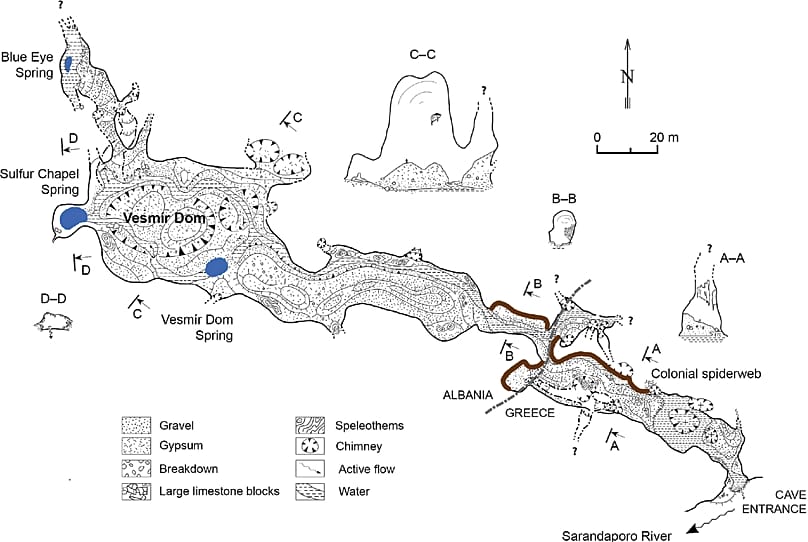
Researchers have discovered more than 111,000 spiders thriving in what appears to be the world's largest spider web, deep inside a pitch-black cave on the Albanian-Greek border.

The "extraordinary" colony consists of a colossal web in a permanently dark zone of the cave, according to a study published 17 October in the journal Subterranean Biology.

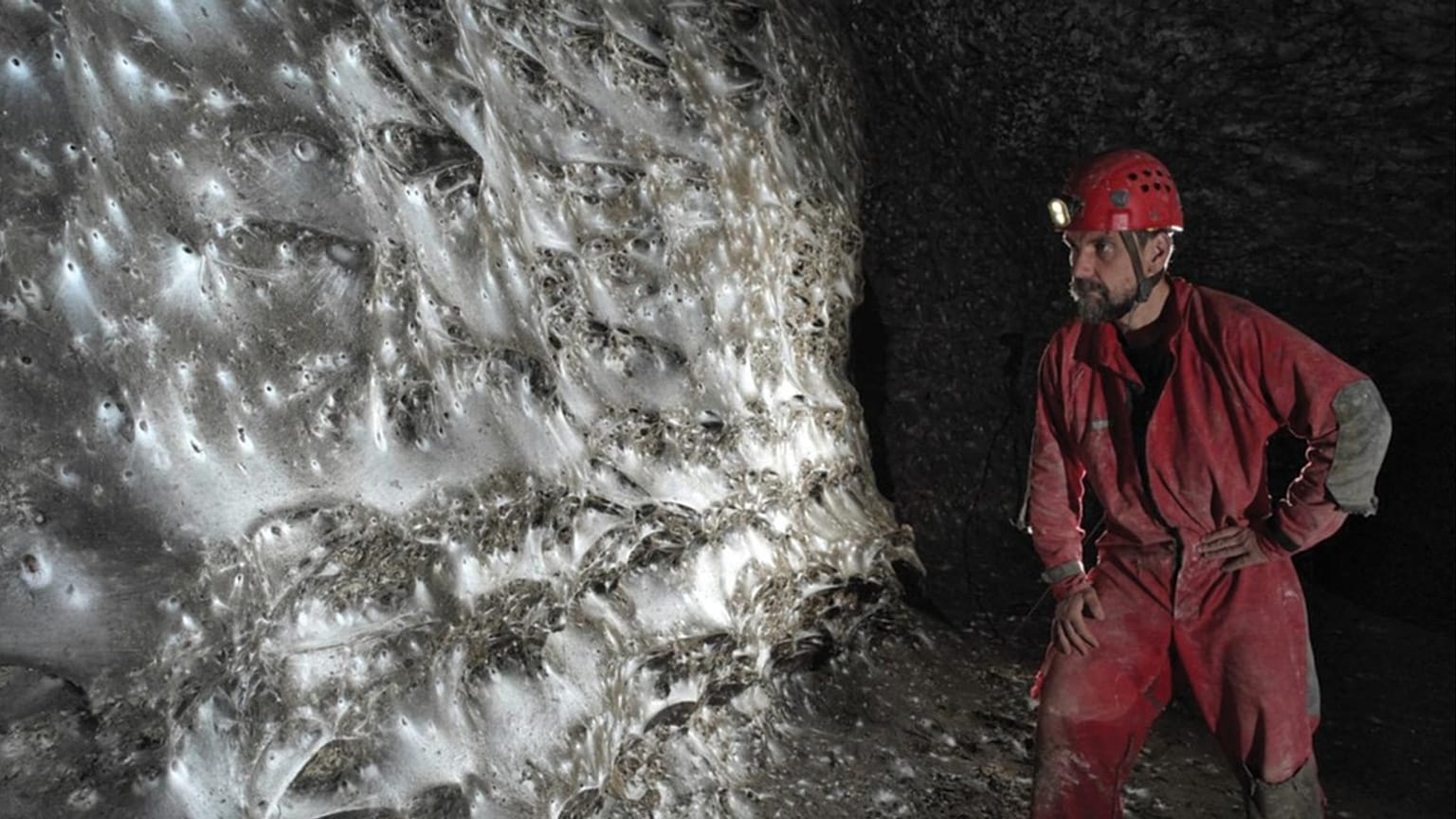
The web stretches 106 square meters along the wall of a narrow, low-ceilinged passage near the cave entrance. It is a jumble of thousands of individual, funnel-shaped tissues, the researchers noted.


Map of the cobweb https://subtbiol.pensoft.net/

This is the first evidence of colonial behaviour in two common spider species and likely represents the largest spider web in the world, said lead study author István Urák, associate professor of biology at the Hungarian Sapientia University of Transylvania in Romania.

"The natural world still has countless surprises in store for us," Urák told Live Science in an email.

"If I tried to put into words all the emotions that overwhelmed me [when I saw the tissue], I would emphasise admiration, respect and gratitude. You have to experience it to really understand what it's like."

Where is the colossal spider colony?


The megalopolis of spiders is located in the Cave of Sulphur, a cave with a sulphuric-acid hollow formed by the oxidation of hydrogen sulphide in the groundwater.

While researchers uncovered tantalising new information about the Sulphur Cave spider colony, they were not the first to see the giant web. Speleologists from the Czech Speleological Society discovered it in 2022 during an expedition to Vromoner Canyon. A team of scientists then visited the cave in 2024, collecting samples of the web that Urák analysed before embarking on his own expedition to Sulphur Cave.

Spider in the cave https://subtbiol.pensoft.net/

This analysis revealed that two species of spiders live in the colony: Tegenaria domestica, known as the barn spider or the domestic house spider, and Prinerigone vagans.

During their visit to the cave, Urák and his colleagues estimated that there were about 69,000 specimens of T. domestica and more than 42,000 specimens of P. vagans. DNA analyses for the new survey also confirmed that these are the dominant species in the colony, Urák said.

The Sulphur Cave spider colony is one of the largest ever recorded, and the species involved were not previously known to congregate and cooperate in this way, Urák said. T. domestica and P. vagans are widespread near human dwellings, but the colony is "a unique case of two species coexisting within the same tissue structure in these huge numbers," he said.

"It is important to preserve the colony despite the challenges that may arise from the cave's location between two countries," Urák added.

In the meantime, researchers are working on another study that will reveal further details about the inhabitants of Sulphur Cave.