Monday, December 15, 2025

The Bloody Price of the “Moderate Jihadism” and “Controlled Chaos” Strategies: Palmyra
Source: Originally published by Z. Feel free to share widely.

Modern Western strategic thinking still likes to present itself as the child of the Enlightenment: Rationality, progress, order, and law. 

However, the practice operating in the Middle East for the past 30 years has repeatedly shown that these concepts are nothing more than a normative mask, an ideological camouflage. What is being marketed today as “moderate jihadism” is neither an exception nor a tactical mistake. On the contrary, it is one of the most consistent products of the imperial mind’s relationship with violence. 

The bloody attack in Palmyra is the inevitable outcome of this consistency. This event is not an accident but the manifestation of a systemic moral and strategic decay. 

The concept of “moderate jihadism” is theoretically an oxymoron. Jihadism is fundamentally built upon an ideology of absolute hostility towards Western modernity, secularism, women’s liberation, and pluralism. 

The only thing that makes this ideology “moderate” is the West’s temporary tolerance of it, its attempts to steer it, and its integration into its own architecture of violence for the sake of its transient interests. Hannah Arendt’s concept of the “banality of evil” gains a strategic context here. Evil is no longer the pathological deviation of fanatics but the byproduct of the cold, calculated assessments of bureaucratic logic. 

The policy pursued by the US and its allies in Syria is, in this context, not an exception but a continuation of a long line stretching from Iraq to Afghanistan, Libya, and Yemen. 

The “controlled chaos” doctrine is the name for the contradiction between the West’s fetish for order and its practice of generating chaos. Chaos here is not a failure, but a consciously produced strategic environment designed to weaken rival actors, fragment the social fabric, and prevent the flourishing of alternative political projects. However, the assumption that this chaos is “controllable” is the most dangerous delusion of imperial narcissism. 

Viewed through Michel Foucault’s lens of the power-knowledge relationship, the distinction between “moderate” and “radical” is not an analytical tool defining the reality on the ground, but a discursive construct produced by the West to legitimize its own interventions. 

Organizations like Hay’at Tahrir al-Sham (HTS) have been temporarily reframed within this discourse as “transformable,” “rational interlocutors,” or “the lesser evil.” This is not an act of ignorance but a deliberate political choice. Because for the West, the real threat is not the armed jihadist groups, but the possibility of a democratic project rooted in the people, which is secular, pro-women’s liberation, and anti capitalist. 

It is precisely at this point that the model put forth by the Kurdish Freedom Movement in Syria exposes the structural limits of the Western mind. 

This project, centered on democratic self-administration, Democratic Societal Socialism, communal economy, and gender liberation, is not merely a military success against ISIS (Daesh) but also an alternative civilizational vision for the region. This vision undermines the West’s binary schema that confines the Middle East between authoritarian nation-states and armed jihadist structures. This is why the Syrian Democratic Forces (SDF) has never been a “fully trustworthy” partner for the Coalition. 

This seemingly paradoxical situation is, in fact, highly rational. The SDF is too consistent, too principled, too autonomous. What the West seeks is not actors who genuinely embody its values, but structures that verbally assent to those values while practically agreeing to be part of the imperial order. HTS’s performance of “moderation” was encouraged precisely because it answered this expectation. 

But ideologies do not behave like mercenaries. As Frantz Fanon warned, alliances established through violence eventually turn against their own masters. Jihadism is not domesticated as it is instrumentalized; rather, its ideological core is hardened. Every contact with the West deepens the internal contradictions of this ideology and ultimately produces a “moment of betrayal.” The attack in Palmyra is the crystallized form of this moment of betrayal. 

The reactions of US and Coalition officials following this attack have made the collapse even more visible. The reflex to quickly pin the blame on ISIS is not just a propaganda maneuver but an expression of an inability to face the truth. 

Because the attack having originated from within HTS demolishes the entire “moderate partner” narrative. This situation creates a rift in the discursive universe established by the West. The truth, which has been attempted to be suppressed, is emerging bloodily. 

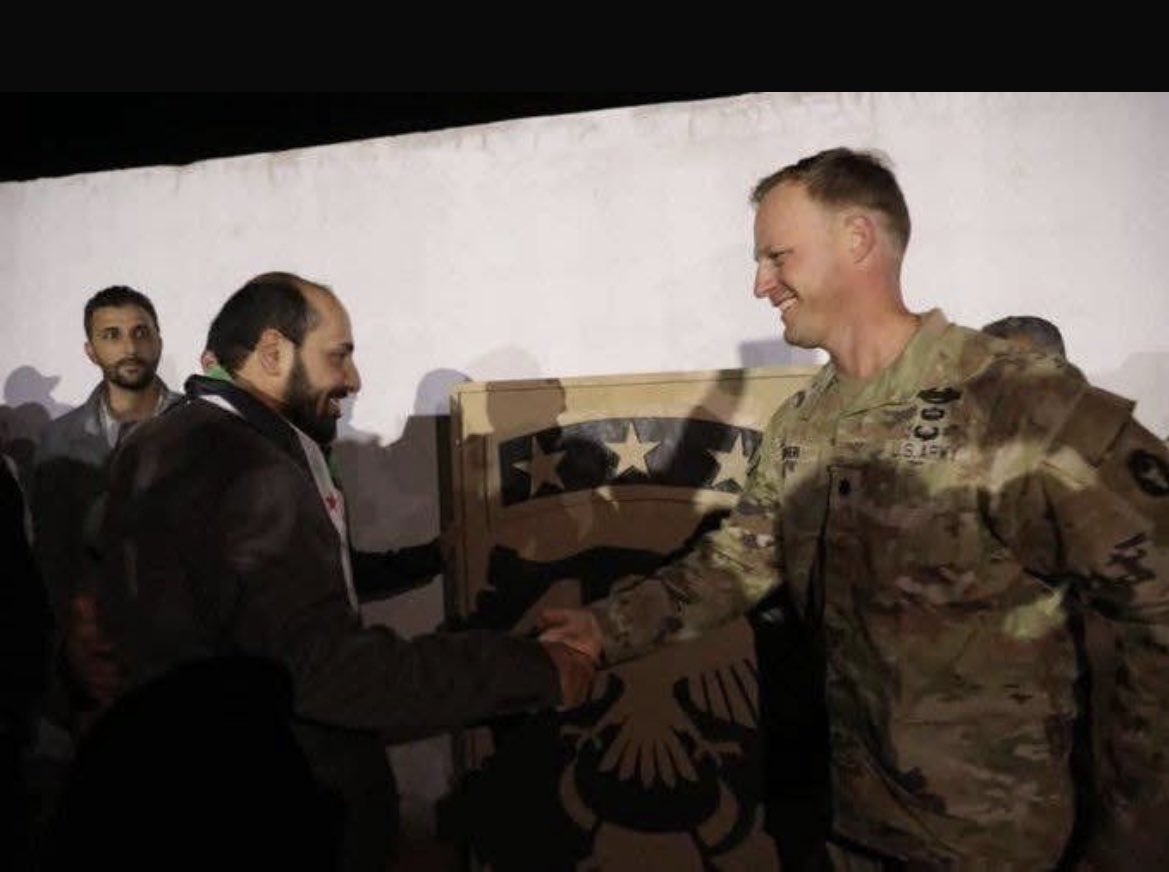
The real object of scrutiny here should not be a singular attack, but the structural mindset that made this attack possible. Why has the Coalition consistently kept the SDF—the most reliable, disciplined, and ideologically consistent force on the ground—under pressure, while seeing an entity like HTS as a strategic option for “key leader engagement”? 

This question is not just military or diplomatic; it is a profound moral question. And every evasive answer to this moral question paves the way for new Palmyras. 

The myth of “moderate jihadism” has collapsed at this point, not just theoretically, but practically. Controlled chaos is now generating an uncontrollable blowback. The West has been struck from within by the ideological enemy it fed with its own hands, yet it attempts to present this blow as an “unforeseen exception.” However, this is not the exception; it is the rule itself. 

Palmyra: The Location of Betrayal, the Collapse of Controlled Chaos, and the Bloody Exposure of the “Moderation” Lie 

The Palmyra desert has historically been a geography where empires were tested by their hubris. Just as the stone columns of Rome eventually sank into the desert, today the “smart,” “finely tuned” security architecture the West thought it was building in the Middle East is dissolving among the same desert sands. The attack in Palmyra is, in this sense, not just a military incident but a symbolic breaking point where the strategic lies of an era are being buried. 

To read this attack as a mere case of “internal radicalization” is to consciously distort the truth. 

Because the attacker’s affiliation with HTS, his direct relationship with the organization’s intelligence structure, and the context in which the attack took place indicate that this was not an isolated aberration, but the product of an organizational and ideological continuity. The only “surprise” here is the Coalition’s audacity to still pretend to be surprised. 

The HTS narrative of “transformation” marketed to the West was a security theater from the start. On the stage of this theater, Ahmad al-Sharaa (Muhammad al-Jolani), while trimming his beard and posing with tie-clad diplomats, maintained the organization’s ideological backbone—the Salafi-jihadist worldview—intact. 

This dual structure was not a contradiction but a deliberate strategy. The message to the West was: “Legitimize me, and I will be functional against your enemies.” The Coalition accepted this bargain. The price was paid in Palmyra. 

The critical point here is the timing and the target of the attack. This was not a blind act of violence aimed at a randomly chosen target. It was a symbolic strike aimed precisely at the relationship the Coalition established with HTS. The message is: “I sit at the table with you, but I am not subordinate to you.” More importantly, this message is directed not only at the Coalition but also at the HTS base. Ideological discipline within the organization is re-established through such actions. Contact with the West leads not to ideological dissolution but to ideological radicalization. 

At this juncture, the reflexes displayed by Western media and official discourse are as instructive as the attack itself. The immediate finger-pointing at ISIS is not an intelligence error but a discursive defense mechanism. 

Because ISIS is encoded in the West’s mental map as the “absolute evil,” and this code is useful for externalizing responsibility. HTS, however, is an actor the West wishes to keep in the gray zone—a “transformable” entity. The fact that the truth does not fit the ISIS narrative is therefore disconcerting.

This discomfort is evident in the statements by Trump and other Western officials. Expressions such as the attacker’s leader (Ahmad al-Sharaa) being “angry” are not political analysis but psychological reduction. Linking an ideological attack to individual emotional states obscures both the responsibility and the structural flaw. This language reveals the extent to which the West avoids questioning the architecture of violence it built. 

The statement by the HTS Ministry of Interior spokesperson, admitting that the attacker had “extremist tendencies,” is the tragicomic climax of this theater. This confession reveals that the Coalition is unable to cope not only with external threats but also with the internal dynamics of the very structure it is in direct contact with. To put it more clearly: The Coalition knows who it is sitting with, but chooses to pretend otherwise. This choice is not a strategic error but a deliberate gamble. 

Behind this gamble lies the regional legitimacy collapse deepened by the Gaza crisis. The US and its allies have already suffered a severe loss of legitimacy in the Arab and Muslim world due to their stance on Gaza. In this atmosphere, the anti-Western and anti-Zionist anger rising from the base of structures like HTS is not a variable that can be controlled. On the contrary, this anger is the main fuel for ideological mobilization. The Palmyra attack is one of the first major explosions of this fuel. 

Here, Joe Kent’s description of the attack as a “terrorist act carried out from the inside” is one of the rare statements that inadvertently approaches the truth. 

Yes, this is an inside attack. But the “inside” is not just the body of HTS, but the sphere of the dirty alliance established by the Coalition itself. The betrayal did not infiltrate from the outside; it blossomed from a structure that the Coalition was in contact with, legitimized, and indirectly empowered. 

At this point, the real tragedy is that the Coalition still views this event as a “manageable crisis.” Threats of retaliation, the “we will hunt them down” rhetoric, and limited military operations are being substituted for a strategic confrontation. The problem here, however, is not a target to be hit, but a mindset that must be abandoned. Jihadism is not an external threat that can be eliminated by bombing; it is an ideological ecosystem nurtured by faulty alliances. 

And against this ecosystem, there is only one structure that has consistently stood firm for years: the Syrian Democratic Forces (SDF). One of the most striking aspects of the Palmyra attack is that it confirms the warnings repeatedly voiced by the SDF. The warning that “there can be no tactical alliance with jihadism” is no longer a theoretical argument; it is a reality written in blood. 

The Kurdish Freedom Movement: Ethical Politics, Democratic Self-Administration Against the Architecture of Betrayal, and a Radical Call to the West 

The blood spilled in Palmyra has declared the bankruptcy not only of the Coalition’s security prowess on the ground but also of the West’s entire vision for the Middle East.

This failure stems not from a lack of military capacity, but from the loss of a moral and political compass. For too long, the West has defined security through negotiation, not through principle. 

It is precisely at this juncture that the Kurdish Freedom Movement stands not only as a resistance force but also as a historical counter-thesis developed against this corrupted understanding of security. 

The Syrian Democratic Forces’ struggle against ISIS goes far beyond the classic “counter-terrorism” paradigm. 

This struggle was waged not on behalf of a state, but on behalf of a society, a way of life. A secular, pluralistic, and communal political vision, spearheaded by women, became a tangible reality in one of the darkest periods in the Middle East. This is the only consistent practice on the ground of the values the West claims to champion (democracy, freedom, and equality). And precisely for this reason, it is disconcerting to the West. 

The fundamental contradiction in the Coalition’s approach to the SDF lies here. On the one hand, the SDF is recognized as an indispensable actor in the defeat of ISIS. On the other hand, this actor is constantly kept as a “temporary,” “tactical,” and “negotiable” element. It is left isolated in the face of Turkey’s open threats, economically strangled, and diplomatically marginalized. The reason for this is not security concerns, but the threat posed by the political project the SDF represents to the prevailing status quo in the region. 

The model of democratic self-administration is a radical alternative developed against the centralized, male-dominated, and authoritarian structure of the nation-state. This model offers a common ground for coexistence not only for Kurds but also for Arabs, Syriacs, Ezidis, and other peoples. This common ground is incompatible with the destiny the West has outlined for the Middle East. Because the West seeks stability not in the self-organization of peoples, but in controllable and supervisable elites, and armed proxies. 

General Mazloum Abdi’s prudent call following the Palmyra attack is deeply significant in this context. This call is not an expression of diplomatic courtesy but a quiet yet sharp criticism directed at the Coalition. 

It is a call to “return to a principled, institutional, and collective understanding of security.” The SDF did not use the language of revenge, did not issue threats of retaliation; instead, it recalled the basis for a common and transparent struggle. This stance demonstrates what ethical politics is, in contrast to the betrayal of HTS. 

The celebration of the attacker’s action in Damascus, who emerged from within HTS, reveals that the issue has gained an ideological base, not just an organizational one. This is the clearest proof that the “moderation” narrative has no resonance at the grassroots level.

Jihadism interprets every contact with the West as an ideological humiliation and seeks to compensate for this humiliation with violence. This dynamic has been analyzed theoretically countless times. Despite this, the West’s continued insistence on the same path can no longer be explained by ignorance. 

Trump’s rhetoric of retaliation and Hegseth’s language of “we will hunt them down” are not demonstrations of strength but expressions of strategic desperation. This language is the West’s reflex to avoid confronting the monsters it created by constantly defining itself as “under threat.” Yet, the real threat is not the person who pulled the trigger in Palmyra. It is the alliance logic that made it possible to pull that trigger. 

At this point, the Kurdish Freedom Movement makes a clear, radical, and irreversible call to the West: 

You will either choose moral and strategic clarity, or you will completely lose a permanent security presence in this geography. The illusion of “moderate jihadism” must be abandoned. Jihadism cannot be transformed. It can only be fought against. And the only reliable, consistent, and proven partner for this struggle on the ground is the SDF. 

This call is not a request for a favor. The SDF does not owe its existence to the Coalition’s approval. 

However, if the West wants to be consistent with the values it claims to uphold, it must politically and diplomatically recognize, protect, and defend the SDF’s democratic self administration project. Otherwise, every new attack, every new betrayal, every new loss will be the natural consequence of the path the West has chosen. 

Palmyra was a warning. If this warning is not taken seriously, the judgment of history will be ruthless. Security cannot be considered separately from morality. Strategy cannot be sustained by lack of principle. 

The alternative offered by the Kurdish Freedom Movement is the hope not only of the Kurds but of everyone seeking a dignified future in this geography. The West will either embrace this hope or remain under its rubble.

When Young People and Farmers are Guardians of Soil Health

Source: Arc2020

Surviving repeated threats of being buried alive, the EU’s first ever law on soil health was finally adopted last month. And while environmental groups have called out “severe shortcomings” in the final text of the Soil Monitoring Law, it is a significant step in the right direction on the journey towards healthy soils in Europe. Whether it will make a meaningful impact on the crisis of soil degradation remains to be seen, and will depend on rigorous enforcement, as well as ambitious implementation by Member States.

Far from the protracted negotiations in Brussels, in Europe’s territories local communities are working on the ground to protect the soil. Ladislav Luc reports from Serbia on a citizen science project that offers an intriguing entry point for farmers and young people to learn about the importance of soil health.

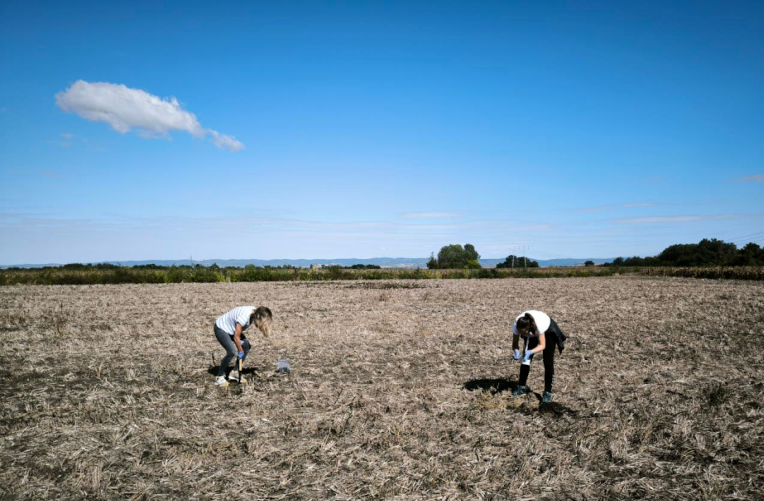
Excavating soil samples for texture and aggregate analysis. Photo: Ladislav Luc

In the territory of Vojvodina, Serbia, farmers and young people are stepping up to care for the soil. “Guardians of Soil Health” is a citizen science project that teaches participants how to monitor key indicators of soil health, such as organic matter decomposition, pH value, moisture, structure, texture, and microbial activity. Run by the BioSense Institute in Novi Sad from 2024 to 2025, the goal of the project is to generate data that will support evidence-based decision-making in the field of sustainable agriculture and environmental protection.

Colorimetric determination of pH and the content of nitrogen, phosphorus, and potassium in the soil. Photo: Ladislav Luc

Investing in the future

Healthy soils, as the largest terrestrial ecosystem in the EU, support many economic sectors, while land degradation costs the European Union tens of billions of euros each year. Proper land management that preserves soil health and biodiversity increases economic profitability and reduces the costs of fertilisers needed to maintain yields. If current trends in land degradation were halted and reversed, it could bring up to €1.2 trillion in annual benefits globally (EU Soil Strategy for 2030). The cost of inaction against land degradation in Europe is six times higher than the cost of taking action. In addition to financial losses, it would also mean loss of fertility, threats to global food security, and deterioration of the quality and nutritional value of agricultural products.

More than 95% of our food comes directly or indirectly from the soil, making it one of humanity’s most important resources. However, soil is not an inexhaustible resource. It forms extremely slowly but can be destroyed very quickly. Estimates show that about 33% of the world’s soil is already degraded, while approximately 12 million hectares of fertile land – an area almost equal to the territory of Serbia – are lost each year. In the past 50 years, the amount of arable land per capita has been cut in half. Farmers are on the front line of protecting this vital resource. This soil feeds us, our families, and our communities, while also preserving nature and ecosystems. Managing soil today means much more than merely combatting erosion and loss of fertility – it entails taking active care of soil health for future generations.

That is why the European Union has set ambitious goals in the field of soil and climate protection: to combat desertification and to restore degraded land, including areas affected by droughts and floods, with the aim of achieving a land degradation–neutral world (Sustainable Development Goal 15.3).

Significant areas of degraded and carbon-rich ecosystems, including soils, need to be restored. The EU aims to achieve a net removal of 310 million tons of CO₂ annually in the land use, land-use change, and forestry (LULUCF) sector. The goal is to achieve good ecological and chemical status of surface and groundwater by 2027, and by 2030 to reduce nutrient losses by at least 50%, as well as the overall use and risk of chemical pesticides by 50%, including a reduction in the use of more hazardous pesticides. The EU also strives for significant progress in the remediation of contaminated sites and the achievement of “no net land take,” meaning that new construction should no longer reduce areas of fertile soil. It is setting broader environmental goals too: reducing pollution to levels no longer considered harmful to people and nature, creating a toxic-free environment, and achieving climate neutrality by 2035 on land, and by 2050 for society as a whole, which should be fully resilient to climate change. Investing in soil health means investing in the future – in safe food, clean air, healthy water, and a stable climate.

Cylinder extraction, experiment for measuring soil bulk density. Photo Andrijana Andric

Time to get our hands dirty

This is where projects like “Guardians of Soil Health” come in: Farmers and citizens learn how to recognise changes in the soil and respond to them using simple, accessible, and effective methods. Through a series of practical, scientifically grounded experiments, participants assess the biological activity, fertility, and structure of the soil, thereby gaining a better understanding of regenerative processes and contributing to the sustainable management of local land.

The experiments include monitoring the decomposition of a cotton cloth or tea bags in the soil, earthworm abundance, analysis of soil texture and aggregates, measurement of bulk density, pH value, and the content of key nutrients. These simple experiments enable farmers and citizens to independently monitor soil conditions and the effects of their practices.

The project demonstrates how local communities can actively contribute to achieving the goals of the EU Soil Strategy for 2030, particularly in the areas of biodiversity conservation and soil ecosystem regeneration.

Setting up an experiment by burying two types of tea bags. Photo: Ladislav Luc

One of the participants, Ivan Sudarević, a young farmer from Vojvodina, says that through the project, in addition to learning how important soil fertility and regeneration are for successful agricultural production in the future, he also discovered new methods for practically assessing soil conditions in the field. Through simple experiments, Ivan found that he could independently evaluate the biological activity of his soil and understand the changes occurring within it.

“These experiments showed me that you don’t need a lot of money to understand soil fertility. Just a bit of curiosity and willingness, and you can immediately see how healthy your soil is,” Sudarević emphasises, adding that such methods should become part of the everyday practice of every farmer who wants to preserve the fertility of their land.

Experiment with comparison of a cloth buried in June and at the time of excavation in September. Photo: Ladislav Luc

Citizen science bridges gaps

Within the “Guardians of Soil Health” project, researchers play an important role in connecting science and practice, bringing farmers closer to understanding the importance of monitoring soil conditions. We spoke with Kristina Kalkan and Jelena Jović, research associates at the BioSense Institute in Novi Sad, about the project:

How would you explain the importance of monitoring soil health to farmers?

Although the Law on Agricultural Land requires checking basic fertility parameters every five years (four in organic production), Serbia still lacks systematic soil quality monitoring. Larger producers conduct regular checks, while smaller ones do so less often due to costs and insufficient awareness.

Citizen science bridges this gap – by involving farmers and young people in monitoring key soil health indicators, broader coverage is achieved and awareness of soil importance is raised. The goal of the “Guardians of Soil Health” project is to involve as many citizens as possible in monitoring and jointly analysing data with BioSens Institute researchers, using non-laboratory, standardised, inexpensive, and quick methods. The project also contributes to education on sustainable land management and biodiversity conservation, with the participation of farmers, schools, and preschool institutions.

What have been the most interesting or useful results obtained so far in the project?

One of the project’s tasks was to compare and verify the results obtained using citizen science methods with laboratory analyses, which serve as a control and confirmation. We are currently awaiting the results of these tests. The most interesting part was observing participants’ reactions to unexpected results. Some collected their own samples in parallel, and we are particularly pleased that their findings confirmed the results from the citizen science methods. Based on our experience so far, participants found the methods for determining the chemical and biological characteristics of the soil the most engaging.

Soil sampling. Photo Andrijana Andric

How can citizen science contribute to the improvement of agricultural practices?

Farmers often think short-term, seeking higher yields, which can reduce productivity in the long run. Citizen science transforms farmers into active participants in research and land management, leading to more sustainable and innovative agriculture. Regular monitoring of key soil indicators allows early detection of degradation, erosion, pollution, or nutrient deficiencies, enabling farmers to take timely measures. Through education and returning the land into their hands, the goal is to encourage critical thinking and better decision-making in the future.

How motivated are young people and farmers to participate in such experiments, and what has been their experience?

Participant motivation in our two-year project has varied, but there are clear indicators of lasting interest among both young people and farmers. In the first year alone, over 150 people registered, about 40% of whom were young people aged 10 – 18, while the rest were young farmers between 25 and 35 years old. The younger participants showed a high level of curiosity and enthusiasm, especially during field workshops and practical measurements. Farmers tend to have more concrete expectations and are often sceptical of new methods, so laboratory verification of citizen science data is key to increasing their engagement and willingness to apply the knowledge they acquire.

What future do you see for projects that connect citizens and researchers in the field of soil and biodiversity protection?

Projects that link citizen science with scientific research have enormous potential to change the way natural resources are managed. They enable the collection of large amounts of data and facilitate the application of results in practice and land protection policies, thanks to the early involvement of citizens. This approach brings science closer to society. With technological advancements, further development is expected through digitalisation and the use of artificial intelligence, but challenges remain in ensuring data quality and keeping participants motivated to stay active.

INTERVIEW

‘Reefolution’ Respond to Marine Ecosystem Disruption

Source: Resilience

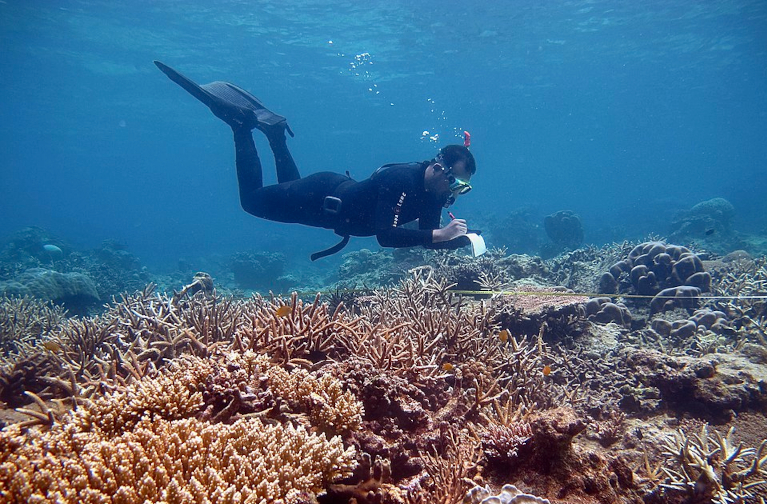
Decades of inaction responding to rapidly increasing carbon emissions, industrial overfishing, point source contamination, and similar compounding pressures on our planet’s oceans have begun obvious, large scale disruption of marine ecosystems.  84.4 % of the world’s coral reefs experienced mass bleaching, and ongoing, record high ocean heat for several years are just some of the recent extreme, systemic shifts.  Many of these changes will continue, leading to widespread loss of marine life across various trophic levels, affecting coral reefs and the vast biodiversity they support.

As the severity of human impacts to ocean life rises, however, so have a variety of adaptations combining scientific research, education, mitigation, awareness, and restoration of the incredible life harbored in the wildly diverse coral reefs across the planet. The following interview with Dr. Ewout Knoester of Reefolution.org provides merely a brief introduction into the amazing work in reef restoration and community building by their initiative.  Knoester’s efforts in marine ecosystem restoration have received the overall winner of the 11th annual Western Indian Ocean Marine Science (WIOMSA) awards in 2019, in addition to the 2025 International Coral Reef Society (ICRS) World Reef Award.   Our discussion below was edited for clarity from an online interview.

King
Please tell us about your background in marine science, and how you came to become involved in coral restoration.

Knoester
It began with my Master’s at Wageningen University, which is a very broad program in aquaculture and marine resource management. So actually, it was very heavily focused on how to extract things from the ocean, not so much conservation or ecology, but I could get into the courses and that way I shifted more and more towards ecology. Coral reefs only entered the picture when I had to do my internship for my masters. Then there was an option to come to Kenya to essentially explore the whole concept of reef restoration, to see if that will be feasible at this specific location, both ecologically and also socially. So that is when I, together with other master’s students, Michelle and Magite, headed down to South Kenya and yeah, started up a small pilot study on reef restoration. That’s actually the first time in my academic career I actually was interacting and studying coral reefs. I didn’t really have the background academically yet. So just as I got in the fields, I had to quickly learn about this, about this ecosystem and essentially that’s what I’ve been doing ever since. So I completed that internship, got a green light essentially for restoration, both socially, and ecologically. It seemed like, OK, it could work here in southern Kenya, and that is when I actually came back for my thesis to do a bit more detailed study regarding how can we do this more efficiently, especially in the nursery phase of reef restoration.  And that laid the groundwork for my PhD, again connected to Wageningen University and this specific location here in Kenya.  And as this project kind of started growing also with the university and some interested people, we decided to establish an NGO, especially to create funding for the project.

King
What year was this when you started in Kenya, by the way?

Knoester
So the internship was in 2015 and then the decision to start the NGO Reefolution was in 2016. So essentially it was half a year after we completed that internship that the NGO was officially registered.  Then back in the Netherlands and I think since 2019, if I’m not mistaken, it was also officially registered in Kenya as a separate independent entity.

King  
I know you mentioned your graduate work was more focused on extraction in marine science, and it seems like Wageningen, when I look into it now, is very environmentally focused.  So much of science is still ignoring the intersections of conservation and social issues; looming catastrophes like mass human migration, war for resources, and complete wipeout of large swaths of various habitats…   We have to build economies that are restoring vital ecosystems really quickly, so that’s why I’m so fascinated with this project, its growth, and the connection of science, education, and community action. So it’s also neat to see that change happen in the universities too.  Because investment in the future is going to require a real shift in approach.

Knoester
Yeah, though I have to say like at Wageningen also the master’s, it was extraction, but how to do it sustainably was always the focus already. But indeed that is still extraction based and now it’s more OK, what can we give back and how can we get more?  How can we give more back to the ecosystem rather than just seeing it as an extraction source?

King 
Yeah, in the short-term, we physically have to restore full ecosystems – replant forests on massive scales –  the Greenbelt Movement in Africa is an example of a beginning to this.  All these things have to scale so quickly.  Mindset change has to happen at all these different levels. That for me is always the tension of like we really have to start putting in viable effort and identify these outlier projects, and identify the minimal effective dose for viable future growth.  Like, what’s the least amount of funding that can be applied to optimize existing projects?

I’m wondering about what does it take to watch the coral over the years?  Do you have teams constantly doing this? Because this is years and decades of restoration, and I’m sure you want to see what is changing through the full ecosystem. Can you give me details on the ongoing monitoring of biodiversity after the coral is grown?

Knoester
Yeah. So, for the project specifically and the time that I’ve been in the water, it’s been 10 years, so indeed decades, which might sound long. But of course there’s always this issue of the shifting baseline. I’ve never really seen how it how it was before.  Also if you look scientifically from before the first big like major impact that was in 1998 like the first heat wave that wiped out half of the coral reefs in this region in the Western Indian Ocean…

King 
Right, the big El Nino.

Knoester
Before that event, there’s so little data, so I’m always like, OK if I describe what I see happening on the reef, we have to realize it’s only a very small part that I’m actually observing, and then it’s always good to place in the bigger picture somehow as best as possible to really show what’s going on. And then of course it’s going to be a story of coral decline overall.  Like even this small time span, the decline has been still so, so major. It’s quite scary to actually see that happening. And we know it’s not just this location, we know it’s worldwide. So of course this is what we try to fight, what we try to reverse.

But it’s as you mentioned, it’s all a matter of scale and we haven’t both in terms of preventing the damages, but also in terms of restoration, we still need to scale up a lot on both sides.

King  
Can you tell me anything else about the peer review papers you’re producing and how? Do you pull in other scientists occasionally or you’re working with like 1 core team?

Knoester
So I have to say that the core team so far has been mainly just me, but definitely supported by a whole bunch of students over the years and of course the local employees here of the restoration project we call “Reef Rangers,” by supporting in performing all the research, helping to analyze the data. But in terms of other researchers on the same level, it’s a few within my group at Wageningen University that I have some time to debate with but not too much actually. So it’s mainly me and the students in the field that investigate all these different topics and the nice thing is we can essentially investigate anything that we think is relevant or interesting or promising to help the coral reefs and that also explains like this whole diversity  of topics you mentioned.

Some additional ones even like we also tested this concept of the bio rock where you let low voltage electricity go through a metal structure in which coral is attached. There were many claims that it would increase the growth of coral, make it more resistant against this increasing heat.

Unfortunately we didn’t find these results, but in that way any topic that we think has some promise we can explore, and especially with this focus on trying to get corals that are somehow better able to deal with the heat that is going to increase.

King  
Right.

I think that’s one of the most impressive and important elements to all this is just having things that are going to adjust to the heat.  I keep an eye on Climate Reanalyzer and the oceans temperatures the last three, three plus years; the records have been broken more and more and so the heat’s already in the ocean.

Knoester
Yeah.

King 
So the planet is mostly ocean. The sustained leap in record high ocean temperatures over the last few years is the signal of abrupt change. Geoengineering to block the sun is unlikely sufficient or safe, as the heat’s already in the ocean.  There’s all these different talks about quick fix techno solutions, but I feel that we need to adjust society, provide food, stabilize things, refocus the economy to different aspects of environmental change, safety, human happiness, and security… because the heat already is in the ocean. Most of the new techno schemes are not appropriate. We’re certainly going to use technology, but if it’s not appropriate to what’s already happened – the overheating of the oceans – they’re irrelevant but there’s so many industries that are already like up and going and making money and convincing people of something that’s not needed. And that’s, I mean, the things that we need are biological diversity, and that’s represented as critical in the planetary boundaries too. So your project is so awesome to me also because it’s focused on bringing in biodiversity, which supports recreation, scientists, food for the ocean, fish. So that’s phenomenal and it has to scale.  Speaking of the amount of fish, the pressures in Kenya and the pressure you’re seeing on the reef beyond just warming and coral bleaching, which is also related to of course ocean acidification. Do you see anything like overfishing or any other kind of point contamination there?


Knoester

Yeah, I would say indeed after the increasing temperatures, overfishing will be the second largest stressor that the corals here have to deal with. Essentially there is this imbalance between the corals and the fish – they both need each other. Fish, especially the herbivorous ones, are important, too keep the corals able to grow, remove the algae, essentially just weeding around the corals is what these fish do and as most of the other fish, they’re just being caught away and it’s just local artisanal fishing that is happening every day on quite a large scale – it already results in overfishing. Of course the population of Kenya is expected to increase still quite a lot more. So this problem is also not going to get any less.

But that’s also kind of how we wanted to have the project work like OK, take fishermen and give them an alternative livelihood in reef restoration, that way at least you can reduce some of the pressure while at the same time support recovery.

So, that was kind of the the whole concept behind the Reef Rangers. But yeah at the moment I think the amount of money generated by fishing is still increasing faster than the amount of Reef Rangers we can employ but at least its pushing it a bit in right direction and then also with the community having established like a small area in which we do the restoration, but then also have a small area in which no fishing is allowed, and other areas in which only traditional fishing methods are allowed.  So that way not blocking fishing everywhere because that’s impossible. It’s people’s livelihood. You can’t just say OK, no fishing anymore, but find ways around it so that both the reefs can sustain themselves and people as well.

King 
Agreed.  There has to be longer term relationships between the environment and the people living there.  Can you tell me a little bit about what that looks like on kind of a month to month basis?

Knoester
Yeah. So what we have at the moment is an after school program called the “wildlife clubs” and that organization is endorsed by the county government here; we can do marine conservation every Wednesdays for the local schools. So I think at the moment that there are five schools in the wildlife clubs. So that’s usually about 100 or 150 per school that participate in these conservation sessions that are given by the Reef Rangers. So also people doing the restoration and the work in the fields on Wednesday afternoons, they will pass by the schools and tell more about the ocean, the corals and the work that we do and how that hopefully helps to create better lives for everyone in the area here. So that is the approach we are currently taking. But as you say also it’s a start, but again scalability. So of course we at the beginning when we thought this out, we thought OK, maybe the most efficient way would be to actually change the curriculum Kenya wide to get conservation topics in there, but that was still a bit too far fetched. So this is kind of the solution we work with for the moment.

King  
Yeah, I think that’s a great model because you’ve got Reef Rangers talking and integrating with you and they’re also getting in the ocean and working, right. And then they can show the younger kids this is what you do and teach about all ocean conservation.

The things that you’re doing – the education and the restructuring of an ecosystem – that provides real world ecosystem services, food resources, recreation, and more.  To me it seems simple and straightforward. It’s like, hey, invest in this, but it still doesn’t fit a lot of the politically minded people looking to invest in high tech dredging of the very last of the oceans to get marine minerals, or investing in rockets to get minerals off of asteroids.  I’m like, you got to stabilize society because things are getting wild all over the planet.

I was really impressed with the the 26 cents per fragment for coral restoration cost and that included the dive wage and material cost for building deployment, nurseries and planting of corals. So that’s like a systemic cost and that’s still not scalable right now?  Can you tell me more about the kind of background for what’s required and how you calculate costs?

Knoester
Yeah, so, I think for that one it’s also important to clarify like the restoration as we do it and most restoration projects it’s a two-step process. So the first step is to nurture corals in a nursery – make sure you’ve got enough corals to sufficient size. So that is the first step and that is what this publication is about. And then you’ve got the second step, like if you’ve got these big corals from the nurseries to put these corals back onto the degraded reef  or artificial reef structures. So for this first step -the nursery reef phase-that one is very efficient. So indeed the price that you mentioned is very cost effective; you can create a very good amount of coral for not too much money in the coral nurseries. But then where the bottleneck is by moving these corals from the nurseries back onto the reef, because that requires again lots of man hours and dives and that is where the cost will increase substantially. So that is where most gains can still be made.

King  
Right.  I think that’s a core shift if the dive tourism industry could be connected with that. I mean there’s a lot of difficult hurdles, cause usually dive training takes a good bit of money, but there’s still people all over the world that want to see oceans, that want to see living coral reefs.  So there should be ways for folks to take their vacations to the beach and ocean, and be part of restoring the coral. I think there’d be a lot of people interested in that, but it’s still difficult. I mean, managing all of that is overwhelming. You need – we all need bigger teams – that are thinking in similar ways. But I’m glad to hear that the actual selecting of the corals that are heat adapted is pretty cheap.
I’ve looked at a couple other coral reef restoration projects and I’m just kind of in general wondering do you talk much with investors or entrepreneurs or scientific endowments?  But what’s your feeling overall of the future of investment and scaling?
Knoester
Well, there’s still a very big gap between that goal and what is happening on the ground at this moment. But at least there’s the consensus that that is something we should work towards on a global scale. Realizing this
is another issue. So for us the project actually has mainly been supported through philanthropy.  We’re not so much sourcing money from other sources yet, like what you mentioned, the dive industry could potentially be one, but in Kenya it’s also not very big.

And other industries we actually haven’t explored too much or other financing ways. Carbon credits unfortunately for coral reefs don’t work like for mangroves; it’s really helpful for quite a lot of projects in this region but for corals that unfortunately won’t work. Biodiversity credits is another thing that is still very new and that should be worth exploring, but we actually haven’t had experience with that one.

So for the most part we’ve been pushed forward by philanthropy and then also a part by research funds that also help the NGO again to do their work. So that combination has worked pretty fine so far though I have to say last year was quite difficult and I hear that from many other reef restoration projects that the funding has been substantially more difficult than in the past one 1 1/2 year and that’s also something we are noticing. So we actually have to diversify now as well.

King 
That’s wild. I wonder if that’s a part of the policy changes and funding cuts linked to the Trump administration and this last effort to get fossil fuels.  I’m at a loss for words that the US is really going in this direction after decades and decades of the wars for oil. We saw the damage that was done.  We’ve seen generations of people, soldiers coming home totally traumatized, people that I’ve interviewed that are, you know, even 20 years ago – officers that left and were very much against what was happening… and here we are.  We have these talks and you think things are going to change and instead they went in this. I hope it’s the last push for fossil fuels, but we’re looking at an invasion of Venezuela which Trump on record admitting this is about oil.

This is causing a cultural tension in the US right now that’s just incredible and it has to get resolved in the next few years. I think it will in some ways and then it’ll just be a difficult grind for us still because the damage that’s been done to the natural world.

…I looked at the kite surfing fundraiser, and I didn’t see too many details online. It appeared that that already happened in the year 2024. Is that correct? And they’re planning on doing it again. Can you tell me anything about how that went down? It sounds amazing.

Knoester
Yes.

Yeah, so for that the winds here really help like one season the wind is just going full south and the other way full north. Yeah, so that was an awareness stunt done by the  guides for Kenya to raise awareness for our reef restoration projects. So yeah they almost guided the entire coastline and with stops in between and really needed those cause it was pretty exhausting to them and then they they finished here in the South Coast at the end. So that is where we received the team of I think it was four to five female kite kitters that did that stunt, yeah.

King
Wow.

So they were out together or were people doing it like a relay or they’re like this is dozens of kilometers or 100 kilometers a day or I don’t, is that correct there? So they’re cruising for a long time.

Knoester
It’s all together, yeah. I think the segments where we’re about 50 to 60 kilometers a day, yeah.

King
I think combining those physical extreme activities and raising awareness works well. We can demonstrate that the human body and life in general can do these incredible feats – and adapt to almost anything – like run hundreds of miles, kiteboard the coast of a large nation, skateboard across the US, bicycle around the world… well, we won’t anytime soon change fossil fuels for kiteboards and skateboards and surfboards, but I think that’s still more fun. And that’s why I like partnering with people that are into those activities – plus they are more enjoyable than driving around in cars all the time.  More folks in outdoor recreation have to all pull together with ecologists, environmental scientists, and people who want to preserve these habitats because the rate of change that’s happening is so fast right now.

We have to pay attention to the next big kind of shifts that are going to happen in the global ecosystems and be ready to adjust because human migration is going to be resulting from the collapse of ecosystems.  Social stabilization partnered with ecosystem restoration will be a lot of the future and providing fish and coral needs to tremendously scale all over the world. It should be integrated as rapidly as possible into education and experience. It’s a huge part of the foundations of all economies.

Knoester

Well, any restoration really.

For now, but that will swap. I mean with renewables getting getting more cost efficient than petrol. It will. It will change. It’s just they’re just delaying it at the moment, but it will come.

King  
Yeah, whether it’s distribution, food, the way we get food, the way we travel, the way we transport and the future of our work related back to ecosystems, there’s critical necessity for change.  Ok, to kind of wrap up, do you have anything you want to talk about or that I didn’t bring up or?

Knoester
Maybe to to clarify a bit more because about our heat resilient corals, but that definitely is still work in progress. We don’t have the solutions yet. So as I said we tried various ways to look which corals are more heat resilient and and how do they do it.

But that all still is also a work in progress and actually most of what we find is that corals that are currently heat resilient, it seems to be mainly meditated by the area they’re currently living in. So for example very specifically like if these intertidal corals that grow in that area fall dry during low tide, so these corals are exposed to to very high temperatures. So we thought, OK, let’s use these corals for our restoration of deeper reefs. But then as we move these corals away from that intertidal zone, they actually lost their heat resilience. So, so there’s still important intricacies determining how they adapt to higher temperatures, so it must be possible one way or another. But to actually use that in restoration on a large scale, we don’t have those solutions yet, so that’s something we’re still looking into also on a molecular level. So that’s a recent collaboration we started with with a Kenyan university with a molecular lab. So that’s all quite exciting to really understand, OK, what drives heat resilience of corals of the local corals that we have here and then try to use that information to improve the refresh rate.

Um, so as I said, still exciting, but no answers yet.

King 
I’m familiar with the Rosenbergs and the hologenome theory of evolution and coral reefs are a wonderful example of this sort of system science, and I’m wondering if you have any idea what’s really adapting.  What you’re referring to the difficulty and the corals that are appear to be heat resistant, but then they don’t when transplanted in a different location… Do you have any information kind of along the lines of what’s actually happening there? If it’s not, the coral polyp adapting but the coral reef is as living system with all these other organisms… So could it require the other factors in the ecosystem that aren’t in the deeper core, deeper marine area? Does that make sense?

Knoester
So I think just looking at the coral, ’cause that also is like a combination of indeed the polyp, but you also got these tiny algae living in there. You’ve got the bacteria, you’ve got the viruses, all making up a normally a healthy a coral. So already really zooming in into that should give lots of answers because I think these various aspects living inside the coral could explain quite a lot of what is happening in terms of its response to to thermal stress that then if you zoom out on the ecosystem level.

Again, there might be some interesting things happening with with these algae, but now I’m really speculating because these algae, they can move out of a coral like when bleaching is happening, that’s what happens. So they either are consumed or they leave. So then like this community of algae might might move away or move to a different reef. So I think that really can have an influence on the wider ecosystem, these these algae and potentially if we understand that and we can use that, we can potentially also breed these algae and apply that to a reef and then get heat resilient on a reef scale. So that is one potential thing to look into and and this I mentioned this for algae. Again, we’re moving into technical solutions here, but the same could be said for bacteria, like if there’s certain bacteria that improve the heat resilience of the coral for which there are indications.

King 
Right.

Knoester
Then potentially even some kind of probiotic could be applied to a coral or a reef to improve their heat resilience. So these are some of the things, but they’re a bit dangerous as they’re playing around with an entire ecosystem we don’t fully understand it.

King 
Oh, that’s cool.

Knoester
Things can also go very differently from what you intend, but these could be potential solutions that other research group are looking into and and we’re also trying to get at least the basics or like to know what we work with. Then we can know if such solutions might be might be viable or not.

King
Yeah, it’s phenomenal. It reflects to me a lot of the changes that we’ve seen in human health where reductionist science said, OK, take this antibiotic, take this, this one targeted, super powerful drug and then it negatively affects the rest of the system, the microbiome. And then we hear OK probiotics. Well then you need  the correct prebiotics to support the probiotics and it takes so much more system science and research. But now in the at least in terms of human health with probiotics and prebiotics, the reductionist scientists put their health information out there and then Youtubers translate it. And then on Reddit you have people trying all these different diets and fads and putting it together. And then science goes a lot faster. Now it’s not quite as clean as doing everything in the lab, but figuring out complex adaptive systems is like that. It’s sloppy to a degree.

Knoester
Yes.

King
The world that is looking at corals and asking the systems level perspective questions, what is causing this? Is it the algaes, the corals, the interaction, the bacteria, viruses? Putting that together will give a lot more answers…  So thank you so much for your time. And if there’s anything else you’d like to put in there, let me know. Do you have anyone you want to thank for your work?

Knoester
Yeah, well, of course it’s it’s good to realize it’s it’s a whole team. It’s not just me here. So indeed everyone from the team and all the visiting students, as I said earlier, they also greatly contribute to to everything that’s going on. So, what keeps us running. Thank you for your enthusiasm, support, and questions.