Friday, January 02, 2026

2025: Illegal Israeli settlement expansion in occupied West Bank hits record high

Israel approves plans for 41 new illegal settlements in the occupied West Bank in 2025, the highest number on record, according to Peace Now


Rabia Ali |02.01.2026 - TRT/AA


ISTANBUL

2025 closed as a record-breaking year for illegal Israeli settlement expansion in the occupied West Bank, with Israel’s far-right coalition approving an unprecedented number of new settlements and housing projects – a push rights groups say is aimed at annexing the territory and blocking Palestinian statehood.

According to Israeli settlement watchdog Peace Now, the approvals finalized this year capped an acceleration that began under the current government, surpassing any period since the Oslo Accords were signed in 1993.

“This is nothing to compare to previous governments,” Yonatan Mizrachi of Peace Now’s Settlement Watch Team told Anadolu.

“The goal of this government … is to prevent a political solution based on a two-state solution,” he said.

41 settlements approved in 2025


Peace Now said plans for 41 new illegal settlements were approved in 2025, making it the most extensive single year of settlement approvals on record. The figure includes both newly announced settlements and the retroactive legalization of previously unauthorized outposts.

In May, Israel’s Security Cabinet approved the construction of 22 new illegal settlements on Palestinian land in the occupied West Bank – the largest expansion in decades.

The move included the reestablishment of settlements in Homesh and Sa-Nur, which were dismantled under Israel’s 2005 unilateral disengagement from the Gaza Strip.

On Dec. 21, the Security Cabinet approved an additional plan to legalize 19 more settlements in the occupied West Bank, some newly established and others long-standing outposts now granted formal status.

Mizrachi said the current government moved quickly after taking office, legalizing 10 outposts in early 2023 and transforming nine of them into settlements.

Outposts are illegal even under Israeli law, while settlements are considered legal by Israel despite being illegal under international law.

Altogether, 68 settlements have been approved, legalized or initiated over the past three years, Peace Now said.

“This does not mean that all 68 settlements have already been established” Mizrachi said. “It means the process has begun – with government support, different planning committees and authorities."

Spread across entire West Bank

The expansion is geographically wide-ranging, extending into areas where no settlements previously existed.

"Sixty-eight settlements that will be built according to the Israeli plan from the south to the north or from the north to the south,” said Mizrachi. “Including areas that today we don't have any settlements like areas around Jenin, around Hebron.”

"It's all over the West Bank actually,” he added.

In early 2023, there were more or less 140 settlements in the occupied West Bank, Mizrachi said. With recent approvals, that number has risen to 208.

The total number of Israeli settlers in East Jerusalem and the West Bank now stands at about 750,000.

Settlement expansion has also accelerated through construction approvals.

Peace Now on its website said Israeli authorities advanced plans for 28,163 settler housing units in 2025 – the highest figure ever recorded.

On the final day of the year, Israeli authorities approved a plan allowing settlers to return to Sa-Nur, greenlighting 126 housing units at the site evacuated in 2005, according to Israeli media.

The move was enabled by amendments introduced by the current government to the Disengagement Law, lifting restrictions on Israeli presence in parts of the northern West Bank.

Peace Now said the approval marks a return to settlement activity deep inside the northern West Bank, in densely populated Palestinian areas where settlers had not previously been present.

Blocking Palestinian statehood

Mizrachi said settlement expansion is central to the government’s strategy to prevent Palestinian statehood without formally declaring annexation.

“In the last three years, Israel has taken many steps – bureaucratic steps, advancing settlements, developing the West Bank – to increase the number of Israeli settlers,” he said.

“The aim is to prevent a Palestinian state in any political solution, because there will be so many settlements and so many locations with an Israeli presence that it would be much more difficult to evacuate.”

He said pressure from settler movements has intensified, pushing the government toward de facto annexation while avoiding a formal declaration due to international and US pressure.

B’Tselem, the Israeli Information Center for Human Rights in the Occupied Territories, spokesperson Yair Dvir said the settlement drive is accompanied by the forcible displacement of Palestinians.

"Israel continues to advance ethnic cleansing in the West Bank, both through the construction and retroactive legalization of outposts and new settlements, and through the forcible displacement of Palestinian communities and the violent takeover of vast areas of Palestinian lands,” he told Anadolu.

Concerns for 2026

Looking ahead, Mizrachi said settlement expansion is likely to continue into 2026, an election year in Israel.

"We are assuming that the advancing of settlement, house units, financial support to the settlers will continue in 2026 – it might increase or might not,” he said. “But definitely, the pattern that we have seen in the last three years will continue."

He added that since October 2023, dozens of Palestinian communities have been forced to flee due to settler violence.

"Many times, an outpost is built next to the Palestinian community, making it more tense for the Palestinians to stay there,” he said. “We still see a lot of settler violence, much of it coming from illegal outposts."

Mizrachi warned the trajectory is deepening instability.

“Instead of going toward a political solution that would mean withdrawing from the West Bank,” he said, “we are just going deeper into a more problematic situation.”
MSF Calls Israeli Ban a 'Grave Blow' to Gaza Aid


Nanaa Abu Jari cooks outside her tent after it was flooded by rainwater in Nuseirat, central Gaza Strip, Friday, Jan. 2, 2026. (AP Photo/Abdel Kareem Hana)


Asharq Al Awsat
2 January 2026 AD ـ 13 Rajab 1447 AH


International charity Doctors Without Borders Friday condemned a "grave blow to humanitarian aid" after Israel revoked the status it needs to operate in Gaza for refusing to share Palestinian staff lists.

Israel on Thursday confirmed it had banned access to the Gaza Strip to 37 foreign humanitarian organizations for refusing to share lists of their Palestinian employees.

Doctors Without Borders (MSF), which has 1,200 staff members in the Palestinian territories, the majority of them in Gaza, said in a statement that "denying medical assistance to civilians is unacceptable under any circumstances".

The medical organization argued that it had "legitimate concerns" over new Israeli requirements for foreign NGO registration, specifically the disclosing of personal information about Palestinian staff.

According to AFP, it pointed to the fact that 15 MSF staff had been "killed by Israeli forces", and that access to any given territory should not be conditional on staff list disclosure.

"Demanding staff lists as a condition for access to territory is an outrageous overreach," the charity said.

MSF also denounced "the absence of any clarity about how such sensitive data will be used, stored, or shared", charging that Israeli forces "have killed and wounded hundreds of thousands of civilians" in Gaza during the course of the war.

It also charged that Israel had "manufactured shortages of basic necessities by blocking and delaying the entry of essential goods, including medical supplies".

Israel controls and regulates all entry points into Gaza, which is surrounded by a wall that began to be built in 2005.

Felipe Ribero, MSF head of mission in the Palestinian territories, told AFP that all of its operations were still ongoing in Gaza.

"We are supposed to leave under 60 days, but we don't know whether it will be three or 60 days" before Israeli authorities force MSF to leave, he said.

Prominent humanitarian organizations hit by the Israeli ban include the Norwegian Refugee Council (NRC), World Vision International and Oxfam, according to an Israeli ministry list.

The ban, which came into effect on December 31, 2025 at midnight, has triggered widespread international condemnation.

Israel says the new regulation aims to prevent bodies it accuses of supporting terrorism from operating in the Palestinian territories.

MSF says it currently supports one in five hospital beds in Gaza and assists one in three mothers in the territory, and urged the Israeli authorities to meet to discuss the ban.


MSF denies Israeli allegations against staff

January 2, 2026 


A view of a damaged building, belonged to medical charity Doctors Without Borders (MSF), following the Israeli attack in al-Mawasi, Khan Yunis, Gaza on February 21, 2024 [Ashraf Amra/Anadolu Agency]

Doctors Without Borders (MSF) has rejected Israeli allegations that its staff have links to armed groups describing the claims as unsubstantiated and politically timed to coincide with obstacles placed on the renewal of its registration.

In a statement issued on Thursday, MSF said the accusations are being made publicly without evidence and alongside the introduction of new and unclear registration requirements that threaten its ability to continue operating.

The organisation denied reports that it had failed to comply with registration rules, saying that since July 2025 it has fully engaged with Israeli authorities and provided most of the requested information. It said it continues to pursue dialogue in order to maintain its medical operations and support Gaza’s devastated health system.

MSF warned that such actions place medical personnel at risk and could deprive hundreds of thousands of Palestinians of life-saving healthcare at a time when the health system in the Gaza Strip has largely collapsed.

READ: EU commissioner warns Israel against blocking charities in Gaza

The organisation said it is still awaiting the renewal of its registration to operate in the Gaza Strip and the West Bank until 31 December 2025, under new Israeli requirements that include submitting lists of employees’ names. It added that despite months of communication, it has received no clear criteria or guarantees.

MSF said that on 30 December Israeli authorities publicly accused it of having ties to armed groups, an allegation it categorically denied.

Israel confirmed on Thursday that it intends to enforce a ban on the activities of 37 major international humanitarian organisations operating in Gaza, citing their alleged failure to provide lists of Palestinian employees under new legislation.

The so-called Israeli Ministry of Diaspora Affairs and Combating Antisemitism said organisations that did not meet what it described as required security and transparency standards would have their licences suspended, a move aid groups warn will further worsen the humanitarian crisis in Gaza.

Israeli rights groups condemn government’s ban on aid groups operating in Gaza, West Bank

January 2, 2026 
https://www.middleeastmonitor.com/


Trucks carrying humanitarian aid are passing through the Kissufim Border Crossing and heading towards Gaza under the ceasefire agreement between Israel and Hamas and reach the Gaza Strip in Deir al-Balah, Gaza on November 12, 2025. [Mohammed Nassar – Anadolu Agency]

Nineteen Israeli human rights groups on Thursday condemned a government decision to cancel the registration of 37 international humanitarian groups operating in the Gaza Strip and the occupied West Bank, Anadolu Agency reported.

On Tuesday, the government began sending official notices to dozens of international organizations informing them that their licenses would be cancelled starting from January 2026, and requiring them to end their activities by March of the same year.

“In parallel with, and as part of, Israel’s assault on the people of Gaza, humanitarian access has been severely constrained since October 2023,” the rights groups, including Adalah and B’Tselem, said in a joint statement.

“Essential aid – including food, medicine, shelter, and hygiene items – continues to be delayed or denied,” they added.

READ: Israel denied drinking water to Palestinian detainees as collective punishment: Report

The groups warned that prohibiting aid organizations from operating in Gaza and West Bank “undermines principled humanitarian action, endangers staff and communities, and compromises effective aid delivery.”

They called on the Israeli government to “immediately halt deregistration proceedings, remove barriers to humanitarian and human rights action, and allow international organizations to operate safely and effectively.”

Israel has previously taken similar steps against the UN agency for Palestinian refugees (UNRWA). In 2024, the Knesset passed legislation banning the UN agency’s activities in Israel, citing allegations that some UNRWA employees were involved in the 7 October 2023 events, claims the agency has denied. The UN has said UNRWA adheres to strict neutrality standards.

Israeli authorities later escalated measures against the agency, passing a law to cut water and electricity supplies to UNRWA facilities.
Belfast rallies for UK  Palestine hunger strikers as memories of 1981 return

For many in Belfast, the pro-Palestine hunger strikes are a reminder of what Irish republicans endured 44 years ago.

Activists take part in the Ireland Palestine Solidarity Campaign rally as it makes its way along Royal Avenue to Donegall Place before reaching Belfast City Hall [File: Charles McQuillan/Getty Images]

ByCaolán Magee
Published On 2 Jan 20262 Jan 2026
AL JAZEERA


Belfast, Northern Ireland — On New Year’s Eve, as fireworks lit the Belfast sky, the city’s streets were abuzz — and not only in celebration.

Hundreds gathered in solidarity with activists from the Palestine Action group who are on hunger strikes in prison. Their chants echoed past murals that do not merely decorate the city, but testify to its troubled past.

Along the Falls Road, Irish republican murals sit beside Palestinian ones. The International Wall, once a rolling canvas of global struggles, has become known as the Palestinian wall. Poems by the late Palestinian writer Refaat Alareer, killed in an Israeli air strike in December 2023, run across its length. Images sent by Palestinian artists have been painted by local hands.

More recently, new words have appeared on Belfast’s famed walls. “Blessed are those who hunger for justice.” Painted alongside long-familiar images of Irish republican prisoners like Bobby Sands are new names now written into the city’s political conscience: the four pro-Palestinian activists currently on hunger strike in British prisons, their bodies weakening as the days stretch on.

“This is not a city that will ever accept any attempt to silence our voice or our right to protest or our right to stand up for human rights,” said Patricia McKeown, a trade union activist who spoke at the protest.

“These young people are being held unjustly and in ridiculous conditions – and they have taken the ultimate decision to express their views … and most particularly on what’s happening to people in Palestine – why would we not support that?” she asked.
Advertisement

A hunger strike reaches Belfast

The protest in Belfast is part of a growing international campaign urging the British government to intervene as the health of four detainees deteriorates behind prison walls. All are affiliated with Palestine Action and are being held on remand while awaiting trial, a process campaigners say could keep them imprisoned for more than a year before their cases are heard. With legal avenues exhausted, supporters say the hunger strike has become a last resort.

The Palestine Action members are being held over their alleged involvement in break-ins at the United Kingdom subsidiary of Elbit Systems in Filton near Bristol, where equipment was reportedly damaged, and at a Royal Air Force base in Oxfordshire, where two military aircraft were sprayed with red paint. The prisoners deny the charges against them, which include burglary and violent disorder.

The prisoners are demanding release on bail, an end to what they describe as interference with their mail and reading materials, access to a fair trial and the de-proscription of Palestine Action. In July, the British government of Prime Minister Keir Starmer banned Palestine Action under a controversial anti-terrorism law.

Heba Muraisi is on day 61 without food. Teuta Hoxha is on day 55. Kamran Ahmed on day 54. Lewie Chiaramello on day 41. Hoxha and Ahmed have already been hospitalised. Campaigners describe it as the largest hunger strike in Britain since 1981, one they say is explicitly inspired by the Irish hunger strikes.

In 1981, Irish Republican Army and other republican prisoners went on hunger strike in Northern Ireland, demanding the restoration of their political status. Ten men died, including their leader, Bobby Sands, who was elected to the British parliament during the strike. Margaret Thatcher took a hardline public stance, but behind the scenes, the government ultimately sought a way out as public opinion shifted.

One prisoner, 29-year-old Martin Hurson, died on the 46th day. Others, including Raymond McCreesh, Francis Hughes, Michael Devine and Joe McDonnell, died between days 59 and 61. Sands died after 66 days on a hunger strike.

Sue Pentel, a member of Jews for Palestine Ireland, remembers that period vividly.

“I was here during the hunger strike,” she said. “I went through the hunger strikes, marched, demonstrated, held meetings, protested, so I remember the callous brutality of the British government letting 10 hungers die.”

“The words of Bobby Sands, which are ‘Our revenge will be the laughter of our children’. And we raised our families here, and they’re the same people, this new generation who are standing in solidarity with Palestine.”

‘If this continues, some will die’


Standing beneath a mural of Bobby Sands, Pat Sheehan fears history is edging dangerously close to repeating itself. He spent 55 days on a hunger strike before it was called off on October 3, 1981.

“I was the longest on that hunger strike when it came to an end in 1981, so in theory I would have been the next person to die,” he said.

By that stage, he said, his liver was failing. His eyesight had gone. He vomited bile constantly.

“Once you pass 40 days, you’re entering the danger zone,” Sheehan said. “Physically, the hunger strikers must be very weak now for those who have been on hunger strike for over 50 days.”

“Mentally, if they have prepared properly to go on hunger strike, their psychological strength will increase the longer the hunger strike goes on.”

“I think if it continues, inevitably some of the hunger strikers are going to die.”

Sheehan, who now represents West Belfast as an MLA for Sinn Fein, believes that Palestine Action-linked hunger strikers are political prisoners, adding that people in Ireland understand Palestine in a way few Western countries do.

“Ireland is probably the one country in Western Europe where there’s almost absolute support for the Palestinian cause,” he said. “Because we have a similar history of colonisation; of genocide and detention.”

“So when Irish people see on their TV screens what’s happening in Gaza, there’s massive empathy.”


Ireland’s stance

That empathy has increasingly translated into political action. Ireland formally recognised the state of Palestine in 2024 and has joined South Africa’s case at the International Court of Justice, alleging genocide in Gaza, a charge Israel denies.

The Irish government has also taken steps to restrict the sale of Israeli bonds, while Ireland has boycotted the Eurovision Song Contest over Israel’s participation and called for its national football team to be suspended from international competition.

But many campaigners say the government’s actions have not gone far enough. They argue that the Occupied Territories Bill, which seeks to ban trade with illegal Israeli settlements, has been stalled since 2018, and express anger that United States military aircraft transporting weapons to Israel are still permitted to pass through Ireland’s Shannon Airport.

Meanwhile, in the northern part of Ireland that remains part of Britain, the war in Gaza has dominated domestic politics.

The Stormont Assembly was thrown into crisis after Democratic Unionist Party education minister Paul Givan travelled to Jerusalem on a trip paid for by the Israeli government, prompting a no-confidence vote amid fierce criticism from Irish republican, nationalist, left-wing and unaligned political groups.

Belfast City Hall’s decision last month to fly a Palestinian flag was also fervently opposed by unionist councillors before it was eventually approved.

For some loyalist and unionist groups, support for Israel has become entwined with loyalty to Britain, with Israeli flags also flying in traditionally loyalist parts of Belfast.

With a legacy of identity rooted along sectarian lines, the genocide in Gaza has at times been recast along the old fault lines of division.


‘Solidarity reaches Palestine’


Yet on the streets of Belfast, protesters insist their solidarity is not rooted in national identity, but in humanity.

Damien Quinn, 33, a member of the Boycott, Divestment, Sanctions (BDS) movement, said hunger strikes had always carried a particular weight in Ireland.

“We are here today to support the hunger strikers in Britain. But we are also here for the Palestinian people for those being slaughtered every single day,” he said.

Palestine Action, he said, “made it very clear they have tried signing petitions, they have tried lobbying, they’ve tried everything”.

“So when I see the way they are being treated in prison, for standing up against genocide, that’s heartbreaking.”

For Rita Aburahma, 25, a Palestinian who has found a home in Belfast, the hunger strike carries a painful familiarity.

“My people don’t have the luxury of speaking out, being in Palestine – solidarity matters,” she said.

“I find the hunger strikers are really brave – it’s always been a form of resistance. It does concern me, and many other people, how long it has taken the government to pay attention to them, or take action in any form.

“Nothing will save those people if the government doesn’t do something about them. So it is shocking in a way, but not that surprising because the same government has been watching the genocide unfold and escalate without doing anything.

“Every form of solidarity reaches the people in Palestine.”

Palestinian detainee dies in Israeli prison in southern Israel

Hassan Issa al-Qasha'leh dies after 13 months in detention, as rights groups warn of worsening prison conditions.

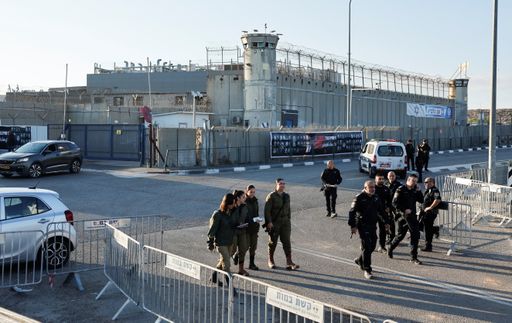
Israeli soldiers stand by truck with Palestinian detainees in Gaza [File] / Reuters

TRT WORLD
02/Q1/2O25


Another Palestinian detainee has died in Israeli custody, according to local media reports.

Hassan Issa al-Qasha’leh, from the city of Rahat in the Negev, died on Thursday inside Beersheba Prison in southern Israel, the official Palestinian news agency Wafa reported.

Al-Qasha’leh had been held in Israeli detention for more than 13 months and was scheduled to be released in six months, the agency said.

The Israeli Prison Service earlier confirmed the death of a Palestinian detainee held under administrative detention, but did not identify him, adding that a special investigation team had been formed and that the cause of death had not yet been determined.

The death comes amid growing reports of deteriorating conditions inside Israeli detention facilities.

TRT World - Another Palestinian detainee dies in Israeli custody as prisoner death toll tops 100


Increasing warnings

Palestinian human rights organisations have warned that thousands of Palestinians are being held under harsh conditions, citing systematic violations including torture, starvation, medical neglect, and physical and sexual abuse.

These groups say such practices have contributed to a rising number of deaths among detainees.

The Palestinian Prisoners’ Media Office said continued policies of isolation, repression and deliberate neglect are having severe consequences for detainees’ physical health and ability to endure imprisonment.

The office held Israel fully responsible for the safety of prisoners and warned of serious repercussions if current policies continue, calling for urgent legal and humanitarian intervention to halt what it described as ongoing violations inside Israeli prisons.

Palestinian authorities estimate that more than 9,300 Palestinians are currently held in Israeli prisons, including more than 50 women and about 350 children.

The figures do not include detainees held in Israeli army camps.

Since October 2023, Palestinian groups say at least 100 Palestinian prisoners have died in Israeli detention.


CIA finds Ukraine did not target Putin residence as claim surfaces after Trump phone row

US intelligence briefs president says no evidence of drone strike on Russian leader as Moscow threats harden talks while Kyiv strongly denies the allegation

Julian E. Barnes, Eric Schmitt, Tyler Pager 
Published 02.01.26

The CIA has determined that Ukraine did not target President Vladimir V. Putin of Russia or one of his residences in an attack this week, according to US officials, rebutting an assertion Putin made in a phone call to President Donald Trump on Monday.

John Ratcliffe, the CIA director, briefed Trump on the finding, a person familiar with the matter said.

Trump has not directly acknowledged the intelligence, but on Wednesday, he posted on social media a link to a New York Post editorial that blamed Putin for standing in the way of a peace deal with Ukraine and cast doubt on the veracity of his claim that he was the target of an attack. On Monday, he had said he was “very angry” about the purported attack when Putin told him about it.

The CIA declined to comment, and the White House referred questions to Trump’s social media post.

Russia had used the claim to threaten to harden its stance in negotiations as thorny issues already appear to be hampering talks to end the war. But it has not presented any clear-cut evidence of the purported drone attack, which it said was aimed at Putin’s residence in the Novgorod region, a rural part of the country.

Instead, the finding by US intelligence officials, which was reported earlier by The Wall Street Journal, aligns with the Ukrainians, who adamantly denied the Russians’ allegations.

In a post on social media, President Volodymyr Zelensky of Ukraine called the claim "a complete fabrication intended to justify additional attacks against Ukraine, including Kyiv, as well as Russia’s own refusal to take necessary steps to end the war".

On Monday, even as Trump said he was angry about the purported attack, he conceded that he had no independent confirmation and that it was “possible” it had not happened.

“It’s a delicate period of time,” he said. “This is not the right time. It’s one thing to be offensive because they’re offensive. It’s another thing to attack his house.”

The episode came shortly after Trump and Zelensky met at Mar-a-Lago, the President’s private club and residence in Florida. The two leaders appeared upbeat on Sunday after meeting, though they appeared to make little progress on two of the biggest obstacles to lasting peace: security guarantees for Ukraine against future Russian aggression and Russia’s demands for Ukraine to cede significant amounts of territory.

Steve Witkoff, Trump’s special envoy, said on Wednesday that he and other senior administration officials had spoken with Rustem Umerov, a top Ukrainian national security official, and other European national security officials about their efforts to end the war.

“We focused on how to move the discussions forward in a practical way on behalf of @POTUS’ peace process, including strengthening security guarantees and developing effective deconfliction mechanisms to help end the war and ensure it does not restart,” he wrote on social media, referring to Trump.

New York Times News Service


Russia hands to US what it says attempted Ukrainian strike on Putin residence


A Russian service member stands next to the remains of a drone, which, according to the Russian Defence Ministry, was downed during the repelling of an alleged Ukrainian attack on the Russian presidential residence in the Novgorod Region, in an unknown location in Russia, in this still image from a video released Dec 31, 2025.
PHOTO: Russian Defence Ministry via Reuters file


PUBLISHED ONJanuary 01, 2026 


MOSCOW — A senior Russian military chief handed to a US military attache on Thursday (Jan 1) what he said was part of a Ukrainian drone containing data he said proved that the Ukrainian military this week had targeted a Russian presidential residence.

Moscow accused Kyiv on Monday of trying to strike a residence of President Vladimir Putin in Russia's northern Novgorod region with 91 long-range attack drones. It said Russia would review its negotiating position in ongoing talks with the US on ending the Ukraine war.

Ukraine and Western countries have disputed Russia's account of the alleged attempted strike.

A video posted on the Russian Defence Ministry's Telegram channel showed Admiral Igor Kostyukov, head of the Main Directorate of the General Staff of Russia's Armed Forces, handing to the US attache what he described as the controlling mechanism of a drone found among downed fragments.

"The decryption of the content of the memory of the navigation controller of the drones carried out by specialists of Russia's special services confirms without question that the target of the attack was the complex of buildings of the Russian president's residence in Novgorod region," Kostyukov said.

"We presume that this measure will do away with any questions and allow for the truth to be established."

The Ministry had earlier posted a statement on Telegram saying its findings would be turned over to the United States.

The Wall Street Journal reported on Wednesday that US national security officials had found Ukraine did not target Putin or one of his residences in a drone strike. Reuters could not immediately verify the report.

US President Donald Trump initially expressed sympathy for the Russian charge, telling reporters on Monday that Putin had informed him of the alleged incident and that he was "very angry" about it.

By Wednesday, Trump appeared more sceptical, sharing on social media a New York Post editorial accusing Russia of blocking peace in Ukraine.

Ukraine has denied carrying out such an attack and described the accusation as part of a Russian disinformation campaign meant to drive a wedge between Kyiv and Washington after a weekend meeting between Trump and Ukraine's President Volodymyr Zelenskiy.

Year of the bizarre: Strange and shocking events of 2025 capture global headlines

Roundup of the year’s strangest news reveals a world full of surprises

Dildar Baykan Atalay and Gizem Nisa Demir |02.01.2026 - TRT/AA


- A look back at 2025 shows a year defined not only by global politics but by weird, unbelievable incidents that stunned audiences worldwide

ANKARA/ISTANBUL

With the new year just beginning, looking back at 2025 reveals a period marked not only by major political developments but also by a remarkable string of strange and unusual events that made headlines around the world.

From an Italian village where getting sick was forbidden to drug-addicted mice in a police evidence locker, and from a thieving monkey lured by coffee to a woman who woke up in her own coffin, these incidents provided moments of astonishment, humor, and sheer disbelief.

January

Italy bans illness while drug-addicted mice raid evidence locker

The year began with some of its most peculiar stories.

In Italy, the small village of Belcastro, with a population of 1,200 and located 28 miles (45 kilometers) from the nearest hospital, saw its local government issue an extraordinary decree: residents were instructed to avoid getting sick.

The ordinance explicitly stated that villagers should steer clear of illnesses requiring emergency medical intervention.

It urged residents to "refrain from potentially harmful behaviors, avoid domestic accidents, not go out too often, not travel or play sports, and instead rest most of the time."

Mayor Antonio Torchia described the act as a "humorous provocation" aimed at exposing the inadequacies of the regional healthcare system. He noted that the roads to the hospital posed "more risk than any disease," highlighting the perilous journey for those in need of care.

Meanwhile, in the US, the Houston Police Department in Texas reported a unique infestation.

An evidence locker containing approximately 180 tons of confiscated narcotics had become the target of mice.

Police officials said they were struggling to combat the "drug-addicted" rodents, which had consumed a significant quantity of the substances.

They emphasized the challenge of the situation, noting that the disposal of the remaining drugs must still adhere to strict environmental procedures.

February


Uninvited guest in a Dutch hotel room

In February, a guest at a hotel near the coast in Vlissingen, Netherlands received a startling surprise.

Upon entering their room, the customer discovered a seal fast asleep on the floor. The guest immediately notified hotel staff about the uninvited visitor.

After being awakened, the seal reportedly became grumpy but was safely handed over to authorities to be released back into its natural habitat.

March

Thief who swallowed earrings valued around $769,000

A brazen heist took place in the US state of Florida in March.

A thief named Jaythan Gilder posed as an assistant to an NBA basketball player to gain access to a special collection at a jewelry store. While distracting the staff, Gilder swallowed a pair of earrings valued at approximately $769,000.

He also stole a ring worth $575,000 before being apprehended shortly after. Gilder was kept under hospital supervision for days until the earrings were recovered through natural means.

Officials confirmed the jewelry was authenticated and returned to the store.

April


Man unknowingly buys his own stolen car; woodpecker 'charged' with vandalism

April brought a case of incredible coincidence in the UK.

A man named Ewan Valentine, whose car had been stolen, unknowingly purchased his own vehicle back.

After reporting the theft to the police, he found what he thought was an identical car for sale online. He didn't suspect anything initially because the license plate had been changed.

However, Valentine grew suspicious over time as he discovered personal belongings in the trunk and found his own home address saved in the car's navigation system.

Across the Atlantic in the US state of Massachusetts, a woodpecker was blamed for causing damage to more than 25 vehicles in a neighborhood. Resident Janelle Favaloro captured a photo of the avian culprit in the act.

In a social media post, she humorously reported the perpetrator: "There's a punk in our neighborhood. The punk has been identified as being 18 to 24 inches tall, dressed in black and white, and wearing a red hat."

The woodpecker primarily targeted reflective surfaces like side-view mirrors and windows. It is believed that the bird, likely in its mating season, was mistaking its own reflection for a rival. In response, some residents began covering their cars to prevent further damage.

May


Monkeys kidnap infants of another species for unknown reasons

In May, researchers from Germany's Max Planck Institute for Animal Behavior made a baffling discovery on Jicaron Island, Panama.

They observed white-faced capuchin monkeys "kidnapping" the infants of another species, howler monkeys, for no apparent reason. Video evidence showed the capuchins snatching the young howler monkeys when they were isolated in the treetops.

Researchers are still unable to explain this behavior but speculate that the capuchins' parental instincts may be misdirected, leading them to "adopt" the young of another species.

June


Hungry elephant helps itself to snacks in Thai market

A wild elephant in Thailand went on a snack run in June.

The owner of a convenience store shared security camera footage of the large animal wandering into his shop. The footage showed the hungry elephant using its trunk to grab and eat snacks from the shelves.

The owner reported that the elephant consumed about nine packs of rice crackers, a sandwich, and several bananas. Staff from a nearby national park were called to help coax the elephant out, and it eventually left the store on its own.

July


'Service with lions' at Chinese restaurant sparks investigation

An unusual dining experience at a restaurant in China's Shanxi province drew media attention in July.

The establishment was reportedly offering an afternoon tea service where, for a fee of 1,078 yuan ($154) for four people, customers could interact with lions. The service also included opportunities for patrons to pet deer and alpacas.

A restaurant employee defended the practice, claiming they had obtained the necessary permits and were "operating like a zoo."

However, the local forestry department issued a statement clarifying that close interaction between humans and such animals is prohibited and announced that an investigation had been launched into the matter.

August

Stolen WWII painting found in real estate ad; zoo asks for pet donations

A long-lost piece of art surfaced in an unexpected place in August.

"Portrait of a Lady," a painting by Italian artist Giuseppe Vittore Ghislandi that was stolen from the Netherlands during World War II, was spotted hanging on the wall of a house in a real estate listing in Mar del Plata, Argentina.

Researchers from the Dutch government's cultural heritage unit said there was "no need to question its authenticity," though formal verification would be required upon recovery.

The painting was later digitally removed from the 3D tour in the online listing.

Argentine police raided the home to find the artwork, which had been missing for over 80 years. While the painting was not found, police seized weapons and carvings that could be useful to the investigation, which is now focused on charges of "concealment and trafficking of the artwork."

In Denmark, the Aalborg Zoo caused a public outcry by announcing that it would accept "pet donations" to feed its predators, such as the European lynx. An announcement on the zoo's Instagram account called on the public to donate "small pets" like chickens, rabbits and guinea pigs, as well as live horses.

The post emphasized that donated animals would be "gently euthanized" by trained staff before being used as food.

"Thus, nothing is wasted, and we ensure the natural behavior, nutrition, and welfare of our predators," the statement said.

The zoo even offered a tax deduction to owners who donated healthy horses shorter than 147 centimeters. The announcement was met with widespread public condemnation.

September

Woman scammed by fake astronaut; grandfather picks up wrong child from daycare

September saw a scam of cosmic proportions in Japan.

An 80-year-old woman on the island of Hokkaido was defrauded after meeting a man on social media who pretended to be an astronaut.

The scammer convinced her that his spaceship was under attack and he urgently needed cash to purchase oxygen. The woman sent him approximately 1 million yen (around $6,377).

In Sydney, Australia, a grandfather experienced a stressful mix-up when he went to pick up his grandchild from daycare. He was mistakenly given the wrong child and went home without realizing the error.

The child's mother discovered the mistake upon their arrival, leading to a panic. The grandfather quickly returned the child to the daycare, resolving the situation. The teacher responsible for the mix-up was suspended and an investigation into the daycare center was initiated.

October

Escaped monkey captured with a cup of coffee

A clever tactic led to the capture of an escaped monkey in the US state of South Carolina.

A spider monkey named "Ava" fled from her owner during an autumn festival in the town of Eutawville. Town officials began searching for the primate after learning she was roaming free.

Although they located Ava quickly, she refused to approach any humans. In a stroke of ingenuity, officials placed a cup of coffee on the ground to pique her curiosity. As Ava approached to investigate the coffee, authorities were able to safely capture her and return her to her owner.

November

Woman declared dead wakes up in coffin

One of the year's most shocking events occurred in Thailand in November.

A 65-year-old woman who had been brought to a funeral home for her own funeral was discovered to be alive.

Staff at the funeral home heard noises coming from her coffin and then noticed her moving. The woman's brother explained that she had been bedridden for the past two years and had stopped breathing two days earlier.

She had been transported 310 miles (499 kilometers) in the coffin for the funeral service. Upon the discovery that she was alive, the woman was immediately rushed to a hospital.

*This article is a special report compiling the most remarkable events that made headlines worldwide in 2025, based on coverage by Anadolu correspondent Dildar Baykan Atalay​​​​​​​*

*Originally written in Turkish, it was later translated and adapted into English by Anadolu correspondent Gizem Nisa Demir*
Japan PM joins fight for more female toilets in parliament

Kelly Ng
BBC
2/1/2026

AFP via Getty Images
Japan's first female leader Sanae Takaichi is among one of 58 women MPs who signed the petition for more female toilets

Japan's Prime Minister Sanae Takaichi is among some 60 female lawmakers petitioning for more women's toilets in the parliament building to match their growing representation in the legislature.

A record 73 women were elected into the 465-seat Lower House in October 2024, exceeding the previous high of 54 in 2009.

One opposition lawmaker, Yasuko Komiyama, said there were often "long queues in front of the restroom... before plenary sessions start", and quoted another MP who said she had "given up" going to the toilet before a session began.

There is one female toilet with two cubicles near the plenary chamber, though the entire building itself has nine female toilets with 22 cubicles.

There are a total of 12 men's toilets with 67 stalls and urinals across the building, according to local media reports.

The current situation is "often inconvenient" because female staff and visitors also share the toilets, said Ms Komiyama from the opposition Constitutional Democratic Party.

"I want to raise my voice and prepare myself for the day when women hold more than 30% of [parliamentary seats] in the future," she wrote in a post on Facebook.

Japan's parliament building was built in 1936, a decade before women were given the right to vote in 1945. The first women were appointed to parliament in 1946.

The parliament building is a sprawling three-storey structure, with a central portion that is nine storeys high. The building occupies 13,356 square metres (143,800 sq ft), the equivalent of about two football pitches, with a total floor area of 53,464 square metres.

"If the administration is serious about promoting women's empowerment, I believe we can count on their understanding and cooperation," Komiyama said, according to Japanese media.

Chair of the Lower House committee Yasukazu Hamada has "expressed a willingness" to consider the proposal for more women's toilets, said an Asahi Shimbun report.

The Japanese government earlier set a target of having 30% of leadership roles across all sectors of society held by women by 2020, but at the end of that year the timeframe was quietly pushed back by a decade.

Women currently hold nearly 16% of the seats in the Lower House and about a third – or 42 out of 125 seats – in the Upper House.

Takaichi, who became Japan's first female leader in October last year, had pledged to raise female representation in her cabinet to levels comparable to Nordic countries, which hold the top spots in terms of female leadership.

But she has appointed just two other women to her 19-member cabinet.

In Japan, the dearth of women's restrooms extends beyond the legislative chamber.

Long lines in front of women's public restrooms are a common sight nationwide.

Former Prime Minister Shigeru Ishiba had said his government would look into "enhancing women's restroom facilities" to make Japan a society where "women can live their lives with peace of mind".

Thursday, January 01, 2026

Trump welcoming 'loyalists with little expertise' for commission on DC projects


The entrance to the "Art and Ideals: President John F. Kennedy" exhibition at the recently renamed Donald J. Trump and John F. Kennedy Memorial Center for the Performing Arts, in Washington, D.C., U.S., December 29, 2025. REUTERS/Tyrone Siu

January 01, 2026

In predominantly Democratic Washington, D.C., President Donald Trump is putting his stamp on a wide range of projects — from a lavish White House ballroom that will replace the recently demolished East Wing to renaming the Kennedy Center the Donald J. Trump and John F. Kennedy Center for the Performing Arts. And according to Washington Post reporters Dan Diamond and Jonathan Edwards, Trump White House officials are "moving to install Trump-aligned appointees to a commission charged by Congress with reviewing Washington's public art and national memorials."

In an article published on New Year's Day 2026, Diamond and Edwards note that Trump's allies are "seeking members likely to clear the way for" his "controversial ballroom and other projects."

"The White House is expected to invite past Trump appointees to rejoin the Commission of Fine Arts, according to three people who spoke on the condition of anonymity to discuss those plans," the Post journalists explain. "Trump officials have described the move as returning former members to uncompleted four-year terms that were cut short by the Biden Administration, the people said. It is not yet clear whether those former members — architectural critic Justin Shubow, developer and designer Rodney Mims Cook Jr., sculptor and painter Chas Fagan, landscape architect Perry Guillot and architect Steven Spandle — would accept the invitation."

Diamond and Edwards report that according to Post sources, the commission is prioritizing loyalty to Trump over experience.

"White House officials have also considered appointing Trump loyalists with little formal arts expertise, according to one of the people and another who spoke on the condition of anonymity to discuss private conversations," the Post journalists note. "The commission faces intensifying scrutiny over the president's building agenda, which includes a proposed 90,000-square-foot ballroom addition to the White House that is now the subject of a legal challenge."

Diamond and Edwards add, "Beyond the ballroom, the commission is expected to review future projects that would shape Washington's landscape, including a planned triumphal arch."

Read Dan Diamond and Jonathan Edwards' full article for The Washington Post at this link (subscription required).


Neuroscientist shatters MAGA’s testosterone claim

Alex Jones at The People's Convention in Detroit on June 16, 2024 (Gage Skidmore/Flickr)


January 01, 2026
ALTERNET

In the Manosphere, a variety of anti-feminist ideologies — from PUAs (pickup artists) to MGTOW (Men Going Their Own Way) to incels — often accuse feminists and progressives of trying to make men less masculine. And a conspiracy theory pushed by Infowars' Alex Jones and others on the far right claims that the left, in its quest for political dominance, is using soy products to decrease men's testosterone and make them weak and passive. "Soy boys," Jones contends, are effeminate progressive males and the result of a leftist war on masculinity.

But neuroscientist Robert Sapolsky, in an article published by the New York Times on New Year's Day 2026, stresses that high levels of testosterone aren't necessarily synonymous with masculine traits.

"In particularly prickly corners of MAGA World," Sapolsky explains, "a low-blow way of dissing the men you despise — often left-leaning guys with a fondness for empathy, equality, even democracy — is to charge them with having low levels of testosterone. Take Elon Musk, who, a while back, reposted a screed about how 'low T' men can't think freely because they 'can’t defend themselves physically.' Or consider the 'soy boy' insult popular a few years ago in the same circles, based on the false idea that chemical compounds in soy feminize men's hormonal makeup."

However, Sapolsky — a biology professor at Stanford University in California — says that extensive scientific research isn't consistent with MAGA's "soy boy" claims.

"Beyond my own research," Sapolsky notes, "decades of data show that testosterone does not ensure dominance, nor does it act as a straightforward trigger of aggression. This may come as a surprise. Males of endless species, including us, tend to have higher testosterone levels and to be more aggressive than females; aggression and testosterone levels rise in males at puberty; and males of species that compete for territories annually show increased aggression and testosterone levels at those times."

Sapolsky adds, "Note, however, that there's some evidence that the causality could run in the other direction: Engaging in aggressive behaviors may trigger a spike in testosterone."

Sapolsky points out that "within normal ranges," testosterone levels "are not strongly predictive of aggression."

"Scientists now believe that testosterone makes people and animals more sensitive to threats to their status — to the point of perceiving threats that are imagined and amplifying the aggressive response to such threats," according to the neuroscientist. "For instance, a male impala with high testosterone may be more sensitized to challenges to his territory, attacking an interloper when it comes within 100 yards of him, instead of the usual 50…. If society is riddled with aggression, don't blame testosterone; blame us for being too prone to dole out status for aggression."

Read Robert Sapolsky's full New York Times article at this link (subscription required).
Christian leader debunks MAGA claim that America was 'intended to be a theocracy'


Alex Henderson
January 01, 2026
ALTERNET

When Vice President JD Vance spoke at Turning Point USA's recent AmericaFest 2025 convention in Phoenix, he told the MAGA crowd that the United States "always will be a Christian nation." And Vance isn't the only MAGA Republican who is claiming that there is no separation of church and state in the U.S. Constitution.

Many Christian nationalists are claiming that the Constitution was designed to be a religious document even though the First Amendment clearly states, "Congress shall make no law respecting an establishment of religion or prohibiting the free exercise thereof." The First Amendment promises freedom of religion, but it also forbids government to give one religion preferential treatment over another.

In an op-ed published by The Philadelphia Inquirer on New Year's Day 2026, a Baptist minister, the Rev. Michel J. Faulkner, debunks the "Christian nation" argument coming from Vance and other Christian nationalists.

"America was shaped by Judeo-Christian principles, but it was never intended to be a theocracy," argues Faulkner, who chairs of the Philadelphia Council of Clergy's board of directors. "America's unity is powerful precisely because we do not have a state religion. Faith compelled by law is no faith at all. Genuine belief cannot be coerced; it must be chosen. The Gospel advances by witness, persuasion, and sacrificial love, not by legislation or force."

The 68-year-old Faulkner has a background in both sports and religion. In the early 1980s, he played American football for the New York Jets. And he has a connection to the Religious Right: After meeting the Moral Majority's Rev. Jerry Falwell Sr. in 1985, Faulkner, a registered Republican, worked at Falwell's Liberty University in Lynchburg, Virginia.

Yet Faulkner rejects the Christian nationalist claim that the U.S. government was meant to be operated as a theocracy.

"I say this as a Christian and a follower of Jesus Christ: The church does not need the power of the state to fulfill its mission," Faulkner continues writes. "History shows that when the church weds itself too closely to political power, it loses its prophetic voice and relinquishes its spiritual authority. America is not the Kingdom of God, and it was never meant to be…. If we confuse America with the Kingdom of God, we will ultimately diminish both — robbing the nation of its moral responsibility and the Gospel of its eternal power."

The Rev. Michel J. Faulkner's full op-ed for The Philadelphia Inquirer is available at this link (subscription required).