AS IT HAPPENED
It’s possible that I shall make an ass of myself. But in that case one can always get out of it with a little dialectic. I have, of course, so worded my proposition as to be right either way (K.Marx, Letter to F.Engels on the Indian Mutiny)
Wednesday, February 11, 2026
Why scientists warn of privately funded geoengineering
As global heating worsens, interest in solar engineering is rising, including from private companies and investors. But the technique remains controversial and lacks regulation.
The planet is heating up faster than expected. Greenhouse gas concentrations continue to rise at record rates, leaving the world off track to limit warming below 2 degrees Celsius (3.6 degrees Fahrenheit) above pre-industrial levels. The latest data shows 2025 was the third hottest year on record.
That growing gap between climate targets and reality is fueling renewed interest in geoengineering — interventions that intentionally alter the Earth's climate system. Among them is solar geoengineering, which aims to cool the planet by reflecting sunlight back into space.
The technology remains largely experimental and could have far-reaching social, political, and environmental impacts if deployed at scale, according to scientists.
Until recently, most solar geoengineering research was carried out by nonprofits and public research institutions, funded by governments and philanthropies. But that landscape is shifting.
Over the past three years, two commercial startups — Israeli-US Stardust Solutions and California-based Make Sunsets — have emerged. As reported by media outlet Heatmap News, Stardust Solutions recently announced it had raised $60 million (around €52 million) in venture capital.
Can solar geoengineering cool the planet 09:27
Yet scientists and researchers, even those who support solar geoengineering, are concerned about for-profit companies entering a field that lacks proper regulation.
"What is worrying is private money coming in that's not accountable to anyone, in sums that potentially could far exceed what has been on the table thus far from governments," said Cynthia Scharf, a senior climate fellow at independent think tank, the Center for Future Generations.
What is stratospheric aerosol injection?
The most widely studied solar engineering technique is stratospheric aerosol injection (SAI).
It involves the injection of highly reflective particles into the stratosphere — the atmospheric layer between 4 to 30 miles (6 to 50 kilometers) above Earth's surface — to reflect a small amount of sunlight back into space.
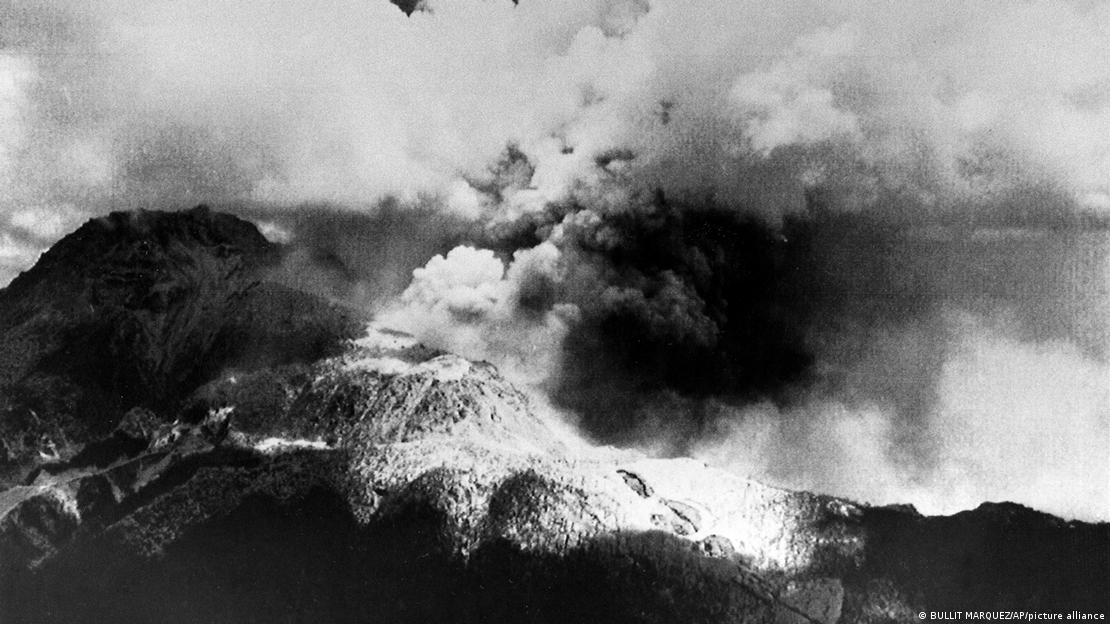
This mimics the cooling effects of volcanic eruptions, which spew droplets of sulfur gases into the stratosphere. These gases mix with water vapor to form tiny reflective particles called aerosols. The 1991 eruption of Mount Pinatubo in the Philippines resulted in global cooling of 0.5 C for a few years.
So far, SAI has mostly been tested in labs and computer simulations. Since 2008, two outdoor experiments involving the release of small amounts of aerosols have been completed in Russia and the UK. Other planned university-led experiments in the UK and Sweden were canceled following opposition from civil society and community groups.

Currently, there is no specific international treaty to regulate SAI research or deployment, and most governments have no regulations either. Some experts have called for an international non-use agreement.
Ocean iron fertilization, another geoengineering method with potentially global effects, was regulated in 2013 following strong opposition from environmental groups and governments. By adding iron to the ocean, the technique aims to boost carbon-absorbing plankton, but risks disrupting delicate marine ecosystems. While research is still permitted, commercialization is not.
Before the ban, several US-based startups had announced their intentions to invest in the technology and start selling carbon credits.
Edited by: Tamsin Walker
Naomi Mihara Freelance multimedia journalist reporting on health, environment, science and global development.
DW
February 8, 2026
As the climate crisis intensifies, interest in solar engineering is increasing, including among private companies and investors. But the technique is controversial and lacks regulation.
Startups are looking into releasing aerosols into the stratosphere to reflect sunlight and reduce global temperatures
Image: ingimage/IMAGO
As global heating worsens, interest in solar engineering is rising, including from private companies and investors. But the technique remains controversial and lacks regulation.
The planet is heating up faster than expected. Greenhouse gas concentrations continue to rise at record rates, leaving the world off track to limit warming below 2 degrees Celsius (3.6 degrees Fahrenheit) above pre-industrial levels. The latest data shows 2025 was the third hottest year on record.
That growing gap between climate targets and reality is fueling renewed interest in geoengineering — interventions that intentionally alter the Earth's climate system. Among them is solar geoengineering, which aims to cool the planet by reflecting sunlight back into space.
The technology remains largely experimental and could have far-reaching social, political, and environmental impacts if deployed at scale, according to scientists.
Until recently, most solar geoengineering research was carried out by nonprofits and public research institutions, funded by governments and philanthropies. But that landscape is shifting.
Over the past three years, two commercial startups — Israeli-US Stardust Solutions and California-based Make Sunsets — have emerged. As reported by media outlet Heatmap News, Stardust Solutions recently announced it had raised $60 million (around €52 million) in venture capital.
Can solar geoengineering cool the planet 09:27
Yet scientists and researchers, even those who support solar geoengineering, are concerned about for-profit companies entering a field that lacks proper regulation.
"What is worrying is private money coming in that's not accountable to anyone, in sums that potentially could far exceed what has been on the table thus far from governments," said Cynthia Scharf, a senior climate fellow at independent think tank, the Center for Future Generations.
What is stratospheric aerosol injection?
The most widely studied solar engineering technique is stratospheric aerosol injection (SAI).
It involves the injection of highly reflective particles into the stratosphere — the atmospheric layer between 4 to 30 miles (6 to 50 kilometers) above Earth's surface — to reflect a small amount of sunlight back into space.
This mimics the cooling effects of volcanic eruptions, which spew droplets of sulfur gases into the stratosphere. These gases mix with water vapor to form tiny reflective particles called aerosols. The 1991 eruption of Mount Pinatubo in the Philippines resulted in global cooling of 0.5 C for a few years.
So far, SAI has mostly been tested in labs and computer simulations. Since 2008, two outdoor experiments involving the release of small amounts of aerosols have been completed in Russia and the UK. Other planned university-led experiments in the UK and Sweden were canceled following opposition from civil society and community groups.

When Mount Pinatubo erupted it cooled the planet as it injected millions of tons of aerosols into the atmosphere
Image: BULLIT MARQUEZ/AP/picture alliance
Make Sunsets began launching balloons filled with sulfur dioxide over Mexico and the US in 2022. As a result, the Mexican government issued a ban on solar geoengineering deployments above its territory.
The company says on its website it has so far released 213 balloons, selling them to companies and individuals as "cooling credits." It remains unclear who is buying the credits, but the quantities are too small to have any measurable benefit to the climate, according to Silverlining, a nonprofit focused on near-term climate risks. DW reached out to Make Sunsets for comment, but the company hadn't responded by time of publication.
But a large-scale SAI deployment would entail sending high-altitude aircraft or balloons to release the particles continuously for decades, since aerosols typically remain in the stratosphere for only months to a few years. Once injected, they would be carried around the globe by the jet stream, dispersing widely but not evenly.
"There'll be a global decrease of maybe half a degree Celsius, but that decrease will be very patchy," said James Dyke, Associate Professor in Earth System Science at the University of Exeter. It could also cause unpredictable precipitation patterns and weather extremes in different parts of the world, he added.
The need for transparency in research
Much of the SAI research to date has focused on injection of sulfate particles — the same type emitted by volcanoes. However, there are side effects associated with sulfate aerosols, including possible damage to the ozone layer and increased air pollution. This could in turn lead to higher rates of respiratory illnesses.
"We don't believe this is a safe or responsible option for policymakers to consider," said Stardust Solutions CEO Yanai Yedvab in an emailed response.
Stardust Solutions claims it has developed a different kind of particle, made of components that are "abundant in nature, chemically inert in the stratosphere, and safe for humans and ecosystems."
The company has so far not released any information about the composition of the particle it is developing. Yedvab said they will begin publishing research this year. But some scientists are skeptical about the safety claims.
"Even if you put something into the atmosphere which is safe in the stratosphere, by the time it's processed and come down to the lower atmosphere, it may be an active particle that's dangerous," said David Keith, a professor of geophysical science at the University of Chicago.
Yedvab said no outdoor testing will take place for now.
Balancing private interests and global safety
Stardust Solutions sees its role as "technological enablers," providing governments and the international community with the tools and evidence needed to make informed decisions amid an escalating climate crisis.
"The last thing anyone who takes this crisis seriously should want is for governments to realize in a decade that they need to deploy SRT (sunlight reflection technology) and for the research, engineering, and de-risking not to be complete," said Yedvab.
But Keith says technology as complex and uncertain as SAI — and marked by significant "unknown unknowns" — requires public confidence above all else.
"I think free-market capital competition can be great when what you're producing is something that's easy to test," he said. "But for things where the whole issue is trust … I'm much more skeptical about the role of private money."
Stardust Solutions will be seeking a patent to claim intellectual property rights for its particle, and recent reporting by energy and environment-focused news outlet E&E News revealed the company has been working with a law firm to lobby the US government.
"We've been informing policymakers about our work and the need for appropriate and robust oversight of sunlight reflection research and development," said Yedvab.
While US President Donald Trump's anti-climate stance has been underscored by his decision to withdraw the US from dozens of major climate pacts, it is unclear what the administration's thoughts are on solar geoengineering.
Yedvab said Stardust Solutions would only work with governments that have "adequate regulatory frameworks, which meet high global standards," and that any discussion and decision on demonstrations and deployment would be conducted by governments and policymakers.
Make Sunsets began launching balloons filled with sulfur dioxide over Mexico and the US in 2022. As a result, the Mexican government issued a ban on solar geoengineering deployments above its territory.
The company says on its website it has so far released 213 balloons, selling them to companies and individuals as "cooling credits." It remains unclear who is buying the credits, but the quantities are too small to have any measurable benefit to the climate, according to Silverlining, a nonprofit focused on near-term climate risks. DW reached out to Make Sunsets for comment, but the company hadn't responded by time of publication.
But a large-scale SAI deployment would entail sending high-altitude aircraft or balloons to release the particles continuously for decades, since aerosols typically remain in the stratosphere for only months to a few years. Once injected, they would be carried around the globe by the jet stream, dispersing widely but not evenly.
"There'll be a global decrease of maybe half a degree Celsius, but that decrease will be very patchy," said James Dyke, Associate Professor in Earth System Science at the University of Exeter. It could also cause unpredictable precipitation patterns and weather extremes in different parts of the world, he added.
The need for transparency in research
Much of the SAI research to date has focused on injection of sulfate particles — the same type emitted by volcanoes. However, there are side effects associated with sulfate aerosols, including possible damage to the ozone layer and increased air pollution. This could in turn lead to higher rates of respiratory illnesses.
"We don't believe this is a safe or responsible option for policymakers to consider," said Stardust Solutions CEO Yanai Yedvab in an emailed response.
Stardust Solutions claims it has developed a different kind of particle, made of components that are "abundant in nature, chemically inert in the stratosphere, and safe for humans and ecosystems."
The company has so far not released any information about the composition of the particle it is developing. Yedvab said they will begin publishing research this year. But some scientists are skeptical about the safety claims.
"Even if you put something into the atmosphere which is safe in the stratosphere, by the time it's processed and come down to the lower atmosphere, it may be an active particle that's dangerous," said David Keith, a professor of geophysical science at the University of Chicago.
Yedvab said no outdoor testing will take place for now.
Balancing private interests and global safety
Stardust Solutions sees its role as "technological enablers," providing governments and the international community with the tools and evidence needed to make informed decisions amid an escalating climate crisis.
"The last thing anyone who takes this crisis seriously should want is for governments to realize in a decade that they need to deploy SRT (sunlight reflection technology) and for the research, engineering, and de-risking not to be complete," said Yedvab.
But Keith says technology as complex and uncertain as SAI — and marked by significant "unknown unknowns" — requires public confidence above all else.
"I think free-market capital competition can be great when what you're producing is something that's easy to test," he said. "But for things where the whole issue is trust … I'm much more skeptical about the role of private money."
Stardust Solutions will be seeking a patent to claim intellectual property rights for its particle, and recent reporting by energy and environment-focused news outlet E&E News revealed the company has been working with a law firm to lobby the US government.
"We've been informing policymakers about our work and the need for appropriate and robust oversight of sunlight reflection research and development," said Yedvab.
While US President Donald Trump's anti-climate stance has been underscored by his decision to withdraw the US from dozens of major climate pacts, it is unclear what the administration's thoughts are on solar geoengineering.
Yedvab said Stardust Solutions would only work with governments that have "adequate regulatory frameworks, which meet high global standards," and that any discussion and decision on demonstrations and deployment would be conducted by governments and policymakers.
Currently, there is no specific international treaty to regulate SAI research or deployment, and most governments have no regulations either. Some experts have called for an international non-use agreement.
Ocean iron fertilization, another geoengineering method with potentially global effects, was regulated in 2013 following strong opposition from environmental groups and governments. By adding iron to the ocean, the technique aims to boost carbon-absorbing plankton, but risks disrupting delicate marine ecosystems. While research is still permitted, commercialization is not.
Before the ban, several US-based startups had announced their intentions to invest in the technology and start selling carbon credits.
Edited by: Tamsin Walker
Naomi Mihara Freelance multimedia journalist reporting on health, environment, science and global development.
Corruption watchdog warns graft on the rise globally

The index recorded a four-point decline in France, falling to 66 over the past decade, citing falling corruption enforcement and growing risks of collusion between officials and private interests.
The report did hail the conviction of former French President Nicolas Sarkozy over the receipt of illicit funds, including from the late Libyan leader Moammar Gadhafi, which were used to help Sarkozy campaign for the presidency.
"Many [European] countries were leading the fight against corruption," Valerian lamented, noting that the EU's Anti-Corruption Directive has been watered down and won't allow Europe to "strengthen efforts against graft."

Where else is momentum against corruption being lost?
The report noted that 50 countries have recorded significant drops in the rankings since 2012, notably Turkey, Hungary and Nicaragua, due to democratic backsliding, weak institutions and rule of law, cronyism and rent-seeking.
Corruption is increasingly opening the door for organized crime to penetrate Latin American politics, Transparency International warned, noting that even Costa Rica and Uruguay — long considered the region's strongest democracies with top CPI rankings — are now experiencing the kinds of corruption pressures seen in Colombia, Mexico, and Brazil.
The report said the declines are "sharp, enduring and difficult to reverse, as corruption becomes systemic and deeply embedded in both political and administrative structures."
Valerian expanded on this to DW: "The more concentrated your power is, the higher the abuse of power. And the more secretive your power is, the easier it is to abuse that power."
The new index doesn't reflect the latest tranche of Jeffrey Epstein files, released last month, which have implicated officials in several countries in alleged wrongdoing, corruption or compromising ties to the convicted pedophile.
The anti-corruption body also lamented political interference with the operations of non-governmental organizations (NGOs), especially those critical of the government of the day. The report noted an increase in crackdowns and funding cuts for NGOs in Georgia, Indonesia and Peru.
In certain countries, the report warned, it is becoming harder for independent journalists, civil society groups and whistleblowers to speak out against corruption.
Ukraine's anti‑graft push drew praise, even as the country continues to fight off Russian aggression. Recent defense‑sector scandals show that corruption remains a problem.
Yet the fact that these cases are surfacing publicly and moving to prosecution indicates that the country's new anti‑corruption framework is beginning to take hold, the report said.
"One country — Ukraine — has decided to fight against corruption, while Russia chose the opposite path," Valerian said, noting how Moscow had scrapped laws meant to prevent and punish graft.
Russia remains near the bottom of the CPI, scoring 22, while Ukraine's score was 36, a rise of 7 points over the past decade.
How do the lowest‑ranked countries fare?
Transparency International also noted that authoritarian regimes, including those in Venezuela and Azerbaijan, largely perform the worst in the rankings, as "corruption is systemic and manifests at every level."
In the latest index, more than two-thirds of nations fell below 50, which the report said indicated "serious corruption problems in most parts of the planet."
It noted that countries ranked under 25 are mostly affected by conflict and highly repressive regimes, including Libya, Yemen and Eritrea, which all scored 13, along with Somalia and South Sudan, which both scored nine.
On the positive side, the report highlighted how many countries have climbed from the bottom toward the middle of the ranking, including Albania, Angola, the Ivory Coast, Laos, Senegal, Ukraine and Uzbekistan.
It also noted long-term gains from nations with already high scores, including Estonia, South Korea, Bhutan and Seychelles.
Edited by: Ashutosh Pandey
Nik Martin is one of DW's team of business reporters.
DW
February 10, 2026
Once seen as anti-graft strongholds, the US, UK, Canada and Sweden are slipping into decline due to a lack of political leadership, Transparency International's Corruption Perception Index has revealed.
The global average perceived corruption score stands at 42 out of 100, its lowest level in more than a decade
Once seen as anti-graft strongholds, the US, UK, Canada and Sweden are slipping into decline due to a lack of political leadership, Transparency International's Corruption Perception Index has revealed.
The global average perceived corruption score stands at 42 out of 100, its lowest level in more than a decade
Image: Thomas Trutschel/photothek/picture alliance
Even the world's established democracies are increasingly sliding into corruption. Transparency International's 2025 Corruption Perceptions Index (CPI), published on Tuesday, shows a troubling erosion of leadership in combating corruption in the West.
The 31st edition of the CPI ranks more than 180 countries and territories on perceived levels of public sector corruption, showing declines for longstanding strong performers, including the United States, Canada, the United Kingdom and Sweden.
The 2025 index found that the number of countries scoring above 80 — once a benchmark for clean governance — has shrunk dramatically from 12 a decade ago to just five this year.
Although Denmark achieved the highest score (89) for the eighth year in a row, closely followed by Finland (88) and Singapore (84), Transparency International decried a lack of "bold leadership" globally, which it said was weakening efforts to tackle graft.
"Several governments no longer see the fight against corruption as a priority," Francois Valerian, chair of Transparency International, told DW. "Governments may have had the impression that ... they had done everything to address corruption and had to turn to other priorities."
Why is the US falling in global corruption scores?
The CPI index, which ranks each nation on a scale from 0 (highly corrupt) to 100 (very clean), shows the US dropped to its lowest-ever score of 64, down 10 points from 2016.
Transparency International noted that the US political climate has been deteriorating for more than a decade and said the latest data doesn't fully reflect developments since US President Donald Trump returned to the White House last year.
Although the US ranking stayed stable for most of the Biden administration, previous reports highlighted high-profile ethics scandals at the US Supreme Court as responsible for a large drop last year.
"We can't blame everything on Trump because there were concerning reforms that started before him," Valerian told DW.
The report did, however, cite the "use of public office to target and restrict independent voices," ... "the normalisation of conflicted and transactional politics," ... "the politicisation of prosecutorial decision making ... and "actions that undermine judicial independence." The anti-corruption body said these moves "all send a dangerous signal that corrupt practices are acceptable."
Even the world's established democracies are increasingly sliding into corruption. Transparency International's 2025 Corruption Perceptions Index (CPI), published on Tuesday, shows a troubling erosion of leadership in combating corruption in the West.
The 31st edition of the CPI ranks more than 180 countries and territories on perceived levels of public sector corruption, showing declines for longstanding strong performers, including the United States, Canada, the United Kingdom and Sweden.
The 2025 index found that the number of countries scoring above 80 — once a benchmark for clean governance — has shrunk dramatically from 12 a decade ago to just five this year.
Although Denmark achieved the highest score (89) for the eighth year in a row, closely followed by Finland (88) and Singapore (84), Transparency International decried a lack of "bold leadership" globally, which it said was weakening efforts to tackle graft.
"Several governments no longer see the fight against corruption as a priority," Francois Valerian, chair of Transparency International, told DW. "Governments may have had the impression that ... they had done everything to address corruption and had to turn to other priorities."
Why is the US falling in global corruption scores?
The CPI index, which ranks each nation on a scale from 0 (highly corrupt) to 100 (very clean), shows the US dropped to its lowest-ever score of 64, down 10 points from 2016.
Transparency International noted that the US political climate has been deteriorating for more than a decade and said the latest data doesn't fully reflect developments since US President Donald Trump returned to the White House last year.
Although the US ranking stayed stable for most of the Biden administration, previous reports highlighted high-profile ethics scandals at the US Supreme Court as responsible for a large drop last year.
"We can't blame everything on Trump because there were concerning reforms that started before him," Valerian told DW.
The report did, however, cite the "use of public office to target and restrict independent voices," ... "the normalisation of conflicted and transactional politics," ... "the politicisation of prosecutorial decision making ... and "actions that undermine judicial independence." The anti-corruption body said these moves "all send a dangerous signal that corrupt practices are acceptable."

Trump has created a visa fast lane for wealthy foreigners for a $1 million fee, which critics say is open to abuse
Image: Saulo Angelo/ZUMA/picture alliance
Since beginning his second term, Trump has taken action that aligns with those concerns, including dismantling public broadcasters like Voice of America and weaponizing government agencies against political opponents, including the Biden administration and other top US officials.
He also been accused of undermining judicial independence and weakening enforcement of the Foreign Corrupt Practices Act (FCPA), which was originally passed to stop US citizens and entities from bribing foreign government officials to win contracts.
In an interview with DW, Valerian criticized Trump's use of an executive order to revise the FCPA and turn it into a national security tool. He also singled out the Republican president's support for cryptocurrencies like Bitcoin — often used for money-laundering — and a fast-track immigration program for wealthy foreigners, dubbed by critics the Trump Gold Card.
"Based on our international experience, such [visa] schemes attract corrupt people and may also attract criminals," he said.
Why is Europe's anti‑corruption drive stalling?
Over the same decade, the largest drop in perceived corruption in the West was in the UK. The country has fallen 11 points to 70, which Transparency International said was linked to ongoing failures to enforce ethical standards for ministers, lawmakers and other government officials.
It also cited COVID-19 procurement scandals, where people close to power were able to secure lucrative contracts to supply personal protective equipment (PPE) with little scrutiny.
Other Western nations to see large ranking drops over the past 10 years are New Zealand, down nine points to 81, Sweden, which dropped eight points to 80 and Canada, which fell seven points to 75. Germany's decline over the past 10 years is a more modest four points to 77. The country rose 2 points from last year.
Since beginning his second term, Trump has taken action that aligns with those concerns, including dismantling public broadcasters like Voice of America and weaponizing government agencies against political opponents, including the Biden administration and other top US officials.
He also been accused of undermining judicial independence and weakening enforcement of the Foreign Corrupt Practices Act (FCPA), which was originally passed to stop US citizens and entities from bribing foreign government officials to win contracts.
In an interview with DW, Valerian criticized Trump's use of an executive order to revise the FCPA and turn it into a national security tool. He also singled out the Republican president's support for cryptocurrencies like Bitcoin — often used for money-laundering — and a fast-track immigration program for wealthy foreigners, dubbed by critics the Trump Gold Card.
"Based on our international experience, such [visa] schemes attract corrupt people and may also attract criminals," he said.
Why is Europe's anti‑corruption drive stalling?
Over the same decade, the largest drop in perceived corruption in the West was in the UK. The country has fallen 11 points to 70, which Transparency International said was linked to ongoing failures to enforce ethical standards for ministers, lawmakers and other government officials.
It also cited COVID-19 procurement scandals, where people close to power were able to secure lucrative contracts to supply personal protective equipment (PPE) with little scrutiny.
Other Western nations to see large ranking drops over the past 10 years are New Zealand, down nine points to 81, Sweden, which dropped eight points to 80 and Canada, which fell seven points to 75. Germany's decline over the past 10 years is a more modest four points to 77. The country rose 2 points from last year.
The index recorded a four-point decline in France, falling to 66 over the past decade, citing falling corruption enforcement and growing risks of collusion between officials and private interests.
The report did hail the conviction of former French President Nicolas Sarkozy over the receipt of illicit funds, including from the late Libyan leader Moammar Gadhafi, which were used to help Sarkozy campaign for the presidency.
"Many [European] countries were leading the fight against corruption," Valerian lamented, noting that the EU's Anti-Corruption Directive has been watered down and won't allow Europe to "strengthen efforts against graft."

The index shows that more than two thirds of countries are failing to keep corruption under control
Image: Thomas Imo/photothek/picture alliance
Where else is momentum against corruption being lost?
The report noted that 50 countries have recorded significant drops in the rankings since 2012, notably Turkey, Hungary and Nicaragua, due to democratic backsliding, weak institutions and rule of law, cronyism and rent-seeking.
Corruption is increasingly opening the door for organized crime to penetrate Latin American politics, Transparency International warned, noting that even Costa Rica and Uruguay — long considered the region's strongest democracies with top CPI rankings — are now experiencing the kinds of corruption pressures seen in Colombia, Mexico, and Brazil.
The report said the declines are "sharp, enduring and difficult to reverse, as corruption becomes systemic and deeply embedded in both political and administrative structures."
Valerian expanded on this to DW: "The more concentrated your power is, the higher the abuse of power. And the more secretive your power is, the easier it is to abuse that power."
The new index doesn't reflect the latest tranche of Jeffrey Epstein files, released last month, which have implicated officials in several countries in alleged wrongdoing, corruption or compromising ties to the convicted pedophile.
The anti-corruption body also lamented political interference with the operations of non-governmental organizations (NGOs), especially those critical of the government of the day. The report noted an increase in crackdowns and funding cuts for NGOs in Georgia, Indonesia and Peru.
In certain countries, the report warned, it is becoming harder for independent journalists, civil society groups and whistleblowers to speak out against corruption.
Ukraine's anti‑graft push drew praise, even as the country continues to fight off Russian aggression. Recent defense‑sector scandals show that corruption remains a problem.
Yet the fact that these cases are surfacing publicly and moving to prosecution indicates that the country's new anti‑corruption framework is beginning to take hold, the report said.
"One country — Ukraine — has decided to fight against corruption, while Russia chose the opposite path," Valerian said, noting how Moscow had scrapped laws meant to prevent and punish graft.
Russia remains near the bottom of the CPI, scoring 22, while Ukraine's score was 36, a rise of 7 points over the past decade.
How do the lowest‑ranked countries fare?
Transparency International also noted that authoritarian regimes, including those in Venezuela and Azerbaijan, largely perform the worst in the rankings, as "corruption is systemic and manifests at every level."
In the latest index, more than two-thirds of nations fell below 50, which the report said indicated "serious corruption problems in most parts of the planet."
It noted that countries ranked under 25 are mostly affected by conflict and highly repressive regimes, including Libya, Yemen and Eritrea, which all scored 13, along with Somalia and South Sudan, which both scored nine.
On the positive side, the report highlighted how many countries have climbed from the bottom toward the middle of the ranking, including Albania, Angola, the Ivory Coast, Laos, Senegal, Ukraine and Uzbekistan.
It also noted long-term gains from nations with already high scores, including Estonia, South Korea, Bhutan and Seychelles.
Edited by: Ashutosh Pandey
Nik Martin is one of DW's team of business reporters.
US scores worst-ever result in corruption index as democracies backslide
Anti-graft watchdog Transparency International (TI) has warned that corruption is worsening in democracies worldwide and said the United States had fallen to its lowest-ever score on the 2025 Corruption Perceptions Index.
Issued on: 11/02/2026 - RFI
The Berlin-based TI said the global average score had fallen to its lowest level in more than a decade.
US President Donald Trump, since returning to the White House early last year, has upended domestic and foreign politics while ramping up pressure on institutions ranging from universities to the Federal Reserve.
Fed Chairman Jerome Powell is currently under investigation by Trump's Department of Justice after resisting pressure from the president to reduce interest rates.
TI raised concerns over "actions targeting independent voices and undermining judicial independence" in the US.
"The temporary freeze and weakening of enforcement of the Foreign Corrupt Practices Act signal tolerance for corrupt business practices," the watchdog's research says.
The Trump administration's gutting of overseas aid has also "weakened global anti-corruption efforts", it added.
The group's index assigns a score between zero (highly corrupt) and 100 (very clean), based on data reflecting the assessments of experts and business executives.
Data sources have previously included the World Economic Forum and the Economist Intelligence Unit.
Global average lowest in a decade
Overall, the number of countries scoring above 80 has shrunk from 12 a decade ago to just five this year.
In particular, there is a worrying trend of democracies seeing worsening perceived corruption – from the United States (64), Canada (75) and New Zealand (81), to various parts of Europe, like the United Kingdom (70), France (66) and Sweden (80).
The global average score was 42, its lowest level in more than 10 years.
"The vast majority of countries are failing to keep corruption under control," the report said, with 122 countries out of 180 posting scores under 50.
The US case illustrates a trend in democracies experiencing a "decline in performance" in battling corruption, according to the report, a phenomenon it also said was apparent in the UK and France.
While such countries are still near the top of the index, "corruption risks have increased" due to weakening independent checks, gaps in legislation and inadequate enforcement.
"Several have also experienced strains to their democracies, including political polarisation and the growing influence of private money on decision-making," the report noted.
Protecting civic space
The report also pointed out that corruption tends to be tackled better in countries where civic space is guaranteed and protected.
"Those where the freedoms of expression, assembly and association are duly safeguarded are generally more resilient against corruption and score better on the CPI," the report said.
But countries where these freedoms are lacking are more likely to lose control of corruption: 36 of the 50 countries where the CPI scores have significantly declined have also seen a reduction in civic space.


Anti-graft watchdog Transparency International (TI) has warned that corruption is worsening in democracies worldwide and said the United States had fallen to its lowest-ever score on the 2025 Corruption Perceptions Index.
Issued on: 11/02/2026 - RFI
The Berlin-based TI said the global average score had fallen to its lowest level in more than a decade.
US President Donald Trump, since returning to the White House early last year, has upended domestic and foreign politics while ramping up pressure on institutions ranging from universities to the Federal Reserve.
Fed Chairman Jerome Powell is currently under investigation by Trump's Department of Justice after resisting pressure from the president to reduce interest rates.
TI raised concerns over "actions targeting independent voices and undermining judicial independence" in the US.
"The temporary freeze and weakening of enforcement of the Foreign Corrupt Practices Act signal tolerance for corrupt business practices," the watchdog's research says.
The Trump administration's gutting of overseas aid has also "weakened global anti-corruption efforts", it added.
The group's index assigns a score between zero (highly corrupt) and 100 (very clean), based on data reflecting the assessments of experts and business executives.
Data sources have previously included the World Economic Forum and the Economist Intelligence Unit.
Global average lowest in a decade
Overall, the number of countries scoring above 80 has shrunk from 12 a decade ago to just five this year.
In particular, there is a worrying trend of democracies seeing worsening perceived corruption – from the United States (64), Canada (75) and New Zealand (81), to various parts of Europe, like the United Kingdom (70), France (66) and Sweden (80).
The global average score was 42, its lowest level in more than 10 years.
"The vast majority of countries are failing to keep corruption under control," the report said, with 122 countries out of 180 posting scores under 50.
The US case illustrates a trend in democracies experiencing a "decline in performance" in battling corruption, according to the report, a phenomenon it also said was apparent in the UK and France.
While such countries are still near the top of the index, "corruption risks have increased" due to weakening independent checks, gaps in legislation and inadequate enforcement.
"Several have also experienced strains to their democracies, including political polarisation and the growing influence of private money on decision-making," the report noted.
Protecting civic space
The report also pointed out that corruption tends to be tackled better in countries where civic space is guaranteed and protected.
"Those where the freedoms of expression, assembly and association are duly safeguarded are generally more resilient against corruption and score better on the CPI," the report said.
But countries where these freedoms are lacking are more likely to lose control of corruption: 36 of the 50 countries where the CPI scores have significantly declined have also seen a reduction in civic space.

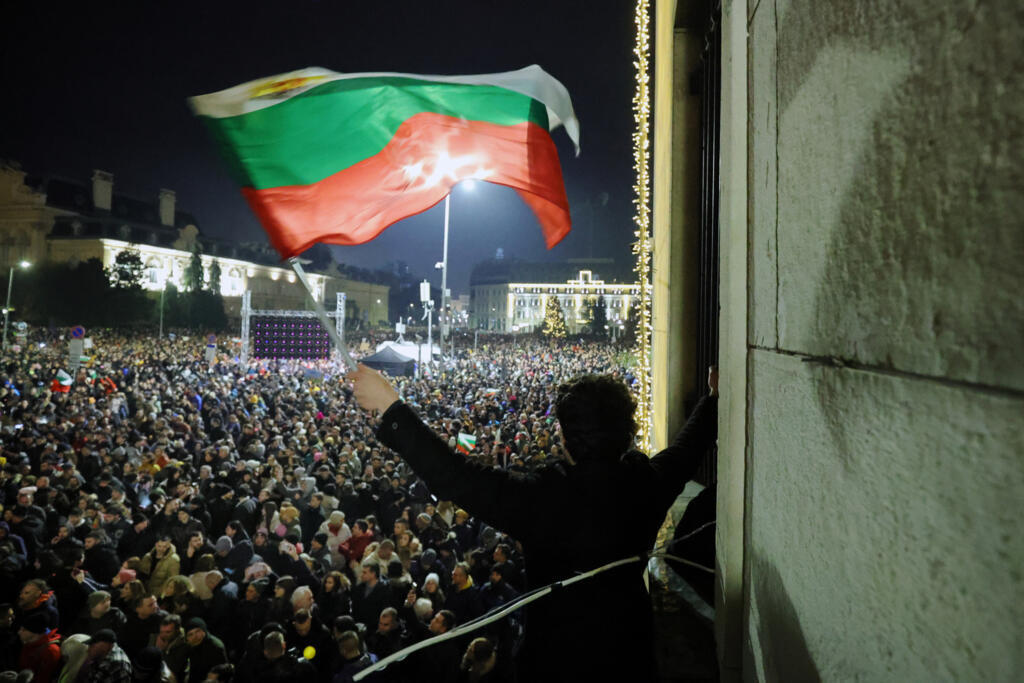
Tens of thousands of Bulgarians filled Sofia's central square, demanding the government's resignation amid rising anger over corruption and contested economic policies, Sofia, Bulgaria, 10 December, 2025. © AP - Valentina Petrova
The worst-performing countries in the European Union were Bulgaria and Hungary, both scoring just 40.
The report said the government of Hungary's nationalist leader Viktor Orban, in power since 2010 and facing a tough battle for re-election in April, "has systematically weakened the rule of law, civic space and electoral integrity for over 10 years".
"This has enabled impunity for channelling billions – including from European Union funds – to groups of cronies through dirty public contracting and other methods," the report said.
The watchdog noted that the government of Prime Minister Robert Fico in neighbouring Slovakia, with a score of 48, is "weakening investigations of corruption and organised crime, especially those involving senior officials".
Denmark top of the class
The highest-ranked nation in the index for the eighth year running was Denmark with a score of 89.
Among the more positive stories of progress in the report was Ukraine, which scored 36.
The government of President Volodymyr Zelensky has faced widespread public anger over graft allegations against those close to him, even as the country is hammered by Russian attacks.
The worst-performing countries in the European Union were Bulgaria and Hungary, both scoring just 40.
The report said the government of Hungary's nationalist leader Viktor Orban, in power since 2010 and facing a tough battle for re-election in April, "has systematically weakened the rule of law, civic space and electoral integrity for over 10 years".
"This has enabled impunity for channelling billions – including from European Union funds – to groups of cronies through dirty public contracting and other methods," the report said.
The watchdog noted that the government of Prime Minister Robert Fico in neighbouring Slovakia, with a score of 48, is "weakening investigations of corruption and organised crime, especially those involving senior officials".
Denmark top of the class
The highest-ranked nation in the index for the eighth year running was Denmark with a score of 89.
Among the more positive stories of progress in the report was Ukraine, which scored 36.
The government of President Volodymyr Zelensky has faced widespread public anger over graft allegations against those close to him, even as the country is hammered by Russian attacks.

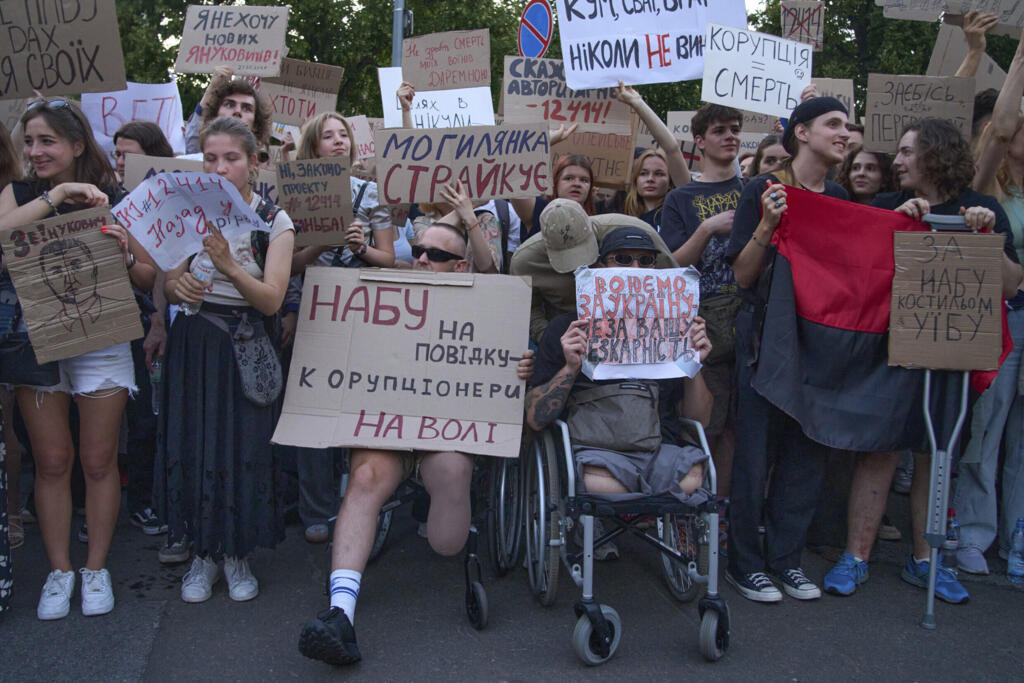
War veterans who lost their legs in Russia-Ukraine war hold signs saying "We fight for Ukraine, not for your impunity" during a protest against a law targeting anti-corruption institutions in central Kyiv, Ukraine, 23 July 2025. © Efrem Lukatsky / AP
However, TI noted that "the fact that these and many other scandals are being uncovered ... shows that Ukraine's new anti-corruption architecture is making a difference".
It hailed the "civil society mobilisation" last year, which prompted Zelensky to backtrack in an attempt to curb the independence of anti-graft bodies.
At the bottom of the index, the countries scoring below 25 are mostly conflict-affected and highly repressive countries, such as Venezuela (10) and the lowest scorers, Somalia and South Sudan, which both score nine.
(with AFP)
However, TI noted that "the fact that these and many other scandals are being uncovered ... shows that Ukraine's new anti-corruption architecture is making a difference".
It hailed the "civil society mobilisation" last year, which prompted Zelensky to backtrack in an attempt to curb the independence of anti-graft bodies.
At the bottom of the index, the countries scoring below 25 are mostly conflict-affected and highly repressive countries, such as Venezuela (10) and the lowest scorers, Somalia and South Sudan, which both score nine.
(with AFP)
'Democracy loses out': France sinks to new low in annual global corruption index
France dropped to a historic low in a global corruption index released Tuesday in the wake of high-profile scandals involving former president Nicolas Sarkozy, far-right leader Marine Le Pen and a government cover-up of wrongdoing at the Perrier mineral water company.
Issued on: 10/02/2026
FRANCE24
By: Joanna YORK

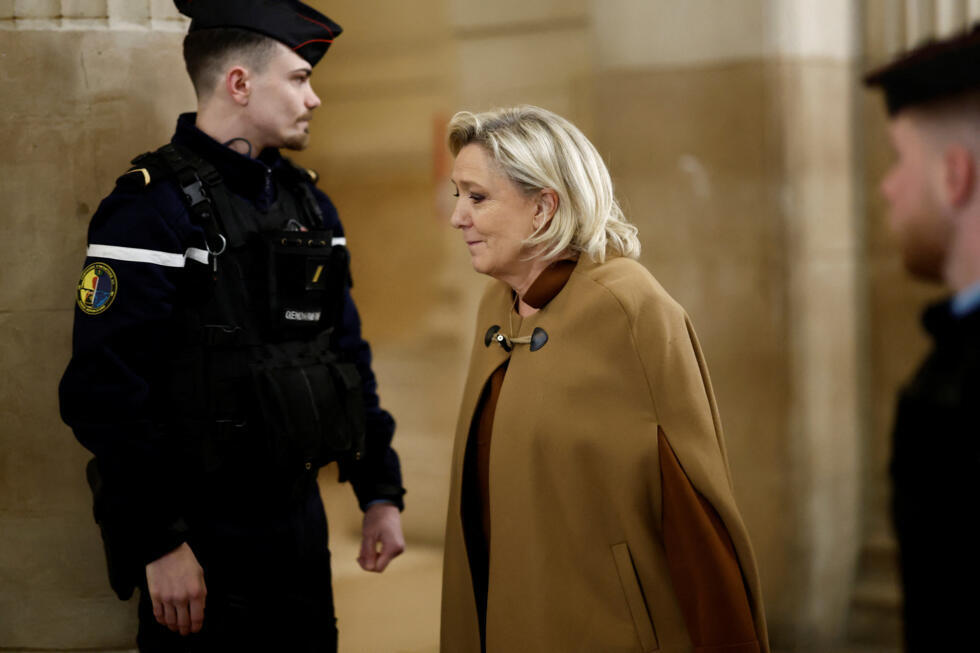
French far-right leader Marine Le Pen arrives for a hearing at the Paris courthouse on the Ile de la Cité on February 3, 2026. © Benoit Tessier, Reuters
'No political leadership'
These notable cases have “contributed to the deterioration in the perception of corruption”, said Florent Clouet, chief executive of Transparency International France.
But beyond the headline-grabbing scandals, the organisation has identified several key factors in France allowing an increase in the perception of corruption.
“The most significant problem, in our view, is the lack of political will – there is absolutely no political leadership in the fight against corruption,” Clouet said.
A recent plan to strengthen anti-corruption measures has not been championed by any MPs or presented at the weekly Council of Ministers chaired by President Emmanuel Macron, and accusations of corruption at the heart of government seem increasingly common.
Paris mayoral hopeful and current Culture Minister Rachida Dati is the latest in a series of serving ministers to face corruption charges.
France's culture minister Rachida Dati to be tried on corruption charges

The lack of political support for anti-corruption measures is compounded by under-resourced investigation and prosecution bodies.
The National Financial Prosecutor's Office (Le parquet national financier) is overrun, with “each pair of magistrates ... dealing with 80 cases, when the original plan was for them to handle eight cases”, Clouet said.
There is also a chronic lack of personnel at leading financial investigation agencies the central anti-corruption office (l’Office central de lutte contre la corruption et les infractions financières et fiscales) and the High Authority for Transparency in Public Life.
“As a result, we find ourselves in a situation where, basically, they are unable to properly carry out the missions for which they were created,” Clouet said.
The president of the High Authority for Transparency in Public life in April called on the government to increase its budget, saying that of 13,000 declarations made by public officials in 2024, it only had capacity to verify 5,000.
While these organisations were set up to monitor high-ranking officials and public servants, an additional issue is the lack of oversight at lower levels of government.
“There is great difficulty detecting and combating what is known as 'low-intensity corruption', involving relatively small amounts of money that slip under the radar of prevention and detection mechanisms,” Clouet added.
A ‘worrying trend’
Rather than being an outlier, Transparency International found the issues in France are part of a “worrying trend” of “backsliding scores in traditionally well-performing democracies” including Canada, New Zealand, Sweden and the UK.
Globally, more than two thirds of all countries surveyed received a score lower than 50 and “the vast majority of countries are failing to keep corruption under control", the report found.
Over the past decade, progress has “stalled” in Western Europe and “been deteriorating” in the US, which dropped to a new low of 64, it added.
Indeed, US President Donald Trump’s dismantling of decades-old measures to fight corruption seem to have inspired other countries to loosen their own laws.
“In the current geopolitical climate, Europe should be raising, not lowering, its anti-corruption ambitions. Corruption is not inevitable,” said Flora Cresswell, regional adviser for Western Europe at Transparency International.
But “that's not what's happening. Europe tends to follow the United States’ lead,” Clouet said.
The degradation in the public's perception of corruption comes with serious consequences, he warned, causing disenchanted citizens "to abstain from politics" as well as driving "social anger, which can fuel illiberal political forces. In all cases, it's democracy that really loses out.”
A survey released on Monday by the Cevipof research institute found that just 22 percent of people in France say they have confidence in politics – a four percent drop on the previous year.
France dropped to a historic low in a global corruption index released Tuesday in the wake of high-profile scandals involving former president Nicolas Sarkozy, far-right leader Marine Le Pen and a government cover-up of wrongdoing at the Perrier mineral water company.
Issued on: 10/02/2026
FRANCE24
By: Joanna YORK

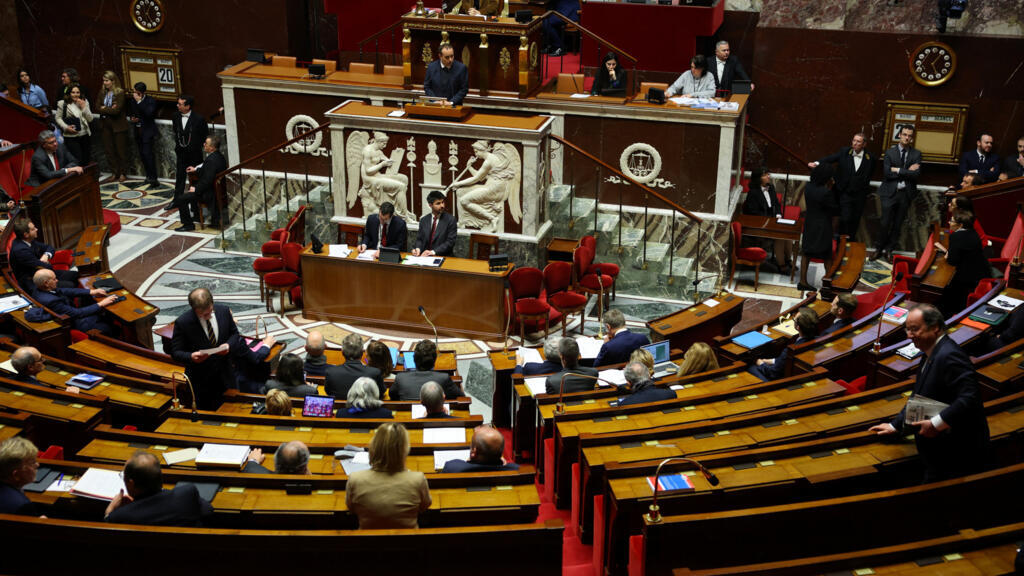
A view of the hemicycle at the National Assembly in Paris, France, on January 20, 2026. © Sarah Meyssonnier, Reuters
France dropped on Tuesday to an all-time low in Transparency International’s annual corruption perceptions index, with the organisation warning of “democratic danger” if politicians fail to act.
The Corruption Perceptions Index is compiled by experts and businesspeople who rank 182 countries on their perceived corruption levels in the public sector based on data from institutions including the World Bank and the World Economic Forum.
Countries score between zero, for those seen as highly corrupt, and 100, for those seen as very clean. In the 2025 edition released on Tuesday, Denmark ranked top with 89 points and South Sudan lowest with a score of 9.
France was given a score of 66 points, one point lower than 2024, and slipped down in the overall rankings to 27th place – its worst performance since the index, which was created in 1995, implemented its current methodology in 2012.
France’s poor score comes on the back of three high-profile corruption cases that dominated headlines last year.
A Senate report released in May found that the French government covered up consumer fraud by food giant Nestle, allowing the company to use prohibited treatments to produce "natural" mineral waters, including Perrier.
Ex-president Nicolas Sarkozy was imprisoned for 20 days in October after being found guilty of illegally seeking funding for his successful presidential campaign from former Libyan leader Muammar Gaddafi.
And, in an ongoing scandal, far-right leader Marine Le Pen and others from her National Rally party were found guilty in March of embezzling European Parliament funds.
Le Pen appeared in a Paris court this week to appeal the verdict which, if upheld, will ban her for running in the 2027 presidential elections.
France dropped on Tuesday to an all-time low in Transparency International’s annual corruption perceptions index, with the organisation warning of “democratic danger” if politicians fail to act.
The Corruption Perceptions Index is compiled by experts and businesspeople who rank 182 countries on their perceived corruption levels in the public sector based on data from institutions including the World Bank and the World Economic Forum.
Countries score between zero, for those seen as highly corrupt, and 100, for those seen as very clean. In the 2025 edition released on Tuesday, Denmark ranked top with 89 points and South Sudan lowest with a score of 9.
France was given a score of 66 points, one point lower than 2024, and slipped down in the overall rankings to 27th place – its worst performance since the index, which was created in 1995, implemented its current methodology in 2012.
France’s poor score comes on the back of three high-profile corruption cases that dominated headlines last year.
A Senate report released in May found that the French government covered up consumer fraud by food giant Nestle, allowing the company to use prohibited treatments to produce "natural" mineral waters, including Perrier.
Ex-president Nicolas Sarkozy was imprisoned for 20 days in October after being found guilty of illegally seeking funding for his successful presidential campaign from former Libyan leader Muammar Gaddafi.
And, in an ongoing scandal, far-right leader Marine Le Pen and others from her National Rally party were found guilty in March of embezzling European Parliament funds.
Le Pen appeared in a Paris court this week to appeal the verdict which, if upheld, will ban her for running in the 2027 presidential elections.
French far-right leader Marine Le Pen arrives for a hearing at the Paris courthouse on the Ile de la Cité on February 3, 2026. © Benoit Tessier, Reuters'No political leadership'
These notable cases have “contributed to the deterioration in the perception of corruption”, said Florent Clouet, chief executive of Transparency International France.
But beyond the headline-grabbing scandals, the organisation has identified several key factors in France allowing an increase in the perception of corruption.
“The most significant problem, in our view, is the lack of political will – there is absolutely no political leadership in the fight against corruption,” Clouet said.
A recent plan to strengthen anti-corruption measures has not been championed by any MPs or presented at the weekly Council of Ministers chaired by President Emmanuel Macron, and accusations of corruption at the heart of government seem increasingly common.
Paris mayoral hopeful and current Culture Minister Rachida Dati is the latest in a series of serving ministers to face corruption charges.
France's culture minister Rachida Dati to be tried on corruption charges

La ministra de Cultura de Francia, Rachida Dati, durante la sesión en la Asamblea Nacional este 30 de junio de 2025. AFP - LUDOVIC MARIN
01:29
01:29
The lack of political support for anti-corruption measures is compounded by under-resourced investigation and prosecution bodies.
The National Financial Prosecutor's Office (Le parquet national financier) is overrun, with “each pair of magistrates ... dealing with 80 cases, when the original plan was for them to handle eight cases”, Clouet said.
There is also a chronic lack of personnel at leading financial investigation agencies the central anti-corruption office (l’Office central de lutte contre la corruption et les infractions financières et fiscales) and the High Authority for Transparency in Public Life.
“As a result, we find ourselves in a situation where, basically, they are unable to properly carry out the missions for which they were created,” Clouet said.
The president of the High Authority for Transparency in Public life in April called on the government to increase its budget, saying that of 13,000 declarations made by public officials in 2024, it only had capacity to verify 5,000.
While these organisations were set up to monitor high-ranking officials and public servants, an additional issue is the lack of oversight at lower levels of government.
“There is great difficulty detecting and combating what is known as 'low-intensity corruption', involving relatively small amounts of money that slip under the radar of prevention and detection mechanisms,” Clouet added.
A ‘worrying trend’
Rather than being an outlier, Transparency International found the issues in France are part of a “worrying trend” of “backsliding scores in traditionally well-performing democracies” including Canada, New Zealand, Sweden and the UK.
Globally, more than two thirds of all countries surveyed received a score lower than 50 and “the vast majority of countries are failing to keep corruption under control", the report found.
Over the past decade, progress has “stalled” in Western Europe and “been deteriorating” in the US, which dropped to a new low of 64, it added.
Indeed, US President Donald Trump’s dismantling of decades-old measures to fight corruption seem to have inspired other countries to loosen their own laws.
“In the current geopolitical climate, Europe should be raising, not lowering, its anti-corruption ambitions. Corruption is not inevitable,” said Flora Cresswell, regional adviser for Western Europe at Transparency International.
But “that's not what's happening. Europe tends to follow the United States’ lead,” Clouet said.
The degradation in the public's perception of corruption comes with serious consequences, he warned, causing disenchanted citizens "to abstain from politics" as well as driving "social anger, which can fuel illiberal political forces. In all cases, it's democracy that really loses out.”
A survey released on Monday by the Cevipof research institute found that just 22 percent of people in France say they have confidence in politics – a four percent drop on the previous year.
Olympics T-shirt marking 1936 Berlin Games raises eyebrows
A commemorative T-shirt on the Olympics online store marking the 1936 Games in Berlin under Adolf Hitler's National Socialist, or Nazi, government caught the eye of German media on Wednesday.
The shirt shows a man wearing a laurel wreath, the quadriga chariot drawn by four horses atop the Brandenburg Gate in Berlin and core details like the dates and location of the Summer Games in the capital.
It's part of a collection of shirts for each of the modern-era Games, but, nonetheless, references probably the most politically contentious ones.
There are no references to Hitler's government or its symbols and iconography on the shirt

Berlin Games took place as repression was starting to scale up
The Nazis tried to put a respectable foot forward for the event, removing antisemitic slogans and graffiti from Berlin's streets and shop windows, moving those it deemed "undesirables" out of the capital, and toning down the rhetoric in its racist newspaper Der Stürmer.
But, nevertheless, the first signs of the coming Holocaust and of Hitler's ambitions for wars of conquest were starting to materialize for those watching Germany closely.
In the run-up to the Berlin Olympics in 1936, Nazi Germany remilitarized the Rhineland area on its western border, which its forces had been ordered to vacate after defeat in World War I. It implemented the "four-year plan" designed to prepare the economy and the military for war.
It stripped Roma and Jews of their voting rights that March, a month after the Winter Games in Garmisch-Partenkirchen. The leader of the SS black shirts, Heinrich Himmler, was named the chief of German police a few weeks before the summer's Berlin Games.
Internationally, Hitler's government signed its first treaties with future "Axis" allies Japan and Italy in 1936, and provided support to the nationalists under General Francisco Franco in Spain's civil war.
Edited by: Sean Sinico

Mark Hallam News and current affairs writer and editor with DW since 2006.
DW
February 11, 2026
T-shirts on the Olympics online store commemorating past venues include one for the 1936 Games in Berlin. Nazi Germany hosted both the Winter and Summer Olympics that year, as it was starting to ramp up its repression
The T-shirt uses artwork that has been used in the past to commemorate the event
Image: Screenshot shop.olympics.com
A commemorative T-shirt on the Olympics online store marking the 1936 Games in Berlin under Adolf Hitler's National Socialist, or Nazi, government caught the eye of German media on Wednesday.
The shirt shows a man wearing a laurel wreath, the quadriga chariot drawn by four horses atop the Brandenburg Gate in Berlin and core details like the dates and location of the Summer Games in the capital.
It's part of a collection of shirts for each of the modern-era Games, but, nonetheless, references probably the most politically contentious ones.
There are no references to Hitler's government or its symbols and iconography on the shirt
.


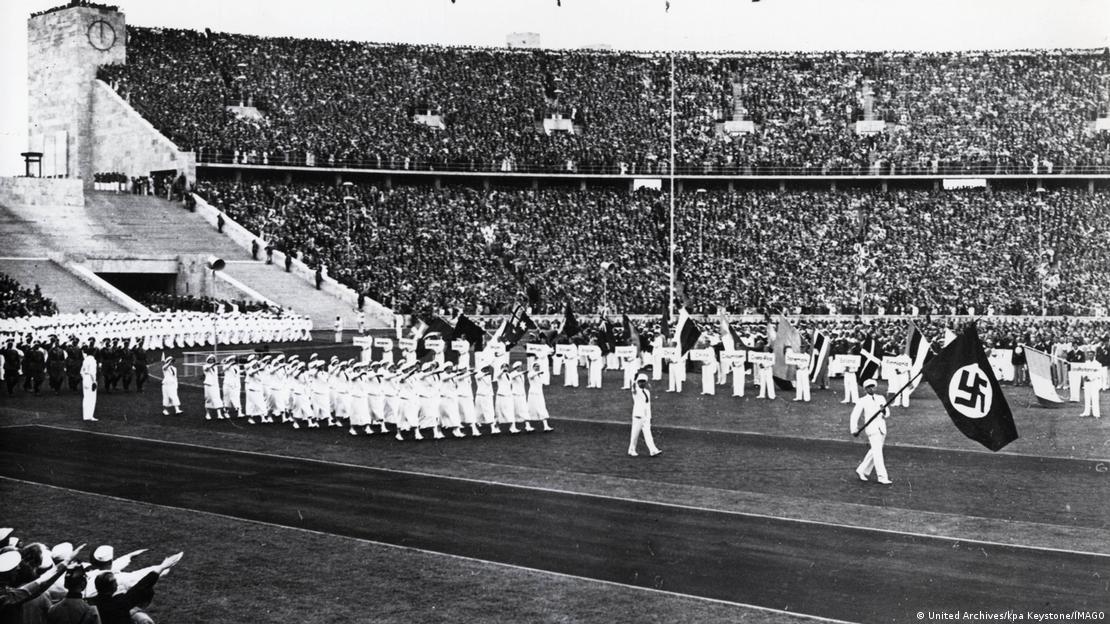
Propaganda chief Joseph Goebbels used the 1936 Games to broadcast images of Nazi iconography to the worldImage: United Archives/kpa Keystone/IMAGO
Early TV and radio-era games, first Olympic torch relay
The Games had already been awarded to Germany before the Nazis came to power, but hosting both the winter and summer events in 1936 provided Hitler's regime with a stage to showcase the government and country internationally.
ADVERTISEMENT
Technological advancements like television and radio enabled the propaganda-reliant regime to double down on these efforts, with Joseph Goebbels paying particular attention to the event.
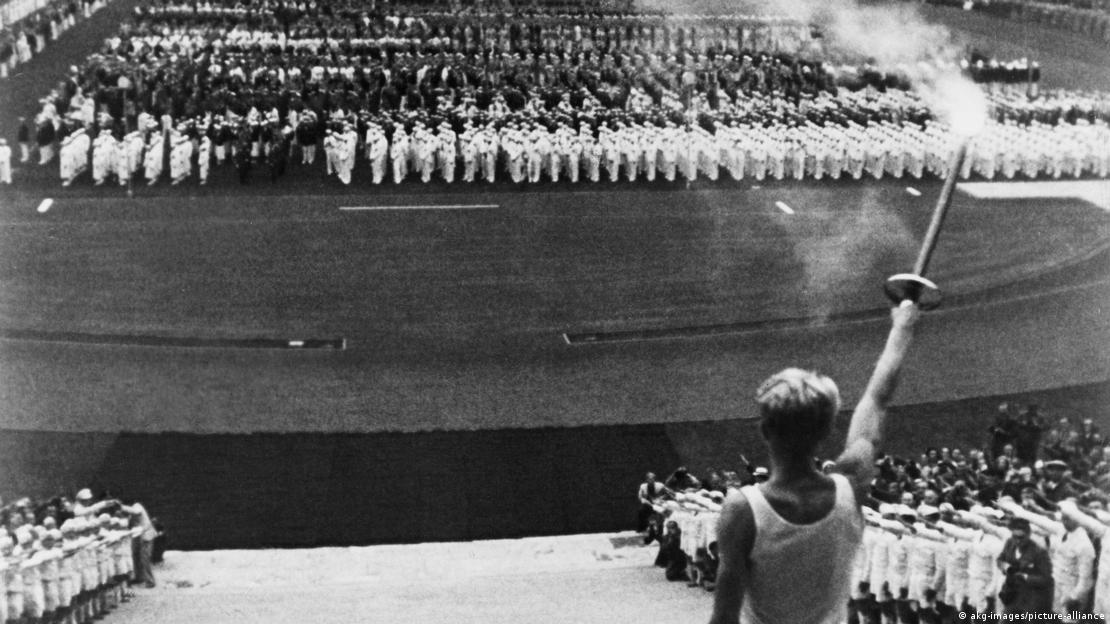
The 1936 Games included the first Olympic torch relay of the modern era, a fact that the International Olympic Committee (IOC) commemorated online in 2020 to considerable public backlash because it used Nazi propaganda footage to recall the event.
Early TV and radio-era games, first Olympic torch relay
The Games had already been awarded to Germany before the Nazis came to power, but hosting both the winter and summer events in 1936 provided Hitler's regime with a stage to showcase the government and country internationally.
ADVERTISEMENT
Technological advancements like television and radio enabled the propaganda-reliant regime to double down on these efforts, with Joseph Goebbels paying particular attention to the event.
The 1936 Games included the first Olympic torch relay of the modern era, a fact that the International Olympic Committee (IOC) commemorated online in 2020 to considerable public backlash because it used Nazi propaganda footage to recall the event.

The first Olympic torch relay of the modern era culminated in Berlin's Olympic Stadium on August 1, 1936
Image: akg-images/picture-alliance
Berlin Games took place as repression was starting to scale up
The Nazis tried to put a respectable foot forward for the event, removing antisemitic slogans and graffiti from Berlin's streets and shop windows, moving those it deemed "undesirables" out of the capital, and toning down the rhetoric in its racist newspaper Der Stürmer.
But, nevertheless, the first signs of the coming Holocaust and of Hitler's ambitions for wars of conquest were starting to materialize for those watching Germany closely.
In the run-up to the Berlin Olympics in 1936, Nazi Germany remilitarized the Rhineland area on its western border, which its forces had been ordered to vacate after defeat in World War I. It implemented the "four-year plan" designed to prepare the economy and the military for war.
It stripped Roma and Jews of their voting rights that March, a month after the Winter Games in Garmisch-Partenkirchen. The leader of the SS black shirts, Heinrich Himmler, was named the chief of German police a few weeks before the summer's Berlin Games.
Internationally, Hitler's government signed its first treaties with future "Axis" allies Japan and Italy in 1936, and provided support to the nationalists under General Francisco Franco in Spain's civil war.

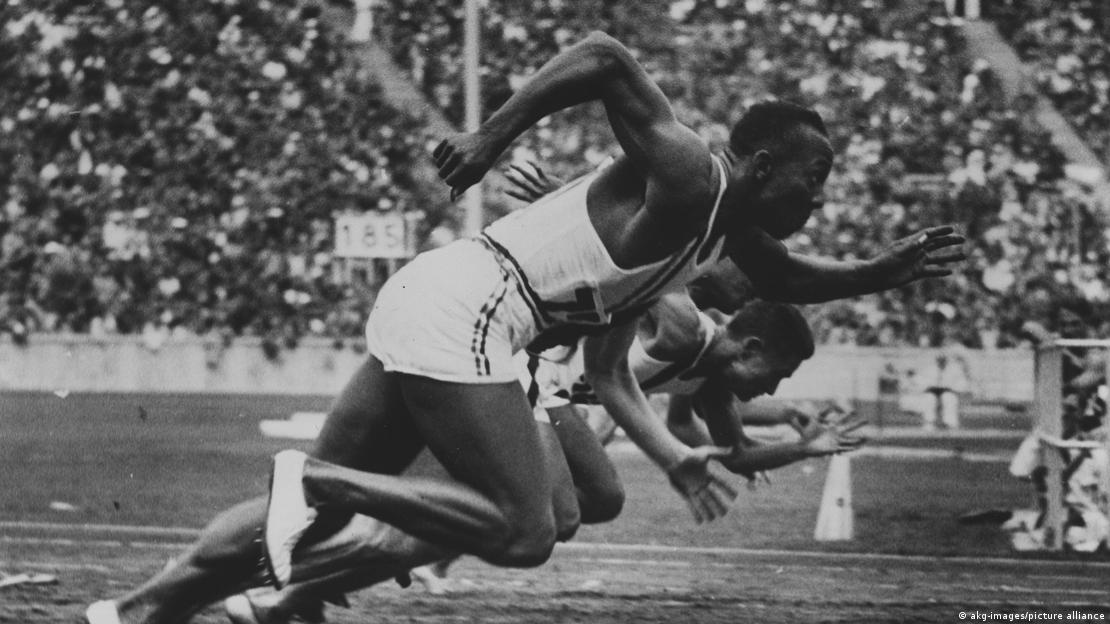
Black US athlete Jesse Owens' four gold medals, including in the coveted 100 meters sprint, became the biggest story from the Games, much to Hitler's distaste
Image: akg-images/picture alliance
Only a partial propaganda success for Hitler
The event did not prove satisfactory for Hitler.
Although Germany led the overall medal tally, the United States dominated some of the highest-profile track-and-field events at the Olympic Stadium in Berlin.
Hitler had wanted to attend and award all German winners with their gold medals, but only the German winners. He was reprimanded by the IOC when he left the stadium to avoid shaking the hand of high jumper Cornelius Johnson as he won the first US gold medal.
The head of the IOC at the time told Hitler he could either congratulate all the gold medalists, or none, so the dictator elected to honor none for the remainder of the Games.
This meant that Hitler never shook the hand of the most successful athlete of the Games, 22-year-old Black US athlete Jesse Owens, who won gold in the 100 meters, 200 meters, the 4x100-meter relay and the long jump.
The event did not prove satisfactory for Hitler.
Although Germany led the overall medal tally, the United States dominated some of the highest-profile track-and-field events at the Olympic Stadium in Berlin.
Hitler had wanted to attend and award all German winners with their gold medals, but only the German winners. He was reprimanded by the IOC when he left the stadium to avoid shaking the hand of high jumper Cornelius Johnson as he won the first US gold medal.
The head of the IOC at the time told Hitler he could either congratulate all the gold medalists, or none, so the dictator elected to honor none for the remainder of the Games.
This meant that Hitler never shook the hand of the most successful athlete of the Games, 22-year-old Black US athlete Jesse Owens, who won gold in the 100 meters, 200 meters, the 4x100-meter relay and the long jump.
Edited by: Sean Sinico

Mark Hallam News and current affairs writer and editor with DW since 2006.
Slovakia's embattled LGBTQ+ community hopes for change
Rob Cameron in Bratislava


Rob Cameron in Bratislava
DW
February 10, 2026
New restrictive legislation in Slovakia comes despite rising public acceptance of same-sex couples, making the situation for the LGBTQ+ community complex and contradictory.

Last year's constitutional change is just one of many challenges faced by the LGBTQ+ community in Slovakia
New restrictive legislation in Slovakia comes despite rising public acceptance of same-sex couples, making the situation for the LGBTQ+ community complex and contradictory.
Last year's constitutional change is just one of many challenges faced by the LGBTQ+ community in Slovakia
Image: Robert Poorten/imageBROKER/picture alliance
Life for Slovakia's LGBTQ+ community has become more complicated under the government of Prime Minister Robert Fico.
Last fall, for example, Slovakia's parliament narrowly voted to change the country's constitution, recognizing only two sexes — male and female — and restricting adoption to married heterosexual couples.
What impact do these kind of legal changes have on same-sex couples in their everyday lives?
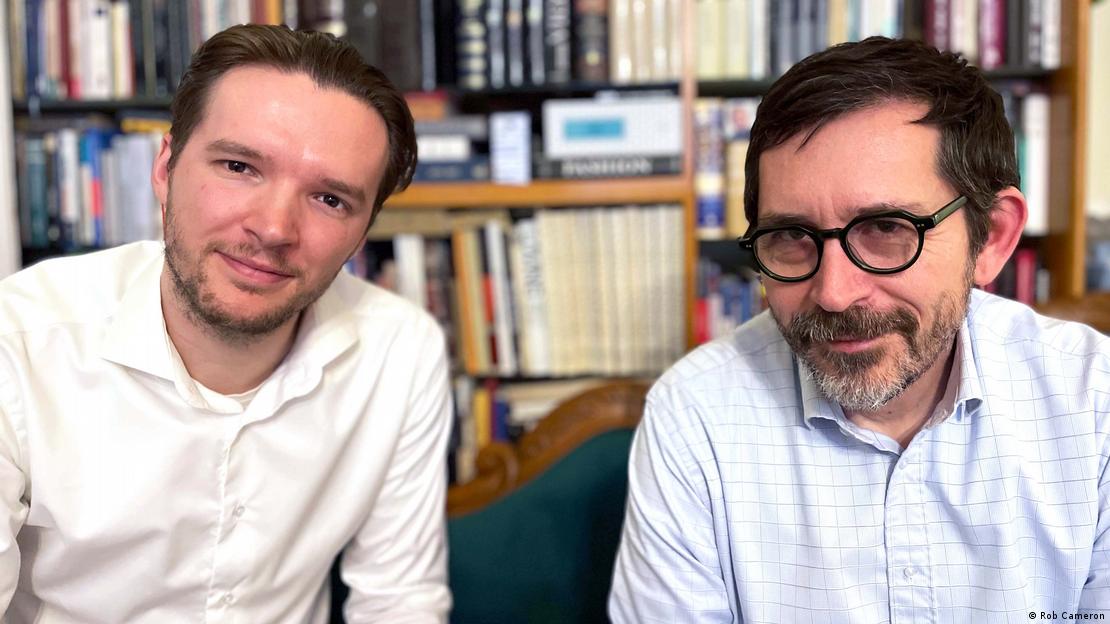
DW asked lawyer Ivan Novotny when the last time his use of the phrase "my husband" had raised eyebrows in Slovakia.
Sitting in the flat in central Bratislava he shares with his husband Metod Spacek, also a lawyer, and their young son, Ivan remembered one specific incident — amusing now, but not at the time.
Life for Slovakia's LGBTQ+ community has become more complicated under the government of Prime Minister Robert Fico.
Last fall, for example, Slovakia's parliament narrowly voted to change the country's constitution, recognizing only two sexes — male and female — and restricting adoption to married heterosexual couples.
What impact do these kind of legal changes have on same-sex couples in their everyday lives?
DW asked lawyer Ivan Novotny when the last time his use of the phrase "my husband" had raised eyebrows in Slovakia.
Sitting in the flat in central Bratislava he shares with his husband Metod Spacek, also a lawyer, and their young son, Ivan remembered one specific incident — amusing now, but not at the time.

Ivan Novotny (left) and Metod Spacek (right) were legally married in Austria and now live in Slovakia
Image: Rob Cameron
"Metod had lost consciousness, so I called the emergency services," explained Ivan. "The guy picked up and said 'What's your emergency?' And I said 'My husband's lost consciousness! He's on the ground, what am I supposed to do?'"
"And the guy said, 'Your what?' I answered: 'My husband, he's not breathing!' And he was like: 'Your manager?' Because it's a very similar word in Slovak: manzel and manazer," Ivan recounted.
"I said 'What? Not my manazer. Manzel.' And he was like 'Huh. Is that even allowed?'"
"I was very angry, worried and scared, and he was just talking about that," Ivan told DW.
Same-sex marriages not officially recognized
Metod soon came round and was fine, but the situation could have been far more serious.
The couple said they had a more positive experience a few years ago during the COVID-19 pandemic, when Ivan had to visit Metod in hospital and was allowed into his room, despite visits being limited to family only.
Ivan and Metod are legally married. Although they wed across the border in Austria — which, like Slovakia, is a member of the EU — their marriage is not officially recognized in Slovakia.
Both men are international lawyers with many years of service in the state administration.
Legal status: it's complicated
"We are faced with many, many questions, " Metod Spacek told DW. "People say 'all right, but your marriage is not valid in Slovakia,' And we say, 'No, no, this is not true.'"
While Slovakia does not recognize the institution of same-sex marriage, under a recent European Court of Justice decision, all EU states must recognize the consequences of a legal marriage in another EU country, he explained.
The couple's official status will become increasingly relevant once their young son starts school. For now, the chatter in their kitchen is typical of most married couples: Who's making dinner? Can you pick up the kid from daycare? Do we need more capsules for the espresso machine?
'A great dam against progressivism'
Slovakia's LGBTQ+ community faces a host of challenges. Last year's constitutional change — which shut the door on gay couples marrying and adopting — was just the latest blow.
Slovakia does not recognize same-sex marriage. Civil unions, whether for same-sex or heterosexual couples, do not exist at all under Slovak law.
The Fico government described the constitutional amendment as enshrining "sovereignty in cultural and ethical matters."
Critics, including Amnesty International, warned the legal change would bring the country's legal system closer to that of Hungary's illiberal government or Vladimir Putin's Russia.
"Metod had lost consciousness, so I called the emergency services," explained Ivan. "The guy picked up and said 'What's your emergency?' And I said 'My husband's lost consciousness! He's on the ground, what am I supposed to do?'"
"And the guy said, 'Your what?' I answered: 'My husband, he's not breathing!' And he was like: 'Your manager?' Because it's a very similar word in Slovak: manzel and manazer," Ivan recounted.
"I said 'What? Not my manazer. Manzel.' And he was like 'Huh. Is that even allowed?'"
"I was very angry, worried and scared, and he was just talking about that," Ivan told DW.
Same-sex marriages not officially recognized
Metod soon came round and was fine, but the situation could have been far more serious.
The couple said they had a more positive experience a few years ago during the COVID-19 pandemic, when Ivan had to visit Metod in hospital and was allowed into his room, despite visits being limited to family only.
Ivan and Metod are legally married. Although they wed across the border in Austria — which, like Slovakia, is a member of the EU — their marriage is not officially recognized in Slovakia.
Both men are international lawyers with many years of service in the state administration.
Legal status: it's complicated
"We are faced with many, many questions, " Metod Spacek told DW. "People say 'all right, but your marriage is not valid in Slovakia,' And we say, 'No, no, this is not true.'"
While Slovakia does not recognize the institution of same-sex marriage, under a recent European Court of Justice decision, all EU states must recognize the consequences of a legal marriage in another EU country, he explained.
The couple's official status will become increasingly relevant once their young son starts school. For now, the chatter in their kitchen is typical of most married couples: Who's making dinner? Can you pick up the kid from daycare? Do we need more capsules for the espresso machine?
'A great dam against progressivism'
Slovakia's LGBTQ+ community faces a host of challenges. Last year's constitutional change — which shut the door on gay couples marrying and adopting — was just the latest blow.
Slovakia does not recognize same-sex marriage. Civil unions, whether for same-sex or heterosexual couples, do not exist at all under Slovak law.
The Fico government described the constitutional amendment as enshrining "sovereignty in cultural and ethical matters."
Critics, including Amnesty International, warned the legal change would bring the country's legal system closer to that of Hungary's illiberal government or Vladimir Putin's Russia.

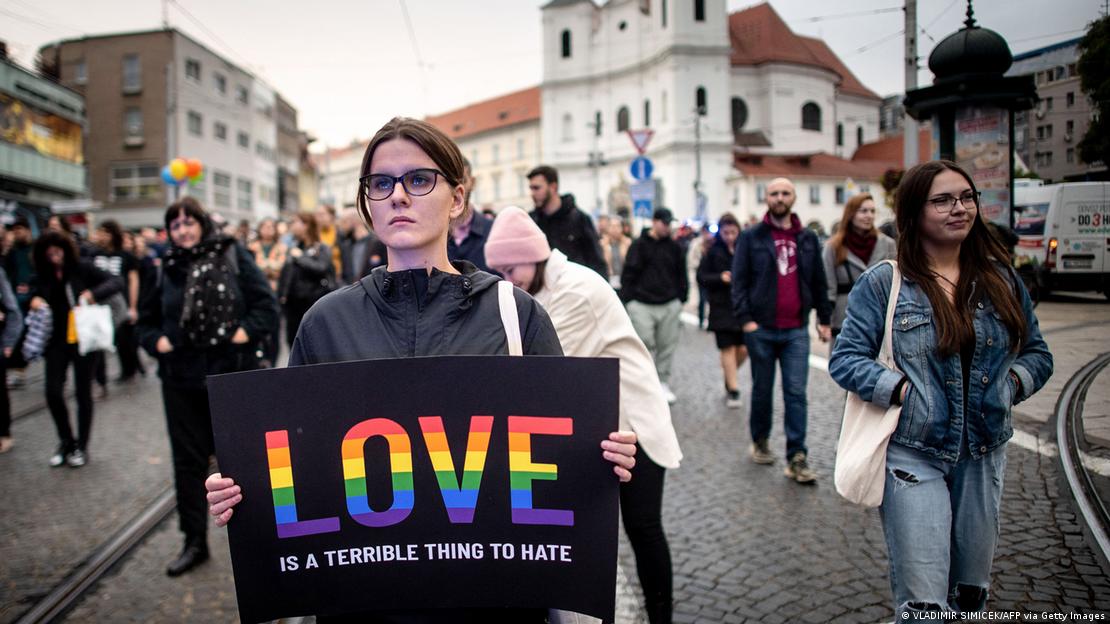
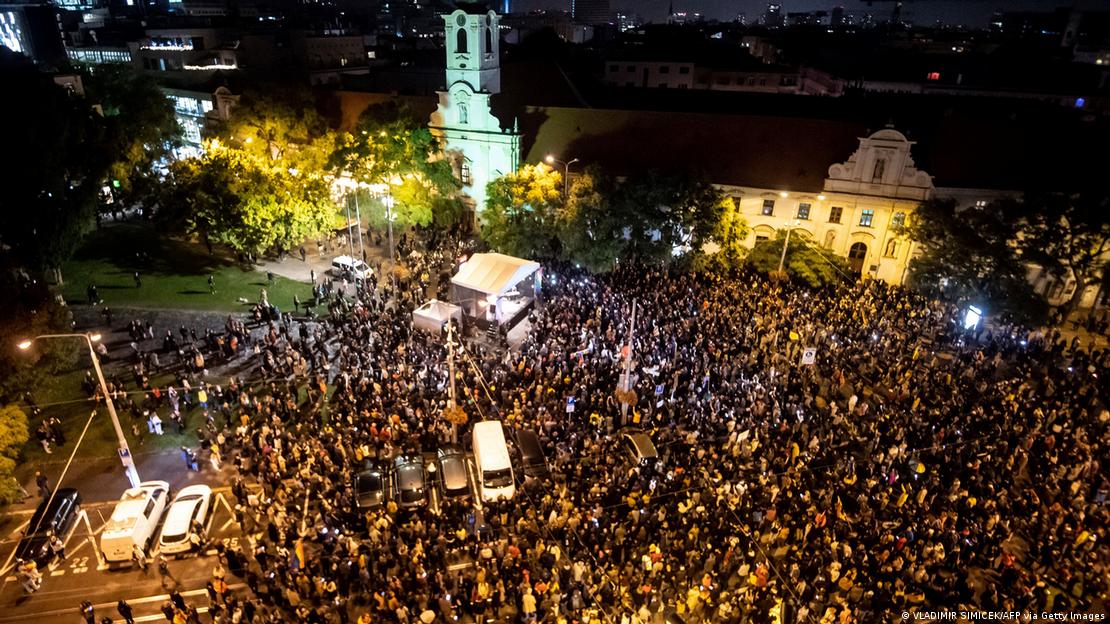
People marched in support of the LGBTQ+ community two days after a teenage gunman shot dead two people at a gay bar in downtown Slovakia in 2022Image: VLADIMIR SIMICEK/AFP via Getty Images
The Fico government described the amendment as "a great dam against progressivism" to protect Slovakia against the liberal ideology that was "spreading like cancer."
A complex, contradictory reality
In 2022, two people were killed and one injured when a young man who had been radicalized on neo-Nazi chat forums opened fire outside a gay bar in Zamocka Street beneath Bratislava Castle.
Anti-LGBTQ+ narratives have become more common in the public discourse. And yet public acceptance of same-sex couples is rising, leaving the community to live amid a contradictory reality.
"The worst impact of the constitutional change was that it took away hopes for the future. It effectively cemented the current bad situation," said Martin Macko of the Bratislava-based NGO Inakost (Otherness), which offers counseling and support to LGBTQ+ people.
"At the same time, public attitudes are slowly improving. More people personally know someone who is LGBTI+, which increases acceptance. Support for registered partnerships and marriage is rising," said Macko, whose organization uses the acronym LGBTI+.
"This change is slow, but awareness is gradually increasing," he told DW.
Aggressive rhetoric taints public perception
Macko said his organization's current struggle is both legal and financial: The government has slashed grants to Inakost, he said, because it received financial support from the US.
"The government's rhetoric, which is very aggressive toward the LGBTI+ community, has a negative impact both on how people outside the community see LGBTI+ people, and on how LGBTI+ people see themselves," said Kristina Kasanova, a psychologist at Inakost.
The Fico government described the amendment as "a great dam against progressivism" to protect Slovakia against the liberal ideology that was "spreading like cancer."
A complex, contradictory reality
In 2022, two people were killed and one injured when a young man who had been radicalized on neo-Nazi chat forums opened fire outside a gay bar in Zamocka Street beneath Bratislava Castle.
Anti-LGBTQ+ narratives have become more common in the public discourse. And yet public acceptance of same-sex couples is rising, leaving the community to live amid a contradictory reality.
"The worst impact of the constitutional change was that it took away hopes for the future. It effectively cemented the current bad situation," said Martin Macko of the Bratislava-based NGO Inakost (Otherness), which offers counseling and support to LGBTQ+ people.
"At the same time, public attitudes are slowly improving. More people personally know someone who is LGBTI+, which increases acceptance. Support for registered partnerships and marriage is rising," said Macko, whose organization uses the acronym LGBTI+.
"This change is slow, but awareness is gradually increasing," he told DW.
Aggressive rhetoric taints public perception
Macko said his organization's current struggle is both legal and financial: The government has slashed grants to Inakost, he said, because it received financial support from the US.
"The government's rhetoric, which is very aggressive toward the LGBTI+ community, has a negative impact both on how people outside the community see LGBTI+ people, and on how LGBTI+ people see themselves," said Kristina Kasanova, a psychologist at Inakost.

Public attitudes to the LGBTQ+ community are slowly improving, says Martin Macko of the Bratislava-based NGO Inakost. Pictured here: a protest in support of the LGBTQ+ community in 2022Image: VLADIMIR SIMICEK/AFP via Getty Images
"Many people feel ashamed of being queer. They don't want to belong to the community, and self-acceptance is very difficult for them."
"Even within the community, there are tensions. People sometimes develop negative feelings toward one another because certain issues are more visible than others. Some would prefer to be less visible, to keep a low profile," she said.
"As a result, some people end up blaming others, for example, saying they don't want to go to Pride events because people are 'too visible', and that this visibility is the reason they are facing hatred. That is, of course, not true. This is a form of internalized homophobia."
Like Ivan and Metod, Martin Macko and his colleagues at Inakost see legal challenges as offering scope for some optimism. At present there are cases waiting to be seen by both Slovakia's Constitutional Court and European courts. The hope is that legal change would open the way to people living freer, more socially accepted everyday lives.
Edited by: Aingeal Flanagan

Rob Cameron Journalist covering the Czech Republic and Slovakia.
"Many people feel ashamed of being queer. They don't want to belong to the community, and self-acceptance is very difficult for them."
"Even within the community, there are tensions. People sometimes develop negative feelings toward one another because certain issues are more visible than others. Some would prefer to be less visible, to keep a low profile," she said.
"As a result, some people end up blaming others, for example, saying they don't want to go to Pride events because people are 'too visible', and that this visibility is the reason they are facing hatred. That is, of course, not true. This is a form of internalized homophobia."
Like Ivan and Metod, Martin Macko and his colleagues at Inakost see legal challenges as offering scope for some optimism. At present there are cases waiting to be seen by both Slovakia's Constitutional Court and European courts. The hope is that legal change would open the way to people living freer, more socially accepted everyday lives.
Edited by: Aingeal Flanagan

Rob Cameron Journalist covering the Czech Republic and Slovakia.
Germany logs rising rate of crimes against journalists
A total of 818 crimes against journalists or media were reported to Germany's investigative federal police force between April 2024 and November 2025. Just over 10% of them were violent in nature.
A response to an inquiry from the opposition Left Party shows a steep increase in politically motivated crimes against the media in Germany over the last couple of years.
Figures released by the Interior Ministry showed that a total of 818 crimes targeting "media" were registered with the BKA, Germany's federal investigative police force, between April 1, 2024 and November 30, 2025.
That averages out at roughly 41 cases per month over a 20-month period, and compares to 290 crimes, for an average of roughly 24 per month, in the calendar year 2023. The increase equates to roughly 71%.
The Left Party's spokesman on media politics in the Bundestag parliament, David Schliesing, said the figures had reached a "shockingly high level."
"The federal and state governments must urgently take action and do considerably more to protect journalistic work," he said.
How did the statistics break down?
Authorities attributed roughly 30% of the cases, 244, to the right wing of the political spectrum and 78 cases, just under 10%, to the left.
A "foreign ideology" was deemed the motivating political factor in 153 cases, and a "religious ideology" was singled out for 31 cases.
The plurality of the politically motivated cases, 312, were not assigned to any of these four pigeon holes by investigators.
More than 10% of the crimes, 89 in total, were violent in nature. This included 73 cases of assault or causing injury, 13 so-called "resistance crimes" (for instance when violently resisting arrest or detention), two cases of arson and one robbery.
A total of 211 took place in the context of public demonstrations, including the vast majority, 73, of the violent crimes, the Interior Ministry figures said.
Other common offenses included 101 cases of coercion or threats, 53 cases of incitement to racial violence, 47 propaganda offenses as well as 43 cases of damage of property.
Where did the crimes take place?
Berlin — home to many media outlets' headquarters, as well as being a notoriously politicized city and a magnet to demonstrators from across much of the country — dominated the figures.
Almost half the crimes, 406 in total, took place in the capital and city state, as did 51 of the violent crimes.
Perhaps surprisingly, second in line was the largest eastern state of Saxony, despite it being only Germany's seventh most populous state, with 82 cases.
Bavaria was next in line with 64, while the most populous state of North Rhine-Westphalia, which is also home to Germany's unofficial media capital of old Cologne, logged 55.
Edited by: Wesley Dockery
DW
FEB 11, 2026
A total of 818 crimes against journalists or media were reported to Germany's investigative federal police force between April 2024 and November 2025. Just over 10% of them were violent in nature.
A response to an inquiry from the opposition Left Party shows a steep increase in politically motivated crimes against the media in Germany over the last couple of years.
Figures released by the Interior Ministry showed that a total of 818 crimes targeting "media" were registered with the BKA, Germany's federal investigative police force, between April 1, 2024 and November 30, 2025.
That averages out at roughly 41 cases per month over a 20-month period, and compares to 290 crimes, for an average of roughly 24 per month, in the calendar year 2023. The increase equates to roughly 71%.
The Left Party's spokesman on media politics in the Bundestag parliament, David Schliesing, said the figures had reached a "shockingly high level."
"The federal and state governments must urgently take action and do considerably more to protect journalistic work," he said.
How did the statistics break down?
Authorities attributed roughly 30% of the cases, 244, to the right wing of the political spectrum and 78 cases, just under 10%, to the left.
A "foreign ideology" was deemed the motivating political factor in 153 cases, and a "religious ideology" was singled out for 31 cases.
The plurality of the politically motivated cases, 312, were not assigned to any of these four pigeon holes by investigators.
More than 10% of the crimes, 89 in total, were violent in nature. This included 73 cases of assault or causing injury, 13 so-called "resistance crimes" (for instance when violently resisting arrest or detention), two cases of arson and one robbery.
A total of 211 took place in the context of public demonstrations, including the vast majority, 73, of the violent crimes, the Interior Ministry figures said.
Other common offenses included 101 cases of coercion or threats, 53 cases of incitement to racial violence, 47 propaganda offenses as well as 43 cases of damage of property.
Why journalism is under attack 11:42
Where did the crimes take place?
Berlin — home to many media outlets' headquarters, as well as being a notoriously politicized city and a magnet to demonstrators from across much of the country — dominated the figures.
Almost half the crimes, 406 in total, took place in the capital and city state, as did 51 of the violent crimes.
Perhaps surprisingly, second in line was the largest eastern state of Saxony, despite it being only Germany's seventh most populous state, with 82 cases.
Bavaria was next in line with 64, while the most populous state of North Rhine-Westphalia, which is also home to Germany's unofficial media capital of old Cologne, logged 55.
Edited by: Wesley Dockery
Lufthansa pilots, crew to strike on Thursday
DW
FEBRUARY 11, 2026
Lufthansa passengers should expect disruption and possible cancellations. A pilots' trade union has called a 24-hour strike amid a dispute over pension payments.
Employees of German flagship carrier Lufthansa have been called to go on a 24-hour strike on Thursday, the VC (Vereinigung Cockpit) union representing pilots and the UFO union of flight attendants both announced.
What do we know so far?
VC president Andreas Pinheiro announced the work stoppage, saying that staff "would have very much liked to avoid an escalation."
The VC union's members voted in favor of striking in a ballot at the end of last September, hoping to pressure Lufthansa into granting more generous pension benefits.
"We deliberately gave Lufthansa several months to come up with a solution," Pinheiro added.
Meanwhile the flight attendant's UFO union also called on its members at Lufthansa's CityLine to strike on Thursday over the planned shutdown of its flight operations and "the employer’s continued refusal to negotiate a collective social plan."
Lufthansa announced one year ago that it would close Lufthansa CityLine, with operations and staff relocated to a new subsidiary.
Passengers who are flying with Lufthansa on Thursday could face disruption and cancellations all over the country. The strike is expected to impact all German airports, including major international hubs Frankfurt and Munich.
Cargo flights would also be impacted.
Lufthansa says cost-cutting is necessary
In the latest earnings report, Lufthansa saw a loss of a fifth of its earnings in 2024, as profitability has fallen behind leading European airline rivals.
Lufthansa has said it needs to cut costs to manage its debt load.
Last year, the airline said it would cut 4,000 jobs, or nearly 4% of its workforce. It has also been hit by walkouts, aircraft delivery delays and rising costs.
Edited by: Wesley Dockery
VC president Andreas Pinheiro announced the work stoppage, saying that staff "would have very much liked to avoid an escalation."
The VC union's members voted in favor of striking in a ballot at the end of last September, hoping to pressure Lufthansa into granting more generous pension benefits.
"We deliberately gave Lufthansa several months to come up with a solution," Pinheiro added.
Meanwhile the flight attendant's UFO union also called on its members at Lufthansa's CityLine to strike on Thursday over the planned shutdown of its flight operations and "the employer’s continued refusal to negotiate a collective social plan."
Lufthansa announced one year ago that it would close Lufthansa CityLine, with operations and staff relocated to a new subsidiary.
Passengers who are flying with Lufthansa on Thursday could face disruption and cancellations all over the country. The strike is expected to impact all German airports, including major international hubs Frankfurt and Munich.
Cargo flights would also be impacted.
Lufthansa says cost-cutting is necessary
In the latest earnings report, Lufthansa saw a loss of a fifth of its earnings in 2024, as profitability has fallen behind leading European airline rivals.
Lufthansa has said it needs to cut costs to manage its debt load.
Last year, the airline said it would cut 4,000 jobs, or nearly 4% of its workforce. It has also been hit by walkouts, aircraft delivery delays and rising costs.
Edited by: Wesley Dockery
Betting on catastrophe: the dizzying rise of prediction markets
Bets on the fall of Venezuela's Nicolas Maduro have shed light on the spectacular rise of prediction markets: portals where people place bets on everything from sporting events, to Trump’s next strikes, to the resurrection of Jesus. Some are profiting from the predictions, while others are concerned about real world human and geopolitical impacts of prediction markets.
Issued on: 08/02/2026 -
Bets on the fall of Venezuela's Nicolas Maduro have shed light on the spectacular rise of prediction markets: portals where people place bets on everything from sporting events, to Trump’s next strikes, to the resurrection of Jesus. Some are profiting from the predictions, while others are concerned about real world human and geopolitical impacts of prediction markets.
Issued on: 08/02/2026 -
FRANCE24
By: Diya GUPTA


LONG READ

Advertisements by the American company Polymarket predict a victory for Zohran Mamdani in the New York City mayoral election on Tuesday, Nov. 4, 2025, in New York. © Olga Fedorova, AP
Only a handful of people in the world knew what was going to happen in the early hours of January 3, before ‘Operation Absolute Resolve’ was launched. The extraordinary two-hour-and-twenty-minute military intervention by air, land and sea culminated in the capture of Venezuelan President Nicolas Maduro and his wife. It was a top-secret operation, which stunned the world.
But a hint of what was to occur emerged in the online, crypto-based prediction market portal Polymarket, where anonymous users bet on real world events. User 0x31a56e wagered $32,537 that Maduro would be out of power by the end of January when the odds of that happening on the afternoon of January 2 were placed at just 6.5%. By midnight, those odds jumped to 11% and surged just before the operation was executed. The suspiciously timed bet paid off – anonymous user 0x31a56e made a neat profit upwards of $436,000 in just one night. The account has since vanished.
This odd incident pushed the online prediction market – which was growing but still fairly niche – into the mainstream spotlight. These are platforms where people can bet on the outcome of an enormous variety of future events – from the common (who will win the Super Bowl) to the bizarre (will Jesus be resurrected in 2026). These companies insist that they are not gambling portals, but legitimate financial markets, a chimera of a stock exchange and a crypto platform (though some watchdogs disagree).
Two players, Kalshi and Polymarket, have dominated the space in recent years. Of a total volume of $44 billion in prediction markets in 2025, Kalshi and Polymarket were responsible for a combined total of $38 billion: one of the fastest growing financial markets is one that most people ignore, or don’t know about.

Only a handful of people in the world knew what was going to happen in the early hours of January 3, before ‘Operation Absolute Resolve’ was launched. The extraordinary two-hour-and-twenty-minute military intervention by air, land and sea culminated in the capture of Venezuelan President Nicolas Maduro and his wife. It was a top-secret operation, which stunned the world.
But a hint of what was to occur emerged in the online, crypto-based prediction market portal Polymarket, where anonymous users bet on real world events. User 0x31a56e wagered $32,537 that Maduro would be out of power by the end of January when the odds of that happening on the afternoon of January 2 were placed at just 6.5%. By midnight, those odds jumped to 11% and surged just before the operation was executed. The suspiciously timed bet paid off – anonymous user 0x31a56e made a neat profit upwards of $436,000 in just one night. The account has since vanished.
This odd incident pushed the online prediction market – which was growing but still fairly niche – into the mainstream spotlight. These are platforms where people can bet on the outcome of an enormous variety of future events – from the common (who will win the Super Bowl) to the bizarre (will Jesus be resurrected in 2026). These companies insist that they are not gambling portals, but legitimate financial markets, a chimera of a stock exchange and a crypto platform (though some watchdogs disagree).
Two players, Kalshi and Polymarket, have dominated the space in recent years. Of a total volume of $44 billion in prediction markets in 2025, Kalshi and Polymarket were responsible for a combined total of $38 billion: one of the fastest growing financial markets is one that most people ignore, or don’t know about.

Shayne Coplan, founder and CEO of betting platform Polymarket, participates in the State of Crypto Summit, in New York, Thursday, June 12, 2025. © Richard Drew, AP
Trades on these websites are not to be confused with polls, insists Polymarket’s precocious founder Shayne Coplan, in an interview with 60 Minutes. Coplan, who founded the company in 2020 when he was just 21 years old, said that Polymarket tries to predict actual outcomes – "You make money if you're right. You lose money if you're wrong. And as a result it creates this information that's useful for people."
Some people have profited from making informed wagers – including a prolific, successful Polymarket trader who goes by the name Domer and features in the same 60 Minutes report. The former professional poker player moved to Polymarket because it was ‘more exciting’. He won over $100,000 predicting an American Pope, and even more after he picked JD Vance to be Donald Trump's presidential running mate. Domer went against the odds because he believed US President Donald Trump likes one syllable names because “he (Trump) is very into marketing”.
Even established media outlets like CNN and CNBC have struck deals to incorporate Kalshi prediction markets into coverage.
But prediction markets do not come without an enormous share of criticism. Polymarket, specifically, has been at the root of controversy because it relies on cryptocurrency and blockchain to run.
Users like 0x31a56e, who predicted Maduro’s capture, can trade anonymously, without being traced. While it is possible that they just got very lucky, analysts say it’s far more likely that someone with inside information realised they could make a quick buck. On crypto-native platforms, there’s no real way of knowing.
It’s because of this reason that in most of Europe, where a patchwork of rules must be adhered to, Polymarket is not legal or easily accessible. Some countries treat prediction markets as gambling, and the ones that do not still require licensing. Regulators are wary, with good reason.
Prediction markets were also heavily regulated under the Biden administration, but under President Trump, these sites have profited from deregulation and a huge boom in power.
But critics are concerned about the platforms commodifying real world events and encouraging people to bet on political, military and diplomatic events that have real-world consequences.
The risks of manipulation and insider trading
Maduro is only one example of a litany of shady trades made on prediction markets. Hours before the announcement of Nobel Peace Prize winner MarÃa Corina Machado, one user bet thousands in her favour: the likelihood of her winning leapt from 3.75 percent to nearly 73 percent within two hours – prompting authorities in Norway to open an investigation.
Similarly, in early January, White House Press Secretary Karoline Leavitt ended her briefing after 64 minutes and 30 seconds. Her abrupt exit left traders wondering whether Leavitt had deliberately stopped before the 65-minute mark to turn a profit. Polymarket had predicted at 98 percent odds that the briefing would run past 65 minutes.
Alex Goldenberg, an intelligence analyst and fellow at the Miller Center on Policing and Community Resilience at Rutgers University, says the signs are clear: “Across these cases, a consistent pattern emerges: new accounts with no trading history taking high-conviction, low-probability positions hours before those events occur. These aren't gradual market movements reflecting evolving public information. They bear the textbook signatures of insider trading in traditional financial markets.”
The point of these markets is to reward people with superior information i.e., those who collect the right data and analyse accurately could stand to make money. There’s nothing inherently wrong with that, he says, but there’s a fine line between analysis and inside information. “Scale that logic to domains governed by secrecy: military operations, covert action, diplomatic negotiations. In those domains, ‘superior information’ means access to classified or non-public knowledge. The platform architecture doesn't distinguish between a well-informed analyst and someone with a security clearance who just walked out of a briefing.”
Prediction markets’ blurry lines can also create serious problems for national security.
Trades on these websites are not to be confused with polls, insists Polymarket’s precocious founder Shayne Coplan, in an interview with 60 Minutes. Coplan, who founded the company in 2020 when he was just 21 years old, said that Polymarket tries to predict actual outcomes – "You make money if you're right. You lose money if you're wrong. And as a result it creates this information that's useful for people."
Some people have profited from making informed wagers – including a prolific, successful Polymarket trader who goes by the name Domer and features in the same 60 Minutes report. The former professional poker player moved to Polymarket because it was ‘more exciting’. He won over $100,000 predicting an American Pope, and even more after he picked JD Vance to be Donald Trump's presidential running mate. Domer went against the odds because he believed US President Donald Trump likes one syllable names because “he (Trump) is very into marketing”.
Even established media outlets like CNN and CNBC have struck deals to incorporate Kalshi prediction markets into coverage.
But prediction markets do not come without an enormous share of criticism. Polymarket, specifically, has been at the root of controversy because it relies on cryptocurrency and blockchain to run.
Users like 0x31a56e, who predicted Maduro’s capture, can trade anonymously, without being traced. While it is possible that they just got very lucky, analysts say it’s far more likely that someone with inside information realised they could make a quick buck. On crypto-native platforms, there’s no real way of knowing.
It’s because of this reason that in most of Europe, where a patchwork of rules must be adhered to, Polymarket is not legal or easily accessible. Some countries treat prediction markets as gambling, and the ones that do not still require licensing. Regulators are wary, with good reason.
Prediction markets were also heavily regulated under the Biden administration, but under President Trump, these sites have profited from deregulation and a huge boom in power.
But critics are concerned about the platforms commodifying real world events and encouraging people to bet on political, military and diplomatic events that have real-world consequences.
The risks of manipulation and insider trading
Maduro is only one example of a litany of shady trades made on prediction markets. Hours before the announcement of Nobel Peace Prize winner MarÃa Corina Machado, one user bet thousands in her favour: the likelihood of her winning leapt from 3.75 percent to nearly 73 percent within two hours – prompting authorities in Norway to open an investigation.
Similarly, in early January, White House Press Secretary Karoline Leavitt ended her briefing after 64 minutes and 30 seconds. Her abrupt exit left traders wondering whether Leavitt had deliberately stopped before the 65-minute mark to turn a profit. Polymarket had predicted at 98 percent odds that the briefing would run past 65 minutes.
Alex Goldenberg, an intelligence analyst and fellow at the Miller Center on Policing and Community Resilience at Rutgers University, says the signs are clear: “Across these cases, a consistent pattern emerges: new accounts with no trading history taking high-conviction, low-probability positions hours before those events occur. These aren't gradual market movements reflecting evolving public information. They bear the textbook signatures of insider trading in traditional financial markets.”
The point of these markets is to reward people with superior information i.e., those who collect the right data and analyse accurately could stand to make money. There’s nothing inherently wrong with that, he says, but there’s a fine line between analysis and inside information. “Scale that logic to domains governed by secrecy: military operations, covert action, diplomatic negotiations. In those domains, ‘superior information’ means access to classified or non-public knowledge. The platform architecture doesn't distinguish between a well-informed analyst and someone with a security clearance who just walked out of a briefing.”
Prediction markets’ blurry lines can also create serious problems for national security.

Polymarket prediction market website is displayed on a computer screen Friday, Jan. 9, 2026, in Philadelphia. © Wally Santana, AP
One account, originally named RicoSauve666 and later Rundeep, bet on several operations connected to Israeli military action with extremely consistent outcomes. Israel Defense Forces and the Israel Security Agency (Shin Bet ) ultimately opened an investigation into the user.
“The high-conviction, low-probability trades we saw before the Venezuela operation and Israeli strikes bear the hallmarks of someone with access monetizing what they know,” says Goldenberg. “That's privatizing state secrets. Diplomats, military personnel, intelligence analysts, contractors, and anyone in the national security apparatus now has a potential avenue to monetize non-public, sensitive information for personal profit.”
How prediction influences perception and policy
Dangerous biases can occur when an outcome is presumed – Goldenberg presents a hypothesis: “Suppose the US is about to carry out an operation against Iran and multiple high-conviction, low-probability bets suddenly appear on a prediction market that it's going to happen tomorrow,” he posits. “You've potentially given an adversary advance notice of an operation through publicly visible market activity.
"An adversary placing large bets on specific military outcomes can create a situation where we ask ourselves, does someone know something? That alone sows confusion and distorts decision-making."
The predictions on these platforms are visible to anyone. Diplomatic, geopolitical and military decisions could potentially be made on assumed outcomes – which could be particularly dangerous if these markets can be manipulated.
“When a prediction market shows odds on a US strike suddenly jumping, that movement could become news. Media reports it, policymakers see it. The market doesn't just predict. It shapes perception.”
This is a far greater risk on crypto native platforms like Polymarket, where trades take place anonymously, often in offshore jurisdictions. They are extremely difficult to trace back to an individual. “Who investigates? Which jurisdiction applies?” asks Goldenberg. “Today, the honest answer is that in many cases, they wouldn't be caught. Several countries, including France, have already concluded these platforms can't be adequately regulated and banned them outright.”
There’s also the important question of who runs the market themselves: the US president's son Donald Trump Jr. is an adviser to both Kalshi and Polymarket. His venture capital firm 1789 invested an undisclosed “double-digit millions of dollars” into Polymarket in 2025. Polymarket’s founder sees this as a positive – saying in an interview, “This admin is very pro-innovation, and pro-crypto, and pro-Polymarket, which is amazing… I'm a young entrepreneur. If I have people who believe in what I do, who understand how politics works and can help me… there's nothing wrong about that.”
Furthermore, Trump Media and Technology Group, the owner of the president’s social-media platform, Truth Social, has announced its own platform, Truth Predict.
There are real, human consequences of turning the world into one big casino where serious events with real repercussions are being reduced to a set of numbers. “When you're looking at a screen that says 'Will Country X invade Country Y by March 31? Yes/No', you're interacting with an abstraction. But the underlying event involves air strikes, casualties, displaced populations. The platform strips away human reality and replaces it with a contract and a price,” says Goldenberg.
“It fundamentally changes civic discourse. Instead of asking ‘should we strike’, which is a moral and strategic question, we're asking ‘what are the odds we strike’. We've taken events with real human consequences and made them feel like any other financial instrument. That normalization is worth paying attention to."
One account, originally named RicoSauve666 and later Rundeep, bet on several operations connected to Israeli military action with extremely consistent outcomes. Israel Defense Forces and the Israel Security Agency (Shin Bet ) ultimately opened an investigation into the user.
“The high-conviction, low-probability trades we saw before the Venezuela operation and Israeli strikes bear the hallmarks of someone with access monetizing what they know,” says Goldenberg. “That's privatizing state secrets. Diplomats, military personnel, intelligence analysts, contractors, and anyone in the national security apparatus now has a potential avenue to monetize non-public, sensitive information for personal profit.”
How prediction influences perception and policy
Dangerous biases can occur when an outcome is presumed – Goldenberg presents a hypothesis: “Suppose the US is about to carry out an operation against Iran and multiple high-conviction, low-probability bets suddenly appear on a prediction market that it's going to happen tomorrow,” he posits. “You've potentially given an adversary advance notice of an operation through publicly visible market activity.
"An adversary placing large bets on specific military outcomes can create a situation where we ask ourselves, does someone know something? That alone sows confusion and distorts decision-making."
The predictions on these platforms are visible to anyone. Diplomatic, geopolitical and military decisions could potentially be made on assumed outcomes – which could be particularly dangerous if these markets can be manipulated.
“When a prediction market shows odds on a US strike suddenly jumping, that movement could become news. Media reports it, policymakers see it. The market doesn't just predict. It shapes perception.”
This is a far greater risk on crypto native platforms like Polymarket, where trades take place anonymously, often in offshore jurisdictions. They are extremely difficult to trace back to an individual. “Who investigates? Which jurisdiction applies?” asks Goldenberg. “Today, the honest answer is that in many cases, they wouldn't be caught. Several countries, including France, have already concluded these platforms can't be adequately regulated and banned them outright.”
There’s also the important question of who runs the market themselves: the US president's son Donald Trump Jr. is an adviser to both Kalshi and Polymarket. His venture capital firm 1789 invested an undisclosed “double-digit millions of dollars” into Polymarket in 2025. Polymarket’s founder sees this as a positive – saying in an interview, “This admin is very pro-innovation, and pro-crypto, and pro-Polymarket, which is amazing… I'm a young entrepreneur. If I have people who believe in what I do, who understand how politics works and can help me… there's nothing wrong about that.”
Furthermore, Trump Media and Technology Group, the owner of the president’s social-media platform, Truth Social, has announced its own platform, Truth Predict.
There are real, human consequences of turning the world into one big casino where serious events with real repercussions are being reduced to a set of numbers. “When you're looking at a screen that says 'Will Country X invade Country Y by March 31? Yes/No', you're interacting with an abstraction. But the underlying event involves air strikes, casualties, displaced populations. The platform strips away human reality and replaces it with a contract and a price,” says Goldenberg.
“It fundamentally changes civic discourse. Instead of asking ‘should we strike’, which is a moral and strategic question, we're asking ‘what are the odds we strike’. We've taken events with real human consequences and made them feel like any other financial instrument. That normalization is worth paying attention to."
Solutions to climate change challenges: 'We have all the tools', just not the will
ANTARCTICA
Issued on: 11/02/2026 - FRANCE24
Eve Irvine is very pleased to welcome Glaciologist Dr. Heïdi Sevestre and Explorer Matthieu Tordeur. They made the treacherous journey across Antarctica using wind power only: “it’s nature who decides in Antarctica.” They recorded “thousands of kilometres worth of data” that can help answer two urgent questions: whether warming is changing snowfall in ways that might partially offset coastal ice loss, and what the deep internal layers of Antarctic ice reveal about Earth’s past warm periods, including those “more than 130,000 years ago.”
Video by: Eve IRVINE
ANTARCTICA
Issued on: 11/02/2026 - FRANCE24
Eve Irvine is very pleased to welcome Glaciologist Dr. Heïdi Sevestre and Explorer Matthieu Tordeur. They made the treacherous journey across Antarctica using wind power only: “it’s nature who decides in Antarctica.” They recorded “thousands of kilometres worth of data” that can help answer two urgent questions: whether warming is changing snowfall in ways that might partially offset coastal ice loss, and what the deep internal layers of Antarctic ice reveal about Earth’s past warm periods, including those “more than 130,000 years ago.”
Video by: Eve IRVINE
Subscribe to:
Comments (Atom)
.jpg)