It’s possible that I shall make an ass of myself. But in that case one can always get out of it with a little dialectic. I have, of course, so worded my proposition as to be right either way (K.Marx, Letter to F.Engels on the Indian Mutiny)
Monday, February 23, 2026
Wreck of Three-Masted Cargo Ship Discovered in Lake Erie
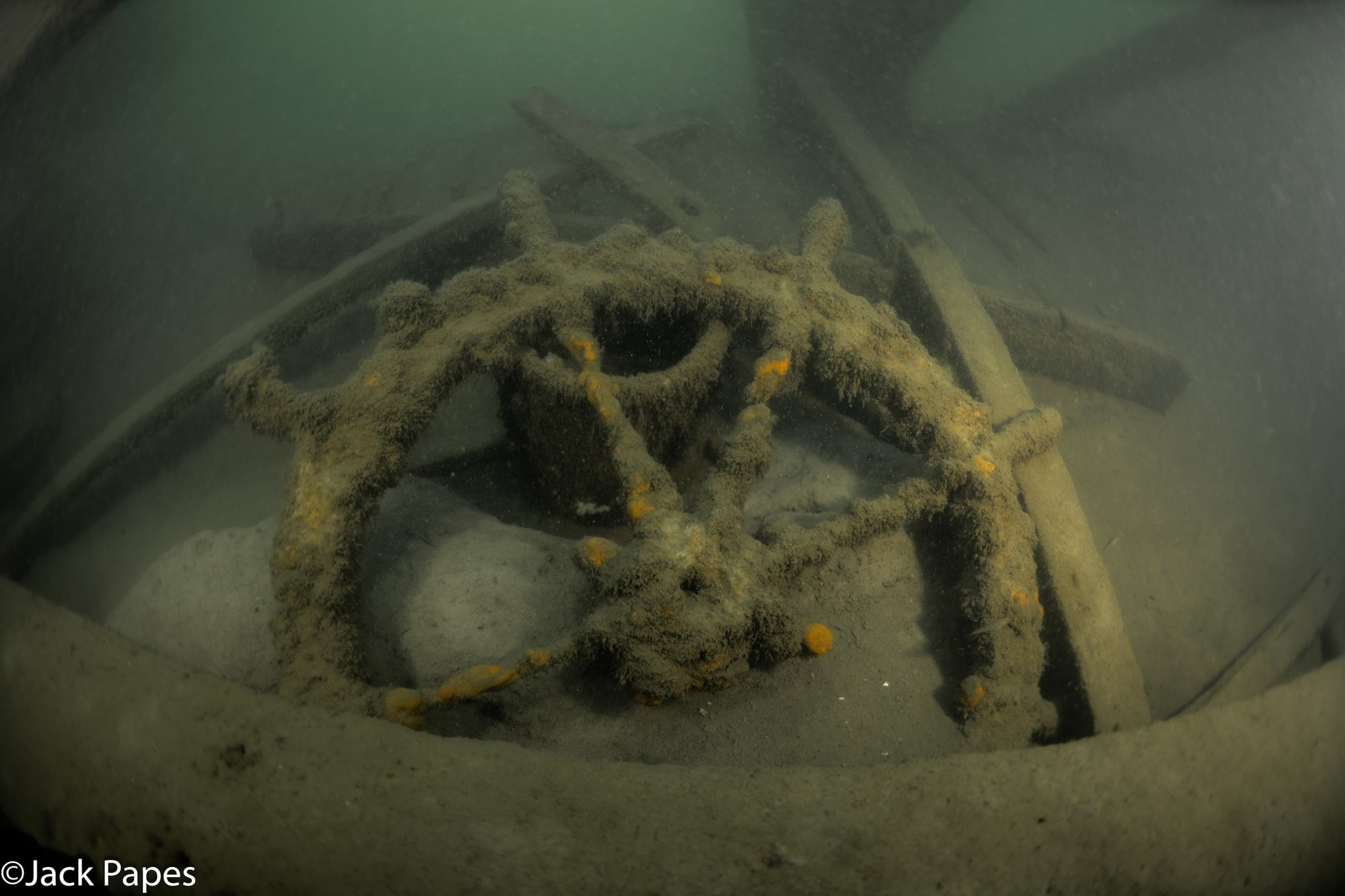
The wheel of the Clough (courtesy National Museum of the Great Lakes / CLUE)
The Great Lakes are a source of inspiration for wreck hunters, and new finds turn up every year. The latest, announced this week by the National Museum of the Great Lakes and the Cleveland Underwater Explorers (CLUE), is the wreck of a stone-carrier, the bark Clough.
The Clough was a 125-foot, three-masted sailing ship built in 1867. It was in service for just a year before its sinking on September 15, 1868.
"This discovery represents both a significant chapter in Great Lakes maritime history and a meaningful continuation of David VanZandt’s legacy," said Carrie Sowden, Director of Archaeology and Research at the National Museum of the Great Lakes.
The project was personal for the group. CLUE's founder, David VanZandt, died in a diving accident in 2024 during the identification effort for the Clough. Sowden told the Detroit News that VanZandt, 70, had sustained a medical issue while submerged and did not survive.
Just last week, another Great Lakes Shipwreck find was announced - this one in Lake Michigan off Racine, Wisconsin. The find was the luxury passenger steamer Lac La Belle, which went down in a storm in 1872; it was discovered by two experienced wreck-hunters, Paul Ehorn and Bruce Bittner. Ehorn, who is 80, no longer dives; two recruited divers, John Janzen and John Scoles, went below to gather evidence for the wreck identification.
Japanese Cargo Ship Hits Fishing Boat, Splitting It and Killing Two
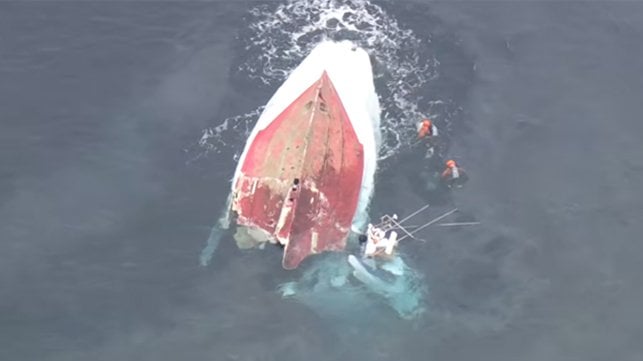
Rescue divers checking the fishing boat which was split in two (Japanese TV)
A small Japanese coast cargo ship is reported to have run down a recreational fishing boat midday on Friday, February 20, killing two people and injuring at least seven others. The force of the impact split the recreational fishing boat in two.
The cargo ship Shinsei Maru (499 tons) had completed offloading a cargo of steel on Friday morning and departed Kinuura Port bound for Kurashiki Port. It is a new vessel that only entered service in 2025 and had a crew of five aboard.
According to the reports, the recreational fishing boat was for hire and took 12 passengers out at midday near Toba City in central Japan. According to other fishing boats in the area, they had anchored about 10 to 15 minutes earlier and just begun fishing when the cargo ship appeared. A crewmember on another boat said he saw the cargo ship bearing down on the Kousei Maru (16-ton) fishing boat measuring 15 meters (49 feet) and sounded his horn in hopes of drawing attention.
The cargo ship struck the fishing boat with sufficient force to split the small boat in two. The 12 fishermen and the captain were thrown into the water. Luckily, they were reported to be wearing life jackets.
The captain of the cargo ship reportedly called the Coast Guard and said, “We hit a fishing boat … or something.”
Other fishing boats and the Coast Guard immediately responded. They retrieved 12 of the people, and initially, one was reported missing. That person was found after about an hour. Two of the people were in cardiac arrest and rushed to a hospital, where they were pronounced deceased. Five people were reported to be seriously injured, and two others also sustained injuries. Among the injured was the captain of the fishing boat, and the two deceased were reported to be a 60-year-old and an 85-year-old who were aboard for the half-day fishing excursion.
The cargo ship was initially held at the scene for an inspection, and reports said the captain was not at the helm when they struck the boat. None of the crew was injured. The ship was later directed to a port for further investigation.
Cargo Resupply Mission to U.S. Antarctic Station Completed
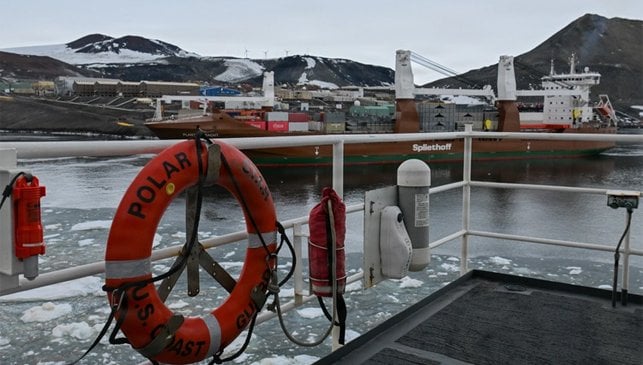
Plantijngracht arriving in Antarctica earlier this month seen from the deck of USCG Polar Star (USCG photo)
Military Sealift Command Pacific reports the 2026 cargo resupply mission for U.S. Antarctica operations has been completed. They note that MSC has been sending chartered cargo ships each year to the McMurdo Station since the operation was established in 1955.
The cargo portion of this year’s operation was carried out with the Dutch heavylift vessel Plantijngracht (19,330 dwt) operated by Spliethoff. The vessel departed Port Hueneme, California, in early January after loading this year’s cargo shipments.
The Plantijngracht arrived in Winter Quarters Bay, Antarctica, on February 4, after a stop in New Zealand. The first part of the mission, which is known as Operation Deep Freeze, was the offloading of a 65-ton floating Modular Causeway System (MCS). MSC reports it was being used instead of the traditional ice pier this year due to the size and weight of the ship’s cargo.
Once the system was in place and secure, the Plantijngracht began the offloading of 372 pieces of cargo. The operation included members of the Navy Cargo Handling Battalion ONE and consisted of containers filled with dry goods and supplies needed for the year’s survival at the remote Antarctic outpost. Offloading all the material required two weeks.
Following the offload, the Plantijngracht was loaded with containers of retrograde cargo for transportation off the continent. This includes trash and recyclable materials for disposal and equipment no longer required at the station. It also removed the landing system that had been put in place for the cargo operation.
Before departing McMurdo Station, the Plantijngracht was also loaded with ice core samples that will be stored on the ship in a sub-zero freezer. The ice core samples will be delivered to the United States for scientific study.
The Plantijngracht departed on February 18 and will make stops in Christchurch, New Zealand, and Yokohama, Japan, where it will offload the MCS. It will then proceed to Port Hueneme, California, where it will offload the retrograde cargo and ice core samples.
This year’s cargo operation was the first in years to use a foreign-flag vessel. In recent years, the operation has been handled by two American-flagged vessels, Ocean Giant and Ocean Gladiator (each 17,500 dwt). Plantijngracht is slightly larger than the U.S. vessels.
Another part of this year’s resupply mission included the delivery of fuel aboard the tanker Stena Polaris. The vessel was spotted on the Arctic webcam at the end of January, arriving at the base. It was aided in its transit by the USCG icebreaker Polar Star.
Long-Range Ukrainian Strike Hits ICBM Plant 800 Miles Inside Russia
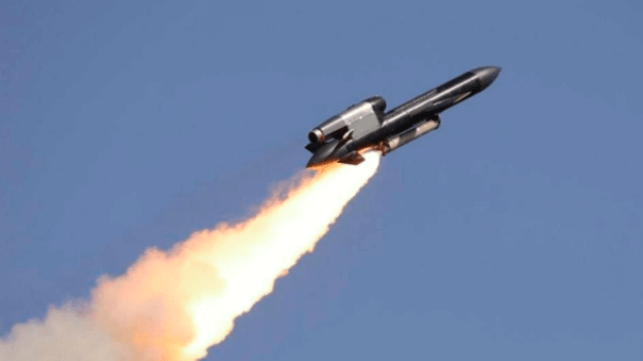
Flamingo jet-powered cruise missile on takeoff (FirePoint)
A Ukrainian strike on the Votkinsk ballistic missile plant in Russia’s Udmurt Republic on February 21 indicates that they have been able to extend the range of their attacks on targets deep in Russia using Flamingo cruise missiles.
The Votkinsk plant is one of Russia’s major production facilties for the manufacture of Iskander and Oreshnik ballistic missiles. These are currently Russia’s most effective ballistic missile systems, largely because of the shortage of uniquely-capable Patriot air defense missiles. For the Ukrainians, the shortage of Patriots can be counteracted by destroying the Iskanders and Oreshniks while they are in production.
The Votkinsk Plant also produces the full range of ballistic missiles facing off against the West, from the heavy-weight intercontinental ballistic missiles such as the RS-24 Yars, RT-2PM2 Topol-M missiles and RSM-56 Bulava submarine launched ballistic missile, through to a family of intermediate ballistic missiles, including Scud-A/Bs, SS20s and SS23s.
The accuracy and success of the raid is not yet clear. Social media reports indicate casualties, black smoke above the factory and blast-blown windows in neighboring buildings. Flamingo missiles appear to have reached their target – many more than if the attack had been launched with the converted light aircraft drones which the Ukrainians have previously had to rely on. It appears therefore that the production problems affecting the manufacture of Flamingo missiles may be over, and that the numbers emerging out of the factories is increasing. Flamingos will in due course be supplemented by ballistic missiles, such as those being developed for Ukraine under the United Kingdom’s Project Nightfall program.
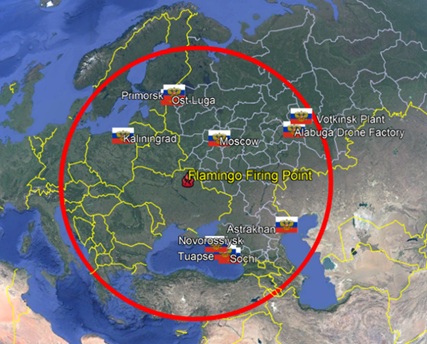
The Votkinsk Plant lies 800 miles from the Ukrainian border, implying the Flamingo's range is on the order of 1,000 miles. This puts all of Russia’s western oil-exporting ports in range, plus Kaliningrad, Caspian seaports (through which Iranian arms exports are reaching Russia), the Kerch Bridge to Crimea and also the highly-developed Russian internal sea canal network. Close by the Votkinsk Plant is the factory in the Alabuga Special Economic Zone producing Iranian-derived drones.
Flamingo range radius from an optimal firing point in northeastern Ukraine (Landsat/Google Earth/CJRC)
After a year in which the front line has barely changed, with Russian control of Pokrovsk still not consolidated, there have been greater dynamics in recent weeks, both on land and at sea. Ukraine is reporting to have consolidated its hold this month over 115 square miles of territory in the south-east. Russia has continued with very damaging mass missile and drone attacks on Ukrainian infrastructure, designed to exploit the harsh winter weather.
Russian oil exports, which are critical to Russia’s financing of the war, fell from an estimated 3.8 million bpd in December and are currently running at 2.8 million bpd, with interceptions at sea on the increase. There is no early end in sight to the war, with neither a sign of a Russian breakthrough nor a Ukrainian collapse of will.
Ukrainian Drones Hit Russian Patrol Boats
and Maritime Patrol Aircraft
A Ukrainian drone closes in on a border patrol boat near Sevastopol (Ukrainian General Staff)
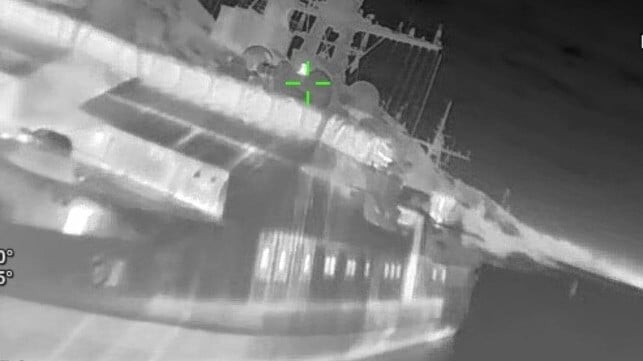
On Saturday, Ukraine's armed forces renewed their campaign of drone strikes on the naval harbor at Sevastopol, hitting two patrol ships - and proving that the port remains high-risk for Russian assets.
In a statement, Ukraine's general staff said that its drone forces hit two border guard ships moored near the town of Inkerman in Crimea, at the easternmost end of Sevastopol Bay. The vessels damaged were Project 22460 Rubin-class fast patrol boats, a vessel class previously targeted in the Caspian in December. Battle damage assessments were not released.
In addition, the drone operation hit two Be-12 turboprop aircraft at a repair plant in Yevptoria. The Be-12 is an amphibious maritime patrol aircraft fitted for antisubmarine warfare, and has been used by Russian forces to find and track Ukrainian drone boats for interception. Open-source intelligence analysts note that the Yevptoria repair site had a small collection of defunct Be-12 airframes that have been used for parts, and it is unclear whether the example struck Saturday was in airworthy condition. Even if a mothballed plane were destroyed, its elimination could assist in keeping the few other surviving examples of the aircraft on the ground.
Ukraine previously targeted and destroyed two Be-12s in September 2025, likely a world-first for a drone strike. The amphibious aircraft are a priority target for Ukraine, as they are a rare, irreplaceable asset and a key part of Russia's defenses against maritime attack - particularly unmanned-sub attack. Ukraine is transitioning to submersible attack drones for top-priority missions, and the Be-12 is one of the few Russian platforms capable of detecting and combating submersibles in the Black Sea region.
The strikes highlight the Crimean region's vulnerability to attack, which is the reason why Russia's naval forces have largely abandoned Sevastopol, the Soviet-era home of the Black Sea Fleet. Previous strikes have hit a Kilo-class sub, several tank landing ships, and the fleet's headquarters building, among other assets at the port. The Russian Navy has pulled back to the relative safety of the port of Novorossiysk, further from Ukraine's shores - but it remains vulnerable to long-range drones.
Russia's Shadowy Oil Export Network Shows Signs of Central Coordination
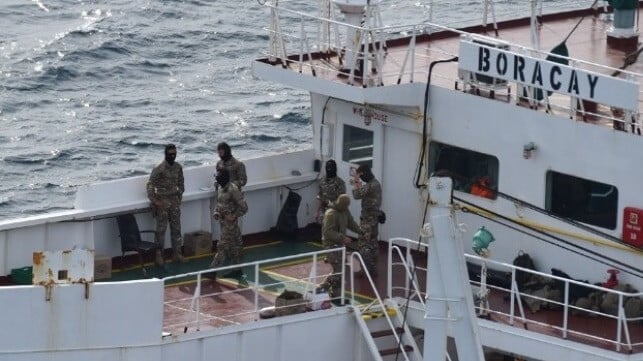
Not as independent as it looks: the Russia-facing shadow fleet tanker Boracay, visited briefly by French commandos last year (French General Staff)
It is well understood that Russia uses a complex network of oil traders and "shadow fleet" shipping companies to evade restrictions and maintain exports of oil and gas. This network has disappeared further underground since sanctions were imposed on Rosneft and Lukoil, the two biggest Russian producers, in October last year. It has been an assumption that while coordinated by the Russian state, which owns most of the oil being exported, the constantly changing cast of companies involves a large number of independent entrepreneurs. An in-depth investigation by the Financial Times has discovered that far from being independent, the network of oil traders and shadow fleet shipping companies furthering the trade use a common architecture, with the bulk of the supposedly independent firms in fact utilizing the same IT infrastructure.
By way of background, in July 2025 Moscow’s Higher School of Economics began offering a Masters academic course in sanctions evasion, equipping students with the skills to "identify and assess the risks of sanctions and other measures imposed by supervisory authorities on companies", with 18 of the 20 student places reserved for Russians. This suggests that the Russians have an organizational concept for sanctions evasion.
The Financial Times investigators estimated that more than 80 percent of Russian crude produced for export by Rosneft was being exported through a single coordinated network of commodity brokers, a surprisingly high dependency on what could easily become a single point of failure.
The investigation based its conclusions on an analysis of names and addresses of known middlemen broker companies, some of them sanctioned, which found that these entities used a single private server “mx.phoenixtrading.ltd” for their email, showing that they had a common IT infrastructure and by implication shared back-office functions. When all 448 domains using the private server were identified, 48 were clearly identified as Russian-associated oil traders, and that these alone accounted for 80 percent of Russian crude produced for export by Rosneft. The investigation did not confirm but found strong indications that many of the remaining domains are associated with the other side of the business, namely the ownership and management of Russia-facing shadow fleet tankers. This deduction is based on the middlemen's propensity to charter tankers formerly associated with Russian state oil major Rosneft – a fleet now transferred to anonymous ownership vehicles in order to evade sanctions.
Within the network, there are constant changes in the names of companies involved. The time lag between a company’s date of registration and the time the detail appears on public company registers is exploited – so that by the time involvement in sanctions-breaking is identified, the broking company may once again have moved on and changed its name. Names are often chosen which can easily be confused with those of legitimate companies. Having a common infrastructure and administrative set-up of course makes it easy for companies to be created, dissolved and renamed at speed to keep ahead of sanctions investigators.
The investigation identified that the single largest exporter of Russian crude in the network is Redwood Global Supply FZ LLC, a company registered in Ras al Khaimah and sanctioned by the UK in December 2025. The rise in Redwood activities matches the decline of Lukoil and Rosneft exports, coincident with the imposition of sanctions. Oil is brought into the system by Redwood, then distributed amongst one set of purchasing brokers, and then sold on to another set of brokers for delivery. As oil is bought, transferred and sold within the network, specific oil source descriptors are replaced with generic descriptors, hiding the origin.
The Financial Times investigation had no conclusive evidence as to who controlled this middleman network with common traits, which it tentatively identified with the descriptor Coral Energy. It does however identify two linked Azeri businessmen as having central roles in the wider Coral Energy enterprise: Tahir Garayev, who is sanctioned by the UK, and EU-sanctioned Etibar Eyyub, a close associate of Igor Sechin, CEO of Rosneft. An Azeri mafia of racketeers is very active in Russian business dealings - a frequent source of conflict between the Russian and Azerbaijani governments.
How the Coral Energy organizational structure is linked back to Russian state control is not absolutely clear, but the Coral Energy network is clearly earning huge brokerage fees through this sanctions-avoidance scheme, and no doubt feeding funds to members of the Russian oligarchy. A continued flow of such corrupt payments is a powerful incentive for President Vladimir Putin’s associates to prolong the war in Ukraine.
Given that many of the entities identified by the Financial Times are already sanctioned, authorities are clearly aware of some - but not all - components of the network and how it works. But sanctions listings and EU sanctions packages take time to promulgate. Even then, the enforcement mechanisms lags far behind the designation procedures.
In any case, it is reasonable to attribute some of the dramatic fall recorded in Russian oil export volumes in recent months not just to additional sanctions listings, but to the U.S. political warnings to importing countries such as India. Ukrainian overt and covert attacks on Russian dark fleet operations and infrastructure and the physical interception of dark fleet tankers at sea have played a part. Some nations have stepped up interceptions, based on registration issues or safety and labor concerns. Others however are content to allow the dark fleet unimpeded access through their territorial waters, and overlook transshipments at sea.
Still, while Kpler estimates that Russian oil exports have fallen from 3.8 million bpd in December and are now running this month at 2.8 million bpd, more could clearly be done by leading allies of Ukraine – and more action could have a decisive effect on Russia’s ability to keep on fighting.
One issue is raised in particular by the Financial Times investigation. It identifies Redwood - based in Ras al Khaimah, formerly known as the Pirate Coast - as the export clearing house. Corroborated by collateral record searches, it also identifies a large number of UAE oil traders and brokers who then take the import-export process forward.
Alongside these brokers are also a substantial number of ship managers and owners based in the UAE, organizing ship-to-ship transfers and sending cargos to their ultimate destinations, primarily in China and up until recently in India. The UAE appears therefore to be acting as an open market place, and the co-location of so many of the components of the trade probably means that many of the arrangements can be made face-to-face without leaving an electronic paper trail.
Some of the network of brokers and dealers in the UAE make little attempt to hide their activities. For example, Atlantic Jiu Yu FZE, commercially registered in the Ajman Free Zone, openly advertises that it is a supplier of Russian oil to India.
Nonetheless, Western authorities - and individuals living in the UAE worried about maintaining their residency - have been reluctant to criticize the UAE for acting a safe haven for Russian sanctions evasion, for fear of upsetting the UAE authorities and their sovereign investment funds. But given the profits being made, this activity is spreading and unlikely to be ignored forever, risking the UAE’s return to the Financial Action Task Force (FATF) Grey List, from which it was only released in February 2024. Were this to happen, significant additional due diligence procedures and financial restrictions would be reimposed on the UAE’s substantial and growing maritime community, and not necessarily restricted to the tanker sector. This is not a theoretical risk: Kuwait was added to the Grey List only last month after the FATF determined that it lacked adequate controls to combat money laundering and terrorist financing.
Russian Military Cargo Ship Continues Mysterious Maneuvers
The Portuguese Navy confirms it monitoring the movements of the Russian military cargo ships (Marinha Portuguesa)
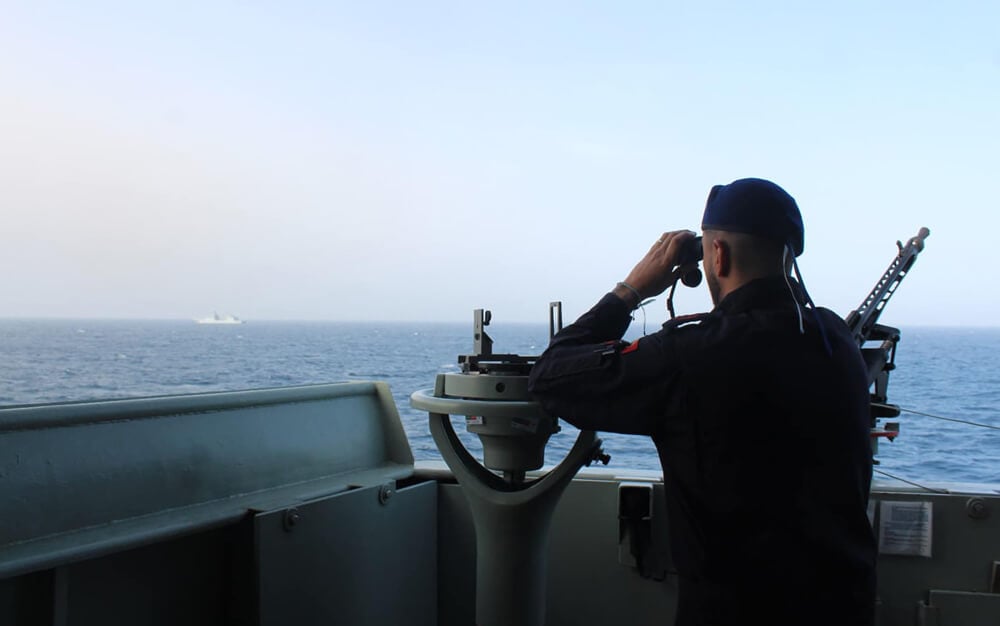
After having spent five days east of Sardinia, the Russian-flagged military cargo ship Sparta IV is again drawing attention, now maneuvering west of Portugal. The ship is drawing focus from the NATO allies for its unexplained behavior, which is also leading to broad speculation online.
The Sparta IV was well-known as a participant in the so-called “Syrian Express” and was used to remove military equipment after the fall of the Asad government. With its history of transporting military equipment, the NATO allies closely track its movements, but so far, no one can explain what the ship is doing during this trip.
While it was off Sardinia, the Italian Navy was observing the ship, which reports said was traveling with the Russian destroyer Severomorsk and the tanker Kama. There was also speculation that a Kilo-class submarine was below the surface with the ships.
It seemed unlikely that it was a weather-related detour, and then, as mysterious as its presence, the ship resumed its course west. At the end of last week, it was again seen sailing back and forth east of Gibraltar and Alicante on the southeast coast of Spain. The ship drew the attention of the Spanish Navy, which reportedly sent BAM Audaz, a patrol boat, to investigate. Itamilradar reports the ship remained beyond the 12 nautical mile limit in international waters. It speculates the delay might have been weather-related, with forecasts of storms west of Gibraltar.
The Sparta IV got underway again, but this time, Itamilradar reports the destroyer and tanker separated and sailed west. A Russian Navy landing ship, RFS Aleksandr Otrakovsky, however, appeared to be escorting her through the Strait of Gibraltar.
This drew the attention of the UK, which sent HMS Cutlass from the Gibraltar naval base to monitor the ship. A French Navy maritime patrol aircraft was also overhead, adding to the monitoring. Itamilradar reports the ship had gone dark for several days, but its AIS was switched back on before it approached Gibraltar.
The mystery, however, has deepened again after the Sparta IV started north. It stopped above Lisbon and is now being observed sailing back and forth west of the traffic lanes.
Portugal’s Lusa news agency made inquiries to the Portuguese Navy, and it says sources told them the ship was being monitored. The Sparta IV has been off the coast of Portugal since approximately 8:00 p.m. Sunday, February 15, and it remains going back and forth as of February 18.
"The ship is sailing from south to north along the Portuguese coast, currently remaining off the coast of Nazaré, outside the maritime traffic corridors, in areas with depths greater than 3,000 meters," the Navy reportedly told Lusa in response to the inquiry.
The AIS signal shows the vessel is heading to the Russian port of Kaliningrad on the Baltic. It says it is not due until February 27.
Speculation has been that the ship might be experiencing mechanical problems or attempting to avoid heavy weather. Espionage, of course, gets mentioned, as do possible deep-sea surveys. Others point to the potential presence of undersea cables in some of the locations the ship has been sitting for days.
The Portuguese Navy would only say to Lusa that it will continue to monitor the Sparta IV, which is classed as a merchant ship, until it leaves Portuguese waters. The news agency reports the Navy said last year it monitored 69 Russian ships in Portuguese waters, and well over 100 Russian ships have been tracked transiting Portuguese waters in recent years.
Denmark Detains Shadowy Boxship Linked to Iran Questioning Registration
U.S. said the containership was part of a network of ships controlled by an Iranian with links to Iran's Supreme Leader (photo courtesy of VesselFinder)
The Danish Maritime Authority confirmed to local media that it has placed a detention order on a shadowy containership until the vessel can prove its registry and certifications. The vessel was sanctioned in July 2025 by the United States as part of a network including more than 50 vessels that the U.S. said were part of the vast shipping empire controlled by Mohammad Hossein Shamkhani, the son of Ali Shamkhani, a top political advisor to the Supreme Leader of Iran.
When the U.S. sanctioned the vessel, which at that point was identified as Cerus, the report said it was registered in St. Kitts and Nevis. In October 2025, the ship changed names to Nora and falsely claimed it was registered in Aruba and two months later in Comoros.
Built in 2003, the ship is 37,100 dwt with ownership listed in Dubai. Bureau Veritas lists that it withdrew the ship’s class certification in August 2025 for “non-compliance with conditions of class/recommendations.” Equasis lists its last known inspection in 2022.
Denmark’s TV 2 reports the vessel had gone dark while it was in St. Petersburg, Russia, in mid-January and then sailed west into the Baltic and reached Skagen, where it stopped on January 22. The following day, it anchored less than 20 miles east of Aalbaek, Denmark, where it has remained for the past 28 days.
A Danish patrol ship was spotted near the vessel along with a Danish Armed Forces sea drone. The Danish Maritime Authority reports it questioned the vessel’s registry in Comoros and was informed by the authorities that the ship was “not correctly registered.” Apparently, when they questioned the vessel further, it suddenly raised an Iranian flag, prompting the detention.
The Danish Maritime Authority told TV 2 in a statement, “The ship has been detained until a flag state proves to the Danish Maritime Authority that the ship is registered and fully certified.” In addition, Denmark said it plans to conduct a port state inspection on the vessel when weather conditions permit.
TV 2 reports that the Cerus/Nora has passed through Danish waters at least 10 times in the past year as part of frequent trips to Saint Petersburg. They report each time the vessel has stopped sending position data as it approached Russia.
The U.S. asserted last year that the fleet of ships controlled by Hossein was transporting oil and petroleum products from Iran and Russia, as well as other cargo, to buyers around the world, generating tens of billions of dollars in profit. The Treasury Department linked the containership to a company called Reel Shipping, which it said controlled six additional ships.
Top photo of Cerus in 2022 by Ida - courtesy of VesselFinder
Turkiye Ladder Truck Saves Six Crewmembers From Sinking Ferry
Last week, Turkish firemen used novel means to save the crew of a stricken ferry at a shipyard in the town of Gialova, Turkey.
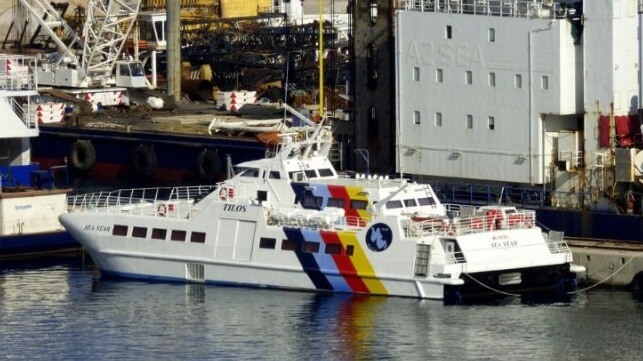
The ferry Sea Star Tilos, which ordinarily operates an international route between Rhodes and Fethiye, was moored alongside at the Altinova Shipyard in Gialova for repairs. The vessel began taking on water in poor weather conditions, and it began to sink.
In an unorthodox and inventive move, the local fire department dispatched a ladder truck to the scene. The firemen lowered the ladder's elevation to near-horizontal and extended it out over the water. Each crewmember hopped into the manbasket at the far end of the ladder, and the fire engine crew brought them back in to shore by retracting the ladder.
All six crewmembers from the Tilos were rescued safely and given a medical evaluation. No injuries were reported. However, the ferry went down near its berth, raising the possibility of pollution.
Sea Star Tilos is a small twin-hulled surface effect ship (SES), a rare vessel class that has the speed of a hovercraft and the stability of a catamaran.
Indigenous protesters and environmental activists in Brazil are showing resolve in their push to stop government projects which they believe will destroy Amazonian rivers and the rainforest, with U.S grain-trading giant Cargill caught in the middle of the controversy.
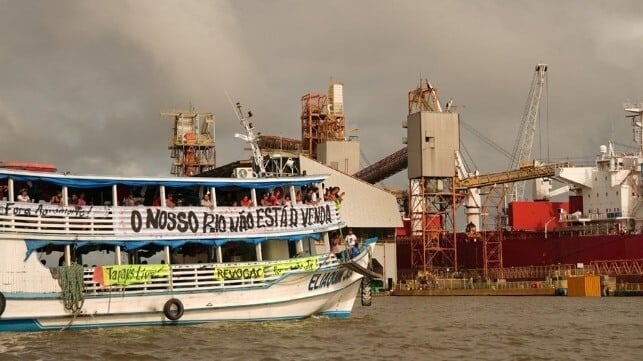
On February 19, about 400 activists in four boats intercepted a grain barge that was docked at Cargill’s terminal in Santarém. The protesters approached the barge on the urban stretch of the river while it was docked at the terminal, with the police moving in to impede their boats prompting many to jump into the river and managed to board the barge and inscribe the words “The Tapajós River isn’t for sale” and “Revoke the Decree of Death.”
The defacing of the barge, which is part of the soy supply chain operating through the Northern Arc logistics corridor, came on the day when a Brazilian court issued a second order to the government to remove protesters who have been staging a blockade at Cargill’s terminal over the past two weeks.
The indigenous protesters have vowed not to relent in the push to demand the repeal of a decree by the federal government last year that saw the Madeira, Tapajós, and Tocantins Rivers included in Brazil’s National Privatization Program. The protestors are also demanding the immediate annulment of plans to dredge the Tapajós River, which they reckon will have adverse impacts on the Amazonian rivers and the rainforest ecosystem.
According to the protesters - led by non-governmental organization Amazon Watch - the government is using the Tapajós River dredging project as a central piece of a much larger project that is being pushed by agribusiness and global commodity traders, whose aim is to transform Amazonian rivers into industrial export corridors for soy and corn. They argue the project comes when the Northern Arc export corridor is already driving deforestation and eroding socio-biodiversity.
“It is essential to take a critical look at the cumulative impacts of the Northern Arc project. Ferrogrão, the expansion of private grain ports, and the Tapajós waterway together could increase soy volumes by five to seven times, intensifying pressure on traditional territories,” said Renata Utsunomiya, transportation policy analyst at GT Infraestrutura, a coalition of civil society organizations.
Utsunomiya added that the consequences of the project go beyond impacts on the Tapajós River because it will likely accelerate deforestation and threaten Brazil’s own climate commitments to reduce forest loss. The project could instigate land speculation and grabbing, soy expansion deeper into the Amazon, water contamination, changes in river flow dynamics and escalating violence along the soy transport routes, Utsunomiya warned.
Brazil remains as the world’s largest soybean exporter with record-breaking shipments in 2025 totaling 109 million tonnes, a 12 percent increase from 2024. China remains the dominant buyer, purchasing nearly 70 percent of the country’s total exports.
Report: Israeli Regulator and Union Threaten Sale of Zim to Hapag
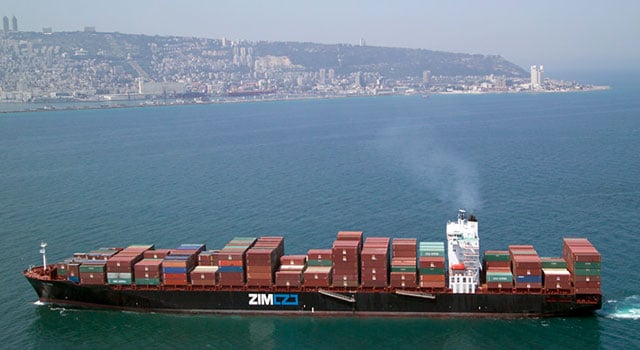
Zim has been viewed as a national asset in its 80 year history (file photo)
Reports from Israel continue to cite pockets of opposition to the agreement to sell Zim to Hapag-Lloyd in a deal valued at $4.2 billion and then split it into domestic and international operations. Zim has long held a unique position, viewed as a national asset, and many believe it is critical to the security of the Israeli state.
Zim dates back to the formation of Israel, and in its 80-year history, it has been a means of transporting cargo for the Jewish state. In the early days, Zim brought immigrants and the displaced people of Europe to settle in Israel. It maintained passenger service into the 1970s and grew as cargo and then container shipping company. While it has been restructured and went public in 2013, it has remained an Israeli asset.
The news outlet Calcalist, which broke the news of the agreement with Hapag-Lloyd, continues to report on the pockets of opposition, including from critical segments of the government. It writes that Transportation Minister Miri Regev may be attempting to block the transaction. Regev is also seeking, it says, inter-ministerial discussions with the Government Companies Authority, the holder of the Golden Share in Zim.
As part of the agreement to let the company go public just over a decade ago, the Government received the Golden Share, which gives it the authority to approve any sale or change in control of the company above 35 percent ownership. Key stipulations include that Zim must remain an Israeli company, with its headquarters and operational center in Israel. The CEO and chairman must also be Israeli citizens. The company has to have at least 11 vessels, which can be requisitioned by the state in times of emergency.
Calcalist reported on February 19 that it has seen a draft position paper from the Government Companies Authority that concludes “the state may not be able to approve the deal.” Calcalist notes that the final terms have not been submitted for approval to the authority, but based on media reports, there is concern that the terms are “inconsistent with the Golden Share.”
Hapag’s solution is to split Zim with a deal to sell the 16 company-owned vessels, the brand, and the Israeli operations to the country’s largest private equity fund manager, FIMI. A new Zim would be created for the trade routes serving Israel, and with access to Hapag and the Gemini Cooperation with Maersk.
FIMI founder and CEO Ishay Davidi is reported to be saying they recognize the strategic importance of Zim. They are committed to building a stable Israeli company.
The news outlet, however, says there are concerns about the change in the legal structure of the company. Analysts also note that the new Zim would be a small company, dependent on its international relationships, at a time when the industry is consolidating in the hands of a few giants. News reports also highlight the investments by Qatar and Saudi Arabia in Hapag-Lloyd.
At the same time, the union representing about 800 Zim employees in Israel fears large layoffs. It says it received minimal commitments for possibly as few as 120 people, with the others all facing layoffs. The union asserts that the board was not responding to it in the last two weeks, and it was given a last-minute notification without securing job protection.
The union immediately started a two-day “warning strike,” and despite assertions in the media that Hapag was protecting the jobs, the union says it moved to a full strike as of February 18.
Oren Caspi, chairman of the workers’ union, told Calcalist, “Ships are already standing idle, and damage is accumulating. We will paralyze the company if necessary.”
Calcalist reports that the general strike includes office workers in Israel. It says it has also expanded to disruptions across the company’s operations, including loading and unloading of vessels.
BRANDING
Florida airport to be renamed after US President Donald Trump
Workers on an aerial lift watch after installing a new banner featuring an image of US President Donald Trump on the facade of the US Department of Justice headquarters building in Washington, DC - Copyright AFP Brendan SMIALOWSKI
An airport in Florida will soon be renamed after US President Donald Trump, after a bill proposing the change was approved by the state’s legislature on Thursday.
Trump, a real estate mogul who has plastered his name on buildings around the world, has sought to leave his mark on the country in an unprecedented image and building campaign.
Florida’s Republican-led legislature approved a bill to rename the Palm Beach International Airport as the “President Donald J. Trump International Airport,” state records show. Governor Ron DeSantis, once a Trump opponent, is expected to sign the measure into law.
The airport in Palm Beach, a town known for its sandy beaches and luxurious estates, is just minutes away from Trump’s Mar-a-Lago residence.
The airport renaming will also require the approval of the Federal Aviation Administration.
It would then become the latest institution to be renamed after Trump.
The president’s handpicked board of the Kennedy Center, an arts complex and memorial to late president John F. Kennedy in Washington, voted in December to rename itself the “Trump-Kennedy Center.”
The same month, the State Department added Trump’s name to the US Institute of Peace.
Trump has also sought to rename New York’s Penn Station and Washington’s Dulles International Airport after himself, according to US media reports, although those efforts were rebuffed.
The Treasury Department has confirmed reports that drafts have been drawn up for a commemorative $1 coin featuring Trump’s image, even though there are laws against displaying the image of a sitting or living president on money.
On Thursday, a large blue banner featuring Trump’s face was draped across the headquarters of the Justice Department, an agency traditionally seen as outside the reach of political influence.