Monday, February 23, 2026

Andes Iron’s $2.5B Dominga project in Chile hits fresh snag
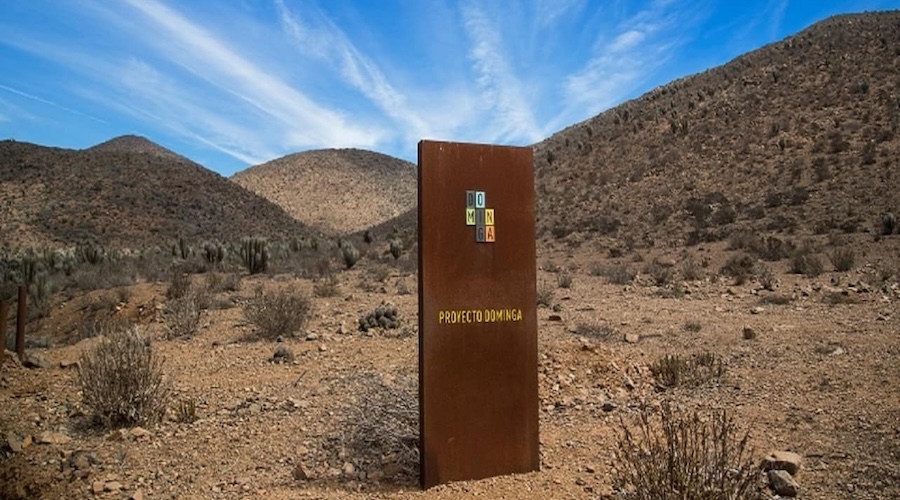
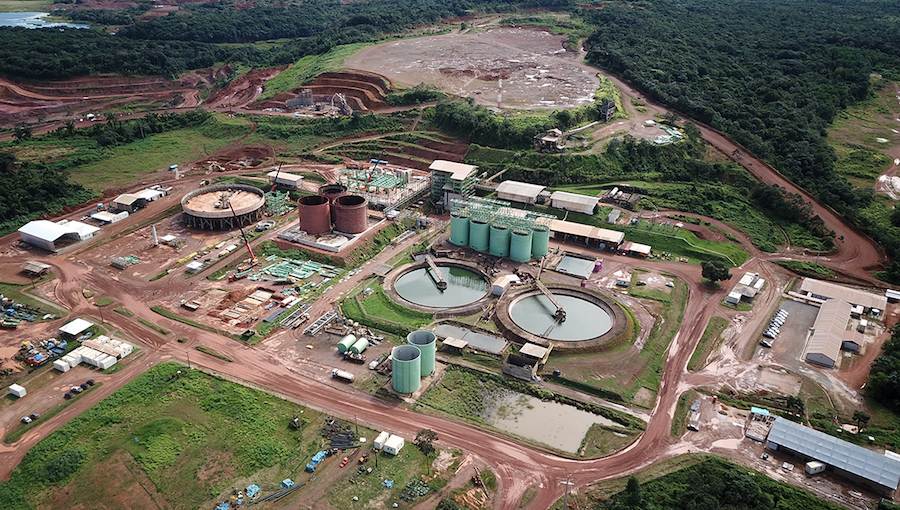
The project has been stalled on concerns over biodiversity impacts and lack of a mitigation plan for potential spills. (Image courtesy of Dominga Project site.)

A Chilean court of appeals has overturned a favourable court ruling in the long-running dispute over Andes Iron’s $2.5 billion Dominga iron ore and copper project, effectively sending the development back into legal limbo.

The Antofagasta Court of Appeals on Saturday unanimously annulled a ruling by the First Environmental Court that had ordered a committee of ministers to hold a new vote on the proposed mine and port in the central Coquimbo region, calling the move inadmissible and procedurally flawed. 

The court did not assess the project’s merits, focusing instead on whether the enforcement vote process was valid.

It said the earlier judgment did not create an enforceable right or resolve the core dispute. Because the Supreme Court had previously instructed the Committee of Ministers to issue a new decision rather than approve or reject Dominga outright, there was no final ruling to enforce, the appeals court found.

The decision send the case back to the special Committee of Ministers, which has already rejected Dominga three times, most recently in January last year. Andes Iron appealed that rejection, and in September the Supreme Court revived the project and ordered ministers to vote again.

Two pits and a port

Dominga, first submitted in 2013, would include two open-pit mines, North and South, and a port, with an estimated 26.5-year lifespan. The project is designed to produce 12 million tonnes a year of high-grade, low-impurity iron concentrate and 150,000 tonnes a year of copper concentrate. Andes Iron says it would create 30,000 jobs and meet strict environmental standards after years of review.

The site lies about 500 km north of the capital, Santiago, near the Humboldt Penguin National Reserve and other protected areas. Environmental groups and President Gabriel Boric’s government oppose the project, arguing its proximity to ecologically sensitive zones poses unacceptable risks to protected species. The location has turned Dominga into a flashpoint in Chile’s broader debate over resource development and conservation.

Andes Iron called the decision disappointing but stressed it was procedural and did not address the project’s technical or environmental merits. “This decision in no way discourages us or alters our commitment to move forward with the Dominga project,” the company told Emol.com, adding that Dominga has passed rigorous reviews and complies with regulations.

Billions in stalled projects

The drawn-out dispute has made Dominga a symbol of the complex permitting system in one of the world’s leading mining jurisdictions. Business groups and conservative politicians argue political considerations have weighed too heavily on major investment decisions.

Chile faces an estimated $105 billion backlog in mining investments, according to industry estimates, as companies push for reforms to environmental assessment and permitting rules they say have slowed approvals and raised costs.


Discover more
Commodity futures trading course
Critical minerals supply chain data
communication


Andes Iron’s $2.5B Dominga project in Chile hits fresh snag


The project has been stalled on concerns over biodiversity impacts and lack of a mitigation plan for potential spills. (Image courtesy of Dominga Project site.)

A Chilean court of appeals has overturned a favourable court ruling in the long-running dispute over Andes Iron’s $2.5 billion Dominga iron ore and copper project, effectively sending the development back into legal limbo.

The Antofagasta Court of Appeals on Saturday unanimously annulled a ruling by the First Environmental Court that had ordered a committee of ministers to hold a new vote on the proposed mine and port in the central Coquimbo region, calling the move inadmissible and procedurally flawed. 

The court did not assess the project’s merits, focusing instead on whether the enforcement vote process was valid.

It said the earlier judgment did not create an enforceable right or resolve the core dispute. Because the Supreme Court had previously instructed the Committee of Ministers to issue a new decision rather than approve or reject Dominga outright, there was no final ruling to enforce, the appeals court found.

The decision send the case back to the special Committee of Ministers, which has already rejected Dominga three times, most recently in January last year. Andes Iron appealed that rejection, and in September the Supreme Court revived the project and ordered ministers to vote again.

Two pits and a port

Dominga, first submitted in 2013, would include two open-pit mines, North and South, and a port, with an estimated 26.5-year lifespan. The project is designed to produce 12 million tonnes a year of high-grade, low-impurity iron concentrate and 150,000 tonnes a year of copper concentrate. Andes Iron says it would create 30,000 jobs and meet strict environmental standards after years of review.

The site lies about 500 km north of the capital, Santiago, near the Humboldt Penguin National Reserve and other protected areas. Environmental groups and President Gabriel Boric’s government oppose the project, arguing its proximity to ecologically sensitive zones poses unacceptable risks to protected species. The location has turned Dominga into a flashpoint in Chile’s broader debate over resource development and conservation.

Andes Iron called the decision disappointing but stressed it was procedural and did not address the project’s technical or environmental merits. “This decision in no way discourages us or alters our commitment to move forward with the Dominga project,” the company told Emol.com, adding that Dominga has passed rigorous reviews and complies with regulations.

Billions in stalled projects

The drawn-out dispute has made Dominga a symbol of the complex permitting system in one of the world’s leading mining jurisdictions. Business groups and conservative politicians argue political considerations have weighed too heavily on major investment decisions.

Chile faces an estimated $105 billion backlog in mining investments, according to industry estimates, as companies push for reforms to environmental assessment and permitting rules they say have slowed approvals and raised costs.

Expectations are growing that President-elect José Antonio Kast, who takes office March 11, could move to accelerate major projects.

Expectations are growing that President-elect José Antonio Kast, who takes office March 11, could move to accelerate major projects.
Tungsten crunch can be fixed before prices spike further: BMO


Tungsten is a cornerstone of heavy industries, though it often receives little public attention. (Stock image by Kalyakan.)

Tungsten prices have surged fivefold over the past year as prolonged underinvestment and tightening Chinese supply push the market toward what analysts warn could become a severe global shortage.

In a note published on Monday, BMO Global Commodities Research analysts George Heppel and Helen Amos say the world has “sleepwalked” into a tungsten crunch, driven by persistent ore grade decline, environmental restrictions and a lack of new mining investment. With global inventories critically low and another deficit forecast for 2026, they expect tightness to persist.

Tungsten is a cornerstone of heavy industry, though it often receives little public attention. Tungsten carbide, prized for its extreme hardness and density, is essential in machine parts, drill bits and hard-facing materials. In many applications, it is close to irreplaceable, making the metal a key enabler of manufacturing, mining and defence.

China dominates the market, accounting for roughly 75% of global supply. Production has stagnated in recent years as ore grades decline, environmental controls tighten and Beijing has moved to restrict exports of dual-use tungsten. As of early 2026, Chinese, exports have plummeted, with some, such as Ammonium Paratungstate (APT), falling to zero in late 2025. As a result, ammonium paratungstate prices broke out of their long-term average of about $300/t in 2025 and now trade around $1,775/t, according to Fastmarkets.

BMO expects 2026 to be a pivotal year. With stocks depleted and supply growth constrained, the market appears headed for another deficit. That dynamic, the analysts argue, is likely to keep prices elevated.

Five options

The bank outlines five potential mechanisms that could eventually rebalance the market, though none offers a quick fix.

A meaningful expansion of Chinese mine supply appears unlikely in the near term due to grade challenges and environmental limits, although projects such as Dahutang could add material volumes over time. Outside China, several projects are advancing, but new mines typically take years to permit, finance and build.

Artisanal mining, which accounts for about 6% of global supply, may respond to higher prices. BMO expects some short-term growth in this segment, but not enough to materially replenish depleted inventories.

Recycling presents another avenue. While there is limited scope to significantly increase recycling rates in western markets, China could expand secondary supply over time if it builds out collection and processing infrastructure. Even so, this would require investment and time.

Demand destruction is also possible, particularly at current price levels. However, substitution is challenging because of tungsten’s unique properties. The analysts identify limited areas where users might switch materials, but they do not expect widespread replacement.

High price cure

In the near term, BMO believes the market will balance through a mix of artisanal supply growth and some demand destruction. That adjustment, however, will not be enough to restore comfortable inventory levels. Over the longer term, the analysts argue that sustained higher prices will be required to incentivize new mine development.

“The cure for high prices is high prices,” they write, adding that meaningful investment in mined supply will likely occur only at price levels well above historical norms.

With reindustrialization and defence spending accelerating in the US and elsewhere, tungsten demand is set to grow. BMO expects the metal’s supply challenges to keep it firmly in the spotlight of critical minerals strategies in the years ahead.


Anglo American posts $3.7B loss on fresh De Beers write-down


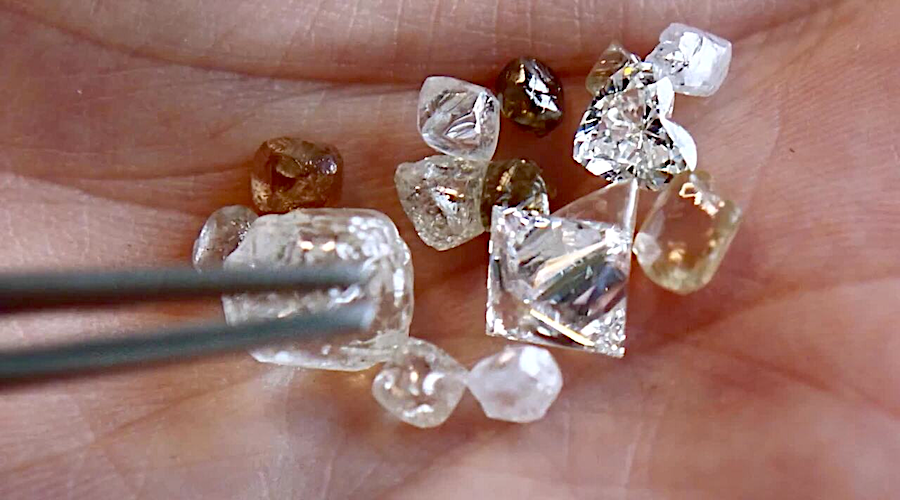
Anglo’s total writedowns on De Beers reached $6.8 billion in 2025. (Image courtesy of De Beers Group.)

Anglo American (LON: AAL) posted a $3.7 billion loss on Friday after taking a fresh $2.3 billion writedown on De Beers, as a deepening crisis in the global diamond market continues to weigh on the miner’s bottom line.

The pre-tax impairment cut De Beers’ carrying value to $2.3 billion from more than $4 billion. Anglo has written down the unit to $6.8 billion over the past year, as weak demand and high inventories weighed on prices.

Despite the hit, underlying earnings from continuing operations rose 2% to $6.4 billion. The miner declared a dividend of $0.23 per share, about $200 million, down 64% from $0.64 per share, or roughly $800 million, a year earlier. Net debt fell to $8.6 billion.

Copper and iron ore remained Anglo’s main profit drivers and are expected to underpin earnings once its restructuring is complete.

The company is reshaping its portfolio after fending off an approach from BHP (ASX: BHP) in 2024. It revealed at the time plans to exit diamonds, coal and platinum. Since then it has struck a merger deal with Teck Resources (TSX: TECK.A TECK.B) (NYSE: TECK) to create one of the world’s largest copper miners. Shareholders of both Anglo and Teck have approved the transaction, and the companies are seeking regulatory clearance.

For now, Anglo still owns its diamond and coal businesses. The diamond sector remains under pressure and two of the company’s flagship coal mines are halted due to fires.

The Teck deal will expand Anglo’s copper footprint, adding assets including the Quebrada Blanca mine in northern Chile, near Anglo’s Collahuasi operation.

De Beers’ value review

Anglo reassessed De Beers after the unit reported a third straight annual drop in production and cut its 2026 output forecast. “There is at the moment a plentiful supply of rough diamonds in the market,” CEO Duncan Wanblad told reporters.

The sale process is at an advanced stage, Wanblad said, adding the company must secure final binding bids and select a partner in consultation with stakeholders, including the government of Botswana.

De Beers has drawn interest from multiple consortia. Botswana, which holds a 15% stake and supplies about 70% of annual rough diamond output, has signalled it wants to increase its shareholding. Angola is pursuing a 20% to 30% stake and is discussing the proposal with other African producers.

Wanblad said he is optimistic a deal will be signed this year.

Woodsmith revival?

Anglo also announced a potential partnership with Mitsubishi Corp for its Woodsmith fertilizer project in northern England, which had been placed on care and maintenance as the company prioritized copper and iron ore.

Woodsmith hosts the world’s largest known deposit of polyhalite, a naturally occurring mineral containing potassium, calcium, magnesium and sulphur, marketed as POLY4. Production to date has been limited and the market remains unproven at scale, but Anglo says polyhalite could lift crop yields by 3% to 5%.

Column: West needs its own pricing to escape China’s rare earths grip


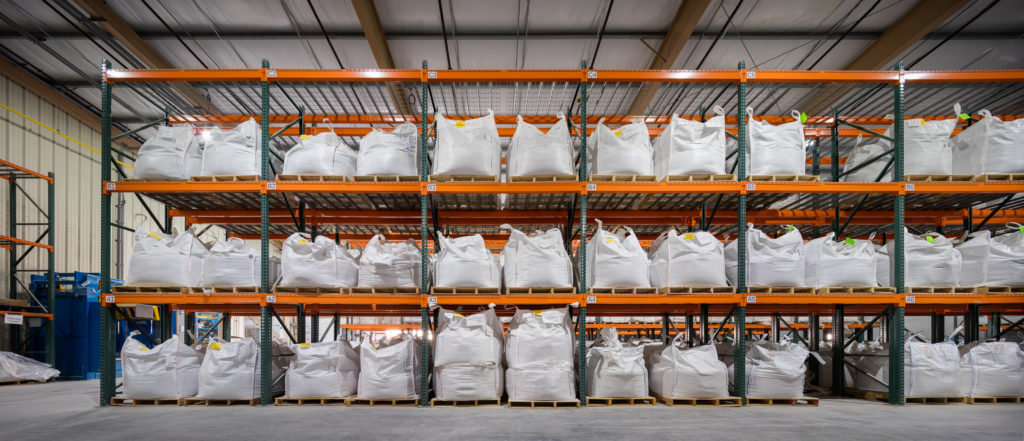
Shelves of PrNd oxide, the primary final product produced at MP Materials. Credit: MP Materials

A sharp rally in the price of rare earths has propelled the market above the floor price guaranteed by the US government in its ground-breaking deal with domestic producer MP Materials.

This is good news for the US taxpayer since the government will not have to subsidize MP Materials’ output of neodymium and praseodymium (NdPr) as long as prices remain above the critical threshold of $110 per kg.

The innovative floor-price mechanism has shielded the US national champion from low prices since it signed the deal with the Department of Defense (DoD) in July last year. The DoD now earns 30% of the price upside.

So far so good, but there is the problematic question of who sets the reference price and right now it’s China.

If the West wants to loosen China’s chokehold on rare earths, it needs not just its own production base but its own market pricing mechanism.

Key rare earth prices for neodymium and praseodymium have rallied by 41% so far in 2026

Chinese pricing power

The current reference point for the MP Materials deal with the DoD is the ex-works China NdPr index compiled by Asian Metal, according to MP Materials’ regulatory filing.

An alternative source, referenced in the chart above, is a competing Chinese price reporting agency Shanghai Metal Market (SMM).

China’s influence on global rare earths pricing reflects the country’s supply-chain dominance. It has the most physically liquid marketplace for the critical metals needed to manufacture permanent magnets.

But Chinese pricing inevitably comes with Chinese characteristics.

A Chinese ex-works price will by its very nature reference market dynamics in China. These are becoming increasingly divergent from those in the West, which is attempting to build out its own supply chain at the same time as China has been restricting exports.

More problematic still is how Chinese prices are set.

Both AM and SMM are nominally independent price reporting agencies supplying market information across the industrial metals spectrum.

But both must operate within Beijing’s legal framework for mineral price reporting, codified in the 1998 Pricing Law.

This, according to a November 2025 report by a US Select Committee on China, “effectively makes it illegal to publish prices that deviate from the PRC government’s wishes.”

Escape clause

There is an escape clause in the price mechanism embedded in the US government’s deal with MP Materials.

The DoD can elect to switch the price reference point from AM’s assessment of the Chinese market in the event “an internationally recognized alternative price index is developed that expresses the mid-market price per ton of NdPr oxide (Pr6O11 25%, Nd2O3 75%) ex-China.”

There are signs that both Western price reporting agencies and exchanges are looking to do exactly this.

Benchmark Mineral Intelligence has started collecting prices for rare earths traded outside of China, while both the CME Group and Intercontinental Exchange are studying the potential for rare earth futures contracts.

Lithium template

A possible template could be lithium.

The Western market for the battery metal has historically been highly sensitive to wild price swings on China’s Wuxi Exchange and more recently the Guangzhou Futures Exchange.

That dependence on Chinese pricing has been mitigated by the evolution of lithium futures trading on the CME.

After the CME first launched its lithium hydroxide contract in 2021, turnover was minimal for the first couple of years.

But activity has since been growing at a brisk pace as the Western market matured and both buyers and sellers sought alternatives to Chinese exchange pricing.

CME volumes grew by 37% year-on-year in 2025 and January’s turnover was a monthly record at 19,590 contracts.

CME has complemented the original contract with an options contract, a lithium carbonate contract and a spodumene contract, creating a holistic supply-chain product suite.

Chinese pricing still influences Western pricing because China is still the biggest lithium market, just as it is for rare earths.

But Western lithium companies are no longer totally beholden to Chinese price discovery. Moreover, they now have the market architecture to hedge their price risk, allowing greater ability to attract financing for new projects.

Transparency

China’s critical minerals pricing power is down to both its dominant role in the physical supply chain and its dominant role in price discovery.

To break free, the West must tackle both parts of the problem.

And that applies not just to lithium and rare earths but many other minerals among the 60 designated as critical by the US Geological Survey.

Building Western supply chains means constructing a complementary market ecosystem.

Until that happens, both US government and taxpayers will be tied to where the Chinese NdPr price settles.

(The opinions expressed here are those of the author, Andy Home, a columnist for Reuters.)

(Editing by Marguerita Choy)

Brazilian state firm contests sale of Equinox Gold asset to CMOC

Aerial view of the plant at Aurizona Gold Mine in Brazil (foreground) and Piaba Pit (background). (Image courtesy of Equinox Gold)

A Brazilian state-run company is taking legal action to try to block the sale of a precious metals asset by Equinox Gold Corp. to one of China’s biggest miners.

Companhia Baiana de Produção Mineral, or CBPM, is seeking an emergency injunction for the immediate repossession of a lease area in Bahia, a state in Brazil’s Northeast Region, according to a document seen by Bloomberg News. It argues that Canada-based Equinox was a leaseholder – not the owner – of the concession and therefore was not entitled to sell it.

Equinox agreed to sell its Brazilian operations to CMOC Group, one of China’s biggest mining companies, in a $1 billion deal that is expected to be completed in the current quarter. The transaction — announced in December — includes several mines and deposits, in different Brazilian states, under Equinox’s entities in the South American nation.

CBPM’s allegations relate to only one of these assets, known as the Bahia Complex. No other properties were listed in the document filed with the court. The company had previously signaled its opposition to the transaction in a statement.

Equinox Gold has not received notice of any lawsuit, Ryan King, the company’s executive vice president for capital markets, said in an emailed response to a request for comment. Equinox “is confident that the sale of its operations in Brazil was fully compliant with Brazilian law and all contractual obligations,” he said on Thursday.

“While Equinox Gold is prepared to defend its position in court if required, the company remains open to engaging in constructive discussions with the State to seek a mutually agreeable resolution,” King said.

CMOC Group, the Chinese company, did not immediately respond to requests for comment. Many Chinese businesses are closed this week for the Lunar New Year holiday.

CBPM alleged that the transaction was agreed without its express consent, which it said was a condition of the agreement governing the mining area. The company has asked the Bahia State Court of Justice to terminate the lease agreement, and is also seeking damages.

“The Canadian company sold a mining right that does not belong to it,” CBPM president Henrique Carballal said by telephone.

(By Mariana Durao)

India, Brazil sign mining pact as Modi targets $20B trade in five years

Brazilian President Luiz Inacio Lula da Silva and India’s Prime Minister Narendra Modi. Credit: Narendra Modi’s official X account

India moved to deepen trade ties with Brazil on Saturday, signing a pact to expand cooperation in mining and minerals as it seeks to meet rising domestic steel demand and support capacity expansion amid a global race for raw materials.

The agreement was signed in the presence of India’s Prime Minister Narendra Modi and Brazilian President Luiz Inacio Lula da Silva, who arrived in New Delhi earlier this week for a three-day visit.

Brazil is among the world’s top producers of iron ore and holds large reserves of minerals critical to steelmaking. Closer cooperation is expected to improve India’s access to raw materials and technologies needed to sustain long-term growth in its steel sector, an Indian government statement said.

Infrastructure investment

The cooperation will focus on attracting investment in exploration, mining and steel sector infrastructure, the statement said.

India has steelmaking capacity of 218 million metric tons, and companies are expanding output to meet rising domestic demand driven by infrastructure development and industrialization.

Addressing a meeting with a Brazilian delegation led by Lula, Modi said their talks had focused on ways to deepen the India-Brazil trade partnership.

“We are committed to taking bilateral trade much beyond $20 billion in the next five years,” Modi said.

Bilateral trade between the two countries currently stands at about $15 billion.

“Our nations will also work closely in areas such as technology, innovation, digital public infrastructure, AI, semiconductors and more,” Modi said.

Largest trading partner in Latin America

India and Brazil have been strategic partners since 2006, with cooperation spanning trade, defence, energy, agriculture, health, critical minerals, technology and digital infrastructure.

Brazil is India’s largest trading partner in the Latin America and Caribbean region, and the two countries work closely on global issues such as UN reform, climate change and counter-terrorism.

Lula on Thursday advocated for Brazil and India to conduct trade in their own currencies rather than settling transactions in US dollars, but dismissed speculation that the BRICS group of countries, of which both nations are members, would create a common currency.

(By Manoj Kumar and Mayank Bhardwaj; Editing by Jan Harvey)


Kazatomprom inks massive supply deal with India


State-controlled Kazatomprom forecasts production will rise this year. (Image courtesy of Kazatomprom.)

Kazatomprom, the world’s top producer of uranium, plans to sell a significant portion of its output to India, a move that could further tighten the global market for nuclear fuel.

In an announcement on Friday, the Kazakh state miner said has it reached a massive supply agreement representing over 50% of the company’s booked asset value with India’s Department of Atomic Energy.

Under Kazakh law, a deal of this magnitude would require shareholder approvals. As such, the company has called for an extraordinary general meeting for shareholders to cast their votes. Notice of the meeting is expected at a later date.

The deal, if approved, could potentially remove a sizeable share of uranium supply off the market. Kazatomprom is currently the world’s single-largest resource holder and accounts for about 20% of global production.

Last year, the Kazakh group produced about 67.2 million lb. uranium concentrates (on a 100% basis), which is in line with guidance and 10% higher than 2024. This year, it is expecting another 9% rise in production.

Despite this projected growth, analysts believe the global uranium market will remain in a structural deficit. Analysts at Teniz Capital, an Abu Dhabi-based investment bank, said the entire sector is undergoing a “second nuclear renaissance” that could see demand outpacing supply in the coming years.


Five miners presumed dead after mudslide in South African diamond mine


Stock image.

Five diamond miners missing since Tuesday following a mudslide deep underground are presumed dead, South Africa’s mining minister said on Friday after assessing rescue efforts.

Gwede Mantashe told a press conference that it was now a question of retrieving their bodies, public broadcaster the South African Broadcasting Corporation reported.

The miners were trapped more than 800 metres underground in the early hours of Tuesday morning, when there was a “mud-rush” at the Ekapa mine in the Northern Cape province.


Ekapa Minerals, the company that operates the mine, said all operations were stopped immediately after the incident and that rescue efforts were continuing.

“The time passed since the event is a major concern but there is no change in approach to the rescue activities and we are not giving up hope,” Ekapa Minerals general manager Howard Marsden said in a statement.

Mantashe said in a separate statement that an investigation would be conducted to find out what had happened.

South Africa’s government and mining industry have been making efforts to reduce mine deaths and injuries, part of a campaign called “Zero Harm”. Last year the country recorded its lowest-ever number of mine deaths, 41.

Ekapa Minerals said it had been briefing the families of the trapped miners, who held a vigil near the mine on Thursday night.

Kimberley, where the mine is located, was the site of a 19th-century diamond rush that lured fortune-seekers from the world over.

Diamond revenues funded the growth of South African industry and gold mines, which themselves helped finance colonial ruler Britain through two world wars.

(By Anathi Madubela and Sfundo Parakozov; Editing by Alexander Winning)


Landslide in Indonesia’s Morowali nickel hub kills one, halts operations


Aerial view of the Indonesian Morowali Industrial Park. Credit: IMIP

A landslide has hit a mine waste zone at a nickel processing hub managed by PT Indonesia Morowali Industrial Park (IMIP) on the island of Sulawesi, IMIP’s spokesperson Dedy Kurniawan said on Thursday, killing one worker and halting operations.

The landslide on Wednesday occurred in a tailings area run by an IMIP tenant called PT QMB, and was suspected to have been caused by soft soils. It sweptaway excavators and bulldozers along the way, Dedy said.

Operations at the tailings zone were halted as of Thursday, Dedy told Reuters.

PT IMIP is the largest nickel-processing hub in resource-rich Indonesia and has over 50 tenants, mainly makers of nickel products used in stainless steel and EV battery materials, according to the company website.

Chinese steelmaker Tsingshan Holding Group is among PT IMIP’s shareholders.

QMB New Energy Materials is an Indonesia-based nickel and cobalt joint venture led by China’s GEM. QMB was forced to suspend almost all production in March 2025 after a deadly landslide buried four workers under nickel mine waste.

Neither Tsingshan nor GEM responded immediately to requests for comment.

(By Ananda Teresia and Stanley Widianto; Editing by David Stanway)

At least 37 die from gas inhalation at Nigeria mining site


AI-generated stock image.

At least 37 miners died of carbon monoxide poisoning at a mining site in Nigeria’s Plateau state, a police source and a security report seen by Reuters said on Wednesday.

The incident occurred at about 5:45 a.m. in a mining pit in Kampani, a community in the Wase area, according to the report. Another 25 miners were taken to hospital.

Nigeria’s Minister of Solid Minerals Development, Dele Alake, said the area was an abandoned lead site with stored minerals prone to releasing toxic gases. Villagers, unaware of the toxic nature of the emissions, reportedly entered the tunnel to extract minerals and inhaled the gas, he said.

Alake ordered the closure of mining areas covered by licence 11810, operated by Solid Unit Nigeria Limited and owned by Abdullahi Dan‑China in Zuraq, following the deaths of villagers allegedly mining in a pit containing dangerous gas emissions.

Preliminary findings showed the victims, aged 20 to 35, died after inhaling the gas while working underground, the security report said.

The Plateau state government said many were feared dead without providing a figure, adding that others were receiving treatment in nearby hospitals.

Security forces have cordoned off the site to prevent further access.

Most mines in Nigeria operate illegally, with limited safety measures and miners often lacking protective equipment.

The federal government has ordered the immediate shutdown of all mining activities in the affected area pending further investigation.

(By Ahmed Kingimi, Camillus Eboh and Chijioke Ohuocha; Editing by Jon Boyle, Ros Russell and Chizu Nomiyama)