Wednesday, May 27, 2026


MEPs accuse EU of copy-pasting Microsoft lobbying into data centre law
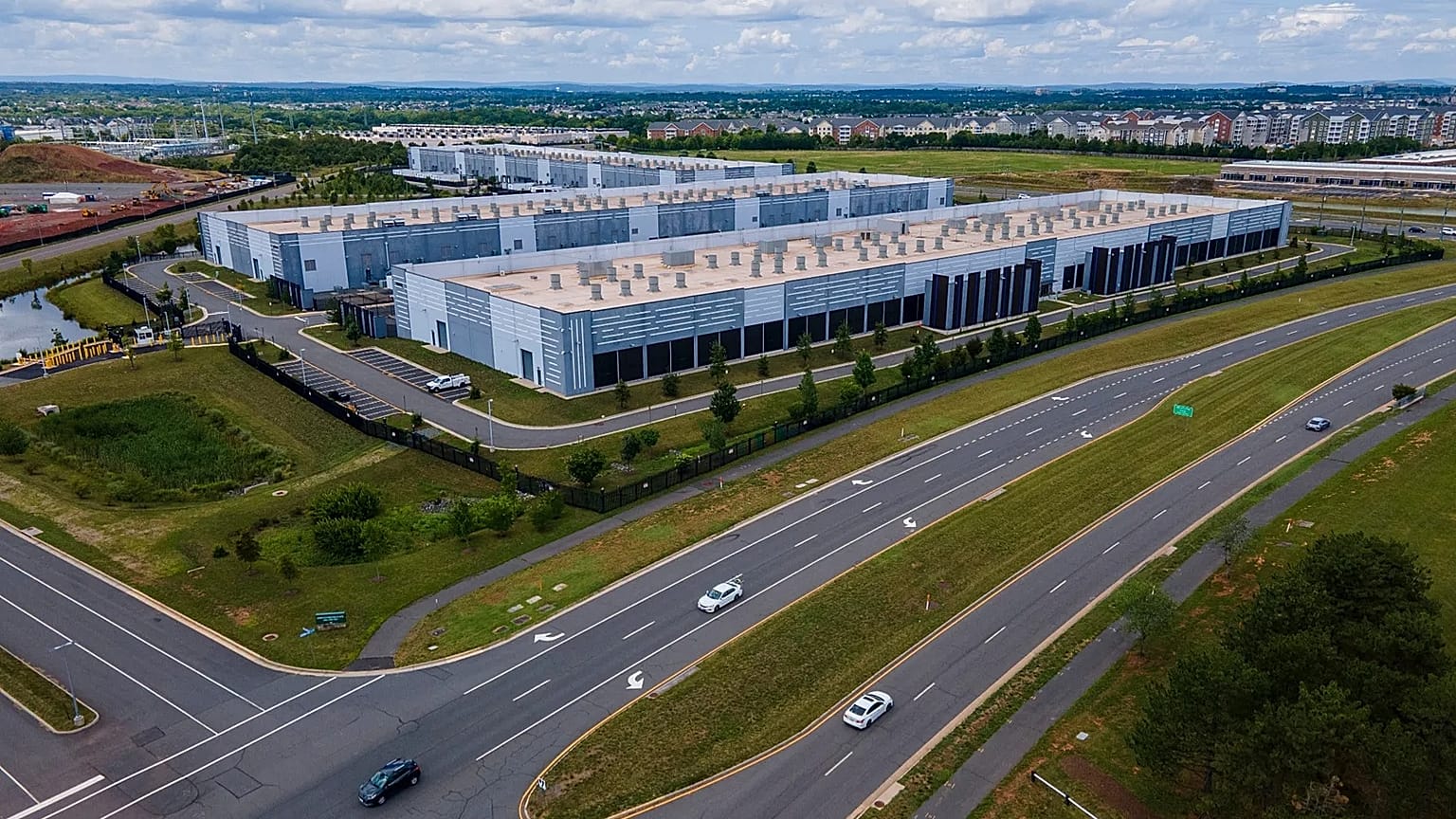
Cars drive past data centres in Virginia, July 16, 2023.
Copyright AP Photo / Ted Shaffrey

By Marta Pacheco
Published on

At the core of the dispute is a European Commission rule on data centre ratings, which EU lawmakers say would significantly restrict public access to information about the environmental performance of individual facilities.

European lawmakers are pressuring the European Commission to make environmental information from highly polluting data centres publicly available in upcoming rules, citing a deep-dive investigation by corporate watchdogs showing the EU executive is “copy-pasting” text suggested by Microsoft.

“It is one thing for Microsoft to seek to protect its interests; it is quite another for the Commission to incorporate its demands almost word for word into European law,” Greens/EFA lawmaker David Cormand (France) told Euronews, commenting on the report by the watchdog Corporate Europe Observatory and AlgorithmWatch.

In a recent letter addressed to Environment Commissioner Jessika Roswal, 35 Green and Socialist MEPs asked the EU executive to delete a Microsoft amendment and restore "full transparency" regarding the environmental impact of data centres.

The signatories argue that the EU executive's draft rules include text "almost word-for-word identical to wording suggested by the US tech company Microsoft and the lobby group DigitalEurope".

"It states that the Commission and the member states will keep all information on individual data centres confidential", reads the letter.

The MEPs argue that the influence of corporate lobby reflects a broader democratic problem in Brussels, where complex laws are often shaped with limited public visibility despite having significant environmental and economic consequences.

Tripling data centre capacity in the EU

The plea comes as the EU executive prepares to present a much-delayed dual strategy on 3 June. According to a leak seen by Euronews, the plan is intended to set out how the bloc will provide energy for artificial intelligence (AI) and data centres and use AI and digitalisation to optimise the energy system itself.

The EU wants to triple its data centre capacity within 5 to 7 years, citing aggressive competition from China and the US's integration of AI into their energy systems. The EU executive claims that without action, the bloc risks falling behind technologically, threatening its future industrial competitiveness.

But for EU lawmakers, it is "extremely worrying" that vital information linked to the environmental impact of data centres is being withheld from the public.

"This is especially concerning given that the rapid build-out of data centres across Europe is putting increasing strain on electricity grids and contributing to rising electricity prices," reads the MEPs' letter, which also notes that AI workloads will increase electricity demand dramatically.

Unlawful provision and environmental footprint

The signatories claim the provision goes far beyond protecting legitimate trade secrets and instead risks placing almost all operational emissions and energy-use data behind closed doors. That, they argue, would undermine the intent of the Energy Efficiency law, which was designed to improve transparency and allow public scrutiny of high-energy industries.

The controversy comes at a sensitive moment for the EU, which is trying to balance two competing priorities: investment in cloud computing and AI infrastructure on the one hand, and legally binding climate and energy efficiency targets on the other.

Currently, there are roughly 3,000 data centres in Europe and roughly 300 so-called hyperscale data centres designed to handle increasingly growing AI data. Ireland, Germany, the Netherlands and the Nordics have the biggest concentration of data centres in the EU.

These facilities are major consumers of electricity and water, and the prospect of many more popping up rapidly across Europe as demand for AI computing grows has raised serious concerns about grid pressure and environmental impact.

While they don't create airborne pollution like factories, data centres contribute indirectly through carbon dioxide emissions from electricity demand, diesel backup generation and construction. Large facilities also typically require huge cooling systems, which leads to water stress concerns during droughts or competition with local communities and farmers.

"The Commission has granted Big Tech an early win: crucial information on individual data centres’ energy use, and their environmental and climate impact will be kept secret – despite the underlying directive explicitly calling for their publication," stated the Corporate Europe Observatory.

"As the Commission is set to put the new ‘updated’ Delegated Act in force soon, the conclusion should be clear: the Commission has to redo its homework and delete the copy-pasted Microsoft amendment."


 

Nearly a third of Europe's health and social care workers face cancer risks at work, study finds

Nearly a third of Europe's health and social care workers face cancer risks at work
Copyright Canva/Cleared


By Marta Iraola Iribarren
Published on


From X-ray machines to anatomy laboratories, a new study has found that nearly a third of Europe's health and social care workers are regularly exposed to cancer-causing risks.

Health and social care workers in Europe are exposed to a wide range of avoidable factors that can contribute to cancer, a new study has found.

Cancer remains the leading cause of work‑related deaths in the European Union, accounting for 100,000 fatalities annually and exposing millions of workers to cancer risk factors in their daily jobs, according to the European Agency for Safety and Health at Work (EU-OSHA).

Now, the Workers' Exposure Survey, conducted by the EU-OSHA, has found that 47.3% of assessed workers across all sectors were exposed to at least one cancer risk factor during the last working week.

The survey included 24,402 telephone interviews from 2022 to 2023 with workers in Finland, France, Germany, Hungary, Ireland, and Spain.

Among health and social care workers, 29.5% reported being exposed to one or more cancer risk factors, and 7.8% to two or more.

“Despite their relevance, risks associated with exposure to carcinogens in the health and social care sector have historically been less visible than in other economic sectors,” said Michelle Turner, senior author of the study at the Barcelona Institute for Global Health (ISGlobal).

“This study highlights the need to develop prevention strategies adapted to real working conditions in this field.”

Health and social care is one of the largest sectors in Europe, employing 11% of the total workforce – more than 21.6 million people. It includes jobs in formal care settings such as hospitals, nursing and care homes, medical practices, and workers who provide home care.

What are the main risks among healthcare workers?

The study estimated worker exposure to 24 known cancer risk factors relevant in the EU working context, such as industrial chemicals, physical risk factors, process-generated substances, and mixtures.

Among health and social care workers, the most common exposures were to ionising radiation (7.4%), diesel engine exhaust emissions (6.2%), solar ultraviolet radiation (6.1%), formaldehyde (5.2%), and benzene (4.8%).

Formaldehyde and ethylene oxide were the exposures most frequently estimated to occur at a high level; both are chemical compounds used for disinfection and sterilization.

How are workers exposed?

People can be exposed to multiple cancer-contributing factors over the course of their working lives.

Workplace exposure is a key priority for cancer prevention, as it brings together large groups of people exposed to high concentrations of hazardous substances over extended periods, notes the European Code Against Cancer.

For health and social workers, risks range from cleaning chemicals to medical procedures involving hazardous chemicals.

Working with X-ray machines and radioisotopes increases exposure to ionising radiation, which, in close proximity and without the necessary protections, can cause cell damage.

The study pinpointed several specific working situations: diesel vehicle drivers and mechanics were most at risk from diesel engine exhaust emissions (DEE), gross anatomy laboratory workers from formaldehyde, and dental technicians making crowns, false teeth, or bridges from respirable crystalline silica (RCS).

Building Fairer Cities: New Insights From Mohenjo-Daro – OpEd


Ruins of Mohenjo-daro in the Larkana District of Sindh, Pakistan.
 Photo Credit: Saqib Qayyum, Wikipedia Commons


May 27, 2026 
By Adam S. Green

Inequality and Urbanism

Today’s cities are hotbeds of inequality. Urban real estate is one of the most expensive kinds of land in the world. It attracts billionaires looking to store their wealth and hedge funds looking to garner predictable returns: New York’s avenues, Paris’s thoroughfares, and Dubai’s dazzling skyscrapers are great at making the rich richer. But they raise the cost of urban life for everyone else.

And yet, plenty of people who are not rich flock to cities, driving the ongoing expansion of urbanism across the globe. In the 21st century, humans became an urban species, with more than 50 percent of the global population living in urban areas. This is because the benefits of living in a city—the opportunities provided by dense networks of interaction, cultural production, and heaps of concentrated resources—outweigh the immense cost of urban life. Inequality is the price we pay for the myriad opportunities that cities bring.

But what if we don’t have to pay this cost? Archaeological evidence from South Asia is rewriting that story of urbanism. My new article in Antiquity reveals that inequality was low in one of South Asia’s first cities and that it decreased as its citizens prospered.

The Measure of an Ancient City


In 2021, I joined the GINI Project, a working group devoted to investigating the long-term dynamics of inequality using archaeological data, a project supported by the Coalition for Archaeological Synthesis.

The idea was to systematically compare evidence from archaeological sites like Mohenjo-daro, an early city that seemed to defy the tradeoffs of urbanism, with comparable data from other time periods, to better understand why inequality is skyrocketing today.

The GINI project adopted the “Gini coefficient,” an economic statistic that captures the level of inequality within the distribution of a particular variable, like income or wealth, in a given population. When all the wealth or income is concentrated in a tiny portion of the population, you get a Gini coefficient of 1. When it’s more evenly distributed, you get a Gini coefficient closer to 0. Archaeologists often apply the Gini coefficient to house areas, which provide a reasonable, but far from perfect, proxy of wealth or income within a given society.

I collaborated with Cameron Petrie and Iqtedar Alam, both based at the University of Cambridge, to measure all of Mohenjo-daro’s 309 excavated houses, contributing these measurements to the GINI database, which includes similar measurements from more than 50,000 residences found throughout the archaeological record. These measurements, and the Gini coefficients we can get from them, tell a striking story.

Every House a Palace

Mohenjo-daro was built more than 4,000 years ago in what is today the Sindh Province of Pakistan. It was one of the first cities in the world, emerging after a 1,000 years of village development throughout the broader Indus River Basin, forming part of the expansive Indus (or Harappan) civilization, which stretched from the Arabian Sea to the foothills of the Himalaya.

Excavations at the Mohenjo-daro began nearly a 100 years ago, uncovering the foundations of hundreds of structures arranged along wide streets. What archaeologists found astonished them—a massive public bath, the foundations of an assembly hall, and huge foundation platforms that could have provided a defense against Indus River flooding.

But it was the city’s numerous houses—replete with second stories and private bathing platforms—that made the biggest impression. The first-ever report on the archaeology of the Indus civilization opens with a description of Mohenjo-daro’s “commodious” and “well-built” houses, which rivaled the palaces seen in Egypt or Mesopotamia. Excavators have documented more than 300 residences from Mohenjo-daro, some dating to the earliest phases of the city’s development.

Further research has revealed that the people who built these houses were masters of Bronze Age technology, producing a huge range of sophisticated objects, like small statuettes, beads and bangles, which could be widely distributed amongst its populace. As I’ve argued elsewhere, there is tons of qualitative evidence that Mohenjo-daro reaped the benefits of urbanism without creating a massive wealth gap between houses.

Ever More Equal

By the numbers, Mohenjo-daro was far more equal than other ancient cities. If you calculate a Gini coefficient from all 309 houses at Mohenjo-daro, you get 0.44. We can compare that number to other ancient cities in the GINI database, like that from Knossos in Ancient Greece, famous for its palaces, where the Gini coefficient was a striking 0.86, or Ur and Ugarit in neighboring Mesopotamia, where Gini coefficients were greater than 0.60. The city clearly followed a different trajectory than many others.

However, 0.44 is pretty far from 0; does it really support the idea that Mohenjo-daro was egalitarian?

Comparing the oldest houses to the newest ones reveals an even more interesting story. Mohenjo-daro’s earliest houses, those found in the deepest levels of its DK-G South Neighborhood, had a Gini coefficient of 0.39. These date to the earliest periods of the city’s occupation, perhaps around 2500 BC. Each subsequent wave of house construction lowered the Gini coefficient, and by the city’s latest levels, its Gini coefficient was only 0.23, the same as we find in the world’s earliest farming villages.

Mohenjo-daro was not only more egalitarian than other ancient cities, it also became more equal over time.

Governing an Egalitarian City

We don’t know exactly how Mohenjo-daro’s citizens kept a lid on inequality. Was it an effect of the broader economic system, which perhaps gave all the city’s residents equivalent access to land and fuel for making bricks? Was it more active, perhaps with communities placing an upper limit on the size of residences, or punishing people who tried to make ostentatious houses? We can’t say for sure.

What we do know is that there is strong evidence for governance at Mohenjo-daro. Its houses used the same brick ratios—a level of standardization unprecedented in the Bronze Age. And the city’s houses were full of standardization stamp seals, tools for carrying out different kinds of economic transactions, as well as weights and measures.

These small tools had big effects, facilitating trade and communication across an expansive area. This penchant for setting and agreeing to shared protocols is evident in Mohenjo-daro’s infrastructure as well. The city boasted one of the world’s earliest systems of public drainage, and its houses conformed to a public street plan. This street plan developed over time. At the same time, the Gini coefficient of houses decreased. It does not seem far-fetched to suggest that the same set of rules produced the city’s street plan and leveled differences between residences.

There is also evidence that governance was inclusive or democratic. Public structures, like the Pillared Hall, which could have allowed hundreds of people to deliberate and make decisions about the city, likely helped facilitate this governance, perhaps providing a forum for discussing the distribution of residence area within the city. Archaeologists are becoming more and more aware of such early forms of democratic governance across the globe.

Prospering in a Fairer Society

Mohenjo-daro’s declining inequality also correlates with an increase in the median size of houses, a proxy for productivity in past societies. As inequality dropped, the total resources people could invest in their housing increased. The city appears to have prospered, a pattern corroborated by claims that later levels at Mohenjo-daro have more evidence for craft production than earlier levels. Ensuring that public goods were maintained and ensuring equitable access to housing seems to have been deliberate.

Still, I don’t think Mohenjo-daro’s declining Gini coefficient was an accident—it’s far more likely that its communities made rules that actively shaped the distribution of housing in the city, and that those same rules channeled labor and resources into goods that could be enjoyed by everyone.


Author Bio: Adam S. Green is a lecturer in sustainability at the University of York. He is an archaeological anthropologist focused on South Asia, specializing in the comparative study of early states through the lenses of technology, the environment, and political economy. Follow him on X @Adam_S_Green.

Credit Line: This article is distributed in partnership with the Coalition for Archaeological Synthesis and has been published on its website.
NASA Provides Update On Moon Base Rovers, Landers, Missions


Artist’s concept of Phase 3 of NASA’s Moon Base. Credit: NASA


May 27, 2026 
By Eurasia Review

During a Moon Base event Tuesday at NASA’s Headquarters in Washington, the agency announced new contracts for lunar rovers for crew to drive and uncrewed cargo landers bound for the Moon. NASA leaders also shared target launch timeframes and upcoming milestones for the first Moon Base infrastructure and exploration missions to the lunar South Pole region ahead of Artemis astronaut landings.

“The Moon Base will be America’s and humanity’s first outpost on another celestial world,” said NASA Administrator Jared Isaacman. “Every mission, crewed and uncrewed, will be a learning opportunity as we return to the lunar surface, build the infrastructure to stay, and master the skills required to live and operate in one of the most demanding and dangerous environments imaginable. We will go for the science, for all we stand to gain from an economic and technological perspective, for the innovations that will make life better here on Earth, and to prepare for where we will inevitably go next. We are grateful for President Trump’s leadership, the bipartisan commitment from Congress, our industry and international partners, and the dedicated NASA workforce whose expertise enables us to achieve the near-impossible.”

NASA announced the first three Moon Base missions to begin building sustained operations: Moon Base I: Targeted for launch no earlier than fall 2026, this mission will use Blue Origin’s Blue Moon Mark 1 Endurance lander to deliver NASA payloads. Equipment will include the Stereo Cameras for Lunar Plume-Surface Studies instrument to study how thrusters interact with the Moon’s surface, and the Laser Retroreflective Array, which helps orbiting spacecraft determine a more precise location using reflected laser light. The mission will land on the Shackleton Connecting Ridge to demonstrate capabilities that reduce risk for future crewed Artemis landing missions in 2028.
Moon Base II: Planned for launch later this year, this mission will deliver more than 1,100 pounds of cargo on Astrobotic’s Griffin lander, including Astrolab’s FLIP rover, to mature mobility systems that inform future lunar terrain vehicle, or LTV, operations.Moon Base III: Also targeted for this year, this mission will fly the first payload selected through NASA’s Payloads and Research Investigations on the Surface of the Moon initiative. Its anchor investigation, Lunar Vertex, will fly on Intuitive Machine’s Nova-C Trinity lunar lander and study lunar swirls, or light spots on the surface of the Moon, to improve understanding of surface evolution and material behavior under extreme conditions. The mission will include payloads from ESA (European Space Agency) and the Korea Astronomy and Space Science Institute, reflecting commercial and international participation in Moon Base activities.

These missions are the first of more than a dozen missions that will be announced this year, each designed to generate operational data and reduce risk ahead of crewed Artemis surface activities.

NASA has awarded Astrolab $219 million and Lunar Outpost $220 million to build and deliver the first phase of LTVs. Awarded under the Phase 1 High Achievability Mission task orders of the Lunar Terrain Vehicle Services contract, these firm-fixed-price, performance-based milestones will enable NASA to deploy crewed and uncrewed mobility systems to the lunar surface by 2028 through the agency’s CLPS (Commercial Lunar Payload Services) initiative. Early surface mobility is a foundational component of the national space policy priority to create an enduring lunar presence.

Astrolab’s Crewed Lunar Vehicle, or CLV‑1, adapted from the company’s FLEX architecture, is a crewed rover designed to transport astronauts, carry supplies, and support remote operations, with a compact stowed configuration, a mass of about 2,000 pounds, and the ability to reach more than 6 mph on level terrain.

Complementing this capability, Lunar Outpost’s Pegasus is a lighter, mission‑ready evolution of its Eagle rover designed explicitly to meet NASA’s updated LTV requirements. Operational for up to a year and capable of manual, autonomous, or teleoperated driving at speeds more than 9 mph, Pegasus incorporates Apollo‑heritage technologies and builds on prototype and flight experience to deliver human‑centered mobility essential for establishing a sustained Moon Base.

Deploying multiple LTVs early in Moon Base development will accelerate technology demonstrations, inform site planning, and reduce operational risk ahead of crewed Artemis missions, enabling NASA to characterize terrain hazards, move materials, pre-stage resources, and mature systems needed for long-duration lunar exploration.

Over the next 18 months, the selected providers will finalize rover designs, conduct crewed evaluations, and qualify flight units for operational readiness, with the resulting LTVs supporting autonomous traverses, terrain preparation, scientific investigations, technology demonstrations, and astronaut transport.

As Moon Base efforts advance, NASA will expand opportunities for additional vendors through on‑ramp competitions, fostering a robust, sustainable approach to lunar mobility and strengthening national priorities in space capability.

To deliver these rovers to the Moon’s South Pole region, NASA awarded Blue Origin $188 million with an option period worth $280.4 million for two task orders, which includes an option period based on initial phase performance. NASA can choose to extend the task order for payload delivery.

This competitive procurement, executed under the CLPS 1.0 indefinite-delivery/indefinite-quantity framework, the CX-2 task order represents a strategic investment in lunar exploration and will play a critical role in enabling mobility and infrastructure development for sustained lunar operations, marking a significant step toward establishing a permanent human presence on the Moon.


Building on the successes and lessons learned from CLPS 1.0, the agency also outlined how the next generation of cargo landers under CLPS 2.0 will continue to deliver payloads to the lunar surface and lunar orbit, supporting NASA’s ambitious goals for sustained lunar operations. This next phase introduces enhanced flexibility, allowing NASA to order turn-key delivery services or start accepting delivery of CLPS hardware for integration into its own missions. The final CLPS 2.0 request for proposal was released on May 15, with responses due on Tuesday, June 30.


Moonfall update

The agency also shared new updates on MoonFall, a mission that will send four drones to fly short hops on the lunar surface as they survey potential landing sites for Artemis astronauts. NASA‘s Jet Propulsion Laboratory in Southern California has been developing the design and testing prototype hardware and has selected Firefly Aerospace to build the spacecraft that will transport the drones from Earth orbit to the Moon. Launch is targeted for 2028.

The drones will independently land on the lunar surface and then gather high-resolution imagery of hard-to-reach terrain over the course of a single lunar day. After each drone’s final flight, its survive-the-night payload will continue to operate for several months, marking a sustained U.S. presence at the lunar South Pole.

More robotic missions to come

Finally, NASA stated in the coming weeks that a selection of additional CLPS 1.0 task awards, issued during the agency’s Ignition event, for Moon Base payloads and technology demonstrations, is forthcoming. In the coming months, there also will be additional opportunities to compete for CLPS 1.0 and 2.0 task orders as Phase 1 technology demonstrations are defined and planned for Moon Base missions.

During the update, NASA leadership reiterated that establishing a sustained lunar presence is aligned with the agency’s broader exploration strategy, supported by increased launch cadence, expanded industry partnerships, and agencywide coordination.


As part of the Golden Age of innovation and exploration, NASA will send astronauts on increasingly difficult missions to explore more of the Moon for scientific discovery, economic benefits, and to build on our foundation for the first crewed missions to Mars.


Everything you need to know about NASA’s plan to build a permanent Moon base


By Theo Farrant & AP
Published on


NASA has unveiled an ambitious plan to turn the Moon into a long-term human outpost, with the first robotic missions targeting 2026.

Less than two months after the record-breaking Artemis II mission, NASA has revealed new details about its plan to build a long-term human presence on the Moon.

The agency says it is already ordering landers, rovers and drones for the first phase of what it calls “Moon Base” - a programme designed to support astronauts living and working on the lunar surface for extended periods.

Here's everything you need to know about NASA's announcements.

What is NASA’s Moon Base plan?

NASA wants to build a permanent lunar base near the Moon’s south pole as part of its Artemis programme.

The project will happen in multiple phases over the next decade, starting with robotic cargo missions before astronauts arrive later this decade.

NASA Administrator Jared Isaacman said the agency is already planning "three moon base missions" with more to come. "These represent the first of more than a dozen missions we expect to announce," he said.

In this photo provided by NASA and captured by the Artemis II crew from lunar orbit, the moon eclipses the sun on 6 April 2026. Credit: NASA via AP


The ultimate goal is to create a long-term human presence on the Moon while testing the technology needed for potential future missions to Mars.

NASA Deputy Associate Administrator Lori Glaze said the lunar base would support "long duration stays, expanded robotic and human capabilities, and an enduring presence on the lunar surface".

Where will the base be built?

The first missions will target the Moon's south pole, particularly a strategic area called the Shackleton Connecting Ridge.

Scientists believe the region could contain water ice trapped in permanently shadowed craters - an incredibly valuable resource that future astronauts could use for drinking water, oxygen and rocket fuel.

The first phase of the Moon Base plans focuses on robotic missions. Blue Origin, the company founded by billionaire entrepreneur Jeff Bezos, will send its Mark 1 Endurance Lander to the Moon no earlier than autumn 2026, delivering cargo and scientific payloads.

A second mission will use an Astrobotic Griffin lander to transport more than 500 kilograms of equipment, including Astrolab’s FLEX rover. NASA says this will be the "largest commercial payload delivered to the lunar surface ever".

A third mission will focus on science experiments selected through NASA's PRISM initiative.

When will astronauts return to the Moon?

NASA is currently targeting Artemis IIIfor mid-2027.

That mission will test docking systems between NASA’s Orion spacecraft and lunar landers developed by Blue Origin and SpaceX.

After Artemis III, NASA said it plans to send one mission to the Moon every year. Artemis IV, set for early 2028, will see astronauts transfer from Orion to a commercial lunar lander that will bring them to the surface.

“For those waiting patiently, the grand return is close at hand and we will not slow down,” Isaacman said. “We are really just getting started.”

What will astronauts actually do there?

Initially, astronauts are expected to stay for short missions while testing rovers, habitats and surface operations. Later phases could include pressurised vehicles that astronauts can live and travel in while exploring the lunar surface.

NASA Moon Base Program Executive Carlos Garcia-Galan said astronauts could “hop on the Pressurised Rover and basically work and explore the Moon”.

Will people live on the Moon permanently?

Eventually, that is NASA's goal. The agency says the second phase of the project - expected between 2029 and the early 2030s - will begin building permanent infrastructure like power systems and habitation modules.

"And then eventually," Garcia-Galan said, "we’ll be able to say, hey, we’re permanently here and we’re not giving it up."


NASA lays out moon base plans including buggies, landers and drones


NASA on Tuesday outlined the first phase of a sprawling moon base plans on Tuesday, less than two months after the Artemis II's record-breaking lunar flyaround, with visualisations of landers, rovers and drones. The space agency also awarded hundreds of millions of dollars in contracts to four US companies.


Issued on: 27/05/2026 
By: FRANCE 24


A simulation of an operation conducted jointly by robots and astronauts at Cape Canaveral (Florida, USA) on May 26, 2026. © NASA

NASA is already ordering landers, rovers and drones for a sprawling moon base, less than two months after the Artemis II's record-breaking lunar flyaround.

The space agency outlined the first phase of its moon base plans on Tuesday, awarding hundreds of millions of dollars in contracts to four US companies.

A 3D model of the modules made at Cape Canaveral (Florida, USA) on May 26, 2026. © JAXA/Toyota


Jeff Bezos’ Blue Origin will provide a pair of landers to deliver moon buggies to the lunar surface, at a spot near the moon’s south pole. These so-called lunar terrain vehicles will be built by Astrolab and Lunar Outpost. Firefly Aerospace, which landed successfully on the moon last year, will deliver the first drones to the moon.

Drones will be used to set up the bases as in this 3D model made on May 26, 2026 at Cape Canaveral (Florida, USA). © NASA

All this hardware is ideally supposed to arrive before the first Artemis astronauts land on the moon, planned for as early as 2028.

During April's Artemis II mission, four astronauts flew around the moon, traveling deeper into space than the Apollo moon crews did during the late 1960s and early 1970s. For next year's Artemis III, another team of astronauts will practice docking NASA's Orion capsule in orbit around Earth with the lunar landers being developed for crews by Blue Origin and Elon Musk's SpaceX.

Model of lunar modules powered by an engine fueled by radioactive isotopes made at Cape Canaveral (Florida, USA) on May 26, 2026. © NASA


NASA is targeting Artemis III for mid-2027, with a landing by two astronauts following as soon as 2028. The moon base's second phase, from 2029 into the early 2030s, will start building up the permanent infrastructure, including a power grid. As for when the base will be ready to support astronauts for extended periods in specialized permanent habitats, that's expected sometime in the 2030s, during the third phase.

“Then we'll be able to say, 'Hey, we're permanently here and we're not giving it up,'” said NASA's moon base program executive Carlos Garcia-Galan.


A 3D projection of the future NASA base installation on the lunar south pole made at Cape Canaveral (Florida, USA). © NASA


Garcia-Galan envisions a moon base sprawling over hundreds of square miles, with a perimeter marked by drones, dubbed MoonFall, stationed at the corners.

NASA Administrator Jared Isaacman said these territory markers are meant to be respectful of other countries' spacecraft and equipment that might be nearby. He expects reciprocity in the matter.
A rendered visualisation of a module intended for astronaut movement on the lunar surface, created at Cape Canaveral (Florida, USA) on May 26, 2026. © NASA

The goal of the moon base is to encourage a lunar economy while conducting scientific research and laying the foundation for a Mars expedition, Isaacman stressed.

“For those waiting patiently, the grand return is close at hand and we will not slow down,” Isaacman said. “We are really just getting started.”

(FRANCE 24 with AFP)


‘The Simpsons’ writer who 'predicted' Trump presidency makes 2028 White House bid

‘The Simpsons’ writer who predicted Trump presidency makes 2028 White House bid
Copyright Fox - Disney

By David Mouriquand
Published on

Dan Greaney, the Emmy-winning writer who wrote The Simpsons episode 'Bart To The Future', which “predicted” a Trump presidency 16 years before it happened, is now apparently running in 2028.

The Simpsons writer who “predicted” Donald Trump’s presidency has announced that he is running for President in the 2028 US election.

Sure, why not.

Dan Greaney has written several episodes of the beloved animation series, including one which contributed to the show’s reputation that it foretells the future.

The infamous episode in question is “Bart To The Future”, which sees Lisa as President of the United States. In the episode, which aired a full 16 years prior to Trump’s presidency, she addresses her advisor and says: “As you know we’ve inherited quite the budget crunch from President Trump”.

This led many to go back and sift through Simpsons episodes to uncover other instances when the show’s jokes “predicted” the future. In some cases, they were eerily accurate.

Now, Greaney is looking to follow in Trump’s footsteps.

In a video posted on Instagram, the four-time Emmy winner is dressed as a wizard and describes himself as a “self-proclaimed prophet”, before outlining America’s political problems.

“Trump, Vance, the billionaires, careerists, and cowards in both parties have turned their backs on [the US],” he said. “It’s money, power, and security for them, but not for you.”

He continued: “In America, the government is supposed to work for everyone. Democracy for all, accountability for all, prosperity for all. We must restore this. I’d love to help, but I’m not a lawyer. I’m just a self-proclaimed prophet… who went to law school, graduated, passed the bar… Wait! I am a lawyer!”

He then discards the wizard costume and reveals himself to be suited and ready for The White House.

“Screw it, I can be a politician,” he exclaims. “I’m running for president. My platform: America for all. Let’s do this.”

Check it out for yourselves:

No matter ridiculous the announcement may seem, it does make Greaney one of the first to announce their bid for the 2028 election.

The comedy writer appears to be advocating for universal healthcare and a return to morals, according to his Instagram page. According to a press release from Greaney’s campaign: "His platform includes restoring democratic norms alongside progressive policies such as universal healthcare and the Green New Deal, unified under the campaign’s central idea of building an America that works for all.”

Stranger things have happened...

Under current law, Trump cannot run for a third term. No president is allowed to serve more than two terms in office. However, Trump has repeatedly threatened to run again, saying last year that he has not ruled out the possibility and that he would "love to do it".

The Trump Organization has already been selling red caps that read "Trump 2028", seemingly promoting him as a candidate in the election. Aye, Caramba!

The next US Presidential elections take place on 7 November 2028.